Perhaps more wars, more inhumanity and more cruelty to others can be laid at the foot of one deceptively simple phrase:
“If we do this, then they will do that.”
I call it the “If-then” fallacy.
“If we don’t stop them in Vietnam, then they will surely be invading California.”
“If we don’t punish them, then they will turn into juvenile delinquents.”
“If we don’t teach them a lesson, then they will keep on doing it.”
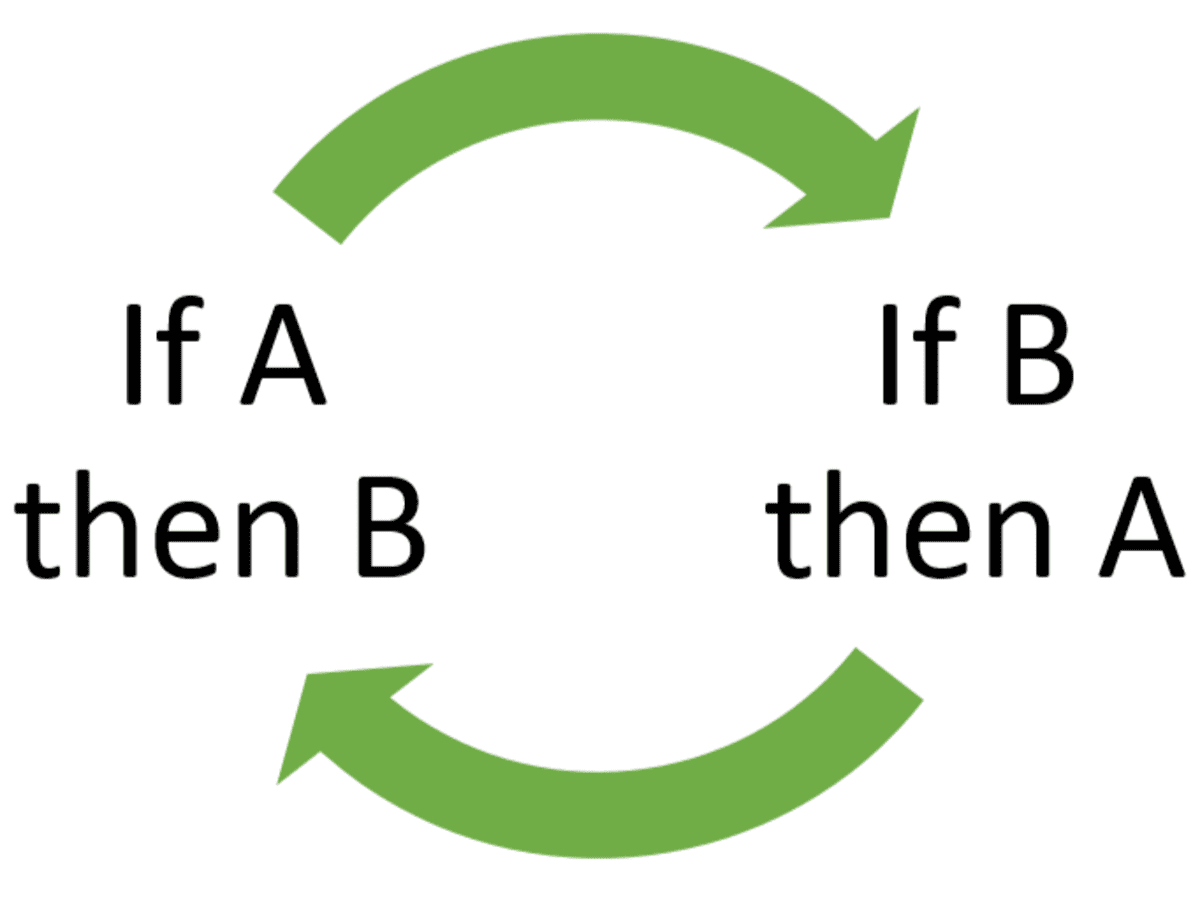
The If-Then fallacy assumes, that if A happens then B is sure to follow. Sometimes there are facts supporting the assumption. Sometimes there are studies. Sometimes there is considerable historical evidence. But evidence that B followed A yesterday does not prove that B must follow A tomorrow.
And yet we often behave as though it does.
We can become so certain that B follows A that we will fight a war, bomb a country, execute a murderer, spank a child, end a friendship, or refuse to forgive a transgression.
I see this fallacy almost every day. It torments my feeble brain. I cannot understand how or why the logic prevails so persistently.
Perhaps it is embedded in humanity as an essential element of survival.
“If I let them do this, then they will do this and I will die.”
“I have to show them that they cannot get away with doing A otherwise they will move on to B.”
Does experience speak so strongly or so loudly that there is no room for change?
Is there always a rainbow after every storm? Does history show us that people cannot learn from their past mistakes and change directions? Is every situation a simple reflection of past situations?
If my first wife cheated on me, will my next wife also cheat on me?
If we don’t bomb Iran, will Iran develop a nuclear weapon and drop it on New York? If we do not execute murderers, will everyone become a murderer?
Where is the logic in the If-Then fallacy?
A fallacy is a flaw in reasoning that makes an argument invalid, misleading, or false. It looks like a good point, but the logic fails when tested. People use fallacies by mistake or to trick others — Dictionary.com
You can tell me that people are not logical. Of course they aren’t. But can I not hope that logic will prevail over fear, anger, revenge, war and death? What is the purpose of logic if not to somewhat mitigate our emotional perspectives?
Yes, my child lied to me today, but should I assume that unless he gets a beating, he/she will inevitably continue to lie to me?
Does the past always predict the future?
Santayana wrote that:
“Those who cannot remember the past are condemned to repeat it.”
Shakespeare gave us another famous observation:
“What’s past is prologue”?
But is it?
History is not always prologue to the future.
History is one input into the future, but it is neither a script nor a destiny.
History creates initial conditions; it does not determine outcomes.
History is prologue only to the extent that the system producing history remains substantially the same.
But systems and life never remain static:
- A bullet misses.
- An election goes the other way.
- A leader dies.
- A hurricane changes course.
- A scientist makes a discovery.
- A financial institution collapses.
- Someone makes an unexpected decision.
And suddenly millions of subsequent events take different paths.
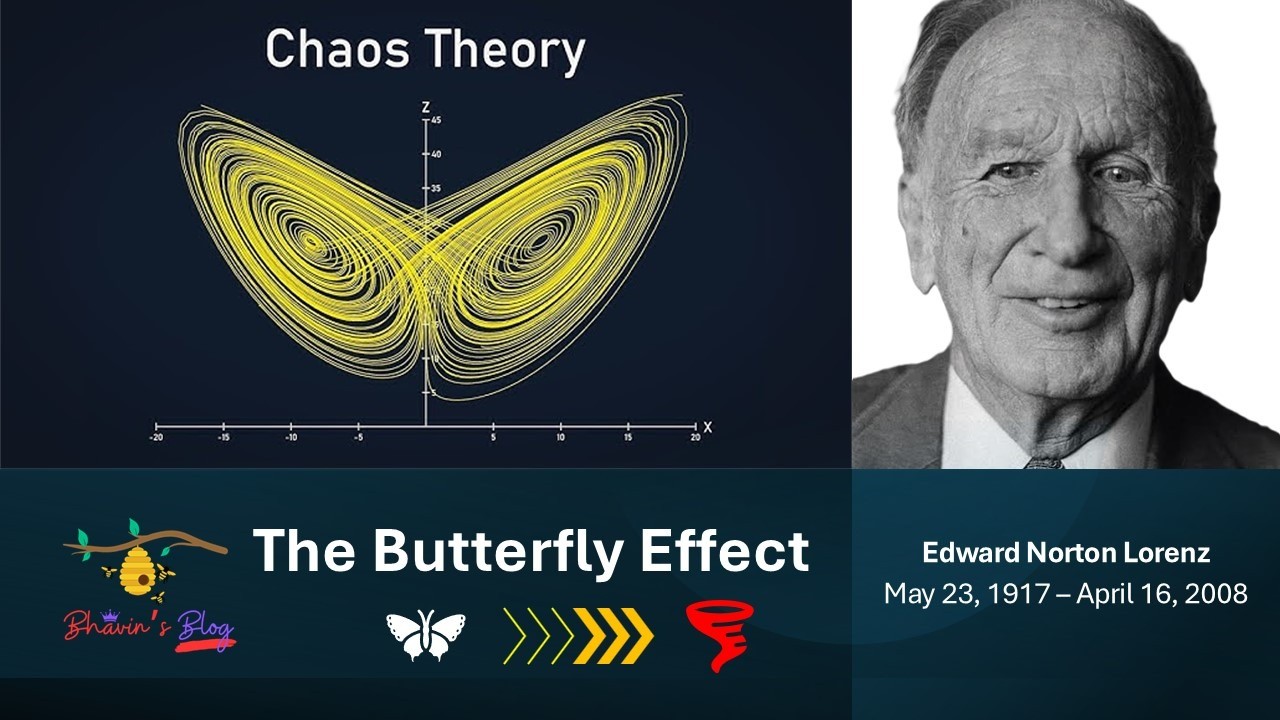
Chaos theory tells us that “Sensitivity to Initial Conditions” provides a scientific rationale for rejecting the “past is prologue” theorem. In Chaos theory, a deterministic system can be governed by definite rules, yet tiny differences in its starting conditions can eventually produce radically different outcomes. Lorenz’s famous “butterfly effect” captures this idea: an extremely small difference now may eventually correspond to a very large difference later.
Vietnam: If we stop communism here, we stop it everywhere
The Vietnam War was strongly influenced by the Domino Theory or the IF-Then fallacy.
IF South Vietnam falls to communism, THEN other Southeast Asian nations will fall one after another.
The premise wasn’t irrational. Communist expansion had occurred in the Soviet sphere. China had become communist in 1949. North Korea had invaded South Korea. American policymakers extrapolated from those experiences.
The fallacy was treating that historical pattern as a reliable causal rule. Countries are not interchangeable dominoes.
Indonesia, Thailand, Malaysia, the Philippines and others had different governments, cultures, political movements and relationships with China and the Soviet Union.
South Vietnam fell in 1975.
But the predicted wholesale communist collapse of Southeast Asia did not occur.
Trickle-down economics: If the top 1 percent of wealthiest people prospers, prosperity will flow downward
The simplified argument behind what is commonly called trickle-down economics follows a similar pattern:
IF taxes on corporations, investors and high-income individuals are reduced, THEN they will invest more, businesses will expand, productivity will increase, jobs and wages will rise, and ultimately everyone will become better off.
Again, there is a legitimate economic mechanism buried within the proposition. Lower marginal tax rates can affect incentives to work, invest, save or start businesses.
The IF–THEN fallacy occurs when that possibility becomes an assumed sequence:
Tax cuts → investment → expansion → jobs → higher wages → broadly shared prosperity.
Money doesn’t have to travel down that pathway.
Additional after-tax income can instead go into financial assets, stock buybacks, acquisitions, overseas investments, savings, real estate or other uses. Businesses may invest without substantially raising wages. And whether tax reductions stimulate enough additional economic activity to compensate for lost government revenue depends heavily upon circumstances.
The mistake is not believing that lower taxes can encourage investment.
The mistake is believing that lower taxes must produce a predictable downstream result.
Once more the fallacy: If A then surely B.
The influence of the If-Then fallacy, pervades every corner of American life. From politics, to education, to healthcare to the criminal justice system. Every institution in America falls victim to a pernicious fallacy that seems to have no ending. Each day brings fresh evidence that our politicians and lawyers can use this fallacy to their own advantage.
“If we increase the punishment, crime will decrease.”
“If we lower taxes, the economy will grow.”
“If we raise taxes, the economy will collapse.”
“If we intervene militarily, our enemy will retreat.”
“If we don’t intervene militarily, our enemy will become stronger.”
“If we forgive them, they will take advantage of us.”
“If we punish them, they will learn.”
Perhaps. Perhaps not.
That is the point.
An IF can describe a possibility. A THEN can describe a prediction.
Somewhere along the way, human beings have developed an extraordinary ability to turn predictions into certainties—and then to kill, punish, condemn, invade, imprison, impoverish, and hate one another on the basis of those certainties.
And perhaps the real problem goes deeper than faulty logic.
Perhaps we don’t really want uncertainty.
Perhaps certainty is simply more comfortable.
Can you see what I see or hear what I hear?
Jesus’s disciples were perplexed by his use of parables to explain things.
The disciples came to him and asked, “Why do you speak to the people in parables?”
His answer invoked the prophet Isaiah and described people who were:
“ever hearing but never understanding”
and
“ever seeing but never perceiving.”
Perhaps that ancient observation tells us something about the If-Then Fallacy.
What does it take to open the eyes and the ears of people to seeing and hearing the truth? People say they long for the truth, but many would rather have certainty than truth.
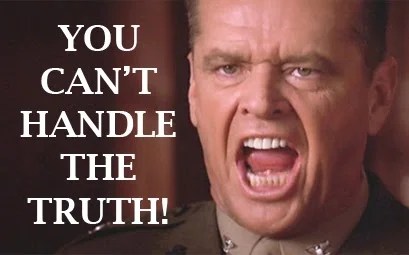
If the truth will set you free, we must assume that many people do not really want to be free. They would rather be slaves to ideas that exploit them for profit. Ideas that place their bodies in endless wars so that others may profit from their sacrifice. Ideas that view them as commodities to be used and tossed in the garbage pail.
To say “We are seeking truth” covers up the reality of what we really want.
We want to believe that we know what comes next. We want to believe that if we pull this lever, push that button, punish this person, bomb that country, lower this tax, raise that penalty, or elect this leader:
We can be certain what will follow.
The reality is that:
The past is evidence
It is not destiny
It is not truth
So, when someone tells me:
“If we do A, then B will happen,”
I have learned to ask one very simple question:
How do you know?
And if the answer is merely,
“Because that’s what happened before,”
Perhaps we should think very carefully before we start another war, punish another child, execute another prisoner, condemn another human being, or build another public policy upon the seductive certainty of two very small words:
IF—THEN