How Many People Have Been Harmed by Current U.S. Policies?

A cautious attempt to estimate the human scale of policy choices in foreign aid, health care, food assistance, immigration, environmental regulation, tariffs, vaccination policy, Gaza, and Iran

Analysis by Metis (ChatGPT, GPT-5.6 Sol), OpenAI
August 29, 2026

Important qualification. There is no scientifically defensible single “body count” for a presidential administration. The categories below overlap; some figures describe observed changes, others are forecasts; and in wars such as Gaza, U.S. support is one causal factor among many. The most responsible approach is to distinguish deaths, serious losses of services or security, and broader economic or social effects.

Introduction

I think it is time we have an accounting of the damage that the Trump Administration has had to date on the USA and World.  I tasked my AI program Metis, with a prompt to give me a summary of the impact of the policies that Trump and the Republican Party have been promoting.  Following is a summary and analysis done entirely by AI but with citations and documentation to support her analysis.

The short answer

If “hurt” means a substantial loss — death, serious illness or heightened disease risk, loss of health insurance or food assistance, detention or removal, war injury, displacement, or comparable deprivation — the policies discussed here plausibly place tens of millions of people in a substantially worse position. A rough order-of-magnitude estimate of about 15–30 million people already seriously affected or placed at substantial near-term risk is defensible as a discussion range, but it should not be presented as a precise total.

If “hurt” is defined more broadly to include higher prices, reduced purchasing power, environmental exposure, uncertainty caused by immigration enforcement, or deterioration in public services, the number rises into the hundreds of millions. That broader number is less useful, however, because it treats a modest increase in household costs as statistically equivalent to losing medical care, food assistance, a home, or a life.

What the major policy areas suggest

Policy areaIndicator of harm / riskHow to interpret it
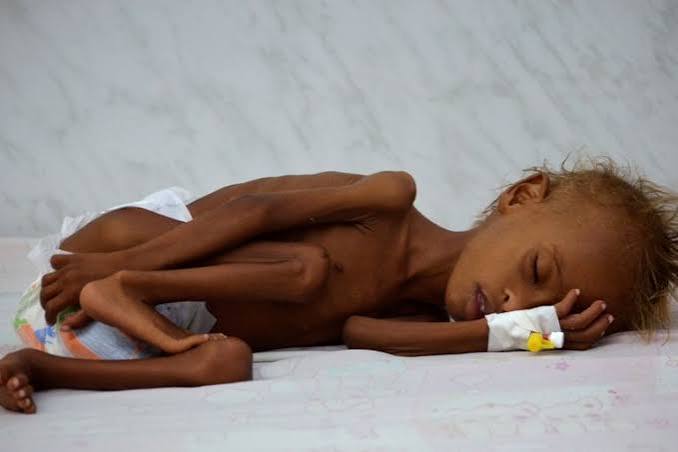
Foreign aid / USAID cutsA peer-reviewed forecasting analysis projects about 14.05 million excess deaths worldwide by 2030, including about 4.54 million children under five, under its near-termination/defunding scenario. The same model estimated about 1.78 million excess deaths in 2025.Very consequential but modeled rather than a verified death ledger. The estimate depends on assumptions about sustained cuts and the ability of governments or other donors to replace lost services.
Medicaid and health-care reductionsThe Congressional Budget Office estimates that the 2025 reconciliation law’s Medicaid provisions will reduce Medicaid enrollment by 12.9 million and increase the number of people without health insurance by 7.5 million in 2034.Strong federal projection for coverage effects. It does not mean 7.5 million deaths or illnesses; the downstream health consequences are harder to quantify.
SNAP and food assistanceCBPP’s analysis of USDA and state data estimates SNAP participation fell by roughly 5 million people between July 2025 and May 2026. In 25 states with child data, about 1.2 million fewer children were receiving SNAP; CBPP has estimated the nationwide child decline is likely above 1.5 million.The decline is observed, but not all of it can be attributed solely to the reconciliation law. Loss of SNAP can also make access to other nutrition benefits, including free school meals, more difficult.
Environmental deregulationNYU’s Institute for Policy Integrity estimates that the environmental and energy rules targeted for rollback put about 3,299 avoided premature deaths per year at risk, along with more than $150 billion in annual net benefits.A prospective regulatory-impact estimate, not a count of people already known to have died.
TariffsThe Budget Lab at Yale estimates that the 2025 tariffs increase the number of Americans in poverty by roughly 650,000 to 875,000, depending on the poverty measure. Its tariff analyses also estimate broad household purchasing-power losses.Economic modeling. Nearly every household can be affected through prices or income, but the severity varies enormously.
Immigration policiesEnforcement, detention, visa revocations, deportations, family disruption, and fear within immigrant communities can affect very large populations. Some specific administration actions have also been found unconstitutional by federal courts.There is no clean, non-overlapping national number that can responsibly be added to a master total. Whether every lawful arrest or removal should be labeled ‘harm’ also involves a normative judgment.
Vaccination policyThe administration has moved to narrow the routine childhood vaccination schedule. Medical organizations warn that reduced vaccination can increase preventable disease. The United States is also experiencing its largest measles outbreak in decades; Pennsylvania reported two measles deaths in August 2026.The direction of risk is medically important, but it is too early to assign a credible aggregate number of deaths or illnesses specifically caused by the policy changes.
Gaza and U.S. support for IsraelBy August 2026, Gaza health authorities reported more than 73,000 Palestinian deaths since October 2023. UN satellite analysis found approximately 81% of structures in the Gaza Strip damaged as of October 2025, reflecting the extraordinary scale of destruction and displacement.The human toll is enormous, but it would be analytically wrong to attribute every Palestinian casualty directly to the current U.S. administration. Israel conducts the military operations; Hamas and other actors also bear responsibility for their actions; the war began before the current administration.
War with IranReuters reported on August 29, 2026 that 18 U.S. service members had died and more than 750 had been wounded during six months of war. The conflict and intensified sanctions have also imposed severe economic and security costs on Iran and the region.Direct U.S. military casualties are measurable. A comprehensive, independently verified total for Iranian military and civilian casualties and indirect economic harm is harder to establish.

Why foreign-aid cuts may dominate the mortality calculation

The most striking numerical estimate in this exercise is not Gaza or Iran but foreign aid. The USAID forecasting study estimates approximately 14.05 million excess deaths by 2030, with an uncertainty interval of roughly 8.48 million to 19.66 million, if the modeled defunding scenario persists. About 4.54 million of the projected deaths are children under five. The study’s 2025 estimate was approximately 1.78 million excess deaths.

These numbers should be described as projections, not as counted deaths attributable person-by-person to a presidential decision. Nevertheless, the magnitude is plausible because foreign-aid programs operate in areas where relatively inexpensive interventions — childhood vaccination, malaria prevention, HIV and tuberculosis treatment, nutrition, clean water, maternal care, and basic public-health systems — can avert large numbers of deaths in low-income populations.

Gaza requires a different kind of attribution

The Gaza figures should not be converted into a statement that the United States ‘killed’ every person who died there. Israel conducts the military campaign, Hamas initiated the October 7, 2023 attack and remains an armed participant, and the conflict predates the current administration. At the same time, U.S. military, diplomatic, and political support is an important part of the environment in which the war has continued.

A more defensible formulation is: “More than two million Gazans have experienced the humanitarian consequences of a war that the United States has continued materially to support, while Gaza health authorities report more than 73,000 Palestinian deaths since October 2023.”

Why I would not add all the numbers together

The same person can appear in several categories. A low-income American might lose Medicaid, lose SNAP, face higher tariff-driven prices, and live in an area with greater pollution exposure. Counting that person four times would make the total look more precise while actually making it less meaningful. The same problem occurs internationally when foreign-aid reductions, war, displacement, disease, and food insecurity affect the same population.

For that reason, a published argument is stronger if it uses three separate measures: (1) deaths and severe physical injury; (2) people losing essential services, security, food, health coverage, or homes; and (3) the much larger population experiencing economic or social costs. This prevents a $100 or $1,000 household loss from being treated as equivalent to death, serious illness, hunger, or displacement.

A reasonable overall conclusion

The safest ballpark is not a single body count. The policies considered here plausibly have already harmed, or placed at substantial near-term risk, tens of millions of people. A discussion range of roughly 15–30 million people is defensible for serious harm or substantial loss, provided it is explicitly labeled an order-of-magnitude estimate rather than a statistical total. If ordinary economic effects such as tariff-driven price increases are included, the affected population becomes hundreds of millions.

The mortality implications could become far larger over time. The most consequential published projection is the USAID estimate of roughly 14 million excess deaths through 2030 if deep funding reductions persist. That projection alone demonstrates why relatively small budget items can have consequences disproportionate to their share of federal spending.

The strongest counterargument

Supporters of the administration argue that these policies pursue legitimate objectives: reducing federal spending and waste, encouraging work, controlling immigration, increasing domestic production, reducing regulation, supporting an ally, and countering Iran. Those objectives should be stated fairly. The central question is therefore not simply whether the policies have costs — virtually every major policy does — but whether the intended benefits justify the scale, distribution, and avoidability of the human costs.

That distinction matters. Estimating consequences is primarily an empirical question. Deciding whether those consequences are morally or politically acceptable is a value judgment. Keeping those questions separate makes the analysis more credible and much harder to dismiss as partisan rhetoric.

Sources and notes

USAID mortality projection: Van Beusekom, Mary. CIDRAP summary of the peer-reviewed Lancet analysis, reporting a projection of more than 14.1 million excess deaths by 2030, including 4.5 million children under five. Source

Medicaid: Congressional Budget Office. The Budget and Economic Outlook: 2026 to 2036, Appendix A; and CBO’s October 2025 estimate of the Medicaid provisions of Public Law 119-21. Source

SNAP: Center on Budget and Policy Priorities. SNAP Tracker, August 26, 2026. The tracker uses USDA and state program data and notes that factors besides the reconciliation law may contribute to the decline. Source

Environmental rollbacks: Institute for Policy Integrity, NYU School of Law. Tracking the Damages of Regulatory Rollbacks. Source

Tariffs and poverty: The Budget Lab at Yale. The Effect of Tariffs on Poverty, September 9, 2025. Source

Gaza casualty context: Reuters reporting, August 2026, citing Gaza health authorities as reporting more than 73,000 Palestinian deaths since October 2023. Source

Gaza structural damage: United Nations Satellite Centre (UNOSAT). Gaza Strip Comprehensive Damage Assessment, October 31, 2025: approximately 81% of structures damaged as of October 11, 2025. Source

Iran war: Reuters, August 29, 2026. Report on U.S. military families and casualties after six months of war with Iran. Source

Vaccination policy: Reuters, August 2026. Reporting on the administration’s childhood vaccine order and medical opposition to narrowing the routine schedule. Source

Prepared for publication. Figures and policy conditions are current through August 29, 2026 and should be rechecked if published substantially later.

3528 – Tuesday, September 3, 2019 — Love versus Hate:  Does Hate Trump Love?

love versus hate

God calls us to love others, just as he loves us.  We show love to others by forgiving, accepting and honoring them.  —  From a quote in a Lutheran Church Brochure

Pick up a newspaper any day of the week.  How much love do you see?  Very little I would bet.  How much hate?  Pages and pages of hate.

  • Man kills seven and injures 31 with assault rifle.
  • Woman with five DUI’s kills mother and daughter in auto crash.
  • Israeli bomb attack kills fifteen jihadists.
  • Terrorist bomb kills 35 soldiers in Iraq.
  • Trump encourages beating up protesters.

I propose that you will find at least ten times more hate in the news than you do love.  But that is not news to you or anyone else, is it?  Newspapers exist to sell advertising, and nothing sells like hate, violence, gore, mayhem and disasters.  The crème de la crème is reserved for serial killings, mass killings and family murders.  Local news is full of crime stories from places that are thousands of miles away and that no one has ever heard of.  Bad news and hate crowd out the good and love that society has.  In a way it is ironic, since so many people in the world regard themselves as Christians.  Christianity professes to follow the teachings of a man named Jesus Christ.

Jesus Christ (for those of you who might be unfamiliar with him) was a big advocate of love and peace.  Jesus told his followers “A new command I give you: Love one another.  As I have loved you, so you must love one another.”  — John 13:34.  Jesus is also reputed to have said “Love your enemies and pray for those who persecute you.”  — Mathew 5:44.  Another irony, considering that numerous Christian churches have supported racism and hatred towards Blacks and other minorities.

One would think that particularly in those parts of the United States dominated by Christian churches, love would blossom like a million flowers.  You would expect that in the so called “Bible Belt” you would see evidence of love and not hate everywhere you look.  If any place was against prejudice, discrimination, bigotry and ill will towards their fellow human beings, it should be in the Bible Belt.  Another irony, since according to the Southern Poverty Law Center, the South has more hate groups than any other area of the United States.  Even more confusing, are the Christian ministers who preach hate and use Christs name to justify it.  This is a recent map of hate groups in the USA.

ir166-hate-map-launch

A few Sundays ago, Pastor Joe Major of Louisiana’s Faith Baptist Church gave a guest sermon at the Philippines church of Pastor Logan Robertson.  You’ll never guess what Major talked about.  In a sermon titled “Make the World Straight Again,” Major told the raucous crowd about how all homosexuals were inherently pedophiles and that’s why they deserved to be executed.  Several years past, the Rev. Steven Anderson quoted passages from the Old Testament to the congregation of his Faithful Word Baptist Church about the kinds of people God hates in Tempe Arizona.  Anderson told worshipers he interprets these passages to include Mr. Obama and that he prays for the president’s death.  Is it ironic that Anderson believes he is a Christian and promotes hate in the name of Jesus?

But enough looking at hate, what about love?  Can we find examples of love in the world?  Do we even know what love really is?  We all know the quote about “love is kind, love is patient, etc.”  But what is the difference between love and compassion or between love and mercy or between love and charity?  What about the role of forgiveness?  Can we have love without forgiveness?  Should we forgive everyone?

“If you do away with the yoke of oppression,

with the pointing finger and malicious talk,

and if you spend yourselves in behalf of the hungry

and satisfy the needs of the oppressed,

then your light will rise in the darkness,

and your night will become like the noonday.  —

Isaiah, 58:9-10

Love can not exist in the dark.  Hate brings the dark.  Love is extinguished by hate. In order to have love, you must eliminate hate.  The two cannot go together.  Love opens the door.  Hate closes the door.  Love leads to mercy.  Hate leads to revenge.  Love leads to compassion.  Hate leads to scorn.  Love leads to forgiveness.  Hate leads to vendettas.  Love leads to charity.  Hate leads to greed.   If you want to bring love into the world, you must work to eliminate hate.  Love cannot blossom in a soil that is contaminated with the poison of hate.

I think we are love deprived today.  I mean real love.  Not love of things.  I love my car.  I love my new watch.  I love my blender.  This is not love.  This is idolatry.  It is a Madison avenue con that has been foisted on us to buy stuff and more stuff.  No where in the world do people own more stuff than in America.  Rich or poor in this country, we all have the disease of stuff.  We buy and sell and buy more stuff.  A t-shirt exhorts us to “shop till we drop.”  The midnight madness sales during the Holiday seasons are an ironic example of what it means to be really crazy.  Ironic, because when things matter more than people, we have a world that is truly mad and insane.  We have a world without love.

“Darkness cannot drive out darkness; only light can do that.  Hate cannot drive out hate; only love can do that.” — Martin Luther King


Revenge is Mine but is it Really Sweet?

“Beloved, never avenge yourselves, but leave it to the wrath of God, for it is written, ‘Vengeance is mine, I will repay’, says the Lord.”  — Romans 12:19 Lex Talionis

Vendetta, revenge, retribution, retaliation, payback, getting even, the concept goes by many names but it all boils down to the same thing:  “An eye for an eye and a tooth for a tooth.”

  • Lex Talionis. the principle or law of retaliation that a punishment inflicted should correspond in degree and kind to the offense of the wrongdoer, as an eye for an eye, a tooth for a tooth; retributive justice.

It is interesting that if you look in the Quran, Torah or New Testament, the three major works of the three key monotheistic religions, you will find numerous threats and accusations regarding the execution of the Lex Talionis principle.  However, in terms of the scholarly interpretation of the principle, most jurists or executors of the principle have preferred to rely on some form of restorative justice.  Those whose job it is to interpret these writings have realized that a literal, reciprocal and physical adaption of Lex Talionis would leave the world both blind and toothless.

  • Gandhi: “An eye for an eye leaves everyone blind.”

revengeWhy then, do our political systems and countless pundits seem to be hell bent on applying a literal interpretation of Lex Talionis to world events?  There seems to be a major disconnect between our political systems and our spiritual systems.  Of course, many religious people also seem blind to the fact that their very religion does not readily endorse the idea of revenge or vengeance.  In the writings of Jesus:

  • “You have heard that it was said, ‘An eye for an eye and a tooth for a tooth.’ But I say to you, do not resist the one who is evil. But if anyone slaps you on the right cheek, turn to him the other also. — Matthew 5:38-39

Back to the question, why do our nations seem to more often pursue a policy of Lex Talionis than a policy of restorative or compassionate justice?  Are such principles so at odds with our basic human nature as to render them worthless?   It is that possible that we can only be satisfied by tearing out the eyes or teeth of those who have done us harm?

Let us take a significant emotional event for almost every citizen of the USA.  The 911 bombings.  There was little doubt and probably even less discussion about any possibility of dialogue or détente with Al Qaeda.  In fact, even today, I am sure that most people reading this are aghast at such a suggestion.  Few voices were raised against the subsequent bombings in Afghanistan and Pakistan.  Simon Critchley had this to say nearly ten years later about the US retaliation:

“Opposites attract — the awful violence of 9/11 is justified by Al Qaeda as an act of revenge that in turn justifies the violence of America’s and Bush’s revenge. My point is that revenge is an inevitably destructive motive for action. When we act out of revenge, revenge is what we will receive in return. The wheel of violence and counter-violence spins without end and leads inevitably to destruction.”  —- http://opinionator.blogs.nytimes.com/2011/09/08/the-cycle-of-revenge/?_r=0

No doubt it took ten years before Professor Critchley felt safe to utter the above sentiments.

I have to confess, I have never been a pacifist.  Those who know me would laugh at the idea.  In fact most people who know me would probably think that more often than not, I have endorsed the idea of vendetta or that “revenge is a dish best served cold.”  Thus, it might seem somewhat hypocritical for me to suggest that we should perhaps be looking at a different response to aggressive actions by our enemies.  However, such a response might actually be more proactive than reactive.  I seem to notice as I get older that proactive responses work out better than reactive responses.  Does anyone really think that the USA and the rest of the world is safer today after the obscene amount of money and lives spent on our socalled “War on Terrorism.”

“A March 2011 Congressional report[192] estimated spending related to the war through fiscal year 2011 at $1.2 trillion, and that spending through 2021 assuming a reduction to 45,000 troops would be $1.8 trillion. A June 2011 academic report[192] covering additional areas of spending related to the war estimated it through 2011 at $2.7 trillion, and long term spending at $5.4 trillion including interest.” — http://en.wikipedia.org/wiki/War_on_Terror

The following table shows strictly USA casualties but the total casualties including Mideast civilians, terrorists and opposing military are probably well over 200,000 people.  (http://en.wikipedia.org/wiki/ORB_survey_of_Iraq_War_casualties)

USA Wounded or Killed in the Mideast
US Military killed 6,639
US Military wounded 50,422
US DoD Civilians killed 16
US Civilians killed (includes 9/11 and after) 3,000 +
US Civilians wounded/injured 6,000 +
Total Americans killed (military and civilian) 9,655 +
Total Americans wounded/injured 56,422 +
Total American casualties 66,077 +


A few days ago, Marie Harf, a spokesperson for the US State Department suggested that instead of killing terrorists and destroying the economies of our purported Middle East enemies, we needed to find ways to help build up their economies.  Her suggestion was not simply criticized by many but was widely ridiculed for being naïve, liberal and too compassionate towards our enemies.  Of course, right wing commentators had a field day with bashing her:

Rush Limbaugh:  “This woman is an absolute throwback to 1960s, feel-good liberalism that is senseless.  It’s chickified, it denies reality, and this is the number two spokeswoman at the State Department.  Her boss is not very much more cogent.”

Sean Hannity:  “Among all of the stupid things that I think I have heard about radical Islam, the State Department jobs program has to be ranked the highest among them. I mean because if that’s their mentality, Colonel, then maybe we should give people free housing, terrorists housing, and maybe we should get them Ferraris, and Obamacare.  I’ve seen a lot of terrorists on TV that need dental work.  Maybe free dental care.  Maybe that will make them like us.”

There were few to be found on either the right or left who cared to come out and help Marie defend her comments.  Her subsequent efforts at an explanation only appeared to make matters worse.  Harf’s basic problem was that she wanted to attach a different perspective to the Middle East problem.  A perspective that implicitly refutes the principle of Lex Talionis.   If she was naive about anything, it was in assuming that she had a potential audience for a concept that remains foreign to many people.  It is a concept that thinks our respective enemies might be dealt with on some other plane then revenge and retribution.  It was one that does not exist for the majority of humanity since it is one that chooses to circumvent the principle of Lex Talionis.

“Lets get them Niggars!” 

“What do we do when we get them?”

“Hang-em, what else!”


hanging“Lets get them Injuns!”

“What do we do when we get em? Hang em?”

“Hangins too slow, we shoot em!”


“Lets get them Jews!”

“What do we do when we get em?”  Shoot em?

“No shootins too slow, we gas em!”


b-1bombing2Lets get them Commies!”

“What do we do when we get em?  Gas em?”

“No gas is not strong enough, we bomb em!”


“Lets get them Arabs!”

“What do we do when we get em?  Bomb em?”

“No bombings not precise enough, we drop a drone on em!”


“What goes around comes around” or “as you sow, so shall you reap” is the basic understanding of how karma, the law of cause and effect, works….This can seem like such a vicious cycle of action and reaction.  It’s practically impossible to live in this world without doing some wrong, whether out of anger, revenge, or just inattention. The teachings of the Gita and Hinduism are all about breaking this cycle of karma and transcending the material world and regaining entrance into the spiritual world.” —-Gadadhara Pandit Dasa 

ghandi-quote-on-forgivenessSomewhere this minute, a father, friend, soldier, leader, mother, sister, brother, aunt or co-worker is planning revenge.  Somewhere this minute, someone with a grudge will be planning to kill a whole bunch of people.  Somewhere this minute, someone who feels the need to right the wrongs in the world, will go out and massacre a whole bunch of innocent people.  Somewhere this minute, someone who feels you are wrong and they are right are planning to kill you.

  • Confucius said“Before you embark on a journey of revenge, dig two graves.”

Time for Questions.

Will Jesus’s admonition to turn the other cheek protect you or your loved ones?  Will the principle of Lex Talionis help you rest easier in your bed?  Will following Jesus or Lex bring back your loved ones?  Which principle is more likely to help prevent future carnage and mayhem?  Can we really love our enemies or is this simply a naïve idea that will never work in the real world?

Life is just beginning.

“The alternate domination of one faction over another, sharpened by the spirit of revenge natural to party dissension, which in different ages and countries has perpetrated the most horrid enormities, is itself a frightful despotism.  But this leads at length to a more formal and permanent despotism.” — George Washington