 Despite attending forty 3-day Jesuit retreats and regularly going to church with my spouse, I remain adamantly somewhere between an Atheist and an Agnostic. See my blog “75% Atheist and 25% Agnostic.” One of the concerns I share with a few friends is organized religions apparent lack of concern for many social issues. I have attended Catholic, Presbyterian, and Lutheran churches in the past few years, and I have yet to hear a pastor or priest in the pulpit denounce climate change, sexism, racism or White Supremacy in the USA. I have thought about this lack of social assertiveness by too many pastors. Even if many of the congregations in these mainstream churches are conservative if not right wing, do not their church leaders have a responsibility to address social problems? I have two theories why they do not.
My first theory is that they do not venture to oppose these social ills because they would lose bunches of their church members if not their actual ministerial jobs. It has happened before that church leaders have been kicked out by their congregations for preaching politics too strongly. On the positive side here, many church leaders would argue that they do address social issues. They give to the poor and needy with food banks and outreach efforts to help destitute families. Unfortunately, this is like throwing water on a burning house. You are dealing with the symptoms and not the causes.

My second theory why church leaders do not vocalize more contempt for egregious social problems is this. Perhaps they see their job as converting the inner spirituality of their congregation. Thus, leaders focus on helping members become better people and lead better lives. Gandhi said, “Be the change you want to see.” By focusing on inner spirituality, they can convert the soul of their church members and perhaps help them to become the person that loves according to the Commandment of Jesus. “Thou shalt love thy neighbor as thyself” (Matthew 22:37–39).
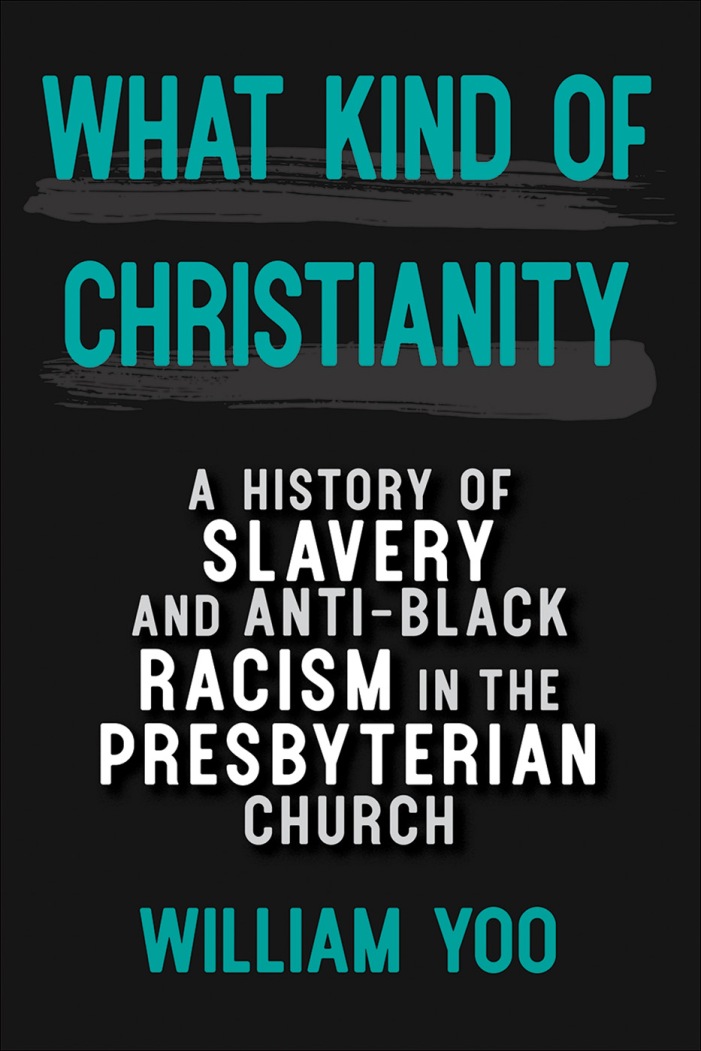 I can see some positive sides to a church ideology that addressee inner spirituality, but I think it has serious drawbacks. You can focus too much on what I will call the “inner spirituality” of church members. The reasoning behind the emphasis on inner spirituality can be faulty. The theory is that if each member becomes a better Christian, they will be better neighbors towards others. If they feed the hungry and cloth the poor, they will be ridding the world of the evils that Jesus preached against. Unfortunately, these propositions are not evidenced by historical fact. For hundreds of years many Christians supported slavery and sexism by doing little or nothing to condemn or speak out against it. Furthermore, many Christians were major protagonists of racism and sexism. If their ministers spoke out against it, it obviously made little difference. Being a card carrying member of a Christian church never seems to correlate with ending war, sexism, racism, homophobia or even poverty. I think without an equal emphasis on “Outer Spirituality” Christianity is a worthless religion.
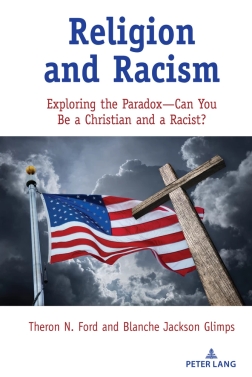
This issue which I call “Inner Spirituality versus Outer Spirituality” brings up a major conundrum in Christian thinking which has been the subject of many a lecture and paper. This dilemma is whether a Christian can be saved by faith alone or are good works also necessary. The apostle James says:
“So you see, faith by itself isn’t enough. Unless it produces good deeds, it is dead and useless. Now someone may argue, ‘Some people have faith; others have good deeds.’ But I say, How can you show me your faith if you don’t have good deeds?” — James 2:17-26 NLT
The viewpoint promoted by James has been dissected many times by the followers of Paul who argue almost the opposite. Paul wrote the following:
“For by grace are ye saved through faith; and that not of yourselves: it is the gift of God: Not of works, lest any man should boast. For we are his workmanship, created in Christ Jesus unto good works, which God hath before ordained that we should walk in them.” — Ephesians 2:8-9 KJV
Most mainstream Protestants as well as evangelicals cling to the opinion of Paul. I have a deep skepticism over this acceptance of Paul’s opinion for two reasons. First, it is very self-serving. It is a lot easier to say “I believe in Jesus” than to walk in Jesus’s shoes or to commit to action that saves others rather than just faith. Secondly, Paul was never as close to Jesus’s teachings as James was. Why should Paul have more credibility than James who was one of the 12 apostles living with Jesus during his ministry? Again, I see Christians taking the easy way out. Jesus said:
“Not every one that saith unto me, ‘Lord, Lord’, shall enter into the kingdom of heaven; but he that doeth the will of my Father which is in heaven.” — Matthew 7:21-23 KJV
If you have ever been to an Evangelical church meeting, you will hear the name of Jesus dripping so often from the lips of parishioners that you might think they are all going straight to heaven after they leave church. The practices or works of many of these “devout” Christians is enough to make anyone divorce themselves from any association with Christianity. During President Obama’s term in office, the head pastor of the Westboro Baptist church repeatedly called for God to strike Obama dead. Finally, he was condemned and ostracized by many other Baptist preachers. Nevertheless, Baptists have never been known for condemning racism or sexism from the pulpit. I think the argument over faith versus works is a false dichotomy and strictly speaking no one can be a Christian unless they practice both. Whether or not this will get them to heaven is an open question since I do not believe heaven or hell exists.
This brings me back to the concepts of inner and outer spirituality. Much like the faith versus works argument it is a false dichotomy. However, I prefer to think in secular terms. In secular terms, spirituality does not mean practicing Christianity or any other religion. I don’t need faith to be saved. I need both an inner and outer spirituality.
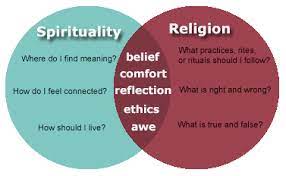 There are many definitions of spirituality. What does it mean to be a spiritual person? Some people lean towards accepting a higher being or creator. Some lean towards accepting a more conventional religious perspective. Many on-line definitions list several factors necessary to be a spiritual person. My own definition is much simpler. I think being a spiritual person involves two elements. The first is seeking meaning in one’s life. The second is seeking purpose. Meaning is inner spirituality. Purpose is outer spirituality. Meaning and purpose must go beyond what is simply good for oneself and must embrace what is good for humanity and the universe. Thus, a truly spiritual person is one who finds and balances inner and outer spirituality.
My understanding of the great prophets like Buddha, Moses, Jesus, Mohammed, Guru Nanak, and Baha’u’llah are that they all preached a concern for humanity and the universe that went well beyond what was simply good for the individual. Some quotes illustrate what I am talking about:
Buddha: “If you light a lamp for somebody, it will also brighten your path.”
Moses was a lawgiver who gave the Israelites the Ten Commandments “You shall not steal, nor deal falsely, nor lie to one another.”
Jesus: “Love your neighbor as yourself.”
Mohammed: “The best among you is the one who doesn’t harm others with his tongue and hands.”
Guru Namak: “He who regards all men as equals is religious.”
Baha’u’llah: “Do not be content with showing friendship in words alone, let your heart burn with loving kindness for all who may cross your path.”
I think you can see from the above quotes that each of these great prophets embraced the idea of a goodness that extended beyond the self to all of humanity. There are many other great prophets as well as great philosophers. What has made them all great is a burning desire to help the world become a better place than they found it.
We all have a choice. We can take care of ourselves and acquire as much money, fame, and power as we can. Or we can let go of stockpiling material things and help the world be a healthier place. A place where everyone can live in peace and harmony with nature and its other species. In some ways it is a matter of choosing life or death. The present path is destroying us. The Club of Rome report called “Limits to Growth” was ridiculed when it was published in 1972. Over fifty years later and no one is laughing at the climate catastrophes that materialism and over consumption have brought upon the earth. We were warned fifty years ago to start dealing with the problem now. Is it too late? Perhaps, but we lose nothing by trying. We will surely lose our souls if we do not try.
 I thought I would start the year of 2021 off with a positive slant. Namely, some things we can all do or practice to be better people. However, before anyone should pay any attention to what I am about to say, there are several questions they must ask themselves. I would advise you that the veracity and hence credibility of an author is critical to your acceptance of what the author is trying to sell you or convince you of. Do not buy an argument from someone who cannot be trusted. Think about the comment that “If you see the Buddha on the road, kill him.” An uncritical acceptance of any idea is dangerous to your own integrity and responsibility. Hence, the questions I would want answered (If I were you) would be as follows: Who is this writer to say what the “greatest” virtues for a human are? How did he come up with these Seven Virtues? What is the difference between a virtue and a value? Is this an important difference or is he about to sell me another new religion?
 I would like to answer that I am a seeker of truth and knowledge. I am very opinionated, often highly judgmental and have frequently been accused of being a “know it all.” Many people would write my opinions off as being too liberal while others would say that I am too rational. I place great value on being logical and trying to stay open to many possibilities. I have been studying philosophy and religion since I was eighteen. I have no degrees in either. But the number of books and articles and stories that I have read number in the hundreds. I have attended many different worship houses and types of religious services. I was brought up as a Catholic until I rejected its teachings at about the age of 10. When no one would give me a good answer for “Who made God?” I more or less decided that most religions were based on superstitions.
 Given that one could easily comprise a list of ten or perhaps one hundred important virtues, why do I believe that my seven are the seven greatest and most important? How do I have the audacity to make such an assertion? I might have been sitting under an apple tree one day, or perhaps simply thinking about life at one of my yearly silent retreats at the Demontreville Retreat Center, when I compiled a list of seven virtues. While I truly “value” these ideas, I understand them more as virtues than values. I will address this difference later. I decided that I want to live by these virtues. Each day for the last fifteen or more years, I have selected one of these seven virtues to help guide me through the day. Whether it is patience, kindness or courage, each day I start by reflecting on this virtue and trying to make it a part of my life.
 The danger in this discussion lies in your taking a sectarian or religious approach to my writings. I assure you that I am not a religious person. I may be a spiritual person but I do not think of myself in either of these categories. I am an agnostic who wants to live a better life and help build a world that is a better place to live for future generations. Living by these seven virtues is one way I believe I can contribute to this goal.
 If I have satisfactorily answered the questions that I posed above respecting my integrity and credibility, I will now set off to address each of my Seven Virtues and explain why they are so important and the difference that I think they can make in our lives. Look for my virtues over the next several weeks in my blogs.
 Aging Capriciously