Last week we started a search for Truth which took us from the Trial of Socrates to The Extermination of Native and Indigenous Peoples. At the end of this journey, I am sure you were no closer to the Truth than I was. Thus, I think we should continue our search through history and through the next five egregious injustices in my list to see if somewhere within these abominations of human behavior we can find the Truth. We seek a Truth that is so compelling, so momentous and so significant that it has allowed our leaders and greatest thinkers to commit such heinous crimes against humanity in the name of Truth and justice. (Click on the title to listen to Aye Khuda’s Song The Ballad of Inhumanity) 
Surely, with the wisdom of hindsight, there is no one who would disagree that every one of the items on my list is a sad commentary on the human race. Let us move on then and see what insights the next events we examine might shed on the ultimate Truth which we all seek. We move forward in history, with the hope that perhaps in this journey, we will find the ultimate Truth. Just like Diogenes, we must have patience and keep seeking. By the way, did Diogenes ever find an honest man? I don’t think he did.
- Reign of Terror
- Scottsboro Boys
- The Holocaust
- The Khmer Rouge Genocide
- Roman Catholic Sex Abuse Scandals
The Reign of Terror: Part of the French Revolution
The Reign of Terror lasted from 1793 to 1794. Can you think of a more horrible epithet for a period of time that should have been characterized by unbridled optimism? It was a period of time in France that (though it took place about 14 years later in France) was born of dreams and aspirations that were similar to the American Revolution. In final outcomes, no two events could have turned out more dissimilar. In the beginning though, there were similarities. In both France and America, a king and tyrant would be overthrown. In both nations, the goal was to establish a democracy. In both the USA and in France, it was to be a rule of the people, by the people and for the people. And in both cases, it was a revolution that started out based on the liberal and enlightened ideals of such thinkers as: Rousseau, Locke and Voltaire. And that is where the similarities end. 
In America, we ended up with a democratic system of government and no king or dictator. France went on to establish a dictatorship under Napoleon Bonaparte and lopped off the heads of over sixteen thousand people and another twenty five thousand by other means. Whereas in the USA, we exported the Tories (those who sided with England) to Canada and elsewhere, during the French Revolution, anyone not labeled a “patriot” was subject to arrest and execution whether they were “citizens’ or not. The very leaders of the French Revolution were one by one called out for treason and executed. This included such famous names as: Saint-Just, Carnot, Danton, Marat, and Robespierre. No one in France was safe from the guillotine. Here was an erstwhile revolution for liberty, fraternity and equality that turned into a debauchery of power hungry madmen secretly harboring dreams of glory and fame. Want happened to the Truth? Who knew the Truth? The basic Truths of the philosophical founders of the French Revolution include the following:
John Locke: “All mankind… being all equal and independent, no one ought to harm another in his life, health, liberty or possessions.”
Jean Jacques Rousseau: “What wisdom can you find that is greater than kindness?”
Voltaire: “What is tolerance? It is the consequence of humanity. We are all formed of frailty and error; let us pardon reciprocally each other’s folly – that is the first law of nature.”
These hardly seem like Truths that would lead anyone to rampant executions but perhaps the Truths of the leaders of the Revolution did not really derive from the Truths of their philosophical founders. Let us look at the Truths of some of the French leaders and see what their Truths were:
Louis Antione de Saint-Just: “The vessel of Revolution can arrive at port only on a sea reddened by torrents of blood.”
Lazare Carnot: “The General Order is always to maneuver in a body and on the attack; to maintain strict but not pettifogging discipline; to keep the troops constantly at the ready; to employ the utmost vigilance on sentry go; to use the bayonet on every possible occasion; and to follow up the enemy remorselessly until he is utterly destroyed.”
Georges Jacques Danton: “In revolutions authority remains with the greatest scoundrels.”
Maximilien Robespierre: “To punish the oppressors of humanity is clemency; to forgive them is cruelty.”
Is it just me or does there seem to be a major disconnect between the Truths of the philosophers and the Truths of the political leaders? Does it seem funny that a revolution that was started to pursue a rule of law for the common everyday person was soon taken over by fanatics and extremists? In this day of rampant terrorists, it would appear that the worst terrorists of the French Revolution became their leaders. Is it everywhere the same that Truth gets coopted by the fanatics and terrorists or is the French Revolution simply an aberration? Could it be that the Truths of Rousseau and Locke were actually lies and the Truths of Carnot and Danton were the real Truths? Must Truths ever be colored in blood and gore? Let us move on to look at another regrettable episode in human history and see what light if any on the Truth it may shed.
The Scottsboro Boys:
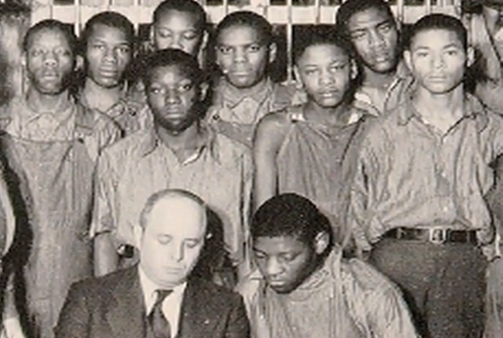
 Nine African American youths tried and convicted for the alleged rape of two White women while on a train ride to find work in 1931. This travesty of American justice took place in Alabama during the height of Jim Crowism. Many people recognized that these “boys” as they were called were being railroaded to justice. They were tried a total of three times. Twice by all White juries and once by a jury that included a single African American member. (How would you like to have been that minority juror?) In each case, they were all found guilty. Some of the “boys” were subsequently pardoned, yet all but two served lengthy prison sentences.
What was their crime? Rape you say? The rape of two white tramps who were probably screwing the daylights out of every male they met regardless of color? Or was it two white Women who represented the flower of Southern gentility? The chivalry of the Southern gentleman coming to the aid of his White magnolia blossom to insure her continued unblemished purity.
Yes, this trial was more than a trial for the rape of two women, this trial represented the rape of the entire South. Every White male in a Southern state was raped by these “colored boys.” Such a mockery of Southern chivalry could not go unpunished. The Truth of the color line must be established once and forever and what was this Truth? For the Blacks and for the Whites, the Truth was very different. Here were the Black Truths:
Black Truth: Southern White slave masters have been raping Black women since the first slaves were offloaded to American shores.
Black Truth: A large number of White women were more than willing to go to bed with an African American male.
Black Truth: A White jury would never free a Black person of a crime against Whites.
The Truths for Southern Whites looked like this:
White Truth: If we could lynch these Black bastards, we would.
White Truth: It’s alright for a White man to screw a Black woman but it’s not alright for a Black man to screw a White woman.
White Truth: We have two sets of justice down here, one for White people and one for niggers.
Times have changed. Black people have made progress right? Of course they have you say! Does not the USA now have a Black president? Although, he is also half White so why is he not a White President? However we also have Ferguson Missouri, Eric Garner and thousands of African American males in prison for drug crimes that a White person would not have been convicted for. We daily witness protest marches against police profiling and the shooting of poor young African American “boys.” Time marches on and the Truth still remains somewhat murky.
The Holocaust:
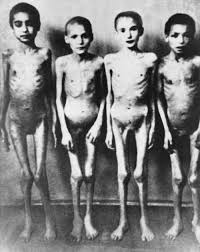
 The Holocaust was the systematic murder of Jews by the Nazis for the sole reason that they were Jewish. They were not a burden on the society. They were not a primitive culture. They were not a class of deviates or criminals. Indeed, they were shopkeepers, bankers, manufacturers, educators, musicians, philosophers and scientists. The Jews in Europe were probably the best educated and most prosperous ethnic group that existed in Europe. Why the Holocaust? Why the crematoriums? Why the Gas Chambers? Why? Why? Why? This question has been asked thousands and thousands of times. Hundreds of books have been written asking and looking for an answer to this question.
Now it may be noted that a “Holocaust” does not strictly apply to the Jewish slaughter and that there have been other holocausts in history. Earlier I noted the massacre of Armenians by the Turks. The systematic murder of Cambodians by the Khmer Rouge, the Rwandan Massacres and the genocide that took place between the Bosnians and the Serbs. So what is the difference between the Jewish Holocaust and these no less horrible episodes? Let us look at the definitions that have been applied to the following terms:
Genocide is defined as: “The deliberate and systematic extermination of a national, racial, political, or cultural group.” (Dictionary.com)
Holocaust is defined as: “The systematic mass slaughter of European Jews in Nazi concentration camps during World War II (usually preceded by the).” (Dictionary.com)
The Holocaust has been labeled as a unique instance of genocide. It is certainly a specific example of genocide that was perpetrated against a targeted group of people. One might argue that there is no commonality between the Holocaust and these other examples of genocide, however I think they would be on shaky grounds. In all cases, it could be argued that the perpetrators felt somehow threatened by their victims and decided that only by killing their chosen victims could their threat be eliminated. Nevertheless, in no other examples except for the Jewish Holocaust was the entire legal, judicial, legislative, military and political apparatus of an entire State brought to bear against the victims. Furthermore, the furtive and secretive nature of the Nazi slaughters were without precedence. They clearly recognized that their mass murders were immoral and evil and they took major steps to prevent the world from learning about these atrocities. So did the Nazis have a set of Truths that they were following in the murders of their victims? What were the Jewish Truths that they followed as they attempted to take part in the German culture? Let’s listen to some of the Nazis leaders to see their Truths:
Hitler: “The personification of the devil as the symbol of all evil assumes the living shape of the Jew.”
Himmler: “We know that these clashes with Asia and Jewry are necessary for evolution.”
Goebbels: “I am of the opinion that the greater the number of Jews liquidated, the more consolidated will the situation in Europe be after this war.”
Rosenberg: “Since Germany with its blood and its nationalism has now broken for always this Jewish dictatorship for all Europe and has seen to it that Europe as a whole will become free from the Jewish parasitism once more, we may, I believe, also say for all Europeans: For Europe the Jewish question is only then solved when the last Jew has left the European continent.”
We must look to some of the Jewish leaders and spokespeople to see what their Truths were. What beliefs and ideologies could have persuaded the Jew to live, work and die for a country that would eventually seek to totally and permanently eradicate their very existence? But of course, only after stealing everything they owned and even taking their victims hair and teeth to recycle for the greater good of the true German Master Race.
Robert Weltsch: “They accuse us today of treason against the German people: The Nationalist-Socialist Press calls us the ‘enemy of the Nation,’ and leave us defenseless. It is not true that the Jews betrayed Germany. If the Jews have betrayed anyone, it was themselves. Because the Jew did not display his Judaism with pride, because he tried to avoid the Jewish issue, he must bear part of the blame for the degradation of the Jews.”
Mordechai Chaim Rumkowski: “I thought that would be the end of it, that after that, they’d leave us in peace, the peace for which I long so much, for which I’ve always worked, which has been my goal. But something else, it turned out, was destined for us. Such is the fate of the Jews: always more suffering and always worse suffering, especially in times of war.”
Jewish Saying: “If a Goy strikes you, bow your head and he’ll spare your life“
Anne Frank: “In spite of everything, I still believe that people are really good at heart. I simply can’t build up my hopes on a foundation consisting of confusion, misery, and death. I see the world gradually being turned into a wilderness, I hear the ever approaching thunder, which will destroy us too, I can feel the sufferings of millions and yet, if I look up into the heavens, I think that it will all come right, that this cruelty too will end, and that peace and tranquility will return again.”
Simon Wiesenthal: “For me the Holocaust was not only a Jewish tragedy, but also a human tragedy. After the war, when I saw that the Jews were talking only about the tragedy of six million Jews, I sent letters to Jewish organizations asking them to talk also about the millions of others who were persecuted with us together – many of them only because they helped Jews.”
The Jewish Truths seem to me to bear absolutely no resemblance to the Truth of the Nazi Fascists. In America, we lost over 400,000 soldiers in our efforts to wipe the Nazi butchers off the face of the earth. Nothing infuriates me more than seeing some miscreant wearing a Nazi swastika or sporting a Nazi tattoo. The Nazis made a sacrament out of murder and torture and created altars where they could worship their blasphemous sacraments at. Their altars were their crematoriums and death chambers. It is a sad Truth that we still have Nazis and Nazi sympathizers walking the face of the earth. But let us journey on through history. With only two events left in my list, it would be irresponsible to forego the lessons that they might still hold for us.
The Khmer Rouge Genocide
The Khmer Rouge regime arrested and eventually executed almost everyone suspected of connections with the former government or with foreign governments, as well as professionals and intellectuals. Ethnic Vietnamese, ethnic Thai, ethnic Chinese, ethnic Cham, Cambodian Christians, and the Buddhist monkhood were the demographic targets of persecution. As a result, Pol Pot is sometimes described as “the Hitler of Cambodia” and “a genocidal tyrant.” Martin Shaw described the Cambodian genocide as “the purest genocide of the Cold War era.”
Ben Kiernan estimates that about 1.7 million people were killed.[6] Researcher Craig Etcheson of the Documentation Center of Cambodia suggests that the death toll was between 2 and 2.5 million, with a “most likely” figure of 2.2 million. After 5 years of researching some 20,000 grave sites, he concludes that, “these mass graves contain the remains of 1,386,734 victims of execution.” (From Wikipedia)
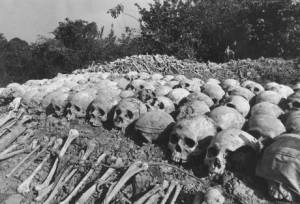 The most startling fact or perhaps we should say Truth about the Khmer Rouge Massacres is that they went on virtually unheralded and unnoticed by the Western world. There was little outcry or call for intervention by any Western government. In the USA, virtually no press covered these events while they were happening. How could nearly two million people be exterminated without the United Nations, The United States or any other Western country raising an outcry against such an atrocity? The Truth, which few dare say, seems to be that Asian lives (much live African lives) do not matter as much in the West as European or American lives. Witness the recent Charlie Hebdo murders.
On January 7th 2015, two masked men entered the offices of the journal paper Charlie Hebdo and murdered in cold blood twelve of the staff. The reason for the murders is alleged to be retailiation for the depiction of the prophet Mohammed in unseemly portrayals by the satirical magazine. The manhunt went on for three days for the killers and resulted in thousands of newscasts, broadcasts, newspaper articles, radio announcements etc. that continued 24/7 non-stop until the killers were found and eliminated.
The Western press had a field day with the event. It became a bigger star than the Super Bowl. I looked at CNN on my IPAD one day and the first 16 of 55 articles all had to do with the Charlie Hebdo murders. The 26th article that CNN published two days ago noted the massacre of 2000 Nigerian men, women and children by the terrorist group Boko Haram. Sixteen articles on the murder of 17 French citizens and one article on the massacre of over 2000 Nigerian citizens. Does this suggest a different Truth for the murder of Africans versus Europeans? On Sunday, heads of state from across Europe, Africa and the Middle East flew into Paris to take to the streets alongside an estimated 1 million people in the city — including the entire French government to protest the Charlie Hebdo killings. Republicans in the USA are criticizing President Obama for not having sent a high enough official to attend the march.
“I’m for truth, no matter who tells it. I’m for justice, no matter who it’s for or against.” – Malcolm X
Where is the march and protests for the Nigerians who have been murdered? Where is the outcry for the massacre in Nigeria? Where is the manhunt for the Boko Haram terrorists? Where are the thousands of articles and newscasts doing a minute by minute and hour by hour summary of the search for the Nigerian killers? Dare I suggest the Truth that African lives do not matter as much as European lives?
African lives, Asian lives, Mexican lives, European lives, American lives, we can put them on a scale and measure the value to the news and media. Do the news report the news or do they make the news? If the news paid more attention to the rest of the world, would we see the importance of “other” lives? Would “other” lives ever matter as much as European and American lives? What is the Truth here? Perhaps our last case to be examined will finally allow the Truth to emerge. One more to go before we discover the “final” Truth!
Roman Catholic Sex Abuse Scandals
I confess that I grew up in an Italian Catholic family. I went to a Catholic boarding school for 4 years and went to Catholic Church until I was sixteen. I have since regularly attended a yearly Jesuit Retreat for the past thirty three years. During all of this time, my experiences with the Catholic Church have been positive. I am an agnostic by way of coming to have a different understanding of faith and religion but not because I was ever abused or mistreated by any clergy. I state these facts so no one will misunderstand my intentions in discussing the issue of the Catholic Church hiding its pedophiles.
“There is nothing more deceptive than an obvious fact.” – Arthur Conan Doyle
 While there are some who argue that the number of priests identified as pedophiles is about the same as in the general population, this argument entirely misses the point. The key point of the issue for those who were abused is that they were relating to a select group of individuals who ostensibly were selected, trained and promoted to positions of authority because they could be trusted. The fact that this was not the case was only one half of the problem. The other half of the problem was that the Catholic hierarchy refused for years to acknowledge the problem and indeed grossly exacerbated the problem by hiding and protecting the deviant priests. Thus, not only the pedophile priests were guilty of a crime but the Church leaders themselves were guilty of deception, fraud, immorality and the concealment of major crimes.
When we look closely at this situation then, we have three sets of Truth. The Truth of the Pedophiles. The Truth of the Catholic leadership and the Truth of the abuse victims. Where should we start? Let’s look first at the truth of the victims.
Rita Milla – Victim:
“The 28th of January 1978 was when I was first raped,” said Milla, now 51, as she sat Thursday in the Wilshire Boulevard office of civil rights attorney Gloria Allred.
“Every year on that day it kind of freaks me out,” she said. “I started feeling like when I was 18 when this stuff was going on – the same feelings, the guilt and the hating myself.” I became very depressed and for three or four days I just wanted to hide out. I just wanted to throw up.
Mark Murray – Victim:
“They know that the abuse that happened by priests at Roe Head was then covered up. They know that the priests that abused children were moved on to other positions. Positions where they would not cause concerns or problems for those that moved them.”
Boy X – Victim at the Comboni Mission:
“Sometimes I think what would have happened if Fr. Pinkman had not turned his back on me that day on that railway platform. What if he had approached me and put his arms around me and told me he was sorry. It would have meant the world to me. I would have forgiven him there and then. It would, to a great extent, have lightened that burden on my back, that devil I’ve been carrying all my life. I really believed that Fr Pinkman cared for me, maybe I needed to believe that. Even after he had turned away from me that day. I still believed he cared. I realize now that he never cared at all.”
The Truths of the victims are rather hard to understand. Unless one has gone through what they have, it is difficult to fathom the pain and anguish that the pedophiles reeked on their victims. But let us be fair. We must also listen to the Truth of the pedophile priests. Perhaps their Truth will be all that is necessary to set the victims free.
Father Shawn Ratigan:
“Prison is hell,” Ratigan said. “I know I deserve 15 years, but 50 years? Come on, I don’t think so.”
Father Oliver O’Grady:
“I want to promise myself this is going to be the most honest confession of my life,” O’Grady said in the film. “And in doing that, I need to make a long journey back, understanding what I did and to acknowledge that. And in some ways make reparations for that.” [O’Grady was the subject of the 2006 Oscar-nominated documentary Deliver Us from Evil. In the film, he admits to molesting dozens of children and writes apology letters to some of them.]
Fr Curtis Wehmeyer: (Wehmeyer pleaded guilty and was sentenced to five years)
The priest had quietly admitted to touching one boy’s genitals on more than one occasion, masturbating in front of them and possessing pornographic photos and movies showing nude prepubescent boys alone and engaged in sexual acts with each other. ( Minneapolis Star Tribune: February 1, 2013)
Finally, there is the Truth of the Roman Catholic Leadership in terms of what they believe about these cases of abuse and rape.
Todd Tamberg – The Archdiocese of Los Angeles:
Speaking about the film (Deliver Us From Evil), Archdiocese spokesman Tod Tamberg, who viewed the film prior to its debut, sent a statement saying it is “primarily based on anti-Church assertions by plaintiff’s attorneys who stand to gain financially and on the self-serving comments of former priest O’Grady, a sick, twisted monster and, like most molesters, a master manipulator.”
Bishop Robert Finn: (Sorry no direct quotes here, but actions may speak louder than words).
A computer technician working on Father Rattigan’s laptop in December 2010 found hundreds of troubling images of young girls and reported it to officials with the Catholic Diocese of Kansas City-St. Joseph. Instead of turning the photos over to police or reporting suspicions about Ratigan, Bishop Robert Finn of the Kansas Diocese sent Ratigan away for psychiatric evaluation and later ordered him to stay at a convent where he could say Mass for the sisters and stay away from children.
The Vatican:
“Regarding accusations against a cardinal, we remind everyone that, in the Church, only the pope has the authority to accuse a cardinal,” (Pope Benedict had censured Cardinal Christoph Schönborn of Vienna, who last month publicly accused another cardinal of covering up sexual abuse)
I think it is fairly easy to sum up the truths of the various parties. I wish I could have included all of the comments and dialogue that were possible but the comments I included reflect to some extent the overall tone of the parties involved.
The victims felt betrayed, abused and guilty. Perhaps the victim’s Truths were as follows:
- I must have done something to deserve this abuse
- I really thought they loved and cared for me
- Why didn’t anyone come to my aid?
The guilty pedophile priests engaged in active denial or a sense of indignation that they needed to be found guilty for something that to them was an inalienable right. The right to abuse, molest and rape young girls and boys. Their Truths would sound like this:
- I did not do anything to really hurt anyone
- Why is everyone upset over nothing?
- I do more good than harm so why am I being prosecuted?
Finally, the Officials of the Church share a large portion of the blame and responsibility for these acts. They hired these priests, promoted them, protected them and even went so far as to engage lawyers in efforts to cover up these crimes. Their Truths would include:
- We are above the law
- No one was really hurt
- We can’t afford to accept any responsibility for the crimes committed
Conclusion to Part 2:
I think I am finding (and I assume you might also be finding) that truth is a very ephemeral, elastic and slippery quality. Nevertheless, despite its elusive attributes, after spending over 2500 years looking at some of the most atrocious and egregious events in history, we should be at the point of finding the Truth. Alas, I think we have run out of time and space in this blog. I had thought we could wrap things up and conclude at this point but I think with all the time and energy we have already dedicated to our search, it would be hasty and premature to conclude at this point. There are a number of observations that warrant attention and I will discuss these in the Part 3, the final part in our search for the Truth.
Time for Questions:
What are your thoughts at this point in our search for the Truth? What observations can you share in my comments section? Please add your voice to the search. Your opinions are valuable and the more brains the better. We all need to hear from each other or there is no Truth to be shared.
Life is just beginning.
“We must pass through the darkness, to reach the light.” ― Albert Pike

 ays every American citizen has Freedom of Expression. Thus, we are just expressing our free rights as American citizens to beat up on people we don’t like.”
 “Look, said Tattoo Guy, we voted for Donald Trump and he respects our Freedom of Expression rights. We are sick and tired of the PC shit you pussies and commies have been spreading in this country for years. We are tired of watching what we say and do because we might be called rednecks or bigots or even racists. It’s a new day for America. We are going to make our country great again.”
 “You are more or less on the right track” says Tattoo Guy. “Used to be you could tell some nigger jokes, put up pinups of nude girls, even grab a few pussies once in a while and no one bothered you. Then, all this PC stuff started and before you knew it, you had to watch what you said and did. A White person’s Freedom of Expression went down the drain. Well, no more PC now. So can we please get back to beating the shit out of this nigger?”
 “Well, what if I told you that I had a Glock Model 40 10mm in my pocket and that if you hit this man one more time, I will take it and blow your fucking brains out. What would you think of that” I replied indignantly.
 Denial generally means that we refuse to accept any logic, evidence, experience, data, facts, authority or any other means of Truth finding. It is an outright refusal to accept anything that will change the deniers mind. One example of this is the current debate (at least among some) as to the issue of global warming. Climate deniers argue that there is no change in the overall earth’s temperatures and that the warming is simply consistent with overall weather patterns in the earth’s history. Those opposed to this view point to a considerable stockpile of evidence, facts and data to show that the weather changes are not part of a historical pattern but are indeed a change in past weather patterns. Nevertheless, climate deniers refuse to change their minds.
 Thus, we typically ignore or give a pass to someone who is “delusional” because we think either they are sick or that they are not in a good state to make decisions. No sane person would try to talk or argue a person who is delusional out of their Delusions. However, what if the person is sane and they engage in Delusions? This seems impossible but it happens all the time. One example will suffice: Anderson Cooper was interviewing some Trump supporters on his show. He asked one young woman what it was she liked about Trump. Her response was “He is just like us, except he is a billionaire.” Millions of Americans seemed (if voting was any indication) to agree with this statement. To any logical person looking at the background, upbringing and behavior of Trump, this statement would seem ludicrous. It would seem to indicate an extreme case of delusional thinking. But, by all standards of psychiatric analysis, this woman and her supporters are not insane.
 The basic premise of the work by Kahneman and others in his field is that while most of us try to be logical and rational, our decision making is often flawed by biases and heuristics that influence our decisions. The book Judgment Under Uncertainty catalogs the major types of cognitive errors that we make and gives many examples of each. One of the most common ones that many people recognize has been called the “Gamblers Fallacy.” Let us say that you are rolling a dice. The odds of any one number being rolled are 6 to 1. So let us say that you roll four three times in a row. What are the odds that you will roll a 4 on your next toss? Higher or lower than 6 to 1? Many if not most people would now assume the odds against rolling another four might be 30 or even 40 to one. In fact, the odds for rolling a four on the next toss are still 6-1. This fact would surprise many people. Mentally, we confuse the odds of an individual toss with the odds of running a series. The odds of rolling four in a row on a dice are much greater than the odds of rolling any particular number. What are the odds of rolling a number four times in a row on a dice? We can calculate it as follows:
 After even a slight perusal of these fallacies, you might be thinking: “Why bother, we can never find the Truth, there are too many roadblocks out there.” It probably seems like a hopeless task, something akin to finding the Holy Grail or the Ten Commandments. I admit that the recent Presidential election and its results would seem to support the invincible nature of stupidity and ignorance. The world seems overwhelmed with those who would dwell in biases, bigotry and hypocrisy and have little interest in finding the Truth. The Truth becomes whatever they are told or choose to believe. The media parrots disinformation, misinformation and outright lies. How can anyone find the Truth amidst this forest of propaganda and distortion?
 One of the most unnerving but interesting books I have ever read was the book “True Believer” by Eric Hoffer. This book explains the thinking or lack of thinking behind zealots, fanatics and what Hoffer calls “True Believers.” After reading this book, it was clear to me that ideologies, whether left wing, right wing, fascist or even liberal could be dangerous. The Greek Golden Mean “All things in moderation” kept coming to my mind. A “True Believer” will not tolerate or listen to dissent or argument. They are so convinced that their way is the only way that dialogue and discussion with them is fruitless. In fact, many “True Believers” will happily kill you for their ideology.
 Furthermore, because our ideologies are so good, we cannot believe that anyone has the right to reject them. We do not care if the rest of the world does not want to share them, we will bomb and kill you until you see how good our ideologies are. We are totally closed minded in our belief that Democracy and Free Enterprise are truly universal virtues that the rest of the world must adopt. We have become a nation of True Believers in the “American Dream.”
 Emotional biases are formed by experiences or ideas derived from each of the four categories of knowing and believing that I briefly discussed earlier. We can derive an emotional bias from a strong attachment to anything and it does not matter whether we have Facts, Data, and Evidence. An emotional bias comes from the heart as opposed to a cognitive bias which comes from the brain. Of course, in practice both sets of biases tend to overlap and support each other. Someone with a strong cognitive bias can become very emotional about their beliefs and someone with a strong emotional bias may tend to only accept Facts which support their bias. In either case, we face the same difficulties with trying to get the individual to seek the Truth. Notice, I did not say see the Truth. Perhaps, some or more of what they already believe is the Truth or at least part of the Truth.
 I am working to prepare for a chess match with my neighbor. I happen to note in the paper the Fact that tomorrow will be a quarter moon. Does this Fact have any relevance to my playing chess? I don’t think so. Thus, I don’t really care that there will be a quarter moon. As far as my limited cognition or perception, I can see no relevance between the Fact of a quarter moon and my preparing for my chess match. I could be wrong. We can always mis-perceive the relevance of some information to an issue. This is often done in science and in police work. We don’t see the connection between two issues and we misjudge the outcomes. This provides one good reason for diversity and numbers in problem solving. You have less chance of being blindsided if you have a variety of opinions rather than just your own.
 Let us look at another example where the issue of relevance is more salient. I am planning to go on a trip to England in 2017. I want to plan my trip for the best possible time of the year. I hypothesize that two Facts or Data points are very important to my planning. The first is the temperatures at various times of the year in England. The second is the rain fall. I found the ranges for this data on a weather site and used the information to plan my trip. Of course, some of the decisions anyone makes will depend on their own weather preferences. I wanted to minimize rainfall and also keep the temperature in a moderate range. What I call sweater weather. Thus, both these set of factors were relevant and important to my planning. I would call them Evidence to support the time of year that I decided to go.
 On the other hand, if you like rain, you might have picked a different time of the year than I did. There were other mitigating factors which played a role in my decision making. These factors included costs for lodging during the year and transportation costs during the year. In general, off season times have better rates but are somewhat the worse for weather. Another factor was the value of the pound to the dollar. I considered the value of the dollar to the pound post Brexit but concluded that I did not have enough information to effectively evaluate the impact of this data on my decision. I am assuming that with the volatility involved in the situation, the value of the dollar might go either way against the pound. My best guess is that I will benefit if I go as soon as possible. The news has recently noted that after Brexit the value of the pound fell 14 percent against the dollar. This would mean I could get a significant cost advantage if I purchase anything in England. I am hoping this situation will continue until after my trip but there are too many variables at play here for me to use this information. I can only hope.
 A more common example of relevance can be found by looking at police work. We are all familiar these days with what is called Forensic science. I am sure most of you reading this have watched some police show. As soon as a crime is discovered, the Crime Scene Unit (CSI) is brought in to collect Evidence. Keep in mind that everything at a crime scene is not Evidence. Only what may have a possible relationship to the crime. This can be a real problem. The CSI unit is going to be limited by their assumptions concerning what might be relevant. For instance, I doubt any Crime Scene Investigator will care whether or not the light bulbs are “bright” or “soft white” in the kitchen or bathroom. It is impossible to collect all the “Evidence” of stuff that might be related to the crime. Thus, relying on experience and training, the police investigators do their best to collect Facts and Data that appear to be relevant to the crime. The relevant Data and Facts are not just interesting, they are Evidence. The more they relate to the crime, the stronger the Evidence will be.
 An eyewitness can provide Evidence via his/her testimony as to the events of a crime. The relevance of any eyewitness is high but the reliability of an eyewitness can be much lower. Second hand testimony is not as relevant as first hand testimony and is thus weaker Evidence. Testimony that might be compromised by some factors such as police record, bias, discrimination, physical disabilities might be relevant but will be weaker Evidence because the validity of the Evidence is suspect. That is why lab procedures and chain of custody is so important to police work. They may have the most relevant Evidence imaginable but if the validity of the Evidence can be comprimised because of sloppy police work, the Evidence will be useless.
 It is seldom that findings of Evidence in police work or business are subjected to as much scrutiny as occurred in the so called development of cold fusion. Perhaps, since this was a finding of great scientific importance, it was held to a more rigorous standard than would occur in many other scientific studies. I am thinking in particular of findings in the health field, nutrition field and drug field. In each of these fields we often have much less rigor before results are posted or accepted. Business is even worse with advertisers spouting outright lies and fabrications. Little known phenomenon are routinely heralded as being highly reliable Evidence of the benefit of some product or service that someone wants to sell you. All kinds of spurious Facts and Data are then marshaled as Evidence to support the phony claims by Madison Avenue advertisers.
 When I started working with Process Management International in 1986 after completing my doctorate degree at the University of Minnesota, I met the famous quality improvement expert and renowned statistician, Dr. W. E. Deming. Over the next seven years, he had the most profound influence on my life in terms of helping me to understand process improvement, statistics, quality and the use of Data to improve everything from widgets to health care. Under the influence of Dr. Deming, our company adopted his motto “In God we trust, all others bring Data.” Dr. Deming also said “Without Data, you’re just another person with an opinion.” So what is Data?
  If we understand what Data is, you have now entered the deep forest. However, we have a long way to go before we can get out of the forest. There are numerous obstacles along the way. Referring again to the concepts of validity and reliability, we must ask ourselves the same questions we asked about our Facts. Is our Data reliable and valid? How did we collect the Data? What method did we use to collect the Data? Are we taking a few samples each day for several weeks or are we taking a few samples for only a few days? Are we using a random sample or a stratified random sample? Different methods of collecting Data will lead to different results. And we are not even talking about interpreting the Data yet. For instance, when I worked at W.T. Grants cutting shades back in the late 60’s, I was told to make sure I took my measurements with a metal tape measure and not a cloth or plastic measure. The reason given was that it was easier to stretch a cloth tape measure and get a false result. This would lead to cutting a shade that was too large and would not fit.
 Unfortunately, the scientific method is not infallible. It is subject to bias and disagreement over Data and interpretations. Even more problematic is that the scientific method is not a strong method when it comes to testing subjective theories that cannot be verified by Fact. For instance, “Is the Mona Lisa beautiful?” As stated, this is a subjective question that each individual will hold a different opinion on. However, if I asked: “Is the Mona Lisa the most beautiful painting in the world?” I could attempt to answer that question with a bit more objectivity. I could conduct a survey to see what percentage of people think it is the most beautiful. Subjective studies are not as strong as objective studies since they usually lead to results that follow a bell shaped curve. Thus, if we conducted the above survey, we would probably find that a certain percentage of people thought it was the most beautiful painting and a certain percentage did not. As in politics, opinions of beauty would be all over the place. This is why politics is so much more difficult to “Fact check” than issues like the atomic mass of hydrogen. Politics is a very subjective field that resists efforts to test and Fact check. Some examples that would be difficult to test with the scientific method would include:
 Finally, if I have left you with some understanding of the difficulty with interpreting Data, I will have felt successful. The first step to knowledge is awareness of our cognitive limitations. We also need to be more skeptical when people present us with Facts and Data. My father used to say “Believe nothing of what you hear and half of what you see.” I still consider this good advice. There are too many fools and charlatans out there trying to convince us of things for a multitude of reasons that will benefit them and not us. Just as we would not walk down a dark alley in an unknown city by ourselves, we need to exercise caution when presented with Data and Facts. The more we understand the limits of Data and Facts, the more prepared we will be to make decisions based on Data and Facts that have a higher degree of validity and reliability. If the Data, Facts and Evidence that you base your knowledge on are not accurate than everything you think you know will be at best a half truth and at worst a total lie.
 “The prosecution had expert witnesses that testified that the Evidence was often mishandled. Photos were taken of critical Evidence without scales in them to aid in measurement taking; items were photographed without being labeled and logged, making it difficult, if not impossible, to link the photos to any specific area of the scene. Separate pieces of Evidence were bagged together instead of separately causing cross-contamination; and wet items were packaged before allowing them to dry, causing critical changes in Evidence.”
  A validity error is when we are not measuring the right thing. IQ tests have been repeatedly criticized for not really measuring the intelligence of a human being or for being biased by many cultural Factors. Thus opponents of IQ tests argue that they are not valid measures of intelligence. A reliability error is when our measures are not consistent. The scale example given above illustrates the problem with reliability. Most people use a scale to weight themselves and most scales have problems with reliability. However, if you tried to equate your weight with your health, you would be assuming that the scale could also measure health and this would be a problem with validity. Scales cannot measure health although health might be correlated to some degree with appropriate height and weight.
 Before we move on to looking at the concept of Data, we will look at two more problems with the concept of Facts. These are distortion and bias. Distortion relates to twisting the meaning of something. This can happen by taking something that someone has said out of context. For instance, I might be talking at a conference and say something in sarcasm such as “Yeah, I will definitely vote for Trump.” My words could be repeated verbatim and it would sound like I was endorsing Trump. It is difficult to detect sarcasm. To most people reading or hearing my words second hand, it will sound like I am a strong Trump supporter. Slick politicians and advertisers will often distort a Fact to make it sound like the Fact is supporting their position.



 Aging Capriciously