
America has lost the “Art of Leadership.” We no longer develop men and women with integrity or selflessness. Instead of Statesmen, we have political hacks only concerned with getting reelected. Politicians with no backbones or the courage to stand up against injustice. We have a Congress of sycophants willing to do whatever they are told to do regardless of how unethical or immoral it may be. We have thousands of lawyers who do not uphold justice but find arguments to support an amorality that meets the letter of the law but ignores the significance of decency, goodness, honesty, conscience and fairness.
In this blog and the ones to follow, I will write about insights regarding leadership from one of the greatest American leaders and Presidents of all time. I found a compilation of these in an old collectors edition of “Civil War Times” published in Winter, 2013. There are 41 in total, and I have already covered the first in a previous blog. I would like for you to hear the words of Abraham Lincoln and what he had to say about leadership. I will include some of my own experiences from my years of working with senior management in over 32 organizations. Some of the men and women I worked with were incredible leaders. Most of them wanted to be better leaders and that is where I brought the teachings and thoughts of W. E. Deming to my consulting practice. Dr. Deming achieved extraordinary results in business by tapping the knowledge, skills and abilities of ordinary people. Senator Hubert Humprey famously said that “Democracy is a system that achieves extraordinary results with ordinary people.”
Insight # 2 – Try Honey Before Vinegar:
Lincoln said, “If you would win a man to your cause, first convince him that you are his sincere friend.” Springfield, Illinois, 2/22/1842
This seems to be a principle or idea that is not very well understood by many people today. I constantly hear people tell me that if you want to change people’s ideas about things, you must “empathize with them.” “You must really listen to them.” To these admonitions, I say “Bullshit.” You can listen to some fanatics all you want to, and they will still totally ignore anything you say that does not fit in with their preconceptions or ideology.

A good woman friend of mine and I were arguing about Trump and his supporters. Repeatedly in every argument, she would say “John, you just have to really listen to them.” I finally got tired of hearing this refrain and one day I challenged her. I said, “Tell me one, only one, Trump supporter you have listened to who has changed their mind.” She was dumbfounded. She was stumped. She was bewildered. She could not think of one. Months went by. I would occasionally rub salt into the wound, “Did you change the minds of any Trump supporters today?”
You can listen to others all you want. You can listen to hell freezes over. You will not change a fanatic or zealot’s ideas by listening. But Lincoln was smarter than all the psychologists we have today put together. He knew that it would take more than listening to get others to think differently or to appreciate your ideas after you have heard theirs. It takes believing and feeling that you are a “Sincere” friend. Not just a Facebook friend or some online friend, but a “Sincere” friend. Plato talked about the various types of friends, but he said nothing about a “Sincere” friend. So, what is a “Sincere” friend and what does it take to make someone believe that you really and truly are a “Sincere” friend? Let’s first define the meaning of “Sincere.”
An online dictionary defines “Sincere” as:
“Free from pretense or deceit; proceeding from genuine feelings.”
Wikipedia defines the virtue of Sincerity as follows:
“Sincerity is the virtue of one who communicates and acts in accordance with the entirety of their feelings, beliefs, thoughts, and desires in a manner that is honest and genuine. Sincerity in one’s actions (as opposed to one’s communications) may be called ‘earnestness”’.
I think the word “Sincere” has a lot to do with integrity, honesty, trustworthiness and truthfulness. The Jewish have a word for a person who is sincere and honest called a Mensch. In Yiddish, a Mensch roughly means “a good person”. The word has migrated as a word into American English with a Mensch being a particularly good person, similar to a “stand-up guy”. A Mensch is a person with the qualities that one would hope for in a friend or trusted colleague.

I think we can now answer the question, “What does it take to impact someone’s ideas and ideology?” The answer is very simple. If you want to have someone listen to your ideas, you must be a Mensch or at least a very “Sincere” friend. When I think about the people we elect to political leadership, I am struck by the lack of Menschs in either Congress or the Legislature.
In fact, I would argue that we have the exact opposite. We have people you would not trust with a nickel. People who we know will change their mind at the drop of a lobbyist’s donations. Congresspeople, who continually lie to cover their malfeasance and incompetence. Ask anyone of them what they do all day long and they will deny that they spend about 80 percent of their time fundraising for their next election campaign.
Try to suggest some new ideas to them as I have done countless times, and you will get the following answer, “I am very busy but send me something and I will look at it.” Don’t hold your breath my friend. You will die of asphyxiation before any of them, Democrat or Republican will ever get back to you. However, mention that you are thinking of a large campaign contribution and doors will open in a New York minute.
Let us think of a scenario wherein a Trump supporter meets a Trump opponent. We will call Mary the Trump supporter and Joe the Trump opponent. Neither of them have ever met before and do not know each other. The talk between them soon turns to politics.
Mary: I think Trump is doing a great job. He is really shaking the government up. Just what we need.
Joe: You think tariffs, job cuts and threatening our allies are what we need? Are you crazy?
Mary: He is already getting results. Mexico and Canada have agreed to send more troops to the border.
Joe: These are our allies. What if I threatened you, how would you feel about me? I am sure that long-term you would be looking for some way to get even.
Mary: Well, I have to go.
Joe: Yeah, so do I. Bye
If the above scenario had gone down between two long-term “Sincere” friends, how do you think it would have turned out? I am betting both sides would have heard some value in the other sides position. Furthermore, they might have finished the discussion and gone out together to have a bite to eat or at least agreed on another time to get together.
Old Abe Lincoln knew a lot about leadership and the role that friendship played in it.
“On the contrary, assume to dictate to his judgment, or to command his action, or to mark him as one to be shunned and despised, and he will retreat within himself, close all the avenues to his head and his heart; and though your cause be naked truth itself, transformed to the heaviest lance, harder than steel, and sharper than steel can be made, and though you throw it with more than Herculean force and precision, you shall no more be able to pierce him, than to penetrate the hard shell of a tortoise with a rye straw.” — Lincoln, Address to Washington Temperance Society (February 22, 1842)
I have heard many conversations between Trump supporters and Trump opponents. We attack each other. We condemn each other for stupidity. We assail each other for taking the Kool-Aide. Then we retreat to the other sides of the room full of hate and disgust. We ask ourselves, “How could anyone think like they do?” “What is wrong with them?” “They must be either, stupid, uneducated, brainwashed, racist or something else.”

If we are going to break down the walls and barriers that now separate us in the USA , we are going to have to do more than just listen to our opposition. We are going to have to find ways of befriending each other. Not just casual friendships but real “Sincere” friendships. Friends who can accept and support mutual honesty and truthfulness with each other.
Too much of what I have seen in the media supports a narrative that my side is intelligent and smart, and the other side is dumb and uneducated. I confess to having shared some of this narrative in my own writings. It is now time to move past these simplistic and detrimental stereotypes and develop empathy and understanding that surpasses mere listening. The way to do this is through “Sincere” friendship and not by demonizing the other side.
How do we fight an “Uncivil War”? Insight # 3 from Old Abe has more valuable thoughts to help us in this struggle. I will share these in my next blog.

 The internet has made the problem even worse. We are deluged with a tsunami of viewpoints every day. From right, left, central, religious, agnostic, scientific, spiritual, communal, familial and hundreds of other perspectives our viewpoints of the world are bombarded by messages that challenge our thinking and our very reason for being. Whose shoes should I stand in? Whose perspective should I try to take?
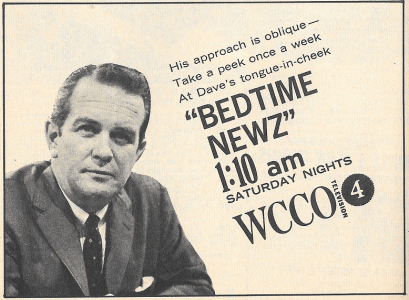 One year at a Martin Luther King memorial service on the University of Minnesota campus at Northrup Auditorium, the keynote speaker was Dave Moore, a well-known news and television personality. Karen and I attended many of the MLK day celebrations over the years. I had never seen a White keynote speaker. I was somewhat surprised and wondered what he could say about Martin Luther King or any other issue dealing with racism. It turned out to be quite an interesting talk.
 Now we get back to the difficult if not impossible people to understand. How do we put ourselves in the shoes of a rapist or pedophile? There are many that would think I am crazy for asking this question. I believe we will never eliminate these problems if we do not understand the causes. We cannot cure the problem simply by locking up all the pedophiles and rapists in the world. I do not believe that these are inherited characteristics. There have been times and places in the world where practices bordering on rape and pedophilia have actually been legal and condoned.

 I was only twenty-five when I met Irene. It was my first job out of college. I had just finished my RN program at Regina Nursing School. It took me three years going to school days and working part-time evenings to complete my degree. After finishing school, I applied at several nursing homes since I wanted to work with the elderly. In three weeks, I was hired by the River Birch nursing home in New Prague Minnesota.
 My first day on the job was the high point and perhaps also the low point of my life. It was the day I met Irene. My supervisor Michelle started my job orientation by introducing me to the staff I would be working with. She then gave me a brief summary of my work duties. She explained that I would be assigned a wing of the nursing home and within that wing, I would be in charge of a specific number of residents. We were not to call them patients. Each day, my job would be to take care of the residents that I was assigned and to ensure that they received food, care and compassion.

 Over time, I began to wonder what she was looking at. After looking out the window myself, all I could see was a large grassy field surrounded by numerous oak, maple and birch trees. On any given day, there might some grackles or robins out in the field but very little else to view. It was a pleasant enough scene but nothing that I thought could keep anyone’s attention for more than a few minutes never mind several hours of staring out the window
 a very pretty view that she could look out at. I thought she would enjoy the variety and the change of scenery. As I started to push Irene’s wheel chair away from her chosen window, she became very agitated and started pointing wildly and in a raised voice saying “window, window.” I moved her back to the old window and left her for the day.
 Next morning, I came to work and started my rounds. I did not see Irene and I wondered where she was. I checked her room but the bed was made up and there was no sign of Irene. I went into see my supervisor and ask about her. “I am sorry” Michele said “She passed away last night and was taken to the funeral home. There will be no services for her as she had no surviving relatives.” I went home and cried for her passing. I had never understood her or made a connection with her that I thought was the least bit meaningful.
 It is sixty-five years later and I finally understand Irene. I am sitting here looking out a window from the nursing home where I am now a resident. Each day I look out the same window and I see a different event from my life. I have been amazed at the events that I have witnessed. I have seen my mother giving birth to me. I have seen the birth of each of my sisters and brothers. I witnessed my first communion and my first day in school. I watched my wedding and the birth of each of my children. I was at my husband’s funeral again. During the past few months, I have seen all the major events of my life one after the other in perfect chronological order. I am almost at the end of my journey. There is only one final event. The last event will be when they come for me. They are getting close. My mom and dad are coming for me. They are coming to take me home. I must keep looking out the window or I will miss them.
 Aging Capriciously