
I have stated in my two previous blogs that unless we change our attitudes and policies regarding Corporate Capitalism, it will destroy our country, our way of life, our freedoms, and our environment. Furthermore, we will undoubtedly take some of the rest of the world along with us. This is a serious accusation and one I do not take lightly. I have been a business educator in higher education and a management consultant to some of the top corporations in the world. My opinion is not based just on theory or observations. It is based on the in-depth work that I did with over 32 companies during the time I was actively consulting. There are many good people working in corporate America but as Dr. Deming once said “You put a good person in a bad system and the system will win every time. There are Five Myths of Capitalism that are largely responsible for the mistaken policies and laws that have allowed Corporate Capitalism to become a dangerous disease infecting our way of life and causing untold damage to our country.
In my previous blogs, I described the first two myths. In this blog, I will describe Myth #3 and how it contributes to the destruction of our country. Myth #3 is:
- People Run Corporations
It is natural to believe that because people, managers and employees run corporations that they will act as humans might act. It is supposed that corporations will be or at least should be humane, compassionate, and guided by responsibilities to its employees. Nothing could be farther from the truth. Nothing could be a bigger lie or myth. People DO NOT run corporations. I think I can illustrate the point I am trying to make with a few short stories from my own experiences with large corporations. I am sure that as you read my stories, you will think of many similar experiences you have had. That is what I want you to remember.

Best Buy Story:
Several years ago I bought a new desk top computer from Best Buy Corporation. I also purchased a two-year extended warranty. No sooner had I got the computer set up in my home office when problems started. The computer would shut down without warning, most of the time right smack in the middle of a paper or presentation that I was preparing. I was always very diligent at backing up my work, but I would still lose up to 15 minutes’ worth of work which was very annoying. This happened a number of times and I called their customer service and got to talk to the Geek Squad. This was originally a group of computer nerds who had their own company and Best Buy bought them up.
I got a service rep on the line after the usual wait and switching of phone lines. He had me run a series of diagnostics and wanted to know if I had a virus protector. I told him no, I had not yet installed one. He informed me that this was my problem. I had a virus and would need to install a virus protector. I jotted down the incident number for this report and the date I called Best Buy. I purchased a McAfee Virus software and installed it. I was hopeful. However, even after installing the new software, the same thing happened again and again. The computer screen would go blank and the computer would shut off. I called Best Buy tech support again. I gave them my former incident number, but they opened a new number and gave it to me. I talked to a tech rep. He took me through the SAME series of diagnostics as before but could not find any problems. Then he asked me if I had a virus protector. I told him “Yes, I had purchased and installed McAfee Anti-Virus software. He suggested I should switch to Norton Anti-Virus as he was sure that I had an undetected virus. I said thanks and hung up. I then went out and purchased a copy of Norton’s software. I installed the software and you probably have already guessed it. The computer had the same problem and kept logging off. I was fed up.
I disconnected the computer. Took my purchase receipt and took my incident numbers and notes and told Karen that I was taking the damn thing back to Best Buy. She cautioned me to “Be nice”. “You catch more flies with sugar than vinegar.” I promised I would. When I arrived at the store, with box and computer in tow, I was referred to the Customer Service manager. He wanted to know the problem and I gave him my history. He then asked me if I had called the tech group for support. I said I had. He requested proof. I showed him my notes and both incident numbers. He then said “Well, since you did not purchase this at our store, there is nothing I can do.” Bingo! I had him, I thought. I showed him my receipt of purchase at this very same store. “Well,” he said “We would need an extended warranty for a refund since it has been over six months since you purchased this computer. I pulled out my 2-year extended warranty and showed it to him.
At this point, he said he would have to go talk to the store manager.
Mr. Customer Service manager came back about fifteen minutes later. He looked me straight in the eye and said “how sorry he was” but it was “against policy” to take back merchandise. I had had enough with “being nice.” I told him I would never shop at Best Buy again and since I was a business education teacher at a local college, I would warn my students about shopping at Best Buy. He looked blank and said not a word as I left his store. It has now been over ten years. I have never entered Best Buy again. I would not buy a battery there if it were the last place on earth.
The Moral of This Story:
We are not human beings to the people that work in large corporations. We are dollar signs. They have no empathy for us. They switch off empathy when they join the corporation and aspire to climb the corporate ladder. They become automatons who obey policy, follow procedures, and screw the customer if it means saving a dime for the corporation. They will look you right in the face while screwing you and have no pity or compassion. Remember, “we are only following procedures.” By the way, this is about as true in large Government bureaucracies as in private for-profit corporations. Caveat: There are always decent people out there who are “exceptions”, I repeat “exceptions” to the rule. However, they are not the norm.
Delta Airlines Story:
A few years ago, my wife and I bought tickets to go to Rhode Island to visit my sister. We bought the tickets well in advance and looked forward to the visit. A week or so before our scheduled departure, my brother in law called me up. “John, I know Jeanine would never ask you to cancel your trip, but she has really not been feeling good. We had to take her to the clinic, and I think it would be best if you came some other time.” I told him “no problem”, we would cancel the trip and reschedule at a later date when she felt better.

I called the airlines up to see about a refund. I was told that “they were deeply sorry, but sickness was not a reason for a refund. I said “seriously, you mean if I get sick and cannot make a trip, I cannot get a refund.” The clerk replied, “If you were sick, it would not be a problem, but you were not sick, it was your sister.” I could have bit a steel spike in half, but I replied civilly. “Okay, but what about another booking at a later date?” “We can manage that he said. We will put a voucher in for you, but you will have to pay a restocking fee.” “How the fuck do you restock an e-ticket I asked?” “Its standard policy”, he replied. The restocking fees cost about a third of the ticket prices and I remember being out of pocket about $300 dollars. Three hundred dollars to restock an e-ticket?
The Moral of This Story:
Same as the moral for the Best Buy Story. You customer. Me corporate man. We make billions by screwing people like you. Sorry, its nothing personal, just business.
Travel Insurance Company Story:
Here we are in the middle of a Global Pandemic. Karen and I had planned a trip to Paris and Moscow. We purchased trip insurance to cover a number of costs over nine months ago. Our two flights there and two flights back have all been cancelled due to the pandemic. I am confident (Perhaps an unwarranted assumption on my part) that the airlines will either give me a voucher or refund. Thus, the trip insurance company has not had to shell out one penny yet. I decided to call the insurance company to see if I could get reimbursed for our Visas to Russia and Belarus that cost us a total of $1000 dollars. I had already called both embassies and was informed that I would have to reapply for new visas. The trip insurance agent informed me that Visas are not covered under “Miscellaneous Trip Cancellations” because as the agent said, “Does it say Visas?” A short time later they sent the following notice by email to all insurance recipients:
If your travel insurance contains Trip Cancellation or Trip Interruption coverage:
Unless you purchased Trip Cancellation for Any Reason coverage, our insurance does not cover fear of travel.
Many of our plans exclude losses due to “any issue or event that could have been reasonably foreseen or expected when you purchased the coverage.” The COVID-19 outbreak is considered a foreseeable event under any plans containing this exclusion purchased on or after January 29, 2020.
I want to make three quick points.
- Do you know anyone in their right mind who would not be afraid of traveling at this time?
- How in the name of anything you believe can the Covid-19 outbreak be considered a “foreseeable event” as early as January 29th?
- Have you ever seen the fine print and the number of pages on any insurance policy?
The Moral of This Story:
By now, you should know what the moral of this story is. But just in case. It is simply this. If a large corporation can find any way to screw you, give you the shaft or take your money and give you nothing in return, rest assured many if not most of them will.

Now, I want to return to my main point. Corporations have no heart. They have no feelings. They have no emotions. They are not sympathy machines or compassionate entities. The people who are hired by these large corporations soon learn that if push comes to shove, they had better side with the corporation rather than the customer.
Unless, we change the character of corporate law, what it takes for articles of incorporation to be issued and the entire governance structure designed to provide oversight for companies, the stories that I have told above and your own sad tales will continue to reflect the reality of how corporations deal with people.
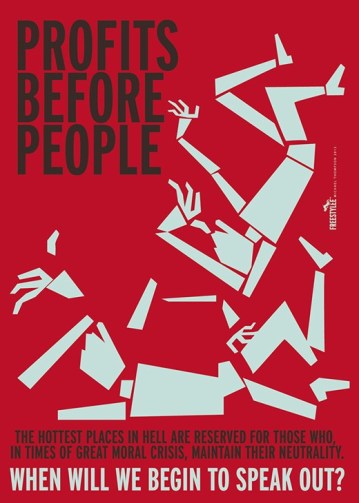
Should it be this way? Are profits more important than people? I fear that we have developed a system where too many people would say yes to both questions.
“How people themselves perceive what they are doing is not a question that interests me. I mean, there are very few people who are going to look into the mirror and say, ‘That person I see is a savage monster’; instead, they make up some construction that justifies what they do. If you ask the CEO of some major corporation what he does he will say, in all honesty, that he is slaving 20 hours a day to provide his customers with the best goods or services he can and creating the best possible working conditions for his employees. But then you take a look at what the corporation does, the effect of its legal structure, the vast inequalities in pay and conditions, and you see the reality is something far different.” ― Noam Chomsky
Carnival Knew It Had a Problem, but Kept the Party Going
More than 1,500 people on the company’s cruise ships have been diagnosed with COVID-19, and dozens have died. What were the executives thinking? BLOOMBERG BUSINESSWEEK

 Elvis recorded this song at 20th Century Fox Studios in Los Angeles on a 7” single format. The publishing label was RCA Victor. The song became so popular that it was used as the title for an Elvis movie for which the song was written. It went on to become a number 1 hit on the pop charts and has since been used in numerous movies and sung by hundreds if not thousands of other recording artists.
 I was on my cell phone a day or so ago talking with some old friends about another friend. One of my best friends in the world of management consulting was a wonderful woman named Dr. Hana Tomasek. Hana had emigrated from Czechoslovakia (now Czech Republic) after the Russian invasion in 1968. The Russians invaded to put down the political liberalization known as the Prague Spring. Hana escaped Czechoslovakia with her husband Jara on a secret journey in the middle of the night across the border and to freedom in a non-communist country. Hana and Jara left everything behind and eventually arrived in the United States for sanctuary. Years later they achieved their dreams of citizenship in the “Land of the Free and the Home of the Brave.” Hana is one of the most patriotic citizens of the USA that you would ever meet. Sadly, Jara passed away many years ago and Dr. Tomasek (She is very proud of her degree) is now suffering from dementia and lives in a nursing home in Spring Park, Minnesota.
 After discussing Hana’s health with the two friends I know, both who regularly visit with her, I was suddenly struck with the need to listen to Elvis’s version of “Love Me Tender.” Somehow, talking about Hana I associated my feelings for her with this song. Hana was a friend and mentor to me at the consulting firm of Process Management International which I joined after graduating with my Ph.D. degree in 1986 from the University of Minnesota. Hana and I became good friends after working together with a number of clients. Hana was by far the more knowledgeable and capable as a management consultant and she taught me much about how to be successful in the field. Karen and I eventually got to know Hana and Jara on a personal basis and it has been a rewarding friendship. It saddens me very much to see how frail and fragile she has become when I think of the strong virile person she once was. She was an avid skier, sailor and scuba diver. Hana made over 600 dives throughout the world. Each year for many years she would go skiing in the Alps or in Colorado.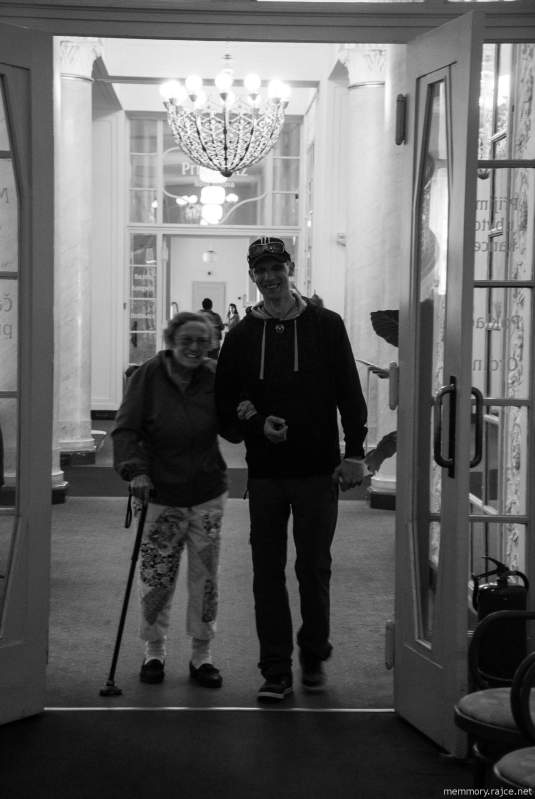



 People who believe in the idea of “laissez faire” want us to think that corporations can regulate themselves and do a better job of it then when government interferes with rules, policies, laws and regulations. Business leaders do their best to hype this belief and to create the idea that government run organizations are always less efficient than those run by private entities. Conservatives and Republicans subscribe to this belief and spend a great deal of time and effort trying to thwart those who disagree.
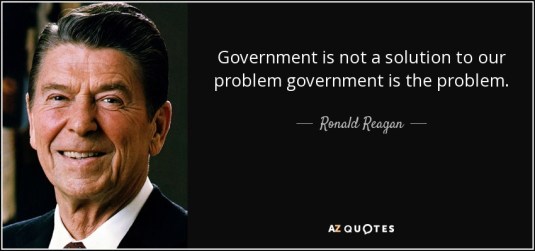

 Corporations are liars. They say they want to live in a laissez faire environment. They say they want fewer government regulations. They say the government only interferes and adds no value to their products. They say they don’t want the government telling them what to do. The lie is that they do want Government involvement. They want the government to bail them out of a situation when they will suffer losses or see lower profit margins. They want the government to give them preferred bankruptcy conditions. They want the government to side with them in labor-management disputes. They want the government to help them out with all of the items on my list above. Do some research. Find out how many companies and industries get government handouts. Check out









 brought sorrow to my heart over the years. Life does not always end happily. Lives do not always find the justice and honor they merit. I have felt sorry for the heroes and heroines who did not get the fates they deserved. If only I could somehow right all the wrongs and set history on the paths it should have taken. I find books tell me about my shortcomings and highlight areas where I need improvement. It is always sorrowful to find that I am not as good as I would like to be.
 Most of what people learn about Marx is far removed from his actual ideas. Given that Capitalism has been diametrically opposed to the very name of Karl Marx, it is not surprising that he is routinely disparaged. Even at the University level, it is rare to find anyone studying Marx very deeply. Many educators and instructors describe Marx’s economic theories as “Totally Discredited.” Few people in America have any good words for Karl Marx. Any politician in the USA who might suggest that Marx ever said one good thing or had one good idea would court instant political death. Marx is the devil in our Capitalistic system.
 Marx did of course hate capitalism. He saw Capitalism as a system that exploited workers and allowed the greedy to benefit at the expense of those less fortunate or less aggressive.
 The antipathy directed towards Marx and his critique of Capitalism has discouraged any real in-depth understanding of the limits and myths of Capitalism by most Americans. Capitalism resides in America on the same level as Mom, God, and Apple Pie. Woe to anyone who would dare to attack Capitalism. In the United States, Capitalism is as hallowed an institution as Christianity. In fact, most Christians think that Capitalism and religion go hand in hand, which to a large extent they sadly do. Unfortunately, not all Capitalism is the same. In America, we have a home-grown version that is more appropriately called Corporate Capitalism. What is the difference you might ask? Well it gets even more complicated since economists define four types of Capitalism. These are:
 Over the past 40 years, the Supreme Court has radically expanded constitutional rights for corporations. The original charters for corporations written in the late 19th century, allowed corporations powers never before seen in companies. The abuse of these powers soon led to a considerable amount of legislation designed to reign in some of the most egregious of these abuses. Laws such as the Sherman Anti-Trust Act passed in 1890 to stop monopoly practices and the Clayton Antitrust Act passed in 1914 to stop unethical business practices were somewhat successful at ameliorating corporate abuses. Unfortunately, corporations were still left with considerable power to thwart the goals of democracy and good government.
 Corporate interests easily dominate the interests of the common person. The common person has nowhere near the financial clout of corporations. In 2010, the Supreme Court passed the Citizens United Decision which gave corporations unlimited power to finance and support political candidates running for office as well as to lobby on behalf of any laws that they wanted. This decision basically upheld the idea that corporations had a right to free speech much like any citizen of the USA and that campaign spending was simply a manifestation of free speech. Corporations are now being treated as living breathing people despite the fact that corporations can live forever, and corporations are not organic entities. They are not born, and they do not die like any other creature on the face of the earth.


 One of the most popular movies in the eighties was Wall Street. In the movie, Michael Douglas gave a “Greed is Good” speech which was actually applauded by audiences all over the United States. Some corporations have been sued by stockholders for not being greedy enough.







 It was January of 1986. I had finished all my course work for my Ph.D. degree. It had already been a long and cold and snowy Minnesota winter. I had finally collected all the data I needed to finish my dissertation. Four years in school, working part-time, divorced, no money and writing a dissertation had just about wrung me out. I needed a vacation but had no money. Someone told me about this place called Demontreville which they described as a sort of place to get away from life. They had beautiful facilities, private rooms and some really nice ski trails. You could get three free meals for four days and there was no charge. It was all based on voluntary donations. Weekend retreats ran from Thursday evening to Sunday evening.
 When I went into the “conference” center, there were many men milling around and talking in small groups. I am not the most social guy in the world, so I took a seat on a couch by myself and commenced reading a magazine called America. This is a magazine published by the Jesuits each month and to this day I always enjoy reading it.
  At about 6:50 PM or so, a Jesuit priest arrived and after a loud hand clap, announced that dinner was being served. We first said a short prayer called the Angelus and then went into the dining hall which is connected to the conference center. The “conference center” is really just a large room to relax in. It has numerous chairs and sofas scattered about a well-lit room with large windows looking out over the grounds. It is one of the most peaceful places in the world to sit, reflect and enjoy a coffee. The conferences (Which I learned about later) are all held in the chapel which is also connected to the dining hall. The only time you have to leave the building is to go to your room. I was given a room assignment upon entering the conference center.


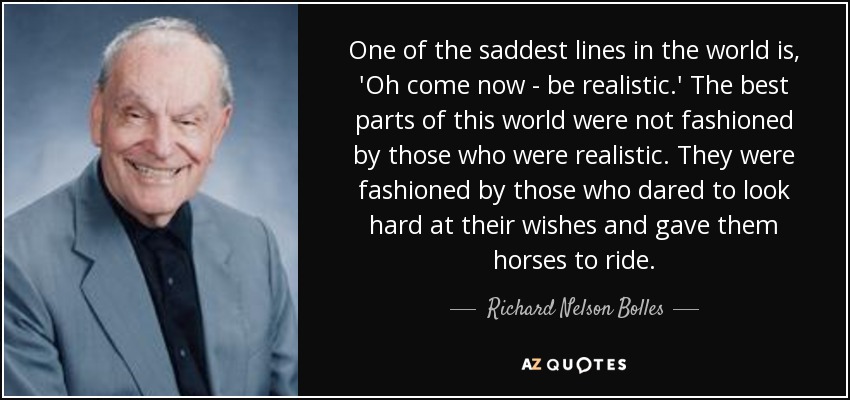 Ostensibly, it was just another book to help job seekers find work. However, Bolles wrote more than just tips on writing resumes and job letters and where to find work, he wrote a bible on how to live a better life and what work could really mean for us. Bolles gave us a broader vision of work and the role it could play in our lives. Bolles vision of work was more than just the idea of productivity and pay. At the core of Richard’s concept of life was his idea that life could be divided into three boxes: Work, Play and Education. But there is a novel twist to Bolle’s ideas about work, play and education that no one had ever put forward before. Before we go into his unique idea, let’s examine each of the three boxes. After this, I will present the truly revolutionary idea that Bolles had about them. Finally, I will discuss the implications of Bolles ideas to the present coronavirus crisis that we are facing today throughout the world.

 I posed a general question to the miners’ present. “What if we integrated work, education and play in your jobs. What would life be like for you,” I asked. There was silence for a moment. I did not know if I would get a response. Suddenly a hand shot up. I recognized the man and asked him what he thought. I never would have guessed his reply in a million years. It was perfect but it still astounded me. He said very simply “I would not know whether it was Monday or Friday.” To this very day, I cannot think of a more profound or telling comment than that.
 Our work activities at home are generally allocated towards improving our living conditions. We work on repairing our appliances, roofs, etc. because we either enjoy doing it or because we are trading our time for money. If we hire someone to do it, it will cost us money that we might not be able to afford. We may not have the skills to so some work that needs to be done, so we are often forced by necessity to contract out needed repairs. Some people have never learned how to cook and so either spend extra
  money on prepared meals or they often eat out. I never learned any wood working skills when I was in high school because these classes were deemed “general education” and I was in the “college track.” The home economics classes mostly dealt with sewing and cooking and were largely populated by girls. Even today in most high schools, girls dominate the home economics classes and boys dominate the construction related classes. There is admittedly more cross over then when I was in school in the sixties, but it is by no means 50-50 in gender distribution.
 From teachers and many educators, we hear the lament that children will miss three or more months of schooling. Unfortunately for the teachers that feel this way, students may miss out on “schooling”, but I think not on learning. Many studies have shown that students home taught learn more and score higher on standardized tests than public school students. I have been working in high schools as a substitute teacher for three years now and much of the work I see being done in classrooms can easily be accomplished from home. Whether or not students working from home are less bored with the subject matter remains to be seen. Nevertheless, there are plenty of opportunities for children to learn from home at their own pace and to some extent be more excited by a custom curriculum which suits their needs. There is obviously a great deal more that can be done in this area to create customized education programs.


 Aging Capriciously