
Netaji Subhash Chandra Bose was born in India on 23 January 1897. He died in a Japanese Hospital on the 23rd of January 1945 in Taiwan. Taiwan was then occupied by the Japanese Army during WW II. He died a painful death from burns suffered during an airplane crash. Bose believed in a free India and spent his life fighting against what he regarded as the British occupation of India.
For many in India, Bose was a hero for his staunch support of Indian independence. However, for many others he became somewhat of an embarrassment. Bose took literally the old saying that the “enemy of my enemy is my friend.” In the later stages of WW II, he allied himself with the Axis powers of Germany and Japan. Since they were fighting the British, Subhash believed that he could use their forces to help free India from British rule. In addition to his willingness to ally himself with the Fascist forces, Subhash had another characteristic which cost him much support for his cause of India Nationalism. Whereas Mahatma Gandhi believed in a philosophy of “Passive Non-Violence” to overthrow British rule, Bose believed that it could only happen if Indians were willing to resort to force and direct battles with the British. Bose was no believer in non-violence.
 You may have noticed that many great leaders seem to have had a sort of doppelganger or one who directly opposes their strategies and methods. Martin Luther King had Malcolm X. Sun Yat-sen had Zhang Binglin. Nelson Mandela had Steve Biko.
Mahatma Gandhi had Subhash Bose. Each of these men had similar end goals but the conflicts with their compatriots came about because of the differences in their methods for reaching their goals. History remembers the winner of the conflicts and the loser is often only a footnote in the history of the winner’s biography.
Few people in America will recognize the name of Netaji Subhash Chandra Bose. However, I think that he is a man that should be known to the world and remembered. He had dedication and devotion to a cause bigger than himself. He was a man of conviction, integrity, and commitment. Many people struggle for things in their lives which will benefit themselves. Bose’s struggle was for a freedom for his people and his nation.
I believe that freedom comes about because of a dynamic tension or yin-yang relationship between violence and peace or to put it another way between the sword and the olive branch. If you regard the great revolutions of history, you will seldom find any that are successful solely on the basis of peaceful protests. Frederic Douglas said that, “If there is no struggle, there is no progress. Those who profess to favor freedom, and yet deprecate agitation, are men who want crops without plowing up the ground.”
Here are a few other quotes regarding the relationship between violence and revolution:
“Revolution does have to be violent precisely because the Pharaoh won’t let you go. If the Pharaoh would let you go, the revolution won’t have to be violent.” — Michael Hardt
“Those who make peaceful revolution impossible will make violent revolution inevitable.” — John F. Kennedy
“We decry violence all the time in this country but look at our history. We were born in a violent revolution, and we’ve been in wars ever since. We’re not a pacific people.” — James Lee Burke
History shows that seldom does the oppressor voluntarily allow the oppressed to be free. Greed, power, and lack of compassion are typical traits of all oppressors. Gandhi was a great man who overcame many trials and difficulties to pursue his path for Indian freedom. Although Bose chose a different path, his trials and difficulties were as great if not greater than those suffered by Gandhi. Bose was not afraid to speak out and to risk his life for what he believed. He makes this point truly clear in the following speech.

Give me blood and I promise you freedom:
Subhash’s famous speech was delivered in Burma (Now Myanmar) to the Indian National Army on July 4, 1944.
“Friends! Twelve months ago a new programme of ‘total mobilization’ or ‘maximum sacrifice’ was placed before Indians in East Asia. Today I shall give you an account of our achievements during the past year and shall place before you our demands for the coming year. But, before I do so, I want you to realize once again what a golden opportunity we have for winning freedom. The British are engaged in a worldwide struggle and in the course of this struggle they have suffered defeat after defeat on so many fronts.”
The British were fighting on two fronts. In the West, they were battling the Nazis. In the East, they were battling the Japanese. At the beginning of the war, things went badly for the British on both fronts. Bose had assumed that preoccupied as the British were with battling the Japanese and Germans, they would be easy pickings for an Indian army attacking the British. He was dead wrong.
“I am so very hopeful and optimistic about the outcome of our struggle because I do not rely merely on the efforts of three million Indians in East Asia. There is a gigantic movement going on inside India and millions of our countrymen are prepared for maximum suffering and sacrifice in order to achieve liberty.”
The battle for Indian independence has been said to have killed millions of Indian civilians and soldiers. In “War of Civilizations: India AD 1857,” by A. Misra, a writer and historian based in Mumbai, he argues that the war was an untold holocaust that caused the deaths of almost 10 million people over just a span of 10 years beginning in 1857. The total number of deaths due to the British treatment of Indian revolutionaries will perhaps never be known. The British were brutal in their treatment of people they regarded as “disloyal” to the British Empire.
“Unfortunately, ever since the great fight of 1857, our countrymen are disarmed, whereas the enemy is armed to the teeth. Without arms and without a modern army, it is impossible for a disarmed people to win freedom in this modern age. Through the grace of Providence and through the help of generous Nippon, it has become possible for Indians in East Asia to get arms to build up a modern army.”
Many Indian regiments were disarmed after the ending of the 1857 uprising. Indian artillery, except for a few mountain batteries, was abolished. Unlike the American Civil War where soldiers went home with their rifles, the British took arms away from the militants.
“We require more men and women of all categories for administration and reconstruction in liberated areas. We must be prepared for a situation in which the enemy will ruthlessly apply the scorched earth policy, before withdrawing from a particular area and will also force the civilian population to evacuate as was attempted in Burma.”
 Memories of the atrocities committed by the British in the 1857 uprising were still prevalent among the Indian population. There were atrocities on both sides, but even after the war was concluded, the British engaged in a number of substantial revenge and retribution attacks against the Indians suspected or known to have supported the uprising.
“The most important of all is the problem of sending reinforcements in men and in supplies to the fighting fronts. If we do not do so, we cannot hope to maintain our success at the fronts. Nor can we hope to penetrate deeper into India.”
Boots on the ground are always critical to winning any wars. 100,000 Indian National Army (INA) soldiers fought on the Japanese side against their fellow Indians who fought on the British side. The INA was dwarfed by the estimated 2 million Indian volunteers who fought for the British.
“Friends, one year ago, when I made certain demands of you, I told you that if you give me ‘total mobilization’, I would give you a ‘second front’. I have redeemed that pledge. The first phase of our campaign is over. Our victorious troops, fighting side by side with Nipponese troops, have pushed back the enemy and are now fighting bravely on the sacred soil of our dear motherland.”
As I mentioned earlier, Bose allied himself with the Japanese to fight for Indian independence. Most Indians remained loyal to the British. The battle for India lasted 80 days, from April 4 to June 22, 1944. The Japanese were roundly defeated and forced to leave India. It was one of the worst defeats suffered by the Japanese up to that time.
“Gird up your loins for the task that now lies ahead. I had asked you for men, money and materials. I have got them in generous measure. Now I demand more of you. Men, money and materials cannot by themselves bring victory or freedom. We must have the motive-power that will inspire us to brave deeds and heroic exploits.”
Bose now exhorted his Indian followers to give more than just their bodies and resources. He wanted them to believe in the cause of independence as much as he did.
“It will be a fatal mistake for you to wish to live and see India free simply because victory is now within reach. No one here should have the desire to live to enjoy freedom. A long fight is still in front of us.”
 Perhaps Bose saw the writing on the wall. He is warning his supporters that they may “not see the promised land.” The promised land being independence for India. Nevertheless, they should remain committed to the effort.
“We should have but one desire today – the desire to die so that India may live – the desire to face a martyr’s death, so that the path to freedom may be paved with the martyr’s blood. Friends! My comrades in the War of Liberation! Today I demand of you one thing, above all. I demand of you blood. It is blood alone that can avenge the blood that the enemy has spilt. It is blood alone that can pay the price of freedom.”
Freedom must be purchased at the cost of blood. It is often said that “freedom is never free.” Bose is asking his supporters to be willing to die for the cause.
“Give me blood and I promise you freedom!”
Subhash’s final line in his speech reminds me of Patrick Henry’s famous line “Give me liberty or give me death.” The price of freedom can be steep. Millions of men and women have given their lives to fight for the independence of their countries.

On June 15, 1947, the British House of Commons passed the Indian Independence Act which divided India into two dominions, India, and Pakistan. The fight for Indian independence began ninety years earlier and its success can be attributed to the relentlessness that leaders like Mahatma Gandhi, Jawaharlal Nehru and Netaji Subhash Chandra Bose had for freedom.

The excerpts from Bose’s famous speech were taken from the “Indian Express.” You can view the entire speech on this site.


 My creativity takes a more practical bend. I refinished our Arizona kitchen and bathroom cupboards; made a dress I still haven’t worn and some flannel nightshirts for John to lounge around in as well as knit a bunch of baby sweaters and a couple of shawls to donate to Pilgrim Lutheran in Frederic. We’re enjoying raspberry jam from our wild bushes in the back yard. The summer project was to tackle the bookcase full of photo albums. That included albums from my parents, grandparents, great aunt, John’s albums, and everything I’ve accumulated in more than 50 years. Many bags into the trash, and I’m down to about 10 newly created albums which I will eventually move to AZ. Next summer I’ll start in on the travel pictures from all the places we have visited in the last 35 years.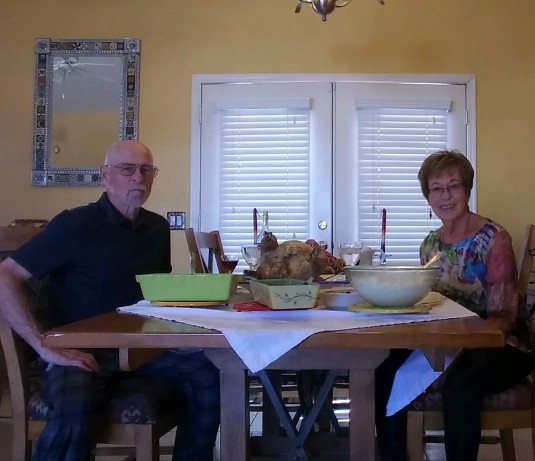


 Our second scenario involves going to church service. At the end of many services, the minister (Do Rabbis and Imams do this?) will wait at the door and greet the outgoing parishioners. Do you?
 Our third and final scenario finds us on our ubiquitous freeway system wending our way to some appointment that we will probably be late to if the traffic stays so slow. Do you?


 Ladies and Gentlemen. How can you have a government of the people, by the people and for the people when it is a government of the rich by the rich and for the rich? A government of lawyers, political science majors and corporate people. An interlocking network of proponents who have a self-interest that nowhere matches the nature and interests of the general public of America.
 Many of the board members in the rural counties are farmers or laborers or educators who have little or no training in the laws that they are sworn to protect. Thus, they rely heavily on the lawyers that they hire to provide advice and perceived protection from lawsuits. This renders the board members subject to the legal opinion of the lawyer which is quite often at odds to what the public wants. The boards are frequently fearful of a lawsuit (often offered by the lawyer as a possibility) and will forego making an informed decision based on evidence that is presented at the hearings.
 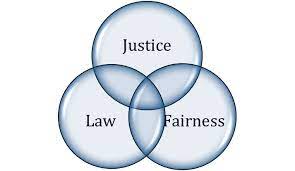 We need less lawyers. Lawyers and lawsuits are destroying America and Democracy. We need leaders with more diversity in education. We need leaders with more ethnic diversity. We need leaders with more gender diversity. We need greater representation that reflects the demographics of America. We need less lawyers. We need more justice and we need more fairness.


 The significance of these orientations cannot be underestimated. For instance, we have seen considerable controversy during the Covid Pandemic concerning masks, social distancing, and the closing of public and private venues such as businesses, restaurants, and religious organizations. Many countries have witnessed protests and even riots challenging restrictions in these areas. Basically, I suspect that research will show that countries higher in Individuality have resisted constraints more than countries that are higher in Collectivism or Group Orientation.
 The Japanese ethic during WWII was one of extreme fanaticism towards the Group Orientation. Few nations had anything even close to the Kamikaze or Banzai attacks that the Japanese army used against their opponents. In these attacks, the individual was expected to die for the good of their country. What differentiated these attacks from other attacks was the wanton disregard for the lives of the soldiers. It was a foregone conclusion that the individual soldier was going to die. Again, we see extreme dysfunction when one element of a dimension is pursued to the detriment of any rational balance.
 I want to talk about Gratefulness today. It is the first in my list of the Key Seven Virtues that I think are worth developing. Gratefulness is the opposite of ingratitude. It is easy to fall into the trap of being ungrateful. The world besieges us with evidence of our incompetence and faults. Hollywood glamorizes the mundane and makes the rest of us feel inferior in comparison. American Idol becomes the graven image that we now worship. It is not an image of a gold calf or a prophet or a saint. It is the image of success and fame and fortune that we all desire. Even as I write this, millions of people are buying a lottery ticket in the hope of achieving instant wealth. How many of these people are grateful for what they have? I suspect many of them are very grateful in their daily lives, but it makes you wonder how grateful most people are when they will spend their money against all odds to become an overnight millionaire. What don’t they have that they will buy if they do win?
 When I grew up, we always bought the cheapest. Karo syrup instead of Log Cabin, margarine instead of butter, bologna instead of capicola, Welch’s grape jelly instead of Smuckers, Velveeta instead of cheese and so on and so forth. I survived high school on bologna sandwiches, peanut butter and jelly sandwiches and potato sandwiches. Kids would always trade food in the lunchroom but in four years no one in the room would ever want any of my sandwiches. In fairness to my mom, she did the best she could on the meager food budget my father provided. He spent more money at the racetrack, or should I say with the bookies than he did on our household. Thus, I developed no taste for the so-called finer things in life and this extended to my taste in whiskey. As far as I was concerned and even knew, the cheaper the better.
 A long, long time ago, (or so it seems now) and many whiskeys under the belt, Karen and I were returning from a trip to visit our daughter Megan who lived in Chandler. We were at the airport awaiting a somewhat delayed flight. We decided to pass the time in a restaurant near our gate. We sat down at a table and I noticed a flyer on the table advertising three different Tequilas. One glass sold for 2 dollars, another for 5 dollars and the third for 8 dollars. I cryptically remarked that “This is a joke. Only a sucker would pay 8 dollars since there is no difference between the three except the brand names.” Our waitress overheard me and disregarding the caveat that the customer is always right, she intruded and piously announced “You are wrong, there is a big difference. Would you care to try a flight with one of each?” I could not let the challenge go and I warned her that I was not impressed by how much things cost, and I would let her know what I thought. I assumed that I was getting the flight of three for free since it was her challenge, but she brought me the bill later and it included the cost of each drink.


 I thought I would start the year of 2021 off with a positive slant. Namely, some things we can all do or practice to be better people. However, before anyone should pay any attention to what I am about to say, there are several questions they must ask themselves. I would advise you that the veracity and hence credibility of an author is critical to your acceptance of what the author is trying to sell you or convince you of. Do not buy an argument from someone who cannot be trusted. Think about the comment that “If you see the Buddha on the road, kill him.” An uncritical acceptance of any idea is dangerous to your own integrity and responsibility. Hence, the questions I would want answered (If I were you) would be as follows: Who is this writer to say what the “greatest” virtues for a human are? How did he come up with these Seven Virtues? What is the difference between a virtue and a value? Is this an important difference or is he about to sell me another new religion?
 I would like to answer that I am a seeker of truth and knowledge. I am very opinionated, often highly judgmental and have frequently been accused of being a “know it all.” Many people would write my opinions off as being too liberal while others would say that I am too rational. I place great value on being logical and trying to stay open to many possibilities. I have been studying philosophy and religion since I was eighteen. I have no degrees in either. But the number of books and articles and stories that I have read number in the hundreds. I have attended many different worship houses and types of religious services. I was brought up as a Catholic until I rejected its teachings at about the age of 10. When no one would give me a good answer for “Who made God?” I more or less decided that most religions were based on superstitions.
 Given that one could easily comprise a list of ten or perhaps one hundred important virtues, why do I believe that my seven are the seven greatest and most important? How do I have the audacity to make such an assertion? I might have been sitting under an apple tree one day, or perhaps simply thinking about life at one of my yearly silent retreats at the Demontreville Retreat Center, when I compiled a list of seven virtues. While I truly “value” these ideas, I understand them more as virtues than values. I will address this difference later. I decided that I want to live by these virtues. Each day for the last fifteen or more years, I have selected one of these seven virtues to help guide me through the day. Whether it is patience, kindness or courage, each day I start by reflecting on this virtue and trying to make it a part of my life.
 The danger in this discussion lies in your taking a sectarian or religious approach to my writings. I assure you that I am not a religious person. I may be a spiritual person but I do not think of myself in either of these categories. I am an agnostic who wants to live a better life and help build a world that is a better place to live for future generations. Living by these seven virtues is one way I believe I can contribute to this goal.
 If I have satisfactorily answered the questions that I posed above respecting my integrity and credibility, I will now set off to address each of my Seven Virtues and explain why they are so important and the difference that I think they can make in our lives. Look for my virtues over the next several weeks in my blogs.


 Aging Capriciously