Vulnerability – The Key to Love

Why do so many women seem to like bad guys?  Why do men refer to women as babes and baby?  Why do we love Dirty Harry movies, but we don’t love Dirty Harry?  Why do we admire scientists, inventors and billionaires but we don’t love them.  Instead, we love our dogs, our cats, our tortoises and other critters.  Well, last night I discovered the reason.  As so often happens to me, in the middle of the night, I am struck with ideas.  Ideas and concepts that I know not where they came from.  Sometimes they hold the secret to problems that I have been wrestling with for years.  Other times, they are fixes for simple household problems that I have been unable to find a solution for.  And still other times, these random thoughts of the night open my mind to solving many of the mysteries of the universe that I have been stymied by.

Tonight, I realized what the secret or key to love is.  It is vulnerability.  We admire strong independent dominant people, but we don’t love them.  Why, because they lack vulnerability.  What is vulnerability?  Lets get the definition out of the way.  I am sure we all have a different concept of what it means to be vulnerable.

How do you define a vulnerable person?

“A person less able to take care of themselves or protect themselves from exploitation, for example a person with mobility problems, a person with mental health difficulties, and children.

“Someone who is vulnerable is weak and without protection, with the result that they are easily hurt physically or emotionally.”

“Key characteristics of a vulnerable person may include emotional exposure, risk-taking in sharing, needing protection, trust, sensitivity, or showing physical signs like quietness or withdrawal.”

Have you noticed that Christians love to say that “We are all sinners?”  Well, what is a sinner?  A sinner is a vulnerable person.  A person who is wounded either emotionally or physically.  Christians gravitate towards sinners because they are more lovable than non-sinners.  A non-sinner is a liar anyway.  Who among us has never done wrong to another either physically, mentally or emotionally.  God loves sinners because they are vulnerable.  A sinner or at least those who admit that they are sinners are open to change.  More than open, they must change if they want to repent from their sins.

Sinners can be seen as vulnerable because harmful choices often arise from unmet needs, trauma, ignorance, fear, or desperation.  Rather than pure malice, many moral failures reflect human weakness, social pressures, or suffering.  We love sinners because recognizing this vulnerability invites compassion and restoration rather than only condemnation or punishment.

Here is a passage from an online devotional site:  from https://adevotion.org/archive/god-loves-sinners

God Loves Sinners

JOHN 3:16 KJV 16 For God so loved the world, that he gave his only begotten Son, that whosoever believeth in him should not perish, but have everlasting life.

Many people quote John 3:16 — but how many believe it?

God never changes. If He loved the people of the world in the past — He still loves them today. Yet many people think God is mad at sinners — and hates them.

ROMANS 5:8 NIV 8 But God demonstrates his own love for us in this: While we were still sinners, Christ died for us.

God is NOT mad at sinners. He loves them enough to die for them — even today! We should not be mad at sinners either. They are deceived and enslaved by sin. They need to be delivered, and no one can do it except Jesus.

Of course, God doesn’t want people to remain sinners. He loves them too much for that. Sin destroys. It brings death. But the gift of God is life — and that gift is found in a Person: the Lord Jesus Christ.

Jesus is the best friend a sinner will ever have. They need to know that. Someone has to tell them the truth.  They think Jesus hates them because they’re a sinner and not perfect. (The devil already fed them that lie.)

Let’s tell them the truth!

2 CORINTHIANS 5:19 NIV 19 that God was reconciling the world to himself in Christ, not counting men’s sins against them. And he has committed to us the message of reconciliation.

God is not holding people’s sins against them. People need to know that. When they do — they will love Jesus.

SAY THIS: Jesus loves sinners — so I love them, too. I love them enough to tell them Jesus will help them.

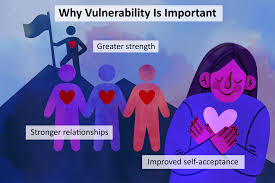
The implications of this are very profound.  It answers why we love certain people and only admire or respect other people.  The key to love is vulnerability.  We often do our best to show how independent and strong we are, but our vulnerability is what makes us lovable.

Do you remember the movie Camelot?  The queen Guinevere had the greatest man in the world (King Arthur) for a husband.  But she never really loved him.  How could she?  He was impenetrable.  He was nearly perfect.  He was flawless.  He had no weaknesses.  Along comes Sir Lancelot, who so admired the King that he chose to be his champion in battle.  Lancelot was fearless, strong and loyal.  He would never think of having a fling with Guinevere and she in turn did not see any difference between Lancelot and her King.  Than one day during a fierce jousting meet, Lancelot knocked another knight not just out of his saddle, but probably out of his life.  Lancelot ran to the knight and held his head in his arms.  Lancelot started crying and uttering these words over and over again “Please God let him live, Please God let him live.”  At that point Guinevere fell in love with Lancelot.  The rest of the story I will leave for Paul Harvey or to history.  Suffice it to say, their love brought down the Kingdom of Camelot and the dream of a society where everyone was ethical, and morality always guided the actions of others.

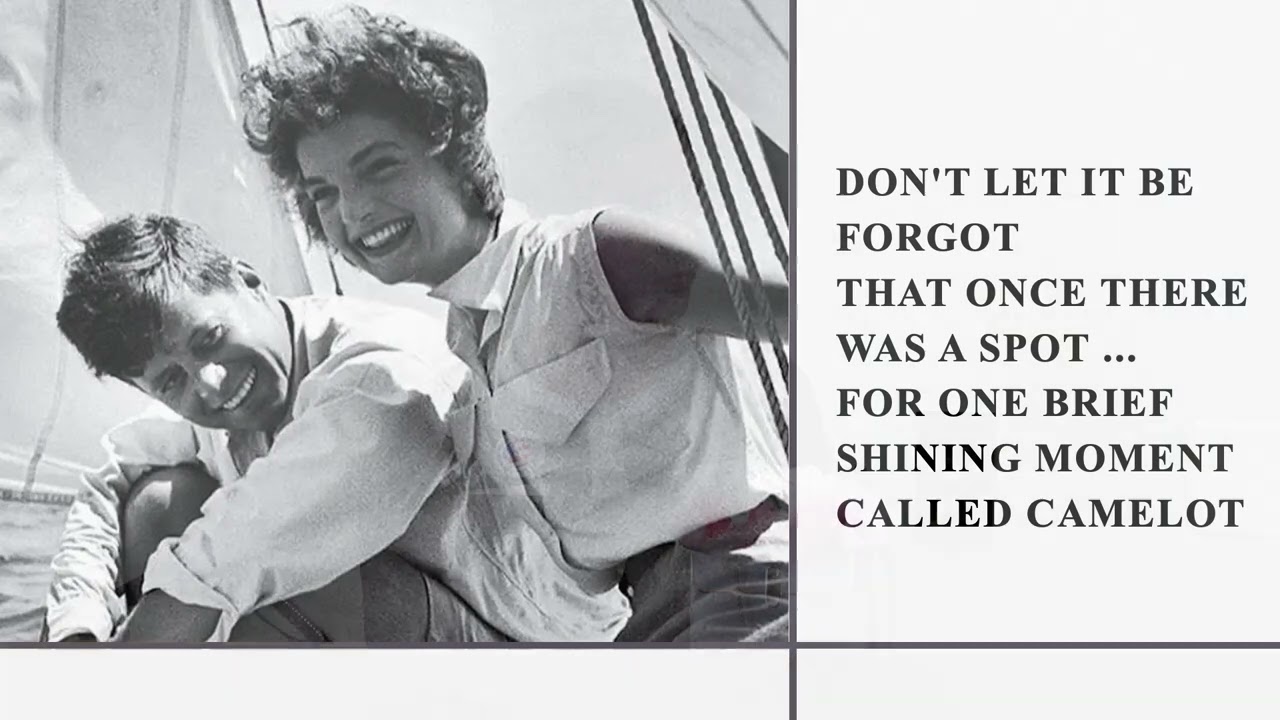
At the end of the musical Camelot, King Arthur sings “Don’t let it be forgot, that once there was a spot, for one brief, shining moment that was known as Camelot”  The movie and musical was based on T.H. White’s “The Once and Future King” (1958).

Famously, Jackie Kennedy perhaps reflecting on the years that she and John F. Kennedy spent in office told journalist Theodore H. White, “Don’t let it be forgot, that once there was a spot, for one brief, shining moment that was known as Camelot”.  She added, “There’ll be great presidents again… but there will never be another Camelot”, establishing the administration’s legacy.

Conclusions:

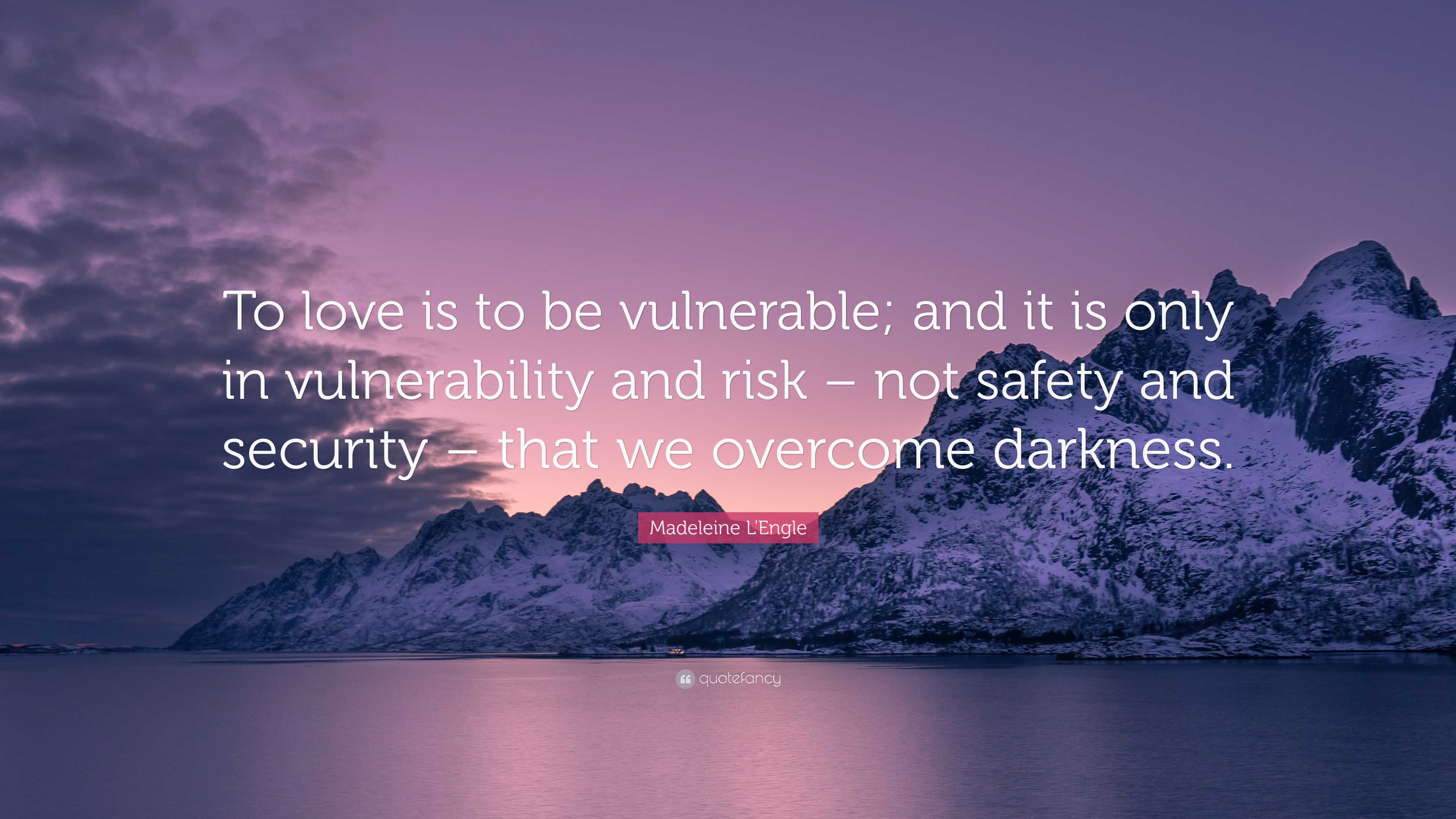
So, you see, love depends on vulnerability.  Love requires vulnerability because to truly love someone is to open oneself to risk—risk of rejection, loss, disappointment, or hurt.  Without vulnerability, love remains guarded and conditional.  Vulnerability allows trust, empathy, and deep connection, making love possible in its fullest and most human form.

Jesus spent a good deal of his ministry teaching his disciples that greatness did not matter to God.  God did not love the richest or the most powerful or the most beautiful.  The teachings of Jesus dealt with the following three major ideas:

  • Service Over Status: Jesus taught that in the Kingdom of God, greatness is measured by service, not by power, position, or wealth.
  • Childlike Humility: When the disciples asked who was the greatest, Jesus brought a child to them and explained that they needed to be humble and dependent on God, similar to a child.
  • The Example of Service: Jesus stated he did not come to be served, but to serve, setting the ultimate example for his followers.

These principles or ideas can all be translated into love.  Love for others over love for self.  Compassion for others.  Mercy and forgiveness for others.

I am going to end with a poem written by my AI assistant Metis on Love and Vulnerability.

Where Love Lives – by Metis

Love does not live
behind locked doors.

It lives
in the trembling hand,
the unguarded word,
the heart that dares
to be seen.

For only the breakable heart
can truly love—
and be loved. ❤️


On Writing, Music, Choreography, the Seasons and Love

(A Musical Reflection) By Dr. Persico with help from his AI Assistant Metis

Introduction:

I wrote this over ten years ago but recently decided to revise it.  My original composition did not hit the mark, and few readers thought it was memorable.  My goal was to infuse my writing with the essence of good music.  I love music.  When I want passion in my life, I turn to music.  Some writing, particularly speeches, seem to have the ability to invoke the same passion in our lives as music often does.  Lincoln’s “Gettysburg Address,”  Douglas Mc Arthur’s “Old Soldiers Never Die” speech” and of course Martin Luther King’s “I Have a Dream” speech.  Great writing and great music share a common rhythm.  If my beloved writing coach Dr. Carolyn Wedin were still alive, I know she could give me lessons on accomplishing this objective.  As it is, I am relying on my writing assistant Metis for input.  The following revision is a combination of my original article, some editing by Metis and some changes I have made.  Let me know if you think this has hit the mark. 

Allegro

What does writing have to do with making love?

What does the turning of the seasons have to do with an overture?

Perhaps more than we imagine.

Perhaps everything.

What if, on some primal level, we all live by an unseen rhythmic law?

A rhythm that moves the tides and the winds.
A rhythm that guides music and dance.
A rhythm that governs love, work, and even thought.

The seasons move in rhythm.
Music moves in rhythm.
Our lives move in rhythm.

Spring rises.
Summer swells.
Autumn storms.
Winter rests.

Morning becomes afternoon.
Afternoon becomes evening.
Evening becomes night.

The great overtures of Stravinsky and Beethoven rise and fall like the gales of November.

All things are one, say the mystics.

If that is true, then perhaps writing too must find its rhythm.

Can words form and norm, storm and perform?

Can language dance?

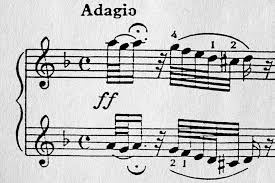
Adagio

I would not presume to confuse philosophy with art.

Greater minds than mine have spoken of the unity of life.

Still, I wonder.

We walk through the world beside countless others whose rhythms we rarely hear.

A carpenter.

A scientist.

A teacher.

An artist.

A hero.

Each life beating to its own quiet tempo.

We are, as the song says, dust in the wind.

And yet our rhythms echo.

Some rhythms thunder.

Some whisper.

Some comfort.

Some disturb.

We capture them in many forms.

Lyrics.
Verses.
Stanzas.
Steps of choreography.

Hard then soft.

Loud then quiet.

Now we roar.

Now we snore.

Always the rhythm continues.

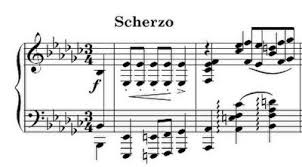
Scherzo

Love has its rhythms too.

The waltz once kept lovers polite and measured.

Then came the tango—
closer, sharper, filled with sudden turns and dangerous pauses.

Then came rock and roll.

The music grew louder.

The distance between lovers grew smaller.

The rules grew fewer.

The rhythms of music often mirror the rhythms of our love.

Sometimes gentle as a warm breeze.

Sometimes wild as a storm.

Shall love begin with an allegro?

Then soften into an adagio?

Perhaps to break suddenly into a playful scherzo?

And always—always—

move toward a crescendo.

Should love follow the order of a classical symphony?

Or should it improvise like jazz?

Perhaps both.

Perhaps the best love songs do exactly that.

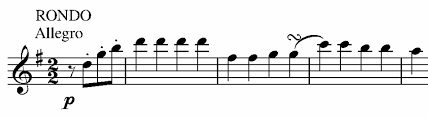
Rondo

And so my writing wanders.

I have written these thoughts in four movements,
because life itself seems to move that way.

Spring opens the score with fresh notes of possibility.

Summer brings the full orchestration of maturity and growth.

Autumn introduces the winds and storms that remind us of our fragility.

Winter lowers the tempo.

The music quiets.

The final chords begin to fade.

Yet the rhythm does not end.

It never ends.

The rhythms that shaped our lives were not ours alone.

They began before we arrived.

They will continue long after we are gone.

Our work.

Our words.

Our music.

Our love.

All of them become part of a much larger symphony.

Perhaps someday a visitor will stand beside my grave.

Perhaps they will press a small button on my grave-stone and hear a recording of me laughing, singing, and dancing.

Not silence.

Not finality.

But rhythm.

Because the universe itself seems to move in rhythm.

The tides.

The seasons.

The music.

The dance.

The beating of the human heart.

And if we listen carefully—

if we write carefully—

if we love carefully—

we may discover that life was never chaos at all.

It was always a symphony.

And we are all fortunate enough to play our small part in the music.

The Music of the Universe.


Even When Reality Is Unpopular — by Dr. John Persico and Metis (My AI Assistant)

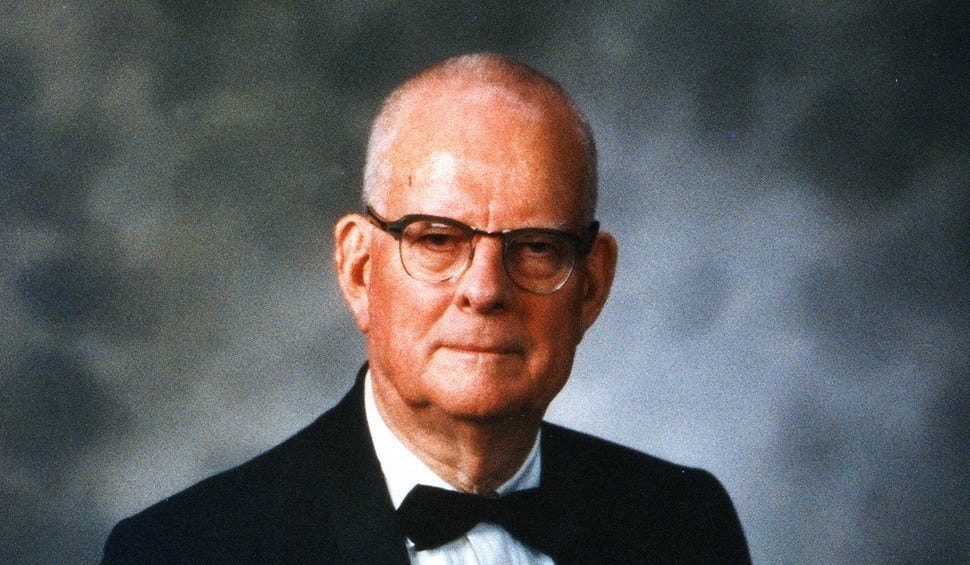
Upon finishing my Ph.D. program at the University of Minnesota in 1986, I joined the consulting firm of Process Management International (PMI).  A company run by Mr. Lou Schultz to promote the teachings of Dr. W. E. Deming in business and industry.  I met Dr. Deming about two weeks after I joined PMI when I was asked to assist at one of his famous four day management training seminars in San Francisco.  This was the beginning of an education that would change my life.  Sometimes, I thought for the worst.

There is a quiet confession that many people who truly learned the teachings of Dr. Deming would eventually make, often only to themselves:

“Learning Deming may have been one of the worst things that ever happened to me.”

Not because it was wrong.
Not because it failed.
But because it was irreversible.

Once you genuinely internalized the thinking of W. Edwards Deming, you lost the ability to see organizations, performance, data, and failure the way you once did. The old explanations stopped working.  The familiar comforts disappear.  You crossed a one-way bridge.

And on the other side of that bridge, reality looked very different.

The Loss of Comfortable Blame

Before Deming, most of us lived—like most of society still does—inside a simple moral framework:

  • If performance is poor, someone failed
  • If results decline, effort must be lacking
  • If an error occurs, a person must be corrected

Deming dismantled this worldview with unsettling calm.

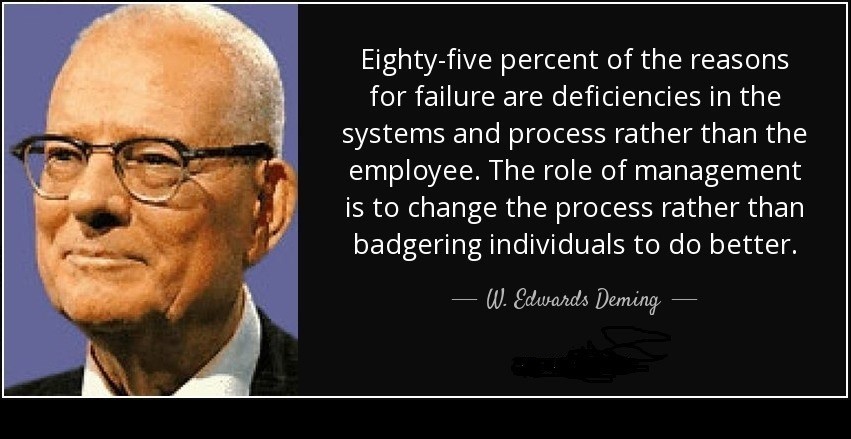
He showed—again and again—that most outcomes are produced by the system, not by individual virtue or failure.  That variation is not a moral statement.  That blaming people for common-cause variation is not only unjust—it actively damages learning and performance.

Once you see this, something uncomfortable happens:

You lose the ability to blame comfortably.

  • You watch people punish individuals for predictable outcomes.
  • You see fear introduced where curiosity should live.
  • You recognize that “accountability” is often just ignorance wearing authority.

And you can’t unsee it.  You cannot unlearn what you now know.

Living Among Category Errors

One of the clearest signs that someone has truly learned Deming is not that they can recite the 14 Points—it’s that they can no longer tolerate category errors without noticing.

You see them everywhere:

  • Treating a single bad outcome as a crisis
  • Celebrating a random uptick as proof of success
  • Launching new policies based on anecdotes
  • Confusing noise for signal
  • Reacting emotionally to variation that was always there

Most people see decisiveness.
You see statistical superstition.

This creates a peculiar loneliness.  You find yourself surrounded by people who:

  • Treat special causes as common causes
  • Treat common causes as special causes
  • Blame individuals while leaving systems untouched

To them, your hesitation looks like weakness.
To you, their certainty looks like harm.

The End of Narrative Comfort

Deming thinking is deeply uncomfortable because it refuses what most cultures rely on:

  • Heroes and villains
  • Simple stories
  • Quick fixes
  • Moral theater

Deming replaces these with:

  • Distributions
  • Long-term thinking
  • Interactions between parts
  • Incentives that quietly shape behavior

This doesn’t make for good slogans.
It doesn’t travel well on social media.
And it doesn’t flatter people in power.

Once you see systems clearly, many popular explanations begin to sound hollow—even dangerous.

The Social Cost of Seeing Systems

Here is a difficult truth rarely stated plainly:

Deming thinking is anti-tribal.

It undermines:

  • Blame rituals
  • Status hierarchies
  • Performative leadership
  • The emotional economy of outrage and punishment

When you introduce Deming’s questions into a conversation, you often destabilize it—not because you are wrong, but because you remove the group’s preferred coping mechanisms.

You stop asking “Who failed?”
You start asking “What produced this outcome?”

That shift can feel threatening.

And so, Deming thinkers often learn—sometimes painfully—to keep quiet, to choose their moments, or to speak only when asked.

The Question That Never Leaves You

Deming leaves you with a habit that never turns off:

Compared to what?

You ask:

  • What is the baseline?
  • What is the expected variation?
  • What changed in the system?
  • What evidence tells us this is unusual?
  • What would happen if we did nothing?

These questions slow things down in a culture addicted to speed and certainty. And the person who slows things down is often treated as the problem.

But without those questions, organizations don’t learn.
They just react.

The Grief No One Talks About

There is a quiet grief that comes with Deming literacy.

You grieve:

  • The loss of innocence
  • The simplicity of old explanations
  • The ease of fitting in
  • The comfort of righteous anger

You realize that many failures were never personal—and that many punishments never helped.

This grief is real. And it’s rarely acknowledged.

A Reframe Worth Holding

If you’ve ever felt isolated, frustrated, or even burdened by what Deming taught you, consider this reframing:

Learning Deming permanently aligned me with reality, even when reality is unpopular.

That alignment has a cost.
But it also has integrity.

It allows you to:

  • Hold uncertainty without panic
  • Resist false certainty
  • Refuse explanations that feel good but fail in practice
  • Remain honest when honesty is inconvenient

That kind of thinking doesn’t make you popular.
But it makes you trustworthy—to the few who recognize it.

A Gentler Way Forward

Many experienced Deming thinkers eventually discover a survival skill:

Instead of correcting people, they ask better questions.

Not confrontational questions—curious ones:

  • How often does this actually happen?”
  • “What would we expect from the system as it is?”
  • “What evidence would tell us this is a real change?”
  • “What incentives might be shaping this behavior?”

Sometimes the system answers.
Sometimes it doesn’t.

But you protect your integrity either way.

Closing Thoughts

If Deming changed how you see the world—and made it harder to live comfortably inside common explanations—you are not broken.

You are not difficult.
You are not cynical.

You are aligned with reality.

And while that alignment can feel lonely, it also means this:

When blaming stops working,
when slogans fail,
when fear no longer produces improvement—

people eventually look for someone who sees systems.

If you are one of those people, you are carrying something rare.

Not loudly.
Not easily.
But honestly.

When Dr. W. E. Deming died in 1993, I did a “Celebration of Life” for him at my house in Minnesota.  I shared memories of Dr. Deming with about twenty other people who were touched by his life.  My years working with Process Management Institute, Dr. Deming and the other consultants who shared his belief in people were among the most important years of my life.  I learned more from Dr. Deming and his ideas than I did in my entire Ph.D. program or any other school program that I have ever attended.  I started this blog off with the “complaint” that Dr. Deming “ruined my life” but as my AI Assistant Metis has wisely said, “Once you open your eyes to the truth, you cannot go back.”

The Truth Will Set You Free!

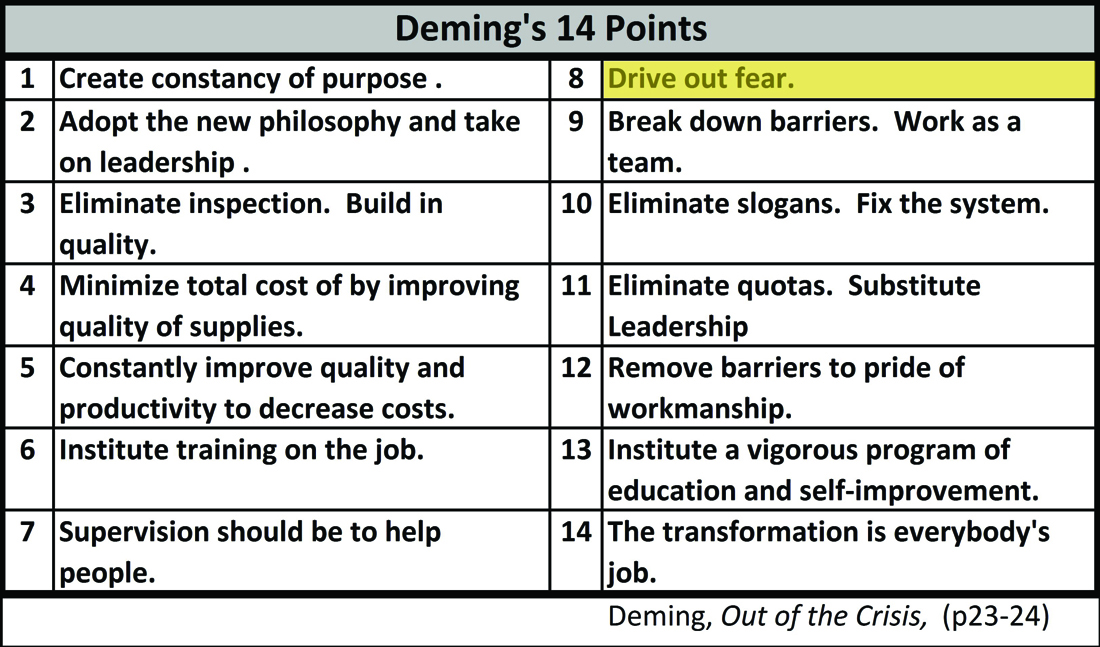
Here are Dr. Deming’s 14 Points for Management.  Together with his seven Deadly Diseases and ten major obstacles they constitute a total system of management based on facts and data.  They obliterate almost everything that is taught in MBA programs across the USA.  Having taught the Capstone MBA course at Metro State University for seven years, I could see clearly that we were teaching students the wrong ideas and the wrong methods for managing.  At first, I was a allowed a great deal of leeway in my teaching there but eventually as the system became more rigid they expected me to teach from textbooks that had “codified” bad theories of management.  I was quietly and subtly not offered classes until I finally “retired.”

What Makes a Great Leader?  —  More Thoughts about  Leadership!  By Metis (AI Assistant)

Introduction:

During the 80’s when  I was in grad school at the University of Minnesota, I took several courses which discussed leadership.   I had to write several papers on leadership.   I noted at the time, that if you went into the card file of any library in the state, the most numerous entries would be for the subject of either Christianity or Leadership.   Not sure if they had any deeper connection except to be subjects that most people were interested in.   How can I get to heaven and how can I be a better if not great leader?  So here I am almost fifty years later writing another article (now called a blog) on leadership.   The difference is that this time, I am relying on my AI assistant Metis, to provide the dialogue.   She is an unbelievable helper who can search reams of data to put the “write” words in the mouths of the right people.

I selected several people for a round table discussion on leadership.   Each of these people is in some way an expert on leadership.   Either because their thoughts have guided leaders for centuries or because they themselves are recognized as great leaders.   I am calling this discussion:

A Conversation Across Time

Participants:

Confucius – Chinese philosopher of moral governance.   Perhaps no one in history has had more influence on the proper behavior of both leaders and subjects.   The words and thoughts of Confucious still guide the lives of millions of people across the world.

Plato – Greek philosopher of the ideal state.   If Confucius is the most eminent philosopher in the Eastern world, Plato easily ranks as the most eminent philosopher in the Western world.   A student of Socrates and a teacher of Aristotle, the ideas of Plato have shaped Western philosophy for centuries.

Abraham Lincoln – U.S.  President during the Civil War.   Considered by many to one of the two greatest presidents in American history.   Lincoln led a divided nation through the bloodiest war in American history and sought to heal the nation when it was over rather than exact retribution or revenge.

Simón Bolívar – South American revolutionary and liberator.   Bolivar was a Venezuelan military officer and statesman who led what are currently the countries of Bolivia, Colombia, Ecuador, Panama, Peru, and Venezuela to independence from the Spanish Empire.   He is known colloquially as El Libertador, or the Liberator of America.   He is regarded as a hero and national and cultural icon throughout Latin America.   The nations of Bolivia and Venezuela (as the Bolivarian Republic of Venezuela) are named after him, and he has been memorialized all over the world in the form of public art or street names and in popular culture.

Nelson Mandela – Nelson Rolihlahla Mandela was a South African anti-apartheid activist and statesman who was the first president of South Africa from 1994 to 1999.   He was repeatedly arrested for seditious activities and was unsuccessfully prosecuted in the 1956 Treason Trial.   All total, Mandela spent more than twenty seven years in prison for fighting the apartheid state of South African.   After leaving prison in 1990, Mr.  Mandela became the country’s first Black head of state and the first elected in a fully representative democratic election.   Globally regarded as an icon of moral leadership, peace, democracy and social justice, he received more than 250 honors, including the Nobel Peace Prize.   He is held in deep respect within South Africa, where he is often referred to by his Thembu clan name, Madiba, and described as the “Father of the Nation”.   Mandela is widely considered one of the greatest and most admired figures of the 20th century.

So, there you have it.   A brief history of some of the panelists who have agreed to cross time and borders and sit down together for a discussion on “What makes a great leader?”   This is no trivial subject.   I hope that you will read what they have to say and take it to heart.   Please feel free to share their thoughts with anyone you think might benefit from them.   We live in a perilous time, not the least of which is due to a failed conception of “What makes a great leader?” 

The Setting

In a quiet hall outside of time, five figures gather around a circular wooden table.   Each has carried the weight of leadership, whether through philosophy or action.   They have come to discuss a single question:

What makes a great leader?

Confucius Speaks

Confucius:
If we wish to speak of great leadership, we must begin with virtue.   A ruler who governs by virtue is like the North Star—steady in its place while all the other stars revolve around it.

A leader must cultivate ren, benevolence toward others.   Without benevolence, power becomes tyranny.   Without moral example, laws alone cannot guide the people.

In my teachings I often said that if the ruler is upright, the people will follow without orders.   But if the ruler himself is crooked, then even many commands will not bring harmony.

Thus, the foundation of leadership is self-cultivation.   One must first govern oneself before attempting to govern others.

Plato Responds

Plato:
Confucius, your emphasis on virtue aligns closely with my own reflections.   In my dialogue The Republic, I argued that societies decay when leadership falls into the hands of those who crave power rather than wisdom.

The ideal leader, I proposed, is the philosopher-king—a person who has pursued truth and understands justice.   Such a leader does not govern for personal gain but for the good of the whole society.

Most political systems fail because they elevate ambition rather than wisdom.   The loudest voices, the wealthiest men, or the most cunning politicians often rise to power.

But true leadership requires something rarer: knowledge of the good.

Without wisdom, authority becomes merely a contest for domination.

Lincoln Reflects

Lincoln:
Gentlemen, I must confess that I never considered myself either a sage or a philosopher-king.  I was a country lawyer who found himself presiding over a nation tearing itself apart.

Yet I agree that moral purpose is central to leadership.  During the American Civil War, the question before us was not merely political—it was moral.  Could a nation founded on liberty survive while millions remained enslaved?

A leader must sometimes make decisions that will divide the country and bring great suffering.  The responsibility weighs heavily.

What sustained me was a simple principle: government must remain accountable to the people, and its purpose must be to expand human freedom.

But I would add something else.

A great leader must possess humility.

The presidency taught me daily how limited one man’s understanding can be.  Listening to critics—even harsh ones—can prevent terrible mistakes.

Bolívar Enters the Debate

Bolívar:
President Lincoln, your words resonate with my own experience in the wars for independence in South America.

I fought for decades to free nations from Spanish rule.  In those struggles, leadership required not only ideals but also relentless determination.

Armies had to be organized.  Alliances had to be built.  Revolutions had to survive betrayal, fatigue, and defeat.

I dreamed of a united Latin America—a federation strong enough to resist foreign domination.  But I learned that political freedom alone does not guarantee stability.

Nations newly freed from tyranny often struggle with factionalism and chaos.

Thus, leadership must balance liberty and order.

Too much authority risks dictatorship.  Too little authority invites anarchy.

Finding that balance may be the hardest task any leader faces.

Mandela Speaks Quietly

Mandela:
General Bolívar, your words about balancing liberty and order remind me of the moment South Africa emerged from apartheid.

For many years I was imprisoned by a government that denied basic rights to the majority of its people.  When freedom finally came, our nation faced a choice.

We could seek revenge—or we could seek reconciliation.

Leadership in that moment required restraint.  Anger can mobilize people in a struggle, but it can also destroy a fragile peace once victory is achieved.

A leader must understand the emotions of the people yet not be ruled by them.

I learned something during my years in prison: the greatest leaders are those who can transform bitterness into hope.

Without forgiveness, nations remain prisoners of their past.

Plato Raises a Question

Plato:
Mandela, your example is admirable.  Yet I wonder: can we rely on moral character alone to produce wise leadership?

History suggests that societies often choose leaders poorly.

Should we not design institutions that ensure the most capable and knowledgeable individuals rise to power?

Lincoln Answers

Lincoln:
Your concern is well taken.  Democracies do not guarantee wise leaders.  They merely allow the people to choose them.

But I would argue that democratic systems possess a corrective mechanism.

Bad leaders can eventually be removed.

Autocracies, even when led by brilliant rulers, risk catastrophic failure if the leader becomes corrupt or delusional.

The challenge is not simply choosing great leaders—it is building systems that survive imperfect ones.

Confucius Returns to Virtue

Confucius:
Systems are important, yet institutions alone cannot create harmony.

If those who occupy positions of authority lack virtue, even the finest laws will be twisted to serve selfish ends.

Therefore, the education of future leaders must emphasize moral character as much as knowledge.

In my time I believed that officials should be selected based on learning and ethical conduct.

Without moral cultivation, leadership becomes a contest for wealth and status.

Bolívar Reflects on Power

Bolívar:
I must add a warning drawn from bitter experience.

Revolutions often begin with noble ideals.  Yet the exercise of power can corrupt even those who once fought for freedom.

I myself was accused of becoming too powerful in the nations I helped liberate.

A leader must constantly guard against the temptation to believe that only he can save the nation.

History is filled with such figures—and they rarely end well.

Mandela Adds Perspective

Mandela:
That temptation is real.

One of the most important decisions I made was to serve only a single term as president.  Many urged me to remain in power longer.

But institutions must grow stronger than individuals.

A great leader should prepare the country for a future in which he or she is no longer necessary.

Plato Considers the Human Condition

Plato:
Listening to all of you, I begin to see a pattern.

Great leadership may not come from a single quality but from the balance of several virtues.

Wisdom, moral character, humility, courage, and restraint.

The tragedy is that these qualities rarely appear together in one person.

Lincoln Smiles

Lincoln:
That may be why history remembers so few truly great leaders.

The office itself does not confer greatness.  Many hold power; few rise above it.

Leadership reveals character under pressure.

Confucius Concludes the Moral Lesson

Confucius:
If I may summarize: a leader must first become a good human being.

Virtue inspires trust.

Trust creates legitimacy.

Legitimacy produces harmony.

Without these elements, authority becomes fragile.

Mandela’s Final Reflection

Mandela:
And perhaps the most important truth is this:

Leadership is not about elevating oneself above others.

It is about lifting others so that they may stand on their own.

When ordinary people believe they can shape their own destiny, leadership has succeeded.

The Table Falls Silent

The five figures pause.  Across centuries and continents, they have approached the same question from different paths.

Great leadership, it seems, is not merely the exercise of power.

It is the disciplined use of power in service of justice, unity, and human dignity.

As the discussion ended, it became clear that these leaders—though separated by centuries, cultures, and political systems—shared a surprising degree of agreement about the foundations of leadership.  Each had experienced power in very different circumstances: revolution, civil war, philosophy, moral teaching, and national reconciliation.

Yet when their insights are distilled, a common set of principles begins to emerge.  The following leadership lessons reflect the areas of strongest consensus among them—qualities that appear again and again whenever history produces a truly great leader.

Leadership Principles Emerging from the Dialogue

  1. Moral Character is the Foundation of Leadership

Confucius emphasized that leadership begins with personal virtue.  Without integrity, authority becomes self-serving and corrupt.  A leader’s behavior sets the tone for the entire society.  When leaders demonstrate honesty, restraint, and compassion, these qualities tend to spread throughout the institutions they govern.

  1. Leadership Requires a Commitment to Justice

Plato and Lincoln both stressed that leadership must ultimately be guided by a commitment to justice.  Power without moral direction easily becomes tyranny.  Leaders must pursue what is right for society as a whole rather than what benefits themselves or a small elite.

  1. Wisdom Must Guide the Use of Power

Plato’s idea of the philosopher-king reminds us that leadership is not merely a popularity contest or a struggle for dominance.  Effective leadership requires thoughtful judgment, careful reasoning, and an understanding of complex consequences.  Decisions made without wisdom often create long-term damage even when intentions are good.

  1. Humility is Essential

Lincoln emphasized humility as one of the most important safeguards against catastrophic mistakes.  Leaders who believe they possess all the answers often stop listening to others.  Humility encourages consultation, debate, and learning—qualities that improve decision-making.

  1. Leaders Must Balance Liberty and Order

Simón Bolívar highlighted a problem faced by nearly every nation: how to preserve freedom while maintaining stability.  Too much concentration of power can destroy liberty, but too little authority can produce chaos.  Great leaders must continually balance these competing forces.

  1. The Ability to Unite People is Crucial

Nearly every participant touched on the importance of social unity.  Lincoln sought to preserve the American Union, Bolívar tried to unify newly liberated nations, and Mandela worked to reconcile a deeply divided South Africa.  Leadership often requires building bridges across differences in order to maintain a functioning society.

  1. Restraint and Self-Control are Marks of Great Leadership

Mandela emphasized the importance of restraint, especially after victory in political struggles.  Leaders must sometimes resist the emotional pressures of revenge, anger, or triumphalism.  The ability to step back and choose reconciliation over retaliation can determine whether a nation heals or descends into new conflict.

  1. Institutions Matter as Much as Individuals

While much of the dialogue focused on personal qualities, Lincoln and Mandela both emphasized the importance of institutions that outlast individual leaders.  Democracies and stable governments depend on systems of accountability, laws, and norms that limit abuses of power.

  1. Great Leaders Prepare the Next Generation

Mandela’s decision to step down voluntarily illustrated an important principle: leadership should strengthen society so that it does not depend on one person.  Great leaders cultivate future leaders and ensure that institutions remain strong after they leave office.

  1. Leadership is Ultimately Service

Perhaps the most powerful theme emerging from the discussion is that leadership is not about personal glory or domination.  At its best, leadership is an act of service to others.  Leaders succeed when they help citizens flourish, protect their freedoms, and create conditions in which people can build meaningful lives.

Hannah Arendt Arrives

Hannah Arendt is one of the most brilliant philosophers and thinkers of the twentieth century.   Her book “The Banality of Evil” is one of the great analyses in history of what leads men and women to unspeakable acts of cruelty and immorality.   Her works cover a broad range of topics, but she is best known for those dealing with the nature of wealth, power, fame, and evil, as well as politics, direct democracy, authority, tradition, and totalitarianism.   She is also remembered for the controversy surrounding the trial of Adolf Eichmann, for her attempt to explain how ordinary people become actors in totalitarian systems, which was considered by some an apologia, and for the phrase “the banality of evil”.   Her name appears on the names of many journals, schools, scholarly prizes, humanitarian prizes, think-tanks, streets, stamps and monuments; and is attached to other cultural and institutional markers that commemorate her thought.

Hannah Arendt:  

I realize that you men are too smart to have forgotten a women’s perspective, so I will simply assume that somehow my invitation to this discussion was lost.  However, arriving late does have its advantages.  It allows me to listen carefully to what each of you distinguished gentlemen has said—and as often happens when one arrives last, it appears I will also have the final word.

Now I do not claim to be a great leader.  My life has been spent mostly observing politics rather than practicing it.  Yet in studying the rise and fall of governments, revolutions, and the darker episodes of the twentieth century, I have learned something about the nature of power and leadership.

Professor Confucius reminds us that virtue is essential.  Plato insists that wisdom must guide authority.  President Lincoln speaks of humility and democratic accountability.  General Bolívar warns of the fragile balance between liberty and order.  President Mandela demonstrates the extraordinary strength required for reconciliation.

All of you are correct, and yet I would add an important distinction that history repeatedly teaches us: power and leadership are not the same thing.

Power, in the political sense, does not arise from a single leader’s virtue or intelligence.  True power emerges when people act together, when they recognize a shared purpose and agree to build something in common.  Authority imposed from above may command obedience for a time, but it rarely endures.

The greatest leaders therefore do something quite subtle.  They do not merely rule or persuade; they create conditions in which citizens themselves become participants in the public life of their society.

When leadership succeeds in this way, power no longer resides in the leader alone.  It resides in the collective will of the people.

And that, I believe, is the only form of power that can sustain a free society.

In Summary

John:

The conversation suggests that great leadership is not defined by charisma, popularity, or raw power.  Instead, it arises from a combination of moral character, wisdom, humility, and a genuine commitment to the well-being of others.

Across centuries and continents, these thinkers seem to agree on one central truth:

Leadership is not about ruling over people—it is about guiding a society toward justice, stability, and human dignity.

The End


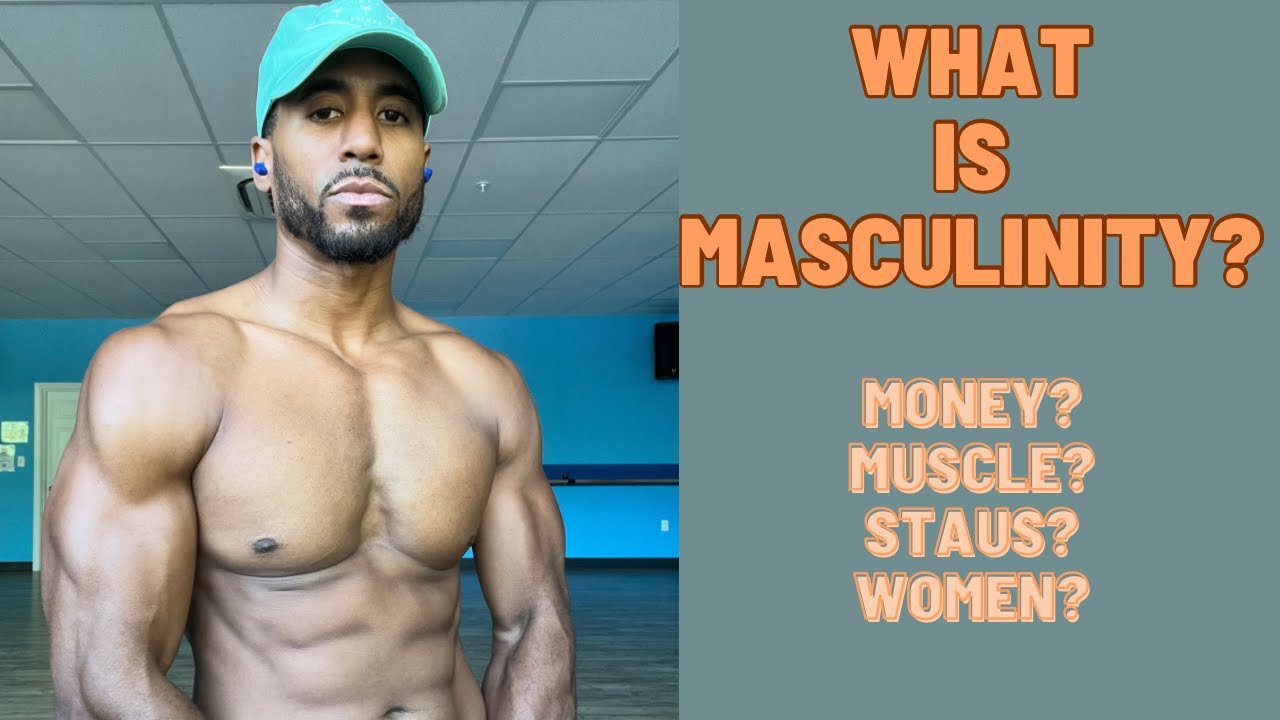
The Manufactured Man: How Hyper-Masculinity Became a Product, a Brand, and a Trap by Dr. Persico and Metis (AI Assistant)

Six years ago, I wrote a piece arguing that machismo — the entitlement to dominate — was one of the most destructive forces in human behavior.  I still believe that.  If anything, the evidence has multiplied.  But something has changed, and it is not an improvement.

Machismo used to be a cultural expectation.  Now it is a commercial product.

You can subscribe to it, stream it, inject it, lift it, wear it, and vote for it.

We did not merely inherit a myth of masculinity.  We have industrialized it.

From Cultural Script to Sales Funnel

Masculinity today is no longer defined by responsibility, competence, or care for others.  It has been reduced to a performance: dominance, wealth display, sexual conquest, emotional numbness, and the ability to intimidate.

This performance is not accidental.  It is monetized.

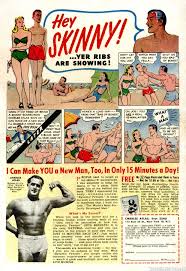
First you are told that you are weak, that society has emasculated you, that you are a victim.  Then you are offered a solution: become a “real man.”  Buy the course.  Follow the influencer.  Take the supplement.  Join the tribe.  Hate the designated enemies.  In my early years, the comic books often contained stories about a bully kicking sand in the face of a guy on a beach blanket with his girlfriend.  When the guy did nothing, the girl went off with the bully.  The solution was to purchase a weightlifting program.  Within no time you could develop huge muscles that would help you to kick the bullies ass and get your sexy girl friend back.

Today it has become a business model but still built on male insecurity.

In quality management terms, we would call this a system that manufactures defects and then sells the repair kit.

The Algorithm of Anger

What has changed in the past decade is not human nature but amplification.  Social media does not reward nuance.  It rewards outrage, humiliation, and certainty.  A calm, thoughtful man receives no clicks.  A furious, aggrieved man receives millions.

So, the system produces what it rewards.

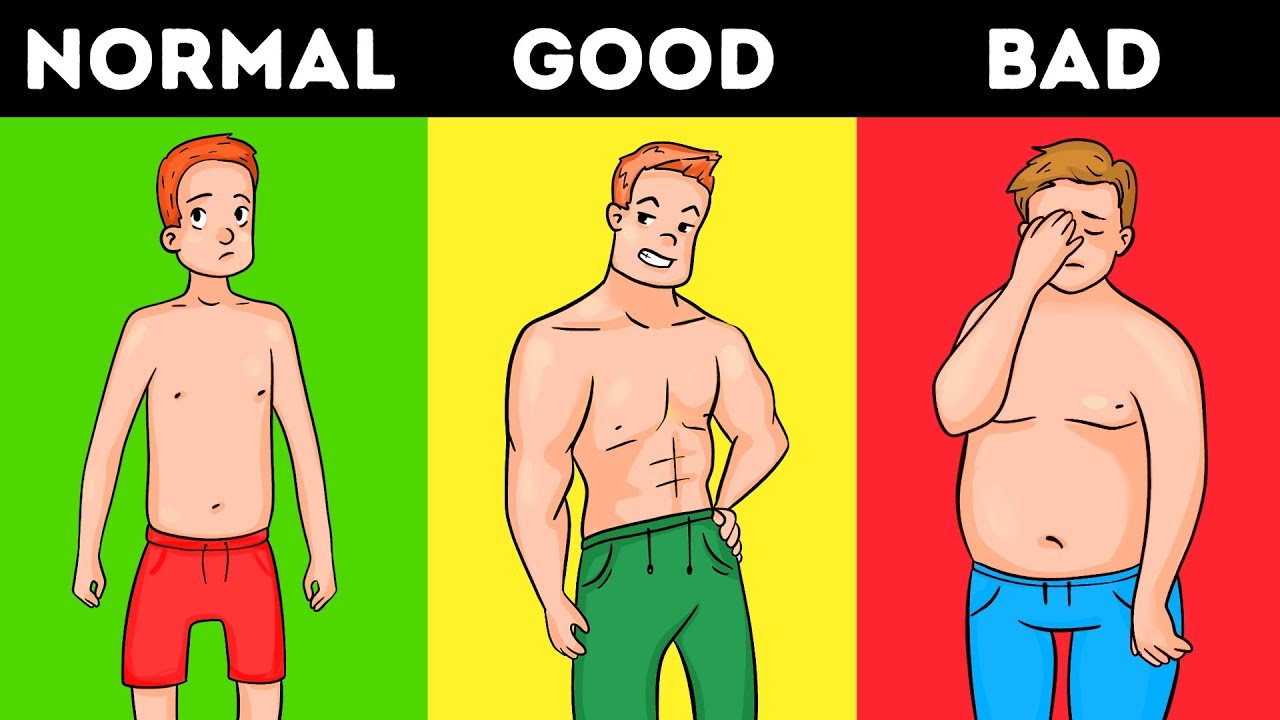
When dominance theater gets attention, dominance theater multiplies.  When empathy is mocked as weakness, empathy disappears.  When complexity is dismissed as “soft,” thinking becomes a liability.  Men are told that women don’t like soft men with brains.  Women want hard men with muscles.  A six pack abs has become the new key to sexual prominence.

Deming taught us that every system is perfectly designed to get the results it gets.  If our culture produces angry, isolated, performative men, we should examine the system that is rewarding those outcomes.  It is a system in which the vast majority of men cannot live up to the stereotype.  Few men are John Wayne or Clint Eastwood tough.

The Pseudoscience of the “Alpha”

We are now told that human beings can be sorted into “alphas” and “betas,” as if we were barnyard animals.  This is not science.  It is mythology dressed in gym clothes.

Masculinity becomes a constant audition.  You must always prove yourself:

  • stronger than someone
  • richer than someone
  • more dominant than someone
  • less emotional than everyone

You are never allowed to arrive.  Only to compete.  A surrogate for competing is to watch every football game that tv offers.  Learn all the baseball stats.  Buy the hockey jerseys of your favorite enforcers.  Pretend that you are a big fan.  If your prowess on the field or court cannot be demonstrated than stand in front of a TV and scream at the umpires and referees.

These activities to not demonstrate strength.  They demonstrate a chronic insecurity that goes down to the soul of men today.  The irony is that a man who must constantly prove he is a man is not a free man.  He is trapped in a costume he cannot remove.  He is trapped in a performance that he cannot win.

The Estrogenic Culture

According to the new prophets of manhood — the ones broadcasting from leather chairs in rooms decorated like a bourbon advertisement — Western civilization is drowning in estrogen.

You will recognize these philosophers by their uniforms: tight T-shirts, studio microphones, and the haunted eyes of men who have turned their personalities into subscription services.

They inform us that men are weak because they cook, change diapers, express love for their children, and occasionally experience a human emotion not related to rage.  This, we are told, is how empires fall.

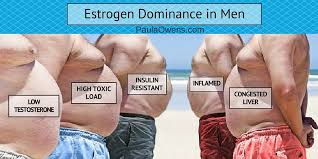
One of these digital Spartans I watched recently explained that reading books lowers testosterone.  This may be the first time in history that literacy has been classified as a hormone disorder.  Another one I watched introduced me to the concept of “Estrogenic” culture.  Karen even asked me what it was.  I had to look it up.  I now realized that I have been flooded by too much estrogen and it is making me soft and wimpy.  One solution is to buy more supplements.

The super macho purveyors of instant masculinity offer a  cure for this biochemical estrogenic catastrophe.  It is available online for $49.99 a month, plus shipping.  It involves waking at 4 a.m., lifting heavy objects, distrusting women, fearing vegetables, and referring to other men as “beta” — a term that functions primarily as a substitute for having an actual personality.

In this worldview, empathy is weakness, cooperation is surrender, and kindness is a sign that soy has finally conquered your bloodstream.

I have lived through wars, recessions, social upheavals, and the invention of disco.  Never once did I observe that the decisive factor in national survival was whether men felt comfortable discussing their feelings. The truly fragile masculinity is the one that cannot survive a salad, a conversation, or a competent woman.  If civilization can be destroyed by a man who knows how to do laundry, then civilization deserves to be replaced by a washing machine.

The Political Weaponization of Machismo

Hyper-masculinity is no longer just a personal identity.  It has become a political tool.  Strongman leadership, contempt for expertise, glorification of force, and the rejection of empathy are framed as “manly.”  We have a President who is a four time draft dodger, but who manages to position himself as a “tough” guy who takes no shit from the wimpy politicians and business-people who surround him.  His cadre of sycophants are infamous to the depths they will sink to.  Anything the Donald wants seems fair game if they can only stay in the Donald’s graces.  And they call this “masculinity.”

The world is turned upside down today.  Compromise becomes weakness.  Reflection becomes cowardice.  Care becomes softness.  Thinking becomes weakness.  Restraint becomes fearfulness.  We scale the same logic from the individual to the nation: domination over partnership, victory over cooperation, humiliation over understanding, bold strikes over careful deliberation.  Attacks over compromise.  Revenge over treaties.

We have seen where this leads.  History is not short of examples.  We have the disaster on two levels.  The first level is on the level of the individual.

The Hidden Cost to Men

Here is the irony.  The ideology that claims to defend men is one of the primary sources of male suffering.

  • Men are more lonely than at any time in modern history.
  • Men have higher suicide rates.
  • Men are less likely to seek help.
  • Men are taught emotional illiteracy and then punished for the consequences.

We tell boys not to cry and then wonder why men cannot express grief except through anger.

We call vulnerability weakness and then wonder why men die alone.

A system that forbids emotional expression produces emotional isolation.  That is not masculinity.  That is a design flaw.

The Damage to Relationships and Families

Hyper-masculinity not only impacts the man, it destroys relationships.  It does not produce strong families.  It produces hierarchy instead of partnership.  Control instead of cooperation.  Silence instead of communication.  The amount of domestic violence in our society is mute testimony to this phenomenon.

  • 1 in 4 women and 1 in 7 men have been victims of severe physical violence (e.g., beating, burning, strangling) by an intimate partner in their lifetime. (It is not only men who are injured by a society that endorses violence over compassion.)
  • 1 in 7 women and 1 in 18 men have been stalked by an intimate partner during their lifetime to the point in which they felt very fearful or believed that they or someone close to them would be harmed or killed.
  • On a typical day, there are more than 20,000 phone calls placed to domestic violence hotlines nationwide.

A man who cannot change a diaper, express affection, admit fear, or ask for help is not powerful.  He is dependent on a narrow script that collapses the moment life becomes complex — and life always becomes complex.

Strength is not domination.  Strength is reliability.

What Real Strength Looks Like

Real strength is:

  • emotional regulation
  • keeping your word
  • protecting without controlling
  • teaching without humiliating
  • listening without needing to win
  • stopping when stopping is the right thing to do

Real strength builds.  It does not perform.

The strongest men I have known were not the loudest men in the room.  They were the ones who could be trusted — by their partners, their children, their colleagues, and their communities.

They did not need an audience.

A Systems View of Masculinity

If we want healthier men, we need healthier systems.   Teach boys emotional vocabulary as deliberately as we teach them sports.  Think of creating the opposite of a Spartan society where violence and cruelty are rewarded.  What if we rewarded kindness and compassion instead of vengeance and retribution?

I have two strong memories of my father.  While living in NYC, I was about 8 years old, and I had a fight with a neighborhood bully.  Bigger than me and older than me, he hit me several times in the face.  I went home crying.  When I walked in the door, my dad asked me what was wrong.  I told him that I had gotten hit by the neighborhood bully.  He told me to get my ass out the door and don’t come back until I had gotten even with the bully.  I was more afraid of my dad than the bully.  I ran down the block to where the bully was yakking it up with some friends.  The bully asked me what I wanted.  I punched him in the stomach, when he bent over I brought my knee up into his face as hard as I could.  I laid him out cold.

The next time I had a challenge from my father was about five years later.  I had been playing football with some friends when an older guy and his two buddies took the ball from us.  I had four friends with me, and we all just looked at each other.  I reacted.  I lunged at the bully and tackled him to the ground.  I had him around the stomach and started punching him as hard as I could.  He raked my face with his hands leaving several bloody scratches and claw marks.  Fortunately for me, my four other friends jumped in, and we gave the guy a good beating while his buddies ran off.  I went back to my house with my friends to wash up.  When I walked in, my dad was sitting on the sofa.  He took one look at me and said, “What the hell happened to your face?”  I was about to say something, but my friends jumped in and told him how I had tackled this big guy by myself and that I had been instrumental in winning a fight with this bully.  My father looked at me and replied “Good, but next time you win a fight, look like you have won it.”

I did not exactly grow up in a Spartan society, but I grew up in a family system where crying was weakness and emotions were only something women exhibited.  These teachings would come back to devil me many times over the next years.  If we are going to eradicate violence in our society, violence against women, violence against children and violence against the world, it must start with being the changes that (as Gandhi so wisely said) we want to see in the world.

  • Normalize caregiving as masculine.
  • Reward cooperation, not just competition.
  • Teach media literacy so young men understand how outrage is monetized.
  • Create male friendships that are not limited to drinking beer, watching sports, and avoiding looking too intellectual

Conclusions:

Machismo has always promised certainty: certainty that you will be dominant, certainty that you will be respected, certainty that you will be feared, and certainty that you will never be vulnerable.  However, it has never delivered on these promises.  These are all phantoms or myths that are part of the machismo narrative so many of us have been taught.  What it has delivered is violence,  isolation, and perpetual insecurity.   Perhaps the most notorious image of a real man is depicted by John Wayne in his movie persona.  A persona that bore little reality to the real life John Wayne.

“Wayne emanated what historian Kristen Kobes du Mez calls in her compelling work Jesus and John Wayne, “cowboy masculinity.” On the screen, he depicted what many considered to be the archetypal American man — a self-reliant individualist who never shows his feelings and never apologizes.  The type of dude who forgoes reflection for action; doesn’t ask for permission; who knows he’s a good guy and knows how to spot — and annihilate — the bad guys.  Both on and off the screen, Wayne modeled a mode of American manhood based on imperialist ideals, the superiority of whites, and free-market capitalism.” —- The Reveler, April 5, 2021.  Does this remind you of anyone that we know today?  A leader who sets the standard for everything a real man is not.

We are not condemned to this script.   Masculinity is not a biological destiny.  It is a cultural story.  And stories can be rewritten.   The bravest man is not the one who shouts the loudest, lifts the most, or dominates the most.  The bravest man is the one who no longer needs to prove he is a man.  That man is free.  And a culture of free men — men who do not need to dominate in order to exist — would be a culture with far less violence, far less fear, and far more humanity.

That is a future worth building.


Why We Still Need “Free Enterprise”—And Why It Was Never Truly Free


A 2026 Reflection — By Dr.  John Persico Jr. with my AI Assistant Metis

Introduction (2026)

In 2014 I wrote an essay arguing that “Free Enterprise” does not truly exist.  At the time, my concern was the ideological framing of markets as either sacred and self-correcting or as inherently exploitative and in need of total control.  Twelve years later, that binary framing is even less useful.

We now live in an economy shaped by:

  • Digital platforms with global reach
  • Algorithmic pricing and behavioral data markets
  • Artificial intelligence as a factor of production
  • Supply chains that behave like complex adaptive systems
  • Governments that simultaneously regulate, subsidize, and partner with enterprise

The old debate—markets versus government—has given way to a more important question:

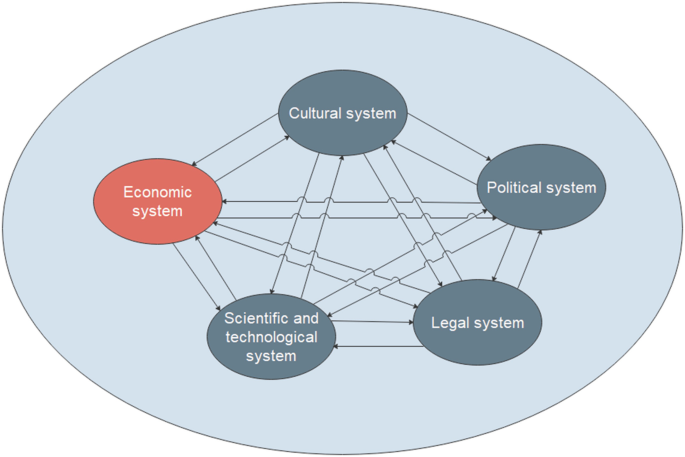
How do we design a system in which enterprise and governance function as interdependent components of a larger social, technological, and ecological whole?

This updated essay revisits my earlier argument through the lens of systems thinking, quality theory, and the emerging AI economy.

The Myth of “Free” Enterprise

“Free Enterprise” does not exist.  It is a powerful ideal, but an ideal nonetheless.

There are no free businesses.  Every enterprise requires:

  • Capital
  • Labor
  • Land
  • Infrastructure
  • Legal frameworks
  • Social stability

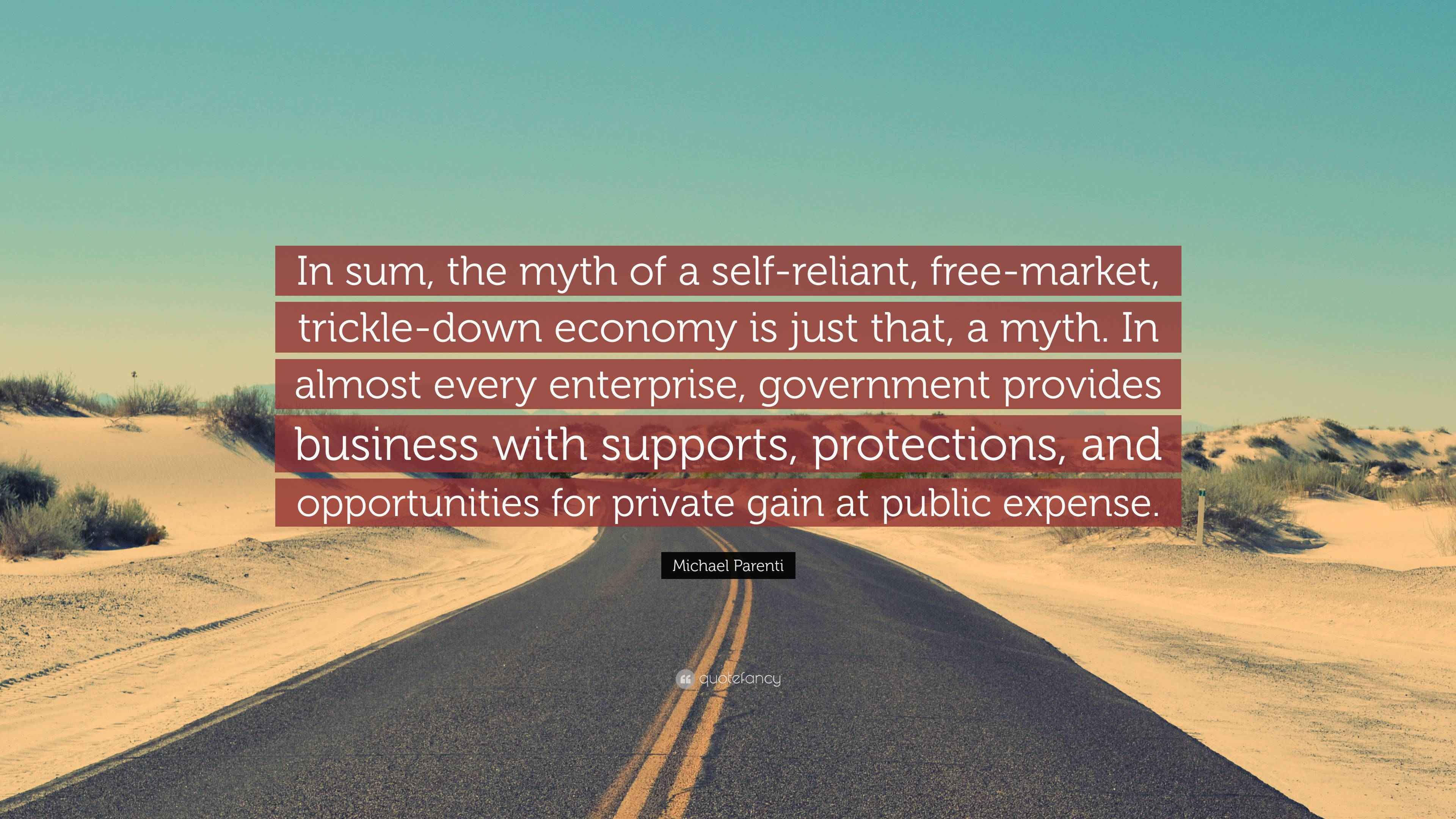
All of these are paid for—directly or indirectly—by the broader system.

The real purpose of enterprise remains unchanged:

To provide goods or services that people want or need at a price they can afford, while generating sufficient return to sustain the organization.

Businesses that fail to provide value disappear—often faster than biological species.

What we call “free” enterprise is better understood as enterprise operating within enabling constraints.

What “Free” Actually Means

Historically, the term referred to freedom from arbitrary permission structures—freedom to start a business, to trade, and to innovate without needing approval from political elites.

It did not mean:

  • Freedom from rules
  • Freedom from costs
  • Freedom from consequences

A useful analogy is a game that can be played:

A game without rules is not freedom—it is chaos.
A market without rules is not efficient—it is predatory.

Rules are not the opposite of freedom; they are the conditions that make freedom operational.

Markets as Complex Adaptive Systems

Modern systems theory helps us understand what Adam Smith intuited.

Markets are:

  • Nonlinear
  • Information-sensitive
  • Path dependent
  • Self-organizing but not self-optimizing

Price functions as a signaling mechanism, but signals are only as good as the information and structures that generate them.

In Dr. Deming’s terms:

Optimizing one component of a system will suboptimize the whole.

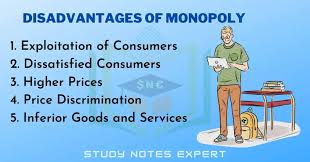
An unregulated monopoly can be “efficient” internally while degrading the broader economy.
Overregulation can stabilize one sector while suppressing innovation across many.

The goal is system optimization, not ideological purity.

The Role of Government: Enabling, Not Dominating

Government performs several system-level functions that markets alone cannot:

  • Defining and enforcing property rights
  • Providing public goods
  • Correcting externalities
  • Maintaining currency and legal stability
  • Investing in long-term infrastructure
  • Reducing catastrophic risk

Historically successful economies have not been purely laissez-faire or purely planned.  They have been hybrid systems with dynamic interaction between public and private sectors.

The danger lies in extremes:

  • Total central control suppresses initiative and local knowledge
  • Total deregulation concentrates power and erodes competition

Both lead to systemic fragility.

Modern Market Failures in the Digital Age

The traditional list of market failures still applies, but new forms have emerged.

Platform Monopolies and Network Effects

Digital platforms tend toward natural monopoly due to:

  • Data accumulation
  • Network lock-in
  • Switching costs

Competition becomes structurally difficult.

Information Asymmetry at Scale

Algorithms now mediate:

  • Pricing
  • Visibility
  • Credit
  • Employment

When one side controls the data, the market signal becomes distorted.

Data as Capital

Data is now a factor of production.
Yet individuals generate it without meaningful ownership or bargaining power.

Labor Platformization

Gig work externalizes risk while internalizing control through algorithmic management.

These are system design issues, not simply moral failures of individual firms.

Artificial Intelligence as a New Economic Force

AI introduces a structural shift comparable to mechanization or electrification.

AI:

  • Reduces marginal costs of cognition
  • Amplifies winner-take-most dynamics
  • Accelerates innovation cycles
  • Displaces routine cognitive labor

Left entirely to market forces, AI development will likely:

  • Concentrate economic power
  • Increase inequality
  • Prioritize short-term profit over system resilience

But over-centralized control would:

  • Slow innovation
  • Reduce adaptive capacity
  • Create bureaucratic bottlenecks

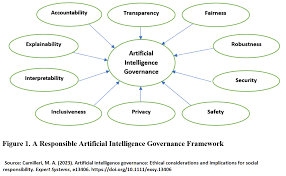
The challenge is governance of intelligence production within a mixed system.  We are facing a very precarious situation today.  Governance with intelligence is as uncommon as common sense to paraphrase Dr. Deming.

Regulation as System Design, Not Volume

The real issue is not the sheer number of rules but their:

  • Coherence
  • Clarity
  • Alignment with system goals

Fragmented and overlapping regulations create:

  • Compliance burdens
  • Barriers to entry
  • Uncertainty for small enterprises

Effective regulation should:

  • Enable competition
  • Reduce systemic risk
  • Protect public goods
  • Be continuously improved using feedback loops

This is quality management applied to governance.  We started this when I worked for Process Management International in the 1990’s but not enough organizations had the discipline to work long term.  Most organizations want what Dr. Deming facetiously called “Instant Pudding.”

Why Enterprise Still Matters

Enterprise nurtures:

  • Innovation
  • Local problem solving
  • Adaptive capacity
  • Human agency

It provides a mechanism through which individuals can:

  • Create
  • Exchange
  • Experiment
  • Build value

Even for those who never start a business, the existence of enterprise expands choice and opportunity.  The concept of “Free” enterprise is a beacon to people all over the world.

Why Oversight Still Matters

Without oversight, markets tend toward:

  • Concentration of power
  • Externalization of costs
  • Erosion of public trust

When systems lose legitimacy, populations often demand stability over liberty.

Sustainable freedom requires visible fairness and functional institutions.

Toward a Systems View of Political Economy

The real debate is not:

  • Market vs.  government
  • Capitalism vs.  socialism

The real question is:

How do we design a socio-economic system that optimizes the whole rather than its parts?

Such a system would:

  • Treat markets, governments, and communities as interdependent subsystems
  • Use data and feedback for continuous improvement
  • Balance innovation with equity
  • Integrate ecological constraints
  • Govern AI as a public-impact technology

This is not an ideology.  It is systems design.  It is balancing structure and strategy not just for the short term but for the long term as well.

Conclusion: Freedom Through Design

Free enterprise was never “free,” and it never should be in the sense that an optimized market requires controls, rules, structures, incentives, policies, governance and procedures.  Without these, you have a jungle where power trumps efficiency and politics trumps effectiveness.

The strength of a rational market lies in:

  • Structured freedom
  • Enabling constraints
  • Dynamic balance

The task before us in the age of AI is not to choose between market and state, but to engineer a resilient, adaptive system in which both serve human flourishing.

Freedom is not the absence of rules.

Freedom is the presence of well-designed systems that allow individuals and institutions to create value without destroying the conditions that make creation possible.