
A “New” Introduction: Circa 11-3-2024
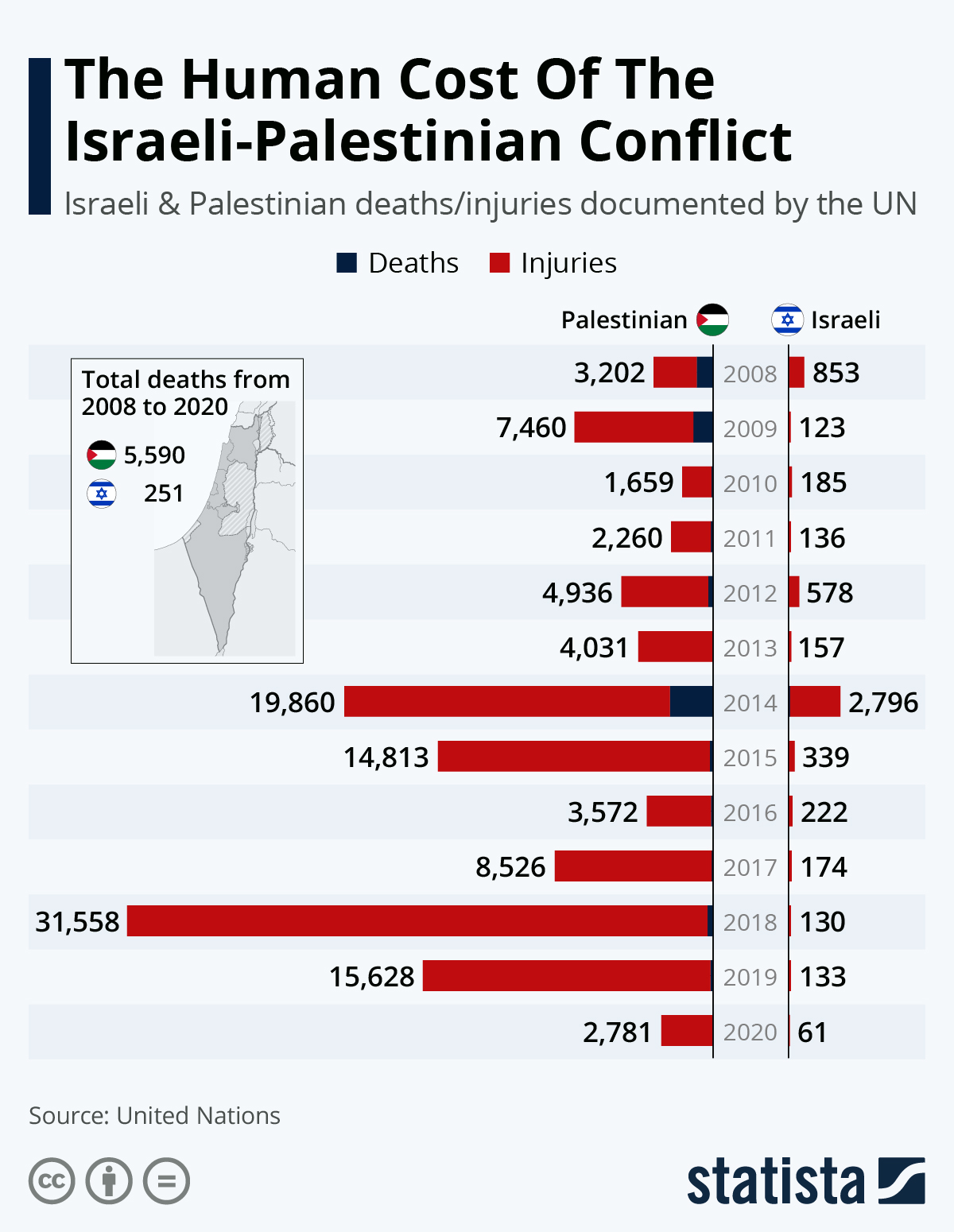
Back again with this blog. In light of the war in the Mideast it is very relevant. We are now calling for a “Pause” rather than a “Cease Fire” because Netanyahu has said there will be no “Cease Fire” and Biden has supported this Genocide and Second Massacre and does not have the fortitude to stop it. When did two wrongs make a right?
My addition to the euphemisms noted in this blog is the term “Anti-Semite Police.” These are the Israel supporters who attack and denigrate anyone who protests what is happening now. Mention one thing about Palestinian rights or the horrid conditions that Palestinians have been living under before the Hamas Massacre and you are labeled an “Anti-Semite.” Talk about an un-equivalent response and you are labeled an “Anti-Semite.” Talk about the deaths of Palestinians and you will be labeled as an “Anti-Semite.” The news is full of retaliations against people speaking out against the Israeli response to Hamas’s Massacre.
The horror of this war will not be diminished by those who want to deny the protests and anguish of either side.
Previous Introduction: May, 2021
I wrote this six years ago. Last week, (May 2021) I was teaching a class on Orwell’s “Animal Farm” and was explaining the difference between analogies, metaphors and euphemisms. I remembered that I had written this blog several years ago and decided to see if it still had any relevance. I was struck by what I had said about policing back then since my comments have been supported more recently by numerous examples. I decided to republish the original blog. I will go through and correct some egregious editing and grammar problems.
January, 2015
I woke up at 3 AM the morning of January 2, 2015 with military euphemisms on my mind. Knowing that I would forget the ideas I had, I jotted down a few notes on paper before going back to bed. A few of the specific euphemisms that were running through my brain included:
- Collateral Damage
- Surge
- Village Pacification
- Enhanced Interrogation
- VUCA
- Shock and Awe
- IED
- Drone Kill
Thinking that this was probably a very incomplete list of the euphemisms out there, I decided to Google the following: Military Euphemism Examples. Here is what my screen looked like:

You will notice that I now had 254, 000 results. I next went to the “Glossary of Iraqi War Euphemisms” and I found a site full of euphemisms that I had not thought of. At this point, I realized that any possible list of euphemisms that I could compile far exceeded the limits of my prose for this blog. I had originally thought to list a few of the more commonly heard euphemisms and discuss the implications of these words in respect to our thinking and behavior. I would still like to accomplish this objective but now with more deference to those who have gone before in this effort as well as with increased humility in terms of the extent of the problem we are facing. (Following this blog, are two references which anyone who wants to explore this problem further should pursue.) See the late great George Carlin on Euphemisms.
What is the problem you may ask? David Bromwich put it very succinctly:
“The frightening thing about the use of euphemisms is their power to efface the memory of actual cruelties. Behind the façade of a history falsified by language, the painful particulars of war are lost.” —– David Bromwich
 Let’s take a concrete example to illustrate the problem more. The United States Senate recently released a report officially titled as: Committee Study of the Central Intelligence Agency’s Detention and Interrogation Program. Unofficially, it has been called the Senate Report on Torture. I downloaded and saved the above report (525 pages) which I assume is the condensed version or summary of the full report. Just for curiosity sake, I searched for the word Torture in the summary. There were 131 instances of the word in the 525 page summary.
I then typed in “enhanced interrogation” and found 997 instances of the term in the report. Apparently our Senate is no fonder of the word Torture then its intended victims were. Given our penchant for euphemisms, I am almost surprised that they did not call it the “Senate Report on Enhanced Interrogation Techniques.” With such a title, they could probably sell it to Human Resource Managers looking for better ways to screen potential new hires. I also typed in the word Victim to see how many times this was in the report. It was found a total of 6 times and in each instance, it was related to the phrase: “United Nations International Day in Support of Victims of Torture.” Apparently, the word victim is too harsh to use. Maybe we should call victims of torture something like “unintended recipients of undesired attention.” You must admit it has a sort of ring to it. I think it sounds a lot more interesting than “victims of torture.” We could abbreviate it as URUA which can then be used when needed so as not to offend anyone.
 A euphemism is a word or phrase used in place of another word or phrase. However, a euphemism is different than a synonym. The difference is important because it is insidious and it strikes to the heart of the problem that we are facing here. This is an example from Baker Editing Services on the use of synonyms versus euphemisms which I think does a good job of illustrating the differences:
“You need to select your synonyms carefully. Euphemisms are sometimes a good choice as a specific category of synonym when selecting an alternate word. They are neutral, mild, or vague terms that can be used to express a more offensive or traumatic word or situation without giving offense. Rather than saying a coworker is a competitive ass, you might say that he is “driven” or “very dedicated to achieving his goals.”
 Notice the difference? When we use a euphemism, we may be trying not to give offense. We may also be trying to hide the truth or something that might be unacceptable if rendered in plain English. Thus in war, words like casualties replace deaths and “suppressing the enemy” replaces “killing” the enemy. American casualties are reported but not enemy casualties since we don’t really care about the number of freedom fighters (Oh, I meant terrorists) we kill. We did not really destroy the village and all the women and children and freedom fighters (Oops, my mistake again, I meant terrorists) in it. We pacified the village.
(‘It became necessary to destroy the town to save it’, a United States major said today. He was talking about the decision by allied commanders to bomb and shell the town regardless of civilian casualties, to rout the Vietcong.) — Peter Arnett
We certainly pacified the town of Bến Tre which now has a population of over 140, 000 people. Of course, back during the Vietnam War, they were not people, they were Gooks. I was curious to find out just how many people were killed while we “pacified” the village but I could not find any specific figures. (If anyone knows the number of people killed at Bến Tre during the offensive, please let me know.)
Another euphemism or at least it seems to be a euphemism is the concept of “force continuum”:
 A “Use of Force Continuum” is a standard that provides law enforcement officials and security officers (such as police officers, probation officers, or corrections officers) with guidelines as to how much force may be used against a resisting subject in a given situation.
 The principle idea here is to use only the amount of deterrence necessary to protect oneself and also accomplish the objectives needed by the situation. Practically speaking this means that if someone calls you a name, you do not shoot them. If someone comes at you bare handed, you may use the minimum level of force necessary to protect yourself. This might mean you would use tear gas or a Taser before you would blast them with a shotgun. I mentioned that the concept of force continuum seems like a euphemism but perhaps it is more of a misnomer since it often seems like it is an upside down continuum with police shooting first and asking questions later.
The problem of euphemisms is evident in policing as well as in military situations. However, it is more insidious and subtle here and thus more difficult to recognize. Nevertheless, it plays an important role in police efforts to prevent crime and violence. If instead of looking at someone as a human being or a citizen, police label them as “violent perps”, then they will likely use more force than they need to. Many of the recent examples in the news of “police brutality” reflect this overuse of force due to the stereotyping of African Americans as more violent and dangerous than Whites or other ethnic groups. Again, we see the problem here is that we are labeling people not as they really are but as we are programmed for them to be. Human life becomes cheap. Maybe we should call it a “killing” continuum instead of a “use of force continuum.”
 Madison Avenue has become an obscene part of the communication process in both the military and law enforcement. Hide it. Obscure it. Obfuscate it. Give them what they won’t understand. Make it sound benign. Sugarcoat it and they will buy it every time. We did not kill the man. We neutralized him. We did not choke him to death. We used acceptable deterrence procedures. We did not abuse the woman; we used standard assault control techniques. Let’s not say what we mean. Let’s not call it what it really is. He injured himself in the course of our investigative process. She was injured while we were restraining her for her own safety.
Euphemisms are dangerous. I would go so far as to say they are evil. They hide the truth. They convey a message which does not fit reality. They paint an inappropriate picture of what is happening in our lives. They distort the facts. Without seeing things as they really are, we are lost in a fog of illusion. We are navigating in a maze without any sense of direction. We are looking in a mirror that shows us what others want us to believe and not what is really happening. Here is a recent news story about a 90 year old war veteran who was arrested for feeding the hungry. Notice the euphemisms:
“While video available on YouTube shows Arnold Abbott and ministers being taken away in police custody, the Mayor states that Mr. Arnold had not been arrested, but rather was detained, cited, and ordered to appear in court. Those cited face possible jail time and have taken the city to court to fight the ordinance.” CNN, 11-5-2014
Should you get arrested, I hope you will remember the difference between detained and arrested. It might help in your plea to the court. Here is another example of a euphemism that has evolved over time. It is from the pen of the famous cartoonist Scott Adams known for his Dilbert series.
“You’re fired.” (1980)
“You’re laid off.” (1985)
“You’re downsized.” (1990)
“You’re rightsized.” (1992)
Do words matter? Of course they matter. Why would advertisers, marketers, PR people and political pundits go to such trouble to use words to disguise meanings if they did not matter?
Humpty Dumpty smiled contemptuously. ‘Of course you don’t — till I tell you. I meant “there’s a nice knock-down argument for you!”‘
‘But “glory” doesn’t mean “a nice knock-down argument”,’ Alice objected.
‘When I use a word,’ Humpty Dumpty said, in rather a scornful tone, ‘it means just what I choose it to mean — neither more nor less.’
‘The question is,’ said Alice, ‘whether you can make words mean so many different things.’
‘The question is,’ said Humpty Dumpty, ‘which is to be master — that’s all.’ (From Lewis Carroll’s Through the Looking Glass.)
 The golden rule applies unilaterally when euphemisms and misinformation must be spread. The golden rule is “he, who has the gold, makes the rules.” In most cases, this easily answers Humpty Dumpty’s question about who is to be the master? The person who has the most gold is the master. The poor, the underprivileged, the defeated, the economically disadvantaged, the bottom of the pile minorities, and lower income groups do not get to choose the words and make the euphemisms. If they did, it might lead to a type of new grammar which I would call “reverse euphemisms.” This is euphemisms named by a group that has nothing to hide or would really like to see the truth out. Thus, in Michael Brown’s case it would have been said that he was:
- Indiscriminately slaughtered
- Butchered in cold blood
- Executed
- Assassinated
Eric Garner did not die from aspiration or asphyxiation or not being able to get a breath while in a police restraint. Eric (it would be more accurate to say) died from:
- Being strangled to death
- Choked to death
- Unwarranted and unnecessary application of dangerous and lethal police procedures
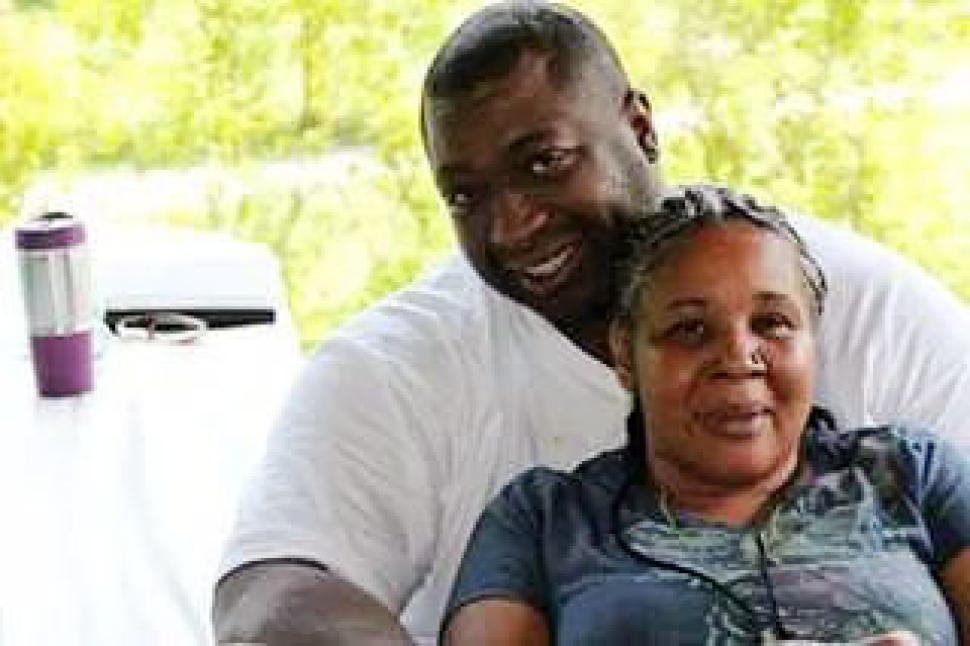 All lives matter: Black, Brown, Yellow, White, Blue, Pink or any other color. No exceptions. No one’s death is a cipher. When we diminish the victims meaning and their importance through the use of sophistry, euphemisms and carefully crafted words to hide behind, we increase the probability that no lives will matter. We must not allow others to hide behind words designed to conceal the truth. Start speaking the truth. Say the truth. Change the words you use to reflect the truth. The truth may just set you and the world free.
Time for Questions:
What is your favorite euphemism? Why? What do you think would happen if we stopped using so many euphemisms? Would we have more truth or less? Do you think euphemisms are helpful or harmful? Why? Can you trust what anyone means anymore? What is the difference between a lie and a euphemism?
Life is just beginning:
Here are some good sites to visit if you want to explore this subject further:
- What is A Euphemism? — Rich Coffey
- The American Empire — Rich Coffey
- Chalmers Johnson’s Blowback Trilogy



 Compassion is the most important of the seven virtues. Compassion is just one stroke short of love. Compassion leads to love but it takes some doing to get there. The journey involves a number of steps each predicated on a trait or behavior that is uniquely human. In this blog, I want to describe the journey to compassion and beyond to love. Each step of the journey is a commitment to humanity. If you do not care about others, you will not be interested in the journey. Compassion is the opposite of narcissism. A narcissist loves them-self. A person with compassion loves others. With a narcissist, it is “all about me.” With a compassionate person, it is “all about them.”
 The journey starts with sympathy. We think of sympathy as “feeling sorry for someone.” It is the ability to have feelings for another person. We see another person who looks hungry or unhappy or ill and we feel some sense of remorse or regret for the other person. We might be distressed for them or we might simply be glad that we are not in their shoes. A part of us hurts or aches for the other person, but we do not identify with them on a deeper level. Our sorrow goes no further than to perhaps wonder what had befallen them to bring such misery.
 Our next step in our journey to compassion takes understanding. We need to try to understand others and to put ourselves in their shoes. We must avoid separation and thinking that we are so different from others. We must avoid judging others. When you couple understanding with sympathy, you have taken the next step. You have now arrived at empathy. To have empathy for others, is to combine sympathy and understanding. You are sorry for those who are less well-off then you are, but you do not separate yourself from them and instead you seek to find the common ground that links you to the other person. Sympathy involves the heart. Empathy involves both the heart and the mind.
 The next step in our journey is action. All of the empathy in the world will not make a difference if we do not take action. Empathy + Action = Compassion. Compassion is the way we make a difference to others. Jesus said “Feed my sheep.” He did not say to just take pity on them or to simply have empathy for them. Empathy by itself does not clothe the poor, feed the hungry or help the weak. We must make action and doing a part of our empathy for others. This is true compassion.
 Bob’s actions made a great impact on me, since I had seldom gone further in my life than either waiting to be asked for help or sometimes asking others if they needed help. It would never have occurred to me to just show up and help. Perhaps, you might think that simply showing up and helping someone is going too far. However, think about yourself. Would you really ask others for help? I know I probably would not. Pitching in to help when not asked may not always be warranted but I now see it as something worth endeavoring to do more often than not.
 Compassion is a much more useful and practical virtue for my life. I can deal with compassion and I can be more compassionate if I really aspire to. I am not sure I can be more loving. I have a hard time “loving” others whom I dislike or who do unkind things to people I do like. I more often “love” others who think and act like I do. I may be taking the easy way out, but if I can be more compassionate to others and if someday I am thought of as a compassionate person, that will be enough for me. If you are further along in your journey through life, then you should consider including love as one of your “most” important virtues. No one will be a worse person for it. For me today, compassion for others is enough of an effort.
 Once upon a time, I thought debates were the answer to the question of “how do we discover the truth?” I thought that if you put two intelligent people together and each took opposing positions on an issue, that through the interplay of ideas the truth would emerge. If you think about this a bit, it is the basis for our judicial system in America. One side argues for the defendant, the other side argues for the prosecution or against the defendant. It is also the basis for an academic exercise called Dialectical Research or Dialectical Inquiry.
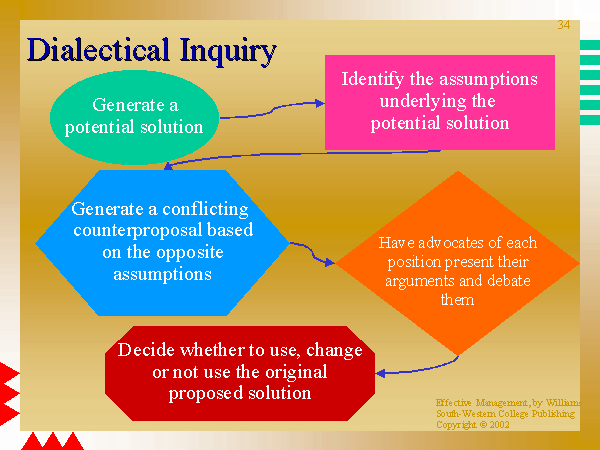 A dialectical investigation is a form of qualitative research which utilizes the method of dialectic, aiming to discover truth through examining and interrogating competing ideas, perspectives or arguments. This latter method is often applied through the use of case studies in which students or investigators discuss…
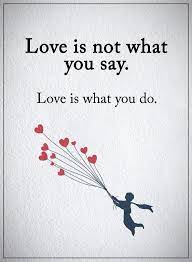 We are surrounded by people who only do things because they get paid for it or because they will be rewarded by power, fame, or fortune. If the highest calling we can have in the world is to love others, then the next highest calling must be to perform some task or effort simply for the “Love of It.” Not because we are going to receive any payment for it. Not because we expect to get a promotion for it. Not even because we expect to get a pat on the back for it. Simply because we do it for the “Love of It.”


 Aging Capriciously