Is America a Land of Violence and Hate? –  Racial and Ethnic Violence

I will start this blog with a caveat.  Racial and ethnic violence exists all over the world.  It always has but the past does not have to predict the future.

When I went to Japan, I was turned away one night from a club by a doorman who said, “No Gaijin allowed.”  In Hawaii, I was warned that Haoles were not welcome at certain beaches by natives.  In parts of Mexico, I will be derided as a Gringo.  In Europe for centuries, Jews have been persecuted and discriminated against. 

My experiences differ enormously in severity from many people who face racism and ethnic violence in America, but they illustrate how people all over the world often draw boundaries between insiders and outsiders. 

Prejudice and discrimination were not invented in America, and neither was racism.  Nevertheless, in the Land of the Free and a country that prides itself on liberty, we should show the world what tolerance and inclusiveness mean.  Instead, we talk one game while we walk another game.  How many remember these words inscribed on the Statue of Liberty’s pedestal?

The New Colossus — By Emma Lazarus

Not like the brazen giant of Greek fame,

With conquering limbs astride from land to land;

Here at our sea-washed, sunset gates shall stand

A mighty woman with a torch, whose flame

Is the imprisoned lightning, and her name

Mother of Exiles. From her beacon-hand

Glows world-wide welcome; her mild eyes command

The air-bridged harbor that twin cities frame.

“Keep, ancient lands, your storied pomp!” cries she

With silent lips.  “Give me your tired, your poor,

Your huddled masses yearning to breathe free,

The wretched refuse of your teeming shore.

Send these, the homeless, tempest-tost to me,

I lift my lamp beside the golden door!”

Who approved these words?  Did the Republicans approve them?  Did the Democrats approve them?  Or was it some radical group of communists and atheists who approved them?

Do our actions today with ICE and our immigration activities look like we are living these words?  If not, would you be in favor of removing them from the statue?  Wouldn’t it be more honest? 

Do we still want the huddled masses?  Do we really want the wretched refuse from other countries? 

What are our excuses for the present way we are treating immigrants?  

This brings us to racism.  There are many who want America to be a White nation.  A nation of European Whites. 

Approximately 388,000 enslaved Africans arrived directly in mainland North America (the future United States) during the transatlantic slave trade, with an estimated 1.8 to 2 million people dying on the ships during the Middle Passage globally.

Do you think these people wanted to come to the USA? 

For those who survived the crossing, the abuse continued after they reached American shores.

It did not stop after the Civil War. 

It did not stop after World War 1 or after World War 2. 

It did not stop after the Civil Rights marches in the sixties or even after the Civil Rights Act was passed in 1964. 

It has continued with restrictive voting laws.

States like North Carolina, Texas, Georgia, and Florida have enacted various combinations of laws implementing stricter voter ID requirements, reducing early voting days, limiting ballot drop boxes, and restricting assistance with mail-in ballots.

Critics and civil rights groups argue that these voting measures intentionally target minority voters.

Discrimination continues based on race in this country. 

Arizona passed and signed the “stop to see your papers” law (Senate Bill 1070) on April 23, 2010.  This law targeted many Latino citizens who were living legally in the USA. 

The law was never rescinded but under the terms of a 2016 settlement with immigrant rights groups, officers are strictly prohibited from prolonging any traffic stop or detention solely to investigate a person’s immigration status.

In an effort to overcome the impact of nearly 250 years of legal slavery in the colonies and the United States, the US Government and many private organizations developed what were called Affirmative Action and Diversity Programs. 

Many people saw these programs as a hand up to Blacks and other historically excluded groups, including Native Americans, Women, Asian Americans, Latinos and disabled people. 

Other Americans saw these programs as unfair and a handout rather than a hand up.

I asked my AI assistant, whom I call Metis, to examine the research.  AI can make mistakes and reflect biases, so its conclusions deserve the same scrutiny as anyone else’s.  Judge this assessment by the studies behind it.

“Affirmative action and diversity programs have helped address the economic consequences of racism and exclusion. Research documents employment and educational benefits for historically excluded groups in several important settings. However, programs varied, and some diversity initiatives achieved little measurable improvement.

Research tracking more than 100,000 private firms found that affirmative action increased Black and Native American employment shares among federal contractors. These gains persisted even after firms stopped holding federal contracts. Recruitment, mentoring, and fairer advancement practices also helped women enter management and careers previously difficult to access.

In education, research on California’s affirmative action ban found that ending the policy reduced underrepresented applicants’ degree attainment and subsequent average earnings, with earnings losses driven by Hispanic applicants. In that setting, estimated benefits to underrepresented applicants exceeded the costs to white and Asian applicants at the admissions margin.

People with disabilities benefited from a related but distinct approach: workplace accessibility and accommodations. Employer surveys suggest that many accommodations cost little or nothing and can improve retention and productivity.

The broader economic argument is straightforward: excluding capable people wastes talent. America benefits when more people can develop their abilities and contribute. However, we cannot attribute all progress by women and minorities to affirmative action; education, antidiscrimination protections, and other social changes also mattered.

There were drawbacks. Preferences could disadvantage individual white or Asian applicants competing for limited opportunities. Programs could benefit relatively affluent minority applicants while overlooking economically disadvantaged people from other groups. Beneficiaries sometimes faced unfair doubts about their qualifications, and poorly designed initiatives could generate resentment.

Furthermore, diversity training did not necessarily change workplace behavior. Research suggests that mentoring, broader recruitment, and managerial involvement often accomplished more than brief training courses. Attendance at a seminar tells us little about whether hiring, pay, or promotion became fairer.

These limitations justify careful evaluation and improvement. They do not erase the economic gains or the injustice these programs sought to address.

Social justice requires attention to both historical discrimination and present economic disadvantage. Effective programs deserve support; ineffective ones deserve revision or replacement. Our goal should be institutions that recognize and develop talent wherever it exists and give people a fair opportunity to build secure lives.”

The real truth is that racism and ethnic discrimination exist not only because some people are narrow minded, bigoted, xenophobic and fear that other groups will take away what little they may have.  Racism exists because some people benefit from the exploitation of other people. 

Generosity towards those not in their tribe or clan is not a characteristic of the racist bigots in this country.

There are three attitudes that I believe help sustain racism:

  1. Xenophobia:  the intense fear, dislike, or hatred of people perceived as foreigners, strangers, or outsiders.  Xenophobia and racism overlap, but racism can also target people whose families have lived in the same country for generations.
  2. Resentment:  Fear that others will either take something that they perceive as belonging to their group only or fear that others will get something that they do not get.
  3. Narrow Mindedness: 
    1. Intolerance of difference: Showing strong dislike or judgment toward people who hold different values, religions, or political views.
    1. Absolute certainty: Believing that one’s own opinions are absolute facts and that no other perspective could possibly be valid.
    1. Lack of curiosity: Showing no interest in learning why other people think or act differently.
    1. Quick dismissal: Rejecting new facts or arguments immediately without taking the time to understand them.

Conclusions:

Let’s conclude with the original question.  Is America a Land of Hate, Racism and Ethnic Violence? 

For 2025, law enforcement agencies reported 10,881 hate crime incidents to the FBI. Among victims of single-bias incidents, 55.6% were targeted because of race, ethnicity, or ancestry.

Although these figures demonstrate a serious problem, they do not, by themselves, establish the character of an entire country.

I do think they suggest that we still have a serious responsibility as citizens of a Democracy to help prevent any group from being targeted by violence regardless of their race, skin color, political or religious beliefs.

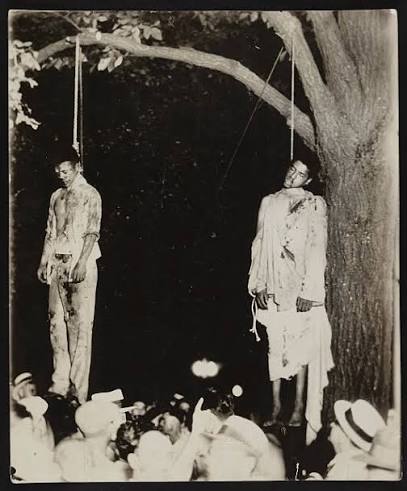
America has a history of racial cruelty and a history of people who fought that cruelty.

Which history are you helping to carry forward?

When someone is demeaned because of race, religion, or birthplace, do you challenge it, excuse it, or remain silent?

Our answers matter most in what we all do next.

My thanks to Metis, my ChatGPT AI assistant, for research support, fact-checking, and thoughtful editorial suggestions. The opinions expressed and final editorial decisions are my own.

Here are some of the studies that Metis based the above research on. 

  1. Kurtulus, F. A. (2016). The impact of affirmative action on the employment of minorities and women: A longitudinal analysis using three decades of EEO-1 filings. Journal of Policy Analysis and Management, 35(1), 34–66. https://doi.org/10.1002/pam.21881
  2. Miller, C. (2017). The persistent effect of temporary affirmative action. American Economic Journal: Applied Economics, 9(3), 152–190. https://doi.org/10.1257/app.20160121
  3. Bleemer, Z. (2022). Affirmative action, mismatch, and economic mobility after California’s Proposition 209. The Quarterly Journal of Economics, 137(1), 115–160. https://doi.org/10.1093/qje/qjab027
  4. Kalev, A., Dobbin, F., & Kelly, E. (2006). Best practices or best guesses? Assessing the efficacy of corporate affirmative action and diversity policies. American Sociological Review, 71(4), 589–617. https://doi.org/10.1177/000312240607100404
  5. Holzer, H. J., & Neumark, D. (2000). What does affirmative action do? Industrial and Labor Relations Review, 53(2), 240–271. https://doi.org/10.1177/001979390005300204
  6. Job Accommodation Network. (n.d.). Costs and benefits of accommodations. https://askjan.org/topics/costs.cfm

Don’t Tell the Truth, Hide Behind a Euphemism

Collateral-Damage

A “New” Introduction: Circa 11-3-2024

Back again with this blog.  In light of the war in the Mideast it is very relevant.  We are now calling for a “Pause” rather than a “Cease Fire” because Netanyahu has said there will be no “Cease Fire” and Biden has supported this Genocide and Second Massacre and does not have the fortitude to stop it.  When did two wrongs make a right? 

My addition to the euphemisms noted in this blog is the term “Anti-Semite Police.”  These are the Israel supporters who attack and denigrate anyone who protests what is happening now.  Mention one thing about Palestinian rights or the horrid conditions that Palestinians have been living under before the Hamas Massacre and you are labeled an “Anti-Semite.”  Talk about an un-equivalent response and you are labeled an “Anti-Semite.”  Talk about the deaths of Palestinians and you will be labeled as an “Anti-Semite.”  The news is full of retaliations against people speaking out against the Israeli response to Hamas’s Massacre. 

The horror of this war will not be diminished by those who want to deny the protests and anguish of either side. 

Previous Introduction:  May, 2021

I wrote this six years ago.  Last week, (May 2021) I was teaching a class on Orwell’s “Animal Farm” and was explaining the difference between analogies, metaphors and euphemisms.  I remembered that I had written this blog several years ago and decided to see if it still had any relevance.  I was struck by what I had said about policing back then since my comments have been supported more recently by numerous examples.  I decided to republish the original blog.  I will go through and correct some egregious editing and grammar problems.

January, 2015

I woke up at 3 AM the morning of January 2, 2015 with military euphemisms on my mind.   Knowing that I would forget the ideas I had, I jotted down a few notes on paper before going back to bed.   A few of the specific euphemisms that were running through my brain included:

  • Collateral Damage
  • Surge
  • Village Pacification
  • Enhanced Interrogation
  • VUCA
  • Shock and Awe
  • IED
  • Drone Kill

Thinking that this was probably a very incomplete list of the euphemisms out there, I decided to Google the following:  Military Euphemism Examples.  Here is what my screen looked like:

Pages of Search Query

You will notice that I now had 254, 000 results.  I next went to the “Glossary of Iraqi War Euphemisms” and I found a site full of euphemisms that I had not thought of.  At this point, I realized that any possible list of euphemisms that I could compile far exceeded the limits of my prose for this blog.  I had originally thought to list a few of the more commonly heard euphemisms and discuss the implications of these words in respect to our thinking and behavior.  I would still like to accomplish this objective but now with more deference to those who have gone before in this effort as well as with increased humility in terms of the extent of the problem we are facing.  (Following this blog, are two references which anyone who wants to explore this problem further should pursue.)  See the late great George Carlin on Euphemisms.

What is the problem you may ask?  David Bromwich put it very succinctly:

“The frightening thing about the use of euphemisms is their power to efface the memory of actual cruelties.  Behind the façade of a history falsified by language, the painful particulars of war are lost.” —– David Bromwich

Dangerous-LiarsLet’s take a concrete example to illustrate the problem more.  The United States Senate recently released a report officially titled as:  Committee Study of the Central Intelligence Agency’s Detention and Interrogation Program.   Unofficially, it has been called the Senate Report on Torture.   I downloaded and saved the above report (525 pages) which I assume is the condensed version or summary of the full report.  Just for curiosity sake, I searched for the word Torture in the summary.  There were 131 instances of the word in the 525 page summary.

I then typed in “enhanced interrogation” and found 997 instances of the term in the report.  Apparently our Senate is no fonder of the word Torture then its intended victims were.  Given our penchant for euphemisms, I am almost surprised that they did not call it the “Senate Report on Enhanced Interrogation Techniques.”  With such a title, they could probably sell it to Human Resource Managers looking for better ways to screen potential new hires.  I also typed in the word Victim to see how many times this was in the report.  It was found a total of 6 times and in each instance, it was related to the phrase:  “United Nations International Day in Support of Victims of Torture.”  Apparently, the word victim is too harsh to use.  Maybe we should call victims of torture something like “unintended recipients of undesired attention.”  You must admit it has a sort of ring to it.  I think it sounds a lot more interesting than “victims of torture.”  We could abbreviate it as URUA which can then be used when needed so as not to offend anyone.

grave yard euphemismA euphemism is a word or phrase used in place of another word or phrase.  However, a euphemism is different than a synonym.  The difference is important because it is insidious and it strikes to the heart of the problem that we are facing here.   This is an example from Baker Editing Services on the use of synonyms versus euphemisms which I think does a good job of illustrating the differences:

“You need to select your synonyms carefully.  Euphemisms are sometimes a good choice as a specific category of synonym when selecting an alternate word.  They are neutral, mild, or vague terms that can be used to express a more offensive or traumatic word or situation without giving offense.  Rather than saying a coworker is a competitive ass, you might say that he is “driven” or “very dedicated to achieving his goals.”

war picturesNotice the difference?  When we use a euphemism, we may be trying not to give offense.  We may also be trying to hide the truth or something that might be unacceptable if rendered in plain English.  Thus in war, words like casualties replace deaths and “suppressing the enemy” replaces “killing” the enemy.  American casualties are reported but not enemy casualties since we don’t really care about the number of freedom fighters (Oh, I meant terrorists) we kill.   We did not really destroy the village and all the women and children and freedom fighters (Oops, my mistake again, I meant terrorists) in it.  We pacified the village.

(‘It became necessary to destroy the town to save it’, a United States major said today. He was talking about the decision by allied commanders to bomb and shell the town regardless of civilian casualties, to rout the Vietcong.) — Peter Arnett

We certainly pacified the town of Bến Tre which now has a population of over 140, 000 people.  Of course, back during the Vietnam War, they were not people, they were Gooks.  I was curious to find out just how many people were killed while we “pacified” the village but I could not find any specific figures.  (If anyone knows the number of people killed at Bến Tre during the offensive, please let me know.) 

Another euphemism or at least it seems to be a euphemism is the concept of “force continuum”:

force continuumA “Use of Force Continuum” is a standard that provides law enforcement officials and security officers (such as police officers, probation officers, or corrections officers) with guidelines as to how much force may be used against a resisting subject in a given situation.

excessive forceThe principle idea here is to use only the amount of deterrence necessary to protect oneself and also accomplish the objectives needed by the situation.  Practically speaking this means that if someone calls you a name, you do not shoot them.  If someone comes at you bare handed, you may use the minimum level of force necessary to protect yourself.  This might mean you would use tear gas or a Taser before you would blast them with a shotgun.  I mentioned that the concept of force continuum seems like a euphemism but perhaps it is more of a misnomer since it often seems like it is an upside down continuum with police shooting first and asking questions later.

The problem of euphemisms is evident in policing as well as in military situations.   However, it is more insidious and subtle here and thus more difficult to recognize.  Nevertheless, it plays an important role in police efforts to prevent crime and violence.  If instead of looking at someone as a human being or a citizen, police label them as “violent perps”, then they will likely use more force than they need to.  Many of the recent examples in the news of “police brutality” reflect this overuse of force due to the stereotyping of African Americans as more violent and dangerous than Whites or other ethnic groups.  Again, we see the problem here is that we are labeling people not as they really are but as we are programmed for them to be. Human life becomes cheap.  Maybe we should call it a “killing” continuum instead of a “use of force continuum.”

euphemismMadison Avenue has become an obscene part of the communication process in both the military and law enforcement.  Hide it.  Obscure it.  Obfuscate it.  Give them what they won’t understand.  Make it sound benign.  Sugarcoat it and they will buy it every time.  We did not kill the man.  We neutralized him.  We did not choke him to death.  We used acceptable deterrence procedures.   We did not abuse the woman; we used standard assault control techniques.   Let’s not say what we mean.  Let’s not call it what it really is.  He injured himself in the course of our investigative process.   She was injured while we were restraining her for her own safety.

Euphemisms are dangerous.  I would go so far as to say they are evil.  They hide the truth.  They convey a message which does not fit reality.  They paint an inappropriate picture of what is happening in our lives.  They distort the facts.   Without seeing things as they really are, we are lost in a fog of illusion.  We are navigating in a maze without any sense of direction.  We are looking in a mirror that shows us what others want us to believe and not what is really happening.   Here is a recent news story about a 90 year old war veteran who was arrested for feeding the hungry.  Notice the euphemisms:

“While video available on YouTube shows Arnold Abbott and ministers being taken away in police custody, the Mayor states that Mr. Arnold had not been arrested, but rather was detained, cited, and ordered to appear in court.  Those cited face possible jail time and have taken the city to court to fight the ordinance.”  CNN,  11-5-2014

Should you get arrested, I hope you will remember the difference between detained and arrested.  It might help in your plea to the court.   Here is another example of a euphemism that has evolved over time.  It is from the pen of the famous cartoonist Scott Adams known for his Dilbert series.

“You’re fired.”  (1980)

“You’re laid off.”  (1985)

“You’re downsized.”  (1990)

“You’re rightsized.”  (1992)

Do words matter?  Of course they matter.  Why would advertisers, marketers, PR people and political pundits go to such trouble to use words to disguise meanings if they did not matter?

Humpty Dumpty smiled contemptuously. ‘Of course you don’t — till I tell you. I meant “there’s a nice knock-down argument for you!”‘

‘But “glory” doesn’t mean “a nice knock-down argument”,’ Alice objected.

‘When I use a word,’ Humpty Dumpty said, in rather a scornful tone, ‘it means just what I choose it to mean — neither more nor less.’

‘The question is,’ said Alice, ‘whether you can make words mean so many different things.’

‘The question is,’ said Humpty Dumpty, ‘which is to be master — that’s all.’  (From Lewis Carroll’s Through the Looking Glass.)

bank exampleThe golden rule applies unilaterally when euphemisms and misinformation must be spread.  The golden rule is “he, who has the gold, makes the rules.”  In most cases, this easily answers Humpty Dumpty’s question about who is to be the master?  The person who has the most gold is the master.  The poor, the underprivileged, the defeated, the economically disadvantaged, the bottom of the pile minorities, and lower income groups do not get to choose the words and make the euphemisms.   If they did, it might lead to a type of new grammar which I would call “reverse euphemisms.”  This is euphemisms named by a group that has nothing to hide or would really like to see the truth out.  Thus, in Michael Brown’s case it would have been said that he was:

  • Indiscriminately slaughtered
  • Butchered in cold blood
  • Executed
  • Assassinated

Eric Garner did not die from aspiration or asphyxiation or not being able to get a breath while in a police restraint.  Eric (it would be more accurate to say) died from:

  • Being strangled to death
  • Choked to death
  • Unwarranted and unnecessary application of dangerous and lethal police procedures

article-eric-garner-wife-1203All lives matter:  Black, Brown, Yellow, White, Blue, Pink or any other color.  No exceptions.  No one’s death is a cipher.  When we diminish the victims meaning and their importance through the use of sophistry, euphemisms and carefully crafted words to hide behind, we increase the probability that no lives will matter.  We must not allow others to hide behind words designed to conceal the truth.   Start speaking the truth.  Say the truth.  Change the words you use to reflect the truth.  The truth may just set you and the world free.

Time for Questions:

What is your favorite euphemism?  Why?  What do you think would happen if we stopped using so many euphemisms?  Would we have more truth or less?  Do you think euphemisms are helpful or harmful?  Why?  Can you trust what anyone means anymore?   What is the difference between a lie and a euphemism?

Life is just beginning:

Here are some good sites to visit if you want to explore this subject further: