The Seven Greatest Appreciations of Life: Music

download (1)

What would life be without the things that help us to appreciate it?  I listen to a superb singer and think how fantastic it is to be able to have this kind of talent in the world.  I visit an art gallery and look at the magnificent paintings and think about all the people that have created works of art which beautify my life.  I journey to a library to find a good book to read and I am inundated with literature that will open vast new horizons for me intellectually and emotionally.  I am sometimes ashamed that I am not grateful enough for the many appreciations that life gives me.

I started thinking a few days ago that the issue of appreciation would make a good subject for a blog.  I soon realized that the subject would be good for several blogs.  Thus, I have decided to write about the greatest appreciations in my life.  Of course, life itself is a given as the greatest appreciation of all, so I will skip it for now.  There are hundreds of things that I can appreciate.  I will limit my list to the top seven things that I am grateful for or that I appreciate on an almost daily basis.  I will try cover each of these in my next blogs.

  1. Music
  2. Art
  3. Literature
  4. Travel/Food
  5. Friends/Family
  6. Health/Fitness
  7. Peace

music 1

Music:  Something to Appreciate

This week I will discuss the joys and happiness that I find in music.  Karen, my wife is a musician.  I am unfortunately not among the musically gifted.  I am left to be the audience for Karen and other people with the talent to perform.  I have hundreds of artists all over the world that I admire and listen to.  Many people have a steady diet of music from a particular genre.  I consider myself fortunate to have quite catholic tastes when it comes to music.

I love opera, country, blue grass, gospel, classical, rock, pop, blues, jazz, folk, as well as music from almost every country in the world.  Have you ever listened to Enka music from Japan or Fado music from Portugal?  There are hundreds of styles of music all over the world.  Increasingly I find what might be called fusion music that blends a multitude of styles.

the hu

One currently popular group is called the Hu.  They are a rock band from Mongolia.  They use traditional Mongolian instrumentation, including the Morin khuur, Tovshuur and Mongolian throat singing with a rock beat.  They say that they are inspired by the Hunnu, an ancient Turkic/Mongol empire.  I discovered them on YouTube and liked them so much I purchased one of their albums.  I listened to it every day for a few weeks.  I had never heard anything like it before.

41R8ajbaNKL._SR600,315_PIWhiteStrip,BottomLeft,0,35_SCLZZZZZZZ_FMpng_BG255,255,255

Yesterday on NPR they had a music session with the noted African American operatic baritone Will Liverman.   It was an interesting conversation.   There has been a systematic exclusion of information concerning Black singers and composers in the realm of classical music.  Mr.  Liverman talked about his upbringing and how surprised his parents were that he became interested in opera and classical music.  He pursued his interests and has become one of the great operatic singers of our time.  Will observed that many great Black composers were virtually unknown to the public and even in the music world.  He decided to remedy this with an album of songs by Black composers.  You can find his album on Amazon and many of Mr. Liverman’s songs on YouTube.

The music world is full of variety, mysteries, contradictions, challenges, and respite from a world all too often full of dreary news and mayhem.  I have briefly touched on some of the variety in the music world, but what are the mysteries?  Well consider the talent that it takes to become a good musician.  Many people think that musicians are simply born with the talent.  A little knowledge of musicians will soon show you that music is a combination of talent and hard work.  Few of us will ever know if we could have been a great musician because most of us do not have the discipline to put the effort into music.  This includes me as well.  I am amazed at the practicing that Karen does each week.

Karen performing with the Tucson Dulcimer Ensemble

Tucson Dulcimer Ensemble Visits The Fountains – The Fountains at La Cholla in Tucson, AZ

Karen has taken dozens of classes to help develop her skills.  There never seems to be a time when she will simply quit and say, “I have become good enough.”  She is always working and striving to become better.  Every year she develops more skills and then challenges herself with more difficult pieces, not to mention adding more instruments to her repertoire.  And here is the mystery.  Where do these people get the energy and courage to keep on challenging themselves?  Most of us would rather listen to music.  We marvel at the fantastic talent that is in the music world, but we seldom understand the practice, discipline and hard work that is involved.  I gasp in amazement at a man like Jake Shimabukuro whose fingers move over the ukulele faster than I can see.  I cannot comprehend pianists that can play an entire Beethoven symphony without looking at a music sheet.  These are all mysteries to me.

What of contradictions?  The music world is full of contradictions.  Talented players and singers who never seem to achieve the stardom they deserve.  One-hit-wonders who can create a dynamic song that tops the charts but are never heard from again.  Five-year-old wunderkinds who display abilities that defy logic.  Singers who develop followers that worship the ground they walk on.  Performers who last a few years, disappear for many years, and then make startling comebacks.  Singers who are still in the music business in their eighties.  Artists who seem to have little talent but make tons of money.  The music world is full of contradictions.

jennifer-hudson-anthem-020221-getty-ftrjpg_1o4bv8v9qnefu14me1myuyws80

What of the challenges I refer to?  For a musician, the world is one giant challenge.  Can you imagine getting up in front of 100,000 people or more to sing the national anthem?   Can you imagine facing the expectations of an audience that has paid a minimum of 100 dollars a seat to hear you perform and some may have paid thousands to hear you perform?  Could you handle the pressure?  Can you imagine a road tour?  Leaving your home for a year to travel the world and play in dozens of different venues in front of many different audiences.  I get anxious not sleeping in my own bed for one night.  I think the challenges also show up in the chaotic drug filled life that we often see in some musicians.  Stars like Elvis, Michael Jackson, Prince, and hundreds of other great musicians who met an early and untimely death.  Is it any wonder?  The challenges may be too much for anyone.

Finally for me, the respite that music brings to my life could not be purchased for a million dollars.  It is said that “Music soothes the savage beast.”  Music takes the stress out of my life.  Music is like meditating.  It is often better than eating or sleeping.  I can watch an Andrea Bocelli performance, and everything is okay with the world.  Music helps me to forget the vicious daily news, the angry divisive politicians insulting each other, the legal eagles trying to entice me to sue someone, the maniacs on the road in a hurry to go nowhere.  I can forget the dreams I had that never materialized as I listen to Rhiannon Giddens sing, “Wayfaring Stranger” or Miley Cyrus sing, “A Man of Constant Sorrow” or Bob Dylan sing, “A Hard Rain’s Gonna Fall.”

I fear I have not even begun to explain the joys, beauty and wonders that music can bring into our lives.  The subject is so deep and wide, that my short missive here does not even begin to do it justice.  My goal is to inspire and entice you to find more time for music in your life.  It is truly one of the great appreciations that life brings us.  Sean Combs said that “A life without passion is unforgivable.”  It is even truer that a “life without music is a terrible shame.’

Next week I will talk about Art and what it can do to help us appreciate life more.


Courage: The Seventh Most Important Virtue for a Good Life

Courage is number seven of my seven essential virtues for leading a happy and successful life.  Every Sunday I start my day with the following prayer:

  • Give me the ability and courage to make a difference today, no matter how small.

 I have been thinking about courage now for quite some time.  One of my favorite quotes is as follows:

“The test of courage comes when we are in the minority. The test of tolerance comes when we are in the majority.” — Ralph W. Sockman

Courage has been one of the most salient virtues in my life.  I think about it often.  I am afraid to be a coward but wonder if I am brave.  Is it courage to do things because you are afraid of how you will think about yourself if you do not?  I have tried to test myself often to prevent feeling like a coward.  Caesar said “Cowards die many times before their deaths, but heroes only die once.”  Perhaps, it was Shakespeare who really said this, but the point remains the same.  My father hated cowards and more than once chastised me for being afraid of something.  I can think of too many times in my life when my father would have been sorely disappointed in me.

When I was young, I always took the side of the underdog.  I would defend anyone against a bully.  I hated bullies with a passion.  I still prefer the underdog.  This might explain to some degree why I care about the poor, the sick and the homeless.  Psychologists would say I was overcompensating to try to win my father’s approval.  It really does not matter to me what they say.  There is something poignant and sad about people who have less or are needier than I am.  There is something despicable about people that only care about themselves and are too ready to say “I did it myself.”  One of my favorite poems is:

No man is an island,
Entire of itself,
Every man is a piece of the continent,
A part of the main.
If a clod be washed away by the sea,
Europe is the less.
As well as if a promontory were.
As well as if a manor of thy friend’s
Or of thine own were:
Any man’s death diminishes me,
Because I am involved in mankind,
And therefore never send to know for whom the bell tolls;
It tolls for thee.
  — John Donne

In thinking about courage, I have found that the subject is more complex than it would appear.  I believe that there are five kinds of courage.  Some of us may be stronger in one while others are stronger in another kind of courage.  I would like to list each kind of courage, give you my definition and then say a little about each one.  The five types of courage I have found are:

  • Physical courage
  • Intellectual courage
  • Emotional courage
  • Moral courage
  • Spiritual courage

Physical Courage:

physical courageThis type of courage is the most obvious and perhaps least subtle.  The mountain climber, the motorcycle racer, the football player, the sky diver all display what to some of us would seem to be a reckless disregard for life.  Each of these individuals risk life and limb for either fame, fortune, fun or to achieve some goal.  Often money is the least of their motivations for risking their lives.  These people do things that leave most of us awestruck but also inspired.  We watch their events on TV, in the movies and at live shows.  We never fail to be impressed by the exploits and daring do that such individuals undertake.  Risk is the hallmark of their efforts and we note that many of them pay for their risky behaviors.  Death is an ever present companion for these people.  Somehow though, they rise above the fears that chain the rest of us to the TV and they are out there doing what many of us only do in our dreams.

There is another group though that exhibit raw physical courage and they do it for a different set of reasons.  Soldiers, police officers, emergency medical people and fire fighters all risk their lives on a daily basis.  Most of these individuals do it for altruistic motives.  There is not enough money in the world to convince the rest of us to risk our lives like these people do.  No one can say they only do it for the money, since sadly these occupations are not very well paid.  We pay accountants, Wall Street brokers and MBA’s many times more than we pay the people who risk their lives every day to protect the rest of us.

Intellectual Courage:

Death of Socrates JacquesLouisDavidWhat do you do when someone tells you that your ideas are stupid and that you will never amount to anything?   If you are like most of us, you give up and go on to something else.  The person with intellectual courage though is different from the rest of us.  They don’t give up on their ideas.  They plod forward in the face of distain, insults and criticism.  Many times they are dead and buried before the value of their ideas are recognized.  Darwin, Mendel, Pasteur and Copernicus were all ridiculed and ostracized for many years before their ideas were accepted.  Socrates was executed for his ideas.  Indeed, here is what Socrates said at his trial:

“But some of you will ask, ‘Don’t you regret what you did since now it might mean your death?’ To these I answer, ‘You are mistaken.  A good man should not calculate his chances of living or dying.  He should only ask himself whether he is doing right or wrong—whether his inner self is that of a good man or of an evil one.’  From Plato’s Apology.

Now I ask you, was Socrates a brave and courageous man?  Would you have the conviction to die for your ideas?

Emotional Courage:

moral courageI have a good friend of mine who will not go to funerals.  They make him feel very sad and he tries to avoid such feelings.  No one of us likes to feel sad.  It takes a kind of courage to go to a funeral.  What do you say at a funeral to the friends and relatives of the departed one?  How do you act?  What if you did not know the person very well?  There are many ways to feel embarrassed or like a fish out of water at a funeral.  Easier to stay home then go.  But it takes a certain kind of courage to deal with emotional risk.  Any courage is difficult because of the risk.  Emotional risk entails looking stupid, feeling stupid or having to deal with difficult feelings.  A person with emotional courage confronts these situations with a degree of bravery and élan that escapes many of us.

“I learned that courage was not the absence of fear, but the triumph over it.  The brave man is not he who does not feel afraid, but he who conquers that fear.”  — Nelson Mandela

emotional courageOne of the greatest fears that many people have is called “stage fright” or fear of public speaking.  Many professional speakers and actors/actresses feel significant stage fright.  Actress Carol Burnett was so nervous that she threw up before many of her performances.  Most of us would never think of getting up on a stage.  I know that people call it stage fright, but it is not really about the stage, it is really about us.  Who wants to look stupid and particularly in front of hundreds or people?  It takes emotional courage to deal with life.  All of us have it, but we often choose not to exercise it.  We simply spend our lives trying to avoid situations that might make us look dumb or embarrass ourselves.  The people with emotional courage deal with these situations and take the risk that the rest of us hide from.

Moral Courage:

malalaThe world is full of examples of moral courage.  However, to my way of thinking, the amount of moral cowardice far outweighs the shining examples of moral courage.  The number of Martin Luther Kings, Gandhis, Mandelas, Parks, Kellers and Kyis are dwarfed by the number of moral cowards who turn the quote I noted above around.  These are the people who when in the majority would tyrannize the minorities.  They are the moral cowards who use their positions to foster hatred and bigotry and intolerance towards the disadvantaged and weak.  They prey on the sick and quote-moral-courage-is-a-more-rare-commodity-than-bravery-in-battle-or-great-intelligence-robert-kennedy-345839hungry and would deny benefits or help to anyone who is not a member of their tribe or affiliation.  They go through life pretending to be good people and deluding themselves that they are.
Conversely, we have those cowards who when in the minority are afraid to risk.  They are afraid to speak out when they are surrounded by racists and bigots.  They are afraid of what their friends and neighbors might think if they stand up for their beliefs.  So they say and do nothing.  They find it easy to ignore the admonition that:

“The only thing necessary for the triumph of evil is for good people to do nothing.”  — Edmund Burke

This group of moral cowards also includes the pious so-called Christians who feel that all they need to do to guarantee their ascent into heaven is to spout religious slogans from the bible.  They conveniently forget what Jesus himself did and what the apostle James noted:

“So you see, faith by itself isn’t enough. Unless it produces good deeds, it is dead and useless.” — James 2:17

Jesus said:

“So then, you will know them by their fruits. Not everyone who says to Me, ‘Lord, Lord,’ will enter the kingdom of heaven, but he who does the will of My Father who is in heaven will enter.” — Matthew 7:21

I understand both of these passages to mean that a good person must do good deeds.  It is not enough to have good thoughts or to say “I believe, I believe.”  You must also be able to say “I do good.”  “I do good.”  And what good do you do?  Do you stand up for those who are being persecuted or do you join in their persecution?  Moral courage is standing up for your beliefs.  It is standing up for other people.  It is not just thinking about “What would Jesus do?”  It is doing what Jesus would do.  Jesus would not be silent in the face of persecution of others.

Spiritual Courage:

Spiritual is the ability to face the uncertainly of life and to greet each day with a sense of awe and hope that in the world I can be a better person and that I can help make the world a better place.  If we look at the word spirit, we find the following definition:

“The inner character of a person, thought of as different from the material person we can see and touch.”  — Cambridge Dictionary

The world greets us each day with new possibilities.  Many of these possibilities entail risk.  Risk of dying in a car accident.  Risk of dying in a shooting.  Risk of being raped.  Risk of losing a loved one.  Risk of disease.  Risk of unhappiness.  The list of risks we face each day is endless.  We are sensitized to these risks by the onslaught of news and media that bombards us minute by minute and second by second with ghastly deeds that journalists love to print.

Fear is ever present in our society today and is it any wonder?  The media exalt in horror stories that should have most of us seeking sanctuary in a deep dark cave.  We long to be  hidden from the persecution that seems to engulf our daily lives.  Catholics fighting Protestants.  Jews fighting Muslims.  Shia fighting Sunnis.  Tea Party people hating liberals.  People of different cultures and ethnic groups inflicting insults and defamations on each other.  Women and children subjected to abuse every second of the day.  Wars raging in one country or another.  The wealthy despising the poor and the poor envying the wealthy.  Life is portrayed as nothing but an unmitigated disaster waiting for a tragedy to befall us or so the media would seem to have us believe.  The news becomes a drug whose side effects are to convince each of us to drop out of life and to give up on the world.

“During my 2009 service as an Air Force chaplain in Iraq, I saw countless examples of heroism.  However, the most spiritually heroic act I witnessed was the prayer of a soldier who asked God to forgive the insurgents who had killed his battle buddy.”

Hero’s Highway: A Chaplain’s Journey Toward Forgiveness Inside a Combat Hospital

I wonder that anyone has the courage to get out of bed each day.  It is astonishing to me that any of us has the desire to do good for the world or to make a difference.  It hardly seems possible to roll back the evil and injustices that pour forth each day from every corner of the globe.  So why bother?  One atrocity surpasses and begets the next atrocity.

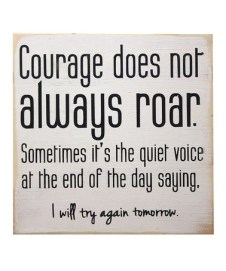
courageroarNevertheless, in the face of all this iniquity, the majority of humankind has a spiritual courage that defies logic.  The majority of people want to do good for the world. The majority of people are good and most people try to leave the world a better place then they found it.  This is truly an amazing observation.  More people are spiritual heroes than not.  Every day those who have the courage and strength to get out of bed and to start a new day show a sense of spiritual courage.  It would be easier to hide and to do nothing then to face the daily rigors of life on our planet.  Yet, that is what the majority of people do each day.  They get out of bed.  They go to work.  They volunteer.  They innovate and create.  They campaign for their ideals.  They build.  They love.  They pay taxes.  They die.  And the cycle starts all over again for the next generation.
“I long to accomplish a great and noble task, but it is my chief duty to accomplish humble tasks as though they were great and noble. The world is moved along, not only by the mighty shoves of its heroes, but also by the aggregate of the tiny pushes of each honest worker.” — Helen Keller

Time for Questions:

What kinds of courage do you have?  What kind of courage do you wish you had more of?  Why?  What could you do to find more courage in your life?  Do you think it would make a difference?  Why?

Life is just beginning.

“One isn’t necessarily born with courage, but one is born with potential.  Without courage, we cannot practice any other virtue with consistency.  We can’t be kind, true, merciful, generous, or honest.” — Maya Angelou

Rights Versus Responsibilities

1d1d3cdf7866418653d193260929945c_1200x1200

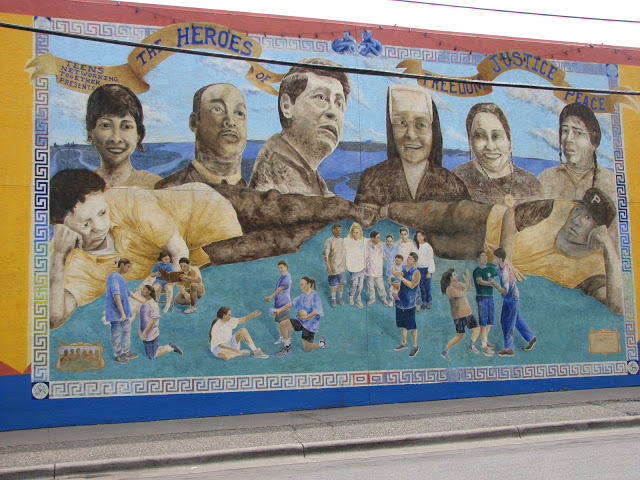
We have an epidemic of rights today and a drought of responsibility.  A number of years ago when I was a first-year teacher I had the following experience.  I was teaching at Guadalupe Area Project (GAP), otherwise charitably known as a “dropout school.”  It was mostly a school for students who had been kicked out of the St. Paul Public School System for a variety of reasons.  The school was started and run by a Sister Giovanni.  She was a leader in migrant relations on the West Side of St. Paul.  It was a largely Latino community.  Many of the residents on the West Side were recent immigrants from Mexico or Central America.

IMG_1118

Sister Giovanni believed in giving kids and people a second chance.  She started GAP to help students who were displaced from the public school system.  We had kids of all types and most were not traditional “school material.”  Some were chronic truants, some were chronic troublemakers, some had chronic learning difficulties, some had chronic behavior problems, and some were just lost souls.  It was a challenge working with these young folks but one I relished at the time. 

D943_130_551_1200One day a young student came to me and complained that he felt that his rights had been violated.  At the time, I took any students complaints very seriously particularly when it concerned rights.  I listened to his problem and asked him what he wanted me to do about it.  He asked if I would intercede on his behalf with Sister Giovanni, who was our principal.  I wanted to show the young man that I was concerned and caring and so I agreed to carry his problem to Sister G as she was known.  She was feared and loved by almost all students so it did not surprise me that he thought I might have more luck with Sister G than he would have. 
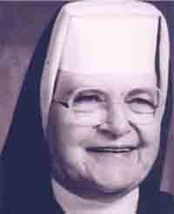
unnamedI went to Sister G’s office and knocked on her door.  She opened it and welcomed me in.  We exchanged some pleasantries and she asked me what I needed.  I began to explain the issue that the student had brought to me.  Sister G listened attentively.  When I was done, she smiled and nodded reassuringly.  I thought “Great, I have been successful.”  She then spoke, “This is your first year teaching right John?”  “Yes, it is,” I answered.  “Well, I have heard the issue and I may address it later, but I want to give you an important piece of advice now.  Students just like the majority of people will always demand their rights, but they seldom demand their responsibilities.”  Then, she gave me the philosophy that I have never forgotten.  “John,” she continued, “for every right there is always a responsibility.”  That was the end of our discussion.

960x0

It is now fifty some years later and I see a government under siege by gun toting extremists demanding their first amendment rights.  I see citizens screaming their rights to not wear a mask when required by businesses or government offices.  I see women and men yelling about their rights to get grades that they believe they deserve or that their children deserve.  Everywhere I look it seems some American is on a YouTube video attacking someone because they believe that their rights have been infringed upon.

The people that invaded the US Capital were loudly proclaiming that it was their building.  The implication was that they had a right to enter it if they choose to because they owned it.  But ownership of property implies a stewardship relationship.  If you own property, you have a responsibility to take care of it.  The vandals that broke into the Capital destroyed property, stole goods, and even shit on the floors.  Is this the way anyone takes care of property that they own? 

127661-126636

Rights:

Do most Americans even know what a right is or what it means to have a responsibility?  A right is defined by “Webster’s Online as:

1: qualities (such as adherence to duty or obedience to lawful authority) that together constitute the ideal of moral propriety or merit moral approval.

2: something to which one has a just claim.

In the definition above, the “just claim to something” seems to be the most common usage as it applies to U.S. citizens.  A large majority of people think that they deserve something or are entitled to something.  We have heard many pundits bemoan the entitlement mentality that is immensely popular today.  I believe that the concepts of entitlement, narcissism, and rights weave a peculiar pattern on the psyche of many Americans.  The mindset that results is overly sensitive to any behaviors or efforts that impinge on the so-called rights of these Americans. 

The Founders of the USA talked about “inalienable rights.”  An inalienable right can be defined as, “a right that cannot be restrained or repealed by human laws.”  Some examples include the following rights that are deemed as inalienable:

  • To act in self-defense.
  • To own private property.
  • To work and enjoy the fruits of one’s labor.
  • To move freely within the county or to another country.
  • To worship or refrain from worshipping within a freely chosen religion.
  • To be secure in one’s home.
  • To think freely.

There is an International Bill of Rights which lists the following rights:

  • The right to equality and freedom from discrimination.
  • The right to life, liberty, and personal security.
  • Freedom from torture and degrading treatment.
  • The right to equality before the law.
  • The right to a fair trial.
  • The right to privacy.
  • Freedom of belief and religion.
  • Freedom of opinion.

There is even a list of 30 Basic Human Rights.  Such lists are impressive if a bit naïve.  To say that rights cannot be taken away is ludicrous.  Rights hardly existed for many people even through much of the Twentieth Century.  Freedom and rights grow out of power.  They always have and they always will.  Without power, one may claim a right but never have any opportunity to practice it.  Government power, military power, police power and personal power all either defend or attack our rights.  Some governments giveth rights and some taketh away rights.  It is inspiring to think that we have “inalienable rights” but without power, an appeal to our rights is hollow and worthless.

bill of responsibilities

Responsibilities:

“Webster’s Online” defines responsibility as:

1: the quality or state of being responsible: such as

a: moral, legal, or mental accountability

b: RELIABILITY, TRUSTWORTHINESS

2: something for which one is responsible.

Looking at the definition of responsible, I wonder if any of the extremists ever considered the idea of moral or legal accountability?   Obviously no more than they thought of the idea of reliability or trustworthiness with the constitution of the laws of the country they profess to love.  How ironic, that they were chanting USA, USA, as they attempted to tear down the foundations that America is built on.  Nothing is more sacred to American democracy than a free and fair election.  However, these fanatics were willing to follow their deluded leader in his attempt to overthrow an election that was certified free and fair by almost every court in the country. 

Responsibilities do not grow out of power.  Responsibilities are the currency that we use to pay for our rights.  Nothing is free in this world.  Rights come with a price tag.  The price tag is paid for in responsibilities that accrue to our “inalienable” rights.  For instance, I have a personal right to swing my hand.  However, I also have a responsibility to stop swinging it when it interferes with the mobility of another human being.  I can ignore this responsibility, but the consequence can easily be the loss of my own right.  In a society we have many laws which become the responsibility of people to obey.  In return for this responsibility, personal rights are granted for a wide range of endeavors and activities.  This is the quid pro quo of rights and responsibilities. 

Another example is my right to my own opinion.  I may dislike a particular minority.  I may well be prejudiced against another race or ethnic group and believe them to be inferior to my own group.  There is no law against prejudice.  Nevertheless, we have a responsibility while a member of a multi-cultural society to avoid discrimination against other people and groups. 

Discrimination is an overt act and not simply an innate prejudice.  A society can tolerate a great deal of latitude when it comes to the stupidity of prejudice, but that latitude disappears when individuals are subjected to harassment and abuse because of the color of their skin. 

It is sad that everywhere we look today, individuals in America are clamoring for their rights.  Yelling in restaurants, offices, planes, schools, and private businesses that they have rights.  Screaming that the constitution gives them the right to do something without any responsibilities.  They protest that they are going to contact a lawyer and intend to sue someone since their rights were stolen.  None of these people want to recognize much less acknowledge that they have responsibilities.  They want their rights, but they do not want to pay the cost of their rights. 

Conclusions:

we-are-a-nation-of-narcissists-300x198-1What is the solution to the problem that we are facing today?  A poisonous cultural stew of narcissism and entitlement driven by a rights only oriented mentality that thinks they are above responsibilities.  I have reached the point in this essay where it would be easy to say, “Sorry, I don’t have the answer.” Or else, I could now list several bromides which may or may not have much effect.  I have the following solution which I believe in 100 percent.  I doubt that it would be acceptable to Americans as too many people have grown privileged, lazy, and indulgent in this country. 

imagesMy solution is for a National Required Service (NRS) that starts at the age of 18 for every man and woman in America.  Upon finishing high school and before starting college, every American would need to attend the National Required Service.  They would have two options.  The first option would be to choose between a two-year service or a four-year service.  A two-year service would be the minimum.  The advantage of a longer service would lie in the educational benefits that would accrue.  Serve two years and you would receive two years of financial credit towards any public education institution of your choice in the country including vocational education as well as liberal arts.  Choose a four-year tour of service and you would receive four years of financial credit towards the public institution of your desire.

The second choice facing the individual entering the NRS would be which track to join.  The NRS would have two tracks.  A civilian track would involve services like the Peace Corp or the AmeriCorps.  A military track would use the various branches Army, Navy, Coast Guard and Air Force to recruit soldiers from the NRS enrollees. 

Students would not go directly into college or the work force from high school.  Every 18-year-old youth in this country would have a responsibility to give back to the country that sustained him or her. No one except someone with a severe medical or family emergency would be exempted from this service.  No matter how much money you had or how influential your parents were, you would be legally required to attend the NRS.  Many enrollees would benefit from a chance to experience life away from home and to grow up some before entering into college or vocational training.  They would further benefit by having enough monetary credits to pay for their education or training and not to come away from school in debt for the next twenty years of their lives.

This program would convey rights to millions of youths and also a sense of responsibility.  The lingering miasma of entitlement that exists today would be dispelled as American youth learned about their responsibilities to their country.  They would be gratified by the role that they played and proud to have served their country.  We do not need a war to teach people about service to their country and to help them obtain the pride that so many military people have achieved upon completing their tours of duty. 


Faith:  The Fifth Most Important Virtue for a Good Life

Faith-of-a-childFaith is number five of my seven essential virtues for leading a happy and successful life.  Every Friday I start my day with the following prayer:

  • “Help me to be as well as to do and to have Faith in the future by living today the best that I can.”

 Please listen to Pete Seeger’s rendition of:  “You Gotta Walk That Lonesome Valley” for a musical version of what Faith is really about.  Read the comments about Pete Seeger.  He was a prime example of a man that had Faith. 

Faith is the first of the three major theological virtues.  As I thought about preparing this blog, I asked myself the question, “What is the difference between Faith and Trust?”  Or perhaps there is no difference?  I wondered if one has to be religious or have a religious affiliation to have Faith.  Most people think of Faith in terms of a belief in God or some other deity.

faithI decided that I must first understand what Faith really means.  To do this, it is helpful to deconstruct how we think about Faith and how we use the word.   I thought about how we use both Trust and Faith in common language.  For instance we use trust in English as follows:

  • Trust me!
  • Do you trust yourself?
  • Have a little trust in me.

Now if you try substituting the word Faith for Trust, it is obvious that in the first two instances, it just does not fit:

  • Faith me!
  • Do you Faith yourself?
  • Have a little Faith in me.

You will notice that in the third instance, you can substitute the word Faith for the word trust.  A grammarian would quickly note that the word Trust can be used either as a noun or a verb whereas the word Faith is primarily a noun and cannot usually be used as a verb.

It might be interesting to compare dictionary definitions of Faith and trust.

Faith: http://www.merriam-webster.com

  • Strong belief or trust in someone or something
  • Belief in the existence of God : strong religious feelings or beliefs
  • A system of religious beliefs

Trust:  http://www.merriam-webster.com

  • Assured reliance on the character, ability, strength, or truth of someone or something
  • Dependence on something future or contingent :  hope
  • Reliance on future payment for property (as merchandise) delivered : credit <bought furniture on trust

mountain climbingI think you can readily see that there is a certain degree of overlap between the two concepts. However, Faith generally seems to convey a more sectarian or theological concept of belief whereas Trust is generally used in more secular terms.  Thus, we don’t “trust” God but we have Faith in her.  Faith seems to be a term that is not contingent upon any kind of physical or logical proof.  We might not trust a person with our money without proof that they are “bonded” or trustworthy, but we would not expect such displays of material evidence when it comes to having Faith in God.  So what is the relevance to this in our lives?  What good is Faith if we can substitute trust for faith and have more security in the long run?

He replied, “Because you have so little Faith. Truly I tell you, if you have Faith as small as a mustard seed, you can say to this mountain, ‘Move from here to there,’ and it will move. Nothing will be impossible for you.” — Matthew 17:20

childThe answer seems to be (IMHO) that sometimes we can trust without evidence but generally we are better off trusting with some element of surety that can mitigate the risk of our trust being unfounded or mistaken.  Whereas, there is little or no evidence that can prove your need or desire to have Faith.  You must have Faith like a parent has love for a child.  It is unconditional.  You have Faith simply because you want to believe.  You have Faith because you accept something without conditions.  You need no proof or evidence to support your Faith.  Is this a good thing or a bad thing?   Should you have Faith without proof?  What would a life without Faith be like?  Would we be safer or happier with less Faith?

“On a long journey of human life, Faith is the best of companions; it is the best refreshment on the journey; and it is the greatest property.”  — Buddha

Buddha thought that Faith is a companion that we cannot ignore on our journey through life.   There is a story about Mother Teresa that when she was visiting Iowa many years ago and was being interviewed by a somewhat cynical journalist; she was asked if she really thought she was making a difference to the poor in India.  Her reported reply was “I am not called upon to make a difference.  I am called upon to have Faith.”  If that sounds somewhat evasive, consider the following professionals who toil diligently and with great dedication:

  • Teachersblack couple
  • Doctors
  • Psychologists
  • Writers
  • Philanthropists
  • Artists

There are no doubt dozens of other professionals who toil in areas that are not readily amenable to evidence that they are “making a difference.”  As an educator and consultant, I can readily attest to the fact that seldom if ever is there “evidence” or concrete proof that my actions and thoughts have made a difference on my students or clients.  Most of us work on day after day, motivated by one force and one force only.  That force is the power of Faith.

You must not lose Faith in humanity. Humanity is an ocean; if a few drops of the ocean are dirty, the ocean does not become dirty.” — Mahatma Gandhi

Each time I write a blog, I write with the hope that something I say will help someone have a better day or lead a better life.  I have now written over 800 blogs and I have received about two dozen or so letters or emails telling me how much they appreciate my writing or how much it has helped them.  The percentage of letters received is about 3.4 percent of the blogs I have written and whose readers have been moved to write to me or drop me a comment.  And that is fine.  People are busy and many times the thought of writing to a writer is something that readers never think of.

big-challengesFortunately, the 3.4 percent of respondents have been more than enough to help me keep my Faith.  (Should I really need such sustenance if I have Faith?) Yes, I have Faith that my writing is making a difference to the world but alas, I have no proof for the empiricists, the materialists or the skeptics.  I have to ask you as well as myself to believe that I am.  It is Faith that keeps me motivated.  Without Faith, life would appear to be a futile waste of time.  Faith helps us to carry on when everything and everyone is saying to quit.  The woman in the life raft, the athlete with a severe injury, the parents with a disabled child, the poor fighting hunger, the righteous fighting injustice are all sustained by the power of Faith.

19176-Have-FaithFaith can believe everything
That we say.
Belief can increase the strength
Of Faith.
Belief is pure,
Faith is sure.
Belief looks around
To see the truth.
Faith looks within
Not only to feel the truth
But also to become the truth
.  —- Sri Chinmoy

Time for Questions:

What do you have Faith in?  What helps you to maintain your Faith?  Where would you like to have more Faith?  Do you think we have too much or too little Faith in the world?

Life is just beginning.

“Faith is to believe what you do not see; the reward of this faith is to see what you believe.” —- Saint Augustine


Another Lying Statement from Donald J. Trump

5ff66b8249709

This morning Donald J. Trump released the following statement. This comes on the heels of spending nearly four years with the help of Republican leaders and sycophantic followers trying to destroy the democratic foundations of America and nearly succeeding. Thus, as his one time followers flee the White House, like rats leaving a sinking ship and some Republicans call for his impeachement, he issues the following statement:

“Even though I totally disagree with the outcome of the election, and the facts bear me out, nevertheless there will be an orderly transition on January 20. I have always said we would continue our fight to ensure that only legal votes were counted. While this represents the end of the greatest first term in presidential history, it’s only the beginning of our fight to Make America Great Again.” — Donald J. Trump 1-7-2021

IF you believe this man who has repeatedly lied and lied and gone back on anything he has said, you are a total fool. He has only said this so he does not get removed from office and so that he can continue to try to destroy this country. Even in this statement, he is denying reality and waiting until January 20 for an “orderly” transition.

This man needs to go to jail. There have been few people I can think of who deserve to be behind bars more than Donald J. Trump.

67d2d8e9d5b6f8989af857b00e8ea7b0

The following article was written several months ago. It should now include treason as well as the deaths of thousands of people due to his handling of the Coronavirus Pandemic:

The A to Z of Things Trump Could and Should Have Been Impeached For:

Here is what some of the rest of the world is saying about Trump and his supporters.

210107033058-02-newspapers-around-the-world-react-0107-nigerian-tribune-super-169

210107033436-05-newspapers-around-the-world-react-0107-ottawa-sun-super-169

210107033531-06-newspapers-around-the-world-react-0107-daily-telegraph-super-169

210107051230-09-newspapers-around-the-world-react-0107-folha-de-s-paulo-super-169

Kindness:  The Fourth Most Important Virtue for a Good Life

sharing-ice-cream-kids_fKindness is number four of my seven essential virtues for leading a happy and successful life.  Every Thursday I start my day with the following prayer:

  • Help me to understand the hearts as well as the minds of others and to be kind to all in word and deed.

 I confess I do not always separate hearts and minds very well.  I have a great respect for affairs of the mind but I often have much less respect for affairs of the heart.  I grew up with an understanding that logic, rational thinking and knowledge were the greatest attributes of a human being.  Compassion, sympathy and kindness were emotions that I thought would only get in the way of intellectual reasoning.  I thought Spock was hopelessly emotional despite his ability to calculate odds to a thousandth of a percent.  Spock often let his feelings get the best of him and I was disappointed with his resulting behavior.  Besides, if logic was most important, then why was Spock not Captain of the Enterprise instead of that emotional unpredictable volatile and childish Kirk.  What Captain in his right mind would leave a ship full of hundreds of crew people to go gallivanting around on the surface of some unknown planet as Kirk did every week?

2014-07-28-KindnesstoYouisKindnessThere were few heroes when I was growing up who could measure up to my standards for clear and unemotional thinking.  I grew up with a father who demanded toughness.  My father’s motto was not to “get even” but to “get one up.”  If someone hit me, he taught me to make sure that they would never think of hitting me again.  My father was 6’ 4” tall and had been a professional boxer with a 21 and 3 record.  He taught me fighting skills at a very young age.  My neighborhood taught me to disregard the “rules of boxing” and to fight with whatever I had to win.  I could easily protect myself and few people would bother me.  Somehow, I became a protector for those kids who were less aggressive and who were picked on by the ever pervasive bullies.  I kicked more bullies asses then I can count.  I was always proud to help the underdog.  Paradoxically, these traits did not make me more compassionate but made me harder and tougher.

NoActOfKindnessThrough hardness and toughness I began to forge a wall that nothing could get through.  Sentiments, compassion and empathy were increasingly blocked out by my need to be tough and to not take any shit from anyone in the world.  Each episode where toughness prevailed was another brick that helped to build my wall higher and higher.  I never thought I would get married but after getting my first wife pregnant, I “did the right thing” and married her.  It was the manly thing to do.  My dad had always taught me to take responsibility for my actions and my baby Chris was a direct result of my actions.

acts-of-kindness37One day we were in a grocery store just before Christmas.  An apparently legless man pushing himself along on some kind of a wheeled board was inside the grocery looking for some money.  I walked by him with Julie (my first wife) and ignored him.  My wife turned back and started to give him some money and I said:  “Shit, don’t give him any money, he can probably outrun me.  I will bet he is just a fakir.”  She gave him the money anyway and replied “What if he is not?”  I never forgot that comment.  I am not sure why my first wife married me.  She once said that she thought all people had feelings and emotions until she married me.  We subsequently divorced but I have to say that I probably owe my life to my first wife.  She cared for me when I was suicidal and she always looked after me when I was hurt or needed help.  Through her, I began to see what compassion and kindness were.  This journey has continued with my second wife Karen who is one of the most considerate and most compassionate spouses anyone could have.  Every day I learn something about kindness from her.

Kindness for someone like me could not happen as long as the wall was up.  I can’t lie and say there is no wall anymore.  I am not overly sentimental.  I don’t like chick flicks and I will gladly enact retribution on anyone who tries to hurt anyone or anything I value.  I love Jesus for turning the other cheek and as they say “I can see where he is coming from.”  However, it is not where I am coming from and I don’t think I will get to where Jesus went.

I can say that I have tried and am trying to be a better person and to me this means a more humane and more compassionate person.  I constantly remind myself of the quote:

“What wisdom can you find that is greater than kindness?” — Jean-Jacques Rousseau

As time goes by, I have seen many of my friends become entrenched in fear and uncertainty and an increased caution in living their lives.  This almost seems to be a disease of aging.  Its symptoms are fear of minorities, distrust of immigrants, intolerance towards other religions and an antipathy towards other nations.   G. B. Shaw said that “If you are not a socialist when you are young, you have no heart but if you are not a conservative when you are old then you have no brain.”

acts-of-kindness36I disagree with Shaw.  I am getting older and I still respect and uphold the values of our Founding Fathers, but I refuse to live in a gated community or allow a homeowner’s association to tell me what color holiday lights to put up.  I am not a believer in mincing words but I respect the rights of minorities and anyone else to be referred to as they want to be referred to.  I respect the rights of Indians to have their ancestor’s graveyards not dug up for commercial or even academic reasons and I respect their rights not to be depicted as silly mascots for some college team.   Trump and his supporters believe the US has become too PC.  They blame minorities for this.  They would like to live in a land where it is ok to call a Black person a nigger since we call Italians wops and French frogs.  A Black person they argue has a double standard or they apply a double standard for Blacks and Whites.  The bottom line of all this double talk is not too much PC but a lack of empathy and compassion and kindness towards others.

cop_homeless_manYes, there are extremists who want to take Huckleberry Finn out of the library just like there were Popes that knocked the genitals off of statues in Rome.  But if you have any empathy or even the slightest understanding of culture and history, you will be less apt to say “My father didn’t own any slaves.”  That is a little like replying to a woman who was raped “Well, I did not do it.”  To which I can now hear someone replying, “Yes, but no Black people alive today were slaves, so why should they be so upset?”  Yes indeed, why should they be so upset?  If you are serious about looking at a reason, please regard the following article:

These ten charts show the black-white economic gap hasn’t budged in 50 years — By Brad Plumer August 28, 2013

“Arrested progress in the fight against poverty and residential segregation has helped concentrate many African Americans in some of the least desirable housing in some of the lowest-resourced communities in America,” the EPI report notes.

And those poorer neighborhoods have a way of perpetuating inequality, the report points out: “Poor black neighborhoods also have environmental hazards that impact health. A very serious one is higher exposure to lead, which impedes learning, lowers earnings, and heightens crime rates. While rates of lead exposure have been declining for all races, African American children continue to have the highest exposure rate.”

The economic and social conditions depicted in this article would be unacceptable if they pertained to White people and you can bet that there would be a real “War on Poverty” if they did.

Caring about Black people.  Caring about minorities.  Caring about people living in poverty.  Caring about immigrants.  Caring about the hungry and sick.  This is what kindness is about.  It is not about some esoteric concept of doing good or being PC or being a patriot.

Jesus said to him, “If you would be perfect, go, sell what you possess and give to the poor, and you will have treasure in heaven; and come, follow me.”  —- Matthew 19:21

“For what shall it profit a man, if he shall gain the whole world, and lose his own soul?”  — Mark 8:36

I have learned that you cannot show kindness by being hard and tough.  Being hard and tough means taking care of yourself at the expense of other people.  You can be a rich business person and that does not make you a good person.  Some of the richest people in the world have realized this truth and have become philanthropists who are now more focused on giving to the world rather than taking back.  Bill Gates and Warren Buffett come to mind.  Consider the record of Donald Trump as noted in the article:  “Donald Trump: The Least Charitable Billionaire in the World.”

“Although Donald Trump has described himself as an “ardent philanthropist,” he has only donated $3.7 million to his own foundation. In comparison, a wrestling company has given Trump’s foundation $5 million. He ranks among the least charitable billionaires in the world.” — Ben Davis

kindness-ivThe people that we will remember in our lives and who make the most impact on our lives are not the rich and famous.  They are the people who most cared about us and looked after us.  They were kind and loving towards us and somehow showed that we meant something to them and to the world.  They may have been our fathers or mothers or an aunt or teacher or perhaps a close friend.  How much money they had or how successful they were did not make a difference to us.  Indeed, what they gave us could not have been purchased by money.  Money doesn’t touch us but kindness does.
Time for Questions:

How kind are you to other people?  Are you kind to strangers as well as friends?  Are you kind to the poor and needy?  Do you try to spread compassion and empathy in the world?  If not, what gets in your way?

Life is just beginning.

“Be kind, for everyone you meet is fighting a harder battle.” — Plato

“Kindness is a language which the deaf can hear and the blind can see.” ― Mark Twain

“My religion is very simple.  My religion is kindness.” ― Dalai Lama XIV

Reconstructing the Great Speeches – Netaji Subhash Chandra Bose:  “Give Me Blood, and I Promise You Freedom”

Subhas_Chandra_Bose_NRB

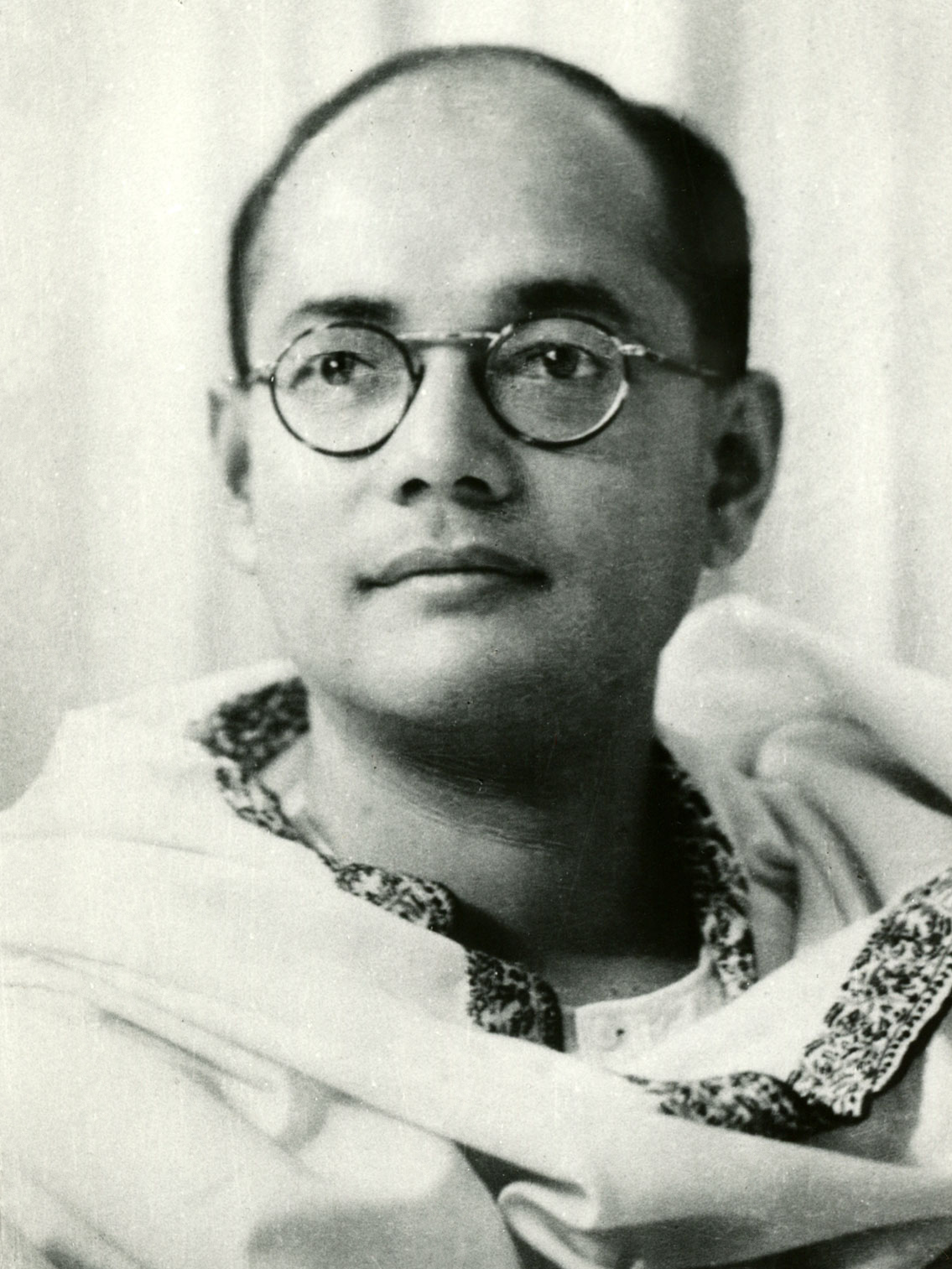
Netaji Subhash Chandra Bose was born in India on 23 January 1897.  He died in a Japanese Hospital on the 23rd of January 1945 in Taiwan.  Taiwan was then occupied by the Japanese Army during WW II.  He died a painful death from burns suffered during an airplane crash.  Bose believed in a free India and spent his life fighting against what he regarded as the British occupation of India.

For many in India, Bose was a hero for his staunch support of Indian independence.  However, for many others he became somewhat of an embarrassment.  Bose took literally the old saying that the “enemy of my enemy is my friend.”  In the later stages of WW II, he allied himself with the Axis powers of Germany and Japan.  Since they were fighting the British, Subhash believed that he could use their forces to help free India from British rule.  In addition to his willingness to ally himself with the Fascist forces, Subhash had another characteristic which cost him much support for his cause of India Nationalism.  Whereas Mahatma Gandhi believed in a philosophy of “Passive Non-Violence” to overthrow British rule, Bose believed that it could only happen if Indians were willing to resort to force and direct battles with the British.   Bose was no believer in non-violence.

BapuYou may have noticed that many great leaders seem to have had a sort of doppelganger or one who directly opposes their strategies and methods.  Martin Luther King had Malcolm X.  Sun Yat-sen had Zhang Binglin.  Nelson Mandela had Steve Biko.

Mahatma Gandhi had Subhash Bose.  Each of these men had similar end goals but the conflicts with their compatriots came about because of the differences in their methods for reaching their goals.  History remembers the winner of the conflicts and the loser is often only a footnote in the history of the winner’s biography.

Few people in America will recognize the name of Netaji Subhash Chandra Bose.  However, I think that he is a man that should be known to the world and remembered.  He had dedication and devotion to a cause bigger than himself.  He was a man of conviction, integrity, and commitment.  Many people struggle for things in their lives which will benefit themselves.  Bose’s struggle was for a freedom for his people and his nation.

I believe that freedom comes about because of a dynamic tension or yin-yang relationship between violence and peace or to put it another way between the sword and the olive branch.  If you regard the great revolutions of history, you will seldom find any that are successful solely on the basis of peaceful protests.  Frederic Douglas said that, “If there is no struggle, there is no progress. Those who profess to favor freedom, and yet deprecate agitation, are men who want crops without plowing up the ground.”

Here are a few other quotes regarding the relationship between violence and revolution:

“Revolution does have to be violent precisely because the Pharaoh won’t let you go. If the Pharaoh would let you go, the revolution won’t have to be violent.”  — Michael Hardt

“Those who make peaceful revolution impossible will make violent revolution inevitable.”  — John F. Kennedy

“We decry violence all the time in this country but look at our history. We were born in a violent revolution, and we’ve been in wars ever since. We’re not a pacific people.”  — James Lee Burke

History shows that seldom does the oppressor voluntarily allow the oppressed to be free.  Greed, power, and lack of compassion are typical traits of all oppressors.  Gandhi was a great man who overcame many trials and difficulties to pursue his path for Indian freedom.  Although Bose chose a different path, his trials and difficulties were as great if not greater than those suffered by Gandhi.  Bose was not afraid to speak out and to risk his life for what he believed.  He makes this point truly clear in the following speech.

maxresdefault

Give me blood and I promise you freedom:

Subhash’s famous speech was delivered in Burma (Now Myanmar) to the Indian National Army on July 4, 1944.

“Friends! Twelve months ago a new programme of ‘total mobilization’ or ‘maximum sacrifice’ was placed before Indians in East Asia.  Today I shall give you an account of our achievements during the past year and shall place before you our demands for the coming year.  But, before I do so, I want you to realize once again what a golden opportunity we have for winning freedom. The British are engaged in a worldwide struggle and in the course of this struggle they have suffered defeat after defeat on so many fronts.”

The British were fighting on two fronts.  In the West, they were battling the Nazis.  In the East, they were battling the Japanese.  At the beginning of the war, things went badly for the British on both fronts.  Bose had assumed that preoccupied as the British were with battling the Japanese and Germans, they would be easy pickings for an Indian army attacking the British.  He was dead wrong.

“I am so very hopeful and optimistic about the outcome of our struggle because I do not rely merely on the efforts of three million Indians in East Asia. There is a gigantic movement going on inside India and millions of our countrymen are prepared for maximum suffering and sacrifice in order to achieve liberty.”

The battle for Indian independence has been said to have killed millions of Indian civilians and soldiers.  In “War of Civilizations: India AD 1857,” by A. Misra, a writer and historian based in Mumbai, he argues that the war was an untold holocaust that caused the deaths of almost 10 million people over just a span of 10 years beginning in 1857.  The total number of deaths due to the British treatment of Indian revolutionaries will perhaps never be known.  The British were brutal in their treatment of people they regarded as “disloyal” to the British Empire.

“Unfortunately, ever since the great fight of 1857, our countrymen are disarmed, whereas the enemy is armed to the teeth. Without arms and without a modern army, it is impossible for a disarmed people to win freedom in this modern age. Through the grace of Providence and through the help of generous Nippon, it has become possible for Indians in East Asia to get arms to build up a modern army.”

Many Indian regiments were disarmed after the ending of the 1857 uprising.  Indian artillery, except for a few mountain batteries, was abolished.  Unlike the American Civil War where soldiers went home with their rifles, the British took arms away from the militants.

“We require more men and women of all categories for administration and reconstruction in liberated areas. We must be prepared for a situation in which the enemy will ruthlessly apply the scorched earth policy, before withdrawing from a particular area and will also force the civilian population to evacuate as was attempted in Burma.”

Vereshchagin-Blowing_from_Guns_in_British_IndiaMemories of the atrocities committed by the British in the 1857 uprising were still prevalent among the Indian population.  There were atrocities on both sides, but even after the war was concluded, the British engaged in a number of substantial revenge and retribution attacks against the Indians suspected or known to have supported the uprising.

“The most important of all is the problem of sending reinforcements in men and in supplies to the fighting fronts. If we do not do so, we cannot hope to maintain our success at the fronts. Nor can we hope to penetrate deeper into India.”

Boots on the ground are always critical to winning any wars.  100,000 Indian National Army (INA) soldiers fought on the Japanese side against their fellow Indians who fought on the British side.  The INA was dwarfed by the estimated 2 million Indian volunteers who fought for the British.

“Friends, one year ago, when I made certain demands of you, I told you that if you give me ‘total mobilization’, I would give you a ‘second front’. I have redeemed that pledge. The first phase of our campaign is over. Our victorious troops, fighting side by side with Nipponese troops, have pushed back the enemy and are now fighting bravely on the sacred soil of our dear motherland.”

As I mentioned earlier, Bose allied himself with the Japanese to fight for Indian independence.  Most Indians remained loyal to the British.  The battle for India lasted 80 days, from April 4 to June 22, 1944.  The Japanese were roundly defeated and forced to leave India.  It was one of the worst defeats suffered by the Japanese up to that time.

“Gird up your loins for the task that now lies ahead. I had asked you for men, money and materials. I have got them in generous measure. Now I demand more of you. Men, money and materials cannot by themselves bring victory or freedom. We must have the motive-power that will inspire us to brave deeds and heroic exploits.”

Bose now exhorted his Indian followers to give more than just their bodies and resources.  He wanted them to believe in the cause of independence as much as he did.

“It will be a fatal mistake for you to wish to live and see India free simply because victory is now within reach. No one here should have the desire to live to enjoy freedom. A long fight is still in front of us.”

0c6f7302f021918ba104c6faf94798e8Perhaps Bose saw the writing on the wall.  He is warning his supporters that they may “not see the promised land.”  The promised land being independence for India.  Nevertheless, they should remain committed to the effort.
“We should have but one desire today – the desire to die so that India may live – the desire to face a martyr’s death, so that the path to freedom may be paved with the martyr’s blood.  Friends! My comrades in the War of Liberation! Today I demand of you one thing, above all. I demand of you blood. It is blood alone that can avenge the blood that the enemy has spilt. It is blood alone that can pay the price of freedom.”

Freedom must be purchased at the cost of blood.  It is often said that “freedom is never free.”  Bose is asking his supporters to be willing to die for the cause.

“Give me blood and I promise you freedom!”

Subhash’s final line in his speech reminds me of Patrick Henry’s famous line “Give me liberty or give me death.”  The price of freedom can be steep.  Millions of men and women have given their lives to fight for the independence of their countries.

db26d66a1f3d2c095d9ee6963f5081aa

On June 15, 1947, the British House of Commons passed the Indian Independence Act which divided India into two dominions, India, and Pakistan.  The fight for Indian independence began ninety years earlier and its success can be attributed to the relentlessness that leaders like Mahatma Gandhi, Jawaharlal Nehru and Netaji Subhash Chandra Bose had for freedom.

india-map-with-silhouettes-of-people-for-indian-independence-day

The excerpts from Bose’s famous speech were taken from the “Indian Express.” You can view the entire speech on this site. 

Happy Holidays 2020 from the Persicos

dribbble-holiday-card-800x600

Dear Family and Friends,

“It was the best of times, it was the worst of times, it was the age of wisdom, it was the age of foolishness, it was the epoch of belief, it was the epoch of incredulity, it was the season of light, it was the season of darkness.”

John:  Few lines from literature could fit 2020 better than Dicken’s immortal first line from “The Tale of Two Cities.”  For many of us it will be hard to find anything good in 2020.  Nevertheless, I believe there was much wisdom and light that came out of the darkness and foolishness that bestrode this year like the Cyclops in Odysseus.  Karen made me promise not to get into politics as I wanted to talk about the greatest event that has happened for me in the past four years, so I will leave it to your imagination.

20201224_222719

We have remained healthy (so far) and are now awaiting our queue for the vaccine.  Amazing, since we usually each get at least one cold per year.  No colds this year.  Like most of you, numerous travel plans were disrupted and many things we looked forward to doing were replaced with more quiet and downtime.  Two components of my life which I now realize were not as pervasive as they should have been.  I was substitute teaching at the high schools in Casa Grande until the middle of March.  I chose not to return when the schools opened and will forgo any classroom teaching until we have both been vaccinated.  I miss the students as they are always fun and challenging.

I am working on a book of my short stories and have continued to write my weekly blog.  I write a mixture of what I like to think is “creative non-fiction” and fiction.  Much of my non-fiction is either political or spiritual.    I decided that with the help of my friend Socorro, I will take 30 of my short fiction stories and put them into one book.  In December, last year, I published a book of my blogs dealing with the subject of time on Amazon.  I called the book “The Sigh of Time.”  Writing is my main creative outlet these days.  Creative is subject to interpretation I suppose.  Well, time to turn this missive over to Karen.

Karen:  I’ll save the places we didn’t go for another year when hopefully we can get out beyond our 4 walls.  Traveling between WI and AZ homes was uneventful and safe as we are self-contained with the travel trailer.  We also enjoyed a camping trip to Bayfield in the fall and very am grateful for the trailer as we had deluges of rain several days.  I managed to pick 11 pounds of blueberries to take back home.  I’ve missed the 2 dulcimer festivals we usually attend and the Tucson Dulcimer ensemble, singing in choir, and performing for the nursing homes and assisted living.  I have a small uke group that is fun and has been meeting outdoors, and I also did a virtual dulcimer festival online called QuaranTUNE.

20201128_175404 (1)My creativity takes a more practical bend.  I refinished our Arizona kitchen and bathroom cupboards; made a dress I still haven’t worn and some flannel nightshirts for John to lounge around in as well as knit a bunch of baby sweaters and a couple of shawls to donate to Pilgrim Lutheran in Frederic.  We’re enjoying raspberry jam from our wild bushes in the back yard.  The summer project was to tackle the bookcase full of photo albums.  That included albums from my parents, grandparents, great aunt, John’s albums, and everything I’ve accumulated in more than 50 years.  Many bags into the trash, and I’m down to about 10 newly created albums which I will eventually move to AZ.  Next summer I’ll start in on the travel pictures from all the places we have visited in the last 35 years.
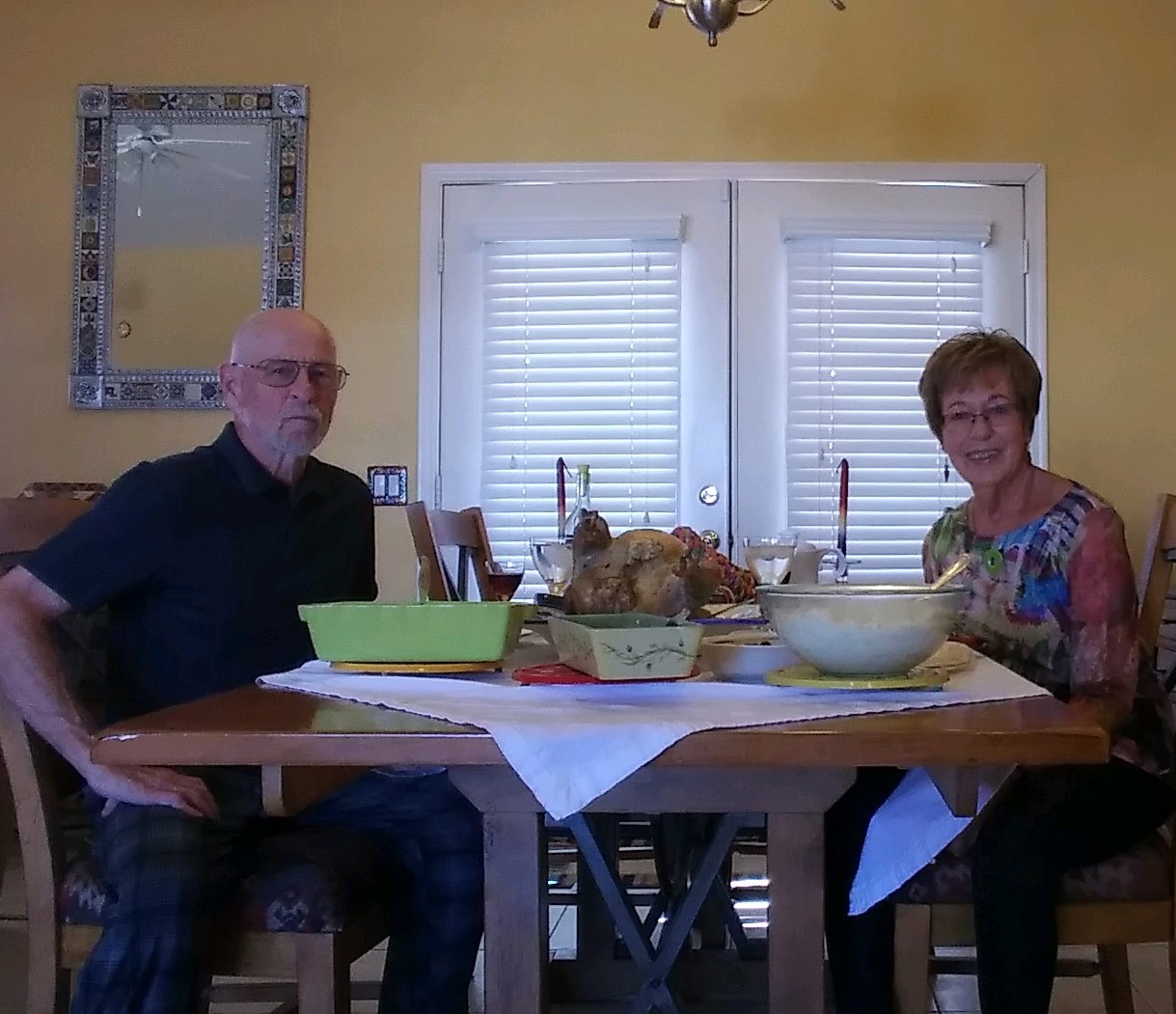
Our extended family is doing well.  Juli came to AZ in January, staying with Megan in Chandler before the pandemic.  Kevin, Susan, and Megan are all working from home.  Kevin apparently had Covid early in the epidemic but couldn’t be tested as he wasn’t a high enough risk.  I was delighted when Kevin took a trip to WI and came to see me on my birthday.  I did my usual fun visit to Susan for the four days John is away at his annual Jesuit retreat and spent a day with Juli.  Megan and I have done our Christmas cookie baking weekend and our lefse day.  Our grandchildren are certainly not children anymore.  Garrick is back at home with Juli and Rob and is a good support for Juli.  Logan is attending college and works as a pet attendant with her beloved animals.  Zach graduated from his master’s program and has been working at Ellsworth Community College in Iowa coaching baseball.  He has now accepted a position in Worthington MN as head baseball coach at their community college.  Sam is in his senior year at Augsburg and working as a pharmacy tech part-time.

We wish you and your loved ones health and happiness in 2021.

John and Karen

thanksgiving 202 (2)

Patience: The Third Most Important Virtue for a Good Life

Patience is number three of my seven essential virtues for leading a good life.  Every Wednesday I start my day with the following prayer:

  • Give me the patience to avoid judging others today and forgive me for those times when I fail.

Augustine-of-Hippo-Patience-Quotes

Years ago, I would give give an annual safety lecture for friends in our motorcycle club.  One year, I started my lecture off with the comment that “You should never run a green light!”  “You mean red light” someone replied.  “No, I mean green light.  This comment seems confusing at first thought, since it is perfectly legal to “run” a green light.

Before, I explain my logic behind the red light versus green light comment, let me give you a little test to see how patient you are.  I will do this by way of posing three scenarios.  I will suggest some possible paths that you could take in each scenario.  You select the action that you would be most likely to take or that perhaps you usually take.  I will then give you a score for each possible path.  The scores will point to your “patience quotient.”

checkout

People waiting in line with shopping baskets at grocery store

The first scenario involves a common enough occurrence in most of our lives.  You have finished your grocery shopping and now need to find a cashier to check out with.  Today, there are only six lanes open and the lines seem to be somewhat disproportionate in length.  Do you?

A. Try to find the shortest line before moving your cart into position

B. Simply take the first line you come to

C. Hang back and see if they will open another line

D. Get into one line but hop over to another line if it seems to be moving faster

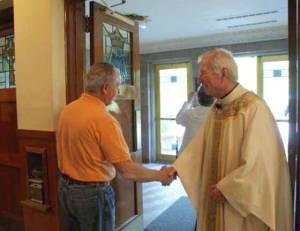
mc-cullgreets-061611-sn-tifOur second scenario involves going to church service.  At the end of many services, the minister (Do Rabbis and Imams do this?) will wait at the door and greet the outgoing parishioners.  Do you?

A. Wait in line and wonder why the heck they have to do this

B. Get in line and look forward to greeting the minister

C. See if you can find another door to exit by

D. Say some prayers in your pew until the line shortens

bigstock-angry-girl-driver-inside-car-125280341-725x400Our third and final scenario finds us on our ubiquitous freeway system wending our way to some appointment that we will probably be late to if the traffic stays so slow.  Do you?

A. Silently curse the other drivers on the road

B. Try to find the fastest lane

C. Simply resign yourself to being late and stay in one lane

D. Weave in and out to get ahead of the other traffic

If you selected, D for 1, C for 2, and D for 3.  You have a patience problem.  On the other hand, if you selected B for 1, B for 2 and C for 3, you should be writing this blog and not me.   All other choices put you somewhere between patient and impatient.  You decide and be honest where you are at on this continuum.

It is has been said that Patience is the greatest of all virtues, but I will not argue that point because it is meaningless.  Patience can save your life.  Patience can save your sanity and Patience can save your soul.  These three facts are cause enough to consider that Patience should rank at least among the top virtues in terms of importance.  How high it should rank for you will depend on how you rated yourself on my scenarios.  For instance, if you weave in and out of traffic trying to get someplace a few seconds or even minutes faster, you not only endanger your own life but you endanger the lives of other people.  You have a Patience problem.

Patience can save your life because as the saying goes “Haste makes waste.”  How many people have died because they could not wait?  They were so impatient and they just had to take the shortcut.  Whether it involved shutting the electricity off before doing some repairs, waiting for someone to hold a ladder for them or taking their time crossing the road by looking both ways, impatience costs lives.  You will live longer if you are more patient.

“He that can have patience can have what he will.”  ― Benjamin Franklin

“Patience can save your sanity, because you will be living a pretty stressful life it other people’s actions can dictate your feelings.  If you get mad in lines at the behaviors of people who take too long or have too many coupons, you will be habitually angry.  If you get mad at “inconsiderate” other drivers, you will be stressed whenever you set foot in a vehicle.  If your expectations of people mean that they should help you to save time in your life, you will most likely die from a premature heart attack.

“The strongest of all warriors are these two — Time and Patience.”  — Leo Tolstoy

Patience can save your soul.  A good person is someone who can have empathy for others.  Other people make mistakes.  Other people are late.  Other people may not plan as well as you do.  Other people may be preoccupied and seem inconsiderate.  If you lack patience, you lack empathy for others.  Lacking empathy for humanity is a sure way to become calloused and soulless.  A spiritual person does not judge others and as Jesus said:

“Do not judge so that you will not be judged.  For in the way you judge, you will be judged; and by your standard of measure, it will be measured to you.”  — Matthew 7:1

So why should you never run a green light.  Well, the answer is simple.  How many times have you sat at a light and watched some frenzied driver try to beat the light and fail?  How many times have you seen someone run a red light while you were waiting to enter the intersection?  How many times might you have been killed if you had been in the intersection when the other party ran the red light?  In each of these cases, the light would have been green when you started through the intersection.

red light

I always make a point of slowly entering an intersection after a light changes as opposed to gunning my engine and racing though the intersection.  This simple thought of “never running a green light” has saved my life more times than I can count both when I was on my motorcycle and in my car.  This was my point at our motorcycle safety meeting that day and everyone nodded thoughtfully after I had explained why you should “never run a green light.”

Time for Questions:

How did you do on my three scenarios?  How patient a person are you?  What would you have to do to become more patient?  What is stopping you?

Life is just beginning.

“Prayer of an Anonymous Abbess”

Lord, thou knowest better than myself that I am growing older and will soon be old.  Keep me from becoming too talkative, and especially from the unfortunate habit of thinking that I must say something on every subject and at every opportunity.

Release me from the idea that I must straighten out other peoples’ affairs.  With my immense treasure of experience and wisdom, it seems a pity not to let everybody partake of it.  But thou knowest, Lord, that in the end I will need a few friends.

Keep me from the recital of endless details; give me wings to get to the point.

Grant me the patience to listen to the complaints of others; help me to endure them with charity.  But seal my lips on my own aches and pains — they increase with the increasing years and my inclination to recount them is also increasing.

I will not ask thee for improved memory, only for a little more humility and less self-assurance when my own memory doesn’t agree with that of others.  Teach me the glorious lesson that occasionally I may be wrong.

Keep me reasonably gentle.  I do not have the ambition to become a saint — it is so hard to live with some of them — but a harsh old person is one of the devil’s masterpieces.

Make me sympathetic without being sentimental, helpful but not bossy.  Let me discover merits where I had not expected them, and talents in people whom I had not thought to possess any. And, Lord, give me the grace to tell them so.

Amen”
― Margot Benary-Isbert

Lawyers, Lawyers Everywhere, but Not a Shred of Justice Anywhere

lawyers---white-__00423.1420748943.1280.1280

I am going to make a case here.  My claim is that there are too many lawyers running things in the United States of America.  I will present the facts and arguments.  You be the judge and jury.  If I make a good case, then I will settle for fifty million dollars. 

Ladies and Gentlemen of the Jury.  This may sound like an extreme case.  I know most of you will have some friends who are lawyers.  Some of you may be thinking “Well, there are good lawyers and there are bad lawyers.”  Some of you may be thinking “Well, how would we run this country without lawyers.”  Please listen to what I have to say.  Then you may render your verdict. 

I will repeat my claim.  We have too many lawyers.  They have created a litigious society that is being run by fear and not by logic or reason.  Lawyers use lawsuits to run things and the number and frivolity of these lawsuits has reached epidemic even pandemic proportions.  We have lawyers running our government.  We have lawyers running our school boards.  We have lawyers running our city, county, state, and federal governments.  Everywhere you look in business, there are lawyers prosecuting lawsuits, making claims for reparations, litigation, and countersuits.  Civil courts have begun to take over justice from legal courts.  Law has replaced justice in America.  Laws are not made of the people, by the people and for the people, but laws made of lawyers, by lawyers and for lawyers.

download (1)

For the past two months we have witnessed lawyers running all over the USA with frivolous lawsuits and craftily plied arguments to usurp the will of the people.  Nay, not just to usurp the will of the people but to overthrow the government of the people of the United States of America.  Even as I write these lines, there are still pending threats to the legally elected President and Vice-President Elects of the USA.  These lawsuits and claims are made by men and women without a shred of decency, integrity, or ethics.  The only thing these lawyers care about is power and winning and money.  The destruction of American Democracy means nothing to these vultures.

n_Menendez_garretthaake_michaelkang_abrahamaiyash_janetimm__PAlawsuit_201121_1920x1080

Ladies and Gentlemen.  Allow me to present some statistics on lawyers in the USA.

Lawyer Statistics & Facts – 2020 –  https://goremotely.net/blog/lawyer-statistics/

  • The US legal business sector has an estimated $160 billion market share.
  • More than 100 million cases are filed each year in state trial courts, while roughly 400,000 cases are filed in federal trial courts.
  • Only 14.4% of all US lawyers are certified members of ABA. (American Bar Association)
  • Some high-profile attorneys can earn as much as $2,400 hourly ($5 million annually).
  • There are more than 1.35 million lawyers in the US.
  • The number of active lawyers in the United States increased 14.5% over the last decade
  • In China, there is 1 lawyer for every 4,620 inhabitants.
  • In the USA there is 1 lawyer for every 300 inhabitants
  • The percentage of lawyers who are men and women of color (Hispanic, African American, Asian, Native American, and mixed race) grew by a mere 3% over the past decade, increasing from 11.4% in 2010 to 14.1% in 2020.

Ladies and Gentlemen of the Jury.  Please believe me when I say that I am not the only one who thinks that we have too many lawyers in the USA.  Numerous experts can witness and provide testimony that America is one of the most litigious nations in the world.  The amount of litigation has nothing to do with justice.  Lawyers seek out and design strategies to create lawsuits strictly aimed at making money.  How many of you have been notified that you are eligible for some class action lawsuit?  Lawyers actually buy and sell such lawsuits in the hopes of extorting money from organizations that prefer not to have their reputations smeared or waste time in court challenges.  Many organizations simply settle rather than undergo a long and tedious legal process.

Ladies and Gentlemen.  Let me tell you what happens in many of these class action lawsuits.  A company is found with either a potential or tenuous wrongdoing.  Litigants who may have been remotely connected to this perceived wrongdoing are sought out who are offered a monetary reward for their participation.  They may be former customers, clients, or employees.  The case goes to court.  Millions of dollars are sought from the accused.  The lawyers may win or settle out of court.  An award is made.  Let us say that the settlement is made for 50 million dollars.  The lawyers take twenty percent of that for the claimants.  Thus, ten million dollars may be paid out to other people.  The rest of the money, the other 40 million dollars goes to the law firm. 

Frivolous Lawsuit

Ladies and Gentlemen.  I will give you a personal case that I was witness to firsthand and that I will swear to.  A number of years ago, I received three envelopes in the mail.  Upon opening each envelope, I discovered that they were all from eBay.  One had a check for .47 cents.  One had a check for .97 cents.  One had a check for .25 cents.  The postage on the last envelope did not even cover the cost of the check.  Apparently, eBay had lost a class action lawsuit for some overcharging that they were alleged to have done.  I had never, I repeat never signed any documents alleging any wrongdoing or agreeing to any lawsuits against eBay.

Curious, I went online to find out what this was all about.  As I expected, some law firm had brought the lawsuit and won in court.  eBay agreed to pay.  Thousands of people received small checks like I did based on the volume of business they had done with eBay.  The people connected to this alleged crime received pennies while the law firm copped multi-millions for their efforts on our behalf.  I would gladly have refunded my money to eBay since I still do business with them and have never had a problem with their business practices. 

“In April 2018, The New York Times chronicled an even more troubling (albeit related) consequence of TPLF: litigation funders were pushing plaintiff law firms to encourage women to undergo unnecessary surgeries in order to drive up the value of their claims.” — Third Party Litigation Funding

Ladies and Gentlemen.  Did you know that law firms buy and sell lawsuits like you go to the store to buy and sell clothes or merchandise?  (See How To Sell Your Lawsuit)  If a law firm does not think it has the resources or time to prosecute a potentially lucrative lawsuit, it will simply list such suits in a legal newspaper classified ads offering to “sell” the lawsuit to another firm that has the resources to manage the lawsuit. 

“Mighty lends money to plaintiffs in personal injury lawsuits. You collect only if they do. Plus, the head of this online electronic investment platform recommends that only personal-injury lawyers, or investors who have such lawyers helping them evaluate cases, plunk down their money at this early stage.”

Does anyone here think that this is about justice or fairness or equity?  The legal profession has become about power and money.  Do you think the lawsuits brought by Trump and his cadre of legal experts had anything to do with justice or democracy?

“President Donald Trump and his allies have filed dozens of lawsuits across the country in an attempt to contest the election results.  Most of them have been shot down or withdrawn, and no court has found even a single instance of fraud.  Of at least 57 cases to have been filed, including some not directly involving Trump but which could nonetheless affect his standing, at least 50 have been denied, dismissed, settled or withdrawn.”

Ladies and Gentlemen.  Please consider that the cases on behalf of Trump were brought by men and women with legal degrees.  These are educated people many of whom went to first class legal colleges.  These are people intelligent enough to get an advanced degree and pass tests that would be impossible for the average person.   Nevertheless, the cupidity of these lawsuits in terms of the damage they have done to our country can only point to a failure of the legal profession to inculcate a sense of ethics and morality in their practitioners.  These lawyers have no interest in supporting the very democratic foundations of a country that allows them to practice their profession.

Ladies and Gentlemen.  Let us look now at the damage that this profession has done to our government.  In no country in the world are there as many lawyers in the Federal government as in the United States of America.  Look at the following statistics:

  • The EPA employs 1,020 lawyers with payroll exceeding $1.1 billion
  • The IRS employs over 1,400 lawyers.
  • There are 10,000 lawyers who are employed by the US Department of Justice.
  • In total, there are 25,060 Lawyers in the Federal government costing taxpayers $26.2 Billion per year.
  • 25 of the 45 presidents of the USA have been lawyers
  • In the 116th Congress of the USA, there are a total of 192 lawyers out of a total congressional body of 537 individuals (Membership of the 116th Congress)

Ladies and Gentlemen.  You may well ask, “Well, what harm can all these lawyers do.”  Let me tell you. Having been around lawyers in many different organizations, I can testify to the limited perspective that the legal profession often has in terms of viewing the reality that confronts the average person.  Many of these “legal” experts have never done a day of hard work in their lives.  Often the sons and daughters of privileged and wealthy parents, they go from school to school until they achieve their legal degrees and then go right into some law firm that snatches them up as soon as they graduate.  Their experience of working people and the rest of the world is narrow, limited, and biased.  Once, in their field they are motivated by money, power, and greed. 

downloadLadies and Gentlemen.   How can you have a government of the people, by the people and for the people when it is a government of the rich by the rich and for the rich?  A government of lawyers, political science majors and corporate people.  An interlocking network of proponents who have a self-interest that nowhere matches the nature and interests of the general public of America. 

In the current Senate, only 19 of the 100 office holders served in the US military.  There is one engineer, four farmers, one rancher, one computer programmer, one accountant, about twenty teachers and the rest are either lawyers or businesspeople.  There are no plumbers, no architects, no scientists, no physicists, no chemists, no carpenters, no brick layers in the Senate.  Three percent of the Senate are African American, Five percent are Hispanic, or Latino and three percent are Asian/Pacific Islanders. Twenty five percent of the Senate are women.  — Congressional Statistics

vote-for-kevin-newman-too-many-lawyers

In the USA as a whole, the numbers are quite different from the Senate in terms of representation.  (See Census Government)

  • African Americans are 13.4 percent in population versus 3 percent in the Senate
  • Asian Americans/Pacific Islanders are 6.1 percent in population versus 3 percent in the Senate
  • Hispanic or Latino are 18.5 percent in population versus 5 percent in the Senate
  • Women are 50.8 percent in population versus 25 percent in the Senate
  • Veterans are 6 percent in population versus 19 percent in the Senate

Ladies and Gentlemen.  The facts speak for themselves.  But one last fact, if you please, before I do my summation. 

  • The median net worth of an American family is $52,700. The median net worth of members of Congress who filed disclosures last year is just over $1 million. — open secrets

Ladies and Gentlemen of the Jury.  Let me conclude.  As you can see from the evidence, there is no way that the U.S. Congress represents the American people.  The sad part is that we vote these people in time and time again.  We continue to elect the same people over and over again with the same disastrous results.  We have a so-called democracy which does not represent the American people.  But I have not even touched on perhaps what is the worst of the dangers that lawyers are doing to this country.

In a land where I live called Wisconsin, we have been involved in an ongoing dispute over the siting of what is called a CAFO, or Concentrated Animal Feed Operation.  I have been to many county government meetings and board meetings where arguments have taken place over the jurisprudence and legality of such operations.  In every meeting, there is always a lawyer sitting rather obtrusively near the board members. 

services-featured-civil-litigationMany of the board members in the rural counties are farmers or laborers or educators who have little or no training in the laws that they are sworn to protect.  Thus, they rely heavily on the lawyers that they hire to provide advice and perceived protection from lawsuits.  This renders the board members subject to the legal opinion of the lawyer which is quite often at odds to what the public wants.  The boards are frequently fearful of a lawsuit (often offered by the lawyer as a possibility) and will forego making an informed decision based on evidence that is presented at the hearings. 
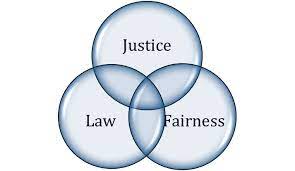
I have witnessed this happen at county government meetings over other issues besides the one noted above.  I have also seen business organizations, when I was a management consultant, that relied too heavily on the advice of a lawyer.  This advice, based as it was on the fear of a lawsuit, and not a more probable positive outcome often led to missed business opportunities.  I knew when I had an opinion that differed from the legal opinion that I was going to have an uphill battle to have any positive changes made.  Lawyers thrive on fear and angst. 

download (2)We need less lawyers.  Lawyers and lawsuits are destroying America and Democracy.  We need leaders with more diversity in education.  We need leaders with more ethnic diversity.  We need leaders with more gender diversity.  We need greater representation that reflects the demographics of America.  We need less lawyers.  We need more justice and we need more fairness. 

The Prosecution rests it’s case.


Previous Older Entries Next Newer Entries