When the TRUTH Will Not Set You Free!  Part 2 of 3 Parts  

Last week we started a search for Truth which took us from the Trial of Socrates to The Extermination of Native and Indigenous Peoples.   At the end of this journey, I am sure you were no closer to the Truth than I was.  Thus, I think we should continue our search through history and through the next five egregious injustices in my list to see if somewhere within these abominations of human behavior we can find the Truth.   We seek a Truth that is so compelling, so momentous and so significant that it has allowed our leaders and greatest thinkers to commit such heinous crimes against humanity in the name of Truth and justice.  (Click on the title to listen to Aye Khuda’s Song The Ballad of Inhumanity)   turth picture
Surely, with the wisdom of hindsight, there is no one who would disagree that every one of the items on my list is a sad commentary on the human race.   Let us move on then and see what insights the next events we examine might shed on the ultimate Truth which we all seek.  We move forward in history, with the hope that perhaps in this journey, we will find the ultimate Truth.  Just like Diogenes, we must have patience and keep seeking.  By the way, did Diogenes ever find an honest man?  I don’t think he did.

  1. Reign of Terror
  2. Scottsboro Boys
  3. The Holocaust
  4. The Khmer Rouge Genocide
  5. Roman Catholic Sex Abuse Scandals

The Reign of Terror:  Part of the French Revolution

The Reign of Terror lasted from 1793 to 1794.  Can you think of a more horrible epithet for a period of time that should have been characterized by unbridled optimism?   It was a period of time in France that (though it took place about 14 years later in France) was born of dreams and aspirations that were similar to the American Revolution.  In final outcomes, no two events could have turned out more dissimilar.  In the beginning though, there were similarities.  In both France and America, a king and tyrant would be overthrown.  In both nations, the goal was to establish a democracy.  In both the USA and in France, it was to be a rule of the people, by the people and for the people.  And in both cases, it was a revolution that started out based on the liberal and enlightened ideals of such thinkers as:  Rousseau, Locke and Voltaire.  And that is where the similarities end.   5_-the-reign-of-terror-1

In America, we ended up with a democratic system of government and no king or dictator.  France went on to establish a dictatorship under Napoleon Bonaparte and lopped off the heads of over sixteen thousand people and another twenty five thousand by other means.  Whereas in the USA, we exported the Tories (those who sided with England) to Canada and elsewhere, during the French Revolution, anyone not labeled a “patriot” was subject to arrest and execution whether they were “citizens’ or not.  The very leaders of the French Revolution were one by one called out for treason and executed.  This included such famous names as:  Saint-Just, Carnot, Danton, Marat, and Robespierre.  No one in France was safe from the guillotine.  Here was an erstwhile revolution for liberty, fraternity and equality that turned into a debauchery of power hungry madmen secretly harboring dreams of glory and fame.  Want happened to the Truth?  Who knew the Truth?  The basic Truths of the philosophical founders of the French Revolution include the following:

John Locke:  “All mankind… being all equal and independent, no one ought to harm another in his life, health, liberty or possessions.”

Jean Jacques Rousseau:  “What wisdom can you find that is greater than kindness?

Voltaire:  “What is tolerance? It is the consequence of humanity. We are all formed of frailty and error; let us pardon reciprocally each other’s folly – that is the first law of nature.”

These hardly seem like Truths that would lead anyone to rampant executions but perhaps the Truths of the leaders of the Revolution did not really derive from the Truths of their philosophical founders.  Let us look at the Truths of some of the French leaders and see what their Truths were:

Louis Antione de Saint-Just:  “The vessel of Revolution can arrive at port only on a sea reddened by torrents of blood.”

Lazare Carnot:  “The General Order is always to maneuver in a body and on the attack; to maintain strict but not pettifogging discipline; to keep the troops constantly at the ready; to employ the utmost vigilance on sentry go; to use the bayonet on every possible occasion; and to follow up the enemy remorselessly until he is utterly destroyed.”

Georges Jacques Danton:  “In revolutions authority remains with the greatest scoundrels.”

Maximilien Robespierre:  “To punish the oppressors of humanity is clemency; to forgive them is cruelty.”

Is it just me or does there seem to be a major disconnect between the Truths of the philosophers and the Truths of the political leaders?  Does it seem funny that a revolution that was started to pursue a rule of law for the common everyday person was soon taken over by fanatics and extremists?  In this day of rampant terrorists, it would appear that the worst terrorists of the French Revolution became their leaders.  Is it everywhere the same that Truth gets coopted by the fanatics and terrorists or is the French Revolution simply an aberration?  Could it be that the Truths of Rousseau and Locke were actually lies and the Truths of Carnot and Danton were the real Truths?  Must Truths ever be colored in blood and gore?  Let us move on to look at another regrettable episode in human history and see what light if any on the Truth it may shed.

The Scottsboro Boys:
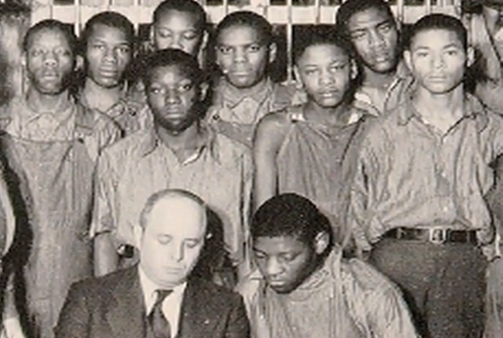
ScottsboroNine African American youths tried and convicted for the alleged rape of two White women while on a train ride to find work in 1931.  This travesty of American justice took place in Alabama during the height of Jim Crowism.  Many people recognized that these “boys” as they were called were being railroaded to justice.  They were tried a total of three times.  Twice by all White juries and once by a jury that included a single African American member.  (How would you like to have been that minority juror?)  In each case, they were all found guilty.  Some of the “boys” were subsequently pardoned, yet all but two served lengthy prison sentences.

What was their crime?  Rape you say?  The rape of two white tramps who were probably screwing the daylights out of every male they met regardless of color?  Or was it two white Women who represented the flower of Southern gentility?  The chivalry of the Southern gentleman coming to the aid of his White magnolia blossom to insure her continued unblemished purity.

Yes, this trial was more than a trial for the rape of two women, this trial represented the rape of the entire South.  Every White male in a Southern state was raped by these “colored boys.”  Such a mockery of Southern chivalry could not go unpunished.   The Truth of the color line must be established once and forever and what was this Truth?  For the Blacks and for the Whites, the Truth was very different.  Here were the Black Truths:

Black Truth:  Southern White slave masters have been raping Black women since the first slaves were offloaded to American shores.

Black Truth:   A large number of White women were more than willing to go to bed with an African American male.

Black Truth:  A White jury would never free a Black person of a crime against Whites.

The Truths for Southern Whites looked like this:

White Truth: If we could lynch these Black bastards, we would.

White Truth:  It’s alright for a White man to screw a Black woman but it’s not alright for a Black man to screw a White woman.

White Truth:  We have two sets of justice down here, one for White people and one for niggers.

Times have changed. Black people have made progress right?  Of course they have you say!  Does not the USA now have a Black president?  Although, he is also half White so why is he not a White President?  However we also have Ferguson Missouri, Eric Garner and thousands of African American males in prison for drug crimes that a White person would not have been convicted for.  We daily witness protest marches against police profiling and the shooting of poor young African American “boys.”  Time marches on and the Truth still remains somewhat murky.

The Holocaust:
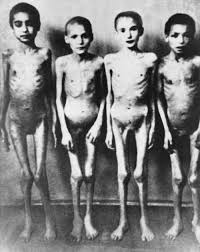
holocaust childrenThe Holocaust was the systematic murder of Jews by the Nazis for the sole reason that they were Jewish.  They were not a burden on the society.  They were not a primitive culture.  They were not a class of deviates or criminals.  Indeed, they were shopkeepers, bankers, manufacturers, educators, musicians, philosophers and scientists. The Jews in Europe were probably the best educated and most prosperous ethnic group that existed in Europe.  Why the Holocaust?  Why the crematoriums?  Why the Gas Chambers?  Why? Why? Why?  This question has been asked thousands and thousands of times.  Hundreds of books have been written asking and looking for an answer to this question.

Now it may be noted that a “Holocaust” does not strictly apply to the Jewish slaughter and that there have been other holocausts in history.  Earlier I noted the massacre of Armenians by the Turks.  The systematic murder of Cambodians by the Khmer Rouge, the Rwandan Massacres and the genocide that took place between the Bosnians and the Serbs.  So what is the difference between the Jewish Holocaust and these no less horrible episodes?  Let us look at the definitions that have been applied to the following terms:

Genocide is defined as:  “The deliberate and systematic extermination of a national, racial, political, or cultural group.”  (Dictionary.com)

Holocaust is defined as:  “The systematic mass slaughter of European Jews in Nazi concentration camps during World War II (usually preceded by the).” (Dictionary.com)

The Holocaust has been labeled as a unique instance of genocide.  It is certainly a specific example of genocide that was perpetrated against a targeted group of people.  One might argue that there is no commonality between the Holocaust and these other examples of genocide, however I think they would be on shaky grounds.  In all cases, it could be argued that the perpetrators felt somehow threatened by their victims and decided that only by killing their chosen victims could their threat be eliminated.  Nevertheless, in no other examples except for the Jewish Holocaust was the entire legal, judicial, legislative, military and political apparatus of an entire State brought to bear against the victims.  Furthermore, the furtive and secretive nature of the Nazi slaughters were without precedence.  They clearly recognized that their mass murders were immoral and evil and they took major steps to prevent the world from learning about these atrocities.  So did the Nazis have a set of Truths that they were following in the murders of their victims?  What were the Jewish Truths that they followed as they attempted to take part in the German culture?  Let’s listen to some of the Nazis leaders to see their Truths:

Hitler:  “The personification of the devil as the symbol of all evil assumes the living shape of the Jew.” 

Himmler:  “We know that these clashes with Asia and Jewry are necessary for evolution.”

Goebbels:  “I am of the opinion that the greater the number of Jews liquidated, the more consolidated will the situation in Europe be after this war.”

Rosenberg:  “Since Germany with its blood and its nationalism has now broken for always this Jewish dictatorship for all Europe and has seen to it that Europe as a whole will become free from the Jewish parasitism once more, we may, I believe, also say for all Europeans: For Europe the Jewish question is only then solved when the last Jew has left the European continent.”

We must look to some of the Jewish leaders and spokespeople to see what their Truths were.  What beliefs and ideologies could have persuaded the Jew to live, work and die for a country that would eventually seek to totally and permanently eradicate their very existence?  But of course, only after stealing everything they owned and even taking their victims hair and teeth to recycle for the greater good of the true German Master Race.

Robert Weltsch:  “They accuse us today of treason against the German people: The Nationalist-Socialist Press calls us the ‘enemy of the Nation,’ and leave us defenseless. It is not true that the Jews betrayed Germany. If the Jews have betrayed anyone, it was themselves. Because the Jew did not display his Judaism with pride, because he tried to avoid the Jewish issue, he must bear part of the blame for the degradation of the Jews.”

Mordechai Chaim Rumkowski:   “I thought that would be the end of it, that after that, they’d leave us in peace, the peace for which I long so much, for which I’ve always worked, which has been my goal. But something else, it turned out, was destined for us. Such is the fate of the Jews: always more suffering and always worse suffering, especially in times of war.”

Jewish Saying:  “If a Goy strikes you, bow your head and he’ll spare your life

Anne Frank:  “In spite of everything, I still believe that people are really good at heart. I simply can’t build up my hopes on a foundation consisting of confusion, misery, and death. I see the world gradually being turned into a wilderness, I hear the ever approaching thunder, which will destroy us too, I can feel the sufferings of millions and yet, if I look up into the heavens, I think that it will all come right, that this cruelty too will end, and that peace and tranquility will return again.”

Simon Wiesenthal:  “For me the Holocaust was not only a Jewish tragedy, but also a human tragedy. After the war, when I saw that the Jews were talking only about the tragedy of six million Jews, I sent letters to Jewish organizations asking them to talk also about the millions of others who were persecuted with us together – many of them only because they helped Jews.”

The Jewish Truths seem to me to bear absolutely no resemblance to the Truth of the Nazi Fascists.   In America, we lost over 400,000 soldiers in our efforts to wipe the Nazi butchers off the face of the earth.  Nothing infuriates me more than seeing some miscreant wearing a Nazi swastika or sporting a Nazi tattoo.  The Nazis made a sacrament out of murder and torture and created altars where they could worship their blasphemous sacraments at.  Their altars were their crematoriums and death chambers.  It is a sad Truth that we still have Nazis and Nazi sympathizers walking the face of the earth.  But let us journey on through history.  With only two events left in my list, it would be irresponsible to forego the lessons that they might still hold for us.

The Khmer Rouge Genocide

The Khmer Rouge regime arrested and eventually executed almost everyone suspected of connections with the former government or with foreign governments, as well as professionals and intellectuals. Ethnic Vietnamese, ethnic Thai, ethnic Chinese, ethnic ChamCambodian Christians, and the Buddhist monkhood were the demographic targets of persecution. As a result, Pol Pot is sometimes described as “the Hitler of Cambodia” and “a genocidal tyrant.” Martin Shaw described the Cambodian genocide as “the purest genocide of the Cold War era.”

Ben Kiernan estimates that about 1.7 million people were killed.[6] Researcher Craig Etcheson of the Documentation Center of Cambodia suggests that the death toll was between 2 and 2.5 million, with a “most likely” figure of 2.2 million. After 5 years of researching some 20,000 grave sites, he concludes that, “these mass graves contain the remains of 1,386,734 victims of execution.”  (From Wikipedia)

khmer-rouge-skullsThe most startling fact or perhaps we should say Truth about the Khmer Rouge Massacres is that they went on virtually unheralded and unnoticed by the Western world.  There was little outcry or call for intervention by any Western government.   In the USA, virtually no press covered these events while they were happening.  How could nearly two million people be exterminated without the United Nations, The United States or any other Western country raising an outcry against such an atrocity?   The Truth, which few dare say, seems to be that Asian lives (much live African lives) do not matter as much in the West as European or American lives.  Witness the recent Charlie Hebdo murders.

On January 7th 2015, two masked men entered the offices of the journal paper Charlie Hebdo and murdered in cold blood twelve of the staff.  The reason for the murders is alleged to be retailiation for the depiction of the prophet Mohammed in unseemly portrayals by the satirical magazine.  The manhunt went on for three days for the killers and resulted in thousands of newscasts, broadcasts, newspaper articles, radio announcements etc. that continued 24/7 non-stop until the killers were found and eliminated.

The Western press had a field day with the event.  It became a bigger star than the Super Bowl.  I looked at CNN on my IPAD one day and the first 16 of 55 articles all had to do with the Charlie Hebdo murders.  The 26th article that CNN published two days ago noted the massacre of 2000 Nigerian men, women and children by the terrorist group Boko Haram.  Sixteen articles on the murder of 17 French citizens and one article on the massacre of over 2000 Nigerian citizens.  Does this suggest a different Truth for the murder of Africans versus Europeans?  On Sunday, heads of state from across Europe, Africa and the Middle East flew into Paris to take to the streets alongside an estimated 1 million people in the city — including the entire French government to protest the Charlie Hebdo killings.  Republicans in the USA are criticizing President Obama for not having sent a high enough official to attend the march.

“I’m for truth, no matter who tells it. I’m for justice, no matter who it’s for or against.”Malcolm X

Where is the march and protests for the Nigerians who have been murdered?  Where is the outcry for the massacre in Nigeria?  Where is the manhunt for the Boko Haram terrorists?  Where are the thousands of articles and newscasts doing a minute by minute and hour by hour summary of the search for the Nigerian killers?  Dare I suggest the Truth that African lives do not matter as much as European lives?

African lives, Asian lives, Mexican lives, European lives, American lives, we can put them on a scale and measure the value to the news and media.   Do the news report the news or do they make the news?  If the news paid more attention to the rest of the world, would we see the importance of “other” lives?  Would “other” lives ever matter as much as European and American lives?  What is the Truth here?  Perhaps our last case to be examined will finally allow the Truth to emerge.  One more to go before we discover the “final” Truth!

Roman Catholic Sex Abuse Scandals

I confess that I grew up in an Italian Catholic family.  I went to a Catholic boarding school for 4 years and went to Catholic Church until I was sixteen.   I have since regularly attended a yearly Jesuit Retreat for the past thirty three years.  During all of this time, my experiences with the Catholic Church have been positive.  I am an agnostic by way of coming to have a different understanding of faith and religion but not because I was ever abused or mistreated by any clergy.  I state these facts so no one will misunderstand my intentions in discussing the issue of the Catholic Church hiding its pedophiles.

“There is nothing more deceptive than an obvious fact.”Arthur Conan Doyle

catholic-church-priest-sexual-abuse-scandal-cartoon-vatican-action-pinata-blind-leading-blind-hypocrisyWhile there are some who argue that the number of priests identified as pedophiles is about the same as in the general population, this argument entirely misses the point.  The key point of the issue for those who were abused is that they were relating to a select group of individuals who ostensibly were selected, trained and promoted to positions of authority because they could be trusted.  The fact that this was not the case was only one half of the problem.  The other half of the problem was that the Catholic hierarchy refused for years to acknowledge the problem and indeed grossly exacerbated the problem by hiding and protecting the deviant priests.  Thus, not only the pedophile priests were guilty of a crime but the Church leaders themselves were guilty of deception, fraud, immorality and the concealment of major crimes.

When we look closely at this situation then, we have three sets of Truth.  The Truth of the Pedophiles.  The Truth of the Catholic leadership and the Truth of the abuse victims.  Where should we start?  Let’s look first at the truth of the victims.

Rita Milla – Victim: 

“The 28th of January 1978 was when I was first raped,” said Milla, now 51, as she sat Thursday in the Wilshire Boulevard office of civil rights attorney Gloria Allred.

“Every year on that day it kind of freaks me out,” she said. “I started feeling like when I was 18 when this stuff was going on – the same feelings, the guilt and the hating myself.” I became very depressed and for three or four days I just wanted to hide out. I just wanted to throw up.

Mark Murray – Victim:

“They know that the abuse that happened by priests at Roe Head was then covered up. They know that the priests that abused children were moved on to other positions. Positions where they would not cause concerns or problems for those that moved them.”

Boy X – Victim at the Comboni Mission:

“Sometimes I think what would have happened if Fr. Pinkman had not turned his back on me that day on that railway platform. What if he had approached me and put his arms around me and told me he was sorry.  It would have meant the world to me. I would have forgiven him there and then. It would, to a great extent, have lightened that burden on my back, that devil I’ve been carrying all my life.  I really believed that Fr Pinkman cared for me, maybe I needed to believe that. Even after he had turned away from me that day. I still believed he cared. I realize now that he never cared at all.”

The Truths of the victims are rather hard to understand.  Unless one has gone through what they have, it is difficult to fathom the pain and anguish that the pedophiles reeked on their victims.  But let us be fair.  We must also listen to the Truth of the pedophile priests.  Perhaps their Truth will be all that is necessary to set the victims free.

Father Shawn Ratigan

“Prison is hell,” Ratigan said. “I know I deserve 15 years, but 50 years? Come on, I don’t think so.” 

Father Oliver O’Grady

“I want to promise myself this is going to be the most honest confession of my life,” O’Grady said in the film. “And in doing that, I need to make a long journey back, understanding what I did and to acknowledge that.  And in some ways make reparations for that.”  [O’Grady was the subject of the 2006 Oscar-nominated documentary Deliver Us from Evil.  In the film, he admits to molesting dozens of children and writes apology letters to some of them.]

 Fr Curtis Wehmeyer:  (Wehmeyer pleaded guilty and was sentenced to five years)

The priest had quietly admitted to touching one boy’s genitals on more than one occasion, masturbating in front of them and possessing pornographic photos and movies showing nude prepubescent boys alone and engaged in sexual acts with each other.  ( Minneapolis Star Tribune:  February 1, 2013) 

Finally, there is the Truth of the Roman Catholic Leadership in terms of what they believe about these cases of abuse and rape.

Todd Tamberg – The Archdiocese of Los Angeles:

Speaking about the film (Deliver Us From Evil), Archdiocese spokesman Tod Tamberg, who viewed the film prior to its debut, sent a statement saying it is “primarily based on anti-Church assertions by plaintiff’s attorneys who stand to gain financially and on the self-serving comments of former priest O’Grady, a sick, twisted monster and, like most molesters, a master manipulator.”

Bishop Robert Finn:  (Sorry no direct quotes here, but actions may speak louder than words).

A computer technician working on Father Rattigan’s laptop in December 2010 found hundreds of troubling images of young girls and reported it to officials with the Catholic Diocese of Kansas City-St. Joseph.  Instead of turning the photos over to police or reporting suspicions about Ratigan, Bishop Robert Finn of the Kansas Diocese sent Ratigan away for psychiatric evaluation and later ordered him to stay at a convent where he could say Mass for the sisters and stay away from children.

The Vatican:

“Regarding accusations against a cardinal, we remind everyone that, in the Church, only the pope has the authority to accuse a cardinal,”   (Pope Benedict had censured Cardinal Christoph Schönborn of Vienna, who last month publicly accused another cardinal of covering up sexual abuse)

I think it is fairly easy to sum up the truths of the various parties.  I wish I could have included all of the comments and dialogue that were possible but the comments I included reflect to some extent the overall tone of the parties involved.

The victims felt betrayed, abused and guilty.   Perhaps the victim’s Truths were as follows:

  • I must have done something to deserve this abuse
  • I really thought they loved and cared for me
  • Why didn’t anyone come to my aid?

The guilty pedophile priests engaged in active denial or a sense of indignation that they needed to be found guilty for something that to them was an inalienable right.  The right to abuse, molest and rape young girls and boys.  Their Truths would sound like this:

  • I did not do anything to really hurt anyone
  • Why is everyone upset over nothing?
  • I do more good than harm so why am I being prosecuted?

Finally, the Officials of the Church share a large portion of the blame and responsibility for these acts. They hired these priests, promoted them, protected them and even went so far as to engage lawyers in efforts to cover up these crimes.  Their Truths would include:

  • We are above the law
  • No one was really hurt
  • We can’t afford to accept any responsibility for the crimes committed

Conclusion to Part 2:

I think I am finding (and I assume you might also be finding) that truth is a very ephemeral, elastic and slippery quality.  Nevertheless, despite its elusive attributes, after spending over 2500 years looking at some of the most atrocious and egregious events in history, we should be at the point of finding the Truth.   Alas, I think we have run out of time and space in this blog.   I had thought we could wrap things up and conclude at this point but I think with all the time and energy we have already dedicated to our search, it would be hasty and premature to conclude at this point.  There are a number of observations that warrant attention and I will discuss these in the Part 3, the final part in our search for the Truth.

Time for Questions:

What are your thoughts at this point in our search for the Truth?  What observations can you share in my comments section?  Please add your voice to the search.  Your opinions are valuable and the more brains the better.  We all need to hear from each other or there is no Truth to be shared.

Life is just beginning.

“We must pass through the darkness, to reach the light.”   ― Albert Pike

When the TRUTH Will Not Set You Free!  Part 1 of 3 Parts  

Dangerous-LiarsFor the next three weeks, I want to help us find the truth.  Truth has been said to be the most important element in our lives.  Truth is what everyone wants to find.  Thus truth should make a difference in the world, but does it?  We will examine some specific episodes in history in our search for the truth.  I have selected the following ten situations:

  1. The Trial of Socrates
  2. Slavery
  3. The Crusades
  4. The Inquisition
  5. The Extermination of Native and Indigenous Peoples
  6. Reign of Terror
  7. Scottsboro Boys
  8. The Holocaust
  9. The Khmer Rouge
  10. Roman Catholic Sex Abuse Scandals

What do they all have in common?  What does truth have to do with these injustices?  What truths did the perpetrators subscribe to that allowed these travesties of justice to happen?  What truths did the perpetrators fundamentally ignore?  Would the truth even have made a difference?  Are we more liable to listen to “truth” today or is it simply a fiction that we trot out to justify our prejudices, bigotry and murders.  Will it really set us free or is that simply another myth spread by the powerful to emasculate those with less power?  (Listen to in Search of the Truth  by Guy Sweens)

“Historical injustice is ubiquitous in human history. The origins of just about every institution relevant to human political life has a pedigree stained by injustices of various magnitudes. Slavery, genocide, mass expropriation of property, mass internment, indiscriminate killings of civilians and massive political repression are all depressingly familiar features of human history, both in the distant and more recent past.” —- Historical Injustice, Duncan Ivison, University of Sydney in Jon Dryzek, Bonnie Honnig, Anne Philipps (eds) Oxford Handbook to Political Theory (Oxford, OUP, 2006)

I want to briefly explore each of the above injustices.  I apologize for calling these injustices, they deserve a harsher more critical term that that.  For the victims of these “injustices” were slaughtered, maimed, mutilated, tortured, butchered, immolated, hung, gassed, poisoned, executed and stripped of all human dignity.  The words we can use to describe man’s inhumanity to man can never go far enough to convey the “truth.”  I debated whether to start the New Year of 2015 with such a heavy dose of misery and horror but perhaps it is better to start with some thought for creating a better world and recognizing the work that needs to be done.   We are told that all we need is the truth and the world will be a better place. We are constantly urged to seek the truth and to speak the truth.  But what is the truth and what can these injustices tell us about the truth?  Do you dare to see the truth?  Do you have the stomach for the truth?  I have ordered the above list in a rough chronological order.  Let us together examine each one of these horrors to see what truths were behind their execution.  For surely, one fundamental fact is that no human being acts without some truth.  Thus, you may be as curious as I am to see what truths the perpetrators had subscribed to in the implementation of these deeds.  Also, what were the truths that the victims subscribed to?

Keep in mind that we must give perpetrators the benefit of the doubt.  It is possible that they only thought they had the truth and that each of these injustices was not based on actual truth but an incorrect system of beliefs which we shall dutifully avoid calling lies.  Some might say that each of these injustices represented a lapse in truth.  If so, perhaps we can learn the real truth from looking at them more closely and finding out why there was a lapse.

Truth can be stated in a thousand different ways, yet each one can be true.Swami Vivekananda

These ten injustices range from the death of one man to the death of millions of men and women.  They include the deaths of people from every corner of the earth, every tribe that ever existed and every culture that was ever known.  That is a truth.  But I doubt it is the truth that we seek.  Before we proceed with this exploration, let me warn you.  You may find some truths that you do not want to hear.  What if each injustice in this list was the truth?  What would this tell us about human nature?  Could you look at your fellow human beings and live with this truth?  Do not despair yet, for at this point, I have presented no evidence to show that either truth or false beliefs were behind any of these inequities.  Perhaps, we shall find that truth had nothing to do with them.

But I suppose the most revolutionary act one can engage in is… to tell the truth.”  ― Howard Zinn,

The Trial of Socrates:

death of socratesSocrates, the wisest man in the world was tried in Athens, the world’s greatest democracy sometime around 400 BCE.  Socrates was tried for corrupting the minds of the Athenian youth.  The truth for Socrates was that he never taught anything (since he did not know anything) but he loved to ask questions to stimulate the thinking of other people.  Socrates was teaching Critical Thinking skills before they were popular.  The truth for his persecutors was that it was too dangerous for the young people of Athens to be questioning their elders.  Socrates did not mount a defense, did not hire canny lawyers, did not plead “not guilty by reason of insanity” and did not blame Athenian society for his plight.

“At first, they’ll only dislike what you say, but the more correct you start sounding the more they’ll dislike you.”   Criss Jami

Much to everyone’s chagrin, Socrates plead guilty as charged.  One might wonder what fears could have brought about the conviction of a man teaching other people to think.  Was it the potential fall of the Athenian Democracy or the current threats that leaders saw mounted to this democracy?  Was Socrates really a threat to democracy?  Is this possibly a truth we have not admitted in our own zeal to export democracy all over the world?  Truth:  Thinking is bad.  Truth:  Following orders is good.  Truth:  He who is in charge decides what is true.

Socrates was given a poison called hemlock and his last words were:  “Crito, we owe a rooster to Asclepius.  Please, don’t forget to pay the debt.”

“Everyone knows perfectly well what truth is – everyone except Pontius Pilate and philosophers.  Truth is the quality of being true, and being true is what some statements are. That is to say, truth is a quality of the propositions which underlie correctly-used statements.” — Bob Stone

Slavery:

slavery in IslamSlavery has existed since time immemorial.  Slavery was known in almost every ancient civilization, and society, including SumerAncient EgyptAncient China, the Akkadian EmpireAssyriaAncient IndiaAncient Greece, the Roman Empire, the Islamic Caliphate, the Hebrew kingdoms in Palestine, and the pre-Columbian civilizations of the Americas.  According to Wikipedia:   “Slavery is officially illegal in all countries, but there are still an estimated 20 million to 36 million slaves worldwide.   Mauritania was the last jurisdiction to officially outlaw slavery (in 1981/2007), but about 10% to 20% of its population is estimated to live in slavery.”

Many distinctions and definitions exist regarding types of slavery and conditions related to how slaves were and are still treated, bought and sold.   According to the U.S. State Department, 600,000 to 800,000 people are trafficked across international borders every year for the purpose of sex, servitude or pornography.  More than 70% are female and half are children.  Without going into the various categories of slavery, anyone with a smidgen of morality can see that all slavery is immoral and cruel.  But that is a truth for the slaves.  What was and is the truth for the slave owners and slave traders?

Truth:  We have a right to their labor and even bodies

Truth:  Slaves are inferior creatures and do not deserve to be treated as we would want ourselves to be treated.

Truth:  If it is my slave, you have no business telling me what I can do with his/her labor.

Truth:  My slaves may have had different ideas regarding these “truths” but their ideas do not count.

Truth:  Money made by slavery is more important than the morality of the trade.

“So our definition of truth needs to be much more flexible than Plato, Descartes and other philosophers claim. I would say that a pragmatic theory of truth is closest: that truth is the ‘thing that works’; if some other set of ideas works better, then it is truer.” — Andrew Warren

Will slavery ever come to an end?  Is there a truth to slavery that will enable all to see the inhumanity of it?  What about the truths that the perpetrators have?  Is their truth less valid than the truth of the slaves?  Does anyone care about the slaves’ truths?  Which truth is truer?  When will the truth arrive to set the slaves free?

“In questions of science, the authority of a thousand is not worth the humble reasoning of a single individual.”  ― Galileo Galilei

The Crusades:

From about 1100 CE to 1300 CE, Europe invaded the Mideast with the purported reason of securing the Holy Land for Christian pilgrims.  Some would say the real reason was conquest while others would say it was purely economic.  According to Wikipedia:

Pope Urban II promised forgiveness of all sins to whoever took up the cross and joined in the war.  While there were additional motivations for taking up the cross—opportunity for economic or political gain, desire for adventure, and the feudal obligation to follow one’s lord into battle—to become a soldier for Christ was to express total devotion to God.”

crusadeWhile I find the arguments for the wars intriguing, I am not as interested in the motives for conquest as I am in the truths that both sides, Muslims and Christians used in their massacres of each other.  As Ulysses S. Grant noted about the southern sharecroppers who supported the Civil War, it is curious that so many Christians could be induced to fighting for goals that had no material or even spiritual advantage for them.  Of course, one could argue that the “forgiveness” of sins was some type of spiritual advantage.  I would counter that there would have been easier ways to attain this goal rather than risking one’s life.  Did not confession as a Catholic sacrament exist in 1100 CE?  No, if there was a real reason for the crusades, I think as usual we will find it in the truths that motivated both sides.

Christians then and now believe that God is our God and not the God of Islam.  Allah is not Jehovah or Yahweh or I Am.  Allah is some foreign and heretical interpretation of the “real” god who belongs to Christians.  “Allah Be Praised” is not the same as “In God We Trust.”  Another truth is that Muslims had no right to the Holy Lands.  God (The Christian God) gave the Holy lands to the Catholics by way of Abraham, David and those other Jews who were known as the Israelites but who no longer existed back in 1100 CE.  Of course, Jews were scattered all over Europe but the world was not yet interested in regaining the Holy Lands for Jews.  In fact, in another one hundred years or so, we would start an institution to get rid of Jews and eliminate the heresy that was associated with Jewish beliefs (More on the Inquisition later).

So what truths motivated the Muslims to risk life and limb to protect the Holy Land and to stop the Infidels from regaining the center of Christian spiritual life?  I think the term “Infidel” easily answers this question.  Translated the word Infidel means:  “A Person who has no religious faith; an unbeliever.”  Thus, to many Muslims then and now, an unbeliever is a Christian or Jew who does not believe in Mohammed or Allah.  That is the Allah of Islam.  The truth to a Muslim is that Christians are unbelievers and not worthy of respect.  Of course, not all Muslims believe this.  Another motivational truth was that many Muslims in 1100 CE thought it was their land.  They were upset that French, Italian and German Knights thought that they somehow had a right to lands that had been occupied by Arabs since Ismael’s time.  The truth that “this is my land and not your land” has always been a powerful motivator for fighting (More will be said about this when we talk about the Extermination of Indigenous Peoples).

“Truth is not constant. Some beliefs which were held to be true are now considered false, and some for which truth is now claimed may be deemed false in the future, and vice versa. Truth is good for helping us decide how to act, because it serves as a standard for making some sort of sense of a world populated also by half-truths and untruths.”  —- Ray Pearce

The Inquisition:

Galloping on through history we now arrive at the Inquisition, another great idea to come from the Roman Catholics.  How can we stamp out lies, heresies and false truths?  Heresy can be defined as:  “My beliefs or truths are different from your beliefs or truths and since you have more power than I do, my beliefs are wrong and punishable.”   Solution:  Let’s inquire as to the beliefs that potential heretics (Jews, Cathars, Protestants, Muslims, Free Thinkers, intellectuals and many others) might have in respect to what are the true beliefs that we know are true.  Any suspects whose thinking deviates from our truth will be punished until they are repentant.

“Wherefore if forgers or money and other evil-doers are forewith condemned to death by the secular authority, much more reason is there for heretics, as soon as they are convicted of heresy, to be not only excommunicated, but even put to death. “Thomas Aquinas

Inquisition_torture_03This simple inquiry or Inquisition process was complicated by the unfortunate fact that people lie.   Solution:  We will need to torture them to tell the truth.  Complication:  people who are tortured will also lie and tell you whatever you want to hear.  (See the current US Senate Report 2014 on Torture).  Thus, the suspect is dammed if he tells the truth and dammed if he does not, since he won’t be believed in either case.  If he does tell his truth and it is not the right truth he will be burnt at the stake for being a heretic.  Solution:  Burn all suspected heretics no matter what they say.   Is it any wonder, so many people finally left the Old World and when they came to the New World wanted nothing to do with religion, the Pope or the Catholic Church?

“Discovering the truth will be a hurtful and painful experience when the facts or realities turn out to be different from what is expected. Yet there ought to be no grounds for despair if we accept that the ideal of truth, like all other virtues, can be approached rather than attained. This ideal truth can be glimpsed if we manage to be skeptical, independent and open-minded when presented with the supposed facts and realities.”  —- Ian Rizzo

The Extermination of Native and Indigenous Peoples:

Aborigines, Mayans, Native Americans (Indians), Eskimos, Tibetans, Incas, Ainus, Daurs, Bushmen.  All indigenous people.  All subjected to murder, famine and extermination by more powerful invaders who wanted their land or resources.  There is not an inhabited continent on earth where the indigenous people were not persecuted and their rights and even lives forfeit to the invaders.  There is not a time in history where such persecutions have not occurred. From the first historical records to the most recent news reports of mass tribal exterminations in various parts of the world, we see the truth.  The truth of the invaders and the truth of the exterminated though are not the same.

I have listed the Holocaust in a separate category of injustice.  Many historians would see the systematic genocide of the Holocaust as perhaps belonging in my category of Extermination.  We can add numerous examples of genocide to the above list.  The Bosnian Serb massacres, the Rwandan murders, the Armenian massacres, the Cambodian massacres might also fit in the Extermination category but in my scheme of things, I would include them in the Holocaust category since I believe and will show that they are based on a different set of “truths.”  The truths for the extermination of indigenous people as defined by the invaders are:

Truth:  They don’t need the land and stand in the way of progress.

Truth:  Might makes right.  Since we are mightier we can simply take their property.

Truth:  They will never fit in with our way of doing things.

This unfortunate race, whom we had been taking so much pains to save and to civilize, have by their unexpected desertion and ferocious barbarities justified extermination and now await our decision on their fate.”Thomas Jefferson

“The Whites, by law of conquest, by justice of civilization, are masters of the American continent, and the best safety of the frontier settlements will be secured by the total annihilation of the few remaining Indians. Why not annihilation? Their glory has fled, their spirit broken, their manhood effaced; better that they die than live the miserable wretches that they are.”L. Frank Baum (Author of the Wizard of Oz)

native_american_indian_six06Looking at the truth from the point of view of those due to be annihilated provides a different perspective on the truth.  We see the White truth that Indians are lazy, barbaric and that their culture stands in the way of progress.  A White truth is that the problems with Indian culture far outweighed any inherent value in their way of life.  They are immoral, cruel and uncivilized and worse they refuse to adopt the “White man’s ways.”  Heck, we gave them reservations, taught them to speak English, sent them to schools to learn to read and write and even sold them booze and now they have casinos.  Truth:  Nothing seems to make them happy.

However, the voices from Native Americans seem to present a different truth:

“Before our white brothers arrived to make us civilized men, we didn’t have any kind of prison. Because of this, we had no delinquents.  Without a prison, there can be no delinquents.  We had no locks or keys and therefore among us there were no thieves.  When someone was so poor that he couldn’t afford a horse, a tent or a blanket, he would, in that case, receive it all as a gift.  We were too uncivilized to give great importance to private property.  We didn’t know any kind of money and consequently, the value of a human being was not determined by his wealth.  We had no written laws laid down, no lawyers, no politicians, therefore we were not able to cheat and swindle one another.  We were really in bad shape before the white men arrived and I don’t know how to explain how we were able to manage without these fundamental things that (so they tell us) are so necessary for a civilized society.”  —John (Fire) Lame Deer, Sioux Lakota – 1903-1976

“I am poor and naked, but I am the chief of the nation. We do not want riches but we do want to train our children right.  Riches would do us no good.  We could not take them with us to the other world. We do not want riches.  We want peace and love.” — Red Cloud

Do Red Cloud’s words sound familiar?  Have you ever heard of a man named Jesus Christ who said:

“Give to everyone who begs from you; and if anyone takes away your goods, do not ask for them again.” — Luke 6:30

“For what shall it profit a man, if he shall gain the whole world, and lose his own soul?”  — Mark 8:36

“A new command I give you: Love one another.  As I have loved you, so you must love one another.” — John 13:34

It would seem like Red Cloud knew more about the “true” teachings of Jesus then the thousands of Christian missionaries who went to Asia, Africa, South America, North America and elsewhere to teach the pagan barbarian primitives how to be good Christians before they were slaughtered.  Much merit to these missionaries since in the Christian theology, you cannot get to heaven unless you are baptized.  It would be simply awful if these indigenous peoples, whom we planned to rape, rob and murder could not get to heaven.  What do you suppose they will say to their murderers when the murderers arrive in heaven?  Egad!  I just had a terrible thought.  What if all the conquerors and murderers are going to hell?

Let’s wrap this up.  Thanks for your patience.  I never thought this blog would get this long. I suddenly realized it was almost beyond too long and I have decided to break it into two parts.  When I started this blog, it was as much an exploration for me as it may have been for you. I truly wondered if I would find the Truth.  I wondered if a clear set of precepts might emerge which would better help me to understand humanity and how we can allow such injustices to occur.

I thought that by exploring the worst injustices or at least a variety of the worst injustices in history, a light would inevitably shine on the Truth.  Everyone talks about the Truth.  Everyone says they are looking for the Truth.  We all know that the “Truth will set us free.”  Free from what though?  I am more confused than ever.  Thus, the search will continue next week.  You deserve the Truth, if you can handle it.  The problem seems to be in finding it.  In my next blog, we will look at the next five atrocities on my list to see if they will shed more light on the Truth.   We have invested too much time to quit our quest now.

“The truth that makes men free is for the most part the truth which men prefer not to hear.”Herbert Agar

Time for Questions:

Have you found the Truth?  What is your Truth?  What keeps us from the Truth?  Is there really a Truth to be found?  How do you know?  What if there was no truth?

Life is just beginning.

“We must pass through the darkness, to reach the light.”   ― Albert Pike
2014 in review —- Happy New Year and Thanks to all of my readers. Without you I would be lost.

The WordPress.com stats helper monkeys prepared a 2014 annual report for this blog.

Here’s an excerpt:

A New York City subway train holds 1,200 people. This blog was viewed about 7,100 times in 2014. If it were a NYC subway train, it would take about 6 trips to carry that many people.

Click here to see the complete report.

December 30th 2014

the-end-of-the-world-2012Are we getting close to the “end of time” or just the end of this year?  Will the universe and everything in it end on December 31st, 2014 this year?  Are you ready if it does?  Have you ever really thought about when time will end? Will time end only when the world and the universe end?  Or maybe time will just quit, like a watch that stops running.  Some religions believe that time ends on judgment day.  Do you think that there are any clocks in Heaven?  What about Hell?  Does the Devil track time for us?  What about in Purgatory?  (Click to hear The End of Time by Beyoncé)  Do you think we will get to hear Beyoncé dance and sing for free in Heaven?

“Purgatory (Lat., “purgare”, to make clean, to purify) in accordance with Catholic teaching is a place or condition of temporal punishment for those who, departing this life in God’s grace, are, not entirely free from venial faults, or have not fully paid the satisfaction due to their transgressions.”  (New Advent Catholic Encyclopedia, http://www.newadvent.org/cathen/12575a.htm ).

The Catholic Church teaches that we need to spend time in Purgatory only for certain offenses.  If you are really bad, Purgatory is not an option.  It is only for those who screw up but not really in a very bad way.  You screw up really bad, you go to Hell.  Thus Purgatory would be a stopping point for just about everyone in the human race who is not going to Hell.  Since the punishment is temporal and not eternal, do you suppose they have clocks in Purgatory?  Who do you suppose winds them up?  Can you imagine spending 500 years in Purgatory and watching the clock until you are released?

old-clocksPerhaps, time will simply wear out when we get tired of keeping time. People have been thinking about and tracking time since the first human beings walked the earth.  Time seems to be part of the human psyche.  If humans did not have time, they would certainly have created it.  It is hard to imagine any place where we would not mark time.  Heaven qualifies as one place though where there would seem to be no reason to mark time.  Why keep track of time when everything is eternal and unchanging?  Heaven should be a place where there are no goals, no accomplishments, no meetings, no places to get to, no tasks to complete, no projects due, no emails to answer and no shortage of time.  If any of these things existed in heaven, then we would need to track time.

children playingSo what do we do in Heaven?  We all seem to want to get there, but what do we do with our “time” when we are there?  I guess we just play all day since play does not require us to track time.  Play is by definition devoid of timeliness.  You do not have to be on time to play.  Little children would not have invented time.  Children do not seem to worry about time anywhere near as much as adults.  Maybe that is why Jesus said you must be like little children to enter into heaven.   Adults would be bored in heaven in less than a day.  As adults we become more and more fixed on the idea of time and the limitations that time places on our lives. Perhaps if we could just play all day, then time would end and we would all have less stress in our lives.

Maybe we should create a “holiday” each year where time stops.  A day when you do not have to keep track of time or when time does not matter.  It is difficult to think of living a single day when we are not keeping track of time.  I guess we will just have to wait until we get to heaven for time to stop.  Do you suppose anyone wears watches in heaven?

Time for Questions: 

What if we played more and worked less?  Could we cut time down some?  Can you “end time” when it is just play time?  When was the last time, you were able to forget about time?  How long did it last?  What does it take for you to forget about time?

Life is just beginning.

“Year’s end is neither an end nor a beginning but a going on, with all the wisdom that experience can instill in us.”  — Hal Borland

December 29th, 2014

We have 3 kerry roper time waits for no mandays to contemplate the year of 2014 before we begin a New Year.  Perhaps, it might be useful to think of the time we have lost in arguments, grudges, misunderstandings and not wanting to say “I am sorry.”  We go on with feuds and squabbles and time keeps fleeing.  We think that perhaps we can make up for lost time, but making up for lost time can be bittersweet at best and at worst an impossibility.  Time waits for no one.  (Forgiveness song by Matthew West)

“Yesterday is gone. Tomorrow has not yet come.  fWe have only today. Let us begin.”  ― Mother Teresa

I have a daughter who has not talked to me for many years now.  I think of the time that has gone by and how we could have spent it together doing things we could never have afforded to do when she was younger.  I think of how as adults we could and should have become good friends with talks by the fireplace and walking in the woods.  She is over forty now and I am nearing 70 and the clock keeps ticking and ticking.  I think of the minutes, hours, days, weeks, months and years that keep moving on by, each moment lost forever to us as this blanket of silence and anonymity shrouds our lives.

“They say time heals all wounds, but that presumes the source of the grief is finite”  ― Cassandra Clare

time_waits_for_no_man___tattoo_design_by_mortar_girl-d67o35cTime is lost forever, or can it be made up?  What if she suddenly decided that she wanted to have a relationship with me?  Could we make up the lost time?  If we started today to try to get to know each other; imagine the events that have changed our lives, the places we have been to, the books we have read, the movies we have seen, the funerals and weddings we have been to, the jobs and careers we have changed, the grandchildren we have helped raise.  So much that has changed each of us.  Could be ever bridge the gulf that now separates us?  Would it be possible to be close to each other or even love each other?

“Unfortunately, the clock is ticking, the hours are going by. The past increases, the future recedes.  Possibilities decreasing, regrets mounting.”    ― Haruki Murakami

It is difficult to imagine making up lost time, nevertheless, few of us would not try if given the opportunity.  It is an opportunity full of promise but also anguish.   We think we can go back to where we wanted to be years ago but while we are trying to make up the lost time, forgive1we feel anger at the waste of time that could and should have been prevented.  It might be water under the dam, but it will always seem like a useless expenditure of time and energy.  I have known brothers and sisters, parents and siblings and former friends who did not talk to each other for over fifty years.  Unfortunately, some of them died and there went any possibility to make up for lost time.  There are no guarantees in life and if you choose to waste time or lose time, perhaps you will never be able to make it up.  It might be too late when you finally realize your mistake and ask yourself WHY?  You will be left with regrets about what might or could or should have been.

“Any time not spent on love is wasted.”   ― Torquato Tasso

Perhaps you have no control over your lost time.  Time spent in jail, time spent recovering from an accident, and time spent in a relationship that was wrong may all constitute lost time.  Lost time is time away from ForgiveHeart-Jessica_Keylife that could have been lived much differently.  It is time that could have been spent more productively and happily.  Can this time be made up?  Better to not lose it in the first place.  But if you have lost it, then do your best to get on with your life.  Live each day the best you can.  As they say with money, don’t throw good money after bad.  Do not throw good time after bad.  The lost time is over and you have the rest of your life to live.  If you can live each day the best you can, you will be able to put the lost time behind you and perhaps even forget it someday.  Then again, maybe the time that was lost was a lesson and you needed to hear the message it was sending.  A good friend of mine was fond of saying: “There are no mistakes in life only lessons to be learned.”  I think of this comment often.  It is a good lesson to remember.

Time for Questions:

Do you have any lost time to make up?  Are you currently losing time that you should not be losing?  Have you thought about how you can stop losing this time? What can you do today to make it up?  What might you feel regrets about someday if you do not change your life today?

Life is just beginning.

Start now.  Don’t wait.  Tomorrow may never come.


Dear Friends and Family, Our Holiday Message and Greeting to You All.

anniversary partyAs we celebrate the birth of Jesus and the start of another New Year, we also look back at the celebrations of 2014.  Foremost for us was the joint celebration of our 25th wedding anniversary and Karen’s 70th birthday.  It’s so hard to believe both of these numbers.  Our 25 years of marriage (plus 5 dating years) have been so full of adventure, laughter, and love.  But, just in case we don’t make the ages of 93 and 95 for our 50th, we thought we’d recognize the interim event.  Having friends and family travel and stay with us for a few days really was special.

Jeanine (our sister)  came from Rhode Island, Peg (Karen’s “best friend” from grade school) came from Chicago and Xibo and Mary, our friends from Shanghai were able to come from San Francisco where they now live Jeaninemost of the time.  The party brought a nice combination of new Wisconsin friends and “old” ones Peg and Kathyfrom Minnesota.  And Karen got a picture of herself, Peg and Kathy (her “best friend” from high school) who all turned 70 this summer.  They look terrific and that 70 number is starting to be less scary.  We are also celebrating John’s successful recovery from two surgeries this year.  The report after his prostate surgery is that he is cancer free.  Then, about the time he was feeling “almost” as energetic as usual, he needed hernia surgery.  Now he’s back running in the Casa Grande Mountains.

Ice SkatingWe’ve settled into the snow bird routine well.  It’s a bit schizophrenic to leave one set of activities and friends and walk right into a second set, but it definitely keeps life interesting.  Karen misses her dulcimer buddies from WI, weekly coffee get-togethers and her Pilgrim church family.  John misses his “library guys” fellowship which start most of his mornings and the “green and blue” of WI.  But, when it’s time to return, Karen misses her Zumba/Curves group, our First Karen and MeganPresbyterian friends and the mountains plus her new tradition of Lefse and Christmas Cookie baking days with Megan.  New traditions combine with old as John continues to make an annual Jesuit retreat and Karen finds music and choirs wherever she is.  John has been working hard at marketing his consulting business and teaching while in MN.  Karen takes her work with her and does ICD-9 coding for Select Data and home health consulting with Alstar Consulting Group.  Be sure to check out John’s weekly blog at http://www.agingcapriciously.com.  He is very proud of his blog and puts about 4-6 hours per week in researching, writing, editing and publishing the blog with music and pictures to enhance his message.

Orphanage childrenIn-between “commuting” we participated in a mission trip to Puerto Penasco, Mexico in March with a group who support an orphanage in Sonoyta and a thrift store/meals program in Puerto Penasco.  The orphanage houses children who are unadoptable as their parents are still living, but Puerto Penascooften incarcerated.  They are beautiful, happy children, but there is little funding available and they need so much.  Karen did manage to put down the 2 year old boy who wanted to be held and snuggled for the whole time we were there.  As we go to the dentist in Sonoyta, it gives us an opportunity to bring things at other times before our next trip in the spring.  In June, we spent a week in Kentucky for music week.  Karen played her dulcimer most of her waking hours and John toured the area more fully Jim Beam Distillery 2and Karen Dulcimerchecked out a few more Kentucky bourbon brands.  During the fall commute to AZ, we spent 2 days in Colorado viewing the cliff dwellings at Casa Verde National Park.  In November, we spent a weekend in Tucson with our MN/AZ friends Dar and Denny to watch the Day of the Dead parade.

Grandchildren keep getting older which is so much fun to watch.  Juli’s Garrick (22) is a cast member now for the Renaissance Festival and Emily (14) is delightful.  Susan’s Zach (18) is in his first year of college in Rochester MN—and playing year around baseball and Sam (15) is busy with sports and school in Northfield.  Juli is co-leader of the Hastings Paranormal Society; Susan is still at HealthPartners as a pharmaceutical buyer; Kevin is in San Francisco at LinkedIn as a Systems Engineer and Megan has a new training position with Multiple Listings System.

Wishing you and your families a Blessed Holiday Season and the best for the New Year.

John and Karen

What the Hell Do We Need Morality For?

morals and ethics

This blog is about the subject of morality.  Once upon a time, they taught morality in school and in church.   The first system of morality that many older Americans were exposed to was probably the “Ten Commandments.”   This was a code of rules given to the Israelites by Moses on Mount Sinai.  I have always thought it ironic that a set of morals from the “Old Testament” was supposed to be the foundation for a Christian America.  Even today, advocates of this code of morality want to hang it in town halls, schools, courts and government centers.  This is a part of the Bible that promoted an “eye for an eye” and stoning adulterers.

Jesus did say “Think not that I am come to destroy the law, or the prophets: I am not come to destroy, but to fulfill” (Matthew 5:17).  Jesus added at least one commandment to all others that was even more valuable than the ten TenCommandmentsMoses gave.   Jesus said, “A new commandment I give to you, that you love one another; as I have loved you, that you also love one another” (John: 13:34).  I would be much more in favor of seeing this posted in my neighborhood than the Ten Commandments.

Perhaps even more importantly in terms of a system of morality, Jesus gave a sermon where he proposed what has been called:  The Eight Beatitudes:   (Click here to hear the The Beatitudes Song

Blessed are the poor in spirit, for theirs is the kingdom of heaven.

Blessed are they who mourn, for they shall be comforted.

Blessed are the meek, for they shall inherit the earth.

Blessed are they who hunger and thirst for righteousness, for they shall be satisfied.

Blessed are the merciful, for they shall obtain mercy.

Blessed are the pure of heart, for they shall see God.

Blessed are the peacemakers, for they shall be called children of God.

Blessed are they who are persecuted for the sake of righteousness, for theirs is the kingdom of heaven.  —- Gospel of St. Matthew 5:3-10

It is my opinion that the Eight Beatitudes constitute one of the greatest systems of morality to come out of the Bible.  I would rather see these taught (if we are going to teach a system of morality) than the Ten Commandments.  I would also not mind these being posted in schools and other public places whereas I am sick and tired of those who want to post the Ten Commandments.

I noted that once upon a time, we taught morality in schools and churches.   Actually, we not only taught morality but morality was also imbued in our social fabric by many traditional stories and the media.  Children from an early age were exposed to Fairy tales, Uncle Remus stories, Aesop Fables, and Tales of the Arabian Nights.  These stories were full of morals on how to live and behave properly.  Early TV was also full of morality tales.  Shows like Father Knows Best, Leave It to Beaver and Andy Griffith each week clearly conveyed stories of morality and what was right and what was not right in terms of behavior.

sin-guilt-causes-body-pain-sicknessSomeplace along the way, we started losing our sense of morality.  Some have blamed it on becoming a multi-cultural environment.  Some have blamed it on the decline of religion and church going.  Some have blamed education while still others have blamed progress and a business culture that has no room for strict morality.  I am not sure what the actual cause was.  I am more concerned that it did happen.  Studies have shown that our culture has become more amoral than moral and that narcissism now plays an increasing role in our society.  People are less moral and more self-centered than ever before in the history of this country.  A book by Joel Marks (Ethics without Morals: In Defense of Amorality -Routledge Studies in Ethics and Moral Theory, 2012) is one of several that makes an argument for amorality:

“In clear, plainspoken, engaging prose, Joel Marks presents the case for abandoning belief in morality. Anyone who wants to defend the practice of making moral judgments will have to confront the issues Marks raises, and the alternative to morality he proposes.” – Mitchell Silver, University of Massachusetts, Boston, USA 

In the book “The Moral Fool: A Case for Amorality (2009)” the author Hans-George Moeller advances the following case for amorality:

“Justice, equality, and righteousness—these are some of our greatest moral convictions. Yet in times of social conflict, morals can become rigid, making religious war, ethnic cleansing, and political purges possible.  Morality, therefore, can be viewed as a pathology—a rhetorical, psychological, and social tool that is used and abused like a weapon.”

In an article “Why Is Narcissism Increasing Among Young Americans?”  by Peter Gray in Freedom to Learn (2014), Gray notes the following:

“For the past three decades or a little more, researchers have been assessing both narcissism and empathy using questionnaires developed in the late 1970s.  Many research studies have shown that scores on these questionnaires correlate reliably with real-world behavior and with other people’s ratings of the individuals.  For example, those who score high in narcissism have been found to overrate their own abilities, to lash out angrily in response to criticism, and to commit white-collar crimes at higher rates than the general population.[1]  Those who score low in empathy are more likely than the average person to engage in bullying and less likely to volunteer to help people in need.[2.]

Over the years, these questionnaires have been administered to many samples of college students, and analyses that bring all of the data together reveal that the average narcissism score has been steadily increasing and the average empathy score has been steadily decreasing ever since the questionnaires were developed [3.]  The changes are highly significant statistically and sufficiently large that approximately 70 percent of students today score higher on narcissism and lower on empathy than did the average student thirty years ago.

What accounts for this historical rise in narcissism and decline in empathy?  There is no way to know for sure, based on the data, but there are lots of grounds for speculation.”

I think we have thrown the proverbial baby out with the bath water.  I agree we need to keep the State separate from the Church.  I also agree that we don’t need the Ten Commandments as the foundation for moral thought in America.  Nevertheless, I do believe that we all need a code of morality to live by.  Whether it be Christian, Buddhist, Confucian, Agnostic, Atheist, Islamic, Jewish, Hindu, Baha’i, or other, we need a set of morals as a template and foundation for our behavior.  We need a baseline that each of us can start from so that we can assess what is good and what is right.  We need to have some system of ideas about what is correct behavior and how we should live in a socially interconnected world.

When I was a kid, (somewhere along the way) I was taught the Seven Deadly Sins.  Sometimes they were called the Seven Deadly Vices or the Seven Cardinal Sins.  I assume that since I attended a Catholic school, it went along with the teaching.  The Seven Deadly Sins included the following:

  • Lust
  • Gluttony
  • Greed
  • Sloth
  • Wrath
  • Envy
  • Pride

7 deadly sins

Some of you might think that this list is old fashioned or out of date.  How could this set of implicit moral values make a difference in our society?  They are so old; do they really have any relevance anymore?

Take a close look around you at the world.  You have only to look for a few minutes to persuade yourself that these “sins” are at the top of the list of major problems.  Greed, envy, gluttony and lust appear pervasive in our culture.  (See my series on Gandhi’s Seven Social Sins) TV shows, movies, magazines, radio, supermarkets, superstars, sports, credit services, escort services, pornography, Las Vegas all portray an American brand of materialism that is nothing short of sick.  Get it now, get it fast, and get more and moreMore is better!  Bigger is better!  Shop till you drop!  He who has the most toys wins!

“If necessity is the mother of invention, then surely greed must be the father. Children of this odd couple are named: Laziness, Envy, Greed, Jr., Gluttony, Lust, Anger and Pride.”  ― John R Dallas  Jr.

Black Friday ( The day after Thanksgiving in the USA) is only a small manifestation of the greed, lust and sloth that has infected our society.  How many Americans have a regular exercise schedule?  How many obese citizens can you count on the street each day?  How many Americans spend more each week then they earn?  How many Americans will go in debt this Holiday Season to spend money that they don’t have on gifts and toys?  Where is the self-restraint that is necessary to push oneself away from the table or shut the TV off and say “Enough.”  It barely seems to exist.  Is it any wonder that so many countries have a very negative stereotype of the “average” American?  We appear to be a group of people who have lost our moral compass.

ARTICLE 29 —  The Universal Declaration of Human Rights

  • You have a responsibility to the place you live and the people around you-we all do. Only by watching out for each other can we each become our individual best.

At this point, you well may be asking “What right does he have to be so damn moralistic?”  Didn’t Jesus say “Let he who is without sin cast the first stone?”  “Are you so perfect that you have a right to look down on other people?”  “Who does he think he is, Jonathan Edwards?”  “I don’t need anyone telling me my faults.”  “I get enough negativity from work without having to get it from you.”

Please allow me to clarify a few misconceptions.  In some religious circles we are all sinners.  Since I am agnostic, I don’t subscribe to a religious view of sin.  My use of the terminology is borrowed from the religious sphere since I think that the concept of sin has a very useful connotation if we can free it from some of the pejorative and negative associations with which it is fettered.  First of all, I do not believe that you will go to hell for committing these Seven Sins.  Second, you will not be a bad or evil person because of them.  Third and accentuating the positive, you may be happier and healthier if you are more aware of these “sins” and can do a better job of examining the role that they play in your life.  My bringing these “sins” out is to help us all become more aware of the morality that we have allowed to become obscured in our daily lives.

There are only two mistakes one can make along the road to truth; not going all the way, and not starting.  —-Buddha

We have had a decline in morality that started over one hundred years ago and it still seems to be declining.  More people are worried about their taxes increasing then the poverty facing many people in this country.  More people are worried about their security then the number of people going to jail every day for victimless crimes.  More people are worried about the price of gasoline then the pollution we send into the atmosphere every day.  Self-centeredness has become a dominant fixture of the American landscape.  “Greed is Good” says Ivan Boesky and everyone applauds.

If you look for truth, you may find comfort in the end; if you look for comfort you will not get either comfort or truth only soft soap and wishful thinking to begin, and in the end, despair.   — C. S. Lewis

Why do I think we should care about morality? 

goodevilWithout morality, we are not even as good as animals.  Animals eat, drink, sleep, procreate and fight when they have to.  They do not do it simply to hurt other animals or to wage war against groups or individuals that they cannot tolerate.  Animals care for their young and exhibit many characteristics of moral behavior.  In captivity, animals may display much more aggressive behavior.  For instance, Orcas in the wild have never been observed to kill other Orcas.  This is not the case for Orcas in captivity.  There is no such thing as civilization without a commitment to moral and ethical behavior.  Even animal societies are proof of this.

“I am Envy, begotten of a chimney-sweeper and an oyster-wife. I cannot read, and therefore wish all books were burnt; I am lean with seeing others eat – O that there would come a famine through all the world, that all might die, and I live alone; then thou should’st see how fat I would be! But must thou sit and I stand? Come down, with a vengeance!”  ― Christopher MarloweDoctor Faustus

Without morality, we have no compass to define what is good behavior and what is bad behavior.  We are reduced to the level of opportunists willing to take advantage of anyone and anything that suits our ends.  Listen to the current debate on the use of torture and the recent CIA report and you will find numerous “experts” advocating that the “ends justify the means.”  One man on NPR noted that he thought we should ask the victims of the Twin Trade Towers what they thought about the use of torture to capture Osama Bin Laden.   John McCain (May he Rest in Peace) once said it best when he opined in Congress (12-9-14) that “”Our enemies act without conscience. We must not.”  Nevertheless, he was opposed by his own party in his opposition to torture and in fact to even releasing the CIA Tortmoralityure Report. 

Many Republicans argued against releasing the report, especially as the threat of the Islamic State in Iraq and Syria grew and U.S. intelligence officials had warned that its release could cause backlash from nations and groups hostile towards the nation.   American embassies in the Middle East had been put on heightened security alert for its release.

McCain replied that “This report strengthens self-government and, ultimately, I believe, America’s security and stature in the world.”  (CNN 12-9-14)

Finally, without morality, there is no way to transmit values from one generation to another.  A lack of morality has led to the increase in amorality that is now symptomatic of our society.  Amorality is a set of beliefs which deny the value of morality or at best are indifferent to morality.  A rock is amoral.  It is neither good (moral) or bad (immoral) but may be used for either purpose.  Anything or anyone without a conscience is amoral.  It is a fine line and one that is very easy to trespass between amoral and immoral.  Many people today may think their behaviors are amoral when actually they could better be described as immoral.  Harken back to the Seven Deadly Sins and ask yourself, how many of these vices are amoral?  Are greed, gluttony, lust and wrath amoral?   Can anyone with a good conscience say it is okay to partake in these vices?

“Seven deadly sins,
seven ways to win,
seven holy paths to hell,
and your trip begins

Seven downward slopes
seven bloodied hopes
seven are your burning fires,
seven your desires…”
― Iron Maiden

Time for Questions:

What is your moral code? What are the three most important morals in your life?  Do you think everyone should have an explicit moral code?  Why or why not?  Do you know many amoral people?  What do you think about amorality?  When is it justified?  What do you think the world would be like if everyone was amoral?  Would it be a better world or worse? Why?

Life is just beginning.

“Remember tonight… for it is the beginning of always”  ― Dante Alighieri

Social Legacy Systems: How They Block Change and Prevent Progress: Part 2- The Legal Correctional System

Responsible_Prison_Reform-e1373996928213No set of institutions in America are more in need of reform than our legal correctional systems. No systems in America cost the taxpayer more money with less return or value to the taxpayer than our prisons and correctional related systems. No institutions in American cause more misery and heartache than our courts, legal system and correctional institutions. Together, our courts, legal systems and correctional systems cost the American taxpayer well over $100 billion dollars a year. The Economics of the American Prison System”  (Listen to Wake Up Dead Man) as you read my blog today. 

And what do we get for this “investment?”

  • Within three years of being released, 67% of ex-prisoners re-offend.
  • Within three years of being released 52% are re-incarcerated
  • The rate of recidivism is so high in the United States that most inmates who enter the system are likely to reenter within a year of their release.
  • In 2008, one of every 48 working-age men (2.1 percent of all working-age men) was in prison or jail.
  • In 2008, the U.S. correctional system held over 2.3 million inmates, about two-thirds in prison and about one-third in jail. 450px-Incarceration_rates_worldwide
  • Non-violent offenders make up over 60 percent of the prison and jail population. Non-violent drug offenders now account for about one-fourth of all offenders behind bars, up from less than 10 percent in 1980.
  • The total number of violent crimes was only about three percent higher in 2008 than it was in 1980, while the total number of property crimes was about 20 percent lower. Over the same period, the U.S. population increased about 33 percent and the prison and jail population increased by more than 350 percent.
  • Crime can explain only a small portion of the rise in incarceration between 1980 and the early 1990s, and none of the increase in incarceration since then. If incarceration rates had tracked violent crime rates, for example, the incarceration rate would have peaked at 317 per 100,000 in 1992, and fallen to 227 per 100,000 by 2008 – less than one third of the actual 2008 level and about the same level as in 1980.

These facts are from “The High Budgetary Cost of Incarceration” by Schmidt, Warner and Gupta, 2010

US_criminal_justice_cost_timeline

These facts have not gone unnoticed by state legislatures and politicians.

“In 2013, 35 states passed at least 85 bills to change some aspect of how their criminal justice systems address sentencing and corrections. In reviewing this legislative activity, the Vera Institute of Justice found that policy changes have focused mainly on the following five areas: reducing prison populations and costs; expanding or strengthening community-based corrections; implementing risk and needs assessments; supporting offender reentry into the community; and making better informed criminal justice policy through data-driven research and analysis. By providing concise summaries of representative legislation in each area, this report aims to be a practical guide for policymakers in other states and the federal government looking to enact similar changes in criminal justice policy.” Vera Institute of Justice     US_incarceration_timeline-clean.svg

I have written about this problem before. See my blogs (The Law Enforcement Legal-Judicial Correctional Complex and Lucy in the Sky with Diamonds or “How did our drug laws get so crazy?” It is not a new problem and in the years since I published my first article on it, it has only gotten worse. I published my first article on this issue back in 1995. In it, I applied the concepts of process and quality improvement to the criminal justice System. My article was published in a journal of pro’s and con’s on the justice system. Subsequently, I was asked to speak at a correctional conference in Minnesota and to explain the concepts that I had outlined in my paper.

The conference was attended by hard Right and hard Left people: Correctional Officers, Wardens, Prison Reform Advocates, and Relatives of both victims and prisoners. The Right wanted stronger sentencing guidelines and tougher police policies. The Left wanted more humane treatment for prisoners and more focus on rehabilitation. Each group had read my paper and each group thought I was “on their side.” The fact of the matter was, each side was wrong. I was not on either side. Tougher sentencing (which seems to have won out) has only resulted in prison reasonshigher levels of incarceration, less feeling of safety in society, higher costs and no appreciable decrease in drug usage or correctional costs. The Left may have lost in terms of policy but their solutions would not have fixed the system either. You do not get a better system by fixing defects after they are created. Process improvement focuses on going upstream and preventing defects, not warehousing and reworking them. It became clear as I tried to explain concepts of process control, six sigma system capability, rework, redesign and systems analysis, that I was speaking Greek to the participants, both Left and Right. Neither side had a clue as to what I was talking about. I suspect each side was disappointed that they had not found a new advocate.

“A new scientific truth does not triumph by convincing its opponents and making them see the light, but rather because its opponents eventually die, and a new generation grows up that is familiar with it.” ― Max Planck,

People in the old paradigm cannot see the new paradigm. Both sides might as well have been deaf and mute while I was speaking since the concepts I introduced were so foreign to them. I noted that the Correctional System needs reform. This was an understatement. The Correctional and Legal systems in America need nothing less than a major paradigm shift. Or to put it another way, we need a revolution in thinking about crime, incarceration and justice. Einstein noted that: “We cannot solve problems by using the same kind of thinking we used when we created them.” We need new thinking and new ideas. We need creative inspired leaders who are willing to break with conventions and boldly go “Where no one has gone before.” This kind of courage is sadly lacking in our political leaders today.

If I had to give my talk over again today, I would not talk about process control or process improvement. I would simply talk about the need for a paradigm shift. I would try with all my might to get the fish to see the water, to get the birds to smell the air and to get the people there to see the failure of the present paradigm. I do not need to recite the facts again. They have been repeated ad nausea. The problem is getting people to open their eyes. More prisons do not mean more safety. Longer sentences do not mean less crime. Tougher policing does not mean less violence on the streets. Witness the wave of protests rocking America today following the Eric Garner, Michael Brown, Akai Gurley, Tamir Rice and John Crawford III shootings by police. Every one of these names represents a killing by a police officer of an unarmed Black man or Black child. To date, not one killing has resulted in the indictment of a single police officer. The apparent message this sends is that: “Black men are guilty until proven innocent and that that they are so dangerous that they need to be shot first and asked questions of later.”

Bill James in his book “Popular Crime” provides the following observation:

“What we are doing, in a sense, is making ourselves constantly more aware of the threats and dangers around us, and then erecting security walls as if these threats were closing in on us, when in reality, we are pushing them further and further away.” P-96

James consistently provides evidence that we are safer and crime is lower than it has ever been in the history of this country. A point I made in my blog Are We Living in More Dangerous Times?  , see Part 1 and Part 2 with numerous statistics from the FBI and other agencies. Nevertheless, as the media treats us to a steady crescendo of violence and terror on the news, radio and TV, it is hard for anyone to feel like they are really safer or that they are less likely to be murdered in their sleep. Gun sales, concealed carry weapons and ammunitions sales have increased dramatically in the US in the past ten years. Smith and Wesson’s stock price has gone from 1.65 per share in 2004 to over $9 per share in 2014.

“The “Concealed Carry Permit Holders Across the United States” report from the Crime Prevention Research Center released Wednesday (July 10, 2014) analyzed parallels between a 22 percent drop in the overall violent crime rate in the same time period in which the percentage of the adult population with concealed carry permits soared by 130 percent.

The report finds that 11.1 million Americans now have permits to carry concealed weapons, which are up from 4.5 million in 2007. This 146 percent increase parallels a nearly one-quarter (22 percent) drop in both murder and violent crime rates during the same time period.” —  Number of Permits Surges as Crime Rate Drops

Citizens, police, homeowners, retired people, elderly, minorities and even children are walking the streets with their weapons in Condition O. That is cocked and ready to fire. Only the slightest provocation is needed to shoot. A dark figure lurking in a hallway, a man running towards us down the street, someone knocking on our front door late at night and the response is “shoot, shoot and shoot.” The reaction is even more rapid when the “allegorical” assailant is a minority or a stranger.

We need a paradigm shift. We are going in the wrong direction. We are safer and more secure than ever before, but we are walling everyone away who pose even the most minimal threat to our security. We are walling ourselves away behind security fences, gated communities, threat detection systems, private police forces, concealed weapons and reduction of liberty and spontaneity. We don’t feel safer and we are more suspicious of outsiders and strangers. We resent immigrants and foreigners and anyone who is different from us. Send them all back. The hell with sanctuary or diversity! America for people that look like me, act like me and think like me.

Build more prisons!  Invoke the three strike rule!  Make it a two strike rule!  Get tough on crime!  Platitudes like these get voters on the side of security and restraint. No new taxes does not apply to building new prisons. The contradiction between liberty and safety is ignored. Fear drives irrational behavior. Everyone develops blinders as the police go about harassing would be criminals or even suspected criminals or anyone who even looks suspicious.  “Thank God, once we lock them away, we can throw away the key and not have to deal with them anymore!  If only we could put all the “suspects” away, we good people could go about our lives feeling safe and free from the possibility of crime and violence.”

“By age 23, almost a third of Americans have been arrested for a crime, according to a new study that researchers say is a measure of growing exposure to the criminal justice system in everyday life.” — http://www.nytimes.com/2011/12/19/us/nearly-a-third-of-americans-are-arrested-by-23-study-says.html?_r=0

Time for Questions:

How safe do you feel: On the street, in your home, late at night, at a movie concert? What makes you feel safe? Have you ever been arrested? Do you know anyone in jail? Can you think of a way that prisons could be eliminated? Do you know how many people are in prison for non-violent crimes? What if they were doing public service instead? What can you do to help bring about prison reform? Are you happy with the present system?

Life is just beginning.

“A moment’s beginning ends in a moment” ― Munia Khan


Social Legacy Systems:  How They Block Change and Prevent Progress:  Part 1- Education

KuhnCycle_BasicCycleAccording to Thomas Kuhn when a paradigm shifts, you cannot be successful doing what you did in the old paradigm.  In a new paradigm, you must obey new rules to be successful.  Our culture and world are going through one of the greatest paradigm shifts in history.  It has been happening now for four generations starting with the Baby Boom generation.  The transition or swing generations have been Generation X and Generation Y.   These later two generations have been stuck between paradigms.  The final or new generation has been somewhat appropriately called Generation Z.  Generation Z *(See Footnote) represents the end of the paradigm shift.

The rules and cultural norms that have traditionally applied to: family, education, government, employment and law are all legacy based and present significant barriers to change.  In computers, a legacy system refers to either hardware or software that is out of date but is difficult to replace because of its widespread use.  I am using the term as it is known in the IT world, to refer to our outdated social and economic systems that are difficult to replace because of first: their widespread use and second: because of attitudes and policies that make it difficult to either change or replace them.

(Listen to Tracy Chapman sing  “The Times They Are A Changin.”  A song made famous by Bob Dylan)

Generation Z must create new rules for success and happiness to reign in this new order.  The emerging social and business systems will march to a different set of norms and standards.  Those systems that fail to change will gradually erode and die.  Their deaths will not be without casualties or bloodless.  Already we see the decay and decline of our antiquated educational system.  Our justice and prison systems are not far behind in obsolescence.

Legacy ChangesIronically, the Baby Boomers started the paradigm shift and are now the major roadblocks to change.  As Baby Boomers age, the systems they are most comfortable with (What I am calling the legacy systems) are increasingly dysfunctional.   In this blog, I want to talk about how the traditional systems have become barriers to change and the ways that these systems will need to be changed in order for Generation Z to achieve the success and happiness undoubtedly their parents want for them.  Indeed, the one thing that has not changed in six thousand years is the desire by parents for their children to live in a better world then they did.

What is the New Paradigm and what was the Old Paradigm?

The change in paradigms is embodied in the following dominant forces:

  1. From an Analog to a Digital world
  2. From Family centered to Child centered
  3. From Independence to Interdependence
  4. From Text to Visual based
  5. From Linear to Nonlinear sequencing

Each of the above factors has played a major role in the decline of social systems and economic systems in the USA if not also in many other parts of the world.  However, before we look at these individual factors, let me repeat a very important fact that is often ignored.  The changes in our systems will happen whether we want them to or not.  They are as inevitable as the weather changing or the mountains eroding.  There is nothing anyone can do to stop them.  Examine any of the five factors noted above and ask yourself “how likely is it to be turned back or changed back to what we once knew in bygone years?”  The only choice that we as a society and culture have is whether we want to try to restrain these changes or whether we want to help facilitate them and make the transition smoother and easier.

The old system and its rules and norms are barriers to change.  Laws and policies that support the old legacy systems now have the vice of creating friction and turmoil.  Just like two tectonic plates sliding over each other, when smooth transition is not permitted, one result may be an earthquake that shatters reality with its violent upheaval.  We are seeing many examples of both the inevitable frictions and resulting earthquakes in many areas of society and business today.  Sometimes, the changes are smooth but as often as not they are violent and chaotic.

Let’s look at two of what I am calling our legacy systems to see how these explosions and cultural clashes are playing out.  We will start with our education system (which is now quite similar all over the world).

How Does the Education System Block Change?

Paradigm-ShiftIn the late nineteen century, the American education system was one of the most progressive in the world.  Offering access to people that before could never have gone to school or college, the system was a reflection of many of the emerging industrial era virtues.

  • A mostly democratic system of mass education
  • Standardized learning
  • Linear and hierarchical movement through a graduated system of grades, curriculum and tests
  • Experts in various fields who could bring ideas and knowledge to a centralized location
  • Easy availability of texts and reading material
  • Credentials essential for the new Industrial Age that was emerging

For nearly one hundred and fifty years, the elements of the Education or School paradigm were beneficial and coveted by many other nations of the world.  Witness, the vast numbers of foreign students who came to attend Higher Education in the USA.  The factors making our education system a success in the early 20th Century have changed.  The need for an education system is still there but the “School” system that now dominates the “education” paradigm is hopelessly obsolete.   Each one of the five forces has played a role in this obsolescence.    Let us look briefly at the role that each has played in degrading our present education system.

  1. From an Analog to a Digital world

analog to digitalStudents now carry as much information in their ubiquitous smart phones as in all the encyclopedias in the world combined.  Many schools that once banned IPADS and Smart Phones are beginning to allow them in the curriculum.  Attempts to control what students can see are rather fruitless and doomed to fail.  (The 12-3-14 Casa Grande Paper reported today that the FBI seized 20 boxes of an LA school’s iPad documents.  “Hundreds of students initially given the IPADs last school year found ways to bypass security installations, downloading games and freely surfing the web.”  HORRORS (My comment)

2.  From Family centered to Child centered

family versus child centeredSingle parent families are now nearly 40 percent of all households.  About 4 out 10 children were born to unwed mothers in 2013.  https://singlemotherguide.com/single-mother-statistics.  Children are now the center of attention in many households.  Whereas the family was once the most important component, children are increasingly the center of the family system.  Evidence for this is numerous.  From Soccer Moms to Helicopter Moms to parents that blame teachers for all that is wrong in the school but would never blame their children.  As an educator for over 40 years now, I have seen this shift firsthand.  Today, in all too many cases, if the child misbehaves or acts out, it is the teachers or schools fault.

  1. From Independence to Interdependence

independenceAmerica has always prided itself on rugged independence.  Many examples exist to show that much of this was image and not reality. Nevertheless, from individual grades to individual tests and individual merits of achievement, our schools have reflected this standard in its policies and procedures.  Sharing information with others in school whether on a test or writing assignment is usually labeled as cheating.

In business as in school, the individual performance ethic also reigned supreme.  This has gradually but inexorably been changing.  Today, the team norm has become increasingly dominant in the work place as we see that the old saying “two heads are better than one” is an essential platitude for innovation and creativity.   Schools are still lagging considerably behind the marketplace on the value they place on team work, cooperation and interdependence.

  1. From Text to Visual based

Visual-Tsunamis-Ketchum-first-pageFrom the early Jane’s readers to English Classics to modern stories like Harry Potter, the school system is dominated by a text based paradigm which has made the text-book the center of learning for most classes. This is true from kindergarten to Ph.D. programs and is of course reflected in ideas like Common Core and standardized curriculum.   At the college level, I have been told that I had to use a textbook because everyone else was using a textbook.  Recently we have seen that most hard cover textbooks have become e-books but this is a minor change and does not reflect the real underlying fact that kids today are increasingly living in a visual world.

Examples of this change abound:  Windows based interface systems, Smart Phone icons, You-Tube videos, documentaries, and just about every famous novel in history has been rendered into some form of video.  Children today are visual learners while the school system has standardized on text books, written assignments and term papers.  I wish I had a dollar for everyone that has said “Kids today do not know how to read or write.”  While, they may not express themselves in ink and papyrus, one only has to look at YouTube to see the abundance of musical and visual creativity now being displayed by young people today.

  1. From Linear to Nonlinear sequencing

non-linear-narrativeSchools are like factories with assembly lines. Everyone moves together at the same pace doing a standardized set of procedures designed for maximum efficiency.  Of course, these procedures were wonderful during the Industrial Era and propelled the USA to world leadership in manufacturing and production.  They also made the USA education system the envy of the world.  Today, these concepts are obsolete in business and also in education.  Just as businesses are moving to mass customization, so our schools need to move to customized learning curriculum designed for team of learners with similar interests and goals.  Our school system is now a testament to inefficiency, boredom and frustration for more than half of all students attending.

Conclusions:

Why are children dropping out of school or getting pregnant in school at horrendous rates?  I think the answer is simple:  School is boring and not meeting their needs. If in a business, your customers stopped coming, you would assume that something was wrong with your products or services. This does not seem to have occurred to either politicians or educators.  Perhaps, it is a case that “The fish is the last one to see the water.”  Schools have become obsolete.  The American education system now serves well only a small percentage of the students that enter the system.

Drop Out RatesMany will survive the system only to be glad when they finally get out.  Critical thinking is not well tolerated and the system does not accept challenges to its fundamental premises. Nevertheless, every school shooter represents a distorted but none the less serious challenge to the education system in America.  There will be many who ask “Is he crazy, how can he say that?”  One only has to understand the concept of a chaotic system to know that in any system that is undergoing decay, outliers or special causes will spring up that do not seem to be part of the system or that seem to have no relationship to the other elements in the system.  These special causes are all part of a normal system of variation.  In systems with a high degree of instability or inconsistency, the amount of variation results in increasingly greater episodes of chaos and breakdowns.   Looking for reasons for these “special causes” only results in speculation and frustration and failure.

No single theorist has painted a profile or single underlying reason for the increasing violence in our schools.  I submit, the schools and their dysfunctional paradigms are ultimately the cause of this violence.  If this is true, we will see more and more examples of such violence as our school system gradually deteriorates and becomes increasingly less relevant.  No amount of police in the hallways or concealed weapons will stop this inevitable and remorseless deterioration.   We are well past the time when we need a new education paradigm for the 21st Century.

In Part 2 of “Social Legacy Systems:  How They Block Change and Prevent Progress”, I would like to show how our legacy Prison and Judicial System has become a negative and restraining element in our present social system.  The result has been escalating and unsustainable increases in prison costs, legal costs, police costs and costs associated with our judicial system.

Time for Questions:

What is your opinion?  Do we need to change? Why or why not? Why are so many people only interested in half measures of change?  What will it take to change our education system?  Are you willing to work or financially support the changes that are needed? Why or why not?

Life is just beginning.

“And suddenly you know: It’s time to start something new and trust the magic of beginnings.” ― Meister Eckhart

* Footnote:

Gen Z, Gen Y, baby boomers – a guide to the generations by Harry Wallop


What if We Can Accomplish the Impossible Dream?  

(Please click on the Song “The Impossible Dream” and listen to it while you read my blog)

The Impossible Dream” –  MAN OF LA MANCHA (1972).   Music by Mitch Leigh and lyrics by Joe Darion

dream-the-impossible-1-9To dream the impossible dream.  To have goals that no one believed you could reach.  To have a purpose in life that was divine.  To strive for more than you thought you deserved.  To challenge convention and defy the experts who told you that you could not do it.  To live the life that you believed in and to find the passion that touched your heart.  To die with no regrets because you lived the life you chose.

To fight the unbeatable foe.  To challenge those worth defying. To upset the status quo when it is wrong.  To battle authority and convention when it is immoral.  To rage against injustice and immorality wherever and whoever is involved. To protect the little person and stand up for right and fairness.  To be a human and champion humanity against injustice and greed.

To bear with unbearable sorrow.  To suffer the slings and arrows of injustice and ingratitude.  To become a pariah among others.  To endure insults and calumny.  To be shunned by friends and family alike because of your beliefs.  To be the minority in face of an outraged majority.  To be different when everyone else is going along.

To run where the brave dare not go.  To go where all say is foolish.  To challenge Goliath. To standup to the system that cannot be beat.  To believe that you can when all say you cannot.

To right the unrightable wrong.  To have no chance to win but to try anyway.  To choose your battles based on dreams_quote_2right and not possibilities.  To strive when all say it’s over.  To persevere in the face of sure defeat.

To love pure and chaste from afar.  To love right more than life. To love unconditionally. To love without reciprocity.  To care for others when they despise and revile you.  To believe in fairness and justice when they seem impossible.  To return hurt with kindness. To return meanness with love.

To try when your arms are too weary.  To find strength when you are exhausted. To pick yourself up when you are down.  To make one more effort when you have given up.  To push that last ounce of effort you did not think you had.  To make one more attempt when everyone said to give up.  To get off the mat, when the crowd says “stay down.”

To reach the unreachable star.  To reach for the heavens when you were told to stick to the earth.  To dream beyond fantasies.  To surpass expectations that chained you by birth.  To strive for the sublime instead of the mundane.

This is my quest
To follow that star
No matter how hopeless
No matter how far

fallow your dreamsWhat will my life matter if I do not reach for what I believe in?  What value will I leave the world, if I do not try to change things?  Can I go through life simply doing what others expect and never exceeding their expectations?  Is this what I want from life?  Do I have the courage to expect more and to follow my passions and dreams?  Will I let others pull me back to the safety and security of the masses?  How far will I go to make a difference and to stand up for what I believe?

To fight for the right
Without question or pause
To be willing to march into Hell
For a heavenly cause

Do I have the will to die for my ideals?  Would I take the hemlock like Socrates to live my beliefs?  Would I suffer crucifixion like Jesus to make amends for the wrongs of the world?  Am I willing to risk being a martyr for the right cause?  What will I put my life on the line for?  Will I die for my family and friends if needed?

And I know if I’ll only be true
To this glorious quest
That my heart will lie peaceful and calm
When I’m laid to my rest

Do I realize that there are no guarantees in this world?  Can I live with only the certainty of my death?  Will I sacrifice the goal of security for the ideal of integrity?

And the world will be better for thisdreams_with_dolphins_by_dolcecaramella-d70to9l
That one man, scorned and covered with scars
Still strove with his last ounce of courage
To reach the unreachable star

What will humanity be if we give up our dreams in favor of reality?  What if we have no passions?  What if the profane takes precedence over the sacred?  What will we become if we sacrifice ideals for practicality?  What if all we strove and died for was what we could buy now on credit?

Time for Questions:

I think I have already asked enough questions in this blog but perhaps allow me one final one.  “What will you stand up for or die for to make the world a better place?”

Life is just beginning.

scary-optical-illusion-12“Too much sanity may be madness.  And maddest of all, to see life as it is and not as it should be.”   ― Miguel de Cervantes SaavedraDon Quixote


Previous Older Entries Next Newer Entries