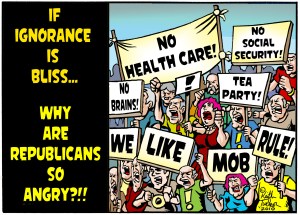
 Today the Republicans have become the party of Dumb and Dumber. The likes of Palin, Bachmann, Inhofe and Sessions are not so mute testimony to the fools that now dominate the Republican Party. Add Donald Trump to the hand and you have a five ace hand of losers. Every day, we read of some new evidence that shows how bigoted, hypocritical and vile the core beliefs of the Republican Party have become. The leadership of the Republican Party seems to have no integrity. Half of them spend their time trying to explain the inane and dangerous comments spewed out daily by their party nominee. A candidate so devoid of any character or morality that many in his own party are trying to dissociate themselves from him. What is left of the party leadership are running around like chickens with their heads cut off. There is no longer any true leadership in the party. Trump and his supporters are destroying what once was a grand old Party. The party of Lincoln, which stood for freedom and equality has now become a party of fear, greed, intolerance and hatred.
Today, the Republicans even hate themselves. They are now trying to destroy their star candidate for the 2016 Presidential elections. A gross Neanderthal who equates money with character and morality named Donald Trump has upstaged the Party’s chosen one to rally the extremists who have now come to dominate the Republican Party. The grand old Party which once attracted many progressives who believed in the power of the individual over the power of the state now is controlled by a clique or power structure which has no connection to the traditional core Republican values. (I will say more about these values in this blog)
“Republican voters view Donald Trump as their strongest general election candidate, according to an Associated Press-GfK poll that highlights the sharp contrast between the party’s voters and its top professionals regarding the billionaire businessman’s ultimate political strength.” – Steve Peoples and Emily Swanson
In addition to those who I would call the traditionalists, the Republican Party has attracted a large contingency of supporters that we can divide into the following five blocs:
- Bigoted Voters
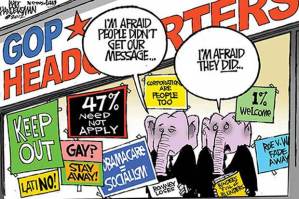
- Uneducated White Male Voters
- Greedy Voters
- Fearful Voters
- Religious fundamentalist Voters
I will say more about each of these in Part 2 of this blog. Suffice, it to say for now, that the voters in these five blocs have now taken over the Republican Party (I will also explain in Part 2 how and why this happened.) Just like the Nazis took over Germany, the traditionalists in the Republican Party made a pact with the devil and the devil has now  come to collect his dues. The Traditionalists know that the candidacy of Trump will destroy the party. There are indeed a large contingent of voters who will support Trump but by and large, the people in the USA are not so stupid or ignorant that Trump will be elected. Mark my words on that! Trump, who hates women, minorities, immigrants and anyone with a brain, will go down in defeat in the biggest landslide in history for our next Democratic president and he will take the entire Republican Party with him. The stalwart traditionalists in the Republican Party understand this and that is why every day we see headlines like:
“The Republican Party Tries to Take Out Its Front-Runner”
“Trump has proven highly successful in manhandling a parade of bland Republican politicians. To him, Carson and Fiorina present different challenges because they both possess the outsider status that elevates them over Republican officials who have to deal with reality of some sort, and they symbolize demographic groups that are some of the biggest stumbling blocks for Republicans. The party wants to show the world that it has a black friend and a lady friend.” — The National Memo
Returning to the concept of traditional core Republican values, you may well be wondering what they are. The first core Republican value is freedom from intrusive government interventions. The traditional Republican is not so much against big government as they are against a government that might try to dominate the will of the individual with the will of the state. Hence, traditional Republicans hate the idea of gun control, federal regulations, government red tape, and government watchdog agencies. However, they are not against “Big Military” since the military is seen as protecting those very values that Republicans cherish most.
“Where the people fear the government you have tyranny. Where the government fears the people you have liberty.” — Barnhill, John Basil (1914)
A second core Republican value is the right to earn and keep as much money as possible. “You earned it; it is yours to spend.” This is a value that still resonates with much of our society. The idea being that if I work hard, I should be entitled to spend my money anyway I chose. What Republicans and many people in the USA hate most is the thought of working hard to earn a pot of money and then having that money taken away by a government agency to distribute to some unnamed “others.”
“That government is best which governs least;” — Henry David Thoreau
A third core Republican value is the value of a capitalistic economic system. This value overlaps to some extent the two named values above but I believe it is a distinct value of its own. In the USA, we are and have been a country strongly against communism and to some extent socialism. The values of these two economic systems are seen to be in direct contradiction to the value of free enterprise and a capitalist economy.
“A market economy based on private property, buttressed by the rule of law, is truly the best environment for mankind. People will work harder and with ingenuity if they know they have earned rewards from that labor. When the rewards are given to them for nothing, there is frustration and despair. Capitalism benefits more people than any other economic system. To work for oneself and reap the rewards is a basic human aspiration.” –Sally Julian, Writer of ‘The Case for Capitalism’
The fourth core Republican Party is a conservative approach to adopting new laws or changes to the US Constitution. Traditional Republicans have long resisted change to the US Constitution as well as new laws that they see as infringing on the rights and dictates of the US Constitution. Hence, the Republicans have resisted many changes in the Constitution which were intended to create a more equitable society for women, minorities, disabled and those below the poverty line in this country.
Part of this resistance lies in the belief that a government cannot and should not dictate how people chose to live their own lives. If you want to be a racist, that is your right. If you do not want to hire women and minorities and the disabled that is also your right. This core value has resulted in a fundamental contention between those who say that the constitution must be changed to reflect new times and new circumstances and those who do not want to see changes that might infringe on rights or responsibilities prescribed in the US Constitution.
“Don’t interfere with anything in the Constitution. That must be maintained, for it is the only safeguard of our liberties.” — Abraham Lincoln, Speech at Kalamazoo, Michigan, August 27, 1856
The fifth core Republican value lies in the doctrine of fiscal conservatism (There are other important Republican values but I think these five are the most important). Fiscal conservatism finds its roots in the theory of scarcity. Money and time are both scare commodities and must be carefully managed. Trends like cheap credit, government bailouts, deficit spending are anathema to a fiscal conservative. A fiscal conservative wants a flat tax, balanced budget and strict guidelines for loans and government spending: “Thou shalt not run budget deficits.” “Thou shalt not spend more money than thou maketh.”
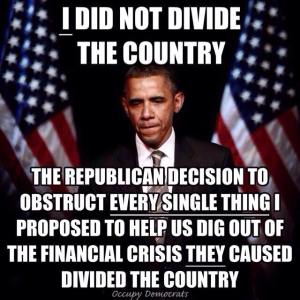 I must confess, that I am not critical of these five core values. I have long ago learned the value of juxtaposing opposite viewpoints so as to provide a clearer roadmap to truth and progress. Every “ism” needs a counter “ism” and a system where the two opposing viewpoints can debate each other and Aristotle’s “Golden Mean” needs a democracy. Capitalism must be balanced against socialism. Liberalism must be balanced against conservatism. Individualism must be balanced against collectivism. One of the strengths of the United States has been its ability to allow opposing viewpoints and to strive to find a consensus among dissenting political perspectives. Sadly, of late the constructive dissent of old has given way to a practice of destructive warfare between the two dominant political parties that has put the good of each party over the good of the country.
However, to return to the theme of this blog, the dumbing down of the Republican Party, the majority of the Republican Party now no longer seems to understand or care about these five core values. Instead, the narrow-mindedness and shear obstructionism of the five voting blocs that I noted above have taken precedence over political compromise and searching for 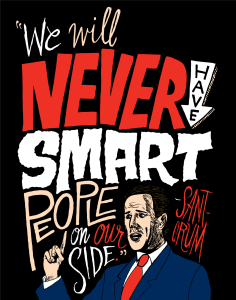 the Golden Mean. The “Stupid Voters” are hijacked by the anti-intellectualism that has always characterized much of the political right. The “Ignorant Voters” already believe that
  they know the truth and there is no persuading them otherwise. The “Greedy Voters” want to keep as much of their wealth as they can and have no concern for the poor or needy. The “Fearful Voters” are worried about crime, immigrants, health care, growing old and losing what they have already worked hard to obtain. The last of the five Republican blocs, the “Religious Fundamentalist Voters” are worried that their biblical Christian God will be taken out of the USA and replaced by an obscure assortment of new Gods from various religions that are confusing and esoteric.
The Traditionalist Republicans (many of whom I know and hope still tolerate my views enough to call me a friend) are aghast at this assortment of new Republicans and their extreme uninformed viewpoints. The Traditionalists could reach across the aisle and talk to their Democratic counterparts. The Traditionalists realized the need for dialogue, discussion and compromise. Furthermore, the Traditionalists also appealed to many independent voters (Which I am and remain to this day). They appealed to us because we while we could ally ourselves with Democrats over many social issue, we could also see the value in the economic policies and positions often adhered to by the Traditionalist Republicans.
I can see the value in all five of the core Republican values I described above. God Forbid, I would ever live in a country that totally extirpated even one of these core values. Nevertheless, while I am for a balanced budget and against deficit spending, I can see making some concessions to Keynesian economics during times such as the most recent recession. I am also for less government intrusion in our lives. However, unlike Perry who could not name even three government agencies he would abolish, I can name ten I would abolish tomorrow if I were able to. I am also against government bailouts. I did not think GM should have been bailed out although I could concede with the value of hindsight that it may have been the right thing to do at the time. And while I am against big government, I can and am equally critical of big unions. Nevertheless, in my USA, unions and government would still have a place at the table. I would like to paraphrase a part of Martin Luther King’s famous “I Have a Dream Speech.”
Let the Golden Mean ring from the hallowed halls of Congress!
Let the Golden Mean ring from the esteemed corridors of the US Senate!
But not only that; let the Golden Mean ring from the benches of the Supreme Court of the USA!
Let the Golden Mean ring from State Capitals in the east to State Capitals in the west!
Let the Golden Mean ring from every school and university of America. From every village, city, town and hamlet in this great country, let the Golden Mean ring.
In my blog next week, I will explore how the Republican Party let stupidity, ignorance, fear, greed and intolerance come to dominate its political agenda. If you are a Republican, you might not like what you are going to hear. However, if you are a Republican, perhaps the truth that I have to tell could help you to understand what you must do to restore the Republican Party to its rightful place in the US political system.
Time for Questions:
Are you a Republican? What did you find that you disagreed with in my blog today? What did you agree with? Which of the Republican voting blocs are you in? Why? Do you think the Republicans will take the next presidency? Why or why not? If you are a Democrat, what did you like or dislike about this blog? Why? What do you think I should have added?
Life is just beginning.
Republicanism is the guiding political philosophy of the United States. It has been a major part of American civic thought since its founding.[1] It stresses liberty and “unalienable” rights as central values, making people sovereign as a whole, rejects aristocracy and inherited political power, expects citizens to be independent in their performance of civic duties, and vilifies corruption. Wikipedia


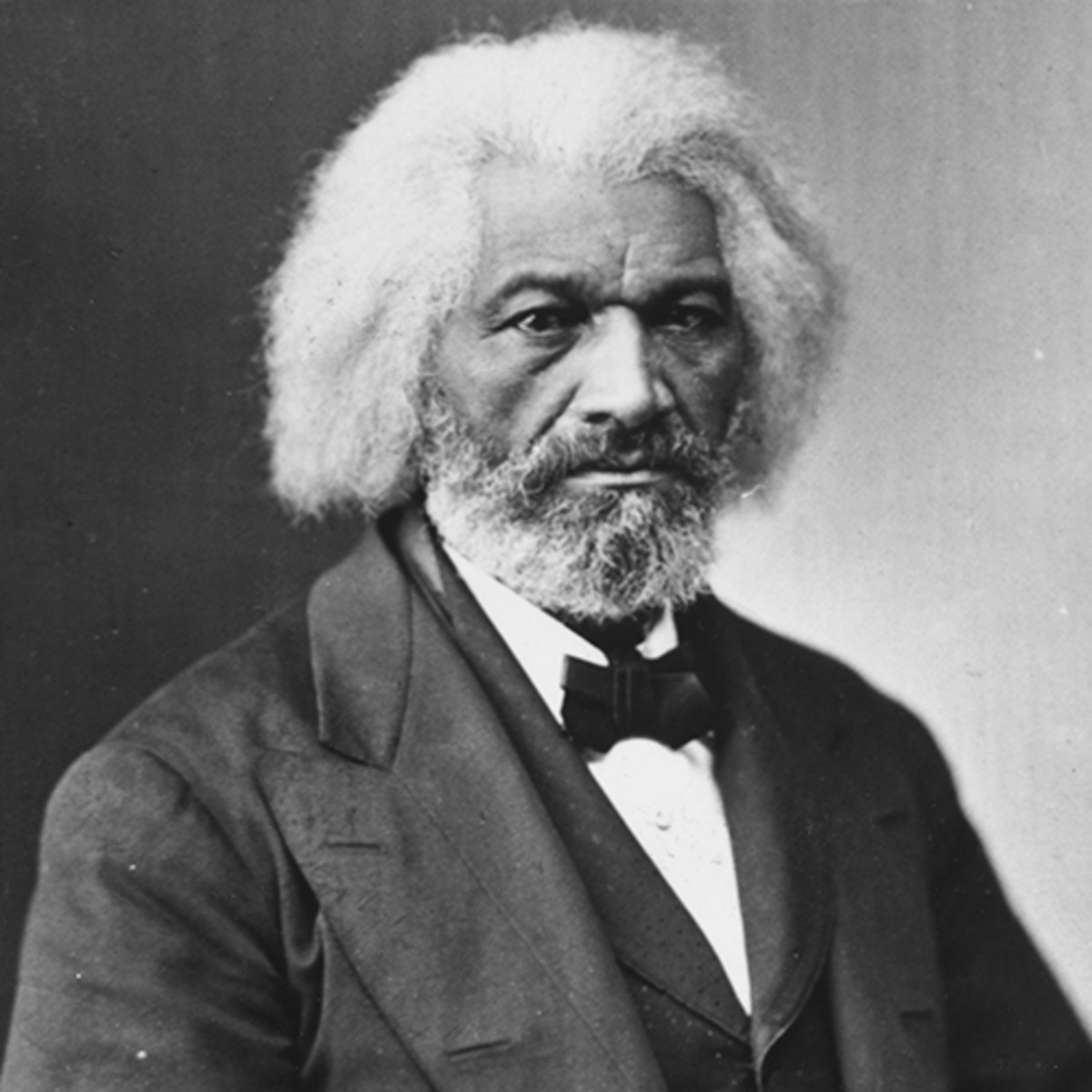
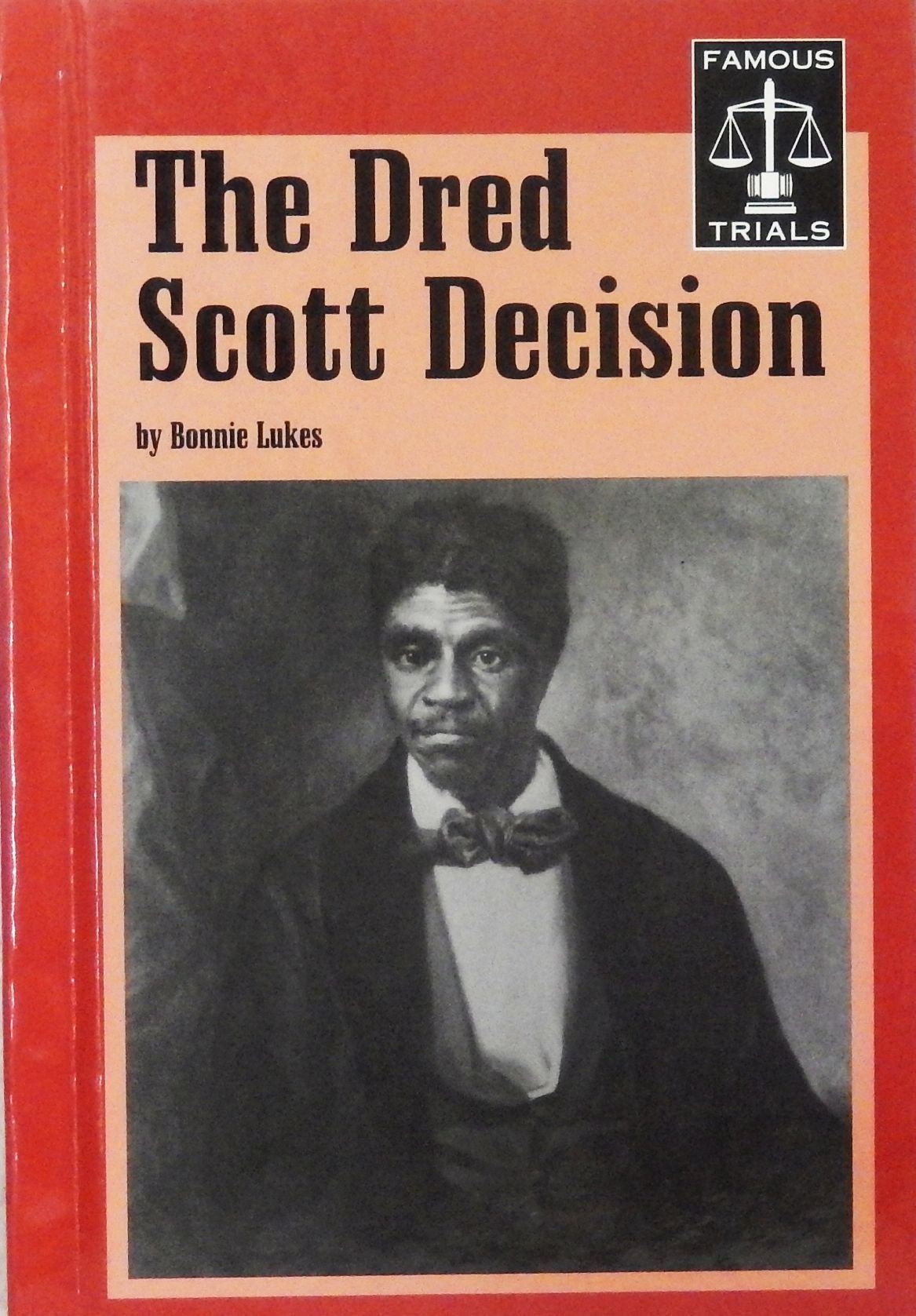 Twenty-three years later, when Douglass gave his speech, the turmoil in the United States over the issue of slavery was growing. It had always been a major source of dissension in the United States, but things were coming to a boiling point. The Dred Scott decision had recently been rendered by the US Supreme Court. This decision held that black people were not citizens and that slaves could not sue for freedom. In March of 1857, James Buchanan was sworn in as the 15th President of the USA. Buchanan was no friend of the abolitionists and he joined the Southern leaders in attempting to admit Kansas as a slave state. He strongly supported the Dred Scott decision and today he would be considered an ardent racist. The contrast between Lincoln who was elected four years later and Buchanan in terms of their policies towards slavery was the final straw that led to the Civil War.


 Today we are witnessing a descent into tyranny and demagoguery the likes of which have never before been seen in America. We have a President who lies whenever he speaks. We have a Republican party that abhors social justice and will do everything they can to suppress the rights of Americans to vote. We have a base of supporters for Trump that are racist, fascist, and anti-democratic. Lured by whatever sirens they listen to; they support the right of Trump to do whatever he wants to do. They call him their Messiah and voice unconditional support for his attacks on the press, minorities, immigrants, women, blacks, Latinos, disabled, foreign countries and even the disabled. A President who is willing to sacrifice thousands of lives to support his quest for a second term.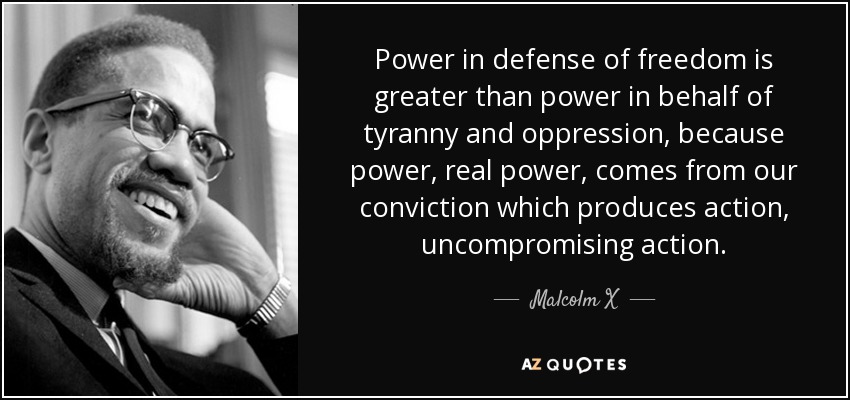

 required be different? Could children hear the same frequencies as rats?
 seem like there was any long-term strategic plan here.


 Most of what people learn about Marx is far removed from his actual ideas. Given that Capitalism has been diametrically opposed to the very name of Karl Marx, it is not surprising that he is routinely disparaged. Even at the University level, it is rare to find anyone studying Marx very deeply. Many educators and instructors describe Marx’s economic theories as “Totally Discredited.” Few people in America have any good words for Karl Marx. Any politician in the USA who might suggest that Marx ever said one good thing or had one good idea would court instant political death. Marx is the devil in our Capitalistic system.
 Marx did of course hate capitalism. He saw Capitalism as a system that exploited workers and allowed the greedy to benefit at the expense of those less fortunate or less aggressive.
 The antipathy directed towards Marx and his critique of Capitalism has discouraged any real in-depth understanding of the limits and myths of Capitalism by most Americans. Capitalism resides in America on the same level as Mom, God, and Apple Pie. Woe to anyone who would dare to attack Capitalism. In the United States, Capitalism is as hallowed an institution as Christianity. In fact, most Christians think that Capitalism and religion go hand in hand, which to a large extent they sadly do. Unfortunately, not all Capitalism is the same. In America, we have a home-grown version that is more appropriately called Corporate Capitalism. What is the difference you might ask? Well it gets even more complicated since economists define four types of Capitalism. These are:
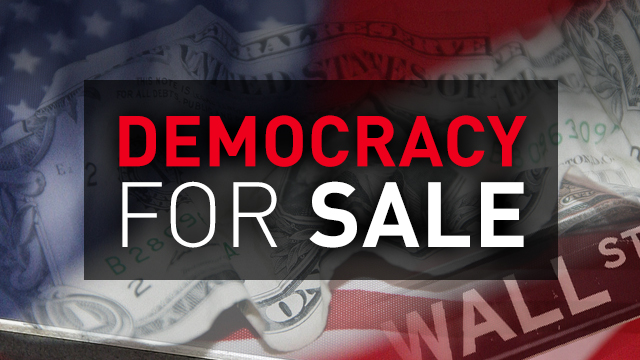
 Over the past 40 years, the Supreme Court has radically expanded constitutional rights for corporations. The original charters for corporations written in the late 19th century, allowed corporations powers never before seen in companies. The abuse of these powers soon led to a considerable amount of legislation designed to reign in some of the most egregious of these abuses. Laws such as the Sherman Anti-Trust Act passed in 1890 to stop monopoly practices and the Clayton Antitrust Act passed in 1914 to stop unethical business practices were somewhat successful at ameliorating corporate abuses. Unfortunately, corporations were still left with considerable power to thwart the goals of democracy and good government.
 Corporate interests easily dominate the interests of the common person. The common person has nowhere near the financial clout of corporations. In 2010, the Supreme Court passed the Citizens United Decision which gave corporations unlimited power to finance and support political candidates running for office as well as to lobby on behalf of any laws that they wanted. This decision basically upheld the idea that corporations had a right to free speech much like any citizen of the USA and that campaign spending was simply a manifestation of free speech. Corporations are now being treated as living breathing people despite the fact that corporations can live forever, and corporations are not organic entities. They are not born, and they do not die like any other creature on the face of the earth.


 One of the most popular movies in the eighties was Wall Street. In the movie, Michael Douglas gave a “Greed is Good” speech which was actually applauded by audiences all over the United States. Some corporations have been sued by stockholders for not being greedy enough.
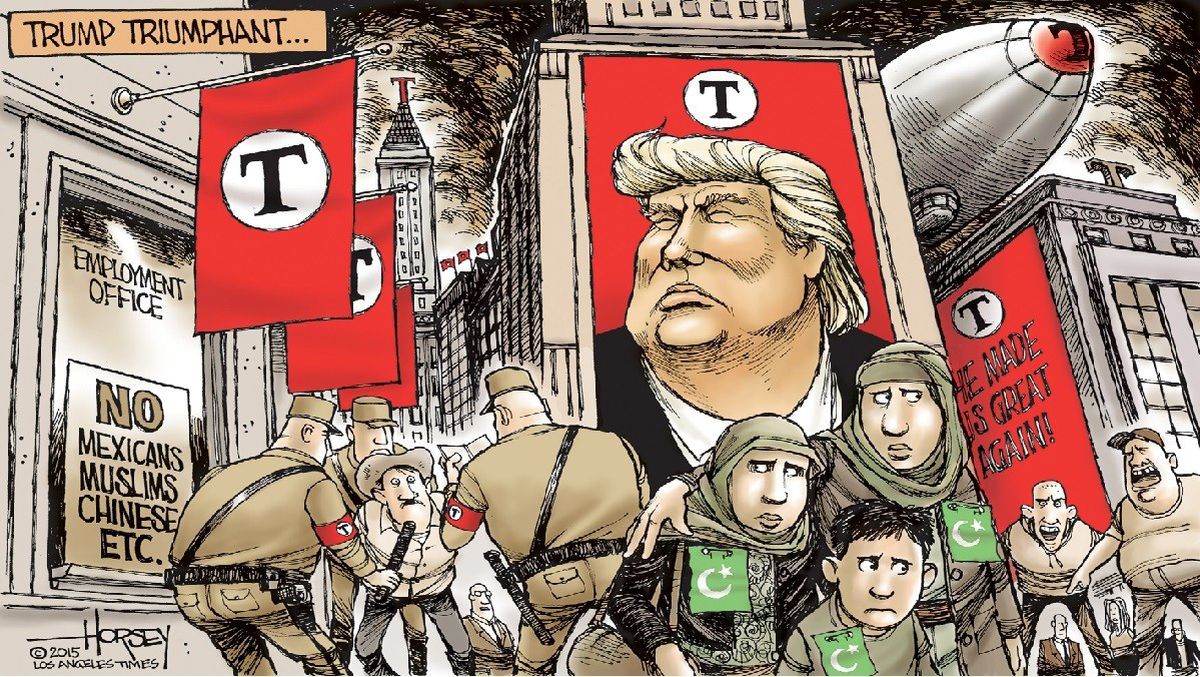



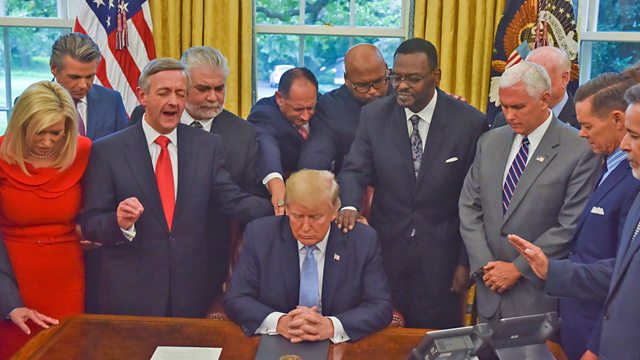

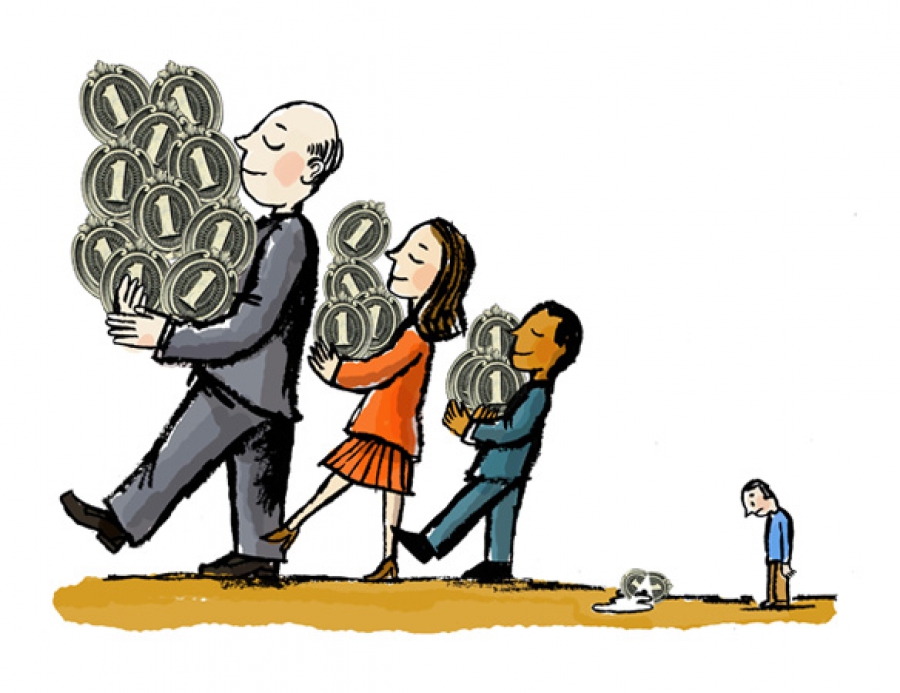
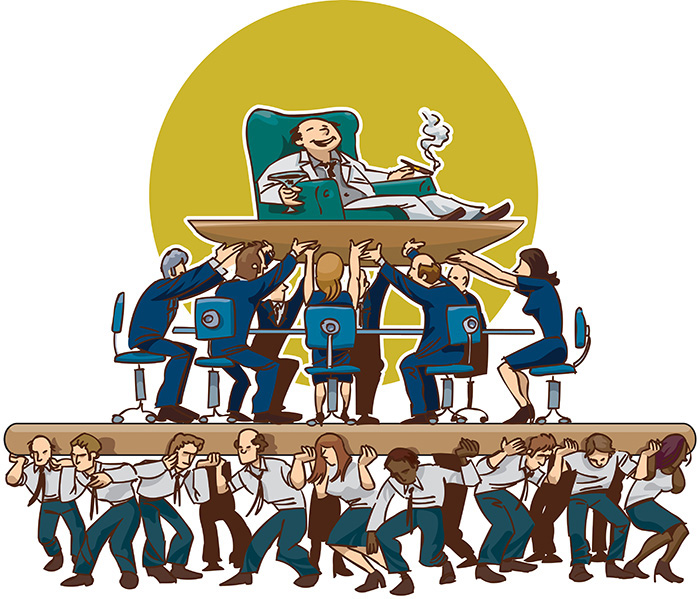 There have been many theories proposed for the policies held by Trump and his Republican supporters. They include “Greed Theory.” The Republicans are held to be greedier than most people and only want to accumulate as much money as they can. Another is “Hate Theory.” This theory holds that since most Republicans are White European in ancestry, they loath and detest any people who are different then they are. This includes Asians, Blacks, Indians, Latinos and any immigrants not from Europe.

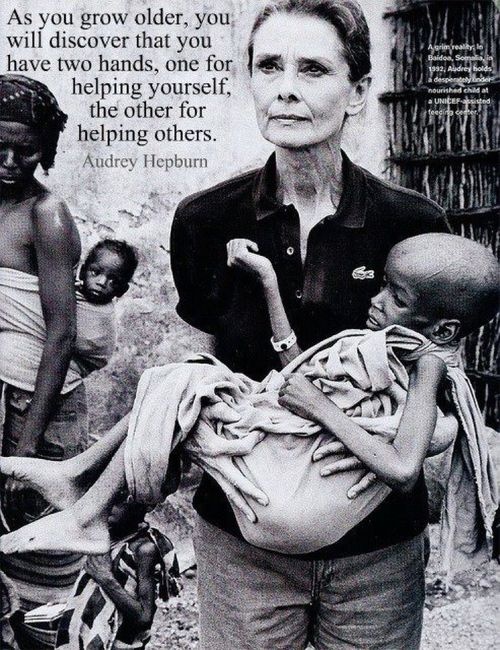 About a week later, I was substitute teaching in a Casa Grande High School. I drew an eleventh-grade social studies class. The teacher had left an assignment wherein the students had to find certain terms and concepts associated with the second industrial revolution and write definitions for each of them. Included among such terms as: robber barons, corporations, patents and trusts was the term “Social Darwinism.” One of the students asked me to explain it beyond the simple definition she found on line. I tried to recall my ideas relating to this concept from many years ago. I gave her my explanation and then later I looked up the definition at Wikipedia. I was struck at how well my memory had served me. It was at that point that the proverbial light bulb or blinding light of inspiration hit me. I suddenly realized that the Republican Party was not just trying to create elite systems but they were also trying to build on the theories of Herbert Spencer. The following excerpt explains this theory very well as it applies to many current concepts such as: trickle down theory, privatization, corporate welfare and tax reform.
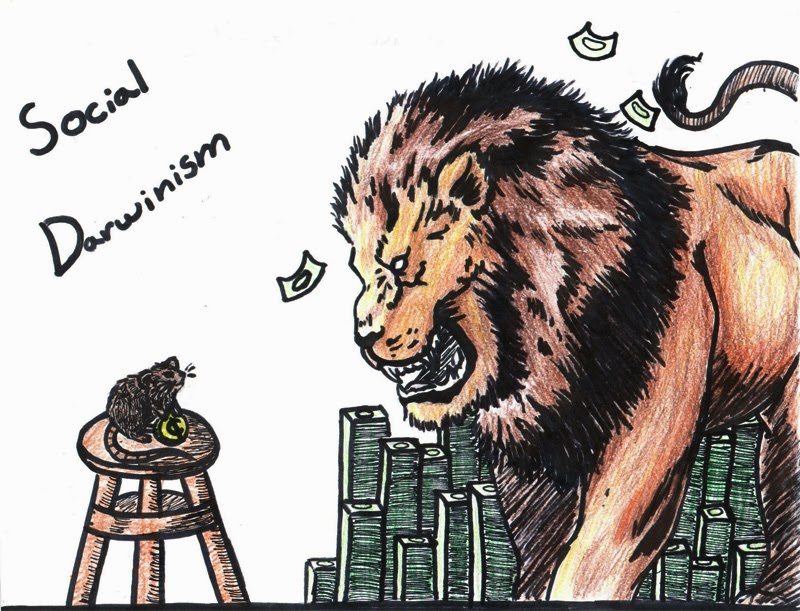 So, there you have it. Trump and the Republican Party are not greedy, hateful or fearful of others, they simply do not believe that you have a right to anything unless you are also rich and successful and White like they are. Based on the concepts of Social Darwinism, they have the right to whatever you have if they can find a way to take it away from you. If you cannot keep it, that means you are inferior. If you are inferior, you have no right to life, liberty and the pursuit of happiness. According to Social Darwinism, the elite will eventually Trump the poor because they are stronger, smarter and more fit. This will eventually result in a society wherein everyone is fit, and everyone is trying to screw everyone else.


