 How do you know if you know anything? You have two paths to answer this question. The first path involves your belief that you do know something. You can choose this path if you are fairly certain that you know something. It may surprise you, but this is not a path of science. This is a Faith-Based path. No matter what anyone tells you, science relies on faith almost as much as religion relies on faith.
Consider the Heisenberg Principle of Uncertainty and Gödel’s Incompleteness Theorems. Both theories show that ultimately, we can never be certain of anything, and that the fundamental bedrock of even science must then be a degree of faith. Formulated by Werner Heisenberg, Nobel Prize winning physicist in 1927, the Uncertainty Principle states that we cannot know both the position and speed of a particle, such as a photon or electron, with perfect accuracy; the more we nail down the particle’s position, the less we know about its speed and vice versa.
Godel’s first incompleteness theorem states that “No consistent system of axioms whose theorems can be listed by an effective procedure (i.e., an algorithm) is capable of proving all truths about the arithmetic of natural numbers. For any such consistent formal system, there will always be statements about natural numbers that are true, but that are unprovable within the system. The second incompleteness theorem, an extension of the first, shows that the system cannot demonstrate its own consistency.” — Wikipedia

Let me provide a simple example of what these theories tell us. For instance, you may say, “I know the earth is round.” I challenge you to prove this. The only way that you can prove it is by relying or trusting on the wisdom of experts who say that the earth is round. Even if you have a picture of the round earth, how do you know that it is real? In essence, you are relying on faith. It is your faith in someone you trust whom you believe has more knowledge than you do. You cannot prove the earth is round so your belief is based on faith. This explains why climate change deniers are so difficult to argue with. They refuse to accept any evidence from experts on climate whom they disagree with. Instead, they find the inevitable expert who disagrees with many other scientists. Most of us have faith in the majority. But history has countless examples of where the majority were wrong.

The second path you can take is what I call the Path of the Atheist. In this path, you accept what Socrates did that you know nothing. Socrates was called the wisest man in the world because he believed that “I know that I know nothing.” The atheist does not believe anything unless it can be proved to them personally. Since it is impossible that anyone can ever prove anything to you beyond a shadow of a doubt, you must conclude that knowledge (like God) is impossible to know or prove. The atheist concludes that all possibility of ever conclusively proving anything is impossible. Thus no one can really know anything.
The Path of the Atheist diverges from the Faith Based path since with faith we believe things. We believe that there are facts and there is an ultimate truth. Even if we cannot find them ourselves. The scientist’s belief is tempered by realistic probabilities based on experiments and history. The Path of the Atheist does not believe that there is any ultimate truth. Truth is only a process that gets us closer to some approximation that we are finally willing to settle for. The Atheist says, “Show me an ultimate truth that is unvarying and that you can prove will be forever true.” You might argue that the sun will come up tomorrow, but you only have history to rely on for this. The dinosaurs might have believed that they would live forever but all it took was one large asteroid to wipe out millions of years of evolution.
As we go through life, we sometimes choose one path and sometimes the other. Given whatever circumstances we are confronted with, we select the path that provides the most comfort and certainty for us. Even the Path of the Atheist is comforting since the atheist does not expect any irrefutable truth. This gives the atheist the ability to ignore whatever fads and foibles society is following in search of a truth that does not exist, or at least for the atheist does not exist.

What is the meaning of all this? Are we arguing about how many angels can dance on the head of the pin? Are we engaging in the same logic that Bishop Berkeley did. A man who denied that there is a reality of matter apart from what the mind perceived. Some philosophers have argued that we cannot prove or ever know if we are living or dreaming. I would guess that most of you reading this blog persist in the idea that you are truly alive and not dreaming now.
What then is the value of discussing truth? In this age of misinformation, disinformation, false facts, and fake news, it is a matter that we all need to take more seriously. For generations and centuries, humans have searched for the truth. We are told that the “Truth will set us free” and that truth is a value even more important than honesty. But as Sara Gran said ““Most people wouldn’t know the truth if it bit them in the ass and paid for the privilege.” Could it be that to paraphrase Colonel Nathan R. Jessup in a “Few Good Men”, “You don’t want the truth because you can’t handle the truth.”

Truth is a great deal more complicated than we realize. It is one of those “holy grails” which if we find may give us eternal life. Problem is that no one has found either the Holy Grail or the Truth. It is said that you have your truth and I have my truth. Dr. Deming, an expert on quality insisted that nothing could be accomplished without an operational definition of any concept that was going to be studied. He said “An operational definition is a procedure agreed upon for translation of a concept into measurement of some kind.” The science of an operational definition lay in the measurement of the concept but the starting point for measurement lay in the agreement between two “reasonable” people as to what measurement procedure would be used. Without an agreement there was no starting or ending point.
We may meet someone on the street or at a party or it may be a friend or relative and they advance some theory or ideas which contradicts the facts as we know them. A popular controversy these days among some is whether Trump really won the election and if it was not stolen from him. If you believe it was stolen, you will have a set of ideas about what constitutes a “fair” election.
 The Faith Based Path could lead one to accept that hundreds of systems across America could not all have been wrong and that the tallies were accurate because someone you trust told you they were. If you do not trust the poll counters, you will reject the decisions made by election boards and cling to the idea that Trump was cheated by liars and scoundrels. Either way it is a matter of faith.
If you follow the Path of the Atheist, you may reject the vote tallies because you do not believe any voting procedure could be foolproof. You accept that there is error in any system and the deciding factor for you lies in the degree of error that you are willing to accept. Given your proclivity to accept a certain amount of error, you will either accept of reject any election results based on the voting tallies.
I chose the Faith Based path and accepted that fifty state election boards cannot all be wrong. On the other hand, I followed the Path of the Atheist since I know that error exists in any procedure, and I do not trust that any election process can rule out all the errors in the system. I accept the errors in life just as I accept the risk of dying on the road tomorrow when I drive someplace. It is not a matter of faith; it is a matter of statistical probability. Tallies like life will never be perfect.

What do we do? First stop looking for an ultimate truth. Truth is like beauty and is in the eye of the beholder. Second, ask others what they base their truth on. See if you can come up with an operational definition for establishing truth that you are both willing to accept. Third, agree on a way to measure the outcome of whatever you are measuring or looking at. Accept that error will always exist and that predictability for any ultimate truth is near zero.
The best we can achieve in life is a “useful” truth that we may find to make life easier and happier for all of us.






 I am working to prepare for a chess match with my neighbor. I happen to note in the paper the Fact that tomorrow will be a quarter moon. Does this Fact have any relevance to my playing chess? I don’t think so. Thus, I don’t really care that there will be a quarter moon. As far as my limited cognition or perception, I can see no relevance between the Fact of a quarter moon and my preparing for my chess match. I could be wrong. We can always mis-perceive the relevance of some information to an issue. This is often done in science and in police work. We don’t see the connection between two issues and we misjudge the outcomes. This provides one good reason for diversity and numbers in problem solving. You have less chance of being blindsided if you have a variety of opinions rather than just your own.
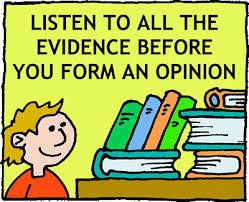 Let us look at another example where the issue of relevance is more salient. I am planning to go on a trip to England in 2017. I want to plan my trip for the best possible time of the year. I hypothesize that two Facts or Data points are very important to my planning. The first is the temperatures at various times of the year in England. The second is the rain fall. I found the ranges for this data on a weather site and used the information to plan my trip. Of course, some of the decisions anyone makes will depend on their own weather preferences. I wanted to minimize rainfall and also keep the temperature in a moderate range. What I call sweater weather. Thus, both these set of factors were relevant and important to my planning. I would call them Evidence to support the time of year that I decided to go.
 On the other hand, if you like rain, you might have picked a different time of the year than I did. There were other mitigating factors which played a role in my decision making. These factors included costs for lodging during the year and transportation costs during the year. In general, off season times have better rates but are somewhat the worse for weather. Another factor was the value of the pound to the dollar. I considered the value of the dollar to the pound post Brexit but concluded that I did not have enough information to effectively evaluate the impact of this data on my decision. I am assuming that with the volatility involved in the situation, the value of the dollar might go either way against the pound. My best guess is that I will benefit if I go as soon as possible. The news has recently noted that after Brexit the value of the pound fell 14 percent against the dollar. This would mean I could get a significant cost advantage if I purchase anything in England. I am hoping this situation will continue until after my trip but there are too many variables at play here for me to use this information. I can only hope.
 A more common example of relevance can be found by looking at police work. We are all familiar these days with what is called Forensic science. I am sure most of you reading this have watched some police show. As soon as a crime is discovered, the Crime Scene Unit (CSI) is brought in to collect Evidence. Keep in mind that everything at a crime scene is not Evidence. Only what may have a possible relationship to the crime. This can be a real problem. The CSI unit is going to be limited by their assumptions concerning what might be relevant. For instance, I doubt any Crime Scene Investigator will care whether or not the light bulbs are “bright” or “soft white” in the kitchen or bathroom. It is impossible to collect all the “Evidence” of stuff that might be related to the crime. Thus, relying on experience and training, the police investigators do their best to collect Facts and Data that appear to be relevant to the crime. The relevant Data and Facts are not just interesting, they are Evidence. The more they relate to the crime, the stronger the Evidence will be.
 An eyewitness can provide Evidence via his/her testimony as to the events of a crime. The relevance of any eyewitness is high but the reliability of an eyewitness can be much lower. Second hand testimony is not as relevant as first hand testimony and is thus weaker Evidence. Testimony that might be compromised by some factors such as police record, bias, discrimination, physical disabilities might be relevant but will be weaker Evidence because the validity of the Evidence is suspect. That is why lab procedures and chain of custody is so important to police work. They may have the most relevant Evidence imaginable but if the validity of the Evidence can be comprimised because of sloppy police work, the Evidence will be useless.
 It is seldom that findings of Evidence in police work or business are subjected to as much scrutiny as occurred in the so called development of cold fusion. Perhaps, since this was a finding of great scientific importance, it was held to a more rigorous standard than would occur in many other scientific studies. I am thinking in particular of findings in the health field, nutrition field and drug field. In each of these fields we often have much less rigor before results are posted or accepted. Business is even worse with advertisers spouting outright lies and fabrications. Little known phenomenon are routinely heralded as being highly reliable Evidence of the benefit of some product or service that someone wants to sell you. All kinds of spurious Facts and Data are then marshaled as Evidence to support the phony claims by Madison Avenue advertisers.
 When I started working with Process Management International in 1986 after completing my doctorate degree at the University of Minnesota, I met the famous quality improvement expert and renowned statistician, Dr. W. E. Deming. Over the next seven years, he had the most profound influence on my life in terms of helping me to understand process improvement, statistics, quality and the use of Data to improve everything from widgets to health care. Under the influence of Dr. Deming, our company adopted his motto “In God we trust, all others bring Data.” Dr. Deming also said “Without Data, you’re just another person with an opinion.” So what is Data?
  If we understand what Data is, you have now entered the deep forest. However, we have a long way to go before we can get out of the forest. There are numerous obstacles along the way. Referring again to the concepts of validity and reliability, we must ask ourselves the same questions we asked about our Facts. Is our Data reliable and valid? How did we collect the Data? What method did we use to collect the Data? Are we taking a few samples each day for several weeks or are we taking a few samples for only a few days? Are we using a random sample or a stratified random sample? Different methods of collecting Data will lead to different results. And we are not even talking about interpreting the Data yet. For instance, when I worked at W.T. Grants cutting shades back in the late 60’s, I was told to make sure I took my measurements with a metal tape measure and not a cloth or plastic measure. The reason given was that it was easier to stretch a cloth tape measure and get a false result. This would lead to cutting a shade that was too large and would not fit.
 Unfortunately, the scientific method is not infallible. It is subject to bias and disagreement over Data and interpretations. Even more problematic is that the scientific method is not a strong method when it comes to testing subjective theories that cannot be verified by Fact. For instance, “Is the Mona Lisa beautiful?” As stated, this is a subjective question that each individual will hold a different opinion on. However, if I asked: “Is the Mona Lisa the most beautiful painting in the world?” I could attempt to answer that question with a bit more objectivity. I could conduct a survey to see what percentage of people think it is the most beautiful. Subjective studies are not as strong as objective studies since they usually lead to results that follow a bell shaped curve. Thus, if we conducted the above survey, we would probably find that a certain percentage of people thought it was the most beautiful painting and a certain percentage did not. As in politics, opinions of beauty would be all over the place. This is why politics is so much more difficult to “Fact check” than issues like the atomic mass of hydrogen. Politics is a very subjective field that resists efforts to test and Fact check. Some examples that would be difficult to test with the scientific method would include:
 Finally, if I have left you with some understanding of the difficulty with interpreting Data, I will have felt successful. The first step to knowledge is awareness of our cognitive limitations. We also need to be more skeptical when people present us with Facts and Data. My father used to say “Believe nothing of what you hear and half of what you see.” I still consider this good advice. There are too many fools and charlatans out there trying to convince us of things for a multitude of reasons that will benefit them and not us. Just as we would not walk down a dark alley in an unknown city by ourselves, we need to exercise caution when presented with Data and Facts. The more we understand the limits of Data and Facts, the more prepared we will be to make decisions based on Data and Facts that have a higher degree of validity and reliability. If the Data, Facts and Evidence that you base your knowledge on are not accurate than everything you think you know will be at best a half truth and at worst a total lie.
 “The prosecution had expert witnesses that testified that the Evidence was often mishandled. Photos were taken of critical Evidence without scales in them to aid in measurement taking; items were photographed without being labeled and logged, making it difficult, if not impossible, to link the photos to any specific area of the scene. Separate pieces of Evidence were bagged together instead of separately causing cross-contamination; and wet items were packaged before allowing them to dry, causing critical changes in Evidence.”
 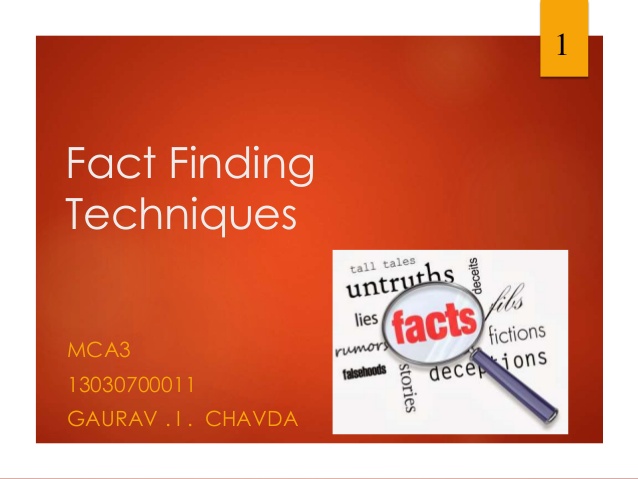 A validity error is when we are not measuring the right thing. IQ tests have been repeatedly criticized for not really measuring the intelligence of a human being or for being biased by many cultural Factors. Thus opponents of IQ tests argue that they are not valid measures of intelligence. A reliability error is when our measures are not consistent. The scale example given above illustrates the problem with reliability. Most people use a scale to weight themselves and most scales have problems with reliability. However, if you tried to equate your weight with your health, you would be assuming that the scale could also measure health and this would be a problem with validity. Scales cannot measure health although health might be correlated to some degree with appropriate height and weight.
 Before we move on to looking at the concept of Data, we will look at two more problems with the concept of Facts. These are distortion and bias. Distortion relates to twisting the meaning of something. This can happen by taking something that someone has said out of context. For instance, I might be talking at a conference and say something in sarcasm such as “Yeah, I will definitely vote for Trump.” My words could be repeated verbatim and it would sound like I was endorsing Trump. It is difficult to detect sarcasm. To most people reading or hearing my words second hand, it will sound like I am a strong Trump supporter. Slick politicians and advertisers will often distort a Fact to make it sound like the Fact is supporting their position.


 Aging Capriciously