Life’s not fair! I never get any breaks! Other people have all the luck! The world is crap and there is nothing anyone can do about it! It’s not my fault. Why did he/she get the job and not me? (Listen to the Power of Responsibility as you read my blog today) 
If you have ever made any of the above comments, rest assured, you are probably normal. It is called feeling like a victim or wallowing in self-pity. From time to time, we all engage in victim-hood. However, if your entire life is dominated by feelings of regret, remorse and envy, you are not just engaging in a bout of self-pity, you are embracing full-on victim-hood. We all feel like victims from time to time. That is normal. But if you are thoroughly convinced that you are a victim, you need help. The world has too many too many real victims, it does not need pseudo victim. This blog is about how to avoid embracing a victim mentality and the key factors necessary to overcome such a mentality.
First, let’s look at two key questions:
- What is a victim?
As I am describing it here, I am not talking about victims of torture, oppression, starvation, crime, disease, pestilence or any phenomenon that is beyond the ability of an individual to evade. I am talking about a mindset that occurs when we fail to take responsibility for our actions and the consequences of our actions and behaviors on others. You probably know some people who you would describe as having this mentality. My wife Karen says she defines a victim as “someone whose problems are always someone else’s fault. They also seem to need problems and will create them if they don’t have them.” 
“Your complaints, your drama, your victim mentality, your whining, your blaming, and all of your excuses have NEVER gotten you even a single step closer to your goals or dreams. Let go of your nonsense. Let go of the delusion that you DESERVE better and go EARN it! Today is a new day!” ― Steve Maraboli
We see many people who cannot find any good in the world since they are so busy feeling sorry for themselves that they cannot see the blessings that they have. I find many right-wing Christians to be prime exemplars of this victim mentality. They are so convinced that the world is evil and will end any day. The “anti-Christ” is coming and then the world will be destroyed and all the evil in it. Such people seem to revel in the idea of an apocalypse which will wipe the entire world out and only spare the “good” people. Of course, these right-wing fundamentalist Christians are the “good” people who will be spared.
- Why do people choose a victim mentality?
I believe the answer to this question is that it absolves the “victim” of responsibility. They can blame God, the world, other people, nature, the weather or DNA for their failures. Never having to take responsibility is a panacea for those with a victim mentality. It is easier to do nothing when any effort is predestined to fail.
“Life is not compassionate towards victims. The trick is not to see yourself as one. It’s never too late! I know I’ve felt like the victim in various situations in my life, but, it’s never too late for me to realize that it’s my responsibility to stand on victorious ground and know that whatever it is I’m experiencing or going through, those are just the clouds rolling by while I stand here on the top of this mountain! This mountain called Victory!” ― C. JoyBell C.
Overcoming the Victim Mentality:
The antidote to a victim mentality consists of four vaccines. They are as follows:
Anyone of these four vaccines can keep you from becoming a whining victim. Taking all four together, will help you to become independent and strong. You will be a winner instead of a victim. We need to give our children these vaccines at an early age, but it is seldom done. It seems as though we must find them on our own later in life or else we flounder through life succumbing to the victim mentality until we find one or more of them.
Moral Courage:
 To dream the impossible dream, to fight the unbeatable foe, to go where no one has gone before is courage. To stand up for what you believe, to right the unrightable wrong, to boldly speak out against injustice. This is courage. There is physical courage as is manifested in a war or sports or extreme athletic challenges. Moral courage is of the heart and soul. Bothe moral courage and physical courage result in action. One of my favorite quotes is as follows:
“The test of courage comes when we are in the minority. The test of tolerance comes when we are in the majority.” – Ralph W. Sockman
Moral courage does not exist by just talking about it or complaining about things. Moral courage is an attempt to make a difference by taking some decisive action. You speak out against prejudice, bigotry, hatred, racism, injustice and stupidity. You do more than read the newspaper and bemoan the sad state of the world. The life of the prophet Mohammed provides many examples of moral courage:
“Before claiming Prophethood, the Prophet Muhammad, upon him be peace and blessings, was well off and had a respected place among his community. However, he had to confront all kinds of hardships and persecutions after Prophethood and spent for his cause whatever he had. His enemies slandered him, mocked him, beat him, expelled him from his homeland and waged war on him. He bore all such cruel treatments and hostilities without complaint and asked God Almighty for the forgiveness of even his enemies.” – The Way to Truth
Moral Reasoning:
 Moral reasoning occurs when you question right and wrong. Moral reasoning is a cognitive action that takes place when you question standards, conventions, group reasoning, and crowd think. Moral reasoning is the questioning of social and cultural standards. Jesus of Nazereth gave many examples of moral reasoning during his life.
“Woe to you, teachers of the law and Pharisees, you hypocrites! You give a tenth of your spices—mint, dill and cumin. But you have neglected the more important matters of the law—justice, mercy and faithfulness. You should have practiced the latter, without neglecting the former. You blind guides! You strain out a gnat but swallow a camel (Matthew 23:23-24).”
Jesus is making an important distinction here between convention and morality. We often confuse justice with legality. The inability to understand the difference and its moral relevance is a failure of moral reasoning. Throughout his ministry Jesus gave many examples of moral reasoning.
Moral Universalism:
Hans Kung was a Roman Catholic priest who was stripped of his license to teach theology by the Catholic Church for criticizing the concept of papal infallibility.
“In the early 1990s, Küng initiated a project called Weltethos (Global Ethic), which is an attempt at describing what the world’s religions have in common (rather than what separates them) and at drawing up a minimal code of rules of behavior everyone can accept. His vision of a global ethic was embodied in the document for which he wrote the initial draft:, Towards a Global Ethic: An Initial Declaration.” – Wikipedia
 Kung’s life demonstrates a strong moral believe in the universal principles that underlie all religions. My religion is not better than your religion and all of the worlds’ great religions have a core of morality and ethics which are admirable and worth following. When we find one religion fighting with another religion or one advocate maintaining the superiority of their religion over another, we have a counter example of moral universality.
Moral universalism is an important element in overcoming victimhood. One cannot believe that their religion is superior to another religion without eventually succumbing to the rampant persecution complex that seems typical of so many religious people. I was taught when I grew up that I would go to hell if I ever stepped in a Synagogue or Temple. Karen was taught that as a good Lutheran she should never date a Catholic. Baptists denigrate other Protestants while Muslims and Christians act as though they were worshipping different Gods. Jesus and Mohammed had a deep respect for all religions because they were wise enough to perceive the universality of religion.
Moral Responsibility:
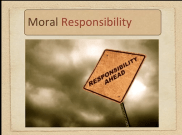 The famous poet John Donne is perhaps best known for one of his lines that goes: “Never send to know for whom the bell tolls, it tolls for thee.” Donne well understood the idea that we are all interconnected and we all have an incomprehensible interdependency such that anyone’s death affects us all. The same is true with morality. A key tenet of Buddhism is the moral responsibility that everyone on the earth faces for social and political actions.
“Today we have become so interdependent and so closely connected with each other that without a sense of universal responsibility, irrespective of different ideologies and faiths, our very existence or survival would be difficult” – (Dalai Lama, 1976)
Of the four vaccines that are critical for overcoming a victim mentality, it is my opinion that a sense of moral responsibility is the most important. If I could only receive one vaccine, I would choose to be vaccinated with moral responsibility. A sense of moral responsibility allows us to help others who are in need. Charity, love, compassion and kindness are all nurtured by a sense of moral responsibility. As they say: “what goes around comes around.” When we do “good” for others, we do good for ourselves. By identifying with the pain and injustices that others suffer, we forget our own problems and we understand that we can make a difference in the world. No one who believes in their ability to make a difference in the world can suffer from a victim mentality.
Time for Questions:
Are you a victim or a hero? How often do you feel hopeless? What do you do about your feelings of hopelessness? How do you overcome feeling like a victim? Do you think people have a choice of how they feel? Why or why not?
Life is just beginning.
“Most things, even the greatest moments on earth, have their beginnings in something small. An earthquake that shatters a city might begin with a tremor, a tremble, a breath. Music begins with a vibration.” -― Lauren Oliver
 Over time, I have noticed that the most popular post I have on my blog site is my Home page “Who is Dr. John Persico Jr.?” I realize that most readers want to know my credentials to see if anything I am going to say has any credibility. Am I someone you can trust? Can you depend upon my words or my facts? Am I just another wannabe Guru so full of my own opinions that I have no room for other points of view?
 Those who march to the proverbial beat of a different drummer live with risk, but they also are not bored. We only experience life when we are open to the unknown and the unpredictable. Walk through a cemetery at midnight. Take a train or bus to someplace you have never been before. Read a book in a new genre. Watch a movie that is offbeat. Try some foods that you think you might not like. Meet some new people. Embrace the strange and esoteric. Life is not a cherry; it is a seething caldron of uncertainty and innumerable possibilities. You will never truly live if you simply stand at the edge of the caldron and wait for it to stop bubbling.








 Despite attending forty 3-day Jesuit retreats and regularly going to church with my spouse, I remain adamantly somewhere between an Atheist and an Agnostic. See my blog
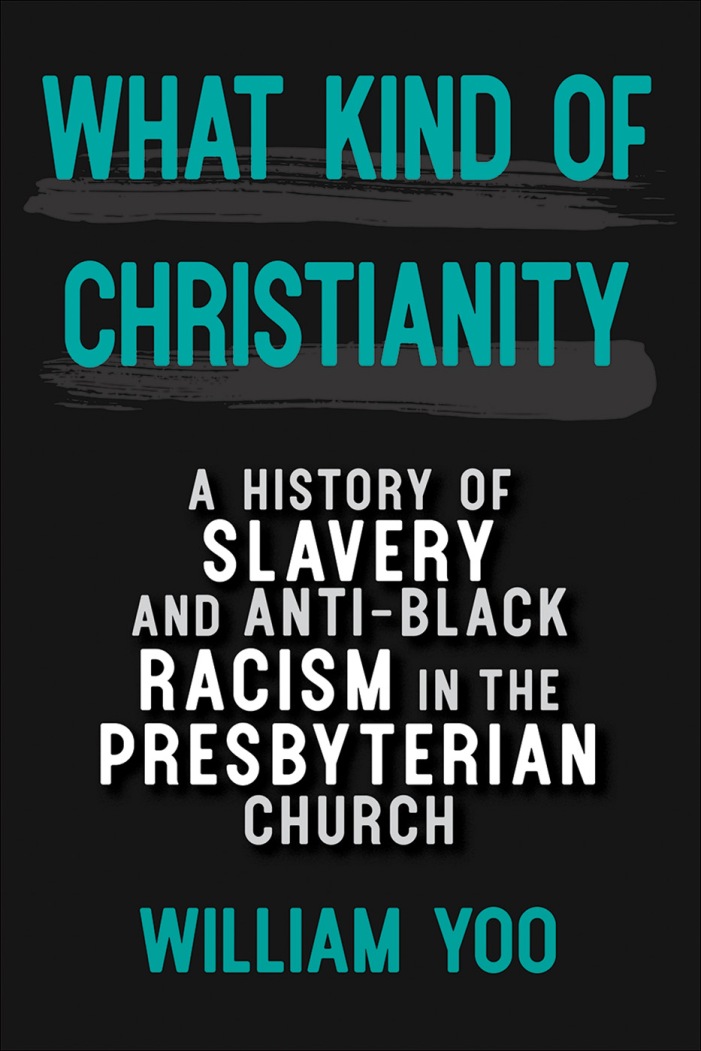 I can see some positive sides to a church ideology that addressee inner spirituality, but I think it has serious drawbacks. You can focus too much on what I will call the “inner spirituality” of church members. The reasoning behind the emphasis on inner spirituality can be faulty. The theory is that if each member becomes a better Christian, they will be better neighbors towards others. If they feed the hungry and cloth the poor, they will be ridding the world of the evils that Jesus preached against. Unfortunately, these propositions are not evidenced by historical fact. For hundreds of years many Christians supported slavery and sexism by doing little or nothing to condemn or speak out against it. Furthermore, many Christians were major protagonists of racism and sexism. If their ministers spoke out against it, it obviously made little difference. Being a card carrying member of a Christian church never seems to correlate with ending war, sexism, racism, homophobia or even poverty. I think without an equal emphasis on “Outer Spirituality” Christianity is a worthless religion.
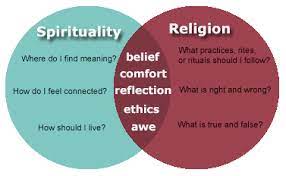 There are many definitions of spirituality. What does it mean to be a spiritual person? Some people lean towards accepting a higher being or creator. Some lean towards accepting a more conventional religious perspective. Many on-line definitions list several factors necessary to be a spiritual person. My own definition is much simpler. I think being a spiritual person involves two elements. The first is seeking meaning in one’s life. The second is seeking purpose. Meaning is inner spirituality. Purpose is outer spirituality. Meaning and purpose must go beyond what is simply good for oneself and must embrace what is good for humanity and the universe. Thus, a truly spiritual person is one who finds and balances inner and outer spirituality.

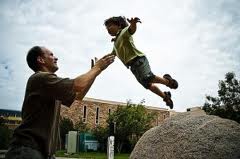
 I suppose in one sense, “life is not fair” means that life is indeed following a bell-shaped curve and some of us are on the undesirable end. In other words, some of us are too short, too fat, too unappealing, or any number of other less-desirable traits that we find on the extremes of the bell-shaped curve. Last night I was watching a 3-year-old do stunts on a sized down motorcycle. I could not do these stunts if my life depended on it. This young boy was a natural on the motorcycle. He took to it like a fish to water. We have all seen and perhaps envied some of the more fortunate on our bell-shaped curve who can do things we only dream about doing. For those of us on the wrong end of the bell-shaped curve, life will never seem fair.
 I understand why so many people want to believe in heaven and hell. It would be much easier to go on living peacefully if I could really believe that there was someplace better to go to than this earth I now reside on. Too many bad days now seem to intrude on my equanimity. You and I and everyone else that resides on this 3rd rock from the sun are abused and tormented every day with disease, starvation, accidents, environmental devastations, and pandemics. I could handle all of these things but for one thing. It is called “mans’ inhumanity to man.” The stupid cruel things we do to each other over and over again. The wars, murders, and injustices that we inflict on other human beings. And it is not just the average person that inflicts these cruelties, it is the “best” people in the land. In fact, it would seem that the inhumanities done by those with the most money, most intelligence and those we call our leaders are the worst of all the brutalities and savagery that we see in the news each day.

 Faith is number five of my seven essential virtues for leading a happy and successful life. Every Friday I start my day with the following prayer:
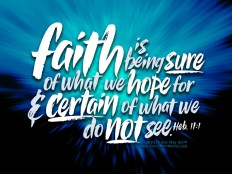 I decided that I must first understand what Faith really means. To do this, it is helpful to deconstruct how we think about Faith and how we use the word. I thought about how we use both Trust and Faith in common language. For instance we use trust in English as follows:
 I think you can readily see that there is a certain degree of overlap between the two concepts. However, Faith generally seems to convey a more sectarian or theological concept of belief whereas Trust is generally used in more secular terms. Thus, we don’t “trust” God but we have Faith in her. Faith seems to be a term that is not contingent upon any kind of physical or logical proof. We might not trust a person with our money without proof that they are “bonded” or trustworthy, but we would not expect such displays of material evidence when it comes to having Faith in God. So what is the relevance to this in our lives? What good is Faith if we can substitute trust for faith and have more security in the long run?
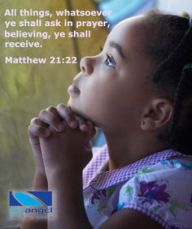 The answer seems to be (IMHO) that sometimes we can trust without evidence but generally we are better off trusting with some element of surety that can mitigate the risk of our trust being unfounded or mistaken. Whereas, there is little or no evidence that can prove your need or desire to have Faith. You must have Faith like a parent has love for a child. It is unconditional. You have Faith simply because you want to believe. You have Faith because you accept something without conditions. You need no proof or evidence to support your Faith. Is this a good thing or a bad thing? Should you have Faith without proof? What would a life without Faith be like? Would we be safer or happier with less Faith?
 Fortunately, the 3.4 percent of respondents have been more than enough to help me keep my Faith. (Should I really need such sustenance if I have Faith?) Yes, I have Faith that my writing is making a difference to the world but alas, I have no proof for the empiricists, the materialists or the skeptics. I have to ask you as well as myself to believe that I am. It is Faith that keeps me motivated. Without Faith, life would appear to be a futile waste of time. Faith helps us to carry on when everything and everyone is saying to quit. The woman in the life raft, the athlete with a severe injury, the parents with a disabled child, the poor fighting hunger, the righteous fighting injustice are all sustained by the power of Faith.
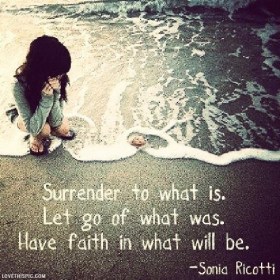 Faith can believe everything
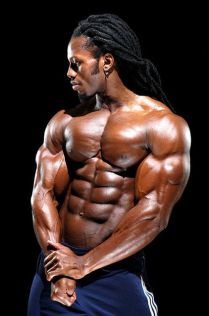 Samson was the strongest most well-built man on the block. He had muscles chiseled in stone. His muscles had muscles. He stood 6 feet 4 inches tall and did not have an ounce of fat on him. Samson worked out seven days a week, twice each day at the Philistine Gym on Gibeon Street. He worked out before he went to work each morning and after work for two hours each evening.
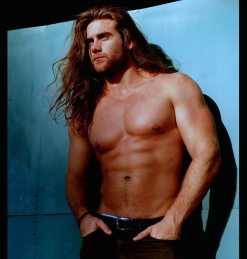 wanting something more because you can’t have it. Delilah had only one other person she admired, herself. Much like Sampson, she could not pass by a mirror without staring at her reflection and thinking “how beautiful I am.”
 Delilah grew more and more desperate in her attempts to get Samson to notice her. Finally, she hit on the idea to simply approach Samson and remark on his wonderful hair. So, one day while he was practicing his dead lifts, she sauntered by and casually remarked on how beautiful his hair was. She proceeded to compliment him on his marvelous muscle definition. She followed up these compliments with the suggestion that they go back to her place after working out and she would cook him a nice microwave dinner and brush his hair. This idea delighted Samson and after working out, they both went to Delilah’s house.

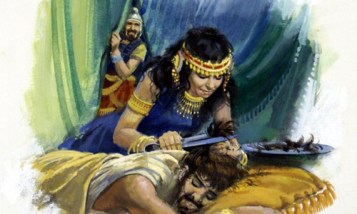 Delilah waited until the night before the World Weightlifting championship. At around midnight, she used the key that Samson hid near his door to let herself into Samson’s apartment. Moving as stealthily as a cat, she entered Samson’s bedroom. Samson was a sound sleeper and he had no inclination of what awaited him. Delilah took the surgical scalpel that she had borrowed from a medical admirer and in one quick slash, she lopped off Samson’s braid. Samson was totally unaware and did not move a muscle. Delilah slipped back out the way she had come and placed Samson’s key back where he hid it.

 As the little boy grew up, he became an even more devout believer in God. Everywhere he went, he saw the hand of God. In the clouds, in nature, in the weather, in the oceans, in good times and in bad times he believed that God was present. The little boy thought how hard God must have to work to try to keep life sustained. Each night he would pray to God that when he grew up, he would be able to help ease God’s work somewhat and do his share to help make the world a better place.




 Aging Capriciously