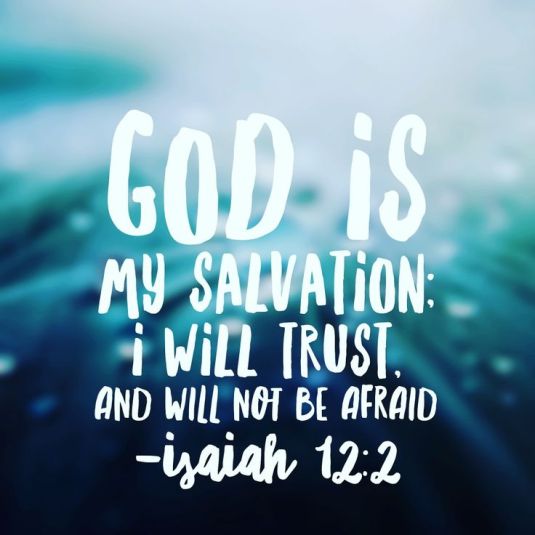
- Hope is the most useless concept in the English language!
- Without Hope people will perish!
Which of the two above ideas is true? Is Hope a useless idea or is Hope essential for human progress and prosperity? In my blog this week, I would like to explore each of these ideas and then you can make up your mind which point of view you choose to accept.

Hope as Useless Concept:
If you believe in Hope, you have to believe in God or a higher power because Hope nullifies any effort on your part to change anything. For instance, I say “I Hope to win the lottery.” This is nothing short of wishing for a miracle or wishing that a higher power will take favor on me and overcome the billion to one odds against my ticket winning. Or I might say “I Hope my children will grow up and be happy and prosperous.” What power can make this happen except an all-powerful entity that many call God? If I am hoping for my children to be happy it appears that I can do nothing more to make this happen than to sit on a rock and repeat “Hope, Hope, Hope, over and over again.
When did Hope ever change anything. Change takes effort both mentally and physically. Hope relies on something ephemeral that will happen to spontaneously make things better. “I Hope I will do well on the test tomorrow.” As Yoda said about the word “Try”, “There is no try, there is either DO or DO NOT.” Hoping will never get you good grades. Study, practice, and more study are the only things that have ever led to good grades. Do you get to Carnegie Hall by Hoping? The trope that Carnegie Hall puts on their refrigerator magnets and tote bags reads “How do you get to Carnegie Hall? Practice, Practice, Practice.” It does not say “How do you get to Carnegie Hall? Hope, Hope, Hope.”
Perhaps Hope is an idea supported by those who want to keep the masses quiet and lazy. Karl Marx said that “Religion is the opiate of the Masses.” I have often said that today “Sports is the opiate of the masses.” Hope is simply another opiate. We can keep hoping that Donald Trump will not be elected. We can keep hoping that the Israeli Palestinian problem will be resolved. We can keep hoping that our lives will be healthy. We can hope all day long and nothing is going to happen unless we get off our butts and fight to change things.
Generative AI defines Effort as follows:
“Effort is the physical or mental activity needed to achieve something. It can also refer to the use of energy to get something done, or the exertion of strength or mental power.”
Effort means doing something. Either you use your brain, or you use your muscles, but you do something that leads to a desired outcome. Hope does not imply any such effort. Here are three AI definitions of Hope:
“As a noun, hope is a feeling that something good will happen or be true. It can also mean a desire accompanied by expectation, or the thing that one has a hope for.”
“As a verb, hope means ‘to expect with confidence’ or ‘to cherish a desire with anticipation’.”
“In the Bible, hope is a confident expectation of what God has promised. It is a confident expectation and desire for something good in the future, with moral certainty.”
So, Hope comes down to an expectation or feeling. An expectation or feeling that without any effort on your part, God, or something else is going to provide you with some desired outcome. To win that lottery, all you need to do is Hope long and hard enough and you will be rewarded with tons of cash. I only Hope you do not spend it all in one place.
To sum up, those who Hope for what they want are living in a fool’s paradise of dreams and wishes. I would expect that the same people who put all their faith in Hope also believe in the Tooth Fairy, the Easter Bunny and Santa Claus. I have already mentioned a belief in a benevolent God that begs credibility and reality.

Hope as Essential for Happiness and Progress:
How could we ever make progress without dreams and wishes? Who would ever have the motivation to try anything or to make any effort if they were not fueled by Hope. By a belief that their efforts would and could achieve a desired effect. The Bible says that “Without Hope, the people will perish.” Can you imagine a life without Hope? It would be a sad cruel world if people could not at least believe that tomorrow may be better than today. That tomorrow could bring an end to the wars and violence that plague our world.
All good things must have Hope behind them. I married my present wife with the Hope that I could do a better job on this marriage than I did on the first. I started college after being a terrible student in high school with the Hope that I would have the focus and discipline at 25 years of age that I did not have when I was fourteen years old.
There are many pragmatic concepts that we can use as rules or guides for our lives. Some of them make good sense. Some do not. Hope does not lend itself well to pragmatism. Hope is of the soul and spirit and not of the brain and intellect. Great minds may say that Hope is for fools, but many of our “great minds” tend to be bigger fools because they ignore the emotional needs of people. Hope is food for the spirit and soul just as ideas and theories are food for the mind. People need both a heart and a brain to live. Without Hope, there is no heart.
I am sure that you are familiar with the popular author Robert Fulghum. I think his first book was “All I Really Need to Know I Learned in Kindergarten.” This was a book of short essays written with some great insights and a very imaginative sense of humor. One of the quotes from this book that pertained to the concept of Hope was this bit of wisdom:
“I believe that imagination is stronger than knowledge. That myth is more potent than history. That dreams are more powerful than facts. That Hope always triumphs over experience. That laughter is the only cure for grief. And I believe that love is stronger than death.”
To sum up, Hope comes from the heart. Without Hope we are not human beings. With no hope we are little more than automatons. Robots will probably never be able to hope. They are quite logical. A robot can waste no effort on Hope. Can you imagine Commander Spock from the original Star Trek series exclaiming, “Gee, I Hope we can get back to the ship in one piece.” Spock would never have issued such a plea, but Bones or Dr. McCoy would be quite comfortable with the sentiment. Kirk on the other hand would be too busy dashing about to worry about Hope either for better or worse.
Conclusions:
What do you think friends? Do we strike Hope from our vocabulary and set off for a brave new world with logic and knowledge or do we take a moment each day for a prayer of Hope. What if a prayer blended both points of view? In case you do want such a prayer, here is a Buddhist prayer that I think would help your soul and spirit without stepping too hard on your faith in logic and knowledge. — Sorrow & Hope: Prayer to Kuan Yin, Mar 31, 2018, Dharma Insights, News

 Despite attending forty 3-day Jesuit retreats and regularly going to church with my spouse, I remain adamantly somewhere between an Atheist and an Agnostic. See my blog
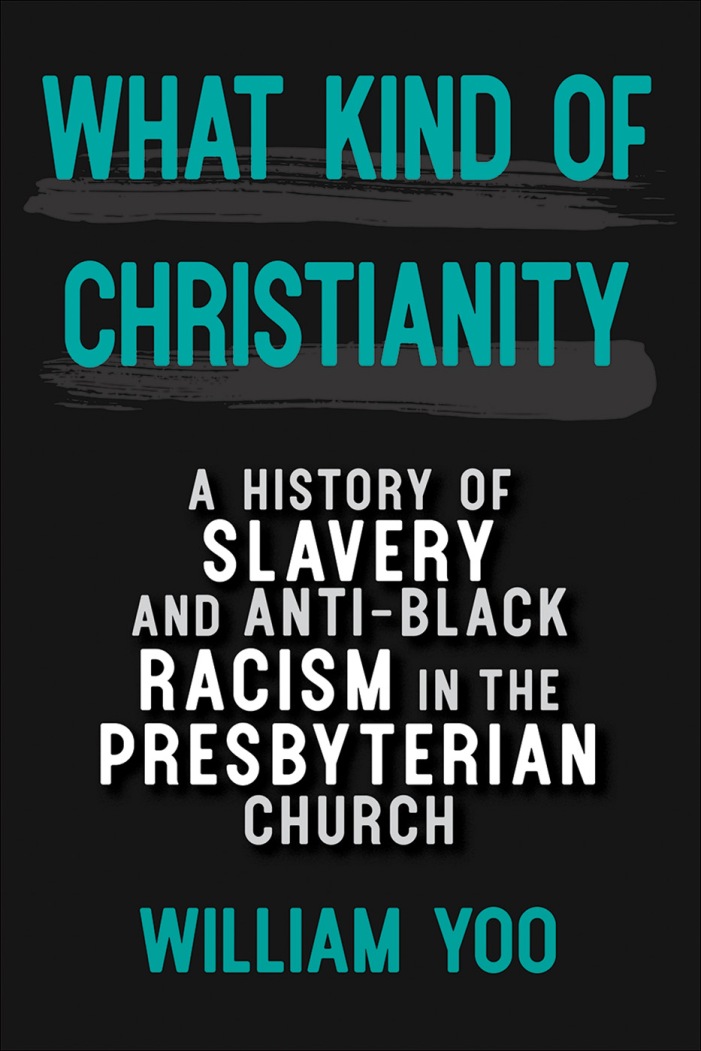 I can see some positive sides to a church ideology that addressee inner spirituality, but I think it has serious drawbacks. You can focus too much on what I will call the “inner spirituality” of church members. The reasoning behind the emphasis on inner spirituality can be faulty. The theory is that if each member becomes a better Christian, they will be better neighbors towards others. If they feed the hungry and cloth the poor, they will be ridding the world of the evils that Jesus preached against. Unfortunately, these propositions are not evidenced by historical fact. For hundreds of years many Christians supported slavery and sexism by doing little or nothing to condemn or speak out against it. Furthermore, many Christians were major protagonists of racism and sexism. If their ministers spoke out against it, it obviously made little difference. Being a card carrying member of a Christian church never seems to correlate with ending war, sexism, racism, homophobia or even poverty. I think without an equal emphasis on “Outer Spirituality” Christianity is a worthless religion.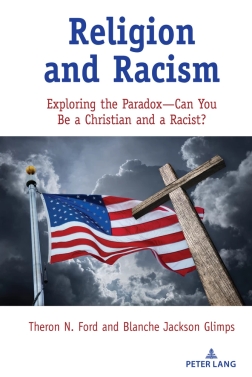
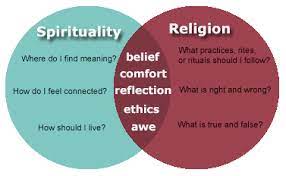 There are many definitions of spirituality. What does it mean to be a spiritual person? Some people lean towards accepting a higher being or creator. Some lean towards accepting a more conventional religious perspective. Many on-line definitions list several factors necessary to be a spiritual person. My own definition is much simpler. I think being a spiritual person involves two elements. The first is seeking meaning in one’s life. The second is seeking purpose. Meaning is inner spirituality. Purpose is outer spirituality. Meaning and purpose must go beyond what is simply good for oneself and must embrace what is good for humanity and the universe. Thus, a truly spiritual person is one who finds and balances inner and outer spirituality.

 I suppose in one sense, “life is not fair” means that life is indeed following a bell-shaped curve and some of us are on the undesirable end. In other words, some of us are too short, too fat, too unappealing, or any number of other less-desirable traits that we find on the extremes of the bell-shaped curve. Last night I was watching a 3-year-old do stunts on a sized down motorcycle. I could not do these stunts if my life depended on it. This young boy was a natural on the motorcycle. He took to it like a fish to water. We have all seen and perhaps envied some of the more fortunate on our bell-shaped curve who can do things we only dream about doing. For those of us on the wrong end of the bell-shaped curve, life will never seem fair.
 I understand why so many people want to believe in heaven and hell. It would be much easier to go on living peacefully if I could really believe that there was someplace better to go to than this earth I now reside on. Too many bad days now seem to intrude on my equanimity. You and I and everyone else that resides on this 3rd rock from the sun are abused and tormented every day with disease, starvation, accidents, environmental devastations, and pandemics. I could handle all of these things but for one thing. It is called “mans’ inhumanity to man.” The stupid cruel things we do to each other over and over again. The wars, murders, and injustices that we inflict on other human beings. And it is not just the average person that inflicts these cruelties, it is the “best” people in the land. In fact, it would seem that the inhumanities done by those with the most money, most intelligence and those we call our leaders are the worst of all the brutalities and savagery that we see in the news each day.

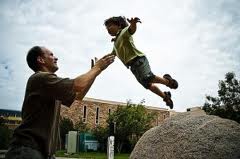 Faith is number five of my seven essential virtues for leading a happy and successful life. Every Friday I start my day with the following prayer:
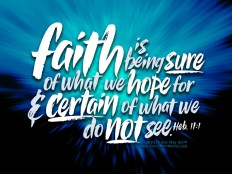 I decided that I must first understand what Faith really means. To do this, it is helpful to deconstruct how we think about Faith and how we use the word. I thought about how we use both Trust and Faith in common language. For instance we use trust in English as follows:
 I think you can readily see that there is a certain degree of overlap between the two concepts. However, Faith generally seems to convey a more sectarian or theological concept of belief whereas Trust is generally used in more secular terms. Thus, we don’t “trust” God but we have Faith in her. Faith seems to be a term that is not contingent upon any kind of physical or logical proof. We might not trust a person with our money without proof that they are “bonded” or trustworthy, but we would not expect such displays of material evidence when it comes to having Faith in God. So what is the relevance to this in our lives? What good is Faith if we can substitute trust for faith and have more security in the long run?
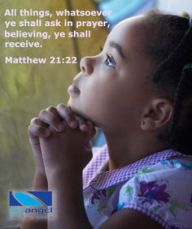 The answer seems to be (IMHO) that sometimes we can trust without evidence but generally we are better off trusting with some element of surety that can mitigate the risk of our trust being unfounded or mistaken. Whereas, there is little or no evidence that can prove your need or desire to have Faith. You must have Faith like a parent has love for a child. It is unconditional. You have Faith simply because you want to believe. You have Faith because you accept something without conditions. You need no proof or evidence to support your Faith. Is this a good thing or a bad thing? Should you have Faith without proof? What would a life without Faith be like? Would we be safer or happier with less Faith?
 Fortunately, the 3.4 percent of respondents have been more than enough to help me keep my Faith. (Should I really need such sustenance if I have Faith?) Yes, I have Faith that my writing is making a difference to the world but alas, I have no proof for the empiricists, the materialists or the skeptics. I have to ask you as well as myself to believe that I am. It is Faith that keeps me motivated. Without Faith, life would appear to be a futile waste of time. Faith helps us to carry on when everything and everyone is saying to quit. The woman in the life raft, the athlete with a severe injury, the parents with a disabled child, the poor fighting hunger, the righteous fighting injustice are all sustained by the power of Faith.
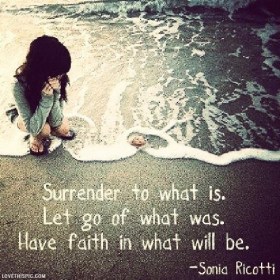 Faith can believe everything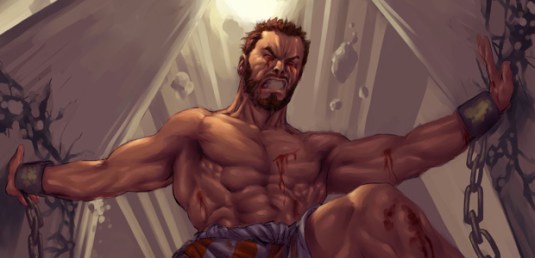
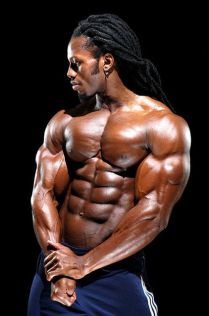 Samson was the strongest most well-built man on the block. He had muscles chiseled in stone. His muscles had muscles. He stood 6 feet 4 inches tall and did not have an ounce of fat on him. Samson worked out seven days a week, twice each day at the Philistine Gym on Gibeon Street. He worked out before he went to work each morning and after work for two hours each evening.
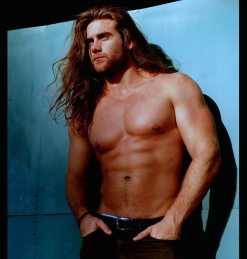 wanting something more because you can’t have it. Delilah had only one other person she admired, herself. Much like Sampson, she could not pass by a mirror without staring at her reflection and thinking “how beautiful I am.”
 Delilah grew more and more desperate in her attempts to get Samson to notice her. Finally, she hit on the idea to simply approach Samson and remark on his wonderful hair. So, one day while he was practicing his dead lifts, she sauntered by and casually remarked on how beautiful his hair was. She proceeded to compliment him on his marvelous muscle definition. She followed up these compliments with the suggestion that they go back to her place after working out and she would cook him a nice microwave dinner and brush his hair. This idea delighted Samson and after working out, they both went to Delilah’s house.

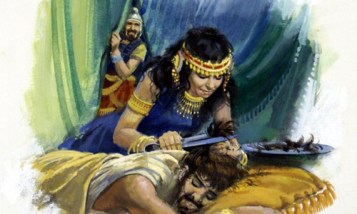 Delilah waited until the night before the World Weightlifting championship. At around midnight, she used the key that Samson hid near his door to let herself into Samson’s apartment. Moving as stealthily as a cat, she entered Samson’s bedroom. Samson was a sound sleeper and he had no inclination of what awaited him. Delilah took the surgical scalpel that she had borrowed from a medical admirer and in one quick slash, she lopped off Samson’s braid. Samson was totally unaware and did not move a muscle. Delilah slipped back out the way she had come and placed Samson’s key back where he hid it.

 As the little boy grew up, he became an even more devout believer in God. Everywhere he went, he saw the hand of God. In the clouds, in nature, in the weather, in the oceans, in good times and in bad times he believed that God was present. The little boy thought how hard God must have to work to try to keep life sustained. Each night he would pray to God that when he grew up, he would be able to help ease God’s work somewhat and do his share to help make the world a better place.