Making friends as an adult (an idea for you) by Brock McGoff

This week, I want to focus in on friendship.

Don’t worry, I still have some snacks for ya down below 😉

But the meat and potatoes of today’s email is about making friends.

Specifically, making friends as an adult man.

An adult man with a family and a job and financial obligations, and maybe a few hobbies to boot…

Back in the day…

Back in the day, you’d collect a handful of close friends during the first 20 years of your life. You know:

  • Kids who lived on your street growing up
  • Classmates from middle and high school
  • Your college roommates

Then, you’d keep most of these friends for the rest of your life.

The original crew: my older brother and our two best friends who lived across the street.

College pals on a cruise (we thought we were so classy 😂)

These days, though, everyone scatters. They move across the country for a job or spouse.

Even your new friends might relocate in middle age. It’s just normal now.

The percentage of men with six or more close friends dropped from 55% in 1990 to just 27% in 2021.

Psychology Today

It’s hard to make new friends. It takes time, effort and vulnerability.

But we need friends. Loneliness leads to depression, and social isolation can shorten lifespans.

Try this at home 👇🏼

When I moved back to Tucson, I was determined to make some dang friends.

As a busy dad, here’s what’s working for me right now:

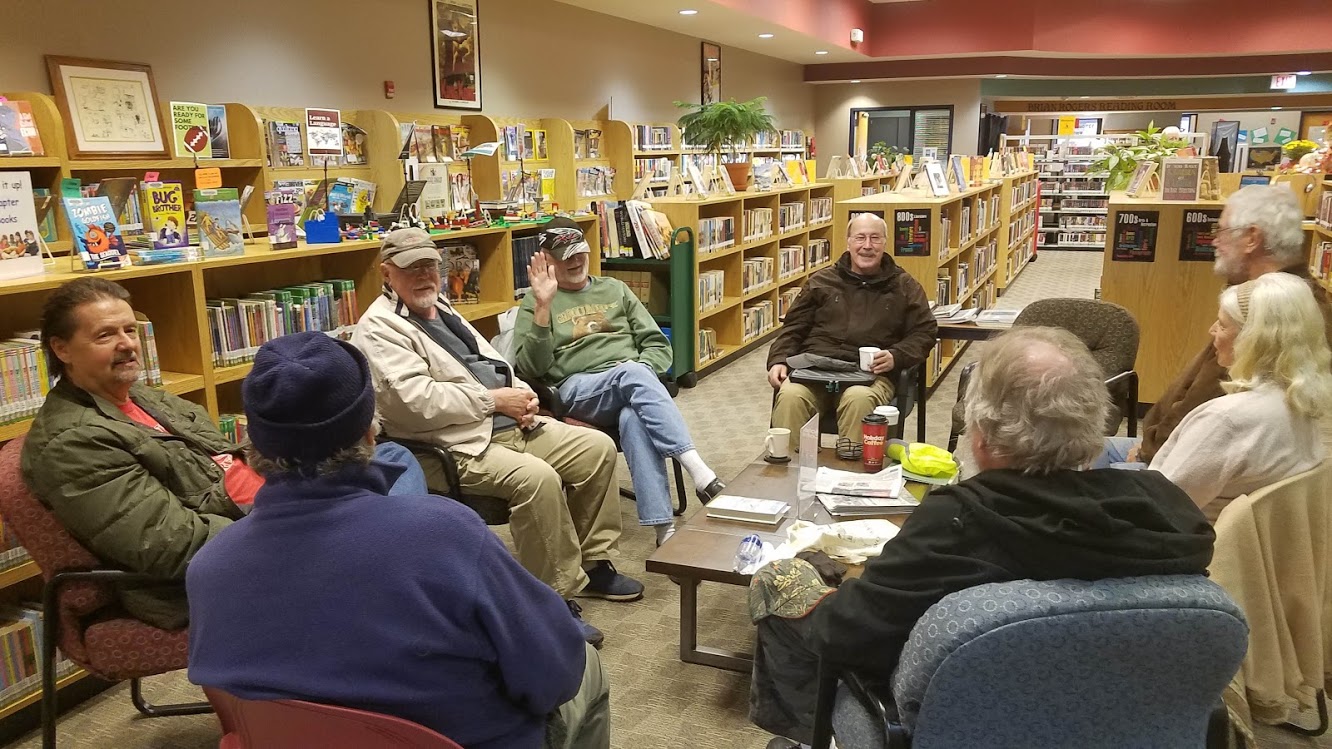
About once a month, I invite 7-8 guys from my neighborhood over to my house for a beer or three (or water…it’s really not about drinking).

All different kinds of guys:

  • Dave is a retiree who’s lived on my street for 30 years.
  • Edgar is an accountant who moved in two months ago.
  • Eugene is my age and also has two young kids.

I provide a cooler, table snacks and background music. The back gate opens at 8p.

We hang out and talk for a couple hours, then everyone heads home.

This doesn’t come naturally to me. I’m an introvert. I’m uncomfortable at parties.

Leaving Homer Simpson GIF

Me at social functions | Source: Giphy

But I’m forcing it. I’m making these gatherings happen.

And you know what? Most of the people I invite show up.

I think most people are just waiting for an invitation to hang out.

And, the more time we spend together, the closer we become.

We’re becoming friends. It’s amazing!

✍🏻 Your Homework

Host your own neighborhood hang.

Do it this week.

Go knock on some doors, or if you already have contact info, send an email/text.

Your place, Saturday night, 8p.

Maybe one guy will show up. Fine! Do it again next week.

Email me with your results…

The Ten Secrets for a Great Friendship

I confess I have ended a number of friendships in the past few years.  I decided to simply “let go” of people who never called me or who did not seem to have any interest in whether I was alive or dead.  I can’t say this task was easy.  I have misgivings about when and how I have approached the effort.  My solution was to simply not call or contact others unless they contacted me.  I have for many years felt like I was the one doing most of the work in several “friendships.”  I am not sure whether it is the “parsimony” of old age (i.e., only so much time left on this earth) or simply laziness.  Somehow though, I thought: “Well, if they want to see me, they can call me for a change.”  

In Friends and Friendship Part 1, I described some basic theories of friendships and went back to the ideas of Aristotle to help describe what friendship is and the types of friendship possible.  I outlined my theory on the importance of intimacy to friendship.  Here in Part 2, I want to identify ten behaviors that I think are necessary for a true friendship.  I am not sure ALL of them are necessary (You may have good friends without all ten being present) but I do think most of them are essential for a friendship.  I would like to describe each behavior and why it is important and its role in helping to create a true friendship.  I think friendships take time and effort.  In this respect, I don’t think friendships are any different than a good marriage.  You can’t take your partner for granted and ignore them day after day and expect your marriage to last.  I believe the same is true for friends.

As you read my ten “secrets” for a great friendship, please note that I am not advocating that anyone take their friendships lightly or that you simply jettison friends who do not meet my criteria.  I am simply saying that if you want to have good friends there are some behaviors that are necessary for you to create, maintain and/or continue for a good friendship.  Given the need to invest time and effort to keep friendships, the idea of 2,000 or even 200 Facebook “Friends” is ludicrous.  If you can maintain even one really good friendship in your life, you should consider yourself lucky.

When the time comes and you decide to take stock of your friendships, please remember one thing:  You do not have to “let go” of old friends.  You can rejuvenate or refresh your friendships by once again becoming a friend.  Review my ten secrets and see which ones you may need to reapply.  If your efforts are not reciprocated (and you should not expect a fifty-fifty relationship) you might want to reevaluate just who you spend your time and energy with.  This could sound “cold and calculating” but if you have found a better solution please send me an email or drop a comment in the box.   I would sincerely like to keep as many friends as I can and if there is a way to do it without time and effort; I have not yet found it.

1. Disagree respectfully:

I cannot imagine a friendship where we agree on everything 100 percent of the time.  However, I also cannot imagine a friend who would insult me, disrespect me or try to make me look foolish.  I would not call that a friend.  I expect my friends to listen to my ideas and even if they do not agree, to at least try to understand where I am coming from and not deliberately try to denigrate or diminish my theories or opinions.  I have no problem with friends presenting facts or logical arguments against my opinions, but I don’t believe that a friendship can be based on disrespect. Disagreements must be done in a caring manner which is possible but often very difficult to effect.

2. Overcome anger:

I have often noticed that real friendships seem to start “after” friends get angry with each other.  Perhaps, more than the anger signaling the start of true friendship is the process by which you are able to overcome the anger with your friend.  If we can’t confront the anger with another, it is unlikely that we will become good friends.  I remember once going to a marriage seminar and they said there were three things you needed for a good marriage:   1. A communications process.   2.  A fight-fair process.  3.  A realistic budget.   I was very intrigued by the fight-fair process. What this entails is the ability to communicate with your spouse or friend about things that make you angry or disappoint you.  It goes beyond daily communication to encompass “extra-ordinary” situations that arise when something does not go as we expect it to.  For many of us, this is a daily event.  If you can’t communicate with and overcome our anger with another person, we probably do not have a true friendship.

3. Share common interests:

Perhaps, you met your friends at the gym or work or playing bingo.  We meet people all over and I allow that ninety five percent of the people we meet are simply acquaintances.  They never become true friends because they never go beyond sharing common interests.  Nevertheless, the sharing of common interests helps create a bond that is fundamental to a good friendship.  It is indeed possible to stay good friends with someone long after the initial interests have disappeared simply on the basis of the shared history that you now have with that individual.  For instance, you might have been on a trip together or been in the service together.  These shared memories act as the cement to continue to provide a sense of common interests.   At some point however, these former interests become faded and need to be replaced by new and more salient experiences that can be shared together.  Without such interests as a foundation, I have seen many former friendships simply fade away.

4. Help each other when in need:

There is perhaps no truer saying that “A friend in need is a friend in deed.”  The power of the feelings that are manifested towards someone coming to our aid in time of need is beyond comparison to any other single aspect of friendship.  I remember a good friend of mine who once told me during my divorce: “The hell with your ex-wife, I am here for you.”  I will never forget how grateful I felt towards him for the fact that he was willing to unequivocally provide me with emotional support when I needed it.  Friends may help you in many ways, but perhaps no help goes further than the emotional support that we provide towards friends when they need it.

“There is nothing I would not do for those who are really my friends. I have no notion of loving people by halves, it is not my nature.”
Jane Austen, Northanger Abbey

5. Don’t expect your friends to be perfect:

This is a simple but profound truth:  None of us are perfect.  If you constantly find fault with others, chances are you will not have many or even any friends.  It is not always easy to accept the faults in others.  For instance, I disagree with one of my friends over some of the people whom he calls friends.  I would not have a racist or a bigot as a friend.  I am willing to overlook many warts and blemishes in my friendships but I draw the line at liking or even tolerating people who hurt or pick on others.  Perhaps I should be more charitable.  I admit, I write off many potential friendships because I will not tolerate hateful attitudes towards others.  Nevertheless, I do recognize that the more that you can handle and deal with the imperfections in others, the more friendships you will potentially have.

6. Care about each other:

This might be the single most important bond for a good friendship.  Do you really care about what happens to the other person?  Are you willing to go out of your way to take an interest in their needs and lives?  Caring can take many forms and might be attending a funeral at one of their relatives or driving your friend to the hospital or giving them a ride to the airport.  A few years ago, I remember a friend who told me that whenever any of his friends were in need, he simply showed up with helping hand, or a pie or a shoulder to cry on.  He said that he did not ask the common question “How can I help you?”  He simply went ahead and tried to help without being asked or given permission.  His initiative seemed to me more powerful than the common refrain “Let me know if I can be of help.”  I would be much more grateful towards the friend that simply showed up rather than waiting to be asked.

“It’s the friends you can call up at 4 a.m. that matter.”
Marlene Dietrich

7. Occasionally reach out to each other:

I believe it is important for friends to have some form of regular contact with each other.  I cannot understand or believe that a good friendship can endure without some form of mutual interdependence.  Whether, you come by for dinner, attend a movie together, take a trip together or simply call or even email your friends, it seems (to me anyway) that friendships need some form of regular lubrication that mutual contact provides.

I have said that Facebook friends are generally not true friendships. They do however; provide regular contact between “potential” friends and people whom you truly call good friends.  The simple “like” button provides a very powerful and instant means of letting others know that you appreciate, admire or support something they are engaged in.  I have given many likes and received many likes on Facebook and I always feel closer to those individuals who take the time to “like” or note some issue that I care about.  Liking is not a very big effort but it forms that sense of mutual contact that I think is the lubricant for a good friendship.

“Piglet sidled up to Pooh from behind. “Pooh?” he whispered.
“Yes, Piglet?”
“Nothing,” said Piglet, taking Pooh’s hand. “I just wanted to be sure of you.”
A.A. Milne, Winnie-the-Pooh

8. Apologize when you hurt the other person:

Good friends do not deliberately hurt each other.  However, hurts both physical and emotional will often be inflicted.  I cannot tell you how many times I have bumped into Karen, stepped on her toes, or unintentionally inflicted some pain on her while we were together.  Fortunately, it was nothing ever very serious.  More serious to our relationship, has been the emotional pain and hurts that I have too often inflicted on her.   Some of them were intentional, some were not.  None were ever deserved though.  At such times, I think it is critical and essential to apologize to the other person.  Whether or not it was intentional is not the point.  The point is that you have hurt the other person and if you truly care about them, you want them to know how you can help alleviate the pain.

A number of years ago, I was on the Oprah Winfrey show. The subject was apologies.  The expert that Oprah had on the show said that a true apology has three parts:  1. Saying: “I am sorry.”  2.  Listening to the hurt or pain you have caused the other person.  3.  Setting things right.  Saying you are sorry is often the easy part.  However, many of us expect that as soon as we say that we are sorry, the other person should forgot about it and get on with their lives.  Simply issuing an apology may not help the other person move on.  The difficult part is listening to the feelings, emotions and disappointments that your actions have led to.  People may all respond differently to different insults and individuals are responsible for their own feelings.  However, we all have feelings and in a good relationship you must care about the feelings of others.  Whether or not you have caused the feeling is a moot point.  Can you listen to and empathize with the pain that is in the other person?   This is often the only way; that they will be able to move beyond the pain and truly rejoin a relationship with you. Finally, you may need to discuss what you need to do to make things right.  Are there some expectations that you need to address to help restore your friendship?  

“The truth is, everyone is going to hurt you. You just got to find the ones worth suffering for.”
Bob Marley

9. Kidding or joking with each other:

Insulting a person or demeaning a person deliberately is a far cry from kidding someone or even “roasting” another person.  The first is done with malice and hatred, the latter is done with love and admiration.  I have never been really good at humor and my efforts to be funny have often backfired.  Good friends are friends that you can joke with.  Of course, everyone has their sensitive spots and tolerances and knowing these are important to a friendship.  The deeper the friendship, the more likely you will have a greater tolerance towards each other in terms of how much you can push the boundaries of joking and ridicule.  Many of us have learned that texting, emails and online communications do not lend themselves to humor and spoofing.  That is why an entire arsenal of symbols 🙂 has arisen to show the other person that “no malice” is intended in your comments.  In our face to face communications, our body language readily communicates towards our friends our intentions and whether or not they are playful or benign.  I cannot conceive of a real friend who I could not joke with or make fun of from time to time and of course vice verse.  Nevertheless, in even the best of friendships, we may step on each other’s toes from time to time.  This is where a good apology comes in. 

10. Trust your friends:

The amount of trust you would put in a friend might be the single most obvious indicator of how strong that friendship is.   But what do we mean by the word Trust?  We often hear the phrase “trust me” used today.  What does it mean to trust though?  ASU Online defines trust as follows:

Trust is both an emotional and logical act. Emotionally, it is where you expose your vulnerabilities to people, but believing they will not take advantage of your openness. Logically, it is where you have assessed the probabilities of gain and loss, calculating expected utility based on hard performance data, and concluded that the person in question will behave in a predictable manner. In practice, trust is a bit of both. I trust you because I have experienced your trustworthiness and because I have faith in human nature.

A friend is someone who you can expose your vulnerabilities with.  In Part 1 of this blog, I discussed the importance of intimacy to a friendship.  When we are intimate with someone, we are more exposed and more vulnerable.  There is no escaping vulnerability in a good friendship.  If you want a strong friendship, you must be willing to trust the other person and that means you must be willing to be vulnerable.  The fewer secrets you have with your friends, the stronger your friendships will be.  The issue of trust is paramount here because who but a fool would share secrets with someone they could not trust.  The Internet is full of ridiculous instances of people posting, texting or sharing secrets with others with whom it became glaringly evident that they could not trust.  Some of us are more trusting than others, but I think that most good friendships grow in trust as our experiences teach us whether or not the other person can really be trusted.  Thus, the final hallmark of a good friendship is trust.

Time for Questions:

Are you happy with your friendships?  Do you have some good friends?  How do you define friendship?  How many of the secrets of friendship that I have outlined do you share with your friends?  Which secrets do you disagree with? Which secrets do you think I have missed?  What do you need to do tomorrow to have better friendships?

Life is just beginning.

“Try Honey Before Vinegar” – Lessons on Leadership from Abraham Lincoln

America has lost the “Art of Leadership.”  We no longer develop men and women with integrity or selflessness.  Instead of Statesmen, we have political hacks only concerned with getting reelected.  Politicians with no backbones or the courage to stand up against injustice.  We have a Congress of sycophants willing to do whatever they are told to do regardless of how unethical or immoral it may be.  We have thousands of lawyers who do not uphold justice but find arguments to support an amorality that meets the letter of the law but ignores the significance of decency, goodness, honesty, conscience and fairness.

In this blog and the ones to follow,  I will write about insights regarding leadership from one of the greatest American leaders and Presidents of all time.  I found a compilation of these in an old collectors edition of “Civil War Times” published in Winter, 2013. There are 41 in total, and I have already covered the first in a previous blog.  I would like for you to hear the words of Abraham Lincoln and what he had to say about leadership.  I will include some of my own experiences from my years of working with senior management in over 32 organizations.  Some of the men and women I worked with were incredible leaders.  Most of them wanted to be better leaders and that is where I brought the teachings and thoughts of W. E. Deming to my consulting practice.  Dr. Deming achieved extraordinary results in business by tapping the knowledge, skills and abilities of ordinary people.  Senator Hubert Humprey famously said that “Democracy is a system that achieves extraordinary results with ordinary people.”

Insight # 2 – Try Honey Before Vinegar: 

Lincoln said, “If you would win a man to your cause, first convince him that you are his sincere friend.”  Springfield, Illinois, 2/22/1842

This seems to be a principle or idea that is not very well understood by many people today.  I constantly hear people tell me that if you want to change people’s ideas about things, you must “empathize with them.”  “You must really listen to them.”  To these admonitions, I say “Bullshit.”  You can listen to some fanatics all you want to, and they will still totally ignore anything you say that does not fit in with their preconceptions or ideology.

A good woman friend of mine and I were arguing about Trump and his supporters.  Repeatedly in every argument, she would say “John, you just have to really listen to them.”  I finally got tired of hearing this refrain and one day I challenged her.  I said, “Tell me one, only one, Trump supporter you have listened to who has changed their mind.”  She was dumbfounded.  She was stumped.  She was bewildered.  She could not think of one.  Months went by.  I would occasionally rub salt into the wound, “Did you change the minds of any Trump supporters today?”

You can listen to others all you want.  You can listen to hell freezes over.  You will not change a fanatic or zealot’s ideas by listening.  But Lincoln was smarter than all the psychologists we have today put together.  He knew that it would take more than listening to get others to think differently or to appreciate your ideas after you have heard theirs.  It takes believing and feeling that you are a “Sincere” friend.  Not just a Facebook friend or some online friend, but a “Sincere” friend.  Plato talked about the various types of friends, but he said nothing about a “Sincere” friend.  So, what is a “Sincere” friend and what does it take to make someone believe that you really and truly are a “Sincere” friend?  Let’s first define the meaning of “Sincere.”

An online dictionary defines “Sincere” as:

“Free from pretense or deceit; proceeding from genuine feelings.”

Wikipedia defines the virtue of Sincerity as follows:

“Sincerity is the virtue of one who communicates and acts in accordance with the entirety of their feelings, beliefs, thoughts, and desires in a manner that is honest and genuine.  Sincerity in one’s actions (as opposed to one’s communications) may be called ‘earnestness”’.

I think the word “Sincere” has a lot to do with integrity, honesty, trustworthiness and truthfulness.  The Jewish have a word for a person who is sincere and honest called a Mensch.  In Yiddish, a Mensch roughly means “a good person”.  The word has migrated as a word into American English with a Mensch being a particularly good person, similar to a “stand-up guy”.  A Mensch is a person with the qualities that one would hope for in a friend or trusted colleague.

I think we can now answer the question, “What does it take to impact someone’s ideas and ideology?”  The answer is very simple.  If you want to have someone listen to your ideas, you must be a Mensch or at least a very “Sincere” friend.  When I think about the people we elect to political leadership, I am struck by the lack of Menschs in either Congress or the Legislature.

In fact, I would argue that we have the exact opposite.  We have people you would not trust with a nickel.  People who we know will change their mind at the drop of a lobbyist’s donations.  Congresspeople, who continually lie to cover their malfeasance and incompetence.  Ask anyone of them what they do all day long and they will deny that they spend about 80 percent of their time fundraising for their next election campaign.

Try to suggest some new ideas to them as I have done countless times, and you will get the following answer, “I am very busy but send me something and I will look at it.”  Don’t hold your breath my friend.  You will die of asphyxiation before any of them, Democrat or Republican will ever get back to you.  However, mention that you are thinking of a large campaign contribution and doors will open in a New York minute.

Let us think of a scenario wherein a Trump supporter meets a Trump opponent.  We will call Mary the Trump supporter and Joe the Trump opponent.   Neither of them have ever met before and do not know each other.   The talk between them soon turns to politics.

Mary:  I think Trump is doing a great job.  He is really shaking the government up.  Just what we need.

Joe:  You think tariffs, job cuts and threatening our allies are what we need?  Are you crazy?

Mary:  He is already getting results.  Mexico and Canada have agreed to send more troops to the border.

Joe:  These are our allies.  What if I threatened you, how would you feel about me?  I am sure that long-term you would be looking for some way to get even.

Mary:  Well, I have to go.

Joe:  Yeah, so do I. Bye

If the above scenario had gone down between two long-term “Sincere” friends, how do you think it would have turned out?  I am betting both sides would have heard some value in the other sides position.  Furthermore, they might have  finished the discussion and gone out together to have a bite to eat or at least agreed on another time to get together.

Old Abe Lincoln knew a lot about leadership and the role that friendship played in it.

“On the contrary, assume to dictate to his judgment, or to command his action, or to mark him as one to be shunned and despised, and he will retreat within himself, close all the avenues to his head and his heart; and though your cause be naked truth itself, transformed to the heaviest lance, harder than steel, and sharper than steel can be made, and though you throw it with more than Herculean force and precision, you shall no more be able to pierce him, than to penetrate the hard shell of a tortoise with a rye straw.” — Lincoln, Address to Washington Temperance Society (February 22, 1842)

I have heard many conversations between Trump supporters and Trump opponents.  We attack each other.  We condemn each other for stupidity.  We assail each other for taking the Kool-Aide.  Then we retreat to the other sides of the room full of hate and disgust.  We ask ourselves, “How could anyone think like they do?”  “What is wrong with them?”  “They must be either, stupid, uneducated, brainwashed, racist or something else.”

If we are going to break down the walls and barriers that now separate us in the USA , we are going to have to do more than just listen to our opposition.  We are going to have to find ways of befriending each other.  Not just casual friendships but real “Sincere” friendships.  Friends who can accept and support mutual honesty and truthfulness with each other.

Too much of what I have seen in the media supports a narrative that my side is intelligent and smart, and the other side is dumb and uneducated.  I confess to having shared some of this narrative in my own writings.  It is now time to move past these simplistic and detrimental stereotypes and develop empathy and understanding that surpasses mere listening.  The way to do this is through “Sincere” friendship and not by demonizing the other side.

How do we fight an “Uncivil War”?  Insight # 3 from Old Abe has more valuable thoughts to help us in this struggle.  I will share these in my next blog.


My Final Will and Testament – People Enshrined in My Heart – Reflection #13

Last year at my 40th Demontreville Retreat, one of the exercises that we were given by the Retreat Master included a very challenging set of thoughts.  The worksheet for the activity was labeled as “A Testament.” I took the worksheet and instructions home with me.  It had fourteen tasks or reflections to complete.  I did not desire to complete them during the retreat.  It is now over a year since my retreat, and I have decided to make the mental and emotional effort necessary to complete this “Testament.”

The worksheet started with these instructions:

Imagine that this is the last day of your life on earth.  In the time that you have left, you want to leave a “Testament” for your family and friends.  Each of the following could serve as chapter headings for your “Testament.”  This is Reflection Number 13 on the worksheet.

13.  These are the people who are enshrined in my heart.

All of these people are friends or relatives that I have personally known and interacted with as opposed to people I might admire from history or literature.

The following lyrics are from a song made famous by Tom Jones.  Perhaps you can guess from these lines who is first in my heart.

Well, she’s all you’d ever want
She’s the kind I like to flaunt and take to dinner
But she always makes her place
She’s got style, she’s got grace, she’s a winner

She’s a woman
Oh, whoa, whoa, she’s a woman
Talkin’ about that woman
And the woman is my best friend

Well, she’s never in the way
Always something nice to say, and what a blessing
I can leave her on her own
Knowing she’s okay alone and never bored

She’s a woman
Oh, whoa, whoa, she’s a woman
Talkin’ about that lovely woman
And the woman is my wife.

Karen Yvonne (Blomgren) Persico is my blessing in life.  We met in 1983 after we both had sixteen years of marriage ending in heartache for each of us.  We dated for five years before we were ready to tie the proverbial knot.  This first five years of uncertainty has been followed by 35 years of ups and downs as we have navigated the shoals of marriage.  The ups have kept going higher and the occasional downs never as low.  If some people say that they have never had problems in marriage, this does not apply to us.  Karen turned 80 this year and I turned 78.  I never thought I could love or care for anyone as much as I do Karen.  The prospect of continuing to grow old is both comforting and frightening.   It is comforting knowing that we grow old along together.  It is frightening knowing that one of us will part ways with the other along the path someday.

Jeanine Persico Mosesian:  Second on the list of people enshrined in my heart is my sister Jeanine.  Jeanine is caring, compassionate and always helps those who need it.  Growing up we were separated by seven years of age but many more miles of family grief.  Somewhere approaching old age, we discovered each other again and have become close.  I am not one to say that “blood is thicker than water.”  I think Jeanine and I would have become good friends regardless of our family history.  Nevertheless, the many relatives and common family problems have given us a sound foundation for a sibling friendship.

After my first two enshrined people, I would not want to list the other people who have made a difference in my life in numerical order.  There is no scale or ranking that could be applied to show how much each of these people have meant to me.  Or how much of an influence each has had on my life.  I have listed them in chronological order of when they appeared in my life.  Each of these people have made a difference in my life without expectations of reward or perceivable benefits.  I would never had achieved or become the person I am today without the contributions and help of each of these folks.

Dorothy Jordan:  My mother.  A woman who had to survive more than her share of heartaches and violence.  She died at the age of 67.  My mother never stopped caring for children and became a foster mom to many after my father left her and all of her natural born children had left the nest.  The job of mothering was much easier without my father who did not believe in empathy and compassion for children.  In “Drama of the Gifted Child”, the noted Swiss Psychologist Alice Miller explains that in a dysfunctional family, it is “every man for himself.”  My mother had to dole out compassion like a thief in the night or be punished by my father for being compassionate and kind.  I will never forget her surreptitiously “buying” me an encyclopedia with her saved green stamps when my father thought I should just “get my ass to the library.”

Kwame Rice: One of my two best friends. We met in an undergraduate program for social studies at Rhode Island College in 1971.  Kwame is a good friend who goes out of his way to make a positive difference in the world.  He has never stopped trying.

Bruce Fellenz:  My other best friend.  We met in a graduate program at Stout State University in 1978.  Bruce is a person who cares about others and never turns down a request for help.

William Cox:  Bill was a big brother to me.  We met in 1979 when he was the Director of the Men’s Center in Minneapolis.  Bill took part in what was called at the time “The Men’s Movement.”  This was an effort by many men to “Un John Wayne” the role of men in society.  The goal was to help men get more in touch with their feelings and to overcome the stigma of being soft or feminine.  Bill was always there for men who needed help.  Bill was a Methodist Minister who married Karen and I in 1989.

Evelyn Rimel:  A mentor and chief instructor for counseling students at Stout State University.  She was one of the most compassionate people I have ever known.  She was a role model for all of us trying to learn empathy for clients.

Father Sthokal:  The Director at the Demontreville Retreat Center in Lake Elmo, Mn for fifty-eight years.  I attended my first retreat in 1986 and completed my 41st retreat this past July in 2024.  Father Sthokal left an indelible mark on all who ever met him.  He was a lovable curmudgeon.  Sometimes witty, sometimes sarcastic, but always wise and insightful.

W. E. Deming: I first met Dr. Deming in 1986 after completing my Ph.D. degree in Training and Organizational Development. I was hired by Process Management International as a consultant with the Deming Philosophy.  Deming destroyed my four years of business training and taught me what really matters in business.  (See the 14 Points for Business) by Dr. Deming.

There are many other people who have made a difference in my life:  Some honorable mentions are:

Louis Leone, a cousin who was my first “brother”

Margo House, a mentor who took me under her wing when my first wife left me

Sister Giovanni, my Principal at Guadalupe Area Project

Helen Boyer, my boss at the Metropolitan Council in Minnesota

Louis Schulz, the man who hired me at Process Management International in 1986.  Lou was a believer in the Deming Philosophy and become a close friend of Dr. Deming.  Lou created the PMI consulting firm to help spread the Deming method and ideas to the world.  In my mind, there has never been a greater philosophy of how companies can work closely with employees to provide needed products and services that will help the world.  In Deming’s methods, employees, managers, stockholders, investors, the public and of course customers are all involved in a win-win effort to satisfy the needs of all stakeholders. 

Shelly Wolfe, my boss at Crawford Rehab Consultants

Socorro Galusha Luna, a woman who gives her all to helping people find their place in the world.  Socorro asked me to help with a project to find jobs for ex-felons.  She had written a grant that received funding for this effort.  We have become friends over the years and she is still out their “counseling” people to help them with their career choices.  

Sam Pakenham Walsh,  My mentor at PMI when I first started and one of the most brilliant men I have ever met in my life.  We continued our friendship until the day that Sam P-W passed away.  I still miss our conversations and disagreements over theory and practice.

Dr. Hana Tomasek,  A consultants consultant whom Karen and I became best friends with.  I learned how to deal with difficult clients from Hana.  She was hired by PMI to help consultants fine tune their skills and abilities.  Few people could have acheived what Hana did with such grace and humility. 

No doubt, I will continue to forget and then remember other friends who should be on this list.

Next Week:  My Final Reflection Number 14:  “These are my unfilled desires”

Friends and Friendship: Part 1.

It is easy to measure friendship today.  Simply count the number of “friends” you have on Facebook and subtract the number of people who “defriended” you.  Multiply this number by the number of followers you have and divide by the number of people you are following.  This number or index will accurately tell you the number of friends you have in the whole wide world.  If you are not good with math and numbers, then simply call up each of your “friends” and see who will lend you a hundred dollars.  Another quick and easy solution to see how many friends you have is to count the number of your “friends” who bring you some chicken soup when you are home in bed with the flu.    

The subject of friendship has been written about since writing first began.  An advantage of friendship and perhaps one of its most enduring qualities is that you can pick your friends but you can’t pick your mother, father, aunts, uncles or other relatives.   While “blood” may be thicker than water, actual counts show as many dysfunctional families as dysfunctional friendships. (An observation extrapolated from my 67 years of experience as a relative and friend.)  Another advantage of friendship is that people seem to have more concern about being a good friend than they do about being a good relative.  To test this latter point, I went to Amazon.com and typed in “friendship.”  I found 57,722 books on the subject.  Next I typed in “relatives.”  I found only 20, 930.  Since this experiment did not seem very definitive I also tried the following.  I went to Google and typed in: “How to be a better friend?”   I found 1,470,000 hits on this subject.  Then I went back and typed in “How to be a better relative?”  I used the quotes to frame both question.  I found NO hits.  Not a one. NADA.  ZERO.  Go ahead and try it yourself.  Type in: “How to be a better relative?”   Here is what you will get:

   No results found for “How to be a better relative?”.

https://www.google.com/#q=%E2%80%9CHow+to+be+a+better+relative%3F%E2%80%9D

So there you have the second major or perhaps third major advantage of friendship.  Namely that people care about being a good friend but no one cares about being a good “relative.”  You are just supposed to love your relatives and that’s it.  End of subject.  “I love you brother.”  “I love you sister.”  “I love you Dad.”  “I love you Mom” are words taken for granted.  Your friends might regularly invite you over for meals and never say “I love you.”  However, your relatives may never invite you over for a meal, but they will not hesitate to say: “I love you.”  I guess love should be the subject of another blog, since the love of relatives seems to be something that needs better defining.  However, to return to the subject of friendship, let’s look at Aristotle’s three types of friends.  I will refer you to Amazon for more works on friendship.  Anyone reading all 57,722 books will receive a certificate as a bona fide “Friendship Expert.”  Simply mail me the ISBN number of all the books you have read or rip off the back cover and send them to me.  I will mail your certificate ASAP. 

Aristotle identified three types of friends.  I would like to compare Aristotle’s ideas on friendship to my ideas on friendship.  I wrote on the subject about thirty-five years ago and it was my first piece of paid writing.  It appeared in a Men’s Journal somewhere on the West Coast.  I regret I cashed the check as it would have been a nice souvenir and it was only for twenty dollars.  However, I was in graduate school at the time and twenty dollars seemed like a lot of money back then.  The title of my article was called:  “Male Friendship and the Three Types of Intimacy”.   I will return to my theories later, however let’s start with Aristotle since I give him a head start on the subject and much greater profundity.

Aristotle’s ideas on friendship were part of his larger work The Nicomachean Ethics.  Aristotle divided friendships into three types based on the motive for forming them.  These three types were:  Friendships of utility, friendships of pleasure and friendships of the good.   

“Friendships of utility” describe encounters with others that are very commercial or practical.  There is no love or intimacy exchanged in such relationships and they are simply based on a quid pro quo type of arrangement.  For some, these types of friends would better be called acquaintances but I think acquaintances lack the level of commitment that is sometimes necessary in “friendships of utility.”  Many of the people we work with, have business transactions with or even network with on LinkedIn would fit into this category.  Such relationships are not very intimate but they can engender a certain depth of emotional attachment. 

Aristotle’s “friendships of pleasure” include those individuals who we enjoy being around or spending time with.  These are people we like because they are fun to be with or they make us feel good or they bring some level of excitement to our lives.  Many of these types of friendships involve some type of shared activity.  You might be on the same bowling team, church council, or simply hang around in a bar or coffee shop together.  The intimacy involved in this type of friendship is deeper than in “friendships of utility” but it is often is limited to the activity that is being jointly pursued.  Once the activity ends, often the friends go separate ways.  Such friendships may end unless there is some other reason to create a bond or another reason to interact together.  

Aristotle’s third and deepest friendship is the “friendship of the good.”  Such a friendship is based on the enjoyment of the other person for some “good” or character trait that the person exhibits and which you find compelling or attractive. You like the person not for what they can do for you but because of who they are.  According to Aristotle these are the enduring type of friendships since they are not based on utility or shared activities but on a mutual liking or affection between the friends.  As long as the character traits enjoyed by each friend do not change, the friendship will continue. 

While I find Aristotle’s three types of friendship interesting, I do not think they go far enough or deep enough to define friendship.  I think he comes closest to my idea of friendship with his “friendship of the good” but even that does not go far enough.  The major fault I have with Aristotle is that he misses what I think is the key ingredient of friendship, namely intimacy.  A friendship must involve intimacy or it is not a friendship.  Intimacy is the key ingredient for all “true friendships.”

Intimacy:

1. the state of being intimate.

2. a close, familiar, and affectionate personal relationship.

3. a close association with or deep understanding of a place, subject, etc.

4. an act or expression serving as a token of familiarity or affection: the intimacy of using first names.

5. a sexual liberty.

6. privacy, esp. as suitable to the telling of a secret: in the intimacy of his studio.

I believe there are three types of intimacy upon which a friendship can be founded.  I do not include sexual intimacy here since for the most part, I am describing “non-sexual” relationships.  Relationships between lovers usually involve sexual intimacy but they do not have to include much if any of the three types of intimacy that I think are a key to a good friendship. It would be a better relationship if they did.  You will note though that it is frequently hard for ex-lovers to remain friends because once the sex part ends there is often little of the intimacy necessary for true friendship. 

I have labeled the three types of intimacy as: 

  • Face to face
  • Side to side
  • Back to back

Face to face intimacy is more emotional and affective and generally involves two people sharing feelings, problems, emotions, and issues that they would not discuss with anyone else.  Women are typically considered to be very good a face to face intimacy.  You can find women sitting together over coffee discussing any number of emotional issues.  Dealing with personal subjects with another party is central to face to face intimacy.  No gender has a monopoly on this type of intimacy but in the past, men were brought up to avoid dealing with emotions making such intimacy very difficult.

Side to side intimacy is doing and conative.  It is active and involves sharing some physical activity with the other party.  This could be working together, playing sports together, helping each other with some tasks or chores or simply taking a walk together.  This is an area where men in the past found much of their intimacy with other men.   Sports and other side to side activities were more condoned for men than sitting exchanging emotions together.  Time has changed and women are now as active in many sports as are men and we increasingly see men spending time with other men talking and sharing feelings.

Back to back intimacy involves a willingness to share risk or face a threat for the other person.  Soldiers develop strong friendships because of their need to rely on each other.  Police also develop strong friendships with their partners because of the element of shared risk and the strong need to rely on each other during emergencies and threats.  Any individuals that help each other during emergencies or dangerous situations can experience the type of intimacy that I call back to back intimacy.  (Just as an aside, I used this phrase before the term “I got your back” became popular but the current phrase  does express the essence of this type of intimacy.) 

A friendship may involve one, two or all three of these types of intimacy.  They are not all required for a good friendship.  A friendship based on only one of these types of intimacy can be very strong and profound.  However, all things being equal, a friendship based on two or three of the types of intimacy will be stronger than one based on a single type.  The caveat here is that when the intimacy no longer exists, there is a good chance that the friendship will fade away or become only a source of memories. 

In my blog next week, I would like to address some ideas for developing, maintaining and even enhancing our friendships.  I speak from having some experience at developing friendships but also at losing many good friends over the years.  Friendship much like love, romance, marriage or any other type of strong bonded relationship must be worked at.  A failure to commit to working on a relationship is the death knell for that relationship.  Bonds are only as strong as the glue that cements them together. When the glue loses its adhesion, the bond falls apart. The glue for friendships is intimacy.  Lose the intimacy and you lose the friendship.

Time for Questions:  

Do you have many good friends?  What do you do to maintain your friendships?  Have you ever lost a good friend?  Why?  What do you think you need to do more of to have stronger friendships?  Which type of intimacy are most of your friendships based on?  Do you have friends that fall into Aristotle’s three types?  Which ones?  How much work do you put into your friendships?  Do you put enough? 

Life is just beginning.

Que Sera, Sera

QueSeraSera-MakingitLovely

I think that I am a coward.  I don’t want to grow old.  They say that growing old is not for the faint of heart.  Every day, I understand that aphorism more and more.  In the last thirty days, four friends have passed away.  Mickey, Glen, Bill, and Dick.  I could write a blog about each of them.  They were all just nearing 80 years of age.  Not one of them died of Covid.  Had you known any of them, you would have been truly fortunate.  Perhaps, one of my greatest blessings in life has been to have people like this for friends.  People who lived life to the fullest and cared about other people.  Men who went out of their way to help not just family but strangers.

Two weeks ago, we found out that Karen’s oldest daughter Julie had five brain tumors.  For the past year or so, she had been acting very strange.  She had frequent bouts of forgetfulness along with severe headaches and neck pain.  Doctors had been treating her for an enzyme imbalance for several months, but she kept getting worse.  Her husband thought it might be the onset of early dementia.

Finally, someone decided to do an MRI for her.  At first, it looked like one large brain tumor but a neurosurgeon looking more closely at the scan found four other tumors.  Julie had been diagnosed with leukemia when she was six years old and for ten years had undergone frequent trips to the hospital for chemo and radiation treatment.  They believed that the tumors were related to the radiation treatments.

Julie is now fifty-three years old.  She went in for surgery on Tuesday of this past week.  She was in surgery for nearly seven hours.  They chose to remove the largest tumor but indicated that they would need to go in for another one at a later date.  They were not able to remove the entire tumor since it was awfully close to the optic nerve and they were afraid of damaging it and causing blindness.  Ironically, they want to use radiation therapy to try and remove the rest of the tumor.

Karen flew out Friday night thinking that she could try and help Julie when she returned from the hospital to her home.  Only one person could be in the hospital each day with Julie and her husband was the obvious choice.  Karen worried all week as complications arose each day and Julie did not seem any closer to coming home.  As I write this, it is now five days past surgery and Julie is still in the hospital.  She has been in and out of intensive care since the surgery.  Karen and Rob (Julie’s husband) have agreed to alternate days spent with Julie at the hospital.  So Karen is in Minnesota now and I am watching the home front here in Arizona.

mountain-oyster-logo-6

I am growing old, but I am growing more tired of seeing people I care about either get sick or dying.  I went to a concert last night with two friends Evelia and Angie.  Karen originally was going to go but being with her daughter was the greater priority.  The concert was put on by the True Concord Singers and Orchestra in Tucson.  It was held outside on a patio at what appeared to be an old mansion that had become a private men’s club.  It was called the Mountain Oyster Club.  Since it was members only, they would not let us dine there.  I had originally thought that after the concert we could dine at this exclusive club but that was not to be.  We ended up going to a resort called the El Conquistador.  My two companions are both Latina and I wondered what they thought about dining at a place called El Conquistador.

113031193

The concert was called “The Trailblazers” and consisted of songs arranged by women composers and based on the works of noted women writers and artists.  Some of the composers included Judith Weir, Hildegard von Bingen, Emma Lou Diemer, Ysaye Barnwell and Alice Parker.  The writers and poets included Emily Dickinson, Maya Angelou, and Edith Franklin Wyatt.

True-Concord-singers-2-350x233-300x200

The fifteen songs performed were arranged along a series of themes.  One set of the songs was called “Remembering Those We’ve Lost.”  Thinking back to my lost friends while these songs were performed brought tears to my eyes.  Reflecting on what it might mean to me if Karen should pass away before I do, I could not bear the thought.  Coward that I am, I am hoping to pass from this world without too many more losses of those I love.  Here are a few of the lyrics from the songs in the concert.  It is of course quite different and much more moving hearing these sung but the lyrics themselves are quite compelling.

From: “My Companion” by Edith Franklin Wyatt (1873-1958)

Let the roadside fade:

Morning on the mountain top,

Hours along the valley,

Days of walking on and on,

Pulse away in silence,

Let the world all fade,

Break and pass away,

Yet, will this remain,

Deep beyond all singing,

Beautiful past singing.

We are here together,

You and I together,

Wonderful past singing.

From: “Wanting Memories” by Ysaye Barnwell (1946- Present)

I am sitting here wanting memories to teach me,
To see the beauty in the world through my own eyes.
I am sitting here wanting memories to teach me,
To see the beauty in the world through my own eyes.

You used to rock me in the cradle of your arms,
You said you’d hold me till the pains of life were gone.
You said you’d comfort me in times like these and now I need you,
Now I need you, and you are gone.

I am sitting here wanting memories to teach me,
To see the beauty in the world through my own eyes.
Since you’ve gone and left me, there’s been so little beauty,
But I know I saw it clearly through your eyes.

maxresdefault

I finished a run this morning in the mountains.  Saw a large coyote on the trail and thought at first it was a deer.  You are not likely to see a deer in the desert, but the coyote was large and brown and from a distance it did look like a small deer.  As I ran, I could not help but thinking of the song by Doris Day “Que Sera, Sera.”  The lyrics that go “Whatever will be, will be.  The futures not ours to see, Que Sera, Sera.”

We scheme, we plan, we strategize, we organize, we bribe, we cajole, we blackmail so that we can control the future.  We pray to whatever god or gods we believe in to keep our loved ones safe from harm or pain.  I am sure that every one of you reading this would rather suffer death or pain before seeing your family, friends or children suffering.  Jesus said, “Greater love hath no man than this, that a man lay down his life for his friends.” John 15:13

But as written in Ecclesiastes, it is all vanity.  Nothing but vanity.  I can’t stop a single person I know from dying or suffering pain.  The best that I can do is to be there for them during their suffering.  This is the role that my spouse has chosen to take with her oldest daughter.  It is a role that I would gladly have pass by me since coward that I am, I find it harder to watch my family, friends and others suffer then to deal with my own suffering.

I once loved the poem that admonished us to: “Grow old along with me, the best is yet to be.”  Now I wonder, what could Robert Browning have been thinking?  I am waiting for “the best that is yet to be.”  I must be missing something.  As each day goes by and as yet another friend leaves this earth, I am more and more wondering what I will have left when they are all gone, and I am the only one here.

Nothing I have ever worked for, saved for, bought, owned, or possess will have any meaning without the ability to share it with those I love.  I think about walking through the house where I am now sitting without my spouse or friends or family and it is by far a fate worse than death and dying.  I won’t rage into the night.  I am reflecting upon death as a comforting blanket than I can pull over my head and use to hide from the sorrows of the world.  I will not rush it, but as many have realized that have gone before me, at some point, we all know that our time has passed, and that we must leave this world.  As for what will come after, I can only say “Que Sera, Sera.”

I think you will enjoy this song:  https://youtu.be/xZbKHDPPrrc 

Que Sera, Sera

When I grew up and fell in love
I asked my sweetheart, what lies ahead
Will we have rainbows
Day after day
Here’s what my sweetheart said

Que sera, sera
Whatever will be, will be
The future’s not ours to see
Que sera, sera
What will be, will be

The Seven Greatest Appreciations of Life:  Friends and Family

Adults and kids sitting on the grass in a garden

The famous French philosopher Sartre said that, “Hell is other people.”  What I think he meant to say was that “Friends and family could be hell.”  A number of years ago the mother of a good friend of ours passed away.  The fight between her siblings over who was going to get what was vicious and resulted in a permanent schism between the siblings.  I was commiserating one day with her over our very dysfunctional families.  I noted, “Wouldn’t it be nice if we had normal families?”  My friend replied, “We do have normal families.”  I knew exactly what she meant.  Years earlier when I was attending support group meetings for men who were violent and abusive, we would always hear newcomers say, “My family is so screwed up.  I wish I had:” (Pick one)

  • A more loving mother
  • A non-alcoholic father
  • Parents who did things with us
  • A father who was not a gambler
  • A mother who was not a drug addict
  • A mother or father who was not always gone
  • A mother or father who was not abusive

The more seasoned men in the group would listen to these plaints for awhile but eventually tolerance would run out.  Then you would hear someone say, “If you want a happy family, turn on TV and watch “Leave it to Beaver” or “Father Knows Best.”  The rest of us would sagely nod our heads.  In our milieu, healthy happy families did not exist.

“All happy families are alike; each unhappy family is unhappy in its own way.” ― Leo Tolstoy , Anna Karenina

downloadWell, you are probably thinking, “You can’t always pick your relatives, but you can always pick your friends.”  This is absolutely true, but how many people do you know that have lifelong friends that they can trust and rely on in an emergency?  I could start a long list of friends that I have left behind over the years for one reason or another.  I have ex-friends who became rabid Trump supporters whom I said goodbye to.  I have ex-friends who said goodbye to me, and I never knew why.  I just did not hear from them anymore.  I have other ex-friends who I could no longer relate to for one reason or another.  Friends seem to me to be like annual flowers.  They pop up for a while and then they fade away.  I have five good friends left.  I would have more, but some died early and one committed suicide.

You may be scratching your head now and thinking, “What does this narrative of misery have to do with appreciating our friends and family?”  One answer is that I do not like to sugarcoat things.  Most of life is composed of the good, the bad and the ugly.  I Latino-Family-small-1-850x566have put the bad and the ugly out first so that you would not simply hear a chorus of how wonderful friends and relatives are.  The truth of the matter is that as in most of life, you often have to take the bad with the good.

“The truth is, everyone is going to hurt you. You just got to find the ones worth suffering for.” ― Bob Marley

Another point for acknowledging the bad side of things is that it helps us to appreciate the good side.  If things were always great we would never appreciate the bad.  We love the sunny days more after the rainy days.  We enjoy a good movie or a good painting because we know what a bad movie or a bad painting is like.  We develop models in our heads for the good and the bad and they are to some extent a mirror image of each other.  The Yin and Yang of life is a push and a pull.  Happiness, joy, and good health are more appreciated when we have experienced the opposite in our lives.  We appreciate good relatives and good friends more when we acknowledge some of the “mistakes” that life has dealt us.  We rise above life by dealing with the bad, putting it aside and saying prayers of thanks for the good friends and family in our lives.

asian-american-family

Family:

I do not know how many “Leave it to Beaver” families are out there, but I do have many friends who have had loving fathers and mothers.  Their families might not have been perfect, but they learned good values from their parents.  The other night we had two friends (Tom and Nancy) over for dinner.  We started talking about some of our family.  Since we were all over 70, our fathers, mothers and several siblings had all passed away.  We shared some of the good things we missed about these relationships.  Our conversation prompted me to ask, “What are the three most important things you learned from your parents?”  The discussion on what we learned was heart-warming and lasted nearly an hour.

Portrait Of Extended Family Group In Park

The answers to my question elicited several traits that we had all absorbed from our parents.  Among the common ones were a value for hard work, education, and honesty.  Tom mentioned that he learned, “You should always finish your work before you play.”  I could hear the same words echoing from my father.  Karen mentioned that she learned the value of frugality from her mom.  Nancy added that she learned caring from her parents.  This was seconded by both Tom and Karen.  I added that I learned to be accepting of other cultures and races.  My father was intolerant of racism and prejudice.  I grew up fighting for the under-dog as a result of what I learned from my parents.

“I sustain myself with the love of family.”   ― Maya Angelou

Good relatives and good families infuse us with good values and good character.  You learn what you live with.  Live with honesty, hard work, and compassion and you will be a person who cares for others and who is unselfish in their efforts to succeed.  Success is more than just one person succeeding, it is an entire world succeeding.  I have always loved the line from John Donne’s poem, “And therefore never send to know for whom the bell tolls; It tolls for thee.” (No Man is an Island, Meditation XVII, Devotions upon Emergent Occasions)

1_gMf66bZlU3a1KbSHMJLpJg

Friends:

Aristotle was one of the wisest men who ever lived.  Perhaps he was not as wise as Socrates, but he left us numerous writings which provide a guide for right living.  Aristotle wrote quite a lot about the issue of friendship (See his “Nicomachean Ethics, Books VIII and IX).  He commented that it was good to have many friends.  However, Aristotle had a typology of friendship based on three characteristics.  These characteristics were:  pleasure, utility, and virtue.

e232a636b958e0e88ab2b927e3db8531Friendships based on utility derive some perceived benefits from each other.  Perhaps helping each other with building or fixing things.  Friendships based on pleasure derive fun or shared activities together.  Friends who canoe or ski or golf together.  Friendships based on virtue derive mutual benefit from pursuing shared values and goals.  Friends who work together for a common good.  According to Aristotle, friendships based on pleasure and utility tend to be shorter than friendships based on virtue or goodness because needs and pleasures often change over time.  Our values in life are less transient and more permanent.  Friends who share your same values will be friends for life.

“I would rather walk with a friend in the dark, than alone in the light.”  ― Helen Keller

The value of a good friend is immeasurable.  Someone who understands you.  Someone you can trust.  Someone who cares about you and will step up in your hour of need.  Someone who will have your back when you are in a crisis.  Someone who consoles you when you are in grief or mourning.  Someone who cares about your life and wants to share your joys and your pain.  I hope that everyone reading this blog has at least one good friend.  Count your blessings if you have more than that.

downloadI have written about friendship several times in my blogs (See my Friends and Friendship: Part 1 and Part 2).  I have said that Facebook friends should not be counted as true friends.  FB friends are closer to what I call acquaintances.  Facebook can introduce you to possible friends but it will never be able to create real friends.  True friendship is difficult if not impossible to establish on FB or any other social medium.  Friendship is like marriage.  You get out of it what you put into it.  If you look at the high number of divorces today, it may blind you to the almost equal number of marriages that last for decades.  My spouse has some friends since grade school.  I have a few friends going back to high school.  We both share bonds of time and life experiences with these friends.

“Friendship is unnecessary, like philosophy, like art…. It has no survival value; rather it is one of those things which give value to survival.”   ― C.S. Lewis, The Four Loves

In my experience talking to other married couples, the ones that last are the ones that invest time and effort into their relationship.  Good marriages take work.  Good marriages are not taken for granted.  Good friendships also take work.  By work, I mean taking risks to improve your friendship.  The risks can be self-disclosure, honesty, confrontation and saying no.  Good friends are not born, they are made.  And like everything in life, they require effort and maintenance.

teensfromgayfamilies_fullsize_story1

The Beatles had a song and one of the lines was, “I get by with a little help from my friends.”  Hardly a day goes by that I do not think of this line and its relevance for both family and friends.  We are social animals, and we need other people.  We need people to love and people who love us.  Our friends and family are the wellspring for giving and receiving love.   The Covid Pandemic has clearly shown the negative impacts that isolation has on people the world over.  The biggest joy that will come out of defeating the Pandemic will be when we can all freely share time with our loved ones again.

101 Reasons Why I love the Chinese – 我愛中國人的101個理由


27387125655_63b6bdaabc_z

Let’s start with the most obvious reason.  Without the Chinese there would be no Chinese restaurants.  No egg rolls.  No chop suey.  No fortune cookies.  No egg foo young.  No dim sum.  No cute little sayings to make me think about my life.  No Confucius.  No wonderful tea.  No China plates.  But the biggest reason, is that without the Chinese we would have no one to hate.

China being half-way around the world, makes an ideal enemy and scapegoat.  Let anything go wrong in the USA and we can blame China.  We can blame China for the Corona Virus.  We can blame China for a system where communism seems to work fairly well.  We can blame China for having the audacity to become a world power.  We can blame China for Tik Tok.  We can blame China for a complicated language that seems difficult to learn.  We can blame China for huge buffets with unknown foods that taste wonderful.  Have you ever been to one of the Chinese restaurants where they have a gigantic buffet full of great Chinese food?  Makes my mouth water just thinking about it.  Of course, I always eat too much.  The third go-around is what usually kills me.

We can blame China for all our economic problems.  If things are going bad in the USA, it must be because they have stolen all of our ideas.  If our stock market declines, it must be because they have stolen all of our patents.  If our GDP is in the tank, it must be because they have stolen all of our great innovations.  If our country is in deep debt, it must be because the Chinese have a flourishing successful economy.  And now they want to steal a cure for the Corvid-19 virus.  How selfish these Chinese can be?  Don’t they realize that we will be more than happy to sell them a cure for the virus at billions of dollars of profit for our drug companies.

A major reason why I love the Chinese is based on the old saying that “The enemy of my enemy is my friend.”  My biggest enemy on the face of the earth is a man so despicable, so immoral, so degenerate that he has no scruples or conscience about destroying thousands of lives as long as he can get what he wants.  The man has identified the Chinese as America’s biggest enemy.  That is reason enough for me to love the Chinese.  Not only are they the enemy of my biggest enemy, but if a man who lies every time he breathes is now telling me that the Chinese are my enemy, I can seriously doubt that anything he tells me about them is true.  If he says that they cannot be trusted or that they are trying to destroy our country, I am not about to believe one single word of what he tells me.

Another reason I love the Chinese is based on something that Muhammad Ali once said when he was asked why he did not want to be drafted during the Vietnam War.  To quote Ali:

Muhammad Ali. Speaks With Journalists After The Sentence For Refusing To Enlist. 1967.

Muhammad Ali. Speaks With Journalists After The Sentence For Refusing To Enlist. 1967. (Photo by: EyeOn/UIG via Getty Images)

“Why should they ask me to put on a uniform and go 10,000 miles from home and drop bombs and bullets on Brown people in Vietnam while so-called Negro people in Louisville are treated like dogs and denied simple human rights?  No, I’m not going 10,000 miles from home to help murder and burn another poor nation simply to continue the domination of white slave masters of the darker people the world over. This is the day when such evils must come to an end.  I have been warned that to take such a stand would cost me millions of dollars.  But I have said it once and I will say it again.  The real enemy of my people is here.  I will not disgrace my religion, my people or myself by becoming a tool to enslave those who are fighting for their own justice, freedom, and equality.  If I thought the war was going to bring freedom and equality to 22 million of my people they wouldn’t have to draft me, I’d join tomorrow.  I have nothing to lose by standing up for my beliefs.  So, I’ll go to jail, so what? We’ve been in jail for 400 years.”

Times have not changed since Ali refused to fight a war that we now know in hindsight was unjust and immoral.  A war with China would serve no more purpose than the war in Vietnam served or the war in Iraq served.  Except to kill millions of people who are doing no more than we are in the USA and just trying to make a living.  I have no desire or need to fight China.  China is not destroying Democracy in my country.  The Chinese have expressed no hatred for me or desire to come over and kill Americans.  The Chinese have not started any wars with the USA, nor have they threatened to start a war with us.

In 1989, Karen and I obtained permission to visit mainland China.  The occurrence of our visit coincided with the death of Communist General Secretary Hua Yaobang in April 1989.  The uprising associated with what has been called the “1989 Democracy Movement” had already begun when we arrived.  We stayed in China for three weeks.  We left a few days before the Tiananmen Square Massacre on June 4.  In fact, we left just a day before the airports in China were closed for foreign travel.

Huangshan_pic_4

We traveled to China by ourselves.  We were not on a tour nor did we have a guided itinerary.  We arrived in Shanghai.   We went south to Huang Zhou, then we went northwest to Huangshan or the Sacred Mountains.  We then went east to Nanjing and then finally back to Shanghai.  We traveled by foot, train, bus, bicycle, and rented car.  On our trip we met many wonderful Chinese people.  Some took us on local tours of their cities.  Some hiked with us.  Some invited us over for dinner. Some became our long-time friends.  Some even emigrated to the USA and have become citizens here.  No one expressed any hostility towards us during our travels.  No one cursed us.  No one insulted us.  Many desired to speak to us about our country and some simply to practice their English.   Let me tell you one funny story that happened while we were walking about.

download

One day while Karen and I were out sightseeing, a bunch of soldiers saw us and came over to engage us in conversation.  Everywhere we went, people wanted to talk to us.  There were about fifteen soldiers in the group who were all heavily armed.  They jostled to take turns talking to us.  We had been warned about staying away from politics while in China but somehow the conversation drifted to our respective political leadership.  Someone asked who our president was.  I noted that George Herbert Walker Bush was our current president.  Immediately, the person who had asked me this question replied in clear English that “Your president is an asshole.”  Now, I had not voted for Bush nor did I particularly like him.  However, my immediate reaction was defensive as my country had been attacked.  I replied without thinking “Your chairman Deng Xiaoping is an asshole too.”  Karen caught her breath.  I thought she might have a heart attack.  Suddenly, a voice said “You are right.  He is too.”  Everyone started to laugh ridiculously hard.  We went our way amidst many hand shakes and pictures that they wanted to take with us.

I bought Karen her wedding ring in China.  We were married three months after we returned from our trip.  Several years after we returned from China, Fu Xibo, a man we met in Shanghai who helped us to arrange some of our travel while in China contacted us.  We had met Fu and his wife Mary and his daughter Dan Dan in Shanghai.  We had been invited to their apartment for dinner and we had traveled on part of our trip with Xibo.  We had many things in common and we quickly established a bond together.  We kept in touch via email after we returned from China.  Nevertheless, I was surprised at the request Xibo made.

10991121_10152861987989342_6710726620853676530_n

Xibo expressed a desire to immigrate to the USA with his wife Mary.  He wanted to know if we would sponsor him as a US citizen.  Despite our friendship, I had my doubt or perhaps qualms.  I would be financially responsible for Xibo and Mary if they had no visible means of support.  I had to submit three years of my tax returns to show that I had the financial ability to support Xibo.  Karen and I discussed this and the resultant problems it could cause us financially.  I am not a rich man.  We lived in a house that Karen bought in 1970 for thirty thousand dollars.  I was working as a consultant and educator.  We had about a $100,000-dollar yearly income between the two of us.  Nevertheless, we decided to support Xibo and Mary in their desire to become US citizens.  It was perhaps one of the best decisions we have ever made in our lives.  We have never had any regrets.

28378798_10155826188239342_8718816876457910695_n

Xibo and Mary now live as retired senior citizens in San Francisco.  Their daughter Dan Dan (Diana Fu) married a wonderful Chinese man in the states and has become a full US citizen.  Dan Dan and Woo have two sons and a daughter.  Xibo and Mary have become the day care providers for their grandchildren.  It is a job they undertake with joy and passion.  They are ensuring that the children learn Chinese and appreciate their cultural heritage.  We have visited them in San Francisco twice during the past few years and they have come to Wisconsin to visit us.  Xibo still has an apartment in China and wants us to come again to Shanghai and see the many changes that have taken place since 1989.  I love Xibo and Mary.  We have become Aunt Karen and Uncle John to Dan Dan and honorary Grandma Karen and Grandpa John to Aidan, Braydon and Corrina, the three grandchildren.  They are in the picture below with Dan Dan and her husband Wou.

28070809_10155789497759342_826964256142072542_o

I do not see the Chinese as the enemy of our country.  I see a country that in 2020 has 1,439,323,776 people according to UN data.  The Chinese population is equivalent to 18.47% of the total world population.  It is a country whose immigrants have helped to build the United States.  It is a country that fought with us against the Japanese in WWII.  It is a country of hardworking industrious people who all want the same things we do in the USA.  Freedom, equality, and justice.  I can think of nothing more despicable than using the Chinese as a scapegoat for our own economic problems.

I have been a business educator and management consultant for over thirty years now.  I have advised some of the largest organizations in the world on process management and quality improvement.  I have worked with leading experts in the field of business management.  If there is a single thing that I have learned in my thirty years of consulting, it is that we make our own problems.  Business leaders will tell you this.  We are responsible for our economy.  China is not responsible.  We claim to embrace capitalism because competition is vital to a growing robust economy but then we attack China because they are a competitor.  Business leaders look for solutions to problems.  Politicians look for easy answers and scapegoats.

  • Blame China for the virus that our leaders have helped to spread.

“Despite ample warning, the U.S. squandered every possible opportunity to control the coronavirus. And despite its considerable advantages—immense resources, biomedical might, scientific expertise—it floundered.” — “How the Pandemic Defeated America,” The Atlantic, Ed Yong, September 2020.

  • Blame China for our national debt that relies on loans from China.

“Japan and China own about 5.2% and 4.6% of the U.S. debt, respectively. Japanese-owned debt doesn’t receive nearly as much negative attention as Chinese-owned debt, ostensibly because Japan is seen as a friendlier nation and the Japanese economy hasn’t been growing at a 7% clip year after year.” — How Much U.S. Debt Does China Own?

  • Blame China for cheap imports that Americans readily buy.

“Suppose, overnight, Americans stopped buying Chinese products. Some store shelves would be empty, and prices would be higher. One way or another, our economy would shrink.”  Forbes, May 2020

  • Blame China for stealing trade secrets but trade secret theft is a common occurrence among US companies.

“The National People’s Congress of China amended the Anti-Unfair Competition Law (AUCL) in April 2019 to protect the trade secrets of companies doing business in China.  We consider these changes to be major improvements to Chinese trade secret law, giving more protection to companies doing business in China.” — Trade Secrets 2019 Year in Review

Its about time we stop blaming the Chinese for our problems.  Think very carefully before you point any fingers at the Chinese.  No doubt they engage in some unfair trade practices.  No doubt they steal some trade secrets from us.  No doubt they have spies in the USA.  But you are a complete fool if you do not think that we are not doing the same thing to them and other countries.

Trump Administration Proposes $86 Billion Spy Budget to Take On Russia and China — New York Times

“When we understand people;
when we understand situations;
when we understand what matters;
when we understand the why’s, the what’s and the how’s;
when we understand the trigger of actions, we least inflict pain on ourselves and unto others.”  ― Ernest Agyemang Yeboah


Dick Doyscher: A Man for a Few More Seasons

20190907_102553

If the world is full of extraordinary people, Dick Doyscher is probably not considered one of them.  Therein lies a major flaw with our priorities.  Every day, we are inundated with news of people who capture the limelight.  Some for stupid reasons, some for evil reasons but very few for reasons that are really meaningful.  We have become so accustomed to stories of people who have won 4000 gold medals, who have made $50,000,000,000 dollars with a new line of running shoes, who are four year old virtuosos that can sing the Soprano role of Gilda in Rigoletto or who can dance “Thriller” better than Michael Jackson.  We are bombarded with endless details of nut cases who have gone out and shot 45 people with an assault rifle.  The news is so full of garbage that people like Dick Doyscher are invisible.  Dick may not be extraordinary, but he is truly remarkable.  To paraphrase the “History Guy”, Dick deserves to be remembered.

As we get older, we no doubt read more and more obituaries.  The typical obituary is not like an obituary written for Princess Diana or Kobe Bryant.  People write books about the rich and famous.  The typical obituary for us common folk is one or two paragraphs long usually ending with something like:

“They worked as an air conditioner repair person for thirty years until they retired.  After retiring they took up gardening and were known for helping their neighbors plant flowers.  They were loved by all and will be dearly missed.” 

Perhaps a beautiful life rolled up into a few paragraphs and a short sweet ending.  You still know little or nothing about the deceased except that they loved flowers and died.  So sad.

Well, I wanted to say something about Dick while he is still alive.  You should know why he is a remarkable individual because I am sure it will not be listed in his obit.  He is now 80 years old as he loves to remind us.  He is fond of saying, “Well, when you are as old as I am.”  I think he knows this drives me crazy.  I will perhaps never be old enough to say “I told you so” to Dick since he will either a.) always be older than me or b.) when I turn 80, he will not be around anymore.  So really, I am writing this blog about him as a way of getting even with him for all the times that he has flaunted his age in our library group.  But before I tell you why he is remarkable, a short background on how I came to know Dick.

20181008_110614

Ten years ago when we moved to Frederic, I discovered a bunch of guys (See the “Old Library Guys”) who meet daily in the Frederic Public Library for free coffee and donuts.  There are about seven or eight of these guys who are sometimes joined by wives or women in the library.  We are not gender exclusive, but our conversations tend to be around politics, cars, guns and local goings on.  A few years ago, we created a “Last Man Standing Bottle.”  We purchased a bottle of “Old Grand Dad 114 Proof Kentucky Straight Bourbon Whiskey” (Seemed appropriate) and sealed it in a wooden case with seven of our names on it.  Three of the men on the bottle are now deceased.  Dick and I remain among the living with two other men.

old-grand-dad-114-bourbon-whiskey-1

When I first met Dick, I cannot say that I was impressed.  He was a retired mechanic with a younger attractive wife (Gladys, who I will talk about later) and no formal education beyond high school.  Dick liked cars and guns and some music.  He did not show much interest in reading the great books, traveling to exotic places or listening to classical concerts.  He did like one pianist named Lorie Line than he had heard but he felt little need to explore other pianists.  I nicknamed him “Dick the Stick.”  This was short for “stick in the mud.”

By all known stereotypes, Dick should have been a classic Red Neck.  Now even Red Necks can be kind and caring individuals and you might be thinking that perhaps Dick the Stick was a kind individual who lent money to other people and helped them dig their gardens.  If so, you would be dead wrong.  Dick does not believe in lending money.  He says we should go to the bank for that and he does not do much heavy lifting since he has a bad back.

So nothing remarkable about Dick yet.  But as the years went by, I started to learn more and more about Dick.  Politically, he did not conform to stereotypes.  He is one of the most open minded and creative political thinkers I have ever met.  He argued with me for years that the USA is in a sort of decline like the Roman Empire.  It took me several years to come to believe that he is probably right.  Nevertheless, he supported Obama and Biden even voted for them despite his belief that we were wasting our time voting.

Many of our politicians seem to thrive on fear or greed.  Many of the constituents that continually reelect these self-serving politicos swoon to their melody of greed and fear.  The politicians pander to these base needs as they extort more and more money for their never-ending re-election campaigns.  The broader interest of the world is suborned to the petty greed and fear of their constituents.  Dick is not swayed by either fear or greed.  Dick is a thinker who sees beyond any narrow horizons to think about the good of others and not just his family and friends.

Now Dick has been a hunter and still has a cache of guns in his house.  But again breaking stereotypes for such men in the North woods, Dick is no supporter of the NRA nor some of the rabid positions they have taken on gun control.  Dick is a pragmatist when it comes to gun control and supports an element of sensible controls without trying to take all guns away from the second amendment supporters.

I mentioned his wife Gladys.  Gladys loves to travel, but Dick the Stick says, “My traveling days are over.”  When I first heard many years ago that Gladys was going on an exotic bike, hike or kayak trip, I thought to myself “Well, Dick, you will never see her again.  She will find some kayaking stud and that is the end of your relationship.”  To my surprise, Gladys returned home trip after trip.  Over the years she has gone on many trips abroad without Dick the Stick and always comes back.   Dick is more than supportive and never questions her trips or the financial aspects.  He is one of the least jealous men I have ever met.  Gladys and Dick respect each other as individuals, and each pursues interests both together and apart.

Gladys mirrors another remarkable aspect of Dicks character.  Both are very caring individuals without being obvious or obtrusive about it.  Dick befriended Brian Rogers who was one of the men in our “Last Man Standing” group.  Brian had cerebral palsy and was becoming more and more disabled from the disease.  Dick seemed to know just how to help Brian and they became very close.  Brian would not take charity or help from anyone and was very independent.  However, they formed an almost symbiotic relationship with Brian helping Dick with his depression and Dick helping Brian with his cerebral palsy.  It was a beautiful relationship which ended when Brian died.

Dick has helped other men in the group who need help.  I am often surprised by his ability to transcend insults or sometimes mean-spirited attacks by people in our group.  He will forget the insult and if he sees that the person needs help, Dick will make a phone call, pay a visit or extend a hand to help.  I might say “Screw him Dick” but Dick will say “He is not feeling well” or “He has had a string of bad luck.”  I will stick by “Screw him” but not Dick.  Dick is always willing to forgive and forget any slight that I have seen leveled at him.

His wife Gladys works part-time with a community church, but I have often seen her at other churches where she helps out with the events or dinners.  Many of the churches in our community have an aging population and need help with volunteers because of the older ages in the church.  Gladys has done more than her share to help other churches.  I mentioned that she mirrors Dick, but it is fair to say that it works both ways.  Dick mirrors Gladys in her compassion for others.

beaver tshirtNow less this sound too much like a soap opera, I should point out some of the character flaws that are obvious with Dick.  He once had a battle with some beavers that resided on his property.  These beavers were adept at building a dam using a stream that flowed near a road leading to Dick’s house.  The dam would cause the water to back up flooding the road.  Dick would go out there and break up the dam but faster than you could say “Dick the Stick” the beavers would rebuild the dam.  I asked Dick why he did not shoot the suckers.  Dick replied that he promised Gladys that he would not kill them but try to get them to relocate.  So periodically Dick would come in with his back aching from breaking up the dam and I would say “Give me your rifle and I will shoot the suckers for you.”  Dick would never do this.  I finally bought him a t-shirt with “Beaver Advice” on it.

new-2018-summer-vladimir-putin-t-shirts-menI mentioned that Dick does not want to travel anywhere (Except maybe Duluth).  I would attribute his “been there, done it” to a possible birth or brain defect but to be fair Dick did go to England, Peru and a bunch of other countries when he was younger.  Furthermore, unlike some people, he is always interested in hearing about the travels of Gladys and others in the group.  I am going to Russia this coming year and I keep telling him that I am going to have an audience with President Putin.  Dick often jokes about Putin and his strong political resolve.  I may bring him a Putin t-shirt when I come back from Moscow, assuming that I am allowed to leave the country.

Well, “That’s all Folks” as Porky Pig used to say.  I am not expecting Dick to go anytime soon.  But in case he does, you will all know some things about him now that probably will not be in the Frederic Inter-county Leader.  I think he is a remarkable man and maybe if he reads this, he will remember me in his last will and testament.

3494– Monday, October 7, 2019 — Can We Really Grow Old Gracefully? – Part 2

persico family with names

This is the continuation of an article I started which might have been called the “Top Ten Attributes for Growing Old Gracefully.”  In Part 1, I described attributes 1 through 5.  I also noted that two of my very good friends had been ill for some time and were not expected to live out the year.  One of these good friends, died two days after I published Part 1 of this article.  He was a unique individual about whom I wrote the following to some common friends the day after he died:

“I will always remember Sam for his brilliance and intellectual rigor.  I do not think I have ever met anyone with a greater knowledge of the world than Sam.  He was my first mentor out of graduate school, and I learned almost all I know about consulting from the work that we did together at International Nickel in Canada.  He was kind and gracious to a fool that knew little or nothing about the consulting world.  Over the years, we had our ups and downs, but Sam always helped me when I was in need of advice or guidance.”

“The world is truly less of a place for me and many others without Sam.” 

I must say a word about the validity and reliability of the ideas that I am presenting here.  I believe in them with my whole heart and soul.  Everything about life that I have learned up to this point says that they are the keys to a happy old age.  A friend whom I have found since writing my blogs left a comment in Part 1 where she said: “I hope you are following this excellent advice, John!  I replied: “Jane, I wish I could honestly say that I always do but that is not always the case.”

For me, I am somewhat like the alcoholic with good intentions who occasionally falls off the bandwagon.  Looking at each of these attributes, I have good days and bad.  But somehow, I climb back up out of whatever is bothering me, and I start again.  I have days when I am not grateful or have very little sense of humor.  I have days when I can find no joy in life and days when I can find no purpose or meaning in what I am doing.  But I know that “this too will pass” and that it is important not to give up.  Growing old is a journey that only ends when it will be too late for you to do anything about it.  But as long as we are alive, we can do our best to enjoy the journey.  So, here are the rest of the key attributes that will help you grow old gracefully and enjoy the trip.  Following are attributes six through ten.

one_kind_word

  1. Kindness

This is a simple one.  Do something kind for someone each day.  Make someone else happy by sharing your good fortune, knowledge, skills or abilities with another.  It is often easier said than done though.  We get so busy with our own problems that it is easy to forget the needs of those around us.  Very few people will wake up today and jump out of bed with joy at being alive.  For many people, the kind word or deed that you can do for them will give them the strength to live another day or to have a day with joy and happiness.

A funny thing happened to me this afternoon while I was on my way to see a play called Pipeline at Penumbra Theater in St. Paul.  An old rumpled homeless looking man on a bicycle asked if I could give him a few bucks for a meal.  I was feeling generous, so I pulled out my wallet and took a peek in it.  I had a five, a twenty and three one-dollar bills.  I grabbed the fiver and handed it to the old man.  He took it and thanked me, and I impulsively decided to give him another single.  He took the second bill I gave him and let out a rather exuberant exclamation of thanks and gave both me and Karen hugs.

He set off down the street and said that he was heading right to McDonald’s to get a meal to eat.  I was still surprised at his extreme gratefulness.  Later on, when I went to look in my wallet for some money to pay for some stuff, I found that I still had the three singles but no twenty.  I suddenly realized why the old feller had been so ecstatic.  I had given him the five-dollar bill and the twenty-dollar bill.  I could have kicked myself in the butt.  I told Karen about my unexpected generosity and we both laughed and wondered what he was going to get to eat for the money we gave him.  I felt a little stupid giving this much money away but on the other hand, how many times have I wasted three or four times this amount on some impulse purchase that I did not really need.  It felt good knowing that I had made somebodies day a little brighter even if it was by accident.

“Beginning today, treat everyone you meet as if they were going to be dead by midnight.  Extend to them all the care, kindness and understanding you can muster, and do it with no thought of any reward. Your life will never be the same again.” — Og Mandino
benifits-of-physical-fitness

  1. Physical Fitness

What is the secret to living a long and health life?  Ask anyone who fits this qualification and who is in their nineties and do you know what they will say?  “Keep moving!”  “Keep moving!”  Stay active!  Garden, run, swim, bicycle, play Pickleball, walk, do Zumba, do Yoga, do anything but keep your body moving!

I have talked about the need for an exercise plan in many of my other blogs.  You have a choice.  If you live long enough and stay somewhat reasonably fit, then like our friend Joan, you can still play golf when you are ninety.  Or you can sit all day watching TV and become more and more dependent on walkers and canes and surgeries for your ailing joints.  Some of the problems of old age are unavoidable but some are due to a lack of good nutrition and good exercise.  Keep all things in moderation.  You will not be an Arnold Schwarzenegger at 80 but you can still be healthy enough to take trips and spend active time outdoors.  The key?  Right!  Keep moving!

For me, I love having an exercise plan that will adapt to my changing circumstances and that is fun.  If you are interested in more information on developing an exercise plan, see my blog at:  How Can We Set Realistic Exercise Goals as We Age?

“Those who think they have no time for bodily exercise will sooner or later have to find time for illness.” — Edward Stanley

friendship

  1. Friendships

There is a story told about Thomas Jefferson who supposedly attended a fiftieth anniversary party for the signing of the Declaration of Independence in 1826.  According to the story, Jefferson was not recognized by anyone at the party.  He was one of only three surviving members of the original signers who were still alive.  The other two being John Adams and Charles Carroll.  Jefferson died on July 4th, 1826 as did John Adams, so I am not sure when the party was actually held.  Nevertheless, Jefferson is reported to have said that he felt like a ghost.  That he felt like someone living in a time when he no longer belonged.

This story made an impact on me since as we age, we see more and more of our loved ones, relatives and friends pass away.  In the picture (top of blog) taken at a wedding for my father’s youngest sister, I am standing to the right in the picture.  The wedding was held in 1957.  The most remarkable thing about this photo (For me anyway) is that I am the only one left alive in the photo.  My sister died of lung cancer several years ago and my two cousins in the photo both passed away.  One died of a stroke and the other died younger of suicide.

My Aunt Mary, who is on the right in the picture, (She was my Godmother) died at the age of 103 about four years ago.  She too outlived almost everyone in the photo except me.  She outlived two of her sons and her husband who are in the picture.  I asked my Aunt a few years before she died if she felt like she no longer belonged and that her time had passed.  Her answer surprised me.  She said “No.”  I asked how she managed, and she told me that you must keep making friends.  She said that she had made many new friends who cared about her and helped enrich her life.  Could this be how she made it to 103 years of age?

The attribute of “Friendship” was mentioned at the Caregiver Conference I attended as one of the most important factors for a happy old age.  We cannot bury ourselves in pity or sorrow for the past.  Life must go on.  As someone said: “Life is for the living.”  You are never too old to make new friends.

“If you go looking for a friend, you’re going to find they’re very scarce.  If you go out to be a friend, you’ll find them everywhere.” — Zig Ziglar

chronic_pain_treatment_continuum_jpeg

  1. Pain Management

Yes, you better believe it.  Pain management is a key attribute of growing old gracefully.  The older you get, the more pains you will have.  You will have pain and if you cannot deal with it, life will be one endless day of misery.  The sad fact is that people seem to only know two ways to deal with pain.  The first is to see a doctor who will often prescribe surgery.  The second is similar, you go to see a doctor, only in this case, the doctor prescribes some sort of pain killer.  If you want to know what is causing the pain, which should be the first step towards any diagnosis or remedy, the doctor will be very reluctant to order a Ct scan or MRI due to the cost of such diagnostics.  He/she might do some blood tests or other tests that will probably not tell you very much.

More than likely though, your doc will just tell you that the cause of your pain is “Old Age” and your remedy is to live with it.  The older you are, the more likely the latter will be your diagnosis and prescription.  A few years ago (until the opioid epidemic which doctors and pharmaceutical companies created), they would probably have given you an abundant supply of Oxycontin or Vicodin and told you to go home and swallow a pill.

Now the first step towards pain management is preventive.  You guessed it.  Exercise and weight control.  However, even with diligent exercise you will encounter problems.  The chronic pain treatment diagram (I have included above) is one that best fits my ideas of how we should deal with pain.  You start with the lowest possible tier with the least side effects and you work up.  You do not immediately accept that surgery is the solution.  There are more surgeries done in this country that are unneeded than I can count.  If you doubt my assertion, then see my blog on the subject where I have written about the epidemic of surgeries which serve only to make more money for doctors.  “Should we be cautious when seeing our family doctor?”

I could tell you true story after true story of pains that I have dealt with over the years.  Yes, I had prostate surgery and hernia surgery.  These required invasive medical procedures and some respite from exercising.  But I have had Plantar Fasciitis, Sesamoiditis, Morton’s Neuroma, knee pain, hip pain, shoulder pain, back pain and several other neuromuscular pains.  I have not had surgery for any of these.  While several of these problems managed to derail my exercise program for some months, I have managed to deal with each of these without surgery and am still running and exercising regularly.

In all cases, I have used the pain management continuum as noted above.  Starting with diagnosis (sometimes seeing a doctor but often doing research on the web) and moving up to the first level of diet, exercise and nutrition.  My second level would include OTC drugs, lotions like Tiger Balm or now CBD cream and diet supplements like Glucosamine and Turmeric.  I have managed to avoid opioids except in one case of dental problems where some implants became infected.  My second level also includes things like knee braces and elbow braces to help stabilize the joint until the inflammation went away.  My favorite second tier cure is a great massage which if I appear to be in enough pain, my spouse will usually proffer.  A massage will not cure the pain, but it helps to alleviate the pain and with other pain management techniques can speed recover.

I will not say anymore about pain management except to be wary of surgery until you have exhausted other less invasive possibilities.

“I’ve dealt with a lot of physical pain, with a lot of emotional pain; anybody’s who’s ever been an alcoholic has handled both of those in extreme.” — Jason Isbell

hope and optimism

  1. Hope and Optimism

I have saved these two attributes for graceful aging for last.  I believe these are essential for a happy and complete life.  I also believe they are the most difficult to acquire and maintain.  How can we be optimistic or have hope when death surrounds us and is the most inevitable fact of our lives?  What is there to be hopeful for when your friends and loved ones are dying and you see a future where you are left alone?  Sounds pretty bleak doesn’t it?

They say hope springs eternal in the human breast but a simple observation of the people you know, will tell you that is a lie.  People give up hope when they are continually beaten down by the daily toil and challenges of life.  It should be a great deal easier to be optimistic when you are twenty than when you are eighty, but I doubt whether hope and optimism are linked to aging.  (True, the suicide rate for the aged is very high, but some of that may reflect practicality rather than hopelessness. The suicide rate for teenagers is nearly as high as that for the aged.)  The simple fact is that some people are more optimistic than others.  Some are more hopeful than others.

But hope and optimism are a choice we each can make in how to see life.

I can’t tell you what your hope should be.  My hope is that my writing will help you to lead a better life. I am hopeful that something I say and someone who reads what I say will find some value in my ideas.

I can’t tell you what to be optimistic about.  I am optimistic about my trip to Russia this coming year.  It will be a new adventure and I will go again with my spouse to our 40th new country.  I have always dreamed of taking an express train across Europe and we are going to take the Paris to Moscow Express for our trip into Russia.  There are a million things that could go wrong between now and then, but what gain do I have from being negative and pessimistic?

Find your hope and find your optimism.  Perhaps they will change each day but without them, your life will be like a life without sunshine

“We must accept finite disappointment, but never lose infinite hope.” — Martin Luther King, Jr.


Previous Older Entries