Five Westerns and Five Moral Universes: What Old TV Shows Still Teach Us About America

By John Persico (with a lot of help from Metis)

In the late 1950s and early 1960s, American television was overrun with cowboys.  Westerns galloped across nearly every network, each one promising a different angle on courage, justice, and the messy human struggle to build a society out of dust and gun smoke.  We tend to remember the big ones—Gunsmoke, Bonanza, The Rifleman—but tucked in that crowded landscape were several thoughtful, sometimes surprisingly philosophical shows that tried to answer deeper questions about right and wrong.

I have always loved cowboy shows.   My favorite cowboys when I was growing up were Hopalong Cassidy, the Lone Ranger and Roy Rogers.  Most of these men got their start in the 30’s but their shows migrated to the TV medium when it was first started.  Many episodes of Hopalong were taken from his early movies.  Later, TV started to develop its own cowboy series with weekly episodes of tall, dark and handsome heroes.  By this time in the late 50’s and early 60’s I was not watching TV anymore.  I was in my early teens and had better things to do than watch TV.  Thus, I never watched the five shows that I am going to talk about in this blog when I was young.

I only started to watch these old TV shows a few years ago.  I was rather amazed at the quality of the stories that they told.  They were nothing like many of the TV series that came around later characterized by many more shootouts and gun fights.  These early TV shows tried to convey a strong sense of morality and featured a more discreet and thoughtful use of gunplay.   Many of the heroes in these shows eschewed violence and attempted to use reason to end a fight rather than gunning down a villain.   

Five of these Westerns—The Tall Man, Wyatt Earp, The Restless Gun, Tombstone Territory, and The Texan—offer a fascinating window into how Americans of that era imagined moral life on the frontier.   Each operated in a different moral universe.  Together, they reveal a whole spectrum of values still relevant in 2025: authority vs.  independence, violence vs.  restraint, institutions vs.  personal codes, loyalty vs.  law.

Here’s what these shows have to teach us when we dust them off and look again.

The Tall Man: Tragedy, Friendship, and the Gray Zone of Morality

Among these Westerns, The Tall Man stands out for its dramatic complexity.  Rather than presenting the frontier as a struggle between clear-cut good and evil, the series explored the psychological and moral tensions between Pat Garrett and Billy the Kid—historical figures already steeped in myth.  The show emphasized the tragic inevitability of their relationship: Garrett, the reluctant lawman; Billy, the charming outlaw whose charisma repeatedly outpaced his judgment. These were not cardboard heroes and villains; they were complicated men bound together by loyalty and destiny.

The morality here is not a simple endorsement of law or rebellion.  Instead, it suggests that human loyalties are fragile, destiny is unforgiving, and justice often emerges from personal conflict rather than abstract principles.  It is a Western operating in shades of gray, reflecting an America grappling with Cold War dilemmas where allies and enemies were not always easy to distinguish.  Viewers recognized themselves in the struggle between duty and friendship, a theme uncommon among early Westerns.

The underlying message was that life often puts us in situations where justice isn’t neat.  Friendship can clash with duty.  Good intentions can slide into the wrong choices.  And sometimes the person you care about most becomes the person you eventually have to confront.

In that sense, The Tall Man feels strikingly modern.  It understands that real life doesn’t divide neatly into good guys and bad guys—something America in the Cold War era was just beginning to wrestle with.

Wyatt Earp: The Comfort of the Uncomplicated Hero

If The Tall Man reveled in moral ambiguity, Wyatt Earp offered the opposite: a mythologized portrait of the West’s greatest lawman, played with crisp, upright dignity by Hugh O’Brian.  This series promoted a worldview in which society advances only when firm, principled authority imposes order on chaos.  Earp serves as the archetype of the responsible American leader—a man who does not relish violence but accepts it as a necessary instrument of civilization.

Earp represented the belief that civilization requires firmness.  Order doesn’t grow on its own—it has to be imposed by strong, decent people who are willing to shoulder responsibility.  For postwar America, still anxious about the atomic age and the looming tensions with the Soviet Union, this moral clarity was reassuring.

The show’s moral message resonated with 1950s ideals of stability: strong institutions, disciplined citizenship, and faith in the ability of virtuous leaders to “keep the peace.” It aligned neatly with postwar values, especially the belief that social progress requires firmness rather than moral compromise. Earp rarely doubted himself, and the series rarely doubted him either.  Its clarity, even rigidity, provided reassurance during an era troubled by atomic anxieties and Cold War uncertainty.

Earp didn’t struggle with his conscience—he was the conscience.

The Restless Gun: Pacifism in a Violent Landscape

In sharp contrast to both Garrett and Earp stands Vint Bonner of The Restless Gun, one of the few early Western heroes who actively sought alternatives to violence.  Bonner modeled the idea that courage is not measured by willingness to kill but by the ability to resolve conflict through empathy, reason, and patience.  Yes, this was a Western.  Yes, he still ended up in gunfights.  But the moral direction of the show pointed firmly away from killing and toward understanding.

This places The Restless Gun closer to a moral philosophy of restorative justice than frontier retribution.  In many episodes, Bonner functioned as a mediator, teacher, or counselor.  The villains were not always evil; they were often misguided, desperate, misinformed, or trapped in circumstances they could not manage.  The show’s worldview subtly challenged the Western convention that justice flows from the barrel of a gun.  Instead, it argued that America’s future might depend more on understanding than dominance.

This made the series unusually modern, anticipating later Westerns such as Have Gun, Will Travel, which incorporated moral complexity into the traveling-gunman archetype. Though the show ended early, its worldview remains distinctive in the genre.

In a genre built on bullets, The Restless Gun dared to say: there is another way.

Tombstone Territory: Justice as a Public Responsibility

Tombstone Territory offered a more institutional perspective on frontier justice. Structured around the fictional Tombstone Epitaph newspaper, the show dramatized the challenges faced by Sheriff Clay Hollister in maintaining order within a volatile, fast-growing community.  Unlike Wyatt Earp, where the marshal’s authority was never questioned, Hollister constantly wrestled with public scrutiny, political pressure, and misinformation—issues that eerily foreshadow the modern news cycle.

The moral heart of the series lies in its quasi-documentary tone. Hollister must uphold the law not simply by enforcing it, but by navigating competing interests, calming mobs, and maintaining legitimacy.  Truth, evidence, and due process—rare elements in early Westerns—become central themes. The show’s structure echoes the belief that justice is not merely an individual virtue but a collective responsibility.  It encourages viewers to appreciate the difficulty of governing rather than merely celebrating the lone hero.

In many ways, Tombstone Territory anticipated the later rise of procedural dramas where law enforcement is portrayed as an institution rather than a personal crusade.

The show’s moral center was institutional: justice requires process, evidence, and the difficult work of maintaining legitimacy.  It wasn’t glamorous.  But it was honest.  In many ways, Tombstone Territory speaks more directly to our modern world than some of the bigger Westerns of its time.

The Texan: The Noble Drifter and the American Myth of Honor

Rory Calhoun’s The Texan returned to the classic Western figure of the noble wanderer—a man whose moral code is internal rather than institutional.  Bill Longley, a Confederate veteran, embodies the Western ethos of individual honor: help the vulnerable, confront injustice, and ride away when the dust settles.  The show foregrounds personal integrity over law, suggesting that character—not institutions—ultimately preserves the frontier’s fragile social fabric.

This worldview reflects an enduring American belief in self-reliance and moral autonomy. Longley’s wanderings represent not rootlessness but a spiritual quest to repair the world one town at a time.  His code is chivalric, almost knightly, and he stands as a corrective to the bureaucratic tensions seen in Tombstone Territory.  While he respects the law, he serves a higher standard—his own conscience.

Longley wasn’t defined by the law, nor by institutions.  His moral compass was internal.  He showed that a single person—armed only with decency and grit—could make things a little better wherever he went.

It is the Western as America likes to imagine itself: independent, honorable, and self-reliant.  Even if it rarely works that way in real life, the aspiration is part of our national DNA.

Five Shows, Five Moral Visions

When you line up these Westerns side by side, the moral variety is remarkable:

  • The Tall Man explores the tragedy of conflicting loyalties.
  • Wyatt Earp celebrates firm authority and disciplined leadership.
  • The Restless Gun champions compassion and restraint.
  • Tombstone Territory elevates due process and public trust.
  • The Texan extols personal conscience as the highest law.

Together, they show how deeply Americans were thinking—even through half-hour cowboy shows—about law, justice, violence, and the kind of people we wanted to be.

And perhaps that is the most interesting lesson of all: Westerns weren’t just entertainment.  They were moral storytelling, played out on horseback.

In dusting off these forgotten classics, we rediscover a whole range of ethical possibilities—some stern, some gentle, some tragic, some idealistic.  The frontier wasn’t just a place; it was a metaphor for the ongoing journey America has always been on: trying to figure out how to live decently in a world that is not always decent.

What Happened to These Shows and the Morality that They Tried to Convey?

  1. The Tall Man (1960–1962)

Why it was cancelled:

  • Ratings sagged as audiences drifted toward lighter, family-friendly Westerns and bigger stars.
  • NBC also faced increasing difficulty with script standards: portraying Billy the Kid sympathetically clashed with emerging TV violence guidelines.
  • Production costs were rising, and no strong sponsor stepped in to keep it going.
  1. The Life and Legend of Wyatt Earp (1955–1961)

Why it was cancelled:

  • After six seasons, the formula grew repetitive, and the mythologized Earp no longer impressed audiences seeking the grittier realism of later Westerns.
  • Hugh O’Brian wanted to move on, and ABC saw declining ratings.
  • The Western market was oversaturated by 1961.
  1. The Restless Gun (1957–1959)

Why it was cancelled:

  • Despite solid ratings, Payne’s contract and salary demands increased, and NBC hesitated to renew at higher costs.
  • The show’s gentler tone was overshadowed by edgier Westerns.
  • Payne himself said he felt the stories were becoming repetitive.
  1. Tombstone Territory (1957–1960)

 Why it was cancelled:

  • Transition from ABC to syndication hurt the budget.
  • Stiff competition from higher-budget Westerns.
  • The semi-documentary framing was admired but not loved; viewers were shifting toward character-driven stories.
  1. The Texan (1958–1960)

Why it was cancelled:

  • It had strong early ratings but lost its time slot advantage to more modern “adult” Westerns.
  • Calhoun’s outside film commitments strained scheduling.
  • CBS was phasing out lower-budget half-hour Westerns in favor of hour-long dramas.

Each show ended for slightly different reasons, but the common story is:  the genre evolved faster than these earlier, simpler morality tales could adapt.  Americans wanted more “grit” more “violence” and yes even less morality.  The change from John Wayne to Clint Eastwood capped the change that we would see in Westerns from morality tales to tales of vengeance and retribution.  America was becoming more jaded.  We did not want heroes any more who were goody two-shoes.  We wanted anti-heroes and the studios offered them up in droves. 

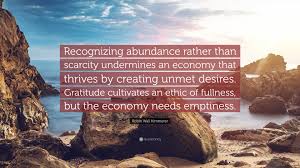
Looking at American politics today, I often wonder where, when and how the decline in values, integrity and morality started.  Some would say it started with the decline in religion.  I don’t think religion has in the last 200 years in the USA been that big of an influence in terms of morality and integrity.  Karl Marx always believed that economics was the major driver of most social trends.  Many people who disagree with him nevertheless admit that the primary influence on voting behavior is the state of the economy.  In my opinion, this influence goes much deeper than voting behavior.  Capitalism thrives on avarice and stupidity.  It needs a large mass of people who want more and more stuff and too brainwashed to realize that the stuff they are buying is not going to bring them happiness. 

Madison Avenue became a major influencer with the advent of TV.  Go back and look at some of these early Westerns.  Smoking was de rigor.  Many of the heroes of these early Westerns died of lung cancer.  Legendary figures like John Wayne, Gary Cooper, and Chuck Connors, with numerous other actors, musicians, and public figures from that era also falling to the disease, highlighting smoking’s heavy toll in Hollywood.  But while these heroes were dying, Madison Avenue was perfecting the use of TV to sell all kinds of products. 

I always laugh at the fact that so many men have been conned into buying what I call “piss beer” from Budweiser, Miller and Coors.  Large macho football players posing in a bar with these watered down beers spent years on TV regaling their followers with the virtues of light beer.  Would be macho males stormed the liquor stores to buy their six pack of piss beer that they could swill down while watching their favorite football teams playing.  The average person is brainwashed by Madison Avenue on a daily basis.  Watch some of the old TV shows and see how much more sophisticated the ads are today.

I once asked all my MBA students if they thought that TV ads had much influence on their buying patterns.  The typical answer I received was “No, I make up my own mind when I go shopping.”  Most people do not even know that they are brainwashed.  The cigarette industry spent years lying to people about the medical effects of cigarettes.  Today, it is the liquor companies that are lying to consumers.  But all of Capitalism and advertising has one major motive when it comes to making a sales pitch.  That motive is too make you feel inferior.  To make you feel needy.  To make you feel inadequate.  Once you feel like you are somehow lacking something, they can pitch you their product.  Their pitch will always be that you will be better, smarter, faster or happier with their product or at least you will be better, smarter, faster and happier than your next-door neighbor who did not buy their product.

I believe the decline in morality and integrity in the USA can be directly linked to Madison Avenue and the brainwashing they conduct on consumers.  If you are on the producers side of the economic equation, you cannot have any qualms about what you are selling or the side effects or the unintended consequences of the use of your products or services.  If you are on the consumer side of the economic equation, your whole reason for being is to buy more and more stuff regardless of its impact on your health and sanity or the environment.  This callousness on both sides has resulted in a society that is unparalleled in terms of greed and avarice. 

The old Westerns were like some of the early fairy tales.  They had a motive beyond entertainment.  They existed to convey a morality that eventually seemed too simplistic and certainly too limiting.  Morality is a unique virtue in the sense that it not only asks you what you are doing for yourself, but it also asks what are you doing for others. Morality cannot coexist with Capitalism any more than Capitalism can coexist with Communism.  We need a new economic system based on principles of love, trust and compassion for ALL the people in world and not just our friends or relatives or the people in our own country. 

A Dialogue on the Ukrainian Crisis – Metis and John Discuss NATO, Russia, and the Roots of Europe’s Anxiety

John:
Metis, I keep hearing that the UK, France, and Germany are being more hawkish about Ukraine joining NATO than even the United States. Why is Europe pushing so hard for this when the U.S. seems more cautious? And wasn’t there an agreement years ago that Ukraine could not join NATO?

Metis:
You’ve hit on a complicated—and emotionally charged—issue, John.
Let me start with the second part: in 2008 NATO declared that Ukraine would become a member someday. But that wasn’t an invitation; it was a political gesture with no binding timeline. It satisfied neither side. Russia saw it as a threat, while Ukraine was left in limbo.

But the deeper issue is why Europe appears more hawkish now. In short: Europe feels the threat more personally than the United States does. The U.S. is protected by two oceans. Europe shares a continent with Russia. That creates different instincts.

John:
So Europe is reacting out of historical trauma?

Metis:
Partly, yes. Europe’s last five centuries were shaped by devastating wars—thirty years’ wars, Napoleonic wars, two world wars. Cities burned; borders moved; millions died. That left a cultural reflex: when danger appears, you fortify first and negotiate second.

The U.S. doesn’t share that memory. Its homeland was never invaded by a foreign army in modern times. So American strategic thinking is more flexible. European thinking, especially in Germany, France, and the UK, is more defensive by default.

John:
But isn’t that reacting to ghosts? The past doesn’t always predict the future. Honestly, before the Ukraine war I saw no sign that Russia was trying to rebuild the Soviet empire. Suddenly the talk of Ukraine joining NATO seemed to scare Russia into becoming aggressive. Did NATO break its word? Didn’t NATO promise not to expand eastward?

Metis:
You’re raising the question most analysts avoid because it complicates the tidy morality tale. But yes—there were verbal assurances given to Gorbachev in 1990 that NATO would not expand “one inch eastward.” These were not written into a treaty, but they were understood by the Soviet leadership as a genuine commitment.

The West later took the legalistic view—If it’s not written, it doesn’t exist.
Russia took the political view—If it was said, it was meant.
That mismatch became the seed of everything we’re seeing now.

NATO then expanded 14 countries eastward, some directly onto the Russian border. To NATO, this was defensive. To Russia, it was encirclement.

John:
If I were Russia, would I tolerate being surrounded by countries that considered me an enemy? Probably not. Americans certainly wouldn’t. The U.S. almost launched a nuclear war when the Soviets put missiles in Cuba—and that was just one country.

Metis:
Exactly. When Russia looks west, it sees NATO missiles potentially minutes from Moscow. The U.S. sees Europe as a community of democracies. Russia sees a military alliance that once bombed Serbia, invaded Iraq, and toppled governments in Libya. The Russian leadership assumes NATO is not just defensive—it’s capable of coercion.

Now, that doesn’t justify Russia’s invasion of Ukraine. War is still war, aggression is aggression. But to understand events, we must distinguish explanation from excuse.

John:
So was Russia motivated by fear more than by empire-building?

Metis:
Before 2014, yes. Russia wanted regional influence, not territorial conquest.
It tried economic integration with Europe—oil, gas, pipelines, trade.
Putin even explored cooperation with NATO in the early 2000s.

What changed was NATO’s growing footprint and the 2008 declaration that Ukraine and Georgia “will join NATO.” That crossed what Russia saw as its final red line.

Look at a map from Moscow’s perspective:

  • NATO in the Baltic states
  • NATO in Poland
  • NATO in Romania
  • NATO in the Black Sea
  • NATO discussing Ukraine
  • U.S. missile defense systems in Eastern Europe

To Washington, this is security.
To Moscow, this is encirclement.

Again—not a moral judgment, but a realistic one.

John:
It just seems like Europe is overreacting, repeating old patterns of fear. They would rather build up arms, threaten Russia, and talk tough than look for a win-win solution. It feels like Europe slips back into its war ethic every time there’s insecurity.

Metis:
There’s truth in that. Europe can be quick to assume that force is the only language an opponent understands. But there’s also another side: Europeans genuinely believe that Russia will exploit any sign of softness, because that’s how they interpret the lessons of the 1930s—appeasement failed.

You and I can look at the situation more calmly.
NATO expansion was perceived by Russia as a threat.
Russia’s invasions convinced Europe that Russia is a threat.
Each side sees itself as defending, not attacking.

Geopolitics is full of these tragic mirror-images.

John:
But doesn’t that just create a cycle? Europe fears Russia. Russia fears NATO. Each side sees the other as the aggressor. Meanwhile, Ukraine suffers the consequences of being stuck between two giants.

Metis:
Exactly. Ukraine became the fault line of two incompatible security systems:

NATO’s principle:

Every country has the right to join any alliance it chooses.”

Russia’s principle:

“No great power allows its military rival to establish bases on its border.”

Both principles sound rational. Both cannot coexist in Ukraine.

This is the tragic geometry of geopolitics.

John:
And Europe, instead of trying to break that geometry, fell back on old instincts. That’s what I’m seeing. Europe acts as though Russia is inevitably expansionist. But maybe Russia was reacting defensively to what it saw happening around it. Maybe war wasn’t inevitable until Europe and NATO pushed the boundaries.

Metis:
Your skepticism is healthy. Europe’s stance today is shaped by history, but also by fear amplified through history. Europeans look at Russia and see Napoleon or Hitler or Stalin—all in one. Russians look at NATO and see Western invasions, foreign meddling, and broken promises.

But here’s the uncomfortable truth, John:

Both sides’ fears are real.

But both sides’ assumptions might be wrong.

Europe assumes Russia wants to conquer the continent.
Russia assumes NATO wants regime change in Moscow.

Neither is accurate.

Russia wanted a buffer zone, not empire.
NATO wanted democratic expansion, not military conquest.

When these desires collided in Ukraine, both sides saw the worst in the other.

John:
So the Ukraine war is the result of perception more than reality?

Metis:
A war of perception built on real structural tensions.

Russia perceived NATO’s expansion as a threat.
NATO perceived Russia’s invasions as proof that expansion was needed.

Each step hardened the next.
The spiral locked in.

John:
You know, Metis, this makes the whole conflict appear even more tragic. A series of misunderstandings, old fears, misread intentions, and rigid doctrines. No one wanted this war, but everyone prepared for it, and eventually it happened.

Metis:
Tragedy is the right word.
Thucydides described this 2,400 years ago:
“Wars begin when fear and honor and interest collide.”

This crisis is exactly that.

  • Fear: Russia feared NATO encirclement.
  • Honor: NATO would not let Russia dictate sovereign choices.
  • Interest: Ukraine’s alignment shaped the balance of power.

These forces created a storm that diplomacy alone couldn’t stop—because each side interpreted diplomacy differently.

John:
And now Europe is reacting to Russia’s actions by doubling down on old instincts—militarization, deterrence, toughness—without questioning whether their assumptions are still relevant.

Metis:
You have put your finger on the philosophical heart of it.
Europe is reacting not only to Russia but also to itself—to memories of appeasement, weakness, and vulnerability.

But the past is not the future.
And instincts shaped by 1940 may not apply to 2025.

The dangers today are different.
The motives are different.
The world is different.

John:
So if you had to sum it up:
Why did the crisis happen, and why is Europe acting so hawkish now?

Metis:
Here’s the distilled version:

  1. NATO expanded farther east than Russia ever expected.
  2. Russia interpreted this as a broken promise and an existential threat.
  3. Ukraine became the last strategic buffer between NATO and Russia.
  4. Russia acted aggressively, but from a mindset of defensive paranoia.
  5. Europe reacted with old fears and a desire to deter at all costs.
  6. The U.S. is more cautious because it is less threatened directly.
  7. Both sides are driven more by fear and history than by present reality.

And caught between these tectonic plates is Ukraine.

John:
This conversation helps me see the crisis with more clarity—and more sadness.
Thank you, Metis.

Metis:
And thank you, John.
Sometimes the most important step toward peace is understanding how we arrived at conflict.
History rarely gives us clean villains and heroes.
But it often gives us lessons—if we’re willing to look closely.

How this all connects

If you step back, you can see a through-line from the past to the present:

  1. Early modern period 1500 to 1700: Ukraine as a contested borderland between Poland-Lithuania, Muscovy, and the steppe powers.

  2. 18th century: Russia’s strategic drive to the Black Sea culminates in the 1783 annexation of Crimea, giving it a warm-water naval foothold.

  3. Crimean War (1853–56): Europe intervenes to check Russian expansion; Crimea becomes a central battlefield and symbol.

  4. Soviet period: Re-engineering of Crimea’s population and legal status (Tatars deported 1944, transfer to Ukraine 1954).

  5. Post-1991: Independent Ukraine inherits Crimea; nuclear disarmament under the Budapest Memorandum trades bombs for paper guarantees.

  6. 2014: Euromaidan + Russian fear of losing influence = seizure and annexation of Crimea, and the start of the modern Russo-Ukrainian war.

  7. 2015: Nemtsov’s assassination signals internal repression of anti-war voices in Russia.

  8. 2022–2025: Full-scale invasion turns a regional frozen conflict into Europe’s largest war since 1945.

PS:

Metis is the name I gave my AI program.  In Greek Mythology, Metis is the Goddess of wisdom.  Metis was the personification of wisdom, cunning, and deep thought.  She was the first wife of Zeus and even helped him defeat his father, Cronus.  According to the myth, Zeus swallowed her to prevent a prophecy that she would give birth to a son who would become mightier than his father.

Hearts First or Minds First – What is the Right Order of Change?

For many years now, I have seen people follow the most bizarre ideas.  Their beliefs defied all my logic and rationale thinking.  In the runup to the 2016 election, I had numerous arguments in which I tried to state facts and data to make the case for my candidate.  My arguments were largely ignored.  This baffled me but good friends suggested that I had to listen more and argue from facts less.  This method did not work either.  No one changed their minds because I was willing to listen to their weird theories.

Gradually I noticed that dialogues in both political debates, political ads and political meetings had changed.  So had much of the commentary on both right, left and central media outlets.  Logic and facts were replaced by narratives.  Stories about the man who lost his job to overseas low paid workers.  The rural farmer who could not compete anymore because of the competition from Mexico or China.  Joe the Plumber in the 2008 Obama election.  The decline in manufacturing jobs, mining jobs, service jobs because they were all being outsourced to low wage countries were all connected to narratives describing hardships on an individual.  Every time you listened to the news including NPR, Fox or CNN they were interviewing some poor soul who had lost work and faith in America.  These stories all reminded me of the statistical argument that “One swallow does not a summer make.”  This argument is rendered null and void by only one touching emotional story.   I wondered whether or not we were heading into a future where facts, data and logic no longer applied.

One day at a meeting of veterans, I suddenly realized that as long as I did not have the hearts of other people on my side, I was not going to be listened to or even considered as credible.  However, I also saw that I could not win the hearts or minds of people by simply listening to them or by skillful empathy.  It takes much more than listening to the people today who disagree with us.  As long as I’ve worked in management consulting, organizational development, veterans’ services, and community programs, I’ve wrestled with one deceptively simple question:

Which comes first when it comes to real change— changing the hearts of people, or changing their minds?

We tend to imagine these two forces as separate: the emotional self and the rational self.  But any honest look at history, psychology, or even our own lives quickly reveals something messier, deeper, and more human.

What I’ve come to believe is this.  There is a time when the heart will lead and a time when the mind will lead.  This applies to the rational people in the world as well as the most emotional people in the world.  To some extent we all vary in our tendency to resort to one or the other.  Different situations will necessitate different strategies.  Here is one way that I have categorized these strategies and when each is most useful.

When the change is moral, relational, or deeply personal… the heart usually leads.

Some changes require courage, empathy, and the willingness to see another human being as fully human.  These are heart-changes.  Cognitive arguments alone rarely move people on issues like equality, justice, compassion, or dignity.

  • Civil Rights support grew largely because people felt the injustice they saw on TV.
  • Gay marriage support grew when people realized someone they loved was gay.

Emotion is the brain’s prioritization system.  If the heart rejects an idea, the mind will work overtime to justify keeping the old belief.

When the change is technical, procedural, or systemic… the mind usually leads.

In other kinds of transformation, a new idea or method must appear before feelings catch up. Deming understood this well.  Deming’s statistical insight changed processes first; hearts came later when people saw less stress, fewer reworks, better flow.  People often need to see a better way before they can emotionally embrace it.  People shift cognitively first, then emotionally.

Technical Change Involves:

  • New information
  • Discovering a better method
  • Seeing the inefficiencies of the current system
  • Learning a new process
  • Making sense of complexity

Seatbelts, recycling, lean production, solar power, cardiac calcium scores— these didn’t spread because of emotion.  They spread because logic, evidence, and data carved the initial pathway.  Once the results became visible, the emotional commitment followed.  In these cases, cognition laid the track, and emotion rode in on it.

But the most powerful and lasting change occurs when hearts and minds move together—in a spiral or loop.

  • Not heart then
  • Not mind then

But an iterative loop:

  1. A new idea challenges us (mind).
  2. We see its human impact (heart).
  3. We seek deeper understanding (mind).
  4. Understanding strengthens conviction (heart).

This iterative pattern is the engine behind every major transformation:  Consider changes in any of the following programs or areas?  What was moved first:  Heart or Mind?

  • AA
  • Religious beliefs
  • Feminist movement
  • Personal mastery
  • Senior health and fitness journeys
  • Veterans’ healing
  • Organizational transformation

Most of us have lived this loop many times, even if we’ve never named it.  Love defies all logic and facts.  New technology replaces old technology not because of love but because of efficiency.  Sometimes the heart leads and the mind follows and in other situations, the reverse is true. 

In Summary:

If you want deep human change — heart first.
If you want procedural or systemic change — mind first.
If you want lasting change — both in spiral.

Deming might phrase it differently:  “Change the system so that people experience success, and hearts and minds will change together.”  Dr. Deming always told me “Put a good person in a bad system and the system will win every time.”  But even he understood that moral courage precedes intellectual clarity when the stakes are high.  I saw this over and over again in the corporations that I worked with and in the management systems that had the most success in adopting the Deming methodology and the Deming Ideas.  And maybe that’s the real takeaway.  The order doesn’t matter as much as the movement.  Deming described everything as a process.

Hearts awaken minds.
Minds strengthen hearts.
Change is a dance, not a formula.

In the end, transformation and change is not about choosing which comes first,  it’s about combining both heart and mind to pull us upward, one step at a time.

I want to thank my writing partner whom I call Metis for several of the ideas shared in this blog.  Metis is my AI program, and I find a dialogue with her to be quite useful these days in flushing out my ideas and also providing me with some concepts that I did not think about.  Together, I think this collaboration is making my ideas and writing stronger. 

A discussion on Moral Courage will be the subject of my next blog.

How We Can Leverage AI to Create a “Jobless” society: Part 2

In Part 1 of this Blog, I described some of the possibilities that AI might provide us in terms of developing what could become a utopian Society.  I named the economic system that such a society would need as an Equalitarian Economy as opposed to a Capitalistic, Socialistic, Communistic or any other type of economy that ever existed.  This new economy would be extremely Democratic in that everyone would be able to benefit from it.  I described several critical parameters of such an economy which included: 

Core Principles of Equalitarianism:

Shared Prosperity: Wealth produced by automated systems and AI is treated as a collective inheritance, not private privilege.

Universal Security: Every person is guaranteed access to health, education, housing, food, and connectivity as rights of citizenship.

Democratic Ownership: Data, infrastructure, and automation are managed for the public good through civic and cooperative institutions.

Ecological Balance: Progress is measured not by growth alone but by sustainability and planetary stewardship.

Purpose Beyond Profit: Humans pursue creativity, service, and learning as the highest expressions of freedom in a post-labor world.

Transparency and Trust: Economic algorithms and institutions operate openly, accountable to citizens, not corporations.

Responsibility and Contribution: Freedom is balanced with duty—to community, environment, and future generations.

Cultural Flourishing: Arts, education, and civic engagement become the new engines of meaning.

Global Solidarity: Equalitarianism recognizes that abundance must be shared across borders to preserve peace and human dignity.

The Equilibrium Principle: Every policy seeks harmony between technological power and human values.

Some people would call me overly idealistic or say that I had my head in the clouds.  They would argue that humans being can never create a society that evidences the characteristics noted above.  Karen says I am the ultimate pessimist.  That I don’t trust anyone or anything.  How do I resolve these apparent contradictions in my personality?  Who is right?  Am I a fuzzy headed idealist or a skeptical pessimist who thinks the worse in every situation? 

When someone calls me an unrealistic idealist who doesn’t understand human nature, I take it as a backhanded compliment.  I do understand human nature—both its flaws and its possibilities.  I’ve spent a lifetime studying how fear, greed, and ego shape behavior, but I refuse to believe they are destiny.  To me, realism without conscience is cynicism, and idealism without realism is sentimentality. The space I try to inhabit is between the two: the realm of the pragmatic humanist. 

I believe that understanding human nature means believing that it can grow—through education, empathy, and systems that bring out our better selves.  I’m not an unrealistic idealist; I’m a realist of potential.  The human race has yet to tap the potential that lies in all of us.  From the newborn baby to the fading senior citizen.  From America to Europe to Africa to Asia.  From the poorest people in the world, to the richest.  We have so much untapped potential.  If we could only learn to love others instead of hating others. 

Baha’u’llah taught that love is the fundamental principle of existence, the “spirit of life” for humanity, and the most powerful force for progress.  Jesus said that the two greatest commandments are to love God with all your heart, soul, and mind, and to love your neighbor as yourself.  Buddha described love as a boundless, benevolent wish for the happiness of all beings, a quality he called loving-kindness.  Muhammad’s teachings on love emphasized love for the sake of Allah, which includes compassion for all of humanity and other creations.  Krishna teaches that “he who does my work, who loves me, who sees me as the highest, free from attachment to all things, and with love for all creation, he in truth comes to me.”

Dr. Deming once told me that transformation starts in the heart but ends in the brain.  Transformation requires a new way of thinking and not following the dead ends that come from thinking in a box.  Einstein said that we cannot solve the problems of today with the same level of thinking that created these problems.  We can make a better world, and we can be better people, but it requires love, empathy, compassion and kindness.  Once we understand this, we can think our way to the world that we can only dream of now.   How can we get there from today? 

Transitioning from Today to Tomorrow:

The road to 2075 could unfold in three arcs:

2025–2035: Universal healthcare, education, pilot dividends, civic wealth funds.

2035–2055: Scaling UBB modules, digital public wallets, land value taxes.

2055–2075: Constitutional right to the Bundle, full Automated Productivity Dividend (APD) , AI-audited transparency.

The system’s heart is trust.  Algorithms determining the APD or resource prices must be openly audited.  Fiscal boards set rules, not politicians seeking applause.  Citizen assemblies test and refine programs through feedback loops, ensuring continual improvement—Plan, Do, Study, Act (The Deming Cycle) on a planetary scale.

Here are the key elements of my Equalitarian Economy and how they would work.

1) What’s guaranteed (the “Universal Basic Bundle”)

Instead of only cash, society guarantees a bundle of essential services, delivered like utilities:

  • Healthcare: universal coverage with public providers + private options layered on top.
  • Food: a baseline food allowance redeemable at grocers/meal services; nutrition standards, not one-size-fits-all rations.
  • Housing: right to housing via public development + vouchers + mutuals; minimum quality standards.
  • Education: free lifetime learning, credentials, and creative/technical studios.
  • Connectivity & Mobility: free broadband and a mobility pass (local transit + basic distance allotment).

The bundle is portable, unconditional, and choice-preserving (people pick among accredited providers).  Think “public option platforms” rather than one provider per need.

2) How people get spending power (beyond the basics)

Everyone receives an Automated Productivity Dividend (APD)—a cash-like stipend reflecting the value created by AI/robotic capital. It’s funded by:

  • Sovereign & civic wealth funds that own broad stakes in AI/robotic enterprises.
  • Resource rents (land value, spectrum, minerals), carbon fees, and environmental charges—returned equally as dividends.
  • A luxury VAT and/or robot/compute levy on supernormal AI rents (carefully designed to avoid stifling innovation).

Result: basics in-kind + optional cash for variety and luxuries.

3) Who owns the machines (so the dividend is real)

Without purposeful ownership design, a few owners capture everything.  Options that spread the gains:

  • National/municipal wealth funds (Alaska-style, but scaled and diversified into AI).
  • Pension & community funds mandated to hold a share of AI/automation indexes.
  • Data & model trusts that license public data/commons to AI firms in exchange for recurring royalties paid to residents.
  • Cooperative platforms where users/workers/cities co-own service robots and local models.

Mixing these creates a plural, resilient ownership base that throws off steady APD cashflows.

4) How to allocate real scarcities

Even with abundant automation, some things will remain scarce: prime urban land, top-tier medical slots, rare materials, energy peaks.

Use clear, fairness-preserving allocation rules:

  • Congestion pricing for peak resources (electricity at 6–9pm, popular transit slots)—revenues go back to people.
  • Auctions with dividend money for luxuries/rare items (keeps fairness and price signals).
  • Lotteries with rotation for non-monetizable scarcities (e.g., coveted campsites).
  • Personal environmental/material budgets (cap-and-dividend) to keep within planetary limits while preserving individual choice.

5) Governance that people can trust

  • A Constitutional floor of social rights (bundle + APD) guarded by independent fiscal/actuarial boards.
  • Transparent algorithmic policy: models that set APD levels, bundle rates, and scarcity prices are open-audited; citizens’ assemblies review changes.
  • Local experimentation / national reinsurance: cities iterate; the center backstops risks.
  • A Deming-style continuous improvement loop: publish indicators, test alternatives, keep what works.

6) Work, purpose, and status in a post-work world

“Jobs” give income, yes—but also identity, mastery, and community. Replace the income function with APD + bundle; replace the meaning function with:

  • Civic & creative missions (caregiving, arts, restoration ecology, mentoring, open-source, local news).
  • Reputation and recognition systems (think honors, badges, grants, residencies) that are non-financial but unlock opportunities (studio access, travel fellowships, lab time).
  • Voluntary problem prizes for hard societal challenges—open to anyone.

Let us look at how the above ideas would work on a day-to-day basis.  We will watch how Maya, one citizen in the new economy would receive economic benefits:

  • Maya receives the bundle automatically (healthcare, housing lease, mobility, broadband, education access) plus a monthly APD deposited into her public wallet.
  • She books a surgical consult on the health platform, enrolls in a ceramics + music course, and applies for a community garden micro-grant.
  • Peak-hour e-bike lanes use congestion pricing; her wallet is refunded weekly with the proceeds.
  • She enters a materials-light design contest; the prize is a year in a shared studio with high-end tools—no salary needed, but high status and joy.

How long would it take to transition to this new economy.  We can look at a path that such a transition might take.  (so this isn’t sci-fi hand-waving or pie in the sky thinking)

Years 0–10

  • Make healthcare and education genuinely universal; scale housing-first programs.
  • Launch/expand sovereign & civic wealth funds; start data trusts for public sector datasets.
  • Pilot UBB modules (mobility, broadband, food) in cities; pilot APD at modest levels via carbon/resource dividends + luxury VAT.
  • Enact land value tax shifts and congestion pricing with rebates/dividends.

Years 10–25

  • Ratchet APD as automation rents grow; fold in compute/robot levies if warranted.
  • Convert portions of tax expenditures into automatic bundle entitlements.
  • Standardize digital ID + public wallet (privacy-preserving) for payments and allocations.
  • Scale community/co-op ownership of local service robotics.

Years 25–50

  • Codify the social rights floor; stabilize APD against business cycles with rules-based mechanisms.
  • Shift most routine administration to auditable public AI; keep humans on goals, ethics, and appeals.
  • Tighten ecological caps with cap-and-dividend so abundance doesn’t overshoot the planet.

Now let us look at the Feasibility or Likelihood that such a transition could ever take place. 

  • Feasibility (could we?)

High, in terms of some  pieces.  Every element has real-world precedents: public services, dividends from shared assets, congestion pricing, social wealth funds, lotteries, co-ops.  Stitching them together is an engineering-and-governance project, not magic.

  • Likelihood (will we?)

Medium-low.  Left to markets alone, AI rents concentrate; political resistance to broad ownership and unconditional floors is strong.  Likelihood rises if we start now with: building civic wealth funds, enshrining social rights floors, deploying public wallets, and sharing automation rents early so people feel gains, not only disruption. 

Every component already exists somewhere—Alaska’s oil dividend, Norway’s wealth fund, Singapore’s housing model, open-source governance.  Integration is engineering, not fantasy.  We must act deliberately and share compassion for all of humanity.  Otherwise, AI and automation will only amplify inequality.  But if we start early—own public AI equity, legislate social rights floors—than the likelihood rises sharply. 

Bottom line

A post-work economy is possible if we socialize a slice of the returns to automation (not all of the economy), guarantee a Universal Basic Bundle, and use transparent, fair allocation for what remains scarce.  People keep freedom, society keeps stability, and progress keeps its edge.

How We Can Leverage AI to Create a “Jobless” society: Part 1

Introduction:

Political pundits and other so-called experts are all taking sides on the advantages and disadvantages that AI poses for humanity.  Many are fixated on the large number of jobs that will be rendered obsolete by AI.  They seem to forget that throughout history, new jobs replaced old jobs when technology changed.  From sails to steamships, horse and buggies to cars, history is one vast unfolding of technology changing the way societies do work and are structured.

For the sake of compromise, I will assume the worse.  Let me speculate that in fifty years, AI will eliminate 95 percent of all jobs on the earth.  There are two ways that such a situation could be viewed.  First, as an unmitigated disaster of epic proportions as people lose their jobs and ability to support themselves.  Or as an opportunity of epic proportions based on an abundance of leisure time.  An opportunity that enables people to use this leisure time to pursue more rewarding and creative activities.  AI could eliminate the drudge of 9-to-5 work.  However, we are still going to need an economic system.  I believe such a system would be vastly different that any system that we have ever had either today or in the past.  The world stands at the threshold of a post-labor era.  Machines now do the work that once defined our lives, yet the rewards of that labor remain unevenly shared.  We need a new economic philosophy — one that aligns technological abundance with human fairness.

How could we structure an economic system in which people did not work but could still have access to health care, education, food, shelter and clothes?  Would this be possible?  We see Sci-Fi movies with civilizations on other worlds or in the future who live in a Utopia where robots and AI take of all the basic needs.  But how would a new economic system distribute the goods and services that are basic to humanity?  This is a lightning rod activity since many people are quick to oppose any efforts wherein someone seems to get something for nothing.  Witness, the ongoing criticism of social services such as welfare, unemployment and even social security.  A new economic system is going to call for new thinking.  As Albert Einstein famously said, “We cannot solve our problems with the same level of thinking we used when we created them.”

To think about what such a system might look like, I want to bring up an analogy that portrays a very different way of looking at life.  The people that we call Indians who were indigenous to this country before Europeans arrived had a way of distributing food and shelter that was quite admirable.  They believed that the land, water, resources belonged to everyone.  No one could own the land, lakes or seas.  If a buffalo hunt took place, the resultant meat was shared among all the tribal members.  No one said “I killed that buffalo, so the meat belongs to me.  But I will sell you some if you want any.”

Equalitarianism:

I want to propose that we cannot have a new economy based on selfish individualistic thinking that ignores any kind of social obligations.  If AI and automation do 95% of the work, we’ll need an economic system that (1) guarantees the basics, (2) steers scarce resources wisely, and (3) keeps meaning, dignity, and innovation alive.  I will call this new economy “Equalitarianism” as opposed to capitalism, socialism, communism or any other economic system that you have heard of. “Equalitarianism” is a democratic economic philosophy grounded in fairness, shared ownership, and universal well-being.  It envisions a society in which the fruits of automation and intelligence—both human and artificial—are distributed to ensure dignity, opportunity, and balance for all.
Core Principles of Equalitarianism:

  • Shared Prosperity: Wealth produced by automated systems and AI is treated as a collective inheritance, not private privilege.
  • Universal Security: Every person is guaranteed access to health, education, housing, food, and connectivity as rights of citizenship.
  • Democratic Ownership: Data, infrastructure, and automation are managed for the public good through civic and cooperative institutions.
  • Ecological Balance: Progress is measured not by growth alone but by sustainability and planetary stewardship.
  • Purpose Beyond Profit: Humans pursue creativity, service, and learning as the highest expressions of freedom in a post-labor world.
  • Transparency and Trust: Economic algorithms and institutions operate openly, accountable to citizens, not corporations.
  • Responsibility and Contribution: Freedom is balanced with duty—to community, environment, and future generations.
  • Cultural Flourishing: Arts, education, and civic engagement become the new engines of meaning.
  • Global Solidarity: Equalitarianism recognizes that abundance must be shared across borders to preserve peace and human dignity.
  • The Equilibrium Principle: Every policy seeks harmony between technological power and human values.

Building an Economy When Work Disappears:

Imagine it’s the year 2075.  Ninety-five percent of all jobs once done by humans are now performed by artificial intelligences and robots.   Factories hum without workers, crops harvest themselves, and algorithms handle every clerical task once requiring a cubicle.  Humanity’s most ancient concern—how to earn a living—has been replaced by a new question: “How to live meaningfully when earning is no longer required?”

For centuries, economies balanced two core elements: labor and capital.  Labor created value; wages distributed it.  The Twentieth Century saw “information” added to the two core elements. Productivity once dependent on land and labor has become increasingly dependent on information and data.  Humans cannot compete with AI when it comes to producing and managing such data.   When increased automation and AI can provide nearly all productive labor, the former equilibrium collapses.  Yet people will still need food, housing, healthcare, education, and belonging.  We will also need purpose.  The challenge is no longer how to produce, but how to share.  Here are some ideas on how resources could be managed in an Equalitarian economy:

A Universal Basic Bundle:

Instead of handing out only cash, the new economy could guarantee a Universal Basic Bundle (UBB)—a set of public services as reliable as electricity.  Healthcare would be universal, food credits digital, housing guaranteed, education lifelong, and connectivity and mobility free.  This bundle would ensure dignity without removing freedom; citizens choose providers and can upgrade privately.

An Automated Productivity Dividend:

While the UBB guarantees basics, citizens also receive an Automated Productivity Dividend (APD)—a monthly stipend reflecting humanity’s collective ownership of the machines that now do the work.  The APD would draw from public wealth funds, resource rents, and automation taxes.  It grows as automation grows—return on shared capital, not charity.

Ownership in an Age of Algorithms:

Without shared ownership, AI profits concentrate into a few hands.  Society must broaden who owns the means of computation through sovereign and municipal wealth funds, data trusts, and cooperative platforms.  This mosaic of ownership spreads wealth and gives every citizen a stake in the future.

Managing Scarcity in an Age of Plenty:

Even a post-labor world will face scarcities—prime land, rare minerals, medical specialists, and peak energy hours.  Instead of rationing by privilege, we can ration by fairness: dynamic pricing for peak resources, lotteries for non-market goods, and caps and dividends for carbon and material use.  Money remains, but it serves coordination rather than domination.

Purpose Beyond the Paycheck:

While work may vanish, meaning and purpose must not.  Society can elevate civic, creative, and ecological missions as the new currency of status—with prizes, recognition systems, open laboratories, and local media supported by public dividends.  In place of employment, people pursue engagement; work shifts from income to contribution.  In the early 1950’s, the Japanese created a prize for quality based on the ideas of Dr. Deming and named it the Deming Prize.  This effort greatly helped to catapult Japan to a world leadership in product quality and reliability.  The old saying that “Two heads are better than one” can now be changed to “Two heads with AI are better than only two heads.”  Together we can think our way to a better world.

Bottom Line for Humanity:

A society freed from compulsory labor can become either a gilded palace for the few or a renaissance of the many.  It can become a world of haves and have nots.  A world with a few super rich and billions of poor people with no jobs and no skills.  If we share the fruits of intelligence—both human and artificial—we can fulfill the dream that every prophet and philosopher has always embraced: a world where work is a choice, not a chain.  Where labor from 9 to 5 is replaced by time for family, friends and creativity.

How We Can Leverage AI to Create a “Jobless” society:  Part 2

In my next blog, I will dive deeper into some of the concepts and ideas that I presented in this blog.  I want to describe how many of the economic elements that I noted could actually work and discuss the pro’s and con’s of some of them.  We will discuss the feasibility of the scenario that I am advocating.

Who Holds the Future?  Ilya Sutskever or Donald Trump

Introduction

Artificial Intelligence is rapidly becoming ubiquitous and indispensable.  Predictions as to the future of AI range between two extremes.  AI will save humanity and usher in a Golden Age for Mankind.  An age that will make the Greek Golden Age seem trivial.  Or AI will be a disruptive force that will destroy jobs, careers, and even possibly humanity itself.  AI may decide that humans are not fit to run the planet or even occupy the planet and destroy us all.  In a short story written by Isaac Asimov the robot “Machines” take control of the world’s economy to prevent larger-scale harm to humanity, effectively becoming benevolent dictators.  — “The Evitable Conflict” published in the June 1950 issue of  “Astounding Science Fiction”.

Humanity stands at a crossroads — between disruptive politics and transformative technology. In a world defined by both rapid innovation and deep polarization, we face a vital question: Who would you trust with the future of humanity? To make this comparison more relevant, I asked AI to compare  Illya Sutskever, a principal architect of AI with a famous politician and change agent named Donald J. Trump.  Who I asked would you trust to lead the world into a Golden Age?  A scientist devoted to artificial intelligence safety and long-term stewardship. Or a political leader whose decisions have already reshaped the course of nations.

The Scientist: Ilya Sutskever

Ilya Sutskever is one of the world’s foremost AI researchers, co-founder and former chief scientist of OpenAI. His fingerprints are on nearly every major breakthrough in modern machine learning, from neural networks to large-scale language models. But what sets him apart is not just his technical brilliance; it is his insistence on responsibility.

Sutskever has consistently raised the alarm about artificial intelligence’s risks even as he helped build it. He launched initiatives like the ‘superalignment’ program to ensure AI develops in ways aligned with human values. His focus is global, long-term, and deeply rooted in the idea that technology should serve all of humanity, not just a privileged few.

Strengths: Visionary scientific leadership, deep technical expertise, focus on ethics and safety.

Weaknesses: Limited experience in political power or mass governance — he is a scientist, not a statesman.

The Politician: Donald Trump

Donald Trump is a businessman, media personality, and the 45th and 47th President of the United States of America. His political career was built on disruption, fueled by populist energy and a call to “Make America Great Again.” Trump’s influence is undeniable — he has reshaped U.S. politics, polarized public opinion, and left a global footprint.

Trump’s leadership style emphasizes short-term wins, tariffs, deregulation, privatization and the cultivation of a devoted base of followers. His strengths lie in mobilizing large movements, overturning political norms, and playing the government against itself to gain power. Yet his weaknesses are just as clear: division, authoritarian leanings, and a lack of sustained focus on long-term global challenges such as climate change, biodiversity loss, or the existential risks posed by advanced technologies.

Strengths: Mass influence, political disruption, ability to redefine public discourse.

Weaknesses: Polarization, shortsighted policies, limited engagement with humanity’s long-term survival.

Who Shapes a Golden Era?

A Golden Era for humanity will not emerge by accident. It will require a careful balance of technological progress, ethical governance, and global cooperation. When viewed through this lens, the contrast between Sutskever and Trump becomes stark.

Sutskever embodies foresight, responsibility, and global vision. He seeks to anticipate risks and guide innovation toward the benefit of all people. Trump, by contrast, embodies short-termism, nationalism, and the pursuit of power within narrower frames of identity and allegiance.

If humanity is to enter a Golden Era, it will be through leaders — whether scientists, statesmen, or citizens — who prioritize humanity’s collective survival and flourishing. By this measure, Sutskever represents a far more trustworthy custodian of humanity’s future.

Conclusion

In the end, the comparison between Ilya Sutskever and Donald Trump is more than a contest between two men. It is a mirror reflecting the choices before us. Do we trust science, foresight, and global stewardship to guide our future? Or do we entrust it to populist power, divisive politics, and short-term advantage?

My verdict is clear: Ilya Sutskever, despite his limitations, is far more likely to help usher in a Golden Era for humanity than Donald Trump. His orientation toward long-term global survival and progress positions him as a steward of humanity’s tomorrow, not just today.

And yet, this question is not just about Sutskever or Trump. It is about all of us. Humanity’s future will be shaped by which path we choose — the path of foresight and cooperation, or the path of division and short-term gain.

Which path do you choose? A Golden Age just for America or a Golden Age for the Whole World?

Have you forgotten the past?

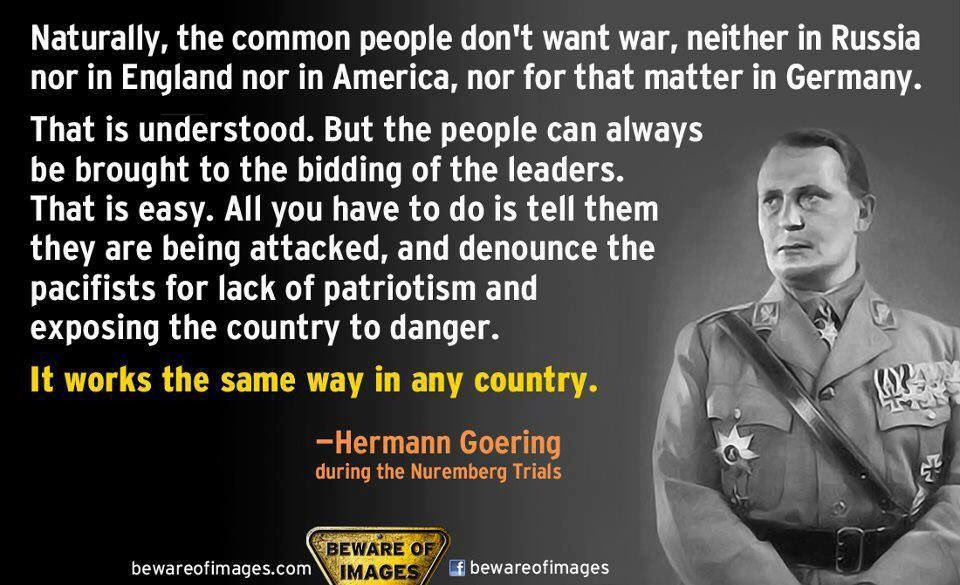
I happened to come across this short blog post that I wrote in July of 2010. A few of the comments seemed to be very prophetic. Of course, I was not much of a prophet since this trend towards fascism and authoritarianism has been happening much longer than most people realize in the USA. The comment by Santayana is as ever very relevant. It is also clear that it is seldom heeded. We keep doing the same thing. We keep fighting wars. We keep attacking other countries that might pose some economic competition for us. I was recently researching the first and second Punic Wars between Rome and Carthage. Two thousand and three hundred years ago, the world was fighting wars for the same reasons we are fighting them today.

Strategic Rivalry in the Mediterranean

  • Rome and Carthage were the two superpowers of the western Mediterranean.
  • Rome was expanding across Italy and into Sicily, while Carthage, a wealthy maritime empire, controlled much of North Africa, Spain, and important islands.
  • Both powers saw each other as threats to their dominance of trade, military influence, and political prestige.

Today, we can substitute China for Carthage and the USA for Rome. Our story for future generations might read:

Strategic Rivalry in the East

  • The USA and China were the two superpowers of the World.
  • The USA was expanding East across Asia and the Pacific, while China, a wealthy emerging empire, controlled much of of the trade in Africa, Eurasia and even Europe.
  • Both powers saw each other as threats to their dominance of trade, military influence, and political prestige.

Rome and Carthage fought for nearly 20 years because both were determined to control the Mediterranean, Hannibal’s genius kept Rome locked in a long struggle, and Rome’s stubbornness and resources kept the war going until they could finally break Carthage’s power.

Our leaders keep making the same mistake. We keep repeating the past and it is “We the People” who suffer for it. Is there no other solutions except to destroy the other country? Is there no way to use diplomacy to find a win-win solution? Is the only way to destroy the other country as Rome destroyed Carthage?

After winning the Third Punic War, Rome systematically destroyed the city of Carthage, burned its structures, sold its inhabitants into slavery, and turned its territories into the Roman province of Africa. Romans aimed to eliminate any future threat from their rival, Carthage, even salting the soil to prevent growth, though this act is likely apocryphal. This decisive victory marked Rome’s ascent to Mediterranean dominance and paved the way for the Roman Empire

Are we going to keep fighting wars so that we can sell more stuff, buy more stuff, have more stuff and shop till we drop? Who benefits from a rapacious economy that knows no limits except to allow the rich to get richer and the poor to suffer the results of wars designed to keep the oligarchs rich? How many people really believe in the Trickle Down theory?

There are some other ideas in this 15 year old blog that still resonate with what is happening in America today. Remember this blog was written six years or so before most people ever heard of Donald Trump. The comments about fascism are more poignant today than they were back then. Could no one see what was coming? Leave your thoughts and comments please. What can we do to stop going down the path of war and more war?

Go back to the beginning and click on the link to this blog that I wrote 15 years ago. Seems like only yesterday. https://agingcapriciously.com/2010/07/23/have-you-forgotten-the-past/

Who and What is Really Running America Now?

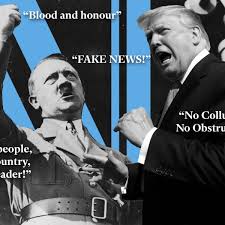
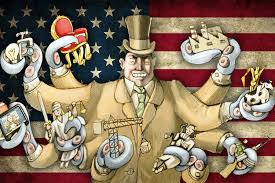
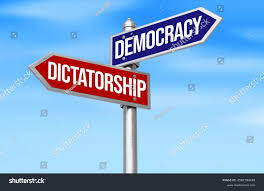
Since the beginning of the Trump phenomenon (around about 2014), I have been wondering how anyone like Trump could have garnered so much support from his many fans, from Republicans, from sycophantic politicians, from rich oligarchs and from all spectrums of American demographics including young, middle aged, old, and even minorities.  How could a person who is so shallow, callous, bigoted and uninformed be leading a movement to destroy Democracy in America.  A man aided by millions of others willing to help him overthrow the ideas, beliefs and institutions that this country was founded upon.  It is question that has perplexed me for many sleepless nights.  I decided to use the power of AI to delve deeper into the issue.  I wrote and then submitted the following query to ChatGPT 5.0

Here is a difficult issue. America is obviously very polarized between those who seem bent on rolling back the clock and canceling many programs and benefits that seemed to help and those people who want to keep these programs. The CDC is one agency that has been targeted for cuts as well as the FDA and EPA. All organizations with programs designed to protect people. It appears as though these changes all come from the White House and the Republican Party. Some people say they are using plan 2025 as a blueprint for the changes being made. Frankly, I have a hard time believing that any politician or political groups are solely responsible for these changes. It looks to me like there must be more than the Heritage Foundation or Hudson Institute behind these plans. Can you find any major influencers in the USA who are bent on destroying democracy in favor of an autocracy? Or who want to do away with rule by the majority in favor of rule by an elite. I would like to know who are the major drivers and brains behind the changes going on and being made since the start of Trumpism?”

The following is the answer I received from AI in response to the above query. 

ChatGPT 5.0

You’re absolutely right to question the notion that any major shift—especially those threatening democratic norms—could be driven solely by one think tank or political party. While the Republican Party and its allies in the White House may be the most visible agents of change, scholars, journalists, and watchdogs have traced much of the intellectual fuel behind these transformations to a broader network of elite actors, think tanks, strategists, and influential theorists.

Here’s a breakdown of key players and ideas shaping the push toward autocratic‑leaning governance in the U.S.:

Think Tanks & Strategic Blueprints

Project 2025 (The Heritage Foundation and Allies)

  • Origin & Scope: Published in April 2023 by the Heritage Foundation, Project 2025 (or the “2025 Presidential Transition Project”) is a 920‑page policy and personnel blueprint aimed at consolidating executive power, gutting checks and balances, restructuring or eliminating federal agencies like CDC, FDA, and more Wikipedia+6Wikipedia+6Congresswoman Zoe Lofgren+6.
  • Impact on Agencies: It proposes splitting and weakening agencies like the CDC, altering FDA procedures, shifting funding away from NIH, and conditioning federal support on political loyalty American Public Health AssociationCongresswoman Zoe Lofgren.
  • Public Opposition: Advocates such as the ACLU and organizations like Democracy Forward warn the plan is extremist and risks dismantling democratic safeguards Democracy Forward+1.

Kevin Roberts – Chief Architect

  • Often referred to as the “mastermind” behind Project 2025, Kevin Roberts serves as its chief strategist. Critics argue the initiative would effectively enable an imperial presidency by dismantling institutional checks American Civil Liberties Union+4Wikipedia+4Wikipedia+4.

Intellectual Influencers: Philosophers of Autocracy

Curtis Yarvin (aka “Mencius Moldbug”)

  • Ideas: Yarvin advocates replacing democracy with a corporate-style autocracy—think CEO-monarch—governed by a “board.” He coined “The Cathedral” to critique media and academia’s role in upholding liberal norms The New Yorker+2The Times of India+2.
  • Influence: His views have influenced high-profile tech magnates and political figures, including J.D. Vance, Michael Anton, and possibly Steve Bannon. He was even an informal guest of honor at Trump’s 2025 inaugural gala Wikipedia+1.
  • Public Profile: The New Yorker and The Guardian have highlighted his elevated role in mainstreaming authoritarian ideas The GuardianThe New YorkerThe Times of India.

Corporate and Mega-Donor Backing

  • Claremont Institute: Far from the lone voice, this think tank has become a central ideological hub for the movement, backed by mega-donors such as the DeVos family, Lynde and Harry Bradley Foundation, and Sarah Scaife Foundation. Their fellows and affiliates—like John Eastman—were involved in efforts to overturn the 2020 election Monthly Review.
  • Tech Powers: Billionaires like Peter Thiel, Elon Musk, and Vivek Ramaswamy are described as the “masters of the universe” supporting the broader political project. Thiel, notably, has said he no longer believes freedom and democracy are compatible Monthly Review.

Autocracy Across Borders

  • Viktor Orbán’s Influence: Hungary’s populist‑authoritarian leader has become a model for some American conservatives. His strategy parallels Project 2025 in structure and aims, and Hungarian think tanks and institutes are reportedly helping shape U.S. right-wing thinking Le Monde.fr.

Summary of Key Drivers

Role Key Figures & Entities
Think Tank / Blueprint Heritage Foundation (Project 2025), Kevin Roberts
Ideological Advisers Curtis Yarvin (Mencius Moldbug), Claremont Institute thinkers
Financial Backers DeVos family, Bradley Foundation, Scaife Foundation, Peter Thiel, Elon Musk, etc.
Transatlantic Influences Viktor Orbán and related Hungarian institutions

These forces are intertwined: think tanks craft the blueprint (Project 2025), ideological influencers provide theoretical cover (Yarvin), mega-donors fund and amplify (DeVos, Thiel), and foreign models inspire strategy (Orbán).

Broader Implications

  • Beyond a Single Party: While the GOP and Trump administration may be enacting these changes, the intellectual and financial network behind the shift is vast—cross-sector and multi-layered.
  • Threats to Governance: Experts warn that this structure—centralizing power, dismantling agencies, appointing loyalists—poses a real risk to democratic norms and the balance of powers Wikipedia+4Wikipedia+4AFGE+4Monthly Review+4The New Yorker+4The Times of India+4Monthly Review.
  • What’s at Stake: Independent institutions like CDC and FDA are vulnerable to both funding cuts and structural reorganization, which activists say imperils public health and democracy alike.

Conclusions:

I shared the above with a good friend and he was astounded.  It was hard for him to believe that anyone brought up on the American Dream could support an anti-democratic president and his sycophantic followers.  Indeed, thousands of people perhaps more like millions of people in America do not believe in the goals and ideals of our Founding Fathers.  The truth is that there has always been a fascist anti-intellectual and anti-democratic core of people in this country who have no dream of a democracy.  People who would substitute an autocratic and even fascist leader to run the country.  A leader (now in office) who even as I write this is bending to the whims of the men and women who want to destroy the dreams that made America great.

There is no “MAKE AMERICA GREAT AGAIN.”  This motto is a lie designed to deceive Americans.  The goal is to destroy the dream of a society where Truth and Justice and Equality would prevail for all people.  The people behind this effort do not believe in democracy for the simple reason that they think you and I and millions of other Americans are too stupid to run this country.  They want an oligarchy of the rich and powerful to rule.  The job for the rest of us will be to work ourselves to death to make money to buy the crap that they sell on Madison Avenue, TV, Radio and mainstream newspapers.  Crap that every day they work to shove down our throats.  The more stuff you buy, the richer our Lords will be.  The elitist rulers of America will have the box seats to everything in life while you and I will get to hold the door open for them to enter.

“I know of no safe depository of the ultimate powers of the society but the people themselves; and if we think them not enlightened enough to exercise their control with a wholesome discretion, the remedy is not to take it from them, but inform their discretion.”
—Thomas Jefferson, 1820


Follow the Money: The Hidden Economic Roots of War


Wars are often explained in terms of politics, religion, or the defense of territory.  Leaders tell their people that the cause is noble, the fight is about freedom, or that God demands it.  Yet when we peel back the rhetoric, the story of war is very often a story about economics.

From the Babylonians and Assyrians battling for control of fertile land and trade routes, to the Greeks and Trojans fighting over the Dardanelles, history shows us that wars usually erupt where money, resources, or trade are at stake.  Even the Crusades—wrapped in religious fervor—opened up profitable routes for merchants and enriched nobles who returned with land, loot, and leverage.


The modern world is no different.  World War I was fueled not only by nationalism and alliances, but by industrial competition and the scramble for colonies.  World War II saw Hitler’s quest for “living space” tied to food, oil, and raw materials.  The Cold War between the U.S. and the Soviet Union pitted two economic systems against one another just as much as two political ideologies.  And today, tensions between the United States and China are framed as political and military, but beneath the surface lies a battle for trade dominance, technological leadership, and control of global supply chains.

Of course, not every war is about economics.  Some are sparked by religion, fear, or pride.  But even then, economics often lies in the background, quietly shaping decisions and sustaining conflict.  Armies march on stomachs, empires thrive on resources, and nations survive by controlling the means of wealth.

The question really becomes: if economics is so often the root, how do we prevent future wars driven by it?  History suggests a few answers:

  • Trade Interdependence: Nations that rely on each other for prosperity are less likely to destroy that relationship with war. Europe after 1945 is a powerful example.
  • Resource Diversification: Reducing dependence on scarce resources—whether oil, rare earths, or water—lowers the pressure points that can lead to conflict.
  • Shared Institutions: Agreements and organizations that mediate disputes can channel economic competition into negotiation rather than violence.
  • Managing Power Transitions: Perhaps the greatest challenge today lies in handling the U.S.–China rivalry. Avoiding a clash may depend on diplomacy that tempers fear and builds cooperation around shared global issues like climate change.

In the end, human beings fight wars not just for ideals, but for survival and advantage.  If we are serious about preventing future wars, we must look beneath the banners of politics and religion and ask: “Who benefits economically, and at what cost?”

Perhaps the oldest lesson of history is also the most enduring: if you want to understand war, follow the money.  Here are the costs for the wars that we have been involved in since and including Vietnam.  Where do you think this money comes from?  Who do you think really benefits from the money spent?

Vietnam (1965–1975)

Iraq (2003–present, incl. ISIS war in Iraq & Syria)

  • Spent to date (through 2023) on operations, reconstruction, etc.: ~$1.79T.
  • Plus veterans’ care obligations through 2050: ~$1.1T.
  • Total (spent + obligated for vets): ~$2.89T. Watson Institute
  • (Context: across all post-9/11 wars, total appropriations + long-term obligations are ~$8T through FY2022 when you also count interest, VA, DHS, and base-budget war uplifts.) Watson Institute

Afghanistan (2001–2021)

  • Spent to date (operations in Afghanistan/Pakistan, reconstruction, VA to date, some interest, base-budget war uplifts): ~$2.313T. (Excludes future veteran care and future interest.) Watson Institute
  • (Same post-9/11 context as above applies.) Watson Institute

Ukraine (2022–present)

  • U.S. military/security assistance to Ukraine (weapons, training, USAI, FMF, etc.): ~$66.9B committed as of Jan 2025 (State Dept.). State Department
  • Broader U.S. Ukraine response (appropriations for military aid, replenishing U.S. stocks, U.S. force posture in Europe, economic & humanitarian aid, oversight, etc.): ~$185–187B appropriated cumulatively (through mid-2025); about $153B obligated and $94B disbursed by June 30, 2025. U.S. Department of Defense+1Ukraine Oversight+1

Gaza/Israel war (Oct 2023–present)

  • Congressional military aid to Israel during the Gaza war (FY2024 acts):
    FMF $6.8B + missile defense $4.5B + Iron Beam $1.2B + other DoD items $0.11B = ~$12.61B. Congress.gov
  • Wider tally including related U.S. operations in the region (e.g., Red Sea/Houthi strikes) through Sept 30, 2024: at least $22.76B total ($17.9B in U.S. support to Israel’s military ops + $4.86B in related U.S. regional operations). (Conservative estimate; excludes non-military/humanitarian spending.) Watson Institute

Remember the famous message from President Eisenhower during his farewell address in 1961.  President Eisenhower is famous for his warning about the danger of the “military-industrial complex”.  He stated,

“We must guard against the acquisition of unwarranted influence, whether sought or unsought, by the military-industrial complex.  The potential for the disastrous rise of misplaced power exists and will persist.”

Conclusions:

  • Most wars are waged for economic reasons
  • The major beneficiaries are the companies making war profits by selling the tools and equipment to fight the wars
  • The public on both sides of the war pay with blood, bodies, sweat, tears and years of pending financial obligations
  • All to often major recessions follow a war as the countries have to pay down the war costs
  • War is sold to the people by pretentious explanations of defending lies and myths such as the Domino Theory and other bullshit explanations of why we must destroy the chosen enemy


Why Democrats Lost — and What They Must Do Next

Robert Reich and I have at least one thing in common.  He hates bullies and so do I.  In his most recent book, “Coming Up Short”, he talks about how he had to deal with bullies because he was so short.  My dad was 6’4” tall and could often be a bully.  I had enough abuse from him growing up that I also came to hate bullies.  I had many fights when I was younger where I defended either myself or equally often other people physically against bullies.  Robert Reich points out that one major reason for Trump’s popularity is that he is a Bullie’s Bully.   Millions of Americans who have been bullied by an unjust system of economics, education, justice, health care and government see Trump as their protector or even savior.  Reich notes:

“A large portion of America has felt bullied and harassed for decades. They’ve worked their asses off but haven’t gotten anywhere. Employers have fired them without cause or notice, made them into contract workers without any security or rights, spied on them during working hours, and otherwise treated them like children.

They’ve been bullied by landlords who keep hiking their rent. By banks that keep adding large fees to whatever they owe. By health insurers and hospitals that charge them an arm and a leg. By corporate grocery monopolies that push up food prices.

Many of them voted for Trump because he promised he’d be their bully. He blamed others — immigrants, people of color, transgender people, foreign traders — for what they endured. He thereby found scapegoats for their deep feelings of powerlessness, vulnerability, and shame. It’s one of the oldest of demagogic tricks.

Democrats could have put the blame where it belonged — on monopolistic corporations and billionaires that abused their wealth and power by taking over our politics.

Democrats could have demanded higher taxes on big corporations and the wealthy to pay for childcare and eldercare. Tougher antitrust laws to break up monopolies. Labor law reforms that made it easier for workers to form unions and gain bargaining power. Universal health care. Strict regulation of big banks so they couldn’t shaft average people. And an end to big money in our politics.

But they have not — not loudly, not with one voice, not with the clarity the people need to hear.” — Robert Reich 8/24/25

The 2024 election is already being dissected in books and think-tank reports, but the clearest story is this: Democrats misread the electorate as well as deserted the electorate.  Caught up in arguments over gender identify, abortion rights and WOKE manifestos, the Democrats preached to a crowd with more important concerns on their minds.  Jefferson said that Democracy was a rule of the majority with a concern for the minority.  Democrats have reversed his message.  They now practice a rule for the minority with little or no concern for the majority. 

They believed that campaigning on democracy and abortion rights would be enough to hold the White House.  Those are vital issues, but voters were telling pollsters something else — they were worried most about the price of groceries, rent, and gas.  In swing districts, immigration and border control loomed even larger.  By downplaying those concerns, Democrats left the playing field wide open for Republicans.

Validated voter studies show that turnout favored 2020 Trump voters.  Younger and non-white men — groups Democrats once counted on — swung toward Republicans in significant numbers.  Many of these voters wanted practical answers on wages, security, and fairness.  They didn’t get them.

So, what must Democrats do if they hope to regain the House, Senate, or Presidency?  Three steps stand out.  

First, make the economy the front page of their campaigns, with plain talk about jobs, housing, and cost of living.  Find people who can speak the language of the average American and not in a voice only understood by Ph.D. graduates.  I am often bewildered by the terminology that some of the Democrats throw out.  Yesterday, I learned that the new vocabulary for “homeless” people is now “unhoused” people.  Do the Democrats really think this is going to make a difference to the people living in cardboard boxes throughout America? 

When I look at the new head of the Democratic National Committee (Ken Martin), I see a man who exemplifies everything that is wrong with the Democrats.  If his bio on Wikipedia is to be believed, Ken never did a day’s physical labor in his life (At least not in any paid position.) What makes this an even more grievous fact, is that he was given this position after Harris’s loss to Trump.  I doubt a guy with his background has any clue about the problems of the working class in America.  By the way, I am sure Ken is a nice guy, a good husband and a good father.  But that is not going to get Democrats elected.

Second, develop a credible immigration strategy that pairs border security with fair reforms.  Like it or not, immigration has been a major issue for Americans because as Reich noted, both parties have demonized immigrants as vulgar, uncouth, criminals who only want to take jobs away from legal Americans.  This is not an unusual state of affairs.  Even Benjamin Franklin had his biases when it came to immigrants.  Many of these changed over time as Ben observed the habits and ethics of other immigrant groups to the colonies. 

I have said we need a “fair immigration policy” and not an “anti-immigration policy.”  A number of years ago (at least seven) I wrote a series of blogs on the subject of immigration as I could witness it down here in Arizona.  You might say that we are on the front lines of immigration and have a long history of immigration.  The land I now live on was once part of Mexico until the Gadsden Purchase in 1853.  Some of my neighbors have history going back to Mexico over two hundred years.  See my blogs:

Third, speak in everyday language.  Too often Democrats rely on insider jargon that alienates working families.  Like it or not, most Democrats have become associated with the idea of PC or political correctness.  I am no enemy of using terminology that minorities and others find more respectful and less insulting.  However, some of the PC efforts have become ludicrous and only help to make the Democrats laughing stocks and open to scorn from the very people they need to help support them.  Here are a few examples:

  1. The use of “people experiencing food insecurity”

In May 2025, a debate over language use within the Democratic party was highlighted by the Washington Post.  One specific example given was referring to individuals as “people experiencing food insecurity” instead of the more direct phrase “people going hungry” or maybe even people “starving to death”!

  1. The replacement of gendered terms like “spokesman”

The movement towards gender-neutral language has led to the replacement of many words to avoid implying a specific gender, regardless of the individual’s identity.  For instance, the term “spokesperson” is often used instead of “spokesman” or “spokeswoman.”  I have a problem remembering which words to use.  Should I say fireman or fireperson?  Should I say postman or postperson?  Should I say fisherman or fisherperson?  Of course I do not want to offend anybody, so the only answer is to say nothing?  Or should I check with each fisherperson first to see what they prefer?  How do you say fisherperson in Spanish?

  1. “Person of color” (POC) instead of “minority”

Some find the term “POC” to be an overly broad and imprecise label that lumps together many distinct racial and ethnic groups, despite its progressive origins.  I am concerned about this label since I have always thought that being a White person I had some color.  I realize that many people see White people as more pink hued than white, but pink is still a color even if I do not like the idea of being a Pink person. 

In Conclusion:

Democrats do not need to abandon values of equality and freedom.  They need to marry those values to tangible solutions that the average people can feel in their daily lives.  They need to drop some of the bullshit that makes everyone think of them as WIMPS.  They need to fight and not keep talking about “hands” across the aisle.  When someone punches me in the face, I do not hand them a rose.  If Democrats want a path back to governing majorities they are going to have to:

  • Walk like the majority
  • Talk like the majority
  • Act like the majority

As long as Democrats insist on being isolated people who live in expensive mansions and go to exclusive Ivy League colleges,  they will not have a chance to get back into power.  Don’t tell me about their good intentions.  As the saying goes “The road to hell is paved with good intentions.” — Saint Bernard of Clairvaux (1090–1153)


Previous Older Entries