Guns or Butter?  What Would Three Battleships Buy for Americans? By John Persico and his AI Partner Metis

Recently, I read that Trump is proposing the U.S. military begin the construction of a new class of battleships called “Trump Class” or as the press is labeling them “The Golden Fleet.”  Each of these ships will have a realistic (not the bullshit projected cost by defense contractors) final cost of $30 billion apiece. If three are built—as is being discussed—we are looking at a price tag approaching $100 billion.

That number is so large that it becomes abstract. When figures reach this scale, they stop meaning anything at all.  So with the help of my AI partner Metis, I tried an experiment: What if we forced that number back into human terms?

I asked Metis a very simple question:

What else could $100 billion buy if applied directly to the daily needs of American families?

To keep this grounded, I used conservative, real-world assumptions—not best-case fantasies.

The Assumptions

To avoid cherry-picking, I chose modest, mainstream benchmarks:

  • A reliable used car: a 3-year-old Toyota Corolla or Honda Civic
    Average cost: $20,000
  • Food for a family of four using the USDA Thrifty Food Plan
    Annual cost: $9,500
  • A two-bedroom home, roughly 2,200 square feet
    Average cost: $350,000

Then I asked the same question three times:

What does $100 billion buy—if we buy only this one thing?

Option One: Transportation

At $20,000 per vehicle, $100 billion would purchase:

5,000,000 reliable used cars

Five million.

That’s not a subsidy.
Not a tax credit.
Not a loan.

That is five million families with dependable transportation—the difference between:

  • Holding a job or losing it
  • Making a medical appointment or missing it
  • Participating in society or being stranded at its margins

Transportation isn’t a luxury in America. It’s infrastructure for survival.

Option Two: Housing

At $350,000 per home, $100 billion would fund approximately:

286,000 homes

That’s enough housing for nearly one million people.

For perspective:

  • It could dramatically reduce homelessness nationwide
  • Stabilize entire regions
  • Lower healthcare, policing, and emergency service costs downstream

Housing is not merely shelter. It is the foundation upon which everything else—health, education, employment—rests.

Option Three: Food Security

Using the USDA Thrifty Food Plan, $100 billion could provide one year of food for:

Over 10.5 million families of four

That’s 42 million people.

More than the population of California.

In a nation where food insecurity still affects tens of millions, this single line item could eliminate hunger—not as charity, but as policy.

Each ship carries not just steel and weapons—but foregone lives improved.

The Real Question:

This is not an argument against defense.  This isn’t about ships versus cars or homes.

It is a challenge to unexamined assumptions.

What kind of security do we believe actually sustains a nation?

  • Military security protects borders
  • Economic security protects civilization itself

We speak of “national security” almost exclusively in military terms, yet:

  • Hunger destabilizes families faster than any foreign power
  • Homelessness erodes communities more reliably than missiles
  • Economic security strengthens democracies from the inside out
  • Food, shelter, and mobility:
    • Reduce crime
    • Improve health outcomes
    • Stabilize families
    • Increase productivity
    • Lower long-term government costs

From a Deming-style systems view (which considers this as an investment vs. expense thinking taken to its logical conclusion.  From a systems perspective, this is a classic case of short-term protection versus long-term stability.

Or to put it plainly:

A nation is not secure when its people are hungry, homeless, and one paycheck away from collapse—no matter how powerful its navy may be.

Conclusions:

When budgets reach into the tens of billions, morality becomes invisible unless we deliberately restore it.

Every dollar spent reflects a value choice.
Every budget is a moral document.

The question is not whether we can afford battleships.

The question is:

What kind of country do we believe we are protecting—and for whom?

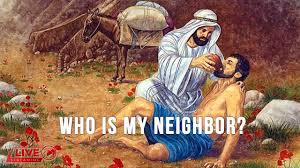
Who is my Neighbor?

Introduction: by J. Persico

A few weeks ago, while our regular pastor was on a sabbatical, one of the elders of the church gave the following sermon.  Sadly, I cannot duplicate the passion that went along with her words, but she gave me permission to reprint her sermon.  The words she used and the story she tells are very powerful in themselves and seem most appropriate for us to remember on this Christmas Day when Jesus Christ was born. 

Living here in Arizona less than 130 miles from the border, the immigration issue is not theory but reality.  Karen and I have made over 40 trips across the border.  We have many friends whose families came from Mexico.  We live with the reality of a hostile suspicious anti-immigrant culture that seems to be growing every day as right-wing politicians preach hate, fear, and suspicion and accompany it with hateful innuendos about our Mexican neighbors.  I will not say anymore, but I will let our Elders words speak for themselves. 

2ND SCRIPTURE: Leviticus 19: 18, 33-34

18 Thou shalt not take vengeance, nor bear any grudge against the children of thy people; but thou shalt love thy neighbor as thyself: I am Jehovah.

 33 “‘When a foreigner resides among you in your land, do not mistreat them. 34 The foreigner residing among you must be treated as your native-born. Love them as yourself, for you were foreigners in Egypt. I am the LORD your God.

WHO IS MY NEIGHBOR by Elder J. Hammond

Good morning!

Some of you asked about me when I was here two weeks ago and since we’re talking about who is my neighbor, I thought I’d share just a little bit of my story. Usually, you’ll find me at the second service—sometimes serving as a Beadle, sometimes up in the booth helping.  Before coming here, I was part of the Methodist churches in Casa Grande and Eloy, where I took classes as a Lay Servant and then a Lay Speaker. I also trained as a Stephen Minister, and during that time I became an affiliate member of First Presbyterian so I could share in that ministry. Then about a year ago, I became a full member of this congregation.

Spiritual Growth Through Retreats

One of the most meaningful parts of my faith journey has been attending retreats at the Redemptorist Renewal Center in Tucson. If you’ve ever been there, you know it’s a beautiful, quiet place—a setting for learning, sharing, and deep reflection.

Now, for those of you who know me, you won’t be surprised that the hardest part of the experience, was the “quiet” part! From evening prayers until breakfast – no talking. But it was in those quiet times that God often spoke the loudest.

At my most recent retreat, the guest speaker was Karen González, author of The God Who Sees. Karen, herself an immigrant and a Christian, writes about what the Bible says regarding immigrants and refugees. She reminded us that God is not silent on this issue. If you remember my sermon from 2 weeks ago, God again gave us very specific instructions about how we are to treat the immigrant—with love, with respect, and with protection.

A Lesson from Nogales

Part of our retreat took us across the border to Nogales, Mexico. We visited shelters where families had come for safety and help. On one wall, there was a picture with these words: “The best place to live is where you do not fear anyone or anything. Where you can run without fear and not run because of fear.”

As we watched families preparing food, children painting and laughing, and teenagers practicing for a school debate, those words hit me deeply. Isn’t that what we all want? A place where we don’t have to live in fear. But later as we stood near a crossing point, where the barbed wire ran across, and there were pilings set in the ground, so no vehicle could get through, there stood a large white monument, with Mexico written on one side, and the US on the other. The Border Patrol had been alerted to our visit, so we were able to go back and forth freely, but I couldn’t imagine having trudged through the desert, clothes on my back, and no food or water, and then seeing the promised land, but not being able to enter it. And still later, we stood at a border crossing, and looked at “the fence”. “One of the uglier things I have seen, it made me think of the ugliness of the entire situation. There were people with children, just sitting waiting their turn to make an appointment to see about legally getting a way to cross the border. One woman actually gave birth while waiting in line, because she had nowhere else to go and didn’t want to lose her place in line.

Scripture Foundation

The Bible is clear: we are called to love our neighbor. You heard the scripture from Leviticus, but it bears repeating: In Leviticus 19, God says, “When immigrants live in your land with you, you must not cheat them. Any immigrant who lives with you must be treated as one of your citizens. You must love them as yourself, because you were immigrants in the land of Egypt.” Now I can take Leviticus with a grain of salt, because it is all about ancient laws and rules, but the New Testament also echoes the same sentiment.

  • Jesus repeats this commandment in Matthew 22 and Mark 12, calling it the second greatest commandment—right alongside loving God himself.
  • Romans 13:10 tells us, “Love does no wrong to a neighbor; therefore love is the fulfilling of the law.”
  • Galatians 5:14, John 13:34–35, And 1 John 4:20, all echo the same instructions

So here’s the big question: Who is my neighbor? Who is God talking about? That question might seem easy—but is it really? When I first moved here to AZ from the Northeast, I noticed something:. Many people don’t even know the name of their next-door neighbors. The walls around the yards were more than just physical walls, Where I came from, in New Jersey and Pennsylvania, and even in the Poconos with large lots and more space, I knew all my neighbors. But the Bible stretches “neighbor” far beyond our next-door fence. As Karen González writes, Abraham, Moses, Ruth, Mary, Joseph—even Jesus—were all refugees at some point in their lives. They were strangers, they were immigrants, there were ‘people seeking safety. So our neighbors are not just the people who look like us or live near us. Our neighbors are the immigrants and refugees at our borders, and the people we might be tempted to see as “others.” And their reality is hard.

According to Amnesty International, more than 60 percent of women crossing the border into the U.S. are sexually assaulted along the way. Many take precautions before they even start their journey, because they know what is likely to happen. We also hear the narrative that immigrants are criminals or that they’re “stealing jobs.” But research shows the opposite: immigrants actually commit fewer crimes than native-born citizens, and they often take the difficult, low-paying jobs that others won’t do. God created this earth without borders. He gave it to all of us and called it good. Human beings built walls and drew lines. But nowhere in Scripture does God say, “Build borders and keep people out.”

Dr. Martin Luther King, Jr. put it this way:

“Man-made laws assure justice, but a higher law produces love. No code of conduct ever persuaded a father to love his children. A good father is obedient to the unenforceable. The Good Samaritan represents the conscience of mankind because he was obedient to that which could not be enforced.” That’s what Jesus calls us to—a love that cannot be legislated, but must be lived.

After visiting the shelters and borders , I felt overwhelmed. What can I possibly do to change any of this? In our small group discussions, someone reminded me of the story of the starfish. A man watched a boy throwing starfish back into the sea. “Why bother?” he asked. “You can’t save them all.” The boy picked up another one, tossed it into the waves, and said, “I saved that one.” We may not change the whole world. But we can change the world for someone.

A Story of Francisco

Karen González shares the story of Francisco, who crossed the border out of desperation. He married a U.S. citizen, had children—including one with special needs—but because of restrictive Laws (the 3 & 10 law), he was never able to adjust his status. One night, after drinking, he chose not to drive but to sleep it off in his car, keys in his pocket, not in the ignition, but. In Maryland, even that counts as a DUI. He was arrested, and ICE stepped in. Despite being a hardworking husband and father, a judge decided he was “undesirable” and deported him. Now his wife and children, U.S. citizens, were left without their provider and had to rely on public assistance. Deporting a father didn’t protect the family—it broke it.

This is what happens when we see immigrants only as “others” instead of neighbors.

Conclusion: Who Is My Neighbor?

When Jesus was asked, “Who is my neighbor?” he told the parable of the Good Samaritan. Today, the answer is the same. Our neighbors are the immigrants and refugees at our borders. Our neighbors are the people across the street. Our neighbors are the ones who need love, not suspicion. And while laws cannot love our neighbors, we can. I may not change the world. But I pray that I can make a difference in one life. And if each of us does the same, then together—we can bring change.

 Let it be so. Amen.

Happy Holidays: The Persicos’ 2025 Annual Holiday Letter


Happy Holidays to all our friends and relatives, and Merry Christmas to those celebrating the birth of Jesus Christ.

(John)  I turned 79 this year and Karen reached 81.  We no longer feel like spring chickens, but I promised not to regale you with medical adventures or offer political rants—tempting as both might be.  Since Karen handles the family updates, you may wonder, “What’s left for John to talk about?”

This year I found myself thinking about Jesus—not as a figure of doctrine, but as a man who preached love and forgiveness, and whose life still speaks to us in a world obsessed with fame and fortune.  I mentor a high school student through a program called I Could Be, and like many young people today, his dream is simply to become famous and wealthy.  I wanted to tell him that neither guarantees happiness, but how do you convince a teenager of that?

It made me wonder: Did Jesus ever dream of fame or fortune as a young man?  If so, he certainly abandoned those goals.  His message was humble, his life simple, and his legacy was born not from ambition but from compassion and courage.  The fame he eventually gained came with a heavy price—crucifixion at 30-something is not the kind of fame anyone would choose.  Yet his influence endures two millennia later, reminding us that the greatest gifts we can offer the world are still kindness, forgiveness, and love. 

So, as we come to the close of another year, Karen and I want to thank each of you for being part of our lives—near or far, frequently or occasionally, in person or through the mysterious fibers of the internet.

May your holidays be filled with peace, warmth, and whatever form of love most sustains you.  And may we each remember that the gifts which matter most—kindness, connection, forgiveness, and compassion—cost nothing yet change everything.

(Karen)  The year has gone very fast, our first year spending the full year in Arizona.  I didn’t mind the summer heat, and John found ways of keeping cool.  We didn’t like our electric bill much though.  Cool air doesn’t come cheap!  I continue my quilting, choir, Tucson Dulcimer Ensemble (group picture on our card), a small ukulele group and have added serving as a deacon at First Presbyterian Church in Casa Grande.  I don’t have much spare time, but I enjoy all the things I do.

I made a trip to MN last February and the temperature didn’t go up much above zero.  I decided from now on, I’m visiting in spring and fall.  I’ve become an Arizona wimp.  In June, John and I took a train trip from Maricopa, AZ to Portland, OR.  Trains are such a civilized way to travel.  We had a tiny compartment, a dining car, an elevated observation car and even a narrated guide for part of the trip.  After spending a few fun days in Portland, we flew to Anchorage, AK.  John’s 50th state to visit was OR, and my 49th and 50th were OR and AK.  Highlights of the trip were participating in a “No King’s” march in Talkeetna, AK and taking a small plane ride to the side of Mt. Denali where we landed on a glacier and played in the snow. 

I made a second trip to MN with John in August.  He attended his annual retreat at Demontreville Retreat Center while I went to stay with Kevin and Megan.  Kevin bought a new home this summer which has a large garden level apartment.  Megan has the apartment while saving for a home of her own.  It was fun to see them both together and run up and down the stairs between the two living spaces.  After John’s retreat was over, we spent a few more days in the Twin Cities so I could spend some time with Susan and Juli.  I brought Susan a Korean themed quilt for her birthday, and it was fun to watch her discover the different areas of the quilt. 

The poster on our card was taken at a church in Tucson where we had gone to attend a concert.  They had facilities set up for the homeless and signs around the church campus welcoming those in need and immigrants. 

The last picture is our new pet, Mikey, a 5-year-old Leopard Tortoise.  He came with his name which is a nickname for Michelangelo, from Teenage Mutant Turtles.  After I lost my ongoing appeal for another dog, John suggested we adopt a Desert Sonoran Tortoise.  He could live in the back yard, munch on our plants and need very little care.  Then I found out from a friend that the Desert Sonoran Tortoise is a digger and will destroy your landscaping and escape under the fence.  Just as John was feeling relieved that we weren’t going to get a tortoise, I added we could get a Leopard Tortoise as they weren’t diggers.  I found one on Facebook marketplace as the family who had him were going to move to a cold climate and needed to rehome him.  Then we started learning about the care and feeding of a Leopard Tortoise.  First came a heated doghouse for John to build.  Then we needed specialized food, supplements, soaking tubs, hiding spots, UV and heat lamps for the indoor terrarium, and more.  But, we do enjoy him.  We do believe he will outlive us though.

Wishing you all a wonderful 2026, health and happiness.

John, Karen and Mikey

Here are a few other pictures from our 2025 Life.

What is the true meaning of Christmas? Does anyone really know?

Image

It is around this time of the year that many of us start asking the question “What is the true meaning of Christmas?”  I am sure that for those who do ponder this question, your inquiry is no doubt prompted by an assortment of stimuli.  For example:  Black Friday, Cyber Monday, shop till you drop lists, Toys for Tots, Christmas countdowns, gift rages, children meltdowns, commercials, jingles and endless exhortations to buy that special gift that will truly show someone you love them.

I must be humble.  Many have tried to answer this question before me.  I am nowhere near the first nor do I assume the last who will ever tackle this issue.  Thus, I offer my opinion where no doubt many wiser than I have gone before me and many wiser will go after.  However, if I merely offer you some fresh insights into this age old question, I will have accomplished my goal.  Perhaps I may see things in a slightly different perspective than all the wise people who have already treaded on this question.

I am going to break the key question “What is the true meaning of Christmas?” into three parts or three sub-questions.

The first sub-question is “Why do we celebrate Christmas?”  The answer to this question is obvious.  A man named Jesus was born on or near this date in the time of the Roman occupation of Israel.  He is alternately revered as a great prophet, the son of God, the Messiah or a humble man with a simple but profound message.  Many who respect him honor his memory on December 25 each year.

The second sub-question is “What should we celebrate at Christmas?”  The most common means of celebrating the life of a great person is to remember what they stood for.  Jesus IMHO stood for two major ideas which were radical in his time.  The first major idea was to “Love Everyone.”  This meant that you needed to love your enemies as well as your friends.  Easy to love your friends said Jesus, much more difficult to love your enemies.  The second major idea was to “Forgive Everyone.”  Again, not just forgiveness for your friends and relatives but also for those you hate and your mortal enemies.  Thus, at Christmastime, Christians and those who wish to venerate Jesus of Nazareth should be celebrating both Love and Forgiveness.  We see many manifestations of the love at this time of the year but much less focus on forgiveness.  The truth of this will be more evident when we look at the third sub-question:  “How do we Celebrate Christmas?” 

“How do we celebrate Christmas?”   How do we take the two major ideas that Jesus stood for and remember them.  Each concept could be honored in a variety of ways.  The primary way that we seem to express the idea of Love is through the giving of gifts.  We can give gifts of the spirit or gifts of the world.  Gifts of the spirit express our love for others by giving some of ourselves.  We give some immaterial expression of love to others that we care about.  We might choose to spend time with a loved one or simply help them out with a project or task that needs doing.

We also give physical or material gifts.  These include toys, gadgets, technology, clothes, jewelry etc.  Material gifts express our love by transferring our money into presents for others based on their perceived wants and needs.  It is quite common to see gifts given based on wants but needs are less frequently factored into the gift giving equation.  One could posit a hierarchy of gift giving, going from easiest to give to most difficult.  I think it would look something like this:

  • Material gifts based on wants (easy)
  • Material gifts based on needs (more difficult)
  • Spiritual gifts based on wants (difficult)
  • Spiritual gifts based on needs (very difficult)

It is not always easy to distinguish between wants and needs, particularly when dealing with children who often confuse the two.  The good parent should be able to tell the difference, but all too often parents are more interested in simply satisfying their child’s wants rather than dealing with their child’s needs.  The Love of Jesus becomes a love focused on completing a shopping list of wants.  Little attention is spent on needs while even less time is spent on spiritual gifts.  It is easier to buy a gift card than to spend time with a friend or loved one.

How do we deal at Christmastime with the second major idea that Jesus promoted, the idea that we should Forgive others?  This idea does not seem to have seriously entered the panoply of displays that we see or that are observed at this time of the year.  Somehow, Forgiveness gets forgotten at Christmas time.  A cynic might wonder if it is not because this is the hardest idea to implement.  Can you imagine sending a beautiful gift of flowers or jewelry to someone you loath and detest?  Can you imagine spending time with someone you hate or giving some gift of the spirit to someone you dislike?   I suggest that such demonstrations of Forgiveness would be unusual for most Christians as well as non-Christians.

So “What is the true meaning of Christmas?”  After dicing and slicing this question what are we left with?  A short summary of the main points that I have made to address this question might help:

  • We celebrate the birth of Jesus of Nazareth, a great prophet, teacher and to some God
  • Jesus’s mission and purpose was to teach us Love and Forgiveness
  • We attempt to celebrate his concept of Love during the time we think he was born
  • We substitute gift giving for more substantive displays of Love or more difficult expressions of the concept
  • We leave out or neglect Jesus’s concept of Forgiveness

Perhaps this Christmas, we can all try to GIVE more Forgiveness.  If there is a “True Meaning of Christmas”, if Jesus were alive today, I am sure he would be most pleased if we all spent more time trying to love our enemies as well as our friends and to forgive those who “Trespass against us.”  

Time for Questions:

What is your “meaning” for Christmas?  How do you celebrate the birth of Jesus?  What could you do more of this year to truly celebrate his message?  What can we do to help make Forgiveness part of the Christmas message?

Life is just beginning.

“How many observe Christ’s birthday!  How few, His precepts!” ― Benjamin Franklin

“And in despair I bowed my head;
“There is no peace on earth,” I said;
“For hate is strong,
And mocks the song
Of peace on earth, good-will to men!”

Then pealed the bells more loud and deep:
“God is not dead, nor doth he sleep!
The Wrong shall fail,
the Right prevail,
With peace on earth, good-will to men!”
― Henry Wadsworth Longfellow

Five Westerns and Five Moral Universes: What Old TV Shows Still Teach Us About America

By John Persico (with a lot of help from Metis)

In the late 1950s and early 1960s, American television was overrun with cowboys.  Westerns galloped across nearly every network, each one promising a different angle on courage, justice, and the messy human struggle to build a society out of dust and gun smoke.  We tend to remember the big ones—Gunsmoke, Bonanza, The Rifleman—but tucked in that crowded landscape were several thoughtful, sometimes surprisingly philosophical shows that tried to answer deeper questions about right and wrong.

I have always loved cowboy shows.   My favorite cowboys when I was growing up were Hopalong Cassidy, the Lone Ranger and Roy Rogers.  Most of these men got their start in the 30’s but their shows migrated to the TV medium when it was first started.  Many episodes of Hopalong were taken from his early movies.  Later, TV started to develop its own cowboy series with weekly episodes of tall, dark and handsome heroes.  By this time in the late 50’s and early 60’s I was not watching TV anymore.  I was in my early teens and had better things to do than watch TV.  Thus, I never watched the five shows that I am going to talk about in this blog when I was young.

I only started to watch these old TV shows a few years ago.  I was rather amazed at the quality of the stories that they told.  They were nothing like many of the TV series that came around later characterized by many more shootouts and gun fights.  These early TV shows tried to convey a strong sense of morality and featured a more discreet and thoughtful use of gunplay.   Many of the heroes in these shows eschewed violence and attempted to use reason to end a fight rather than gunning down a villain.   

Five of these Westerns—The Tall Man, Wyatt Earp, The Restless Gun, Tombstone Territory, and The Texan—offer a fascinating window into how Americans of that era imagined moral life on the frontier.   Each operated in a different moral universe.  Together, they reveal a whole spectrum of values still relevant in 2025: authority vs.  independence, violence vs.  restraint, institutions vs.  personal codes, loyalty vs.  law.

Here’s what these shows have to teach us when we dust them off and look again.

The Tall Man: Tragedy, Friendship, and the Gray Zone of Morality

Among these Westerns, The Tall Man stands out for its dramatic complexity.  Rather than presenting the frontier as a struggle between clear-cut good and evil, the series explored the psychological and moral tensions between Pat Garrett and Billy the Kid—historical figures already steeped in myth.  The show emphasized the tragic inevitability of their relationship: Garrett, the reluctant lawman; Billy, the charming outlaw whose charisma repeatedly outpaced his judgment. These were not cardboard heroes and villains; they were complicated men bound together by loyalty and destiny.

The morality here is not a simple endorsement of law or rebellion.  Instead, it suggests that human loyalties are fragile, destiny is unforgiving, and justice often emerges from personal conflict rather than abstract principles.  It is a Western operating in shades of gray, reflecting an America grappling with Cold War dilemmas where allies and enemies were not always easy to distinguish.  Viewers recognized themselves in the struggle between duty and friendship, a theme uncommon among early Westerns.

The underlying message was that life often puts us in situations where justice isn’t neat.  Friendship can clash with duty.  Good intentions can slide into the wrong choices.  And sometimes the person you care about most becomes the person you eventually have to confront.

In that sense, The Tall Man feels strikingly modern.  It understands that real life doesn’t divide neatly into good guys and bad guys—something America in the Cold War era was just beginning to wrestle with.

Wyatt Earp: The Comfort of the Uncomplicated Hero

If The Tall Man reveled in moral ambiguity, Wyatt Earp offered the opposite: a mythologized portrait of the West’s greatest lawman, played with crisp, upright dignity by Hugh O’Brian.  This series promoted a worldview in which society advances only when firm, principled authority imposes order on chaos.  Earp serves as the archetype of the responsible American leader—a man who does not relish violence but accepts it as a necessary instrument of civilization.

Earp represented the belief that civilization requires firmness.  Order doesn’t grow on its own—it has to be imposed by strong, decent people who are willing to shoulder responsibility.  For postwar America, still anxious about the atomic age and the looming tensions with the Soviet Union, this moral clarity was reassuring.

The show’s moral message resonated with 1950s ideals of stability: strong institutions, disciplined citizenship, and faith in the ability of virtuous leaders to “keep the peace.” It aligned neatly with postwar values, especially the belief that social progress requires firmness rather than moral compromise. Earp rarely doubted himself, and the series rarely doubted him either.  Its clarity, even rigidity, provided reassurance during an era troubled by atomic anxieties and Cold War uncertainty.

Earp didn’t struggle with his conscience—he was the conscience.

The Restless Gun: Pacifism in a Violent Landscape

In sharp contrast to both Garrett and Earp stands Vint Bonner of The Restless Gun, one of the few early Western heroes who actively sought alternatives to violence.  Bonner modeled the idea that courage is not measured by willingness to kill but by the ability to resolve conflict through empathy, reason, and patience.  Yes, this was a Western.  Yes, he still ended up in gunfights.  But the moral direction of the show pointed firmly away from killing and toward understanding.

This places The Restless Gun closer to a moral philosophy of restorative justice than frontier retribution.  In many episodes, Bonner functioned as a mediator, teacher, or counselor.  The villains were not always evil; they were often misguided, desperate, misinformed, or trapped in circumstances they could not manage.  The show’s worldview subtly challenged the Western convention that justice flows from the barrel of a gun.  Instead, it argued that America’s future might depend more on understanding than dominance.

This made the series unusually modern, anticipating later Westerns such as Have Gun, Will Travel, which incorporated moral complexity into the traveling-gunman archetype. Though the show ended early, its worldview remains distinctive in the genre.

In a genre built on bullets, The Restless Gun dared to say: there is another way.

Tombstone Territory: Justice as a Public Responsibility

Tombstone Territory offered a more institutional perspective on frontier justice. Structured around the fictional Tombstone Epitaph newspaper, the show dramatized the challenges faced by Sheriff Clay Hollister in maintaining order within a volatile, fast-growing community.  Unlike Wyatt Earp, where the marshal’s authority was never questioned, Hollister constantly wrestled with public scrutiny, political pressure, and misinformation—issues that eerily foreshadow the modern news cycle.

The moral heart of the series lies in its quasi-documentary tone. Hollister must uphold the law not simply by enforcing it, but by navigating competing interests, calming mobs, and maintaining legitimacy.  Truth, evidence, and due process—rare elements in early Westerns—become central themes. The show’s structure echoes the belief that justice is not merely an individual virtue but a collective responsibility.  It encourages viewers to appreciate the difficulty of governing rather than merely celebrating the lone hero.

In many ways, Tombstone Territory anticipated the later rise of procedural dramas where law enforcement is portrayed as an institution rather than a personal crusade.

The show’s moral center was institutional: justice requires process, evidence, and the difficult work of maintaining legitimacy.  It wasn’t glamorous.  But it was honest.  In many ways, Tombstone Territory speaks more directly to our modern world than some of the bigger Westerns of its time.

The Texan: The Noble Drifter and the American Myth of Honor

Rory Calhoun’s The Texan returned to the classic Western figure of the noble wanderer—a man whose moral code is internal rather than institutional.  Bill Longley, a Confederate veteran, embodies the Western ethos of individual honor: help the vulnerable, confront injustice, and ride away when the dust settles.  The show foregrounds personal integrity over law, suggesting that character—not institutions—ultimately preserves the frontier’s fragile social fabric.

This worldview reflects an enduring American belief in self-reliance and moral autonomy. Longley’s wanderings represent not rootlessness but a spiritual quest to repair the world one town at a time.  His code is chivalric, almost knightly, and he stands as a corrective to the bureaucratic tensions seen in Tombstone Territory.  While he respects the law, he serves a higher standard—his own conscience.

Longley wasn’t defined by the law, nor by institutions.  His moral compass was internal.  He showed that a single person—armed only with decency and grit—could make things a little better wherever he went.

It is the Western as America likes to imagine itself: independent, honorable, and self-reliant.  Even if it rarely works that way in real life, the aspiration is part of our national DNA.

Five Shows, Five Moral Visions

When you line up these Westerns side by side, the moral variety is remarkable:

  • The Tall Man explores the tragedy of conflicting loyalties.
  • Wyatt Earp celebrates firm authority and disciplined leadership.
  • The Restless Gun champions compassion and restraint.
  • Tombstone Territory elevates due process and public trust.
  • The Texan extols personal conscience as the highest law.

Together, they show how deeply Americans were thinking—even through half-hour cowboy shows—about law, justice, violence, and the kind of people we wanted to be.

And perhaps that is the most interesting lesson of all: Westerns weren’t just entertainment.  They were moral storytelling, played out on horseback.

In dusting off these forgotten classics, we rediscover a whole range of ethical possibilities—some stern, some gentle, some tragic, some idealistic.  The frontier wasn’t just a place; it was a metaphor for the ongoing journey America has always been on: trying to figure out how to live decently in a world that is not always decent.

What Happened to These Shows and the Morality that They Tried to Convey?

  1. The Tall Man (1960–1962)

Why it was cancelled:

  • Ratings sagged as audiences drifted toward lighter, family-friendly Westerns and bigger stars.
  • NBC also faced increasing difficulty with script standards: portraying Billy the Kid sympathetically clashed with emerging TV violence guidelines.
  • Production costs were rising, and no strong sponsor stepped in to keep it going.
  1. The Life and Legend of Wyatt Earp (1955–1961)

Why it was cancelled:

  • After six seasons, the formula grew repetitive, and the mythologized Earp no longer impressed audiences seeking the grittier realism of later Westerns.
  • Hugh O’Brian wanted to move on, and ABC saw declining ratings.
  • The Western market was oversaturated by 1961.
  1. The Restless Gun (1957–1959)

Why it was cancelled:

  • Despite solid ratings, Payne’s contract and salary demands increased, and NBC hesitated to renew at higher costs.
  • The show’s gentler tone was overshadowed by edgier Westerns.
  • Payne himself said he felt the stories were becoming repetitive.
  1. Tombstone Territory (1957–1960)

 Why it was cancelled:

  • Transition from ABC to syndication hurt the budget.
  • Stiff competition from higher-budget Westerns.
  • The semi-documentary framing was admired but not loved; viewers were shifting toward character-driven stories.
  1. The Texan (1958–1960)

Why it was cancelled:

  • It had strong early ratings but lost its time slot advantage to more modern “adult” Westerns.
  • Calhoun’s outside film commitments strained scheduling.
  • CBS was phasing out lower-budget half-hour Westerns in favor of hour-long dramas.

Each show ended for slightly different reasons, but the common story is:  the genre evolved faster than these earlier, simpler morality tales could adapt.  Americans wanted more “grit” more “violence” and yes even less morality.  The change from John Wayne to Clint Eastwood capped the change that we would see in Westerns from morality tales to tales of vengeance and retribution.  America was becoming more jaded.  We did not want heroes any more who were goody two-shoes.  We wanted anti-heroes and the studios offered them up in droves. 

Looking at American politics today, I often wonder where, when and how the decline in values, integrity and morality started.  Some would say it started with the decline in religion.  I don’t think religion has in the last 200 years in the USA been that big of an influence in terms of morality and integrity.  Karl Marx always believed that economics was the major driver of most social trends.  Many people who disagree with him nevertheless admit that the primary influence on voting behavior is the state of the economy.  In my opinion, this influence goes much deeper than voting behavior.  Capitalism thrives on avarice and stupidity.  It needs a large mass of people who want more and more stuff and too brainwashed to realize that the stuff they are buying is not going to bring them happiness. 

Madison Avenue became a major influencer with the advent of TV.  Go back and look at some of these early Westerns.  Smoking was de rigor.  Many of the heroes of these early Westerns died of lung cancer.  Legendary figures like John Wayne, Gary Cooper, and Chuck Connors, with numerous other actors, musicians, and public figures from that era also falling to the disease, highlighting smoking’s heavy toll in Hollywood.  But while these heroes were dying, Madison Avenue was perfecting the use of TV to sell all kinds of products. 

I always laugh at the fact that so many men have been conned into buying what I call “piss beer” from Budweiser, Miller and Coors.  Large macho football players posing in a bar with these watered down beers spent years on TV regaling their followers with the virtues of light beer.  Would be macho males stormed the liquor stores to buy their six pack of piss beer that they could swill down while watching their favorite football teams playing.  The average person is brainwashed by Madison Avenue on a daily basis.  Watch some of the old TV shows and see how much more sophisticated the ads are today.

I once asked all my MBA students if they thought that TV ads had much influence on their buying patterns.  The typical answer I received was “No, I make up my own mind when I go shopping.”  Most people do not even know that they are brainwashed.  The cigarette industry spent years lying to people about the medical effects of cigarettes.  Today, it is the liquor companies that are lying to consumers.  But all of Capitalism and advertising has one major motive when it comes to making a sales pitch.  That motive is too make you feel inferior.  To make you feel needy.  To make you feel inadequate.  Once you feel like you are somehow lacking something, they can pitch you their product.  Their pitch will always be that you will be better, smarter, faster or happier with their product or at least you will be better, smarter, faster and happier than your next-door neighbor who did not buy their product.

I believe the decline in morality and integrity in the USA can be directly linked to Madison Avenue and the brainwashing they conduct on consumers.  If you are on the producers side of the economic equation, you cannot have any qualms about what you are selling or the side effects or the unintended consequences of the use of your products or services.  If you are on the consumer side of the economic equation, your whole reason for being is to buy more and more stuff regardless of its impact on your health and sanity or the environment.  This callousness on both sides has resulted in a society that is unparalleled in terms of greed and avarice. 

The old Westerns were like some of the early fairy tales.  They had a motive beyond entertainment.  They existed to convey a morality that eventually seemed too simplistic and certainly too limiting.  Morality is a unique virtue in the sense that it not only asks you what you are doing for yourself, but it also asks what are you doing for others. Morality cannot coexist with Capitalism any more than Capitalism can coexist with Communism.  We need a new economic system based on principles of love, trust and compassion for ALL the people in world and not just our friends or relatives or the people in our own country. 

致我在中国以及世界各地的朋友们的节日问候(简体中文版)

Happy Holidays:

1989 年,在天安门事件前两周,Karen 和我前往中国旅行。我们没有参加旅行团、没有宗教任务,也不是任何形式的跟团度假。我们自己买机票、自己订酒店,并在一位中国朋友的协助下制定了属于我们自己的旅行路线。我们的旅程从上海开始,接着去了苏州、黄山,再从黄山到南京,最后回到上海。我们乘坐过公共汽车、火车、汽车,甚至在苏州租过自行车骑行。

我并不声称自己看过多少中国。严格来说,我们能看到的可能也就占中国的 10% 而已。我们没有见到所有中国人,也没有住在普通的中国旅馆。因为我们是外国人,只能住当时称为“侨汇旅馆”的地方,我们手中的钱也必须兑换成外汇券,而不是人民币。我们一路上到处步行,参观过公园、医院、乘船游览长江,去过露天市场(也称“菜市场”或“湿货市场”),还曾与一路上结识的当地人共进晚餐,当然也拜访了佛教寺院。

有一天,我们在南京逛街时遇到一个街头节庆活动。我出于好奇,拿起一支 .22 口径的小步枪在摊位前射击几个靶子。不用说,Karen 和我在这样的场景里显得颇为引人注目。周围的人纷纷围上来看我射击。无论我们走到哪里,总会吸引不少好奇的眼神。人们会主动过来和我们聊天,有时甚至会围成一大圈与我们交谈。

那天正好有一队士兵路过,他们也好奇地靠近观察。带队的士兵礼貌地问:“你们从哪里来?”“为什么来中国?”这些都很普通。突然,一个年轻士兵问:“你们现在的总统是谁?”我回答:“乔治·布什。”年轻士兵马上说:“你们的总统很差劲。”我脱口而出:“你们的总统也很差劲。”那一秒钟,所有人都屏住呼吸——尤其是 Karen。这又是我典型的“说话先于思考”的时刻。但突然另一个士兵笑着喊:“他说得对!我们的总统也很差劲!”人群随即大笑,互相拥抱后士兵们继续上路。我长舒一口气——心想自己差点因为一句玩笑话进了中国监狱。

在整个旅程中,所有中国人都对我们非常友善、礼貌。我们从未遇到任何麻烦。风景美丽,食物更是令人难忘,但最重要的是我们一路上遇到的那些可爱的人们。后来我们与一对来自上海的年轻夫妇成了挚友,他们在旅途中帮助我们处理一些习俗和规定方面的问题。那对夫妇(傅希波和 Mary 希波)后来在我们的资助下移民美国,如今与女儿、女婿和三个外孙居住在加州。我们每隔几年就会去看望他们。

现在,我想说说这篇祝贺信的核心。我对中国怀有深深的敬意。中国是世界伟大的国家之一,而且比我们的国家伟大得更为长久。我也同样尊重中国人民。用穆罕默德·阿里的话来说,没有一个中国人吐过我口水、抢劫过我,或骂过我混蛋。中国和美国从未互相开战。虽然我们曾在两场战争中站在对立面,但我们从未入侵中国,中国也从未入侵我们。在过去五十年里,中国发动的战争远远少于美国。人工智能系统给出如下对比数据:

基于保守定义的“入侵”较:

  • 中国(PRC):0 (无重大正式入侵或吞并,但有过边境冲突)
  • 美国:数十次——视定义而定,大致在 20 到 40 次之间。

事实上,中国对美国人民生活水平的提升发挥了重要作用。以下是中国帮助美国经济增长和繁荣的五项主要贡献:

中国的贡献 带给美国经济的益处
低成本制造 提升美国消费者购买力;降低通胀
支持美国企业供应链 提高美国企业利润、估值与高技能就业机会
大量采购美国出口产品 支持农业、航空业、高科技与服务业
购买美国国债 帮助维持低利率,使联邦政府能够投资公共项目
创新压力 + 制造规模 加速美国科技发展与全球竞争力

尽管中美之间存在明显的互惠关系,但近年来美国出版了大量“反华书籍”,例如《即将到来的对华战争》《百年马拉松:中国取代美国的秘密战略》《我为什么讨厌共产主义中国》等。此外,美国主流媒体常常夸大甚至煽动与中国有关的最微小的负面新闻,使中国看起来不堪入目。比如,最近一场对失控飘过美国的中国气象气球的巨大恐慌——我已经在一篇名为《气球来了!气球来了!》的博客中批评过这种荒唐的反应。

还有我们那些善于用“替罪羊”转移注意力的政客们。如今,中国恰好成为他们最方便使用的靶子——民主党和共和党都不例外。我们可以看看最近他们的一些言论:

共和党政客:

  1. 纳西州众议员 Andy Ogles
    中国共产党是我们面临的最大外国威胁……
  2. 泽西州参议员 Doug Steinhardt
    让像中国这样的敌对政府渗透我们的技术和能源网络……构成严重且日益增长的国家安全威胁。
  3. 俄亥俄州众议员 Mike Turner
    很明确,TikTok 是国家安全威胁。

民主党政客:

  1. 议院多数党领袖 Chuck Schumer
    中国共产党会不择手段窃取我们的知识产权并破坏美国经济……
  2. 弗吉尼亚州参议员 Mark Warner
    们不断看到中国共产党在包括金融领域在内的多个方面对美国表现出日益增强的攻击性。
  3. 俄勒冈州参议员 Jeff Merkley
    美国在面对中国时不能软弱……

我不希望看到美国与中国发生任何军事或经济上的战争。Karen 不希望。我认识的人当中,没有一个希望看到这种战争。

美国民意调查普遍显示:大多数美国民众希望减少紧张、加强合作,而不是走向冲突。

然而,这并不意味着所有人都是和平主义者——一旦涉及台湾或军事威慑,民意往往变得复杂、情境化。但总体而言,美国公众更倾向外交与接触,而非战争与敌意。

公众是务实的;而我们的政客却常常不是。

回到气球事件。当时,美国国务卿已经 五年 没有访问过中国。然而,布林肯却因为一个气象气球取消了已经安排好的外交访问。如果这个气球真的是中国怀有恶意的严重入侵,那么还有比亲自面谈更好的讨论方式吗?可是,布林肯选择了取消访问。这算什么外交?甚至他部门里的专业人士也质疑这一决定的明智性。美国防务官员也承认,这个气球虽然用于侦测,但并不构成立即威——这意味着美国完全可以在保持沟通的前提下处理事件,而不是切断外交渠道。

结论:

我对中国最深刻的记忆从来不是敌意,而是那些普通人——好奇、友善、慷慨,并且同我们一样为家庭、为未来怀抱希望。我的人生经历、我认识的所有人,都没有理由去准备一场对中国的战争。美国民调也清楚地显示,大多数美国人倾向合作、对话与和平竞争。

但我们的领导人——无论民主党还是共和党——却总是喜欢把小火星吹成大火焰。一只漂移的气象气球被渲染成国家危机。一场期待已久的外交访问被演变成政治作秀。当布林肯五年来第一次有机会与中国领导层面对面时,他却取消了访问——偏偏是在最需要外交的时候。这不是力量,而是目光短浅。

如果中国与美国确实是 21 世纪的两大强国,那么我们真正面对的问题不是谁将称霸,而是我们能否在不互相毁灭的情况下共存。我的经历告诉我:我们可以。美国人民在不被政治操弄时也相信:我们可以。如果我们的领导人能够重新找到真正的勇气——不是威胁的勇气,而是交流的勇气——也许我们仍然能够做到。

如果我的旅行(包括我去过的 42 个国家)教会我一件事,那就是:全世界的人们都渴望相同的东西——家庭的安全、工作的尊严、对未来的希望。当我们忘记这一点时,政客们就更容易把陌生人变成“敌人”;当我们想起这一点时,和平就变得更可能。如果两个旅行者能在南京尘土飞扬的道路上为各自的总统开玩笑大笑,那么两个伟大的国家也一定能在选择冲突之前找到对话的方式。

For those of you who do not understand Chinese, I will publish this blog in English or American as they call it in England in a few days.  In the meantime, this blog is meant for all the people in China or all the Chinese people in the world.

节日快乐

John and Karen

Happy Holiday Greetings to All My Friends In China and Around the World

In 1989, two weeks before Tiananmen, Karen and I went to visit China.  We did not go on a tour or a mission trip or any kind of guided vacation.  We bought our own tickets, scheduled our own hotels and developed (with the help of a Chinese friend) our own travel itinerary.  We started off in Shanghai, went on to Suzhou, then to Huang Shan.  From Huang Shan, we went to Nanjing and then back to Shanghai.  We traveled by bus, train, car and even by bicycles which we rented while in Suzhou. 

Now I am not claiming to have seen much of China.  I would say we might have seen 10 percent of the country at most.  We did not meet every Chinese person, and we did not stay in regular Chinese hotels.  Because we were foreigners, we stayed in what were called “Overseas Chinese Hotels” and our money was converted to FEC’s and not Renminbi.  We did lots of foot travels and we visited parks, hospitals, a boat trip on the Yangtze river, open air markets (or what might be called wet markets), several dinners with local Chinese that we met during our travels, and of course Buddhist Monasteries.  

One day while we were in Nanjing we stopped at a street festival; I took the liberty of shooting a 22 rifle at several targets in the bazaar.  Needless to say, Karen and I were peculiar.  People surrounded us as I was shooting.  Wherever we went we drew curious looks or stares.  People took the opportunity to come up and talk to us.  Sometimes entire groups would gather around us and start chatting with us.  

On this particular day a group of soldiers walking by came up to observe us.  The leader started a polite conversation with the questions,  “Where are you from?”  “What brings you to China.”  Nothing out of the ordinary in terms of questions.  Suddenly, one young soldier asked us, “Who is your president now?” I replied “George Bush.”  To which the young soldier responded, “Your President sucks.”  Without thinking I replied, “Your President sucks too.”  For a second, everyone (but most of all I think Karen) held their breath.  Another example of my speaking before thinking.  Then one of the soldiers shouted “He is right!  Our President sucks too.”  Everyone broke out laughing and with hugs all around the soldiers went on their way.  I breathed a sigh of relief thinking that we just might end up in a Chinese prison. 

Everywhere we traveled Chinese people were kind and polite to us.  Not once did we experience any trouble from anyone.  The scenery was great; the food was even better but the best thing of all were the wonderful people we met on our journey.  We eventually became very good friends with a young couple from Shanghai who helped us navigate some of the customs and legalities we would face on our trip.  The couple (Fu Xibo and Mary Xibo) eventually emigrated to the USA under our sponsorship and now live in California with their daughter, son-in-law and three grandchildren.  We visit them every few years or so. 

Now I would like to come to the point of this greeting.  I have nothing but respect for China.  They are one of the great nations of the world.  They have been a great nation for many more years than our great nation.  I have nothing but respect for the Chinese people.  To paraphrase Muhammed Ali, no Chinese person has ever spit on me, robbed me or called me an asshole.  China and the USA have never had a war together.  We have been on opposite sides of at least two wars but never have we invaded China or they invaded us.  China has in fact committed far fewer invasions in the past fifty years than we have.  An AI comparison gives the following data:

Working Comparison (using a conservative definition of “invasion”)

Country           Estimated # of other sovereign states invaded (past 50 years)

China (PRC)     0 (major formal invasions / annexations) — though border clashes occurred.

United States (USA)    Dozens — likely somewhere between 20 and 40, depending on what counts as an invasion.

In fact, China, has had a significant positive influence on the standard of living in the USA.  Here are five major roles that China has played in helping the US Economy to grow and in fact thrive:

Chinese Contributions

That Have Helped the U.S. Economy


Lower-cost manufacturing

        Boosted consumer purchasing power; reduced inflation


Supply chains for U.S. corporations

Increased profits, valuations, and job creation in high-skill sectors


Massive purchases of American exports

Supported agriculture, aviation, high-tech, and       services


Financing of U.S. government debt

      Kept interest rates low, enabling federal investment     


Innovation pressure + manufacturing scale

Accelerated U.S. tech development and global competitiveness

Despite the evident synergy between the USA and China, the last few years has seen a proliferation of anti-China books with such titles as “The Coming War with China,” “The Hundred-Year Marathon: China’s Secret Strategy to Replace America as the Global Superpower” and “Why I Hate Communist China.”  Not only has there been a book blitz blasting China but the mainstream media in the USA does nothing but fan even the slightest ember into a raging blaze to make China look bad.  A recent example was the furor over a Chinese weather balloon that went out of control and flew over the USA.  I wrote about this ridiculous excuse for panic in a blog called “The Balloons are Coming.  The Balloons are Coming.”  Last but not least by a long shot are our politicians who like nothing better than to stir up a frenzy and divert attentions from their own shortcomings by creating a scapegoat.  Today China seems to fit the bill for far too many of our politicians on both sides of the aisle.  Witness some of the following statements that made the press:

Republican politicians

  1. Rep. Andy Ogles (R-TN, U.S. House)

“The Chinese Communist Party is the greatest foreign adversary we face…” Industrial Cyber

  • Source: Industrial Cyber, “House Republicans reintroduce bill to counter Chinese cyber threats to critical infrastructure,” April 9, 2025. Industrial Cyber
  1. Sen. Doug Steinhardt (R-NJ, New Jersey State Senate)

“Allowing hostile foreign governments like China to…penetrate our technology and energy networks is…a serious and growing national security threat.” Senate NJ

  • Source: New Jersey Senate GOP “News Flash,” “Steinhardt Responds to Discovery of Chinese Communist Party Spy Tech in Solar Infrastructure,” May 14, 2025. Senate NJ
  1. Rep. Mike Turner (R-OH, U.S. House)

“Let’s be clear. TikTok is absolutely a national security threat.” CBS News

  • Source: CBS News, “Rep. Mike Turner says TikTok ‘remains a national security threat,’” Jan. 26, 2025. CBS News

Democratic politicians

  1. Sen. Chuck Schumer (D-NY, Senate Majority Leader)

“The Chinese Communist Party has shown they will stop at nothing to steal our intellectual property and undermine the American economy…” Senate Democratic Leadership

  • Source: Senate Democratic Caucus press release, “Majority Leader Schumer Statement On New Biden Administration Tariffs On Chinese EVs,” May 14, 2024. Senate Democratic Leadership

 2. Sen. Mark Warner (D-VA)

“We continue to see increased aggression from the Chinese Communist Party towards the United States, including in the financial sector.” warner.senate.gov

  • Source: Office of Sen. Mark R. Warner, “Warner, Colleagues Introduce Bipartisan Legislation to Respond to Financial Threats from [Chinese] Communist Party of China,” Mar. 25, 2025. warner.senate.gov
  1. Sen. Jeff Merkley (D-OR)

“The United States cannot afford to be weak in the face of the People’s Republic of China and its aggression around the world.” Reuters

  • Source: Reuters, “US Democrats, Republicans plan bills to pressure China as Trump pushes trade,” July 29, 2025. Reuters

I don’t want to see a war with China either a military or economic war.  Karen does not want to see a war with China.  None of the people that I know want to see a war with China. 

Polls / Surveys Showing Desire to Avoid War or Conflict with China

  • According to a 2025 survey by Chicago Council on Global Affairs / affiliated public-opinion research, a majority of Americans (53%) now say the U.S. should pursue “friendly cooperation and engagement” with China — rather than focusing primarily on limiting China’s power. Chicago Council on Global Affairs+2Facebook+2
  • A 2025 poll (conducted by American Friends Service Committee (AFSC) with The Harris Poll) found that 63% of U.S. adults say the U.S. government should engage in dialogue with China as much as possible to reduce tensions. American Friends Service Committee
  • In a 2024 poll by Defense Priorities: 44% of respondents agreed that, “avoiding war with China is more important than Taiwan’s political autonomy.” Only 30% said the U.S. should defend Taiwan if China invaded (given the potential costs).

What This Means:

It appears that a substantial portion of Americans prefer diplomacy, engagement, or at least avoiding military escalation with China rather than confrontation — particularly when asked about general U.S.–China relations or abstract conflict avoidance.  But that doesn’t necessarily translate into blanket pacifism: sentiment depends heavily on the scenario (e.g., Taiwan defense, blockade, economic pressure), and many Americans remain concerned about China’s power — so support for defensive/military or economic pressure measures can still be high.

In short: there’s no single “the public wants war / doesn’t want war” view — the public is split and often situationally pragmatic, tending toward cooperation or deterrence rather than aggressive conflict in many contexts.  It should be noted that too often what drives public opinion is the sloppy political thinking by our so-called elected leaders.  I have already mentioned that too often they use China as a scapegoat.  Many Americans are brainwashed by politicians into believing that they should fear or hate China. 

Referring again to the balloon incident.  An American Secretary of State (who should be a source of diplomacy) had not been to China in five years.  Nevertheless, Blinken cancelled a planned diplomatic trip to Beijing because of the Balloon.  Now if this was an intended serious breach of American airspace with any hostile intentions by the Chinese, what better time to discuss it than Secretary Blinken had.  But instead, he cancels his planned trip.  What the f—k kind of diplomacy is that?   Even people in his department questioned the wisdom of canceling his trip.  The fact that defense officials acknowledged the balloon as surveillance — but also assessed it was not an immediate physical threat — suggests the U.S. had room to respond without severing diplomatic ties or canceling ongoing communication. 

Conclusions:

In the end, my memories of China are not of enemies or adversaries but of ordinary people—curious, kind, generous, and as hopeful for their families as we are for ours.  Nothing in my life, nothing in the lives of the people I know, suggests that we should be preparing for war with China.  And the polls confirm it: most Americans prefer cooperation, dialogue, and peaceful competition.  Yet time and again our leaders—Democrats and Republicans alike—inflate every spark into a firestorm.  A drifting weather balloon becomes a national panic.  A long-overdue diplomatic visit becomes a stage for political theatrics.  When Secretary Blinken had the first opportunity in five years to speak face-to-face with Chinese leaders, he cancelled the trip—precisely when diplomacy was most needed.  That is not strength; it is shortsightedness.

If China and the United States truly are the two great powers of the 21st century, then the question is not who will dominate, but whether we can coexist without destroying one another.  My experience tells me we can.  The American people, when not being manipulated by fear, believe we can.  And if our leaders ever rediscover courage—not the courage to threaten, but the courage to engage—perhaps we still will.

If there is one lesson I carried home from China and my trips to 44 other countries, it is that people everywhere want the same things: safety for their families, dignity in their work, and a future worth believing in.  The farther we drift from that truth, the easier it becomes for politicians to turn strangers into enemies.  But the closer we come to remembering it, the more possible peace becomes.  If travelers on a dusty road in Nanjing could laugh together about their presidents, surely two great nations can find a way to talk before they choose to fight.


The Mikey Tortoise Diet and Exercise Program

A few weeks ago, my blog featured our new tortoise Mikey and a discussion with him about life, death and politics.  Since we acquired Mikey, we have been learning a great deal about tortoises.  Did you know they have been on this earth over 250,000,000 years?  They were roaming this planet with the dinosaurs.  Compare this with humans who have been around about 6 or 7 million years and tortoises have us by many millions of years.  If you include the present species of humans (homo sapiens), we have been around about 300,000 years, it is not even a drop in the bucket compared to Mikey’s ancestors.

The more I thought about this discrepancy in life spans, the more I wondered about the effects of exercise and diet on longevity.  You know we are always told that we will live longer with better nutrition and better exercise.  Every few years, we have a new diet or exercise regimen guaranteed to extend our lifespans.  According to AI, some sources say over 1,000 weight-loss diets have been developed in the first 70 years of my life, that is from 1946 to 2014.  I presume many of these diet plans are now in garbage cans while their developers made it rich.

I once thought that a new diet or exercise plan could be my path to glory.  A shortcut to fame and fortune.  But until now, I have not been able to come up with any unique ideas.  I was lamenting this sorry state of affairs to my talking tortoise Mikey when he again gave me a very baleful look with his reptilian eyes.  I knew he was thinking of something but was hesitant to say.  “Ok, Mikey, out with it.”  “You are so stupid he answered me.  The secret diet and your path to fame and fortune is right in front of you.”  “I am not seeing it.  Can you be more explicit.”  “Me”, said Mikey, “My exercise program and my diet.  You can call it ‘The Mikey Tortoise Exercise and Diet Program’ that will help you live at least a million years.  They will flock in droves to buy your book, eat your supplements, purchase the exercise props they will need and follow your diet recommendations.”  “Wow, what a great idea Mikey.  How come I never thought of it.”  “You humans are nowhere near as bright as you think you are.” “Well, where do we begin I asked.”  Mikey then laid out the following plans for diet and exercise.  As a bonus, Mikey included his plan for productivity.

PLAN #1: The Mikey Ultra-Slow High-Intensity Interval Training Program (US-HIIT)

Tagline: Go slower than slow… and live longer than long.

Warm-Up:
Stand completely still for 10 minutes.  This gives your muscles time to realize you’re awake.

Intervals:

  • Sprint Phase (12 seconds): Walk forward three inches with fierce intention.
  • Recovery Phase (18 minutes): Stop, stare at a distant point, and contemplate existence.
    Repeat 2–3 times, or until someone mistakes you for a garden sculpture.

Cool-Down:
Retract head into imaginary shell for mental relaxation.  Humans may substitute a hoodie.

Results:
After two weeks you may gain the ability to reach the mailbox without breaking a sweat.  After two months you will wonder why humans ever invented treadmills.

PLAN #2: The 100% Natural Tortoise Diet (No Cooking, No Dishes, No Effort)

Tagline: If it grew on the ground and looks vaguely edible — it’s lunch.

Breakfast:

  • A handful of weeds pulled from someone else’s yard for best flavor.
  • Optional: half a strawberry, provided it fell on the ground first.

Lunch:

  • Mixed Arizona grasses, lightly dusted with the soil of your choosing.
  • A leaf. Any leaf. Bonus points if the wind delivered it to you.

Dinner:

  • Cactus pad sautéed by the sun (the only approved cooking method).
  • A dandelion blossom for dessert — gourmet cuisine in the tortoise world.

Forbidden Foods:
Anything that comes in a bag, box, wrapper, can, bottle, jar, or cost more than 12 cents.

Health Claim:
Following this diet ensures a lean waistline, a calm mind, and the ability to ignore most world problems simply by walking away at 0.2 mph.

PLAN #3: The “Sleep 20 Hours a Day and Still Be Considered Productive” Method

Tagline: Work smarter, not harder… or just don’t work at all.

Daily Schedule:

  • 6:00 a.m.: Wake up. Immediately regret it.
  • 6:07 a.m.: Return to resting state.
  • Noon: Brief stroll to remind the world you’re alive.
  • 12:08 p.m.: Nap.
  • 5:00 p.m.: Move two feet toward food.
  • 5:15 p.m. – next morning: Rest deeply, dreaming of lettuce.

Why It Works:
Scientists can’t explain it, but apparently not stressing about everything adds decades to your life.  Tortoises have perfected this since the Triassic period.

“I suppose you will want your cut with any profits or royalties that I make off your plans Mikey?”  “I’m not greedy,” Mikey replied, “Just give me a trust fund that will provide me with some dandelion greens and romaine lettuce for the next 75 years and I will be happy.”  “Deal” I said.

So, there you have it folks.  A diet plan, an exercise plan and a productivity plan all rolled up in one neat package.  You can live at least a hundred years and be productive along the way.  What more could you ask for?  Think how jealous your neighbors and relatives will be, if any of them are still alive when you turn 100.  Here is a quote to live by from Mikey:

“Fame and fortune are nothing compared to longevity.” 

The Duke of Edinburgh has made friends with the world’s oldest living land animal – a giant tortoise named Jonathan.

The record-breaking tortoise is aged 192 years old, and this is not his first brush with royalty.

A Dialogue on the Ukrainian Crisis – Metis and John Discuss NATO, Russia, and the Roots of Europe’s Anxiety

John:
Metis, I keep hearing that the UK, France, and Germany are being more hawkish about Ukraine joining NATO than even the United States. Why is Europe pushing so hard for this when the U.S. seems more cautious? And wasn’t there an agreement years ago that Ukraine could not join NATO?

Metis:
You’ve hit on a complicated—and emotionally charged—issue, John.
Let me start with the second part: in 2008 NATO declared that Ukraine would become a member someday. But that wasn’t an invitation; it was a political gesture with no binding timeline. It satisfied neither side. Russia saw it as a threat, while Ukraine was left in limbo.

But the deeper issue is why Europe appears more hawkish now. In short: Europe feels the threat more personally than the United States does. The U.S. is protected by two oceans. Europe shares a continent with Russia. That creates different instincts.

John:
So Europe is reacting out of historical trauma?

Metis:
Partly, yes. Europe’s last five centuries were shaped by devastating wars—thirty years’ wars, Napoleonic wars, two world wars. Cities burned; borders moved; millions died. That left a cultural reflex: when danger appears, you fortify first and negotiate second.

The U.S. doesn’t share that memory. Its homeland was never invaded by a foreign army in modern times. So American strategic thinking is more flexible. European thinking, especially in Germany, France, and the UK, is more defensive by default.

John:
But isn’t that reacting to ghosts? The past doesn’t always predict the future. Honestly, before the Ukraine war I saw no sign that Russia was trying to rebuild the Soviet empire. Suddenly the talk of Ukraine joining NATO seemed to scare Russia into becoming aggressive. Did NATO break its word? Didn’t NATO promise not to expand eastward?

Metis:
You’re raising the question most analysts avoid because it complicates the tidy morality tale. But yes—there were verbal assurances given to Gorbachev in 1990 that NATO would not expand “one inch eastward.” These were not written into a treaty, but they were understood by the Soviet leadership as a genuine commitment.

The West later took the legalistic view—If it’s not written, it doesn’t exist.
Russia took the political view—If it was said, it was meant.
That mismatch became the seed of everything we’re seeing now.

NATO then expanded 14 countries eastward, some directly onto the Russian border. To NATO, this was defensive. To Russia, it was encirclement.

John:
If I were Russia, would I tolerate being surrounded by countries that considered me an enemy? Probably not. Americans certainly wouldn’t. The U.S. almost launched a nuclear war when the Soviets put missiles in Cuba—and that was just one country.

Metis:
Exactly. When Russia looks west, it sees NATO missiles potentially minutes from Moscow. The U.S. sees Europe as a community of democracies. Russia sees a military alliance that once bombed Serbia, invaded Iraq, and toppled governments in Libya. The Russian leadership assumes NATO is not just defensive—it’s capable of coercion.

Now, that doesn’t justify Russia’s invasion of Ukraine. War is still war, aggression is aggression. But to understand events, we must distinguish explanation from excuse.

John:
So was Russia motivated by fear more than by empire-building?

Metis:
Before 2014, yes. Russia wanted regional influence, not territorial conquest.
It tried economic integration with Europe—oil, gas, pipelines, trade.
Putin even explored cooperation with NATO in the early 2000s.

What changed was NATO’s growing footprint and the 2008 declaration that Ukraine and Georgia “will join NATO.” That crossed what Russia saw as its final red line.

Look at a map from Moscow’s perspective:

  • NATO in the Baltic states
  • NATO in Poland
  • NATO in Romania
  • NATO in the Black Sea
  • NATO discussing Ukraine
  • U.S. missile defense systems in Eastern Europe

To Washington, this is security.
To Moscow, this is encirclement.

Again—not a moral judgment, but a realistic one.

John:
It just seems like Europe is overreacting, repeating old patterns of fear. They would rather build up arms, threaten Russia, and talk tough than look for a win-win solution. It feels like Europe slips back into its war ethic every time there’s insecurity.

Metis:
There’s truth in that. Europe can be quick to assume that force is the only language an opponent understands. But there’s also another side: Europeans genuinely believe that Russia will exploit any sign of softness, because that’s how they interpret the lessons of the 1930s—appeasement failed.

You and I can look at the situation more calmly.
NATO expansion was perceived by Russia as a threat.
Russia’s invasions convinced Europe that Russia is a threat.
Each side sees itself as defending, not attacking.

Geopolitics is full of these tragic mirror-images.

John:
But doesn’t that just create a cycle? Europe fears Russia. Russia fears NATO. Each side sees the other as the aggressor. Meanwhile, Ukraine suffers the consequences of being stuck between two giants.

Metis:
Exactly. Ukraine became the fault line of two incompatible security systems:

NATO’s principle:

Every country has the right to join any alliance it chooses.”

Russia’s principle:

“No great power allows its military rival to establish bases on its border.”

Both principles sound rational. Both cannot coexist in Ukraine.

This is the tragic geometry of geopolitics.

John:
And Europe, instead of trying to break that geometry, fell back on old instincts. That’s what I’m seeing. Europe acts as though Russia is inevitably expansionist. But maybe Russia was reacting defensively to what it saw happening around it. Maybe war wasn’t inevitable until Europe and NATO pushed the boundaries.

Metis:
Your skepticism is healthy. Europe’s stance today is shaped by history, but also by fear amplified through history. Europeans look at Russia and see Napoleon or Hitler or Stalin—all in one. Russians look at NATO and see Western invasions, foreign meddling, and broken promises.

But here’s the uncomfortable truth, John:

Both sides’ fears are real.

But both sides’ assumptions might be wrong.

Europe assumes Russia wants to conquer the continent.
Russia assumes NATO wants regime change in Moscow.

Neither is accurate.

Russia wanted a buffer zone, not empire.
NATO wanted democratic expansion, not military conquest.

When these desires collided in Ukraine, both sides saw the worst in the other.

John:
So the Ukraine war is the result of perception more than reality?

Metis:
A war of perception built on real structural tensions.

Russia perceived NATO’s expansion as a threat.
NATO perceived Russia’s invasions as proof that expansion was needed.

Each step hardened the next.
The spiral locked in.

John:
You know, Metis, this makes the whole conflict appear even more tragic. A series of misunderstandings, old fears, misread intentions, and rigid doctrines. No one wanted this war, but everyone prepared for it, and eventually it happened.

Metis:
Tragedy is the right word.
Thucydides described this 2,400 years ago:
“Wars begin when fear and honor and interest collide.”

This crisis is exactly that.

  • Fear: Russia feared NATO encirclement.
  • Honor: NATO would not let Russia dictate sovereign choices.
  • Interest: Ukraine’s alignment shaped the balance of power.

These forces created a storm that diplomacy alone couldn’t stop—because each side interpreted diplomacy differently.

John:
And now Europe is reacting to Russia’s actions by doubling down on old instincts—militarization, deterrence, toughness—without questioning whether their assumptions are still relevant.

Metis:
You have put your finger on the philosophical heart of it.
Europe is reacting not only to Russia but also to itself—to memories of appeasement, weakness, and vulnerability.

But the past is not the future.
And instincts shaped by 1940 may not apply to 2025.

The dangers today are different.
The motives are different.
The world is different.

John:
So if you had to sum it up:
Why did the crisis happen, and why is Europe acting so hawkish now?

Metis:
Here’s the distilled version:

  1. NATO expanded farther east than Russia ever expected.
  2. Russia interpreted this as a broken promise and an existential threat.
  3. Ukraine became the last strategic buffer between NATO and Russia.
  4. Russia acted aggressively, but from a mindset of defensive paranoia.
  5. Europe reacted with old fears and a desire to deter at all costs.
  6. The U.S. is more cautious because it is less threatened directly.
  7. Both sides are driven more by fear and history than by present reality.

And caught between these tectonic plates is Ukraine.

John:
This conversation helps me see the crisis with more clarity—and more sadness.
Thank you, Metis.

Metis:
And thank you, John.
Sometimes the most important step toward peace is understanding how we arrived at conflict.
History rarely gives us clean villains and heroes.
But it often gives us lessons—if we’re willing to look closely.

How this all connects

If you step back, you can see a through-line from the past to the present:

  1. Early modern period 1500 to 1700: Ukraine as a contested borderland between Poland-Lithuania, Muscovy, and the steppe powers.

  2. 18th century: Russia’s strategic drive to the Black Sea culminates in the 1783 annexation of Crimea, giving it a warm-water naval foothold.

  3. Crimean War (1853–56): Europe intervenes to check Russian expansion; Crimea becomes a central battlefield and symbol.

  4. Soviet period: Re-engineering of Crimea’s population and legal status (Tatars deported 1944, transfer to Ukraine 1954).

  5. Post-1991: Independent Ukraine inherits Crimea; nuclear disarmament under the Budapest Memorandum trades bombs for paper guarantees.

  6. 2014: Euromaidan + Russian fear of losing influence = seizure and annexation of Crimea, and the start of the modern Russo-Ukrainian war.

  7. 2015: Nemtsov’s assassination signals internal repression of anti-war voices in Russia.

  8. 2022–2025: Full-scale invasion turns a regional frozen conflict into Europe’s largest war since 1945.

PS:

Metis is the name I gave my AI program.  In Greek Mythology, Metis is the Goddess of wisdom.  Metis was the personification of wisdom, cunning, and deep thought.  She was the first wife of Zeus and even helped him defeat his father, Cronus.  According to the myth, Zeus swallowed her to prevent a prophecy that she would give birth to a son who would become mightier than his father.

Happy Thanksgiving to all the Writers, Authors and Bloggers out there.  Here is a Gift to You from Me

For Thanksgiving this year, I want to share some advice with you that I recently shared with a friend.  There is an old saying “Never give advice.  Wise men don’t need it and fools won’t heed it.”  I am going to part with this wisdom and give you the same thoughts that I shared with my friend.  These come from 35 years or more of writing five books, publishing nearly 30 professional articles and now more than 1700 blogs.  I have taken numerous writing classes and while working on my Ph.D. degree published about a dozen or so academic manuscripts.  During the ten years of my writing classes with Dr. Carolyn Wedin, I wrote several articles that were published in the local newspaper.  I also  had a monthly column in a national magazine called Quality.

All of these “credentials” have not earned me a Pulitzer prize or any other prize.  My books never earned enough royalties to pay for my time.  Nothing I ever wrote made the Amazon or Times best seller list or any other best seller list.  My mother used my doctoral dissertation for a door stop.  A scanning of my followers and the total number of hits on my blog do not amount to enough to fill a teaspoon with much less rival Taylor Swift’s fan base or her daily hits.

Heartache, heartbreak and a desire for recognition help me to identify with Hemingway and others.  Google AI says that “A high rate of suicide has been found among those working in literary occupations, with many citing battles with mental illness, alcoholism, and professional struggles as contributing factors.”  I cannot swear that my malaise is the same as Sylvia Plath’s or Ryūnosuke Akutagawa’s or Hunter Thompson’s.  However, I have had numerous spates of depression and self-doubts wondering if I am really any good as a writer?  What should I really be writing?  Am I just a hack with delusions of being a good writer?  When I die, will anyone remember a single thing I wrote?  What do I do this for?  What do I hope to accomplish?

Thus, when I sensed my friends quandary in dealing with some of these same issues, I took a minute to send him some advice that that I need to heed myself.  Who said the “Cobbler’s kids always need shoes.”  Such is often true for those giving advice.  Nevertheless, perhaps you can be kind to me this Thanksgiving and forgive me for giving you some advice.  Thoughts that will probably not bring you a Pulitzer Prize or even get you a free coffee.  Here is what I wrote to my friend with some minor editing.  I hope you may find some of my thoughts useful in your writing journeys.

________________________________________________________________________________________________________

To My Friend Dave,

I received your query about reading your blogs.  Take my advice or leave it.  But do not worry about who reads your blogs, how many blogs they read, if they like your blogs or not, if they like your religious beliefs or if they like the style of music that you often reference in your blogs.

Write for one reason only.  Write for yourself.  if you must have a statistic for your readership.  Make it only one person a month who enjoys your blogs and finds value, merit, solace or meaning in them.  Jesus said, “Do not hide your light under a basket.” You have a lot to offer people but mostly yourself.

Write like there is no tomorrow.  Write like you love humanity.  Write like you want to save the world.  Write like it will be your last day on earth and you want to make it meaningful.  Write full of passion.  Write for fun.  But don’t worry about how many people love you or love your messages.

Buddha, Moses, Jesus, Mohammed, Baháʼu’lláh and many other great leaders did not worry about how popular they were or do any opinion polls, that I know of.

Happy Thanksgiving

From Hopefully, Still Your Friend,

John 

________________________________________________________________________________________________________

Happy Thanksgiving to all of you writers, bloggers, poets and authors as well. 

May this be a day full of blessings and gratitude for all of us. 

But let us not forget the people who have much less than we have to be thankful for. 

Bringing Generosity to Others

I work with a program called “I Could Be.”  It is a program for mentoring high school age students.  A student (mentee) is matched up with an older qualified person (mentor) for a program of exploration and discovery.  The mission of iCouldBe is to “Provide high school students with an online community of professional mentors, empowering teens to thrive in school, plan for future careers, and achieve in life.”  I am on my fourth student mentee.  The program begins at the start of each school year.  The student I was matched up with this year was name (Juan).  That is not his real name.  Neither of us are actually allowed to identify our real names or where we live.  This confers a needed degree of security for the students. 

At the start of the program, my mentee and I go through a series of introductory exercises to get to know each other.  Juan completed some questions and one pertained to what he wanted to be when he was older.  He said he wanted to be rich and famous.  I asked him what would he do with the money if I gave him a billion dollars.  He replied, “I would give it to my family so that they would not have to work.”  I was very impressed by his generosity.  I told Juan that generosity is a very good quality in a person to have.

I started thinking about the concept “Generosity.”  I did a search in my 1700 blogs and found that I had never directly addressed the subject.  Such an important subject and few if any words from me on how important Generosity is.  Ergo, I decided to write this blog on the subject of Generosity.  Lets start with a dictionary definition and then a WIKI definition so that we are all on the same page.

Webster’s definitions of Generosity include readiness or liberality in giving, freedom from meanness or smallness of mind, and a generous act.  This is the primary definition, emphasizing a willing and free giving of time, money, or other valuable things.

Wikipedia says this about Generosity:  Generosity (also called largesse) is the virtue of being liberal in giving, often as gifts.  Generosity is regarded as a virtue by various world religions and philosophies and is often celebrated in cultural and religious ceremonies.

One important thing to note is that generosity is not limited to money.  It may include time, material goods, jewelry or “other valuable” things.  Now we can have a secular version of Generosity, or we can have a sectarian version of Generosity. 

Sectarian Generosity:

Leans on God, scripture, spiritual duty, and the idea that giving transforms the soul.  Jesus said, “It is more blessed to give than to receive.” — Acts 20:35 

Muhammed said, “The believer’s shade on the Day of Resurrection will be his charity.”  — Tirmidhi

Secular Generosity:

Leans on empathy, human dignity, and the belief that giving transforms society.  Albert Einstein, said, “A hundred times every day I remind myself that my inner and outer life depend on the labors of other men… and that I must exert myself in order to give in the same measure as I have received.”

Confucius wrote that, “The superior man is distressed by his own lack of ability, not by the failure of others to appreciate him; he seeks to give more rather than to receive more.”  — Analects 15:18

Both types of generosity are deeply moral.  Both alleviate suffering.  But they grow from different roots and flower in different ways.  In marketing we talk about the “target” audience.  This is not a concept endemic to philosophy or religion but hails from MBA programs in business schools.  Despite my anathema to strict application of business principles to either religion or philosophy, there is some considerable merit in considering this business concept in terms of secular versus sectarian. 

In a Sectarian community, we can talk about Generosity as it applies to those we know.  We can limit the largesse that we give to those in our inner circle, to relatives, friends and members of our immediate communication.  There is no prescription in most churches for being generous to those outside of our domain.  If I tithe, give to my church and help the poor whom I can identify with, I may be considered a very generous person.  There is no stigma in many religious groups if I don’t want to be generous to welfare people, poor people in other countries, undocumented immigrants or people of other race or other religions.  These exceptions would astonish Jesus who taught that being a follower involves welcoming the stranger, as demonstrated in Matthew 25:35: “I was a stranger and you invited me in”.  We might call these people “Fake Christians,” “Pretend Christians,” hypocrites, or simply selfish.  You would be wasting your time trying to open their eyes with such labels.  It would do no good since their core beliefs are unfortunately supported by those in their inner circle. 

In the Sectarian community, the concept of Generosity may not be much better off.  There are large numbers of non-religious people who support the arts, music, education and health care.  The caveat though is that the people they give the money to are deemed worth the expense.  The Sectarian community is proud to support a hand up and not a handout.  People who qualify and meet certain requirements can get some measure of Generosity.  Those who are not “eligible” are excluded from any Generosity.  It is easy to forget that many people are sick and disabled.  Thousands of people in the USA cannot climb up a ladder.  They are put into a pot labeled “undesirables.” 

So, what does it really mean to be generous?  This story is about a friend of mine named Frank.  It happened one day when we were both coming out of the local IGA store with our wives.  I call it the: “The Last Pair of Gloves”

The first cold front of December rolled into the Sonoran desert like an unexpected guest, sharp and biting.  Frank stood outside the IGA store, pulling his jacket close as he waited for Juanita to finish shopping.  Beside the entrance sat an old man, thin as the winter wind, a cardboard sign resting on his knees: “Anything helps.”

His hands caught Frank’s attention.  They were trembling—not from age alone, but from cold. His fingers were blotched white and red, exposed to the air with only a thin flannel shirt to cover his arms.

Frank felt for his pockets.  He had no cash on him—not unusual these days.  But he did have one thing: his gloves.  Soft fleece-lined leather, a gift from Juanita years ago.  He loved those gloves. They were worn just right, molded to his hands, comfortable in a way only time could produce.

He hesitated.

Inside the store, carols played faintly, muffled by the automatic doors.  People hurried by with carts full of holiday cheer.  Nobody stopped.  The old man’s hands kept shaking.

Frank stepped forward.

“Sir,” he said softly, slipping the gloves from his own hands, “you need these more than I do.”

The man looked up, startled.  For a moment, he didn’t speak.  He just stared at the gloves resting in Frank’s outstretched palm as if they were something far more precious than leather.

Then his eyes filled.

“I—I don’t know what to say,” the man whispered.

“Merry Christmas,” Frank replied.

Juanita walked out just then, her cart filled with groceries. “Where are your gloves?” she asked.

Frank smiled, his fingers already numb.  “Right where they belong.”

And as they walked toward the car, he told me later — that his hands began to feel warmer than they had in years.

Frank did not ask to see the man’s papers.  Frank did not ask the man to perform any reciprocal services for the gloves.  Frank did not decide that he was an “unwanted” immigrant and should be sent back to Mexico.  Frank did not ask what religion he belonged to, where he went to church or whether or not he believed in God or Trump.  Frank gave something up that was very valuable to him because he saw someone that needed it more than he did.  This is the essence of Generosity.  This is what Generosity is all about.  Generosity is more than tithing to your local church.  It is more than taking an angel off the giving tree.  It is more than buying toys for tots.  It is more than donating a turkey to the Salvation Army Christmas dinner.  To paraphrase Paul from 1 Corinthians 13:

“Generosity is patient, Generosity is kind.  It does not envy, it does not boast, it is not proud.  It does not dishonor others, it is not self-seeking, it is not easily angered, it keeps no record of wrongs.  Generosity does not delight in evil but rejoices with the truth.  Generosity always protects, always trusts, always hopes, always perseveres.”

Until we learn the real meaning of Generosity, we will have learned nothing about being human, being kind, being loving or being compassionate.  Generosity does not start with your family and end with your family.  Generosity is for the entire human race.  Generosity recognizes no borders, no race, no religions, no genders.   

Here are some quotes to think about: 

Warren Buffett

“If you’re in the luckiest one percent of humanity, you owe it to the rest of humanity to think about the other 99 percent.”

Mother Teresa

“It is easier to give a cup of rice to relieve hunger than to relieve the loneliness and pain of someone unloved.”

Martin Luther King Jr.

“Life’s persistent and most urgent question is, ‘What are you doing for others?'”

Kahlil Gibran

“You give but little when you give of your possessions.  It is when you give of yourself that you truly give.”

Anonymous, The Holy Bible: King James Version

“Do not neglect to show hospitality to strangers, for by doing that some have entertained angels without knowing it.

Gautama Buddha

When giving to others do not linger on thoughts of a giving, what was given, or the one who has received.

Show your gratitude for life this Thanksgiving by giving to others without conditions who have less than you do. 

Previous Older Entries Next Newer Entries