Two Short Pieces to Share

These are two short pieces I wrote to share with my writing class this week. I wanted to bring something that would not be too long. We each have about ten minutes in class to share a piece of writing, short story or poetry with the other students. My first piece was just something fun. At least for me it was fun.

The Spy Who Talked by John Persico

Interrogator:  “Let’s get this over with quickly.  We know you are going to talk so why make it difficult for yourself.” 

Spy:  “Nothing you can do will ever make me talk, so do your best.”

Interrogator:  “We have ways of making anyone talk, it is only a matter of time before you do.”

Spy:  “Could you give me an example?  What are some of the things that you might do that you think would make me talk?”

Interrogator:  “We could do Chinese Water Torture on you.”

Spy:  “That’s been tried before without any luck.”

Interrogator:  “We have a new battery and could give you some electric shocks.”

Spy:  “I find electro shock treatments to be rather therapeutic.”

Interrogator:  We could smack your feet until you talk.”

Spy:  “I love having my feet massaged.  Could you do my back as well.”

Interrogator:  “Ok, I am getting tired of this repartee, you asked for it.”

Spy:  “Asked for what?”

Interrogator:  “You want us to play hard ball!”

Spy:  “Can you give me an example?”

Interrogator:  “Well for starters, we can cut off your dick and feed it to our pet piranha.”

Spy:  “By dick, do you mean my cock and balls or just my cock?”

Interrogator:  “We usually start with the cock and work down to the balls.”

Spy:  “What if I tell you that I don’t have a cock and balls?  I am actually a woman disguised as a man.”

Interrogator:  “This is why we hate women spies.”  You make things so difficult for us.”

Spy:  “Is that all you’ve got?”

Interrogator:  “Let me check with our torture consultant and see what we have for women spies.  It will only take a few minutes.”

A Few Minutes Later:

Interrogator:  “We don’t seem to have a lot of good torture ideas for women, but we have come up with one that we think will do the job.”

Spy:  “I’m ready.  Do your worst.”

Interrogator:  “We are going to force you to watch 100 hours of old ‘Father Knows Best’ reruns.”

Spy:  “Please no, anything but that.  I will talk!  I will tell you all I know.  The whole truth and nothing but the truth.  So, help me God.

370 words

Mission Accomplished by John Persico

You don’t know what you would do,

But I know what I did.

Like the good soldier I was,

I followed the orders that I was given.

245 Women, children, and old men,

All lined up in a row.

So peaceful now,

No more crying or screaming to hear.

Red people, yellow people, brown people, black people,

A rainbow of corpses all pressed to the ground.

“Sergeant, get the men back into formation,

time to move on to our next objective.”

“Yes sir, lieutenant,” I say,

As we march proudly away.

96 words

How to Find Meaning and Purpose in Life

maxresdefault

Two most important elements in any life are meaning and purpose.  Your soul, your spirit and your sense of well-being may depend more on these two elements than anything else you will ever find.  Money, fame, and success will mean nothing if you do not believe that you are living a life consistent with your purpose.  Nothing you buy or acquire will have any importance to you if you do not feel that your life has any meaning.

Many books have been written about the elements of meaning and purpose.  Two of the most famous are “The Purpose Driven Life” and “Man’s Search for Meaning.”

 “Being successful and fulfilling your life’s purpose are not at all the same thing; You can reach all your personal goals, become a raving success by the worlds standard and still miss your purpose in this life.”  — “The Purpose Driven Life” —  Rick Warren

“These tasks, and therefore the meaning of life, differ from man to man, and from moment to moment. Thus, it is impossible to define the meaning of life in a general way. Questions about the meaning of life can never be answered by sweeping statements. ‘Life’ does not mean something vague, but something very real and concrete, just as life’s tasks are also very real and concrete. They form man’s destiny, which is different and unique for each individual. No man and no destiny can be compared with any other man or any other destiny” — “Man’s Search for Meaning” —  Viktor Frankl

Perhaps, you still do not know what the difference is between purpose and meaning.  Do not despair.  There are as many ideas about the meaning of these two elements as there are about life after death.  Everyone seems to have their own ideas about these qualities, but everyone agrees on one thing; they are essential for a life that is worthwhile.  I am going to give you my take on them.  What they mean and how to find them for yourself.

maxresdefault (1)

What Is the Difference between Meaning and Purpose?

We live in a world of contrasts and dualities.  Up and down, back and forth, good and bad, happiness and sadness.  Perhaps these are only our own perspective that we cast onto the world but for better or worse we are stuck with them.  The Yin and Yang concept is very useful in thinking about the world.  For every Yin there is a Yang.

“The principal belief of the Yin Yang is reflected in the categorization of musical tones. The two main forms of Taoist music are the Yin Tone and the Yang Tone.  Yin stands for all things that are female and soft and Yang stands for all things male and hard.  Through the proper balance of Yin (female) and Yang (male) a Taoist can find harmony and simplicity in all things.” (Bowker, 2000) — Wikipedia

Esoteric_Taijitu-5c85cc7b46e0fb00014319cdMeaning and purpose are Yin and Yang to each other.  Purpose is outside you and is what you do in the world.  For me purpose involves doing.  Meaning is inside you and what you do for yourself.  Meaning involves being rather than doing.  Let’s use a running race as an example.

I am a runner.  I have been running since I was twenty-five years old. I have run dozens of races.  Some of them were long and some were very short.  Let’s say I run a race and do so half-heartedly.  By fate or circumstance, I come in first place.  My purpose was to run and win the race or at least my age division now that I am 75.  How I ran it is somewhat irrelevant to my purpose.  In this case, I won, and I get the medal or trophy.  I may not have done my best, but the world does not care.  It rewards winners and not losers.  What we do for the world is our purpose.  We may not do our best, but we may still win the award.

My purpose in life is to help bring different perspectives and insights to the world through my writings.  I want to challenge conventional ways of doing things and thinking about things.  That is my purpose in life.  Purpose for me is about doing and not about being.

Back to the race.  I can run the race and give it my best.  I may go all out and still come in tenth or even dead last.  If I  know I did my best, I will feel good about myself, even though my results will not receive any accolades or awards.  To me, this is meaning.

img_7909Meaning in my dictionary is about living up to my potential, my values and my beliefs by doing the best I can each day to be consistent with them.  No one may ever know if I am being kind, compassionate or patient today.  You cannot see the inner virtues that I want to live by.  I am the only person at the end of each day who can judge whether or not my life had any meaning today.  If I can be the best person that I want to be each day, I will die feeling that my life had meaning.  To the rest of the world, I may just be another old teacher, old veteran or old guy who lived an average life and died at an average age.  Meaning to me is about being and not doing.

Martin Luther King in his famous Eulogy Speech summed up the meaning of his life very well when he told the world how we wanted to be remembered:

“Yes, if you want to, say that I was a drum major. Say that I was a drum major for justice.  Say that I was a drum major for peace. I  was a drum major for righteousness.  And all of the other shallow things will not matter.

I won’t have any money to leave behind. But I just want to leave a committed life behind. And that is all I want to say. If I can help somebody as I pass along, if I can cheer somebody with a well song, if I can show somebody he’s traveling wrong, then my living will not be in vain.”

We should all write a eulogy for ourselves before we die.  This is to let the world know what we tried to be and tried to do.  The world will see what we did do.  You won’t have to tell the world what you did.  Purpose is written in accomplishments, but meaning is written in how people feel about you.  Purpose is pride and success while meaning is love and integrity.  In some respects, it is impossible to separate being from doing and meaning from purpose.  They flow together like melody and rhythm in a song. They can be separated but together they make life more beautiful.

See my blog:  “How about writing your eulogy today?”

How do I find my purpose in life?

Your purpose in life will depend on both your skills and your interests.  If you match the two you may find what your purpose in life is.  If you have skills in mathematics or science and you are interested in the medical field, you may devote your life to working as a doctor or medical researcher.  If you love music and have a skill for playing instruments, perhaps you will be a composer or music teacher or musician.  These skills will be the vehicles that you use to share your purpose with the world.

Ikigai-BrightSpaceCoaching

The above diagram was developed to help people find what their purpose in life is.  It has four elements which overlap.

  • What do you love?
  • What are you good at?
  • What can you be paid for?
  • What does the world need?

Ask yourself these four questions.  If you can find a way to make the answers mesh, you will have found your purpose in life.  Over time, your interest and the world’s needs may change.  Finding purpose is not always a once and for all effort.  Some lucky people find a purpose which takes them all through life.  Many of us will have several purposes before we finish our journey through life.

How do I find my meaning in life?

There are hundreds of formulas and suggestions for how to find meaning in life.  The one thing I am certain of is that each of us must define our own meaning.  We define our meaning by deciding what we want to be in life.  Notice, I did not say what we want to do in life.  What makes this a difficult question to answer is that what we want to be is defined by how we go about being.  We must realize that being and doing are inseparable.  There is a Yin and Yang here.

Ask yourself, what do I want to be?

new1_10If I answer, I want to be rich,  my meaning in life will be defined by how I go about becoming rich and what I do with my money.  If I want to be a writer, my meaning will be defined by what I write and how I go about the writing process.  If  I want to be happy, my meaning in life will be defined by how I go about achieving happiness.  No one except me can judge how I define myself.  People may say that I am not very rich or that I am not a very good writer, but it is what I believe about myself which will define my meaning in life.  Vincent Van Gogh is now widely regarded as one of the greatest painters of all time.  His paintings sell for millions of dollars.  However, in his lifetime, he sold only one painting.  It was to his sister-in-law who felt sorry for him.

91QvVMwW4BL._AC_SY606_“What am I in the eyes of most people — a nonentity, an eccentric, or an unpleasant person — somebody who has no position in society and will never have; in short, the lowest of the low. All right, then — even if that were absolutely true, then I should one day like to show by my work what such an eccentric, such a nobody, has in his heart. That is my ambition, based less on resentment than on love in spite of everything, based more on a feeling of serenity than on passion. Though I am often in the depths of misery, there is still calmness, pure harmony and music inside me. I see paintings or drawings in the poorest cottages, in the dirtiest corners. And my mind is driven towards these things with an irresistible momentum.”Quotes from The Letters of Vincent van Gogh, ©Excellence Reporter 2020 Vincent Van Gogh,

The+Meaning+of+Life

I realize as I write this that some people will never care about the meaning or purpose of their lives.  Just as some people are goal oriented and others are not, meaning and purpose may be subjects that not all people desire or can even pursue.  Perhaps they are luxuries of a more educated or affluent existence.  Perhaps people born into abject poverty and hunger have more to worry about then the meaning and purpose of their lives.  Aldonza in the “Man of La Mancha” sang:

ALDONZA

Take the clouds from your eyes

and see me as I really am!

You have shown me the sky,

But what good is the sky

To a creature who’ll never

Do better than crawl?

9781780749327_27I conclude with the consideration that Meaning and Purpose may not be everyone’s cup of tea.  I confess that it was much later in my life and many hurdles had been taken and many obstacles overcome before I started caring about the meaning and purpose of life.  Now I look back and shake my head with some sorrow that I did not grasp their import on life when I was in my teens.  A have learned that a life without meaning and purpose is not a life, it is just living.

Happy? Happy? Happy? or Why Ain’t I Happier?

Key-to-Happiness (1)

We all feel that we are entitled to be happy.  The Bill of Rights lists happiness as one of our inalienable rights.  Actually, it lists the “pursuit of happiness.”  Just like chasing a rabbit or health or winning the lottery, you are assured of no guarantee that you will catch happiness.  But that won’t stop most of us from trying.  The sad part is that most of us will probably fail.

Failure in any endeavor is always assured if you don’t know what you are doing or if you don’t have a strategy.  But voila, that is where John and his Magic Blog come in.  I am here to give you six methods for catching happiness.  Furthermore, I will not charge you one cent for learning how you can be happy for the rest of your life.  So, listen closely, pay attention, and take notes if you have to.  I may only keep this blog up for a week, just in case I get inundated with requests from Fox News, MSNBC, the Today Show and/or Jimmy Kimmel.  Fame is not really conducive to happiness regardless of what they try to tell you.

Let’s start with one basic fact.  There are multiple theories about happiness.  What this means to me is that there is more than one road to happiness.  I have identified six different secrets or theories for obtaining happiness.  I will share each one of these secrets with you and give you the pros and cons as I see them.

Ooops, I almost forgot.  Some things will not make you happy even if the experts tell you that they will.  The following is a list of things that “ain’t necessarily so” when it comes to finding happiness. I list these so you can stay on track and not get seduced by what so many of your friends and neighbors think will make them happy.

  • Money
  • Good health
  • Fame
  • Power
  • Lots of friends
  • Family
  • Gourmet food
  • Long life
  • Sports
  • Reading
  • Taking naps
  • Sex
  • Children

41PAJDRHFML._SY291_BO1,204,203,200_QL40_ML2_

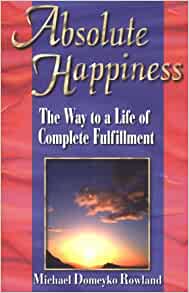
 1.  Absolute Theory of Happiness 

This theory says that happiness is a permanent trait that you too can find or acquire if you only try hard enough.  Happiness is an attribute like integrity or honesty.  Once you find it or get it, all you have to do is hold onto it.  It exists like a pot of gold somewhere buried and if you search long enough and hard enough you can find it.  People in search of happiness try many of the items on my above list in the hope that one of these will give them happiness.

Pros:

  • Treats happiness as a journey or quest.
  • Looks at happiness as a trait that can be acquired.

Cons:

  • Endless searching for something that is usually a dead end.
  • Happiness is not usually outside but more often inside.
  • Happiness is seldom if ever permanent.
  • Having things will not make you happy.

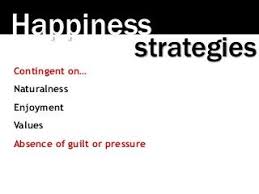
 2.  Contingency Theory of Happiness

imagesThis theory says that happiness is dependent on other things happening in your life.  You must have these other things going on or you will not be happy.  If you have a good family, or good job or you have meaningful work, you will be happy.  Contingency is like a correlation in statistics.  The process of having a good family correlates with happiness but having a good family does not make you happy.  Some things have a higher correlation with happiness than other things.  Some people believe that having less things is more conducive to happiness than owning a bunch of things.

Pros:

  • There is some correlation between happiness and living or doing the right things.
  • Doing the right things may result in some temporary happiness.

Cons:

  • Finding happiness is more complex than simply doing the right things.

3.  Outcome Theory of Happiness

downloadThis could also be called the “Cause and Effect” theory of happiness.  This theory says that certain things or activities will lead to the outcome of happiness.  For instance, becoming an Olympic Gold Medalist may lead an athlete to happiness.

Pros:

  • Great achievements and meaningful accomplishments can lead to happiness.

Cons:

  • No matter how much you have accomplished or how great your accomplishments are, the satisfaction you will receive and the happiness you may derive will only be temporary.

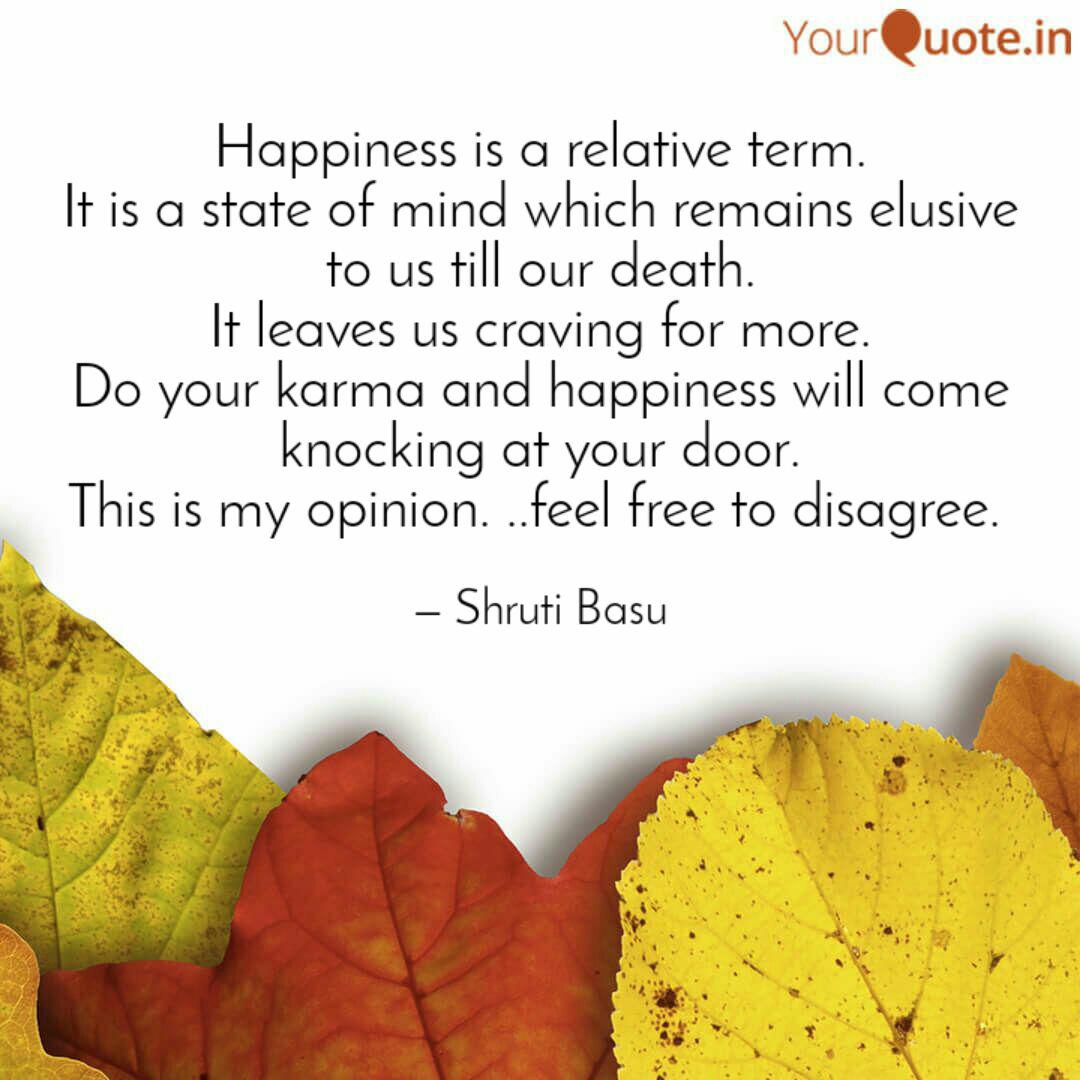
4.  Relative Theory of Happiness

xKgn9039You will always be happy in proportion to how happy others are around us.  If I have a great deal of money but my friends have more, I will be unhappy.  However, if I have a bigger office than anybody else in the company, I will be happier than they are.  The state of being happy will always be relative or in comparison to some other standard that I mark my happiness by.

Pros:

  • Humans have a great propensity to compare themselves to others.  If you are better, you may achieve a sense of happiness from your pride at being better.

Cons:

  • Pride and comparisons will always change. You may be on top for awhile but soon you will be on the bottom.  When you are on the bottom your happiness will disappear.

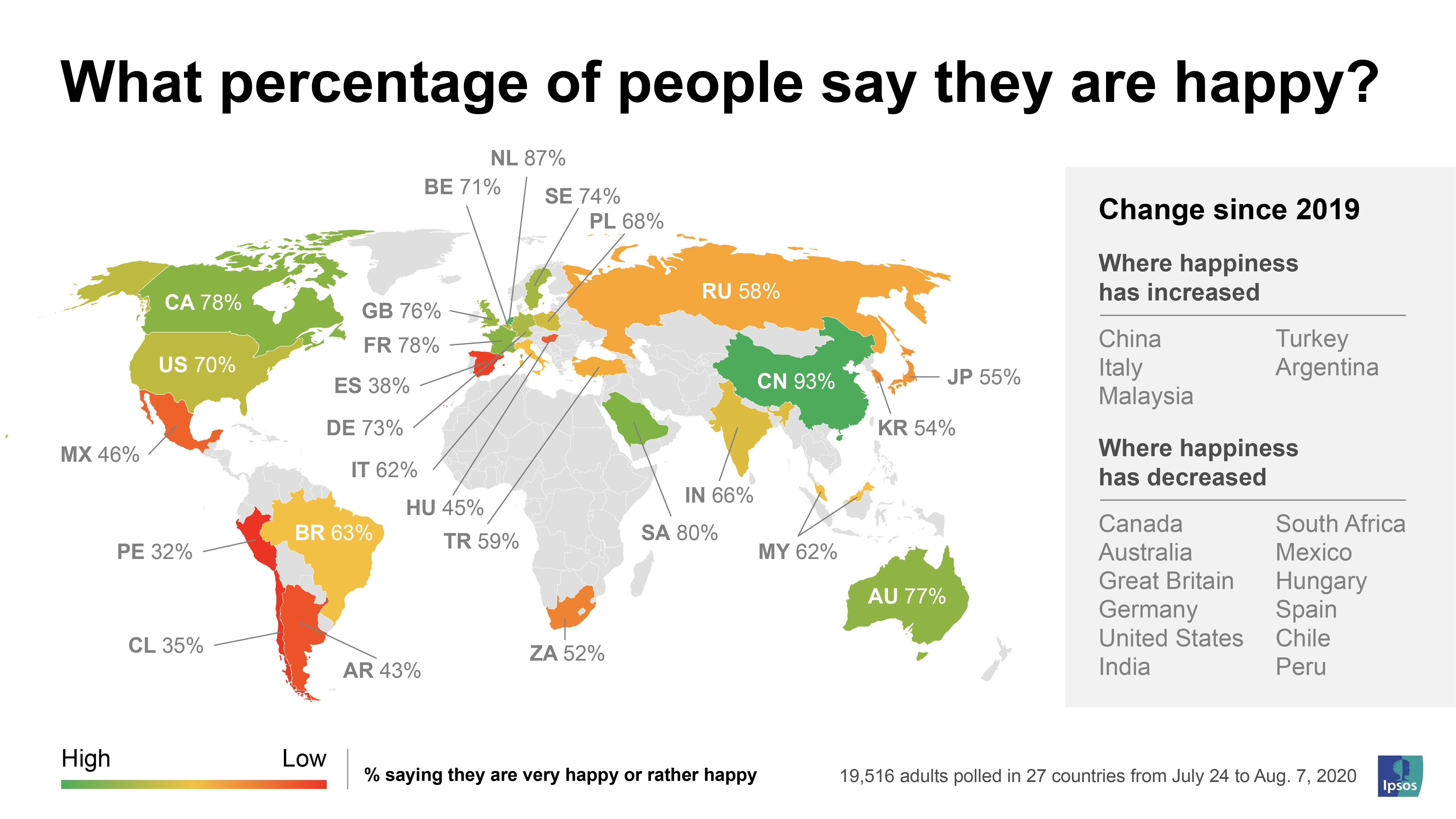
what-percentage-of-people-say-they-are-happy-ipsos

5.  Average Theory of Happiness

Happiness is viewed as an average state of being.  You can never be beyond some mean of happiness.  Perhaps your mean will be different than mine, but you will not be able to go much above or below your limits.  Just as everyone has different physical limits, everyone has different limits to their happiness.  Some people are just happier than others and there is nothing that you can do or change to alter your happiness mean.  You are just going to be average happy and that is that.

Pros:

  • It may be more realistic to be satisfied with life as you know it.  Satisfaction and gratitude will convey a sense of happiness even if you are never the happiest person in the world.
  • You may never be exceptionally happy but you may never be exceptionally unhappy.

Cons:

  • Life may never have peak experiences for you in terms of being happy, happy, happy.

6.  Exceptional Theory of Happiness

bigstock-jumping-happy-young-man-12752945This theory views happiness as something that has no limits.  The sky is the limit.  Extraordinary happiness awaits anyone willing to go for it.  Every day will bring more and more happiness if you only believe it is possible.

Pros:

  • A joy that exceeds all others may come from feeling exceptionally happy.  The best day of your life may be one that you will remember forever.

Cons:

  • Best days are inevitably followed by worst days. Nothing stays up forever.  Or whatever goes up will go down and the further up you are the further down you will fall.

Conclusions:

You are probably thinking about now “Well, I don’t get it.”  Where is the secret that will give me perpetual ecstatic happiness?  Frankly, I have not found it.  Most of my journey through life has taught me that everything has its ups and downs.  There are no absolute truths that exist for all time.  There is no one path to happiness or samadhi.  Life is a cycle.  Today I find happiness, tomorrow my mother or best friend dies.  Can I be happy when they die?  I may not go out and commit Hari-kari, but I doubt that I will be feeling joyous for the next few weeks or perhaps even months.

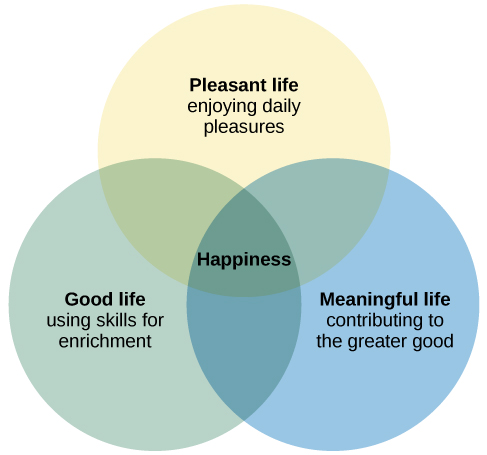
CNX_Psych_14_05_Happiness

I think one mistake we make starts at the very beginning.  We assume or treat life as though it were about the pursuit of happiness.  I don’t think it is.  But I do believe we can be happy for cycles or minor periods in our life when things just seem to be going right.  My formula for achieving these brief periods of happiness is as follows:

  • Live each day the best that you can
  • Do the most that you are able to spread joy and peace in the world
  • Treat everyone you meet and know with love and respect
  • Respect yourself and your accomplishments
  • Do not look for never-ending happiness
  • Never pursue things or accomplishments as a means to happiness

Now and then it’s good to pause in our pursuit of happiness and just be happy. — Guillaume Apollinaire

PS:

One of the comments by a reader noted the “Bluebird of Happiness.”  This reminded me of the famous song by Jan Peerce.  I had not listened to this song in ages and I just went back and listened to it.  The lyrics are wonderful and if my blog has not inspired you to “happiness” maybe the lyrics from the song will.

The Bluebird of Happinesscomposed in 1934 by Sandor Harmati, with words by Edward Heyman and additional lyrics by Harry Parr-Davies. Click the link to hear Jan Peerce sing this wonderful song. 

The beggar man and the mighty king are only different in name,
For they are treated just the same by fate.
Today a smile and tomorrow a tear, we never know what’s in store.
So learn your lesson before it is too late.

So be like I, hold your head up high ’til you find the bluebird of happiness.
You will find greater peace of mind, knowing there’s a bluebird of happiness.
And when he sings to you, though you’re deep in blue
You will see a ray of light creep through
And so remember this, life is no abyss
Somewhere there’s a bluebird of happiness.

The poet with his pen, the peasant with his plow,
It makes no different who you are, it’s all the same somehow.
The king upon his throne, the jester at his feet,
the artist, the actress, the man on the street.

It’s a life of smiles and a life of tears It’s a life of hopes and a life of fears.
A blinding torrent of rain and a brilliant burst of sun,
A biting tearing pain and bubbling sparkling fun.
And no matter what you have, don’t envy those you meet.
It’s all the same, it’s in the game, the bitter and the sweet.

And if things don’t look so cheerful, just show a little fight.
Fore every bit of darkness, there’s a little bit of light.
For every bit of hatred, there’s a little bit of love.
Fore every cloudy morning, there’s a midnight moon above.

So don’t you forget, you must search ’til you find the bluebird.
You will find peace and contentment forever, if you will be like I.
Hold your head up high, ’til you see a ray of light appear.
And so remember this, life is no abyss
Somewhere there’s a bluebird of happiness.

Why You Should Believe Nothing You Read or Hear in the News!

news-icons (1)I want to make an argument as to why most of what you hear or read is biased, prejudiced and based on narrow minded thinking.  Most of what you read will not lead you to the truth but will take you down a path away from the truth.  My argument will also apply to what you are about to read.  I am biased, narrow minded and prejudiced.  So why should you read or listen to what I am about to write?  Well, let’s start at the beginning.

Like many of you reading this, I consider myself somewhat of a truth seeker.  Although, I believe few if any “absolute” truths actually exist.  Nevertheless, I read a wide variety of books and magazines.  I listen to many different sources including TV, Radio, Podcasts, TED Talks, documentaries, and YouTube videos.  I attend training sessions, conferences, and talks by noted experts whenever possible.  I also scan many different news sources each day to find a variety of perspectives concerning political events and popular news.  My friends consider me well informed and very knowledgeable on a wide range of subjects.

maxresdefaultI have been seeking the truth or what might pass as “truth” for most of my 75 years on this earth.  I was considered the “smartest” guy in the room in many of my high school and college classes.  The authorities or those that are supposed to be good judges of truth and knowledge gave me two undergraduate degrees, one master’s degree and a Ph.D. Degree.  Once upon a time, I belonged to many different professional associations and was also a member of MENSA, the so-called high IQ society.  None of my qualifications or associations prepared me any better than anyone else upon this earth to find the TRUTH.  Like most of you, I am still looking and hoping that the “Truth will set me free.”  If only, I can find it.

Fake news-01

A few days ago, I noticed seven different editorials on Google News concerning the Ukrainian War.  Each of the editorials was written by a professional journalist and each espoused some very critical ideas.  Some of these ideas would carry weight with readers and no doubt influence public opinion for good or bad.  Six of the journalists’ names were listed and one was not.  Now most stories we get in the news whether on TV or print are written by journalists.  Less frequently it will be some “policy” expert or high-ranking government official who will be doing an opinion piece or some type of interview.

I started to ask myself a few questions:

  • What are their professional qualifications?
  • How much influence or weight do these journalists carry?
  • How much slant or bias do these journalists carry?
  • Are journalists and the media really qualified to tell us what we should or should not be doing?

I looked up each of the journalists to see what their qualifications were.  Basically, they were professionally trained journalists and most of them had extensive experience in foreign relations.  Neither of these attributes makes them an expert on the Ukraine but it is conceivable that they might have more knowledge in some areas of foreign policy than the general public.  Again, more knowledge does not mean less biases. Here are the news sources and brief bios for the six journalists I researched:

The Washington Post- Liz Sly and Dan Lamothe

Liz Sly (born in the United Kingdom) is a British journalist based in Beirut.  She is currently a correspondent with The Washington Post covering Syria, Lebanon, Iraq and other countries of the Middle East.   She graduated from the University of Cambridge.

Dan Lamothe is an award-winning military journalist and war correspondent.  He has written for Marine Corps Times and the Military Times newspaper chain since 2008, traveling the world and writing extensively about the Afghanistan war both from Washington and the war zone.  He also has reported from Norway, Spain, Germany, the Republic of Georgia and while underway with the U.S. Navy.

NPR – Greg Myre

Greg Myre is an American journalist and an NPR national security correspondent with a focus on the intelligence community.  Before joining NPR, he was a foreign correspondent for the Associated Press and The New York Times for 20 years.  He reported from more than 50 countries and covered a dozen wars and conflicts.

The Wall Street Journal – David Henninger

Mr. Henninger was a finalist for a Pulitzer Prize in editorial writing in 1987 and 1996 and shared in the Journal’s Pulitzer Prize in 2002 for the paper’s coverage of the attacks on September 11. In 2004, he won the Eric Breindel Journalism Award for his weekly column.  He has won the Gerald Loeb Award for commentary, the Scripps Howard Foundation’s Walker Stone Award for editorial writing and the American Society of Newspaper Editors’ Distinguished Writing Award for editorial writing.  He is a weekly panelist on the “Journal Editorial Report” on Fox News.

The Atlantic – Eliot Cohen

Eliot Asher Cohen (born April 3, 1956, in Boston, Massachusetts) is an American political scientist. He was a counselor in the United States Department of State under Condoleezza Rice from 2007 to 2009.  In 2019, Cohen was named the 9th Dean of the Paul H. Nitze School of Advanced International Studies (SAIS) at Johns Hopkins University, succeeding the former dean, Vali Nasr.  Before his time as dean, he directed the Strategic Studies Program at SAIS.

Cohen was one of the first neoconservatives to publicly advocate war against Iran and Iraq.  In a November 2001 op-ed for The Wall Street Journal, Cohen identified what he called World War IV and advocated the overthrow of Iran’s government as a possible next step for the Bush Administration. Cohen claimed “regime change” in Iran could be accomplished with a focus on “pro-Western and anticlerical forces” in the Middle East and suggested that such an action would be “wise, moral and unpopular (among some of our allies)”

The New York Times – Cora Engelbrecht

Cora Engelbrecht is a contributor to the RIGHTS blog.  She recently received her BA in nonfiction writing from Wesleyan University, and now works in New York as a freelance writer, researcher, and graphic artist.  Her interest for human rights and global conflict stems from her time spent researching and writing abroad in Tanzania and South Africa.

rathom-trench-fb

I next turned to the question of how much influence do journalists carry?  The story of John Revelstoke Rathom (1868–1923) is very informative in this regard.  He was a journalist, editor, and author based in Rhode Island at the height of his career. In the years before World War I, he was a prominent advocate of American participation in the war against Germany.

c9713250-e5eb-46c7-8ea9-2810435084fa-9781643139364“Rathom campaigned for the U.S. to enter World War I in support of the British.  Under his management, the Providence Journal produced a series of exposés of German espionage and propaganda in the U.S.  In 2004, that same newspaper reported that much of Rathom’s coverage was a fraud: ‘In truth, the Providence Journal had acquired numerous inside scoops on German activities, mostly from British intelligence sources who used Rathom to plant anti-German stories in the American media.’” –  Wikipedia

It seems logical to assume that since we did enter the war and since the Brits did go out of their way to bias American policy that the efforts of Rathom and others had a major influence on our decision to enter the war on England’s side. America was persuaded by the media that we should enter the war when there was substantial public opinion to stay out of the mess that Europe was in.  My own reading of WW I shows a totally different scenario than from WW II.  I have little doubt that we should have entered the war against Hitler.  However, the picture from WW I is quite different.  I think that each side had equal claims to legitimacy for their war efforts.  But the media heavily influenced our eventual entry into the war.

Next I wanted to see if anyone had opinions about the bias or prejudices that the typical journalist might have.  I found the following comment in a recent article by Politico, “Why Journalists Love War”, by Jack Shafer  03/17/2022

“NBC News reporter Richard Engel, a veteran foreign war correspondent, dropped a tweet a few days after the war began that appeared to lament that U.S. forces hadn’t strafed the huge Russian convoy approaching Kyiv, seemingly unimpressed that such a strike might launch World War III.  Reporters didn’t call in bombers at White House press secretary Jen Psaki’s Monday briefing, but the tone of their repeated questions almost made it sound like they were advocating a no-fly zone and fresh jets for Ukraine.  And the New York Post left no ambiguity about where they stood with its super-partisan “Fight Like Zel” cover headline.”

“The overwhelming majority of U.S. journalists have taken a more subdued position on the war, identifying with Ukraine against the aggressor Russians, but stopping just short of cheerleading. Even so, journalists can’t hide the seductive draw of the bloodworks.  They can’t help themselves. They love war.”

Photojournalist,Documenting,War,And,Conflict

Of course, this is only one opinion.  However, it fit well with my observations.  I have noticed every day calls by journalists for increased efforts to support Ukraine that might well lead to a Nuclear War.  As I read these brash comments, I sit wondering where were the calls to intervene in Nigeria, Rhodesia, Yemen, and Cambodia?  Why are the news outlets pushing a narrative that implies world disaster if the Ukraine falls to Russia?

Listen please!  I would like to see the Ukrainians kick all the Russian asses back to Siberia or some other cold place.  However, I am not willing to start a Nuclear War over the Ukraine.  There have been too many missed opportunities by the West during the past five years that would have avoided the present war.  What is it that brings out the desire to have a nuclear confrontation with Russia?  Nothing I can see except a Democratic Party that needs to look tough and a cadre of journalists pushing a narrative for more and more support by our country for a nation that we do not even have a treaty with.

“The link between safety and ethics may not be immediately obvious, but the same ambitions and economic factors that pressure inexperienced and poorly prepared freelance journalists to enter battle zones also pressure journalists to present the news as they think that their paymasters most want to hear it.”  — https://ethicaljournalismnetwork.org/ethics-safety-solidarity-journalism — Originally published as a chapter of “Conflict reporting in the smartphone era – from budget constraints to information warfare”

A book that I am reading is “The Science of Fear” (2008) by Daniel Gardner.  The following  insight by Gardner is quite pertinent to this discussion.

9780226567198“The media are among those that profit by marketing fear – nothing gives a boost to circulation and ratings like a good panic – but the media also promote unreasonable fears for subtler and more compelling reasons.  The most profound is the simple love of stories and storytelling.  For the media, the most essential ingredient of a good story is the same as that of a good movie, play or tale told by a campfire.  It has to be about people and emotions, not numbers and reason.  Thus, the particularly tragic death of a single child will be reported around the world while a massive and continuing decline in child mortality rates is hardly noticed.” — Pg. 294

Ever since the decline of print news and the rise of the internet, the media has become a cesspool of click bait headlines, gross news reports about inane subjects, media celebrities touted as royalty and increasingly bizarre stories designed to spread fear.  There is no more morality or ethics in the news than there is in a cartel, mafia, or mega-corporation.  It is all about the money and there never seems to be enough these days.  Is the media biased is actually a very stupid question.  Right, left, central it does not matter.  They all have one agenda and that is to sell advertising for their corporate sponsors

My final question was, “Are journalists and the media really qualified to tell us what we should or should not be doing?”  My answer is that they are no more qualified than anyone else on the street or even one of your friends or relatives.  A study done several years ago and published in a book called “Expert Political Judgment: How Good Is It? How Can We Know?” (2005) by Philip E. Tetloc examined the link between experts’ opinions and how often they were right.

Im-an-expert-600x412

Tetloc in his heavily researched study found that experts are often no better at making predictions than most other people, and how when they are wrong, they are rarely held accountable.  Kahneman and Tversky in their book “Judgment Under Uncertainty” (1982) identify dozens of cognitive biases that impact the thinking ability of human beings.  They both later won a Nobel Prize for their work in behavioral economics.  It is often the most highly educated people who suffer from these biases the most.

Thomas Kuhn’s “The Structure of Scientific Revolutions” (1962) dealt with the biases that the scientific community held regarding theories and principles.  Kuhn showed how difficult it was for the scientific community to let go of “old paradigms” and adopt new paradigms.  This was true even when all the evidence showed that the new paradigms did a better job of explaining the subject under study than the old paradigm.  Science history is full of many theories that took fifty or more years to be accepted simply due to the biases and resistance to change that is prevalent among scientists.  This is as true of scientists as it is of journalists, politicians, and the average person.

What is the answer:

A friend of mine said that the most important thing we have to do is to teach our children to question everything.  To question is the heart and soul of critical thinking.  However, we must be cautious lest we raise a nation or world of nihilists.  There is a difference between rejecting everything and questioning everything.

I am not a nihilist though I see a fine line between my thinking and nihilism.  I do not believe in absolute truth, but I think there are approximate truths.  As we learn more and more about anything, our truths get closer to the absolute, but we can never reach it.  I think the same way about meaning in life.  Meaning exists but only in our minds.  It will change many times during our lives.  The same is true for morality and values.  They exist but only in our minds.  Like the Velveteen Rabbit, they become real when we make them so.

Purchasing-Power-of-the-US-Dollar

I used to hold up a dollar bill and ask my students how much was it worth?   They typically replied one dollar.  I asked them why it was worth a dollar?  Answers varied, but the truth or close to it is that it is because people believe that it is worth a dollar.  In terms of labor, ink, and paper, it costs the Federal government 6.2 cents to print a dollar.  In terms of buying value, a dollar in 1926 is worth only 15.58 cents today.  However, this is not an absolute either since the current value of a dollar actually varies from state to state.  The value of a dollar varies about 30 cents from the lowest to the highest state across the USA.  In Mississippi, a dollar is worth $1.16, while in Hawaii, the dollar is only worth 84.39 cents.

So, seeing is believing or is believing seeing?  Is there a difference between perception and reality or are they the same?  Can we ever escape the Rashomon effect?  The biases in perception created by our own desires to protect our egos or the egos of others.

1200-610551-47762564-39573934

There is little I have learned in my life that supports my willingness to accept anything as 100 percent factual, 100 percent truthful or 100 percent valid and reliable.  The solution is to question everything.  Do not accept anything as absolute.  When it comes to politicians, lawyers, salespeople, and journalists, we all need to be on guard.  Their built-in bias is not for the truth but for the dollar or at least 84 cents on the dollar.

quote-the-media-has-enormous-power-the-media-is-undergoing-huge-changes-now-it-seemed-like-thomas-hunt-morgan-67-60-81

 Update:  4/29/22

Just read the following on CNBC.  This “brilliant” analysis by a guy who writes regularly for a variety of news outlets and is listed as a “Tutor” notes the following:

“I think it’s outside the realm of possibility right now that there’s going to be a nuclear war or World War III that really spills over that far beyond Ukraine’s borders,” Samuel Ramani, a geopolitical analyst and associate fellow at the Royal United Services Institute, told CNBC.

Dr. Samuel Ramani’s credentials for this brilliant piece of optimistic analysis is that he is a tutor of politics and international relations at the University of Oxford, where he received his doctorate in March 2021. Somehow this makes him an expert in what Russia will do next in the Ukraine.  His “beyond optimism” comes at a time when Putin is starting to get more and more desperate in his bid to defeat the Ukraine.  Putin is becoming a cornered rat and NATO is pushing him into more and more of a corner.  Despite this, the genius who is less than two years since he finished his Ph.D. degree says “it is “OUTSIDE” the realm of possibility that Putin will launch a nuclear strike.  It would only be “OUTSIDE” if Nuclear weapons did not exist.  Questions I have are:

  • Why is CNBC relying on the credentials of someone with so little expertise to give us such an analysis?
  • How could anyone in their right mind say that something is impossible when that something already exists?
  • What is the “narrative” behind the focus by the Western news?
  • Why is NATO supporting a war when we have no treaty with the Ukraine.


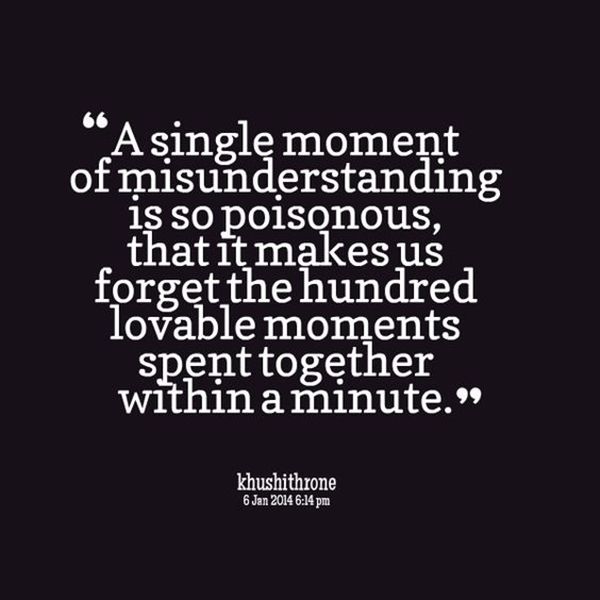
Don’t Let Me Be Misunderstood

Wrote this a while back. The thought never seems to leave my mind. I really enjoyed writing this blog almost as much as I enjoy listening to Nina Simone. I hope you will listen to the song as well as read my blog. The singing and words echo in my mind. Oh! It is so easy to be misunderstood. We want to say and do the right things but somehow they come out wrong. Leave a comment. Tell me about a time that you were misunderstood. What did you do? Did it work out for the best?

Dr. John Persico Jr.'s avatarAging Capriciously

a82908dbb8f703130b52985b74878afa

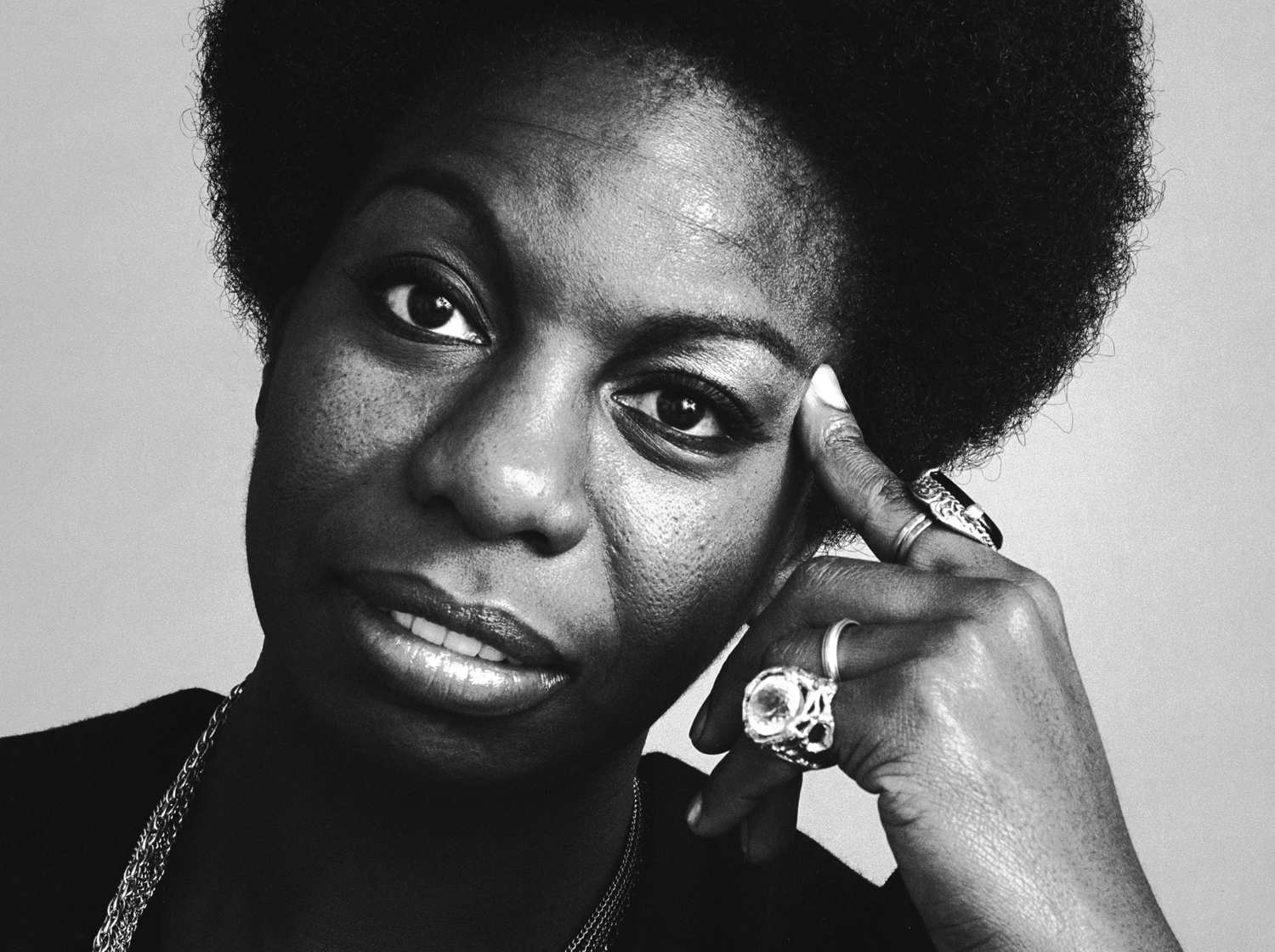
The great jazz singer, songwriter, musician, arranger, and civil rights activist Nina Simone sang the song of the title of my blog back in 1965. Although she did not write the song, the passion that Ms. Simone put into all of her songs would make you think that she was singing from personal experience. Then agian, perhaps, we all have personal experience with the subject of this song.

Click on this link to hear Nina Simone’s rendition: https://www.youtube.com/watch?v=9ckv6-yhnIY

25-nina-simone.w750.h560.2x

There are many people who aspire (some even claim) to have no regrets in their life. I am well beyond either the aspiration or any such claims. I have lost track of the many regrets I have. This song reminded me of one of them. The song evokes memories of one of my famous phrases which I now deeply regret. My regret is having unequivocally and mindlessly accepted the validity of…

View original post 883 more words

Was Chris Rock Funny or Insulting? The Relationship between Time and Humor.

stock-photo-time-to-laugh-comedy-jokes-humor-clock-d-animation-1486604156

I was in an Arizona City coffee shop a while ago and picked up a Casa Grande paper called the Dispatch.  One of the headlines was, “More Time to Kill?”  The headline seemed to exhibit a latent humor or sarcasm.  It was an article about the execution rate in Arizona which is one of the busiest in the nation.  I thought, “Well that would be a good subject for a blog but perhaps too heavy for a Friday.” So lets take a subject that is more fun and save the heavy stuff for next week.  By the way, tomorrow Karen and I are driving back to Wisconsin so I may miss a blog or two.  More need to think about the drive and less about blog subjects.   The issue or question I want to talk about before my drive begins is what do “Time” and “Humor” have in common?

man-holding-laughing-woman

Time and humor are intimately related.  Have you ever noticed that a good comedian has an extraordinary sense of timing?  For a comedian to be funny, their timing has to be spot on.  A comedian has to sense the pulse of the audience as well as gauge the temper of the day.  For instance, jokes about the Ukraine would probably not sound funny today due to the seriousness of the tragedy.  However, comedians often joke about minor disasters and other failings when the time seems right.  The “Slap Heard Round the World” was a joke about another person.  Some feel that Chris Rock went out of bounds with his joke about Jada’s hair because of her medical condition.  Nevertheless, comedians often joke about “off limit” subjects.  When is the time right to tackle a sensitive subject or to make a joke about an issue that will not offend anyone is a difficult question to answer?

120345790360

Some comedians get away with telling racist and sexist jokes. They are able to sense the mood and nature of the audience. They also have an excellent sense of the Zeitgeist.  The Zeitgeist is a German word that roughly translates to “tempo of the times or the sign of the times.”  During the sixties, many of us took ourselves very seriously but today we can look back and joke about hippies, Woodstock, flower children and many of the quaint ideas we had back then.  Just look at how silly the dress and clothes look from back in the sixties.  We thought we were so cool then and now we laugh at how clownish we all looked.

28c12d1547f9b642ccf4a88da67e1ea6

If you watch the evening talk show hosts, they are masters at getting the timing just right with their audience. Even when they flub a joke, they are able to make an instant comeback.  Not only do they have to have excellent timing for their jokes but the selection of guests is very critical as well.  All of us want to see guests who are current in the public mind for one reason or another.  Perhaps they have an upcoming movie, divorce or some other noteworthy event.  If they are not connected to any significant happenings, we are not likely to be as interested in them.  Being a celebrity has a great deal to do with timing as well as talent.  Great celebrities are great marketers.  This is probably why a jerk named Trump became president.

How do you deal with humor in your life?  What in your life today can you laugh at that you might not have been able to years ago?  What do you regard as so serious today that you do not ever think you could laugh at?  What if you are wrong?  Is your life so serious that you cannot find anything humorous about it?  How could you add more humor to your life?  How could you find a sense of better timing in your life to deal with humor?  When was the last joke you told?

Persico Challenge:  Issue 2 – How Can We Save the Environment?

This is the second of three “Challenge” questions that my friend Jane Fritz and I agreed to reply to.  We each sent three questions to the other and we have 12 months to reply to each question.  I answered Jane’s first question on Feb 19th of this year.  (See American Exceptionalism).  This is her second question followed by my reply.

Second Challenge Question:

There is general agreement that man-made climate change is not only real but largely responsible for the alarming increases in extreme weather events around the world: devastating wildfires, historically intense hurricanes, cyclones, and tornadoes, punishing droughts, etc.  It appears that the world leaders have committed to too little, too late to save our planet, undoubtedly because of initial damage to economies if the needed transitions were made.  What creative (and acceptable) incentives can you imagine that could accelerate the needed transitions away from fossil fuels?

This question reminds me of the song “Que Sera, Sera” by Doris Day and Frank De Vol.  In English, it is “Whatever will be, will be.  The futures not ours to see.”  With all the doom and gloom that I see in the news and hear in the news, I have become very cynical.  Should I tell you Jane, that once upon a time there was general agreement in the world that the Earth was flat?  Or that the Sun was actually in orbit around the earth.  Or that no one would ever break four minutes per mile running.  “General agreement” is a dangerous trope.

Scientists now tell us that we have one last chance to stop the disastrous climate change that is afflicting the earth.  These are the same scientists who wanted to devise better and better ways to harness the weather and change weather patterns.  They are now advising us that it might be too late to avoid even worse weather patterns than we have already witnessed.  “Don’t bother getting out your divining rods, cause there ain’t no water down here.” 

Do I disagree with the “majority” of weather experts?  Do I stand with the minority and the Republicans who dispute the evidence that we have really screwed up the environment?  Is climate change simply a big hoax?

“No, no and several hundred other no’s.” 

It is not that I doubt that we have really messed up the planet earth.  It is more like I don’t know if I really care anymore.  Once upon a time I was sitting on a plane next to a woman who started to complain about the increasing natural disasters that were killing more and more people.  Her attitude was one which embraced the idea of human superiority and that in terms of evolution, we were clearly at the top of the heap.  I disputed these ideas and asked her “why she thought that humans had any more right to survive as a species than ants or termites?”  She gave me an angry look and did not say anything else to me for the remainder of the flight.

I think humans could destroy themselves as a species and that might be a good thing for the planet.  Perhaps, the human brain was not a very good evolutionary development.  Looking around at the people I see; it does not seem that it has resulted in truly positive benefits for humanity.  Over my seventy plus years, I have seen little growth in human intelligence.  In fact, given the level of stupidity that abounds today, it appears that intelligence is evolving in the wrong direction.  Humans tend to have short -sighted thinking and regard today as infinitely more important than tomorrow.

For example, here in Arizona this week, the House has passed a bill to remove taxes from firearms and ammunition.  The reasons given by the sponsor of the bill is that firearms are necessary for the health and safety of the population.  Gun deaths keep going up, violence with guns is an epidemic in the USA but we have people who believe that more guns will make us healthier and safer.

Another bill that was recently passed (way down here in Arizona) calls for parents to have access to school materials before they are given to students to ensure that parents approve of what the teachers are teaching.  God forbid that teachers might indoctrinate students with CRT or LGBTQ+ theory.  CRT is not a disease but a series of classes dealing with a modified version of American history which claims that slaves did not spend most of their time singing, dancing, and partying, much like some Americans actually believe.  Proponents of the bill want their kids to believe that slaves were having so much fun, they did not want to leave the plantation, even after the Emancipation Proclamation was signed.

As for LGBTQ+ theory, it would take more time than I want to devote to this issue to explain.  Just know that people object to having transgender people in cisgender bathrooms.  They believe that bathrooms were designed by the Founding Fathers and not Founding Mothers for cisgender people.  How do they know this fact?  Well, I am certain that they must have heard it on Fox News.  Somewhere either in the writings of Benjamin Franklin or Thomas Paine, our Founding Fathers stipulated who could use which bathroom.

So you see, I am not too impressed by the thought processes of either our current leadership or the people that voted them into office.  We have politicians bringing snowballs into Congress to prove that global warming is a myth.  Congress routinely scoffs at bills to promote environmental regulations or efforts for green energy.  Instead, oil, coal and gas companies continue to get obscene subsidies to look for more fossil fuels.  Somehow, more of what has already contaminated and is damaging Mother Earth will restore her health and vitality.

Getting back to Ms. Fritz’s question of what can be done, if anything, to further mitigate environmental damage from climate change, I am not really avoiding the question Jane.  It is just one that I am taking less and less seriously each day.  Call me selfish but I have only about ten years to live, given present actuarial tables, and if I can make it through the heat, tornadoes, snow, floods, drought, hurricanes, and earthquakes for another ten years, I will pass GO and collect my just rewards, whatever they may be.  I am quite certain that I will be free from worrying about climate change.  As for the people left on the planet earth, “They have made their bed, so let them lie in it.”  They will drive around the ruins of our planet with their gas guzzling trucks looking for food that is not too contaminated to eat.  And as they say, “Lots of Luck.”

Unfortunately, too many people on this planet are suffering from climate change who had nothing to do with causing it or contributing to it.  It has been the richer nations in the world with their bloated economies and militaries who have been hell bent on ignoring the repercussions of unbridled capitalism, consumerism, and militarism.

The people who live in the less developed parts of the world as well as millions of the world’s poorest people are suffering disproportionally from the disastrous impacts of the changes taking place in our weather systems.  It is no fault of these people that countries like the USA have done more of the damage to the earth’s environment.  The USA and other developed countries pursue policies that ignore negative environmental impacts from efforts to increase Gross Domestic Product (GDP) at any cost.  Led by greedy leaders who have little concern for the future and are only concerned with the price of their stocks, the earth has become a cesspool contaminated by fossil fuels, pollutants, pesticides, herbicides, rampant development, and endless tons of garbage.  Our politicians are the Pied Pipers who instead of exercising ethical leadership instead pander to the public giving them what they want but not what they need.  Anything to get reelected has become the slogan of politicians in USA America.

If I could only send the “guilty” people to hell to suffer from fire and droughts, I surely would.  I would start with those who have chosen to lead us down this unsustainable road.  The common people elect their leaders in the mistaken belief that they will do their best to represent their interests.  The average person erroneously believes that their leaders have their best interests at heart.  Nothing ever believed by the human race could be more mistaken than to think that the interests of the rich and the greedy are aligned with the interests of the less fortunate.  There may be no true innocents in the theater of climate change, but business leaders, political leaders and even educational leaders are more guilty than others.  The innocent will suffer along with the guilty as our earth disintegrates into a place that in a not-too-distant future will no longer be habitable for humans.

What would I do to stop the damage we are now doing to Mother Earth?  This was Jane’s original question.  Here are five things I would do today:

  1. Cut Oil, Gas and Coal subsidies to zero for the fossil fuel industry.

As long as the fossil fuel industries continue to be subsidized, they will have less incentive to migrate to more sustainable energy sources.  Much of the subsidies to these industries have simply resulted in insane profits that benefit the rich and wealthy who own these industries.

“Fossil Fuels Received $5.9 Trillion In Subsidies in 2020, Report Finds. Coal, oil, and natural gas received $5.9 trillion in subsidies in 2020 — or roughly $11 million every minute — according to a new analysis from the International Monetary Fund. Explicit subsidies accounted for only 8 percent of the total”. –  Oct 6, 2021

  1. Create financial incentives for employers that allow workers to work from home.

For many years, I preached the economic benefits to workers, employers, and the environment from allowing people to work from home.  Most often my words fell upon deaf ears.  It took the pandemic for some people to finally wake up and realize the savings in time, money, injuries, and mental health that could accrue from more liberal work at home policies.  Unfortunately, many employers want to roll back the clock and are now talking about bringing their employees back to the office.  This is short-sighted and stupid in the extreme.

“Sixty-one percent of workers said their productivity increased from working remotely, according to an Upwork survey. And an Upwork survey of hiring managers found 32.2% of them said they saw overall productivity rise as of late April, compared to 22.5% that felt it decreased.” – 5 ways remote work is changing the economy for the better

  1. Create financial incentives for people to buy solar cars and participate in other “green” efforts.

If we can provide incentives to the fossil fuel companies, there is no reason we cannot provide incentives to people to buy solar cars, to practice recycling and to start making sustainability a part of their lives.  Living down here in Arizona, you have only to look at hundreds of golf courses spewing water on Kentucky bent grass fairways, housing developments with ponds and fountains draining water that is quickly evaporated into the atmosphere.  Here in my area, the recycling bins were recently removed because they cost the county too much.  Many people who could not afford garbage removal were dumping their garbage in the recycling bins.   Perhaps, if the average people had more access to funds and subsidies we could begin to create a mindset that valued recycling, reducing and reuse.

“With market incentives, sources of pollution can see an economic value in reducing pollution because doing so saves them money. Consequently, the difference between a traditional regulatory system and economic incentives can lead to several public health, environmental, and economic benefits.”   The United States Experience with Economic Incentives for Protecting the Environment

  1. Develop a campaign of “Anti-Consumerism.” Make it patriotic to stop buying so much junk and to start saving. 

Everyday USA Americans are bombarded with advertisements for things that you could not even imagine.  Consumers are inundated with ads that tell them how much smarter they will be, how much healthier they will be, and how much happier they will be if they only bought this or that product or service.  Not one of the great religious prophets ever told anyone that buying something or owning something would make them happier.  However, the consumer religion in the USA sports such mantras as, “shop till you drop,” “bigger is better,” and “he/she who has the most toys wins.” Years ago, we started being exposed to more and more slick Madison avenue advertising.  Much of it was shrewdly designed to play to the fears of the average person.

“Fast forward to 2021, and although there are no official figures, the average person is now estimated to encounter between 6,000 to 10,000 ads every single day. With the figures nearly double that of 2007, how exactly did we get here? And how did the figure increase so much?” — How Many Advertisements Are We Exposed to Daily?

We need to create a campaign to help people understand that it is a patriotic duty if not to the world at least to their country to help create a sustainable environment for future generations.

  1. De-Militarize the economy

Last and hardly least, we have a budget for the next ten years that will provide more than 3.2 trillion dollars to develop weapons and military hardware to keep the USA safe.  The belief that safety lies in having the most guns or the biggest guns has been spread by what Eisenhower called the Military Industrial Complex.  It is offensive in the extreme to realize that both sides of the aisle, Democrats and Republicans almost unilaterally voted to increase the military budget over the next ten years.  It took months to try to pass Biden’s “Build it Back Better” plan which ultimately was pared down to a trickle but in less than a few weeks, the military budget was not only passed but increased.  The US military budget is now greater than the next nine largest military budgets in the world COMBINED.

“In the councils of government, we must guard against the acquisition of unwarranted influence, whether sought or unsought, by the military-industrial complex. The potential for the disastrous rise of misplaced power exists and will persist. We must never let the weight of this combination endanger our liberties or democratic processes. We should take nothing for granted. Only an alert and knowledgeable citizenry can compel the proper meshing of the huge industrial and military machinery of defense with our peaceful methods and goals, so that security and liberty may prosper together.”  — Eisenhower’s farewell address

Do we have the will or the leadership to make these changes to current policy?  Can we make the hard choices that will save our environment for the future?  I doubt it.  To date, we have continued to make choices for the short term.  Given a brain and incentives that seek short-term goals and benefits over long term goals and benefits, I do not see a light at the end of the tunnel where change might start to take place.  True, here and there a few seedlings seem to take root, but these exciting efforts are soon choked out by the weeds that abound in our societies.   These weeds start with greedy leaders more concerned with their own short-term interests than with the constituents who elected them.  Shame on voters for being so stupid, but more shame on the leaders who promise and promise but actually deliver lies and lies.

PS:

It is always gratifying to hear one’s remarks vindicated by those who have more credentials and expertise. Yesterday morning, NPR was interviewing Rachel Cleetus of the Union of Concerned Scientists, about the latest U.N. climate report which is focused on ways to combat climate warming. Here is brief excerpt from their talk:

RACHELL MARTIN: We know that the world is way off track from meeting the goals that were set out in Paris in 2015. What do IPCC experts say is necessary in order to turn things around?

CLEETUS: Yeah, the IPCC report that was released yesterday is a stark warning that global emissions, heat-trapping emissions, are far off track. We’re poised to exceed 1.5 C and even 2 degrees Celsius if we stay on our current path. But it’s also a source of hope, because the report says that we can cut emissions in half by 2030. We have the solutions at hand. They’re within reach. What’s been missing is political will. So we are in this dire climate crisis right now because of decades of failure in global leadership. Fossil fuel companies focus on their profits. This is what has got us in this quandary. But we can get ourselves out. The solutions are there.

This interview was on National Public Radio two days after I wrote my blog. In my blog, I also blamed political leadership or lack thereof for the climate crisis we are now in. For the full interview you can go to https://www.npr.org/2022/04/05/1090992355/the-latest-u-n-climate-report-is-focused-on-climate-warming-solutions

The full interview is about five minutes and worth listening to.

Good Days and Bad Days

5032664-Usain-Bolt-Quote-You-have-good-days-and-bad-days

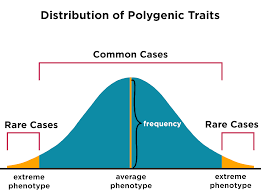
It is a well-known fact, perhaps the only “fact” that is not disputed anywhere by anyone in the world.  This fact is that we all have “good days and bad days.”  Now some people might argue that there is a normal bell-shaped curve for humans that applies even to this fact.  You probably learned in science that almost all human traits and characteristics follow the “Normal” bell shaped curve.  If this is true, then some of us have more bad days than others and some of us have more good days than others.  That would not seem to be very fair though.  This raises the primordial question “Is life fair?”  We all know the answer to this question because we have heard it from our parents many times and at a very early age.

curveI suppose in one sense, “life is not fair” means that life is indeed following a bell-shaped curve and some of us are on the undesirable end.  In other words, some of us are too short, too fat, too unappealing, or any number of other less-desirable traits that we find on the extremes of the bell-shaped curve.  Last night I was watching a 3-year-old do stunts on a sized down motorcycle.  I could not do these stunts if my life depended on it.  This young boy was a natural on the motorcycle.  He took to it like a fish to water.  We have all seen and perhaps envied some of the more fortunate on our bell-shaped curve who can do things we only dream about doing.  For those of us on the wrong end of the bell-shaped curve, life will never seem fair.

Well, does this “unfairness” also apply to “good days and bad days?”  Are some of us destined to have more bad days than others?  I woke up this morning thinking about this question.  Lately, I seem to be having more than my share of bad days.  Is it my attitude?  Is it just the run of the draw?  Is it something I am doing or not doing?  Can I change my bad days to good days by working harder or smarter?  Should I see a doctor or a shrink?  Is there a pill I can take to overcome the bad days or to change myself in some ways so that I have more good days than bad days?  A pill like this might be very popular.  Of course, some would argue that we have enough artificial chemicals to help alleviate “bad” days, but these chemicals or drugs only lead to worse days in the long run.

a-complete-guide-to-meditation-722x406

I have spent a lifetime, seventy-five years seeking wisdom.  I have looked for nirvana in high and low places.  I have read the books of the great philosophers.  The writings of the greatest thinkers of all time.  I have looked for satori in meditation, life everlasting in prayer, enlightenment in contemplation but still I seem to remain stuck on this loathsome bell-shaped curve.  Some days are good and some bad.

Aging seems to bring more bad days than good.  Each day the phone rings, I pick it up wondering who or which of my friends have died now.  I admit I have a hard time with death.  I wonder if it is my death I fear or the death of so many people that I have loved or admired.  I read and read about how to conquer death.  How to accept death.  How death is inevitable.  How everyone I see walking around will die eventually.  How death is the “next great adventure.”  Will death find me starting a new life?  Will it find me greeting old friends?  Or will death simply be a deep sleep that nothing can disturb me from?

unnamedI understand why so many people want to believe in heaven and hell.  It would be much easier to go on living peacefully if I could really believe that there was someplace better to go to than this earth I now reside on.  Too many bad days now seem to intrude on my equanimity.  You and I and everyone else that resides on this 3rd rock from the sun are abused and tormented every day with disease, starvation, accidents, environmental devastations, and pandemics.  I could handle all of these things but for one thing.  It is called “mans’ inhumanity to man.”  The stupid cruel things we do to each other over and over again.  The wars, murders, and injustices that we inflict on other human beings.  And it is not just the average person that inflicts these cruelties, it is the “best” people in the land.  In fact, it would seem that the inhumanities done by those with the most money, most intelligence and those we call our leaders are the worst of all the brutalities and savagery that we see in the news each day.
A friend of mine once told me that if you want people to listen to you, you must give them a positive message.  Give them hope.  Give them faith.  Give them love.  The greatest prophets (as opposed to greatest thinkers) all spread a message of love and charity.  The great message of Jesus, Buddha and Muhammad was the need to care for others and to do the best you can to make a difference in the world.

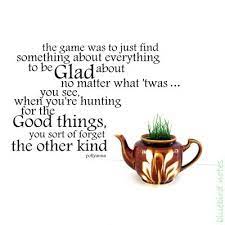
When I give up on our ability to make a difference, I fall into gloom, doom, and despair.  But how can we not give up, when we all seem so helpless to really make a difference.  None of our leaders were able to stop the Ukrainian war from starting.  Could I have done any better?  Now we read each day about nonstop atrocities being committed against a people than only wanted to live a good life in peace with their neighbors.  How can I not feel like it is a bad day when the news, radio, texts, chats and television all besiege me with unrelenting gloom and doom?  Is there an antidote to despair?  Is anyone who is optimistic simply a naïve foolish Pollyanna?

polly

There is one solution that I have found.  No matter how little, no matter now small, no matter how much, there are things in my life to be grateful for.  These people and things bring me joy and happiness.  When I focus on these things, my mood lifts.  The hardship and travails of life do not seem so bad.  These things and people will not be with me forever.  As I mentioned earlier, each day seems to bring news of a once former friend who has now embarked on a last great journey.  So we must realize that everything is temporary but that does not matter “Right NOW.”  Since right now, my joys and happiness are right in front of me, waiting to be appreciated and waiting to be loved and cared for.  These joys are the friends and people I know and the people I have yet to meet.

oyster

The aphorism that “the world is my oyster” is a beacon that I can always tack to.  A sailor must have a North Star to guide his or her travels.  Each of us must have a direction to lead us on our journey through life.  Without a direction, we sail in circles and life seems meaningless and cruel.  Find your North Star and you will find your happiness.  Just remember there will always be days when you will lose your way.  We must reset our rudder and readjust our sails and start out again and again and again.  Life will always be a journey and not a destination.

“Light is sweet,

and it pleases the eyes to see the sun.

However many years anyone may live,

let them enjoy them all.

But let them remember the days of darkness,

for there will be many.

Everything to come is meaningless.”

― King Solomon Son of David

What does Springtime mean for you?

HI, I wrote this 12 years ago. It is a paean to Spring. It seems appropriate to repost on this first day of Spring.

Dr. John Persico Jr.'s avatarAging Capriciously

Summer is now in the air in Minnesota but I think it is still Spring I love best. Spring, the time of year when we start thinking about taking out the lawnmowers, planning vacations, worrying about taxes, planting flowers and getting outside more. The cold weather and short days are behind us and we get peeks at the eventual coming of summer. The buds have appeared on the trees; snow is gone, lent is over and green becomes the dominant color. The apple blossoms, tulips and lilacs are georgeous this year. Each Spring seems to have its own personality. Spring signifies renewal and rebirth. The cycle of life starts again with Spring.

For each of us, Spring brings a different set of meanings and a different response. Some of us will think of romance. Springtime in Paris seems magical and many of us have visions (or perhaps memories of visiting…

View original post 345 more words

All About that Money

its all about the money

Because you know it’s all about that money

‘Bout that money, no people

It’s all ’bout that money, ’bout that money, no people

It’s all ’bout that money, ’bout that money, no people

It’s all ’bout that money, ’bout that money (money, money, money, money)

I want to thank Meghan Trainor for the inspiration for my blog this week.  Her song “All About That Bass” is one I have listened to many times.  If you have not heard it, it is a great tune.  But be sure to read the lyrics.  The lyrics tell you something about our current attitudes towards health and beauty.

My second inspiration for this blog came from a recent James Hightower article in his newsletter “The Lowdown, Volume 24, Number 2, February 22, 2022.”  The title of the article was “Gouge Consumers -> and Blame Joe Biden.”  A good friend of mine who I often discuss politics with sent me this article and wanted to know my opinion.  At first glance, I thought it resonated quite well with my series on corporate greed.  “It’s all ‘bout that money.”

Hightower argues that the Republicans want to do anything they can to pin the problems with the inflationary economy on poor Joe Biden.  Joe and the Democrats are (as usual) caught between the proverbial rock and a hard place.  According to Hightower, Joe is being unfairly blamed for an inflationary spiral that is actually caused by corporate greed.  This greed is aided and abetted by Republicans who wine and dine the fat cats so that they can get their coffers filled with campaign contributions come election time.  So far so good right?  “It’s all ‘bout that money.”

However, this scenario has several major flaws in it.  Let me list three erroneous assumptions that I will dissect in this blog.

  1. By rallying the American people, the Democrats can curtail the power of the corporations to control prices and win the votes of the adoring populace.
  2.  Inflation is the major enemy of America, and it must be returned to the Pandora’s box that it somehow escaped from.
  3.  The Democrats (If they control Congress) will be motivated to make systemic changes to the power structure that gird elections in America today. This means making major changes in corporate charters, anti-trust laws and the military industrial complex.

 Let us look at each of these assumptions to see how I think they really will or can play out.

  •  By rallying the American people, the Democrats can curtail the power of the corporations to control prices and win the votes of the adoring populace.

Americans have benefited for many years from an economic structure which traded off low prices for corporate power.  Corporations have since the 1950’s shucked off most of the power restraints that had been imposed during the era of the “Robber Barons.”  Little by little, inch by inch and year by year, corporations gained back more and more power.  At some point, they gained enough power to dictate the laws that they would play the capitalism game by.  Congress stood by as these powerful companies gained this power.  The Citizens United Decision is one manifestation of this situation.  “It’s all ‘bout that money.”

What did the American people get in return?  Simply the ability to shop nonstop.  To celebrate profligacy with the axiom that everything in America must be bigger and bigger.  From car engines to houses to burgers, the impelling religion in America is that more is better, bigger is better.  He or she who has the most toys wins.  It has become a cornerstone of American life to buy, buy and then buy some more.  The damage to the environment has been ignored.  Just as long as there is cheap gas, cheap energy and cheap food, the hell with the climate and the hell with any economic restraint.  “It’s all ‘bout that money.”

Biden will do everything he can to stop gas prices from rising.  But he is powerless to stop them from doing so.  The Republicans are like pigs wallowing in mud.  They can fling accusations everywhere and they will hit their target.  The Democrats are trying to tell people that the higher gas prices are the sacrifice we must make for Ukrainian Freedom.  This is laughable.  Since when have Americans been willing to sacrifice for anything these past fifty or so years?  For the environment?  For the poor?  For minorities?  For Immigrants.”  I should mention the unwillingness of millions of Americans to follow a mask mandate or vaccination requirements to help stem the Corona virus pandemic.  Our country has become so self-centered and narcissistic that the only thing that motivates us is our wallet and how much money we can spend on gas guzzling pick-up trucks.  “It’s all ‘bout that money.”

To be honest, I also own a 2011 Ford F150 pick-up truck.  If gas goes up to twenty dollars a gallon, I will gladly junk the truck and either walk more or travel less.  I realize that for many people this may not be an option.  However, it is also a fact that many pick-up truck owners seldom use the “pick-up” capacity of their trucks or tow anything.  The main purpose for many owners of a pick-up truck is a status symbol.

“The high-spec, luxuriously equipped pickup truck has become a status symbol again, argues Chris Woodyard for USA Today. ‘Driven by cheap fuel, a surging economy and a rising stock market, more buyers are willing to pay as much for a richly appointed truck as they would a fancy Mercedes-Benz or Lexus sedan,’ he writes.”

  • Inflation is the major enemy of America and that it must be returned to the Pandora’s box that it somehow escaped from.

Maintaining a stable and consistent economy is not a one-time deal.  It is a process that involves a continuous juggling act with many different balls.  Some of the balls include, unemployment, interest rates, deficit spending, environmental regulations, wage, and price controls.  There are many other balls, but my point is that no single ball will keep the economy on an even keel.  “It’s all ‘bout that money.”

Economic spirals and economic adjustments are inevitable.  They have been since the beginning of the world.  Complicating the juggling act is that now more than ever we are in a global economy where the actions of many other actors can distort or influence the juggling act.  No one nation has the power to control the global influences that impact all of the world’s economies.  A misguided reliance on military power can to some extent be blamed for the many conflicts that disrupt the lives of average people who simply want to live a good life and have the freedom to choose how they live.  “It’s all ‘bout that money.” 

_118478577_optimised-us.inflation-nc

Biden will be blamed for the economy since the “blame game” seems to be the major policy element used by both parties.  Their reliance on this blame game shows their contempt for the American people since they assume that most of us are either too stupid or too myopic to understand that the President has very little control over the economy in the short run and to some extent even in the long run.  More important are the influences of the various economic policies and economic philosophies guiding how the juggling will be done.  I can safely say that economists are continually wrong but also continually readjusting their models to better stabilize and adjust the economy.  Just as new variants of the Corona virus seem to be continually emerging, new economic theories are continually being developed to better explain economic realities.  “It’s all ‘bout that money.”

  • The Democrats (If they control congress) will be motivated to make systemic changes to the power structure that gird elections in America today. This means making major changes in corporate charters, anti-trust laws and the military industrial complex.

If past is prologue, I will bet that the Democrats will not do anything major to upset the corporate apple cart that they as much as the Republicans depend on to get elected.  I have not seen Democrats, progressive or not, supporting term limits, redoing corporate laws, corporate charters, monopolies, monopsonies or global trading powers.  For the past fifty years, the Democrats, well intentioned sometimes, have let themselves be out-thought, out-planned and out maneuvered by their slick cousins the Republicans.  The Republicans scream, threaten and berate the Democrats for the exact same behaviors that they exhibit when they are in power.  What do the Democrats do?  They maintain that they are “taking the high road” when their cousins are taking the low road.  “It’s all ‘bout that money.”

The new ten-year budget for the US military was passed after an increase from 2.8 trillion dollars to 3.2 trillion dollars by a bipartisan vote.

“The bill, which angered antiwar progressives who had hoped Democrats’ unified control of Washington would lead to significant cuts in military spending, passed overwhelmingly on an 89-to-10 vote.  The lopsided votes, both in the Senate and the House, which passed the legislation last week, underscored the bipartisan commitment in Congress to spend huge amounts of federal money on defense initiatives at a time when Republicans have balked at spending even a fraction as much on social programs.”

Over the past twenty or so years, every time we have gone to war whether in Iraq, Libya, Yemen or Syria, the Democrats have linked arms with the Republicans as we embark on yet another unsanctioned war to protect American interests.  The only interests I ever see us protecting are our oil interests.  American soldiers are fodder for American industry in the sense that it is their lives and bodies that are sacrificed so that Global corporations can make ever greater profits.  “It’s all ‘bout that money.”

US-PCE-2021-08-27-YOY-

So pardon me please, if I am skeptical of the Democrats or if I see the Democans and Republicats as more or less Tweddle Dee and Tweddle Dum.  Many people have said that we need a third party.  In some ways, we did get a third party.  The Tea Party became the Republican Party and kicked out the old-time Republicans.  We still have two parties.  I think it is high time we start a Progressive Party and leave the lame Democrats to party with their Republican Cousins.  Perhaps there are enough people who want to see major changes in Government and will allow us to get rid of the ever running, ever campaigning, ever raising money, lifetime professional politicians.  “It’s all ‘bout that money.”

“Net worth data compiled by the nonpartisan Center for Responsive Politics for 2018, the most recent year available, shows that almost two-thirds of U.S. senators have a net worth exceeding $1 million. A few of them are exceptionally wealthy.”

Years ago, I voted for the best person regardless of party.  The past eight or so years facing Trump and an increasingly right-wing Republican party, I succumbed to the “Lesser Evil” concept.  I voted for the Democratic candidate regardless of whether or not I thought they would make much of a difference.  In the past, I seldom voted for a Democratic candidate.  I voted for people like Ross Perot and Ralph Nader and many others who were given little or no chance of getting elected.  I was told that “I threw my vote away.”  Sad to say, I used the same argument on many friends as I encouraged them to vote for Hillary or Biden.  I am back to the “old” John. 

It’s all ’bout that money, ’bout that money, no people

It’s all ’bout that money, ’bout that money, no people

It’s all ’bout that money, ’bout that money (money, money, money, money)

PS:

Why is it that Politicians keep screaming about tax cuts and the need to cut taxes but Tax Revenues by State (some exceptions) keep growing?

Real_Tax-Revenue_19-12_update_650px

Previous Older Entries Next Newer Entries