Where Have All My Young Friends Gone?

As many of you know Pete Seeger died on the January 27, 2014 at the age of 94.  He was one of the greatest folk singers and protest singers of all time.  His mission in life was to spread peace through his music and songwriting.   The song “Where have all the flowers gone” is widely attributed to Pete.  If fact, Wikipedia gives the following etiology:

The first three verses were written by Pete Seeger in 1955, and published in Sing Out! magazine.[1] Additional verses were added by Joe Hickerson in May 1960, who turned it into a circular song.[2]  In 2010, theNew Statesman listed it as one of the “Top 20 Political Songs”.[4]

Where_Have_All_the_Flowers_Gone-_(film)I have taken the liberty of altering the verses of this song for my blog.  I was reminiscing on some old photos the other day about friends, dreams, hopes, aspirations and loves that are now long gone.  Perhaps my recent surgery has made me realize my mortality.  While I never thought or even hoped to live forever, I often felt that I might.  Friends were always telling me how strong, vital, energetic and healthy I was.  I prided myself on my condition and my ability to overcome the normal aches and pains of the world.

I would like to use each “modified” verse from Pete’s song to simply express some feelings that I have about life and death.  Meditations on life and death were the purpose of this song, so I am staying true to its roots and intentions.  So many great singers have sung this song that it is hard to choose one to listen to.  However, as with many of my writings, I encourage you to click on the link and then listen to the song as you read my blog.  For someone to sing this song, I can think of no one more fitting and appropriate then Pete Seeger:  Where have all the flowers gone?

Where have all my young dreams gone, long time passing?
Where have all my young dreams gone, long time ago?
Where have all my young dreams gone?
Young friends have picked them everyone.
Oh, when will they ever learn?
Oh, when will they ever learn? 

I grew up with hopes and dreams for my life and the world.  Like many a young man, I ignored many of these dreams or did not realize the dedication and effort that it would actually take to make them a reality.  I played around with having my cake and eating it.  I thought that those who had “made” it got lucky or as we used to say in my old neighborhood, “They got the breaks.”  Other friends plucked some of these dreams as many of them were common to our culture.  I grew up as a “Baby Boomer” having been born on the cusp of this new wave in 1946.  We were going to change the world.  We would end war, sexism, racism, greed, hunger and environmental damage.

Where have all my young friends gone, long time passing?
Where have all my young friends gone, long time ago?
Where have all my young friends gone?
Gone for careers everyone.
Oh, when will they ever learn?

Something happened though.  Protests were difficult.  The system did not change overnight.  Peace was elusive.  The people we thought wanted help spurned our offers.  We could not fix the world overnight.  The world resisted our best efforts.  So we decided to just fix ourselves.  Many of us went back to college, either on the GI bill or with loans, grants and parental support.  We decided that maybe it was the way to change the world.  On the way to our super careers, we got married, had children, got fat and simply wanted to escape from crime, poverty and man’s inhumanity to man.

We moved to the suburbs and bought three bedroom homes with swimming pools and decks in the back so we did not have to see our neighbors.  We joined self-help groups, learned transcendental meditation, vegetarianism and Gestalt Therapy.  Our focus turned inward and we started to look at the world through prisms of narcissism and self-interest.  If we could not change the world, at least we could make a fortune; have perfect kids and a perfect marriage.

Where have all the boomers gone, long time passing?
Where have all the boomers gone, long time ago?
Where have all the boomers gone?
Gone for mansions everyone
Oh, when will they ever learn?
Oh, when will they ever learn? 

In a true irony of the dreams once held by boomers everywhere, the “Greatest Generation” had begat the “Greediest Generation.”   Hippies had turned into insurance agents and advertising executives.   Education for knowledge was lost in the need to obtain “marketable” job skills.  We turned inward and lost our souls.  Technology replaced our dreams for humanity.  Three car garages and a house on the beach or in the mountains became our driving mission.   MacMansions sprang up everywhere.  We became more concerned with the corporate vision statement then we did with the vision statement for humanity.

Of course, there were holdouts everywhere who became “old hippies” but they were derided as not being able to face reality.  The social revolutions we dreamed about became replaced by media and image revolutions.  What you knew was no longer as important as how you looked or who you knew.  Friends, followers and likes have become the norm for measuring social standing.  Gucci, Prada, Nike, Coach and other brand names became worth killing for or at least sacrificing our dreams for.   We wanted only the best for our kids, but the hell with your kids.

Where have all my old friends gone, long time passing?
Where have all my old friends gone, long time ago?
Where have all my old friends gone?
Gone to graveyards, everyone.
Oh, when will they ever learn?
Oh, when will they ever learn? 

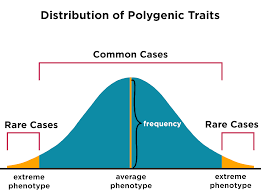
Having read that the U.S. life expectancy in 2011 was 78.7 years, does not really do justice to the effects that human mortality have on you as you age.  There are several reasons for this including:  Accidents, murders, fatal diseases and the inevitable bell shaped distribution of “normal deaths”.  This latter fact means that if the average age of death is 79 years, then some people will die well before 80 and some will live much longer than 79.  The implications of this normal distribution of death is that I have gone to many funerals and observed many more funerals of friends and relatives who have died long before their “average” death should have occurred.  I have known joggers and marathon runners who have died of heart attacks or strokes in their thirties.

It seems hardly a day goes by when I do not hear of a friend or a friend of a friend who has passed away or been given a fatal prognosis for some malady they were never aware of.   The old adage about the only sure thing being “death and taxes” comes repeatedly to my mind.  In the last three weeks, we have had to purchase three sympathy cards for friends whose spouses or close relatives have passed away.  This trend only grows worse as you get older.  Instead of deaths each year, it becomes deaths each month and for me now it is close to being a death each week.  Who needs to be reminded about mortality?  The biggest questions become whether to try to attend the funeral, send flowers, send a card, send a donation or all of the aforementioned.   I don’t want to sound cynical.  This is simply life as you get older.  Thomas Jefferson once wrote to John Adams:

“There is a ripeness of time for death, regarding others as well as ourselves, when it is reasonable we should drop off, and make room for another growth. When we have lived our generation out, we should not wish to encroach on another. I enjoy good health. I am happy in what is around me; yet I assure you, I am ripe for leaving all, this year, this day, this hour.”
To John Adams, August 1, 1816

I have joked that after my surgery results indicated that the cancer was entirely removed, I could live to die in fifteen or so years from something else.   Actually, I was being literal and not really joking.  The mortality tables for an American Caucasian male who has reached 65 years of age, show that I have a good probability of living another 15 years of so.   That’s good news except that the way time flies when you get older, fifteen years no longer seems like a long time.  It is certainly not enough time for me to change the world and end war and hunger.  I guess I will have to work on something else, perhaps slowing time down some.  J

Where have all the graveyards gone, long time passing?
Where have all the graveyards gone, long time ago?
Where have all the graveyards gone?
Gone to old friends, everyone.
Oh, when will they ever learn?
Oh, when will they ever learn? 

Have you ever visited a graveyard?  They are one of my interesting places to visit.  I know that might sound morbid or strange but let me tell you some reasons why I think they are so interesting.  Once upon a time, my father told me that “I had nothing to fear in a graveyard.  I had more to fear from the living than the dead.”  I have always remembered his words and I fear no dead beings:  no vampires, no werewolves, no zombies, no ghosts, no goblins and no undead bother me in the least.  I do worry about many of the living though.   This is just one reason why I find graveyards as peaceful and contemplative places to spend a short time.

A second reason is my interest in history.  Many graveyards can tell you much about the past.  The inscriptions, dates, type of deaths, genealogy of deaths, place of death and manner of deaths are a treasure trove of interest if you have any curiosity in how people lived.  The history of many cemeteries and the history of those buried in these cemeteries is an encyclopedia of past life.  You can learn more in a graveyard than you can in many history books.

A third reason is the cultural diversity that one finds in cemeteries.  Certainly many countries differ in how they bury their dead and the accoutrements that are interred with them.  This alone is fascinating.  Karen and I have visited graveyards in about every country that we have been to.  Each country has some very unique features about their graveyards.  However, even within the USA and even within cemeteries in a single city in the USA, you will find a great deal of cultural diversity.  Some of it reflects social biases such as racism, where you find Whites and Blacks buried separately and some of it reflects religion (Jewish cemeteries, Catholic cemeteries, etc.) and some of it reflects economic status (rich versus poor) symbols and edifices in many cemeteries.

Cemeteries are of also interesting because of who is buried there.  You may not meet too many famous celebrities in your lifetime but I guarantee that there are a whole host of them you can visit who are now resting in their graves.  Many grave markers are fascinating in the comments that have been engraved in them.  Boot Hill cemetery in Tombstone, Arizona is famous for its epitaphs on the tombstones.  One of my favorite books is Spoon River Anthology by Edgar Lee Masters in which the dead speak out from their graves about the life they once lived.

New cemeteries are built to house the new generation while older cemeteries are eventually lost to the ravages of time and nature.  Nothing seems more striking then to be hiking someplace remote and come across an old cemetery from the eighteenth or nineteenth century.  Any cemeteries older than that and you would need to be an archeologist to find them.

Where have all my young dreams gone, long time passing?
Where have all my young dreams gone, long time ago?
Where have all my young dreams gone?
Young friends have picked them everyone.
Oh, when will they ever learn?

What was it Shakespeare said about man’s life?  That it is but a walking shadow.  That we strut about on a stage as though we were important; but in reality, our tales will be told by idiots and our lives are merely entertainment and signifying nothing.  “Out, out, brief candle!”   Too brief for most of us!  We may wonder why we were not designed to live for two hundred or even five hundred years.

Do you remember the Twilight story by Rod Serling of the man who sold his soul for immortality?   The escape clause written in by the Devil was that he could die anytime he was tired of living.  He laughed since he thought he would live for a thousand or more years, however within weeks he had grown bored with life and he exercised his escape clause and died of a heart attack.   Be careful of what you ask for is very often an accurate statement.

We create dreams and hopes and our lives our fueled by these dreams and visions.  Some of us dream of the sacred, some of us of the mundane but perhaps more of us of the profane.   Many of us realize our dreams only to find out that we did not want them.  We often sell our souls much too cheaply.  The unintended consequences of life are always much greater than our imaginations could project.   Timothy Leary dies of Prostate cancer.  Jerry Rubin becomes an insurance salesman.   Abbie Hoffman commits suicide.  Huey Newton killed by former members of the Black Panther party.  Google goes from counterculture to mainstream culture.   Movies are made about Steve Jobs and Mark Zuckerberg.  YouTube and Wikipedia are accepted as legitimate venues for research and education.  Villains become heroes and heroes are found to be villains.   Not to become disillusioned becomes the real secret of happiness.

What goes around does not simply come around; it is morphed in the ever changing cycle of life and becomes something new and unrecognizable.   Dreams and hopes are continually recycled from one generation to the next.  Each generation takes its chance at the cycle in often vain attempts to make a difference.  Eventually they will run out of energy and steam and it is then left to the next generation to keep the cycle of dreams and hopes turning.

“Birth and Death are words we chose to describe the doorways in and out of a cycle. This cycle is connected to a larger cycle which awaits our return.  It is all just like breathing.  Remove the fear and judgment to recognize the same pattern as a principle everywhere.”
― Franklin Gillette

Time for Questions:

How does the cycle of life and death affect you?  Is it something you think about?  Do you see other cycles in your life?  Which cycles are the most important to you?  Does it do any good to try to change a cycle?  Can we make a difference or is it all fate?  How would we know if we did not try?  Where have you made a difference?  Where do you wish you had or could have made a difference? What stopped you?   What would you do different if you were born again?  What if you knew you would go on being born again and again?  How would your life be different?

Life is just beginning.

I have a good friend and we argue all the time about fate and destiny and what we can change and what we can not change.   I say we can make a difference and that life is not predetermined.  Each time we breathe we choose.  Does this make me an existentialist? I say my friend is a determinist but he has many compelling arguments which are often hard to dispute.


Some “Inconvenient” Truths About Afghanistan

Collection-Democracy-16x9

Before you jump on the bandwagon blaming Biden or deploring the US debacle in Afghanistan, read this article. It is full of “inconvenient” truths. Once again, we are getting our faces rubbed in the mud because we deserve it but we want to fix the blame on someone else.  Republicans blame Democrats and Democrats blame Republicans.  Even the “liberal” press is blaming Biden. The saddest part is our unrequited promises to the Afghanistan people that believed America could save them. The effort to instill democracy in Afghanistan was a great example of hubris and arrogance based on greed and self-serving interests.

https://www.theguardian.com/commentisfree/2021/aug/19/what-lessons-should-the-west-learn-from-the-defeat-in-afghanistan

 , , Haroun Dada,  and 

The Influence of Culture on Sexual Activity and Practices

khajuraho-1664885_1280

In my opening treatise on sex, (Sex from a 75 year old perspective) I used a metaphor in which I described sex as a continent that had two regions.  The Region of Permissions and the Region of Prohibitions.  There are three seasons for each region:  A Cultural Season, A Political Season and A Religious Season.  In my second blog on Sex:  The Region of Permissions and the Region of Prohibitions, I described the influence of religion on our sex lives in respect to what is permitted and what is prohibited.  I will now discuss the Cultural Season of Sex and what impact it has on Permissions and Prohibitions relating to sexual activities.

The Cultural Season of Sex:

The Cultural Season brings influences on sex based on traditions and beliefs about what sex should be like, who we should have sex with and how sex may be performed.  Cultural practices have the over arching purpose of keeping a community viable and safe.  Throughout history whether a culture sanctioned monogamy, polygamy, abstinence until marriage or free love, the major reason for any practice was to align the goals and desires of the community.

There are two important cultural factors that one must understand about sex.  Beyond individual notions of what is proper and what is not, the cultural diversity in relationship to sex dictates that what one culture may accept as legitimate may be rejected by another culture.  Thus, in the early days of Islam, multiple wives were acceptable.  This was not the case in Judaism.  “In Judaism the Law tolerated though it did not enact polygamy; but custom stood higher than the Law. From the period of the return from the Babylonian Exile, monogamy became the ideal and the custom of Jewish married life.” — Jewish Encyclopedia.

20171209_IRP001_0

In Islam, polygamy was the norm for centuries if a man could afford it.  “Traditional Sunni and Shia Islamic marital jurisprudence allows Muslim men to be married to multiple women (a practice known as polygyny and polygamy)—up to four at any point in time.” — Wikipedia.  Many a follower of Christianity might envy the Muslim man but given the traditions in Christianity, one can only imagine the problems of multiple wives or multiple husbands.  In the early 18th Century, there were a number of experimental communities in the United States where open relationships were practiced.  In these communities’ men and women could choose who they wanted to sleep with even if they were married.  Most of these communities eventually died out both for economic and psychological reasons.

0996E9F5-F96D-4F32-B12E-0C7772CF1AE7-e1623525310665The second major factor that one studying cultural sex practices must understand is the changing notion of what is acceptable over time.  Not more than a hundred years ago in parts of the USA and even today in some cultures, a young woman is expected to be ready to marry and have children right after puberty.  Few people in the USA today would approve of their 13-year-old daughter or son marrying.  Times change and so do expectations that address what is acceptable and what is not acceptable concerning sex.

The USA had always had very different cultural expectations governing which ethnic groups and which religious groups could have sex together.  These beliefs have changed greatly over time.  My Lutheran wife was expected to marry another Protestant or practically any other Christian except a Catholic.  Years ago, mixed marriages were more than frowned on (We will talk about laws and politics in the next blog).  Couples crossing forbidden boundaries were belittled and ostracized by their parent communities.  I was in Minnesota in the early 60’s before I ever saw a Black man and a White woman walking together.  It took many years before I knew any Black women who were married to a White man or vice versa.

Interracial stats

So what, you might be saying!  What is my point?  Where are I going with all this?  Who cares about cultural practices in relationship to sex?  I bring these issues up because sex practices are too often regarded as either right or wrong, moral or immoral, normal or deviant.  Only by looking at the history and totality of sexual practices in the world can we develop a healthy attitude towards sex.  Sex should be an occasion for joy.  Sex is not sinful as some Christians seem to believe.  If you are married and you have sex with someone else, whether it is immoral or not will depend on what you and your spouse have agreed to.  Living in a nudist colony does not make anyone a pervert.  Having sex with multiple partners may be a choice made by some married partners and perfectly moral for them.

This does not mean that various cultural sex practices will always be navigable.  No more than a trip down a river will always be tranquil and benign, sex between individuals may be fraught with difficulties.  A friend of mine once said that “I don’t know if sex will improve or hurt your relationship, but it will certainly change it.”

downloadI tend to believe that there are some biological drives that influence cultural traditions and vice versa.  In sociology classes, there was always an argument concerning nature and nurture.  Sometimes it seems that the advocates of nature have the winning argument and other times it seems that the nurture or cultural advocates win.  It is very easy to say that life is composed of both nature and nurture, but it is much more difficult to delineate the amount that each impose on a given cultural practice.  Is monogamy part of nature?  Is it built into our DNA?  Are there multiple survival benefits from a monogamous lifestyle?  Are these still valid in today’s world?

A-woman-with-two-men-Photo-Pinterest-640x360

A more difficult question to answer might be how I can convince my wife to let me engage in extramarital sex with other women.  She has never embraced that idea despite my facetious arguments that men are not naturally monogamous.  Thus, in this case, nurture trumps nature.  228-2281833_husband-beaten-by-wife At least is seems to. 

“So she thoroughly taught him that one cannot take pleasure without giving pleasure, and that every gesture, every caress, every touch, every glance, every last bit of the body has its secret, which brings happiness to the person who knows how to wake it. She taught him that after a celebration of love the lovers should not part without admiring each other, without being conquered or having conquered, so that neither is bleak or glutted or has the bad feeling of being used or misused.”  ― Hermann Hesse, Siddhartha

Ten Things I learned about Life from the 2021 Tour de France

capsule_616x353

  1. Teamwork is essential
  2. Sometimes you have to go it alone
  3. The possibility of pain and death is ever present in our lives
  4. You will never know when you are too old
  5. No one is expert at everything
  6. Life is full of ups and downs
  7. Some days you will be on top of the world and others you will not
  8. Energy output varies from person to person, but we all run out at some point
  9. You have to get up every day to stay in the race
  10. Quitting does not define a loser

In my younger days, I did a few bike races.  I raced a criterion, a hill and dale and a double century.  I was only an amateur and never had the time to race more.  I enjoyed bicycling and did a number a bicycle tours.  At one point, I was averaging almost 450 miles a week in riding. I gave up riding in my later thirties and concentrated more on running.  It was faster and cheaper to get my exercise running.  I could no longer use a bicycle for transportation as I was commuting distances that made bicycle riding less practical.  I was a good bicycle mechanic and I worked in two different shops doing bicycle repair work.

Every year, I noted when the Tour de France came around, but I did not pay much attention to the race or the racers.  This year, (2021), I watched the Tour races in the morning on my computer and then each evening Karen and I watched a video summary of the Tour stage for that day.  It was exciting watching the riders and I learned a great deal about bicycle racing and life in general.  I have identified ten key ideas that I want to share with you.  These are some of the insights about life that I had from watching the Tour.  I suppose one could get such insights from sitting under an apple tree or watching a baseball game.  Life offers many lessons if we simply open our minds.

unnamed

  1. Teamwork is essential

No one can win the Tour de France without the support from their team.  I do not care how good you are, you will not win without a team.  Much of the reason for this comes from the support that the team gives to its designated “leader.”  The “domestiques” are the team members who help the leader out in a variety of ways.  Running errands to get food or drink; providing technical support in case of a breakdown; and drafting or helping rein in other racers.

Every potential winner needs a team to provide support and assistance. 

  1. Sometimes you have to go it alone

CORVOS_00028264-002-650x433 (1)A winner will need to rely on their team, but great riders will often find that they are suddenly alone and need to finish the race on their own.  Perhaps their support riders are worn out or perhaps it is evident that the leader needs to charge ahead to gain time or prevent an adversary from gaining too much advantage.  The great riders know when you to use their team and when to go it alone.

Sometimes you have to strike out on your own and depend on your own resources. 

geraint-thomas-4

  1. The possibility of pain and death is ever present in our lives

Crashing and falling happen quite regularly in the Tour.  Perhaps a rider is hit by another rider or as in the race this year, a spectator ran out with a sign and knocked a rider down.  This caused a chain reaction knocking several other riders down.  Getting hurt is inevitable.  Falling down at nearly 30 miles an hour is painful.  Riders have helmets but no other pads.  How badly a rider is hurt is simply how unlucky they are.  The possibility of pain and serious injury is the price we pay in life for almost any endeavor that we undertake.  Everything that we do in life has risks.

There is no way to avoid risks in life unless you stop living.

  1. You will never know when you are too old

Karen_webMark Cavendish when he was at his peak was considered the best sprinter who ever lived.  This year for the 2021 Tour de France he was almost not selected by any of the teams.  At 36 years old, most thought that his racing days were over.  To the surprise of all, Mark secured a contract with one of the Tour teams.  Even more of a surprise was his winning four stages in the Tour to tie the record of Eddy Merckx for most stage wins in the Tour de France.   Mark did not know he was too old to win.  There is a time to hold em and a time to fold em, but it is very difficult to know when that time is.  One thing is for certain, never listen to other people.

Don’t let chronological age define what you can and cannot do.

  1. No one is great at everything

unnamed (1)The Tour de France is comprised of three main types of riders.  There are the sprinters who are best on flat ground.  There are the mountaineers who excel at hills and mountains.  There are the general classification (GC) riders who are good at both hills and flat ground but are not usually as good as the sprinters and mountaineers at their respective terrain.  The GC riders are most likely the best all-around riders and may be able to win a few stages in both the flats and the hills.  However, the GC riders are much more concerned with their overall time and will generally forego racing with sprinters or mountaineers who may break with the Peloton in an attempt to win a stage.  There is lots of strategy involved in winning the Tour and I do not have the time or knowledge to say more about it.

The main point here is that you can be good but not great at anything and still be successful in life.

TourdeFranceStage01

6.  Life is full of ups and downs

The Tour de France is a bicycle race comprised of 21 stages.  It is run mostly in France.  The first Tour was run in 1903.  One stage is run each day and two days are inserted for rest days.  Some stages are mountainous and hilly while others are flat and curvy.  The mountainous stages can be almost 10,000 feet high.  One or two stages will be set aside as sprint runs.  Many stages are combinations of both flat and hilly terrain.  Overall, 200 of the best bicycle racers in the world will race for nearly 2200 miles.  The Tour is considered one of the most demanding and difficult races in the world.

Watching these races, you can see that the world is physically up and down.  Mountains, hills, valleys, flats, and curves.  Some days will be rainy and cold, other days will be hot and humid.  However, in some sense the ups and downs are metaphorical as well.  The riders who are up one day will be down the next.  One day a sprinter will win the stage, the next day a mountain rider will win.  The General Classification riders (Tour leaders usually) will change the “yellow jersey” day by day until one finally emerges as the front runner.  The winner is never certain as falls, bad ride days and simple exhaustion take their toll on each rider.

Accept that life is going to be full of ups and downs.  Just remember that after it rains, the sun will come out.

  1. Some days you will be on top of the world and others you will not

king-of-the-hill-childrens-gameNo rider on the Tour de France has ever won all the stages.  Two or three riders have captured the Polka Dot (Best Mountain Rider), Green (Best Sprinter) and Yellow (Overall time leader) jerseys in the same Tour but no rider has ever won all 21 stages in one race.  We all have good days and bad days.  Some days we wake up full of energy and other days we should just stay in bed.

Karen my wife mentioned yesterday that being able to pick which days she gets up and which days she can linger in bed is one of the joys of being retired.  She noted that some days she just is not able to bounce out of bed like Tigger and meet the world with a full-on burse of energy.  She takes it easy some days and usually the next day, her energy returns, and she is out weeding the garden or trimming hedges.

Common wisdom tells us to honor the cycle of our lives, but most people are too busy being busy or rushing to get someplace to pay attention to this bit of wisdom. 

  1. Energy output varies from person to person, but we all run out at some point

p077x53mTour riders line up maybe 2 miles or so before the actual start line.  Two hundred riders will be almost welded together behind a pace car as they casually ride up to the start.  As soon as they reach the start line, they are off in a rush of cycles jostling for position.  A large mass of cyclists is called the Peloton and most riders will try to stay with this group for reasons of riding efficiency and aerodynamics.  Riding alone is more effort and energy wasteful than riding in a group.  Nevertheless, some game or crazy rides will try to leave the pack.  It may happen soon in the race or half way through the race, but eventually a breakaway group or individual will try to go it alone.  The boldness of these breakaway riders is thrilling.  Daring to challenge the best riders in the world by themselves.

You watch these riders, and the computer will show you how many are in the breakaway group and how far ahead they are from the Peloton in terms of time and distance.  Almost inevitably, (you could bet odds on it) the breakaway riders will one by one fall off the pace and be reeled in by the Peloton riders.  Seldom if ever does the lone breakaway rider stay in the lead for the entire stage.  The strongest riders in the world are in this race and there is undoubtedly a bell-shaped curve of stamina, endurance, and conditioning among the two hundred riders.  Nevertheless, no rider short of superman can stay out front each race for the entire race.  The advantage of a riding in a group, drafting and avoiding wind currents is too great for the individual loner to keep up a winning pace for an entire stage.

Respect your energy levels and do not try to be superman or superwoman. 

quote-wake-up-every-day-knowing-that-today-is-a-new-day-and-only-you-can-determine-the-outcome-alicia-sacramone-55-29-51

  1. You have to get up every day to stay in the race

This sounds so platitudinous that I am almost ashamed to say it.  Every year a few riders in the Tour de France will drop out for one reason or another.  Sometimes it is injury, sometimes it is just giving up.  We all have days when we do not feel like we can go on anymore.

Yet, it seems as though we continually find excuses to drop out of the race.  The going gets tough and we quit.  We fall down and we don’t get up.  We get rejected and we give up.  We did not get the results we expected so we abandon our goal.  I once asked a friend who was an editor of several magazines what I needed to do to have a “Best Seller.”  He replied, “I could not tell you.  But I can tell you one thing, if you don’t write you will never have a best seller.”  I have never forgotten his advice.  Buying a lottery ticket does not ensure that you will win the lottery, but you can never win the lottery without a ticket.

I once heard that there are three kinds of people.  Those who do not know that there is a parade coming.  Those who will watch the parade.  Those who are in the parade.  Live gives us the possibility to choose which of the three people we want to be.  If you are going to be in the parade, you will have to get up and do something.  The parade will never come to you.

The race does not always go to the swiftest.  Often it goes to the steadiest.

06sl-quitting-facebookJumbo

  1. Quitting does not define a loser

Primož Roglič was the leader in the 2020 Tour de France.  He was almost certain to win the Tour.  He had held the Yellow Jersey for the last half of the race.  His lead seemed insurmountable.  Then came a time trial day.  Tadej Pogačar, a rider from another team, did such an outstanding job in the time trial that he ended up ahead of Roglic.  Pogačar won the 2020 Tour de France.

Now it is time for the 2021 Tour.  Both Primoz and Tadej are back again.  This year Tadej is favored to win but Roglic still has a chance.  Roglic has a bad spill in the race during stage 3 and receives some injuries.  He gets up and continues the race the next day.  A few days go by, and it is clear that he is off pace.  After stage 8 Roglic quits.  He leaves the race.  Is Roglic a loser? They say only losers quit.

Less than a month later, Roglic finishes 28th at the Tokyo Olympics road race.  Four days later, Roglic competes in the individual time trial.  39 cyclists from 31 nations compete in the race.  Roglic wins the gold medal in the time trial with a winning margin of 1’01”.

Sometimes it makes sense to quit.  It is not true that only losers quit.  Some of the greatest people of all time have had days when they quit.  It is not quitting that defines a loser, it is never starting again.

Be realistic about those times when pressing on is not as smart as quitting.  History is full of examples of people who pressed on and were never heard from again. 

Conclusions:

There you have it.  The ten things I learned about life from this years Tour de France.  Rest assured I will be back next year to see what else I can learn.  I may even dust my bicycle seat off, oil my chain, pump up my tires and take a ride down the Gandy Dancer Trail.  If you see me coming, you should step aside as I am sure that I will be quite wobbly.


Dix choses que j’ai apprises sur la vie du Tour de France 2021

  1. Le travail d’équipe est essentiel
  2. Parfois, vous devez faire cavalier seul
  3. La possibilité de la douleur est toujours présente dans nos vies
  4. Vous ne saurez jamais quand vous serez trop vieux
  5. Personne n’est expert en tout
  6. La vie est pleine de hauts et de bas
  7. Certains jours, vous serez au sommet du monde et d’autres non
  8. La production d’énergie varie d’une personne à l’autre, mais nous sommes tous à court d’énergie à un moment donné
  9. Il faut se lever tous les jours pour rester dans la course
  10. Abandonner ne définit pas un perdant

Dans ma jeunesse, j’ai fait quelques courses de vélo. J’ai couru un critère, un monticule et un double siècle. Je n’étais qu’un amateur et je n’ai jamais eu le temps de courir plus. J’aimais faire du vélo et j’ai fait un certain nombre de tours à vélo. À un moment donné, je parcourais en moyenne près de 450 milles par semaine en équitation. J’ai abandonné l’équitation à la fin de la trentaine et me suis concentré davantage sur la course à pied. C’était plus rapide et moins cher de faire mon exercice. Je ne pouvais plus utiliser un vélo pour me déplacer car je parcourais des distances qui rendaient le vélo moins pratique. J’étais un bon mécanicien vélo et je travaillais dans deux ateliers différents pour faire des réparations de vélos.

Chaque année, je notais quand arrivait le Tour de France, mais je ne prêtais pas beaucoup d’attention à la course ou aux coureurs. Cette année (2021), j’ai regardé les courses du Tour le matin sur mon ordinateur, puis chaque soir Karen et moi avons regardé un résumé vidéo de l’étape du Tour ce jour-là. C’était passionnant de regarder les coureurs et j’ai beaucoup appris sur les courses cyclistes et la vie en général. J’ai identifié dix idées clés que je veux partager avec vous. Ce sont quelques-unes des idées sur la vie que j’ai eues en regardant le Tour. Je suppose que l’on pourrait obtenir de telles informations en s’asseyant sous un pommier ou en regardant un match de baseball. La vie offre de nombreuses leçons si nous ouvrons simplement notre esprit.

  1. Le travail d’équipe est essentiel

Personne ne peut gagner le Tour de France sans le soutien de son équipe. Peu m’importe à quel point vous êtes bon, vous ne gagnerez pas sans une équipe. Cela s’explique en grande partie par le soutien que l’équipe apporte à son « leader » désigné. Les « domestiques » sont les membres de l’équipe qui aident le leader de diverses manières. Faire des courses pour acheter de la nourriture ou des boissons ; fournir une assistance technique en cas de panne; et rédiger ou aider à maîtriser d’autres coureurs.

Chaque gagnant potentiel a besoin d’une équipe pour fournir soutien et assistance.

  1. Parfois, vous devez faire cavalier seul

Un vainqueur devra compter sur son équipe, mais les grands coureurs découvriront souvent qu’ils sont soudainement seuls et doivent terminer la course par eux-mêmes. Peut-être que leurs cavaliers de soutien sont épuisés ou peut-être est-il évident que le leader doit foncer pour gagner du temps ou empêcher un adversaire de prendre trop d’avantages. Les grands cavaliers savent quand utiliser leur équipe et quand faire cavalier seul.

Parfois, il faut se débrouiller tout seul.

  1. La possibilité de la douleur est toujours présente dans nos vies

Les chutes et les chutes se produisent assez régulièrement sur le Tour. Peut-être qu’un coureur est heurté par un autre coureur ou comme lors de la course cette année, un spectateur est sorti en courant avec une pancarte et a renversé un coureur. Cela a provoqué une réaction en chaîne qui a renversé plusieurs autres coureurs. Se blesser est inévitable. Tomber à près de 30 milles à l’heure est douloureux. Les cavaliers ont des casques mais pas d’autres protections. À quel point un coureur est blessé est simplement à quel point il est malchanceux. La possibilité de douleurs et de blessures graves est le prix que nous payons dans la vie pour presque tous les efforts que nous entreprenons. Tout ce que nous faisons dans la vie comporte des risques.

Il n’y a aucun moyen d’éviter les risques dans la vie à moins d’arrêter de vivre.

  1. Vous ne saurez jamais quand vous serez trop vieux

Mark Cavendish, lorsqu’il était à son apogée, était considéré comme le meilleur sprinteur qui ait jamais vécu. Cette année pour le Tour de France 2021, il n’a quasiment été sélectionné par aucune des équipes. À 36 ans, la plupart pensaient que ses jours de course étaient révolus. À la surprise de tous, Mark a obtenu un contrat avec l’une des équipes du Tour. Encore plus surprenant a été sa victoire sur quatre étapes du Tour pour égaler le record d’Eddy Merckx pour le plus grand nombre de victoires d’étape sur le Tour de France. Mark ne savait pas qu’il était trop vieux pour gagner. Il y a un temps pour les tenir et un temps pour les plier, mais il est très difficile de savoir quand est ce moment. Une chose est sûre, n’écoutez jamais les autres.

Ne laissez pas l’âge chronologique définir ce que vous pouvez et ne pouvez pas faire.

  1. Personne n’est bon en tout

Le Tour de France est composé de trois principaux types de coureurs. Il y a les sprinteurs qui sont les meilleurs sur terrain plat. Il y a les alpinistes qui excellent dans les collines et les montagnes. Il y a les coureurs du classement général (GC) qui sont bons à la fois sur les collines et sur terrain plat, mais ne sont généralement pas aussi bons que les sprinteurs et les alpinistes sur leur terrain respectif. Les coureurs GC sont probablement les meilleurs coureurs polyvalents et peuvent être en mesure de gagner quelques étapes à la fois dans les plats et les collines. Cependant, les coureurs GC sont beaucoup plus soucieux de leur temps global et renoncent généralement à courir avec sp les coureurs ou les alpinistes qui pourraient rompre avec le Peloton pour tenter de remporter une étape. Il y a beaucoup de stratégie impliquée pour gagner le Tour et je n’ai pas le temps ni les connaissances pour en dire plus.

Le point principal ici est que vous pouvez être bon mais pas excellent dans tout et réussir dans la vie.

  1. La vie est pleine de hauts et de bas

Le Tour de France est une course cycliste composée de 21 étapes. Il se déroule principalement en France. Le premier Tour a été couru en 1903. Une étape est courue chaque jour et deux jours sont insérés pour les jours de repos. Certaines étapes sont montagneuses et vallonnées tandis que d’autres sont plates et sinueuses. Les étapes montagneuses peuvent atteindre près de 10 000 pieds de haut. Une ou deux étapes seront réservées aux courses de sprint. De nombreuses étapes sont des combinaisons de terrain plat et vallonné. Au total, 200 des meilleurs coureurs cyclistes du monde courront sur près de 2 200 milles. Le Tour est considéré comme l’une des courses les plus exigeantes et difficiles au monde.

En regardant ces courses, vous pouvez voir que le monde est physiquement de haut en bas. Montagnes, collines, vallées, plaines et courbes. Certains jours seront pluvieux et froids, d’autres jours seront chauds et humides. Cependant, dans un certain sens, les hauts et les bas sont également métaphoriques. Les coureurs qui sont debout un jour seront à terre le lendemain. Un jour, un sprinter remportera l’étape, le lendemain un coureur de montagne la remportera. Les coureurs du Classement Général (les leaders du Tour en général) changeront le « maillot jaune » jour après jour jusqu’à ce que l’un d’entre eux ressorte enfin en tête. Le gagnant n’est jamais certain car les chutes, les mauvaises journées de conduite et le simple épuisement font des ravages sur chaque cycliste.

Acceptez que la vie soit pleine de hauts et de bas. N’oubliez pas qu’après la pluie, le soleil se lèvera.

  1. Certains jours, vous serez au sommet du monde et d’autres non

Aucun coureur du Tour de France n’a jamais remporté toutes les étapes. Deux ou trois coureurs ont remporté les maillots Polka Dot (Meilleur coureur de montagne), Vert (Meilleur sprinteur) et Jaune (Meilleur temps global) dans le même Tour, mais aucun coureur n’a jamais remporté les 21 étapes d’une course. Nous avons tous de bons et de mauvais jours. Certains jours, nous nous réveillons plein d’énergie et d’autres jours, nous devrions simplement rester au lit.

Karen ma femme a mentionné hier que pouvoir choisir les jours où elle se lève et les jours où elle peut s’attarder au lit est l’une des joies d’être à la retraite. Elle a noté que certains jours, elle n’était tout simplement pas capable de rebondir hors du lit comme Tigrou et de rencontrer le monde avec une pleine énergie. Elle se calme certains jours et généralement le lendemain, son énergie revient et elle est en train de désherber le jardin ou de tailler des haies.

La sagesse commune nous dit d’honorer le cycle de nos vies, mais la plupart des gens sont trop occupés à être occupés ou à se précipiter pour trouver un endroit où prêter attention à ce morceau de sagesse.

  1. La production d’énergie varie d’une personne à l’autre, mais nous sommes tous à court d’énergie à un moment donné

Les coureurs du Tour s’alignent peut-être 2 miles environ avant la ligne de départ réelle. Deux cents coureurs seront presque soudés ensemble derrière une voiture de course alors qu’ils monteront avec désinvolture jusqu’au départ. Dès qu’ils atteignent la ligne de départ, ils s’élancent dans une ruée de cycles qui se bousculent pour se positionner. Une grande masse de cyclistes s’appelle le Peloton et la plupart des coureurs essaieront de rester avec ce groupe pour des raisons d’efficacité de conduite et d’aérodynamisme. Rouler seul est plus un gaspillage d’efforts et d’énergie que de rouler en groupe. Néanmoins, certains gibiers ou manèges fous tenteront de sortir du peloton. Cela peut arriver bientôt pendant la course ou à mi-parcours, mais éventuellement un groupe ou un individu échappé essaiera de faire cavalier seul. L’audace de ces échappés est passionnante. Oser défier les meilleurs cavaliers du monde par eux-mêmes.

Vous regardez ces coureurs, et l’ordinateur vous indiquera combien sont dans l’échappée et à quelle distance ils sont par rapport au Peloton en termes de temps et de distance. Presque inévitablement, (vous pouvez parier là-dessus), les coureurs échappés perdront un à un le rythme et seront rattrapés par les coureurs du Peloton. Il est rare, voire jamais, que le coureur solitaire de l’échappée reste en tête pendant toute l’étape. Les coureurs les plus forts du monde participent à cette course et il existe sans aucun doute une courbe en forme de cloche d’endurance, d’endurance et de conditionnement parmi les deux cents coureurs. Néanmoins, aucun coureur à court de superman ne peut rester en tête de chaque course pendant toute la course. L’avantage de rouler en groupe, de dessiner et d’éviter les courants de vent est trop grand pour que le solitaire puisse maintenir un rythme gagnant pendant toute une étape.

Respectez votre niveau d’énergie et n’essayez pas d’être un surhomme ou une superfemme.

  1. Il faut se lever tous les jours pour rester dans la course

Cela semble si banal que j’ai presque honte de le dire. Chaque année, quelques coureurs du Tour de France abandonnent pour une raison ou une autre. Parfois c’est une blessure, parfois c’est juste abandonner. Nous avons tous des jours où nous avons l’impression de ne plus pouvoir continuer.

Pourtant, il semble que nous trouvions continuellement des excuses pour abandonner la course. Les choses se corsent et nous abandonnons. Nous tombons et nous donnons ne te lève pas. On se fait rejeter et on abandonne. Nous n’avons pas obtenu les résultats escomptés alors nous abandonnons notre objectif. J’ai demandé une fois à un ami qui était rédacteur en chef de plusieurs magazines ce que je devais faire pour avoir un « Meilleur Vendeur ». Il a répondu : « Je ne pourrais pas vous le dire. Mais je peux vous dire une chose, si vous n’écrivez pas, vous n’aurez jamais de best-seller. Je n’ai jamais oublié ses conseils. L’achat d’un billet de loterie ne garantit pas que vous gagnerez à la loterie, mais vous ne pouvez jamais gagner à la loterie sans billet.

J’ai entendu une fois qu’il y a trois sortes de personnes. Ceux qui ne savent pas qu’il y a un défilé à venir. Ceux qui regarderont le défilé. Ceux qui sont dans le défilé. Live nous donne la possibilité de choisir laquelle des trois personnes nous voulons être. Si vous allez être dans le défilé, vous devrez vous lever et faire quelque chose. Le défilé ne viendra jamais à vous.

La course ne va pas toujours au plus rapide. Souvent, il va au plus stable.

  1. Abandonner ne définit pas un perdant

Primož Roglič était le leader du Tour de France 2020. Il était presque certain de remporter le Tour. Il avait détenu le maillot jaune pendant la dernière moitié de la course. Son avance semblait insurmontable. Puis vint une journée de contre-la-montre. Tadej Pogacar, un coureur d’une autre équipe, a fait un travail si remarquable dans le contre-la-montre qu’il a terminé devant Roglic. Pogacar a remporté le Tour de France 2020.

Il est maintenant temps pour le Tour 2021. Primoz et Tadej sont de retour. Cette année, Tadej est favori pour gagner mais Roglic a encore une chance. Roglic a une mauvaise chute dans la course lors de l’étape 3 et reçoit quelques blessures. Il se lève et continue la course le lendemain. Quelques jours s’écoulent, et il est clair qu’il est à contre-courant. Après l’étape 8, Roglic abandonne. Il quitte la course. Roglic est-il un perdant ? Ils disent que seuls les perdants abandonnent.

Moins d’un mois plus tard, Roglic termine 28e à la course sur route des Jeux olympiques de Tokyo. Quatre jours plus tard, Roglic participe au contre-la-montre individuel. 39 cyclistes de 31 nations participent à la course. Roglic remporte la médaille d’or du contre-la-montre avec une marge gagnante de 1’01”.

Parfois, il est logique d’arrêter. Il n’est pas vrai que seuls les perdants abandonnent. Certaines des plus grandes personnes de tous les temps ont eu des jours où elles ont arrêté. Ce n’est pas d’arrêter qui définit un perdant, ce n’est jamais recommencer.

Soyez réaliste à propos des moments où il n’est pas aussi intelligent d’appuyer que d’arrêter de fumer. L’histoire est pleine d’exemples de personnes qui ont insisté et dont on n’a plus jamais entendu parler.

Conclusion :

Voilà. Les dix choses que j’ai apprises sur la vie de cette année Tour de France. Soyez assuré que je serai de retour l’année prochaine pour voir ce que je peux apprendre d’autre. Je peux même dépoussiérer ma selle de vélo, huiler ma chaîne, gonfler mes pneus et faire un tour sur le Gandy Dancer Trail. Si vous me voyez venir, vous devriez vous écarter car je suis sûr que je serai assez bancal.

Cancel Culture Meets Political Correctness

what-is-cancel-culture-1591556973276

I woke up (No! I mean really woke up, like after you go to sleep) and thought of the cancellations that I would have to make today.  My calendar had several items that I needed to cancel.  I had several products on my Alexa shopping list that I had to cancel.  I had to cancel a meeting with a friend.  My day starts off with one cancel after another.

It seems that I cannot go through life anymore without having to cancel something.  Everywhere I look there are cancel buttons.  My microwave has a cancel button on it.  My cellphone bids me to cancel numerous phone calls that are not in my contact list.  My oven wants me to cancel after I am done roasting the chicken.  My computer invites me to accept or cancel a software download.  My former business partner texts me once again to cancel a meeting that we had scheduled.  My wife comes in to cancel something we had talked about doing tonight.

210721-sollenberger-MTG-Gaetz-tease_yr2jy0I am surrounded, inundated, besieged by cancel requests.  The Republican lamebrains such as Marjorie Taylor Greene and Matt Gaetz repeatedly scream “cancel culture, cancel culture, cancel culture!”  I have not witnessed as much animosity towards a phenomenon since the zeitgeist of Political Correctness (PC).

You may remember a few years ago, the concept of PC first appeared.  Its emergence seemed to be a response to certain people who felt denigrated by titles or language used in American culture.  For instance, African Americans did not like to be called niggers.  Feminist women resented being called frigid bitchs.  LGBTQ people resented being called fags, dykes, freaks, and homos.  Undocumented immigrants resented being called illegal aliens.  And of course, devout Muslims resented being called Islamo terrorists.  The people who felt that their right to insult, abuse and demean others had been challenged, quickly coined the term PC to label efforts that might better have been labeled as “cultural civility and sensitivity.”

political-correctness

The same people (I would give you ten to one odds) are now appalled at the fact that some Americans want to silence their insults.  This desire to silence hostile and often lying rhetoric has given rise to the term “Cancel Culture.”  Basically, those who believe that we are living in a “Cancel Culture” feel that the rest of us have no right to truth, honesty, and dignity.  They of course have the right to say or do any preposterous thing they want to and the rest of us are expected to accept it.  Let me give you a few examples:

  • Representative Marjorie Taylor Greene screams that the recent vaccination push Is more like Jim Crow–Era segregation than the Holocaust. Before it was more like the Holocaust.  She flips flops easily.
  • Representative Jim Jordan yells that “The wave of cancel culture spreading the nation is a fundamental threat to free speech rights in the United States.” He insists that the “Cancel Culture” silenced Trump’s lies by denying Trump access to Twitter and Facebook.  Jordan pushes the “Stolen Election” lie in which he swears that Biden did not win the election.  Jordan will swear to anything if it defends Trump.

I could go on and on with hundreds of examples of “Cancel Culture”, but I think it is obvious that something as Sherlock Holmes said is “afoot.”  My personal theory is that Republicans have discovered how powerful euphemisms can be as a tool to ridicule the opposition.  Nasty labels, pejorative names, insulting sobriquets have become all the rage in the Republican Party.  When you add the political stunts, clown shows and imbecilic performance acts that Republicans now use routinely, you have every reason to wonder what is going to become of American Democracy.  Two examples illustrate Republican circus acts:

  • Jim Inhofe throws a snowball on the Senate floor in an effort to disprove what he sees as alarmist conclusions about man-made climate change.

58c9482fb06c4.image

  • Republican Lauren Boebert declares that “I will carry my firearm in DC and in Congress,” she says in a video, which has been viewed over two million times.

EretJaAWMAABnRQ

The Republicans will counter that the Democrats also pull political stunts such as the recent effort by Democrats in Texas to block a voter suppression bill by leaving the State Senate and flying off to Washington, D.C.  However, there was a purpose to this move by the Democrats which was to deny the Republicans the quorum they needed to pass a bill designed to destroy what little is left of our democracy.

In looking at the examples of Inhofe and Boebert above, it is clear that these stunts are done for their own aggrandizement.  The single purpose of most of the theatrics done by Republicans today tend to be to deny reality or to push agendas that do not serve the overall good of the nation.  The Republican Party has become a party of clowns and Madison Avenue shysters.

If there is a historical reckoning (assuming the human race survives), it will look back on this era in American politics as the beginning of the death of democracy in America.  We will not be the first country where democracy was tried and subsequently succumbed to the forces of authoritarianism and fanaticism.

republican-fascists

Go to go now.  If I say too much, some stalwart Republican lawyer may try to sue me.  Of course, that would not count as “Cancel Culture.”

Dr. Carolyn Wedin: Good Friend and Writing Teacher (Oct 2,1939-July 28,2021)

unnamed

My good friend and writing teacher passed away last night. Carolyn was still teaching on Tuesday when she did not feel well and I took her home early from class. Carolyn had been in a major car accident a few years ago and never quite recovered from the injuries and subsequent medical problems. Nevertheless, she was able to return to what she loved best and started teaching her Write Right Now! class again for Frederic Community Education this past winter and was not teaching a summer session. Seldom has there be an educator as beloved as Dr. Wedin. I am enclosing some comments from her students and a few pictures of Carolyn from bygone years.  – John

Comments from friends and students:

Jodi McLain 

Ohhh, rest in peace. It was an honor to know and write alongside Carolyn. – Jodi

Kathleen Melin 

Rest in peace, Carolyn.

I was honored to know Carolyn in a generational way.  Growing up, she was the little kid next door to my father’s family in Trade Lake.  I’d heard many stories over the years about her and her brilliant family. When she moved back to the area, I felt like a star lived among us.  I was honored to be in a writing group with her for a couple years that increased my admiration and respect for her.

Did you know that this petite blue-eyed blond taught at a Shaw University, a black college in North Carolina, early in her career?  The clan burned a cross in her front yard.  When students there decided to purge white faculty,  they kept a few instructors and Carolyn was one of them.  I didn’t experience her teaching presence, but know from others that she was generous and supportive to learners.  She was a careful researcher and a fine writer.  I admired the way she worked in our community, sharing her warmth, gifts, and talents.  She was keeper of Swedish heritage, too, and it was another way that she enlivened our area.

Thank You, Carolyn for everything., – Kathleen

Lisa Doerr

Beloved writers & readers – the miraculous, one-of-kind Carolyn Wedin ended our blessed time with her on earth today – Lisa

Lisa Doerr

(Lisa is a good friend of Carolyn.  She wrote and read the following beautiful verses almost 12 years ago at Carolyn’s 70th birthday party on October 2, 2009.  Lisa did not wait to write what she thought of Carolyn.  I think there is a message in her writing here for all of us.  I know Carolyn would agree.  –  John  ) 

Why wait? Does one need to be gripped by grief to take a moment and reflect on the subtle and not so subtle ways that a woman such as Carolyn shapes the world?

Maurice Ravel wrote his light hearted orchestral tombeau for comrades lost but not forgotten in World War I. Michael Daugherty uses polyphonic textures and harmonic layering to create his rhinestone kick step for the great Liberace. Both maestros waited too long.

Why delay until sorrow dilutes our awe for Carolyn’s passionate love of language and people? Why leverage loss and regret to highlight her commitment and immeasurable creative energy? Why let memories define her story when we’ve got Carolyn – larger than life – right here, right now?

There are none quite like this master weaver, pulling people together from the woods and lakes of the St. Croix River watershed for a celebration of life through language. Plays, poems, essays and films plied together in a sparkling river of cultural awareness and revelry. 

But, of course, Frederic, Four Corners and The Falls are only a tiny piece of the great world Carolyn embraces. New York, the South, California – nearly the entire nation comes to life in her book on the achievements of Mary White Ovington. Stora Mällösa, Örebro and the Atlantic Crossing are made real as Swedish settlers journey to Trade River in her edition of L.J. Ahlstrom’s memoir. Who else do you know arguing in the New York Times this year about socialist Norway’s lack of funding for immigrant schools? 

Carolyn’s unrelenting commitment to nurture fledgling creative spirits embodies the master’s touch. Thousands of aspiring writers have had the honor of hearing her speak about their work as if it matters and is part of a larger literary whole. Memoirs, histories and Hemingway derivatives are equally blessed by a moment of her time and constructive comments. All of this while at the same time imagining and completing her own myriad of projects.

Yes! Carolyn is an incredible woman right here, right now. I will not wait until a visit to her tomb inspires memories and I sadly attempt to capture her spirit. And anyway, with her beauty, brains and blarney Carolyn will long out live an aging baby-boomer such as me!  – Lisa

Phil Peterson 

How sad I am . . . for Carolyn!  I know of no one who enjoyed coaxing words, from those wishing to write, more than the Write Right Now Lady!  She gave me her files of WRN stories from years of classes and asked me to manage insertion of the weekly story into the Leader.  As John Persico and I slowly walked her to her car last Tuesday, I was holding her hand, thinking, “what a blessing this gifted lady has been to all of us!”    Thank you for A Page Turned!   – Phil

Mark Hulsether

Carolyn’s enormous and gracious spirit, and her powerful mind, were strong to the end.  As you may know, her heart gave out in the immediate context of fighting a badly infected gall bladder that ruptured yesterday morning, on top of various other medical problems of the past few years.

There are very few people who have a deeper and wider legacy of friends and people she mentored.  A tremendous hole for us to fill.   – Mark

Socorro Galusha

Carolyn

Teacher of words.

Encourager to writers.

Diminutive body tall in character stature.

Courtesy in speaking.

Last class ending early.

“I don’t feel well.”

Her body alerted mortality.

Next the shock of her leaving…

Leaves memories of an unforgettable woman’s journey into lives meeting with each other.

I listened to the interactions of Karen and John with Tony and Carolyn over the years. I could only wish I had encountered her.  –  Socorro Luna Galusha

John Persico (Written in the Fall of 2020)

Who was or is my muse for writing?  This past year Dr. Wedin had a series of illnesses and accidents rendering her unable to continue the “Write Right Now” classes that she had started.  Some of her students who have attended them for many years volunteered to take over, but it was not the same.  It is hard to describe Carolyn’s style of encouragement and critique, but I venture to say it is unique.  She inspires without criticizing.  She encourages without demoralizing.  She suggests without demanding.  When you have finished a session with Dr. Wedin, you have new ideas and a renewed motivation to go home and write. – John

YoungCarolynPuppy

Carolyn very young playing with puppy.  Carolyn loved animals

corny stefan wedding car

Carolyn first wedding photo

corny-cornet

Carolyn older playing a trumpet with children

image002 (1)

Carolyn loved to walk and hike and often told us about the bears she saw on her walks.

carolyn_lisa_2020

Carolyn on her porch, fall of 2020.  She looked so frail then.  I could not believe it when I heard she started teaching again only a few weeks later.

51vtJY4KBLL._SX331_BO1,204,203,200_

Carolyn was an outstanding writer and wrote many books of erudition and substance.  The following is from the foreword to her book “Inheritors of the Spirit.”

“In its densely researched, sensitively interpreted, and crisply written evocation of her subject’s career, Professor Wedin’s biography opens a wide window onto much of the inner life of the NAACP as it evolves from a virtual one-person show scripted by the incomparable (and sometimes insufferable) Du Bois through the unflappable stewardship of James Weldon Johnson and the manic operational brilliance of Walter White to become, in classic Weberian progression, a well-honed bureaucracy of lawyers, accountants, field secretaries, and lobbyists–and, overwhelmingly, of African Americans . . . a vibrant, valuable chronicle of an eighty-year dedication to economic, racial, and gender justice.”–from the Foreword by David Levering Lewis

Sex:  The Region of Permissions and the Region of Prohibitions

snakeeden

In an earlier blog, I said that sex was like a continent divided into two regions.  One region gave permissions or legitimacies to certain sexual practices.  The other region consisted of prohibitions concerning sexual practices.  Some sexual practices have been and in some countries still are prohibited by law.  Permissions and prohibitions are defined by religion, culture, and politics.  These elements influence the individual in terms of their physical, mental, emotional, spiritual, and financial appeal for sex.

Religion:

Religious teachings exert a powerful impact on what is permissible in terms of sex.  According to many religions, a man and a woman must be married to have sex.  Adultery is a term for a married individual who has sexual relations with someone they are not married to.  ““Thou shalt not commit adultery” is found in the Book of Exodus (Exodus 20:14) of the Hebrew Bible and Old Testament.  It is considered the sixth commandment by Roman Catholic and Lutheran authorities, but the seventh by Jewish and most Protestant authorities.” Wiki

51646318_poem_35

Jesus in the New Testament forgave a woman who was considered an adulterer when the crowd was going to stone her to death.  The religious taboos against adultery are only one of many religious taboos concerning sex.  Sex is forbidden among sex partners when procreation is not the objective and in certain physical positions not thought of as proper.  In some religions there is no such thing as rape between a husband and his wife.  Most religions prohibit sex between same sex partners.

Many of the prohibitions against sex by religions seem ludicrous and without any purpose.  Some such as the adultery prohibitions are almost impossible to enforce and are disregarded by a large number of religious adherents regardless of their theology or faith.

  • Statistics on Infidelity Rate: (2021): How Much Cheating is Going On?
  • Surveys show that 22% of married men have committed an adulterous act at least once in their life
  • 14 percent of married women have had affairs at least once during their married lives

Infidelity remains the number one reason that married and unmarried relationships end all across the world.  Everyone admits that cheating is wrong.  Religions rail against adultery and infidelity but humans routinely ignore the sanctions and prohibitions.  No one seems to stop and ask why we permit religions to prohibit many acts which people routinely perform.

anti-gay-but-sex-abuse-ok (2)The Catholic Church prescribes celibacy for its nuns and priests.  The recent scandals regarding the abuse of power by priests, bishops and cardinals would suggest a serious hypocrisy.  More importantly perhaps would be for the church to ask itself if these prohibitions do any good or serve any purpose.  Tradition may have a role in life but there is also a time when traditions must be changed.

Traditions can become evil when they force people to commit acts which religion regards as sinful yet are only a manifestation of human nature.  It is natural for people to be attracted to others and to want to make love to people they are attracted to.  Prohibitions based on the age of consent make sense.  It may be argued that the age of consent is a nebulous number that varies from country to country, but no one would argue that there should not be some age of consent.

“Age of consent laws vary considerably worldwide, although most countries require young people to be over 14 before having sex. Angola and the Philippines at 12, and several other countries, including South Korea and Japan at 13.”  —  “Age Of Consent By Country 2021

51uX9XG1sHL._SX331_BO1,204,203,200_

So why are religions so opposed to sex?  What are the benefits that religions get out of controlling sex?  Why do religions make life difficult for their members by imposing sexual mandates which will be broken repeatedly and are broken repeatedly.  Even the authorities in various religions are guilty of breaking their own prohibitions.  Why?  Why? Why?

“Sexually awakened women, affirmed and recognized as such, would mean the complete collapse of the authoritarian ideology.” — Wilhelm Reich

The simple answer is power.  As Lord Acton said, “Power corrupts, and absolute power corrupts absolutely.”  Churches exert power in a variety of ways.

  • They control who goes to heaven and who goes to hell
  • They control who is forgiven their sins and who is not
  • They control a number of sacraments needed to live a sacred life

Perhaps the most powerful control they exert over their members is their domination of the sex life of their members.  By controlling who can have sex, who they can have sex with, what sex is for and when it can be used, religions keep their financial treasuries full.  Baptism, Confirmation, Marriage and Divorce are all sacraments that churches use to make sure that their halls are full on Sunday or Saturday.  There is a looming problem though.

Barna_ChurchTrends_WebCharts_v73

People are not going to church anymore.  The non-affiliated outnumber the affiliated.  Even those people who declare themselves with some religion seldom go to church anymore.  They may show up for marriage, baptism, and confirmation but after that they are like ghosts.  Only twenty-four percent of Americans attend a church service each week. — “Church attendance of Americans 2020”  Mainstream churches are losing members faster than baby boomers are dying off.  Any company that lost a share of its market like these churches have would take a serious look at its products and services.  Religions seem to be blind to the changes that culture are bringing to peoples views on sex.  Next blog we will look at the cultural influences on sex that impact what is permissible and what is not.

“I am not a Christian or a Jew or a Mohammedan, a Mormon, Polygamist, Homosexual, Anarchist or Boxer. . . . I do not believe that, in order to be religious in the good and genuine sense of the word, one has to ruin one’s love life and has to become rigid and shrunken in body and soul. I know that what you call “God” actually exists, but in a different way from what you think: as the primal cosmic energy in the universe, as your love in your body, as your honesty and your feeling of nature in you and around you.”  — Wilhelm Reich

The Man Who Wanted to Die Last

3783894-Swami-Vivekananda-Quote-To-be-unselfish-perfectly-selfless-is (1)

Most men I know when you start talking about death and dying usually say that they hope they die before their partner.  The motive is quite obvious.  Who wants to be alone.  There is almost nothing worse than loneliness for human beings.

Now imagine spending forty or fifty years living with someone.  You eat together, sleep together, travel together, make love together, raise children together, work together, talk together, and laugh together.  This goes on for year after year.  In a happy marriage or partnership, the relationship is one of joy and delight.

269318614.galleryNow suddenly your partner for one reason or another is gone.  She or he passes away.  You come back to your home after the funeral and well-wishers have left, and you are now alone.  You are more alone than you have ever been in your entire life.  You go from room to room and no one else is there.  The bedroom is empty.  The kitchen is empty.  The living room is empty.  You notice the picture of you and your spouse at your anniversary party hanging on the wall.  It brings back memories and tears.  Every day for many days, objects, thoughts, and reflections will bring back good times and bad times that you shared with your lover.  You will reflect over and over again about these past times.  No doubt you will feel remorse about some things that you did and wish you could undo.  You will also miss the fun things that you enjoyed together and the many good times that you had together.

The above scenario is very sad.  But there is one way you can avoid it.  You can pray that you pass away before your spouse or partner or loved one does.  Leave the planet earth sooner than they do and avoid the pain and heartache that comes with the death of your beloved.  This is the solution that I have hoped for many times.  I have always planned to leave my wife financially well off so that when I do go to the vast beyond, she can continue to live a happy life.  I thought this sounded like a grand plan until the following incident occurred.  It left me feeling selfish and self-centered.

59f9f476459e4.image

It all began with a mission retreat that Karen and I started going on several years ago.   A good friend organizes the trip twice a year to bring food and needed items to an orphanage in Sonoita, Mexico and a Saint Vincent de Paul center in Puerto Penasco, Mexico.  We have as many as 15 cars in an auto caravan bringing items down.  Volunteers from Casa Grande, Eloy, and Arizona City (many from local churches as well as friends of Evelia) will join the caravan each year.  We typically leave on a Friday and come back on a Monday.  While down in Mexico, we stay at Puerto Penasco and enjoy the beach, ocean, and seafood for a few days before coming back across the border.

IMG_5379Each evening after dinner, we enjoy food, dancing, and music at the Playa Bonita restaurant.  It is right on the beach and while enjoying shrimp cocktails, we watch the most beautiful sunsets I have seen anywhere.  As night falls, a band or singer will begin entertaining our group.  Evalia loves to dance and will make sure that we all have a spin with her on the dance floor.  The dance floor is outside where we eat.  Almost always the weather is balmy and comfortable.  Infrequently one might need a shawl or a sweater but an active time on the dance floor will mitigate any night chills.

rocky-point-wedding-photographer-006

One night after dinner and drinks, three of us, Steve, Alexandro, and myself decided to go sip some tequila and smoke some cigars where it would not impose on anyone’s sense of smell.  We typically go out to the back of the restaurant.  There are a few round tables there and it is quite secluded.

mohd-jon-ramlan-ItGeEBMBurE-unsplash-scaled

Steve is Evelia’s son, and he often comes on the mission tours.  He is a real nice guy who was studying to be a deacon in the Catholic Church.  He married an Italian woman who is a medical doctor but after several years of trying she has been unable to acquire a permanent work visa for the USA.  Steve and Julia now reside in two countries.  Steve in the USA and Julia in Italy.  They reunite frequently in either Italy or the USA.  I think it is Steve’s plan to eventually join Julia in Italy.  Steve owns a management consultant firm and does not want to retire yet.

I had never met Alexandro before.  This was his first time on a mission retreat, and I never saw him again after this night.  We did some brief introductions, shared the bottle of tequila, and lit our cigars.  We chatted about the usual subjects, politics, wives, sports etc.   As the conversation became deeper and more serious, we started talking about aging and the impacts it was having on each of our lives.

Alexandro told us that his wife was an invalid and severely disabled.  She required considerable medical care.  He was the primary caregiver as they had no provision for medical assistance in the home.  It was evident form our conversation that Alexandro spent a large amount of time and effort in providing compassionate care for his wife.

I began thinking about how much love we all seemed to have for our spouses.  I started thinking about what I would do without Karen who provides so much compassion for me when I am sick or when I need support.  I could not imagine a life without her.  I stated emphatically that I hoped I did not ever have to deal with a life alone.  It was my desire to die first to avoid the pain of heartache and loneliness.

Alexandro spoke up and his words surprised me.  He said, “I hope my wife dies first.”  I could not believe what I had just heard.  My immediate thought was “What a selfish bastard!  He wants his wife to die before he dies so that he will not have to take care of her anymore or deal with her problems.”  I remained silent for a minute or so while I wondered how any person could be so heartless.  My curiosity finally got the better of me and I asked Alexandro “Why do you want your wife to die first?”  He replied “My wife needs so much care and there is no one else around who could provide enough care for her.  I do not want to think of her alone and without me to provide the care.”

501424-Sri-Chinmoy-Quote-Sacrifice-does-not-mean-that-by-giving-we-lose

I heard Alexandro’s explanation and suddenly I was inundated by a tsunami of guilt and an earthquake of self-reproach.  How could I have thought so miserably of a man with so much character that he would sacrifice himself for his spouse?  On the other hand, how could I be so selfish that all I could think of was that I wanted to die first to avoid the feelings of loneliness and heartache that accompany the death of a loved one.

I sat speechless for quite a while as I reflected on my thoughts about what I had just heard.  Never before had I heard anyone say anything like Alexandro did.  It never occurred to me that my life and my feelings are not the hub of the universe.  The sun does not rise and set by how I feel or how I should feel.  “Compassion literally means “to suffer together.”  When we are confronted with the suffering of another, it means that we will take steps to help relieve that suffering.  Perhaps suffering for another person may not mean dying for them, perhaps it means living for them.

maxresdefault (1)

The Old Woman Who Wanted to Be a Pilot

Little girl dreaming of becoming a pilot

I would like to tell you a story that led me to a principle that I have used over and over again in my life.  The story begins in 1979.  I had just received my M.S. degree in Counseling from the University of Wisconsin – Stout.  I began applying for jobs where I could use my degree.  I also took the Wisconsin test for state employment. 

I did well on the state employment test and after an interview process, I was hired by what was then the Department of Industry, Labor and Human Relations (DILHR) as a Manpower Counselor 2.  I was officially a counselor in the Work Incentive Program (WIN).  I would be in charge of the WIN Program as well as a number of other programs including, Labor Education Advancement Program (LEAP), Indochinese Refugee Assistance Program (IRAP) and the Job Training Partnership Act (JTPA).  I would have offices in two counties.  One office was in Ellsworth, Wisconsin in Pierce County.  The other office was in Hudson, Wisconsin in St. Croix County.  I was then living in River Falls, Wisconsin which was almost dead center between my two offices. 

2111

Each day my job consisted of basically trying to help people find employment.  Depending on their ages, genders, skill levels and aptitudes, I had a variety of resources to help them find a job.  Some of my resources included, employer incentives, apprenticeship training, on-the-job-training, education benefits and a variety of tools to help my clients gain the needed skills to find and seek employment.  I also had a large data base of employment openings that were furnished daily by the head office in Madison, Wisconsin.   

My counseling program at Stout was led by a grand educator named Evelyn Rimel.  She was dedicated to the counseling program and would do anything she could to help her students learn the skills they needed to become good counselors.  Dr. Rimel was born in September 1911 and died in August 2009 one month shy of her 98th birthday.  She was a remarkable woman.  The following poem which she wrote expresses her ideas and goals in life.  She was 42 years old when she wrote this poem and numerous people will vouch for her devotion to this vision.

aac54f3a-b1b5-11de-9fb3-001cc4c03286.imageI’d like to think when life is done,

That I had filled a needed post;

That here and there I’d paid my fare,

With more than idle talk or boast;

 That I had taken gifts divine,

The breath of life and womanhood mine,

And tried to use them, then and now,

In service to my fellow man.

Evelyn received many awards during her lifetime.  When she died she was the oldest living and longest-serving member of the American Association of University Women, a national organization to which she belonged for more than 75 years.

Evelyn was the prime mover in the counseling program at Stout and no one who was accepted into the program could ignore her influence on what they would learn.  For instance, employment and school counselors are taught to use many tests such as the GATB, SATB, Kuder Richardson and Strong Campbell to help profile job applicants and identify their strengths and weaknesses.  Dr. Rimel would hear nothing about weaknesses.  She told us that these tests were only pointers and not conclusive evidence of what someone could or could not do.  I still remember what Evelyn said but at the time it seemed very theoretical.  I would not learn the real meaning of her message until I met this client who came into my life a year or so later.

employment-counseling-2-638

The year was 1980 and I was in my office in Hudson when an older woman came in to see me.  She asked if I could help her find a job.  I was 34 years old at the time and it was early in the year 1980.  The economy was not doing so well, and it was difficult to find decent paying employment in our area.  I asked her to take a seat and how could I help her?  She told me that her name was Margaret and that her husband had recently passed away.  They had raised four children and she had been a stay-at-home mom.  She had no schooling or formal training beyond high school.  She was 68 years old and did not have enough money to live on.  She needed to find a job to supplement her social security income. 

FYC.adviser.0020-16x9-1-1024x576I asked her if she had any idea what she could do.  She replied that she did not.  I suggested that she take an employment aptitude test to see what kinds of work she might find interesting.  It was all very theoretical to me, but I could not imagine what kind of work I could find for her in the local area that would pay enough for her to live on.  She did not have any current job experience and no goals for a career.  The aptitude test was simply an effort to do something even though I did not believe that I could help her much.

She agreed to take the test which I then administered.  When she had finished the test, I told her that I would need to have the test scored.  We setup an appointment for the following week to meet again.  I sent the test in to be scored and the results came back before our next appointment.  When I reviewed the results, I was incredibly surprised.  I even laughed at the findings of the test.  The test showed Margaret’s highest aptitude to be that of an airline pilot.  I laughed because in 1980 there were few women finding employment in the commercial airline industry as a pilot and even fewer who were 68 years of age.  Not to mention, a woman with no prior flight experience or military experience.  Back in the 80’s, many commercial airline pilots came from the ranks of retired or former military pilots. 

I chalked Margaret’s results up to a curious irregularity in the testing results or an anomaly that could probably not be explained.  I was not willing to put any credence into the test and totally ignored Evelyn’s caveat about using employment tests as pointers and not as conclusive evidence.  When Margaret arrived at my office for her appointment we sat down to discuss her results and what our next steps might be.  I started the conversation off by a dismissal of the test findings.   “Margaret, these tests are frequently not accurate.  This test showed your number one aptitude to be that of an airline pilot.”  She looked down at the floor and then up at me.  Speaking directly into my face, she solemnly said, “When I was a little girl, I wanted to be an airline pilot, but my parents and teachers all told me it was impossible.  Girls could never be commercial airline pilots.”    

maxresdefault

I don’t really remember the rest of the conversation that day or whether or not I ever found a good job for Margaret.  What I do remember and will never forgot was my narrow mindedness and smugness.  I had totally written off the possibility that Margaret could ever be an airline pilot. 

c2d1d8ecded27a0c66583ebd41628dab

I mentioned at the start of this story that I gained a principle from this episode that I have used the rest of my life.  The principle was this:  I would never ever tell anyone, client, student, relative or friend that they could not do something or be something.  From Margaret, I realized that one of the things that holds us back are other people who tell us what we can or cannot do.  I have previously told the story of my spouse Karen who was advised by her high school guidance counselor that she could never be a nurse because of her low science aptitude scores.  Karen ignored this “helpful” advice and spent over 55 years in the medical field as a registered nurse and nurse manager. 

 “Love what you do and do what you love. Don’t listen to anyone else who tells you not to do it.  You do what you want, what you love.  Imagination should be the center of your life.”  —Ray Bradbury.


Leading Economist Talks about China America Relations – Dr. Jeffrey Sachs

3c7511ce070e4d058a9756aab8d05ba9

Is China really the enemy, or are we just creating self-fulfilling prophecies? If you want to hear the truth about China from a leading economist who has been involved in China since 1981, you need to listen to this video discussion. Dr. Sachs presents his views on why China should not be seen as the enemy and why almost all the politicians both Dems and Republicans are misguided. I have not heard it stated so clearly as Dr. Sachs puts it but it is time Americans realize that reality is not what our so called political leaders are telling us.

https://www.ineteconomics.org/perspectives/videos/america-vs-everyone

Previous Older Entries Next Newer Entries