
Because you know it’s all about that money
‘Bout that money, no people
It’s all ’bout that money, ’bout that money, no people
It’s all ’bout that money, ’bout that money, no people
It’s all ’bout that money, ’bout that money (money, money, money, money)
I want to thank Meghan Trainor for the inspiration for my blog this week. Her song “All About That Bass” is one I have listened to many times. If you have not heard it, it is a great tune. But be sure to read the lyrics. The lyrics tell you something about our current attitudes towards health and beauty.
My second inspiration for this blog came from a recent James Hightower article in his newsletter “The Lowdown, Volume 24, Number 2, February 22, 2022.” The title of the article was “Gouge Consumers -> and Blame Joe Biden.” A good friend of mine who I often discuss politics with sent me this article and wanted to know my opinion. At first glance, I thought it resonated quite well with my series on corporate greed. “It’s all ‘bout that money.”
Hightower argues that the Republicans want to do anything they can to pin the problems with the inflationary economy on poor Joe Biden. Joe and the Democrats are (as usual) caught between the proverbial rock and a hard place. According to Hightower, Joe is being unfairly blamed for an inflationary spiral that is actually caused by corporate greed. This greed is aided and abetted by Republicans who wine and dine the fat cats so that they can get their coffers filled with campaign contributions come election time. So far so good right? “It’s all ‘bout that money.”
However, this scenario has several major flaws in it. Let me list three erroneous assumptions that I will dissect in this blog.
- By rallying the American people, the Democrats can curtail the power of the corporations to control prices and win the votes of the adoring populace.
- Inflation is the major enemy of America, and it must be returned to the Pandora’s box that it somehow escaped from.
- The Democrats (If they control Congress) will be motivated to make systemic changes to the power structure that gird elections in America today. This means making major changes in corporate charters, anti-trust laws and the military industrial complex.
Let us look at each of these assumptions to see how I think they really will or can play out.
- By rallying the American people, the Democrats can curtail the power of the corporations to control prices and win the votes of the adoring populace.
Americans have benefited for many years from an economic structure which traded off low prices for corporate power. Corporations have since the 1950’s shucked off most of the power restraints that had been imposed during the era of the “Robber Barons.” Little by little, inch by inch and year by year, corporations gained back more and more power. At some point, they gained enough power to dictate the laws that they would play the capitalism game by. Congress stood by as these powerful companies gained this power. The Citizens United Decision is one manifestation of this situation. “It’s all ‘bout that money.”
What did the American people get in return? Simply the ability to shop nonstop. To celebrate profligacy with the axiom that everything in America must be bigger and bigger. From car engines to houses to burgers, the impelling religion in America is that more is better, bigger is better. He or she who has the most toys wins. It has become a cornerstone of American life to buy, buy and then buy some more. The damage to the environment has been ignored. Just as long as there is cheap gas, cheap energy and cheap food, the hell with the climate and the hell with any economic restraint. “It’s all ‘bout that money.”
Biden will do everything he can to stop gas prices from rising. But he is powerless to stop them from doing so. The Republicans are like pigs wallowing in mud. They can fling accusations everywhere and they will hit their target. The Democrats are trying to tell people that the higher gas prices are the sacrifice we must make for Ukrainian Freedom. This is laughable. Since when have Americans been willing to sacrifice for anything these past fifty or so years? For the environment? For the poor? For minorities? For Immigrants.” I should mention the unwillingness of millions of Americans to follow a mask mandate or vaccination requirements to help stem the Corona virus pandemic. Our country has become so self-centered and narcissistic that the only thing that motivates us is our wallet and how much money we can spend on gas guzzling pick-up trucks. “It’s all ‘bout that money.”
To be honest, I also own a 2011 Ford F150 pick-up truck. If gas goes up to twenty dollars a gallon, I will gladly junk the truck and either walk more or travel less. I realize that for many people this may not be an option. However, it is also a fact that many pick-up truck owners seldom use the “pick-up” capacity of their trucks or tow anything. The main purpose for many owners of a pick-up truck is a status symbol.
“The high-spec, luxuriously equipped pickup truck has become a status symbol again, argues Chris Woodyard for USA Today. ‘Driven by cheap fuel, a surging economy and a rising stock market, more buyers are willing to pay as much for a richly appointed truck as they would a fancy Mercedes-Benz or Lexus sedan,’ he writes.”
- Inflation is the major enemy of America and that it must be returned to the Pandora’s box that it somehow escaped from.
Maintaining a stable and consistent economy is not a one-time deal. It is a process that involves a continuous juggling act with many different balls. Some of the balls include, unemployment, interest rates, deficit spending, environmental regulations, wage, and price controls. There are many other balls, but my point is that no single ball will keep the economy on an even keel. “It’s all ‘bout that money.”
Economic spirals and economic adjustments are inevitable. They have been since the beginning of the world. Complicating the juggling act is that now more than ever we are in a global economy where the actions of many other actors can distort or influence the juggling act. No one nation has the power to control the global influences that impact all of the world’s economies. A misguided reliance on military power can to some extent be blamed for the many conflicts that disrupt the lives of average people who simply want to live a good life and have the freedom to choose how they live. “It’s all ‘bout that money.”
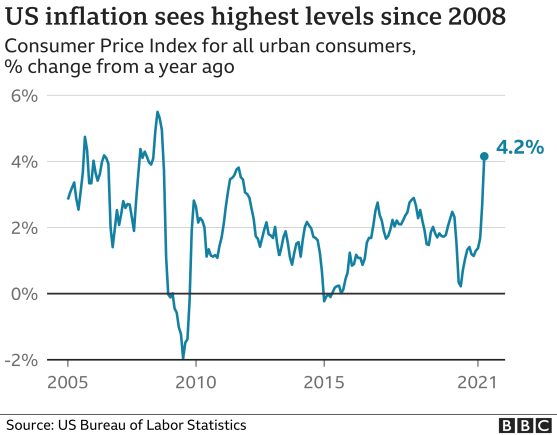
Biden will be blamed for the economy since the “blame game” seems to be the major policy element used by both parties. Their reliance on this blame game shows their contempt for the American people since they assume that most of us are either too stupid or too myopic to understand that the President has very little control over the economy in the short run and to some extent even in the long run. More important are the influences of the various economic policies and economic philosophies guiding how the juggling will be done. I can safely say that economists are continually wrong but also continually readjusting their models to better stabilize and adjust the economy. Just as new variants of the Corona virus seem to be continually emerging, new economic theories are continually being developed to better explain economic realities. “It’s all ‘bout that money.”
- The Democrats (If they control congress) will be motivated to make systemic changes to the power structure that gird elections in America today. This means making major changes in corporate charters, anti-trust laws and the military industrial complex.
If past is prologue, I will bet that the Democrats will not do anything major to upset the corporate apple cart that they as much as the Republicans depend on to get elected. I have not seen Democrats, progressive or not, supporting term limits, redoing corporate laws, corporate charters, monopolies, monopsonies or global trading powers. For the past fifty years, the Democrats, well intentioned sometimes, have let themselves be out-thought, out-planned and out maneuvered by their slick cousins the Republicans. The Republicans scream, threaten and berate the Democrats for the exact same behaviors that they exhibit when they are in power. What do the Democrats do? They maintain that they are “taking the high road” when their cousins are taking the low road. “It’s all ‘bout that money.”
The new ten-year budget for the US military was passed after an increase from 2.8 trillion dollars to 3.2 trillion dollars by a bipartisan vote.
“The bill, which angered antiwar progressives who had hoped Democrats’ unified control of Washington would lead to significant cuts in military spending, passed overwhelmingly on an 89-to-10 vote. The lopsided votes, both in the Senate and the House, which passed the legislation last week, underscored the bipartisan commitment in Congress to spend huge amounts of federal money on defense initiatives at a time when Republicans have balked at spending even a fraction as much on social programs.”
Over the past twenty or so years, every time we have gone to war whether in Iraq, Libya, Yemen or Syria, the Democrats have linked arms with the Republicans as we embark on yet another unsanctioned war to protect American interests. The only interests I ever see us protecting are our oil interests. American soldiers are fodder for American industry in the sense that it is their lives and bodies that are sacrificed so that Global corporations can make ever greater profits. “It’s all ‘bout that money.”

So pardon me please, if I am skeptical of the Democrats or if I see the Democans and Republicats as more or less Tweddle Dee and Tweddle Dum. Many people have said that we need a third party. In some ways, we did get a third party. The Tea Party became the Republican Party and kicked out the old-time Republicans. We still have two parties. I think it is high time we start a Progressive Party and leave the lame Democrats to party with their Republican Cousins. Perhaps there are enough people who want to see major changes in Government and will allow us to get rid of the ever running, ever campaigning, ever raising money, lifetime professional politicians. “It’s all ‘bout that money.”
“Net worth data compiled by the nonpartisan Center for Responsive Politics for 2018, the most recent year available, shows that almost two-thirds of U.S. senators have a net worth exceeding $1 million. A few of them are exceptionally wealthy.”
Years ago, I voted for the best person regardless of party. The past eight or so years facing Trump and an increasingly right-wing Republican party, I succumbed to the “Lesser Evil” concept. I voted for the Democratic candidate regardless of whether or not I thought they would make much of a difference. In the past, I seldom voted for a Democratic candidate. I voted for people like Ross Perot and Ralph Nader and many others who were given little or no chance of getting elected. I was told that “I threw my vote away.” Sad to say, I used the same argument on many friends as I encouraged them to vote for Hillary or Biden. I am back to the “old” John.
It’s all ’bout that money, ’bout that money, no people
It’s all ’bout that money, ’bout that money, no people
It’s all ’bout that money, ’bout that money (money, money, money, money)
PS:
Why is it that Politicians keep screaming about tax cuts and the need to cut taxes but Tax Revenues by State (some exceptions) keep growing?










 “I never really thought much about it”, I replied. “I do think I care about the environment, and I do my best to support environmental efforts at conservation and sustainability. Of course, I suppose if you were judging me, you would say that I usually put my own self-interests first.”
 I did not know what to say. I was speechless. I felt selfish and self-centered. I had neglected my responsivities to the planet and all of the other species who inhabited it. The earth was never more than a convenient piece of landscape that might or might not be useful to me. Air, water, and land were mere things, mere objects that I could use and dispose of to help make my life better. I might fear hurricanes, earthquakes, and tornados but I relied on science to protect me from these “natural” disasters.


