A Theory of Relationships

I participate in a high school mentoring program which matches up young students with older experienced men and women.  This was my second year in the program.  My mentee last year graduated and has become an alumnus of the program.  This year I was matched up with another student.  My new mentee was a young high school junior.  She wrote to me one day that she was in a relationship with someone and that it had become serious.  She wanted my advice.  Never one to shirk giving advice, I seem to always fail to hew to the dictum that “Wise people won’t need it, and fools won’t heed it.”  I sent her some comments based on my two marriages and nearly 60 years of being in a committed relationship.  The sixty years includes both my marriages.

Some days later, I found some notes from my retreat this summer.  These notes also addressed the subject of relationships or shall I say a “theory” of relationships.  I want to talk about my theory in this blog.  For many of you it will probably be “common knowledge.”  Nevertheless, I am hoping my insights might be useful to anyone out there either beginning or struggling with a relationship.  A relationship might be a friendship, a family member, a group you belong to or a loved one.  I think my theory will have some value to any such relationship.

According to Google AI, a good theory consists of the following:

  • A good theory is falsifiable (can be tested and potentially disproven).
  • Theories are designed to explain and predict phenomena.
  • A theory should be parsimonious, meaning it uses the simplest explanation possible while still adequately explaining the phenomenon.

A theory consists of concepts, constructs, precepts, variables, relationships between variables and assumptions.  I am going to posit five assumptions about relationships and then try to explain each adding in some of the above parts of a theory.  I will explain why I think each of my assumptions is critical to a good relationship.  I am not going to try to claim that my theory is a “good” theory by any scientific data.  Rather, I would justify it based on my ups and downs with relationships over sixty or more years of experience.  But as Dr. W. E. Deming often said, “Experience without theory teaches nothing.”  Thus, herein is my “Theory of Relationships.”  I hope some of these ideas will help you or others along the pathway of love and life.

My five key assumptions about relationships are as follows: 

  1. Relationships require risk
  2. Relationships require change
  3. Relationships require more than commitments
  4. Relationships require sacrifice
  5. Relationships require knowledge of self and other 
  1. Relationships require risk

Almost any effort in life will entail some element of risk.  As the saying goes, “The turtle only makes progress by sticking its neck out.”  Risk is a key concept that runs through life.  It can be thought of as the probability that something will happen either good or bad.  For instance, when you bet at a Casino or perhaps take a Caribbean cruise.  You hope to win the bet, and you hope your cruise will be safe and fun.

In life, we try to minimize risk by back-up plans, precautions and strategies to offset risk.  Variables can be created in some cases to give us more definitive measures of how risky a specific endeavor is.  In gambling we call these odds.  In love, we are usually to foolish to accept any odds on our relationship going south.  However, some people do set up prenuptial contracts which are a method to hedge your bet on your relationship.  Most people in love though are blind to the possibility that their relationship will end.  Odds are though that it will end unhappily.

Many people accept it as a fact that forty to fifty percent of all first marriages end in divorce, but those who wed multiple times face a far higher divorce rate.  The average length of a first marriage in the United States is around eight years.  The average length of a second marriage is about seven years.  Sixty to seventy percent of second marriages end in divorce. 

Being aware of risk does not mean giving up on life.  It simply means we must be realistic about the possibilities that risk entails for relationships and all other endeavors (This includes friendships).  There are many ways to minimize risk in a relationship.  Here are just a few examples:

  • Marriage Encounter Groups
  • Family meetings weekly
  • Marriage counseling
  • Here are some ten ideas from “Women’s Health”:

10 Ways to Save Your Marriage From Divorce, Straight From Relationship Experts

  1. Relationships require change

Perhaps one of the most overlooked facts impacting a relationship is the need for change.  Right, “your other needs to change but you do not.”  You are perfectly okay.  Change is an interesting concept.  One of the things most feared in life is change.  Ironically, we could not survive without change.  Unfortunately, not all changes turn out well.  Herein lies another risk factor.  Will your change be for the better or worse?  Hard to put odds on change, but most relationships will not survive unless the partners are willing to change.

I don’t mean change in just a physical sense but change in an emotional and cognitive sense.  Are you willing to accept major changes in your ideas about life and relationships?  Are you willing to accept major changes in how you feel about certain activities and people?  Without change, we know that life grows stale and boring.  Relationships are no different.  A relationship without change will become boring.  Doing the same old things day after day.  Even worse is when you refuse to think about some of the ideas you have that relate to your significant other.  For instance, If he or she likes to travel and you do not, are you willing to go along or have your partner go with a friend?  What accommodation are you willing to make if you are not willing to change your own behavior?  Love requires change.

“We cannot change anything until we accept it.  Condemnation does not liberate, it oppresses.” — Carl Jung

  1. Relationships require more than commitments

We hear a great deal about commitment when it comes to relationships.  Making a commitment involves dedicating yourself to something, like a person or a cause.  A commitment obligates you to do something.  In a relationship, it might involve a commitment to fidelity or to some fiduciary obligations.  We promise to “Love, honor and obey” in some marriage vows.  We think that making a commitment is enough to keep our relationship in safe waters.  Some people think that a commitment can be embodied in a “Marriage Contract.”  Such a document spells out mutual responsibilities and agreements.

At our last Marriage Encounter meeting, I was introduced to the distinction between a “Marriage Contract” and a “Marriage Covenant.”

Covenant                                    Contract

Unconditional                             50/50 agreement

A Covenant is forever                A Contract can be terminated

A Covenant is limitless               A Contract has limits

We tend to think of Covenants when it comes to Bible history.  Covenants were made between God and his chosen people.  The idea of a contract is a modern legal term.  I think it erodes the very essence of spirituality that a marriage or committed relationship should embody.  We need to adhere to the idea of a Covenant when it comes to a relationship.  Anything less leads inevitably to less than a committed relationship.  We can simply terminate it when the going gets rough.

  1. Relationships require sacrifice

Another interesting concept, Sacrifice.  What does sacrifice mean?  Are there any variables that can measure our sacrifices?  Jesus said that the greatest sacrifice anyone can make is to give up their lives for another.  I think the greatest sacrifice is to love someone who is unlovable.  To love someone who is despicable like a pedophile or a serial killer or someone who bullies and threatens others.  I do not know about such sacrifices, and I am not sure if I could make them.  I admire the partner or mother or father who can stick by their spouses or siblings when all hell breaks loose.  Can you imagine being called up by the police and told that your son just shot 20 people at school.  Could you stand by them?  What sacrifice it must entail not to stop loving someone who has done such cruel acts!  Fortunately, most relationships will never demand such sacrifices.

The sacrifices we make in relationships can range from trivial (like which way to put toilet paper on the roll) to the significant.  More significant sacrifices might entail deciding who will stay home with the children or who will give up where they want to live for the other person’s choice.   You may not face many significant sacrifices in your relationships, but you will most assuredly face many trivial sacrifices.  These should not be discounted or minimized though.  As the quote goes, “For want of a nail the shoe was lost, For want of a shoe the horse was lost, For want of a horse the rider was lost, For want of a rider the battle was lost.”  Trivial things add up like the straw that broke the camels back.  The trivial can go from a mole hill to a mountain in less time than many of us realize.  When the trivial become the mountain, your relationship will be in jeopardy.  The trivial sacrifices in a relationship are anything but trivial but they are certainly inevitable.

  1. Relationships require knowledge of self and other

This is the toughest requirement of all.  Socrates said that “The unexamined life is not worth living.”  What if you have never examined your life?  How many people do you know who have done a rigorous examination of their life?  Jesus said, “Love your neighbor as yourself.”  But what if you do not love yourself.  In truth, I doubt many people do.  Many people have been so beaten up by parents, teachers, bullies and even loved ones that they actually hate themselves.  Few of these people want to know themselves because it means facing hidden demons that they would just like to leave buried.   Gandhi said, “Be the change that you want to see in others.”  This axiom encourages a certain amount of self-understanding as well as understanding of others.  All too often we have no time to understand either.  The perp that is trying to rob you at gun point will not have time for you to understand him.  Furthermore, you may care very little about his troubled up bringing.

My uber pessimism on a premise that I insist is necessary for a good relationship seems to doom any relationship to the graveyard.  If we can never know ourselves or others, how then can we have a positive happy relationship.  The secret is that we do not have to be perfect, nor do we need perfect knowledge of ourselves or others.  We can never and will never be perfectly transparent to ourselves or others anyway.  The JOHARI Window has a quadrant of “Unknown to Others and Unknown to Self.”  I have found the JOHARI window to be quite a useful concept on the path to discovering more about myself and thinking about my relationship with others.

“The Johari window model is used to enhance the individual’s perception on others.  This model is based on two ideas- trust can be acquired by revealing information about you to others and learning yourselves from their feedback.  Each person is represented by the Johari model through four quadrants or windowpane.  Each four windowpanes signifies personal information, feelings, motivation and whether that information is known or unknown to oneself or others in four viewpoints.” — The Johari Window Model

The risk will always be there, but we can work on being more self-aware and more honest to others.  That is the best we can do in life.  That is why relationships are risky.  You will never be able to see all the shoals and reefs that your life might flounder on.   Life is a process of never-ending discovery.  Death will eventually bring closure to your adventures and explorations.  Until then, just getting in bed is risky so why not try to live life to the fullest.  Get out of bed and go MAKE a good relationship.


Only God Can Save You!

This past year marks my 41st Jesuit Silent Retreat.  I may be the only Atheist at the retreat.  Each year brings new insights and thoughts.  I wonder if I have grown any during my retreats.  I can’t say that I feel any closer to God, yours or theirs.  I wonder if there is a God but I doubt it.  I wonder if there are multiple Gods.  A God for each religion.  Is the Muslim God and the Catholic God and the Jewish God the same entity?  Were the Romans, Greeks, Hindus and many others more on the mark with different Gods for different functions?

This year reading as I usually do many of the assigned Gospel readings and many other Gospel passages I was struck with how many of the old prophets emphasized the need to believe in God’s goodness.  Only God can save us and we must have faith in God’s goodness.  God has a plan for all of us if we will only listen to him or perhaps her.  God knows what we need but we ignore his/her messages.  Pray to God.  Love God, for God loves us.  He loves us so much that he sent his only “begotten” son (Not sure what a begotten son is) to save us.

Exodus 33:18-19 (NKJV)

“And he said, ‘Please, show me Your glory.’ Then He said, ‘I will make all My goodness pass before you, and I will proclaim the name of the Lord before you. I will be gracious to whom I will be gracious, and I will have compassion on whom I will have compassion.’”

Frankly, I still don’t get it.  Many people have taken a shot at saving my soul, but I still don’t see any value in God.  During the past five years, he/she has allowed Global Warming to destroy much of the climate that I once loved.  He sent a scourge called Covid 19 to help ruin the last few years of my life.  And to top it off, he allowed a low life called Trump to run for President again.  I guess I am lost to the damnations of hell fire, but I still don’t see a God that is going to save me.  If so, he/she is about 78 years past my patience.

C. S. Lewis was the great “converter.” The conversion of an Atheist to a Theist is an aphrodisiac for the devoted religious. I suppose it justifies their belief in a future fiction that requires a complete abandonment of reason and logic.  A place called Heaven where we can all live happily ever after.  Just as long as we are willing to listen to daily sermons about how good God is for us.

“[God] will not be used as a convenience. Men or nations who think they can revive the Faith in order to make a good society might just as well think they can use the stairs of heaven as a shortcut to the nearest chemist’s shop.” — C.S. Lewis

But “Only God Can Save You” has a ring of truth to it.  No one on earth can save you from death.  No one can be trusted to be by your side forever regardless of the consequences.  Friends and lovers come and go like shadows in the night.  One day someone loves you, the next day they hate you.  One day someone is your friend, the next day they unfriend you on Facebook.  Tragedy of tragedies.  Loneliness is a Satan stalking all of us all of our lives.  I would wager more people have committed suicide out of loneliness than any other reason on earth.

Psalm 107:8-9 (NKJV)

“Oh, that men would give thanks to the Lord for His goodness, and for His wonderful works to the children of men! For He satisfies the longing soul and fills the hungry soul with goodness.”

Only the concept or idea of an All Knowing, All Seeing, All Powerful and All Compassionate God can guarantee us that we will never be alone.  Never be forgotten.  Never be forsook.  One popular song goes:

Walk on, walk on

With hope in your heart

And you’ll never walk alone

You’ll never walk alone

This song was first written by Oscar Hammerstein II and composed by Richard Rodgers for their musical Carousel, which was released in the USA in 1945.  It has since become one of the most popular funeral songs (Next to Amazing Grace) of all time.  Many people interpret it to have faith.  Faith in friends.  Faith in lovers.  Faith in a God who will always be with you in time of trials and tribulations.  It is a song to give hope to people in time of grief and suffering.

But where does one find such a God?  The Bible shows us at best an arbitrary God.  Sometimes belligerent.  Sometimes vindictive.  Sometimes vengeful.  Sometime cruel.  A God that many of us see in the world wreaking havoc on humanity for any number of transgressions.  From Sodom and Gomorrah to massive floods to sending his “Chosen people” into slavery.  A God who threw Adam and Ever out of the Garden of Paradise because they dared eat an apple.  A God who destroyed cities because they did not live up to his/her expectations.  A God who sent a flood to wipe out humanity.  This is a compassionate loving God?

Psalm 31:19 (NIV-84)

“How great is your goodness, which you have stored up for those who fear you, which you bestow in the sight of men on those who take refuge in you.”

Or is it a God who feeds his people.  A God who watches out for his Chosen ones.  A God who rewards those who obey him/her.  A God who destroys the enemies of those who worship him.  A God who is loving, kind and compassionate.  I wonder what God really is.  Here are some questions that still nag at my Atheist beliefs.

  1. Do I think that I am smarter than all the wise and great people who believe in God?
  2. Who or what created us?
  3. What if there is a God? What does he/she think of me?
  4. What if there is no God?
  5. Is God simply a metaphor for “Unconditional Love?”
  6. Is God Death or Life or Both?

The Atheist by Martin Braun

Science defines my virtue.

Factual and fictional books are my domain.

Don’t speak to me of pixies, fairies, and unicorns,

Or of your monopoly on morality, love, faith, and shame.

I am what I am

And of what I do I claim my own.

I fight for my survival

Of which need not be told, judged or shown.

There is no all knowing

Or an immortal god of my fate he will judge.

For when my heart ceases to beat

It will return from whence it came, a kind of primordial sludge.

My Final Will and Testament – Scriptures – Reflection #10

images

Last year at my 40th Demontreville Retreat, one of the exercises that we were given by the Retreat Master included a very challenging set of thoughts.  The worksheet for the activity was labeled as “A Testament.” I took the worksheet and instructions home with me.  It had fourteen tasks or reflections to complete.  I did not desire to complete them during the retreat.  It is now almost a year since my retreat, and I have decided to make the mental and emotional effort necessary to complete this “Testament.”

The worksheet started with these instructions:

Imagine that this is the last day of your life on earth.  In the time that you have left, you want to leave a “Testament” for your family and friends.  Each of the following could serve as chapter headings for your “Testament.”  This is Reflection Number 10 on the worksheet.

  1. These are the Scripture Texts that have touched and helped me.

My being an Atheist some people might think that I would have a hard time with finding Scriptures that have touched me.  In truth, it is one of the easiest reflections for me to think about.  I have so many wonderful parables from the New Testament and many proverbs and wisdom from the Old Testament that I use to guide my life and decisions.  I see the Bible as another source of great wisdom that has been compiled over the ages.  It is a combination of history, storytelling and profound thoughts compiled into one large book.  I do not view the Bible as infallible or “The Word of God” unless I use that interpretation very loosely.  If there is a God, perhaps he does reside in all of us and all of us are “Children of God.”

In 1775, Thomas Paine wrote a short essay criticizing slavery and reflecting on “Pretended” Christians who could support such a practice.  His words were:

“to catch inoffensive people, like wild beasts, for slaves, is a height of outrage against humanity and justice, that seems left by heathen nations to be practiced by ‘pretended’ Christians.” — African Slavery in America, 1775

Today we have a system that seems somewhat analogous to the system of “Pretended Christians” that Thomas Paine described 250 years ago.  “Pretended Christians” who can support a man and party that attacks, insults, abuses, and maligns minorities, immigrants, women, disabled people, and veterans.  A man who swears vengeance against the people who disagree with his policies.  A man who pays no attention to Scripture which says:

“Dearly beloved, avenge not yourselves, but rather give place unto wrath: for it is written, Vengeance is mine; I will repay, saith the Lord.  Therefore, if thine enemy hunger, feed him; if he thirst, give him drink: for in so doing, thou shalt heap coals of fire on his head.  Be not overcome of evil but overcome evil with good.”Romans 12:19-21 King James Version

Many of the people insulted by this man continue to feel that he is some sort of Christian Savior.  A man who will restore Christianity as the Mother Religion of America.  A position for religion that not one of the 56 signers of the Declaration of Independence, our Founding Fathers either desired or supported.  We have a country full of people who want to call America a Christian nation but who neither practice nor believe in one iota of what Jesus of Nazareth taught and died for.  We have a nation full of “Pretended Christians.”  I do not pretend to be a Christian or a Saint or a Holy Man.  God (If he/she exists) save me from these “Pretended Hypocritical Christians.”

The following are four of the scripture quotes that have had the most influence on my life.  I will briefly describe the impact that each has had on my thoughts and behaviors.

How-to-Understand-and-Interpret-the-Parables-of-Jesus

  1. What doth it profit a man if he gain the whole world but suffer the loss of his own soul? — Matthew 16:26

The first Jesuit retreat that I did at Demontreville in 1984, upon entering the grounds I saw the larger-than-life sized statue of Saint Ignatius Loyola, the founder of the Jesuit Order.  He stands on a large concrete pedestal.  I was forty years old at the time and just finishing my Ph.D. degree.  I was hungry for fame and fortune and success.  During the retreat, I walked up to the statue and discovered the words “What doth it profit a man if he gain the whole world but suffer the loss of his own soul?’ written on the base of the pedestal.  These words are perhaps the most profound words I have ever heard in my life.  I went back several times during the retreat to read and reflect on these words.  Over the past forty years or so, despite these words being etched in my brain, I always go to see the statue of St. Ignatius and silently repeat these words to myself several times.

My first visit to these words did not stop me from chasing what some call the elusive gods of fame and fortune.  Over the years, my chasing has become less vigorous, but the goal posts still exist in my mind.  Part of me longs to carry the football over the goal line and to hear the roar of the crowd and bask in shouts of “hurrah” and “you’re the greatest.”  The fortune part has never really mattered as much to me as the adulation and recognition that I still thirst for.  Thus, every year that I go back to Demontreville, (this will be my 41st retreat), I will make my pilgrimage to the statue to restore my commitment to the fact that fame and fortune are no substitute for the real nutrients that nurture the soul.  No amount of fame and fortune can substitute for integrity, compassion, kindness and charity towards others.

Version 1.0.0

  1. Therefore, do not worry about tomorrow, for tomorrow will worry about its own things. Sufficient for the day is its own trouble. — Matthew 6:34

Another phrase from the teachings of Jesus as marked down by Matthew.  Throughout history, this same thought has been voiced by most of the great prophets, thinkers and philosophers.  “Live each day one moment at a time.”  “Live in the now.”  “Be mindful of today.”  Doing so is akin to walking a tightrope.  It requires a sense of balance.  We must plan for the future, but we must also live one day at a time.  How to find that balance is a Herculean task.  A second Herculean task is maintaining our balance.   These two tasks are by far more difficult in the modern world than slaying the Nemean lion or capturing the Cretan bull.  Hercules managed to complete 12 very difficult tasks.  I have yet to manage completing even one of my two challenges.  I suppose I will be working on “Living in the Now” for the rest of my days.

GettyImages-185181132-5bdf5e1dc9e77c00512d517b

  1. Vanity of vanities, says the Preacher, vanity of vanities!  All is vanity.  — Ecclesiastes 1

The Book of Ecclesiastes is reported to have been written by King Solomon.  Solomon as you know was one of the wisest men in history.  He was granted wisdom by God because Solomon did not ask for fame or fortune.

“And God said to Solomon: Because this was in your heart, and you have not asked for riches or wealth or honor or the life of your enemies, nor have you asked for long life; but you have asked for wisdom and knowledge for yourself, that you may judge My people over whom I have made you king.”  — (2 Chronicles 1:11-12 NKJV)

Buddhism, Advaita, Zen and other religions talk about the major problem that leads to all of humanities other problems being what psychologists call our Ego.  Solomon called it vanity.  Some might call it self-conceit, narcissism, self-centeredness, self-absorption, me-ism or egotism.  Its all the same.  People become the center of the universe.  I saw a sign the other day that read “When I am not the center of the universe, people become human.”  This is another difficult battle to overcome.  We can focus only on our own needs or desires, or we can expand our awareness to notice the needs and desires of other people.

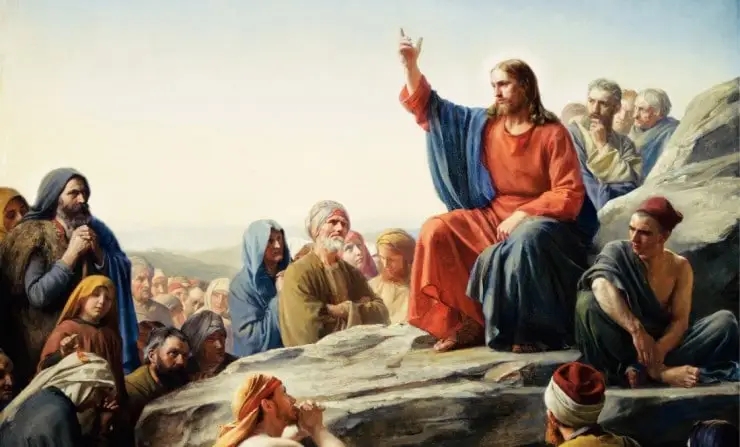
The Eight Beatitudes given by Jesus in his famous Sermon on the Mount are the greatest exposition of our responsibility to other people that has ever been written.  Jesus elucidated what are called the Eight Beatitudes.  I will not list them all as they are easy to find on Google.  These eight thoughts clearly define how we should treat other people.  I often wonder why so many “Pretended Christians” want to put up the 10 Commandments from the Old Testament, when their Jesus gave them the 8 Beatitudes to obey.   I have actually read that many “Evangelicals” believe that the 8 Beatitudes are wimpy.  The lack of respect for the man that founded Christianity is beyond belief.

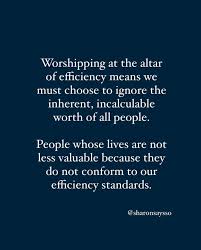
I try ever day to remember that I am not the center of the universe.  The world does not revolve around me.  For every one of my rights, there is a responsibility.  I need to look out for others and to help those in need, be they gay, women, immigrants, minorities or even right-wing bigots.  They are all part of the human race.  To paraphrase Ben Franklin, “Either we all work together for a better world, or we shall surely all perish together in ways that none of us desire.”

eye-of-the-needle

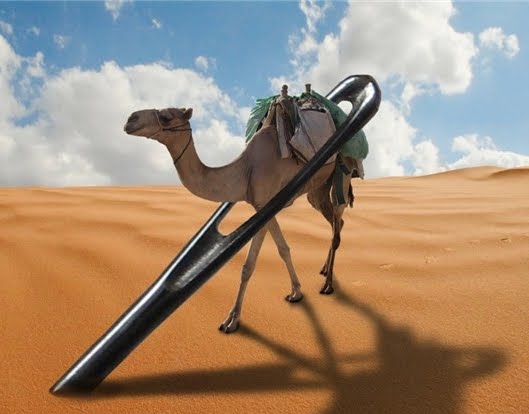
  1. It is easier for a camel to go through the eye of a needle than for a rich man to go to heaven. — Mark 10:25

My friend Kwame says that we should be grateful that we are not rich.  Money is a corrupting influence.  It is somewhat like a drug.  It is addictive.  The more you get the more you want.  The more you have the more you need.  Another friend of mine whom I met in China told me before we left Shanghai in 1989 that we were rich.  I explained that we were not rich, but very middle class.  In fact, we were definitely not even upper middle class.  Xibo said, “you are rich to us in China.  You have nice house, and you can afford to travel to distant countries.”  Xibo’s comments were very accurate, and they had the effect of making me realize just how selfish I often am.  I am bemoaning my mundane middle-class status when to most of the rest of the world, I am regarded as rich.  Never mind regarded.  I am rich to possibly 90 percent of the world.

I am told by biblical interpreters that Jesus never said “rich people were bad” or that rich people could not go to heaven.  What Jesus did say and used many parables to illustrate the fact was that it would be hard for rich people to get to heaven.  Money is a heavy load to carry, and it corrupts.  Lord Acton said that “Power corrupts, and absolute power corrupts absolutely.”  The same can be said of money, “Money corrupts, and excessive money corrupts excessively.”

Regard the quest for money in the USA today.  Everyone wants more than they have.  We worry about Inflation, about immigrants stealing our jobs, about the Chinese sending too many products to us.  On the other hand, billions of dollars are now spent on people trying to get rich quick through pull-tabs, lotteries, online gambling and now sports betting.  The mania for money is fueled by the incessant celebrities, media influencers and TV shows touting the “Lifestyles of the Rich and Famous.”  The airwaves, newspapers, Internet and all of our media are full of non-stop advertising.  “Shop till you drop” should be the title of a song or at least put on the US dollar bill right under George Washington’s picture.

To be mindful of what I have I keep repeating this thought in my head.  ‘It is easier for the camel than the rich man to get to heaven.”  By the way, I do not believe in heaven or hell but I take it metaphorically that it is better for the human race if I try to be the camel and not rich and greedy.

Next Reflection:    

  1. These are things that I Regret about my life.

My Final Will and Testament – Sufferings – Reflection #7

images (1)Last year at my 40th Demontreville Retreat, one of the exercises that we were given by the Retreat Master included a very challenging set of thoughts.  The worksheet for the activity was labeled as “A Testament.” I took the worksheet and instructions home with me.  It had fourteen tasks or reflections to complete.  I did not desire to complete them during the retreat.  It is now almost a year since my retreat, and I have decided to make the mental and emotional effort necessary to complete this “Testament.” 

The worksheet started with these instructions:

Imagine that this is the last day of your life on earth.  In the time that you have left, you want to leave a “Testament” for your family and friends.  Each of the following could serve as chapter headings for your “Testament.”

7.  These are the Sufferings that have seasoned me and made me more compassionate.

How to start talking about Sufferings without sounding like a whinny spoiled brat?  Sure, I have had some downs, and I will mention them.  But my life has not been anywhere near the life that I know other people have lived.  In my 77 years on this earth, I have met people who have been through unimaginable and unspeakable sufferings.  If anything has made me more compassionate, it is listening to their stories.  Let me just tell you one that I recently encountered.

A week or so ago, I had a substitute teaching job for the JROTC program at our local high school.  I looked forward to this work since the kids who take this program are usually UBER well-behaved.  JROTC is a program staffed by Marine personnel with the blessing of the school administration.  When I arrived, the full-time teacher was away but there was another staff member.  He was a retired Marine Corp NCO.  I will call him Nick but that is not his real name.  Nick was missing a leg.  He had served in the Gulf Wars and been hit with an IED or Improvised Explosive Device.  He spent several months in a VA hospital but finished his tour of duty and retired from the Marine Corp.

Nick suffered from many other injuries and also had a form of degenerative MS which was slowly killing him.  We talked most of the day as you can imagine two veterans would do.  Nick had a family and two children.  I met one of his kids and was impressed by her closeness with her dad, something I never experienced with my daughter.  Despite his disabilities, Nick claimed no special privileges in life.  He was positive and happy to be alive.  He enjoyed working with the schoolchildren and trying to make a difference in their lives.  Throughout the day, I detected not one bit of remorse or self-pity on Nick’s part.

When I left home at 18 and joined the military, I resolved never to blame my parents for anything I would experience in life.  I was now an adult.  It did not matter that I had an abusive father growing up or that I often felt like a “motherless” child.  I was now an adult and my destiny in life was in my own hands.

I experienced suffering when I caught my first wife in bed with a co-worker and she wanted to leave me for him.  I experienced suffering for nearly twenty years when my only daughter did not want to speak with me.  She was married twice, and I was not invited to either wedding.  She had two grandchildren whom I have only seen maybe three or four times in the last thirty years.  I have improved my relationship with my daughter somewhat over the past five years.  She and I get together for lunch each time I come back to Minnesota.

imagesAm I a very happy person?  Most of my friends would probably say no.  My sufferings though are mostly self-inflicted.  My thoughts on the life that I should have lived haunt me.  Try as I might I can’t let go of the things I fucked up in this world.  I can’t even forget the teacher in the third grade who told me to, “Shut my mouth and stop singing.”  Seventy years later and it feels like if I try to sing, something awful will happen to me.  I would rather jump off of a cliff than sing a note.
A number of years ago, I had a job which required me to do some collections from overdue purchasers of various products.  I did a car repo, and I did not feel too bad about it since I thought, “Why should anyone have a brand-new car if they could not make the payments?”  At this point in my life, I was still just scrapping by financially.  I had never had anything more than a ten-year-old vehicle.  I was still buying cars from the junk yard as well as used tires from the junk yard.

images (2)One day, I had to go out to do a repo on a guy who bought a TV set and was not making his payments.  I went to the poor section of town and walked up to the address I had been given.  It looked like maybe a three-room small bungalow.  The yard was gated, and I looked for a dog.  Not seeing any, I opened the gate and walked up to the front door.  There was a screen door.  The main door was open, and I could see into the house.  I knocked loudly on the door as there was no doorbell.  I could see a living room and a kitchen.  Out of the kitchen, a large man started coming to the door.  As he drew closer, I could see he had no legs.  He was missing both legs and was walking with two crutches.  He asked me what I wanted.  I hesitated and then answered “Sorry, I must have the wrong house.”  I went back to my office and quit the same day.  I figured he needed the TV more than my company needed the money.  I could not do a job that required me to take from poor people what little they had in life.

These are some of the sufferings that try men’s souls and women’s as well.  In some sense, they are also our sufferings.  John Donne (1572-1631) wrote, “For thee Ask not for whom the bell tolls, it tolls.”  The sufferings of humanity are all of our responsibilities.

My years working as an AFDC (Aid to Families with Dependent Children) counselor taught me that while I might have one or two things to cause me suffering, many other people have three, four, five or more problems.  I cannot begin to describe all the inhumanity that I saw reflected in the lives of my clients.  And then you have the “financially responsible politicians” who demand that many of these people get a job if they are going to receive welfare.  A whole cadre of human beings who disparage and denigrate the less fortunate as “welfare queens,  free loaders, leeches and parasites.”  Many so-called Christians who forget the words of Jesus,  “Truly I tell you, whatever you did not do for one of the least of these, you did not do for me.” — Mark 10:21:

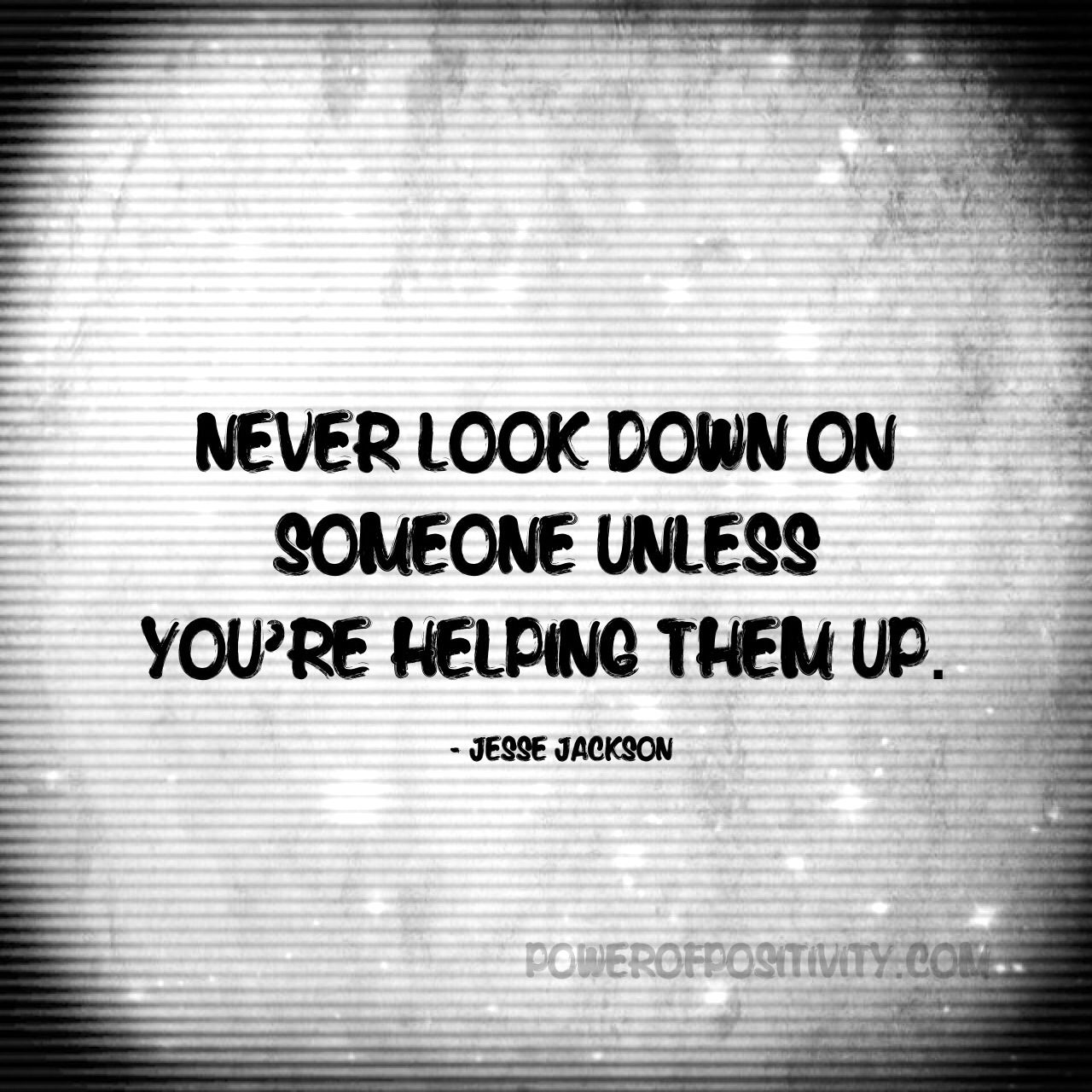
Helping+someone+get+up+Annie+Spratt+Unsplash_49d20648-4035-49ac-acb7-56f660c19fc8-prv

So that’s all Folks.  My life has been a breeze.  My friend Kwame always says that he is blessed.  I never use that word, but I suppose I have been blessed.  I have good health.  I have a great wife.  I have enough money to pay my bills and go on a vacation each year.  My only sufferings in life now are watching so many of my friends and relatives pass away.  I fear I might be the last man standing in a world that I feel increasingly alienated from.

Next Reflection:    

  1. These are the Lessons that life has taught me.

My Final Will and Testament – Convictions – Reflection #3

download

Last year at my 40th Demontreville Retreat, one of the exercises that we were given by the Retreat Master included a very challenging set of thoughts.  The worksheet for the activity was labeled as “A Testament.” I took the worksheet and instructions home with me.  It had fourteen tasks or reflections to complete.  I did not desire to complete them during the retreat.  It is now almost a year since my retreat, and I have decided to make the mental and emotional effort necessary to complete this “Testament.”

I am going to complete one or two reflections every other day for the next few weeks.  I would love it if you would do these tasks along with me.  If you would like to share your thoughts, that would be great, but I am not expecting anyone to do so.  I would like to know if you find any benefit in completing these activities.

The worksheet started with these instructions:

Imagine that this is the last day of your life on earth.  In the time that you have left, you want to leave a “Testament” for your family and friends.  Each of the following could serve as chapter headings for your “Testament.”

  1. These are the Convictions that I have lived by.

I do not like the sound of the word Convictions.  I think I have lived by too many Convictions in my life.  There are of course two somewhat very different meanings that can be attached to this word.  Dictionary.com provides the following two definitions.  Let us look at these for a second.

  1. A formal declaration that someone is guilty of a criminal offense, made by the verdict of a jury or the decision of a judge in a court of law:  “She had a previous conviction for a similar offense”
  2. A firmly held belief or opinion:  “She takes pride in stating her political convictions”

maxresdefault

Regarding the definitions, one can see where a person might have some anxieties about the first association of Conviction with jail and prison.  I assure you that this is not where my anxiety comes from.  I am pretty sure it stems from the second definition.  “A firmly held belief.”  When I look back upon my life, I have had too many firmly held beliefs.  Behind my back, I know that I have been called “A know it all” many times.  I am still a very opinionated person as any of my readers can probably attest.  However, I would like to think that seldom if ever do I get into robust arguments any more with other people.  I even gave up trying to convince Trump supporters who include veterans, evangelicals, businesspeople, college graduates, relatives, and friends that Trump is a total scumbag with no morality or ethics.

I am trying hard to find any Convictions now that I am so dedicated to that I let them rule my life.  All of the great quotes, aphorisms, metaphors, analogies, theories, and ideas that I know of would fill an old encyclopedia Britannica.  But not one that I can think of would I waste five minutes defending.  I think that there are pro’s and con’s to everything in life.  For every up there is a down.  For every night, there is a day.  For every light, there is a dark.  For every right, there is a wrong.  Perhaps, Ecclesiastes comes as close to a Conviction as I want to live with today.

“For there is no lasting remembrance of the wise, just as with the fool, seeing that both will be forgotten in the days to come.  Alas, the wise man will die just like the fool!  So, I hated life, because the work that is done under the sun was grievous to me.  For everything is futile and a pursuit of the wind.” — Ecclesiastes 2

Is the above a Conviction or is it simply a belief?  Not sure it even matters.  Everything we do is blowing in the wind.

Custom-Made-Golden-Mountain-Landscape-Oil-Painting-on-Canvas

One story I like very much was told by OSHO about a mighty king who died.  This King believed that he was the greatest King on earth and also that he was the greatest King who ever lived.  The King died and found himself in the realm of the Golden Mountains.  These mountains were higher than the Himalayans and more vast than the entire Asian continent.  Here the King met the Caretaker of the mountains.  The Caretaker gave the King a magic pen and told him that he could write his name in the mountains.  This was permitted because he was a mighty King.  A few days later the King came back to the Caretaker and complained, “I have walked for many miles through the Golden Mountains and everywhere I went to sign my name, some other person had already signed their name.  Who are all these people?”  The Caretaker replied, “These are all the other mighty Kings before you who died.”

  • Convictions are more dangerous foes of truth than lies.”
  • “Tolerance is the virtue of the man without convictions.”
  • “Men never do evil so completely and cheerfully as when they do it from religious conviction.”

I would rather live by a set of virtues and values than a set of convictions. 

Next Reflection:    

  1. These are the things that I have lived for.


Next Newer Entries