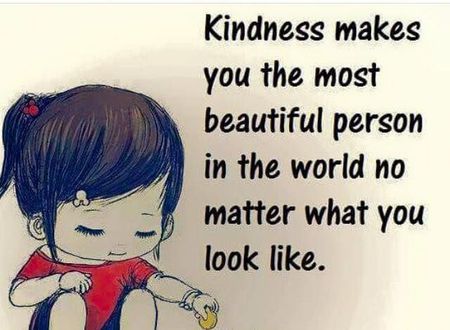
One of my favorite quotes is “What knowledge is there that is greater than kindness.” When I first heard this thought, it literally rocked my universe. I was brought up to believe that knowledge was the greatest treasure of all. Knowledge was power. Knowledge could make you a King or Queen or President. Knowledge was everything. Knowledge fed IQ and people with higher IQ’s were more successful than people with lower IQ’s. Books were the source of knowledge. Books were like Campbell Soup. Knowledge condensed into a compact form. All I had to do was open a book, read, and get knowledge that would make me smart and powerful.

I completed my Ph.D. I was the first one in my family to go to college let alone get a Ph.D. After finishing my Ph.D. dissertation, I took the Mensa test and joined the organization. I thought I had just about reached as high as possible in self-development. I had two certificates to show how smart I was. Then I heard about Emotional Intelligence (called EQ by Daniel Goldstein who pioneered the concept). EQ surprised me because truth be told, I thought there was something still missing in in my life. I had an IQ of 137 but my EQ was more like zero. I did not have much compassion or sympathy for lazy people, stupid people, dishonest people and loads of people who did not live up to my expectations. I decided that I needed to work on my EQ and downplay the role of IQ in my life.
I realized that as another famous quote goes “Knowledge helps you to make a living, but wisdom helps you to make a life.” Wisdom is a combination of EQ and IQ and of course experience in living. This is why Native Americans value the elders in their societies. The elderly should have (but sadly often do not today) the experience and wisdom that can help guide the young. I wanted to seek out more things that would help me to learn compassion and wisdom. Over the years, my forty retreats, various support groups and readings have helped me to gain a better understanding of the need for EQ. I thought I was doing well until just recently.

Karen and I have had our quarrels and disagreements over the years. They have become less frequent after three weekends at Marriage Encounters, numerous trips to a marriage counselor, and more “family meetings” than I can count. We have now been married over 34 years and most of it very happy despite some rough spots. I will honestly and humbly admit though that without some counseling and the three marriage encounter weekends we attended that we might not still be together.
 Nevertheless, we still have the occasional spat, and they usually leave us both feeling quite depressed and disappointed. I am mostly disappointed with myself for not handing things well. It seems I too often say things or discuss things very differently than we have agreed on. We have found and used many models for dealing with conflict. One of our favorites is the “DESC” model. This stands for “Describe” what is happening in neutral terms. Talk about how this makes you feel in terms of “Emotions.” “Specify” what you would like to see happen differently. Define what the “Consequences” will or could be for change. Consequences are best provided that are positive, such as we will feel closer together. When we stick to this model things seem to go well. Our discussions stay on track and our resolutions come more effortlessly. When we stray from the model, accusations and insinuations escalate and the discussion becomes difficult if not painful.
After one of our arguments the other day, I had a sudden insight that was the inspiration for this blog. I have noticed that I try to do a lot of things for Karen. I help her take her instruments to her music sessions. I do a lot of the shopping. I do dishes and laundry. I help her in and out of the car. I sometimes wonder how she could not feel totally loved. She in turn does a lot of things for me but somehow, I often feel unloved. Out of the blue, I realized that we both try to show our love by doing “things” for each other. However, when it comes to emotional displays that show love, it seems harder for each of us.
My insight was that there are two kinds of kindness. One I will call “Physical Kindness.” Doing things that are physical and overt for another. Taking the garbage out. Cooking or baking the things that your partner loves. Running errands for each other. Giving nice gifts. These are all examples of what I would call “Physical Kindness.” I think I am very good at these things as is my spouse.
 The other kind of kindness I will call “Emotional Kindness.” This is not doing things but saying things either verbal or non-verbal that honor and appreciate the other person. It respects their feelings more than their actions. It might be “I love you” or it might be an appreciation of something the other person says or thinks. It is building up the other person’s self-esteem and not putting down anything they might express or care about.
Upon more reflection, I could see that there are many times when I am not “Emotionally Kind.” I ignore or miss opportunities for empathy and emotional support. Telling someone that “When the going gets tough the tough get going” or “There is no try, there is only do or do not” are examples of my previous “emotional support.” I should not have been surprised that Karen was never smitten by these suggestions. Perhaps I should retire these two maxims from my lexicon. I know I need to learn more varieties of Emotional Kindness.

The lesson I have learned, and I hope that this blog somewhat illustrates is that kindness can take many forms. I have talked about two that are salient to me now. There is a good book worth reading called the “Five Love Languages.” It is written by Gary Chapman. This book teaches that there are several ways to transmit your feelings of love to others. Just as different people have different preferences for how they learn, the same is true for love and kindness. You must learn what the recipient of your intended love or kindness resonates with. It is like finding the right channel on a radio. You must dial it in correctly or you can not connect.
 A friend of mine once told me that you catch more flies with sugar than you do with vinegar. Over the years, I have been told that I am too negative. I have been labeled as a pessimist who more often sees the bad things in life rather than the good things. I have been accused of being a skeptic and even a nihilist. I have decided to turn over a new leaf. I am determined to share more positive thoughts in my blogs. I want you to see the world as a wonderful place full of joy and good will. I was going to start my new focus next year, but I decided “why wait.” “He who hesitates is lost.” Thus, I give you the secret to living the life that I am sure you want to live. Just BE:
 Happy. Happy. Happy. Happy. Happy. Happy. Happy. Happy. Happy. Happy. Happy. Happy. Happy. Happy. Happy. Happy. Happy. Happy. Happy. Happy. Happy. Happy. Happy. Happy. Happy. Happy. Happy. Happy. Happy. Happy. Happy. Happy. Happy. Happy. Happy. Happy. Happy. Happy. Happy. Happy. Happy. Happy. Happy. Happy. Happy. Happy. Happy. Happy. Happy. Happy. Happy. Happy. Happy. Happy. Happy. Happy. Happy. Happy. Happy. Happy. Happy. Happy. Happy. Happy. Happy. Happy. Happy. Happy. Happy. Happy. Happy. Happy. Happy. Happy. Happy. Happy. Happy. Happy. Happy. Happy. Happy. Happy. Happy. Happy. Happy. Happy. Happy. Happy. Happy. Happy. Happy. Happy. Happy. Happy. Happy. Happy. Happy. Happy. Happy. Happy. Happy. Happy. Happy. Happy. Happy. Happy. Happy. Happy. Happy. Happy.


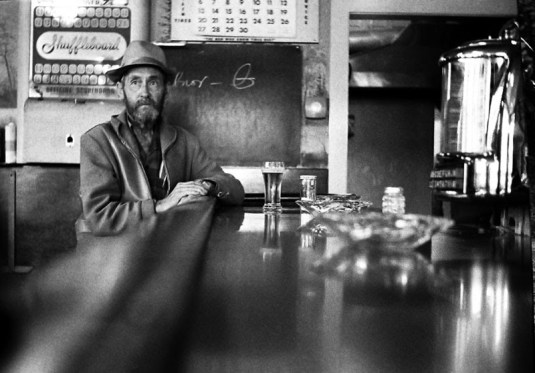


 A few more months went by and one day I decided to come home from work early. As I entered my house, I heard screams coming from upstairs. I went to a desk and grabbed a loaded Colt Commander 45 ACP that I kept ready for emergencies. I feared that Ashley was being attacked by some unknown intruder. I ran up the stairs and into our bedroom. There on the bed was Ashley and one of the young lawyers from my old law firm. They were both nude and she was on top of him riding him like a bucking bronco. What I thought were screams of pain were screams of ecstasy. I had never heard anything like that from Ashley during our entire marriage.

 The concept of tracking time brings forth images of tracking some wild beast in the woods. Deer, moose, bear, cougars, tigers all leave very distinctive tracks. Time also leaves distinctive tracts. Time leaves physical as well as emotional tracks on all of us. Not to mention the tracks that time leaves on the environment. Emotional tracks are evident in the greater cautiousness and fears that we have as we age. From experience, once burned, we no longer want to get so close to the flame. Indeed, many of us will not even go near the fire again. Divorce, rejection, death, pain all leave emotional scars. For some of us they may never quite heal. Physical tracks show up as lines, creases, joint aches, hair thinning, broken bones and disease. I often joke that physically I am aging more like cheese then a fine wine. I am getting squishier and somewhat moldy around the edges.
 Perhaps you see the idea of “tracking time” through a different lens. Maybe you have a need to track your minutes and seconds each day, a twist on tracking your dollars and cents. Perhaps, if you watch your time carefully, you may have more of it. Mark down your time spent each day in an Excel spreadsheet and carefully log your corresponding activities. This last task seems somewhat obsessive to me even though I am often accused of being a Type A personality. I once worked at a job where I was required to check my work in fifteen minute intervals each day and log what I was doing during each interval. After I left this company, I decided I would never again work for anyone where I had to justify myself at this level of detail. It was simply an exercise in obsessive control and domination.


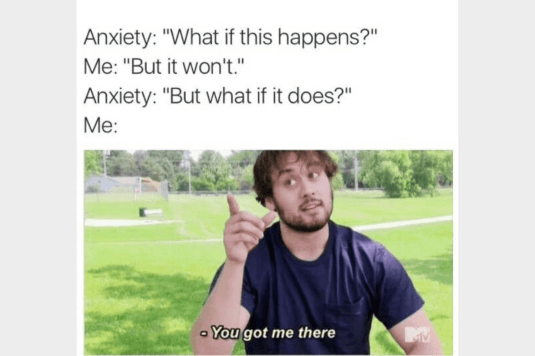

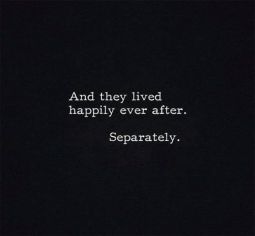 Before you go off on a binge of happiness and celebrations, think for a minute what a positive answer to these questions might mean. There are still expectations and assumptions associated with any answer to the above questions. You assume that if you won the lottery, that you would not have to worry about paying bills, buying things you want etc. You assume that if you found true love, it would last forever and forever. You assume that finding meaning and purpose would bring you happiness. To all of these possibilities, I say maybe. You still have many choices and outcomes to each of these scenarios. These choices can leave us just as captive to our desires and wants as any of our responses to the “negative” “what ifs.”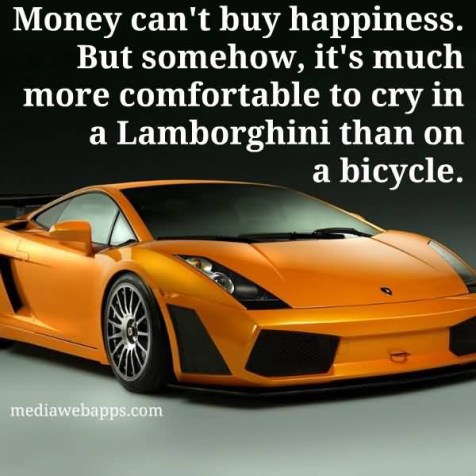

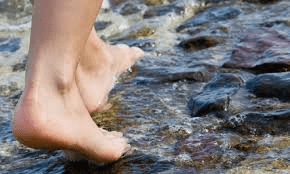 My conclusion is that “What ifs” are intellectually amusing as a past-time but as for practical value they are close to useless. Seldom will you ever get to apply a solution to a “What if.” The possibility of something in real life happening exactly like it did the first time is less than the chance of finding identical snowflakes or fingerprints. Heraclitus, a Greek philosopher born in 544 B.C. said, “No man ever steps in the same river twice, for it’s not the same river and he’s not the same man.” Those who forget the past may be condemned to repeat it, but the past will never be the same again. Living requires adaptability and resilience.

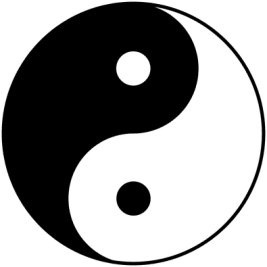 Meaning and purpose are Yin and Yang to each other. Purpose is outside you and is what you do in the world. For me purpose involves doing. Meaning is inside you and what you do for yourself. Meaning involves being rather than doing. Let’s use a running race as an example.
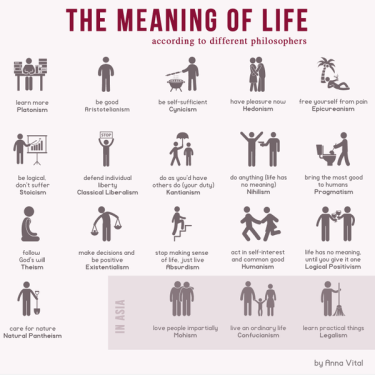 Meaning in my dictionary is about living up to my potential, my values and my beliefs by doing the best I can each day to be consistent with them. No one may ever know if I am being kind, compassionate or patient today. You cannot see the inner virtues that I want to live by. I am the only person at the end of each day who can judge whether or not my life had any meaning today. If I can be the best person that I want to be each day, I will die feeling that my life had meaning. To the rest of the world, I may just be another old teacher, old veteran or old guy who lived an average life and died at an average age. Meaning to me is about being and not doing.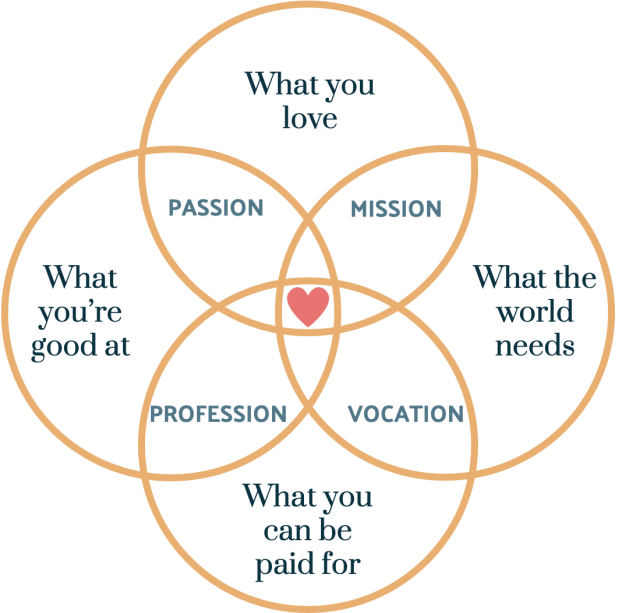
 If I answer, I want to be rich, my meaning in life will be defined by how I go about becoming rich and what I do with my money. If I want to be a writer, my meaning will be defined by what I write and how I go about the writing process. If I want to be happy, my meaning in life will be defined by how I go about achieving happiness. No one except me can judge how I define myself. People may say that I am not very rich or that I am not a very good writer, but it is what I believe about myself which will define my meaning in life. Vincent Van Gogh is now widely regarded as one of the greatest painters of all time. His paintings sell for millions of dollars. However, in his lifetime, he sold only one painting. It was to his sister-in-law who felt sorry for him.
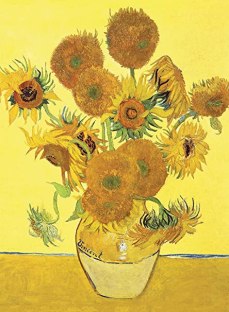 “What am I in the eyes of most people — a nonentity, an eccentric, or an unpleasant person — somebody who has no position in society and will never have; in short, the lowest of the low. All right, then — even if that were absolutely true, then I should one day like to show by my work what such an eccentric, such a nobody, has in his heart. That is my ambition, based less on resentment than on love in spite of everything, based more on a feeling of serenity than on passion. Though I am often in the depths of misery, there is still calmness, pure harmony and music inside me. I see paintings or drawings in the poorest cottages, in the dirtiest corners. And my mind is driven towards these things with an irresistible momentum.” —
 I conclude with the consideration that Meaning and Purpose may not be everyone’s cup of tea. I confess that it was much later in my life and many hurdles had been taken and many obstacles overcome before I started caring about the meaning and purpose of life. Now I look back and shake my head with some sorrow that I did not grasp their import on life when I was in my teens. A have learned that a life without meaning and purpose is not a life, it is just living.

 This theory says that happiness is dependent on other things happening in your life. You must have these other things going on or you will not be happy. If you have a good family, or good job or you have meaningful work, you will be happy. Contingency is like a correlation in statistics. The process of having a good family correlates with happiness but having a good family does not make you happy. Some things have a higher correlation with happiness than other things. Some people believe that having less things is more conducive to happiness than owning a bunch of things.
 This could also be called the “Cause and Effect” theory of happiness. This theory says that certain things or activities will lead to the outcome of happiness. For instance, becoming an Olympic Gold Medalist may lead an athlete to happiness.
 You will always be happy in proportion to how happy others are around us. If I have a great deal of money but my friends have more, I will be unhappy. However, if I have a bigger office than anybody else in the company, I will be happier than they are. The state of being happy will always be relative or in comparison to some other standard that I mark my happiness by.
 This theory views happiness as something that has no limits. The sky is the limit. Extraordinary happiness awaits anyone willing to go for it. Every day will bring more and more happiness if you only believe it is possible.

 Aging Capriciously