Introduction:
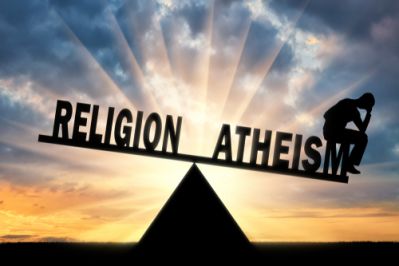
I meet many people who seem shocked when I tell them that I am an Atheist. From best friends to strangers, they almost always say “No, you are not!” They seem to think that my moral and ethical beliefs or even some of my spiritual beliefs are inconsistent with being an Atheist. Sometimes as when Karen joined the Presbyterian church up here, they will say “Well, I will watch over you and help God to change your mind.” This was told to me by various church elders.
The letter below which led to this blog was sent by a good woman friend who has a spirituality group which I joined and which meets once a month. We study different thoughts from different religions and belief systems about specific topics such as kindness, gratitude, mercy, forgiveness and many others. It is a great group, and our leader Dorothy is well versed in several different religions and very open minded about spirituality and where it could come from. Nevertheless, I think even Dorothy doubts that I truly and really do not believe that a God exists or at least as I have claimed, seventy five percent of the time, I do not believe in a God. Lately, this belief has risen to about 99 percent of the time.
Thus, I was not totally surprised to receive an article from Dorothy (Name changed for privacy reasons) regarding biases affecting Atheists. I enjoyed reading the article, but when it came to the author’s reason for people being an Atheist, I found that not one of them fit for me. Many people think Atheism is a default belief system. When all else has failed someone or when someone has had major trauma in their life shaking their faith in God, they default to a neutral or some might say a negative position, i.e. Atheism.
I once joined an Atheists group years ago. Karen and I went to a few of their meetings. I expected to find kindred souls. People with a firm logical and rational non-belief in God. Not angry or discouraged people. Not people who believed in conspiracies. Not people who believed that all religions were evil. Sadly, these meetings discouraged me from ever wanting to join an Atheist group again. I am going to sound judgmental here but most of these people were wacky. After having lunch and time together, I was ready to get on my magic carpet and fly away.
So, after reading the article that Dorothy sent to me, I felt I wanted to respond to the ideas and theories that the author’s Gervais and Majle suggested where the reasons for Atheism. The following is the complete text of my letter back to Dorothy.
Hi Dorothy,
Thanks for sharing the article and study. I find it interesting but not surprising that the study by Gervais and Majle found a built in cultural bias against being an Atheist. These biases exist for many reasons including the following. I will list eight that I can think of but no doubt there are more.
- Morality has historically been linked to religion
For most of human history:
- Laws
- Social norms
- Oaths
- Punishments
were tied to divine authority.
So many people carry an implicit mental shortcut:
“Belief in God → moral restraint → trustworthy person”
Even if they consciously know that’s not logically necessary.
- Fear of “no cosmic surveillance”
Psychologists call this the supernatural monitoring hypothesis.
If someone believes:
- “No God is watching”
- “No afterlife punishment”
Some people assume that a person has fewer reasons to behave morally. This seems to be the case among many people, but I think there is no empirical evidence to show that people are more immoral now than before many mainstream religions started to decline. And even if there was, ,for instance “The Death of Character” author claims a decline in morality since 1900 in the USA, but he does not define a cause. Perhaps it was the “God is Dead Movement” or perhaps it was the “Prosperity Gospel?”
But this ignores:
- empathy
- social contracts
- evolutionary cooperation
- internalized ethics
—all of which are powerful moral drivers.
- Minority status effect
Atheists are a small, stigmatized minority in many societies.
Research shows minorities are often:
- seen as less trustworthy
- perceived as norm-violating
- judged more harshly for the same behavior
This is a classic out-group bias, not a moral evaluation.
- Cultural narrative, not evidence
In the U.S. especially, moral language is often coded in religious terms:
- “God-fearing”
- “Judeo-Christian values”
- “One nation under God”
Atheism gets framed as: “outside the moral tradition”
—even though that framing is sociological, not factual.
- The irony: Atheists judging atheists
This study mentioned that even Atheists show the bias in some studies.
That’s actually common in psychology:
People can internalize cultural stereotypes about their own group.
It doesn’t mean they believe them rationally—it means the stereotype is culturally pervasive.
- What the data on morality actually shows
Across large studies:
- Atheists score similar to religious people on measures of empathy and fairness
- Secular societies (e.g., Scandinavia) have low crime and high social trust
- Moral reasoning does not require belief in God
From a Deming perspective (which I highly value), morality is largely:
- a system outcome
- shaped by education, environment, leadership, and culture
—not by a single belief variable.
- A systems view (my natural lens after working with the Deming philosophy)
If we apply a socio-technical / Deming framework:
The problem is not:
- Atheists
- believers
The problem is a cultural system that equates morality with religious identity
That’s a classification error—confusing:
- belief → with → behavior
which is exactly the kind of faulty measurement logic Deming warned about.
8. Philosophical bottom line
Morality can come from multiple sources:
- Religious command ethics
- Humanistic ethics
- Social contract theory
- Virtue ethics
- Evolutionary cooperation
Atheism simply removes divine authority as the source.
It does not remove:
- empathy
- reason
- compassion
- responsibility
In some cases, it can even increase the emphasis on human accountability:
“We are responsible for each other because no one else is.”
The article Dorothy sent me hits on many reasons that many people allegedly have for NOT believing in a God. None of these reasons resonate with me.
Going back to the article that Dorothy send me, I want to take each of the three major reasons that the authors claim Atheists use for rejecting God and give you my own rebuttal for these explanations.
- Religion often controls people and Atheists are merely trying to reject control:
All systems of thought control people. I have no doubt that whether I believe in Communism, Capitalism, or Christianity there will be biases that control my behavior.
- Organized Religion is often hypocritical:
I wrote a blog on hypocrisy a few years ago. I consider most of the world’s religions infected by hypocrisy not just Atheism. I have met people of all religions who are hypocrites, so I do not reject God because of this idea. I rather reject the rationality and integrity of many people who seem to substitute religious dogma for reason and logic.
- Science does not support the existence of God:
This would be the last refuge I would take for not believing in God. Science is not infallible. It self-corrects if followed properly but it takes decades for this to happen. I think people who put their FAITH in science and technology are often more foolish than those who put their faith in a God.
This brings us to the question, “Why than do I reject the idea of God or why don’t I believe in God?
Dorothy, I think my reasons are very simple. They are as follows:
- I don’t need a God to run my life.
- I would hate to think that any kind of omniscient or omnipotent being could actually be responsible for letting the stuff happen on this planet that humanity is subjected to on a daily basis.
- Do I need a God to explain the universe and beauty that we often find in it? I don’t think so. Perhaps it is all the cause of some natural phenomenon that we still cannot explain? I have a feeling that we will never find the answer to this question.
- I don’t believe that any God would bother to create “MAN” in his own image. Rather “Man” created God in his image and a very sad God it has been for the most part.
- I have been in many situations where I had to look death in the face and felt that my end was near. Not once, did I stop to pray for a God that I don’t believe in or that I think never existed. Perhaps, my one area of non-hypocrisy has been my steadfast belief (somewhat tempered by the cognizance of my own limited intelligence) that perhaps I am wrong and that God really does exist.
Finally, my desire to ignore God does not pertain to the beliefs of others. Much like I hope that I can do some good for the human race before I die, I hope a heaven exists. I hope a beneficent God does exists who can provide comfort and succor to those people that really need or want it. I think there are many people in this category. I hope that I do not ever downgrade their beliefs, and that I can stick to mine without tearing down the beliefs of others.
Karen was once asked “How can you live with an Atheist?” She replied, “He respects my religious beliefs and I respect his.”
So Dorothy, thank you very much. I hope that I did not bend your ear to much, but the article offered me a chance to explain myself and my beliefs. I think many people just walk away from me because they think that I am some kind of an immoral person. Or that it is not worth knowing anyone who holds (in their mind) a radical belief that there is no God.
Conclusions:
It is a very sad world when we all have to believe the same things about life and love. I don’t dispute the idea that there are some things we can all agree on and that we call these things facts. I also believe that not all belief systems rely on facts and logic. As long as your belief system allows my belief system to live, we can be friends. However, if your belief system makes my belief system wrong or evil, I fear we will never walk this earth together in peace and harmony. The great prophets have all said the same thing. Love is the key. It has been said that without a vision, the people will perish.
The real truth is that without love, people will perish.


 We have a concept called the Double Standard which denotes a situation wherein some behavior is generally thought of as unfair, inequitable or simply wrong. It is a much used term employed by sexists and racists. It is generally used as an argument against some actions being taken on behalf of a minority or other exploited group. Such groups include immigrants, women, children, the poor, Native Americans, Blacks, Latinos and many other underprivileged groups or groups wherein an asymmetrical relationship exists with the dominant power group. Let me give you an example before I define some terms.
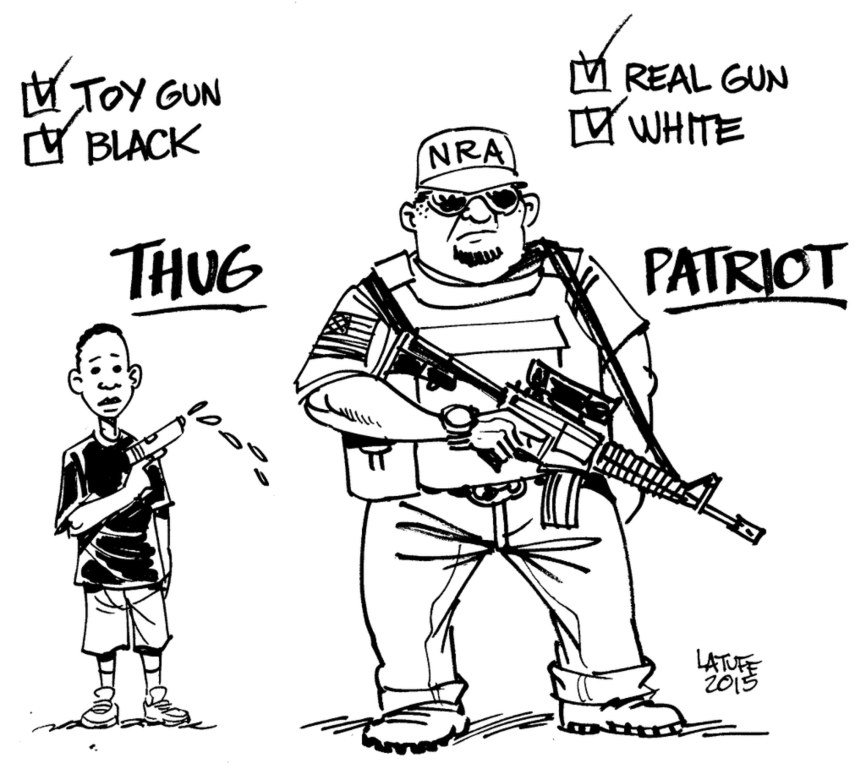 A friend was arguing about the laws impacting the actions that business owners may or may not take in terms of delivering service to customers. The recent spate of arguments by the so called “Christian” Right against serving gays and other minorities whose religion or beliefs they disagree with was the spur or nucleus of his rant. He made the following analogy. “Suppose a Black man went into a White baker to have a birthday cake made and he was refused service? What do you think would happen he argued?” The reply given by his audience was, “It would probably be seen as discriminatory or perhaps even illegal.” He then argued, “Ok, so suppose a KKK member went into a Black baker and asked for a cake made for a KKK celebration and he was refused. What do you think would happen?” I replied that this seemed like an argument “reductio ad absurdum” or something taken to the extreme absurd. His argument was that it was not ridiculous and such situations are typical of the differences between how Blacks and Whites are now treated in our country or that a “Double Standard” exists.
 What if you were very poor and you were going out with a very rich person? Suppose you gave gifts to each other on your birthdays. You gave a modest low budget gift from Walmart to your loved one. She/he in turn gave you an all-expense paid two week trip to Paris. Would you scream and yell that this was an unfair double standard? Unfair because you could not possible meet such a standard on your much lower income? You might want to argue that the example I have provided is ridiculous. However, it is no more ridiculous an example that many of the examples given by opponents of civil rights, affirmative action, equal pay, immigration laws, welfare and other measures to help create a more equitable society. (PC opponents are often guilty of such ignorance and there are numerous situations wherein they perceive that Political Correctness has created an unfair Double Standard.)
 First: on what basis do we decide the symmetry of a relationship? Should we be looking at power, wealth, status, employment or opportunities as measures of symmetry? Second, when and how do we decide that relationships have become symmetrical and no longer need a Double Standard? Both of these questions are very difficult but they are also both critical since unless they are ultimately answered, the perception of unfairness will hover over any relationships where a Double Standard exists. This of course leads to such accusations as “reverse racism” and even claims that “Today White people are the real people being discriminated against.” (See
  The answer to the first question concerning metrics for determining symmetry is fairly easy. We need to look at metrics that will help to create a fair and just society. If we are attempting to create a level playing field for all groups in our country, then we must consider any measures that will help us to obtain this goal. There are measures for income, jobs, opportunities, education, incarceration and health that have and should be used to apply Double Standards when they will help to level the playing field.

