 Did you ever have a day when “everything” went right. A day when you got up on the right side of the bed. The phone rang all day with calls from good friends instead of spam and telemarketing messages. Everyone just called to chat, and no one had any problems or issues to face. A day when the sun was shining and the weather was perfect. There were no bugs or mosquitoes to be found anyplace in your town. You felt like a million dollars with no aches or pains. No one you knew was going to the doctor for cancer treatments or therapy of any kind. It was as the younger generation like to say “Perfect.”
Now as you are reading this, you are probably thinking “He must be daydreaming, such days do not exist.” Or maybe you are thinking that it is my birthday. I concede the possibility that such days are perhaps rare, but then again should they be any more rare than days where “Everything that could go wrong” did go wrong. Or is it just our perspective which is goofed up. We are more likely to remember the days when our dog disappeared or when the doctor told us to come in and see her as soon as possible than days when our dog reappeared or the doctor called to tell us everything is fine. Cognitive scientists have a term for our propensity to remember the bad more than the good.
“Negativity Bias” is a cognitive bias that refers to the tendency to remember negative events and information more vividly and with greater impact than positive or neutral ones. I will not bore you with the reasons for this propensity. I am sure that you recognize that it exists. Thus, if the Yin/Yang of the world is an accurate theory of our existence, we should have at least as many of the Perfect Days as we do the Shitty days.
I ask you to stop reading this blog for a few seconds. I challenge you to see if and when you can remember the last perfect day that you have had. Now I would like for you to describe that day in my comments section before reading the rest of this blog. Think of the happiness you will bring to me as well as the rest of our readers. What if the news carried as much good information as they do bad information? What would your world be like if you only remembered and had perfect days.
At this point, you are probably ready to skewer me as some deranged Pollyanna or Don Quixote. A nutcase who sees everything through rose colored glasses. Someone who is madly optimistic that there is hope for a better world. That Donald Trump will not get a statue on Mount Rushmore and that he and his sycophantic followers will soon disappear in the abyss of forgotten history. I assure you that I go to sleep every night praying to a god that I do not believe exists that these latter events will happen while I am still alive to witness them. Instead, I wake up every morning to more bad news from the front line of the independent media I subscribe to. Thus, either giving me less hope for humanity or making me feel guilty by asking me for more money that I do not have.
See, you thought I was going to write some really optimistic idealistic treatise that would make you feel like your existence meant something and life was worth living. Instead, I refer you to Ecclesiastes from the Bible:
Everything Is Meaningless
1 The words of the Teacher,[a] son of David, king in Jerusalem:
2 “Meaningless! Meaningless!”
says the Teacher.
“Utterly meaningless!
Everything is meaningless.”
3 What do people gain from all their labors
at which they toil under the sun?
4 Generations come and generations go,
but the earth remains forever.
5 The sun rises and the sun sets,
and hurries back to where it rises.
6 The wind blows to the south
and turns to the north;
round and round it goes,
ever returning on its course.
7 All streams flow into the sea,
yet the sea is never full.
To the place the streams come from,
there they return again.
8 All things are wearisome,
more than one can say.
The eye never has enough of seeing,
nor the ear its fill of hearing.
9 What has been will be again,
what has been done will be done again;
there is nothing new under the sun.
10 Is there anything of which one can say,
“Look! This is something new”?
It was here already, long ago;
it was here before our time.
11 No one remembers the former generations,
and even those yet to come
will not be remembered
by those who follow them.
However, I refuse to finish this blog on a nihilistic note. I want to finish on a crescendo of hope and faith and happiness. A belief that one idea, one word spoken, one action taken, one step forward can change the course of humanity. We can look back to the past and find untold mistakes and failures that have eclipsed the sunlight of joy for the world. But we can also look forward to a future that we can create because the vast majority of human beings are decent peace-loving equality seeking individuals. The Negativity Bias blinds us to the positive outcomes that prevail every day in our lives. At the end of each day, we seem destined to remember the bad things that happen in the world. This effort is reinforced by a negative biased media which thrives on horror and destruction and pain. I love the words from this song by Peter Paul and Mary, “Light One Candle”
Light one candle for the terrible sacrifice
Justice and freedom demand
And light one candle for the wisdom to know
When the peacemaker’s time is at hand
Don’t let the light go out!
It’s lasted for so many years
Don’t let the light go out!
Let it shine through our love and our tears
Light one candle for the strength that we need
To never become our own foe
And light one candle for those who are suffering
Pain we learned so long ago
Light one candle for all we believe in
Let anger not tear us apart!
Light one candle to bind us together
With peace as the song in our heart
Don’t let the light go out!
It’s lasted for so many years! (lasted for so many years!)
Don’t let the light go out!
Let it shine through our love and our tears
We need to counter this tendency for negative bias by reinforcing the positive “perfect” days of our lives. Here is a checklist that ChatGPT created from my query:
It is a printable daily practice checklist to help overcome negative bias. You can use it as a daily or weekly tracker to build habits that shift your mindset toward balance and resilience.
🌞 Daily Practice Checklist: Overcoming Negative Bias
| Practice | Done Today? ✅ | Notes or Reflections |
| 1. Morning Gratitude: List 3 things you’re grateful for. | ☐ | |
| 2. Reframe 1 Negative Thought: Catch a negative thought and reframe it positively. | ☐ | |
| 3. Notice the Good: Write down one positive thing that happened today. | ☐ | |
| 4. Kindness Practice: Do one kind thing for someone else. | ☐ | |
| 5. Mindful Moment: Spend 5+ minutes in meditation or quiet reflection. | ☐ | |
| 6. Move Your Body: Take a walk, stretch, or exercise. | ☐ | |
| 7. Limit Negative Input: Avoid or reduce exposure to toxic media or conversations. | ☐ | |
| 8. Evening Reflection: What went well today? What did you learn? | ☐ |
🗓️ Weekly Reflection (Use at the end of the week)
- What patterns of negative bias did I notice?
- What helped me shift my mindset the most?
- What’s one small thing I want to improve next week?
The End Folks.
Hope you enjoyed this blog. Let me know what your perfect day was.







 A friend of mine once told me that you catch more flies with sugar than you do with vinegar. Over the years, I have been told that I am too negative. I have been labeled as a pessimist who more often sees the bad things in life rather than the good things. I have been accused of being a skeptic and even a nihilist. I have decided to turn over a new leaf. I am determined to share more positive thoughts in my blogs. I want you to see the world as a wonderful place full of joy and good will. I was going to start my new focus next year, but I decided “why wait.” “He who hesitates is lost.” Thus, I give you the secret to living the life that I am sure you want to live. Just BE:
 Happy. Happy. Happy. Happy. Happy. Happy. Happy. Happy. Happy. Happy. Happy. Happy. Happy. Happy. Happy. Happy. Happy. Happy. Happy. Happy. Happy. Happy. Happy. Happy. Happy. Happy. Happy. Happy. Happy. Happy. Happy. Happy. Happy. Happy. Happy. Happy. Happy. Happy. Happy. Happy. Happy. Happy. Happy. Happy. Happy. Happy. Happy. Happy. Happy. Happy. Happy. Happy. Happy. Happy. Happy. Happy. Happy. Happy. Happy. Happy. Happy. Happy. Happy. Happy. Happy. Happy. Happy. Happy. Happy. Happy. Happy. Happy. Happy. Happy. Happy. Happy. Happy. Happy. Happy. Happy. Happy. Happy. Happy. Happy. Happy. Happy. Happy. Happy. Happy. Happy. Happy. Happy. Happy. Happy. Happy. Happy. Happy. Happy. Happy. Happy. Happy. Happy. Happy. Happy. Happy. Happy. Happy. Happy. Happy. Happy.





 A few more months went by and one day I decided to come home from work early. As I entered my house, I heard screams coming from upstairs. I went to a desk and grabbed a loaded Colt Commander 45 ACP that I kept ready for emergencies. I feared that Ashley was being attacked by some unknown intruder. I ran up the stairs and into our bedroom. There on the bed was Ashley and one of the young lawyers from my old law firm. They were both nude and she was on top of him riding him like a bucking bronco. What I thought were screams of pain were screams of ecstasy. I had never heard anything like that from Ashley during our entire marriage.

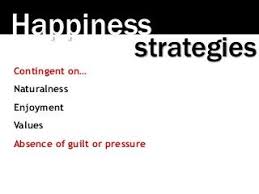 This theory says that happiness is dependent on other things happening in your life. You must have these other things going on or you will not be happy. If you have a good family, or good job or you have meaningful work, you will be happy. Contingency is like a correlation in statistics. The process of having a good family correlates with happiness but having a good family does not make you happy. Some things have a higher correlation with happiness than other things. Some people believe that having less things is more conducive to happiness than owning a bunch of things.
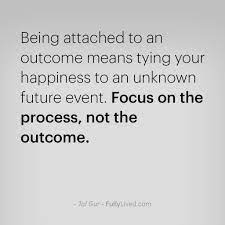 This could also be called the “Cause and Effect” theory of happiness. This theory says that certain things or activities will lead to the outcome of happiness. For instance, becoming an Olympic Gold Medalist may lead an athlete to happiness.
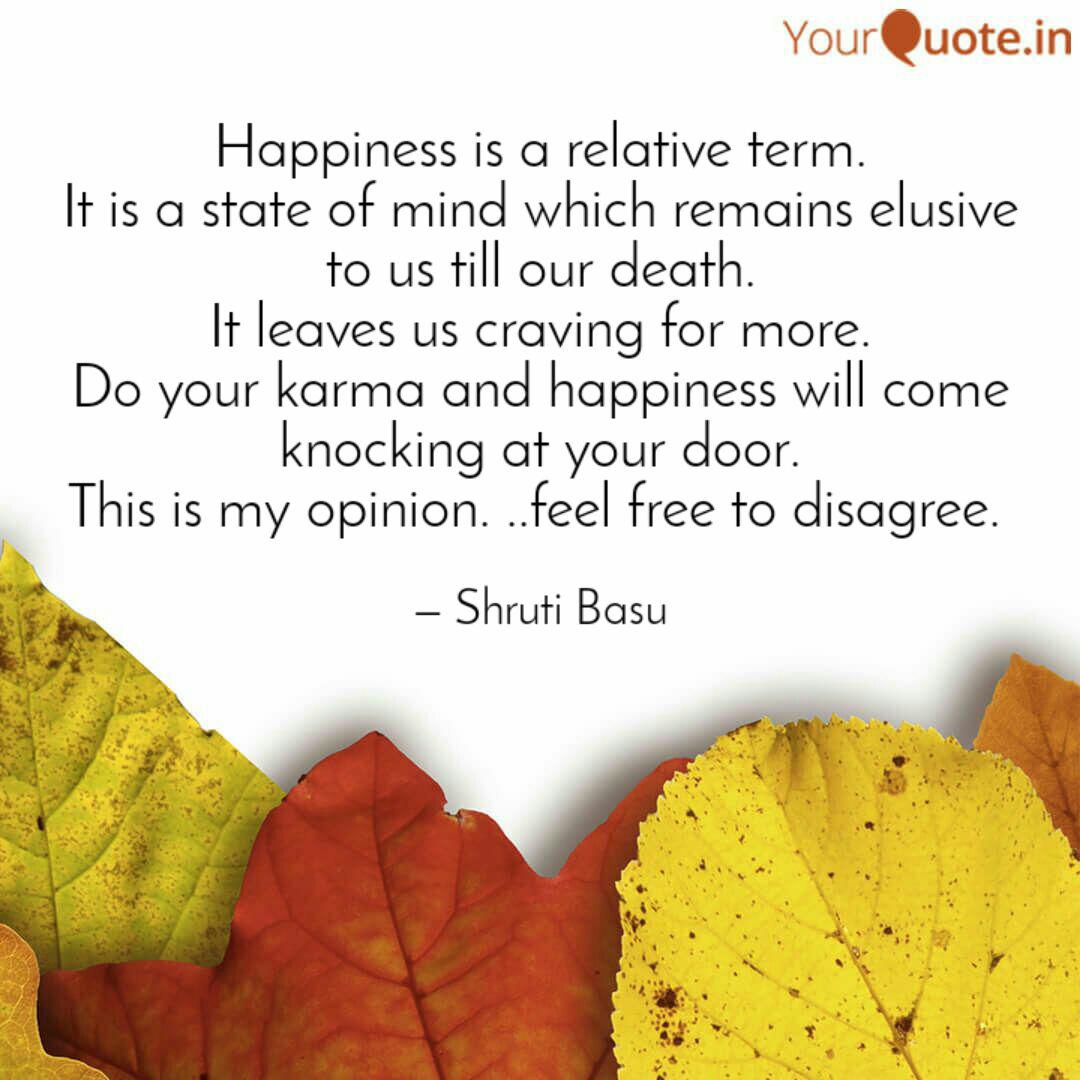 You will always be happy in proportion to how happy others are around us. If I have a great deal of money but my friends have more, I will be unhappy. However, if I have a bigger office than anybody else in the company, I will be happier than they are. The state of being happy will always be relative or in comparison to some other standard that I mark my happiness by.
 This theory views happiness as something that has no limits. The sky is the limit. Extraordinary happiness awaits anyone willing to go for it. Every day will bring more and more happiness if you only believe it is possible.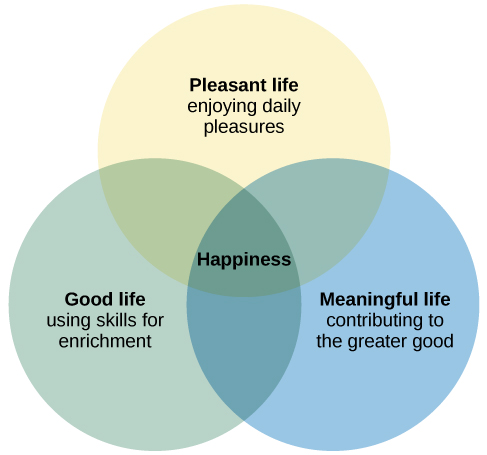

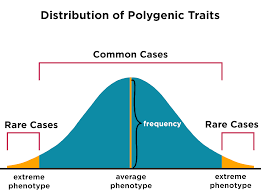 I suppose in one sense, “life is not fair” means that life is indeed following a bell-shaped curve and some of us are on the undesirable end. In other words, some of us are too short, too fat, too unappealing, or any number of other less-desirable traits that we find on the extremes of the bell-shaped curve. Last night I was watching a 3-year-old do stunts on a sized down motorcycle. I could not do these stunts if my life depended on it. This young boy was a natural on the motorcycle. He took to it like a fish to water. We have all seen and perhaps envied some of the more fortunate on our bell-shaped curve who can do things we only dream about doing. For those of us on the wrong end of the bell-shaped curve, life will never seem fair.
 I understand why so many people want to believe in heaven and hell. It would be much easier to go on living peacefully if I could really believe that there was someplace better to go to than this earth I now reside on. Too many bad days now seem to intrude on my equanimity. You and I and everyone else that resides on this 3rd rock from the sun are abused and tormented every day with disease, starvation, accidents, environmental devastations, and pandemics. I could handle all of these things but for one thing. It is called “mans’ inhumanity to man.” The stupid cruel things we do to each other over and over again. The wars, murders, and injustices that we inflict on other human beings. And it is not just the average person that inflicts these cruelties, it is the “best” people in the land. In fact, it would seem that the inhumanities done by those with the most money, most intelligence and those we call our leaders are the worst of all the brutalities and savagery that we see in the news each day.

 Aging Capriciously