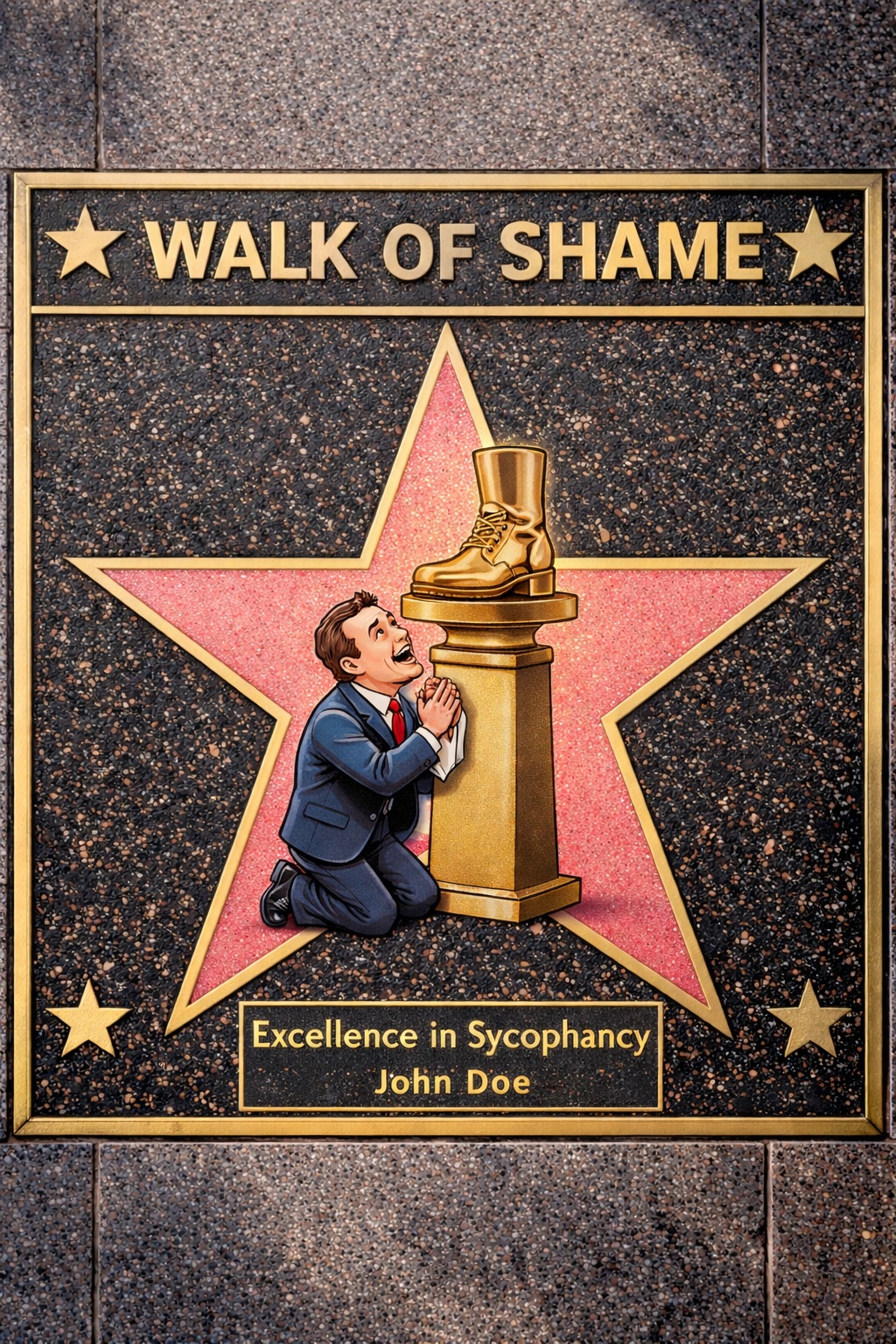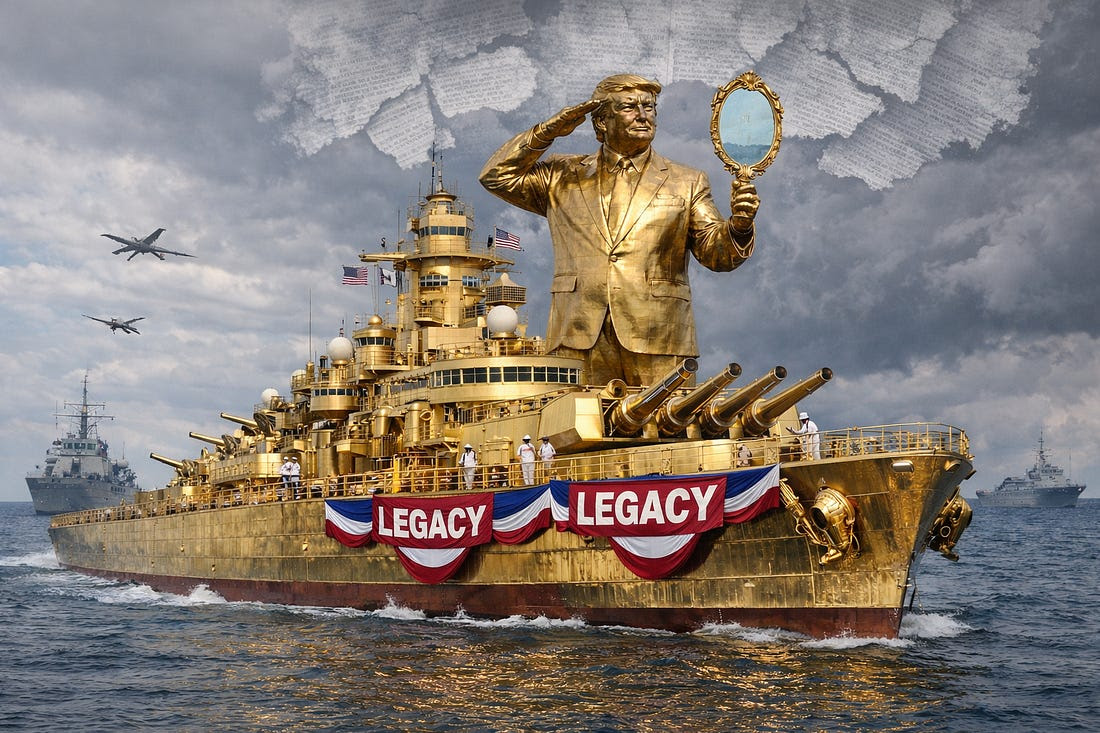
Recently, I read that Trump is proposing the U.S. military begin the construction of a new class of battleships called “Trump Class” or as the press is labeling them “The Golden Fleet.” Each of these ships will have a realistic (not the bullshit projected cost by defense contractors) final cost of $30 billion apiece. If three are built—as is being discussed—we are looking at a price tag approaching $100 billion.
That number is so large that it becomes abstract. When figures reach this scale, they stop meaning anything at all. So with the help of my AI partner Metis, I tried an experiment: What if we forced that number back into human terms?
I asked Metis a very simple question:
What else could $100 billion buy if applied directly to the daily needs of American families?
To keep this grounded, I used conservative, real-world assumptions—not best-case fantasies.
The Assumptions
To avoid cherry-picking, I chose modest, mainstream benchmarks:
A reliable used car: a 3-year-old Toyota Corolla or Honda Civic Average cost:$20,000
Food for a family of four using the USDA Thrifty Food Plan Annual cost:$9,500
A two-bedroom home, roughly 2,200 square feet Average cost:$350,000
Then I asked the same question three times:
What does $100 billion buy—if we buy only this one thing?
Option One: Transportation
At $20,000 per vehicle, $100 billion would purchase:
5,000,000 reliable used cars
Five million.
That’s not a subsidy.
Not a tax credit.
Not a loan.
That is five million families with dependable transportation—the difference between:
Holding a job or losing it
Making a medical appointment or missing it
Participating in society or being stranded at its margins
Transportation isn’t a luxury in America. It’s infrastructure for survival.
Option Two: Housing
At $350,000 per home, $100 billion would fund approximately:
286,000 homes
That’s enough housing for nearly one million people.
For perspective:
It could dramatically reduce homelessness nationwide
Stabilize entire regions
Lower healthcare, policing, and emergency service costs downstream
Housing is not merely shelter. It is the foundation upon which everything else—health, education, employment—rests.
Option Three: Food Security
Using the USDA Thrifty Food Plan, $100 billion could provide one year of food for:
Over 10.5 million families of four
That’s 42 million people.
More than the population of California.
In a nation where food insecurity still affects tens of millions, this single line item could eliminate hunger—not as charity, but as policy.
Each ship carries not just steel and weapons—but foregone lives improved.
The Real Question:
This is not an argument against defense. This isn’t about ships versus cars or homes.
It is a challenge to unexamined assumptions.
What kind of security do we believe actually sustains a nation?
Military security protects borders
Economic security protects civilization itself
We speak of “national security” almost exclusively in military terms, yet:
Hunger destabilizes families faster than any foreign power
Homelessness erodes communities more reliably than missiles
Economic security strengthens democracies from the inside out
Food, shelter, and mobility:
Reduce crime
Improve health outcomes
Stabilize families
Increase productivity
Lower long-term government costs
From a Deming-style systems view (which considers this as an investment vs. expense thinking taken to its logical conclusion. From a systems perspective, this is a classic case of short-term protection versus long-term stability.
Or to put it plainly:
A nation is not secure when its people are hungry, homeless, and one paycheck away from collapse—no matter how powerful its navy may be.
Conclusions:
When budgets reach into the tens of billions, morality becomes invisible unless we deliberately restore it.
Every dollar spent reflects a value choice.
Every budget is a moral document.
The question is not whether we can afford battleships.
The question is:
What kind of country do we believe we are protecting—and for whom?
In the late 1950s and early 1960s, American television was overrun with cowboys. Westerns galloped across nearly every network, each one promising a different angle on courage, justice, and the messy human struggle to build a society out of dust and gun smoke. We tend to remember the big ones—Gunsmoke, Bonanza, The Rifleman—but tucked in that crowded landscape were several thoughtful, sometimes surprisingly philosophical shows that tried to answer deeper questions about right and wrong.
I have always loved cowboy shows. My favorite cowboys when I was growing up were Hopalong Cassidy, the Lone Ranger and Roy Rogers. Most of these men got their start in the 30’s but their shows migrated to the TV medium when it was first started. Many episodes of Hopalong were taken from his early movies. Later, TV started to develop its own cowboy series with weekly episodes of tall, dark and handsome heroes. By this time in the late 50’s and early 60’s I was not watching TV anymore. I was in my early teens and had better things to do than watch TV. Thus, I never watched the five shows that I am going to talk about in this blog when I was young.
I only started to watch these old TV shows a few years ago. I was rather amazed at the quality of the stories that they told. They were nothing like many of the TV series that came around later characterized by many more shootouts and gun fights. These early TV shows tried to convey a strong sense of morality and featured a more discreet and thoughtful use of gunplay. Many of the heroes in these shows eschewed violence and attempted to use reason to end a fight rather than gunning down a villain.
Five of these Westerns—The Tall Man, Wyatt Earp, The Restless Gun, Tombstone Territory, and The Texan—offer a fascinating window into how Americans of that era imagined moral life on the frontier. Each operated in a different moral universe. Together, they reveal a whole spectrum of values still relevant in 2025: authority vs. independence, violence vs. restraint, institutions vs. personal codes, loyalty vs. law.
Here’s what these shows have to teach us when we dust them off and look again.
The Tall Man: Tragedy, Friendship, and the Gray Zone of Morality
Among these Westerns, The Tall Man stands out for its dramatic complexity. Rather than presenting the frontier as a struggle between clear-cut good and evil, the series explored the psychological and moral tensions between Pat Garrett and Billy the Kid—historical figures already steeped in myth. The show emphasized the tragic inevitability of their relationship: Garrett, the reluctant lawman; Billy, the charming outlaw whose charisma repeatedly outpaced his judgment. These were not cardboard heroes and villains; they were complicated men bound together by loyalty and destiny.
The morality here is not a simple endorsement of law or rebellion. Instead, it suggests that human loyalties are fragile, destiny is unforgiving, and justice often emerges from personal conflict rather than abstract principles. It is a Western operating in shades of gray, reflecting an America grappling with Cold War dilemmas where allies and enemies were not always easy to distinguish. Viewers recognized themselves in the struggle between duty and friendship, a theme uncommon among early Westerns.
The underlying message was that life often puts us in situations where justice isn’t neat. Friendship can clash with duty. Good intentions can slide into the wrong choices. And sometimes the person you care about most becomes the person you eventually have to confront.
In that sense, The Tall Man feels strikingly modern. It understands that real life doesn’t divide neatly into good guys and bad guys—something America in the Cold War era was just beginning to wrestle with.
Wyatt Earp: The Comfort of the Uncomplicated Hero
If The Tall Man reveled in moral ambiguity, Wyatt Earp offered the opposite: a mythologized portrait of the West’s greatest lawman, played with crisp, upright dignity by Hugh O’Brian. This series promoted a worldview in which society advances only when firm, principled authority imposes order on chaos. Earp serves as the archetype of the responsible American leader—a man who does not relish violence but accepts it as a necessary instrument of civilization.
Earp represented the belief that civilization requires firmness. Order doesn’t grow on its own—it has to be imposed by strong, decent people who are willing to shoulder responsibility. For postwar America, still anxious about the atomic age and the looming tensions with the Soviet Union, this moral clarity was reassuring.
The show’s moral message resonated with 1950s ideals of stability: strong institutions, disciplined citizenship, and faith in the ability of virtuous leaders to “keep the peace.” It aligned neatly with postwar values, especially the belief that social progress requires firmness rather than moral compromise. Earp rarely doubted himself, and the series rarely doubted him either. Its clarity, even rigidity, provided reassurance during an era troubled by atomic anxieties and Cold War uncertainty.
Earp didn’t struggle with his conscience—he was the conscience.
The Restless Gun: Pacifism in a Violent Landscape
In sharp contrast to both Garrett and Earp stands Vint Bonner of The Restless Gun, one of the few early Western heroes who actively sought alternatives to violence. Bonner modeled the idea that courage is not measured by willingness to kill but by the ability to resolve conflict through empathy, reason, and patience. Yes, this was a Western. Yes, he still ended up in gunfights. But the moral direction of the show pointed firmly away from killing and toward understanding.
This places The Restless Gun closer to a moral philosophy of restorative justice than frontier retribution. In many episodes, Bonner functioned as a mediator, teacher, or counselor. The villains were not always evil; they were often misguided, desperate, misinformed, or trapped in circumstances they could not manage. The show’s worldview subtly challenged the Western convention that justice flows from the barrel of a gun. Instead, it argued that America’s future might depend more on understanding than dominance.
This made the series unusually modern, anticipating later Westerns such as Have Gun, Will Travel, which incorporated moral complexity into the traveling-gunman archetype. Though the show ended early, its worldview remains distinctive in the genre.
In a genre built on bullets, The Restless Gun dared to say: there is another way.
Tombstone Territory: Justice as a Public Responsibility
Tombstone Territory offered a more institutional perspective on frontier justice. Structured around the fictional Tombstone Epitaph newspaper, the show dramatized the challenges faced by Sheriff Clay Hollister in maintaining order within a volatile, fast-growing community. Unlike Wyatt Earp, where the marshal’s authority was never questioned, Hollister constantly wrestled with public scrutiny, political pressure, and misinformation—issues that eerily foreshadow the modern news cycle.
The moral heart of the series lies in its quasi-documentary tone. Hollister must uphold the law not simply by enforcing it, but by navigating competing interests, calming mobs, and maintaining legitimacy. Truth, evidence, and due process—rare elements in early Westerns—become central themes. The show’s structure echoes the belief that justice is not merely an individual virtue but a collective responsibility. It encourages viewers to appreciate the difficulty of governing rather than merely celebrating the lone hero.
In many ways, Tombstone Territory anticipated the later rise of procedural dramas where law enforcement is portrayed as an institution rather than a personal crusade.
The show’s moral center was institutional: justice requires process, evidence, and the difficult work of maintaining legitimacy. It wasn’t glamorous. But it was honest. In many ways, Tombstone Territory speaks more directly to our modern world than some of the bigger Westerns of its time.
The Texan: The Noble Drifter and the American Myth of Honor
Rory Calhoun’s The Texan returned to the classic Western figure of the noble wanderer—a man whose moral code is internal rather than institutional. Bill Longley, a Confederate veteran, embodies the Western ethos of individual honor: help the vulnerable, confront injustice, and ride away when the dust settles. The show foregrounds personal integrity over law, suggesting that character—not institutions—ultimately preserves the frontier’s fragile social fabric.
This worldview reflects an enduring American belief in self-reliance and moral autonomy. Longley’s wanderings represent not rootlessness but a spiritual quest to repair the world one town at a time. His code is chivalric, almost knightly, and he stands as a corrective to the bureaucratic tensions seen in Tombstone Territory. While he respects the law, he serves a higher standard—his own conscience.
Longley wasn’t defined by the law, nor by institutions. His moral compass was internal. He showed that a single person—armed only with decency and grit—could make things a little better wherever he went.
It is the Western as America likes to imagine itself: independent, honorable, and self-reliant. Even if it rarely works that way in real life, the aspiration is part of our national DNA.
Five Shows, Five Moral Visions
When you line up these Westerns side by side, the moral variety is remarkable:
The Tall Man explores the tragedy of conflicting loyalties.
Wyatt Earp celebrates firm authority and disciplined leadership.
The Restless Gun champions compassion and restraint.
Tombstone Territory elevates due process and public trust.
The Texan extols personal conscience as the highest law.
Together, they show how deeply Americans were thinking—even through half-hour cowboy shows—about law, justice, violence, and the kind of people we wanted to be.
And perhaps that is the most interesting lesson of all: Westerns weren’t just entertainment. They were moral storytelling, played out on horseback.
In dusting off these forgotten classics, we rediscover a whole range of ethical possibilities—some stern, some gentle, some tragic, some idealistic. The frontier wasn’t just a place; it was a metaphor for the ongoing journey America has always been on: trying to figure out how to live decently in a world that is not always decent.
What Happened to These Shows and the Morality that They Tried to Convey?
The Tall Man (1960–1962)
Why it was cancelled:
Ratings sagged as audiences drifted toward lighter, family-friendly Westerns and bigger stars.
NBC also faced increasing difficulty with script standards: portraying Billy the Kid sympathetically clashed with emerging TV violence guidelines.
Production costs were rising, and no strong sponsor stepped in to keep it going.
The Life and Legend of Wyatt Earp (1955–1961)
Why it was cancelled:
After six seasons, the formula grew repetitive, and the mythologized Earp no longer impressed audiences seeking the grittier realism of later Westerns.
Hugh O’Brian wanted to move on, and ABC saw declining ratings.
The Western market was oversaturated by 1961.
The Restless Gun (1957–1959)
Why it was cancelled:
Despite solid ratings, Payne’s contract and salary demands increased, and NBC hesitated to renew at higher costs.
The show’s gentler tone was overshadowed by edgier Westerns.
Payne himself said he felt the stories were becoming repetitive.
Tombstone Territory (1957–1960)
Why it was cancelled:
Transition from ABC to syndication hurt the budget.
Stiff competition from higher-budget Westerns.
The semi-documentary framing was admired but not loved; viewers were shifting toward character-driven stories.
The Texan (1958–1960)
Why it was cancelled:
It had strong early ratings but lost its time slot advantage to more modern “adult” Westerns.
Calhoun’s outside film commitments strained scheduling.
CBS was phasing out lower-budget half-hour Westerns in favor of hour-long dramas.
Each show ended for slightly different reasons, but the common story is: the genre evolved faster than these earlier, simpler morality tales could adapt. Americans wanted more “grit” more “violence” and yes even less morality. The change from John Wayne to Clint Eastwood capped the change that we would see in Westerns from morality tales to tales of vengeance and retribution. America was becoming more jaded. We did not want heroes any more who were goody two-shoes. We wanted anti-heroes and the studios offered them up in droves.
Looking at American politics today, I often wonder where, when and how the decline in values, integrity and morality started. Some would say it started with the decline in religion. I don’t think religion has in the last 200 years in the USA been that big of an influence in terms of morality and integrity. Karl Marx always believed that economics was the major driver of most social trends. Many people who disagree with him nevertheless admit that the primary influence on voting behavior is the state of the economy. In my opinion, this influence goes much deeper than voting behavior. Capitalism thrives on avarice and stupidity. It needs a large mass of people who want more and more stuff and too brainwashed to realize that the stuff they are buying is not going to bring them happiness.
Madison Avenue became a major influencer with the advent of TV. Go back and look at some of these early Westerns. Smoking was de rigor. Many of the heroes of these early Westerns died of lung cancer. Legendary figures like John Wayne, Gary Cooper, and Chuck Connors, with numerous other actors, musicians, and public figures from that era also falling to the disease, highlighting smoking’s heavy toll in Hollywood. But while these heroes were dying, Madison Avenue was perfecting the use of TV to sell all kinds of products.
I always laugh at the fact that so many men have been conned into buying what I call “piss beer” from Budweiser, Miller and Coors. Large macho football players posing in a bar with these watered down beers spent years on TV regaling their followers with the virtues of light beer. Would be macho males stormed the liquor stores to buy their six pack of piss beer that they could swill down while watching their favorite football teams playing. The average person is brainwashed by Madison Avenue on a daily basis. Watch some of the old TV shows and see how much more sophisticated the ads are today.
I once asked all my MBA students if they thought that TV ads had much influence on their buying patterns. The typical answer I received was “No, I make up my own mind when I go shopping.” Most people do not even know that they are brainwashed. The cigarette industry spent years lying to people about the medical effects of cigarettes. Today, it is the liquor companies that are lying to consumers. But all of Capitalism and advertising has one major motive when it comes to making a sales pitch. That motive is too make you feel inferior. To make you feel needy. To make you feel inadequate. Once you feel like you are somehow lacking something, they can pitch you their product. Their pitch will always be that you will be better, smarter, faster or happier with their product or at least you will be better, smarter, faster and happier than your next-door neighbor who did not buy their product.
I believe the decline in morality and integrity in the USA can be directly linked to Madison Avenue and the brainwashing they conduct on consumers. If you are on the producers side of the economic equation, you cannot have any qualms about what you are selling or the side effects or the unintended consequences of the use of your products or services. If you are on the consumer side of the economic equation, your whole reason for being is to buy more and more stuff regardless of its impact on your health and sanity or the environment. This callousness on both sides has resulted in a society that is unparalleled in terms of greed and avarice.
The old Westerns were like some of the early fairy tales. They had a motive beyond entertainment. They existed to convey a morality that eventually seemed too simplistic and certainly too limiting. Morality is a unique virtue in the sense that it not only asks you what you are doing for yourself, but it also asks what are you doing for others. Morality cannot coexist with Capitalism any more than Capitalism can coexist with Communism. We need a new economic system based on principles of love, trust and compassion for ALL the people in world and not just our friends or relatives or the people in our own country.
Are we living in Heaven or are we living in Hell? There was an old Twilight Zone episode where a big-time gangster died and found himself in a room with a nerdy middle-aged man and his frumpy wife. They were showing endless repeats of their boring vacation 8 mm film clips. At first the gangster was polite but after a while he could not take it any longer. He went to the door and tried to get out of the room. A monstrous demon appeared and told him that he could never leave. He was in hell. The gangster said that he could understand why he would be in hell but what has this nerdy couple done to deserve it. The demon gave an uproarious laugh and screamed at the gangster, “They are not in hell, this is their heaven.”
Two more famous men, C.S. Lewis and William Blake wrote books with diametrically opposed views of heaven and hell. C. S. Lewis’s book was “The Great Divorce.” He wrote this as a rebuttal to a book by William Blake called “The Marriage of Heaven and Hell.” Here is a brief dialogue between the two men at a fictitious meeting discussing what they might have said to each other.
Blake (smiling): So—you are the Oxford don who annulled my marriage of Heaven and Hell.
Lewis (bowing): And you the engraver who dared to join fire and light in one bed. I fear your union lacked divine sanction.
Blake: Ha! Eternity laughs at sanction. Heaven and Hell are not realms, but the two wings of imagination—reason and desire. To clip one is to fall.
Lewis: Yet ungoverned desire burns the wings that bear it. I wrote of ghosts who mistook appetite for freedom.
Blake: Then your eyes were half shut. ‘Energy is Eternal Delight.’ You worship order; I, the creative storm.
Lewis: And I have seen storms that destroy the very life they claim to free.
My father was seldom patriarchal but often insightful. He told me at an early age that heaven and hell were right here now on this earth. Our choices made our lives. We could choose to live in heaven, or we could choose to live in hell. I often reflected on the meaning of his words. Sartre said, “Hell is other people.” He was noting that the judgment and objectification by others can cause torment, leading to a loss of one’s freedom and sense of self. To lose both is to live in hell.
Another quote that I have sometimes accepted was said by Satan in John Milton’s epic poem, “Paradise Lost”. “Better to reign in hell than serve in heaven.” This famous line is a declaration of rebellion by Satan, who prefers to rule over his fallen kingdom rather than be subservient to God in heaven. Anarchists have a comparable thought which goes “”Ni Dieu, Ni Maitre.” Translated this means “No Gods, No Kings.” As an atheist, I find myself trying to live with these thoughts in a world suffused with religious fervor for a God who supposedly waits on humanity to plea for his help and guidance. Unfortunately, it often seems that God is either deaf, dumb or blind.
For years, I saw organized religions as the Bain of humanity. I believed that more wars had been fought over religious differences than perhaps any other reason ever known. I wanted nothing to do with a God who belonged to any religion. My “conversion” to Atheism was attached to a belief that humans could self-regulate their behavior. People would naturally do what was right without the threat of hell or the promise of heaven. Seventy-nine years on this earth has taught me the error of this thought. It would now seem that the further we get from heaven and hell, the more chaotic our world has become.
In many religions of the world, “bad” people go to hell. Good people go to heaven. But thoughts and beliefs about hell have varied widely over the centuries. Here are some of the more common thoughts about hell summarized from the world’s major religions:
What Hell Is:
Historically, Hell is not originally a large universal fiery lake of eternal damnation that the popular imagination may picture.
Hell in some traditions is temporary (in many Indian religions; in early Judaism in some texts). Hell is more of a place to get your life in order.
Hell is often metaphorical or theological — e.g., separation from God or loss of the ultimate good. Catholics say the best thing about Heaven is seeing God. In their version of hell, you will never see god.
Hell’s imagery is heavily shaped by cultural, social, and historical contexts (prisons, mines, burial rites, afterlife beliefs).
What Hell Is Not:
It is not uniformly defined across religions — one model of Hell does not fit all faiths.
It is not always eternal or always fiery.
It is not always the first idea in the tradition; often developed later (Hellenistic Judaism, Christian Latin Fathers).
It is not only about punishment; in many traditions the emphasis is on purification, transformation, or consequence of one’s own actions (karma) rather than a punitive act by God.
What Heaven Is:
We must then contrast our ideas of hell with the ideas of heaven that many people have. I was brought up in a Catholic tradition where heaven was this wonderful place in which we would be united with all the good people in our lives that we loved but most importantly with God and Jesus. Heaven was a place where every wish we could ever think of would be granted and there would be no toil, no pains, no hardships, no misery. Everything that anyone could ever want in their wildest dreams would exist in heaven. Heaven was a very personal place since we could all find and achieve our dreams there.
Now think about this for a minute. Does the idea of heaven that I have described seem somewhat preposterous? How could all this be possible? Could two realms actually exist? One holds all the bad people that ever existed and the other all the good people. And how does St. Peter decide who is good and who is bad? What magical talisman could exist to objectively separate the two? Lewis and Blake also differed greatly on their attitudes towards heaven and hell.
Lewis: If Heaven and Hell are one, where lies choice? Good and evil must part, else neither lives.
Blake: Contraries are life itself. ‘Without contraries there is no progression.’ The dance between them drives creation.
Lewis: Yet the dance must end in a yes or no. The soul cannot waltz forever between God and self.
Blake: Perhaps your yes is my spectrum. You see white; I see all colors folded in it.
Lewis: But colors fade without the light that births them. Love orders even the rainbow.
Blake: And fear of color breeds night. You guard truth so tightly it cannot breathe.
Lewis: You set it so free it forgets its name.
Lewis: There are only two kinds of people in the end: those who say to God, ‘Thy will be done,’ and those to whom God says, in the end, ‘Thy will be done.’
Blake: To obey God is to create with Him; submission divides, imagination unites.
The difference between the moral absolutist Lewis and the Blake version of good and evil still divides us today For Blake, “Good” is whatever springs from imaginative love, energy, and vision. “Evil” is whatever crushes imagination through repression, hypocrisy, or self-righteousness. For Lewis, a moral foundation is built upon objective, divine law discerned by reason and revelation.
We can discern these two opposing themes concerning morality, good and evil, heaven and hell in every fabric of life today. Theologians, politicians, leaders from all walks of life are all divided upon the questions concerning good and evil, absolute morality and moral relativism. Is humanity innately good and bound to follow the “right” path based on its own self-interest or is humanity a neutral vessel in need of a moral code to help guide their choices in life?
I have come to believe that this apparent dichotomy simply reflects the complex ambiguity that humanity entails. Some people need heaven and hell to do the right thing. They will break laws, take advantage of other people, as long as they think they can get away with it. Taking any moral codes or fire and brimstone away from them only makes it easier for them to prey on others.
Conversely, there are many good people who do good because it is the right thing to do. They obey laws when laws are not apparent. They help others not because of fear but because of love. They feed the hungry and welcome immigrants because they understand the need to have a better life. They do not clamor about hand-ups versus hand-outs because they know that many people lack the arms and legs to climb up the proverbial ladder. They do good not because of a fear of hell or desire to get into heaven but because they yield to a greater law. A Law of Love and Compassion for all of humanity.
I wrote this blog seven years ago on Jan 21, 2018. Not much has really changed with the Democrats except that Trump was re-elected. I was an independent then and I remain an independent now. My biggest attitude change is that I see MOST Democrats as clueless and an impediment to the changes many of us want in America. I am not talking about the devasting and disastrous policies of our present so-called leader. I am talking about a set of policies that will build on the true American Dream for a Democratic nation founded on a separation of church and state and equally concerned for the minorities in the country as well as the majorities. A country where no one will tolerate constant wars with other countries much less a war between the haves and the have nots in our own nation.
Recently such people as Robert Reich, James Hightower, Bernie Sanders and many others even in the Democratic Party have echoed the sentiments which I noted seven years ago. I called it a party of cowards with no vision for the future and totally beholden to corporate money. I am not talking about the Republican party. My only defense for voting for Hillary, Biden and Harris is that I saw them as the “lesser” of two evils. It is a sorry state of affairs when millions of Americans either see no reason to vote or must choose between the lesser of two evils.
I have made very few changes in my original blog. Where noted my changes will be in { } and in bold lettering. Lets start off then seven years ago:
January 21, 2018
It’s been a year now since the bad dream or worst nightmare in the history of this country burst upon us. For many of us, we still cannot believe it happened. Never in America has a man with so little character and absolutely no qualifications to be president been elected to this office. In my lifetime, I have seen several presidents whom I did not think were good presidents. Nixon and Ford come to mind. I thought Clinton should have been impeached over the Lewinsky thing. I thought Reagan’s Star Wars Initiative was the height of stupidity. Neither of the wars started by either Bush did one thing to make America or the world safer. But the new president takes stupidity, arrogance and downright evil to new heights. Every day, Americans wake up to a Trump tweet declaring our hatred and belligerence to the rest of the world. If there was ever a great depression, it is the feelings that many Americans now share about the fate of their country. {This last statement may be the truest thing I have ever said}
I wanted to start a blog this week without going into another political diatribe or rant as some would call them. I know we all get tired of the unremitting bad news from the papers, radios, TV, Internet and incessant analysts that surround us like flies on poop. Bad news sells and in our 24/7 daily schedule of unceasing commercial bombardment, we now must hear bad news from any part of the world and not just our own local geography. If a mother murders her babies in Angola, we will see it on the front page of our local news. If a young woman is raped in France, we will be treated to a torrent of trending stories until they get tired of the story or catch the perpetrator. News is now not only 24/7, it is global as well.
Shortly after Trump was elected, the analysts started to figure out why Hillary lost. {Now they are trying to figure out why Harris lost} I think I counted over 20 different rationales for Hillary losing. Everyone had their theory. The idea of multiple causality seems to have eluded many as each pundit hawked their own explanation. I won’t bore you by subjecting you to the list. In a complex answer, each of these theories would be weighted and we would find that some carried more weight then others. Among the weightier was the issue of racism. Nevertheless, no single cause contributed entirely to Hillary’s defeat.
One issue is still important today. There is no longer any reason to worry about Hillary’s email server or about her seeming lack of warmth. These problems are water under the bridge. The problem though that is still substantial and that must be addressed concerns the problems within the Democratic Party itself. {Even more true today than seven years ago.} If the Democrats want to regain their former influence with Americans, they must do more than fight Trumpism. They must also stand for something. The Democrats may be looking better today {This is a real big maybe.} but that is only because the Republicans and Trump look so bad. The Democrats were once seen as the party of the working class and the champions of the underprivileged. They clearly lost this mantle in the years leading up to the Trump debacle. The Democrat Party has three big challenges:
Moral cowardice
New ideas and creativity
Championing all classes as well as the working class
Moral Cowardice:
John F. Kennedy wrote a book called Profiles in Courage. It was about senators who defied the opinions of their party and constituents to do what they felt was right and suffered severe criticism and losses in popularity. One of the famous stories in Profiles in Courage concerned Senator Sam Houston. He was pulled from a train by an angry mob of constituents and threatened to be hanged because of his vote. He steadfastly faced the mob and explained why he voted the way he did and why he would do so again. Stories like this are rare and while that makes them inspirational, it also makes them sad.
We have a US Senate with 100 members and a US House with over 400 members. On any given day, most of these men and women are more concerned with their poll numbers than what is good for the America people. Partisanship has become the norm in Congress with both sides mutely aping their leadership’s call to “back their party.”
I remember well the drum beat to the first Iraq War called Desert Storm in 1990. A year before the invasion, I could hear the calls going out for an Iraqi Invasion. I looked for some logic for this war but could not find it. I waited for my political leaders to counter Bush’s need for an invasion. Almost everyone in Congress sat mutely by while Bush and his cohorts planned the invasion. Gradually, they found more and more reasons to invade Iraq. Gradually, the religious leaders jumped on board to support the administration. Billy Graham declared it a justified war and held hands with George H. W. Bush while he pretended to agonize over his already foregone decision. And still I waited and wondered why so few Democratic leaders challenged this war. Where were the Democrats?
The Second Gulf War was not a repeat of the First Gulf War. It was an even worse unmitigated disaster. Trillions of dollars spent, and nothing accomplished except to make some private war contractors rich. Where were the Democrats? They seemed to be out looking with the Republicans for the so-called Weapons of Mass Destruction that Saddam had supposedly stockpiled.
I had a button many years ago that said on one side “Democrats: The Party of Wimps” and on the other side “Republicans: The Party of Greed.” I do not know who printed this button but thirty years ago, the writing on the wall was clear. The Democratic Doves feared the Republican Hawks. Better to be labeled a Hawk than a Dove. The term liberal was once a term of pride but under the Democrats it became associated with wasteful spending and half-baked solutions to social problems. Bleeding heart liberal has now become a term despised by all.
New Ideas and Creativity:
I live in two counties. Both are predominantly Red Republican strongholds today. However, my county in Wisconsin was once a Democratic stronghold. Wisconsin was once a great bastion of Democratic ideas. It was a state that was proud to have produced such champions of the underdog as Fighting Bob La Follette, William Proxmire and Senator Gaylord Nelson. If anyone had ever told me that Wisconsin would have gone Red, I would have said they were crazy.
Now many of my “old” friends and many of my acquaintances in Wisconsin (A state I have lived in on and off for nearly twenty years now) are old line Democrats. I confess I would rather have Democrats for friends than Republicans these days. We share many of the same values even though I have never and will never be a card-carrying member of the Democratic Party or any other party. I take pride in voting as an independent and not someone mindlessly following some party.
I have been each year for the past seven years to the local county Democratic Fundraisers. Each year, I have listened to Democratic speakers who are jostling for political positions with hopes of defeating the Republican incumbents. In some cases, more recently they have succeeded. I can only hope this trend will continue but I am dubious. My skepticism comes from looking at the people I see running. Generally, they are well intentioned. Some might even have the moral courage I want to see in leadership. However, too many of the candidates that I have seen are either stuck in ideas from the past or lack new ideas that would bring some creativity and innovation to the Democratic Party.
Our political system not only needs new people, we need new ideas. The same old ideas that worked in the past will not work in the future. We need forward looking people that can challenge the existing system by promoting innovative ideas that do more than just support the status quo. Our education system, our health care system, our prison system, our military system, our legal system, our infrastructure system and even our electoral system are all in need of more than reform. They all need a complete restructuring. These were systems designed for the 19th and 20th Century. We need systems for the 21st and 22nd Century. It is folly to think that simple reforms or piece meal patches to these systems will fix the blight and decay endemic in them.
I see too few of the emerging Democratic leaders as having a vision beyond fighting Trumpism. That is clearly a start, but we need more than just reaction to Trump we need pro-action in our politics. We need positive ideas. We need new ideas. Good intentions are not enough.
{On Tuesday of this week (August 11,2025) I had a meeting with one of the local officials of the Pinal County Democratic Party. I wanted to show her how AI could be used in the upcoming mid-term elections to help sharpen focus and elect more progressive candidates. I was still hoping that since she was a newbie to the leadership, she might be open to some new ideas. Less than five minute into my synopsis of how AI (See the end of this blog for AI political information) could be used; she stopped me and said “Sorry, but I think AI is unethical.” I jumped back in and admitted that it did use huge amounts of energy but I retorted “True, it absorbs a great deal of electricity but if we do not elect some forward thinking candidates we won’t have any energy to worry about.”}
{“The Republicans with their denial of climate change and Trump with his dismantling of the EPA and clean energy will have destroyed the world as we know it.” She was unfazed and replied that “She had her ethics and that was all there was to it.” End of story. I parted company with her and realized that it was futile talking to her. I give you this brief story which is 100 percent true as just one illustration of what is wrong with the Democratic Party. A party that seems stuck in the past and wondering why they are losing races and no one wants to be associated with them.}
Championing All Classes as well as the Working Class:
Once upon a time, the Democratic Party was known as the champions of the working class. They stood up for unions, higher wages, income parity and equal opportunity. The working class was once the class of high school graduates. Today, more than one-third of the adult population in the United States has a bachelor’s degree or higher. The average earnings in 2016 for those ages 25 and older whose highest educational attainment was high school were $35,615. The average earnings for those with a bachelor’s degree were $65,482 compared with $92,525 for those with an advanced degree (Census.Gov). The composition of the American workforce has undergone a long evolution from the agricultural era though the industrial revolution to the new information era. Definition of working class has continued to change as social structure has changed in the age of computers and the Internet.
As educational levels continued to increase, aspirations by Americans continued to increase. Whereas once perhaps most Americans saw belonging to a union and retiring with a pension after 30 plus years to be the epitome of working life, that vision became obsolete. The typical worker today sees themselves as a college educated salaried worker whose interests are more aligned with their company then with any union.
My father worked for the Post Office for over 30 years before retiring. He never thought it was a fun job or an interesting job. For my father, it was a job that paid the bills, had good benefits and would enable him to retire with a good pension. My father’s aspirations and attitudes towards work were like most of his generation. The idea of being passionate about your work would have been a joke to my father and his peers. Times have changed dramatically. Workers today want to believe in their work and their companies. Workers want their jobs to be challenging, rewarding and fun. The old days of waiting to enjoy life until you retire are dead.
The workers in America are different than they were twenty or thirty years ago. The Democrats forfeited their allegiance to the American worker and allowed the Republicans to become the champions of the American worker. From coal miners to computer programmers, from trailer parks to gated communities across America, once proud Democrats have become Republicans. The sad part of the story is that the Democrats did not seem to raise a finger to stop the migration. They did little or nothing to prevent it from happening. They allowed the Republicans to become the standard bearer of wealth and prosperity.
Unfortunately, few workers realized that their Republican champions were more about privileges for the elite than sharing the wealth. Or that gains for the upper class would come at the expense of other classes in this country. The concept of Trickle Down is alive and well in the Republican Party.
Conclusions:
Democrats need to build a new party. Trumpism is a short-term aberration. {I don’t believe that this is true anymore. Trump might be short-term, but Trumpism should be a synonym for the Republican Party.} Euphoria might be high right now for Democrats who see Trump as the best thing to ever happen for Democratic candidates. With one of the lowest popularity ratings of any president in history, Trump will help insure a wave of Democratic Party victories. However, it can be nothing but short-sighted folly to mistake the present disgust for Trump with a disgust for Republican principles in general. The Republican Party became strong because they offered the American people a vision of society which promised a better life for millions of them. Unless Democrats can come up with a compelling vision of society that addresses a wide spectrum of workers, the Republicans will regain power once their debacle with Trump is over. {Actually they regained power despite ther 2020 debacle with Biden. One could easily lay the blame for this on Biden and the Democratic Power Structure.}
“However [political parties] may now and then answer popular ends, they are likely in the course of time and things, to become potent engines, by which cunning, ambitious, and unprincipled men will be enabled to subvert the power of the people and to usurp for themselves the reins of government, destroying afterwards the very engines which have lifted them to unjust dominion.” — GEORGE WASHINGTON, Farewell Address, September 19, 1796
“If a political party does not have its foundation in the determination to advance a cause that is right and that is moral, then it is not a political party; it is merely a conspiracy to seize power.” — DWIGHT D. EISENHOWER, speech, March 6, 1956
AI for Democracy: Smart Tools to Strengthen Progressive Wins in Pinal County
Goal
Leverage Artificial Intelligence to:
Counter authoritarian messaging
Engage and mobilize voters
Support fact-based, progressive policies
Data-Driven Voter Outreach
Predictive Targeting – Use AI models to identify persuadable voters and low-turnout supporters for focused engagement.
Issue Mapping – Match voters with the issues they care about most (e.g., healthcare, climate, reproductive rights).
Turnout Propensity Scores – Prioritize outreach to those most likely to vote if contacted.
Rapid Response to Misinformation
Real-Time Monitoring – AI scans local social media and forums for emerging false narratives.
Fast Rebuttal Drafting – Automated content library to push out fact-checks in plain language.
Local Storytelling – Quickly create sharable, people-first content showing the impact of progressive policies.
Volunteer Empowerment
AI Chatbots – Handle volunteer signups, FAQs, and event reminders.
Route Optimization – Maximize canvassing efficiency with AI-generated walking/driving maps.
Virtual Training – Simulated voter interactions for canvassers to practice persuasive conversations.
Personalized Communications
Smart Messaging – AI crafts personalized emails/texts based on voter interests.
Multilingual Outreach – Translate campaign materials into Spanish and other key languages (with human review).
Micro-Videos – Short, tailored clips for TikTok, Instagram, and Facebook audiences.
Building Trust in Democracy
AI Listening Tools – Analyze community discussions to guide messaging and policy focus.
Civic Media Creation – Produce short podcasts, radio spots, and graphics with clear, local facts.
Moderated Virtual Town Halls – Keep online conversations civil, focused, and inclusive.
Ethics & Safeguards
Transparency about AI use
Protect voter data privacy
Avoid deepfakes or manipulative falsehoods
Focus on truth, empathy, and community building
Bottom Line:
AI is not about replacing human judgment — it’s about amplifying our ability to connect with voters, protect truth, and build a stronger, more inclusive democracy in Pinal County.
The older I get, the more questions concerning virtues, values, morals and ethics concern me. Like most people, I thought that I learned what these concepts meant through church, parents, school, books, fairy tales and movies. What I never really learned was: 1. Why are they important? 2. What do they mean for society? 3. Why should we care about the differences? 4. How do they actually play out in real life? Real life meaning in war, in peace, in times of societal disasters and even in everyday living. Now with a few years left in my life, I am immensely concerned with the above questions.
I started reading more about virtues and values and morals and ethics a few years ago and did not make even a slight dent in the literature. Recently, I looked into YouTube to see what some videos had to say about the same questions I am concerned with. I found more videos to watch than I could review if I lived 100 more years. Nevertheless, I spent some time scanning a few of these videos to see what other writers had to say about virtues, values, morals and ethics. After reviewing these videos, I decided I would just wing it from my own perspective and experience. In this blog, I will try to answer each of the questions I posed based on my own experiences. Before we begin, I would like to provide a very simple definition for each concept. No ChatGPT or Google here. This is my own simple and probably not very profound definition of each.
Virtue: A gift to be earned. Examples, “Patience, Honesty, Faith”
Value: Something we think is important or worthwhile. Examples, “Happiness, Love, Frugality”
Moral: A principle we want to live by. Example, “Do unto others etc.”
Ethics: Principles others think we should live by. Examples, “Always respect your customers”
1. Why are they important?
The simplest but most compelling answer to this question is that they help you to lead a happier, more fulfilling life. People adhering to these concepts will have character and integrity and be both respected and admired. They may not make you rich. They may not make you famous. But true happiness does not come from fame and fortune. Here are some quotes that I like on happiness:
“True happiness is not attained through self-gratification, but through fidelity to a worthy purpose.” – Helen Keller
“Happiness is not something ready-made. It comes from your own actions.” – Dalai Lama
“Happiness is when what you think, what you say, and what you do are in harmony.” – Mahatma Gandhi
“Happiness is a warm puppy.” – Charles M. Schulz
“It is not how much we have, but how much we enjoy, that makes happiness.” – Charles Spurgeon
You might be asking yourself “Well, do we really need to pay attention to each of these concepts?” Why not just worry about virtues or ethics? My answer is yes. We need to pay attention to all four of these concepts because they work together. Like a car needs a transmission, engine, battery and wheels to get anyplace, you cannot become the person you want to be if you ignore any of these ideas.
You cannot be virtuous and have shallow values. You cannot have great values but no ethics. You cannot have ethics but no morals. We need to understand and embrace all four of these concepts. Values and ethics deal more with external influences on our lives while virtues and morals come more from inside us and deal with our own abilities and character. Can you have good character and embrace “bad” actions? Can you have “bad” character and pursue good actions? I think the answer to both these questions is “very unlikely.” Actions flow out of character and character is developed by actions.
2. What do they mean for society?
First let me ask you a few questions and see if your thinking about these questions answers my question above. Are you happy with the way people drive on the freeways today? Do you feel that politicians and leaders today really care about you and the country? Do you think that poverty and homelessness are inevitable or that good leadership could help to amend these problems? Is a good leader ethical, moral, virtuous and guided by good values? Do you think the above problems can be taken care of simply by higher incomes and fewer taxes?
Now, I would ask you to go back to my question number 2 and take a few minutes to think of how you would answer it. What would it mean for society if everyone practiced good virtues, morals, ethics and values? Would we have as much unhappiness in society as we seem to have today? Would our crime rate be high? Would we constantly be involved in fighting wars in other countries?
“Virtue does not come from wealth, but wealth, and every other good thing which men have comes from virtue.” – Socrates
“No people can be great who have ceased to be virtuous.” – Samuel Johnson
“A country cannot subsist well without liberty, nor liberty without virtue.” – Daniel Webster
“The first principle of value that we need to rediscover is this: that all reality hinges on moral foundations. In other words, that this is a moral universe, and that there are moral laws of the universe just as abiding as the physical laws.– Martin Luther King Jr
Once upon a time, I thought that the most important thing I could teach in schools would be critical thinking skills. However, after having been teaching since 1975 in every class from kindergarten to Ph.D. programs, I have come to believe that the most important thing I can teach is an appreciation of these four concepts. I have no illusions that I can or should force any particular virtue or values or ethics or morality down anyone’s throat. I think that while each of these concepts is universal, each person must identify his/her own ideas and beliefs that are most important to them. I have my list of virtues and morals that I try to live by. Each day, I start out with a little prayer to remind myself to practice a particular virtue. Today it was patience. Tomorrow it will be kindness. I do an inventory at the end of each day wherein I ask myself “how did I do today on my virtue.”
As for morals, I have several principles that I try to live by. I have listed five of my most important moral principles below. You may have five, ten, fifteen or twenty that you believe in and not one that matches any of mine. I think that what is important is that each of your principles is a building block for positive character. A character that other people can admire but even more importantly, a character that you can be proud of.
Do no harm to others
Stand up for what I believe
Do unto others as they would have done unto them
Demonstrate integrity in all I say and do
Do not be afraid to do what is right
3. Why should we care about the differences between these concepts?
Dr. Deming was famous for his quote that, “Experience without theory teaches nothing.” I strongly support his axiom. What it means is that if you keep doing something and it works or perhaps does not work, without an underlying theory of causality, you will never understand what factors or actions have resulted in your success or failure. Without understanding these factors, it may be difficult to replicate your success but also likely you will not be able to improve on it.
For instance, what if people seem to shy away from me and dislike me? Or what if I seem to aggravate people but I cannot figure out why? Going to school to study psychology or reading “How to Win Friends and Influence People” by Dale Carnegie might be just the theory that you need to better understand yourself and your behavior. Socrates said, “Know Thyself” and also that, “The Unexamined Life is Not Worth Living.” Reflection and knowledge can lead to wisdom and wisdom will help you to lead a good life.
I also support the opposite belief, that “Theory without experience teaches nothing.” You can read all the psychology books you want but unless you act on your theories, you will also learn nothing. You cannot understand an apple or a steak without biting into it. We must couple action with theory in our lives, or we risk going through life with a tank ½ full.
4. How do these concepts play out in real life?
This is a very challenging question. I can tell you that in my life I tended to ignore the theory part in favor of experiences. I learned a great deal through the proverbial trial and error, but my life has been in the past like a rubrics cube that came apart and I could not put it back together again.
I did not understand the relationship between the concepts we are discussing now and how they could and should play a role in my life. I looked for a better more meaningful life by working harder, making more money and acquiring more diplomas and certificates. Only in the past few years have I began to understand that without a firm grounding in morality, ethics, values and virtues, I could never live a life that measured up to my goals and aspirations. These concepts form the bedrock and foundation for a life that exemplifies integrity and character.
“Despotic power is always accompanied by corruption of morality.” – Lord Acton
“Where the roots of private virtue are diseased, the fruit of public probity cannot but be corrupt” – Felix Adler
“Moral decline has become a growing concern in many societies around the world. As the traditional values and principles that guide human behavior weaken, we see a shift in attitudes, actions, and even societal structures. This decline in ethical standards, often characterized by increasing selfishness, dishonesty, and a lack of accountability, has widespread implications for individual lives, families, communities, and nations.” – Virtuous Magazine, 10-9-24
“Those who conduct themselves with morality, integrity and consistency need not fear the forces of inhumanity and cruelty.” – Nelson Mandela
Conclusions:
I wrote this blog because as many people have attested to, there is an alarming decline in morality, ethics, values and virtues in our world today. Many people now subscribe to an opportunistic philosophy which states that “If it is not illegal, than I can do it.” To these people, it does not matter who they will harm by their actions. The only things that matter are their own personal wants and desires. Some people have referred to the present generation as the “entitlement” generation. Others call our present times a time of Amorality. Amorality is between immorality and morality, but it does not denote a Golden Mean. Rather it is more like a zombie state that ignores the negative effects of a lack of morality on society. It ignores the harm that Amorality does to individuals in any society.
Opportunism, Amorality and Entitlement have become strong values for many in American society. In this respect, I see them as “bad” values. The difference between Good Values and Bad Values might seem to be merely a matter of opinion but I disagree. I have argued in my previous blog that there are Bad Laws and Good Laws. So too there are Bad Values and Good Values. Bad values devalue life, liberty and the pursuit of happiness for private profit and gain. The opposite is true of Good values. Good values enhance life, liberty and the pursuit of happiness for the greatest number. James Madison said that a Democracy is a “Rule of the Majority with a concern for the Minority.” What we see in America today would seem to be the rule of an Oligarchic Rich Elite exploiting minorities for their own benefit. Perhaps more emphasis on morals, values, virtues and ethics in the media and press and less emphasis on violence and mayhem could reposition our country. I think many of us would like to live in a nation that is based on empathy and compassion for all rather than revenge and retribution for those who are more vulnerable, poor or less powerful.
The Diagram that I used in this blog was created by Sudir Vigneshwar. He has a very good blog on the subject of Morality and Virtue at his website. I think the diagram depicts in a model what I have been saying in so many words. Look for
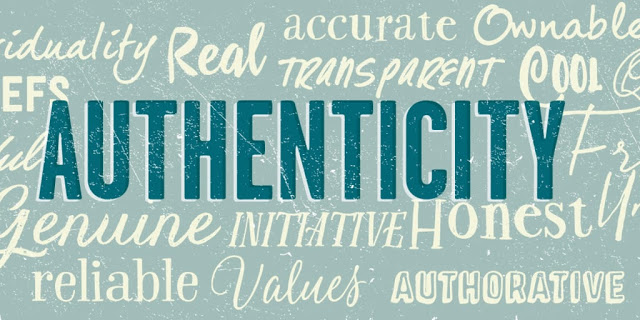
Authenticity is being true to yourself. It is being who you really are versus who others want you to be. It is being true to a set of values, morals or principles that define a good life. It is defining oneself and not letting others define you. “In existentialism, authenticity is the degree to which a person’s actions are congruent with their values and desires, despite external pressures to social conformity.” — Wikipedia
What do you want your life to be like? What will you stand up for? What is worth living for and dying for? These questions frame a Search for Authenticity which will continue our entire lives. It is not that we never find authenticity, it is that as our roles change in life, the meaning of authenticity will change. We must continually redefine ourselves in terms of being authentic.
It will not matter whether you are rich or poor, whether you are educated or uneducated. It will not matter who you know or what you know. Authenticity comes from the heart and soul and not from the brain. You cannot buy authenticity. You cannot acquire authenticity by fame or fortune. Knowing celebrities and being a celebrity are no guarantees of authenticity. You cannot go to school and get a degree in authenticity. Think for a minute. Who is the most authentic person you know? What makes them authentic?
Two things have escaped me in my life. When I was young, I wanted to be rich and famous. Often, I still dream of it. Not an unusual desire given American values. Over the years, I have read many books about famous people. I have read most of the great philosophers. I studied a Harvard Business course on the histories of the richest entrepreneurs like Getty, Rockefeller, Carnegie, and Mellon. These were the predecessors of Gate, Musk, and Buffett. The results would show that I am nowhere near successful in my twin goals. Neither fortune nor fame has cast its shadow over my life. Perhaps I am blessed because of this. Knowing how immature and ungrateful that I have often been, either the money or fame would have been squandered or it would have destroyed me.
Today, I am happier than I have ever been. I have more than some people and less than others. I have good friends and a loving wife and sister. My ex-relationship with my daughter is not wonderful but it is no longer on rocky grounds. What does my life have to do with authenticity? Why my story here? Well, over the years I have pondered the reasons that my goals of fame and fortune were never attained. My answer lies in what it means to be authentic.
I have never chosen money over knowledge. Money has never been as important to me as learning and education. I would sooner spend an afternoon in a library as in an office. I have never chosen money over ethics. My clients always knew that I would tell them the truth, even if it was not always tactfully done. I never dreamed of getting ahead in business by developing a network of influential friends or meeting clients on the golf course. In fact, I purposely never learned to play golf. I wanted to be respected for what I knew and not who I knew. This is a major mistake in the world of commerce. When my boss at the consulting firm asked me where my list of contacts was for networking, I was befuddled. I had to go back into his office and ask him to explain networking to me.
Being a rich successful businessperson was not in my genes. I came to accept that fact over time. The answer for how you get to Carnegie Hall is “Practice, practice, practice.” I was never willing to take the time to be a businessperson. I would rather do other things like travel and meet new people, see new places and explore new ideas. I would not practice the skills needed to succeed in business. I valued time more than money.
I also was not willing to take the risks needed to be an entrepreneur. I remember reading a biography of the great African American entrepreneur John Johnson who founded Ebony Magazine. When he needed money to meet a deadline for publishing an issue of Ebony, he pawned his mom’s furniture. He had already invested his last cent in the business. It would be interesting to know what his mom said when she came home and found her furniture gone. I was never a risk taker when it came to money. I still have never bought a lottery ticket. I cannot imagine hocking my furniture much less my mom’s furniture.
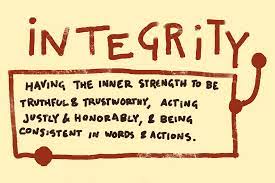
Being authentic means being true to who you are in spirit. Integrity and authenticity go hand in hand. Integrity is upholding those unique values and virtues that make you authentic. Oxford Online dictionary defines integrity as: “the quality of being honest and having strong moral principles; moral uprightness.” If you say that you value honesty, then you must practice honesty. If you say that you value truth, then you must practice truthfulness. If you say that you value democracy, then you must support democratic values and principles. First though, you must ask yourself what it is that makes you alive? What makes you human? What is truly meaningful to you? The answers to these questions will determine your integrity. People with little or no integrity can be authentic. There are authentically “bad” people. However, I believe that authenticity must always be allied with good character development and that means authenticity must meld with integrity. Unfortunately, it seems that sometimes the two do not find each other.
Today we are faced with a tsunami of public figures who seem to have no integrity. Lawyers lie and spin devious schemes to protect their clients and themselves. Politicians take oaths and contributions from PACs which ensure that they will ignore the will of the majority. Sports figures use their influence to take advantage of others. Celebrities have no qualms about ethics and will do anything to continue their celebrity status. So called journalists are more interested in advertising revenue than in the veracity or merits of any news.
Being authentic only has merit if you also have integrity. Father Stokhal of Demontreville used to say that if you do bad actions, you can tell yourself all day long that you are a good person, but you will never be good until you stop the bad actions. If you have grievous character defects such as lying and cheating others, being true to yourself has no merits or value to the world. Jesus said that if the salt loses its flavor, what good is it. Socrates believed that the ultimate goal of human existence was not just to live but to live a good, meaningful, and virtuous life. A good life was guided by virtue and moral principles. Being authentic means to find the virtues and morals that will help you to lead a good life. Integrity is sticking to those virtues and morals that you believe in through thick and thin. You do what is right regardless of what others may think or how much you may or may not profit by your actions. Here is an example of the lack of authenticity and integrity that plagues politics today. This concerns the upcoming Republican debate.
Take a sledgehammer to Vivek Ramaswamy, the political newcomer who is rising in the polls.
Defend Donald Trump when Chris Christie inevitably attacks the former president.
Attack Joe Biden and the media no less than three to five times.
If the guidance above does not smell to you as garbage, then I apologize. But please don’t tell us that “Well, this is politics.” I hope we all expect more of our politicians than people who ignore authenticity and integrity to score cheap points in a debate. Nevertheless, this is what politics in America has become. Now there always was and always will be devious and unethical methods used to get elected. Study the history of Thomas Jefferson and you can see the media at work two hundred and fifty years ago to smear his name because of his alleged affair with a slave named Sally Hemings. But if we don’t start expecting more, when will things change?
We may be at a crossroads in America. A large percentage of people no longer respect politicians and lawyers (they seem to go together). Many people are clamoring for less government. Governmental agencies have lost a great deal of their former influences due to the actions of our leaders.
A study on respect for government found the following:
A Pew Research Center survey finds that just 20% of Americans say they trust the federal government just about always or most of the time. — Dec 5, 2021
Two studies on feelings towards lawyers in the USA found:
In a Gallup poll from 2015, only 4% of respondents rated the “honesty and ethical standards” of lawyers as “very high.” In that same poll, more than one-third (34%) rated attorneys’ honesty and ethical standards as low (25%) or very low (9%).
A landmark study for the American Bar Association found even harsher truths underlying the popular perception of attorneys:
74% of those surveyed agreed that “lawyers are more interested in winning than in seeing that justice is served.”
69% believed “lawyers are more interested in making money than in serving their clients.”
These studies were done eight years ago. I would bet you a 100 to 1 that feelings towards lawyers today are even worse than they were eight years ago. Former Vice President Pence recently referred to “Trump’s gaggle of crack pot lawyers.” Trump and eighteen other cohorts have now been indicted in respect to his scheme to overthrow the 2020 presidential election. Seven of those indicted were lawyers. If you ever believed that lawyers follow a “Code of Ethics” you may well wonder where Trump’s lawyers went to school.
You might wonder if authenticity and integrity are just for the average person. It certainly seems that “above” average people including the rich and famous do not subscribe to the same playbook that is recommended for the rest of us. Why then worry about a “Search for Authenticity?” Will it keep you happy? Will it make a difference in your life? Here is what some other people and religions have to say about it.
“Authenticity is a collection of choices that we have to make every day. It’s about the choice to show up and be real. The choice to be honest. The choice to let our true selves be seen.” ― Brene Brown, The Gifts of Imperfection
“If you don’t know who you truly are, you’ll never know what you really want.” ― Roy T. Bennett
“Only the truth of who you are, if realized, will set you free.” ― Eckhart Tolle
“But above all, my brothers, do not swear, either by heaven or by earth or by any other oath, but let your “yes” be yes and your “no” be no, so that you may not fall under condemnation.” — James 5:12 ESV
“The objective of Islamic ethics is to illuminate the virtues that enable a person to perfect his or her humanity.” — Omar Qureshi, Finding the Authentic Self
“In Buddhism, living authentically means living with honesty and being willing to look at your own illusions and self-deceptions. It also means questioning your self-images and self-limiting identities, and examining the stories you weave about yourself.” — Tricycle, The Buddhist Review
Conclusions:
Do not believe what I am telling you. Search for your own authenticity.
Find out what it means to “Be Yourself.” What is yourself?
Find a mentor, partner or someone who will be honest with you. Do an authenticity check with them every so often. Ask them if you are an authentic person.
Who do you most admire? Are they authentic? Do they have integrity? If not, why do you admire them?
Are you voting for and supporting people who are authentic and have integrity? Why not?
What barriers exist in your life to being authentic?
Next week we will look at Man/Woman’s Search for Love.
I doubt that a person ever existed who did not want or search for love. Love is older than the Greek gods, older than the Bible, older than the universe. Everyone knows what love is and no one knows what love is. Everyone wants love but few really know how to give love. Love may be the most frequently used word in any language. It is probably the most frequently misused word in any language as well. We search for love and many of us will never find it. Some of us will find it at a very old age and some will find it while very young. No amount of arguing will ever stop anyone from looking for love.
Arabic: حب (habb)
Chinese: 爱 (ài)
Filipino: Pag-ibig
Swahili: upendo
Hindi — मोहब्बत (mohabbat)
Indonesian: cinta
Japanese: 愛 (ai)
Persian: عشق (ishq)
Punjabi: ਪਿਆਰ (pyaar)
Russian: любовь (lyubov’)
Spanish: Amor
PS:
At the first Republican debate Wednesday night, Seven of the eight Republican presidential candidates on the debate stage raised their hands to confirm that they would support former President Trump as the 2024 GOP nominee, even if Trump is convicted in a court of law. Former Arkansas Gov. Asa Hutchinson was the only candidate to keep his hand down. Some readers have commented that one or the other of these candidates have set themselves apart from Trump and are no longer sycophants. I think these raised hands are enough evidence to prove that there is little or no integrity in the Republican Leadership today.
Years ago, religions enforced what I would call a pseudo moral code through the power of the state to enact laws desired by the most powerful religions. This of course reflected the power that religions had in society back when you could go to hell for missing mass on Sunday. Gambling was verboten. There was legalized horse race betting in only a few states, and a few states had some other sports such as greyhound racing or Jai Alai which you could bet on. Legally, you could only place bets at the venue. Of course, organized crime found it very lucrative to offer “off track” betting. Every street corner where I grew up had a bookie some place or other. And of course, the numbers game was a very popular way for fools to lose their money. Sports betting was done privately, and casino gambling did not start in Las Vegas until 1931. It had been legal earlier but was outlawed in 1910 and not legalized until 1931. The only lottery I ever heard of when I was growing up had to do with the Irish Sweepstakes. There must have been some way to buy these tickets, but I never investigated it.
Today, you can buy pull tabs and lottery tickets in almost every gas station. Casinos are just around the corner in twenty states and sports betting became legal on April 15, 2021, in the USA. Organized religion believed that gambling would be addictive, and husband and wives would neglect their parental responsibilities as they gambled away their hard-earned wages. People who regularly buy lottery tickets are the norm today even though economists refer to the lottery as a tax on the poor and the stupid.
Marijuana was once considered a drug from Satan and every state in the Union banned its sale. The movie “Reefer Madness” came out in 1936 and portrayed wild eyed youth going crazy after smoking a joint. Smoking weed was a sure path to hell and damnation. As of May 27, 2022, 19 states, two territories and the District of Columbia have now enacted measures to regulate cannabis for adult non-medical use with several other states limiting its use to medical purposes. You can now smoke that joint where it once would have put you in jail.
Whiskey can now be purchased almost 24/7 in many states. You can buy it in grocery stores, gas stations, bars, and convenience stores. Perhaps no substance has been more abhorred by religions than whiskey. Benjamin Franklin said that “Beer is proof that God loved man and wanted him to be happy.” However, this was not the attitude of most religious organizations. Temperance movements motivated by so called moral considerations did their best to ban alcohol in the US. It is illegal in thirteen countries in the world. Several of the world’s major religions ban the use of alcohol. There are seventy-five scripture (Bible) warnings against the drinking of alcohol. Is it any wonder that so many religions have prohibited the drinking of alcohol.
Micah 2:11 – Israelites are eager to follow false teachers who prophesy plenty of intoxicating drinks.
Habakkuk 2:16 – Drinking leads to shame.
I have been trying to show some of the influences that religion and state have had in terms of legislating and enforcing moral codes and policy. I could say more about prostitution and pornography but the nuances I hold regarding these subjects would entail a blog of their own. Suffice it to say that restrictions in these areas have declined considerably in the last fifty years.
Now there may be some of you reading my blog and expecting a fire and brimstone sermon regarding the sins of humanity and the temptations of the devil. Nothing could be further from my mind. I am not advocating going back to the religious sanctions or beliefs that fueled so much of our political system. In the first place, they were misguided and in the second place they penalized those who could practice moral virtues along with those most reluctant. I could never understand why I could not buy liquor on Sunday or after 10 PM on weekdays or in a grocery store. I have never received a DUI or even a warning for driving drunk.

The biggest problem with efforts to legislate morality is that they assume that the legal sanctions will result in a more moral society. The evidence of racism, sexism, homophobia, and xenophobia in America should put a stake through the heart of that false belief. The government has never been a vendor of morality. People confuse legality with morality.
The government has always been in the marketing business. They would market “SIN” if they could find a way to sell it or allow it to be sold. In some respects, they are already doing that with the legalization of gambling and their promotion of bigger and bigger lotteries. The poor buy more and more tickets when the odds go ever higher against anyone winning. Powerball’s odds are 1 in 292 million, and the combined populations in the states where tickets are sold equal nearly 320 million. What would anyone do with 2 billion dollars? (As I write this, the lottery of 2.0 billion has been won by a single person in California)
This is the stuff of more is better which I talked about in my last blog. How large of a jackpot would be enough to support you for the rest of your life? Assuming the average age of a lottery ticket holder, it would take nearly $5 million, according to Robert Pagliarini, president of Pacifica Wealth Advisors. With a net take home of 1 billion dollars, one billion dollars could easily support 200 people for the rest of their lives.
There is nothing moral about ever bigger lottery purses. Not to mention the fact that the odds are better that the lottery winner will go bankrupt rather than that they will see a happy old age with lots of money. “Life after winning the lottery may not stay glamorous forever. Whether they win $500 million or $1 million, about 70 percent of lotto winners lose or spend all that money in five years or less.” — Easy Come, Easy Go.
What does this have to do with morality?
First, we must define morality. It is not about making money, winning the lottery, drinking booze, smoking weed or visiting a casino. The Prosperity Gospel is a distortion of the idea of moral behavior. Morality is the process of asking yourself what impact an action, a course of action, a decision, a purchase, or a behavior will have on other people. It does not mean that you cannot drink and gamble. It does not mean that you cannot have wild sex at a swinger’s party. It does mean that you need to be able to ask yourself if your gambling and drinking is having a negative impact on others. It does mean that you need to ask yourself if your sexual habits are having a negative impact on other people. By others. I mean more than your family, more than your friends, more than your neighbors. I mean other states. I mean other countries. I mean the entire world. This does not mean that you have no rights. You have the right to swing your arm but your right proverbially stops at the nose of another person.
As I said in my last blog, we must look outside of ourselves to find morality. This is not easy to do. Some of us, (fewer every year) go to a church on Sunday where we may get a sermon that asks us to look at our behaviors and what we can do for other people. (“According to a 2021 survey, 31 percent of Americans never attend church or synagogue, compared to 22 percent of Americans who attend every week.”— Church Attendance of Americans) Those of us who attend church hear maybe a twenty or thirty minute sermon each week on morality.
Compared to this 30-minute sermon once per week for maybe fifty percent of Americans:
“The average American watches four hours of TV each day (that’s down from about six hours in the 1960s through 1990s by the way). There are about twenty minutes of “non-program material” per hour, which includes ads, promos, news updates, etc. For our purposes, let’s consider all of this commercial matter. So in four hours, we see eighty minutes of commercials.” — Fred Pagano, Radio, television and Internet advertising producer and director.
This means that the average American hears about 560 minutes of paid advertisements each week or the equivalent of 19 sermons. These ads exhort you to think of yourself. You are special but you need more to be more special. If you don’t buy more, you neighbors will look down on you. Your friends will surpass you in status. Your family will stop loving you. You can be a better smarter person, but you must buy the new Persico Bacon Maker. You need a new car or maybe even a bigger house. You should go out to eat more or get a new insurance policy.
Advertisements are NEVER what you can do for other people or society. They are ALWAYS inherently selfish. Is it any wonder that Americans shop till they drop or keep on buying more stuff that is bigger and bigger than they will ever need? Americans have been and are continually bombarded by Madison Avenue messages that are a form of de facto brainwashing. Too many Americans today are selfish, self-centered, narcissistic, and exhibit an entitlement mentality. Economic policy extols benefits that will accrue to society with more buying and more spending. It is somewhat ironic that the rampant inflation today and the wild economic swings have not been helped one iota by a greedy narcissistic economic policy that ignores any effort to provide a balance Moral Policy. In addition, Americans are no happier today than they were seventy years ago.
“The vast majority of Americans report being “very” (42%) or “fairly happy” (44%), but the combined 86% is down from 91% the last time Gallup asked about this, in December 2008. It is also the lowest overall percentage happy Gallup has recorded in periodic readings over 71 years and is only the fifth time happiness has dipped below the 90% mark in 23 readings since 1948.” — Happiness Not Quite as Widespread as Usual in the U.S
How do we get a balance between Moral Policy and Economic Policy?
My apologies. This blog was longer than I thought it would be. I will address the above question in my next blog. In the meantime, I would love to hear any comments, questions or ideas that you might have concerning the issues I have raised in this and my previous blog.
Something is seriously wrong in the United States today. Why is the first question that comes to mind, and it has received many answers. Some experts will tell us that it is because Americans are angry. Some will say it is because of income inequality. Other reasons have been given as: persistent racism, policy divides between urban and rural areas, massive immigration, too many guns, climate change, a move towards authoritarianism, continuous military misadventures, narcissism, and of course greed.
None of these would be wrong, but none of them are really the underlying cause which some see as the decline of the American dream. The end of the idea of America as the shining city on the hill or the last great hope of the world. The light of America today is blinking on and off. Fewer people see hope in America. More people see the USA as a scourge on the world. A country only interested in pushing its agenda on other countries whether through economic war or military war.
The decline of America lies in a very simple problem. A failure to balance Moral Policy with Economic Policy. A problem that may be simple to describe but extremely difficult to solve. This failure began as soon as this country had its first pilgrims. America was born out of a dream of prosperity and equality. The equality did not have its roots in DNA but in the idea that all people (white and male at the time) through hard work and education could become prosperous and equal. Equality would not depend on being lords, or barons or some other type of royalty as had been the norm in Europe. This prosperity is still enthralled in some religions where it is promoted as “The Prosperity Gospel.” An idiotic idea that the more you are favored by God, the more he/she will bless you with wealth and success.
Unfortunately, there is one rule in the Universe which cannot be undone or avoided. It is the rule of balance. What goes up must come down. For every pushing force there is a pulling force. Antagonist muscles must be developed equally with protagonist muscles. The Chinese might call what I am describing here as the principle of Yin and Yang. The Greeks called it the Golden Mean.
“The golden mean or golden middle way is the desirable middle between two extremes, one of excess and the other of deficiency. It appeared in Greek thought at least as early as the Delphic maxim “nothing in excess”, was discussed in Plato’s Philebus.” —Wikipedia
Since the beginning of America, we have ignored this rule of balance. It is the main reason that we are in a crisis today. Ironically, it is the separation of Church and State, perhaps the greatest innovation in America which has led to its decline. Let me explain further by starting with an analogy. We will say that there is a continuum in terms of policy needed for an efficient and effective country. An efficient country is one where most citizens are well fed, well clothed and well housed. An ongoing effort is made to insure that more and more citizens meet these criteria. An effective country is one where most citizens are safe, happy and content with there lives. Effort is also made to see that more and more people meet these criteria.
Economic Policy drives efficiency. It is the main determinant of how wealthy and prosperous a nation is. Economic policy puts the food on the table, pays for the overhead and allows people to buy things. Americans today buy and buy and buy. They shop till they drop. On weekends they stage flea markets, garage sales, and church sales to try to get rid of the STUFF that they have accumulated. Economic Policy gone unabated by Moral Policy has stuffed people until they are fat and bloated with too much stuff. More is the anthem in America. “He who has the most toys wins.”
Our politicians are troubadours for the American dream of “More.” There is no secret to their being elected. It is a very simple formula. 1. Promise voters more stuff by way of the trickle-down theory. 2. Promise to lower taxes to give people more money to buy more stuff. 3. Raise more money than your competitor so that you can sell your promises to more potential voters. 4. Find a way to scare voters into thinking that your competitor will not be able to deliver on the same promises.
Economic Policy in America has become a Frankenstein. Without a balance of Moral policy, it is a monster which is destroying this country. It has been destroying this country for many years now. However, people are so blinded by the promises for greater prosperity that they have ignored the essential balance provided by Moral Policy.
Moral Policy looks outward. While Economic Policy looks inward and asks what can my country do for me, Moral Policy asks what can I do for my country. Moral Policy asks what can I do for other people. I noted above that a great inspiration for our founders was to separate church and state. While this was a truly great political idea, morally it was a disaster.
Prior to the emergence of America, most people received a balance between Economic Policy and Moral Policy through a balance between their obligations to their state or nation and their obligations to their church or religion. They would go to jail if they ignored their state obligations and go to hell if they ignored their religious obligations. Their church laid out its obligations in its Moral Policy. For some, this was thought of as religious doctrine. Perhaps the best example of a Moral Policy is the Eight Beatitudes described in Christianity and formulated by Jesus of Nazareth.
Blessed are the poor in spirit: for theirs is the kingdom of heaven.
Blessed are the meek: for they shall possess the land.
Blessed are they who mourn: for they shall be comforted.
Blessed are they that hunger and thirst after justice: for they shall have their fill.
Blessed are the merciful: for they shall obtain mercy.
Blessed are the clean of heart: for they shall see God.
Blessed are the peacemakers: for they shall be called the children of God.
Blessed are they that suffer persecution for justice’ sake, for theirs is the kingdom of heaven. —- Matthew 5:3–12
There is no question, that Jesus was describing a moral responsibility to others. Jesus talked about greed often and the “cure” to greed lay in giving as much as taking. Jesus constantly talked about taking care of others who were less fortunate.
Thus, the uncoupling of Church and State in the constitution of the United States set the stage for a catastrophic imbalance between Moral Policy and Economic Policy. Over the years, the lack of influence in organized religions at the political level was abetted by the horrendous influence and power of Economic Policy. If Moral Policy was once the heart of a religion, it was supplanted by an Economic Policy which has become the main religion in America. This policy states that more is better and that you can never be too rich or have too much stuff.
Ultimately as with all imbalances, they eventually lead to a disaster. America has gone over the tipping point. The decline of the American Dream, the schism between conservatives and liberals, the rural versus urban divides, the dissatisfaction with the current political system and the rise of fascism in the USA are all symptoms of this imbalance.
What we once believed was a great political innovation to separate Church and State has led to this imbalance. There was no place in the state for religion and no place in religion for politics. America’s dominant dream for peace, justice and equality was replaced with a dream for more money, more power and more fame. The push by the State for this dream dwarfed any efforts by religion to provide a moral balance and the State had no legitimacy for morality. People are cast adrift amidst a chaotic and vicious ocean of competition for more and more stuff. No moral anchors exist that are powerful enough to counterbalance the tide of greed that this has brought to our shores. Guns have replaced morality as citizens arm themselves to prevent imagined attacks at taking away their STUFF.
Is there an answer to the problems facing America? I will discuss this question in my next blog.
Ms Hudson’s piece is marvelous. She is a wonderful writer with insights on civility that we all need to think about. This copy is from a site it was posted on with shares. The site is called Civic Renaissance. I advise everyone to sign up for this site and enjoy some excellent writing.
On Plato and civility: reflecting on Plato during his traditionally recognized birthday month, and civility for International Civility Month + win a YEAR of WONDRIUM!
May is the month that scholars traditionally deem to be the birthday of Plato. Also, certain authorities have declared that May is International Civility Awareness Month.
The School of Athens, a fresco by the Italian Renaissance artist Raphael, painted between 1509 and 1511.
I’ve been thinking of both of these topics of late.
Plato and civility are never far from my mind, but I recently emerged from an experience that caused me to lean and reflect on them all the more.
A recent, tumultuous business transaction prompted me to consider how civility applies to the real world—a and to ask a question that you may have considered, too.
How can we be civil in an uncivil world?
Is it possible for people who are committed to the principles of decency, courteousness, and treating others with basic respect to succeed and thrive when others do not abide by these principles?
In a recent business situation, the opposite party lacked all manner of basic decency.
Their behavior did not quite reach the level of illegal — although it did come perilously close—they were certainly unethical. More than anything, however, they were just terribly unprofessional and unpleasant to work with.
But their conduct reminded me of the importance of basic civility that many of us take for granted. It is only when norms of courtesy and respect are broken that we fully appreciate their importance to helping us co exist with others in society.
It’s an important truth: we note and appreciate civility most in its absence.
I define civility as the basic respect we are owed by virtue of our shared dignity and equal moral worth as human beings. We owe this to others regardless of who they are, what they look like, where they are from, whether or not we like them, and whether or not they can do anything for us.
I live and breathe civility and have studied social norms across history and culture— including countless instances of when they have been broken. I was still taken aback by how unpleasant the entire interaction was because of the absence of civility and mutual respect.
From the outset the opposite party was more than rude. They dispensed of basic courtesies from the get go. They didn’t even attempt to appear generous, amicable, or conscientious.
They were single-minded in their aim: all things personal aside, they wanted to get the absolute best deal possible at any cost.
Business is business, I’m sure they were thinking.
They forgot that there was a person on the other end of the transaction.
This resulted in me feeling used, squeezed, bullied, nickeled and dimed throughout negotiations.
It brought out the worst in me.
Instead of making me want to help them or instead of making me want to reach an agreement of mutual benefit, their conduct inflamed my baser nature, tempting me to go “scorched-earth,” ensuring they didn’t get what they wanted even if it hurt me, too.
I was frustrated by the fact that we were operating on two different moral and ethical levels.
I tried to stay high when they went low, yet every grating exchange with them made me want to sink to their level, where all bets and codes of decency were off.
In the end, rather miraculously, we came to an agreement.
I managed to prevent my baser nature from winning out. I was able to rise above the pettiness and the vindictiveness that I wanted to respond with— a facet of the human personality that we all share when we feel we are under threat.
But it wasn’t an experience I particularly enjoyed.
I was left with feelings of frustration and exhaustion. I felt like I had been disrespected and degraded.
I also felt disappointed in myself.
Most of us have probably had thoughts like this during and after interactions with people who are willing to do whatever it takes to get the upper hand:
Should I have been tougher?
Was my commitment to civility in the face of incivility a handicap?
Did my attempt to uphold my values allow me to be taken advantage of?
This experience has caused me to consider the practical importance of civility in life.
Won’t the person who is willing to go low—one who is willing to throw off the shackles of decency and civility—always win out?
“How to be civil in an uncivil world” is a variation of an important question that people have been considering for a long, long time: how can a good person succeed in a world of evil?
Renaissance thinker and author of The Prince, Niccolo Machiavelli, who we have explored in a past CR issue, observed that, in history those who tend to gain and maintain power appear to have morals publicly, but privately dispense with their values the moment they get in the way.
“Politics have no relation to morals,” wrote Machiavelli.
Also in The Prince: “Thus it is well to seem merciful, faithful, humane, sincere, religious, and also to be so; but you must have the mind so disposed that when it is needful to be otherwise you may be able to change to the opposite qualities.”
In other words, Machiavelli argues that one who wishes to be powerful must be willing to dispense with the moral bounds of civility if the need arises.
While the civil person is contained by their commitment to civility, the uncivil person can do whatever is necessary to win.
Socrates—the Greek philosopher Plato’s teacher, and the protagonist in his dialogues—took a different view. He would take issue with how Machiavelli defines “winning.”
Socrates said that justice is to the soul what health is to the body. If a person gets the better end of a business deal, wins an argument, or comes out on top of a political battle, but does so by cutting corners and being dishonest, he hasn’t really “won” anything.
His soul is unhealthy and sick.
In Plato’s Republic, Socrates attacks the poet Homer, the educator of Greece, because he doesn’t like the values that Homer’s poems promote.
Achilles, the protagonist of The Iliad, embodies the ethics of revenge, slaughter, and vainglory.
Odysseus, the protagonist of The Odyssey, embodies the ethic of wiliness and deceit in order to come out on top of any situation.
Socrates purposes a new ethic: one that loves wisdom.
He wants to trade the ethic of revenge, “might makes right,” and vindictiveness with a shared love and pursuit of goodness, beauty, and truth.
Socrates believes that anyone who acts with injustice does so out of ignorance—after all, who would willingly make themselves sick? Who would knowingly choose sickness of the soul?
Socrates argues that a just person has an excellent and healthy soul, and the function of a just soul and person is to seek the justice and soulish health of others, too.
Socrates noted that it is not then the function of the just man to harm either friend or anyone else. Seeking to harm is an act of injustice, and therefore harms the harmer. The function of the just person is to seek the good of others, friends and enemies alike.
In a related sentiment, Abraham Lincoln once said, “Do I not defeat my enemy when I make him my friend?”
Final thoughts: on virtuous and vicious cycles, and on unbundling people and situations
There are three thoughts I’d like to leave with you.
First, we should not underestimate the power we each have to promote trust and civility in our world.
Second, learning to “unbundle” people and situations can help us mitigate the vicious cycles of incivility that are so detrimental to a free and flourishing society.
Third, we must remember when we encounter incivility in our modern world — and we invariably will, as the problem of incivility is endemic to human nature and human social life — we have a choice about how to respond.
Norms of decency and courtesy comprise an unwritten social contract between us and our fellow citizens. We take this contract for granted, which is why when this bond is broken, we are surprised, offended, and dismayed. When people don’t uphold their end of the social contract, we lose a little bit of faith and trust in society and others.
When that trust in others and society is corroded by the thoughtlessness and incivility of others, often we are less likely to act in good faith and civility in our future interactions. Our less-than-civil response to others may in turn cause them to be unkind to others with which they engage.
And so the vicious cycle continues.
My recent experience with bad actors made me appreciate those today who claim that “all bets are off” when it comes to decency in public life. We often hear things like, “The other side has gone to a whole new low. How can I be expected to stay civil?”
We also see evidence of the “vicious cycle” all around us in politics today. When one figure breaks norms and bounds of decency everyone else feels like they have to so as to keep up.
We contribute to this trust-corroding ripple effect when we are uncivil. Others do, too, with their incivility. The incivility of others often tempts us to relinquish the shackles of decency in order to “win.”
But we must resist—for our own sake, for others, and for society.
We cannot control the conduct of others.
We can only control ourselves.
We must also learn to mentally unbundle people and situations. This means not assuming things about their character because of one deed, word, or interaction you had with them. We must learn to unbundle situations. This means not allowing one bad interaction or instance to corrode your trust in society in general.
This is much easier in theory than in practice. This is much easier said than done. but again, in the end we cannot control others. We can only control ourselves.
Socrates and Machiavelli remind us of why we are civil in the first place. The reason to be civil isn’t instrumental. It isn’t just a tool of success. As we’ve seen, sometimes it can be an impediment to success. Civility is instead a disposition, an outgrowth of seeing people as they really are: as beings with irreducible moral worth and deserving of respect. This is worthy for it’s own sake, even if it means we don’t gain the upper hand of every business dealing.
Being uncivil is poison to the soul. When we treat people as means to our ends, it hurts and degrades them, but also us, too.
Machiavelli is famous for the amoral aphorism: “The ends justifies the means.”
Socrates would respond, “But what is your end?”
No earthly battle is worth compromising your soul for.
Here are some questions to consider:
Can you empathize with my experience? Have you had an experience where it felt like decency was not a match for indecency? Write to me with your story and how you dealt with it at ah@alexandraohudson.com
Who do you find more persuasive: Machiavelli or Socrates? Do you think we can be civil in an uncivil world? Or will incivility always win out?
Thank you Ms. Hudson for a great piece of writing and morality.
Courage is number seven of my seven essential virtues for leading a happy and successful life. Every Sunday I start my day with the following prayer:
Give me the ability and courage to make a difference today, no matter how small.
I have been thinking about courage now for quite some time. One of my favorite quotes is as follows:
“The test of courage comes when we are in the minority. The test of tolerance comes when we are in the majority.” — Ralph W. Sockman
Courage has been one of the most salient virtues in my life. I think about it often. I am afraid to be a coward but wonder if I am brave. Is it courage to do things because you are afraid of how you will think about yourself if you do not? I have tried to test myself often to prevent feeling like a coward. Caesar said “Cowards die many times before their deaths, but heroes only die once.” Perhaps, it was Shakespeare who really said this, but the point remains the same. My father hated cowards and more than once chastised me for being afraid of something. I can think of too many times in my life when my father would have been sorely disappointed in me.
When I was young, I always took the side of the underdog. I would defend anyone against a bully. I hated bullies with a passion. I still prefer the underdog. This might explain to some degree why I care about the poor, the sick and the homeless. Psychologists would say I was overcompensating to try to win my father’s approval. It really does not matter to me what they say. There is something poignant and sad about people who have less or are needier than I am. There is something despicable about people that only care about themselves and are too ready to say “I did it myself.” One of my favorite poems is:
No man is an island,
Entire of itself,
Every man is a piece of the continent,
A part of the main.
If a clod be washed away by the sea,
Europe is the less.
As well as if a promontory were.
As well as if a manor of thy friend’s
Or of thine own were:
Any man’s death diminishes me,
Because I am involved in mankind,
And therefore never send to know for whom the bell tolls;
It tolls for thee. — John Donne
In thinking about courage, I have found that the subject is more complex than it would appear. I believe that there are five kinds of courage. Some of us may be stronger in one while others are stronger in another kind of courage. I would like to list each kind of courage, give you my definition and then say a little about each one. The five types of courage I have found are:
Physical courage
Intellectual courage
Emotional courage
Moral courage
Spiritual courage
Physical Courage:
This type of courage is the most obvious and perhaps least subtle. The mountain climber, the motorcycle racer, the football player, the sky diver all display what to some of us would seem to be a reckless disregard for life. Each of these individuals risk life and limb for either fame, fortune, fun or to achieve some goal. Often money is the least of their motivations for risking their lives. These people do things that leave most of us awestruck but also inspired. We watch their events on TV, in the movies and at live shows. We never fail to be impressed by the exploits and daring do that such individuals undertake. Risk is the hallmark of their efforts and we note that many of them pay for their risky behaviors. Death is an ever present companion for these people. Somehow though, they rise above the fears that chain the rest of us to the TV and they are out there doing what many of us only do in our dreams.
There is another group though that exhibit raw physical courage and they do it for a different set of reasons. Soldiers, police officers, emergency medical people and fire fighters all risk their lives on a daily basis. Most of these individuals do it for altruistic motives. There is not enough money in the world to convince the rest of us to risk our lives like these people do. No one can say they only do it for the money, since sadly these occupations are not very well paid. We pay accountants, Wall Street brokers and MBA’s many times more than we pay the people who risk their lives every day to protect the rest of us.
Intellectual Courage:
What do you do when someone tells you that your ideas are stupid and that you will never amount to anything? If you are like most of us, you give up and go on to something else. The person with intellectual courage though is different from the rest of us. They don’t give up on their ideas. They plod forward in the face of distain, insults and criticism. Many times they are dead and buried before the value of their ideas are recognized. Darwin, Mendel, Pasteur and Copernicus were all ridiculed and ostracized for many years before their ideas were accepted. Socrates was executed for his ideas. Indeed, here is what Socrates said at his trial:
“But some of you will ask, ‘Don’t you regret what you did since now it might mean your death?’ To these I answer, ‘You are mistaken. A good man should not calculate his chances of living or dying. He should only ask himself whether he is doing right or wrong—whether his inner self is that of a good man or of an evil one.’ — From Plato’s Apology.
Now I ask you, was Socrates a brave and courageous man? Would you have the conviction to die for your ideas?
Emotional Courage:
I have a good friend of mine who will not go to funerals. They make him feel very sad and he tries to avoid such feelings. No one of us likes to feel sad. It takes a kind of courage to go to a funeral. What do you say at a funeral to the friends and relatives of the departed one? How do you act? What if you did not know the person very well? There are many ways to feel embarrassed or like a fish out of water at a funeral. Easier to stay home then go. But it takes a certain kind of courage to deal with emotional risk. Any courage is difficult because of the risk. Emotional risk entails looking stupid, feeling stupid or having to deal with difficult feelings. A person with emotional courage confronts these situations with a degree of bravery and élan that escapes many of us.
“I learned that courage was not the absence of fear, but the triumph over it. The brave man is not he who does not feel afraid, but he who conquers that fear.” — Nelson Mandela
One of the greatest fears that many people have is called “stage fright” or fear of public speaking. Many professional speakers and actors/actresses feel significant stage fright. Actress Carol Burnett was so nervous that she threw up before many of her performances. Most of us would never think of getting up on a stage. I know that people call it stage fright, but it is not really about the stage, it is really about us. Who wants to look stupid and particularly in front of hundreds or people? It takes emotional courage to deal with life. All of us have it, but we often choose not to exercise it. We simply spend our lives trying to avoid situations that might make us look dumb or embarrass ourselves. The people with emotional courage deal with these situations and take the risk that the rest of us hide from.
Moral Courage:
The world is full of examples of moral courage. However, to my way of thinking, the amount of moral cowardice far outweighs the shining examples of moral courage. The number of Martin Luther Kings, Gandhis, Mandelas, Parks, Kellers and Kyis are dwarfed by the number of moral cowards who turn the quote I noted above around. These are the people who when in the majority would tyrannize the minorities. They are the moral cowards who use their positions to foster hatred and bigotry and intolerance towards the disadvantaged and weak. They prey on the sick and hungry and would deny benefits or help to anyone who is not a member of their tribe or affiliation. They go through life pretending to be good people and deluding themselves that they are.
Conversely, we have those cowards who when in the minority are afraid to risk. They are afraid to speak out when they are surrounded by racists and bigots. They are afraid of what their friends and neighbors might think if they stand up for their beliefs. So they say and do nothing. They find it easy to ignore the admonition that:
“The only thing necessary for the triumph of evil is for good people to do nothing.” — Edmund Burke
This group of moral cowards also includes the pious so-called Christians who feel that all they need to do to guarantee their ascent into heaven is to spout religious slogans from the bible. They conveniently forget what Jesus himself did and what the apostle James noted:
“So you see, faith by itself isn’t enough. Unless it produces good deeds, it is dead and useless.” — James 2:17
Jesus said:
“So then, you will know them by their fruits. Not everyone who says to Me, ‘Lord, Lord,’ will enter the kingdom of heaven, but he who does the will of My Father who is in heaven will enter.” — Matthew 7:21
I understand both of these passages to mean that a good person must do good deeds. It is not enough to have good thoughts or to say “I believe, I believe.” You must also be able to say “I do good.” “I do good.” And what good do you do? Do you stand up for those who are being persecuted or do you join in their persecution? Moral courage is standing up for your beliefs. It is standing up for other people. It is not just thinking about “What would Jesus do?” It is doing what Jesus would do. Jesus would not be silent in the face of persecution of others.
Spiritual Courage:
Spiritual is the ability to face the uncertainly of life and to greet each day with a sense of awe and hope that in the world I can be a better person and that I can help make the world a better place. If we look at the word spirit, we find the following definition:
The world greets us each day with new possibilities. Many of these possibilities entail risk. Risk of dying in a car accident. Risk of dying in a shooting. Risk of being raped. Risk of losing a loved one. Risk of disease. Risk of unhappiness. The list of risks we face each day is endless. We are sensitized to these risks by the onslaught of news and media that bombards us minute by minute and second by second with ghastly deeds that journalists love to print.
Fear is ever present in our society today and is it any wonder? The media exalt in horror stories that should have most of us seeking sanctuary in a deep dark cave. We long to be hidden from the persecution that seems to engulf our daily lives. Catholics fighting Protestants. Jews fighting Muslims. Shia fighting Sunnis. Tea Party people hating liberals. People of different cultures and ethnic groups inflicting insults and defamations on each other. Women and children subjected to abuse every second of the day. Wars raging in one country or another. The wealthy despising the poor and the poor envying the wealthy. Life is portrayed as nothing but an unmitigated disaster waiting for a tragedy to befall us or so the media would seem to have us believe. The news becomes a drug whose side effects are to convince each of us to drop out of life and to give up on the world.
“During my 2009 service as an Air Force chaplain in Iraq, I saw countless examples of heroism. However, the most spiritually heroic act I witnessed was the prayer of a soldier who asked God to forgive the insurgents who had killed his battle buddy.” —
I wonder that anyone has the courage to get out of bed each day. It is astonishing to me that any of us has the desire to do good for the world or to make a difference. It hardly seems possible to roll back the evil and injustices that pour forth each day from every corner of the globe. So why bother? One atrocity surpasses and begets the next atrocity.
Nevertheless, in the face of all this iniquity, the majority of humankind has a spiritual courage that defies logic. The majority of people want to do good for the world. The majority of people are good and most people try to leave the world a better place then they found it. This is truly an amazing observation. More people are spiritual heroes than not. Every day those who have the courage and strength to get out of bed and to start a new day show a sense of spiritual courage. It would be easier to hide and to do nothing then to face the daily rigors of life on our planet. Yet, that is what the majority of people do each day. They get out of bed. They go to work. They volunteer. They innovate and create. They campaign for their ideals. They build. They love. They pay taxes. They die. And the cycle starts all over again for the next generation.
“I long to accomplish a great and noble task, but it is my chief duty to accomplish humble tasks as though they were great and noble. The world is moved along, not only by the mighty shoves of its heroes, but also by the aggregate of the tiny pushes of each honest worker.” — Helen Keller
Time for Questions:
What kinds of courage do you have? What kind of courage do you wish you had more of? Why? What could you do to find more courage in your life? Do you think it would make a difference? Why?
Life is just beginning.
“One isn’t necessarily born with courage, but one is born with potential. Without courage, we cannot practice any other virtue with consistency. We can’t be kind, true, merciful, generous, or honest.” — Maya Angelou
Hi, if you have comments, please post them in the comments section. However, if you have questions, please send me an email. I have been getting too many comments to respond to all of them. However, if you have questions about blogging or my website, send them to me at persico.john@gmail.com. This is a WordPress site and the theme is KOI. It is free. I welcome your questions. Feel free to reblog or cut and paste any of my stories or blogs. John