Why Americans Hate the Government!

I sit here in my car driving the speed limit of 75 mph on the interstate and being passed by multitudes of cars doing at least 85 mph or maybe 90 mph.  It feels like I am standing still.  I watch as cars pass on the right, left and in-between in their hurry to get somewhere really important.  Speed limits and stop signs seem to be only ideologies obeyed at the discretion or whim of the drivers on the roads today.

Americans have always said that they want less government.  Today, it seems that they want NO government.  People clamor for their rights at every mention of some law or other injunction that they do not feel applies to them.  Hardly any American cannot find some law that they find unfair and unjust.
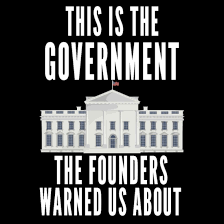
Edmund Burke said that the “Government that governs best is the government that governs least.”  Abraham Lincoln said that “If all men were just, there still would be some, though not so much, need of government.”  Many Anarchists would agree with these sentiments.  In the past, Americans have treated Anarchists as terrorists and revolutionaries.  Anarchists are despised by most Americans.  Yet, few Americans understand that many Anarchists share their same belief in “eliminating the government.” The January 6th attacks on the Congress of the USA could have been a picture-perfect representation of an Anarchist attack.  Unfortunately, for such simple depictions of Anarchists many are not violent revolutionaries.  One definition of an Anarchist given by the FBI is as follows:

“Anarchism is a belief that society should have no government, laws, police, or any other authority.  Having that belief is perfectly legal, and the majority of anarchists in the U.S. advocate change through non-violent, non-criminal means.” — FBI. Gov

The implications of this definition are profound.  Consider that “The majority of anarchists are non-violent” whereas the majority of those storming the US Capital on January 6th were engaged in violent criminal attacks.  How many of the people attacking the Capital would agree that they were engaged in the same type of criminal activities that they ascribe to Anarchists?  Nevertheless, both groups share a dislike for government.
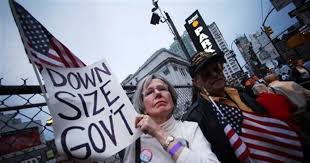
A closer reading of Lincoln and Burke though does not show an advocacy for NO government, only less government.  What are the primary purposes of a government than and how can it reconcile achieving these purposes while at the same time not becoming a burden on the everyday lives of its citizens?   Here are the five most important functions of a government:

The five most important functions of a government typically include: (From ChatGPT)

  1. Maintaining Order and Security:

Enforcing laws, protecting citizens from crime, and ensuring national defense against external threats.

  1. Providing Public Services:

Offering essential services like education, healthcare, infrastructure (roads, bridges), and utilities that individuals or private businesses might not adequately provide.

  1. Protecting Individual Rights and Freedoms:

Upholding constitutional rights, such as freedom of speech, religion, and equal protection under the law.

  1. Economic Management:

Regulating trade, managing taxes and public spending, and addressing unemployment and inflation to foster a stable economy.

  1. Formulating and Enforcing Laws:

Creating legislation that reflects societal values and ensures justice, while maintaining systems to fairly enforce these laws.  (End of ChatGPT) 

Few people would disagree with any of these functions.  But if God lies in the details (or the Devil some might say), than our disputes are more around “what exactly will be done and how will it be done.”

Any one of these five functions can illustrate the problem that people have with the government.  For instance, what Public Services will be provided?  We accepted education many years ago as a public service, but now some want to privatize education.  Other people want childcare as a public service while there are people who disagree with the idea.
But the question of what services and what laws to provide are not the only problem people have with the government.  A bigger problem lies in the “how” of government.  By how, I refer to the efficiency of government.  The government has long been lambasted for its lack of efficiency.  Several years ago, Senator William Proxmire of Wisconsin created his “Golden Fleece Award.”  Periodically a government agency would receive this award for an egregious offense of efficiency.  Some of these became famous even if they might have been a gross exaggeration.  One that comes readily to my mind was the “Golden Toilet” bowls case.  Allegedly, a government office ordered gold-plated toilet bowls.  Whether this is an urban myth or not, there are indeed countless stories of government bureaucracy creating inefficiency.

When I worked as a principal strategic planner for the Metropolitan Council in Minnesota, I saw so many examples of government waste and stupidity that I often came home complaining to my spouse that, “If only the citizens of this state could see the waste and inefficiency that I am trying to deal with, they would grab guns, knives and even pitch forks and march on city hall.”

That was over twenty-five years ago, and people have finally marched (if not on city hall) on the Capital of the USA.  Unfortunately, as is the case with much anger, it is often misplaced and misguided.  It is not only the Federal Government that is inefficient, but also most state governments, county governments and city governments that are inefficient as well.  When I was teaching the concepts of quality and process improvement to companies, I would use a conceptual framework based on two key economic concepts to explain how a company could improve its operations.

There are two key economic concepts that every organization must be concerned with.  The first key concept is Effectiveness.  Effectiveness can be defined as “Doing the right things.”  The second key concept is Efficiency.  Efficiency can be defined as “Doing things right.”  In order for any organization to maximize productivity it must be both efficient and effective.  It does not matter if you do the right things, but you don’t do them right.  Vice versa, if you do the wrong things but you do them right, that is nonproductive as well.  We can summarize these maxims simply by the following idea:  Your clients and customers expect that you will give them “What they want or need at a price that they can afford.”  Price reflects the efficiency of an operation, while giving customers what they want or need reflects the effectiveness of the operation.

In my experience, both as a business teacher and a management consultant, business organizations focus more on efficiency than effectiveness.  There are countless examples of products and services that are neither needed nor wanted by people, but advertising can always be effective in convincing consumers otherwise.  I am thinking of cigarettes and carbon-based products as two such examples.

On the other hand, the government typically focuses more on effectiveness (that is giving people needed services) and much less on efficiency.  The government tries to reduce the waste and garbage that comes from industry as a direct offshoot of their so-called efficiency. The most noted example is the environmental degradation caused by many business products.  Today we face a world where climate change is destroying our lives and our environment.  If the trends noted today keep growing, we will eventually inhabit a planet where human life can no longer exist.  Much of this climate change could have been prevented.  However, companies and politicians in the pocket of big oil have spent billions of dollars in efforts to deny that climate change is taking place due to carbon-based fuels.

The secret of sustainability (a dirty word to some people) on a global scale is to have businesses and governments that are both effective and efficient.  Unfortunately for most governments, they get the worst of the publicity.  There is much less criticism of the ineffectiveness of big business to provide products that are compatible with a clean environment than there are criticisms of the government for inefficiently trying to regulate this business waste.  It is easy to see why that is the case.  As my friend Dick always said, “Follow the money.”

The government spends very little money trying to convince you that the climate is changing, or that too much production of carbon fuels is destroying our environment.  Big business has dozens of lobbyists padding the campaign budgets of politicians to convince them to ignore the effects of global warming and to deny that it exists.

Big business also spends billions of dollars trying to convince you that they can provide government services more efficiently than the government.  The last few years have seen ongoing attempts to privatize education, prisons, waste treatment plants and many other public services where big business think they can make a profit.  In addition, big business has been at the forefront of efforts to deregulate organizations such as banks, public utilities and airlines in order for them to manage these organizations without restrictions.  Having no restrictions, gives them free rein to make as much profit as they like. Yes, you may get these services cheaper and thus more efficiently than the government would provide them, but you will pay a hidden cost.  There are no free lunches in the world.  The Great Recession of 2007 followed the issuing of loans and mortgages that had too little collateral and too high interest rates leading to a catastrophic failure of banks and homeowners.

IF you want further corroboration regarding my above analysis of the 2007 recession, you can read the following from ChatGPT:

“The 2006 recession was actually part of a broader economic crisis that led into the Great Recession (which officially spanned from late 2007 to 2009), but the roots of the downturn started around 2006.

The major cause was the housing market crash. Here’s a quick breakdown of what happened:

Subprime Mortgage Lending: Banks and lenders gave out risky loans (subprime mortgages) to people with poor credit histories. These loans often had adjustable interest rates that started low but later spiked, making it hard for borrowers to keep up with payments.

Housing Bubble Burst: Housing prices had been soaring due to speculation and easy credit, but by 2006, home prices peaked and started to fall. As prices dropped, homeowners who couldn’t sell their homes or refinance their loans began defaulting.

Mortgage-Backed Securities (MBS): Banks bundled these risky mortgages into financial products called MBS and sold them to investors. When homeowners started defaulting, the value of these securities collapsed, causing massive losses for banks and financial institutions.

Foreclosures and Bank Failures: Foreclosures skyrocketed, and big financial players like Lehman Brothers collapsed or needed bailouts, which deepened the economic panic.

The domino effect triggered a credit crunch — banks stopped lending, businesses cut jobs, and consumer spending shrank, all of which pushed the economy into a full-blown recession by late 2007.”

Consumers and the American public paid a big price for the greed and stupidity of the banking industry.  A greed which was supported by Government deregulation which in turn was pushed by greedy politicians ignoring the need for regulation.  Behind all the politicians are legions of lobbyists for the banking industry.

Major insights I want to leave you with:

  1. People want a free lunch when it does not exist.
  2.  Politicians (first and MOST) represent those from whom they get the most gold. He who has the gold makes the rules.
  3.  Businesses and citizens will never regulate themselves without some help from a government to set norms that everyone must abide by.  Witness, the amount of gun violence, air pollution, water pollution, road rage and senseless speeding that exists today.  There are too many people and too many organizations which will not police themselves.
  4.  Efficiency and Effectiveness are the fundamental building blocks for any sustainable economic system that is going to deliver ongoing value to society.
  5.  We need a government that is fair, nonpartisan, educated and responsible to the citizens and not the lobbyists. We do not have that now. 

 Some Solutions I Would Like to Suggest:

  1.  Make lobbying illegal.  Lobbying is bribery.  Ban all lobbyists from congress.
  2.  Overturn Citizens United Ruling:  Corporations are not people and should not be allowed a vote.  Just as we separated Church and State, we must have a constitutional amendment to separate Corporations and State.
  3.  Term limits for all politicians. I recommend one six-year term for all elected positions.  Furthermore, once an elected politician leaves an office, they cannot hold another government position in any office for ten years. 
  4. Have Vouchers for Campaign Contributions: Every year, each eligible voting citizen of the USA would get a monetary voucher for 500 dollars to fund as many campaigns as they want to contribute to.  The voucher money could only be used to fund political campaigns.   The maximum that any citizen could contribute to political campaigns in a year would be 1000 dollars.   No PAC money, no corporate funds, no other funds except funds from individual registered voters would be allowed.
  5. Supreme Court Justices: Supreme Court Justices should serve a maximum of 15 years.  New justices should be selected by the following practice:  A bipartisan committee of judges nominates a total of 6 candidates.  The final candidate is selected at random from the pool of six.

These changes would be only a first step in bringing true democracy back to America.  There are many changes needed to make the Government bureaucracies throughout America more efficient and effective.  The ideas I have given above are only a start.  We need to bring efficiency and effectiveness to our Education, Health Care, Justice, Military, Social Services, Immigration and Diplomatic systems.  In several other blogs, I have suggested ideas on how to go about dealing with some of these systems.  However, nothing is more important than getting the corruption out of Government fostered by our present system of electing candidates to office.

What is a lobbyist?

Lobbyists are professionals hired by a special interest group to represent their interests to Congress.

The term “lobbyist” harkens back to the days when people hung around in lobbies waiting to get a word in with legislators heading to vote.

All kinds of groups hire lobbyists — from corporations and private companies to nonprofits and unions — to try to persuade the government to pass legislation that’s favorable to them.

“Try Honey Before Vinegar” – Lessons on Leadership from Abraham Lincoln

America has lost the “Art of Leadership.”  We no longer develop men and women with integrity or selflessness.  Instead of Statesmen, we have political hacks only concerned with getting reelected.  Politicians with no backbones or the courage to stand up against injustice.  We have a Congress of sycophants willing to do whatever they are told to do regardless of how unethical or immoral it may be.  We have thousands of lawyers who do not uphold justice but find arguments to support an amorality that meets the letter of the law but ignores the significance of decency, goodness, honesty, conscience and fairness.

In this blog and the ones to follow,  I will write about insights regarding leadership from one of the greatest American leaders and Presidents of all time.  I found a compilation of these in an old collectors edition of “Civil War Times” published in Winter, 2013. There are 41 in total, and I have already covered the first in a previous blog.  I would like for you to hear the words of Abraham Lincoln and what he had to say about leadership.  I will include some of my own experiences from my years of working with senior management in over 32 organizations.  Some of the men and women I worked with were incredible leaders.  Most of them wanted to be better leaders and that is where I brought the teachings and thoughts of W. E. Deming to my consulting practice.  Dr. Deming achieved extraordinary results in business by tapping the knowledge, skills and abilities of ordinary people.  Senator Hubert Humprey famously said that “Democracy is a system that achieves extraordinary results with ordinary people.”

Insight # 2 – Try Honey Before Vinegar: 

Lincoln said, “If you would win a man to your cause, first convince him that you are his sincere friend.”  Springfield, Illinois, 2/22/1842

This seems to be a principle or idea that is not very well understood by many people today.  I constantly hear people tell me that if you want to change people’s ideas about things, you must “empathize with them.”  “You must really listen to them.”  To these admonitions, I say “Bullshit.”  You can listen to some fanatics all you want to, and they will still totally ignore anything you say that does not fit in with their preconceptions or ideology.

A good woman friend of mine and I were arguing about Trump and his supporters.  Repeatedly in every argument, she would say “John, you just have to really listen to them.”  I finally got tired of hearing this refrain and one day I challenged her.  I said, “Tell me one, only one, Trump supporter you have listened to who has changed their mind.”  She was dumbfounded.  She was stumped.  She was bewildered.  She could not think of one.  Months went by.  I would occasionally rub salt into the wound, “Did you change the minds of any Trump supporters today?”

You can listen to others all you want.  You can listen to hell freezes over.  You will not change a fanatic or zealot’s ideas by listening.  But Lincoln was smarter than all the psychologists we have today put together.  He knew that it would take more than listening to get others to think differently or to appreciate your ideas after you have heard theirs.  It takes believing and feeling that you are a “Sincere” friend.  Not just a Facebook friend or some online friend, but a “Sincere” friend.  Plato talked about the various types of friends, but he said nothing about a “Sincere” friend.  So, what is a “Sincere” friend and what does it take to make someone believe that you really and truly are a “Sincere” friend?  Let’s first define the meaning of “Sincere.”

An online dictionary defines “Sincere” as:

“Free from pretense or deceit; proceeding from genuine feelings.”

Wikipedia defines the virtue of Sincerity as follows:

“Sincerity is the virtue of one who communicates and acts in accordance with the entirety of their feelings, beliefs, thoughts, and desires in a manner that is honest and genuine.  Sincerity in one’s actions (as opposed to one’s communications) may be called ‘earnestness”’.

I think the word “Sincere” has a lot to do with integrity, honesty, trustworthiness and truthfulness.  The Jewish have a word for a person who is sincere and honest called a Mensch.  In Yiddish, a Mensch roughly means “a good person”.  The word has migrated as a word into American English with a Mensch being a particularly good person, similar to a “stand-up guy”.  A Mensch is a person with the qualities that one would hope for in a friend or trusted colleague.

I think we can now answer the question, “What does it take to impact someone’s ideas and ideology?”  The answer is very simple.  If you want to have someone listen to your ideas, you must be a Mensch or at least a very “Sincere” friend.  When I think about the people we elect to political leadership, I am struck by the lack of Menschs in either Congress or the Legislature.

In fact, I would argue that we have the exact opposite.  We have people you would not trust with a nickel.  People who we know will change their mind at the drop of a lobbyist’s donations.  Congresspeople, who continually lie to cover their malfeasance and incompetence.  Ask anyone of them what they do all day long and they will deny that they spend about 80 percent of their time fundraising for their next election campaign.

Try to suggest some new ideas to them as I have done countless times, and you will get the following answer, “I am very busy but send me something and I will look at it.”  Don’t hold your breath my friend.  You will die of asphyxiation before any of them, Democrat or Republican will ever get back to you.  However, mention that you are thinking of a large campaign contribution and doors will open in a New York minute.

Let us think of a scenario wherein a Trump supporter meets a Trump opponent.  We will call Mary the Trump supporter and Joe the Trump opponent.   Neither of them have ever met before and do not know each other.   The talk between them soon turns to politics.

Mary:  I think Trump is doing a great job.  He is really shaking the government up.  Just what we need.

Joe:  You think tariffs, job cuts and threatening our allies are what we need?  Are you crazy?

Mary:  He is already getting results.  Mexico and Canada have agreed to send more troops to the border.

Joe:  These are our allies.  What if I threatened you, how would you feel about me?  I am sure that long-term you would be looking for some way to get even.

Mary:  Well, I have to go.

Joe:  Yeah, so do I. Bye

If the above scenario had gone down between two long-term “Sincere” friends, how do you think it would have turned out?  I am betting both sides would have heard some value in the other sides position.  Furthermore, they might have  finished the discussion and gone out together to have a bite to eat or at least agreed on another time to get together.

Old Abe Lincoln knew a lot about leadership and the role that friendship played in it.

“On the contrary, assume to dictate to his judgment, or to command his action, or to mark him as one to be shunned and despised, and he will retreat within himself, close all the avenues to his head and his heart; and though your cause be naked truth itself, transformed to the heaviest lance, harder than steel, and sharper than steel can be made, and though you throw it with more than Herculean force and precision, you shall no more be able to pierce him, than to penetrate the hard shell of a tortoise with a rye straw.” — Lincoln, Address to Washington Temperance Society (February 22, 1842)

I have heard many conversations between Trump supporters and Trump opponents.  We attack each other.  We condemn each other for stupidity.  We assail each other for taking the Kool-Aide.  Then we retreat to the other sides of the room full of hate and disgust.  We ask ourselves, “How could anyone think like they do?”  “What is wrong with them?”  “They must be either, stupid, uneducated, brainwashed, racist or something else.”

If we are going to break down the walls and barriers that now separate us in the USA , we are going to have to do more than just listen to our opposition.  We are going to have to find ways of befriending each other.  Not just casual friendships but real “Sincere” friendships.  Friends who can accept and support mutual honesty and truthfulness with each other.

Too much of what I have seen in the media supports a narrative that my side is intelligent and smart, and the other side is dumb and uneducated.  I confess to having shared some of this narrative in my own writings.  It is now time to move past these simplistic and detrimental stereotypes and develop empathy and understanding that surpasses mere listening.  The way to do this is through “Sincere” friendship and not by demonizing the other side.

How do we fight an “Uncivil War”?  Insight # 3 from Old Abe has more valuable thoughts to help us in this struggle.  I will share these in my next blog.


The Lost Art of Leadership: Lessons on Leadership from Abraham Lincoln

America has lost the “Art of Leadership.”  We no longer develop men and women with integrity and courage.  Instead of Statesmen, we have political hacks only concerned with getting reelected.  Instead of people with a backbone and the guts to stand up against injustice, we have a Congress of sycophants willing to do whatever they are told to do regardless of how unethical or immoral it may be.  We have thousands of lawyers who do not uphold justice but find arguments to support an amorality that meets the letter of the law but ignores the significance of decency, goodness, honesty, conscience and fairness.

In my next blogs, I want to write about 41 insights regarding leadership from one of the greatest American leaders and Presidents of all time.  I found a compilation of these insights in an old collectors edition of “Civil War Times” published in Winter, 2013.  I would like for you to hear the words of Abraham Lincoln and what he had to say about leadership.  I will include some of my own experiences from my years of working with senior management in over 32 organizations.  Some of the men and women I worked with were incredible leaders.  Most of them wanted to be better leaders and that is where I brought the teachings and thoughts of W. E. Deming to my consulting practice.  Dr. Deming achieved extraordinary results in business by tapping the knowledge, skills and abilities of ordinary people.  Senator Hubert Humphrey famously said that “Democracy is a system that achieves extraordinary results with ordinary people.”

I should issue one caveat before I begin this series.  There are some who disparage “Honest Abe” as not really caring about slavery.  They argue, Lincoln only fought the war to save the Union and not to free the slaves.  My readings and knowledge of Lincoln shows that nothing, I repeat NOTHING could be further from the truth.  Lincoln was appalled at slavery from the time he was a young child until he issued the Emancipation Proclamation.  The idea that Abe did not care about slavery is a lie fostered by a bitter Confederacy that wanted to hide their heinous practice behind the cloak of states rights.

Lincoln said,  “I have here stated my purpose according to my view of official duty; and I intend no modification of my oft-expressed personal wish that all men everywhere could be free.”  –August 22, 1862, Letter to Horace Greeley

Lincoln also said, “My paramount object in this struggle is to save the Union and is not either to save or destroy slavery.  If I could save the Union without freeing any slave I would do it.” —August 22, 1862, Letter to Horace Greeley

Two very different goals.  Two very different thoughts.  What are we to make of Lincoln’s motivations?  The Confederacy pushed the latter because it justified their defense of States rights to choose slavery as a viable economic system.  Several of the constitutions of the new Confederate states proclaimed their rights to practice slavery.

In its statement for seceding from the Union, the state of Georgia wrote the following:

“The party of Lincoln, called the Republican party, under its present name and organization, is of recent origin.  It is admitted to be an anti-slavery party.  While it attracts to itself by its creed the scattered advocates of exploded political heresies, of condemned theories in political economy, the advocates of commercial restrictions, of protection, of special privileges, of waste and corruption in the administration of Government, anti-slavery is its mission and its purpose.”

Alexander H. Stephens, the Confederate vice president said the following:

“Our new government is founded upon . . . its foundations are laid, its corner-stone rests, upon the great truth that the negro is not equal to the white man; that slavery – subordination to the superior race – is his natural and normal condition.”

Lincoln was always against slavery.  Long before he became president he argued about the evil and immorality of slavery.  He modified this position to include saving the Union at the beginning of the war as a political expedient to gain support for the war.  As it became clear that the North would win and thereby have the power to free the slaves and abolish slavery, that became his main objective.  There can be no doubt that he did both.  There can be no doubt that in doing so, he signed his death certificate.  Like Martin Luther King, Malcolm X and many other civil rights martyrs, the cause of equal rights for all has always been a precarious position to assume.

Lincoln said that “Four score and seven years ago our fathers brought forth on this continent, a new nation, conceived in Liberty, and dedicated to the proposition that all men are created equal.”  Martin Luther King in his famous “I have a Dream” speech said that this promise was an uncashed check.  It is now “Eight Score” years from the date of the Emancipation Proclamation and we are once again engaged in a battle between racism and equality, between prejudice and tolerance and between fascism and democracy.  We have begun a new “Uncivil War” which has divided the hearts, minds and loyalties of Americans from the East Coast to the West Coast every bit as deeply as did our first Civil War.

Today we face a battle between those who believe that America should be a White Supremacist Christian nation ruled by rich oligarchs and those who believe in the concepts of Equity, Diversity and Inclusion.  One half of America wants to create a country that believes in the concepts of White exceptionalism, America First and Evangelical Christianity above all over religions.  This half praises individual rights above individual responsibilities.  The rights of the individual are more important than the rights of society.

The other half of America wants to create a country where racism, sexism, exclusivity and prejudice does not exist.  This half believes that responsibilities are just as important as rights.  That the rights of others in society must be protected from those who would trample on them.  This group believes in democracy over oligarchy.  These Americans believe that we all have the right to “Life, Liberty and the Pursuit of Happiness” as long as we take responsibility to insure that everyone in our nation shares these rights.

The war between these two sides of America has now entered a new phase.  The first phase started many years ago.  The second phase has started on January 21, 2025.  I want to help us to remember the ideas and insights of Abraham Lincoln as we move into this second phase.

Insight # 1

Fight the Good Fight:  The probability that we may fall in the struggle ought not to deter us from the support of a cause we believe to be just.  — Springfield, Illinois, 12/20/1839

Lincoln was thirty years old when he said these words.  They reflect the words of Frederic Douglas who said, “ If there is no struggle, there is no progress.  Those who profess to favor freedom, and yet depreciate agitation, are men who want crops without plowing up the ground.” 

The words of Patrick Henry also come to my mind,

“If we wish to be free– if we mean to preserve inviolate those inestimable privileges for which we have been so long contending–if we mean not basely to abandon the noble struggle in which we have been so long engaged, and which we have pledged ourselves never to abandon until the glorious object of our contest shall be obtained–we must fight!  I repeat it, sir, we must fight!

I keep these words and thoughts in my mind as our “Uncivil War” commences the next four years to preserve and protect what we call our democracy.  I have no doubt that many people have struggled throughout American history to save things that they believed in.  There has been times when African Americans, Latinos, Women, Indigenous People, Asian Americans and LGBTQ people have all been persecuted and where life must have seemed totally unjust and not worth living.  Many of us woke up on November 6th with similar feelings.  I cringed when I saw people walking around town waving Trump flags and others proclaiming that they voted for Trump.  I consoled myself with “hoping they would get what they deserved.”  Then I realized that “hope” was not enough.  We must fight for what we believe in.

How do we fight an “Uncivil War”?  Insight # 2 from Old Abe has some valuable thoughts to help us in this struggle.  I will share these in my next blog.


Unbreaking America: Solving the Corruption Crisis

Dear Friends, 
 
I am very impressed with this video, the ideas promulgated and the presentation made to support the ideas.  To me it is brilliantly done and executed.  It might provide a pathway out of the morass that we are now experiencing politically in the USA.  Please take 12 minutes to watch this video.  Send it to others if you like it or tell me to go to hell if you hate it.  
 

Peace, Wisdom and a Long and Healthy Life,
John,
Dr. John Persico
612-310-3803
www.agingcapriciously.com

I Don’t Need a Hero, I’ve Got Two of Them!

This week two courageous and brave women spoke their truth.  In doing so, they stood up for America and the world.  They are my Heroes.  In standing up to speak out, they risked violence, retributions and death threats.  They have since received some of each.  That is why there are so few heroes.  Freedom is not free.  It means being willing to risk your reputation, your career and even your life.  However, it has been said that “Evil triumphs when good people are silent.”  Both of my heroes have been feted in the news, but I want to dedicate this blog to the truth that each was trying to tell.  I do not think that their words should ever be forgotten.  I will share their own words here, since I could never be as eloquent as both of these women were. 

Every year for the next four years, I am going to post their words here on my blog on January 20, to remember the tragic episode that happened this day in the Land of the Free and the Home of the Brave. 

Bishop Mariann Edgar Budde::

Let me make one final plea.  Mr. President, millions have put their trust in you.  And as you told the nation yesterday, you have felt the providential hand of a loving God.  In the name of our God, I ask you to have mercy upon the people in our country who are scared now.  There are gay, lesbian and transgender children in Democratic, Republican and independent families, some who fear for their lives.  And the people, the people who pick our crops and clean our office buildings, who labor in poultry farms and meatpacking plants, who wash the dishes after we eat in restaurants, and work the night shifts in hospitals, they — they may not be citizens or have the proper documentation, but the vast majority of immigrants are not criminals.  They pay taxes and are good neighbors.  They are faithful members of our churches and mosques, synagogues, gurdwara and temples.

I ask you to have mercy, Mr. President, on those in our communities whose children fear that their parents will be taken away, and that you help those who are fleeing war zones and persecution in their own lands to find compassion and welcome here.  Our God teaches us that we are to be merciful to the stranger, for we were all once strangers in this land.  May God grant us the strength and courage to honor the dignity of every human being, to speak the truth to one another in love and walk humbly with each other and our God for the good of all people, the good of all people in this nation and the world.

____________________________________________________________________________

Amy Goodman in her Democracy Now Podcast added the following comments to the courage of Bishop Budde.  

AMY GOODMAN: Episcopal Bishop Mariann Edgar Budde addressed President Trump and his family at the inaugural prayer service at the National Cathedral in Washington as Trump and Vice President JD Vance sat in the front pew.  Trump was later asked at the White House about her sermon.

REPORTER: What did you think of the service?

PRESIDENT  DONALD  TRUMP:  What  did you think?  Did you like it?  Did you find it exciting?  Not too exciting, was it?  I didn’t think it was a good service, no.  Thank you very much.

AIDE: Thank you, press.  Thank you, press.

PRESIDENT DONALD TRUMP: They can do much — they can do much better.

AMY GOODMAN: President Trump later posted a message about Bishop Mariann Edgar Budde on his social media platform Truth Social, writing, quote, “The so-called Bishop who spoke at the National Prayer Service on Tuesday morning was a Radical Left hard line Trump hater.  She brought her church into the World of politics in a very ungracious way.  She was nasty in tone, and not compelling or smart.”

Republican Congressman Mike Collins of Georgia posted a message online saying, quote, “The person giving this sermon should be added to the deportation list.”

______________________________________________________________________________________

Ms. Pam Hemphill:

The following is from an online newscast and includes a discussion with Ms. Hemphill and a reporter.  Some of my immediate comments below are taken from an NPR radio show this past Thursday featuring a discussion with Ms. Hemphill.  That is when I first heard her story.  

“President Trump this week issued pardons to more than 1,500 Jan. 6 defendants, but one 71-year-old woman turned down the president’s offer of clemency, telling NPR it would be a dishonor to the truth of what happened that day.” — NPR Reporter

“I broke the law that day, period. Black and white,” Pamela Hemphill told NPR’s All Things Considered of the role she regrets playing at the Capitol that day. “I’m not a victim, I’m a volunteer.”

Some Trump voters express reservations with his sweeping Jan. 6 pardons

Hemphill was an ardent Trump supporter when she joined thousands of people in Washington, D.C., who attempted to halt the certification of President Biden’s 2020 election victory.

Fueled by Trump’s repeated lies that the election had been rigged against him and his supporters, Hemphill was among those who stormed into the halls of Congress, leading lawmakers to flee and hide.

Taking a pardon now in light of her actions, Hemphill said, “would be a slap in the face to the Capitol police officers, to the rule of law and to our whole nation.”

“Light One Candle” if Politics in America is Depressing You!

Hello America, well I’m your native son.  Born to a Southern Woman and a Northern man.  I grew up listening to hillbilly music and classical opera.  I grew up with a decorated WW II veteran for a dad who was mean as hell and a mom whom my friends all loved and called her an angel.  My dad saw the bad in everyone while my mom saw only the good.  My father disowned me when I joined the military without telling him, while my mom wept for days when she found out I was gone.

Today we are here to witness the dawn of a new era of greed and empire.  Some of you are no doubt mourning the demise of the old era of greed and empire.  Many Americans including the rich, super-rich and mega-rich are out learning how to do the “Musk Frolic and Prance” as they await their expected epoch of profits and returns.  Even the poor who voted for Trump expect that in making America great again, Trump will give everyone a turkey for Christmas along with a free bottle of Jim Beam Bourbon.

For those of us who share less than kindly sentiments towards Trump, American Exceptionalism and Corporate Profits, it can be said that one person’s heaven is another person’s hell.  I know many of my friends woke up sick and petrified by the election results.  Years of trying to figure out how anyone could vote for such a character, were demolished in one horrific nightmare of populism which saw Trump actually win by a majority of the votes cast.

Some are now saying that it is time to regroup and rethink our strategies.  Many more have decided that the stress and frustrations are not worth it and have turned off the news and tried to shut Trump and his minions out of their minds.  It is hard to do this when everywhere you turn you see people jumping up and down celebrating Trump’s victory.  I want to share with you a very famous song (Light One Candle) which I think provides some inspirational thoughts.

This song goes back to the days of the Civil Rights movement but in terms of its subject matter dates back more than two thousand years.  I would like to interpret some of the stanzas and describe what they mean to me.  I recently heard this song again while listening to some old tapes.  I could not help but think how relevant it still is.  I hope it moves you the way it moved me.

First, here is some background information about the song from Wikipedia:

Light One Candle” is a song by the folk group Peter, Paul and Mary.  It is a popular Hanukkah song.  Peter, Paul, and Mary performed the song in concerts starting in 1982, before recording it for their 1986 studio album No Easy Walk to Freedom.

The lyrics commemorate the war of national liberation fought by the Maccabees against the Seleucid Greek empire from 167 to 141 BCE, a war described in the Books of the Maccabees and commemorated by the Jewish holiday of Hanukkah.  After Judah Maccabee and his army defeated the Syrian-Greek forces, the Jewish people according to custom cleansed and rededicated the Temple by lighting a Menorah, or a candelabra with nine branches.  There are eight branches surrounding a central branch which holds a special candle called a Shamash.  The Shamash is used to light each of the other candles one at a time.  According to the Talmud—an extensive collection of rabbinic law and biblical commentary written between 200 and 500 CE—the Maccabees found only a small amount of oil to light the candelabra.  It miraculously lasted 8 nights, resulting in Hanukkah’s nickname, “The festival of lights.”

Light One Candle by Peter, Paul and Mary

  1. Light one candle for the Maccabee children with thanks that their light didn’t die:

I want to give thanks for my life, my wife’s life, the lives of my friends and the lives of the many people who are still willing to fight the good fight for freedom and justice.  I give thanks for the people who will not give up and for whom the light of hope has not gone out.

  1. Light one candle for the pain they endured, when their right to exist was denied:

I want to light a candle so my eyes can see the hardship and sacrifice that so many people who have gone before me have endured.  I want to see with my heart and feel with my soul the pain that the heroes and heroines have endured who gave their last breath for my freedom and rights.

  1. Light one candle for the terrible sacrifice justice and freedom demand:

Let the sacrifices made by other always be illuminated in my eyes by this candle.  Never let the realization dim for me that you gain what you strive for in this world and that as Frederic Douglas so famously said: “Those who profess to favor freedom and yet depreciate agitation, are people who want crops without ploughing the ground”.

  1. But light one candle for the wisdom to know when the peacemaker’s time is at hand:

I light a candle that shows two wars being waged as I sit here at my computer.  I suspect many more wars are going on that I do not see.  The two wars the candle shows are killing innocent men, women and children each day while cries for peace and ceasefires are ritualistically ignored.  Day after day goes by while those with the power to stop the killings refuse to see the light shone by the candle.  Where are the leaders with the wisdom to know when the time for peacemaking is at hand?

maxresdefaultChorus:

Don’t let the light go out!

It’s lasted for so many years!

Don’t let the light go out!

Let it shine through our hope and our tears.

  1. Light one candle for the strength that we need to never become our own foe:

Pogo said that “We have met the enemy, and he is us.”  I light a candle so that I can see the truth and avoid the path of vengeance and retribution that guides so much of war.  It is easy to lose sight of the path that we want to be on and to go blindly down a trail that makes us “one of them.”  We become the “wolf that we feed.”

  1. And light one candle for those who are suffering, pain we learned so long ago:

I light one candle to see the grief and suffering that are afflicting humanity.  To see the many people who are in the shadows and cannot be seen.  The light from the candle shines on those who are deeply in distress but are being ignored.

  1. Light one candle for all we believe in, that anger not tear us apart:

I will light a candle to shine into my heart, to keep it from becoming dark.  A light to show me that all people who walk this earth deserve more than my scorn or wrath.  Under the light from this candle, we can all work together to made a better world for ourselves and our children.

  1. And light one candle to find us together, with peace as the song in our hearts:

Let the light from this candle shine like a million suns until we can all see the glow of peace that burns in every heart.  Humans from the beginning of time have sought peace wherever they have settled.  Let this light remind us of the common bond  that unites all of us in every part of the globe regardless of race, religion, gender or ideology.

Chorus:

Don’t let the light go out!

It’s lasted for so many years!

Don’t let the light go out!

Let it shine through our hope and our tears.

What is the memory that’s valued so highly

That we keep it alive in that flame?

What’s the commitment to those who have died

That we cry out they’ve not died in vain?

We have come this far always believing

That justice would somehow prevail

This is the burden, this is the promise

This is why we will not fail!

There are those who say keep the faith.  Those who say do not give up hope.  Those who say when you get knocked down, you only succeed by getting back up.  We cannot fail if we keep trying.  We can only fail when we stop trying.  The days ahead may see and probably will see many of our dreams destroyed.  We may see a world tilting towards injustice and cruelty.  It may become a landscape full of the wreckage of many of our hopes and desires.  But it is only our own despair which will defeat us.  Each of our voices are needed.  Each of us must carry a candle to illuminate the visions of what could and should be.

Chorus:

Don’t let the light go out!

Don’t let the light go out!

Don’t let the light go out!

Why Are Americans so Misinformed About Economics?  — Part 1

Most people in the USA are woefully inept when it comes to understanding the basics of economic theory.  The resulting problem is that the public believes everything they hear from politicians and the media.  If the public is uninformed about economics, the media and politicians are even worse.  The difference is that politicians use their lack of knowledge to further their own political ambitions.  The media use the same lack of knowledge to drive advertising and to make money for their outlets.

By far, the greatest malignancy comes from the fact that the public lack of economic understanding leads to support for war efforts throughout the world.  American foreign economic policy is often based on greed and fear.  We use our military might to support regimes, despots and wars that will keep our economic system dominant.  We assume that the global marketplace is one of win-lose or zero-sum economics.  We do not believe that a win-win is possible with all nations.  Instead, we play zero-sum games with any countries that we think might threaten our economic dominance.

Former German Chancellor Angela Merkel argued President-elect Trump does not believe in “any win-win situation,” and it makes international collaboration difficult. — The Hill, 11/26/24

Economics can be divided into two branches.  One is called macroeconomics.  Macroeconomics is concerned with large-scale or general economic factors, such as interest rates and national productivity.  Placing tariffs or trade restrictions on other countries could be considered a macroeconomic decision.  The other branch is called microeconomics.  Microeconomics considers the behavior of decision takers within the economy, such as individuals, households and firms.  How much a given industry or company pays its workers versus how much it pays its senior executives could be considered a microeconomic policy.

I want to first talk about microeconomics and one of its major fallacies or myths.  In Part 2, I will discuss the problems of a macroeconomics policy myth based on a greedy Military Industrial Complex.  This microeconomics fallacy is the so-called Trickle-Down Theory.  This is the myth fostered by those with money or power that if you trust them to make as much money as possible, some of it will “trickle” down to you.  You might as well wait for the Tooth Fairy, the Easter Bunny or Santa Claus.

A more accurate and predictable economic theory is that the “rich get richer, and the poor get poorer.”  Philanthropic efforts in the USA have done little or nothing to alleviate poverty.  Rich people would rather donate to the Metropolitan Opera than they would to a neighborhood poverty reduction program.  The prestige is greater by donating to the opera and the tax deductions are just as good.

“While philanthropy has contributed to alleviating poverty by providing direct assistance like food, shelter, and healthcare, its impact is often considered to be limited when compared to broader systemic changes like government policies, as philanthropy primarily acts as a supplementary tool in tackling the root causes of poverty; therefore, it can provide relief but may not achieve large-scale poverty eradication on its own.”  — Google AI

We can easily prove that Trickle Down theory does not work.  A little logic if you will.  Let us suppose that money trickled down in a company from wealthy entrepreneurs like Elon Musk to the worker bees.  If this were true, than over time, the wages between workers and senior executives should (while still being large) not be huge.  However, consider the following:

“According to recent data, the average CEO earns significantly more than a typical worker, with the pay ratio often exceeding 300 to 1, meaning a CEO makes roughly 300 times more than the average employee; for example, in 2023, the average CEO pay was estimated to be around 290 times that of a typical worker, compared to a ratio of 21 to 1 in 1965.”  — Google Generative AI

Some economists have claimed to find evidence to support assertions that the Trickle-Down theory actually does work.  But my friend, ask yourself these questions:

  • Would you trust that all economists are unbiased and willing to tell the truth about their employers?
  • If Trickle Down economics worked, than how come the gap in pay between the higher and lower workers has continued to grow over the past 50 years rather than shrink?
  • Finally, economists be damned. Do you really think rich people give one rat’s ass about your pay and whether or not there is “income inequality?”  How many millionaires do you know who donated their estates to poor people?

I do not believe in communism, but neither am I so callused as to believe that “poor people don’t deserve the money because they will just waste it.”  What I have observed in my 78 years on this earth is that some people get a head start in life and end up much higher on the ladder than those who start off without a ladder.  It has never been and never will be an equal playing field.  Talent and brains are not equally distributed.  Neither is health and longevity.  Money will never be equally distributed.  But these premises aside do not mean that a society should be structured simply to help the rich get richer at the expense of the poor people who provide the labor for them.

Today, we have a Roman Circus of means to help keep poor people poor and make the rich even richer.  One of the most notorious of these means is the availability of legalized gambling.  Gambling is one of the most egregious means of insuring that people who are poor will stay poor.  The odds on winning at some popular gambling activities are as follows:

  • Top prize on a poker machine (playing maximum lines): up to 1 in 7,000,000
  • The trifecta in a 13-horse race: 1 in 1,716
  • 1st division in Gold Lotto (one game): 1 in 8,145,060
  • 1st division in Powerball (one game): 1 in 134,490,400
  • The top prize on a $5 Crossword Instant Scratch-Its game: 1 in 1,700,000.

And now we have added sports betting to the number of ways that people can lose their hard owned cash.  The people making money want to keep you betting more and more.  The payoffs are random, which encourages people to think that they will win.  In psychology, it is called the “Gambler’s Fallacy.”  This is an incorrect belief that a random event is more or less likely to occur based on previous outcomes.  For instance, if heads comes up three times in a row on a coin toss, most people will bet that tails will come up on a fourth throw.  The odds are still fifty-fifty on any throw if it is a fair coin.  Consider the following facts:

“About 13.5% of gamblers go home from a casino having made any money.  This statistic comes from a study of 4,222 gamblers, and only 7 of them won more than $150.  Conversely, 217 of them lost over $5000 at casino games.  Also, note that those who play more often have lower chances of winning.” 

My wife and I occasionally go to a casino.  We may invest twenty dollars between us and then have a buffet dinner.  It is fun but we never bet more than twenty dollars total.  We know that we will walk out losers 98 percent of the time.  However, I have seen high school kids in some of my classes huddled together placing sports bets.  Would society not be better off showing them how to start a business and providing incentives for doing so rather than slick advertising designed to make them think that they can get rich betting on sports teams?

“The world’s 50 highest-paid athletes hauled in an estimated $3.88 billion over the last 12 months before taxes and agents’ fees, up 13% from last year’s record mark of $3.44 billion.  Roughly 76%, or $2.94 billion, came from on-field earnings (salaries, bonuses and prize money) partly because of the Middle Eastern money continuing to flow into sports.”  — Forbes ,MAY 16, 2024

Marx once said that religion was the opiate of the masses.  By this he meant that people were drugged into thinking that religion would bring them to a paradise where all their dreams could come true.  It would take death and being a true believer to get them to this paradise, but it was a sure thing.  Today, gambling and sports have become the opiate of the masses.  People dream of winning the lottery and getting rich.  Others dream of making it big in sports and becoming the next Michael Jordan.  People think their kids have a high probability of going on to a lucrative career in sports if they can only get a paid tuition to a major NCAA college.

The facts my friends do not support that your kids will be anywhere near getting into a major league sports team.

  • 59% of high school football and basketball players believe they will get a college scholarship    
  • 98 out of 100 high school athletes never play collegiate sports of any kind at any level.
  • Less than one out of every 100 high school athletes receive a scholarship of any kind to a Division I school.
  • Only 1 in 16,000 high school athletes attains a professional career in sports.

But why bust anyone’s bubble?  Aren’t we all entitled to our dreams?  What would life be without goals and hopes that exceed our grasp?  Who wants to tell their children that they cannot go for it?

I have been a parent like many of you.  I wanted the best for my daughter.  But I was under no illusions about the reality of the workplace world.  Too many poor people are unrealistic when it comes to understanding the economics of the workplace.  This leads to poor decision making and the ability of huckster politicians and greedy organizations to take advantage  of them.  The rich in America see the poor as a resource of suckers born every day.  “Caveat Emptor” means let the buyer beware.  Many of my MBA students subscribed to this belief when I was teaching at Metro State University.  I could argue against it all day, but the majority of what MBA students learn in college is that money is good, greed is good and that we deserve all we can beg, borrow or steal.

“No less a business expert than Dr. W. E. Deming was critical of traditional MBA programs, arguing that they often focused too heavily on short-term profit goals and not enough on long-term quality improvement, neglecting essential statistical tools and systemic understanding needed for true organizational change; he believed they often taught practices that were detrimental to continuous improvement within companies.” — Google AI

Rana Foroohar writing in Evonomics states that “MBAs are everywhere, yet the industries where you find fewer of them tend to be the most successful.  America’s shining technology and innovation hub—Silicon Valley—is relatively light on MBAs and heavy on engineers.  MBAs had almost nothing to do with the two major developments in the American business landscape over the last forty years: the Japanese-style quality revolution in manufacturing and the digital revolution.” —   Want to Kill Your Economy?  Have MBA Programs Churn out Takers Not Makers

Keep your dreams for tomorrow but base them on reality.  Do not trust what people asking you for your money or your vote try to sell you.  The only way to keep your money in your pocket is to keep informed and to pay little attention to the lies, disinformation and misinformation spread by politicians and the media.

In Part 2, I want to address the truth regarding our contempt towards Russia and China and the real reasons underlying our mistrust and hostility towards them.  These reasons are based on simple economic realities that our leaders do not want you to understand.  They want you to subscribe to doctrines of fear and hatred that will support the many unjust policies that we propose for our economic “enemies.”

War has been called a continuation of politics by other means.  Economic dominance is one side of the coin.  Political dominance is the other side.  War becomes the means to insure that we are both politically and economically dominant on the world stage.  These truths will explain why we continually assail both Russia and China as threats to America.  Some of these truths will also explain why we are supporting Israel’s genocide in the Mideast.

A Post Script Four Years After I Wrote the Attached Blog

I wrote the following blog four years ago. Yesterday, November 16, 2024, I received the following email from the DNC.

To Persico.John@gmail.com 

John, 99% of people who receive this email won’t even finish reading this sentence.  We get it. $10, $20, or even a $5 donation might not seem like it can do a lot. But when thousands of people are donating all across the country, it can go a long way in defending our democracy.

_______________________________________________________________________________________________________________

I wrote this blog 4 years ago.  

When will we say ENOUGH. Politics is no longer about policies, character, integrity, honesty or what can I do for the country. It is all about how much money will it take to outspend the other party. I refused to give one penny this year to anyone. That was my way of protesting this insanity. What will it take for all of us to stop giving money to what amounts to a rat race to see who can spend the most on advertising that goes into the garbage pail. Here is a picture from my post office the day before the elections this year. Guess what the young man is throwing away? Guess what is in the garbage pail? Harris and Trump spent almost 2 billion dollars this year on their campaigns. Most of the money went to advertising.

Enough is Enough. How much more money do we want to throw in the garbage pail for lies, slanders, innuendos, misinformation, disinformation, calumnies, and distortions? I don’t know about you but I am not sending any politician any more money until we have some type of campaign reform. Here are my suggestions for major reforms.

  1. One term of six years for all elected political offices. After that the former politician cannot hold any government office for ten years so that they must go back into private business.
  2. Lobbying is a polite word for bribery and extortion. Make lobbying illegal and a criminal activity.
  3. Limit campaign spending for any office to no more than a million dollars from any and all sources. No exceptions.
  4. Ban all ads that call names or include slanders and calumnies.
  5. All Supreme Court justices must be selected by a bi-partisan committee for a term of no more than twenty years.

What Next after Trump’s Victory?

First, we all want to know why and how Trump won.  Herein is a brief summary of some of the major reasons given by numerous analysts for Trump’s victory.  
 
“Sexism, racism, young males, rural angst, religion, Gaza, immigration, incel men, despair, Democrats off message, Biden, education level, conservative white women, inflation, right wing billionaires, Christian nationalists, desire for an anti-establishment figure, desire for change.” 
 
I have probably missed a few.  
 
The main reason I see is that Trump reflected 21st Century American values. Greed and narcissism among a large percentage of our populace who don’t want anything or anyone to get in the way of their shopping. They looked at Trump and saw themselves and their own values. 
 
The following quote was from a Salon newsletter.  
 
“This 2024 election is a referendum on the character of the Trump-voting public, and let’s not make it nice. They place minimal value on respect for truth and democratic institutions. They are more interested in punishing other people than in advancing the common good. They have a remarkable tolerance for crass and bullying behavior, care little for empathy and ethics, and are incapable of weighing basic facts.”
 
After reviewing many of the analyses of why Trump won, most of us are wondering what “next steps” could, should and will be.  My response to the election of Trump will be along the lines of the following:
 
Many of the comments I have read concerning the election reflect the dilemma between being and doing. I am going to try a middle ground. I want to avoid any savior complex as well as a “hopeless” complex. Not sure how I will manage it yet. In TQM we used the Pareto principle to attack problems.  We called it the 80/20 rule.  Twenty percent of your problems give you 80 percent of your headaches.  Thus, we always used some criteria to prioritize problems before starting to fix anything. 
 
My priorities stem from my reflections on comments as well as some of the demographics on voting during the election.  For instance, 110 million eligible people did not vote, 53 percent of White women voted for Trump, men (includes Black, White and Latino) preferred Trump 55 to 42 percent and 10 million fewer people voted Democrat than in 2020.  (Numbers behind the vote) After contemplating the meaning of these statistics and more, my top priorities would be:
 
1. Pure self interest/greed
2. Sexism
3. Anti-Establishment feeling
 
Not sure how to deal with any of these. Greed and sexism have been around since Moses. Best path may be grass roots action to educate people on economics. One thing for sure. Mainstream media is useless. It is strictly bent on making money. 
 
Peace, Wisdom and a Long and Healthy Life,

John,

The Politics of Cultural Despair

It is despair that is killing us. It fosters what Roger Lancaster calls “poisoned solidarity,” the intoxication forged from the negative energies of fear, envy, hatred and a lust for violence.

The Mourning After – by Mr. Fish

In the end, the election was about despair. Despair over futures that evaporated with deindustrialization. Despair over the loss of 30 million jobs in mass layoffs. Despair over austerity programs and the funneling of wealth upwards into the hands of rapacious oligarchs. Despair over a liberal class that refuses to acknowledge the suffering it orchestrated under neoliberalism or embrace New Deal type programs that will ameliorate this suffering. Despair over the futile, endless wars, as well as the genocide in Gaza, where generals and politicians are never held accountable. Despair over a democratic system that has been seized by corporate and oligarchic power.

This despair has been played out on the bodies of the disenfranchised through opioid and alcoholism addictions, gambling, mass shootings, suicides — especially among middle-aged white males — morbid obesity and the investment of our emotional and intellectual life in tawdry spectacles and the allure of magical thinking, from the absurd promises of the Christian right to the Oprah-like belief that reality is never an impediment to our desires. These are the pathologies of a deeply diseased culture, what Friedrich Nietzsche calls an aggressive despiritualized nihilism.

Donald Trump is a symptom of our diseased society. He is not its cause. He is what is vomited up out of decay. He expresses a childish yearning to be an omnipotent god. This yearning resonates with Americans who feel they have been treated like human refuse. But the impossibility of being a god, as Ernest Becker writes, leads to its dark alternative — destroying like a god. This self-immolation is what comes next.

Kamala Harris and the Democratic Party, along with the establishment wing of the Republican Party, which allied itself with Harris, live in their own non-reality-based belief system. Harris, who was anointed by party elites and never received a single primary vote, proudly trumpeted her endorsement by Dick Cheney, a politician who left office with a 13 percent approval rating. The smug, self-righteous “moral” crusade against Trump stokes the national reality television show that has replaced journalism and politics. It reduces a social, economic and political crisis to the personality of Trump. It refuses to confront and name the corporate forces responsible for our failed democracy. It allows Democratic politicians to blithely ignore their base –  77 percent of Democrats and 62 percent of independents support an arms embargo against Israel. The open collusion with corporate oppression and refusal to heed the desires and needs of the electorate neuters the press and Trump  critics. These corporate puppets stand for nothing, other than their own advancement. The lies they tell to working men and women, especially with programs such as the North American Free Trade Agreement (NAFTA), do far more damage than any of the lies uttered by Trump.

Oswald Spengler in “The Decline of the West” predicted that, as Western democracies calcified and died, a class of “monied thugs,” people such as Trump, would replace the traditional political elites. Democracy would become a sham. Hatred would be fostered and fed to the masses to encourage them to tear themselves apart.

The American dream has become an American nightmare.

The social bonds, including jobs that gave working Americans a sense of purpose and stability, that gave them meaning and hope, have been sundered. The stagnation of tens of millions of lives, the realization that it will not be better for their children, the predatory nature of our institutions, including education, health care and prisons, have engendered, along with despair, feelings of powerlessness and humiliation. It has bred loneliness, frustration, anger and a sense of worthlessness.

“When life is not worth living, everything becomes a pretext for ridding ourselves of it … ,” Émile Durkheim writes. “There is a collective mood, as there is an individual mood, that inclines nations to sadness. … For individuals are too closely involved in the life of society for it to be sick without their being affected. Its suffering inevitably becomes theirs.”

Decayed societies, where a population is stripped of political, social and economic power, instinctively reach out for cult leaders. I watched this during the breakup of the former Yugoslavia. The cult leader promises a return to a mythical golden age and vows, as Trump does, to crush the forces embodied in demonized groups and individuals that are blamed for their misery. The more outrageous cult leaders become, the more cult leaders flout law and social conventions, the more they gain in popularity. Cult leaders are immune to the norms of established society. This is their appeal. Cult leaders seek total power. Those who follow them grant them this power in the desperate hope that the cult leaders will save them.

All cults are personality cults. Cult leaders are narcissists. They demand obsequious fawning and total obedience. They prize loyalty above competence. They wield absolute control. They do not tolerate criticism. They are deeply insecure, a trait they attempt to cover up with bombastic grandiosity. They are amoral and emotionally and physically abusive. They see those around them as objects to be manipulated for their own empowerment, enjoyment and often sadistic entertainment. All those outside the cult are branded as forces of evil, prompting an epic battle whose natural expression is violence.

We will not convince those who have surrendered their agency to a cult leader and embraced magical thinking through rational argument. We will not coerce them into submission. We will not find salvation for them or ourselves by supporting the Democratic Party. Whole segments of American society are now bent on self-immolation. They despise this world and what it has done to them. Their personal and political behavior is willfully suicidal. They seek to destroy, even if destruction leads to violence and death. They are no longer sustained by the comforting illusion of human progress, losing the only antidote to nihilism.

Pope John Paul II in 1981 issued an encyclical titled “Laborem exercens,” or “Through Work.” He attacked the idea, fundamental to capitalism, that work was merely an exchange of money for labor. Work, he wrote, should not be reduced to the commodification of human beings through wages. Workers were not impersonal instruments to be manipulated like inanimate objects to increase profit. Work was essential to human dignity and self-fulfillment. It gave us a sense of empowerment and identity. It allowed us to build a relationship with society in which we could feel we contributed to social harmony and social cohesion, a relationship in which we had purpose.

The pope castigated unemployment, underemployment, inadequate wages, automation and a lack of job security as violations of human dignity. These conditions, he wrote, were forces that negated self-esteem, personal satisfaction, responsibility and creativity. The exaltation of the machine, he warned, reduced human beings to the status of slaves. He called for full employment, a minimum wage large enough to support a family, the right of a parent to stay home with children, and jobs and a living wage for the disabled. He advocated, in order to sustain strong families, universal health insurance, pensions, accident insurance and work schedules that permitted free time and vacations. He wrote that all workers should have the right to form unions with the ability to strike.

We must invest our energy into organizing mass movements to overthrow the corporate state through sustained acts of mass civil disobedience. This includes the most powerful weapon we possess – the strike. By turning our ire on the corporate state, we name the true sources of power and abuse. We expose the absurdity of blaming our demise on demonized groups such as undocumented workers, Muslims or Blacks. We give people an alternative to a corporate-indentured Democratic Party that cannot be rehabilitated. We make possible the restoration of an open society, one that serves the common good rather than corporate profit. We must demand nothing less than full employment, guaranteed minimum incomes, universal health insurance, free education at all levels, robust protection of the natural world and an end to militarism and imperialism. We must create the possibility for a life of dignity, purpose and self-esteem. If we do not, it will ensure a Christianized fascism and ultimately, with the accelerating ecocide, our obliteration.

Previous Older Entries Next Newer Entries