This is Part 3 of my four best of everything. In this final part, I would like to share with you my four favorite ideas.
For those of you who missed Part 1 and Part 2, this was my introduction.
This week I am doing what I call my four best of everything. Everything that matters to me anyway. Perhaps I should say it is my four favorites of everything that I admire in the literary world because best is such a qualitative term. There may be little difference between the word favorite and the word best, however, using the term best is more provocative and usually ends up in arguments or debates. Since I do not want to be judgmental, I will use the term favorites in the text of this blog.
I am sure that each of you reading this will have some ideas concerning your favorites in these areas. I invite you to put your ideas or thoughts concerning your favorites in my comment sections. The more ideas you have the better. Don’t be shy. Use any language you want to share your ideas with the rest of the world. Let us know what you like and why you like it. Plenty of room in the blogosphere.
My Four Favorite Ideas:
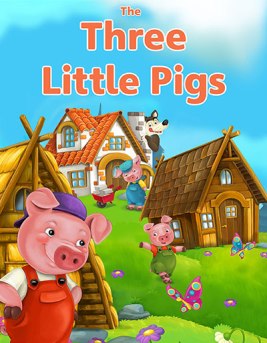 If you think about the ideas or premises or nostrums that guide your life, you will soon notice that we have many ideas that along our journey we have adopted. The sources of these ideas are vast. Fairy tales and children’s stories give us ideas such as “A stitch in time saves nine” or the “The race does not always go to the swift” or “Those who do not plan ahead may starve in the winter.” Many of our ideas about living no come from our parents and family. My mother used to say such things as “Ignorance is bliss” and “If you give them enough rope, they will hang themselves.” My father was fond of saying “Believe nothing of what you hear and only half of what you see.” He also used to like to say, “You have nothing to fear from the dead, only the living.” These two later beliefs have guided a great deal of my life.
As we grow up and go to school, leave home and get a job, we no doubt pick up more ideas that we will covertly and sometimes overtly use to guide our lives. By guiding, I mean we will use these ideas to make choices that impact the direction of our lives. One of the many ideas that I carry in my brain came from Dr. George Box of the University of Wisconsin. He said, “All models are wrong, some are useful.” This premise has guided much of my working life. I have used this Box’s thought when consulting to find a more productive way of addressing organizational changes that are needed in a client’s business.
However, since this blog is about the best or at least my favorites, I need to start discussing my four favorite ideas. There is no particular relevance to the following order.
There is No Truth:
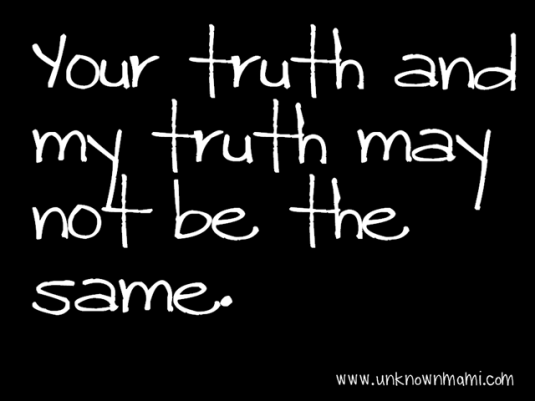
Obviously, if you accept my truth, then it poses a paradox. How can this be true if there is no truth? But in many ways, that is the nature of most truths. They are paradoxical. If they are relative, they are not always true which is a contradiction. If they are absolute, there are usually exceptions that can be found which makes them false. What a dilemma! From the time we are born we are taught to say the truth, speak the truth, search for the truth, but we are all liars. We don’t know what the truth is and there are many times we would not say it if we did.
If someone came to your front door and said, “Is your mother home, I want to kill her”, what would you tell them? Would you admit that she was home, if she was? I doubt it. We all say we want the truth, but the fact is that many of us will never find the truth because (As our leaders believe) and as Jack Nicholson said, “You can’t handle the truth.”
A friend of mine explained his version of the truth to me several years ago. He said “Imagine a bookshelf with five shelves. On the bottom shelf, I put things that people tell me that are opinions and unsubstantiated or uncorroborated pieces of information. As time goes by and I find more evidence in support of this so called “truth”, I will move the bit of information to the 4th shelf. Each time I get more evidence it goes up a shelf. On the top shelf, I have things that I believe are true beyond a ‘reasonable’ but not absolute doubt. For the time being, I accept the top shelf ideas as true, but I hold out the possibility that I will later find some bit of evidence that invalidates even this Top Shelf truth.” I like this model of truth. Let me give you an example of how it plays out for me.
About two months ago, I came across an article that said “In 30 years, all beef and diary farms will be dead. Things of the past.” Living in Wisconsin, I was astonished by this bit of information. I did not put much credibility into the idea. Given my predilection for cheese, steak and butter I could not reasonably accept any truth to this idea. Nevertheless, I put it on the bottom shelf of my “Truth Bookcase.” A few weeks later, I was attending the Annual Nobel Conference at Gustavus Adolphus in Minnesota. This past year it dealt with the environment and global changes to it. I was surprised when one of the speakers echoed the same idea that I had heard a few weeks ago. Namely that diary and beef farms would in twenty or thirty years mostly be a thing of the past. I moved this thought up a shelf. Two days ago, I was reading the local newspaper and they had an article about diary farms in Wisconsin. According to this article, ten percent or 800 diary farms in Wisconsin went out of business this past year and there was no sign that the trend would not continue. I was astounded. I had no idea that the diary industry was so shaky. I moved the original idea that at least diary if not the beef industry would be gone in thirty years up another shelf. Two shelves to go.
Thus, truth becomes a process. It is not a final goal. There is no final absolute truth. It is a nominal, like in quality improvement that we can never reach. We can only get closer and closer, but we can never reach a truth that is God like. The truth that humans can know will never be infallible.
Everything Will Change:

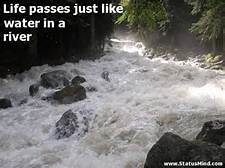
This idea seems so obvious that I almost ashamed to list it as one of my favorites. Nevertheless, I keep having to remind myself that “This too will pass.” Life is a stream of events and even if Santayana was right in that “Those who forget the past are condemned to repeat it”, there is still nothing in the past that will ever be recreated exactly as it happened one hundred or one thousand years ago. Heraclitus was also right when he said, “You never step in the same river twice.”
All is change. If we could see the atoms of time that surround us, I am sure that we would see a stream of “time” atoms that are flowing like a river with swift currents and eddies and backwaters. This is the flow of time and the river of change. Sometimes going backwards but inevitably surging forward and sweeping everything out of its way.
We poor humans are caught up in this river and we must do our best to keep from drowning. We are swept along like so much flotsam. The river of time that we are in is invisible to the naked eye, but this does not stop it from changing the lives of those swept along by its currents. Every day, we deal with new events while the old events keep playing out. A continuous series of changes. New wars, new disasters, new diseases, new horrors all mixed in with new ideas, new joys, new births, new technologies, new celebrations.
There are those who we say are “stuck in the past.” The good old days never die for many. We see the sad efforts that many have to hold onto the past or to “Make America Great Again.” Why, can’t things just be like the were when I was a kid? Movies were twenty-five cents and a bag of popcorn was ten cents. The good guys were good guys and the bad guys were bad. Police officers walked the streets and helped people in need. It was happy days.
African Americans were denied voting rights and the basic liberties as stated in the constitution. A women’s place was in the kitchen and a man was the undisputed king of home. White people won all the wars they started, and Indians stayed on the reservation. Mexicans came over to pick tomatoes and then went back home. A child’s place was to be seen and not heard and the World Series was the greatest sporting event in the world that only White Americans played. Oh my! What ever happened to the good old days.
You Can’t Take It with You:
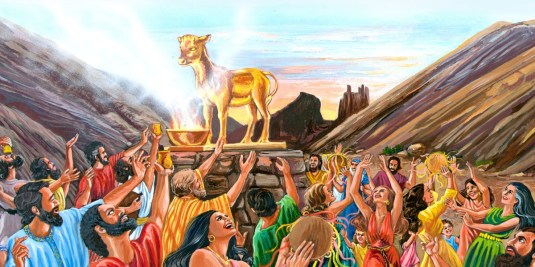
Who says I can’t take it with me? I sure as hell am going to try. Like Pharaoh, I am going to build a big mausoleum and I am going to put my house, motorcycles, cars, rings, watches, shoes, clothes, wife, kids and anything else I own right beside me when I die. I am going to collect the biggest batch of things that the world has ever seen, and I am going to have it all buried with me. Isn’t that what life is all about? Collecting stuff, collecting things. Shopping for more stuff and more things until we drop dead.
Maybe I am getting carried away here a bit. Of course, I can’t take it with me. Pharaoh might have had it buried with him, but it did not take the tomb raiders long to take it back. Maybe you can get something that can’t be taken away? A building named after you. An airport or street named after you. A testimonial placed somewhere in your honor.
Alas, people are fickle. Buildings get torn down. Name places change with the whims of those in power. There are only so many airports and streets and there are millions of people clamoring to have their names in places that they think will insure their posterity. You can’t even take fame with you. In a hundred years or so no one will remember who you were.
One of the famous tropes among baby boomers is remembering where they were when JFK died. I once asked one of my freshmen college classes this same question and to my astonishment got blank looks. I could not believe it when one of them said, “Who was JFK?” Who will remember you when you die? Maybe your wife and a few friends assuming they outlive you. So what can you take with you? Fame, fortune, power, money? What did Marc Anthony in Shakespeare’s Julius Caesar say: “The Evil that men do lives after them; the good is oft interred with their bones.” There is nothing on this earth that you can take with you. There is nothing that will outlive the entropy and erosion that will destroy all the mightiest monuments that have ever been built. Everything else is an illusion that you take with your to your grave but that is as far as it will go.
Love is the Only Real Purpose in Life:

You can spend your life looking for its meaning or you can spend your life trying to find its purpose. Your search will uncover many ideas but none of them will ever suffice. Nothing will satisfy your quest until you realize that love is the only purpose a human life exists for. Every prophet who ever existed recognized this simple truth. Love is the only thing that gives life meaning and purpose. It is so simple that it escapes many of us.
We look for purpose and meaning in our work, our jobs, our acquisitions, our accomplishments, our credentials and our status, but none of these give us happiness. The only satisfaction we get in life is from loving others. The individual who does not know love for others lives a lonely unhappy life. Love is the power that makes life worth living. As Jackie Wilson sang in his song Higher and Higher: “You know your love, keeps on lifting me higher and higher.”
I sometimes think love is one of life’s great mysteries. I have spent a great deal of my life asking the question “What is love?” I am 73 years old and I am still puzzled as to what love really is. Is love the same as passion? Is love good sex? Is love caring for someone else? Is love simply wishing no harm for anyone else? Does love need reciprocity?
People use the term love for many things. I love my car. I love my dog. I love my Nikes. I love you. I love him. I love her. I love everybody! Jesus said that love was more than just words. Love exists in the doing. How do I show my love for others? “Greater love has no one than this, that they will lay down their life for another.” – John 15:13. Do I need to die for someone else to show true love?
I don’t believe that loving things is love. I don’t think loving my car or my Nikes is true love. For that matter, I do not think that loving my life is true love or even that loving my wife is true love. I think true love is a more intangible quality that we can only approximate. To know true love is to be a lover in a more universal sense. True love seems most evident during a crisis. I think that the people who stayed behind on the Titanic to let others have a seat in the lifeboats were true lovers. I think Harriet Tubman (who ran the underground railroad) was a true lover. I think Martin Luther King was a true lover. Lovers are not perfect people by any means, but they know that life is more than just loving oneself or even another single individual.
Let’s be clear here. I love my wife and I love my sister, but does that make me a true lover? Not necessarily. What if I love my wife and sister but I hate immigrants? What if I love you but I hate Black people or Latino people or people who belong to another religion or another country? To know true love one cannot hate anyone. Today we hear a vocal minority decrying “haters.” However, these same people hate Democrats, liberals, Non-Christians, Gays, immigrants and minorities. They may love Trump, McConnell, Nunes, Christians and Republicans but they are more haters than lovers. Jesus did not say “Only love those who are related to you or whom you like.” He did not say that you can pick and choose who you love.
Love is the most important journey of our lives. To find true love is to find a love for the world both in concrete and abstract terms. It is to love globally as well as locally. It is to love non-kin as well as kin. It is to love the rich as well as the poor. It is to love the sick as well as the healthy. It is to love Democrats as well as Republicans. Probably no task is more difficult, but no task has more promise for humanity and for our own souls.
Well, this concludes my best of everything series. In Part 1, I covered some of my book preferences. In Part 2, I covered more literary ground and in this final Part 3, I have covered some of the ideas that I think are my favorite guides for trying to live a good life. I am certainly no exemplar of any of these ideas. I journey down the path and get stuck in some bogs. On other days, I take a wrong turn. I often hesitate when I should be charging forward. On some days, I even go backwards. My life has regrets, recriminations and misgivings that would fill an NFL stadium. I know right from wrong and still too often choose the wrong. But one of my other guides is “do not kill the message because you don’t like the messenger.” You may need to find your own guides, but you won’t go wrong with any of the four that I have described in this blog. Try them and let me know what you think.

 Pandora was the first human woman created by Hephaestus on the instructions of Zeus. Pandora was a curious woman. She was given a jar or box by the conniving Zeus with all the evils of the world. Being a woman (sexism at its earliest) she could not resist peaking in the box. So she opened it and inadvertently allowed all the evils within lose upon the world. The only thing that did not fly out of the box was the spirit of Hope which remained in the box when Pandora put the lid back on. Thus to this day, our world is full of evil but balance always by the ever-present Hope that things will be better. Nothing could be more fitting than Hope for the times we live in today.


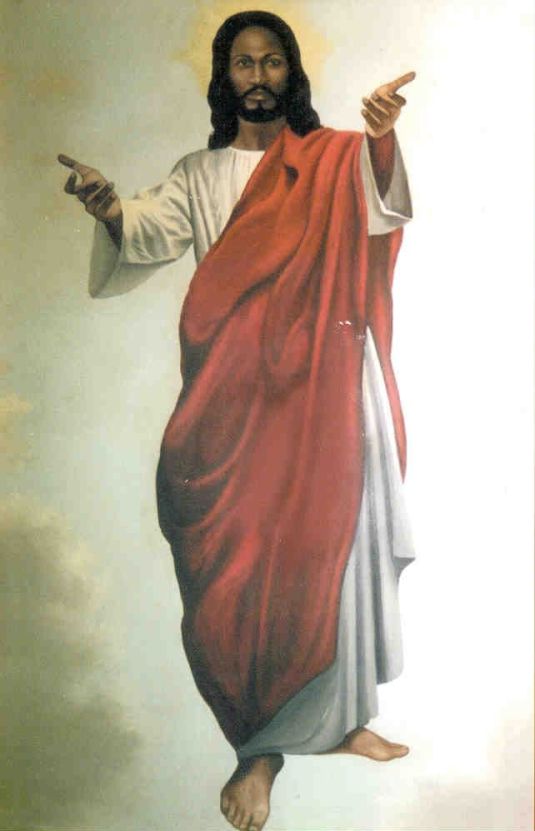
 This week, you will hear from one Jesus of Nazareth. He has been called by many names including: Messiah, Emmanuel, Christ, Lord, Master, Logos (the Word), Son of God and by himself more often The Son of Man. He is often credited with being the founder or perhaps foundation for a popular religion called Christianity. Today, it is difficult to see the link between the teachings of Jesus and many of…



 The first day that Michael and Joshua spent together turned into weeks and the weeks turned into months. Each week, Michael and Joshua would spend at least an hour together. Some days, Michael would play video games with Joshua and other days they would do “walk and talks.” Inez would drop Joshua off and Michael would take Joshua home. Michael looked forward each week to seeing Joshua and spending time with him. Michael often tried to buy Joshua some of the things that he wanted, but Joshua’s parents were very proud and explained that they would prefer that he did not. Michael accepted their request but would take Joshua out for a hamburger or pizza whenever possible. His parents did not mind this as Joshua had a prodigious appetite.







 Now less this sound too much like a soap opera, I should point out some of the character flaws that are obvious with Dick. He once had a battle with some beavers that resided on his property. These beavers were adept at building a dam using a stream that flowed near a road leading to Dick’s house. The dam would cause the water to back up flooding the road. Dick would go out there and break up the dam but faster than you could say “Dick the Stick” the beavers would rebuild the dam. I asked Dick why he did not shoot the suckers. Dick replied that he promised Gladys that he would not kill them but try to get them to relocate. So periodically Dick would come in with his back aching from breaking up the dam and I would say “Give me your rifle and I will shoot the suckers for you.” Dick would never do this. I finally bought him a t-shirt with “Beaver Advice” on it.
 I mentioned that Dick does not want to travel anywhere (Except maybe Duluth). I would attribute his “been there, done it” to a possible birth or brain defect but to be fair Dick did go to England, Peru and a bunch of other countries when he was younger. Furthermore, unlike some people, he is always interested in hearing about the travels of Gladys and others in the group. I am going to Russia this coming year and I keep telling him that I am going to have an audience with President Putin. Dick often jokes about Putin and his strong political resolve. I may bring him a Putin t-shirt when I come back from Moscow, assuming that I am allowed to leave the country.


 The most obvious metaphor for this topic is that we are all on a River of Time. Some of us are on long rivers, some of us on short rivers. Some of our rivers are very rocky. Some of our rivers are very shallow and rapid. Some of us are on rivers that are deep and wide. A lucky few of us may live our lives on rivers that are very tranquil and
  placid. Most likely though, most of us will live on rivers with many twists and turns that will suddenly go from peaceful and placid to wild and rough. We will all no doubt eventually have unexpected obstacles that arise causing some of us to suddenly capsize. Those of us who are lucky will find our way back into the boat. Many will not be so lucky.
 If you have spent your life on a wide tranquil river, it would be very difficult for you to appreciate anyone coming from a rough whitewater style river. The converse is also true. Maybe that is why it is difficult to walk in anyone else’s shoes. We are all on different rivers and it is hard to understand the perspective of someone whose river is one we have never paddled. At this point, you might say: “Well, I disagree, life is simply one vast river and we all have rocks and logs and rapids to manage.” Maybe so.
 When we are very young, our parents do the paddling for us. As we become teenagers we decide we want to paddle alone. We want our independence. Some of us go to school to learn how to paddle and navigate. Learning a language will help those who want to navigate foreign rivers. Circumstances or choice will eventually force many of us to leave our first river and go far away to try a new river. The bold among us will switch rivers many times in their life and continually attempt more challenging ones.