
“Every now and then I think about my own death.” Martin Luther King was only thirty-nine years old when he said these words and shared his thoughts about what he wanted his life to stand for. I think about these words a great deal these days but more in connection with my own life. The thought that someone only 39 years old had to contemplate the ramifications and implications of death is alarming. No one should have such worries until old age.
“It is necessary to meditate early, and often, on the art of dying to succeed later in doing it properly just once.”
― Umberto Eco, The Island of the Day Before
I don’t know when I started to think about dying but at age seventy-two, I suppose it is worth reflecting on. Wasn’t it Socrates who said that the “Unexamined life is not worth living?” Death is one part of life that many of us may put off thinking about until perhaps it is too late. I have had ample evidence that death is inevitable.
My grandfather died at the age of fifty-six when I was only eight years old in 1954. My father died in 1985 when he was 60 years old and I was not yet forty. My mother died in 1994 when she was 68 and my oldest sister died in 2002 when she was fifty-five years old. I have had many other relatives and friends who have already departed this world at an earlier than expected age. I seldom am surprised anymore by anyone else’s death.
Every now and then I think about dying and how I will succumb to Charon. Will I go willingly? Will I go honorably? Will my life have meant something? Will I have made a difference in the world? The how, when and where of death holds fascinating opportunities for reflection.
“Do not go gentle into that good night,
Old age should burn and rave at close of day;
Rage, rage against the dying of the light.”
― Dylan Thomas, Do Not Go Gentle Into That Good Night
Occasionally, I think about going out of this world, fast. I had a Yamaha FZ1 up to 160 mph on the I35 going to Duluth one morning. A crash at that speed might not have been going out in a blaze of glory, but it would have been quick. I wonder if it would have been painless? That would be a plus.
Sometimes I think about going out heroically. I dive into some icy river or rush into a burning house to save some poor soul. I don’t make it. Will the world remember me as a hero or some idiot with heroic aspirations who failed at his hero task?
Part of me would like to die in bed. I think of the remark that Clive Cussler made that the best way to go is in bed with your accountant telling you that you are ten dollars overdrawn in your account. I would die peacefully with my beloved Karen and sister Jeanine at my side. I would use my last breath to tell them how much I love them. No pain but no heroic antics either. Sort of a blah death in a way but it does have an appeal.
I was doing a morning run this week when the thought of dying kept intruding into my run. I sometimes think about how long it would take a bullet to hit me when I run in the mountains and desert. There are always some folks who seem to prefer shooting near the park rather than in the approved shooting ranges on the other side of the Casa Grande Mountains. I can hear the boom of their shots echoing across the desert valley. I wonder precisely how long it would take a stray bullet to strike me? A friend of mine said much less than one second. I count the seconds anyway after I hear a boom and wonder what my last thoughts will be.

Death accidently shot while running in the mountains would no doubt be a fast but ignominious way of dying. I am opting for something a little more glamourous. I think about the headline in the Casa Grande Dispatch the next day. “Man accidently shot while running trails in the mountains by MORON exercising his Second Amendment rights.” Man and MORON would be linked for all eternity. How will anyone weave this into my eulogy?
“I mean, they say you die twice. One time when you stop breathing and a second time, a bit later on, when somebody says your name for the last time.”
― Banksy
Some of you reading this might be thinking “This guy is really morose, maybe even suicidal.” The experts say that reflecting on death too much might not be healthy and might be evidence of suicidal tendencies. However, (as you might expect) other experts say that reflecting on death is a normal and even important aspect of aging that may help prepare us for the coming trials of old age. A quote I rather like goes like this “Old age is not for the faint of heart.”
My sister (who seems to know everyone in the State of Rhode Island) is five years younger than I am and manages to go to at least one or two funerals a month. I avoid funerals, but I prefer them to weddings. While funerals may be no more honest than weddings when it comes to the things people will say about the departed, at least funerals preclude any errant delusions of grandeur (For example, living happily ever after). How many newlyweds will manage to live happily ever after?
I have always said (half-jokingly) that I want to go first. I want Karen to live on long after I pass away and have a good life. Many of the things I do today are in a sense to help prepare for that eventuality. I had expected that Karen would no doubt survive me as women generally live longer than men. Besides, my life has been lived much faster than Karen’s and thus I have used up more of my “thread of life.” However, with old age I have had second thoughts on this expectation.
“Carve your name on hearts, not tombstones. A legacy is etched into the minds of others and the stories they share about you.”
― Shannon Alder
A few weeks ago, I was sharing a bottle of Brandy and some cigars with two friends, when I said that I hoped that I would go first as I could not think of being alone in this life without Karen. One of the other men astonished me when he said, “I want my wife to go first.” I immediately assumed that he was being selfish but being curious I asked him why? He explained very sincerely that his wife had been quite sick and that he had no one else to take care of her. He did not want to leave her alone without his help. I was moved by his charity and unselfishness which suddenly made my position seem quite the opposite. Selfish! Selfish! Selfish!
Another joke I have often made was that I married a nurse so that she could take care of me when I was old and feeble. I always thought this was funny. In the last few years, I have had a different perspective. My spouse (who really is a nurse) is getting older and frailer. The wear and tear of aging is very visible in new creases, new lines, slower movements and lower energy levels. The realization hit me like the proverbial brick a few years ago that I might be taking care of her rather than the other way around.

I doubt that anyone who knows me would ever think of me as a “caregiver.” But I have always been a pragmatist and so I have started taking some caregiver classes and classes on aging. I have also taken one on the various aspects of Dementia and Alzheimers. I will grow old along with my spouse and do what I can to take care of both of us. I may not always believe that the “best is yet to be” but I will do my best to help make this possibility a reality.

“To fear death, gentlemen, is no other than to think oneself wise when one is not, to think one knows what one does not know. No one knows whether death may not be the greatest of all blessings for a man, yet men fear it as if they knew that it is the greatest of evils.”
― Socrates
I don’t want to glamorize getting old but neither do I want to disparage the possibilities that old age has for many of us. I will never know the how, when or where of my dying, but I can live my life the best I can and each day try to be the best person, husband, friend, father and neighbor that I can be. Each day life offers me more choices to grow old with dignity. To face the difficulties of aging more boldly and maybe even heroically. To paraphrase Martin Luther King, when I die:
- Don’t tell them about my titles
- Don’t tell them about my degrees
- Don’t tell them about my jobs
- Don’t tell them about the books I wrote or the places I have been
- Tell them I wanted to be a good person and was honest enough to know that I usually fell short.
Time for Questions:
Do your ever think about dying? What do you want to be remembered for? How would you like to die? Do you think you will go fast or slow?
Life is just beginning.
“In the end, I won’t say that I have ‘NO REGRETS’ because that would be bullshit. I have more regrets than I can count.” — J. Persico
 Six thousand years ago, a prudish God threw Adam and Eve out of the Garden of Evil for fornicating. He foolishly put a nude man and a nude woman together with a few apple trees and told them that they could do anything but fuck each other. Naturally, given human nature and the DNA that God so wantonly created, Adam and Eve got bored with paradise and a bit of horny in the bargain. It did not help that Eve looked pretty hot with no clothes on and that Adam was very well endowed.
 Six thousand years later and God is still a prude. You still can’t walk down the street nude. Women can’t show their breasts in public and men cannot show their pubic areas. You certainly can’t have sex in public. Natural human activities include eating, sleeping, working and sex. However sex is not really included when we talk about public or “au natural” activities. You can spread a blanket out in any park and have a picnic. Try spreading a blanket out in a park and start fornicating and see how long it takes before you are arrested. Cops still patrol “lonely hearts areas” looking to bust people doing “it” in the back seat of their car.
 For six thousand years, people, governments and society had been hung up and intolerant towards sex. It would be foolish to say that we have remained in the Dark Ages, Victorian Ages or Middle Ages in our attitudes towards sex. We have simply remained with the attitudes that we got from God in the Garden of Evil way long before these time periods. Then came the sixties and the “Free Love Movement!” The “Free Love Movement was an effort to create a more open and tolerant attitude towards sex. The result was labeled as promiscuity. (Promiscuity means that you are having sex with someone but I am not.) People picked up books on sex that were written by Wilhelm Reich, who became known as the prophet of Free Love.
 The Sexual Revolution of the sixties as well as the Women’s Liberation Movement (perhaps its third reincarnation) led to some major changes in the way sexuality is now played out in society. Women started wearing sexier clothes and the clothes have continued on a sexier and sexier spiral ever since. While women are still fighting for the right to expose their breasts in public, sex out of wedlock has become common. There is no longer any expectation that sex partners will be married or that sex will even lead to marriage. Condoms are as ubiquitous as lollipops and are now distributed in schools.
 In our 21st century hook-up culture, friends with “benefits” have become the norm. Television, movies and commercials all portray scenes of sex that censors would have cut to pieces even twenty years ago. The dividing line between pornography, erotica and sexy has become ever more blurry if it even exists at all. We have not quite come to commercials showing two people openly having sex, but it certainly would not be a shock or surprise to anyone today. Books and literature describe sex acts from sodomy to bondage that are simply taken for granted or read on the sly. The censorship that accompanied “Lady Chatterley’s Lover” is a thing of ancient history.
 Sex may be more open but it is still not considered as natural a function as sleeping or eating. We still have parents who have a difficult time discussing sex with their children. This is true even when their children are now adults. We still use euphemisms like “doing the dirty” or “doing the nasty” to refer to an act of passion and sometimes even love. We walk on tiptoes around young children as though they don’t watch TV or go to the movies. When I was a young child, I was taught in school that masturbating would either make my cock fall off or grow hair on it. Both seemed like undesirable outcomes when I was eight years old.
 with a prostitute, street walker, call girl or “escort” may get you a jail sentence. The female side of the equation is usually locked up until a fine is paid. Many zealous police departments throughout the US occasionally decide that they can better stamp out sex by jailing the John and not the “sex worker.” A former CEO of my spouse was arrested several years ago in such a sting when he decided to take a mid-morning break from his job with an “escort” he met on Craig’s list. Both the police department and his company frowned on this. He was arrested, released later in the day and fired from his million dollar a year CEO job before the sun set that evening. The moral here is that you don’t do sex on the job or at least you don’t get caught.
 Now love and sex are certainly not the same thing. Sex is much easier to define, unless you are into politics in which case “sex” often becomes a very ambiguous affair. For most of us though, it is rather clear when and if we have had sex. Sex is a physical affair. Love on the other hand is an emotional affair. Philosophers, poets, prophets and authors throughout history have tried to define love and yet we still do not really know what it is. We use the term in very strange ways. “I love you” we say to friends, relatives, spouses and even strangers. I love my cat. I love my house. I love my new steak knife set. Father Stochel at the Demontreville Retreat Center used to make fun of a class taught by Professor Leo Buscaglia with the words “luv, luv, luv, everywhere you look everyone is in luv.” Buscaglia created a popular course at the University of Southern California during the eighties and became known as “Dr. Love.”
 The question that haunts many of us is where does sex leave off and love begin or sometimes vice versa? Where does love leave off and sex begin? I have little doubt that if “love makes the world go round and money greases the wheel” it will be many decades and generations before love really becomes free. It is just too valuable an enterprise to allow it to become as common as picnics in the park. Sexy people will continue to be thought of as sinners and virgins will continue to be our erstwhile saints. Men and women will both continue to be torn between the saint and the sinner. Women will continue their love affairs with the “bad” guys and men will continue their love affairs with the “evil” women. Society will continue its schizophrenic relationship with sex where on the one hand we all want as much of it as we can get and on the other hand, we don’t want to be labeled as sinners. There are few saints associated with an excess of sexual activity either in God’s Garden of Evil or the 21st Century.


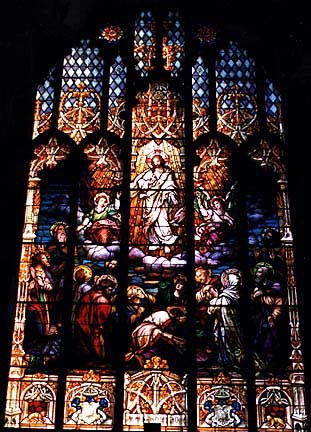 Remaining an optimist, I walked up the steps to the church and pulled on the door. Sadly, it was locked. As I started to walk down the steps, I heard a voice call out “Would you like to go inside.”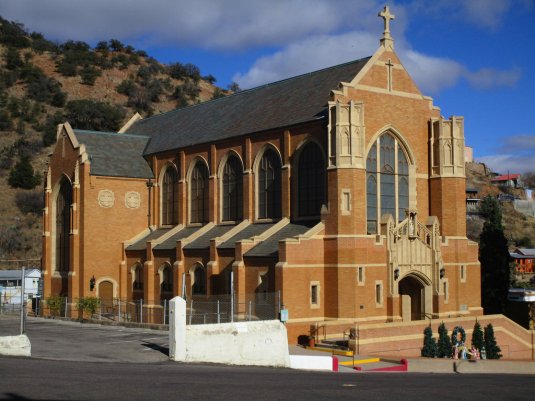




 Each of our four remarkable people were into their middle years when by chance they met at a small cafe and restaurant in a town called Luck in Northwestern Wisconsin. Luck is a small town of about 1200 residents, which in its heydays was the home of the Duncan Yo-yo. In fact, it was once known as the Yo-yo Capital of the world. Sadly, Yo-yo’s had declined in popularity and so had the fortunes of Luck in terms of prosperity and jobs. Now perhaps, the high spot of Luck was the Wren Cafe. A place that had excellent food, good beer and a unique ambiance imbued by its extremely creative owner Stephanie Lundeen.


