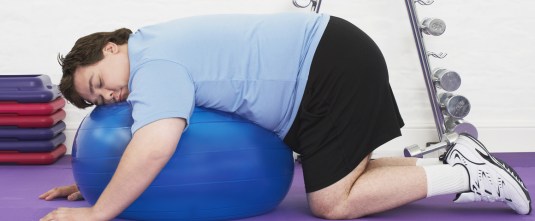
Have you ever head the saying “no pain, no gain?” This is one of the most idiotic pieces of advice ever given. Pain is a signal that our body wants us to stop something or that it needs help. I have little doubt that many people have been severely damaged by this so-called piece of wisdom. However, taken to the other extreme, we see people who are so afraid of hard work and exercise that they have become couch potatoes. I believe that many Americans have veered so far off the trail of pain that they have gone to the other extreme. Look around you and what do you see? Fat people everywhere you look. We have an epidemic of obesity in America. Regard the following facts: (From the Center for Disease Control)
- The prevalence of obesity was 36.5% (crude estimate) among U.S. adults during 2011–2014.
- The prevalence of obesity among U.S. youth was 17.0% in 2011–2014.
- From 1999 through 2014, obesity prevalence increased among adults and youth.
The above data pertain to the frequency of obesity in the USA. Keep in mind that there are many more people who are overweight than there are who are obese. Obesity is defined as: “Excess amount of body fat with a BMI of over 30.” Overweight is defined as: “Having more body weight than is considered normal or healthy for one’s age or build.” If we were to include the amount of people who were both overweight as well as obese, the figures for “fat” people in the USA would skyrocket.
Several years ago, I attended a World Future Conference. The former founder and CEO of Medtronic was one of the keynote speakers. His talk was on the topic of rising health care costs. Many people focus on only one or two causes for the escalation of health care costs. However, Earl Bakken presented a pie chart which showed several reasons for the rise. These included:
- Increased cost of technology
- People living longer
- Increased percentage of older people in the population
- Litigation
- Inflation
- Lifestyle choices
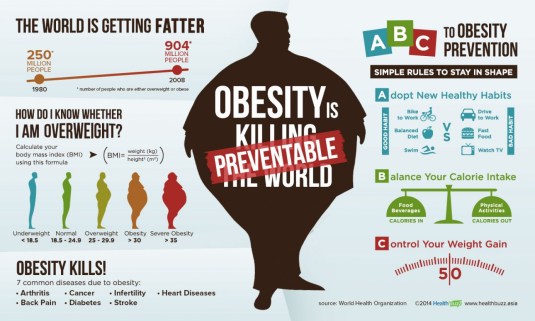
Earl noted that all of these issues have had an impact on health costs. You will notice that the last issue in his list included “lifestyle choices.” This category includes such problems as diet, smoking, obesity, drugs, alcoholism, lack of exercise and poor health choices. Contrary to what many people think, this issue was not the major cause of health care cost increases. Nevertheless, the category is one of the factors linked to the increase in health care costs.
Looking only at obesity as a contributor to health care costs, we note the following facts: (From the Health Care Costs of Obesity)
- Obesity is one of the biggest drivers of preventable chronic diseases and healthcare costs in the United States. Currently, estimates for these costs range from $147 billion to nearly $210 billion per year. In addition, obesity is associated with job absenteeism, costing approximately $4.3 billion annually and with lower productivity while at work, costing employers $506 per obese worker per year. As a person’s, BMI increases, so do the number of sick days, medical claims and healthcare costs.
- Obese adults spend 42 percent more on direct healthcare costs than adults who are a healthy weight.
- Per capita healthcare costs for severely or morbidly obese adults (BMI >40) are 81 percent higher than for healthy weight adults. In 2000, around $11 billion was spent on medical expenditures for morbidly obese U.S. adults.
- Moderately obese (BMI between 30 and 35) individuals are more than twice as likely as healthy weight individuals to be prescribed prescription pharmaceuticals to manage medical conditions.
- Costs for patients presenting at emergency rooms with chest pains are 41 percent higher for severely obese patients, 28 percent higher for obese patients and 22 percent higher for overweight patients than for healthy- weight patients.
People who are obese, compared to those with a normal or healthy weight, are at an increased risk for many serious diseases and health conditions, including the following: (From the Center for Disease Control and Prevention)
- All-causes of death (mortality)
- High blood pressure (Hypertension)
- High LDL cholesterol, low HDL cholesterol, or high levels of triglycerides (Dyslipidemia)
- Type 2 diabetes
- Coronary heart disease
- Stroke
- Gallbladder disease
- Osteoarthritis (a breakdown of cartilage and bone within a joint)
- Sleep apnea and breathing problems
- Some cancers (endometrial, breast, colon, kidney, gallbladder, and liver)
- Low quality of life
- Mental illness such as clinical depression, anxiety, and other mental disorders
- Body pain and difficulty with physical functioning
Please notice that the CDC list does not explicitly include hip, knee and back problems. Of course, many people who are not overweight suffer from these problems, but there is considerable evidence that obesity contributes to these problems. People who are obese often lack muscle tissue and ligament flexibility which help support their knees, backs and hips. The less exercise they get, the more the problem is exacerbated. They may go to doctors and chiropractors to get help but the underlying cause of obesity is seldom treated. Finally, surgery is performed when exercise, diet and physical therapy could be more effective treatments. So why do so many people get surgery or pills when there are cheaper and more effective treatments with less side effects?
Let’s go back to what I said in the title of this blog. Laziness and Ignorance.
Laziness and Ignorance:
Every year, it is a well-known fact at health clubs across the country that right after New Year’s Day, the membership will increase dramatically and the parking lot will fill up with new members. This phenomenon will last about 15 weeks after which the new members will slowly drop off and the parking lot will go back to normal. Why do you think this happens? I will give you two reasons:
First: The assumption that they will get instant results. Too many people read the magazines at the grocery store promising “Six Weeks to Abs of Steel” or “Lose 40 lbs. in Eight Weeks.” I would argue that if you can lose 1 lb. in a month, you are doing a great job. As for the abs of steel, first you will need to lose a large amount of body fat and second, it may take you a year of hard dedicated disciplined ab exercises. As someone who does regular ab exercises, they hurt. They are no fun.
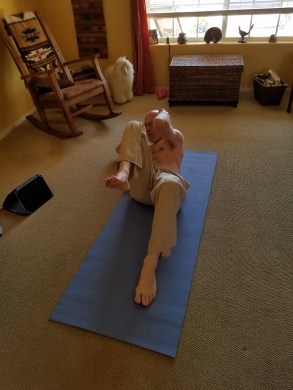 There is a difference between pain and hurt. When I tried to continue my ab exercises after my prostate surgery and then after my hernia surgery, I experienced pain. I wanted to get back into shape too quickly both times. I stopped the exercises and worked on other routines that did not cause pain. Mind you, the ab exercises still hurt and I have been doing them for six years. I am making a big distinction here between pain and hurt. Perhaps, I should say they “burn.” Burn is the athletic euphemism for hurt. Most people don’t like hurt. However, if you expect that you can get in shape without some discomfort, you are destined for life as a couch potato or in a surgery ward.
Second: People are ignorant when it comes to exercise. How many Americans do you think have ever read a book on exercise? Unless, you are willing to become a student of exercise or trust in an athletic trainer, the knowledge that most people have regarding exercise is insufficient for them to attain the results they seek. Sadly, most medical practitioners are just as ignorant when it comes to the role of exercise and diet in a healthy lifestyle.
How many exercise books do you think make Amazon’s “best seller” list. To determine this, I went to Amazon and pulled up their top 100 best sellers. In the entire list, there was not one book on exercise protocols. There were two books on dieting at number 41 and number 42 in the top 100 list. You could find several books on menus and cooking. It is much easier in the USA to eat, then it is too exercise.
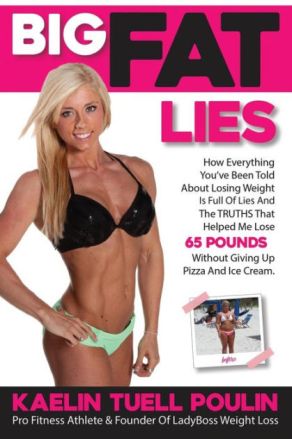 Americans are enamored with diets and each new diet best seller promises fantastic results in a short amount of time. The Amazon number 1 best seller in the health and exercise category was a book titled “Big Fat Lies.” The author promises you the “truths” that helped her to lose 65 lbs. “without giving up pizza or ice cream.” The author is Kaelin Tuell Poulin and the book has a very high rating in the customer reviews section. Ninety-eight percent of the 235 reviewers gave it a 5-star rating. However, while I often put a great deal of store in ratings, you must be careful about inflated ratings. The one negative rater had this to say about the book: (typos in the review were not changed)
“Dont be fooled into purchasing a book that was reviewed by 200 hundred women who never read the book (her followees) I have read the book it is subpar at best and not worth the money. My origional review included picture evidence of her asking for reviews but it was removed because it included her identity i suppose. I hope this one stays up so no one else is fooled into buying this. I give this book 1 star only to post. She is a salesperson and she is a great one at that! but if one person reads this and doesnt feed into the hype it was worth the time and effort to type it.”
I would not call the above review a particularly good piece of criticism. However, the author does alert us to the possibility that the book suffers from a sort of follower worship. Nevertheless, I would risk the small cost of the book if I were looking for a diet program. Consider the following review from one of Kaelin’s “ladyBoss” more ardent followers:
“This program has TWO things that every other weight loss program out there is missing. For ONE Kaelin was heavy once she was 185 pounds herself but with hard work and dedication lost the weight and has kept it off for 5 years.”
This is a great testimonial. I am not sure if “every other weight program is missing” these two factors, but I am sure that dedication and hard work were necessary for Kaelin to keep the weight off for five years. One problem with many exercise and diet programs is that the participant is naive and believes that once they lose the weight, their hard work is over. They may also lack the discipline to continue the work once a certain goal is achieved. Lack of discipline? Laziness? Ignorance? This is a volatile mix. They seem to go together like salt and pepper.
There is one final factor that we must discuss and that studies have shown have a direct bearing on obesity and poor health. This is the factor of poverty. Many studies have shown a direct relationship between income and obesity and between income and exercise. Poor people get less exercise and generally have poorer nutrition. There are several explanations for this. We can posit some possible cause and effect relationships:
- Lack of education leads to obesity
- Poverty leads to high fat diet and poor nutrition
- Lack of education leads to poverty
- Poverty leads to low exercise priorities
You might notice that there is a kind of circularity to the above relationships. Perhaps, if they are circular it does not matter which is cause and which is effect since the result is the same. The outcomes for poor people are poor nutrition, lack of exercise and obesity.
There are some who dispute the above correlations. The claim is made that the relationship between poverty and obesity is not linear but varies by age, gender and ethnicity. It has also been pointed out that rich countries throughout the world have a higher incidence of obesity than poor countries.
“While all segments of the U.S. population are affected by obesity, one of the common myths that exists is that all or virtually all low-income people are far more likely to be obese. In this generalization, two facts commonly are overlooked: (1) the relationship between income and weight can vary by gender, race-ethnicity, or age and (2) disparities by income have been weakening with time, particularly for adults.” — Relationship Between Poverty and Obesity, Food Research and Action Center
However, if we look at obesity from an aggregate point of view and disregard the effects of ethnicity, age and gender, we find the following evidence to show a linkage between poverty and obesity:
“Poverty rates and obesity were reviewed across 3,139 counties in the U.S. In contrast to international trends, people in America who live in the most poverty-dense counties are those most prone to obesity. Counties with poverty rates of >35% have obesity rates 145% greater than wealthy counties.” — Poverty and Obesity by James Levine (2011)
Furthermore, even the Food Research and Action Center admits to the problem that obesity poses for America and state on their site that:
“While all segments of the U.S. population can be affected by poor dietary intake and obesity, low-income and food insecure people are especially vulnerable due to the additional risk factors associated with inadequate resources and under-resourced communities.”
Note the above statement that “poor people” are especially vulnerable. Let me tell you the following story that illustrates some of my admittedly selective experience with this issue of poverty and obesity.
One day, Karen and I went to Scottsdale Arizona to visit and do some shopping. We went to several art galleries and jewelry stores. When it was time for lunch, we found an authentic looking Mexican restaurant and decided to eat outside. We were right in the heart of Scottsdale and many people kept walking by our table. It was fun people watching, but something kept nagging at my mind. I was not sure why, but there was a difference between the average people I was used to seeing and the people I saw in Scottsdale.
Suddenly, I realized what was bothering me. In the hour or so that we were eating, we did not see one obese or even moderately overweight person walk by. All the people that passed by us were healthy and athletic looking. This was my first realization of the connection between wealth and obesity. I don’t know about the rest of the world but ever since then, I have observed that most overweight people I see in America are either poor or middle class. In my opinion, rich people have much lower incidences of obesity in this country.
Aging and Pain:
You will notice that I have not attributed pain to aging. This is not an oversight. Neither is it denial. You can have pain when you are young and you can have pain when you are old. In either case, there is no way you should just accept the pain. Unfortunately, what medical practitioners often diagnose and treat with young people, they are willing to accept with old people. Let me give you another personal example.
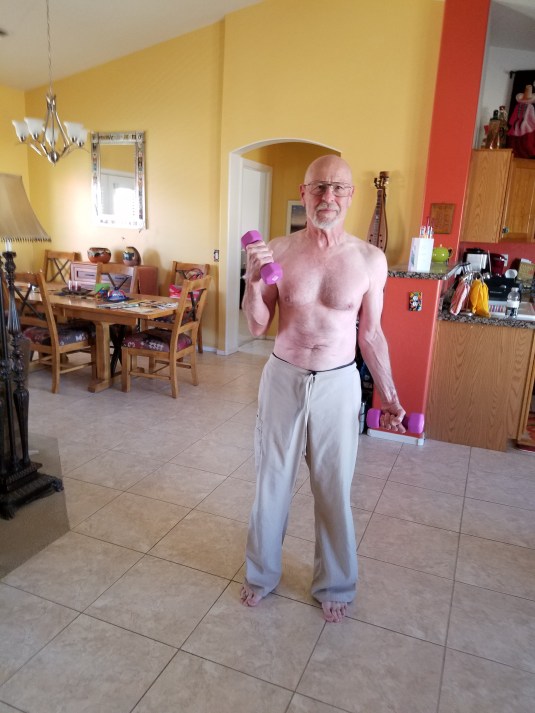 Two years ago, I started developing a pain in my right shoulder. I was not sure where it came from but after several months of it getting worse, I went to see an orthopedic doctor. He asked what if anything I might be doing to aggravate the shoulder. I mentioned that I swim frequently and am aggressive with my laps. His simple answer was “Well then, stop swimming.” I decided to follow his advice and for the next year, I stopped swimming. However, my shoulder pain did not get any better.
A year later, I went to see another orthopedic doctor and he could not find anything wrong with my shoulder. He did no MRIs or X-ray’s. I suggested he give me an injection of cortisone, which he did. I had moderate pain relief for about six weeks and then the pain resumed and continued to get worse. At this point, I decided to do some of my own research into shoulder pain. This research was very productive.
I found some very good descriptions of the exact type of pain I was incurring and a few different suggestions on how I could treat the pain without pills or surgery. The best and most positive ideas I found came from a Doctor John M. Kirsch in Wisconsin. Dr. Kirsch put his ideas and supporting evidence for his theory of what causes some types of shoulder pain into a small book titled “Shoulder Pain: The Solution and Prevention.” I have since been following his treatment regimen with good results. My shoulder pain has been decreasing and the range of motion in my right shoulder is improving.
I mentioned earlier that I am 70 years old. I think that there is too often the attitude among people my age and the doctors they see that “pain with aging is inevitable.” If it is inevitable, then we should just “suck it up” and live with it. Sometimes, this might be true. However, the assumption that aging and pain need to go together is a prescription that does not serve any of the elderly very well. I have talked to many older people and I often find the same set of attitudes either on their part or their doctors. It is basically “Well, getting old is a bitch and you just have to live with pain.”
No, you do not have to live with pain!
I have been running 4 or 5 times a week for over 40 years now. During this time, I have had shin sprints, knee pain, hip pain, big toe pain, back pain, Morton’s neuroma, plantar fasciitis, sesamoiditis, corns, calluses and blisters. Each time the pain came, I have gone through the following sequence of activities:
- Awareness of discomfort
- Try to ignore it
- Discomfort moves into the pain stage
- Take over-the-counter meds
- Go to see a doctor
- Pain improved by prescription pills or shots
- Pain returned in a short while
- Do research on other remedies
- Trial and error with other remedies
- Voila, eventually find the right remedy (no surgery and no prescription drugs)
- Pain goes away and does not return
- Sometimes, continuous exercise such as leg stretches and yoga are necessary to keep conditions from returning or getting worse. g., must do calf stretches 3x per week to stop plantar fasciitis from returning.
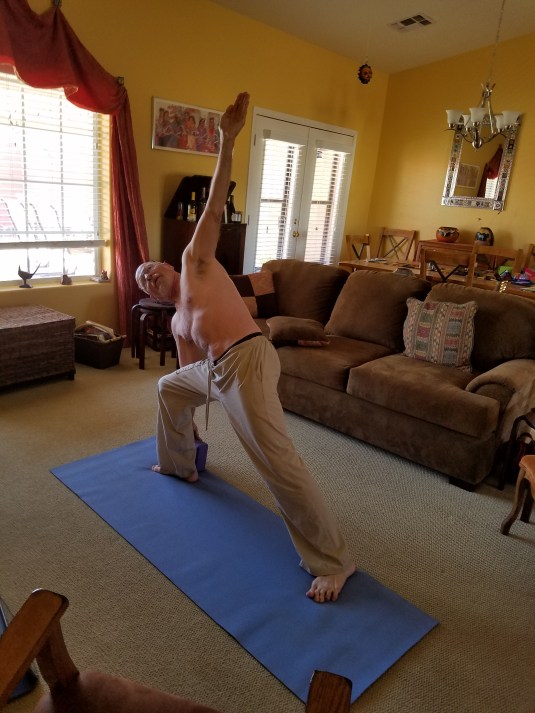 Some people are not so lucky. However, I hesitate to call all of my good health “Luck.” There is a saying by Thomas Jefferson that “The harder I work the luckier I get.” I have worked hard to stay in shape. I exercise regularly. I watch what I eat. I try to avoid excesses. No doubt, I have had some luck that goes beyond hard work and discipline. Nevertheless, I believe that hard work and discipline has played a large role in my ability to be healthy and still active at my age.
I wish I had a dollar for everyone that has come up to me and said “I wish I could run but I have bad knees.” Many people do have bad knees. But many people do not see a connection between their “bad” knees and their obesity. Their cycle is more like this:
- Overeat
- Gain weight
- Do no exercise
- Get pain someplace
- Do less exercise
- Get more pain
- Go to doctor
- Get knee or hip or some other surgery
- Continue being overweight and doing little or no exercise
- Take pills
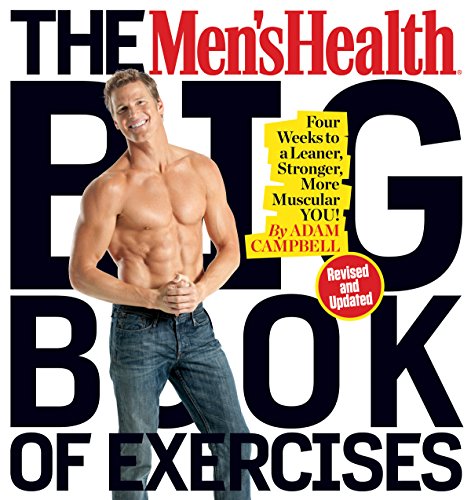
The only way the above activities relate to aging is that it takes some time to destroy your body through lack of exercise and poor diet. I guarantee you though, it will happen eventually depending on how much you abuse your body. It may happen when you are young or it may happen when you are old. The longer you wait to do something about it, the more difficult it will be to repair the damage you have done. It seems like my body takes more time to repair itself the older I get.
Finally, you do not have to be rich to have good health. Money will not bring you good health if you abuse your body, overeat, drink too much, smoke too much and avoid exercise. You can pay all the doctors in the world and you will still have bad health if you follow the 10 steps listed above.
Time for Questions:
Do you exercise regularly? Why or why not? Do you have a program to help keep track of your weight? Why or why not? Do you have a weight problem? What do you do about it? How effective have your efforts been? What do you think would help them be more effective?
Life is just beginning.
“My mother was a P.E. teacher, and she was kind of a fanatic about fitness and nutrition growing up, so it was ingrained in me at a young age. As I get older, I’m finding out it’s not about getting all buffed up and looking good. It’s more about staying healthy and flexible.” — Josh Duhamel

 Once upon a time there was an…
 I need to back up a bit as you must understand some mitigating factors. Most people of my generation today have no idea about why mutual sex was abolished. With hind sight, it may seem a little like throwing the baby out with the bath water. However, around the year 2090, war, terrorism and violence had become so common that everyone agreed something must be done about it. A group of the leading thinkers in the world formed a committee to see whether aggression could be stopped. They accepted the fact that most savage and brutal actions were committed by males of the species. Throughout history, men have fought wars over territory, money, power, fame and women. Men were responsible for most murders, robberies, rapes and crimes against women. The committee noted that the underlying drive behind male aggression was a preponderance of the hormone testosterone. A theory was proposed that if something could be done to reduce the amount of male testosterone, a corresponding drop in world violence would take place.
 The solution was political rather than biological. The “Birth Act of 2107” decreed that any physical conjoining of men and women was illegal and immoral. The Supreme High Committee decided that since ancient methods of reproduction were now unreliable, the only way that women could have a baby was by artificial insemination. First, a prospective mother would need to file a permit for a license. Once having a license approved (the present birth rate was a critical factor in licensing decisions) a woman could then go to a birth clinic where she would be impregnated using a glass syringe. Male sperm was collected by harvesting willing males who were paid a fee for their production. Collected specimens were then sent to a national sperm bank to be cataloged and eventually matched with appropriate recipients.
 Now as you know, life will always produce mutations. Genetic anomalies that defy the common strain of biology. And so, several years ago, a male baby was born with the genes to develop testosterone. His parents were not aware of this fact until he reached his pre-teens at which point his unique physical abilities were more than obvious. Unsure what the repercussions would be, his mother advised him not to tell anyone. His parents assumed that he could quite easily hide his sometimes-awkward condition from his peers and society at large. This strategy worked for many years. During this time, Adam tried to exercise his abilities as discreetly as possible.













 As the little boy grew up, he became an even more devout believer in God. Everywhere he went, he saw the hand of God. In the clouds, in nature, in the weather, in the oceans, in good times and in bad times he believed that God was present. The little boy thought how hard God must have to work to try to keep life sustained. Each night he would pray to God that when he grew up, he would be able to help ease God’s work somewhat and do his share to help make the world a better place.

 I am not a very sentimental person nor am I one to cling to the past. I decided I would move on with my life. I threw myself into my job and time went by. I had almost forgotten about Leandra when I saw the ad. It was from the Resurrection Android Company. It was the same company that I had purchased my android valet Sam from. Actually, Sam was much more than just a valet. Sam was a third-generation android with some independent powers of decision making. He could decide what to cook each day and he also decided what I should wear for work. He did cleaning, mending and many light repairs around the house. I had bought Sam shortly after Leandra and I were married. Leandra had mentioned that it would be nice to have some help with housekeeping and all. That way she would have more time to spend with me.
 Androids of course are not human and they have no empathy or ability to show any emotions. Sam was logical and could be persuasive but he could not show love or compassion. In the ten years since I had purchased Sam, android technology had advanced considerably. Looking at the ad from the company, it appeared that they were now on a 15th generation android that had affective as well as cognitive abilities. The ad claimed that the new android could help replace a loved one both emotionally and physically. By integrating DNA characteristics using a technique called “Assisted human reproduction”, they could capture the exact characteristics of a loved one. All they would need would be some trace or remnant of the deceased or former loved one’s DNA.
 That was when the idea occurred to me. I called the customer service line and asked to speak to a representative. I asked her whether it would be possible for me to create a new wife in the exact image of my former wife Leandra. They assured me it was. It would take about six months for the bio-engineering to integrate the mechanical aspects of the droid with the alleles and DNA strands that they could map from a sample of Leandra’s DNA. When the process was completed, I would have an exact physical, mental and emotional copy of Leandra. Even better, she could continue to be programmed and become an even better Leandra. The old Leandra was somewhat boring in bed. The new Leandra could become a wild and wanton partner if that is what I desired.
 It did not take long to assemble the new Leandra. I put the lower torso, upper torso and head together in less time than it takes to make a milk shake. She was perfect. She looked just like my old Leandra. When I turned her on, she greeted me and asked, “What will my name be.” I replied “You are Leandra. You are the perfect wife. You will love and obey me always.”
 I came home one day from work and Leandra did not greet me at the door. I thought maybe her battery had discharged or that Sam had forgotten to recharge her. I had left strict instructions for Sam to recharge Leandra every day. But, where was Sam? I did not hear him fixing dinner in the kitchen. I went into the kitchen but Sam was not there. Suddenly, I noticed a note on the table. I picked it up. It was from Leandra. She had written: “Gone with Sam, don’t love you anymore. Bye.”

 The point of this story is that if we had not been siting vigil at my sister’s deathbed, we would not have been able to prevent a premature death. This is merely one example of the value of an “advocate” when you must go to a hospital. I am sure everyone reading this blog has at least one example that highlights how important it is to have someone as an advocate when you are in the hospital.
 An alarm might go off in an intensive care room but not be noticed for quite some time. I have personally observed many times when a patient needed to call someone for assistance but no one came. Unable to get out of bed, a patient may have to wait a long time before someone is finally able to help them. In many cases, an advocate in the room can help a patient with minor personal needs. If more severe needs exist, the advocate can be of assistance if finding someone to help and making sure that the patient needs are not overlooked or even forgotten.
 Another function an advocate can provide is to stand up for the patient when needed. Most of the time when we are feeling sick or hurting, we are in no position to stand up for what we need or want. In such instances, a patient only wants the pain to go away. Hospitals and health care providers often have needs that transcend the needs of the patient. The patient that must play second fiddle to a variety of administrative and financial procedures. Another example might clarify this.
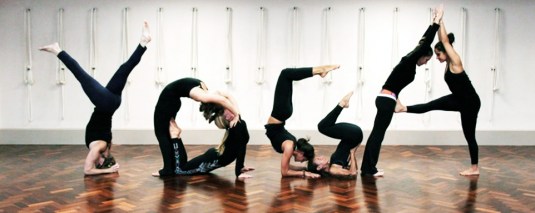

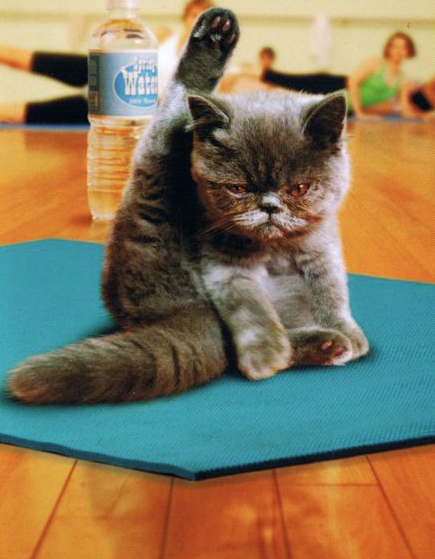
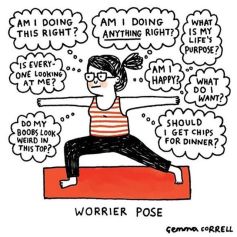 Being overly competitive might be a good formula in exercise programs where you attempt to outdo other participants, but this can be another recipe for disaster when it comes to Yoga. Each participant in Yoga needs to pay attention only to their own body; not to the other participants or even the instructor. If the instructor has his/her legs at a 180 degree angle to their torso and you can only make 30 degrees, you are best advised not try to imitate your instructor or other participants. A good instructor will repeatedly advise you to only go as far as you can with any Yoga posture. Pushing the envelope may lead to torn muscles or dislocated joints.
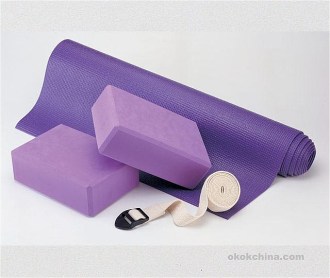 Start doing Yoga once or twice a week. You can get a Yoga mat, strap, blocks and some used Yoga DVD’s for less than $30 dollars. With some Yoga tapes and a DVD player, you will be able to do Yoga in the privacy of your home and as often as you want. I have found Rodney Yee, Patricia Walden and Susan Deason to be great instructors. Gaiam Yoga tapes can often be found in Goodwill or other thrift stores for a few dollars each. On frigid days, it is a real pleasure not to have to get dressed and go to a gym. It is also great to have an instructor on DVD that I do not have to keep paying weekly fees to.


 Are you still wondering why drug costs are so high? Did you really think it was all research and development costs? The three major factors are: Profits, lobbying and Marketing. How much do you think these all add to the costs of your prescription drugs?
 There are many other egregious practices that go on in Big Pharma and which are beyond the scope of this blog. My point in writing this was first to help alert you to the hypocrisy of the so-called drug wars and second to bring to your attention the inordinate amount of effort and money that Big Pharma spends in trying to get you to buy their drugs. If you watch TV or read any mainstream magazines, you cannot help but become inundated with ads for drugs to cure any problem you can think of.
 The drug companies are the biggest pushers of drugs in the world today and all for a profit. The fact that these drugs may help your condition is very secondary to Big Pharma’s primary goal which is profits. The fact that many drugs should not be taken long-term and may have life threatening side effects is also not particularly important to the drug industry. Between the ignorance of many medical doctors anxious to provide a fast treatment and the greed of the drug industry, you had best become a very informed and cautious consumer of any drugs you are going to take. You should also be skeptical of any information provided by the drug industry.

