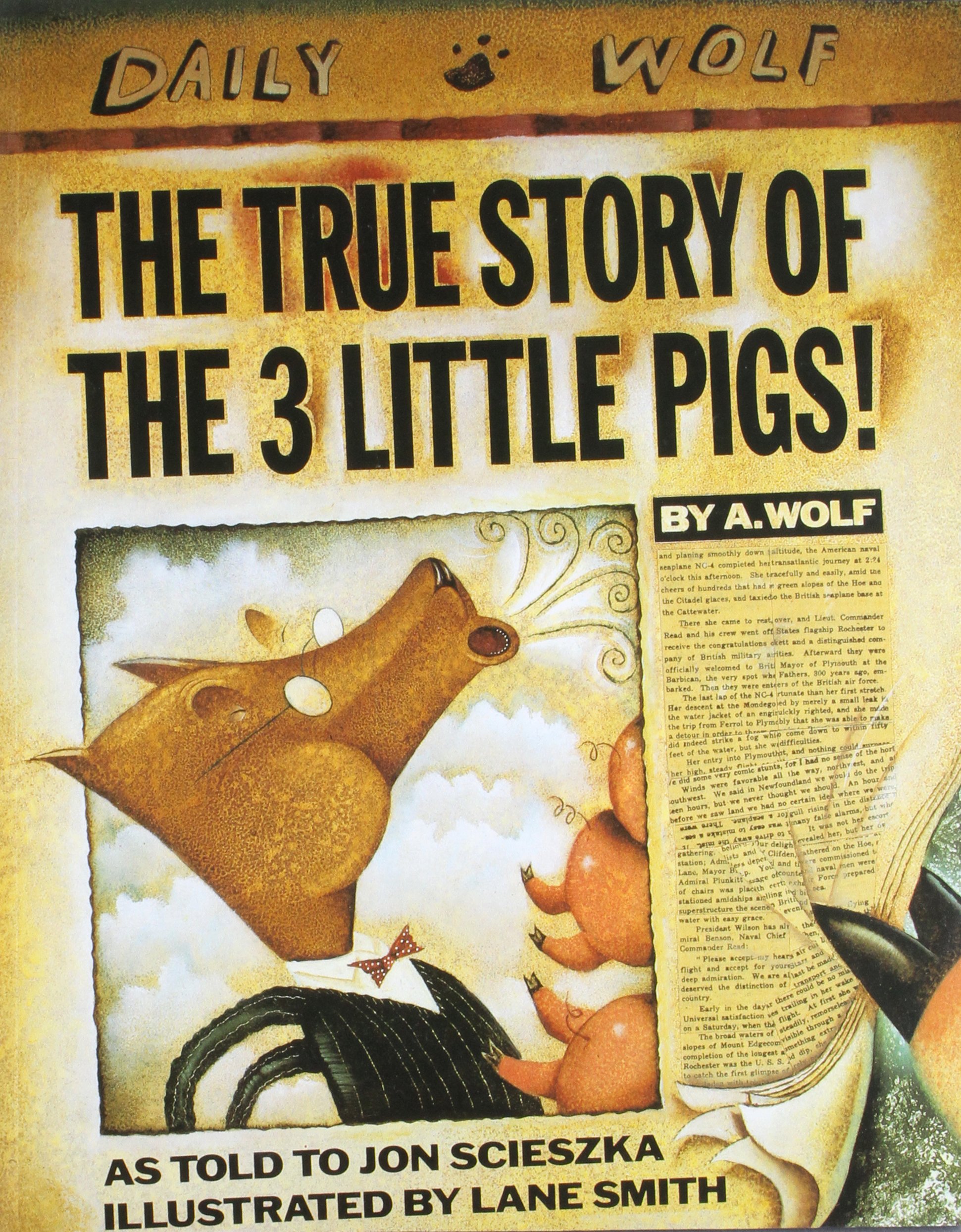
This is the true story of the three little pigs. Actually, they were not so little at all. Each of the three pigs weighed at least 400 pounds but that is about average for a real pig. Now we all know that pigs are very smart and these three were no exception. Joanne, the youngest had a Ph.D. degree in physics. Paul, the middle in age had a Ph.D. in world literature and Jayla, the oldest sibling had a Ph.D. degree in philosophy.
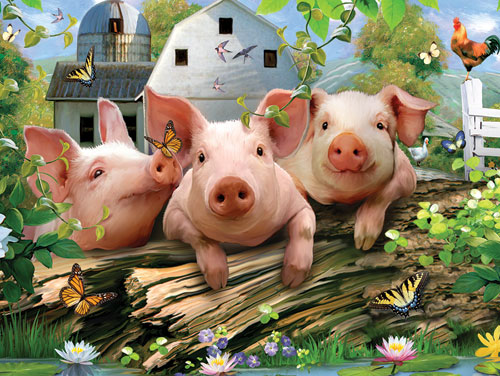
They lived in a beautiful neighborhood and each of them was smart enough not to build their houses with straw or wood. All had sturdy brick houses that no wolf in the world would have been able to blow down. Nevertheless, the mean old wolf who lived one block over was always plotting on how he could eat the three “not so little” pigs.
One day the wolf, whose name was Jack, was searching the internet for ways to trap pigs. He was spending quite some time on Facebook and LinkedIn to search for personal information on Joanne, Paul and Jayla. He believed that the more he learned about the personal habits of each pig, the more chance he would have to catch them. The internet was very helpful in his efforts. He noticed that each of the three pigs loved to play on-line puzzles and word games. He found that they seldom lost a contest with any other on-line gamers. They won so many games that they had become very conceited about their intellectual prowess. This gave Jack an idea.

Jack thought he could create an intellectual challenge for each pig. He would trap them when they lost the challenge. First, he would need to create a fake internet persona and a fake game site. He had just the idea that he thought would work. He would call himself “Jack the king of online gaming pigs.” This arrogance would be sure to annoy the conceited pigs. He would then issue on on-line challenge but he would only accept the challenge from the three pigs.
He would bet each of them that they could not correctly answer three of his questions. If they did get all three right, he would work for them for a week for free. If they missed any one question, they would have to work for him for a week for free. Of course, when they came to his house to work for him, he would grab each pig and eat them.
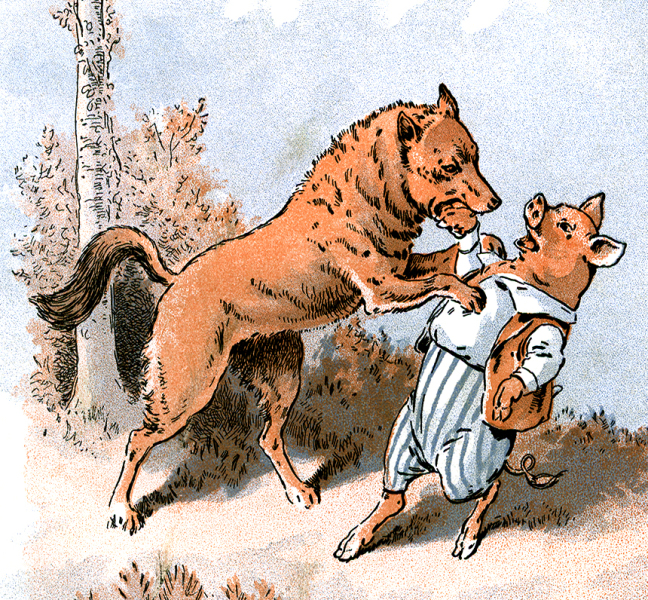
A week later, Jack had set up his website and a picture of him that showed a large handsome looking male pig. His banner had all sorts of pictures of gold coins, silver coins, jewels, exotic cars and exotic locations. Right in the middle of the banner was the large words “Jack, King of On-Line Gaming Pigs.” To the right side of the page was the picture of a large flashing gold treasure chest. Inside the chest, were the words printed in bright colors: “I challenge you. I know more than you do about anything. Click on to accept my challenge.”

Upon clicking on the treasure box, the description of the challenge and the rewards were printed. It was stated very clearly that the challenger would have the right to select the subject matter. Jack felt that this latter stipulation would insure that the bait would be taken since each pig would be sure to think that no one could be smarter than they were in their specialized area of expertise. Jayla would no doubt select questions on philosophy while Paul would select questions on world literature and Joanne would select questions on physics.
Joanne was the first one of the three pigs to notice the online challenge. “What”, she thought, “Who is this arrogant joker that thinks he is so smart. I will show him.” She sent back a message which said “I accept your challenge. The subject is physics. Send me your questions.”
Jack sent the following questions. Each question had to be difficult so as not to arouse suspicion but not too difficult. At least, until the third question.
First Question: Do heavier objects fall more slowly than lighter objects?”
Joanne’s Answer: No. If an object is heavier the force of gravity is greater, but since it has greater mass the acceleration is the same, so it moves at the same speed.
Second Question: What is the difference between energy and power?
Joanne’s Answer: Power is the rate of energy being generated or consumed.
“Well,” said Jack “you have been correct on the first two questions.” Now thought Jack, I will give her the most difficult and impossible question to answer since my thought question is a paradox.
Third Question: We place a living cat into a steel chamber, along with a device containing a vial of hydrocyanic acid. There is, in the chamber, a very small amount of hydrocyanic acid, a radioactive substance. If even a single atom of the substance decays during the test period, a relay mechanism will trip a hammer, which will, in turn, break the vial and kill the cat. Is the cat dead or alive?
Joanne’s Answer: That’s not fair because it is a paradoxical question. According to quantum theory, the cat is both alive and dead until I open the box and look. You cannot know which state the cat is in without opening the box.
Jack’s Reply: Well, you agreed to the questions and now you must work for me for a week.
Well, Joanne thought, he’s not such a bad looking pig so maybe it will be fun.
She went to the address that Jack gave and knocked on the door. Just as soon as Jack opened the door he pounced on poor Joanne and in a few bites entirely gobbled her up.
Next to reply to Jack’s challenge was Paul. Jack had changed the picture on his web site and now presented himself as a young very attractive looking female pig. He changed his internet name to Jacqueline. Paul saw the picture and even without the challenge was rather intrigued by the picture of Jacqueline. Paul replied to Jacqueline’s challenge and requested world literature as the subject for his three questions.
First Question: Who wrote the book “The Importance of Living”?
Paul’s Answer: That’s easy. It was Lin Yutang
Second Question: How many lines does a Shakespearean sonnet have?
Paul’s Answer: Another easy one. It has 14 lines.
Now thought Jack for the paradox question. Paul thinks he is so smart. I can hardly wait to have more roast pork for dinner.
Third Question: This sentence is not a paradox. – True or false
Paul’s Answer: There is no way I can answer that question. First, the sentence cannot be false. If it were false, then it would not be a paradox, since any sentence that is a paradox must be true. But it says that it is not a paradox, so this would mean that what it says is the case, and hence it would be true. This is a contradiction.
Jack’s Reply: Well, you played the game and you could not answer all three questions. So you lost. When do you want to come over to my house and start working?
Paul thought, well Jacqueline looks pretty cute and I would like to meet her anyway and so he replied “How about I come over to your place tonight and we have dinner together.”
Jack replied “Great, I love the idea. I will make a wonderful meal for us together.”
That was the last that anyone saw of Jack the pig with a Ph.D. in world literature.
Two more weeks went by and Jack changed his website back to a picture with a handsome young male pig with his own name of Jack. He felt sure that with the challenge and the picture of a good-looking pig, he would soon entice Jayla to take up the challenge.
Now Jayla had not seen her siblings for the past four weeks. She knew that they loved to play on-line games and she had not seen them around any of the usual game sites. She surfed the web each day but could not find any games they were playing. It appeared that the last game any of them played was at the site of some arrogant guy who billed himself as the King of On-line Gaming Pigs. Her web skills showed her that both of her siblings had accepted his challenge. She pondered the coincidence that since accepting the challenge, she had not seen either sibling again. This raised some suspicions in her mind. Nevertheless, she decided to accept the challenge but with a bit of caution. She posted her acceptance on the website and stated her chosen subject field as philosophy.

Jack was overjoyed. He loved roast pig and was ready for his third pig of the year. He would be very cautious and not try to tip his hand so he researched his three questions very carefully. He was quite sure that the third one would be unanswerable.
First Question: Do states have moral authority over their citizens?
Jayla’s Answer: Only over those citizens who make an uncoerced decision to give that authority to their state, which I think is almost never.
Jack Replies: Ok, I will concede that one to you.
Second Question: Plato’s definition of knowledge was?
Jayla’s Answer: Justified true belief.
Jayla had gotten the first two right but Jack was now ready to spring the paradoxical question on her. There was no way she could get the right answer.
Suddenly, Jack noticed a text that appeared on his computer screen. Jayla was requesting a short break before the next question. Jack could not believe his eyes. Jayla suggested that Jack come over to her house tomorrow night for dinner and bring the third question with him. This was too good to be true. He would get a free dinner before he ate his third pig. He agreed and Jayla texted him her home address.
Now, if you know anything about philosophy, you know that it means the love of wisdom. Jayla, was the wisest of the three pigs and she had prepared for the unexpected. Jack the wolf came dressed up in a pig disguise but Jayla saw right through it. She was not entirely surprised since she had long suspected some treachery was involved. She invited Jack in.
“Jack,” said Jayla, “can I give you a drink before dinner?”
“Sure” replied Jack. Jack thought he might as well eat a free meal before he ate Jayla.
Jayla, knowing full well that Jack was a wolf disguised as a pig prepared him a special martini mixed with some knock out drops. Jack would not know what hit him.
Jack took the drink thinking all the time that this was too good to be true. The next thing Jack knew he was waking up with a splitting headache. As he tried to move his muscles, he found that he was tied by all four legs to a sturdy oak chair. Jayla stood over him with a baseball bat.
We have now come to a tricky point in my story. We have two dilemmas to solve before we can reach a conclusion. The first problem is how do we bring Jayla’s two siblings back? We know the wolf ate both but that is beside the point. We can’t have a fairy tale where two siblings get eaten and do not return. It’s just not done.
The second problem is what do we do with the big bad wolf? Do we kill him, let him go, castrate him or what? We need to have some type of fitting denouement for Jack the wolf. Again, since this is a fairy tale, we probably need to rule out killing him or castration but I don’t think we can just let him go. Not much drama in that anyway. Well, let’s tackle first problems first. We will start with getting Jayla’s two siblings back.
Jayla took the bat and whacked the big bad wolf right in the stomach. Lo and behold, the wolf gave a big burp and out popped Paul. One more smack to the stomach and out popped Joanne. The siblings were all so happy to see each other and Jayla that they hugged and hugged for a mighty long time.
Ok, so they were eaten. It’s a fairy tale and I can do anything as implausible as I desire. I mean you did not complain when a wolf ate a 400-pound pig, so don’t start nitpicking now.
Once pleasantries were over, the three pigs sat down to discuss the fate of Jack the big bad wolf. Paul wanted to cut him into many pieces and scatter him all over the neighborhood. Joanne wanted to skin him alive and use his fur for a rug. Jayla cautioned restraint. “Remember”, she said “This is a fairy tale and we can’t do any such gruesome things to the big bad wolf in a fairy tale.” Jayla suggested that they all do an internet search and see what kinds of options for dealing with pig eating wolfs they might find. They would each Google some strategies and then discuss ideas.
A few hours went by and both Paul and Joanne each came up with an idea. Jayla was still undecided and had not found any that really thrilled her. Paul suggested that they put Jack in a box and ship him to Antarctica. Joanne thought that maybe through behavioral modification they could convince Jack that he did not want to eat a pig. Jayla thought both ideas were not a fitting end to a good fairy tale. She then had a brainstorm. We will have a contest. Here is Jayla’s idea. Our readers will help us find a fitting conclusion to this story.
Everyone who reads this story is invited to suggest a conclusion. We need you to take a few minutes to think of what the three pigs can do with Jack the big bad wolf so that we will have a fitting end to this tale. Put your idea or ideas for an ending in the comments section. The three “not so little” pigs will select their favorite reader suggested idea. If your idea for an ending is selected you will win twenty-five US dollars.
If you submit an idea, be sure to include your name, address and/or PayPal box number. We will send you a check or deposit the money in your PayPal account.
We look forward to getting your ideas as to what we should do with Jack, the big bad wolf. We cannot keep him tied up forever, so please write soon.
Time for Questions:
What will we do with the big bad wolf? Do you remember how this story ended in the original version? Do you like fairy tales? Why or why not? What is the point of a fairy tale? Is there a point to this story? What is it?
Life is just beginning.
“If you happen to read fairy tales, you will observe that one idea runs from one end of them to the other–the idea that peace and happiness can only exist on some condition. This idea, which is the core of ethics, is the core of the nursery-tales.” ― G.K. Chesterton



 I was only twenty-five when I met Irene. It was my first job out of college. I had just finished my RN program at Regina Nursing School. It took me three years going to school days and working part-time evenings to complete my degree. After finishing school, I applied at several nursing homes since I wanted to work with the elderly. In three weeks, I was hired by the River Birch nursing home in New Prague Minnesota.
 My first day on the job was the high point and perhaps also the low point of my life. It was the day I met Irene. My supervisor Michelle started my job orientation by introducing me to the staff I would be working with. She then gave me a brief summary of my work duties. She explained that I would be assigned a wing of the nursing home and within that wing, I would be in charge of a specific number of residents. We were not to call them patients. Each day, my job would be to take care of the residents that I was assigned and to ensure that they received food, care and compassion.

 Over time, I began to wonder what she was looking at. After looking out the window myself, all I could see was a large grassy field surrounded by numerous oak, maple and birch trees. On any given day, there might some grackles or robins out in the field but very little else to view. It was a pleasant enough scene but nothing that I thought could keep anyone’s attention for more than a few minutes never mind several hours of staring out the window
 a very pretty view that she could look out at. I thought she would enjoy the variety and the change of scenery. As I started to push Irene’s wheel chair away from her chosen window, she became very agitated and started pointing wildly and in a raised voice saying “window, window.” I moved her back to the old window and left her for the day.
 Next morning, I came to work and started my rounds. I did not see Irene and I wondered where she was. I checked her room but the bed was made up and there was no sign of Irene. I went into see my supervisor and ask about her. “I am sorry” Michele said “She passed away last night and was taken to the funeral home. There will be no services for her as she had no surviving relatives.” I went home and cried for her passing. I had never understood her or made a connection with her that I thought was the least bit meaningful.
 It is sixty-five years later and I finally understand Irene. I am sitting here looking out a window from the nursing home where I am now a resident. Each day I look out the same window and I see a different event from my life. I have been amazed at the events that I have witnessed. I have seen my mother giving birth to me. I have seen the birth of each of my sisters and brothers. I witnessed my first communion and my first day in school. I watched my wedding and the birth of each of my children. I was at my husband’s funeral again. During the past few months, I have seen all the major events of my life one after the other in perfect chronological order. I am almost at the end of my journey. There is only one final event. The last event will be when they come for me. They are getting close. My mom and dad are coming for me. They are coming to take me home. I must keep looking out the window or I will miss them.

 The idea of sex in our minds easily overrode any caution or concern about getting caught by her father. We arrived at her house. She lived out of town somewhat in Scituate which was a more rural area of R.I. in the sixties. When we arrived, Bob said “I will go in first and check things out. If it is okay, you guys can come in. Bob went inside the small average looking New England Colonial house with two upper dormer windows and came out a few minutes later. “OK guys” Bob said, “She is willing.” We all trotted inside the house to the first room which was a kitchen with a small table and four chairs. Dave, Tommy and I sat on the chairs and Bob headed up a small staircase. “I will go first” said Bob “and Dave is next. You and Tommy can decide who goes after Dave.” “Oh”, said Bob, “her name is Barbara and she likes to be called Barb.” No one challenged this order of affairs as it was taken for granted that since Bob had set this up, he had first dibs.




 Emily and Robert had been married for nearly 65 years. They were both in their early twenties when they met in college. It was love at first sight. Their parents wanted them to wait to finish college but after a brief whirlwind romance, they simply eloped. They surprised everyone when they came back to school and finished their college degrees. Robert became an engineer and Emily was a school teacher for many years. The careers they chose suited their personalities. They were known as hard faithful workers. Not once in over forty years did any employer ever have a complaint or problem with either Robert or Emily. After forty-five years, they both chose to retire so they could spend more time together after Robert’s first stroke.
 were loved by all their foster children who often returned home to visit or to simply stop by with a bit of news or something to eat. Robert and Emily could not have loved any children of their own more than they loved their foster children.
 Emily finished brushing her teeth and then took her nightly pills. She shut off the bathroom light and started out to the bedroom. The light by Robert’s side of the bed was on and Emily started to say something to Robert when abruptly she stopped. Her eyes fell upon an empty bed that was undisturbed. The sheets and bed covers had not been moved. Emily was surprised and shocked. Where was
  Robert? Suddenly, Emily remembered. Robert had died the previous week and had been buried two days before on Saturday. Tears came to her eyes. What would she do without her Robert? She was all alone now. No one to go to bed with. No one to talk to at night. No one who would regularly listen to her complaints and problems about the world.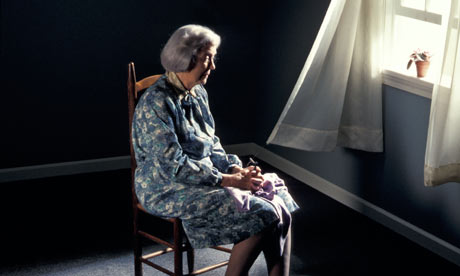


 Those who say that I am not important or who ignore me are part of a new generation that values image over substance. The word “frugal” is now associated with cheap and the word “thrifty” is associated with the idea of miserliness. It seems the world of finance is dominated by short-sighted individuals who have forgotten the old values that made this country great. Hard work and prudence were values that resonated among the early pioneers like so many notes in a great symphonic piece.
 With hard work, you earned a penny. With prudence, you saved your pennies until they became dollars. In the old days, no one would ever have thrown me away or ignored me when laying in the street. Too many people have forgotten the value that I represent. From early times, there have been people who really understood my value. Even before I was an official U.S. coin, the value of a penny was recognized by some. I regard these people as paragons who really understood the meaning of money. Let me tell you a few of their stories.
 Hattie had faith in money. Money requires faith but it is a faith that rests on the good that money can do and not simply how much money one can acquire. Hattie had this kind of faith and it persisted beyond her death.


 Samson was the strongest most well-built man on the block. He had muscles chiseled in stone. His muscles had muscles. He stood 6 feet 4 inches tall and did not have an ounce of fat on him. Samson worked out seven days a week, twice each day at the Philistine Gym on Gibeon Street. He worked out before he went to work each morning and after work for two hours each evening.
 wanting something more because you can’t have it. Delilah had only one other person she admired, herself. Much like Sampson, she could not pass by a mirror without staring at her reflection and thinking “how beautiful I am.”
 Delilah grew more and more desperate in her attempts to get Samson to notice her. Finally, she hit on the idea to simply approach Samson and remark on his wonderful hair. So, one day while he was practicing his dead lifts, she sauntered by and casually remarked on how beautiful his hair was. She proceeded to compliment him on his marvelous muscle definition. She followed up these compliments with the suggestion that they go back to her place after working out and she would cook him a nice microwave dinner and brush his hair. This idea delighted Samson and after working out, they both went to Delilah’s house.

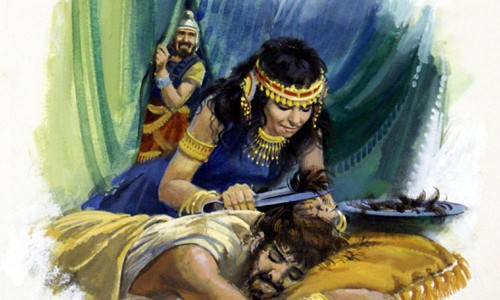 Delilah waited until the night before the World Weightlifting championship. At around midnight, she used the key that Samson hid near his door to let herself into Samson’s apartment. Moving as stealthily as a cat, she entered Samson’s bedroom. Samson was a sound sleeper and he had no inclination of what awaited him. Delilah took the surgical scalpel that she had borrowed from a medical admirer and in one quick slash, she lopped off Samson’s braid. Samson was totally unaware and did not move a muscle. Delilah slipped back out the way she had come and placed Samson’s key back where he hid it.


