When I grew up on the East Coast, I had little or no contact with chiropractors. Back then, most people I knew and most medical centers did not regard them as real medical practitioners. Years later, after I came out to the Mid-West, I found a much wider acceptance of chiropractors. Over the past 40 years of living in Minnesota and Wisconsin, I have known many people who have gone to chiropractors and who firmly believe that they were being helped. Most of the people I have known were suffering from back problems. Here is one comment regarding chiropractors from an obviously very satisfied patient:
“I go to a chiropractor irregularly, usually when my neck is bothering me. He uses heat, ultrasound, and massage therapy to undo the tension in my back and neck, caused by two vertebrae in my back that have been out of alignment since I was 16. I go away, and am usually good for another 6 months.
I’ve never had a chiropractor offer to cure anything, from gallstones to depression by cracking my back; I’ve never had one suggest I needed to try any homeopathic remedies; I’ve never had one claim my bipolar disorder was all due to a misaligned spine. When I did have gall bladder trouble, my then chiropractor told me to see my primary care doctor post-haste.”

If chiropractic medicine has any single claim to fame it is in dealing with back and skeletal muscle problems. Chiropractors are famous for treating such problems with spinal manipulation and “adjustments.” Often the diagnosis given to the patient will include the claim that the patient has a “pinched” nerve or some type of “subluxation”. The patient spends an hour or so with the doctor getting an adjustment to treat the problem. Many patients will then leave feeling much better then when they arrived. They will also be out between 65 to 200 dollars per visit. In most states, Chiropractic medicine is recognized and eligible for insurance reimbursement.
“Medicare does cover medically necessary chiropractic services. According to the CMS, Medicare Part B now covers 80% of the cost for ‘manipulation of the spine if medically necessary to correct a subluxation.’ There is no cap on the number of medically necessary visits to a chiropractor.” — Does Medicare Cover Acupuncture or Chiropractic?, Senior 65
OK, so far, we have happy patients, insurance reimbursement in most states and Medicare coverage for chiropractic service, so what is my problem with chiropractors? What if it is an art, what’s wrong with that? Well, an art is something that as opposed to a science does not have objective reproducibility. There is little or no evidence for cause and effect in an artistic relationship. From an art, we would expect a much wider variation of results then we would get from something that has demonstrated scientific reproducibility.
“Chiropractic theory and practice are not based on the body of knowledge related to health, disease, and health care that has been widely accepted by the scientific community.
Most chiropractors believe that spinal problems, which they call “subluxations,” cause ill health and that fixing them by “adjusting” the spine will promote and restore health. The extent of this belief varies from chiropractor to chiropractor. Some believe that subluxations are the primary cause of ill health; others consider them an underlying cause.” —- Twenty Things Most Chiropractors Won’t Tell You by Dr. Preston H. Long
Another way of looking at the difference between and an art and a science lies in the ability to assign risk factors. With a science, we should be able to assign a probably of risk in terms of outcomes. With an art, we cannot reliably assign risk factors since they have no bearing in empirical outcomes. What difference does this make to a potential chiropractic patient? It should make a great difference since their chances of getting an accurate diagnosis for many potential problems is much less with chiropractic medicine than with traditional medicine. Here are two comments from people who have gone to chiropractors. These comments are from the http://www.spine-health.com forum and website. The subject was: “Does chiropractic treatment help with pinched nerves:”
“Chiropractic “medicine” deals with the musculoskeletal system. However, many chiropractic offices use TENS therapy, which stimulates the nerves. Most of my back problems come from nerve issues and I have personally never found relief from chiropractic, in fact, it made me worse. But this is only my personal experience. My portable TENS unit helps me; I would ask the doctor who is managing your condition if TENS therapy may be right for you. Good luck!”
“In my case, I made the biggest mistake in my life, I was complaining about little pain in my knee but my chiropractor damaged my upper back T5 and T6 which I’m suffering now with a lot of symptoms nerve pain in between my shoulder, legs , arms , headache ….., I’ll never advise anybody to go to the chiropractor , and this is my own experience.”
Anecdotes and grievances do not prove a case against chiropractic. However neither do testimonials from satisfied patients prove the efficacy of chiropractic treatment. It can be argued that the placebo effect will explain much of chiropractic’s reported success. I have often argued that massage therapy will produce the same results with lower cost. Some evidence exists to support my contention.
“A study called Patterns and Perceptions of Care for Treatment of Back and Neck Pain appeared in 2003. The studied questioned over 2,000 people on how they dealt with their aches and pains. Massage took home the gold with people preferring it to chiropractic for any kind of back pain or general body pain, but chiropractic led the race in upper-back pain and neck pain. Even with these results, visits to chiropractors were much more common than visits to massage therapists.” — Chiropractor Vs. Massage
The above study notes that more people go to chiropractors than massage therapists. You might wonder why? Especially since seeing a massage therapist will cost you about 1/2 to 1/3 the cost of seeing a chiropractor. I propose that the reasons for this propensity of people to prefer chiropractors to massage therapists lies in the more successful lobbying and marketing that chiropractors have done. A second and related reason is that massage therapy will generally not be covered by most insurance plans or Medicare. The following applies to Medicare coverage for massage reimbursement:
“Original Medicare does not cover massage therapy. Services that are not covered by Medicare are the sole responsibility of the patient. In some cases, Medicare Part B will cover chiropractic services if they are medically necessary and are meant to correct a subluxation of the spine. In most cases, Original Medicare pays 80% of the cost for this treatment, but the patient is responsible for the other 20% and all other tests and services performed by the chiropractor.” — Does Medicare Cover Massage Therapy?
Note that in the above description that chiropractic care is covered but massage therapy is not. The lobby for chiropractors is much more powerful than the lobby for massage therapists. This latter fact demonstrates that the type of medical care and medical coverage you are eligible for will be determined not by objective scientific facts but by political persuasion and money spent by lobbyists. How does that make you feel? But let’s get back to chiropractic treatments and look more specifically at “adjustments”. This is the bread and butter treatment for chiropractic patients. Do you need them? Will they help you?
Chiropractic Adjustments:
 If homo sapiens have a weak link in their skeletal structure it is the back. It has been argued that the problem arose when we switched from hanging in trees to walking upright. Whatever the cause, back problems are easily the most common and perhaps one of the most painful problems faced by Americans today. I have heard it said that the “opioid epidemic” is really a “pain epidemic” as more people age and have to deal with back problems, knee problems and hip problems. No one beset by continuous pain can be blamed for wanting to find an escape from that pain. However, as I noted in the previous blog, this desire to escape pain often leads to bad choices. Surgery is too often prescribed when other treatment modalities would be more effective with less side effects. This brings us to the issue of chiropractic adjustments for back pain. How effective are they? Here is another comment from Dr. Preston H. Long regarding the effectiveness of spinal manipulation:
“Research studies that look at spinal manipulation are generally done under strict protocols that protect patients from harm. The results reflect what happens when manipulation is done on patients who are appropriately screened—usually by medical teams that exclude people with conditions that would make manipulation dangerous. The results do not reflect what typically happens when patients select chiropractors on their own. The chiropractic marketplace is a mess because most chiropractors ignore research findings and subject their patients to procedures that are unnecessary and/or senseless.” — Chiropractic Abuse: An Insider’s Lament Paperback – 8 Oct 2013, by PhD. Preston H Long D.C
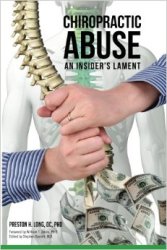
I highly recommend you read the book by Dr. Long. If you are going to go to a chiropractor, you should have a realistic assessment of finding out your chances of getting help and relief. Too many people leave their medical treatment entirely in the hands of so-called experts. This is a big mistake. I will discuss this later in another blog, but you need to be a strong advocate for your health care and not trust any one medical practitioner too much. How much is too much?
- It is too much if you are uninformed and have done little or no research into the causes and treatments of your illness.
- It is too much if you expect that your treatment will take the place of discipline and hard work on your part.
- It is too much if you would rather get surgery than lose weight or exercise.
- It is too much if you expect that your doctor will advise you to pursue less invasive treatments before surgery or pills.
- It is too much if your doctor is overweight, has no exercise program of his/her own or smokes.
- It is too much if you have not pursued a second or third opinion.
- It is too much if your doctor cannot show you fairly persuasive evidence of a diagnosis and an empirically related treatment modality.
Conclusions:
For the record, I have no vendetta or grudge against chiropractors. However, it has been my observation that they often treat many problems that they are not competent to treat or that have not had a proper diagnosis. I have seen too many friends go to a chiropractor and not have a long-term fix to their pain or problem. Chiropractors may offer a good short term fix to some pain problems but usually no long-term fix. For the record though, massage, surgery and pills do not usually provide a long-term fix and with surgery, there will usually be consequences that the patient was probably not aware of.
(For more facts on the pro’s and con’s of chiropractic treatment see “Evidence for Chiropractic Treatment“)
Chiropractors are no better than regular medical doctors when it comes to dealing with the underlying cause of pain. Sadly, some of the problem for hasty diagnosis must be laid on the patient’s doorstep. Many pain sufferers want either instant relief or relief that will entail little or no effort on their part. Doctors too readily give into this desire either because of the financial remuneration that awaits them for treatment or laziness or perhaps simple ignorance. My skeptical side says that giving a patient an exercise program or diet program is not nearly as lucrative as treating the patient with adjustments or surgery. Back surgery will generally cost between 50k and 100k. Spinal adjustments may take place for up to 6 months and final costs may total nearly $5000 dollars (computed as 50 treatments multiplied by an average cost of $65 dollars per treatment.)
On the positive side, there are many chiropractors who offer an alternative to the pills and surgeries so often recommended by mainstream medical doctors. Perhaps because they have been viewed as less professional by traditional medicine, many chiropractors have considered a variety of non-traditional treatment options. Many of these treatments are not very scientific or have no proven scientific effectiveness but this does not mean that they may not be effective. Scientific proof has often taken many years to prove things that traditional folk medicine long knew was true. However, there is a drawback in delaying some treatments to pursue unscientific remedies. For instance, when I was diagnosed with prostate cancer, I decided to pursue a “wait and see” or “active surveillance” policy. I was not ready to accept either the PSA reading or the biopsy or even the MRI results.
During my wait and see time, I opted to try some herbal remedies that were reported to have some success with prostate cancer. I started taking several of these remedies each day in the hopes that a future biopsy would show a decrease in cancer cells or even the disappearance of my cancer. No luck. My next biopsy and a third biopsy all showed increases. In addition, my Gleason score and PSA scores kept going up. I now risked the danger that the cancer would spread out of my prostate and migrate to other organs. It was time for surgery. Not to pursue surgery at this point would have been foolish and even hopeless.
Thus, there is an ever-present danger that pursuing treatment programs that are a dead end might endanger your life and prevent you from going down more fruitful paths. There is a reason that many people pursue such options. It is called “hopefulness.” I cannot blame anyone for this outlook. I too was hopeful that I could keep my prostate and continue to pursue a normal life. Many people go to chiropractors rather than medical doctors in the hope that they will find a cure beyond pills and surgeries. Some do and some don’t.
Time for Questions:
Have you ever been to a chiropractor? Why or why not? Did you find them helpful? Why? What evidence did your doctor provide to show why he/she gave you the diagnosis you received? What kind of exercise program do you follow? Do you think people without an exercise program are higher risks for medical problems and pain?
Life is just beginning.
“The doctor of the future will give no medicine, but will interest his patients in the care of the human frame, in diet and in the cause and prevention of disease.” – Thomas A. Edison
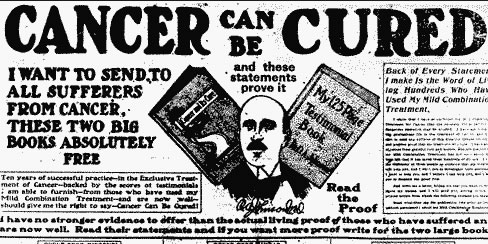


 Have you ever heard of a doctor turning anyone down for back surgery, knee surgery or hip surgery by telling them that they are overweight and would be better served by an exercise program or by physical therapy? If so, I can guarantee they are not typical of most medical practitioners. How many doctors look at the major cause of back, knee and hip problems and try to deal with that? Impossible, because doctors do not treat you over a lifetime. You don’t see a doctor until you have a problem and by then it may be too late. Surgery is the fastest solution because exercise, dieting and physical therapy take discipline and time. Doctors do not want to tell you the truth because it is an inconvenient truth but many problems should not be treated by surgery until it is a last resort. Too often, it is the first resort.
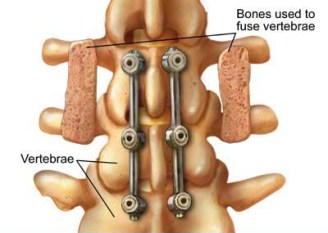 If you have low back pain and see different specialists you will get different tests: rheumatologists will order blood tests, neurologists will order nerve impulse tests, and surgeons will order MRIs and CT scans. But no matter what tests you get, you’ll probably end up with a
  Recent research has also shown arthroscopic knee surgery works no better than placebo surgery, and when comparing treatments for knee pain, physical therapy was found to be just as effective as surgery, but at significantly reduced cost and risk. And yet another study showed exercise is just as effective as surgery for people with chronic pain in the front part of their knee, known as chronic patellofemoral syndrome (PFPS), which is also frequently treated unnecessarily with arthroscopic surgery.
 So if we assume roughly 326,000,000 (
 My disclaimer is that this does not make me an expert. In fact, I would maintain that expertise in medicine is like the five blind men who were trying to describe an elephant. Each man had a different perspective on what an elephant looked like. Individually, no one perspective was a very adequate description of an elephant. It would take a synthesis of all perspectives and even more to truly describe an elephant. That is the problem with medicine. Too often, each professional looks at a problem through the narrow lens of their own discipline. The reality of a medical problem can often only be understood by multiple perspectives because of the interaction of the systems that make up the human body. This defining perspective of the problem seldom occurs both because of the nature of medical practice and many times because of the egotism of the so-called medical experts we consult.



 There are beauty products, breast enhancements, hair implants, plastic surgery, expensive cars, perfume, jewelry, large homes, designer clothes, college degrees and many other products or services designed to help you feel less inadequate and more adequate. We all want to feel adequate which means we must somehow learn to escape or jettison our inadequacy paradigms. The marketplace strategy involves spending huge amounts of money on a regular basis to escape the “inadequacy paradigm.” This strategy is often a failure as money and products cannot provide for real happiness or address some of the cultural biases, prejudices, racism and bigotry that contribute to the “inadequacy paradigm.”

 If you have not read Hofstadter’s “Anti-Intellectualism in America Life” I heartily recommend it. I have often joked that the worst discrimination in America seems to be saved for people who think. Many companies trumpet their desire for “out of the box” thinkers. This is usually nothing more than a well parroted display of self-deception. What Human Resources and the company are really looking for is “people who fit in.” People who are iconoclasts, people who are critical thinkers, people who rock the boat “need not apply here.”
 We have a pervasive problem that I labeled the “Inadequacy Paradigm.” Much of it is caused by racism, xenophobia, prejudice, stereotypes and bigotry. The majority of it is systemic and will need major changes in policies and institutions in this country to eliminate. However, it is felt on a very personal level. Feelings of inadequacy may be conveyed by others and cultural mores but they are received by an individual who assimilates these feelings into their psyche. Thus, inadequacy becomes a personal problem and not simply a social problem. Inadequacy is not “out there” it is right inside. The vast numbers of suicides in our society are testament to the inadequacy that many of our fellow citizens feel. This includes Whites as well as minorities.
 Marching forward in time to the period of the Revolutionary war when George the III was ruler of the American Colonies, what did they think of King George? Here is what is written in the Declaration of Independence:


 Crime bosses get eliminated or changed in a number of ways. Some die. Some are murdered. Some are arrested. Few if any ever simply retire. This last fact is good for our law enforcement agencies, since it helps keep them occupied with finding and catching Mafia leaders.

 Each time we kill one of their leaders, another one pops up to take their place. Each enemy group we defeat seems to be immediately replaced by another enemy group. Our Army, Navy Air Force, Marines, armament industries and politicians never seem to get tired of playing the “Whack a Mole” game. Keep in mind, that while the game might be great fun for these groups, there is a cost to the game. To date the financial and human costs are:


 Karen says that I should start our annual holiday letter off because I write better than she does. Well, since it is the holiday season, I will let her slide. For my part, (Karen will add hers in a short while), I promise not to talk about politics, religion or philosophy. We are all sick of politics and you are probably only marginally interested in the latter two topics. What’s left then? Well, I was thinking that I just turned 70 in September. I never believed that I would see 30 years of age. Now here I am 4 decades later pondering the same mysteries of life that I pondered forty years ago. Feeling a little nostalgic, I got to thinking about the “firsts in my life.” For instance, my first kiss and my first job. So how about participating in a little nostalgia here and fire up your memories as well. I have posted a list of “my firsts” with my responses to each item. List is on the left with my responses to each one on the right. Can you remember your answers to my list? I would love to hear your list of firsts. Please post your FIRSTS in the comments section if you can remember what they are and don’t mind sharing.
 Hi all. I think I’ll stick with my firsts for the past year. My first Dulcimer Jamboree in April, 2016 in Mountain View AR where I met the dulcimer 9 years ago. A fateful meeting it was. My first chromatic travel dulcimer which I took with me to New York in Nov. My first raised bed garden this past summer made from old discarded stock tanks. It produced more food than we could eat and it was so easy to weed and harvest. My first grandson, Garrick, getting married to Kat this coming spring. My first viewing of an opera at the Metropolitan Opera in NYC. My first concert in Carnegie Hall. My first trip up the Statue of Liberty and out to Ellis Island to look for ancestors.
 It’s been a full, fun and sometimes exhausting year. We still work part time to support our “snow birds” lifestyle. I’m working with start-up home care agencies, teaching and consulting, and ICD 10 coding. John has taught both on-line and residence classes. We escaped our part time work with trips down to Kentucky for Kentucky Music Week, trips to the ocean in Puerto Penasco, Mexico, and a fall anniversary trip to Bayfield, WI. And, of course, the trips back and forth from WI to AZ where John tries to find new unspoiled routes each time we go.


