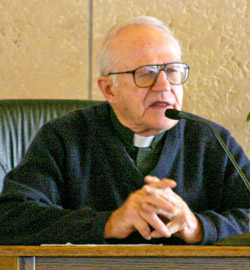
If you read my previous blog on the Demontreville Jesuit Retreat House, I promised that in my next blog, I would write a follow-up dealing with my 2019 retreat. I wanted to share with you some of the ideas and issues that I discovered about myself and life in this retreat. I implied that the summary of this retreat would be typical of the inspirations and thoughts that I seem to get out of every retreat. Father Sthokal always joked that we all left the retreats as “changed men” and that this would last about three weeks and then we were back to our old selves. He emphasized the need to keep making retreats as a way to regain at least some of the desire and ideas we had about change.
One year I asked a good friend of mine who was a Methodist Minister, why I seemed to keep dealing with the same issues over and over again. Bill was not only a good friend but a mentor and the minister who married Karen and me. Bill told me that he thought we would be dealing with the same issues all of our lives. If courage were a problem, it would always be a problem. If patience were a problem, it would always be a problem. I started to disagree: “But Bill, I am not in the same place that I was so many years ago, I think I have made some changes.” “John, the issues that you are dealing with are like an onion. Each time you make progress, you peel one layer away and then there is another.” I wondered if I could ever get to the core but after so many years, I now think it is doubtful. Karen and I joke about my lack of patience, which I have been working on for twenty years. I think she probably notices less progress than I feel.
At my 2019 retreat in July, I wrote down a number of issues and thoughts which somehow resonated with me very much. Some of these thoughts were no doubt ideas or reflections I have had before but they still popped up as germane and pertinent to my life during this past year. Other ideas might have arisen due to changes in the way that I see life now that I am no longer young. Whatever the reasons, these ideas had some importance to me this year. I will share each of them with you and then try to briefly explain what they mean to me. I am not speaking philosophically here as much as I am personally. I am sure that these thoughts are issues that I need to deal with in my life and to keep pealing the onion on. Perhaps, you can identify with some of my problems and perhaps not.
- It is easy to look to the past when you cannot see the future.
- We have more of the past, than the future left.
Like a lot of people, I have a certain fondness and nostalgia for the past. Sometimes, it is difficult to keep it from overcoming me. Years ago, I made a policy to leave things behind. I did not want to be the high school jock who was forever reliving his/her prowess on the athletic field. I spend 4 years in the military and never took a single picture. Pictures were nostalgia and I did not need it. When my first wife and I divorced after 16 years, I left every single picture of our marriage, my daughter, and my ex-wife behind. I was moving on and not looking back. I have always been terrified of being “stuck in the past.” I was a forward thinker (or so I wanted to be) and I could move on and forget the past.
Now that I am 73, I miss some of my past. I wish I had taken some pictures of my service friends. I wish I had some pictures from my first 16 years with my ex-wife and daughter. I think it is difficult now to be more forward looking when I have less to look forward to. My years are numbered. The average age of the American Male is 78. I am no egotist who thinks they can or should live forever. Too many of my friends and relatives have now passed away, many of them younger than I am now when they died. I do not want to go back to the past, but I have a more difficult time seeing the future now. Once, I was gong to be rich and famous but that seems more and more remote. Even if somehow, they were thrust upon me, I do not know if I have the energy for fame and fortune. I miss some of the meaning and purpose that work once held for me, but I find it difficult to find any meaningful work on a temporary part-time basis. I am envious of older men who are still going out into the world and making a difference. I can hear Vince Lombardi saying: “Winners never quit, and quitters never win.”
- Is not the pain of another, more important than being right or winning?
I need to keep reminding myself of this thought since I so readily break it. I hate losing. I love to be right. I treasured Vince Lombardi’s comment that “Winning isn’t everything, it is the only thing.” It has taken me years to see that the joy I get in winning always has a cost. The cost is the pain that the losers feel when I am right or when they lose. My joy is purchased at the cost of pain to others. Furthermore, I was never a good winner or a good loser. Again, Vince Lombardi: “Give me eleven poor losers, and I will give you a winning team.” Many athletes are driven more by a desire NOT to lose than a desire to win. Is winning really worth the cost? I may have been driven but I never felt that I was a winner. I did not “cut” the mustard. If only I had tried harder.
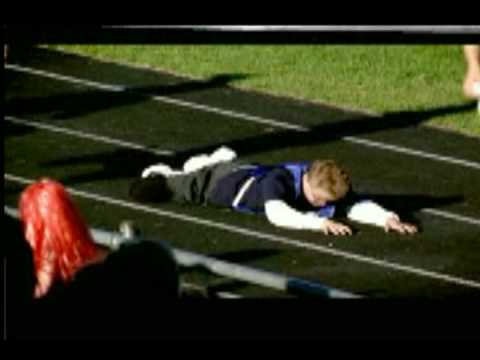
One of my favorites stories/videos is the story of a race that happened at one of the special Olympics. Six or so young children were in a sprint of about 100 yards. The starting gun goes off and they bolt down the track. One young disabled boy suddenly falls. One of the other racers happens to look back and sees him lying on the ground. She stops, turns, and runs back to pick him up. The other racers turn and see what she is doing. Do they laugh and keep running? No! They all go back to help the other runner. They pick the boy up and join hands as they finish the race together.
I cannot help but cry every time I see this video or hear this story. I have become a wimp in my old age. Some but not all of the “killer” instinct in me has left. Years ago, I would have laughed at the stupidity of these kids. But I no longer laugh. Instead, I feel sad at seeing a world where this is a unique event rather than the norm. I still see people asking me to die for the good of the economy or to sacrifice myself on the alter of greed and envy. I am willing to die for the good of others but not for some nameless trophy or temporary honor or to raise the price of a stock.

- Love is an act of will as much as a sentiment or feeling.
I wish I had learned this a lot sooner. I think we are surrounded by myths of love. “Love at first sight.” “Love as passion.” “Love as something that lasts forever.” “Love that is effortless.” “Love is all you need.” “My partner makes me complete.” “People in love never fight.”
Where we get these stupid idiotic ideas about love is beyond me. My spouse and I have five children between the two of us and all of them have succumbed to one or more of these beliefs. Between our five children they have seven divorces. Both Karen and I have gone through one divorce each. Somewhere in our second marriage we learned the truth of the above thought. An act of will is something that does not just happen. Love requires an act of will. No amount of feeling or passion can replace it. True love is not an emotion, it is a knowing choice of the will and intellect.
I have watched numerous relationships go down the drain. Both participants take vows, issue proclamations of love, fawn endlessly over each other, but like my retreats that do not last, eventually love starts to wind down. The passion and romance of first love starts to wane. Numerous obstacles, hurts, insults, stupidities, begin to mount up. These will continue to mount up until like the proverbial straw and camel, something snaps. When this happens, love disappears and is replaced by anger. There is still a chance for this to change. But then it turns to apathy. Apathy and not anger is the opposite of love. Once apathy sets in, the relationship is finished. There is no longer any desire or motivation to remain with the other person. If only lovers realized that love takes discipline. Love takes dedication and not just passion. Love takes commitment which means not giving up. There are many good examples of an act of will. This story particularly resonated with me.
Aron Lee Ralston (born October 27, 1975) is an American outdoorsman and mechanical engineer who is known for surviving a canyoneering accident by cutting off his own arm. During a solo descent of Bluejohn Canyon in southeastern Utah he dislodged a boulder, pinning his right wrist to the side of the canyon wall. After five days, he could not get his arm free and he realized that he was going to die if he did not do something different. He took a dull pocketknife out and was able to amputate his arm with it. He then made his way through the rest of the canyon, rappelled down a 65-foot drop, and hiked 7 miles to safety. — https://en.wikipedia.org/wiki/Aron_Ralston
Nothing except the sheer determination and his will to live saved Aron. How many lovers have the same determination and will to save their love for each other? More than half of all marriages end in divorce despite the frequently heard “Till death do us part.” It is not death that parts most marriages, it is a lack of will.
- A true follower of Christ looks for the good in others and not the evil.
I could get out of this by saying that I am not a Christian. I am not a “true” follower of Christ or any other prophet. I do not practice any particular religious faith and I do not believe that Jesus was a god or the son of a god. He was, as he most often said, “the son of man.” Others gave him godlike status. Many in the world simply feel that he was a great prophet and religious leader. I am of the latter ilk. Nevertheless, I believe firmly in his teachings and that there is hardly a tenet that he proposed that I do not find myself agreeing with. I certainly think the world would be a better place if more people followed his teachings. However, I see too few people who call themselves Christian who actually do. The great Sioux Chief Sitting Bull was once asked “What did he think of Christianity?” He replied: “I think it sounds like a great religion, but I do not see too many white people practicing it.”
Where were the Christian churches when thousands of women were being tortured and burned at the stake as witches? Where were the Christian churches when the indigenous people of Mexico and South America were being slaughtered? Where were the Christian churches when slaves were being bought and sold and thirty million died in the Black Holocaust? Where were the Christian churches when nine million Native Americans were being massacred and thrown off their land? Where were the Christian churches when six million Jews were being sent to the Nazi Death Camps?
My best friend grew up as a Catholic and Christian but now wants nothing to do with Christianity. He sees the history of Christianity as one long record of misdeeds and atrocities. Despite my efforts to show him that Jesus would not have tolerated any of the above horrors and that Jesus stood for love and compassion and turning the other cheek, it does no good. “What does it matter what Jesus said or stood for? All that matters is what his followers do today and none of that is anything I want a part of”, he replies.
I have a habit of first seeing the worst in people. After some reflection, I may find some good and value in other people, but it takes me a while. This idea about looking for the good in other people is something that I believe in ideologically, but emotionally it too often eludes me. Instead of seeing intelligence, I too often see only stupidity. Instead of seeing compassion, I too often see only greed. Instead of seeing courage, I too often see only fear. Once my mind is set, it is exceedingly difficult for me to open it up to other possibilities. I see Trump supporters as stupid and misguided. I see Republicans as devious and power-hungry. I see Evangelicals as fanatics and hypocrites. Don’t argue with me, I know that I am right!
But Jesus said look for the good and not the evil in other people. I keep looking.

- In my life, what is lost, what remains and what is possible?
There are three questions here that came up during my retreat.
First, what have I lost?
I lost my naivete. I lost a great deal of hope in my country. I lost the chance to be a good father. I lost many possible friendships. I lost the chance to really make a difference in the world instead of only trying to make a living. I lost my idealism. I lost my belief that knowledge was all powerful. I lost my youth because I never enjoyed it. I was old when I was seven. I lost friends and relatives whom I never really knew. I lost my daughter. I lost admiration by people who actually had more belief in me than I had in myself. I lost many opportunities to forgive. I lost even more opportunities to give compassion and mercy to people who needed it.
Second: What remains?
This is a difficult question to answer. My life has never been better or happier. I know myself better than I ever have in terms of my strengths and weaknesses. I have a great spouse and some wonderful stepchildren. I have enough money and resources to be content for the rest of my life. I have many great friends. I have my health. I have the ability to plan and to decide what I will do with my life and when I will do it. I live in a country which despite its many flaws, I would not trade for any other country in the world. I have more than enough time left in my life to try and make a difference in the world. Somehow, my legacy in this respect is the most important thing in my life now. What will I be remembered for when I die? To paraphrase Martin Luther King’s famous Eulogy speech” (Known also as the Drum Major Instinct Sermon)
Don’t tell them I was a Ph.D. Don’t tell them how many books I wrote or articles I published. Don’t tell them how much money I had or what I owned.
Tell them, I wanted to be a better person. Tell them I wanted to help make the world a better place for everyone. Tell them I was not a patriot because I believed that everyone in the world was equal and deserved to have life, liberty, and the pursuit of happiness and not just those who lived in the United States.
Third: What is possible?
I suppose that on an intellectual basis, I would answer that “Everything is possible.” However, reality intrudes. I have a long list of what is no longer possible that intrudes on my thinking about the possible. If there is one area I need to reflect more on, it is thinking of the possible instead of the impossible. I have always loved the song “The Impossible Dream.”
To fight for the right
Without question or pause
To be willing to march into Hell
For a heavenly cause
And I know if I’ll only be true
To this glorious quest
That my heart will lie peaceful and calm
When I’m laid to my rest
If I can only have the courage and fortitude to follow these thoughts and not to allow myself to wallow in self-pity and self-recriminations for the things I did not do, the opportunities that I missed and the things that I should have done. Even one more day to live is enough. From “Les Misérables,” the following lyrics from the song “One More Day.”
The time is now
The day is here
One day more
Well, I realized that summarizing my four-day retreat was not going to be possible in one “short” blog. So midway in writing this blog, I decided it would take two blogs. You have just finished Part One. Perhaps some later time, I will describe the other six insights I gained from my 2019 retreat. For now, I think it is enough. I am looking forward to my 2020 retreat in July. As of this day, it has not been cancelled but as they say “It all depends.” Some would say it all depends on God and others would say it all depends on the Corvid 19 Virus.
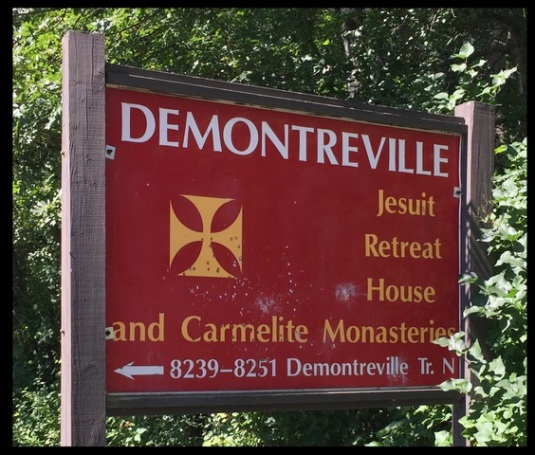
 It was January of 1986. I had finished all my course work for my Ph.D. degree. It had already been a long and cold and snowy Minnesota winter. I had finally collected all the data I needed to finish my dissertation. Four years in school, working part-time, divorced, no money and writing a dissertation had just about wrung me out. I needed a vacation but had no money. Someone told me about this place called Demontreville which they described as a sort of place to get away from life. They had beautiful facilities, private rooms and some really nice ski trails. You could get three free meals for four days and there was no charge. It was all based on voluntary donations. Weekend retreats ran from Thursday evening to Sunday evening.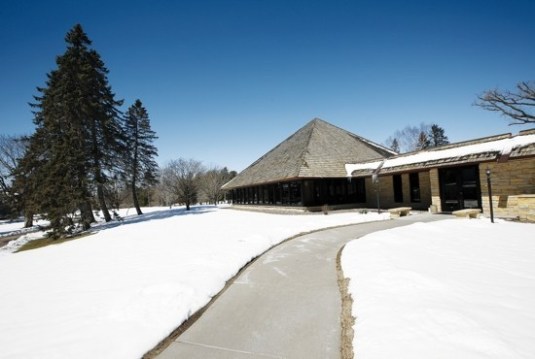
 When I went into the “conference” center, there were many men milling around and talking in small groups. I am not the most social guy in the world, so I took a seat on a couch by myself and commenced reading a magazine called America. This is a magazine published by the Jesuits each month and to this day I always enjoy reading it.
  At about 6:50 PM or so, a Jesuit priest arrived and after a loud hand clap, announced that dinner was being served. We first said a short prayer called the Angelus and then went into the dining hall which is connected to the conference center. The “conference center” is really just a large room to relax in. It has numerous chairs and sofas scattered about a well-lit room with large windows looking out over the grounds. It is one of the most peaceful places in the world to sit, reflect and enjoy a coffee. The conferences (Which I learned about later) are all held in the chapel which is also connected to the dining hall. The only time you have to leave the building is to go to your room. I was given a room assignment upon entering the conference center.


 Ostensibly, it was just another book to help job seekers find work. However, Bolles wrote more than just tips on writing resumes and job letters and where to find work, he wrote a bible on how to live a better life and what work could really mean for us. Bolles gave us a broader vision of work and the role it could play in our lives. Bolles vision of work was more than just the idea of productivity and pay. At the core of Richard’s concept of life was his idea that life could be divided into three boxes: Work, Play and Education. But there is a novel twist to Bolle’s ideas about work, play and education that no one had ever put forward before. Before we go into his unique idea, let’s examine each of the three boxes. After this, I will present the truly revolutionary idea that Bolles had about them. Finally, I will discuss the implications of Bolles ideas to the present coronavirus crisis that we are facing today throughout the world.

 I posed a general question to the miners’ present. “What if we integrated work, education and play in your jobs. What would life be like for you,” I asked. There was silence for a moment. I did not know if I would get a response. Suddenly a hand shot up. I recognized the man and asked him what he thought. I never would have guessed his reply in a million years. It was perfect but it still astounded me. He said very simply “I would not know whether it was Monday or Friday.” To this very day, I cannot think of a more profound or telling comment than that.
 Our work activities at home are generally allocated towards improving our living conditions. We work on repairing our appliances, roofs, etc. because we either enjoy doing it or because we are trading our time for money. If we hire someone to do it, it will cost us money that we might not be able to afford. We may not have the skills to so some work that needs to be done, so we are often forced by necessity to contract out needed repairs. Some people have never learned how to cook and so either spend extra
 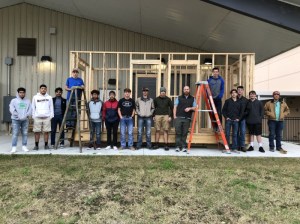 money on prepared meals or they often eat out. I never learned any wood working skills when I was in high school because these classes were deemed “general education” and I was in the “college track.” The home economics classes mostly dealt with sewing and cooking and were largely populated by girls. Even today in most high schools, girls dominate the home economics classes and boys dominate the construction related classes. There is admittedly more cross over then when I was in school in the sixties, but it is by no means 50-50 in gender distribution.
 From teachers and many educators, we hear the lament that children will miss three or more months of schooling. Unfortunately for the teachers that feel this way, students may miss out on “schooling”, but I think not on learning. Many studies have shown that students home taught learn more and score higher on standardized tests than public school students. I have been working in high schools as a substitute teacher for three years now and much of the work I see being done in classrooms can easily be accomplished from home. Whether or not students working from home are less bored with the subject matter remains to be seen. Nevertheless, there are plenty of opportunities for children to learn from home at their own pace and to some extent be more excited by a custom curriculum which suits their needs. There is obviously a great deal more that can be done in this area to create customized education programs.



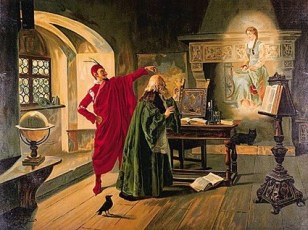
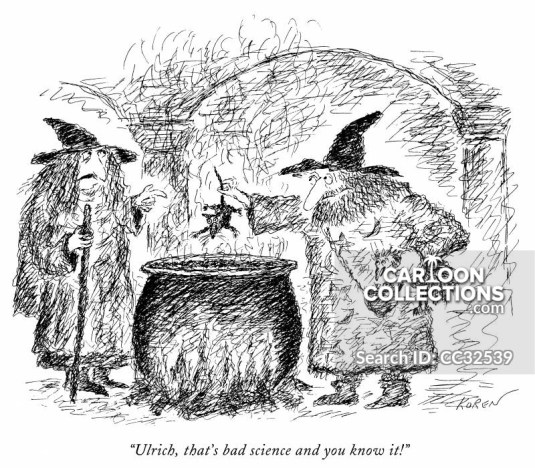





 Pandora was the first human woman created by Hephaestus on the instructions of Zeus. Pandora was a curious woman. She was given a jar or box by the conniving Zeus with all the evils of the world. Being a woman (sexism at its earliest) she could not resist peaking in the box. So she opened it and inadvertently allowed all the evils within lose upon the world. The only thing that did not fly out of the box was the spirit of Hope which remained in the box when Pandora put the lid back on. Thus to this day, our world is full of evil but balance always by the ever-present Hope that things will be better. Nothing could be more fitting than Hope for the times we live in today.


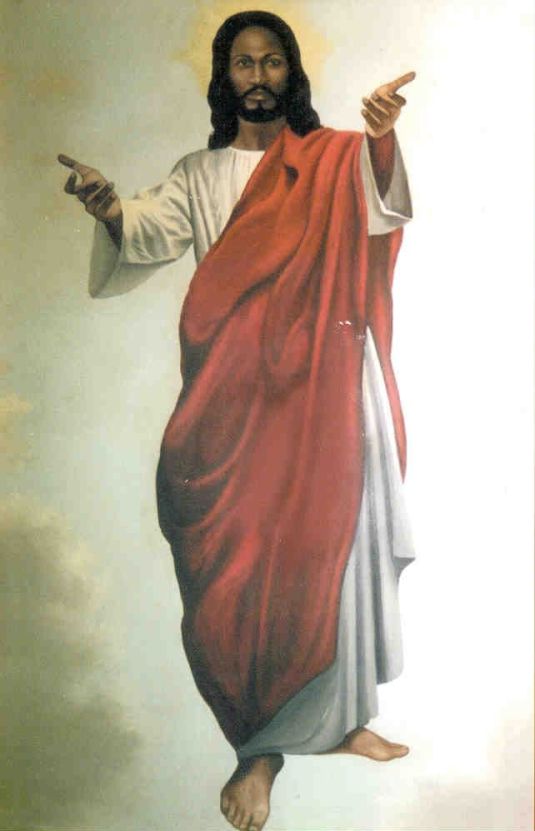
 This week, you will hear from one Jesus of Nazareth. He has been called by many names including: Messiah, Emmanuel, Christ, Lord, Master, Logos (the Word), Son of God and by himself more often The Son of Man. He is often credited with being the founder or perhaps foundation for a popular religion called Christianity. Today, it is difficult to see the link between the teachings of Jesus and many of…



 The first day that Michael and Joshua spent together turned into weeks and the weeks turned into months. Each week, Michael and Joshua would spend at least an hour together. Some days, Michael would play video games with Joshua and other days they would do “walk and talks.” Inez would drop Joshua off and Michael would take Joshua home. Michael looked forward each week to seeing Joshua and spending time with him. Michael often tried to buy Joshua some of the things that he wanted, but Joshua’s parents were very proud and explained that they would prefer that he did not. Michael accepted their request but would take Joshua out for a hamburger or pizza whenever possible. His parents did not mind this as Joshua had a prodigious appetite.







 Aging Capriciously