Dear Friends, Family and Loved Ones,

Benjii our sheepThe year is 2015.  It is the Year of the Sheep.  Sheep are gentle and calm and we love their wool.  We bought a sheep this year and named him Benjie.  He lives in the living room and keeps us company.  He is very low maintenance.  It is hard to believe that the end of 2015 is only a few days away.   My blog this week will be our annual Holiday letter that Karen and I both write and send out through a variety of media including snail mail, emails, hand delivery and my blog.  Each year, we use this letter to sum up our lives and the events or people that have had an impact on us during the year.  Probably not very exciting but this was 2015 for us.

Karen and John

Karen and John

It is 5 days before Christmas as I write this.  We celebrate the holidays each year rather traditionally.  Karen loves to bake Swedish cookies that she learned from her grandmother and also make a ton of lefse, much of what she gives away to a coterie of fans who swoon over it.  Myself, I would rather have fruitcake which I now buy each year from Costco.  I have many fewer fans for my fruitcake.  Less presents under the tree each year and gift cards now seem to be the order of the day.  We spend evenings watching old Christmas specials on Netflix which help get me in the mood for the holidays.  Christmas was never a really big deal for me like it is for Karen.  One message that seems to keep emerging from most of these movies:  Christmas is really not about presents, travels, accomplishments or awards.  Its real meaning is the love of the people we care about.  In this respect, 2015 was a good year.

Xibo and Dan DanKaren and I made a trip in January to see some very good friends in San Francisco and Karen’s son, Kevin.  Karen juggled her time to be able to spend some good time with Kevin and even get a glimpse of his new job at LinkedIn.  When we came back to Wisconsin, Karen was able to get some time in with her daughters Julie and Susan.  Karen and Susan went out together to visit my sister Jeanine in Rhode Island for the 4th of July and had a grand time.  Alas, the grandkids seem to have mostly flown the nest (Is there an empty next for Grandparents?) and it is hard to tag or catch up with them.  Nevertheless, Logan, Garrick (now engaged to Kat), Sam and Zach all seem to be pursuing the typical life of most young people today.  They are either in school or working and trying to really figure out what they will be when they get old like us.  We see them occasionally like ships passing in the night. I suppose our snow birding between Arizona and Wisconsin also complicates the matter.

megan and karenKaren and Megan now have a good thing going and each year around this time they get together for several days of baking.  It becomes a mother and daughter day to schlep flour and sugar all other each other’s kitchen since they alternate houses to flour.  This year we will finally get to meet Megan’s new friend Dave.  After cookie baking this Saturday, we plan to go to one of his gigs and listen to his band.  Dave is a guitarist and singer with a popular cover band named Furious George in Phoenix.

Curves Group

Karen and her friends at Curves 

If relationship wise, we were doing a balance sheet for 2015, on the whole it would be very positive.  However, it was not without its losses.  Both Karen and I lost some good friends this year.  Death seems to be something that becomes almost omnipresent these days both on a personal level (with more and more loved ones aging) and on a social level with the media constantly showering us with episodes of violence and mayhem.  Perhaps, something I should not bring up at Christmas time, but as Jesus was about bringing love into world, maybe it is something to reflect on.  I have to admit, my blogs (see www.agingcapricously.com) have been more and more about the evils and vices that I believe it is our personal responsibility to confront.  As I age, I wonder how I can do more in this respect or if I am even doing enough.  Am I making a difference or just annoying people?  I try to balance a certain amount of negativity in my blogs with a decent dose of let’s say “positivity” if there is such a word.  One of my most popular blogs was on the subject of gratitude.  I am certainly grateful for the good health that has blessed Karen and me this year.

Tucson Dulcimer Ensemble

Karen and the Tucson Dulcimer Ensemble

Karen and I are both working part-time.  I continue to teach both residentially and on-line.  Karen passed her certification test on the new ICD-10 coding procedures in September as well as doing some home health consulting.  I am envious that at 71 years of age, she has more job prospects than I had when I was 22.  She has so much work in her queue that I have to keep reminding her to have fun and enjoy her retirement.  In actuality both of us would go crazy without some regular work to keep us focused.  I guess neither of us has ever learned how to play well.

On the other hand, after years of practice, music camps and many music jams in Minnesota, Arkansas, Kentucky and now Arizona,  Karen has become an excellent dulcimer player and enjoys playing with dulcimer friends in WI and just south of here with the Tucson Dulcimer Ensemble.   In the last two weeks, she has played at a fund raiser for the local library, a Red Hat women’s group and an Episcopal Church bazaar.  We don’t have to worry about taxes though as these are all free gigs.  I keep encouraging her to keep it up though as someday there might be a talent scout out there and she could be the next Lady Gaga.  Carnegie Hall here we come.  I can pick out her outfits.

Merry Christmas and Happy Holidays to you all.  My God bless you and keep you with good health and much happiness.

John and Karen

Why Do We Need Disabled People? In Honor of my best friend Brian Rogers.

disabled people

I just found out this morning (11-16-15) that one of my best friends Brian Rogers died yesterday at 3:30 PM. Brian was 68 years old.  I want to re-post this blog in his honor.  Brian reviewed and gave me input on this blog and was very proud of it. The title might sound insulting so I encourage you to read it. You will find out what a remarkable man Brian was and how much he loved life. 

Gimps, retards, morons, cripples, idiots, loony toons, wackos, everywhere you look we are surrounded by them these days.  Whatever happened to the good old days when you could walk down Main Street without having to look at some retard?  And to make matters worse, they are destroying our health care system.  All that tax money we waste on these losers who have never worked a day in their lives.  I think Hitler had the right idea:  Euthanasia.   Get rid of them and save the world for those of us who are productive citizens.  Do you know where Hitler got his ideas from?  Right here in America.  We started the whole idea of euthanasia to create a pure White All American Race of hard working honest loyal and patriotic citizens.  Citizens who could eat apple pie with two hands!  Citizens who could play real baseball and not some weak watered downed handicapped version for gimps!  Citizens who could put in an honest day’s work for an honest day’s pay!  (Social Movement for School Song by Pilot Speed)

The “Nazi euthanasia campaign” of mass murder gathered momentum on 14 January 1940 when the “handicapped” were killed with gas vans and killing centers, eventually leading to the deaths of 70,000 adult Germans.  Professor Robert Jay Lifton, author of The Nazi Doctors and a leading authority on the T4 program, contrasts this program with what he considers to be genuine euthanasia.  He explains that the Nazi version of “euthanasia” was based on the work of Adolf Jost, who published The Right to Death in 1895.  Lifton writes: “Jost argued that control over the death of the individual must ultimately belong to the social organism, the state.  This concept is in direct opposition to the Anglo-American concept of euthanasia, which emphasizes the individual’s ‘right to die’ or ‘right to death’ or ‘right to his or her own death,’ as the ultimate human claim.” http://en.wikipedia.org/wiki/Euthanasia#Early_euthanasia_movement_in_the_United_States

What happened was that Hitler had the courage of his convictions and back here in the USA, we balked at the idea of killing people for the good of the country.  Think of the money and expenses and problems that Hitler’s ideas could have saved!  Think of the productivity improvements that a Master Race of Americans could have created!  Well, at least we don’t have to pay these gimps minimum wage.  Section 14(c) of the Fair Labor Standards Act authorizes employers, after receiving a certificate from the Wage and Hour Division, to pay special minimum wages – wages less than the Federal minimum wage – to workers who have disabilities for the work being performed.

But some claim that workers with developmental disabilities, including persons with significant support needs, are dependable and reliable workers. In several major studies (Kregel, Parent, & West, 1994; Kregel & Unger, 1993; Shafer et al., 1987; Shafer et al., 1988) over 900 supervisors and employers were asked to rate the work performance of persons with disabilities in comparison to workers in similar jobs who did not have any identified disabilities. Workers with disabilities were rated higher than their non-disabled counterparts on a number of factors, including attendance, arriving to work and returning from breaks on time, accepting authority, and being accepted by the public.  Why It Pays to Hire Workers with Developmental Disabilities —  by John Kregel

Hell, you can’t trust all those stupid studies done by bleeding heart liberals.  They would say anything to protect a few gimps.  What if they can be productivedisabled logo for web workers?  What if they do work as hard as or even harder than “normal” people?  They still take up much of our hard earned tax dollars for their health problems.  They are a big drain on our already overtaxed healthcare system.   Look at it this way, if we did not have to pay for medical care for the disabled, we would have a lot more money to spend on those of us who need medical care for legitimate reasons like: Smoking, alcoholism, obesity and gunshot wounds.  Heck, I can’t even get up close to the emergency room in the hospital when my buddy accidently shoots me, because I don’t have a handicapped parking sticker.  Too many stores have too many parking places for the disabled.  If we had less disabled, costs of handicapped parking signs would drop precipitously.

A 2014 study by the private American foundation The Commonwealth Fund found that although the U.S. health care system is the most expensive in the world, it ranks last on most dimensions of performance when compared with  Australia,  Canada,  France, Germanythe Netherlands,  New Zealand,  Norway, Sweden and the United Kingdom.  The study found that the United States failed to achieve better outcomes than other countries, and is last or near last in terms of access, efficiency and equity.  Study data came from an international survey of patients and primary care physicians, as well as information on health care outcomes from The Commonwealth Fund, the World Health Organization, and the Organization for Economic Cooperation and Development.

Disabled ad_Faye adWow, I guess this means they must have less retards and cripples in these other countries or are they implying that mismanagement and inefficiency are the true causes of high health care costs in the USA?  Well, you know those Europeans; most of them are commies and socialists.

The real story is that most of these so-called disabled people are actually treated very well by the more able-bodied in this country.  They shouldn’t complaint about the privileges and treatments they get from the rest of us.  Just to test this theory out, I decided to talk to a disabled friend of mine and see what he thinks.  I asked him how he feels about the treatment that disabled people get and particularly the treatment he gets as a disabled person.   Here is what my friend Brian Rogers said:

“I will add that our desire is simply inclusion in the mainstream of society.  They evaluate us as differently-abled with great skills and a history of a great work commitment to our nation, but only in times of war. We are the only minority that does not discriminate; you can enter our group in a heartbeat.  We are strong in number. The American Medical Association states there are 43 million Americans with disabilities.  Our failure to be fully integrated into society is our own. We did not capitalize on the American’s with Disabilities Act of July 26, 1990.  We did not have leaders like our brothers and sisters in the civil rights movement of the 60’s.  We should have learned and developed our leadership from within the Disability Rights Movement.  If the disabled community had more leadership and control of our services and programs, everyone would have been better off.  We must take the “dis” out of disability.”

IMG_0733“People don’t understand discrimination until they have tasted the bitterness.  My barriers are mostly attitudinal, not concrete and steel. Barrier free environments improve everyone’s life, not just people with physical disabilities. People ask me what I would like to do.  I would just like to go into a grocery store and buy a loaf of bread, without drawing unwanted attention.  John, did you notice when we went to lunch the other day?  The server talked only to you. She avoided looking at me or saying a word to me.  That happens all the time.”

I was somewhat shocked when Brian mentioned to me the lunch situation.  I had not even noticed it.  It is easy to notice your own problems but much more difficult to be aware of the problems that face other people.  It would be easy to dismiss Brian as an anomaly or a unique case unless you knew Brian.  I have had several friends who were disabled including:  Billy Golfus, Jeff Bangsberg and Brian Rogers.  They have all been unique individuals.  I have not known one of them to be content taking handouts or sitting on their butts expecting other people to do things for them.  In fact, they have done more than the average person I know to help others and to remain independent despite their disabilities.  (Everyone is Differently Abled Song)

I have been friends with Brian Rogers for over 5 years now.  Four or five times a week at the Frederic Library and often at his house we meet to discuss politics and other assorted subjects.  Brian has traveled a good deal of America, has met several presidents, ran major university programs and later in his life supported himself by becoming a Grant Writer.  Brian was Volunteer of the Year in Frederic in 1990 and has written numerous grants that have benefited his community.  From funding for the Frederic Library to computers for schools, when Brian sees a need he takes it as a challenge to help others.  Having faced Cerebral Palsy all his life and now into his later sixties, Brian remains independent and pays his own way.  He is proud that he has never been on unemployment a day in his life. There are not many “abled” bodied people who could make that claim.

Every time I talk to Brian he is full of ideas that could help other disabled as well as other “abled” people.  He is currently working on zippers and clothing to helpwho-cares-about-disabled-people-26755-1300415261-4 protect disabled people from falls.   He recently proposed a grant to help men facing aging and dealing with the transition from an active to an inactive lifestyle.  Yesterday morning Brian fell and bruised himself rather badly.  Walking is not and has never been easy for Brian.  I have noticed that Brian has had many falls over the years and sometimes it seems to me that with age they are getting more painful and more harmful.  Nevertheless, Brian goes out every day and navigates a world with numerous barriers and obstacles that many of us take for granted.  He remains positive and optimistic about life and his ability to make a difference in the world.  Brian says, we are all disabled by one problem or another.

How many people do you know who do not have some type of medical condition that impairs their functioning?  Disability is not a disease.  It is a fact of life that as Brian states can happen to any us in a heartbeat.  It is an inevitability that will embrace every one of us as we age and grow older.

(Please take time to listen to both of the songs I have posted on Disabilities.  They are visual as well as auditory treats.)

Time for Questions:

Do you make time to help others?  Do you help those who are less abled than you are?  If you are disabled, do you still try to remain positive about life?  Do you try to make a difference in the world not just for abled bodied people but for all people?  Do you speak out against discrimination towards people who are disabled?   Do you speak out against people who denigrate and disparage disabled people with names like gimps and retards?

Life is just beginning.

Gradatim by Josiah Gilbert Holland (1872)

Heaven is not reached at a single bound;

But we build the ladder by which we rise

From the lowly earth, to the vaulted skies,

And we mount to its summit round by round.

I count this thing to be grandly true:

That a noble deed is a step toward God,

Lifting the soul from the common clod

To a purer air and a broader view.

We rise by the things that are under feet;

By what we have mastered of good and gain;

By the pride deposed and the passion slain,

And the vanquished ills that we hourly meet.

We hope, we aspire, we resolve, we trust,

When the morning calls us to life and light,

But our hearts grow weary, and, ere the night,

Our lives are trailing the sordid dust.

We hope, we resolve, we aspire, we pray,

And we think that we mount the air on wings

Beyond the recall of sensual things,

While our feet still cling to the heavy clay.

Wings for the angels, but feet for men!

We may borrow the wings to find the way—

We may hope, and resolve, and aspire, and pray;

But our feet must rise, or we fall again.

Only in dreams is a ladder thrown

From the weary earth to the sapphire walls;

But the dreams depart, and the vision falls,

And the sleeper wakes on his pillow of stone.

Heaven is not reached at a single bound;

But we build the ladder by which we rise

From the lowly earth, to the vaulted skies,

And we mount to its summit, round by round.

Day 320 of the Calendar Year: Crazy Time.

For the next 45 days until the New Year of 2016, I am going to post some blogs on the subject of Time and its implications for our lives.  I will post one a day for each day of the remaining 2015 year.

craziness_is_like_heaven_by_nicolelynnroberts-d56r5zxCrazy time today often has a very negative connotation. We think of the crazies in our world and the damage they often do. We try to figure out what made them crazy or what ticked off their crazy streak. We wonder “How could anyone do something so bizarre? What made them do such things?” However, being somewhat crazy and having some crazy time can have other connotations. For instance, many of us are straitlaced and very uptight. We are constantly trained to think about our duties, responsibilities and obligations to others and ourselves. There comes a time when we all need to let go of these “duties” and to be somewhat “crazy.”

Here are four definitions of the word crazy:

1. Mentally deranged; demented; insane.
2. Senseless; impractical; totally unsound: a crazy scheme.
3. Informal. Intensely enthusiastic; passionately excited: crazy about baseball.
4. Informal. Very enamored or infatuated (usually fol. by about): He was crazy
about her. (www.dictionary.com)

No one wants the first definition to apply to them, but the second definition has often been applied to geniuses and entrepreneurs.  The third and fourth definitions can probably be applied to all of us at one time or another.  Who among us is not crazy about something? Thus, craziness is simply a state of being that others do not share at that time. This definition can also be considered the essence of nonconformity. Those who dance to their own drummers seldom share the same state of being that others do. Thus, going a little crazy might be good not only for our spirit but also for our creative side.

Who among us would venture out and do anything really unique or different if we were not willing to flaunt convention and ignore practical reality? In fact, craziness might just be the sine qua non of the adventurous and spirited.

The answer I found is you stay away from the people who make fun of you, and you join these ad hoc groups who understand your craziness. — Ray Bradbury

Time for Questions:

Have you ever been called crazy? Why? Do you ever indulge in activities that others think are crazy? What would your life be like if you were just a little more crazy? What if you danced a little crazier? Acted a little crazier? Dressed a little crazier?

Life is just beginning.

Nothing I read about grief seemed to exactly express the craziness of it; which was the interesting aspect of it to me – how really tenuous our sanity is.  — Joan Didion

Towards a Policy of Diplomacy – Not War!

War-and-Diplomacy_3x2I was going to call this blog “how to get along with other countries?”  But the above title seemed more erudite and impressive.    As I start to write this blog, I wonder if anyone has a “policy” of diplomacy.  I will soon Google it to find out but first allow me to say a few words on the subject.  I would like to start out with no preconceived bias on the issue.  Of course, this could also subject you to my gross stupidity.  I may at best reinvent the wheel.

For the past two years, I have been reading the journal Foreign Affairs.  I am and continue to be surprised by what I perceive as the impressive understanding that the writers in this journal have concerning a broad array of subjects.  In each issue you may find articles dealing with war, politics, globalization, economics, environment and many other topics.  The articles often are juxtaposed with dissenting positions and many times there are follow-ups to previous articles with critiques and rebuttals.   The level of scholarship and experience of the typical author is almost always impressive.   If I sound like an advertisement for the journal, I am not ashamed to recommend it.

Reading this journal, I am relieved to find that many other people have seen the stupidity and arrogance that I often see in our foreign policy.  Let me state clearly though, that while the USA is guilty of many sins, I have been to thirty three other countries and I have seen the same stupidity and arrogance in every other country as well.

So on the one hand, it seems there are experts out there who have some really good advice and answers on what or how certain international affairs and problems should or could be handled.  On the other hand, it seems no one listens to the experts and instead foreign policy is based largely on emotions, machismo, avarice and stupidity.  I read recently that in 1928, a pact was passed condemning war as an instrument of foreign policy.

“The Kellogg–Briand Pact (or Pact of Paris, officially General Treaty for Renunciation of War as an Instrument of National Policy was a 1928 international agreement in which signatory states promised not to use war to resolve “disputes or conflicts of whatever nature or of whatever origin they may be, which may arise among them.” Parties failing to abide by this promise “should be denied of the benefits furnished by this treaty.” It was signed by Germany, France and the United States on August 27, 1928, and by most other nations soon after.”  — Wikipedia

A total of sixty two countries signed the Pact.  In the USA, the Senate approved the pact by a vote of 85-1 with only one dissenting opinion.  Well, something most have been forgotten along the way.  How many wars have we had since 1928?  If my counting is correct, we have had 102 wars in the world since the pact was signed.   The web site Wars and Casualties of the 20th and 21st Centuries lists all the wars and deaths since 1900 throughout the world.

quote-a-congress-of-the-powers-is-deceit-agreed-on-between-diplomats-it-is-the-pen-of-machiavelli-napoleon-bonaparte-212040Thus, what seems like a very good idea (abolishing war as an instrument of foreign policy) is almost totally ignored.  Millions of people have been and still are being killed as the USA and other nations pursue war as an instrument of policy.  In some cases, it is advocated without any deference to reason as an immediate and primary instrument of policy.  First strikes and preemptive attacks are vastly more popular these days as the world deals with a host of international problems.  When Obama’s aide Marie Harf discussed other options than bombing terrorists as a solution to some of the strife in the Mideast she was trounced in the press and by many politicians as dumb and naïve.  However, when the war hawks in the USA Congress or any other nation are quick to cry War, nary a voice can be heard that challenges the sanity or even efficacy of war as an instrument of policy.  The world seems to believe that if we bomb the village, kill all the people and destroy any and all infrastructure, peace can then be resumed and we can all sleep safely and soundly tonight and forevermore.

“A country which proposes to make use of modern war as an instrument of policy must possess a highly centralized, all-powerful executive, hence the absurdity of talking about the defense of democracy by force of arms. A democracy which makes or effectively prepares for modern scientific war must necessarily cease to be democratic.”Aldous Huxley

Well, now that you have heard some of my thoughts and opinions on the subject of war and foreign policy, let us see what Google turns up when I type in the phrase “Policy of diplomacy.”  I am going to enter it in brackets so it regards the term as one concept.

Here is the first page from our search:

About 213,000 results (0.38 seconds)

Top of Form

Search Results

A Progressive Foreign Policy—and a Whole Lot of Work …  https://www.americanprogress.org/…/a-pro… Center for American Progress  Oct 28, 2015 – Then as now, CAP supported a policy of diplomacy as the first option for preventing Iran from obtaining a nuclear weapon—and military force …

Bush Aides Speak of New Policy Of Diplomacy in Central …  www.nytimes.com/…/bush-aides-speak-of-new-policy… The New York Times Nov 20, 1988 – LEAD: Aides to President-elect Bush said today that they were preparing a new strategy for Central America that would place less emphasis on …

Peace – Permanent Mission of Colombia to the United Nations  www.colombiaun…. Permanent Representative of Colombia to the United…  In furtherance of the policy of Diplomacy for Peace, the Colombian government has received expressions of support from the international community and …  Obama’s foreign policy goes from war to diplomacy in State …

http://www.examiner.com/…/obama-s-foreign-policy-goes-from-war-to-diplo…Jan 29, 2014 – 28, 2014; Obama defended the new foreign policy of diplomacy over military might. AP Photo/Charles Dharapak. While the core President …

[PDF]Atomic Bomb: Ultimate Failure of Diplomacy – Library  library.uoregon.edu/ec/e-asia/readb/93s25.pdf  University of Oregon by S Frank – ‎Cited by 1 – ‎Related articles  conceived policy of diplomacy with both Japan and the Soviet Union. Before I present my case, however, it is important to step back and revisit the Anglo-.

Obama: Be War-Weary, Not World-Weary – FPIF  fpif.org/obama-war-weary-world-weary/ Foreign Policy in Focus  Jul 9, 2014 – Pursuing the current policy of diplomacy over intervention, Obama can achieve concrete results in several areas. In the post-Arab Awakening …

WomenCrossDMZ on Twitter: “Congressional briefing for … https://twitter.com/womencrossdmz/status/623392574636748800  Jul 21, 2015 – Congressional briefing for new U.S. foreign policy of diplomacy over war 4 P.M. today, July 21 2015, Washington D.C. pic.twitter.com/ …

The CNN Effect: The Myth of News, Foreign Policy and … https://books.google.com/books?isbn=1134513135 Piers Robinson – 2005 – ‎Performing Arts The administration had been moving toward a new policy of diplomacy that could have used military force, but this hadn’t involved setting up the special …

diplomatic-insecurityLooking at these results, I find that from 1988 in the first Bush administration through the Obama administration there is talk of a “new” policy of diplomacy.  It seems as though both Bush and Obama decided that maybe war was not as good an idea as diplomacy.  However, I do not find a specific written and described “Policy of Diplomacy.”  What is this new diplomacy that they are or have brought to the world?  Just for the sake of semantics, I went back to Google and tried typing in “Policy for Diplomacy.”  Hits went down from 213,000 to 17,800.  I perused several of the links and I still could not find any specific policy either for or of diplomacy.   So let us try to formulate our own policy.  Here are some key policy points that I think should make up such a policy.

  1. Under no circumstances can another nation be attacked or threatened with an attack
  2. Diplomats must be trained in cultural sensitivity, win-win negotiating and the language of the country they are stationed in
  3. Diplomats should be publicly vetted for their ability to respect other cultures
  4. Bilateral diplomatic discussions should always precede multi-lateral discussions
  5. Multi-lateral parties brought in to discuss a problem should be selected by an objective third party or a selected UN committee established for this purpose
  6. Mediation can and should be used as necessary by third party negotiators
  7. Arbitration should follow failed mediation efforts and may be followed by binding arbitration
  8. Disputes with any binding decisions may be appealed to the World Court
  9. Nations refusing to submit to the agreement of the World Court will be fined an amount determined by the court
  10. Economic sanctions may be used to collect fines
  11. All nations signing this policy will be protected by the United Nations Peacekeeping Force

These policy statements seem self-explanatory and are only meant as a start towards an International Policy of Diplomacy.  Some will argue that they are naïve and that is probably true.  It is undoubtedly “optimistic” to presume that war will cease to be a policy of diplomacy.  There is a saying that I like though.  It goes:  “Hope springs eternal in the human breast.”  We need to start thinking about peace as a normal state of the world.  All too often, it appears that war is the normal state and peace only an interlude between wars.

Time for Questions: 

What can we do to help stop war?  Can you support a policy of NO WAR FOR ANY REASON?  Why or why not?  What if we are attacked first?  Can we stop war from being an instrument of policy?  What ideas do you suggest?  What policies do you think we should have in our new Policy of Diplomacy?

Life is just beginning.

A constructive approach to diplomacy doesn’t mean relinquishing one’s rights. It means engaging with one’s counterparts, on the basis of equal footing and mutual respect, to address shared concerns and achieve shared objectives.”  — Hassan Rouhani

We Live In Troubled Times or Do We?

We live in troubled times. How often have you heard these words and thought that  they surely apply to the times we live in? However, if you reflect on this thought for just a short time, you may question this assumption. Did our parents living through two world wars live in troubled times? Did those growing up with the European wars of the 1800’s live in troubled times? How about those living in the US during the War of Independence? How about those living in the Dark Ages or those living during the fall of the Roman Empire when the barbarians were overrunning Europe? How about those living during the Greek wars with Persia? How about living during the times described in the Bible when tribes routinely massacred other tribes? I wonder if Adam and Eve would have thought they lived in troubled times with an evil devil lurking about trying to seduce them. Indeed, can you find me a period in history that did not appear to be troubled?

You get the point by now I hope. It would seem that the entire history of the world is one long list of “troubled times.” Maybe life is really just one big Yin and Yang. Troubled and untroubled times routinely alternate with each other on a random basis. No particular sequence except that they are roughly even in their frequency. (I would like to think the untroubled times outnumber the troubled times, but I see no evidence of this either way) Thus, we might just as well say we live in untroubled times and that the history of the world could be seen as one vast period of tranquility. Like the question, “is the glass half full or half empty?” perhaps it all depends on your perspective.

I cannot abide with the “doomsday” prophets who are continually harping on the “coming of the end” or the “day of retribution.”  For these cynics, the world is fast running out of time.  Repent now because it is your last chance!  Get your affairs in order because the “end is near.”  I know my end is near because I am close to seventy years old but I doubt the end of the world will happen before my end.  I confess I am getting curious as to what will come next.  Will I join some cosmic choir or will I simply push up daisies?  I think I will find out in a few short years but don’t hold your breath, I might outlive you yet.  Barring accidents or some other catastrophe, I am expecting to live about 20 more years or so.

Time for Questions:

War and peace, heaven and hell, happiness and pain, life and death, love and hate, they are all inescapable. Life goes on, time passes and what do you remember? Do you see a panorama of death and depression or do you see a panorama of life and hope? Do you think you are living in untroubled or troubled times? Can you think of any period in history you would prefer to live in? Why?

Life Is Just Beginning. 

If you think of time as a cycle than there really is no beginning or end.

Thinking about Immigration, Part 3: Living in the Path of Illegal Immigration.

Six months of the year I am what they call a “Snow Bird.”   Karen prefers us to be called “Winter Residents.”   We live in Arizona City.   It is south of I-8 and just west of I-10.  It has been a major corridor for coyotes, drug runners and illegal or undocumented immigrants. There is hardly a week that goes by that we do not have coffee shop stories of found pot bales, abandoned vehicles, spotters hiding in caves and illegal’s coming to homes asking for water or food.  These stories are supplemented by our almost daily observations of border patrol vehicle searches and regular high speed police runs. One of our visitors commented that she had never seen so many police vehicles in her whole life as in our area.

Caution Ilegal immigrantsLast fall, one elderly resident who lived out in the desert was found murdered in her home. Nothing was missing but no suspects have been found. There are many folks in my area who will not venture out in the desert without being armed and there are many areas where you are warned to stay clear of.  I routinely jog in the Casa Grande Mountains and while relatively safe, there have been drug busts and roundups of drugs and illegal immigrants within the past few months.  A short time ago, I found a rifle with a telescopic sight and a sawed off butt behind a cactus.  I turned it into the police station where they were not too concerned about it. To date, my biggest danger while jogging has been a cactus that is known as a “jumping Cholla.” These things seem to magically find a way to get attached to you and their barbs are quite painful.  I have had at least six attacks by them during the past few months.

GatedThe picture I am trying to paint for you, coupled with the fact of the ongoing drug war in Mexico, which is only about 120 miles from our front door (47,000 deaths and counting), is designed to give you some idea of the context in which many Arizonians find themselves.  Gated communities, suspicion of neighbors, fear of criminal break-ins and an overall worry about the poor economy, housing foreclosures, and jobs (Arizona has led the nation in many of these problems) gives rise to a citizenry which is far from tolerant of anyone coming over illegally into this country. There is a great deal of fear in the nation as a whole ever since 9/11 and nowhere I think is it more evident than in Arizona.  Fear and tolerance do not go hand in hand.  However as Ben Franklin noted “Those who would give up their freedom for safety will soon find they have neither.” It is difficult to counsel this advice though when neighborhoods cannot be made safe and people are afraid that they will become victims.  So what does this have to do with stopping illegal immigration?  Let me turn the clock back to help answer this question.

Migrant farm workersIn 1963, I was sent to an Air Force station located in Osceola, Wisconsin.  Coming from the East coast, I could not have told you where Wisconsin was if my life depended upon it.  Furthermore, to be dropped into the middle of “Dairy Farm USA” was a major culture shock.  Nevertheless, I adapted by marrying a woman from Thorp, Wisconsin and having my daughter Christina born in Osceola.  Life was good for me in the service but money was short.  I found local employment doing migrant farm work and obtaining a part-time job (to supplement my military income) at a local nursery called Abrahamsons.  It was at this place, that I had my first meetings with Mexican farm workers.  Each season, Abrahamsons’s would bring in workers from Mexico to work at the nursery. The work involved digging, balling, burlapping, loading and then digging to replant trees for wealthy buyers in Edina and the Twin Cities.  It was hard work.

Chart-farmWe dug trees and loaded them from 6 AM to often after 9 PM at night.  I was paid one dollar per hour.  I do not know what my Mexican counterparts were paid because they could not speak English.  I could not speak Spanish and my bosses warned me to never discuss salary with the other workers. Thus, I spent my days working in the fields, sharing food but no conversation with the other workers.  Believe me when I say there were few local non-Hispanic people applying for these jobs.  I have since been to other areas of the USA including Mackinac Michigan and Door County Wisconsin, where they rely on immigrant workers to provide services to locals and tourists. To say that illegal or legal immigrant workers are taking jobs and bread from the mouths of Americans is a shallow and false bit of rhetoric.  I have heard it said that if these undesirable jobs were not taken by immigrants then the wages would go up and USA workers would then apply for them.  This bit of fantasy ignores two possibilities: 1. The work could go overseas to even lower wage workers or 2,  The Law of Substitution says that other higher value added services could replace services that become too costly.  In any event, I have yet to see the “older” immigrants from America who are now second generation citizens clamoring for these hard dirty and low paying jobs.

bracero statesSo year after year, from the middle 40’s to the late 60’s, immigrants came over from Mexico and South America on a seasonal basis.  Each year millions of these Bracero program workers would come and work in the USA.  Most would go back home after the work was over.  Some would apply for citizenship and stay in the US. The Bracero program favored Hispanic workers (there did not seem to be many Canadians or Europeans looking for farm work) and it seemed to create a rather orderly and neat influx and outflow of labor seasonally needed by US employers.  Then the program was changed.  Barred from working seasonally and denied access to work permits, many Mexicans and other Latinos took the easy road.

Illegal yes, enforced no.

US-Mexico_border_fenceThat is until 9/11, when all hell broke loose.  Never in the past 100 years had USA citizens felt as vulnerable as after 9/11.  Fearing for an influx of terrorists and watching unparalleled amounts of drugs crossing the border, we reacted to our fears by passing the Patriot Act, by beefing up Homeland Security, by building Border Walls, by making it a felony to repeatedly try to cross our borders, by greatly expanding the Border Patrol and by building large detention centers in the Southwest.  My county Pinal is often referred to as “Penal County” and has numerous detention centers to house drug runners and detainees awaiting deportation. The number of anti-immigration bills started to proliferate state by state as the Federal government seemed impotent to deal with the crisis.  Citizens armed themselves and formed watchdog groups to police our borders with Mexico.  No one really seemed worried about those Canadians.  I suppose ever since prohibition was rescinded, the Canadians have stopped smuggling whiskey across the border and are less of a threat to the US.

prohibitionSo let’s ask a simple question here?  Why do all of these illegals come to the USA? The answer is easy. Two reasons: Jobs and drugs.  I wonder if the solution to the problem seems as evident to you as it does to me.  First, legalize drugs.  Let the government tax them and let anyone sell them just like cigarettes, coffee and alcohol are sold. We have spent billions on a fruitless drug war and we have accomplished nothing.  Furthermore, in light of all the drugs that Americans take, it is a hypocritical war to begin with. It is a war waged by idiots and morons who keep our prisons, courtrooms, and lawyers sucking our taxes and wages for no apparent gain. It is perhaps the most ludicrous endeavor that has ever been created.  It makes Alice in Wonderland look like a reality show.  We have become so blinded by the anti-drug rhetoric that we no longer have the ability to see reality. What did we learn from Prohibition?  “THOSE WHO FORGET THE PAST ARE CONDEMNED TO REPEAT IT!” Banning alcohol did not stop the use of liquor nor did it curtail organized crime.  On the contrary, it gave organized crime the income and mandate to expand its power and territory and become even more powerful and dangerous. The same is true for the South American drugs, primarily pot and coke that we are trying to banish. The drug cartels have become so rich and powerful, they are immune to any efforts to abolish them.

bracero-program-poster-series_NTOkThe second reason illegals come over is to find work and to have a better standard of living.  To help others accomplish this, we need to create a new policy for temporary and migratory workers that represents the nature of work needed by immigrants and by employers in the USA. This policy needs to be fair and equitable but also realistic. The relationship we have with Mexico cannot be dictated by the relationships we have with Canada, Europe or any other countries. We need an equitable policy, but there is a difference between equity and equality.  A fair and just policy must create a win-win both for our nation and for the immigrants we give visas or sanctuary to.  There cannot be one size fits all for this policy.  Part of this policy must be humanitarian.  It is in our constitution and in our national charter to help others escape from tyranny, poverty and other calamities.  Part of our immigration policy must also be self-serving.  We need to help our country become stronger and to better meet the needs of competing in a global economy.  Realistically, we may have a cost attached to immigration.

Despite many arguments on the negative and positive costs of immigration, the best evidence to support a more liberal immigration policy is to look at our success as a nation over the last 250 years.  Can anyone doubt that it was immigration that built and fueled the development of this great nation?  We may need to balance short-term costs with long-term gains in a realistic immigration policy but a good policy needs to be slanted towards tolerance for immigration and not intolerance.

I have one final idea. Let’s take the development of an immigration policy away from the politicians and appoint a group of immigration experts from a wide range of viewpoints. Take twelve experts on this subject and put them in a room together.  Give them four weeks to hammer out a new immigration policy. When they are satisfied that such a policy is realistic and equitable, let them distribute this policy to the newspapers and Internet websites for a review by American citizens.  After four weeks of review, let there be a national referendum on the policy.  A plurality of sixty percent should be needed to pass. If sixty percent cannot be reached, the policy will be returned to the experts for further changes and amendments. Once a plurality of American voters has accepted this policy, it would be sent to the Senate and House for review and to become law.  Woe to them if they could not finalize this policy.

Time for Questions:

There are many things you can find wrong with my suggestions. I can hear all the reasons why these ideas would not work. The question I have for you is this: “Can you find any better ideas.” The definition of craziness is to keep doing the same thing and expect different results.  Maybe it is time we tried some new ideas; as Einstein said: “Problems cannot be solved by the same level of thinking that created them.” We need to discard our prejudices and biases and see things in a new light. What do you think needs to be done?  When was the last time you wrote your representative to express your ideas?  When was the last time you went to a party caucus or actively worked to help elect a representative?  What could you do to help create a new and fair immigration policy for this country?

Life is just beginning.

“The interaction of disparate cultures, the vehemence of the ideals that led the immigrants here, the opportunity offered by a new life, all gave America a flavor and a character that make it as unmistakable and as remarkable to people today as it was to Alexis de Tocqueville in the early part of the nineteenth century.”  ― John F. KennedyA Nation of Immigrants

Thinking about Immigration, Part 2: Pros and Cons of a Fair Immigration Policy!

The questions I raised last week on immigration can be summarized very succinctly into one overarching question.  Do immigrants benefit or hurt the USA in today’s global world?  If you believe that they absolutely do no good for our country or our economy than you are anti-immigration.  This is an honest position and a sensible one if your opponents cannot show that immigration on balance does more good than harm for our country.   If you believe that under certain conditions and within certain constraints, it may do some good or perhaps a great amount of good for our country than you are for a fair immigration policy.  There is no in-between on this issue.

history of anti immigrationThere is a big difference between anti-immigration and fair immigration.  Many of the arguments and positions advanced today are anti-immigration.  People like Donald Trump are exploiting fears of terrorism and crime to convince the American public that immigrants are evil and should be kept out of the country.  However, those who are for a fair immigration policy must create a balanced win-win for our nation and for those immigrants who are seeking to become a part of it.  If you are for a fair immigration policy, then you must educate yourself on this issue and demand that those who lead us do all that they can to create such an equitable immigration policy.  To demand any less, is to damage the fabric of this country.  Assuming of course, that you see the benefits immigration can have.

Now some of you may be thinking, well “what about illegal immigration,” where does this fit in.  I think this question needs a blog of its own and next week I will try to address this issue.  Suffice it to say for now, that I am not for allowing anyone to enter this country illegally. However there is a still a big chasm between an anti-immigration policy and a fair immigration policy.   Let’s look at some past comments from anti-immigration people.  This position is not new to the political landscape.  There have been anti-immigration perspectives since this country began.

nativism“The mighty tides of immigration bring to us not only different languages, opinions, customs and principles, but hostile races, religions and interests, and the traditional prejudices of generations with a large amount of turbulence, disorganizing theories, pauperism and demoralization…I freely acknowledge that among such masses of immigrants there are men of noble intellect.  But the number is lamentably small.”  – Garrett Davis

“The real objection to immigration lies in the changed conditions that have come about in the United States themselves. These conditions now dominate and control the tendencies that immigration manifests.  At the present time they are giving to the country a surplus of cheap labor – a greater supply than our industries and manufacturing enterprises need.”– Frank Julian Warne

anti-immigrant“It is an incontrovertible truth that the civil institutions of the United States of America have been seriously affected, and that they now stand in imminent peril from the rapid and enormous increase of the body of residents of foreign birth, imbued with foreign feelings, and of an ignorant and immoral character, who receive under the present lax and unreasonable laws of naturalization, the elective franchise and the right of eligibility to political office.”  Declaration of the Native American National Convention.

I confess I was having a hard time sorting out the arguments for and against immigration until I came upon a series of articles comprising debates for and against immigration that were written in the 1800’s.  Suddenly, I could see the same arguments (in slightly more modern language) that were being used by those against immigration today.  The difference is that we now have the advantage of hindsight to see how much validity they had.  The comment by Santayana that “Those who forget the past are condemned to repeat it” keeps ringing in my mind.”   Let me make this clear.  Take the first quote above.  This is from an article by Garrett Davis “America Should Discourage Immigration” written in 1849.  Garrett was appalled by the number of Germans and Irish that were coming over and sought to persuade the government that we needed to strongly discourage such immigration.  Everyone knew that the Germans and Irish were “mixed up with a large amount of idleness, moral degradation and crime.”  It is not too hard to find people today who still argue that new immigrants from new countries are also prone to such problems.

Close the bordersThe second quote is from Frank Warne and was excerpted from the Immigration Invasion, written by Warne in 1913.  Franks main concern was that all the Italian, Greek and Slavic immigrants coming over would lower wage rates and prevent America from developing the technology it needed to compete globally.  Warne said:  “Immigration tends to retard the invention and introduction of machinery which would otherwise do this rough labor for us.”  Looking back over the period from 1913 to 1990 can anyone find any validity in this argument?  The USA was arguably the most productive nation in the world from at least the early 1900’s to the late 1900’s.

the-hypocrisy-of-anti-immigration-marty-two-bullsThe third quote is from a prominent anti-immigration group and was written in 1845.  According to this group, the USA would decay from within as the new residents would not adjust to the American Way of life.  I think it can be said that from the early Pilgrims right up until the present time, we have not seen the American Way of Life yet corrupted by any successive wave of immigration regardless of what nation they were from.  There is a saying in organization development which goes “put a good person in a bad system and the system will win every time.”  I think the reverse of this saying is also true and it explains the greatness of our nation.

No bordersPut a “bad” or at least a new person in a good system and the system will also win every time.  New immigrants become creative honest hardworking and hard driving Americans. Proud of their new nation and willing to work even harder than the old generation of immigrants which now take their privileges and luxuries for granted.  Can anyone doubt the power of democracy and our constitution?  This leads me to note one fallacy which I think is argued by the liberal-immigration forces.  I regard the liberals as those who would just let everyone in and do not see the need for a fair and equitable immigration policy.  In their naiveté, they think that just leaving things alone or doing nothing will produce such a policy.

The liberal-immigration groups will often argue that the best, brightest and hardest working leave their country to come to America and the rest stay home.  The ones that do not come to our shores are either too lazy or stupid to leave.  This concept is an example of social Darwinism and it is advanced as an argument in favor of immigration and more liberal policies towards it.  However, I see no evidence that the people who stay home are any different from those who come to our shores.  People are people.  The first settlers to come to America were from a wide range of social and economic conditions.  Many in Europe were glad to get rid of them.  We would probably regard many of these first settlers as illiterate, radical and dangerous.  Nevertheless, they built the nation we now call home.  To argue that we should allow more immigration only if they are the best and brightest is self-serving and short sighted.  Short sighted in that it overlooks the power of our nation’s values and ideals to assimilate all who enter this nation.  Self-serving since it suggests that we forsake the downtrodden and oppressed in favor of only those who appear to fit our elite definitions of the “best and brightest.”

New CitizensLet’s all work towards a fair immigration policy.  Let’s give up any anti-immigration rhetoric as incompatible with our American ideals.  Forevermore, history has clearly shown that immigration has helped to make our nation great.  Let’s work together to create a plan to help our nation remain a beacon of light to those who are down trodden and oppressed.  We need a fair immigration policy that becomes further evidence to the world of the Great American Experiment.

Time for Questions:

Can you help create a fair immigration policy?  Can you fight against the prejudice of others to keep our shores open to those in need?  Can you add your voice to those who want a fair immigration policy?

Life is Just Beginning.

“America was indebted to immigration for her settlement and prosperity. That part of America which had encouraged them most had advanced most rapidly in population, agriculture and the arts.” — James Madison

We Need a Fair Immigration Policy – Not an Anti-Immigration Policy!

I wrote this a few years ago. I have added a few thoughts to this series of three blogs which deal with immigration. If you want a fair immigration policy and not an anti-immigration policy, I think you will find my thoughts and ideas about this subject interesting. I am trying to put the subject out there objectively and stay away from the virulent anti-immigration hate mongering fostered by people like Donald Trump and many other Tea Party supporters.

Dr. John Persico Jr.'s avatarAging Capriciously

The topic of immigration today is one of the most important subjects for all Americans.  Studies in productivity show that increases in productivity are due to two major factors:  Education and Immigration.  Once upon a time we had a system for both of these objectives which helped make our country great.  Today, both of these systems are broke and need reform.  If we are to compete in a global economy, we must have a 21st Century immigration policy that meets the needs of employers and those immigrants that want to or need to come to the USA.  I had already decided to write about this subject when I found myself between the proverbial rock and a hard place.   Immigration has become a key weapon in the mouths of people like Trump, Cruz, Rubio and many other candidates.  A climate of fear which has pervaded this country since 911 has…

View original post 1,513 more words

Ecclesiastes: The Wisest Book of All Time?

EcclesiastesI want to write about Ecclesiastes this week.  It is one of the 24 books of the Hebrew Bible.  It is among the canonical Wisdom Books in the Old Testament that can be found in most Christian Bibles.  It has been called by some a book of skepticism.  Others see it as one of the most profound and erudite books that has ever been written.  Much of the writing in this book reminds me of the Shakespeare passage in Macbeth wherein he says:

“Out, out, brief candle!  Life’s but a walking shadow, a poor player that struts and frets his hour upon the stage and is heard no more. It is a tale told by an idiot, full of sound and fury, signifying nothing.”  ― William ShakespeareMacbeth

vanities“Vanity of vanities!  All is vanity,” says the Preacher at the beginning of Ecclesiastes.  In some sense echoing the same sentiments as Macbeth, Ecclesiastes tells us of the folly of wealth, riches, power, fame and even wisdom.  Herein lies the great paradox in EcclesiastesEcclesiastes is a book of wisdom which has the audacity and temerity to decry the power of wisdom.  Whereas most tomes praise the power of wisdom to solve all the evils of the world, to Ecclesiastes, wisdom is also just another vanity.

“I applied my mind to know wisdom and to know madness and folly.  I perceived that this also is but striving after the wind.”  — Ecclesiastes

dissipationIf power, riches, fame and wisdom are folly to pursue, that would seem to leave us with only pleasure left as a goal of life.  A sybaritic existence of hedonistic pursuits measured by the wine, women and song we have endured.  Epicurus said: It is impossible to live a pleasant life without living wisely and well and justly.  And it is impossible to live wisely and well and justly without living a pleasant life.”  The Hedonist position has often been criticized starting with Socrates and Plato who felt that a Hedonist was endorsing a doctrine that was contradictory to right living (see Plato’s Gorgias).

Just when it might seem we have a goal in life that can be mutually satisfying for everyone, Ecclesiastes says:  “I will make a test of pleasure; enjoy yourself.  But behold, this also was vanity.”

Everything is vanity.  If Saint Ignatius was right in proclaiming that “ingratitude” is the fountain of all sins, Ecclesiastes shows us that the other side of the coin is vanity.  Rich or poor, wise man or fool, famous or obscure, death will take us all and care not one whit about our history.  “How the wise man dies just like the fool!” – Ecclesiastes

Another book which I think has a great deal in common with Ecclesiastes was written by Max Stirner and is called “The Ego and Its Own.”  Stirner (a 19th Century German philosopher) has been labeled a nihilist for the pessimism he exudes in this book.  For instance, Stirner says:

Man, your head is haunted; you have wheels in your head! You imagine great things, and depict to yourself a whole world of gods that has an existence for you, a spirit-realm to which you suppose yourself to be called, an ideal that beckons to you. You have a fixed idea!  Do not think that I am jesting or speaking figuratively when I regard those persons who cling to the Higher, and (because the vast majority belongs under this head) almost the whole world of men, as veritable fools, fools in a madhouse.” — (The Ego and Its Own, New York 1907, p. 54)

You may well ask “what is the difference between nihilism and skepticism?”  One answer to this question which I found on the Internet is as follows:

“Skepticism is a critical attitude, orientation or outlook towards a proposition or a thesis.  It typically is characterized by doubt about, or at least dubiousness towards, its substantive truth value.”

nihilism“Nihilism, on the other hand is an attitude, orientation or outlook of indifference towards a proposition or thesis.  The nihilist refuses to engage in an epistemological process of examination, discovery or analysis into its truth value.”

These definitions and more about the differences between these two concepts can be found at http://phenomenologicalpsychology.com/2011/03/what-is-the-difference-between-skepticism-and-nihilism/

Ecclesiastes skepticalTo sum the differences up in my own words, skeptics doubt everything while nihilists do not give a damn about anything.  Some would describe nihilism as extreme skepticism.  Hence, reading the works I noted above might lead you down either path.  You could decide that nothing is worth doing since there is no truth or value in anything we can accomplish so why bother.  Or else you could decide that you simply do not care about the world so why bother with any of its myriad blandishments.  I somehow think both paths might ultimately bring you to the same place.

meaninglessThere are many people who believe that the world is nothing but a mad house and that we are all inmates in one large global asylum.  My father often said that heaven and hell were both on earth and that it was our choice which one we lived in.  As Yoda noted in Star Wars we make a choice whether to go to the dark side or the light side.  Of course, a determinist would say we have no choice, that fate or life has already determined which choice we have to make.  I am constantly at odds with a good friend of mine who has staked this position out for his life and decisions.  In some ways, it is very difficult to refute.  I can refute all of his arguments but at the same time, I can refute all of my arguments against his arguments.  This leads me to the inexorable conclusion that life is more complex than I can explain or understand.  My trying to understand it is my own particular brand of vanity and folly.

“Fear is the path to the Dark Side. Fear leads to anger, anger leads to hate, and hate leads to suffering.” –YODA, (Star Wars Episode I: The Phantom Menace)

If we do have a choice, then I think we have two coins to choose between.  We can choose a coin of ingratitude and vanity, perhaps this is the dark side or we can also choose a coin of gratitude and humility. Is this latter choice, the light side?  Jesus said:

Blessed are the meek,
for they shall inherit the earth.

It is kind of amazing when you think about it how many people today are guilty of unbridled arrogance and hubris.  Does that mean that more people are choosing the dark side than the light side?  My friend would argue that they have no choice.

prideWhen I was young I was taught that “Pride goes before a fall.”  It would seem to be an aphorism that too many of our leaders and people in positions of power have forgotten.  Some people believe that this lack of humility comes because we have forgotten God.  It reminds me of the stories in the Bible about the Israelites in the desert who had to be taught again and again that it was God who was the instrument of their salvation.  As soon as a little time went by, they would forget the help that they had been given and begin to ignore God and act arrogantly.  You don’t have to believe in a God to have this problem.

money is meaninglessWe are all much like the Israelites.  We forget the little people that helped us.  We forget the people that looked out for us or assisted us when we were in need.  We begin to think that we are smarter, stronger, wiser and better than other people.  We develop a mythology that attributes all of our success to our own self-discipline and hard work.  It is true that even Thomas Jefferson believed that luck comes from hard work, but it is also true that all the things that we will ever attain in life can be at least partially attributed to the support we have received from other people.  The Beatles set it well with their song:

I get by with a little help from my friends.  (Click here to hear the entire song)

So what would Ecclesiastes say about the folly of arrogance and pride?  I borrow from my wife’s Revised Standard Version of the Bible dated 1952 for the following:

“In my vain life I have seen everything; there is a righteous man who perishes in his righteousness, and there is a wicked man who prolongs his life in his evil doing.  Be not righteous overmuch and do not make yourself over wise; why should you destroy yourself?  Be not wicked overmuch, neither be a fool; why should you die before your time.”  Ecclesiastes 7:15-17

This passage was from Karen’s confirmation Bible which she received when she was 13 years old.  She still has the Bible and has highlighted, annotated and nearly worn the binding out from much usage.  I am proud to say that my wife is one Christian who reads the entire Bible from Genesis to Revelations and everything in between.  We often have discussions on the meaning of certain passages and I respect her belief in Christianity as she respects my agnosticism.  We both respect Jesus, Mohammed, Moses, Buddha and many other prophets whose wise words have guided us in our lives.

I conclude with some advice knowing full well the old adage “Never give advice. Wise men don’t need it and fools will not heed it.”  Nevertheless, hope springs eternal in my breast and I must break with the aforementioned sage advice to offer the following:

  1. Believe nothing of what you hear and half of what you see. Our senses are deceiving.
  2. Take science and religion both with a grain of salt. Today’s wisdom will be tomorrow’s folly.
  3. Regard both the expert and the idiot with a healthy bit of skepticism.

Time for Questions:

Have you ever read Ecclesiastes?  What is your view of this book?  What wisdom in it do you pay attention to in your life?  What follies do you fall prey to?  Have you found a way to avoid vanity?  How do you do so?  What advice from this book would you give others?

Life is just beginning.

“Nothing in all the world is more dangerous than sincere ignorance and conscientious stupidity.”  — Martin Luther King, Jr.
 

Happy Days Are Here Again?

happy-days-logo-1I like to think that my writing falls in the category of political and social satire.  I suppose I am giving myself more credit than I deserve since it is not easy to be a good satirist.  My spouse is always saying that my satire often misses the mark.  Nevertheless, I aspire that at least someday my writing can be compared to Mark Twain or perhaps Kurt Vonnegut.  I will have to leave it to my readers or at least posterity to find out if I ever achieve this lofty aspiration.  Who can judge the quality of their own writing without a large degree of prejudice?  (To hear the “Happy Days Are Here Again” song, click here.)

One element that seems typical of good satire (be it Mark Twain or Jon Stewart) is the ability to evoke humor in ones writings and ideas.  To make people laugh at the same time that you are getting them to see the absurdity of their viewpoints or society’s viewpoints.  You can have “dark” satire or “light” satire and in my opinion they form a continuum.  I think of Joseph Heller and Kurt Vonnegut as falling on the darker side of this continuum and Mark Twain and Jon Stewart as falling on the lighter side.

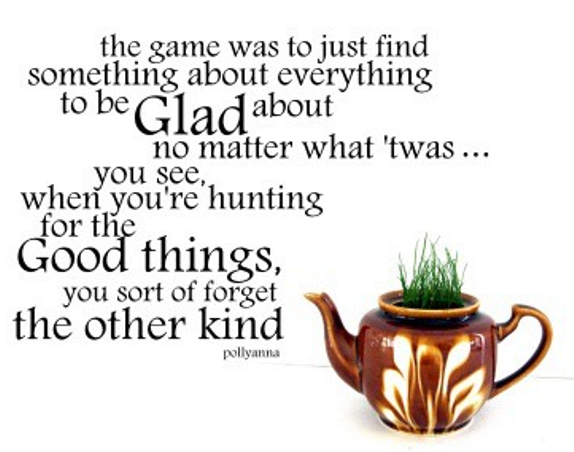
pollyanna-glad-game-quote One of my goals is to keep a balance on my perspectives that helps me to fall more in the middle of this continuum.  I see being repeatedly on the light side as too comical or humorous.  I do not want to be thought of as a comic or entertainer.  I concede that these people can make a difference in the world as one of my early heroes was Lenny Bruce.  I think Lenny was a great comic and a great social satirist.  However, I do not see my nature as capable of embracing a very high degree of humor in some of the evil and stupidity I see in the world.  I have never been very Pollyannish.  I want to stay away from embracing a view of the world that resembles the “Happy Days” syndrome.  All is good, nothing is wrong, everything will be all right.  Just sit back and watch TV.  This attitude can lead to the pitfalls of complacency and neutrality.

6836-do-you-look-at-life-through-rose-coloured-glasses-i-crushedGetting repeatedly too close to the position of “dark” humor on this continuum also has its pitfalls. I think I have lost many friends along the path of life because I have sometimes become too critical and carping on the evils and stupidity of the world.  You start condemning evil and stupidity and before you know it, you are attacking people.  It is easy to start associating individuals with policies, ideas and positions that you loath.  Soon, you are surrounded by former friends who are all stupid and evil.  The final stage in this process is to see nothing but a world that is evil and stupid populated by evil stupid people.  Everyone in the world becomes your enemy.  The exact opposite of Pollyanna becomes your gestalt.

happiness in moderationI do not choose to follow either extreme.  I want to follow the Greek “Golden Mean.”  In ancient Greece the Golden Mean meant to pursue moderation in all things.  I don’t really want to hate all Republicans despite the fact that today I can see little good in the Republican Party.  Nor do I want to love all things associated with the Democratic Party.  In some ways, the Democrats have helped to create the Tea Party and Right-Wing extremists in the Republican Party. Though I doubt many Democrats would either see or confess to their culpability in this matter.  There has always been and there always will be excesses and vices in both parties.  Politicians of either stripe have more in common with each other than they do with the average middle class worker in this country or any country.

death of socrates bookI was really too honest a man to be a politician and live.” —  Socrates (Ancient Greek Philosopher, 470 BC-399 BC)

Things do not seem to have changed much in respect to politics since Socrates was executed for his anti-political beliefs.  Socrates openly expected the youth of Athens to challenge and question authority.  This stance was no more valued in ancient Greece then it is in 21st Century America.

Apocalypse revelationsThe title of my blog this week was meant to be somewhat humorous and somewhat satirical.  Hence the question mark on the end of the title is not an accident.  I know many people who think that the world has never been in a worse state.  One of my ex-friends kept reading Revelations to me and telling me that the world was going to end about a year or so ago.  Our friendship ended but the world did not.  I have other friends who say “Obama has ruined this country.”  Many Americans say that the USA is in decline and that the end days are near.  I don’t understand this negativity.  I understand that much of the world economy is coming out of a bad recession.  I truly see that the world has more problems than anyone can count on two hands.  We have poverty, war, famine, drought, global warming, disease, inequality, injustice, tyranny, evil of all sorts and a great deal of stupidity and ignorance.  Is there a silver lining in this maelstrom of disasters?

good_old_days_specials_magazineSome people believe that if we can only go back to the “good old days” that everything will be all right.  I don’t want to say too much about this option since I think it is a fantasy.  Only in the movies, can you go back in time.  Time marches forward and waits for no one.  Either get on the train or they will bury you where you stand.  We are not going to go back to pre-cellphone days, pre-internet days, pre-abortion days, pre-global warming days, pre-nuclear power days or pre-any other days.  We can only go forward.  We can embrace many of the old values that made our countries great but we must pay them forward.  We must embrace new values and blend the old and the new together in a modern version of the Golden Mean.  This is not an easy task.

I published a book about fifteen years ago that I called “The New Business Values for the 21st Century.”  The book did not become a best seller but it had several good chapters which IMHO have stood the test of time.  The basic idea for this book was based on a model that I called the “Five I Model.”  My mentor Dr. Gary N. McLean told me to always work from a model.  I tempered his advice with the advice of Dr. George Box that “All models are wrong but some are useful.”  My Five I’s included the following:

  1. Informationnew business values
  2. Improvement
  3. Innovation
  4. Inclusion
  5. Incentives

The premise of my book was that new organizations must revolve around these five key elements which I had elevated to the status of values.  I think these same five elements or values also pertain to building a great nation or great country.  I do not want to repeat what was in my book; you may still be able to find it on Amazon or E-Bay if you are interested.  However, one element that I think has significant relevance to this blog today is the 4th Value of Inclusion.

Inclusion is a value that embraces diversity and working together in a win-win fashion rather than working in opposition.  Inclusion abhors a culture or position of divisiveness such as we see in politics today.  In fact, many of the conflicts in the world today are caused by the divisiveness that is the enemy of inclusiveness.  Inclusion is a friend of immigration and not an enemy of immigration.  I have a T-shirt that reads “We need a fair immigration policy and not an anti-immigration policy.”  Too many of our politicians today are preaching a divisiveness that borders on hatred and bigotry.  I do not need to mention names here.  All you have to do is read the newspapers or listen to the TV to see the politicians that are preaching exclusion rather than inclusion.

We cannot go backwards into “happy days.”  We can only go forward.  To do so we must practice the old values that made our nations great alongside of the new values that have become critical to success in the new millennium.  My book addresses at least five of these new values.  Do doubt there are others.  I am not certain of what they are, but I am certain of what they are not.  They are not values that foster:

  • Exclusivity
  • Divisiveness
  • Inequality
  • Anti-intellectualism
  • Anti-immigration
  • Bigotry, racism, sexism or discrimination of any kind

There is a major US election coming up in the next fourteen months.  No doubt the news will be full of “trending” stories concerning the pros and cons of various candidates.  It will be easy for many of us to take sides.  He is a Democrat.  She is a Republican.  They are independents.  He belongs to the Tea Party.  She belongs to the Coffee Party.  Such identification can and will only lead to more divisiveness, more intolerance and a greater inability to understand the arguments that are often critical to a comprehensive solution that can result in a win-win.  There is an antidote to this problem.

I suggest we look at all of the candidates running for office and ask ourselves “Will they bring our country together?”  “How do they rank in terms of the new values?”  “How do they compare in terms of the negativity values in my list above?”   I offer that we need to care less about party affiliations and more about the values that we see our candidates espousing.  We are no longer a “New nation conceived in liberty and dedicated to the proposition that all men are created equal.”  The USA is nearly 250 years old now.  We can remain true to the values of our founding fathers only by realizing that it is now the 21st century and that there are new values that must be added to the old values that made our nation great. This truth applies to every country in the world.  The path forward can be to a future that will be a happier world for all of us to live in.  As Jesus said:

“No one, after putting his hand to the plow and looking back, is fit for the kingdom of God.”  — Luke 9:62

Time for Questions:

What can we do to help create a better world for everyone, not just those in our country?  Which of the USA candidates for president do you think will most care about people?  Are you picking your candidate out of fear or distrust of the future?  What candidates will do the best to be inclusive, ethical and moral?  Are you supporting these candidates?  Why or why not?

Life is just beginning.

“Nothing brings me more happiness than trying to help the most vulnerable people in society. It is a goal and an essential part of my life – a kind of destiny. Whoever is in distress can call on me. I will come running wherever they are.”   — Princess Diana

Previous Older Entries Next Newer Entries