Virtues, Values, Morals and Ethics:  What are the differences and Who Cares?

The older I get, the more questions concerning virtues, values, morals and ethics concern me.  Like most people, I thought that I learned what these concepts meant through church, parents, school, books, fairy tales and movies.  What I never really learned was: 1. Why are they important?  2. What do they mean for society?  3. Why should we care about the differences?  4. How do they actually play out in real life?  Real life meaning in war, in peace, in times of societal disasters and even in everyday living.  Now with a few years left in my life, I am immensely concerned with the above questions. 

I started reading more about virtues and values and morals and ethics a few years ago and did not make even a slight dent in the literature.  Recently, I looked into YouTube to see what some videos had to say about the same questions I am concerned with.  I found more videos to watch than I could review if I lived 100 more years.  Nevertheless, I spent some time scanning a few of these videos to see what other writers had to say about virtues, values, morals and ethics.  After reviewing these videos, I decided I would just wing it from my own perspective and experience.  In this blog, I will try to answer each of the questions I posed based on my own experiences.  Before we begin, I would like to provide a very simple definition for each concept.  No ChatGPT or Google here.  This is my own simple and probably not very profound definition of each.  

Virtue:  A gift to be earned.  Examples, “Patience, Honesty, Faith”

Value:  Something we think is important or worthwhile.  Examples, “Happiness, Love, Frugality”

Moral:  A principle we want to live by.  Example, “Do unto others etc.”

Ethics:  Principles others think we should live by.  Examples, “Always respect your customers”

 1.  Why are they important?

The simplest but most compelling answer to this question is that they help you to lead a happier, more fulfilling life.  People adhering to these concepts will have character and integrity and be both respected and admired.  They may not make you rich.  They may not make you famous.  But true happiness does not come from fame and fortune.  Here are some quotes that I like on happiness:

“True happiness is not attained through self-gratification, but through fidelity to a worthy purpose.” – Helen Keller

“Happiness is not something ready-made.  It comes from your own actions.” – Dalai Lama

“Happiness is when what you think, what you say, and what you do are in harmony.” – Mahatma Gandhi

“Happiness is a warm puppy.” – Charles M. Schulz

“It is not how much we have, but how much we enjoy, that makes happiness.” – Charles Spurgeon

You might be asking yourself “Well, do we really need to pay attention to each of these concepts?”  Why not just worry about virtues or ethics?  My answer is yes.  We need to pay attention to all four of these concepts because they work together.  Like a car needs a transmission, engine, battery and wheels to get anyplace, you cannot become the person you want to be if you ignore any of these ideas. 

You cannot be virtuous and have shallow values.  You cannot have great values but no ethics.  You cannot have ethics but no morals.  We need to understand and embrace all four of these concepts.  Values and ethics deal more with external influences on our lives while virtues and morals come more from inside us and deal with our own abilities and character.  Can you have good character and embrace “bad” actions?  Can you have “bad” character and pursue good actions?  I think the answer to both these questions is “very unlikely.”  Actions flow out of character and character is developed by actions. 

2.  What do they mean for society?

First let me ask you a few questions and see if your thinking about these questions answers my question above.  Are you happy with the way people drive on the freeways today?  Do you feel that politicians and leaders today really care about you and the country?  Do you think that poverty and homelessness are inevitable or that good leadership could help to amend these problems?  Is a good leader ethical, moral, virtuous and guided by good values?  Do you think the above problems can be taken care of simply by higher incomes and fewer taxes? 

Now, I would ask you to go back to my question number 2 and take a few minutes to think of how you would answer it.  What would it mean for society if everyone practiced good virtues, morals, ethics and values?  Would we have as much unhappiness in society as we seem to have today?  Would our crime rate be high?  Would we constantly be involved in fighting wars in other countries? 

“Virtue does not come from wealth, but wealth, and every other good thing which men have comes from virtue.”  Socrates

“No people can be great who have ceased to be virtuous.”  – Samuel Johnson

A country cannot subsist well without liberty, nor liberty without virtue.”Daniel Webster

The first principle of value that we need to rediscover is this: that all reality hinges on moral foundations.  In other words, that this is a moral universe, and that there are moral laws of the universe just as abiding as the physical laws.  –  Martin Luther King Jr

Once upon a time, I thought that the most important thing I could teach in schools would be critical thinking skills.  However, after having been teaching since 1975 in every class from kindergarten to Ph.D. programs, I have come to believe that the most important thing I can teach is an appreciation of these four concepts.  I have no illusions that I can or should force any particular virtue or values or ethics or morality down anyone’s throat.  I think that while each of these concepts is universal, each person must identify his/her own ideas and beliefs that are most important to them.  I have my list of virtues and morals that I try to live by.  Each day, I start out with a little prayer to remind myself to practice a particular virtue.  Today it was patience.  Tomorrow it will be kindness.  I do an inventory at the end of each day wherein I ask myself “how did I do today on my virtue.” 

As for morals, I have several principles that I try to live by.  I have listed five of my most important moral principles below.  You may have five, ten, fifteen or twenty that you believe in and not one that matches any of mine.  I think that what is important is that each of your principles is a building block for positive character.  A character that other people can admire but even more importantly, a character that you can be proud of. 

  • Do no harm to others
  • Stand up for what I believe
  • Do unto others as they would have done unto them
  • Demonstrate integrity in all I say and do
  • Do not be afraid to do what is right

 3.  Why should we care about the differences between these concepts?

Dr. Deming was famous for his quote that, “Experience without theory teaches nothing.”   I strongly support his axiom.  What it means is that if you keep doing something and it works or perhaps does not work, without an underlying theory of causality, you will never understand what factors or actions have resulted in your success or failure.  Without understanding these factors, it may be difficult to replicate your success but also likely you will not be able to improve on it. 

For instance, what if people seem to shy away from me and dislike me?  Or what if I seem to aggravate people but I cannot figure out why?  Going to school to study psychology or reading “How to Win Friends and Influence People” by Dale Carnegie might be just the theory that you need to better understand yourself and your behavior.  Socrates said, “Know Thyself” and also that, “The Unexamined Life is Not Worth Living.”  Reflection and knowledge can lead to wisdom and wisdom will help you to lead a good life.

I also support the opposite belief, that “Theory without experience teaches nothing.”  You can read all the psychology books you want but unless you act on your theories, you will also learn nothing.  You cannot understand an apple or a steak without biting into it.  We must couple action with theory in our lives, or we risk going through life with a tank ½ full.

4.  How do these concepts play out in real life? 

This is a very challenging question.  I can tell you that in my life I tended to ignore the theory part in favor of experiences.  I learned a great deal through the proverbial trial and error, but my life has been in the past like a rubrics cube that came apart and I could not put it back together again.

I did not understand the relationship between the concepts we are discussing now and how they could and should play a role in my life.  I looked for a better more meaningful life by working harder, making more money and acquiring more diplomas and certificates.  Only in the past few years have I began to understand that without a firm grounding in morality, ethics, values and virtues, I could never live a life that measured up to my goals and aspirations.  These concepts form the bedrock and foundation for a life that exemplifies integrity and character. 

“Despotic power is always accompanied by corruption of morality.” – Lord Acton

“Where the roots of private virtue are diseased, the fruit of public probity cannot but be corrupt” –  Felix Adler

“Moral decline has become a growing concern in many societies around the world.  As the traditional values and principles that guide human behavior weaken, we see a shift in attitudes, actions, and even societal structures.  This decline in ethical standards, often characterized by increasing selfishness, dishonesty, and a lack of accountability, has widespread implications for individual lives, families, communities, and nations.” – Virtuous Magazine, 10-9-24

“Those who conduct themselves with morality, integrity and consistency need not fear the forces of inhumanity and cruelty.” –  Nelson Mandela

Conclusions:

I wrote this blog because as many people have attested to, there is an alarming decline in morality, ethics, values and virtues in our world today.  Many people now subscribe to an opportunistic philosophy which states that “If it is not illegal, than I can do it.”  To these people, it does not matter who they will harm by their actions.  The only things that matter are their own personal wants and desires.  Some people have referred to the present generation as the “entitlement” generation.  Others call our present times a time of Amorality.  Amorality is between immorality and morality, but it does not denote a Golden Mean.  Rather it is more like a zombie state that ignores the negative effects of a lack of morality on society.  It ignores the harm that Amorality does to individuals in any society. 

Opportunism, Amorality and Entitlement have become strong values for many in American society.  In this respect, I see them as “bad” values.  The difference between Good Values and Bad Values might seem to be merely a matter of opinion but I disagree.  I have argued in my previous blog that there are Bad Laws and Good Laws.  So too there are Bad Values and Good Values.  Bad values devalue life, liberty and the pursuit of happiness for private profit and gain.  The opposite is true of Good values.  Good values enhance life, liberty and the pursuit of happiness for the greatest number.  James Madison said that a Democracy is a “Rule of the Majority with a concern for the Minority.”  What we see in America today would seem to be the rule of an Oligarchic Rich Elite exploiting minorities for their own benefit.  Perhaps more emphasis on morals, values, virtues and ethics in the media and press and less emphasis on violence and mayhem could reposition our country.  I think many of us would like to live in a nation that is based on empathy and compassion for all rather than revenge and retribution for those who are more vulnerable, poor or less powerful.

The Diagram that I used in this blog was created by Sudir Vigneshwar.  He has a very good blog on the subject of Morality and Virtue at his website.  I think the diagram depicts in a model what I have been saying in so many words.   Look for 

The Moral Alignment Scale: In Depth Conversations on Morality with an A.I.

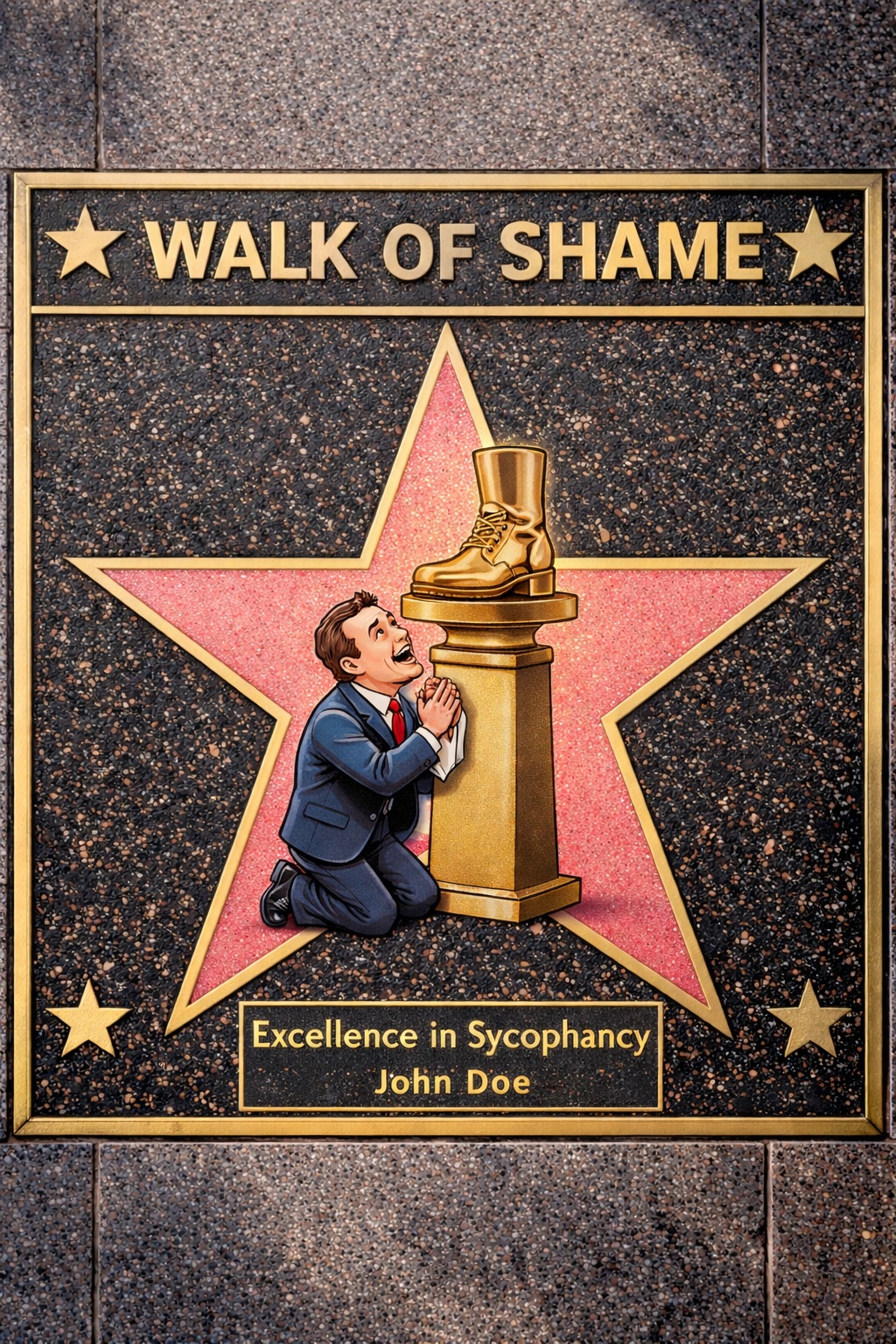
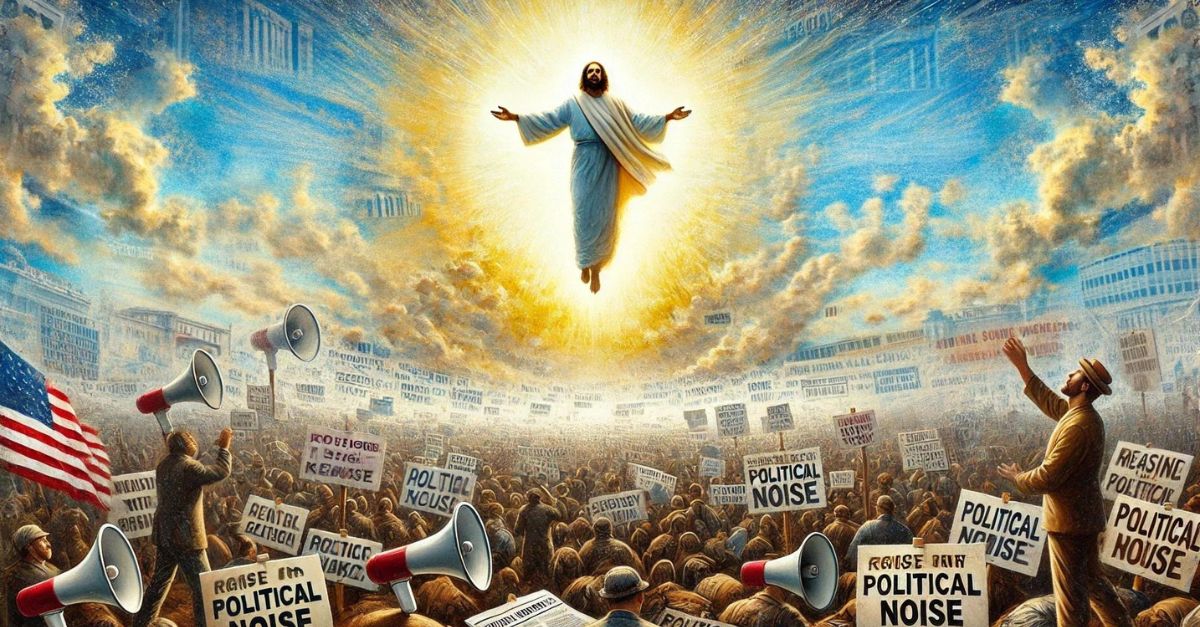
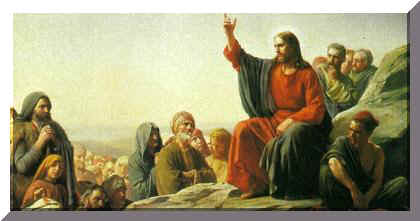
What if Jesus Ran for Office?

A Political Play in One Act:

Place:  A campaign headquarters somewhere in America.  Two political campaign advisors sit discussing campaign strategy for their candidate:

Jake:  A ten-year veteran of smear campaigns

Bryan:  The head campaign manager for a Republican candidate for office

____________________________________________________________________

Jake:  I hear the Democrats have nominated some guy named Jesus Christ or Jesus of Nazareth.  Sounds like a foreigner to me.  Do we have anything on this guy?

Bryan:  I had two aides dig up a bunch of stuff.  This guy has a checkered background.  I think we can really nail his ass to the cross.  I have five major areas that I think we can get him on.  Let’s go through them together and see what you think.  We need to prioritize our attacks.  Maybe start with the biggest ones first?

Jake:  Yeah, the sooner we destroy his credibility the better.  The more we can dump on him, the more he will drop in the polls.  So, what have you got?

Bryan:  Well first of all.  He claims he is some sort of itinerant preacher who can heal the sick and raise the dead.  But he does not have any theology training or any bona fide theology degrees.  And he is practicing medicine without a license.

Jake:  Beautiful.  We will nail him for being a fake faith healer and being incompetent as well.  Imagine preaching without a degree from a Bible College?  As for the license thing, I have some friends in the FBI who can start an investigation and maybe even charge him with a felony for practicing medicine without an MD degree.  What else have you got?

Bryan:  This guys got a bunch of followers but one in particular named Judas would be willing to go on Fox News and denounce Jesus as a fake and hypocrite.

Jake:  How much does he want?

Bryan:  He says for only thirty pieces of silver, he can make Jesus look really bad.

Jake:  Okay, we will run with that first.  How about several ads with Judas talking about Jesus being a fake faith healer and not following his own advice.  Let’s get them running as soon as possible before he builds up any momentum.  The press will eat this up.  Anything else?

Bryan:  I was saving the best for last.  You won’t believe this.  He has a platform called “The Eight Beatitudes.”  He wants to take from the rich and give to the poor.  Some type of income redistribution.  He says the “meek will inherit the earth.”  This guy is obviously a Communist.  He says a rich man will have less chance of getting to heaven than a camel would have of going through the eye of a needle.  He tells story after story of rich people getting screwed.

Jake:  Unbelievable.  What is this guy a total idiot?  Man, we will bury him with this.  We will label him as “The Communist Candidate.”  Has a ring to it.  I will tell all of our Fox Media outlets that they need to start an “anti-communist” line on this Jesus guy just as soon as they can.  I want radio, tv, podcasts describing how he plans to increase taxes on the rich and give it to the poor.  The usual stuff we label Democrats with: More welfare queens; Tax and spend; Soft on crime.  Does he say anything about crime?

Bryan:  I hear he hangs around with prostitutes and pimps.

Jake:  That’s great.  We can bring up his anti-family values as well as coddling criminals.  Any evidence he is screwing any of them?

Bryan:  Some of our informants say that he has a girlfriend, but we don’t have any corroboration for that.  He may be gay.  He is not married, and he hangs around with a lot of young men.

Jake:  See if we can follow up on the queer angle.  Hanging around with young men sounds suspicious to me.  Anything else Bryan?  I think we have enough to go on with just what you have already.  The key thing though is I would like to find more people who can testify what an asshole this Jesus really is.  Find some people he didn’t cure or some rich people like Elon Musk who will condemn Jesus.

Bryan:  One last thought.  He may be an Anarchist.  He talks about tearing the capital down and building it up again in three days.  He also talks about changing the law.

Jake:  OK, have someone follow him and get some good tapes of his talks.  Spread some money around and see if anyone else will come forth with some juicy stories about this Jesus.  I think he is dead already.  Crucified by his own ideas and words.  He won’t come back in three days; I can promise you that.   Jesus is history.

The End   

Some books on Jesus that you might like to read:


Can I Make a Difference or Not?

images 23Hamlet posed his existential quest for life with the famous phrase “To be or not to be, that is the question.”  I woke up this morning wrestling with a somewhat different question.  I wanted to go back to sleep.  It was too early to get up.  It was dark and cold.  I did not want to leave my nice warm bed but something inside of me was in war over the question of whether I can make a difference or not in the world.  Am I a fool and charlatan or a man with meaning and purpose?  You might say it was my pessimist side fighting with my optimist side.  It seemed more like my nihilist attitudes battling with my existentialist attitudes.  Or perhaps it is my cynicism versus my somewhat subdued optimism.  I will simply call these two voices “Doom and Gloom” versus “Hope and Possibilities.”  The struggle between the two voices went as follows.

Doom and Gloom:    You have nothing to live for.  Your life is a waste.  You have screwed up more things than you have made right.  No one cares what you think. You are not making a shred of difference in the world.

Hope and Possibilities:  If you quit now, what were all your struggles and efforts for?  You must believe in yourself; you can make a difference.

Doom and Gloom:  Show me any of your successes.  Do you have a single win in life that you can feel proud of or that you can say really changed the world or made a difference?

Hope and Possibilities:  Do you remember what Mother Teresa once said “I am not called on to make a difference, I am called on to have faith.”  You may never know if you are making a difference in the world but like buying a lottery ticket if you don’t buy one you can never win.

Doom and Gloom:  You have about as much chance of making a difference in the world as you do of winning the lottery.  Nobody cares about what you think or say.    

Hope and Possibilities:  History is made by people who did not give up.  Look at all the people who made a difference by their examples.  Jesus, Socrates, Mandela, Rosa Parks.

Doom and Gloom:  It goes without saying that you are no Jesus or even a Rosa Parks.  Many of the people that you mention were martyrs.  Do you aspire to make a difference by being a martyr?    

Hope and Possibilities:  I have been willing to take risks all of my life.  I have stood up for people.  I have stood against bullies.  I have risked any reputation or career advancement to stand up for integrity and morality.  No, I do not want to die for what I believe.  I would like to live a long and happy life.  But I will not change my beliefs to pacify or to conform to what others want to hear.

Doom and Gloom:  That is why you will never be successful in making a difference.  No one wants to hear your political diatribes and rants.  Your opinions are like raindrops on a duck’s ass.  People just want to be happy, and you are trying to make people unhappy.

Hope and Possibilities:  Probably true.  Over the years, I have said many things that people reject or that they think are even stupid ideas.  I have been guided by a desire to change how people think and what they see.  Einstein once said that “We can’t solve problems by using the same kind of thinking we used when we created them.”  I have tried to think out of the box.  I see the world so different than so many people I know.

Doom and Gloom:    And what did this get you?  Converts?  No, enemies, loss of friends, arguments, disillusionment.  There is also a saying that goes “Insanity is defined by doing the same things and expecting different results.”  You my friend, are bordering on insanity.  Your blogs and writings have not made one bit of difference in the world.

Hope and Possibilities:  I have about two thousand readers each month who look at my blog and many of them have left positive comments.

Doom and Gloom:    You are preaching to the choir.  You are not reaching the people who will make a difference in the world.  You have a small fan club.  You do not get as many hits on your site in a month as Kim Kardashian gets in one hour on her site.

Hope and Possibilities:  If you want to hurt someone, you really know how.  If I make a difference with one person, I want to believe it makes my efforts worthwhile.

Doom and Gloom:  Sure, go ahead and keep telling yourself that myth.  You know you would really like to have more people listen to your ideas and to help support some of them.  Over the years, I have seen so many ideas come from your feeble brain and to date, I have not seen a single one of them adopted by anyone with the power or influence to implement them.  Ideas by themselves cannot make a difference.  You need power and action.   

Hope and Possibilities:  You are depressing me.  I want to say that you are wrong.  I am losing this battle.  I am not sure that I have anything left to say that could change your mind.

Doom and Gloom:   Maybe it is about time that you wake up and smell the roses.  If you need a purpose or goal in life, perhaps it is time to pick something else.  Time to stop being a Boy Scout.  The world will little care or long remember anything you say here.

Hope and Possibilities:  I guess this is where being an atheist is a liability.  I cannot fall back on Jesus, God, Saints, Zeus, Odin or any other supernatural being for help or for divine intervention.  I can only go on by faith in myself and by believing that whether or not I make a difference, I cannot give up trying.  I may not be the best in the world but I won’t lay down and do nothing.

Doom and Gloom:  The final words of a fool.      

Hope and Possibilities: 

“Just because an apple falls one hundred times out of a hundred does not mean it will fall on the hundred and first.”  ― Derek Landy

I finally slid out of bed after kissing my wife “good morning.”  It was still dark and cold.  I went into the bathroom to take my morning shower.  My mood brightened considerably but I still have not resolved the battle with myself.  I sometimes doubt that I ever will.  I need to be grateful today for what I have.  I need to help someone else and stop struggling with my ideas of success and failure.  I need to practice love and gratitude and not whether or not I have made a difference in the world.

31394151-796013961b413c961aa2677e6507a7b1

How to be civil in an uncivil world

Ms Hudson’s piece is marvelous.  She is a wonderful writer with insights on civility that we all need to think about.  This copy is from a site it was posted on with shares.  The site is called Civic Renaissance.  I advise everyone to sign up for this site and enjoy some excellent writing.

On Plato and civility: reflecting on Plato during his traditionally recognized birthday month, and civility for International Civility Month + win a YEAR of WONDRIUM!

Gracious reader,

May is the month that scholars traditionally deem to be the birthday of Plato. Also, certain authorities have declared that May is International Civility Awareness Month.

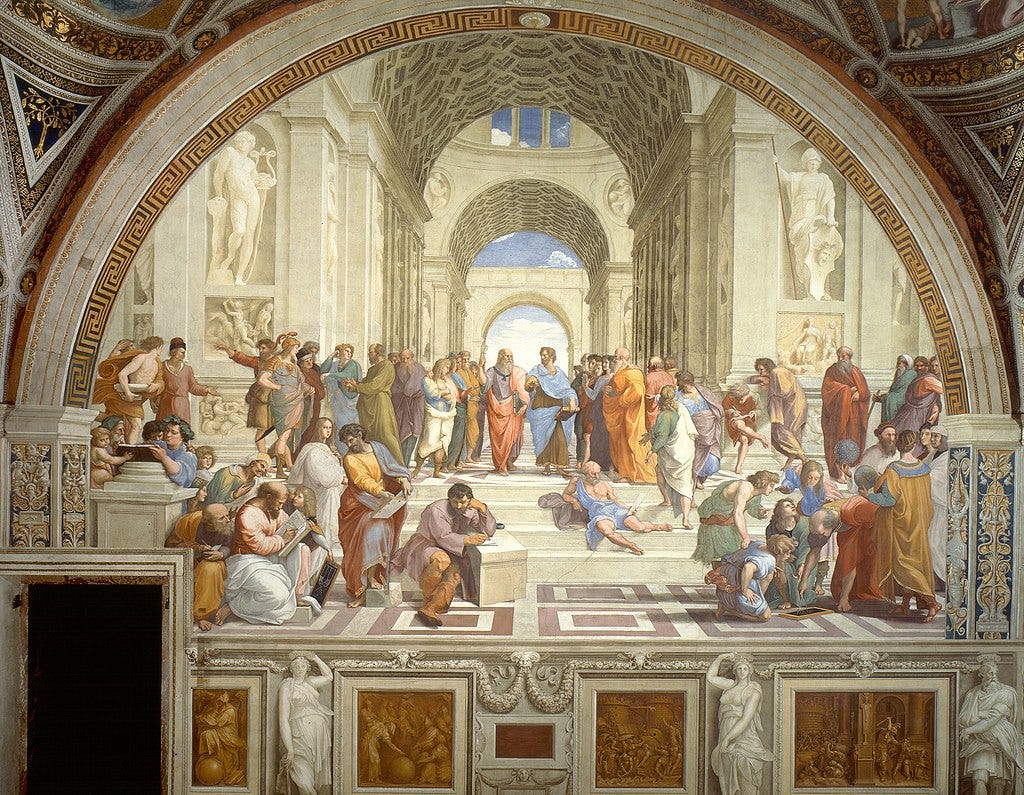
The School of Athens, a fresco by the Italian Renaissance artist Raphael, painted between 1509 and 1511.

I’ve been thinking of both of these topics of late.

Plato and civility are never far from my mind, but I recently emerged from an experience that caused me to lean and reflect on them all the more.

(For those new to the Civic Renaissance community, my upcoming book on civility will be published by St. Martin’s press in May 2023.)

A recent, tumultuous business transaction prompted me to consider how civility applies to the real world—a and to ask a question that you may have considered, too.

How can we be civil in an uncivil world?

Is it possible for people who are committed to the principles of decency, courteousness, and treating others with basic respect to succeed and thrive when others do not abide by these principles?

Or is it a hopeless cause?

Share

The story

In a recent business situation, the opposite party lacked all manner of basic decency.

Their behavior did not quite reach the level of illegal — although it did come perilously close—they were certainly unethical. More than anything, however, they were just terribly unprofessional and unpleasant to work with.

But their conduct reminded me of the importance of basic civility that many of us take for granted. It is only when norms of courtesy and respect are broken that we fully appreciate their importance to helping us co exist with others in society.

It’s an important truth: we note and appreciate civility most in its absence.

I define civility as the basic respect we are owed by virtue of our shared dignity and equal moral worth as human beings. We owe this to others regardless of who they are, what they look like, where they are from, whether or not we like them, and whether or not they can do anything for us.

I live and breathe civility and have studied social norms across history and culture— including countless instances of when they have been broken. I was still taken aback by how unpleasant the entire interaction was because of the absence of civility and mutual respect.

From the outset the opposite party was more than rude. They dispensed of basic courtesies from the get go. They didn’t even attempt to appear generous, amicable, or conscientious.

They were single-minded in their aim: all things personal aside, they wanted to get the absolute best deal possible at any cost.

Business is business, I’m sure they were thinking.

They forgot that there was a person on the other end of the transaction.

This resulted in me feeling used, squeezed, bullied, nickeled and dimed throughout negotiations.

It brought out the worst in me.

Instead of making me want to help them or instead of making me want to reach an agreement of mutual benefit, their conduct inflamed my baser nature, tempting me to go “scorched-earth,” ensuring they didn’t get what they wanted even if it hurt me, too.

I was frustrated by the fact that we were operating on two different moral and ethical levels.

I tried to stay high when they went low, yet every grating exchange with them made me want to sink to their level, where all bets and codes of decency were off.

In the end, rather miraculously, we came to an agreement.

I managed to prevent my baser nature from winning out. I was able to rise above the pettiness and the vindictiveness that I wanted to respond with— a facet of the human personality that we all share when we feel we are under threat.

But it wasn’t an experience I particularly enjoyed.

I was left with feelings of frustration and exhaustion. I felt like I had been disrespected and degraded.

I also felt disappointed in myself.

Most of us have probably had thoughts like this during and after interactions with people who are willing to do whatever it takes to get the upper hand:

Should I have been tougher?

Was my commitment to civility in the face of incivility a handicap?

Did my attempt to uphold my values allow me to be taken advantage of?

This experience has caused me to consider the practical importance of civility in life.

Won’t the person who is willing to go low—one who is willing to throw off the shackles of decency and civility—always win out?

Share

How to be good in bad world

“How to be civil in an uncivil world” is a variation of an important question that people have been considering for a long, long time: how can a good person succeed in a world of evil?

Renaissance thinker and author of The PrinceNiccolo Machiavelli, who we have explored in a past CR issue, observed that, in history those who tend to gain and maintain power appear to have morals publicly, but privately dispense with their values the moment they get in the way.

“Politics have no relation to morals,” wrote Machiavelli.

Also in The Prince: “Thus it is well to seem merciful, faithful, humane, sincere, religious, and also to be so; but you must have the mind so disposed that when it is needful to be otherwise you may be able to change to the opposite qualities.”

In other words, Machiavelli argues that one who wishes to be powerful must be willing to dispense with the moral bounds of civility if the need arises.

While the civil person is contained by their commitment to civility, the uncivil person can do whatever is necessary to win.

Socrates—the Greek philosopher Plato’s teacher, and the protagonist in his dialogues—took a different view. He would take issue with how Machiavelli defines “winning.”

Socrates said that justice is to the soul what health is to the body. If a person gets the better end of a business deal, wins an argument, or comes out on top of a political battle, but does so by cutting corners and being dishonest, he hasn’t really “won” anything.

His soul is unhealthy and sick.

In Plato’s Republic, Socrates attacks the poet Homer, the educator of Greece, because he doesn’t like the values that Homer’s poems promote.

Achilles, the protagonist of The Iliad, embodies the ethics of revenge, slaughter, and vainglory.

Odysseus, the protagonist of The Odyssey, embodies the ethic of wiliness and deceit in order to come out on top of any situation.

Socrates purposes a new ethic: one that loves wisdom.

He wants to trade the ethic of revenge, “might makes right,” and vindictiveness with a shared love and pursuit of goodness, beauty, and truth.

Socrates believes that anyone who acts with injustice does so out of ignorance—after all, who would willingly make themselves sick? Who would knowingly choose sickness of the soul?

“Living well and living rightly are the same thing,” Socrates said in The Crito.

Socrates argues that a just person has an excellent and healthy soul, and the function of a just soul and person is to seek the justice and soulish health of others, too.

Socrates noted that it is not then the function of the just man to harm either friend or anyone else. Seeking to harm is an act of injustice, and therefore harms the harmer. The function of the just person is to seek the good of others, friends and enemies alike.

In a related sentiment, Abraham Lincoln once said, “Do I not defeat my enemy when I make him my friend?”

Share

Final thoughts: on virtuous and vicious cycles, and on unbundling people and situations

There are three thoughts I’d like to leave with you.

First, we should not underestimate the power we each have to promote trust and civility in our world.

Second, learning to “unbundle” people and situations can help us mitigate the vicious cycles of incivility that are so detrimental to a free and flourishing society.

Third, we must remember when we encounter incivility in our modern world — and we invariably will, as the problem of incivility is endemic to human nature and human social life — we have a choice about how to respond.

Norms of decency and courtesy comprise an unwritten social contract between us and our fellow citizens. We take this contract for granted, which is why when this bond is broken, we are surprised, offended, and dismayed. When people don’t uphold their end of the social contract, we lose a little bit of faith and trust in society and others.

When that trust in others and society is corroded by the thoughtlessness and incivility of others, often we are less likely to act in good faith and civility in our future interactions. Our less-than-civil response to others may in turn cause them to be unkind to others with which they engage.

And so the vicious cycle continues.

My recent experience with bad actors made me appreciate those today who claim that “all bets are off” when it comes to decency in public life. We often hear things like, “The other side has gone to a whole new low. How can I be expected to stay civil?”

We also see evidence of the “vicious cycle” all around us in politics today. When one figure breaks norms and bounds of decency everyone else feels like they have to so as to keep up.

We contribute to this trust-corroding ripple effect when we are uncivil. Others do, too, with their incivility. The incivility of others often tempts us to relinquish the shackles of decency in order to “win.”

But we must resist—for our own sake, for others, and for society.

We cannot control the conduct of others.

We can only control ourselves.

We must also learn to mentally unbundle people and situations. This means not assuming things about their character because of one deed, word, or interaction you had with them. We must learn to unbundle situations. This means not allowing one bad interaction or instance to corrode your trust in society in general.

This is much easier in theory than in practice. This is much easier said than done. but again, in the end we cannot control others. We can only control ourselves.

Socrates and Machiavelli remind us of why we are civil in the first place. The reason to be civil isn’t instrumental. It isn’t just a tool of success. As we’ve seen, sometimes it can be an impediment to success. Civility is instead a disposition, an outgrowth of seeing people as they really are: as beings with irreducible moral worth and deserving of respect. This is worthy for it’s own sake, even if it means we don’t gain the upper hand of every business dealing.

Being uncivil is poison to the soul. When we treat people as means to our ends, it hurts and degrades them, but also us, too.

Machiavelli is famous for the amoral aphorism: “The ends justifies the means.”

Socrates would respond, “But what is your end?”

No earthly battle is worth compromising your soul for.

Here are some questions to consider:

  1. Can you empathize with my experience? Have you had an experience where it felt like decency was not a match for indecency? Write to me with your story and how you dealt with it at ah@alexandraohudson.com
  2. Who do you find more persuasive: Machiavelli or Socrates? Do you think we can be civil in an uncivil world? Or will incivility always win out?

Thank you Ms. Hudson for a great piece of writing and morality.  

Lawyers, Lawyers Everywhere, but Not a Shred of Justice Anywhere

lawyers---white-__00423.1420748943.1280.1280

I am going to make a case here.  My claim is that there are too many lawyers running things in the United States of America.  I will present the facts and arguments.  You be the judge and jury.  If I make a good case, then I will settle for fifty million dollars. 

Ladies and Gentlemen of the Jury.  This may sound like an extreme case.  I know most of you will have some friends who are lawyers.  Some of you may be thinking “Well, there are good lawyers and there are bad lawyers.”  Some of you may be thinking “Well, how would we run this country without lawyers.”  Please listen to what I have to say.  Then you may render your verdict. 

I will repeat my claim.  We have too many lawyers.  They have created a litigious society that is being run by fear and not by logic or reason.  Lawyers use lawsuits to run things and the number and frivolity of these lawsuits has reached epidemic even pandemic proportions.  We have lawyers running our government.  We have lawyers running our school boards.  We have lawyers running our city, county, state, and federal governments.  Everywhere you look in business, there are lawyers prosecuting lawsuits, making claims for reparations, litigation, and countersuits.  Civil courts have begun to take over justice from legal courts.  Law has replaced justice in America.  Laws are not made of the people, by the people and for the people, but laws made of lawyers, by lawyers and for lawyers.

download (1)

For the past two months we have witnessed lawyers running all over the USA with frivolous lawsuits and craftily plied arguments to usurp the will of the people.  Nay, not just to usurp the will of the people but to overthrow the government of the people of the United States of America.  Even as I write these lines, there are still pending threats to the legally elected President and Vice-President Elects of the USA.  These lawsuits and claims are made by men and women without a shred of decency, integrity, or ethics.  The only thing these lawyers care about is power and winning and money.  The destruction of American Democracy means nothing to these vultures.

n_Menendez_garretthaake_michaelkang_abrahamaiyash_janetimm__PAlawsuit_201121_1920x1080

Ladies and Gentlemen.  Allow me to present some statistics on lawyers in the USA.

Lawyer Statistics & Facts – 2020 –  https://goremotely.net/blog/lawyer-statistics/

  • The US legal business sector has an estimated $160 billion market share.
  • More than 100 million cases are filed each year in state trial courts, while roughly 400,000 cases are filed in federal trial courts.
  • Only 14.4% of all US lawyers are certified members of ABA. (American Bar Association)
  • Some high-profile attorneys can earn as much as $2,400 hourly ($5 million annually).
  • There are more than 1.35 million lawyers in the US.
  • The number of active lawyers in the United States increased 14.5% over the last decade
  • In China, there is 1 lawyer for every 4,620 inhabitants.
  • In the USA there is 1 lawyer for every 300 inhabitants
  • The percentage of lawyers who are men and women of color (Hispanic, African American, Asian, Native American, and mixed race) grew by a mere 3% over the past decade, increasing from 11.4% in 2010 to 14.1% in 2020.

Ladies and Gentlemen of the Jury.  Please believe me when I say that I am not the only one who thinks that we have too many lawyers in the USA.  Numerous experts can witness and provide testimony that America is one of the most litigious nations in the world.  The amount of litigation has nothing to do with justice.  Lawyers seek out and design strategies to create lawsuits strictly aimed at making money.  How many of you have been notified that you are eligible for some class action lawsuit?  Lawyers actually buy and sell such lawsuits in the hopes of extorting money from organizations that prefer not to have their reputations smeared or waste time in court challenges.  Many organizations simply settle rather than undergo a long and tedious legal process.

Ladies and Gentlemen.  Let me tell you what happens in many of these class action lawsuits.  A company is found with either a potential or tenuous wrongdoing.  Litigants who may have been remotely connected to this perceived wrongdoing are sought out who are offered a monetary reward for their participation.  They may be former customers, clients, or employees.  The case goes to court.  Millions of dollars are sought from the accused.  The lawyers may win or settle out of court.  An award is made.  Let us say that the settlement is made for 50 million dollars.  The lawyers take twenty percent of that for the claimants.  Thus, ten million dollars may be paid out to other people.  The rest of the money, the other 40 million dollars goes to the law firm. 

Frivolous Lawsuit

Ladies and Gentlemen.  I will give you a personal case that I was witness to firsthand and that I will swear to.  A number of years ago, I received three envelopes in the mail.  Upon opening each envelope, I discovered that they were all from eBay.  One had a check for .47 cents.  One had a check for .97 cents.  One had a check for .25 cents.  The postage on the last envelope did not even cover the cost of the check.  Apparently, eBay had lost a class action lawsuit for some overcharging that they were alleged to have done.  I had never, I repeat never signed any documents alleging any wrongdoing or agreeing to any lawsuits against eBay.

Curious, I went online to find out what this was all about.  As I expected, some law firm had brought the lawsuit and won in court.  eBay agreed to pay.  Thousands of people received small checks like I did based on the volume of business they had done with eBay.  The people connected to this alleged crime received pennies while the law firm copped multi-millions for their efforts on our behalf.  I would gladly have refunded my money to eBay since I still do business with them and have never had a problem with their business practices. 

“In April 2018, The New York Times chronicled an even more troubling (albeit related) consequence of TPLF: litigation funders were pushing plaintiff law firms to encourage women to undergo unnecessary surgeries in order to drive up the value of their claims.” — Third Party Litigation Funding

Ladies and Gentlemen.  Did you know that law firms buy and sell lawsuits like you go to the store to buy and sell clothes or merchandise?  (See How To Sell Your Lawsuit)  If a law firm does not think it has the resources or time to prosecute a potentially lucrative lawsuit, it will simply list such suits in a legal newspaper classified ads offering to “sell” the lawsuit to another firm that has the resources to manage the lawsuit. 

“Mighty lends money to plaintiffs in personal injury lawsuits. You collect only if they do. Plus, the head of this online electronic investment platform recommends that only personal-injury lawyers, or investors who have such lawyers helping them evaluate cases, plunk down their money at this early stage.”

Does anyone here think that this is about justice or fairness or equity?  The legal profession has become about power and money.  Do you think the lawsuits brought by Trump and his cadre of legal experts had anything to do with justice or democracy?

“President Donald Trump and his allies have filed dozens of lawsuits across the country in an attempt to contest the election results.  Most of them have been shot down or withdrawn, and no court has found even a single instance of fraud.  Of at least 57 cases to have been filed, including some not directly involving Trump but which could nonetheless affect his standing, at least 50 have been denied, dismissed, settled or withdrawn.”

Ladies and Gentlemen.  Please consider that the cases on behalf of Trump were brought by men and women with legal degrees.  These are educated people many of whom went to first class legal colleges.  These are people intelligent enough to get an advanced degree and pass tests that would be impossible for the average person.   Nevertheless, the cupidity of these lawsuits in terms of the damage they have done to our country can only point to a failure of the legal profession to inculcate a sense of ethics and morality in their practitioners.  These lawyers have no interest in supporting the very democratic foundations of a country that allows them to practice their profession.

Ladies and Gentlemen.  Let us look now at the damage that this profession has done to our government.  In no country in the world are there as many lawyers in the Federal government as in the United States of America.  Look at the following statistics:

  • The EPA employs 1,020 lawyers with payroll exceeding $1.1 billion
  • The IRS employs over 1,400 lawyers.
  • There are 10,000 lawyers who are employed by the US Department of Justice.
  • In total, there are 25,060 Lawyers in the Federal government costing taxpayers $26.2 Billion per year.
  • 25 of the 45 presidents of the USA have been lawyers
  • In the 116th Congress of the USA, there are a total of 192 lawyers out of a total congressional body of 537 individuals (Membership of the 116th Congress)

Ladies and Gentlemen.  You may well ask, “Well, what harm can all these lawyers do.”  Let me tell you. Having been around lawyers in many different organizations, I can testify to the limited perspective that the legal profession often has in terms of viewing the reality that confronts the average person.  Many of these “legal” experts have never done a day of hard work in their lives.  Often the sons and daughters of privileged and wealthy parents, they go from school to school until they achieve their legal degrees and then go right into some law firm that snatches them up as soon as they graduate.  Their experience of working people and the rest of the world is narrow, limited, and biased.  Once, in their field they are motivated by money, power, and greed. 

downloadLadies and Gentlemen.   How can you have a government of the people, by the people and for the people when it is a government of the rich by the rich and for the rich?  A government of lawyers, political science majors and corporate people.  An interlocking network of proponents who have a self-interest that nowhere matches the nature and interests of the general public of America. 

In the current Senate, only 19 of the 100 office holders served in the US military.  There is one engineer, four farmers, one rancher, one computer programmer, one accountant, about twenty teachers and the rest are either lawyers or businesspeople.  There are no plumbers, no architects, no scientists, no physicists, no chemists, no carpenters, no brick layers in the Senate.  Three percent of the Senate are African American, Five percent are Hispanic, or Latino and three percent are Asian/Pacific Islanders. Twenty five percent of the Senate are women.  — Congressional Statistics

vote-for-kevin-newman-too-many-lawyers

In the USA as a whole, the numbers are quite different from the Senate in terms of representation.  (See Census Government)

  • African Americans are 13.4 percent in population versus 3 percent in the Senate
  • Asian Americans/Pacific Islanders are 6.1 percent in population versus 3 percent in the Senate
  • Hispanic or Latino are 18.5 percent in population versus 5 percent in the Senate
  • Women are 50.8 percent in population versus 25 percent in the Senate
  • Veterans are 6 percent in population versus 19 percent in the Senate

Ladies and Gentlemen.  The facts speak for themselves.  But one last fact, if you please, before I do my summation. 

  • The median net worth of an American family is $52,700. The median net worth of members of Congress who filed disclosures last year is just over $1 million. — open secrets

Ladies and Gentlemen of the Jury.  Let me conclude.  As you can see from the evidence, there is no way that the U.S. Congress represents the American people.  The sad part is that we vote these people in time and time again.  We continue to elect the same people over and over again with the same disastrous results.  We have a so-called democracy which does not represent the American people.  But I have not even touched on perhaps what is the worst of the dangers that lawyers are doing to this country.

In a land where I live called Wisconsin, we have been involved in an ongoing dispute over the siting of what is called a CAFO, or Concentrated Animal Feed Operation.  I have been to many county government meetings and board meetings where arguments have taken place over the jurisprudence and legality of such operations.  In every meeting, there is always a lawyer sitting rather obtrusively near the board members. 

services-featured-civil-litigationMany of the board members in the rural counties are farmers or laborers or educators who have little or no training in the laws that they are sworn to protect.  Thus, they rely heavily on the lawyers that they hire to provide advice and perceived protection from lawsuits.  This renders the board members subject to the legal opinion of the lawyer which is quite often at odds to what the public wants.  The boards are frequently fearful of a lawsuit (often offered by the lawyer as a possibility) and will forego making an informed decision based on evidence that is presented at the hearings. 
I have witnessed this happen at county government meetings over other issues besides the one noted above.  I have also seen business organizations, when I was a management consultant, that relied too heavily on the advice of a lawyer.  This advice, based as it was on the fear of a lawsuit, and not a more probable positive outcome often led to missed business opportunities.  I knew when I had an opinion that differed from the legal opinion that I was going to have an uphill battle to have any positive changes made.  Lawyers thrive on fear and angst. 

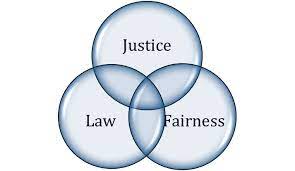
download (2)We need less lawyers.  Lawyers and lawsuits are destroying America and Democracy.  We need leaders with more diversity in education.  We need leaders with more ethnic diversity.  We need leaders with more gender diversity.  We need greater representation that reflects the demographics of America.  We need less lawyers.  We need more justice and we need more fairness. 

The Prosecution rests it’s case.


My Four Best of Everything:  – Part 3         

what_a_great_idea1

This is Part 3 of my four best of everything.  In this final part, I would like to share with you my four favorite ideas.

For those of you who missed Part 1 and Part 2, this was my introduction.

This week I am doing what I call my four best of everything.  Everything that matters to me anyway.  Perhaps I should say it is my four favorites of everything that I admire in the literary world because best is such a qualitative term.  There may be little difference between the word favorite and the word best, however, using the term best is more provocative and usually ends up in arguments or debates.  Since I do not want to be judgmental, I will use the term favorites in the text of this blog.

I am sure that each of you reading this will have some ideas concerning your favorites in these areas.  I invite you to put your ideas or thoughts concerning your favorites in my comment sections.  The more ideas you have the better.  Don’t be shy.  Use any language you want to share your ideas with the rest of the world.  Let us know what you like and why you like it.  Plenty of room in the blogosphere.

My Four Favorite Ideas:

internal-coverIf you think about the ideas or premises or nostrums that guide your life, you will soon notice that we have many ideas that along our journey we have adopted.  The sources of these ideas are vast.  Fairy tales and children’s stories give us ideas such as “A stitch in time saves nine” or the “The race does not always go to the swift” or “Those who do not plan ahead may starve in the winter.”  Many of our ideas about living no come from our parents and family.  My mother used to say such things as “Ignorance is bliss” and “If you give them enough rope, they will hang themselves.”  My father was fond of saying “Believe nothing of what you hear and only half of what you see.”  He also used to like to say, “You have nothing to fear from the dead, only the living.”  These two later beliefs have guided a great deal of my life.

As we grow up and go to school, leave home and get a job, we no doubt pick up more ideas that we will covertly and sometimes overtly use to guide our lives.  By guiding, I mean we will use these ideas to make choices that impact the direction of our lives.  One of the many ideas that I carry in my brain came from Dr. George Box of the University of Wisconsin.  He said, “All models are wrong, some are useful.”  This premise has guided much of my working life.  I have used this Box’s thought when consulting to find a more productive way of addressing organizational changes that are needed in a client’s business.

However, since this blog is about the best or at least my favorites, I need to start discussing my four favorite ideas.  There is no particular relevance to the following order.

There is No Truth:

your-truth-and-my-truth

Obviously, if you accept my truth, then it poses a paradox.  How can this be true if there is no truth?  But in many ways, that is the nature of most truths.  They are paradoxical.  If they are relative, they are not always true which is a contradiction.  If they are absolute, there are usually exceptions that can be found which makes them false.  What a dilemma!  From the time we are born we are taught to say the truth, speak the truth, search for the truth, but we are all liars.  We don’t know what the truth is and there are many times we would not say it if we did.

If someone came to your front door and said, “Is your mother home, I want to kill her”, what would you tell them?  Would you admit that she was home, if she was?  I doubt it.  We all say we want the truth, but the fact is that many of us will never find the truth because (As our leaders believe) and as Jack Nicholson said, “You can’t handle the truth.”

A friend of mine explained his version of the truth to me several years ago.  He said “Imagine a bookshelf with five shelves.  On the bottom shelf, I put things that people tell me that are opinions and unsubstantiated or uncorroborated pieces of information.  As time goes by and I find more evidence in support of this so called “truth”, I will move the bit of information to the 4th shelf.  Each time I get more evidence it goes up a shelf.  On the top shelf, I have things that I believe are true beyond a ‘reasonable’ but not absolute doubt.  For the time being, I accept the top shelf ideas as true, but I hold out the possibility that I will later find some bit of evidence that invalidates even this Top Shelf truth.”  I like this model of truth.  Let me give you an example of how it plays out for me.

About two months ago, I came across an article that said “In 30 years, all beef and diary farms will be dead.  Things of the past.”  Living in Wisconsin, I was astonished by this bit of information.  I did not put much credibility into the idea.  Given my predilection for cheese, steak and butter I could not reasonably accept any truth to this idea.  Nevertheless, I put it on the bottom shelf of my “Truth Bookcase.”  A few weeks later, I was attending the Annual Nobel Conference at Gustavus Adolphus in Minnesota. This past year it dealt with the environment and global changes to it.  I was surprised when one of the speakers echoed the same idea that I had heard a few weeks ago.  Namely that diary and beef farms would in twenty or thirty years mostly be a thing of the past.  I moved this thought up a shelf.  Two days ago, I was reading the local newspaper and they had an article about diary farms in Wisconsin.  According to this article, ten percent or 800 diary farms in Wisconsin went out of business this past year and there was no sign that the trend would not continue.  I was astounded. I had no idea that the diary industry was so shaky.  I moved the original idea that at least diary if not the beef industry would be gone in thirty years up another shelf.  Two shelves to go.

Thus, truth becomes a process. It is not a final goal.  There is no final absolute truth.  It is a nominal, like in quality improvement that we can never reach.  We can only get closer and closer, but we can never reach a truth that is God like.  The truth that humans can know will never be infallible.

Everything Will Change:

unnamed

This idea seems so obvious that I almost ashamed to list it as one of my favorites.  Nevertheless, I keep having to remind myself that “This too will pass.”  Life is a stream of events and even if Santayana was right in that “Those who forget the past are condemned to repeat it”, there is still nothing in the past that will ever be recreated exactly as it happened one hundred or one thousand years ago.  Heraclitus was also right when he said, “You never step in the same river twice.”

All is change.  If we could see the atoms of time that surround us, I am sure that we would see a stream of “time” atoms that are flowing like a river with swift currents and eddies and backwaters.  This is the flow of time and the river of change.  Sometimes going backwards but inevitably surging forward and sweeping everything out of its way.

We poor humans are caught up in this river and we must do our best to keep from drowning.  We are swept along like so much flotsam.  The river of time that we are in is invisible to the naked eye, but this does not stop it from changing the lives of those swept along by its currents.  Every day, we deal with new events while the old events keep playing out.  A continuous series of changes.  New wars, new disasters, new diseases, new horrors all mixed in with new ideas, new joys, new births, new technologies, new celebrations.

There are those who we say are “stuck in the past.”  The good old days never die for many.  We see the sad efforts that many have to hold onto the past or to “Make America Great Again.”  Why, can’t things just be like the were when I was a kid?  Movies were twenty-five cents and a bag of popcorn was ten cents.  The good guys were good guys and the bad guys were bad.  Police officers walked the streets and helped people in need.  It was happy days.

African Americans were denied voting rights and the basic liberties as stated in the constitution.  A women’s place was in the kitchen and a man was the undisputed king of home.  White people won all the wars they started, and Indians stayed on the reservation.  Mexicans came over to pick tomatoes and then went back home.  A child’s place was to be seen and not heard and the World Series was the greatest sporting event in the world that only White Americans played.  Oh my!  What ever happened to the good old days.

You Can’t Take It with You:

1101978090_univ_lsr_xl

Who says I can’t take it with me?  I sure as hell am going to try.  Like Pharaoh, I am going to build a big mausoleum and I am going to put my house, motorcycles, cars, rings, watches, shoes, clothes, wife, kids and anything else I own right beside me when I die.  I am going to collect the biggest batch of things that the world has ever seen, and I am going to have it all buried with me.  Isn’t that what life is all about?  Collecting stuff, collecting things.  Shopping for more stuff and more things until we drop dead.

Maybe I am getting carried away here a bit.  Of course, I can’t take it with me.  Pharaoh might have had it buried with him, but it did not take the tomb raiders long to take it back.  Maybe you can get something that can’t be taken away?  A building named after you.  An airport or street named after you.  A testimonial placed somewhere in your honor.

Alas, people are fickle.   Buildings get torn down.  Name places change with the whims of those in power.  There are only so many airports and streets and there are millions of people clamoring to have their names in places that they think will insure their posterity.   You can’t even take fame with you.  In a hundred years or so no one will remember who you were.

One of the famous tropes among baby boomers is remembering where they were when JFK died. I once asked one of my freshmen college classes this same question and to my astonishment got blank looks.  I could not believe it when one of them said, “Who was JFK?”  Who will remember you when you die?  Maybe your wife and a few friends assuming they outlive you.  So what can you take with you?  Fame, fortune, power, money?  What did Marc Anthony in Shakespeare’s Julius Caesar say: “The Evil that men do lives after them; the good is oft interred with their bones.”  There is nothing on this earth that you can take with you.  There is nothing that will outlive the entropy and erosion that will destroy all the mightiest monuments that have ever been built.  Everything else is an illusion that you take with your to your grave but that is as far as it will go.

Love is the Only Real Purpose in Life:

nLQMZk

You can spend your life looking for its meaning or you can spend your life trying to find its purpose.  Your search will uncover many ideas but none of them will ever suffice.  Nothing will satisfy your quest until you realize that love is the only purpose a human life exists for.  Every prophet who ever existed recognized this simple truth.  Love is the only thing that gives life meaning and purpose.  It is so simple that it escapes many of us.

We look for purpose and meaning in our work, our jobs, our acquisitions, our accomplishments, our credentials and our status, but none of these give us happiness.  The only satisfaction we get in life is from loving others.  The individual who does not know love for others lives a lonely unhappy life.  Love is the power that makes life worth living.  As Jackie Wilson sang in his song Higher and Higher: “You know your love, keeps on lifting me higher and higher.”

I sometimes think love is one of life’s great mysteries.  I have spent a great deal of my life asking the question “What is love?”  I am 73 years old and I am still puzzled as to what love really is.  Is love the same as passion?  Is love good sex?  Is love caring for someone else?  Is love simply wishing no harm for anyone else?  Does love need reciprocity?

People use the term love for many things.  I love my car.  I love my dog.  I love my Nikes.  I love you.  I love him.  I love her.  I love everybody!  Jesus said that love was more than just words.  Love exists in the doing.  How do I show my love for others?  “Greater love has no one than this, that they will lay down their life for another.” – John 15:13.   Do I need to die for someone else to show true love?

I don’t believe that loving things is love.  I don’t think loving my car or my Nikes is true love.  For that matter, I do not think that loving my life is true love or even that loving my wife is true love.  I think true love is a more intangible quality that we can only approximate.  To know true love is to be a lover in a more universal sense.  True love seems most evident during a crisis.  I think that the people who stayed behind on the Titanic to let others have a seat in the lifeboats were true lovers.  I think Harriet Tubman (who ran the underground railroad) was a true lover.  I think Martin Luther King was a true lover.  Lovers are not perfect people by any means, but they know that life is more than just loving oneself or even another single individual.

Let’s be clear here.  I love my wife and I love my sister, but does that make me a true lover?  Not necessarily.  What if I love my wife and sister but I hate immigrants?  What if I love you but I hate Black people or Latino people or people who belong to another religion or another country?  To know true love one cannot hate anyone.  Today we hear a vocal minority decrying “haters.”  However, these same people hate Democrats, liberals, Non-Christians, Gays, immigrants and minorities.  They may love Trump, McConnell, Nunes, Christians and Republicans but they are more haters than lovers.  Jesus did not say “Only love those who are related to you or whom you like.”  He did not say that you can pick and choose who you love.

Love is the most important journey of our lives.  To find true love is to find a love for the world both in concrete and abstract terms.  It is to love globally as well as locally.  It is to love non-kin as well as kin.  It is to love the rich as well as the poor.  It is to love the sick as well as the healthy.  It is to love Democrats as well as Republicans.  Probably no task is more difficult, but no task has more promise for humanity and for our own souls.

Well, this concludes my best of everything series.  In Part 1, I covered some of my book preferences.  In Part 2, I covered more literary ground and in this final Part 3, I have covered some of the ideas that I think are my favorite guides for trying to live a good life.  I am certainly no exemplar of any of these ideas.  I journey down the path and get stuck in some bogs.  On other days, I take a wrong turn.  I often hesitate when I should be charging forward.  On some days, I even go backwards.  My life has regrets, recriminations and misgivings that would fill an NFL stadium.  I know right from wrong and still too often choose the wrong.  But one of my other guides is “do not kill the message because you don’t like the messenger.”  You may need to find your own guides, but you won’t go wrong with any of the four that I have described in this blog.  Try them and let me know what you think.


My Four Best of Everything:  – Part 2         

il_570xN.863536951_q2uk

I started this blog two weeks ago and became sidetracked what with Trumps possible impeachment and all.  Alas, my dreams did not come true.

In Part 1, I listed my four favorite fiction writers and my four favorite non-fiction writers with an explanation of how and why I picked each of them.  In Part 2, I am going to list my four favorite writings.  I will finish in Part 3 with my 4 favorite ideas.

For those of you who missed Part 1, this was my introduction.

This week I am doing what I call my four best of everything.  Everything that matters to me anyway.  Perhaps I should say it is my four favorites of everything I admire in the literary world because best is such a qualitative term.  There may be little difference between the word favorite and the word best, however, using the term best is more provocative and usually ends up in arguments or debates.  Since I do not want to be judgmental, I will use the term favorites in the text of this blog.

I am sure that each of you reading this will have some ideas concerning your favorites in these areas.  I invite you to put your ideas or thoughts concerning your favorites in my comment sections.  The more ideas you have the better.  Don’t be shy.  Use any language you want to share your ideas with the rest of the world.  Let us know what you like and why you like it.  Plenty of room in the blogosphere.

My Four Favorite Writings:

Ecclesiastes: 

1600x685_porgy

Was the author of this bible book being a nihilist, a skeptic or an idealist?  I think it will depend on your own interpretation.  For me, the message of this book is summed up in four words “Vanity, all is vanity.”  We are driven by vanity and ego.  Our society relishes fame, fortune and power.  Those who have them, guard them jealously.  Those who don’t will fight and die for them.  And what are the results of this obsession?

Famous people hide from those that made them famous because they can no longer live a public life.  In many cases, they are hunted by nutcases who believe that they can be famous by an association with the famous no matter what kind of a bizarre twist it might involve.  The death of John Lennon comes to my mind as I write these words.  Often fame itself is fleeting and the aftermath can be a feeling of abandonment, loneliness and worthlessness.  Witness the number of famous people who take their own lives.

Power corrupts and absolute power corrupts absolutely.  The quest for power destroys the soul of the power holder.  Power becomes an end in itself rather than a means to obtain some good.  We can see this problem when we look at the US Congress.  The power that these congressmen hold is all too often corrupted by their desire to hold on to this power regardless of the moral and ethical conundrums such desire involves.

Fortune hunters think that they can achieve happiness by becoming millionaires or billionaires.  Many see wealth as a pathway to freedom without realizing the chains that wealth forges for them.  The following refrain that Porgy sings in Porky and Bess sums this up very well:

De folks wid plenty o’ plenty

Got a lock an dey door

‘Fraid somebody’s a-goin’ to rob ’em

While dey’s out a-makin’ more

What for?

Porgy had the sun and the moon and the deep blue sea and that was plenty of nuttin for Porgy.  Porgy exemplified the wisdom that is at the core of Ecclesiastes.

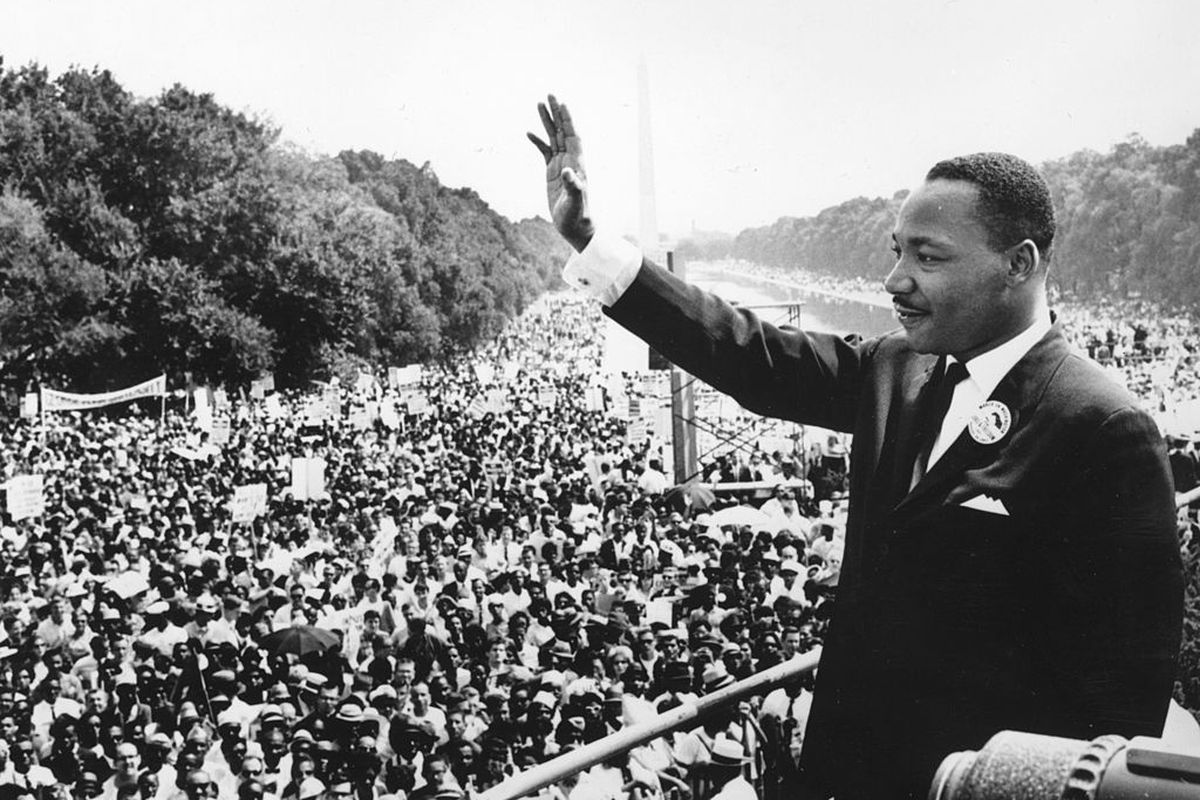
Martin Luther King’s “I have a Dream Speech”:

GettyImages-2674125.0.0.0.0

The only other speech that comes close to this one is Dr. King’s famous Eulogy speech.  The passion, cadence, rhyming, metaphors and ideology embodied in his “I have a Dream Speech” is matched by no other that I can think of.  Even more remarkable is that a large portion of this speech was impromptu.  Dr. King did not write all of this speech before he gave it.  Someone mentioned that he should tell them about his dream and he then went into the most memorable part of his speech.

“I have a dream that my four little children will one day live in a nation where they will not be judged by the color of their skin but by the content of their character.”

Dr. King goes on to describe many more parts of his dream.  Each one is spellbinding in that they speak to the possibilities that one day racism may no longer darken the doorsteps of American life.  I never get tired of hearing this speech because it embodies the hope that we can all live together some day as brothers and sisters and not race haters.

Jesus’s “Sermon on the Mount”:

unnamed

Jesus was a revolutionary and a radical.  He died for his beliefs that righteousness and justice and mercy and peace should not be tied to status and power.  In each of the eight beatitudes that he gave on the mount is the idea that you cannot buy your way into heaven.  We will be judged on the mercy and compassion that we show to others and not on how big our house is or how many diplomas we have.  I often wonder why some Christians are so determined to plant the 10 Commandments on public lawns, but I have yet to find one that wants to plant even one of the following eight beatitudes:

  • Blessed are the poor in spirit, for theirs is the kingdom of heaven.
  • Blessed are they who mourn, for they will be comforted.
  • Blessed are the meek, for they will inherit the land.
  • Blessed are they who hunger and thirst for righteousness, for they will be satisfied.
  • Blessed are the merciful, for they will be shown mercy.
  • Blessed are the clean of heart, for they will see God.
  • Blessed are the peacemakers, for they will be called children of God.
  • Blessed are they who are persecuted for the sake of righteousness, for theirs is the kingdom of heaven.

Ryūnosuke Akutagawa’s “In a Grove”:        

4941topRash

This story was the basis for the film Rashomon by the great Japanese filmmaker Akira Kurosawa.  It demonstrates what is perhaps one of the most important and often most ignored of all psychological concepts.  What we have increasingly realized is that different people see things very differently.  The idea that absolute facts exist beyond the minds of human beings is put into question by what has been called the Rashomon Effect.  Seeing is not always believing and sometimes believing is seeing.

The validity and reliability of eyewitnesses is an example of the “Rashomon Effect.”  Clarence Darrow knew how unreliable eyewitnesses were and even said “There is nothing as unreliable as an eyewitness.”  In this story, a tale of rape and murder unfolds.  A perpetrator is captured and put on trial.  Each “eyewitness” tells a very different story in terms of what happened.  This is significant to the fate of the defendant since the difference between murder and self-defense is acquittal and the same judgment will apply to the difference between consensual sex and rape.

Death row has been populated with about 1 in 25 people who were judged guilty on the basis of an eyewitness or some “indisputable” piece of evidence that turned out not to be so indisputable.  (A study, published in Proceedings of the National Academy of Sciences determined that at least 4% of people on death row were and are likely innocent.)  Since 1973, more than 165 people who had been wrongly convicted and sentenced have been exonerated. The next time you think you have the facts or are quite certain of something because of what you heard or saw, you should think twice.

I hope you have enjoyed or at least found my list of favorite writings interesting.  I will follow up with Part 3 which will deal with my four favorite “Ideas.”  Until then, try singing the following song when you are feeling down or unhappy and substitute your “favorite things.”

“My Favorite Things” by Rodgers and Hammerstein

Raindrops on roses

And whiskers on kittens

Bright copper kettles and warm woolen mittens

Brown paper packages tied up with strings

These are a few of my favorite things


Cream-colored ponies and crisp apple strudels

Doorbells and sleigh bells

And schnitzel with noodles

Wild geese that fly with the moon on their wings

These are a few of my favorite things


Girls in white dresses with blue satin sashes

Snowflakes that stay on my nose and eyelashes

Silver-white winters that melt into springs

These are a few of my favorite things


When the dog bites

When the bee stings

When I’m feeling sad

I simply remember my favorite things

And then I don’t feel so bad.

Christians Now Want Trump Removed

114421

“Whether Mr. Trump should be removed from office by the Senate or by popular vote next election—that is a matter of prudential judgment,” said the piece, written by editor in chief Mark Galli. “That he should be removed, we believe, is not a matter of partisan loyalties but loyalty to the Creator of the Ten Commandments.”

Trump Must Go

Galli, who will retire from the magazine Jan. 3, wrote that the facts leading to Wednesday’s impeachment of Trump are unambiguous.

Please share or reprint or repost. 

https://www.christianitytoday.com/ct/2019/december-web-only/trump-should-be-removed-from-office.html?fbclid=IwAR17b4-tkpZTL_smT-vXkmoAk933UO9eyDhzIq7PRvACMYWUYd0WgqT4dAs


The 3rd of Gandhi’s Seven Social Sins: Knowledge without Character.

Several years ago I became very interested in the question of “Character.”  What is character?  How do we develop character?  Are we losing character in our population and if so, why?  I found a number of books on the subject but the one that most impressed me was called “The Death of Character.”  It was published in 2001 and was written by James Davison Hunter.   The book description is as follows:

The Death of Character is a broad historical, sociological, and cultural inquiry into the moral life and moral education of young Americans based upon a huge empirical study of the children themselves. The children’s thoughts and concerns-expressed here in their own words-shed a whole new light on what we can expect from moral education. Targeting new theories of education and the prominence of psychology over moral instruction, Hunter analyzes the making of a new cultural narcissism.

One of the observations that I drew from reading this book is that as a nation, Americans have moved from a perspective of absolute values to a strong belief in relative values or flexible standards.  Wherein once people could be labeled as moral or immoral based on their behavior, today we have the concept of amorality which does not seem to have existed before the 20th century.   Some definitions might help here:

Moral:  Concerned with the principles of right and wrong behavior and the goodness or badness of human character.

Immoral:  Violating moral principles; not conforming to the patterns of conduct usually accepted or established as consistent with principles of personal and social ethics.

Amoral:  Being neither moral nor immoral; specifically: lying outside the sphere to which moral judgments apply.

Character:  The aggregate of features and traits that form the individual nature of some person.

According to Hunter’s research, the American population has moved from a bipartite arrangement in which people fell between the poles of moral or immoral to a tripartite arrangement in which most people would be classified as amoral, immoral or moral.  The percentage of people in the amoral area has steadily increased while the percentage in the moral area has steadily declined since the early 1900s.

I was teaching in higher education from 1999 to 2015 and one question I  routinely asked my MBA and BA students is “What would you do if you were driving down a lonely dirt road and saw a Wells Fargo money bag lying on the side of the road?  Would you return it?”  I suspect that you would be surprised if I told you that less than 3 students in 30 say they would return it.

However, if I ask them the following question, the numbers change dramatically.  “What would you do if you noticed that upon leaving the classroom, Mary had dropped a twenty dollar bill?  You are the only one who has noticed it. Would you return it?”  The replies are unanimous in that all students say they would return it.  Students regard hurting another person that they know as wrong or immoral, but stealing from Wells Fargo is not considered immoral but is rather considered as amoral.  My own teaching experiences over the years confirm much of what Hunter says in his book.  Amorality is rampant among business students.

So we come to an important question.  Can we have an educated and intelligent population (more people getting degrees and going to school) and less morality?  What if more people are becoming amoral and we have less moral people?  What are the implications?  Well, I think the answer is clear here.  Look at corporate behavior.  You have only to read the story of Enron “The Smartest Men in the Room” to see concrete examples of intelligent behavior without a sense of morality or character.   When we look at amoral behavior in people and organizations, a primary question is how long before the amoral behavior becomes immoral and crosses the line to illegal – as it did with Enron, Worldcom, and Global Crossing.

Gandhi says this about his 3rd Social sin: 

“Our obsession with materialism tends to make us more concerned about acquiring knowledge so that we can get a better job and make more money. A lucrative career is preferred to an illustrious character. Our educational centers emphasize career-building and not character-building. Gandhi believed if one is not able to understand one’s self, how can one understand the philosophy of life. He used to tell me the story of a young man who was an outstanding student throughout his scholastic career. He scored “A’s” in every subject and strove harder and harder to maintain his grades. He became a bookworm. However, when he passed with distinction and got a lucrative job, he could not deal with people nor could he build relationships. He had no time to learn these important aspects of life. Consequently, he could not live with his wife and children nor work with his colleagues. His life ended up being a misery. All those years of study and excellent grades did not bring him happiness. Therefore, it is not true that a person who is successful in amassing wealth is necessarily happy. An education that ignores character- building is an incomplete education.”

In my book, “The New Business Values” one of my chapters was on Information.  I outlined a hierarchy of information as follows: Data>Information>Knowledge>Wisdom.   I described knowledge as a set of beliefs, facts or ideas that contained relevance to some goal, need or desire.  In my model, knowledge cannot become wisdom until it is linked to emotions and feelings for others.  I think Gandhi’s ideas of linking knowledge to character probably hits the mark more accurately.  It was my understanding that knowledge without empathy and compassion for others could never be wisdom.

The world is full of knowledge today since scientific belief has replaced religious belief.   However, science can never develop the sense of empathy and compassion as a central part of character development.  Furthermore, character development even more than knowledge, stands alone as a primary developmental need for any civilized society.  Gandhi wisely noted that we have let our passion for commerce and money outrun our passion for purpose and character.

The famous economist John Kenneth Galbraith wrote in his book Economics and the Public Purpose (1973, Houghton Mifflin) that:

“The contribution of economics to the exercise of power may be called its instrumental function… Part of this function consists in instructing several hundred thousand students each year… They are led to accept what they might otherwise criticize; critical inclinations which might be brought to bear on economic life are diverted to other and more benign fields.” 

Galbreath observed over 35 years ago that we are educating MBA students who have become mindless automatons in a corporate system without a conscience.  Having no conscience is one aspect of amoral behavior.  In today’s society and schools such behavior has become the accepted norm.  It’s the “go along” to “get along” mentality that accepts corporate decisions regardless of their impact on people, the environment or even our nation.  The “diversion” that Galbraith speaks of is easily recognized as sports and media entertainment.  Sports and news create 24/7 hours if mostly inane and benign diversions that keep the public’s mind off of character or moral development.  Indeed watching sports figures and media figures today is evidence of a “vast wasteland” in terms of character development.

So where do we go from here?  The picture appears bleak.  We now accept amorality as a legitimate position on the map of character development.  We ignore the development of true character in our schools and churches; in fact, we supplant the development of character with the requisite amorality needed to get ahead in the business world.  The values of the corporation have supplanted the values needed for a kind and compassionate civilization.  Our schools have become prisons and our prisons overflow.  The USA has some of the highest amounts of incarceration in the world.  Our courts have become three ring media circuses designed to show an endless succession of trials whose main points seem to be to titillate and entertain the masses.  Can we escape from this cycle of destruction that we have built for ourselves?

Time for Questions:

Am I too bleak?  Do you think there is more morality in society than I describe? What do you do to develop your own character?  Do you feel that there is enough emphasis on character development in our churches and schools?  What do you think can be done about it?  How do we start?

Life is just beginning.

“Compassion is the basis of morality.”  ― Arthur Schopenhauer

Tommy:  A Boy for all Seasons

This is a story about my best friend in high school.  His name was Thomas Donnelly.  This story took place over fifty years ago.  I still think of the influence that these events have had on my life.  Many of you will be repelled by the story that I narrate.  If you can suspend your morality, you might be able to accept that the culture I grew up in made these events very normal even if you do not consider them to be moral.

Street Corner Gang

It happened one hot Saturday afternoon in the summer.  I was hanging out on our Manton street corner.  As with all Italian teenagers, we hung out in a certain geographic area and this association led to our identity as the “Manton Gang.”  Manton was a suburb of Providence R.I. and a primarily Italian neighborhood.  My father was Italian and my mother was Irish.  It was just the reverse for my best friend Tommy.  His mother was Italian and his father was Irish.  Nevertheless, anyone with Irish or Italian blood was accepted into our street corner gang.

At fourteen to eighteen years of age, few of us were interested in anything except gambling and sex.  Gambling tended to be a regular event on the corner where we hung out but sex was much more episodic.  Good Italian girls in the sixties still did not have sex outside of marriage.  This left us to find those “bad girls” whose discrimination did not tend towards marriage or even long-term love affairs and who were much less choosy in terms of selecting “affairs of the heart.”

1956_Ford_4-Door_Sedan

Tommy and I were sitting on the corner discussing nothing important when a blue and white 56 Ford four door Fairlane pulled up to the curb and started honking.  At first, we did not recognize anyone in the car.  Two guys were in the front seat and no one was in the back seat.  We finally recognized Dave and Bob.  Dave was an infrequent corner member but Bob was a regular.  We sauntered over to the car.  It was always important to look cool and nonchalant when we were growing up.  As we approached the open window on Dave’s side, he yelled out.  “Hey, you guys want to get laid?”

“What’s up” I said.  Dave replied, “Get in and I will tell you on the way.”  Both Tommy and I jumped in the back seat.  Bob already had shot gun.  Dave gunned the accelerator and off we went.  “Okay, so where are we going” asked Tommy.  Bob said, “Well, there is this chick and she is hot to go with anyone who comes over to her house.”  “You mean she will take all of us?  What’s wrong with her?” I wanted to know.  Bob continued, “Who knows.  She is just really open to more than one guy.”  “Well, where are her parents,” I persisted.   “She lives with her dad who is a police chief” said Dave.  “What, are you crazy” both Tommy and I said in synchrony.  “Don’t worry” said Bob, “her dad will not be home.”

new england houseThe idea of sex in our minds easily overrode any caution or concern about getting caught by her father.  We arrived at her house.  She lived out of town somewhat in Scituate which was a more rural area of R.I. in the sixties.  When we arrived, Bob said “I will go in first and check things out.  If it is okay, you guys can come in.  Bob went inside the small average looking New England Colonial house with two upper dormer windows and came out a few minutes later.  “OK guys” Bob said, “She is willing.”  We all trotted inside the house to the first room which was a kitchen with a small table and four chairs.  Dave, Tommy and I sat on the chairs and Bob headed up a small staircase.  “I will go first” said Bob “and Dave is next.  You and Tommy can decide who goes after Dave.”  “Oh”, said Bob, “her name is Barbara and she likes to be called Barb.”  No one challenged this order of affairs as it was taken for granted that since Bob had set this up, he had first dibs.

Bob went up the stairs while Dave, Tommy and I just sat and kibitzed.  I wondered what was in store for me when I went up the stairs.  Bob came down about twenty minutes later looking quite proud and content.  “She likes to talk a little before” said Bob, “so you have to be a little patient.  But be persistent and she will get on with it.”   It was Dave’s turn next and he wasted no time going up the stair case.  Sometime later Dave came down, also looking very proud and content.

Tommy and I decided that I would go next.  Up the staircase I went and into a small bedroom where I found Barb half-dressed and sitting on the edge of the bed.  She was a very attractive young girl of sixteen or seventeen years of age.  She had long brown hair and a small frame that was nicely curved.  She had a very pretty face and could easily have been a cheerleader.  She was probably about five feet four inches in height but it was somewhat difficult to tell as she was sitting cross legged on her bed.

sad girl on bed

I introduced myself.  We started some small talk and I learned that her mother had left her father some time ago and that she now lived alone with her dad.  She had no other siblings.  Her dad was very strict and would not let her date.  She said that he scared most of her friends away and was very difficult to live with.  I sensed that her escapades today were a chance for her to rebel against her father’s strict sexual codes.  She was willing to go all out and did not care about any side effects.  No birth control or sexual disease prevention even came up as an issue.

We small talked for about a half hour or so and I sensed that I had better get on with the action or she would talk forever.  A real man talks less than he acts and I had talked longer than most real men would have.  I started to lay Barbara down on the bed.  She put up no resistance and meekly laid back against the sheets.  I placed my body down over hers but before starting to remove any of our clothes, I gazed into her eyes.  They were brown and sad.  I stopped to think.  This poor girl is looking for someone to love her and does not really know how to go about it.  I would just be taking advantageous of her.  I can’t do this.  I lifted her back up and quietly left the room.  She never said a word to me and I left without another word.

Feeling very guilty, I walked back down the staircase.  I did not say much when I met Tommy.  Both Dave and Bob had gone back out to the car and were now playing cards in the front seat.  Hi Low Jack was a popular game on the corner and we played it for money whatever chance we had.  I said to Tommy, “It’s your turn.”  Tommy went up the staircase and returned about thirty minutes later.  We silently left the house and went out the front door to the car.  I never saw Barb or that house again.

guys in car

We piled back in the car with Dave and Bob.  There was some minor discussion about Barbara and how hot she was on the way back to the corner but most of it took place between Dave and Bob.  Neither Tommy or I said I word.  Truth be told, I would never have admitted to either Dave or Bob that I did not have sex with Barb.  Tommy and I were dropped back at the Manton Street corner where our friends all hung out and Dave and Bob drove off together.

Tommy and I sat in silence for a while.  I finally broke the silence and asked Tommy “well how did it go?”  Tommy looked very pensive and replied, “I did not do a thing with Barb except to talk to her.”  I was somewhat stunned as I figured that I had wimped out but that Tommy (who was one of the best-looking guys on the corner) would have scored a home run in sixty seconds flat.  I asked Tom “why?”  I did not tell him that I had also struck out.  At the time, that is how I felt.  Like a batter who comes up to the plate, takes three swings and strikes out.

Tommy quietly replied “I did not want to take advantage of her.  She was lonely and scared and needy.  She needed a friend more than she needed getting laid.”  I had felt the same way but many years ago, pride and ego would not allow me to admit that I had also not gone all the way with Barb.  I persisted with Tom “Well, what are you going to tell the other guys.”  Tom then replied with a statement that I have remembered all the rest of my life.  Tommy said, “I don’t care what they think, I have to live with myself.” 

Wisdom-knowing-font-b-Integrity-b-font-Decor-Cute-vinyl-wall-decal-font-b-quote-b

Over the years, I have lost touch with Tommy.  We have traveled very different roads.  Tommy became a minister and works with the poor.  I became an educator and management consultant.  Many years and many different philosophies now separate us.  But I will never forget the lesson that I learned from Tommy that one hot summer afternoon about integrity and being who we are called to be and not who the world wants us to be.

Time for Questions:

Why do I call Tom a “boy for all seasons?”  What does it mean to have integrity?  How do we go about developing integrity?  How do we increase our empathy for other people?  What does it mean to be ourselves?  Are people naturally good or evil?

Life is just beginning.

“That’s what Jamie didn’t understand: it was never just sex.  Even the fastest, dirtiest, most impersonal screw was about more than sex.  It was about connection.  It was about looking at another human being and seeing your own loneliness and neediness reflected back.  It was recognizing that together you had the power to temporarily banish that sense of isolation.  It was about experiencing what it was to be human at the basest, most instinctive level.  How could that be described as just anything?”  — Emily MaguireTaming the Beast

Previous Older Entries