Loneliness in America:  A Tragedy of the Commons by J. Persico and Metis – AI Assistant

As I get older, I have noticed more and more people talking about loneliness.  One of my greatest fears has always been loneliness.  I remember embracing the song “Sometimes I feel like a Motherless Child” by Richie Havens.  He was not the first singer or author of this song, but he made it quite popular during the sixties and seventies.  This song reflected how I felt about life and growing up.  I was on my own with no one who loved or cared about me.  No mother.  No loved ones.  Just myself.

“The most terrible poverty is loneliness and the feeling of being unloved.” —Mother Teresa

I grew up somewhat hard and even at times cruel because it was my way of fighting back against the possibility of loneliness that lurked around every corner.  I never trusted anyone because I was sure that they would abandon me and then I would feel the pain of loneliness.  It is hard to describe this pain.  It is not a physical pain.  For me it felt like being thrown off the top of a high mountain or bridge and spiraling down as I waited to hit the ground.  During acute panics of loneliness, I would feel dizzy and lose my sense of balance.  My core felt empty.  I was shrouded with feelings that embraced despair and contempt for myself.  There was nowhere to run or anyone to turn to.  I was alone on an island barren of people, trees or any living creatures.  Not like purgatory and not like limbo.  Just a nothingness in which I existed with no other human beings.

“When you have nobody you can make a cup of tea for, when nobody needs you, that’s when I think life is over.” —Audrey Hepburn

I dreaded these feelings and would do anything to avoid them.  I would abandon other people before they could abandon me.  This destroyed many relationships I had over a period of years including my first marriage and to some extent the relationship I had with my daughter.  It continues to intrude on my life whenever I feel threatened with the loss of love in my relationship with Karen.

“You can be lonely even when you are loved by many people” — Anne Frank:

I tell you these things not because I want sympathy or any feelings of support.  I want you to know that I take loneliness more seriously than many other elements of life that cause us pain.  For this reason, I want to look at loneliness and what seems to be behind the increase that many people say is happening in America.  If one asks well, “Define Loneliness” or what data do you have that supports loneliness is on the increase in America, I am going to plead “Mea Culpa.”  I don’t have the requisite data to prove conclusively that loneliness is an epidemic as some have claimed.  But frankly, I don’t give a damn.  If there is one person in America or the world that is suffering from loneliness, that is one person too many for me.  However, there is in fact some data to support the five major trends that I am going to discuss later in this blog as contributing factors to the loneliness that so many people experience.

“There were moments of intense pain & utter darkness that I wanted to end it all.  The only thing I wanted was not to live.” ― Lala Agni,

For those of you that are not convinced that loneliness is a problem today.  Here are some facts and data that point in that direction.  Because surveys define loneliness differently (daily vs weekly vs “often”), the cleanest approach is to present a small set of credible, recent benchmarks.  Here are some that my AI assistant Metis found:

  • Gallup (daily loneliness): 20% of U.S. adults reported feeling lonely “a lot of the day yesterday” (Aug 27–Sept 4, 2024), up from ~17–18% earlier in 2024 and below the pandemic peak of 25%. Gallup.com
  • Pew Research Center (frequency): 16% say they feel lonely/isolated all or most of the time, 38% say sometimes, 47% hardly ever/never (report published Jan 2025). Pew also finds adults under 50 report “often” loneliness more than 50+ (22% vs 9%). Pew Research Center
  • Harvard “Making Caring Common” (overall prevalence): A nationally representative May 2024 survey found 21% of U.S. adults feel lonely. Making Caring Common
  • AARP (older adults trend): Among adults 45+, AARP reports 40% are lonely (fielded Aug 2025), up from 35% in 2010 and 2018. AARP
  • Workplace-focused lens (Cigna Group): “More than half of American workers classify as lonely,” with the report tying loneliness to absenteeism, disengagement, and turnover risk. MediaRoom

Depending on how it’s measured, loneliness shows up in anywhere from about one in five Americans to well over half in some surveys—especially when you ask about frequent feelings or focus on workplaces.  Gallup found that 20% of respondents felt lonely ‘a lot’ on the prior day, Pew found 16% of respondents feel lonely all or most of the time, and the nation -wide Harvard survey put overall loneliness at 21%.”

Now lets look at five of the reasons commonly cited for the increase in loneliness in America. 

1) We spend less time “doing life” with other people

Large-scale time-use data show Americans are less likely to socialize on a given day than a decade ago, and when we do, we spend less time at it.  In 2024, BLS reports 30% socialized/communicated on an average day (down from 38% in 2014), and average time fell from 43 minutes to 35 minutes. – Bureau of Labor Statistics

I often ask my students what they are going to do on the weekends.  The majority of times, the reply I get reflects their intentions to stay home and play video games.  I find it amazing that they are not going to go out to a park to play sports with other people.  Instead, they are going to interact with their friends through the digital world.  We all see this today wherever we go.  People texting and playing video games in restaurants, bars and parks, rather than talking or interacting with others.  We may not want to admit it, but older adults can be just as addicted to their phones as children seem to be.

2) Social networks are shrinking (fewer close confidants, weaker “bench strength”)

The Surgeon General’s advisory summarizes evidence that social networks are getting smaller and social participation is declining and cites research showing a steep drop in daily social time (e.g., “companionship/social engagement”) from 2003 to 2020.  That same advisory highlights the broader “fraying” context—lower trust in each other and institutions—which makes connection harder to initiate and sustain.

Once upon a time family dinners on Sunday were a major social event in the lives of most Americans.  Today, large-scale displacement of families now make such events almost impossible on a weekly basis.
3) Demographic and household shifts leave more people without built-in companionship

The Surgeon General’s advisory points to long-run declines in marriage rates and family size, plus a rise in single-person households (e.g., 13% in 1960, rising substantially over time).  That matters because for many people, spouses/partners, kids, and nearby kin are the default daily social glue.

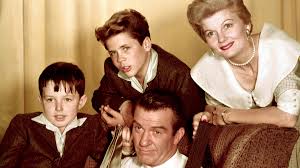
There is probably no place in America where “Leave it to Beaver”, “Father Knows Best” or “Ozzie and Harriet” families are the norm anymore.  Two parent families are becoming rarer and rarer.  Many young people opt for simply living together either to avoid a commitment that they are apparently not willing to make or else feel that they could not keep.  You can argue about the value of a traditional relationship all you want.  I am not going to argue that children must be brought up by a Mom and Dad.  However, having two or even more adults to help in child raising has always made the task somewhat easier.  Many years ago, the task of child raising was presumed to be a communal or extended family activity.  Few homes today include a mom, dad and grandparents.

It is even rarer to find homes where either parent is home to simply look after their children.  The economics of modern life demand that both parents have jobs.  It is unbelievable to me when I remember that my father was only a postal worker and never a manager and that my mother stayed home with four kids.  Nevertheless, we had a tidy small home in a small town and food on the table every day.  We might even have had a lot more if my father was not a compulsive gambler spending his earnings or at least a portion of them on the horses.
4) Erosion of “third places” and community institutions

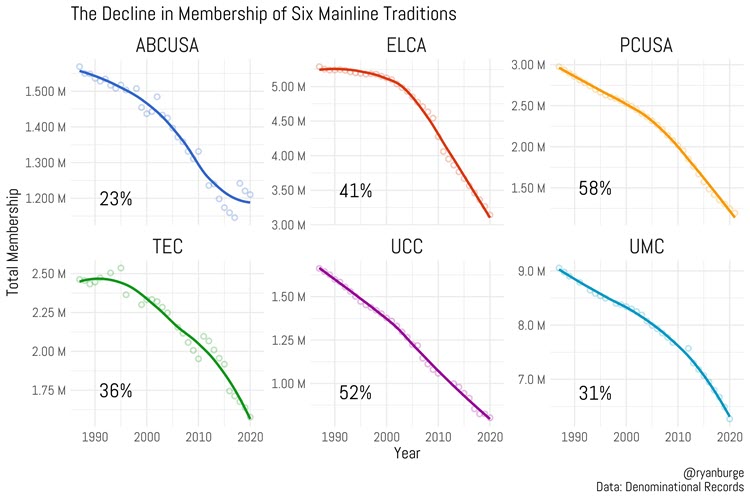
Over the years, there has been declining participation in traditional community anchors—religious groups, clubs and labor unions.  When these institutions fade, people don’t just lose activities; they lose the repeated, low-effort contact that turns acquaintances into friends.

If you are my age, you may remember the large number of social networks that people once belonged to from Camp Fire Girls to Girl Scouts to Boy Scouts to Fraternal groups like the Elks, Moose, Eagles,, Masons, and Shriners.  Churches were another source of community for many people.  I will repeat that the data shows sharp declines in participation in all of these groups.

5) Technology reshapes connection (often replacing, not enriching, relationships)

The Surgeon General’s advisory is careful here: the evidence is “complex,” but there are documented benefits and harms, and it concludes we have reason to be concerned about certain kinds of tech use affecting relationships and social connection.  Once upon a time, it was claimed that TV would destroy family life.  Then it was the Internet.  Now it is the social media programs.  Experts seem to pop up to dispute that any of these technologies have had or are having an adverse impact on socialization.  However, common sense argues against the wisdom of paid shills who benefit and profit from the exploitation of others via the media platforms that they shill for.

So How Do We Address the Loneliness that Exists in our Country Today?

This is a very difficult question to answer.  Lets start by describing what we are not going to do.

  • We are not going to eliminate TV or streaming digital media. This is not likely to happen given the number of hours people spend in front of TV’s.
  • We are not going to eliminate or ban Smart Phones. This will never happen as they serve too many good uses and are now a necessary part of doing business in the world.
  • We are not going to ban social media groups or make participation in real time groups like church or fellowship groups mandatory. This would involve a gross violation of the freedom and individual rights that people have.

Where Do We Go from Here?  Three Realistic Ways Forward

  1. Rebuild everyday human contact—where people already are

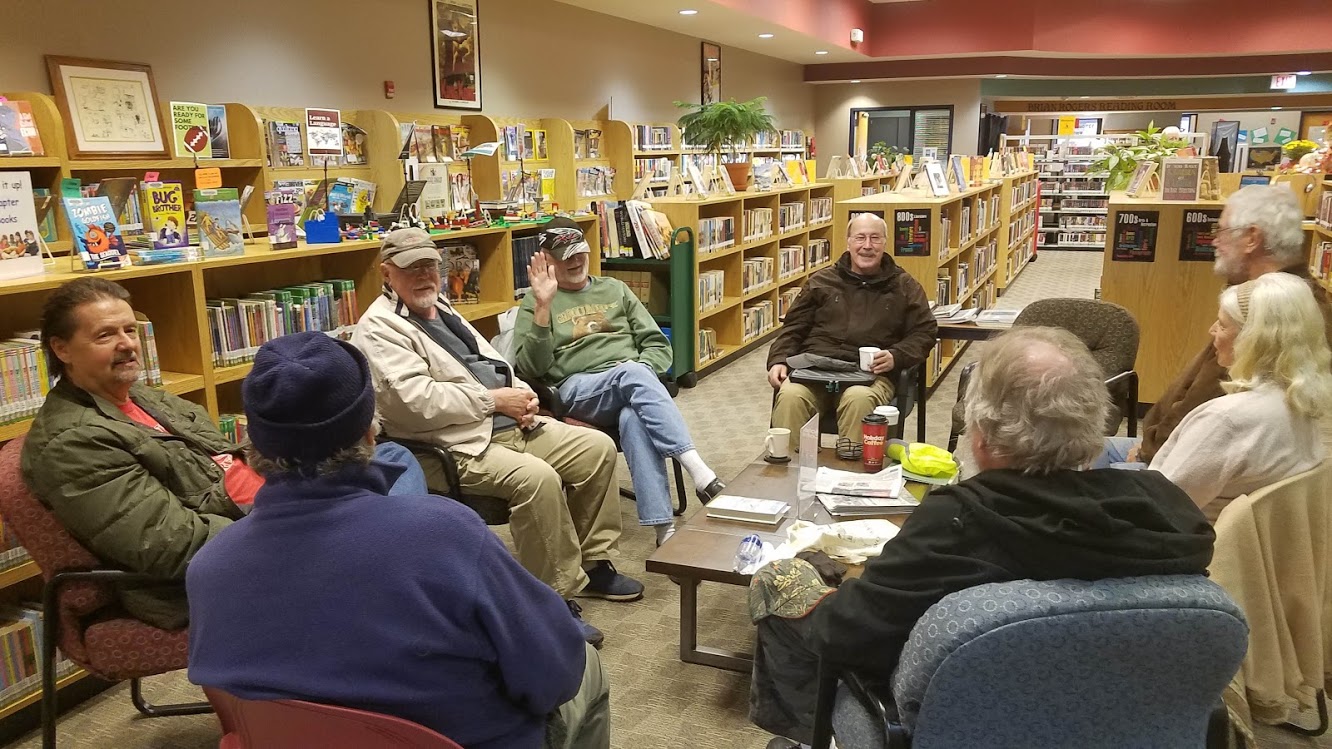
Loneliness will not be solved by telling people to “try harder” or “get out more.” It will be addressed when we intentionally rebuild regular, low-effort human contact into the places people already show up: libraries, senior centers, veterans’ halls, walking paths, coffee shops, classrooms, and clinics.  What matters is not the size or novelty of these efforts, but their consistency.  A weekly discussion group does more than a one-time event.  A familiar face does more than a thousand online “connections.”  Human bonds form through repetition—by seeing the same people, in the same places, over time.  We once understood this intuitively. Community was not something we scheduled; it was something we inhabited.  Recreating that does not require nostalgia or ideology—only intention.

When Karen and I moved to Wisconsin after she retired, we discovered several places in Frederic, Wisconsin where people would meet.  The farmers met in the Dairy Coop.  The literary people met in the library.  The mechanically oriented people met in the Holiday Gas Station.  We lived in Frederic for 14 years and knew about everyone in town.  The meetings at the venues mentioned above went on every day when each venue was open.

Before we left Frederic to move to Arizona permanently, the library had decided not to allow meetings anymore.  We were too noisy they said.  The Holiday Station took out the table and chairs that we had set around claiming the space could be used for more products.  The Dairy Coop caught fire and was not rebuilt.  This past year, the Safeway store in Casa Grande removed the outside tables they had where people could rest and not be in the way of food carriages.  You could sit, drink coffee and carry on a conversation with friends.  It seems as though all over America there is a conspiracy to eliminate places where people can socialize.

  1. Reclaim in-person connection as the default, not the exception

Technology has given us extraordinary tools, but it has also quietly taught us that presence is optional.  Texts replace visits.  Zoom replaces conversation.  Scrolling replaces sitting with one another in silence.  This does not mean rejecting technology.  It means re-establishing boundaries.  Phones down during gatherings.  In-person meetings when distance allows.  Choosing eye contact over convenience when the choice is ours to make.  Loneliness is not cured by communication alone; it is cured by being seen.  And being seen requires physical presence, attention, and a willingness to tolerate a little awkwardness.  The cost of connection has gone up—but the cost of avoiding it is far higher.

“Society is the product of our relationships – if our relationships are confused, egocentric, narrow, limited, national, we project that and bring chaos into the world.” — Krishnamurti

A few years ago, my wife’s adopted daughter came out to visit.  She had her cell phone with her and spent more time on the phone than she did talking to us.  I was very peeved and told Karen, next time she comes tell her to leave her phone in her luggage.  Realistically now though, how do you think this would go down?  Parents fight schools that want to ban cell phones in the class because they say, “What if I had to call my son or daughter or they have to call me?”  It is amazing that we grew a nation of people long before we had cell phones.

  1. Treat loneliness as a shared moral responsibility, not a private failure

Perhaps the most damaging myth about loneliness is that it is a personal shortcoming—a sign of weakness, poor social skills, or individual failure.  When loneliness is framed this way, people hide it.  And hidden loneliness only deepens.  A healthier society would name loneliness for what it is: a civic and moral challenge.  One that affects public health, democracy, trust, and social stability.  One that cannot be solved by individuals acting alone.

A simple but powerful starting point would be for organizations, churches, employers, and communities to ask regularly: Who has disappeared from our circles—and why?” and “How can we create more shared space for people to communicate and get to know each other.”  

My wife Karen has been in a choir for over ten years now and she often does not know the names of new members or even all the old members.  I asked her why several times and I always get the same response “Well, we don’t get time for socializing as we are busy practicing our songs for the Sunday service.”  This seems criminal to me.  I never started a business meeting that I facilitated without going around and allowing each person to introduce themselves and say a little about their background.  What is so important that we cannot take a few minutes to let others know we care about who they are?

A final thought

Loneliness in America will not be solved quickly, cleanly, or perfectly.  In fact, it will not be solved at all unless we decide—quietly and collectively—that showing up for one another is not optionalConnection is not a luxury.  It is the infrastructure of a humane society.

Martin Luther King Jr. developed the concept of an “inescapable network of mutuality” where the fate of individuals is interconnected.  He also stressed the mutual obligation individuals have for each other’s development.  King emphasized that unity is crucial for survival, stating, “We must learn to live together as brothers or perish together as fools.”

Reaching out should not be seen as charity.  It should be seen as a survival skill.  It should reflect Love, Empathy and Compassion for others.


The Ten Secrets for a Great Friendship

I confess I have ended a number of friendships in the past few years.  I decided to simply “let go” of people who never called me or who did not seem to have any interest in whether I was alive or dead.  I can’t say this task was easy.  I have misgivings about when and how I have approached the effort.  My solution was to simply not call or contact others unless they contacted me.  I have for many years felt like I was the one doing most of the work in several “friendships.”  I am not sure whether it is the “parsimony” of old age (i.e., only so much time left on this earth) or simply laziness.  Somehow though, I thought: “Well, if they want to see me, they can call me for a change.”  

In Friends and Friendship Part 1, I described some basic theories of friendships and went back to the ideas of Aristotle to help describe what friendship is and the types of friendship possible.  I outlined my theory on the importance of intimacy to friendship.  Here in Part 2, I want to identify ten behaviors that I think are necessary for a true friendship.  I am not sure ALL of them are necessary (You may have good friends without all ten being present) but I do think most of them are essential for a friendship.  I would like to describe each behavior and why it is important and its role in helping to create a true friendship.  I think friendships take time and effort.  In this respect, I don’t think friendships are any different than a good marriage.  You can’t take your partner for granted and ignore them day after day and expect your marriage to last.  I believe the same is true for friends.

As you read my ten “secrets” for a great friendship, please note that I am not advocating that anyone take their friendships lightly or that you simply jettison friends who do not meet my criteria.  I am simply saying that if you want to have good friends there are some behaviors that are necessary for you to create, maintain and/or continue for a good friendship.  Given the need to invest time and effort to keep friendships, the idea of 2,000 or even 200 Facebook “Friends” is ludicrous.  If you can maintain even one really good friendship in your life, you should consider yourself lucky.

When the time comes and you decide to take stock of your friendships, please remember one thing:  You do not have to “let go” of old friends.  You can rejuvenate or refresh your friendships by once again becoming a friend.  Review my ten secrets and see which ones you may need to reapply.  If your efforts are not reciprocated (and you should not expect a fifty-fifty relationship) you might want to reevaluate just who you spend your time and energy with.  This could sound “cold and calculating” but if you have found a better solution please send me an email or drop a comment in the box.   I would sincerely like to keep as many friends as I can and if there is a way to do it without time and effort; I have not yet found it.

1. Disagree respectfully:

I cannot imagine a friendship where we agree on everything 100 percent of the time.  However, I also cannot imagine a friend who would insult me, disrespect me or try to make me look foolish.  I would not call that a friend.  I expect my friends to listen to my ideas and even if they do not agree, to at least try to understand where I am coming from and not deliberately try to denigrate or diminish my theories or opinions.  I have no problem with friends presenting facts or logical arguments against my opinions, but I don’t believe that a friendship can be based on disrespect. Disagreements must be done in a caring manner which is possible but often very difficult to effect.

2. Overcome anger:

I have often noticed that real friendships seem to start “after” friends get angry with each other.  Perhaps, more than the anger signaling the start of true friendship is the process by which you are able to overcome the anger with your friend.  If we can’t confront the anger with another, it is unlikely that we will become good friends.  I remember once going to a marriage seminar and they said there were three things you needed for a good marriage:   1. A communications process.   2.  A fight-fair process.  3.  A realistic budget.   I was very intrigued by the fight-fair process. What this entails is the ability to communicate with your spouse or friend about things that make you angry or disappoint you.  It goes beyond daily communication to encompass “extra-ordinary” situations that arise when something does not go as we expect it to.  For many of us, this is a daily event.  If you can’t communicate with and overcome our anger with another person, we probably do not have a true friendship.

3. Share common interests:

Perhaps, you met your friends at the gym or work or playing bingo.  We meet people all over and I allow that ninety five percent of the people we meet are simply acquaintances.  They never become true friends because they never go beyond sharing common interests.  Nevertheless, the sharing of common interests helps create a bond that is fundamental to a good friendship.  It is indeed possible to stay good friends with someone long after the initial interests have disappeared simply on the basis of the shared history that you now have with that individual.  For instance, you might have been on a trip together or been in the service together.  These shared memories act as the cement to continue to provide a sense of common interests.   At some point however, these former interests become faded and need to be replaced by new and more salient experiences that can be shared together.  Without such interests as a foundation, I have seen many former friendships simply fade away.

4. Help each other when in need:

There is perhaps no truer saying that “A friend in need is a friend in deed.”  The power of the feelings that are manifested towards someone coming to our aid in time of need is beyond comparison to any other single aspect of friendship.  I remember a good friend of mine who once told me during my divorce: “The hell with your ex-wife, I am here for you.”  I will never forget how grateful I felt towards him for the fact that he was willing to unequivocally provide me with emotional support when I needed it.  Friends may help you in many ways, but perhaps no help goes further than the emotional support that we provide towards friends when they need it.

“There is nothing I would not do for those who are really my friends. I have no notion of loving people by halves, it is not my nature.”
Jane Austen, Northanger Abbey

5. Don’t expect your friends to be perfect:

This is a simple but profound truth:  None of us are perfect.  If you constantly find fault with others, chances are you will not have many or even any friends.  It is not always easy to accept the faults in others.  For instance, I disagree with one of my friends over some of the people whom he calls friends.  I would not have a racist or a bigot as a friend.  I am willing to overlook many warts and blemishes in my friendships but I draw the line at liking or even tolerating people who hurt or pick on others.  Perhaps I should be more charitable.  I admit, I write off many potential friendships because I will not tolerate hateful attitudes towards others.  Nevertheless, I do recognize that the more that you can handle and deal with the imperfections in others, the more friendships you will potentially have.

6. Care about each other:

This might be the single most important bond for a good friendship.  Do you really care about what happens to the other person?  Are you willing to go out of your way to take an interest in their needs and lives?  Caring can take many forms and might be attending a funeral at one of their relatives or driving your friend to the hospital or giving them a ride to the airport.  A few years ago, I remember a friend who told me that whenever any of his friends were in need, he simply showed up with helping hand, or a pie or a shoulder to cry on.  He said that he did not ask the common question “How can I help you?”  He simply went ahead and tried to help without being asked or given permission.  His initiative seemed to me more powerful than the common refrain “Let me know if I can be of help.”  I would be much more grateful towards the friend that simply showed up rather than waiting to be asked.

“It’s the friends you can call up at 4 a.m. that matter.”
Marlene Dietrich

7. Occasionally reach out to each other:

I believe it is important for friends to have some form of regular contact with each other.  I cannot understand or believe that a good friendship can endure without some form of mutual interdependence.  Whether, you come by for dinner, attend a movie together, take a trip together or simply call or even email your friends, it seems (to me anyway) that friendships need some form of regular lubrication that mutual contact provides.

I have said that Facebook friends are generally not true friendships. They do however; provide regular contact between “potential” friends and people whom you truly call good friends.  The simple “like” button provides a very powerful and instant means of letting others know that you appreciate, admire or support something they are engaged in.  I have given many likes and received many likes on Facebook and I always feel closer to those individuals who take the time to “like” or note some issue that I care about.  Liking is not a very big effort but it forms that sense of mutual contact that I think is the lubricant for a good friendship.

“Piglet sidled up to Pooh from behind. “Pooh?” he whispered.
“Yes, Piglet?”
“Nothing,” said Piglet, taking Pooh’s hand. “I just wanted to be sure of you.”
A.A. Milne, Winnie-the-Pooh

8. Apologize when you hurt the other person:

Good friends do not deliberately hurt each other.  However, hurts both physical and emotional will often be inflicted.  I cannot tell you how many times I have bumped into Karen, stepped on her toes, or unintentionally inflicted some pain on her while we were together.  Fortunately, it was nothing ever very serious.  More serious to our relationship, has been the emotional pain and hurts that I have too often inflicted on her.   Some of them were intentional, some were not.  None were ever deserved though.  At such times, I think it is critical and essential to apologize to the other person.  Whether or not it was intentional is not the point.  The point is that you have hurt the other person and if you truly care about them, you want them to know how you can help alleviate the pain.

A number of years ago, I was on the Oprah Winfrey show. The subject was apologies.  The expert that Oprah had on the show said that a true apology has three parts:  1. Saying: “I am sorry.”  2.  Listening to the hurt or pain you have caused the other person.  3.  Setting things right.  Saying you are sorry is often the easy part.  However, many of us expect that as soon as we say that we are sorry, the other person should forgot about it and get on with their lives.  Simply issuing an apology may not help the other person move on.  The difficult part is listening to the feelings, emotions and disappointments that your actions have led to.  People may all respond differently to different insults and individuals are responsible for their own feelings.  However, we all have feelings and in a good relationship you must care about the feelings of others.  Whether or not you have caused the feeling is a moot point.  Can you listen to and empathize with the pain that is in the other person?   This is often the only way; that they will be able to move beyond the pain and truly rejoin a relationship with you. Finally, you may need to discuss what you need to do to make things right.  Are there some expectations that you need to address to help restore your friendship?  

“The truth is, everyone is going to hurt you. You just got to find the ones worth suffering for.”
Bob Marley

9. Kidding or joking with each other:

Insulting a person or demeaning a person deliberately is a far cry from kidding someone or even “roasting” another person.  The first is done with malice and hatred, the latter is done with love and admiration.  I have never been really good at humor and my efforts to be funny have often backfired.  Good friends are friends that you can joke with.  Of course, everyone has their sensitive spots and tolerances and knowing these are important to a friendship.  The deeper the friendship, the more likely you will have a greater tolerance towards each other in terms of how much you can push the boundaries of joking and ridicule.  Many of us have learned that texting, emails and online communications do not lend themselves to humor and spoofing.  That is why an entire arsenal of symbols 🙂 has arisen to show the other person that “no malice” is intended in your comments.  In our face to face communications, our body language readily communicates towards our friends our intentions and whether or not they are playful or benign.  I cannot conceive of a real friend who I could not joke with or make fun of from time to time and of course vice verse.  Nevertheless, in even the best of friendships, we may step on each other’s toes from time to time.  This is where a good apology comes in. 

10. Trust your friends:

The amount of trust you would put in a friend might be the single most obvious indicator of how strong that friendship is.   But what do we mean by the word Trust?  We often hear the phrase “trust me” used today.  What does it mean to trust though?  ASU Online defines trust as follows:

Trust is both an emotional and logical act. Emotionally, it is where you expose your vulnerabilities to people, but believing they will not take advantage of your openness. Logically, it is where you have assessed the probabilities of gain and loss, calculating expected utility based on hard performance data, and concluded that the person in question will behave in a predictable manner. In practice, trust is a bit of both. I trust you because I have experienced your trustworthiness and because I have faith in human nature.

A friend is someone who you can expose your vulnerabilities with.  In Part 1 of this blog, I discussed the importance of intimacy to a friendship.  When we are intimate with someone, we are more exposed and more vulnerable.  There is no escaping vulnerability in a good friendship.  If you want a strong friendship, you must be willing to trust the other person and that means you must be willing to be vulnerable.  The fewer secrets you have with your friends, the stronger your friendships will be.  The issue of trust is paramount here because who but a fool would share secrets with someone they could not trust.  The Internet is full of ridiculous instances of people posting, texting or sharing secrets with others with whom it became glaringly evident that they could not trust.  Some of us are more trusting than others, but I think that most good friendships grow in trust as our experiences teach us whether or not the other person can really be trusted.  Thus, the final hallmark of a good friendship is trust.

Time for Questions:

Are you happy with your friendships?  Do you have some good friends?  How do you define friendship?  How many of the secrets of friendship that I have outlined do you share with your friends?  Which secrets do you disagree with? Which secrets do you think I have missed?  What do you need to do tomorrow to have better friendships?

Life is just beginning.

“Try Honey Before Vinegar” – Lessons on Leadership from Abraham Lincoln

America has lost the “Art of Leadership.”  We no longer develop men and women with integrity or selflessness.  Instead of Statesmen, we have political hacks only concerned with getting reelected.  Politicians with no backbones or the courage to stand up against injustice.  We have a Congress of sycophants willing to do whatever they are told to do regardless of how unethical or immoral it may be.  We have thousands of lawyers who do not uphold justice but find arguments to support an amorality that meets the letter of the law but ignores the significance of decency, goodness, honesty, conscience and fairness.

In this blog and the ones to follow,  I will write about insights regarding leadership from one of the greatest American leaders and Presidents of all time.  I found a compilation of these in an old collectors edition of “Civil War Times” published in Winter, 2013. There are 41 in total, and I have already covered the first in a previous blog.  I would like for you to hear the words of Abraham Lincoln and what he had to say about leadership.  I will include some of my own experiences from my years of working with senior management in over 32 organizations.  Some of the men and women I worked with were incredible leaders.  Most of them wanted to be better leaders and that is where I brought the teachings and thoughts of W. E. Deming to my consulting practice.  Dr. Deming achieved extraordinary results in business by tapping the knowledge, skills and abilities of ordinary people.  Senator Hubert Humprey famously said that “Democracy is a system that achieves extraordinary results with ordinary people.”

Insight # 2 – Try Honey Before Vinegar: 

Lincoln said, “If you would win a man to your cause, first convince him that you are his sincere friend.”  Springfield, Illinois, 2/22/1842

This seems to be a principle or idea that is not very well understood by many people today.  I constantly hear people tell me that if you want to change people’s ideas about things, you must “empathize with them.”  “You must really listen to them.”  To these admonitions, I say “Bullshit.”  You can listen to some fanatics all you want to, and they will still totally ignore anything you say that does not fit in with their preconceptions or ideology.

A good woman friend of mine and I were arguing about Trump and his supporters.  Repeatedly in every argument, she would say “John, you just have to really listen to them.”  I finally got tired of hearing this refrain and one day I challenged her.  I said, “Tell me one, only one, Trump supporter you have listened to who has changed their mind.”  She was dumbfounded.  She was stumped.  She was bewildered.  She could not think of one.  Months went by.  I would occasionally rub salt into the wound, “Did you change the minds of any Trump supporters today?”

You can listen to others all you want.  You can listen to hell freezes over.  You will not change a fanatic or zealot’s ideas by listening.  But Lincoln was smarter than all the psychologists we have today put together.  He knew that it would take more than listening to get others to think differently or to appreciate your ideas after you have heard theirs.  It takes believing and feeling that you are a “Sincere” friend.  Not just a Facebook friend or some online friend, but a “Sincere” friend.  Plato talked about the various types of friends, but he said nothing about a “Sincere” friend.  So, what is a “Sincere” friend and what does it take to make someone believe that you really and truly are a “Sincere” friend?  Let’s first define the meaning of “Sincere.”

An online dictionary defines “Sincere” as:

“Free from pretense or deceit; proceeding from genuine feelings.”

Wikipedia defines the virtue of Sincerity as follows:

“Sincerity is the virtue of one who communicates and acts in accordance with the entirety of their feelings, beliefs, thoughts, and desires in a manner that is honest and genuine.  Sincerity in one’s actions (as opposed to one’s communications) may be called ‘earnestness”’.

I think the word “Sincere” has a lot to do with integrity, honesty, trustworthiness and truthfulness.  The Jewish have a word for a person who is sincere and honest called a Mensch.  In Yiddish, a Mensch roughly means “a good person”.  The word has migrated as a word into American English with a Mensch being a particularly good person, similar to a “stand-up guy”.  A Mensch is a person with the qualities that one would hope for in a friend or trusted colleague.

I think we can now answer the question, “What does it take to impact someone’s ideas and ideology?”  The answer is very simple.  If you want to have someone listen to your ideas, you must be a Mensch or at least a very “Sincere” friend.  When I think about the people we elect to political leadership, I am struck by the lack of Menschs in either Congress or the Legislature.

In fact, I would argue that we have the exact opposite.  We have people you would not trust with a nickel.  People who we know will change their mind at the drop of a lobbyist’s donations.  Congresspeople, who continually lie to cover their malfeasance and incompetence.  Ask anyone of them what they do all day long and they will deny that they spend about 80 percent of their time fundraising for their next election campaign.

Try to suggest some new ideas to them as I have done countless times, and you will get the following answer, “I am very busy but send me something and I will look at it.”  Don’t hold your breath my friend.  You will die of asphyxiation before any of them, Democrat or Republican will ever get back to you.  However, mention that you are thinking of a large campaign contribution and doors will open in a New York minute.

Let us think of a scenario wherein a Trump supporter meets a Trump opponent.  We will call Mary the Trump supporter and Joe the Trump opponent.   Neither of them have ever met before and do not know each other.   The talk between them soon turns to politics.

Mary:  I think Trump is doing a great job.  He is really shaking the government up.  Just what we need.

Joe:  You think tariffs, job cuts and threatening our allies are what we need?  Are you crazy?

Mary:  He is already getting results.  Mexico and Canada have agreed to send more troops to the border.

Joe:  These are our allies.  What if I threatened you, how would you feel about me?  I am sure that long-term you would be looking for some way to get even.

Mary:  Well, I have to go.

Joe:  Yeah, so do I. Bye

If the above scenario had gone down between two long-term “Sincere” friends, how do you think it would have turned out?  I am betting both sides would have heard some value in the other sides position.  Furthermore, they might have  finished the discussion and gone out together to have a bite to eat or at least agreed on another time to get together.

Old Abe Lincoln knew a lot about leadership and the role that friendship played in it.

“On the contrary, assume to dictate to his judgment, or to command his action, or to mark him as one to be shunned and despised, and he will retreat within himself, close all the avenues to his head and his heart; and though your cause be naked truth itself, transformed to the heaviest lance, harder than steel, and sharper than steel can be made, and though you throw it with more than Herculean force and precision, you shall no more be able to pierce him, than to penetrate the hard shell of a tortoise with a rye straw.” — Lincoln, Address to Washington Temperance Society (February 22, 1842)

I have heard many conversations between Trump supporters and Trump opponents.  We attack each other.  We condemn each other for stupidity.  We assail each other for taking the Kool-Aide.  Then we retreat to the other sides of the room full of hate and disgust.  We ask ourselves, “How could anyone think like they do?”  “What is wrong with them?”  “They must be either, stupid, uneducated, brainwashed, racist or something else.”

If we are going to break down the walls and barriers that now separate us in the USA , we are going to have to do more than just listen to our opposition.  We are going to have to find ways of befriending each other.  Not just casual friendships but real “Sincere” friendships.  Friends who can accept and support mutual honesty and truthfulness with each other.

Too much of what I have seen in the media supports a narrative that my side is intelligent and smart, and the other side is dumb and uneducated.  I confess to having shared some of this narrative in my own writings.  It is now time to move past these simplistic and detrimental stereotypes and develop empathy and understanding that surpasses mere listening.  The way to do this is through “Sincere” friendship and not by demonizing the other side.

How do we fight an “Uncivil War”?  Insight # 3 from Old Abe has more valuable thoughts to help us in this struggle.  I will share these in my next blog.


A Theory of Relationships

I participate in a high school mentoring program which matches up young students with older experienced men and women.  This was my second year in the program.  My mentee last year graduated and has become an alumnus of the program.  This year I was matched up with another student.  My new mentee was a young high school junior.  She wrote to me one day that she was in a relationship with someone and that it had become serious.  She wanted my advice.  Never one to shirk giving advice, I seem to always fail to hew to the dictum that “Wise people won’t need it, and fools won’t heed it.”  I sent her some comments based on my two marriages and nearly 60 years of being in a committed relationship.  The sixty years includes both my marriages.

Some days later, I found some notes from my retreat this summer.  These notes also addressed the subject of relationships or shall I say a “theory” of relationships.  I want to talk about my theory in this blog.  For many of you it will probably be “common knowledge.”  Nevertheless, I am hoping my insights might be useful to anyone out there either beginning or struggling with a relationship.  A relationship might be a friendship, a family member, a group you belong to or a loved one.  I think my theory will have some value to any such relationship.

According to Google AI, a good theory consists of the following:

  • A good theory is falsifiable (can be tested and potentially disproven).
  • Theories are designed to explain and predict phenomena.
  • A theory should be parsimonious, meaning it uses the simplest explanation possible while still adequately explaining the phenomenon.

A theory consists of concepts, constructs, precepts, variables, relationships between variables and assumptions.  I am going to posit five assumptions about relationships and then try to explain each adding in some of the above parts of a theory.  I will explain why I think each of my assumptions is critical to a good relationship.  I am not going to try to claim that my theory is a “good” theory by any scientific data.  Rather, I would justify it based on my ups and downs with relationships over sixty or more years of experience.  But as Dr. W. E. Deming often said, “Experience without theory teaches nothing.”  Thus, herein is my “Theory of Relationships.”  I hope some of these ideas will help you or others along the pathway of love and life.

My five key assumptions about relationships are as follows: 

  1. Relationships require risk
  2. Relationships require change
  3. Relationships require more than commitments
  4. Relationships require sacrifice
  5. Relationships require knowledge of self and other 
  1. Relationships require risk

Almost any effort in life will entail some element of risk.  As the saying goes, “The turtle only makes progress by sticking its neck out.”  Risk is a key concept that runs through life.  It can be thought of as the probability that something will happen either good or bad.  For instance, when you bet at a Casino or perhaps take a Caribbean cruise.  You hope to win the bet, and you hope your cruise will be safe and fun.

In life, we try to minimize risk by back-up plans, precautions and strategies to offset risk.  Variables can be created in some cases to give us more definitive measures of how risky a specific endeavor is.  In gambling we call these odds.  In love, we are usually to foolish to accept any odds on our relationship going south.  However, some people do set up prenuptial contracts which are a method to hedge your bet on your relationship.  Most people in love though are blind to the possibility that their relationship will end.  Odds are though that it will end unhappily.

Many people accept it as a fact that forty to fifty percent of all first marriages end in divorce, but those who wed multiple times face a far higher divorce rate.  The average length of a first marriage in the United States is around eight years.  The average length of a second marriage is about seven years.  Sixty to seventy percent of second marriages end in divorce. 

Being aware of risk does not mean giving up on life.  It simply means we must be realistic about the possibilities that risk entails for relationships and all other endeavors (This includes friendships).  There are many ways to minimize risk in a relationship.  Here are just a few examples:

  • Marriage Encounter Groups
  • Family meetings weekly
  • Marriage counseling
  • Here are some ten ideas from “Women’s Health”:

10 Ways to Save Your Marriage From Divorce, Straight From Relationship Experts

  1. Relationships require change

Perhaps one of the most overlooked facts impacting a relationship is the need for change.  Right, “your other needs to change but you do not.”  You are perfectly okay.  Change is an interesting concept.  One of the things most feared in life is change.  Ironically, we could not survive without change.  Unfortunately, not all changes turn out well.  Herein lies another risk factor.  Will your change be for the better or worse?  Hard to put odds on change, but most relationships will not survive unless the partners are willing to change.

I don’t mean change in just a physical sense but change in an emotional and cognitive sense.  Are you willing to accept major changes in your ideas about life and relationships?  Are you willing to accept major changes in how you feel about certain activities and people?  Without change, we know that life grows stale and boring.  Relationships are no different.  A relationship without change will become boring.  Doing the same old things day after day.  Even worse is when you refuse to think about some of the ideas you have that relate to your significant other.  For instance, If he or she likes to travel and you do not, are you willing to go along or have your partner go with a friend?  What accommodation are you willing to make if you are not willing to change your own behavior?  Love requires change.

“We cannot change anything until we accept it.  Condemnation does not liberate, it oppresses.” — Carl Jung

  1. Relationships require more than commitments

We hear a great deal about commitment when it comes to relationships.  Making a commitment involves dedicating yourself to something, like a person or a cause.  A commitment obligates you to do something.  In a relationship, it might involve a commitment to fidelity or to some fiduciary obligations.  We promise to “Love, honor and obey” in some marriage vows.  We think that making a commitment is enough to keep our relationship in safe waters.  Some people think that a commitment can be embodied in a “Marriage Contract.”  Such a document spells out mutual responsibilities and agreements.

At our last Marriage Encounter meeting, I was introduced to the distinction between a “Marriage Contract” and a “Marriage Covenant.”

Covenant                                    Contract

Unconditional                             50/50 agreement

A Covenant is forever                A Contract can be terminated

A Covenant is limitless               A Contract has limits

We tend to think of Covenants when it comes to Bible history.  Covenants were made between God and his chosen people.  The idea of a contract is a modern legal term.  I think it erodes the very essence of spirituality that a marriage or committed relationship should embody.  We need to adhere to the idea of a Covenant when it comes to a relationship.  Anything less leads inevitably to less than a committed relationship.  We can simply terminate it when the going gets rough.

  1. Relationships require sacrifice

Another interesting concept, Sacrifice.  What does sacrifice mean?  Are there any variables that can measure our sacrifices?  Jesus said that the greatest sacrifice anyone can make is to give up their lives for another.  I think the greatest sacrifice is to love someone who is unlovable.  To love someone who is despicable like a pedophile or a serial killer or someone who bullies and threatens others.  I do not know about such sacrifices, and I am not sure if I could make them.  I admire the partner or mother or father who can stick by their spouses or siblings when all hell breaks loose.  Can you imagine being called up by the police and told that your son just shot 20 people at school.  Could you stand by them?  What sacrifice it must entail not to stop loving someone who has done such cruel acts!  Fortunately, most relationships will never demand such sacrifices.

The sacrifices we make in relationships can range from trivial (like which way to put toilet paper on the roll) to the significant.  More significant sacrifices might entail deciding who will stay home with the children or who will give up where they want to live for the other person’s choice.   You may not face many significant sacrifices in your relationships, but you will most assuredly face many trivial sacrifices.  These should not be discounted or minimized though.  As the quote goes, “For want of a nail the shoe was lost, For want of a shoe the horse was lost, For want of a horse the rider was lost, For want of a rider the battle was lost.”  Trivial things add up like the straw that broke the camels back.  The trivial can go from a mole hill to a mountain in less time than many of us realize.  When the trivial become the mountain, your relationship will be in jeopardy.  The trivial sacrifices in a relationship are anything but trivial but they are certainly inevitable.

  1. Relationships require knowledge of self and other

This is the toughest requirement of all.  Socrates said that “The unexamined life is not worth living.”  What if you have never examined your life?  How many people do you know who have done a rigorous examination of their life?  Jesus said, “Love your neighbor as yourself.”  But what if you do not love yourself.  In truth, I doubt many people do.  Many people have been so beaten up by parents, teachers, bullies and even loved ones that they actually hate themselves.  Few of these people want to know themselves because it means facing hidden demons that they would just like to leave buried.   Gandhi said, “Be the change that you want to see in others.”  This axiom encourages a certain amount of self-understanding as well as understanding of others.  All too often we have no time to understand either.  The perp that is trying to rob you at gun point will not have time for you to understand him.  Furthermore, you may care very little about his troubled up bringing.

My uber pessimism on a premise that I insist is necessary for a good relationship seems to doom any relationship to the graveyard.  If we can never know ourselves or others, how then can we have a positive happy relationship.  The secret is that we do not have to be perfect, nor do we need perfect knowledge of ourselves or others.  We can never and will never be perfectly transparent to ourselves or others anyway.  The JOHARI Window has a quadrant of “Unknown to Others and Unknown to Self.”  I have found the JOHARI window to be quite a useful concept on the path to discovering more about myself and thinking about my relationship with others.

“The Johari window model is used to enhance the individual’s perception on others.  This model is based on two ideas- trust can be acquired by revealing information about you to others and learning yourselves from their feedback.  Each person is represented by the Johari model through four quadrants or windowpane.  Each four windowpanes signifies personal information, feelings, motivation and whether that information is known or unknown to oneself or others in four viewpoints.” — The Johari Window Model

The risk will always be there, but we can work on being more self-aware and more honest to others.  That is the best we can do in life.  That is why relationships are risky.  You will never be able to see all the shoals and reefs that your life might flounder on.   Life is a process of never-ending discovery.  Death will eventually bring closure to your adventures and explorations.  Until then, just getting in bed is risky so why not try to live life to the fullest.  Get out of bed and go MAKE a good relationship.


Friends and Friendship: Part 1.

It is easy to measure friendship today.  Simply count the number of “friends” you have on Facebook and subtract the number of people who “defriended” you.  Multiply this number by the number of followers you have and divide by the number of people you are following.  This number or index will accurately tell you the number of friends you have in the whole wide world.  If you are not good with math and numbers, then simply call up each of your “friends” and see who will lend you a hundred dollars.  Another quick and easy solution to see how many friends you have is to count the number of your “friends” who bring you some chicken soup when you are home in bed with the flu.    

The subject of friendship has been written about since writing first began.  An advantage of friendship and perhaps one of its most enduring qualities is that you can pick your friends but you can’t pick your mother, father, aunts, uncles or other relatives.   While “blood” may be thicker than water, actual counts show as many dysfunctional families as dysfunctional friendships. (An observation extrapolated from my 67 years of experience as a relative and friend.)  Another advantage of friendship is that people seem to have more concern about being a good friend than they do about being a good relative.  To test this latter point, I went to Amazon.com and typed in “friendship.”  I found 57,722 books on the subject.  Next I typed in “relatives.”  I found only 20, 930.  Since this experiment did not seem very definitive I also tried the following.  I went to Google and typed in: “How to be a better friend?”   I found 1,470,000 hits on this subject.  Then I went back and typed in “How to be a better relative?”  I used the quotes to frame both question.  I found NO hits.  Not a one. NADA.  ZERO.  Go ahead and try it yourself.  Type in: “How to be a better relative?”   Here is what you will get:

   No results found for “How to be a better relative?”.

https://www.google.com/#q=%E2%80%9CHow+to+be+a+better+relative%3F%E2%80%9D

So there you have the second major or perhaps third major advantage of friendship.  Namely that people care about being a good friend but no one cares about being a good “relative.”  You are just supposed to love your relatives and that’s it.  End of subject.  “I love you brother.”  “I love you sister.”  “I love you Dad.”  “I love you Mom” are words taken for granted.  Your friends might regularly invite you over for meals and never say “I love you.”  However, your relatives may never invite you over for a meal, but they will not hesitate to say: “I love you.”  I guess love should be the subject of another blog, since the love of relatives seems to be something that needs better defining.  However, to return to the subject of friendship, let’s look at Aristotle’s three types of friends.  I will refer you to Amazon for more works on friendship.  Anyone reading all 57,722 books will receive a certificate as a bona fide “Friendship Expert.”  Simply mail me the ISBN number of all the books you have read or rip off the back cover and send them to me.  I will mail your certificate ASAP. 

Aristotle identified three types of friends.  I would like to compare Aristotle’s ideas on friendship to my ideas on friendship.  I wrote on the subject about thirty-five years ago and it was my first piece of paid writing.  It appeared in a Men’s Journal somewhere on the West Coast.  I regret I cashed the check as it would have been a nice souvenir and it was only for twenty dollars.  However, I was in graduate school at the time and twenty dollars seemed like a lot of money back then.  The title of my article was called:  “Male Friendship and the Three Types of Intimacy”.   I will return to my theories later, however let’s start with Aristotle since I give him a head start on the subject and much greater profundity.

Aristotle’s ideas on friendship were part of his larger work The Nicomachean Ethics.  Aristotle divided friendships into three types based on the motive for forming them.  These three types were:  Friendships of utility, friendships of pleasure and friendships of the good.   

“Friendships of utility” describe encounters with others that are very commercial or practical.  There is no love or intimacy exchanged in such relationships and they are simply based on a quid pro quo type of arrangement.  For some, these types of friends would better be called acquaintances but I think acquaintances lack the level of commitment that is sometimes necessary in “friendships of utility.”  Many of the people we work with, have business transactions with or even network with on LinkedIn would fit into this category.  Such relationships are not very intimate but they can engender a certain depth of emotional attachment. 

Aristotle’s “friendships of pleasure” include those individuals who we enjoy being around or spending time with.  These are people we like because they are fun to be with or they make us feel good or they bring some level of excitement to our lives.  Many of these types of friendships involve some type of shared activity.  You might be on the same bowling team, church council, or simply hang around in a bar or coffee shop together.  The intimacy involved in this type of friendship is deeper than in “friendships of utility” but it is often is limited to the activity that is being jointly pursued.  Once the activity ends, often the friends go separate ways.  Such friendships may end unless there is some other reason to create a bond or another reason to interact together.  

Aristotle’s third and deepest friendship is the “friendship of the good.”  Such a friendship is based on the enjoyment of the other person for some “good” or character trait that the person exhibits and which you find compelling or attractive. You like the person not for what they can do for you but because of who they are.  According to Aristotle these are the enduring type of friendships since they are not based on utility or shared activities but on a mutual liking or affection between the friends.  As long as the character traits enjoyed by each friend do not change, the friendship will continue. 

While I find Aristotle’s three types of friendship interesting, I do not think they go far enough or deep enough to define friendship.  I think he comes closest to my idea of friendship with his “friendship of the good” but even that does not go far enough.  The major fault I have with Aristotle is that he misses what I think is the key ingredient of friendship, namely intimacy.  A friendship must involve intimacy or it is not a friendship.  Intimacy is the key ingredient for all “true friendships.”

Intimacy:

1. the state of being intimate.

2. a close, familiar, and affectionate personal relationship.

3. a close association with or deep understanding of a place, subject, etc.

4. an act or expression serving as a token of familiarity or affection: the intimacy of using first names.

5. a sexual liberty.

6. privacy, esp. as suitable to the telling of a secret: in the intimacy of his studio.

I believe there are three types of intimacy upon which a friendship can be founded.  I do not include sexual intimacy here since for the most part, I am describing “non-sexual” relationships.  Relationships between lovers usually involve sexual intimacy but they do not have to include much if any of the three types of intimacy that I think are a key to a good friendship. It would be a better relationship if they did.  You will note though that it is frequently hard for ex-lovers to remain friends because once the sex part ends there is often little of the intimacy necessary for true friendship. 

I have labeled the three types of intimacy as: 

  • Face to face
  • Side to side
  • Back to back

Face to face intimacy is more emotional and affective and generally involves two people sharing feelings, problems, emotions, and issues that they would not discuss with anyone else.  Women are typically considered to be very good a face to face intimacy.  You can find women sitting together over coffee discussing any number of emotional issues.  Dealing with personal subjects with another party is central to face to face intimacy.  No gender has a monopoly on this type of intimacy but in the past, men were brought up to avoid dealing with emotions making such intimacy very difficult.

Side to side intimacy is doing and conative.  It is active and involves sharing some physical activity with the other party.  This could be working together, playing sports together, helping each other with some tasks or chores or simply taking a walk together.  This is an area where men in the past found much of their intimacy with other men.   Sports and other side to side activities were more condoned for men than sitting exchanging emotions together.  Time has changed and women are now as active in many sports as are men and we increasingly see men spending time with other men talking and sharing feelings.

Back to back intimacy involves a willingness to share risk or face a threat for the other person.  Soldiers develop strong friendships because of their need to rely on each other.  Police also develop strong friendships with their partners because of the element of shared risk and the strong need to rely on each other during emergencies and threats.  Any individuals that help each other during emergencies or dangerous situations can experience the type of intimacy that I call back to back intimacy.  (Just as an aside, I used this phrase before the term “I got your back” became popular but the current phrase  does express the essence of this type of intimacy.) 

A friendship may involve one, two or all three of these types of intimacy.  They are not all required for a good friendship.  A friendship based on only one of these types of intimacy can be very strong and profound.  However, all things being equal, a friendship based on two or three of the types of intimacy will be stronger than one based on a single type.  The caveat here is that when the intimacy no longer exists, there is a good chance that the friendship will fade away or become only a source of memories. 

In my blog next week, I would like to address some ideas for developing, maintaining and even enhancing our friendships.  I speak from having some experience at developing friendships but also at losing many good friends over the years.  Friendship much like love, romance, marriage or any other type of strong bonded relationship must be worked at.  A failure to commit to working on a relationship is the death knell for that relationship.  Bonds are only as strong as the glue that cements them together. When the glue loses its adhesion, the bond falls apart. The glue for friendships is intimacy.  Lose the intimacy and you lose the friendship.

Time for Questions:  

Do you have many good friends?  What do you do to maintain your friendships?  Have you ever lost a good friend?  Why?  What do you think you need to do more of to have stronger friendships?  Which type of intimacy are most of your friendships based on?  Do you have friends that fall into Aristotle’s three types?  Which ones?  How much work do you put into your friendships?  Do you put enough? 

Life is just beginning.

The Seven Greatest Appreciations of Life:  Friends and Family

Adults and kids sitting on the grass in a garden

The famous French philosopher Sartre said that, “Hell is other people.”  What I think he meant to say was that “Friends and family could be hell.”  A number of years ago the mother of a good friend of ours passed away.  The fight between her siblings over who was going to get what was vicious and resulted in a permanent schism between the siblings.  I was commiserating one day with her over our very dysfunctional families.  I noted, “Wouldn’t it be nice if we had normal families?”  My friend replied, “We do have normal families.”  I knew exactly what she meant.  Years earlier when I was attending support group meetings for men who were violent and abusive, we would always hear newcomers say, “My family is so screwed up.  I wish I had:” (Pick one)

  • A more loving mother
  • A non-alcoholic father
  • Parents who did things with us
  • A father who was not a gambler
  • A mother who was not a drug addict
  • A mother or father who was not always gone
  • A mother or father who was not abusive

The more seasoned men in the group would listen to these plaints for awhile but eventually tolerance would run out.  Then you would hear someone say, “If you want a happy family, turn on TV and watch “Leave it to Beaver” or “Father Knows Best.”  The rest of us would sagely nod our heads.  In our milieu, healthy happy families did not exist.

“All happy families are alike; each unhappy family is unhappy in its own way.” ― Leo Tolstoy , Anna Karenina

downloadWell, you are probably thinking, “You can’t always pick your relatives, but you can always pick your friends.”  This is absolutely true, but how many people do you know that have lifelong friends that they can trust and rely on in an emergency?  I could start a long list of friends that I have left behind over the years for one reason or another.  I have ex-friends who became rabid Trump supporters whom I said goodbye to.  I have ex-friends who said goodbye to me, and I never knew why.  I just did not hear from them anymore.  I have other ex-friends who I could no longer relate to for one reason or another.  Friends seem to me to be like annual flowers.  They pop up for a while and then they fade away.  I have five good friends left.  I would have more, but some died early and one committed suicide.

You may be scratching your head now and thinking, “What does this narrative of misery have to do with appreciating our friends and family?”  One answer is that I do not like to sugarcoat things.  Most of life is composed of the good, the bad and the ugly.  I Latino-Family-small-1-850x566have put the bad and the ugly out first so that you would not simply hear a chorus of how wonderful friends and relatives are.  The truth of the matter is that as in most of life, you often have to take the bad with the good.

“The truth is, everyone is going to hurt you. You just got to find the ones worth suffering for.” ― Bob Marley

Another point for acknowledging the bad side of things is that it helps us to appreciate the good side.  If things were always great we would never appreciate the bad.  We love the sunny days more after the rainy days.  We enjoy a good movie or a good painting because we know what a bad movie or a bad painting is like.  We develop models in our heads for the good and the bad and they are to some extent a mirror image of each other.  The Yin and Yang of life is a push and a pull.  Happiness, joy, and good health are more appreciated when we have experienced the opposite in our lives.  We appreciate good relatives and good friends more when we acknowledge some of the “mistakes” that life has dealt us.  We rise above life by dealing with the bad, putting it aside and saying prayers of thanks for the good friends and family in our lives.

asian-american-family

Family:

I do not know how many “Leave it to Beaver” families are out there, but I do have many friends who have had loving fathers and mothers.  Their families might not have been perfect, but they learned good values from their parents.  The other night we had two friends (Tom and Nancy) over for dinner.  We started talking about some of our family.  Since we were all over 70, our fathers, mothers and several siblings had all passed away.  We shared some of the good things we missed about these relationships.  Our conversation prompted me to ask, “What are the three most important things you learned from your parents?”  The discussion on what we learned was heart-warming and lasted nearly an hour.

Portrait Of Extended Family Group In Park

The answers to my question elicited several traits that we had all absorbed from our parents.  Among the common ones were a value for hard work, education, and honesty.  Tom mentioned that he learned, “You should always finish your work before you play.”  I could hear the same words echoing from my father.  Karen mentioned that she learned the value of frugality from her mom.  Nancy added that she learned caring from her parents.  This was seconded by both Tom and Karen.  I added that I learned to be accepting of other cultures and races.  My father was intolerant of racism and prejudice.  I grew up fighting for the under-dog as a result of what I learned from my parents.

“I sustain myself with the love of family.”   ― Maya Angelou

Good relatives and good families infuse us with good values and good character.  You learn what you live with.  Live with honesty, hard work, and compassion and you will be a person who cares for others and who is unselfish in their efforts to succeed.  Success is more than just one person succeeding, it is an entire world succeeding.  I have always loved the line from John Donne’s poem, “And therefore never send to know for whom the bell tolls; It tolls for thee.” (No Man is an Island, Meditation XVII, Devotions upon Emergent Occasions)

1_gMf66bZlU3a1KbSHMJLpJg

Friends:

Aristotle was one of the wisest men who ever lived.  Perhaps he was not as wise as Socrates, but he left us numerous writings which provide a guide for right living.  Aristotle wrote quite a lot about the issue of friendship (See his “Nicomachean Ethics, Books VIII and IX).  He commented that it was good to have many friends.  However, Aristotle had a typology of friendship based on three characteristics.  These characteristics were:  pleasure, utility, and virtue.

e232a636b958e0e88ab2b927e3db8531Friendships based on utility derive some perceived benefits from each other.  Perhaps helping each other with building or fixing things.  Friendships based on pleasure derive fun or shared activities together.  Friends who canoe or ski or golf together.  Friendships based on virtue derive mutual benefit from pursuing shared values and goals.  Friends who work together for a common good.  According to Aristotle, friendships based on pleasure and utility tend to be shorter than friendships based on virtue or goodness because needs and pleasures often change over time.  Our values in life are less transient and more permanent.  Friends who share your same values will be friends for life.

“I would rather walk with a friend in the dark, than alone in the light.”  ― Helen Keller

The value of a good friend is immeasurable.  Someone who understands you.  Someone you can trust.  Someone who cares about you and will step up in your hour of need.  Someone who will have your back when you are in a crisis.  Someone who consoles you when you are in grief or mourning.  Someone who cares about your life and wants to share your joys and your pain.  I hope that everyone reading this blog has at least one good friend.  Count your blessings if you have more than that.

downloadI have written about friendship several times in my blogs (See my Friends and Friendship: Part 1 and Part 2).  I have said that Facebook friends should not be counted as true friends.  FB friends are closer to what I call acquaintances.  Facebook can introduce you to possible friends but it will never be able to create real friends.  True friendship is difficult if not impossible to establish on FB or any other social medium.  Friendship is like marriage.  You get out of it what you put into it.  If you look at the high number of divorces today, it may blind you to the almost equal number of marriages that last for decades.  My spouse has some friends since grade school.  I have a few friends going back to high school.  We both share bonds of time and life experiences with these friends.

“Friendship is unnecessary, like philosophy, like art…. It has no survival value; rather it is one of those things which give value to survival.”   ― C.S. Lewis, The Four Loves

In my experience talking to other married couples, the ones that last are the ones that invest time and effort into their relationship.  Good marriages take work.  Good marriages are not taken for granted.  Good friendships also take work.  By work, I mean taking risks to improve your friendship.  The risks can be self-disclosure, honesty, confrontation and saying no.  Good friends are not born, they are made.  And like everything in life, they require effort and maintenance.

teensfromgayfamilies_fullsize_story1

The Beatles had a song and one of the lines was, “I get by with a little help from my friends.”  Hardly a day goes by that I do not think of this line and its relevance for both family and friends.  We are social animals, and we need other people.  We need people to love and people who love us.  Our friends and family are the wellspring for giving and receiving love.   The Covid Pandemic has clearly shown the negative impacts that isolation has on people the world over.  The biggest joy that will come out of defeating the Pandemic will be when we can all freely share time with our loved ones again.

A Tale of Two Men

download

It is a time of overwhelming greed.  It is a time of underwhelming altruism.  The hoards of poor and destitute and abused are still at the gates but the gates have been replaced by a wall.  The few that have managed to get over the wall or under the wall have found that their dreams of life, liberty and the pursuit of happiness have been replaced by barbed wire fences and security police intent on finding and locking them up in cages.  In truth, there are no streets paved with gold.  The gold has long since been stripped by billionaires and the American dream has been supplanted by a Trickle-Down theory which the billionaires are cynically prophesizing.

trickle-down1

Through the country stride two men.  One man driven by money laden with stocks, bonds, and coupons for a cheap cup of coffee.  The other man driven by compassion with a calendar always full of dates to help someone else out.  One man has plenty of gold, the other man has plenty of time.  No two men could be more different.  One man represents the America that was.  The other man represents the America that could be.  The two men frequently cross paths and to some extent even like each other.  There is no hatred between the two but a mutual inability to understand the other’s motives has always existed.  Each thinks that the other is of unsound mind or to put it another way is “out to lunch.”  This is their story then.  I tell it from a neutral objective.  Strangely, I like both men.

tom

Tom is a white middle class male in his mid-seventies.  Tom is driven by the almighty dollar.  Hardly a day goes by that Tom is not trading or looking at his stock portfolio.  Tom (everyone agrees) is “all about the money.”  Tom is a Trump supporter.  In many respects, he does not fit the typical demographic for a Trumpist.  Tom has gone to college.  He worked at a white-collar job and he has one of the largest houses in the town.  Tom always dresses well, speaks well and never utters a vernacular word.  Tom has never owned a motorcycle and I doubt he has ever shot anything in his life.  He is the epitome of decorum and propriety.  He has kept himself in good shape and looks physically fit.  Indeed, he looks several years younger than his age.  Tom is soft-spoken and is the last person you could think of who would ever get in an actual fight with anyone.  

Tom prides himself on his frugalness, some would say cheapness.  He will buy a coffee at the local coffee shop and when it is time to pay, he will search the internet with his smart phone to find a coupon that will allow him to get 50 percent or so off the cost of an already low-priced cup of coffee.  But greed cannot be measured by cheap cups of coffee.  In some respects, it is difficult to separate greed from fear.  Many a conversation with Tom, I walked away thinking that it is not so much greed that drives Tom as fear.  Fear that the immigrants might take his house away.  Fear that women will take his job.  Fear that minorities will get his share of the America pie.  Fear that LGBTQ people will gain access to his bathroom.

money 1 counter

If it is true that Trump supporters are driven by fear and greed, then Tom (regardless of demographics) is the quintessential Trump supporter.  Tom defies the category of “Trump Deplorable.”  You can have an intelligent and civil conversation with Tom on many a subject.  Nevertheless, he defends Trump no matter what the issue.  Trump is his God and can do no wrong.  Despite Tom’s penny pinching, he is proud enough of his Trump affiliation that he has spent the money to purchase some Trump paraphernalia.  He proudly wears both a Trump hat and a Trump t-shirt.  This always puzzles me. 

Tom has never suffered poverty.  He lives well and has a beautiful lake front home with a mortgage long paid off.  He drives a luxury car with a brand image.  I am sure that neither NAFTA nor Globalism has ever been of undue stress to his finances.   Quite to the contrary, Tom has undoubtedly benefitted from the good that has come out of these policies.  Unlike the white rural blue-collar worker who saw his job and company go overseas, Tom has prospered in the 21st Century economy. 

ron 1

Ron is also a white male in his mid-seventies.  Ron did not go to college.  Ron was a blue-collar electrician until his retirement.  Ron grew up on the wrong side of the tracks.  Ron rides a Harley Davidson and when he was younger went on many a deer and elk hunting trip.  He still proudly has an array of rifles that he seldom now uses.  Ron has even won some rifles and given them away.  Ron can be difficult to talk to.  He is passionate about his position and not always willing to listen to others.  You cannot always describe his discussions with others as civil and polite.  Some people would describe Ron as uncouth.  He cares little about fashion or image.  He usually looks like he needs a good haircut.  If you did not know Ron, you would have no difficulty in putting him down as a Trump supporter.  You would be dead wrong.

Ron is a generous man.  He is one of the most generous persons I know.  Ron is not rich.  He has never purchased a brand-new car and he does not live on a lake.  Ron does not have a great deal of money, but he will often pay for my coffee and the coffee of others at our table.  Ron is most generous with his time.  Never a day goes by that he is not doing a favor for someone.  His generosity extends well beyond his immediate family.  Three years ago. Ron and his wife were given an award as Volunteers of the Year.  If anyone needs something or help with anything, they will call Ron.  I do not think of myself as “ungenerous”, but I am loath to admit that I sometimes think Ron is too generous with his time. 

favor image

Politically, I would describe Ron as an independent thinker.  Ron gets a good pension from his former IBEW union and if there is anything he is proud of and will defend to the nth degree, it is unions.  He despises Trump and the Republican politics of greed and Trickle Down.  However, he does not defend the Democratic party either.  He has said that the Democrats sold too many Americans down the drain with NAFTA and Globalism.  It would have been one thing to pursue these policies if there had been some type of life jacket or safety net for the American workers displaced but the Democrats as well as the Republicans simply ignored the side effects of these policies. 

Ron is no racist, no sexist, no hater of immigrants.  If you talk to Ron about these subjects, you will find a man that is not fearful or belligerent towards others.  Whereas Tom would lock America down, Ron would tear the walls down.  Tom will deplore violent protestors.  Ron will deplore the violence that lead to the protests in the first place.  Ron loves to travel and meet new people.  Tom spends most of his days in the same town that he has always been and traveling the same safe pathways that he has always traveled.  Ron has taken several foreign students into his home on an exchange program and is always eager to hear stories about other people and other places.  Tom has a child who is developmentally disabled that he is a loving and kind father to. 

A tale of two men.  Both men married.  Both with families and children.  Neither man a criminal or drug addict or law breaker.  Both men admired by others in the community.  Both men loved by their families.  Both men with friends who speak and think well of them.  Men who are on opposite sides of any imaginable political spectrum. 

A time in America when the divisions seen to outweigh any points of commonality.  When the divisiveness and polemics drive everyone either right or left.  When disagreement is called evil and rudeness and bullying substitute for politeness and civility.  When you are my enemy if your politics disagree with mine.  When truth is now called a lie and facts are now called fake. 

old men drinking coffee

Ron and Tom still sit down mornings at the coffee shop and talk to each other.  There is often passionate disagreement.  Ron will storm and foam at the mouth.  Tom will quietly state his position and seem somewhat amused at Ron’s vehemence.  I am not sure who has the most difficulty understanding the other but watching Tom and Ron interact is something like watching a TV sitcom.  Are Tom and Ron following a script that the rest of us do not know about?  Perhaps there is a script written somewhere that we are all following.  

“Aspire to decency. Practice civility toward one another. Admire and emulate ethical behavior wherever you find it. Apply a rigid standard of morality to your lives; and if, periodically, you fail ­ as you surely will ­ adjust your lives, not the standards.” ― Ted Koppel

The Man Who Was Smarter Than God

Business-Intelligence-and-Management-leaders-1-768x432

Once upon a time there was a man who was smarter than God.  At least that is what his friends said behind his back.   Michael was indeed one of the smartest men you could ever meet.  Now some might call this a blessing while others might call it a curse.  His mother was fond of saying that “ignorance is bliss” while his father believed, (though he did not practice it himself) that intellect and knowledge was everything.  A man who was smart enough could rule the world.  His father continually berated Michael to think and to use his intellect.  Michael’s father demanded that Michael read only non-fiction and in an argument stick to the facts.  The only things that mattered in the world were facts, data and evidence.  Emotions ruled stupid people and decisions based on emotions were decisions that were stupid.

Michael grew up with very little respect or tolerance for anyone or anything that was not logical and rationale.  When the first Star Trek series became popular, Michael was surprised at the admiration for Lt. Commander Spock.  Many people saw Spock as the epitome of logic and rational thinking versus Kirk’s impulsiveness and McCoy’s rampant emotionalism.  However, Michael saw Spock as divided between emotions and intellect.  He could not accept that Spock was a role model for logical thinking.  Nothing was as important to Michael as mind and intellect and the ability to ignore and suppress emotions. This of course had its negative side as far as Michael’s social aspirations were concerned.

Michael had few if any male friends and zero female friends.  Men did not like Michael because they feared his put downs and lack of acceptance of their often biased and illogical thinking.  Michael was very intolerant of what he saw as inept thinking and has no qualms about correcting anyone.  It was hard to deny that Michael was usually right, but this meant that being around him would make you feel inferior and stupid.  No one wants to associate with anyone who makes them feel insignificant.

Michael was attracted to women and would have liked to date and have a social relationship with the opposite sex.  However, most women saw him as wooden and unemotional.  This was a state that Michael was rather proud of.  Moreover, compassion and love were traits that Michael saw as incompatible with a rational human being.  There traits would lead to decisions based on emotions and not logic.  Dates that Michael went on with the opposite sex usually lasted less than an hour and calls for a second date by Michael would always go unanswered.

Somewhere along the line, some of Michael’s friends (more like acquaintances really) tagged him with the moniker “The man who was smarter than God.”  This was the source of endless jokes and laughter, all of course behind Michael’s back.  Michael grew more and more isolated from any human contact, particularly after his mother and father passed away.  Michael never even bothered to attend their funerals.  “They are dead” he reasoned, “So my going to their funeral is not going to bring them back.”

As the years went by.  Michael became lonelier and lonelier but also richer and richer.  Michael was a genius with computers and also finance.  He invested his money earned from writing software programs into a stock portfolio that he managed.  This portfolio grew to nine figures and Michael never had to worry about working for a living or where his next meal would come from.

136104625lonelinesscrop

Michael loved to take walks to break up his work and enjoyed being outside.  One day while taking a walk, he stopped at a little bench in a park and sat down to take a short rest.  A young man about 16 years of age walked up to the bench and sat down next to Michael.  “Hi,” the young man said, “My name is Joshua and I am special.”  “That’s nice,” replied Michael, hoping to end the conversation quickly.  “I am running away from home” came back a reply.  “Oh”, said Michael, not particularly caring why.  “Nobody likes me” explained Joshua.  “My sister makes fun of me and my mom and dad don’t do anything about it.”  Somewhat curious, Michael asked “Where are you going to go?”  “I always go to this bench until its time to go home” said Joshua.  This did not make any sense thought Michael, so he continued the conversation to find out more about this strange boy.

29870179-portrait-of-cute-boy-with-down-syndrome-posing-at-camera-outdoors-

Joshua was fifteen years old and a developmentally disabled child.  He had suffered a fall when he was very young which left him with a severely diminished cognitive capacity.  He also suffered from some physical limitations.  He was now in high school but spent most of his time in special needs classes.  From early on, his family told him he was special.  They were very loving parents and did their best to help him cope with his limited capacities.  They knew he would never be able to live on his own.  His older sister Inez, whom Joshua loved dearly, frequently became exasperated with him.  She did not quite have the patience of his mother and dad, but right about now, she would go out looking for Joshua.  The typical pattern was that Joshua would become angry with her and “run away from home” to this park bench.  Inez would come and “find” him and take him home.  She loved him as much as he loved her.

The conversation finally ended when Inez showed up.  Joshua introduced his new friend Michael to Inez.  She said hello to Michael and that she was very happy that Joshua had a new friend.  Joshua asked Michael if he could come to visit him after school sometime if he did not live too far away.  Michael reluctantly agreed thinking that he would never see Joshua again.  In some respects he regretted this since he actually felt a stirring of compassion towards Joshua and he was moved by Joshua’s openness and lack of pretentiousness.  Goodbyes all around and each left to go home.

str2_ez_ezautism_DONTUSE-e1524195982754

A few days later, much to Michael’s surprise, who should knock at Michael’s home but Inez and Joshua.  Inez said that she would drop Joshua off if it was okay with Michael and pick him up in an hour or so.  Michael agreed and spent the next hour or so talking to Joshua about many different things.  Joshua was surprisingly able to comprehend many things that Michael would bring up and they had some interesting if eclectic conversations.

Michael learned that Joshua loved science and animals and nature.  He also learned that Joshua’s parents were not very wealthy.  Michael deduced that they did not have enough money to buy some of the things that Joshua wanted and that they often struggled to buy some of the things he needed.  Apparently, the fall did more than just brain damage to Joshua and he had some severe internal injuries which needed ongoing treatment.  Joshua never complained though and saw most of these hardships as simple facts of his life.

al_roker_marqueeThe first day that Michael and Joshua spent together turned into weeks and the weeks turned into months.  Each week, Michael and Joshua would spend at least an hour together.  Some days, Michael would play video games with Joshua and other days they would do “walk and talks.”   Inez would drop Joshua off and Michael would take Joshua home.  Michael looked forward each week to seeing Joshua and spending time with him.  Michael often tried to buy Joshua some of the things that he wanted, but Joshua’s parents were very proud and explained that they would prefer that he did not.  Michael accepted their request but would take Joshua out for a hamburger or pizza whenever possible.  His parents did not mind this as Joshua had a prodigious appetite.

A few years went by and Michael s life became less lonely and much happier.  Michael greeted people on the street and spent time talking to other people without correcting them or giving them advice.  Every week Michael and Joshua would get together.  Then one week, Joshua did not come by.  Michael was disappointed but simply thought that some event had come up and Joshua had to attend it.  The following week went by and again no Joshua.  By now, Michael was very worried.  He called Joshua’s parents.  Inez explained that they were at the hospital with Joshua who was very sick.  She said she was sorry she had not come by to tell Michael about it, but things had been rather chaotic.  She said Joshua had asked about Michael and when would he come up to visit.   Michael told her that he would go right now.

When Michael arrived at the hospital, he found Joshua in bed with many tubes sticking out of him and his worried parents at his bedside.  Joshua looked up when Michael entered his room and his face turned into a big smile.  “I knew you would come,” he happily exclaimed.  “I am dying,” he whispered to Michael.  “But don’t worry about it, I will be OK.”

Michael stayed for awhile until Joshua fell asleep and then went out of the room followed by Joshua’s parents.  “We are very sorry we did not call you sooner”, they apologized.  “We always knew this time would come but we thought he had a few more years.”  “Isn’t there anything they can do?” replied Michael.  “No”, said his father.  “We wish there was, but they have done everything they could.”

05_022

Michael came up every day to visit Joshua for a week.  Then one day, when he came to the hospital Joshua was no longer in the room.  The nurse explained that Joshua had died in his sleep the night before.  Funeral arrangements were made by Joshua’s parents and Michael attended the wake.  At the funeral, Michael gave his condolences to Inez and Joshua’s parents.  Michael was nearly as devastated as they were.  Joshua had a simple funeral, but Michael made sure that there were plenty of flowers there.

peace-always-casket-spray-SY020318.425 (1)

Michael went home and for the next week did nothing and said nothing.  Then one day, he thought.  I am not going to forget Joshua.  I am sitting on a pile of money that is not doing anything for anyone.  I am going to start a home for “special” children where they can come each day to play games, have meals and interact with toys that their parents could not afford for them to have.  My home will have first class aides that are well trained in caring for special needs children and we will have all the security needed to ensure that these children have a safe and secure environment when not home.  This will be someplace that parents can drop their children off when they need a break or rest.

So Michael started this home.  It had the capacity for about 150 children.  The home had numerous playrooms, security cameras in each room and a full kitchen staffed by cooks with degrees in dietary nutrition.  The home was free to qualified children which was based on need and not income.  Parents would fill out an application and it was reviewed by a board of professionals versed in the needs of special education children.

Michael came each day and spent at least four hours at the home.  During these visits, he would meet the parents of each child and spend time with all the children to find out how they were doing and what they liked and did not like about the home.  Michael was constantly making improvements to the home.  When he was not at the home, he was using his genius to earn more money that he would then plow back into the home.  Michael named the home: “The Joshua Home for Very Special Children.”  Michael was admired by parents and loved by the children for the care and compassion he put into this home.

largefuneral

Twenty years or so when by and Michael passed away.  In his will, he set up a foundation and trust to manage the home.  Every penny he had was put into this foundation.  Michael specified that he did not want an elaborate funeral and wanted a very simple burial.  Despite his request, the number of people that called to inquire about his wake and funeral soon dictated that his request would go unheeded.  A number of unnamed benefactors put up money to have the funeral moved to a larger venue.  Even with a bigger church, there was standing room only.  Estimates were that over a thousand people attended Michael’s “simple” funeral.  Many people stood up to talk about his generosity and compassion and all the children that he had helped not only with the home but often with medical expenses and care that they could not afford.  And no one referred to him as: “The man who was smarter than God.”

The End

58bd0e1ca771212e3288e3bb960d1227

Dick Doyscher: A Man for a Few More Seasons

20190907_102553

If the world is full of extraordinary people, Dick Doyscher is probably not considered one of them.  Therein lies a major flaw with our priorities.  Every day, we are inundated with news of people who capture the limelight.  Some for stupid reasons, some for evil reasons but very few for reasons that are really meaningful.  We have become so accustomed to stories of people who have won 4000 gold medals, who have made $50,000,000,000 dollars with a new line of running shoes, who are four year old virtuosos that can sing the Soprano role of Gilda in Rigoletto or who can dance “Thriller” better than Michael Jackson.  We are bombarded with endless details of nut cases who have gone out and shot 45 people with an assault rifle.  The news is so full of garbage that people like Dick Doyscher are invisible.  Dick may not be extraordinary, but he is truly remarkable.  To paraphrase the “History Guy”, Dick deserves to be remembered.

As we get older, we no doubt read more and more obituaries.  The typical obituary is not like an obituary written for Princess Diana or Kobe Bryant.  People write books about the rich and famous.  The typical obituary for us common folk is one or two paragraphs long usually ending with something like:

“They worked as an air conditioner repair person for thirty years until they retired.  After retiring they took up gardening and were known for helping their neighbors plant flowers.  They were loved by all and will be dearly missed.” 

Perhaps a beautiful life rolled up into a few paragraphs and a short sweet ending.  You still know little or nothing about the deceased except that they loved flowers and died.  So sad.

Well, I wanted to say something about Dick while he is still alive.  You should know why he is a remarkable individual because I am sure it will not be listed in his obit.  He is now 80 years old as he loves to remind us.  He is fond of saying, “Well, when you are as old as I am.”  I think he knows this drives me crazy.  I will perhaps never be old enough to say “I told you so” to Dick since he will either a.) always be older than me or b.) when I turn 80, he will not be around anymore.  So really, I am writing this blog about him as a way of getting even with him for all the times that he has flaunted his age in our library group.  But before I tell you why he is remarkable, a short background on how I came to know Dick.

20181008_110614

Ten years ago when we moved to Frederic, I discovered a bunch of guys (See the “Old Library Guys”) who meet daily in the Frederic Public Library for free coffee and donuts.  There are about seven or eight of these guys who are sometimes joined by wives or women in the library.  We are not gender exclusive, but our conversations tend to be around politics, cars, guns and local goings on.  A few years ago, we created a “Last Man Standing Bottle.”  We purchased a bottle of “Old Grand Dad 114 Proof Kentucky Straight Bourbon Whiskey” (Seemed appropriate) and sealed it in a wooden case with seven of our names on it.  Three of the men on the bottle are now deceased.  Dick and I remain among the living with two other men.

old-grand-dad-114-bourbon-whiskey-1

When I first met Dick, I cannot say that I was impressed.  He was a retired mechanic with a younger attractive wife (Gladys, who I will talk about later) and no formal education beyond high school.  Dick liked cars and guns and some music.  He did not show much interest in reading the great books, traveling to exotic places or listening to classical concerts.  He did like one pianist named Lorie Line than he had heard but he felt little need to explore other pianists.  I nicknamed him “Dick the Stick.”  This was short for “stick in the mud.”

By all known stereotypes, Dick should have been a classic Red Neck.  Now even Red Necks can be kind and caring individuals and you might be thinking that perhaps Dick the Stick was a kind individual who lent money to other people and helped them dig their gardens.  If so, you would be dead wrong.  Dick does not believe in lending money.  He says we should go to the bank for that and he does not do much heavy lifting since he has a bad back.

So nothing remarkable about Dick yet.  But as the years went by, I started to learn more and more about Dick.  Politically, he did not conform to stereotypes.  He is one of the most open minded and creative political thinkers I have ever met.  He argued with me for years that the USA is in a sort of decline like the Roman Empire.  It took me several years to come to believe that he is probably right.  Nevertheless, he supported Obama and Biden even voted for them despite his belief that we were wasting our time voting.

Many of our politicians seem to thrive on fear or greed.  Many of the constituents that continually reelect these self-serving politicos swoon to their melody of greed and fear.  The politicians pander to these base needs as they extort more and more money for their never-ending re-election campaigns.  The broader interest of the world is suborned to the petty greed and fear of their constituents.  Dick is not swayed by either fear or greed.  Dick is a thinker who sees beyond any narrow horizons to think about the good of others and not just his family and friends.

Now Dick has been a hunter and still has a cache of guns in his house.  But again breaking stereotypes for such men in the North woods, Dick is no supporter of the NRA nor some of the rabid positions they have taken on gun control.  Dick is a pragmatist when it comes to gun control and supports an element of sensible controls without trying to take all guns away from the second amendment supporters.

I mentioned his wife Gladys.  Gladys loves to travel, but Dick the Stick says, “My traveling days are over.”  When I first heard many years ago that Gladys was going on an exotic bike, hike or kayak trip, I thought to myself “Well, Dick, you will never see her again.  She will find some kayaking stud and that is the end of your relationship.”  To my surprise, Gladys returned home trip after trip.  Over the years she has gone on many trips abroad without Dick the Stick and always comes back.   Dick is more than supportive and never questions her trips or the financial aspects.  He is one of the least jealous men I have ever met.  Gladys and Dick respect each other as individuals, and each pursues interests both together and apart.

Gladys mirrors another remarkable aspect of Dicks character.  Both are very caring individuals without being obvious or obtrusive about it.  Dick befriended Brian Rogers who was one of the men in our “Last Man Standing” group.  Brian had cerebral palsy and was becoming more and more disabled from the disease.  Dick seemed to know just how to help Brian and they became very close.  Brian would not take charity or help from anyone and was very independent.  However, they formed an almost symbiotic relationship with Brian helping Dick with his depression and Dick helping Brian with his cerebral palsy.  It was a beautiful relationship which ended when Brian died.

Dick has helped other men in the group who need help.  I am often surprised by his ability to transcend insults or sometimes mean-spirited attacks by people in our group.  He will forget the insult and if he sees that the person needs help, Dick will make a phone call, pay a visit or extend a hand to help.  I might say “Screw him Dick” but Dick will say “He is not feeling well” or “He has had a string of bad luck.”  I will stick by “Screw him” but not Dick.  Dick is always willing to forgive and forget any slight that I have seen leveled at him.

His wife Gladys works part-time with a community church, but I have often seen her at other churches where she helps out with the events or dinners.  Many of the churches in our community have an aging population and need help with volunteers because of the older ages in the church.  Gladys has done more than her share to help other churches.  I mentioned that she mirrors Dick, but it is fair to say that it works both ways.  Dick mirrors Gladys in her compassion for others.

beaver tshirtNow less this sound too much like a soap opera, I should point out some of the character flaws that are obvious with Dick.  He once had a battle with some beavers that resided on his property.  These beavers were adept at building a dam using a stream that flowed near a road leading to Dick’s house.  The dam would cause the water to back up flooding the road.  Dick would go out there and break up the dam but faster than you could say “Dick the Stick” the beavers would rebuild the dam.  I asked Dick why he did not shoot the suckers.  Dick replied that he promised Gladys that he would not kill them but try to get them to relocate.  So periodically Dick would come in with his back aching from breaking up the dam and I would say “Give me your rifle and I will shoot the suckers for you.”  Dick would never do this.  I finally bought him a t-shirt with “Beaver Advice” on it.

new-2018-summer-vladimir-putin-t-shirts-menI mentioned that Dick does not want to travel anywhere (Except maybe Duluth).  I would attribute his “been there, done it” to a possible birth or brain defect but to be fair Dick did go to England, Peru and a bunch of other countries when he was younger.  Furthermore, unlike some people, he is always interested in hearing about the travels of Gladys and others in the group.  I am going to Russia this coming year and I keep telling him that I am going to have an audience with President Putin.  Dick often jokes about Putin and his strong political resolve.  I may bring him a Putin t-shirt when I come back from Moscow, assuming that I am allowed to leave the country.


Well, “That’s all Folks” as Porky Pig used to say.  I am not expecting Dick to go anytime soon.  But in case he does, you will all know some things about him now that probably will not be in the Frederic Inter-county Leader.  I think he is a remarkable man and maybe if he reads this, he will remember me in his last will and testament.

The Mean Old Man and the Single Chair

The following story was inspired by a true story about a mean old man and his single chair.  My friend Don Johnson told me this story and I have put more details into it.  Nevertheless, I must thank Don for the basic outline and for the great way he told the story which as I said inspired me to write this tale.  I hope you will enjoy it.

Old man scowls, leans forward and shakes his cane

When I was a young boy my parents, two sisters and I lived in a mobile home or trailer as some would call them.  Though, we never trailer-ed it anyplace.  Villagers said we lived in a trailer park and kids at school would laugh and joke about us being “trailer trash.”  I got in lots of fights with other kids over these insults.

Every day, my sisters and I would walk to the pickup site for the school bus.  Back in those days, kids could still go to school without a chaperone.  We even went out trick or treating by ourselves and kept any food or candy that we collected.  The one house we did not go to for tricks or treats belonged to a mean old man.  My parents and the older kids in the trailer park warned us to stay away from his house.  They all said that he was very nasty and hated everyone.

Each day after coming back from school, school let out at about 3:15 PM, the school bus would drop us off and my sisters and a few of my friends would walk home.  We would go by the old man’s house.  He would inevitably be sitting on a makeshift porch in front of his trailer in an old rocking chair.  We would stroll by his home and occasionally wave but he would never wave back.  As we went by, he would fix a relentlessly hostile gaze on us which could put fear in anyone’s heart.  We imagined he was mad at the world and that certainly included us.  Inevitably, we picked up our pace and tried to hurry by his place as fast as we could.

istock_000006097067large

A few years passed and the mean old man simply seemed to grow meaner.  One day after the bus dropped us off, a few of my friends and I were walking home.  As we were passing the old man’s home, he was sitting in his usual place and just staring at us.  My friends started laughing at and taunting him with various insults.  “Hey grandpa, what’s it like being so mean?”  “Hey old man, can you help us find our cat?”  I told them to stop it as he had never bothered anyone.  They turned their taunts on me and said “If you like him so much, why don’t you go talk to him.  We dare you to go talk to him.  They cried out at me: “Chicken!  Chicken!  Chicken!”

I tried to ignore their jibes, but finally, I had had enough.  “I am not afraid. I will go talk to him.”  I started to walk down the path to where the old man was sitting.  My heart began beating faster and faster.  I wondered what I was going to say.  Nothing occurred to me.  The old man was staring at me intently.  I could hear my friends laughing and hooting behind me.

As I reached the old man, he looked very angry.  “Ok”, he said, “What do you want.”  I said the first thing that came into my mind: “Well, I was just wondering why you don’t have another chair so someone can sit and talk with you?”  “None of your business”, he answered, “Now why don’t you just run off and go back with your friends.”  I could not think of another thing to say.  As I turned to leave, I said “Goodbye, have a nice day.”  The old man mumbled something which I thought might be “same to you” but I could not be sure.

Saturday and Sunday passed quickly and Monday we were back in school.  After school adjourned, I decided that I did not want to be go home with my usual friends so I took the “late” bus from school.  I got off at the bus stop and started home.  As I passed the mean old man’s house, he was sitting in his chair.  Much to my surprise, he had a single chair sitting right next to him.  Somewhat emboldened by this turn of events, I walked up the path to his house and stood in front of him again.  He looked at me and asked me “What do you want.”  I said “Well, I notice that you have a single chair free, would you mind if I sat and talked to you for a while.”  “OK” was all he said.

black man in a rocking chair

I sat down and started to tell him about all the things that I was doing in school.  I told him about my classes, my teachers and my friends.  I talked about my parents, my sisters and my grandparents.  He listened intently to all I said and never interrupted or asked any questions.  Realizing that it was getting late and that my parents would be worried, I said that I was going to go home but I would see him again tomorrow.  He simply nodded and said “Goodbye.”

My trips and visits to the mean old man’s house continued for many days.  The days stretched into weeks.  Over time, we started to talk more about his life.  I found out that his name was Bill and that he had been married but his wife had died about ten years earlier.  He had not had any children.  Bill was a veteran and we talked about his wartime service and experiences.  Bill was always more interested in what I was doing and asked me many questions about my school and life.  Bill said that he did not have any friends and no surviving relatives.

I asked Bill if he did not have any friends in our local church but he said that his wife had been the church goer.  He had occasionally gone to church with her, but after she died, his stopped going.  Bill confided in me that he had never been a social person and had always found it difficult to make friends.  Most of the friends whom he once had were his wife’s friends and after she died, they stopped coming to visit.  He was all alone now.

Weeks turned into months and it became my habit to routinely stop by Bill’s house on my way home from school.  We talked and I told him about my day and he listened and asked questions which made me think a great deal about my choices and decisions in life.  I could share things with Bill that I did not share with anyone else.

Then one day when I was coming home and passing Bill’s house, I saw that someone else was sitting in the single chair.  Not wanting to interrupt, I waved and walked on by.  The next day we resumed our discussions as usual but the following day, the chair was again occupied.  Over time, the single chair was alternately occupied by myself and many other people.

two old men on a porch

I found out that Bill had started to go to church again and he had met people from all walks of life.  Some were retired and some were not.  The people who met Bill found him to be a very interesting person. They would stop by and sit in the single chair next to Bill and talk about various and sundry things.

High school came and went.  Bill and I had many talks but just as often, he had someone else sitting in the chair when I came by.  I went off to college and saw Bill much less except when I came home to visit my parents.  Bill and I discussed writing to each other but we both agreed that we were not writers.  I finished college and found a job in another city.  My times with Bill had dwindled to a mere pittance of what they once had been.

A few more years passed by.  My parents notified me that Bill had died.  I came home to go to his funeral.  It was well attended and nearly a hundred people were there.  Many nice things were said about Bill.  Everyone talked about what a good listener he was and how he always cared more about what others were doing or thinking.  He was one of the least egocentric people you could have met.

single chair on a porch

About two weeks after the funeral, a letter arrived in my mail.  It was from my home town but I did not recognize the address.  I opened it up and inside were two pieces of stationary.  I opened the one with the typing on it.  It read, “We were going through some of Bill’s possessions and we found this note on his bedside.  We thought he meant to give it to you but never got around to mailing it.”  I opened the second piece of stationary.  It was in rough scrawl which I recognized as Bill’s handwriting.  Bill wrote the following:

Dear Tim,

You are the best friend I ever had. 

Thanks,

Bill

I still keep this note.  It is perhaps the nicest compliment I have ever received.  Whenever, I miss Bill, I pull this note out to remember him and the many talks we had.  Bill in his rocking chair and me in the single chair beside him.

Time for Questions:

My writers group said that the “Mean Old Man” was iconic and that every neighborhood had such a character.  Can you think of someone in your neighborhood like this “Mean Old Man?”  Did anyone ever try to talk to him or find out what bothered him?  What happened to him?  Why do you suppose children are often likely to befriend such people?

Life is just beginning.

“My mother says that when Mrs. Rowley is mean, which is generally the case, it is really because she is just unhappy, and who could blame her with a husband like that . . . She says this is really the only reason people are ever mean–they have something hurting inside of them, a claw of unhappiness scratching at their hearts, and it hurts them so much that sometimes they have to push it right out of their mouths to scratch someone else, just to give themselves a rest, a moment of relief.”  — Laura Moriarty

Previous Older Entries