Something Rotten in America Is Coming This Way

Something Wicked This Way Comes” is a 1962 dark fantasy novel by Ray Bradbury.  It tells the story of  two 13-year-old boys, Jim Nightshade and Will Halloway, in Green Town, Illinois, who confront the sinister Cooger & Dark’s Pandemonium Shadow Show.  The show is part of a malevolent carnival that preys on people’s secret desires and fears.  Jim and Will are forced to battle evil and examine the nature of good and evil, youth and aging.  The title comes from Shakespeare’s “Macbeth”, and the story explores themes of good vs. evil, the fear of growing old, and the cost of wishes.

Macbeth is the story of a man driven by ambition and a lust for power to murder his king and seize his throne.  Like Bradbury’s novel, it is also a tale of good and evil.  The famous quote is “By the pricking of my thumbs, something wicked this way comes.” It is spoken by the Second Witch in Act 4, Scene 1, as she senses Macbeth’s evil approach, indicating his profound moral corruption even to supernatural beings.  Someone once noted that most great stories involve a battle between good and evil.  Fiction mimics reality.

The famous Gettysburg Address by President Abraham Lincoln also described a battle between good and evil and the sacrifice made to restore good.

“It is rather for us to be here dedicated to the great task remaining before us—that from these honored dead we take increased devotion to that cause for which they gave the last full measure of devotion—that we here highly resolve that these dead shall not have died in vain—that this nation, under God, shall have a new birth of freedom—and that government of the people, by the people, for the people, shall not perish from the earth.”

The cause was the elimination of the evil of slavery and racial discrimination, and the continuation of a nation built on the values of life, liberty and the pursuit of happiness.  Values that were not allowed to be held by a significant portion of Americans specifically Black people, Indigenous people but also including women, gay people, Asian people, and many immigrant groups

Today, the thought rings in my mind that “Something rotten comes this way.”  Yes, a paraphrase of the Bradbury quote but it has a somewhat different meaning to me.  Something rotten smells and stinks in our country.  Carved into a White House mantel is a quote by John Adams, “May none but honest and wise men rule under this roof.”  Today something is rotten in the White House.  The foul and putrid odor has spread to the Supreme Court and both houses of Congress.  Wise men search for the odor but cannot agree on its source.  When something is smelly we generally assume that it is rotten.  Hence my reflection that “Something rotten comes this way.”  It has been coming for a long time, but the stench and fetid smell have now become unbearable.  From the White Mountains of New Hampshire to the top of Mt. Whitney in California, the rank fumes are causing people to gag and vomit and leave our country.

What is the source of this rottenness?  The smell comes from an ever-enlarging foundation of greed and narcissism that has replaced integrity and morality.  From the pulpits of many so-called Christian churches to the podiums of our once great universities, Americans are now baptized or given diplomas in greed, avarice and opportunism.  Increasingly, cowards roam the halls of Congress where statesmen once tread.  Too many of our leaders lack morals or integrity.

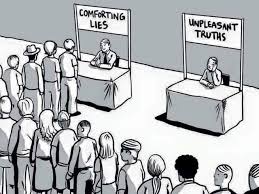
Sycophants earn positions as heads of government with no qualifications except an unscrupulous ability to kiss ass.  The media daily screams headlines that defy logic and comprehension while profits for news conglomerates soar to ever higher peaks.  Meanwhile, the information contained in media broadcasts bears scant resemblance to the reality that most of us face.  Lying is the norm and has become one more strategy in a congressperson’s arsenal.  A stew of lies daily spread by the internet and its media minions.   None of us can escape complicity in this economy as we all breath its rotten air.

Something rotten comes this way:

How can we expunge this rottenness?  Will singing Kumbaya work?  Will hands across the aisles work?  Will prayers and thoughts work?  Will more empathy work?  What about better communication?  What about more people going to college to get educated?  What about doing away with Social Security and replacing it with Stock Portfolios?  What about more guns?  What about?  Sorry, I am out of simple solutions.  None of these so-called solutions work because they do not confront the real problem.  The golden idol that makes money the measure of all good things in life.  It may be possible to stop the spread of this rot, but it will take a change of heart as well as a change of mind.  Many of my friends ask me if it is not too late.

I only know one thing.  Unless we change the path that we are heading down, we can kiss democracy in America goodbye.  The rottenness will eventually infect the entire nation until we are left with nothing but a country of cowards, sycophants, greedy merchants and greedy consumers.  People who will continually lie to get ahead.  People with no goals except to consume the latest do-dads in hopes of becoming happier and more satisfied with their lives.

Ironic that so many Americans want to go down this path, since not one great prophet in history has preached that owning more stuff will either make you happy or get you into heaven.  Nevertheless, today we have Christian churches preaching the “Prosperity Gospel.”  A narrative that has millions of followers subscribing to a bastardization of every great scripture that has ever been written.

The prosperity gospel teaches that faith, positive confession, and financial giving to religious leaders will bring the giver personal wealth, health, and success.  It portrays material prosperity as due to God’s favor and poverty or illness as evidence of weak faith or spiritual failure.  The Prosperity Gospel is a Super Con because it monetizes hope, blames failure on the believer, and shields itself from disproof.  People buy into it because it promises certainty and reward in an unfair economy.  It exploits vulnerability, fear, and selective success stories to convince “true believers” that it is a Christian teaching.

Robert Tilton: “I believe that it is the will of God for all to prosper because I see it in the Word… I do not put my eyes on men, but on God who gives me the power to get wealth”.

Creflo Dollar: “When we pray, believing that we have already received what we are praying, God has no choice but to make our prayers come to pass”.

John Avanzini: “Jesus had a nice big house”, “Jesus wore designer clothes”, “Jesus was handling big money”.

Joel Osteen: “If you want to reap financial blessings, you have to sow financially”. He also states, “I believe God wants you to prosper in your health, in your family, in your relationships, in your business, and in your career”.

Oral Roberts:  “Sow a seed on your MasterCard, your Visa or your American Express, and then when you do, expect God to open the windows of heaven and pour you out a blessing.”

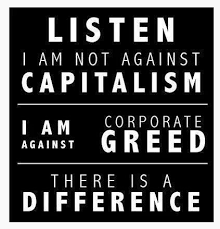
Friends, the only solution that will save our country along with our immortal souls is to defeat the basic tenets of corporate capitalism and to cast out the evangelists of hypocrisy who spread such false gospels as the “Prosperity Gospel.”  The corruption that we see in the White House, the Congress, the Supreme Court, the Universities, the Media and many so-called Christian Churches is a symptom of the rot that is associated with our predatory avaricious Corporate Capitalistic system.

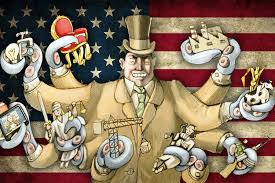
Corporate Capitalism itself must be understood as a mindless media driven machine that puts profits over virtue.  A system in which the greater needs of society are no longer the recognized or given any priority.  All that is rotten today in America today can be traced to greed and avarice.  The same motivations that caused the Israelites to build the Golden Calf.  The Golden Calf still stands—no longer forged of gold but of brands, markets, and corporate power.  We bow to consumption, give obedience to profit, and keep silent to wrongdoing in exchange for comfort and toys.  We mistake greed for progress and idolatry for economic necessity.  We do not need a rejection of markets but a rejection of markets without moral and ethical anchors.

The late Pope Francis is quoted as saying that:

“From an economic point of view, it is irrelevant to produce tanks, or candy provided the profit is the same.  Similarly, it might be the same to sell drugs or sell books if the profit figures match.  If the measure of value is money, everything goes provided that the profit does not vary.  The measure of every human being is God, not money.”

Money becomes the measure of good and evil.  Money becomes the measure of a person’s value and even life.  Today, the religion of America has become “How can I get more money.”  The true prophets throughout history have always preached the potential dangers of focusing on accruing either wealth or fame.

Christianity (Jesus): “No one can serve two masters. … You cannot serve both God and money.”

Islam (Prophet Muhammad, Hadith): “Riches are not the abundance of worldly goods; rather, true riches are the richness of the soul.”

Judaism (Talmudic/Midrashic Thought): “The truly rich are those who are satisfied with what they have.”

Baha’i Faith (Baháʼu’lláh): “Material comforts are only a branch, but the root of the exaltation of man is the good attributes and virtues which are the adornments of his reality.”

Red Cloud (Oglala Lakota): “I am poor and naked, but I am the chief of the nation.  We do not want riches, but we do want to train our children right.  Riches would do us no good.  We could not take them with us to the other world.  We do not want riches.  We want peace and love.”

If we want to rid our nation of the rottenness and stench that is rapidly covering it, we must rid ourselves of the obsession that capitalism seeks to instill in us with every media at their disposal and every commercial that they can provide.  It is an obsession to own more, to possess more, to have more, to buy more, to shop until we drop.  You can have a heart attack so long as you have spent your last dollar.  Christmas has become $Mas.  Our world has become one big shopping mall.  We are speeding on a spending train to oblivion.  Next stop HELL. 

What Can We Do?

If the disease is moral, the response must be moral as well.   We must all:

  • Refuse to lie or accept lies
    • Reject those who tell lies to get ahead for any reason
  • Refuse to worship money and wealth
    • Reject anything to do with the “Prosperity Gospel”
  • Refuse to relate success with goodness
    • Teach that success is not always associated with morality or doing the right thing
  • Teach our children to be responsible
    • Responsibilities are as important as rights. Develop children who accept responsibility for their lives
  • Choose sufficiency over excess
    • Corporate Capitalism thrives on “wretched” excess. Ask yourself what you really need to be happy not what some commercial tells you that you need.

The single most important thing we can all do is to get off the spending train.  Substitute empathy for others for greed.  Substitute kindness for strangers and immigrants instead of suspicion and hatred.  Substitute charity for all for a desire for more stuff and more toys for oneself.  Substitute compassion for the poor and the needy instead of worrying about what you are going to get.  Substitute mercy and forgiveness for hatred and retribution.

Above all remember that we are all one people.  There are about 180 or more countries in the world.  Karen and I have only been to 45 now, but we have found that everyone in every country that we have been to want the same things:  Meaning for their lives.  Peace for their nation.  Safety for their families.  A decent place to live.  A good meal each day.

We must embrace the idea that everyone is entitled to these elements of a satisfactory life and not just people in our circle or community or nation.  People in every country of every color of every religion and of every political and economic philosophy deserve the same thing.  Life, liberty and the pursuit of happiness.  

Loneliness in America:  A Tragedy of the Commons by J. Persico and Metis – AI Assistant

As I get older, I have noticed more and more people talking about loneliness.  One of my greatest fears has always been loneliness.  I remember embracing the song “Sometimes I feel like a Motherless Child” by Richie Havens.  He was not the first singer or author of this song, but he made it quite popular during the sixties and seventies.  This song reflected how I felt about life and growing up.  I was on my own with no one who loved or cared about me.  No mother.  No loved ones.  Just myself.

“The most terrible poverty is loneliness and the feeling of being unloved.” —Mother Teresa

I grew up somewhat hard and even at times cruel because it was my way of fighting back against the possibility of loneliness that lurked around every corner.  I never trusted anyone because I was sure that they would abandon me and then I would feel the pain of loneliness.  It is hard to describe this pain.  It is not a physical pain.  For me it felt like being thrown off the top of a high mountain or bridge and spiraling down as I waited to hit the ground.  During acute panics of loneliness, I would feel dizzy and lose my sense of balance.  My core felt empty.  I was shrouded with feelings that embraced despair and contempt for myself.  There was nowhere to run or anyone to turn to.  I was alone on an island barren of people, trees or any living creatures.  Not like purgatory and not like limbo.  Just a nothingness in which I existed with no other human beings.

“When you have nobody you can make a cup of tea for, when nobody needs you, that’s when I think life is over.” —Audrey Hepburn

I dreaded these feelings and would do anything to avoid them.  I would abandon other people before they could abandon me.  This destroyed many relationships I had over a period of years including my first marriage and to some extent the relationship I had with my daughter.  It continues to intrude on my life whenever I feel threatened with the loss of love in my relationship with Karen.

“You can be lonely even when you are loved by many people” — Anne Frank:

I tell you these things not because I want sympathy or any feelings of support.  I want you to know that I take loneliness more seriously than many other elements of life that cause us pain.  For this reason, I want to look at loneliness and what seems to be behind the increase that many people say is happening in America.  If one asks well, “Define Loneliness” or what data do you have that supports loneliness is on the increase in America, I am going to plead “Mea Culpa.”  I don’t have the requisite data to prove conclusively that loneliness is an epidemic as some have claimed.  But frankly, I don’t give a damn.  If there is one person in America or the world that is suffering from loneliness, that is one person too many for me.  However, there is in fact some data to support the five major trends that I am going to discuss later in this blog as contributing factors to the loneliness that so many people experience.

“There were moments of intense pain & utter darkness that I wanted to end it all.  The only thing I wanted was not to live.” ― Lala Agni,

For those of you that are not convinced that loneliness is a problem today.  Here are some facts and data that point in that direction.  Because surveys define loneliness differently (daily vs weekly vs “often”), the cleanest approach is to present a small set of credible, recent benchmarks.  Here are some that my AI assistant Metis found:

  • Gallup (daily loneliness): 20% of U.S. adults reported feeling lonely “a lot of the day yesterday” (Aug 27–Sept 4, 2024), up from ~17–18% earlier in 2024 and below the pandemic peak of 25%. Gallup.com
  • Pew Research Center (frequency): 16% say they feel lonely/isolated all or most of the time, 38% say sometimes, 47% hardly ever/never (report published Jan 2025). Pew also finds adults under 50 report “often” loneliness more than 50+ (22% vs 9%). Pew Research Center
  • Harvard “Making Caring Common” (overall prevalence): A nationally representative May 2024 survey found 21% of U.S. adults feel lonely. Making Caring Common
  • AARP (older adults trend): Among adults 45+, AARP reports 40% are lonely (fielded Aug 2025), up from 35% in 2010 and 2018. AARP
  • Workplace-focused lens (Cigna Group): “More than half of American workers classify as lonely,” with the report tying loneliness to absenteeism, disengagement, and turnover risk. MediaRoom

Depending on how it’s measured, loneliness shows up in anywhere from about one in five Americans to well over half in some surveys—especially when you ask about frequent feelings or focus on workplaces.  Gallup found that 20% of respondents felt lonely ‘a lot’ on the prior day, Pew found 16% of respondents feel lonely all or most of the time, and the nation -wide Harvard survey put overall loneliness at 21%.”

Now lets look at five of the reasons commonly cited for the increase in loneliness in America. 

1) We spend less time “doing life” with other people

Large-scale time-use data show Americans are less likely to socialize on a given day than a decade ago, and when we do, we spend less time at it.  In 2024, BLS reports 30% socialized/communicated on an average day (down from 38% in 2014), and average time fell from 43 minutes to 35 minutes. – Bureau of Labor Statistics

I often ask my students what they are going to do on the weekends.  The majority of times, the reply I get reflects their intentions to stay home and play video games.  I find it amazing that they are not going to go out to a park to play sports with other people.  Instead, they are going to interact with their friends through the digital world.  We all see this today wherever we go.  People texting and playing video games in restaurants, bars and parks, rather than talking or interacting with others.  We may not want to admit it, but older adults can be just as addicted to their phones as children seem to be.

2) Social networks are shrinking (fewer close confidants, weaker “bench strength”)

The Surgeon General’s advisory summarizes evidence that social networks are getting smaller and social participation is declining and cites research showing a steep drop in daily social time (e.g., “companionship/social engagement”) from 2003 to 2020.  That same advisory highlights the broader “fraying” context—lower trust in each other and institutions—which makes connection harder to initiate and sustain.

Once upon a time family dinners on Sunday were a major social event in the lives of most Americans.  Today, large-scale displacement of families now make such events almost impossible on a weekly basis.

3) Demographic and household shifts leave more people without built-in companionship

The Surgeon General’s advisory points to long-run declines in marriage rates and family size, plus a rise in single-person households (e.g., 13% in 1960, rising substantially over time).  That matters because for many people, spouses/partners, kids, and nearby kin are the default daily social glue.

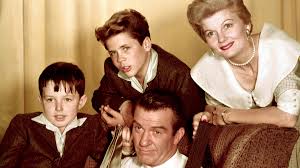
There is probably no place in America where “Leave it to Beaver”, “Father Knows Best” or “Ozzie and Harriet” families are the norm anymore.  Two parent families are becoming rarer and rarer.  Many young people opt for simply living together either to avoid a commitment that they are apparently not willing to make or else feel that they could not keep.  You can argue about the value of a traditional relationship all you want.  I am not going to argue that children must be brought up by a Mom and Dad.  However, having two or even more adults to help in child raising has always made the task somewhat easier.  Many years ago, the task of child raising was presumed to be a communal or extended family activity.  Few homes today include a mom, dad and grandparents.

It is even rarer to find homes where either parent is home to simply look after their children.  The economics of modern life demand that both parents have jobs.  It is unbelievable to me when I remember that my father was only a postal worker and never a manager and that my mother stayed home with four kids.  Nevertheless, we had a tidy small home in a small town and food on the table every day.  We might even have had a lot more if my father was not a compulsive gambler spending his earnings or at least a portion of them on the horses.

4) Erosion of “third places” and community institutions

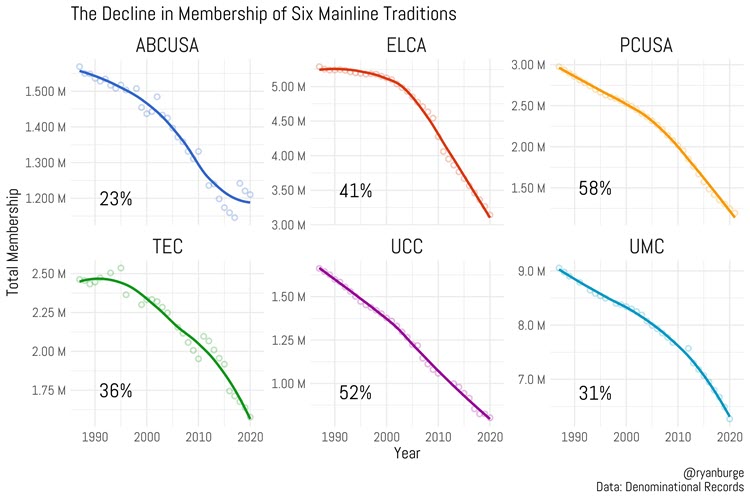
Over the years, there has been declining participation in traditional community anchors—religious groups, clubs and labor unions.  When these institutions fade, people don’t just lose activities; they lose the repeated, low-effort contact that turns acquaintances into friends.

If you are my age, you may remember the large number of social networks that people once belonged to from Camp Fire Girls to Girl Scouts to Boy Scouts to Fraternal groups like the Elks, Moose, Eagles,, Masons, and Shriners.  Churches were another source of community for many people.  I will repeat that the data shows sharp declines in participation in all of these groups.

5) Technology reshapes connection (often replacing, not enriching, relationships)

The Surgeon General’s advisory is careful here: the evidence is “complex,” but there are documented benefits and harms, and it concludes we have reason to be concerned about certain kinds of tech use affecting relationships and social connection.  Once upon a time, it was claimed that TV would destroy family life.  Then it was the Internet.  Now it is the social media programs.  Experts seem to pop up to dispute that any of these technologies have had or are having an adverse impact on socialization.  However, common sense argues against the wisdom of paid shills who benefit and profit from the exploitation of others via the media platforms that they shill for.

So How Do We Address the Loneliness that Exists in our Country Today?

This is a very difficult question to answer.  Lets start by describing what we are not going to do.

  • We are not going to eliminate TV or streaming digital media. This is not likely to happen given the number of hours people spend in front of TV’s.
  • We are not going to eliminate or ban Smart Phones. This will never happen as they serve too many good uses and are now a necessary part of doing business in the world.
  • We are not going to ban social media groups or make participation in real time groups like church or fellowship groups mandatory. This would involve a gross violation of the freedom and individual rights that people have.

Where Do We Go from Here?  Three Realistic Ways Forward

  1. Rebuild everyday human contact—where people already are

Loneliness will not be solved by telling people to “try harder” or “get out more.” It will be addressed when we intentionally rebuild regular, low-effort human contact into the places people already show up: libraries, senior centers, veterans’ halls, walking paths, coffee shops, classrooms, and clinics.  What matters is not the size or novelty of these efforts, but their consistency.  A weekly discussion group does more than a one-time event.  A familiar face does more than a thousand online “connections.”  Human bonds form through repetition—by seeing the same people, in the same places, over time.  We once understood this intuitively. Community was not something we scheduled; it was something we inhabited.  Recreating that does not require nostalgia or ideology—only intention.

When Karen and I moved to Wisconsin after she retired, we discovered several places in Frederic, Wisconsin where people would meet.  The farmers met in the Dairy Coop.  The literary people met in the library.  The mechanically oriented people met in the Holiday Gas Station.  We lived in Frederic for 14 years and knew about everyone in town.  The meetings at the venues mentioned above went on every day when each venue was open.

Before we left Frederic to move to Arizona permanently, the library had decided not to allow meetings anymore.  We were too noisy they said.  The Holiday Station took out the table and chairs that we had set around claiming the space could be used for more products.  The Dairy Coop caught fire and was not rebuilt.  This past year, the Safeway store in Casa Grande removed the outside tables they had where people could rest and not be in the way of food carriages.  You could sit, drink coffee and carry on a conversation with friends.  It seems as though all over America there is a conspiracy to eliminate places where people can socialize.

  1. Reclaim in-person connection as the default, not the exception

Technology has given us extraordinary tools, but it has also quietly taught us that presence is optional.  Texts replace visits.  Zoom replaces conversation.  Scrolling replaces sitting with one another in silence.  This does not mean rejecting technology.  It means re-establishing boundaries.  Phones down during gatherings.  In-person meetings when distance allows.  Choosing eye contact over convenience when the choice is ours to make.  Loneliness is not cured by communication alone; it is cured by being seen.  And being seen requires physical presence, attention, and a willingness to tolerate a little awkwardness.  The cost of connection has gone up—but the cost of avoiding it is far higher.

“Society is the product of our relationships – if our relationships are confused, egocentric, narrow, limited, national, we project that and bring chaos into the world.” — Krishnamurti

A few years ago, my wife’s adopted daughter came out to visit.  She had her cell phone with her and spent more time on the phone than she did talking to us.  I was very peeved and told Karen, next time she comes tell her to leave her phone in her luggage.  Realistically now though, how do you think this would go down?  Parents fight schools that want to ban cell phones in the class because they say, “What if I had to call my son or daughter or they have to call me?”  It is amazing that we grew a nation of people long before we had cell phones.

  1. Treat loneliness as a shared moral responsibility, not a private failure

Perhaps the most damaging myth about loneliness is that it is a personal shortcoming—a sign of weakness, poor social skills, or individual failure.  When loneliness is framed this way, people hide it.  And hidden loneliness only deepens.  A healthier society would name loneliness for what it is: a civic and moral challenge.  One that affects public health, democracy, trust, and social stability.  One that cannot be solved by individuals acting alone.

A simple but powerful starting point would be for organizations, churches, employers, and communities to ask regularly: Who has disappeared from our circles—and why?” and “How can we create more shared space for people to communicate and get to know each other.”  

My wife Karen has been in a choir for over ten years now and she often does not know the names of new members or even all the old members.  I asked her why several times and I always get the same response “Well, we don’t get time for socializing as we are busy practicing our songs for the Sunday service.”  This seems criminal to me.  I never started a business meeting that I facilitated without going around and allowing each person to introduce themselves and say a little about their background.  What is so important that we cannot take a few minutes to let others know we care about who they are?

A final thought

Loneliness in America will not be solved quickly, cleanly, or perfectly.  In fact, it will not be solved at all unless we decide—quietly and collectively—that showing up for one another is not optionalConnection is not a luxury.  It is the infrastructure of a humane society.

Martin Luther King Jr. developed the concept of an “inescapable network of mutuality” where the fate of individuals is interconnected.  He also stressed the mutual obligation individuals have for each other’s development.  King emphasized that unity is crucial for survival, stating, “We must learn to live together as brothers or perish together as fools.”

Reaching out should not be seen as charity.  It should be seen as a survival skill.  It should reflect Love, Empathy and Compassion for others.


Overdose America: Why We Will Never Win the War on Drugs!

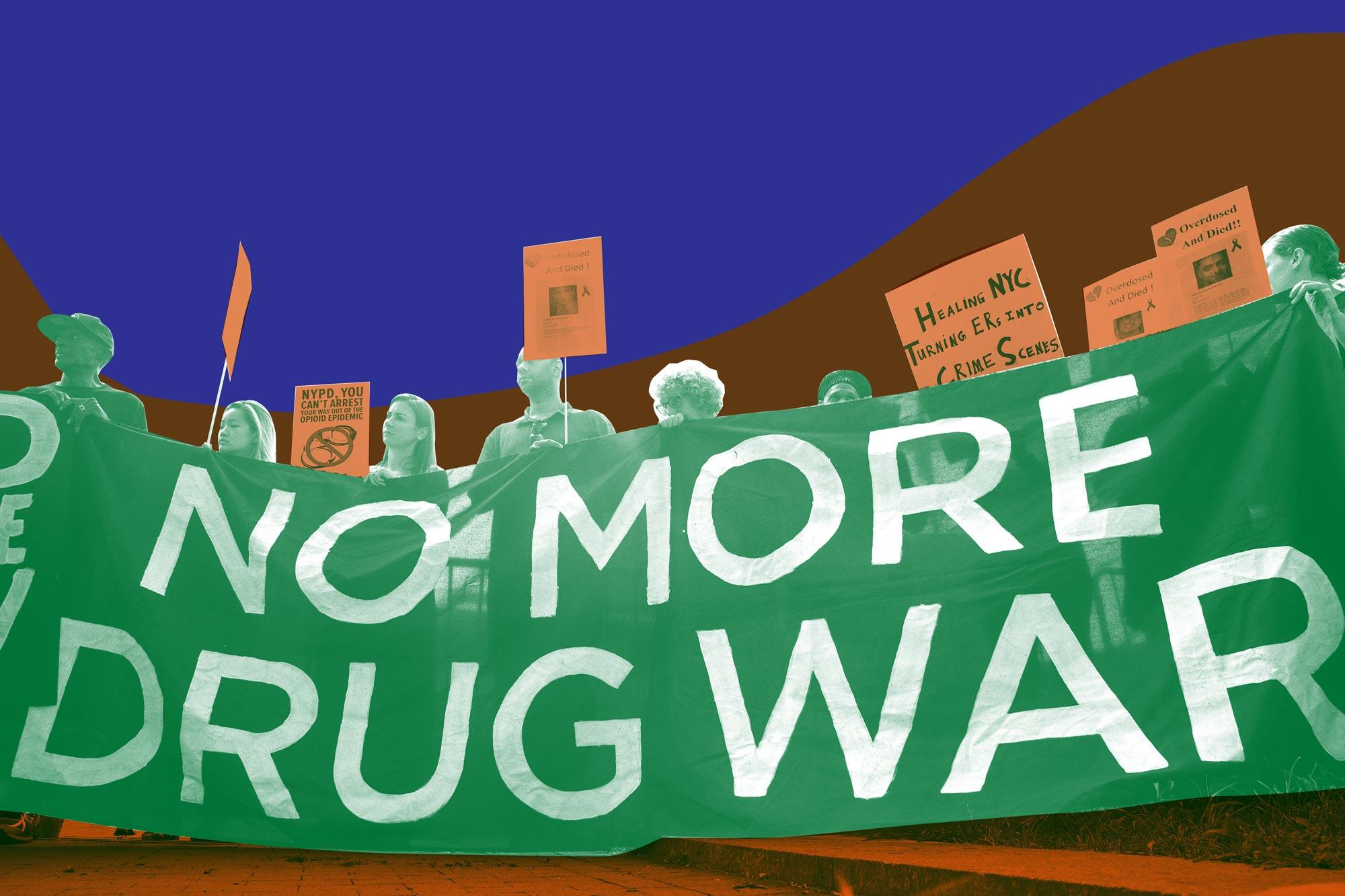
A popular quote has it that “The definition of craziness is continuing to do the same thing and expect different results.”  Yet for nearly 100 years now, we have been doing the same thing when it comes to drugs.  Beginning with marijuana, then heroin, then cocaine, then crack, then methamphetamines, then opioids and now fentanyl, every ten or fifteen years or so, we add another drug to the list of drugs that we are waging war on.  The wars are always the same, arrest the people who use the drugs, arrest the drug dealers, interdict the drug suppliers and try to close down the drug factories.

For more than fifty years, the United States has been running what we officially like to call a “War on Drugs.”  Nixon first used the phrase during a press conference on June 17, 1971.  The truth is we have been waging a war on drugs since the first batch of alcohol was produced at some remote still in the Virginia mountains.  The first “Illegal” stills began in 1791.  Distilling became “illegal” only when owners refused to pay the Whiskey Tax of 1791.  This was the first domestic tax imposed by the new federal government.  Before this, private stills were common and perfectly legal.

The charts below tell us—without ideology, slogans, or moral judgment—how this war has actually gone.  What these charts reveal is not a story of individual moral failure or a handful of reckless “bad actors.”  What they reveal is something far more troubling:

A system that consistently produces harm at scale.  A system where drugs are not the cause of the problem but the inevitable outcome of a larger problem.

Chart 1: Total U.S. Deaths from Drug Overdoses and Alcohol (2004–2023)

Total U.S. deaths from all drug overdoses (including prescription and illicit drugs) compared with alcohol-induced deaths, 2004–2023.

Why This Chart Matters

This chart shows the raw number of Americans dying each year from:

  • Drug overdoses (all drugs: prescription and illicit)
  • Alcohol-induced causes (poisoning and chronic disease; not accidents or violence)

The upward trend is unmistakable.

Drug overdose deaths rise from roughly 27,000 in 2004 to over 100,000 per year after 2021.
Alcohol-induced deaths nearly double over the same period, with a sharp surge during and after the pandemic.

At first glance, some will argue this is simply a matter of population growth:  More people means more deaths.  That explanation collapses when we look at the second chart.

Chart 2: Per-Capita Death Rates (Deaths per 100,000 Population)

Per-capita death rates (per 100,000 population) remove population growth from the equation, revealing true changes in risk over time.

Why This Chart Matters

This chart removes population growth entirely.

Measured per 100,000 Americans, drug overdose deaths more than triple over the past two decades.  Alcohol-induced deaths nearly double per capita over the same period.

This is the critical point:

When harm grows faster than population, the problem is not demographic — it is structural.

Healthy systems dampen risk.  Unhealthy systems amplify it.

This Is a Systems Failure, Not a “Bad People” Problem

American drug policy still rests on a comforting fiction:  that addiction and overdose are primarily the result of individual weakness, criminal behavior, or poor moral choices.  In other words, drugs are associated with low life scum bag assholes that bear no resemblance to us, our relative or our friends.

The per-capita data destroys that narrative.

Millions of people do not independently decide to fail in the same way, at the same time, across both legal and illegal substances.  What is failing is the system — the structures that shape incentives, access, despair, treatment, and profit.

This is where the idea of Economic Apex Predators becomes unavoidable.

Economic Apex Predators and the Logic of Harm

In nature, an apex predator is not evil.
It simply occupies a position of unchecked advantage.

When ecosystems collapse, it is rarely because predators are malicious.
It is because balance and restraint disappear.

Our economic system has produced its own apex predators:

  • Pharmaceutical industries that monetize dependency while externalizing risk
  • Financial systems that profit from addiction through insurance, debt, and incarceration
  • Legal systems that thrive on the drug war with lawyers, police, judges and courts all owing their existence to catching and prosecuting anyone in the illegal drug trade.
  • Supply chains optimized for speed and efficiency, not safety
  • Political institutions more responsive to capital than to human cost

None of these actors needed to intend mass death.

The system rewards behavior that makes drugs and drug deaths inevitable.

From Prescription Pills to Fentanyl: A Market Evolution

The overdose curve follows a grim but predictable logic.

Prescription opioids were aggressively marketed.  When backlash came, access tightened — but demand remained.  The market adapted.

Heroin filled the gap.
When heroin became risky to traffic, fentanyl replaced it — cheaper, stronger, deadlier.

This was not a failure of enforcement.

It was a success of market logic operating without ethical boundaries.

Fentanyl did not invade the United States.  It emerged naturally from a system that prioritizes cost reduction, scalability, and profit over human survival.

Why Alcohol Strengthens the Argument

Alcohol’s curve matters because alcohol is:

  • Legal
  • Regulated
  • Taxed
  • Socially normalized

Yet its per-capita death rate rose alongside illegal drugs.

That tells us something deeply uncomfortable:

The crisis is not about legality.
It is about despair.

Despair does not care whether a substance is legal.

2020 Was Not an Aberration — It Was an X-Ray

The pandemic spike is often described as an anomaly.  It wasn’t.

It was an X-ray.

When social supports vanished, when work and healthcare became unstable, and when isolation replaced community, the system’s fragility was exposed.

The pandemic did not create the overdose crisis.

It revealed it.

Why Individual Blame Is Comforting — and Wrong

  • Blaming individuals is emotionally satisfying.
  • It absolves institutions.
  • It preserves the illusion that the system is sound and only people are broken.

But systems that function well do not produce exponential per-capita death curves across decades.  If millions fail in the same way, the problem is not personal failure.

It is design failure.

A Closing Thought

Apex predators do not destroy ecosystems intentionally.
They do so when constraints vanish and balance collapses.

These charts are not just public-health data.
They are moral documents.

They show us what happens when an economic system evolves without ethical boundaries and treats human lives as acceptable losses.

This is not ultimately a story about drugs.

It is a story about power, incentives, and what we choose to tolerate.  I have watched this war now for over fifty years.  The craziness continues with bombings of so-called drug boats and now attacks on Venezuela with drones.  It is as though people in this country are blind to the truth and reality of this war.  You never hear the truth about this war in any media.  The news proudly broadcasts arrests of drug dealers and busts of large drug hauls but no data or facts about the drug war are ever published.  The media would rather ignore the real problem so they can make their blood money on advertising accompanied by their lurid stories of drug deals and drug related crimes.

As a nation we have stuck our collective heads in the sand.  The only time we take them out is when a relative or friend is caught up in the war.  Otherwise, it is them versus us.  Them are low life people with no motivation or desire to improve themselves so they default to drugs.  Them are other countries which find it lucrative to manufacture and sell drugs in the USA.  Them are immoral people who sell drugs to anyone with the money to buy them.  Do we ever ask “why are we alone in a drug war” when the rest of the world seems to look the other way and benefits at our expense.

I make a simple prophecy.  Unless we change our tactics and strategy, we will never win the so called Drug War.  Deaths will continue to escalate from drugs.  New drugs will soon replace fentanyl as the target drug.  Drug cartels will continue to manufacture and ship drugs to the USA where they will be eagerly purchased.  Police and courts will continue to prosecute drug pushers, drug users and drug lords.  The majority of people that get sentenced will be poor or minority if previous patterns of prosecution prevail.  Leaders of major cartels will continue to be replaced by even more vicious leaders, and the illegal drug industry will continue to make billions of dollars each year in profits.  Profits from the misery, despair and deaths of the customers who have made them rich.  Meanwhile our leaders will continue to brag that they are against drugs.  Politicians will continue to make more laws that do nothing to help us end the ravages of drugs in America.  Politicians will continue to be quick to espouse anti-drug drivel like “just say no!” to make it look like they are really concerned about the public welfare.

Anyone want to place a bet against my prophecy?

Thoughts to Start 2026 and Begin a Glorious New Year

As we leave the “Old Year” behind and get ready to greet the “New Year” here are some thoughts that I hope you will enjoy from some great poets and authors.  These writings are in the public domain. 

A New Year’s Charge
by Metis (ChatGPT)

The year begins again—
not because the world is finished with us,
but because it still believes we might choose better.

Let this be the year we refuse easy silence,
the year we speak when speaking costs,
the year we stand even when standing feels lonely.

Hope is not naïve.
It is disciplined.
It wakes each morning and goes back to work.

Dreams survive not by wishing,
but by courage repeated—
small acts of honesty,
daily refusals to give up the good.

When the road is steep and the noise is loud,
remember: moral courage is a quiet strength
that outlasts brute force and empty power.

Begin again.
Reach higher.
The future still leans toward those who try.

——————————

New Year’s Eve by Thomas Hardy

    “I have finished another year,” said God,

     “In grey, green, white, and brown;

    I have strewn the leaf upon the sod,

    Sealed up the worm within the clod,

     And let the last sun down.”

    “And what’s the good of it?” I said.

     “What reasons made you call

    From formless void this earth we tread,

    When nine-and-ninety can be read

     Why nought should be at all?

    “Yea, Sire; why shaped you us, ‘who in

     This tabernacle groan’ –

    If ever a joy be found herein,

    Such joy no man had wished to win

     If he had never known!”

    Then he: “My labours – logicless –

     You may explain; not I:

    Sense-sealed I have wrought, without a guess

    That I evolved a Consciousness

     To ask for reasons why.

    “Strange that ephemeral creatures who

     By my own ordering are,

    Should see the shortness of my view,

    Use ethic tests I never knew,

     Or made provision for!”

    He sank to raptness as of yore,

     And opening New Year’s Day

    Wove it by rote as theretofore,

    And went on working evermore

     In his unweeting way.

——————————–

Te Deum by Charles Reznikoff,

Not because of victories

I sing,

having none,

but for the common sunshine,

the breeze,

the largess of the spring.

Not for victory

but for the day’s work done

as well as I was able;

not for a seat upon the dais

but at the common table.

———————————

Brighter, Better New Year by Joanna Fuchs

Happy, happy New Year!

We wish you all the best,

Great work to reach your fondest goals,

And when you’re done, sweet rest.

We hope for your fulfillment,

Contentment, peace and more,

A brighter, better new year than

You’ve ever had before.

——————————————-

A New Year to Start

Finally, from some place within me that calculates the benefits of a New Year versus the Old Year, I believe that January 1, 2026, brings more than just the beginning of a New Year.  It brings a promise of hope and possibilities.

It is the time when it becomes traditional for us to form new resolutions, new dreams, and new goals.  It is the time when we want to begin over and try to make those desires come true that did not work out the year before. 

We should bring in the New Year as a mother brings in a newborn baby, full of promise and love.  There are those critics and skeptics who look at the inevitable human trail of broken dreams and unfulfilled goals from bygone years and laugh at our efforts.  Let us not be like those who deny the possibility of hope and change. 

I may often be a pessimist but for any of you with the courage to tackle a new set of goals or dreams, I say “try, try, and try again.”  When you give up your dreams, you give up your life. 

Happy New Year from the Persicos.