All Aboard for a Ride on the Trump Mobile

The Trump mobile is the limousine that Trump drives.  I will describe it in this blog.  If you board his vehicle, he will take you on a ride to autocracy and xenophobia.  To a land bereft of Democracy or anything pertaining to the values and virtues of the Founding Fathers.  Lets look at the construction of this vehicle from the ground up.

There are four tires that the Trump mobile rolls on.  One tire is Christian Nationalism.  This is the belief that the Christian religion should become the religion of the USA.  It is the belief that Christianity is superior to all other religions and that the Christian God is the only true God.  Christianity needs to infiltrate our government and our schools.  Christian Nationalists want to do away with the separation of church and state and put the 10 Commandments and Bibles in every institute of education in America.  America will become a Theocracy like Iran and Israel.

A second tire that the Trump mobile rides on is White Supremacy.  This tire is constructed of layers of belief that White people need to remain the supreme governing group in the USA.  It supports the idea that White people are superior in morals, intellect and aspirations to all other ethnic groups.  By virtue of being White, you are entitled to rule over inferior races which includes everyone on earth who is non-White.

The third tire constructed for the Trump mobile is Sexism.  This tire promotes the inferiority of women to men.  Women were brought into being by a creator not to lead men but to follow men.  A women’s main role is to bear children that will continue the dynasties started by men.  Women should always remain subservient to men from the bedroom to the kitchen.

The fourth tire for the Trump mobile is Racism and Xenophobia.  This tire is built up from layers of fear and loathing for other races and cultures.  This tire rolls on the belief that White people must prevent race mixing.  Allowing relationships with other races will dilute the pure heritage of the White genotype.  Anyone different such as Gays, minorities, disabled people or indigenous people must be eliminated from the White gene pool.

Moving on to the major power for the Trump mobile we come to the engine and the fuel supply.  The engine is composed of 8 cylinders of greed, avarice, acquisitiveness, covetousness, graspingness, cupidity, materialism, and possessiveness.  The fuel that feeds the engine delivers power from the promise of Tax Breaks and Trickle-Down Economics.  A fuel that will help the rich and many others find ways to buy more stuff.

Then we come to the transmission for the Trump mobile.  No limousine can move until the power is transferred to the wheels from the engine.  In the case of the Trump mobile, the two main cogs in the transmission are fear and hate.  Fear and hate convey the power to the wheels.  Fear of others who may try to take away the values promoted by Trump and his followers.  Hate for those who are different and who may try to block the desires of Trump and his supporters.

The vehicle is of course driven by the charismatic Donald Trump who is the only one on the whole planet capable of steering the limousine in the RIGHT direction.  Trump was sent by the Christian Nationalist God to drive the Trump mobile to a paradise on earth ruled by White Christian people.  People who believe in the superiority of Whiteness and a White God with blond hair and blue eyes who will smite the enemies of Trump and his supporters.

The fronts seats of the Trump mobile are filled with sycophants who bless Trump and regard him as a savior.  Leaders of the Republican party, rich billionaires, media propagandists and young sexy women all get to ride in the front seats.  The back seats are full of Trump supporters who hope someday to ride in the front seats.  These are men and women who feel cheated by their government and society of their rightful place in life.  They believe that someday Trump will anoint them as faithful followers and allow them to join Trump in his paradise on earth.  They believe that the Trump mobile will take them there.

All aboard please.  The Trump mobile is leaving soon. 

Only God Can Save You!

This past year marks my 41st Jesuit Silent Retreat.  I may be the only Atheist at the retreat.  Each year brings new insights and thoughts.  I wonder if I have grown any during my retreats.  I can’t say that I feel any closer to God, yours or theirs.  I wonder if there is a God but I doubt it.  I wonder if there are multiple Gods.  A God for each religion.  Is the Muslim God and the Catholic God and the Jewish God the same entity?  Were the Romans, Greeks, Hindus and many others more on the mark with different Gods for different functions?

This year reading as I usually do many of the assigned Gospel readings and many other Gospel passages I was struck with how many of the old prophets emphasized the need to believe in God’s goodness.  Only God can save us and we must have faith in God’s goodness.  God has a plan for all of us if we will only listen to him or perhaps her.  God knows what we need but we ignore his/her messages.  Pray to God.  Love God, for God loves us.  He loves us so much that he sent his only “begotten” son (Not sure what a begotten son is) to save us.

Exodus 33:18-19 (NKJV)

“And he said, ‘Please, show me Your glory.’ Then He said, ‘I will make all My goodness pass before you, and I will proclaim the name of the Lord before you. I will be gracious to whom I will be gracious, and I will have compassion on whom I will have compassion.’”

Frankly, I still don’t get it.  Many people have taken a shot at saving my soul, but I still don’t see any value in God.  During the past five years, he/she has allowed Global Warming to destroy much of the climate that I once loved.  He sent a scourge called Covid 19 to help ruin the last few years of my life.  And to top it off, he allowed a low life called Trump to run for President again.  I guess I am lost to the damnations of hell fire, but I still don’t see a God that is going to save me.  If so, he/she is about 78 years past my patience.

C. S. Lewis was the great “converter.” The conversion of an Atheist to a Theist is an aphrodisiac for the devoted religious. I suppose it justifies their belief in a future fiction that requires a complete abandonment of reason and logic.  A place called Heaven where we can all live happily ever after.  Just as long as we are willing to listen to daily sermons about how good God is for us.

“[God] will not be used as a convenience. Men or nations who think they can revive the Faith in order to make a good society might just as well think they can use the stairs of heaven as a shortcut to the nearest chemist’s shop.” — C.S. Lewis

But “Only God Can Save You” has a ring of truth to it.  No one on earth can save you from death.  No one can be trusted to be by your side forever regardless of the consequences.  Friends and lovers come and go like shadows in the night.  One day someone loves you, the next day they hate you.  One day someone is your friend, the next day they unfriend you on Facebook.  Tragedy of tragedies.  Loneliness is a Satan stalking all of us all of our lives.  I would wager more people have committed suicide out of loneliness than any other reason on earth.

Psalm 107:8-9 (NKJV)

“Oh, that men would give thanks to the Lord for His goodness, and for His wonderful works to the children of men! For He satisfies the longing soul and fills the hungry soul with goodness.”

Only the concept or idea of an All Knowing, All Seeing, All Powerful and All Compassionate God can guarantee us that we will never be alone.  Never be forgotten.  Never be forsook.  One popular song goes:

Walk on, walk on

With hope in your heart

And you’ll never walk alone

You’ll never walk alone

This song was first written by Oscar Hammerstein II and composed by Richard Rodgers for their musical Carousel, which was released in the USA in 1945.  It has since become one of the most popular funeral songs (Next to Amazing Grace) of all time.  Many people interpret it to have faith.  Faith in friends.  Faith in lovers.  Faith in a God who will always be with you in time of trials and tribulations.  It is a song to give hope to people in time of grief and suffering.

But where does one find such a God?  The Bible shows us at best an arbitrary God.  Sometimes belligerent.  Sometimes vindictive.  Sometimes vengeful.  Sometime cruel.  A God that many of us see in the world wreaking havoc on humanity for any number of transgressions.  From Sodom and Gomorrah to massive floods to sending his “Chosen people” into slavery.  A God who threw Adam and Ever out of the Garden of Paradise because they dared eat an apple.  A God who destroyed cities because they did not live up to his/her expectations.  A God who sent a flood to wipe out humanity.  This is a compassionate loving God?

Psalm 31:19 (NIV-84)

“How great is your goodness, which you have stored up for those who fear you, which you bestow in the sight of men on those who take refuge in you.”

Or is it a God who feeds his people.  A God who watches out for his Chosen ones.  A God who rewards those who obey him/her.  A God who destroys the enemies of those who worship him.  A God who is loving, kind and compassionate.  I wonder what God really is.  Here are some questions that still nag at my Atheist beliefs.

  1. Do I think that I am smarter than all the wise and great people who believe in God?
  2. Who or what created us?
  3. What if there is a God? What does he/she think of me?
  4. What if there is no God?
  5. Is God simply a metaphor for “Unconditional Love?”
  6. Is God Death or Life or Both?

The Atheist by Martin Braun

Science defines my virtue.

Factual and fictional books are my domain.

Don’t speak to me of pixies, fairies, and unicorns,

Or of your monopoly on morality, love, faith, and shame.

I am what I am

And of what I do I claim my own.

I fight for my survival

Of which need not be told, judged or shown.

There is no all knowing

Or an immortal god of my fate he will judge.

For when my heart ceases to beat

It will return from whence it came, a kind of primordial sludge.

What if Jesus Ran for Office?

A Political Play in One Act:

Place:  A campaign headquarters somewhere in America.  Two political campaign advisors sit discussing campaign strategy for their candidate:

Jake:  A ten-year veteran of smear campaigns

Bryan:  The head campaign manager for a Republican candidate for office

____________________________________________________________________

Jake:  I hear the Democrats have nominated some guy named Jesus Christ or Jesus of Nazareth.  Sounds like a foreigner to me.  Do we have anything on this guy?

Bryan:  I had two aides dig up a bunch of stuff.  This guy has a checkered background.  I think we can really nail his ass to the cross.  I have five major areas that I think we can get him on.  Let’s go through them together and see what you think.  We need to prioritize our attacks.  Maybe start with the biggest ones first?

Jake:  Yeah, the sooner we destroy his credibility the better.  The more we can dump on him, the more he will drop in the polls.  So, what have you got?

Bryan:  Well first of all.  He claims he is some sort of itinerant preacher who can heal the sick and raise the dead.  But he does not have any theology training or any bona fide theology degrees.  And he is practicing medicine without a license.

Jake:  Beautiful.  We will nail him for being a fake faith healer and being incompetent as well.  Imagine preaching without a degree from a Bible College?  As for the license thing, I have some friends in the FBI who can start an investigation and maybe even charge him with a felony for practicing medicine without an MD degree.  What else have you got?

Bryan:  This guys got a bunch of followers but one in particular named Judas would be willing to go on Fox News and denounce Jesus as a fake and hypocrite.

Jake:  How much does he want?

Bryan:  He says for only thirty pieces of silver, he can make Jesus look really bad.

Jake:  Okay, we will run with that first.  How about several ads with Judas talking about Jesus being a fake faith healer and not following his own advice.  Let’s get them running as soon as possible before he builds up any momentum.  The press will eat this up.  Anything else?

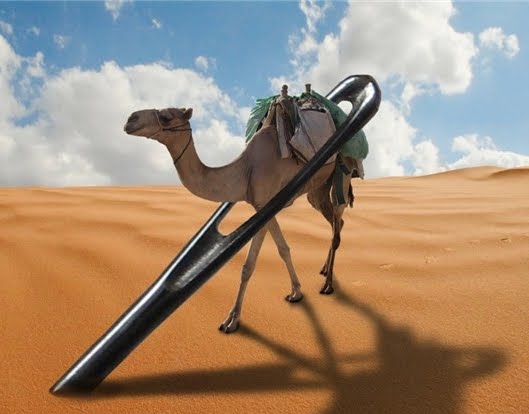
Bryan:  I was saving the best for last.  You won’t believe this.  He has a platform called “The Eight Beatitudes.”  He wants to take from the rich and give to the poor.  Some type of income redistribution.  He says the “meek will inherit the earth.”  This guy is obviously a Communist.  He says a rich man will have less chance of getting to heaven than a camel would have of going through the eye of a needle.  He tells story after story of rich people getting screwed.

Jake:  Unbelievable.  What is this guy a total idiot?  Man, we will bury him with this.  We will label him as “The Communist Candidate.”  Has a ring to it.  I will tell all of our Fox Media outlets that they need to start an “anti-communist” line on this Jesus guy just as soon as they can.  I want radio, tv, podcasts describing how he plans to increase taxes on the rich and give it to the poor.  The usual stuff we label Democrats with: More welfare queens; Tax and spend; Soft on crime.  Does he say anything about crime?

Bryan:  I hear he hangs around with prostitutes and pimps.

Jake:  That’s great.  We can bring up his anti-family values as well as coddling criminals.  Any evidence he is screwing any of them?

Bryan:  Some of our informants say that he has a girlfriend, but we don’t have any corroboration for that.  He may be gay.  He is not married, and he hangs around with a lot of young men.

Jake:  See if we can follow up on the queer angle.  Hanging around with young men sounds suspicious to me.  Anything else Bryan?  I think we have enough to go on with just what you have already.  The key thing though is I would like to find more people who can testify what an asshole this Jesus really is.  Find some people he didn’t cure or some rich people like Elon Musk who will condemn Jesus.

Bryan:  One last thought.  He may be an Anarchist.  He talks about tearing the capital down and building it up again in three days.  He also talks about changing the law.

Jake:  OK, have someone follow him and get some good tapes of his talks.  Spread some money around and see if anyone else will come forth with some juicy stories about this Jesus.  I think he is dead already.  Crucified by his own ideas and words.  He won’t come back in three days; I can promise you that.   Jesus is history.

The End   

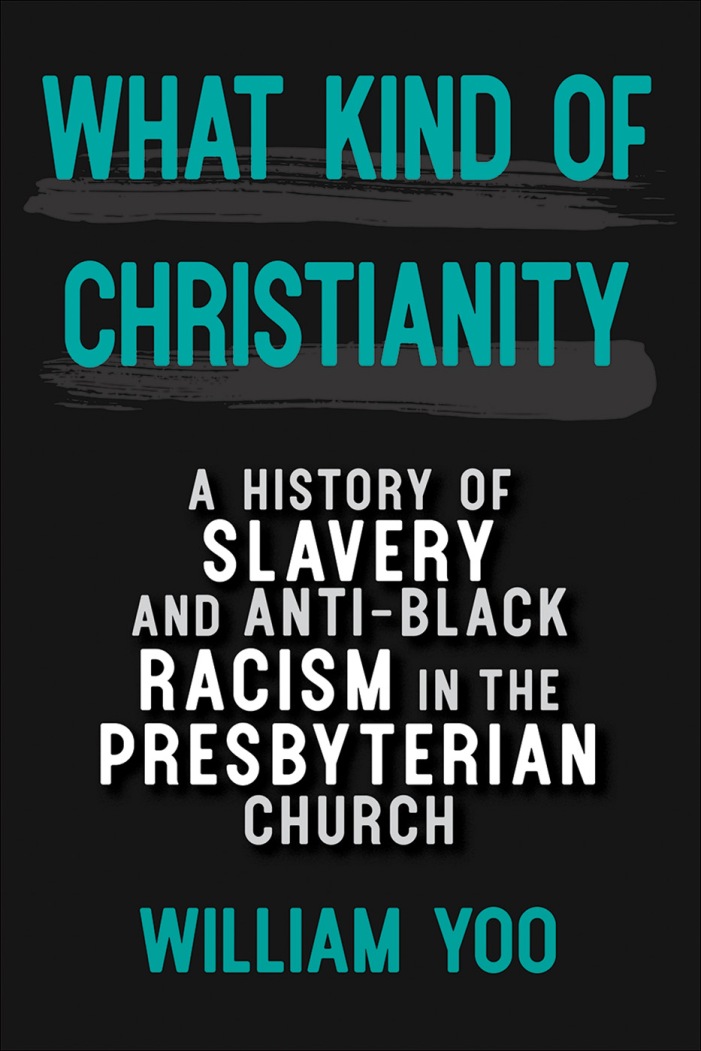
Some books on Jesus that you might like to read:


My Final Will and Testament – Scriptures – Reflection #10

images

Last year at my 40th Demontreville Retreat, one of the exercises that we were given by the Retreat Master included a very challenging set of thoughts.  The worksheet for the activity was labeled as “A Testament.” I took the worksheet and instructions home with me.  It had fourteen tasks or reflections to complete.  I did not desire to complete them during the retreat.  It is now almost a year since my retreat, and I have decided to make the mental and emotional effort necessary to complete this “Testament.”

The worksheet started with these instructions:

Imagine that this is the last day of your life on earth.  In the time that you have left, you want to leave a “Testament” for your family and friends.  Each of the following could serve as chapter headings for your “Testament.”  This is Reflection Number 10 on the worksheet.

  1. These are the Scripture Texts that have touched and helped me.

My being an Atheist some people might think that I would have a hard time with finding Scriptures that have touched me.  In truth, it is one of the easiest reflections for me to think about.  I have so many wonderful parables from the New Testament and many proverbs and wisdom from the Old Testament that I use to guide my life and decisions.  I see the Bible as another source of great wisdom that has been compiled over the ages.  It is a combination of history, storytelling and profound thoughts compiled into one large book.  I do not view the Bible as infallible or “The Word of God” unless I use that interpretation very loosely.  If there is a God, perhaps he does reside in all of us and all of us are “Children of God.”

In 1775, Thomas Paine wrote a short essay criticizing slavery and reflecting on “Pretended” Christians who could support such a practice.  His words were:

“to catch inoffensive people, like wild beasts, for slaves, is a height of outrage against humanity and justice, that seems left by heathen nations to be practiced by ‘pretended’ Christians.” — African Slavery in America, 1775

Today we have a system that seems somewhat analogous to the system of “Pretended Christians” that Thomas Paine described 250 years ago.  “Pretended Christians” who can support a man and party that attacks, insults, abuses, and maligns minorities, immigrants, women, disabled people, and veterans.  A man who swears vengeance against the people who disagree with his policies.  A man who pays no attention to Scripture which says:

“Dearly beloved, avenge not yourselves, but rather give place unto wrath: for it is written, Vengeance is mine; I will repay, saith the Lord.  Therefore, if thine enemy hunger, feed him; if he thirst, give him drink: for in so doing, thou shalt heap coals of fire on his head.  Be not overcome of evil but overcome evil with good.”Romans 12:19-21 King James Version

Many of the people insulted by this man continue to feel that he is some sort of Christian Savior.  A man who will restore Christianity as the Mother Religion of America.  A position for religion that not one of the 56 signers of the Declaration of Independence, our Founding Fathers either desired or supported.  We have a country full of people who want to call America a Christian nation but who neither practice nor believe in one iota of what Jesus of Nazareth taught and died for.  We have a nation full of “Pretended Christians.”  I do not pretend to be a Christian or a Saint or a Holy Man.  God (If he/she exists) save me from these “Pretended Hypocritical Christians.”

The following are four of the scripture quotes that have had the most influence on my life.  I will briefly describe the impact that each has had on my thoughts and behaviors.

How-to-Understand-and-Interpret-the-Parables-of-Jesus

  1. What doth it profit a man if he gain the whole world but suffer the loss of his own soul? — Matthew 16:26

The first Jesuit retreat that I did at Demontreville in 1984, upon entering the grounds I saw the larger-than-life sized statue of Saint Ignatius Loyola, the founder of the Jesuit Order.  He stands on a large concrete pedestal.  I was forty years old at the time and just finishing my Ph.D. degree.  I was hungry for fame and fortune and success.  During the retreat, I walked up to the statue and discovered the words “What doth it profit a man if he gain the whole world but suffer the loss of his own soul?’ written on the base of the pedestal.  These words are perhaps the most profound words I have ever heard in my life.  I went back several times during the retreat to read and reflect on these words.  Over the past forty years or so, despite these words being etched in my brain, I always go to see the statue of St. Ignatius and silently repeat these words to myself several times.

My first visit to these words did not stop me from chasing what some call the elusive gods of fame and fortune.  Over the years, my chasing has become less vigorous, but the goal posts still exist in my mind.  Part of me longs to carry the football over the goal line and to hear the roar of the crowd and bask in shouts of “hurrah” and “you’re the greatest.”  The fortune part has never really mattered as much to me as the adulation and recognition that I still thirst for.  Thus, every year that I go back to Demontreville, (this will be my 41st retreat), I will make my pilgrimage to the statue to restore my commitment to the fact that fame and fortune are no substitute for the real nutrients that nurture the soul.  No amount of fame and fortune can substitute for integrity, compassion, kindness and charity towards others.

Version 1.0.0

  1. Therefore, do not worry about tomorrow, for tomorrow will worry about its own things. Sufficient for the day is its own trouble. — Matthew 6:34

Another phrase from the teachings of Jesus as marked down by Matthew.  Throughout history, this same thought has been voiced by most of the great prophets, thinkers and philosophers.  “Live each day one moment at a time.”  “Live in the now.”  “Be mindful of today.”  Doing so is akin to walking a tightrope.  It requires a sense of balance.  We must plan for the future, but we must also live one day at a time.  How to find that balance is a Herculean task.  A second Herculean task is maintaining our balance.   These two tasks are by far more difficult in the modern world than slaying the Nemean lion or capturing the Cretan bull.  Hercules managed to complete 12 very difficult tasks.  I have yet to manage completing even one of my two challenges.  I suppose I will be working on “Living in the Now” for the rest of my days.

GettyImages-185181132-5bdf5e1dc9e77c00512d517b

  1. Vanity of vanities, says the Preacher, vanity of vanities!  All is vanity.  — Ecclesiastes 1

The Book of Ecclesiastes is reported to have been written by King Solomon.  Solomon as you know was one of the wisest men in history.  He was granted wisdom by God because Solomon did not ask for fame or fortune.

“And God said to Solomon: Because this was in your heart, and you have not asked for riches or wealth or honor or the life of your enemies, nor have you asked for long life; but you have asked for wisdom and knowledge for yourself, that you may judge My people over whom I have made you king.”  — (2 Chronicles 1:11-12 NKJV)

Buddhism, Advaita, Zen and other religions talk about the major problem that leads to all of humanities other problems being what psychologists call our Ego.  Solomon called it vanity.  Some might call it self-conceit, narcissism, self-centeredness, self-absorption, me-ism or egotism.  Its all the same.  People become the center of the universe.  I saw a sign the other day that read “When I am not the center of the universe, people become human.”  This is another difficult battle to overcome.  We can focus only on our own needs or desires, or we can expand our awareness to notice the needs and desires of other people.

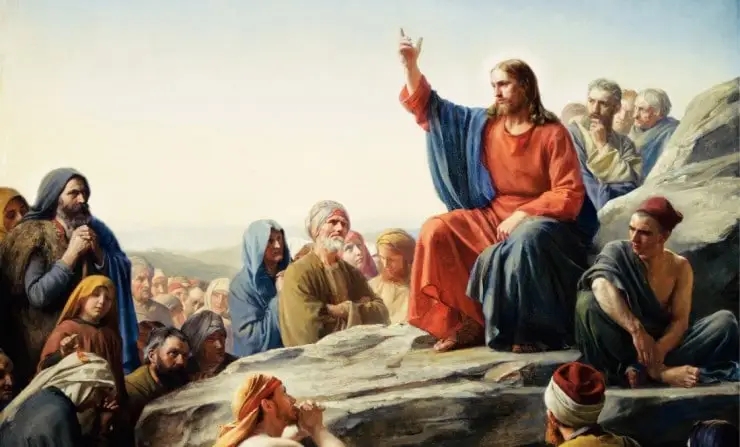
The Eight Beatitudes given by Jesus in his famous Sermon on the Mount are the greatest exposition of our responsibility to other people that has ever been written.  Jesus elucidated what are called the Eight Beatitudes.  I will not list them all as they are easy to find on Google.  These eight thoughts clearly define how we should treat other people.  I often wonder why so many “Pretended Christians” want to put up the 10 Commandments from the Old Testament, when their Jesus gave them the 8 Beatitudes to obey.   I have actually read that many “Evangelicals” believe that the 8 Beatitudes are wimpy.  The lack of respect for the man that founded Christianity is beyond belief.

I try ever day to remember that I am not the center of the universe.  The world does not revolve around me.  For every one of my rights, there is a responsibility.  I need to look out for others and to help those in need, be they gay, women, immigrants, minorities or even right-wing bigots.  They are all part of the human race.  To paraphrase Ben Franklin, “Either we all work together for a better world, or we shall surely all perish together in ways that none of us desire.”

eye-of-the-needle

  1. It is easier for a camel to go through the eye of a needle than for a rich man to go to heaven. — Mark 10:25

My friend Kwame says that we should be grateful that we are not rich.  Money is a corrupting influence.  It is somewhat like a drug.  It is addictive.  The more you get the more you want.  The more you have the more you need.  Another friend of mine whom I met in China told me before we left Shanghai in 1989 that we were rich.  I explained that we were not rich, but very middle class.  In fact, we were definitely not even upper middle class.  Xibo said, “you are rich to us in China.  You have nice house, and you can afford to travel to distant countries.”  Xibo’s comments were very accurate, and they had the effect of making me realize just how selfish I often am.  I am bemoaning my mundane middle-class status when to most of the rest of the world, I am regarded as rich.  Never mind regarded.  I am rich to possibly 90 percent of the world.

I am told by biblical interpreters that Jesus never said “rich people were bad” or that rich people could not go to heaven.  What Jesus did say and used many parables to illustrate the fact was that it would be hard for rich people to get to heaven.  Money is a heavy load to carry, and it corrupts.  Lord Acton said that “Power corrupts, and absolute power corrupts absolutely.”  The same can be said of money, “Money corrupts, and excessive money corrupts excessively.”

Regard the quest for money in the USA today.  Everyone wants more than they have.  We worry about Inflation, about immigrants stealing our jobs, about the Chinese sending too many products to us.  On the other hand, billions of dollars are now spent on people trying to get rich quick through pull-tabs, lotteries, online gambling and now sports betting.  The mania for money is fueled by the incessant celebrities, media influencers and TV shows touting the “Lifestyles of the Rich and Famous.”  The airwaves, newspapers, Internet and all of our media are full of non-stop advertising.  “Shop till you drop” should be the title of a song or at least put on the US dollar bill right under George Washington’s picture.

To be mindful of what I have I keep repeating this thought in my head.  ‘It is easier for the camel than the rich man to get to heaven.”  By the way, I do not believe in heaven or hell but I take it metaphorically that it is better for the human race if I try to be the camel and not rich and greedy.

Next Reflection:    

  1. These are things that I Regret about my life.

My Final Will and Testament – Sufferings – Reflection #7

images (1)Last year at my 40th Demontreville Retreat, one of the exercises that we were given by the Retreat Master included a very challenging set of thoughts.  The worksheet for the activity was labeled as “A Testament.” I took the worksheet and instructions home with me.  It had fourteen tasks or reflections to complete.  I did not desire to complete them during the retreat.  It is now almost a year since my retreat, and I have decided to make the mental and emotional effort necessary to complete this “Testament.” 

The worksheet started with these instructions:

Imagine that this is the last day of your life on earth.  In the time that you have left, you want to leave a “Testament” for your family and friends.  Each of the following could serve as chapter headings for your “Testament.”

7.  These are the Sufferings that have seasoned me and made me more compassionate.

How to start talking about Sufferings without sounding like a whinny spoiled brat?  Sure, I have had some downs, and I will mention them.  But my life has not been anywhere near the life that I know other people have lived.  In my 77 years on this earth, I have met people who have been through unimaginable and unspeakable sufferings.  If anything has made me more compassionate, it is listening to their stories.  Let me just tell you one that I recently encountered.

A week or so ago, I had a substitute teaching job for the JROTC program at our local high school.  I looked forward to this work since the kids who take this program are usually UBER well-behaved.  JROTC is a program staffed by Marine personnel with the blessing of the school administration.  When I arrived, the full-time teacher was away but there was another staff member.  He was a retired Marine Corp NCO.  I will call him Nick but that is not his real name.  Nick was missing a leg.  He had served in the Gulf Wars and been hit with an IED or Improvised Explosive Device.  He spent several months in a VA hospital but finished his tour of duty and retired from the Marine Corp.

Nick suffered from many other injuries and also had a form of degenerative MS which was slowly killing him.  We talked most of the day as you can imagine two veterans would do.  Nick had a family and two children.  I met one of his kids and was impressed by her closeness with her dad, something I never experienced with my daughter.  Despite his disabilities, Nick claimed no special privileges in life.  He was positive and happy to be alive.  He enjoyed working with the schoolchildren and trying to make a difference in their lives.  Throughout the day, I detected not one bit of remorse or self-pity on Nick’s part.

When I left home at 18 and joined the military, I resolved never to blame my parents for anything I would experience in life.  I was now an adult.  It did not matter that I had an abusive father growing up or that I often felt like a “motherless” child.  I was now an adult and my destiny in life was in my own hands.

I experienced suffering when I caught my first wife in bed with a co-worker and she wanted to leave me for him.  I experienced suffering for nearly twenty years when my only daughter did not want to speak with me.  She was married twice, and I was not invited to either wedding.  She had two grandchildren whom I have only seen maybe three or four times in the last thirty years.  I have improved my relationship with my daughter somewhat over the past five years.  She and I get together for lunch each time I come back to Minnesota.

imagesAm I a very happy person?  Most of my friends would probably say no.  My sufferings though are mostly self-inflicted.  My thoughts on the life that I should have lived haunt me.  Try as I might I can’t let go of the things I fucked up in this world.  I can’t even forget the teacher in the third grade who told me to, “Shut my mouth and stop singing.”  Seventy years later and it feels like if I try to sing, something awful will happen to me.  I would rather jump off of a cliff than sing a note.
A number of years ago, I had a job which required me to do some collections from overdue purchasers of various products.  I did a car repo, and I did not feel too bad about it since I thought, “Why should anyone have a brand-new car if they could not make the payments?”  At this point in my life, I was still just scrapping by financially.  I had never had anything more than a ten-year-old vehicle.  I was still buying cars from the junk yard as well as used tires from the junk yard.

images (2)One day, I had to go out to do a repo on a guy who bought a TV set and was not making his payments.  I went to the poor section of town and walked up to the address I had been given.  It looked like maybe a three-room small bungalow.  The yard was gated, and I looked for a dog.  Not seeing any, I opened the gate and walked up to the front door.  There was a screen door.  The main door was open, and I could see into the house.  I knocked loudly on the door as there was no doorbell.  I could see a living room and a kitchen.  Out of the kitchen, a large man started coming to the door.  As he drew closer, I could see he had no legs.  He was missing both legs and was walking with two crutches.  He asked me what I wanted.  I hesitated and then answered “Sorry, I must have the wrong house.”  I went back to my office and quit the same day.  I figured he needed the TV more than my company needed the money.  I could not do a job that required me to take from poor people what little they had in life.

These are some of the sufferings that try men’s souls and women’s as well.  In some sense, they are also our sufferings.  John Donne (1572-1631) wrote, “For thee Ask not for whom the bell tolls, it tolls.”  The sufferings of humanity are all of our responsibilities.

My years working as an AFDC (Aid to Families with Dependent Children) counselor taught me that while I might have one or two things to cause me suffering, many other people have three, four, five or more problems.  I cannot begin to describe all the inhumanity that I saw reflected in the lives of my clients.  And then you have the “financially responsible politicians” who demand that many of these people get a job if they are going to receive welfare.  A whole cadre of human beings who disparage and denigrate the less fortunate as “welfare queens,  free loaders, leeches and parasites.”  Many so-called Christians who forget the words of Jesus,  “Truly I tell you, whatever you did not do for one of the least of these, you did not do for me.” — Mark 10:21:

Helping+someone+get+up+Annie+Spratt+Unsplash_49d20648-4035-49ac-acb7-56f660c19fc8-prv

So that’s all Folks.  My life has been a breeze.  My friend Kwame always says that he is blessed.  I never use that word, but I suppose I have been blessed.  I have good health.  I have a great wife.  I have enough money to pay my bills and go on a vacation each year.  My only sufferings in life now are watching so many of my friends and relatives pass away.  I fear I might be the last man standing in a world that I feel increasingly alienated from.

Next Reflection:    

  1. These are the Lessons that life has taught me.

My Final Will and Testament —Things That I Loved in Life —Reflection #1

last-will-and-testament.asp_FINAL-5146e68080b449f0ba84c4edbe3f15b0

Last year at my 40th Demontreville Retreat, one of the exercises that we were given by the Retreat Master included a very challenging set of thoughts.  The worksheet for the activity was labeled as “A Testament.” I took the worksheet and instructions home with me.  It had fourteen tasks or reflections to complete.  I did not desire to complete them during the retreat.  It is now almost a year since my retreat, and I have decided to make the mental and emotional effort necessary to complete this “Testament.”

I am going to complete one or two reflections every other day for the next few weeks.  I would love it if you would do these tasks along with me.  If you would like to share your thoughts, that would be great, but I am not expecting anyone to do so.  I would like to know if you find any benefit in completing these activities.

The worksheet started with these instructions:

Imagine that this is the last day of your life on earth.  In the time that you have left, you want to leave a “Testament” for your family and friends.  Each of the following could serve as chapter headings for your “Testament.”

 1.These are the Things that I have loved in life.

Wow, where to start?  The effort brings tears to my eyes.  I fear that I have loved and lost too much.  In Alfred Lord Tennyson’s famous poem “In Memoriam A.H.H.” he writes:

I hold it true, whate’er befall;

I feel it when I sorrow most;

‘Tis better to have loved and lost

Than never to have loved at all.  —- Canto XXVII

If only I could agree with Tennyson.  My soul does cry out for remorse and forgiveness but giving it to myself seems hard to come by.  The people that loved me and cared about me that I scorned in my life are mostly shadows now of another era.  An epoch that I want to forget about.  Can we really change?  Have I really changed.  I am ashamed to list what I have loved because I was so careless and thoughtless with so much of it.  If only I believed in a God of Forgiveness, it would make this effort so much easier.

I won’t say I have ever loved a thing.  I have never loved money, cars, or possessions.  I have loved the thought of fame and fortune.  I have never completely let go of the idea that around the next corner awaits my vindication.  Fame and fortune will anoint me as the true Knight that I dreamed of being.  When I was ten years old, I wanted to be an astronaut.  I wanted to fly into space on a rocket ship years before Captain Kirk was even born (at least on TV.) I loved the idea of adventure and discovering new places, things and ideas.  But my dreams were dashed by reality.  I was too short to be an astronaut and my eyes were not good enough to be a pilot.  Biological requirements that were set by who knows and for what reasons that dashed all hope of my dreams of going to the stars.

I have loved a few people.  Similar to my relationship with God, I am an Atheist when it comes to love.  Can you really love a car?  Can you love your new house?  Love seems to me something that must be reciprocal.  Only humans can really reciprocate love.  Even pets are only capable of licking your face.   However, with humans, most of the love in the world is a misnomer for lust.  Love at first sight is the most egregious example of lust to ever exist.  I see a woman with nice legs or nice breasts, and I fall “IN LOVE.”  Another idiotic phrase that should be stricken from humanity.  Six weeks later, we are married and promise to “Love and Cherish” each other for life.  This bliss or LOVE may last for a few months or years until the lust has all but disappeared and reality has set in.

I have never ever fallen in love with anybody much less anything.  I love Karen.  I love my sister Jeanine.  I love several old friends.  Love for me has to be earned.  It has to develop over time as with the “Velveteen Rabbit”,  “It’s a thing that happens to you.  When a child loves you for a long, long time, not just to play with, but REALLY loves you, then you become Real.” — Margery Williams

Can I child really love a stuffed toy?  The logician in me says NO.  The cynic in me says NO.  The realist in me says NO.  My heart says YES, thereby negating much of what I have probably already said about love.  Love is in one sense logical and rational.  In another sense, it is emotional, illogical, and irrational.  I still question loving your car or loving your house, but I do not question the love that some people may have for their pets or even an inanimate object.  Reason tells me that a pet stuffed rabbit can somehow personify “love” much better than my desire for a Ferrari ever could.  I still can’t imagine in what warped dimension I might live where I could fall in love with a Ferrari or even cry when it was gone.

I shall add to my list of “Loves” the following:

  • Books
  • Ideas
  • Writing
  • Music
  • Food
  • Travel
  • Adventure
  • Adversity
  • Challenges

Number 2 of 14 Reflections in this Testament exercise is as follows: 

  1. These are the experiences that I have cherished.

I am posting this as a sort of “heads up” to give you some time to think about your own experiences.  I will reflect on mine in my next blog:

Here are some of my favorite quotes on love:

  • Jesus said, “Greater love hath no man than this, that a man lay down his life for his friends.” — John 15:13
  •  “I hope it’s okay if I love you forever.” — Ally Maine, “A Star Is Born”
  •  “Love makes your soul crawl out from its hiding place.” — Zora Neale Hurston
  •  “Darkness cannot drive out darkness: only light can do that. Hate cannot drive out hate: only love can do that.” ― Martin Luther King Jr.
  •  “Love is that condition in which the happiness of another person is essential to your own.” ― Robert A. Heinlein
  •  Love is composed of a single soul inhabiting two bodies. — Aristotle


Inner Versus Outer Spirituality:  What is the Difference and Why it Matters?

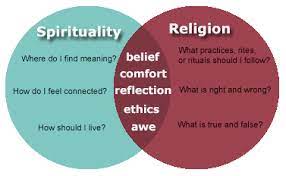
download (1)Despite attending forty 3-day Jesuit retreats and regularly going to church with my spouse, I remain adamantly somewhere between an Atheist and an Agnostic.  See my blog “75% Atheist and 25% Agnostic.”   One of the concerns I share with a few friends is organized religions apparent lack of concern for many social issues.  I have attended Catholic, Presbyterian, and Lutheran churches in the past few years, and I have yet to hear a pastor or priest in the pulpit denounce climate change, sexism, racism or White Supremacy in the USA.  I have thought about this lack of social assertiveness by too many pastors.  Even if many of the congregations in these mainstream churches are conservative if not right wing, do not their church leaders have a responsibility to address social problems?  I have two theories why they do not.

My first theory is that they do not venture to oppose these social ills because they would lose bunches of their church members if not their actual ministerial jobs.  It has happened before that church leaders have been kicked out by their congregations for preaching politics too strongly.  On the positive side here, many church leaders would argue that they do address social issues.  They give to the poor and needy with food banks and outreach efforts to help destitute families.  Unfortunately, this is like throwing water on a burning house.  You are dealing with the symptoms and not the causes.

download (2)

My second theory why church leaders do not vocalize more contempt for egregious social problems is this.  Perhaps they see their job as converting the inner spirituality of their congregation.  Thus, leaders focus on helping members become better people and lead better lives.  Gandhi said, “Be the change you want to see.”  By focusing on inner spirituality, they can convert the soul of their church members and perhaps help them to become the person that loves according to the Commandment of Jesus.  “Thou shalt love thy neighbor as thyself” (Matthew 22:37–39).

0664264670I can see some positive sides to a church ideology that addressee inner spirituality, but I think it has serious drawbacks.  You can focus too much on what I will call the “inner spirituality” of church members.  The reasoning behind the emphasis on inner spirituality can be faulty.  The theory is that if each member becomes a better Christian, they will be better neighbors towards others.  If they feed the hungry and cloth the poor, they will be ridding the world of the evils that Jesus preached against.  Unfortunately, these propositions are not evidenced by historical fact.  For hundreds of years many Christians supported slavery and sexism by doing little or nothing to condemn or speak out against it.  Furthermore, many Christians were major protagonists of racism and sexism.  If their ministers spoke out against it, it obviously made little difference.  Being a card carrying member of a Christian church never seems to correlate with ending war, sexism, racism, homophobia or even poverty. I think without an equal emphasis on “Outer Spirituality” Christianity is a worthless religion.

large

This issue which I call “Inner Spirituality versus Outer Spirituality” brings up a major conundrum in Christian thinking which has been the subject of many a lecture and paper.  This dilemma is whether a Christian can be saved by faith alone or are good works also necessary.  The apostle James says:

“So you see, faith by itself isn’t enough. Unless it produces good deeds, it is dead and useless. Now someone may argue, ‘Some people have faith; others have good deeds.’ But I say, How can you show me your faith if you don’t have good deeds?” — James 2:17-26 NLT

The viewpoint promoted by James has been dissected many times by the followers of Paul who argue almost the opposite.  Paul wrote the following:

“For by grace are ye saved through faith; and that not of yourselves: it is the gift of God:  Not of works, lest any man should boast.  For we are his workmanship, created in Christ Jesus unto good works, which God hath before ordained that we should walk in them.”  — Ephesians 2:8-9 KJV

Most mainstream Protestants as well as evangelicals cling to the opinion of Paul.  I have a deep skepticism over this acceptance of Paul’s opinion for two reasons.  First, it is very self-serving.  It is a lot easier to say “I believe in Jesus” than to walk in Jesus’s shoes or to commit to action that saves others rather than just faith.  Secondly, Paul was never as close to Jesus’s teachings as James was.  Why should Paul have more credibility than James who was one of the 12 apostles living with Jesus during his ministry?   Again, I see Christians taking the easy way out.  Jesus said:

“Not every one that saith unto me, ‘Lord, Lord’, shall enter into the kingdom of heaven; but he that doeth the will of my Father which is in heaven.” — Matthew 7:21-23 KJV

If you have ever been to an Evangelical church meeting, you will hear the name of Jesus dripping so often from the lips of parishioners that you might think they are all going straight to heaven after they leave church.  The practices or works of many of these “devout” Christians is enough to make anyone divorce themselves from any association with Christianity.  During President Obama’s term in office, the head pastor of the Westboro Baptist church repeatedly called for God to strike Obama dead.  Finally, he was condemned and ostracized by many other Baptist preachers.  Nevertheless, Baptists have never been known for condemning racism or sexism from the pulpit.  I think the argument over faith versus works is a false dichotomy and strictly speaking no one can be a Christian unless they practice both.  Whether or not this will get them to heaven is an open question since I do not believe heaven or hell exists.

This brings me back to the concepts of inner and outer spirituality.  Much like the faith versus works argument it is a false dichotomy.  However, I prefer to think in secular terms.  In secular terms, spirituality does not mean practicing Christianity or any other religion.  I don’t need faith to be saved.  I need both an inner and outer spirituality.

download (3)There are many definitions of spirituality.  What does it mean to be a spiritual person?  Some people lean towards accepting a higher being or creator.  Some lean towards accepting a more conventional religious perspective.  Many on-line definitions list several factors necessary to be a spiritual person.  My own definition is much simpler.  I think being a spiritual person involves two elements.  The first is seeking meaning in one’s life.  The second is seeking purpose.  Meaning is inner spirituality.  Purpose is outer spirituality.  Meaning and purpose must go beyond what is simply good for oneself and must embrace what is good for humanity and the universe.  Thus, a truly spiritual person is one who finds and balances inner and outer spirituality.
My understanding of the great prophets like Buddha, Moses, Jesus, Mohammed, Guru Nanak, and Baha’u’llah are that they all preached  a concern for humanity and the universe that went well beyond what was simply good for the individual.  Some quotes illustrate what I am talking about:

Buddha: “If you light a lamp for somebody, it will also brighten your path.”

Moses was a lawgiver who gave the Israelites the Ten Commandments  “You shall not steal, nor deal falsely, nor lie to one another.”

Jesus: “Love your neighbor as yourself.”

Mohammed: “The best among you is the one who doesn’t harm others with his tongue and hands.”

Guru Namak: “He who regards all men as equals is religious.”

Baha’u’llah: “Do not be content with showing friendship in words alone, let your heart burn with loving kindness for all who may cross your path.”

I think you can see from the above quotes that each of these great prophets embraced the idea of a goodness that extended beyond the self to all of humanity.  There are many other great prophets as well as great philosophers.  What has made them all great is a burning desire to help the world become a better place than they found it.

images

We all have a choice.  We can take care of ourselves and acquire as much money, fame, and power as we can.  Or we can let go of stockpiling material things and help the world be a healthier place.  A place where everyone can live in peace and harmony with nature and its other species.   In some ways it is a matter of choosing life or death.  The present path is destroying us.  The Club of Rome report called “Limits to Growth” was ridiculed when it was published in 1972.  Over fifty years later and no one is laughing at the climate catastrophes that materialism and over consumption have brought upon the earth.  We were warned fifty years ago to start dealing with the problem now.  Is it too late?  Perhaps, but we lose nothing by trying.  We will surely lose our souls if we do not try.

3543– Monday, August 19, 2019 — Muhammad and the Christian Money Lender

koran

My name is Muhammad.  I was born in 570 CE.  My father died the year before I was born.  My mother died when I was only six years old.  I was raised by a succession of family members until I was in my teens.  I was then sent to live with my uncle Abu Talib.  My uncle was a merchant and it was hoped that I could learn a commercial trade from him.   We traveled far and wide over many of the trading routes between the Indian Ocean and the Mediterranean Sea.  When I was eighteen, I decided that I had learned enough from my uncle and that it was time to go out on my own.  This story is about how I became an independent trader.

arabic rugs

It was a beautiful sunny morning in early March.  I had decided to walk to the market place in Jeddah near where I was staying to see what wares and goods were for sale.  It had become my intention to buy and sell rugs.  I loved the beauty and craftsmanship that went into an Arabian rug.  I could always feel proud that these were my products and that I was making the world a more beautiful place by sharing these fine Arabian rugs with others.  I never lied to my clients and I never made false or exaggerated claims to any people.  I was given the nickname “al-Amin” meaning faithful or trustworthy.

I was walking around the market place perusing the various wares of the other merchants.  In one of the alley ways I noticed a booth with a sign that read: “المال للإقراض “ or “Money for Lending.”  Suddenly, I had an idea.  If I could borrow some money, I could afford to buy a few more rugs.  Typically, I was short of money to buy enough rugs for a trip.  It would be much more worthwhile going on a caravan with enough rugs for my potential buyers.

The_Moorish

I walked up to the booth and greeted the merchant.  “Ahlan wa Sahlan”, I said.   He replied: “Ahlan wa Sahlan, my name is Musa.  I am a Christian money lender and I am happy to make your acquaintance.  How can I help you?”

I thought about his question for a brief second.  “I would like to borrow some money to help finance my rug business.  I can only afford a few rugs now but if I had more money, I could buy some extra rugs.”

The money lender looked at me very carefully and then answered: “It will take two things before I can give you some money.  The first is the collateral for the money that you need.”

“I am not familiar with the term collateral Sir,” I responded. “What is collateral?”

“Well, it is something that you give me so that if you fail to pay me back the money that I lend you, I will be able to sell your collateral and recover my money.  It might be some jewelry or gold or rugs that you will provide me to keep until you repay me.”

“Mr. Musa, I do not have any collateral that I can give you.  I only have my good name.  I am known far and wide as an honest merchant who never cheats anyone.  I always ask a fair price for my goods.  People call me ‘al Amin’ because I always pay my debts and I am very trustworthy.”

“Hmm” said Mr. Musa.  “I guess I can ignore the first requirement for my money since you have such a good honest reputation.  Now all we need to agree on is the interest that you will pay me for the loan.  Would you agree to pay me back at five percent per month of the total amount that I lend you?

“Mr. Musa, I do not understand this interest. What is the interest for?”

“It is my profit or commission for helping you with my money.”

“Sir, did you not say that you are a Christian and are not Christians followers of Jesus Christ?”

“Yes, young man, I am a Christian and I am a believer in Jesus.  But what does Jesus have to do with us doing business.”

“Well sir, I thought Jesus taught his followers to help the poor and needy.  Did he not say, ‘Give to everyone who asks you, and if anyone takes what belongs to you, do not demand it back?’ Then why Mr. Musa would you want to take money from me for helping me?”

“Young man, you do not understand the ways of the world.  Many things are spoken by the prophets, but one does not always live by their words.  In a perfect world, I suppose one could follow the path trod by Jesus, but Jesus did not live in our times.  If you do not feel that my terms are fair, then you do not have to borrow my money.  Truth be told, there are not many other money lenders in this bazaar who will lend you money at any better rates.”

“Mr. Musa, I am very disappointed in the Christianity that you profess.  I think that this idea of interest is very unneighborly and even seems to me to be greedy.  I think a religion should not allow such greed to exist.  If I were establishing a religion, I would make it a sin to charge interest to help others.”

“O ye who believe! Devour not usury, doubling and quadrupling (the sum lent). Observe your duty to Allah, that ye may be successful.”  — Qur’an (3:130

Muhammad went on his way and left the merchant looking puzzled and scratching his head.  “There goes a man who will never amount to anything” thought Mr. Musa.

“The invention of money opened a new field to human avarice by giving rise to usury and the practice of lending money at interest while the owner passes a life of idleness.” — Pliny the Elder

“It is easier for a camel to pass through the eye of a needle than for a rich man to enter the kingdom of God.” — Mark 10-25


Jesus:  An Untold Story

1407048-watch-out-that-no-one-deceives-you-fit_400_400

My name is Jesus.  The story I am about to tell you is true.  It happened to me one sunny day in June.  I had risen early that morning and my apostles were either out with their fishing or others were still in their beds.  I had been notified the day before that a friend of my grandmother’s was ill and most likely dying.  I decided to visit her and see if there was anything that I could do to ease her suffering.  She was an elderly woman and I doubted whether I could help her very much, but I thought I would at least try.  Her name was Ketziah.  She was named after one of Job’s daughters who was a distant relative.  I had not seen her since I was a little boy.  I remember her as a fun loving and very happy woman.

My journey started out in Nazareth.  Ketziah lived in Cana, a journey of about 10 km.  Walking, slowly, I thought it would take me about 2 hours to arrive there.   I left early to avoid the daytime heat which in June can reach 95 degrees or more.  The road to Cana passes through flat agricultural land and pasture lands.  Dotted with a few olive groves and many flocks of sheep, I was enjoying a quiet reprieve from the usual chatter with my apostles and particularly the throngs that often gathered around me when I preached.

I started to pass through a small rocky outcrop when suddenly a rough bearded man jumped out from behind a large boulder.  “Stop” he yelled.  I greeted him with the traditional greeting of “Shalom.” I asked him what he wanted and how I could be of any help to him.  He replied, “Your money or your life.”  I answered, “I am very sorry stranger, but I have very little money to give you.  I have less than a quarter shekel and I need that to buy lotion for a dying woman.”

“I don’t care about the dead, only the living.  And since I am living, I want whatever money you have, or you will surely forfeit your life today.  If you die, it will be senseless, since I will get your money anyway.”

barabbas

I stared at the stranger and suddenly I could see the future.  Our lives were intertwined in ways that I would never have imagined.  I spoke “Stranger, I have the gift of seeing the future.  Some people say that I am a prophet and that when I call upon my Father, he can make things happen.”  I see that you and I will have business together in the future.”

“I do not care about the future or the past, I only care about today.  And today, you are here with some money and I am here with some hunger for food.  I am beginning to tire of this conversation.  You had best decide shortly which is more valuable to you, your money or your life.”

“Stranger, my life is forfeit anyway, for so it has been prophesized.  But your life is hanging in the balance.  If you kill me today.  You will surely lead a short life.  If you let me pass, you will live to an old age, albeit your life will never be a happy one.”

“Friend, you make me laugh.  Are you saying that if I kill you, you will somehow find a way to kill me?”

“No, I am saying that our fortunes are intertwined, and that I will someday give up my life for yours.  If you kill me today, it will never happen, and you will die sooner than you would like.  Your death will be very unpleasant.”

The bandit thought about this situation for several minutes.  What had at first appeared to be a rather risk-less endeavor had now turned into a situation with conceivably frightful consequences.  If this man could really see the future, his own death might depend on what he did at this present moment.  Were the few coins this goy had really worth the chance that killing him might bring his own death?

“I have thought about your words friend and I have decided it is too nice a day to kill you.  I will let you be on your way.  Just remember to be grateful to me for my kindness and offer whatever prayers you can for my long and healthy life.”

“Stranger, I assure you that today, you have saved your own life as well as mine.  We part now but we will meet again.   Please tell me your name before we go our own ways.”

Friend, everyone knows my name.  I am famous far and wide.  I am the spawn of the devil and the bane of rich people throughout the land.  I have taken more shekels from taxpayers and Pharisees and hypocrites than I can count.”

“I am the son of the father.  My name is Barabbas.”


The Inadequacy Paradigm

dreamstime_xs_19665640
Have you ever felt that you were not pretty enough, smart enough, coordinated enough, talented enough, handsome enough, strong enough or fast enough?  If so, you were suffering from the “inadequacy paradigm.”  A paradigm is a model or template for thought or behavior.  Feeling inadequate is one of the major paradigms of American society.  The marketplace wants you to feel inadequate because then they can sell you products and services that will make you feel “ADEQUATE.”

hqdefaultThere are beauty products, breast enhancements, hair implants, plastic surgery, expensive cars, perfume, jewelry, large homes, designer clothes, college degrees and many other products or services designed to help you feel less inadequate and more adequate.  We all want to feel adequate which means we must somehow learn to escape or jettison our inadequacy paradigms.  The marketplace strategy involves spending huge amounts of money on a regular basis to escape the “inadequacy paradigm.”  This strategy is often a failure as money and products cannot provide for real happiness or address some of the cultural biases, prejudices, racism and bigotry that contribute to the “inadequacy paradigm.”

“A fascist is one whose lust for money or power is combined with such an intensity of intolerance toward those of other races, parties, classes, religions, cultures, regions or nations as to make him ruthless in his use of deceit or violence to attain his ends.”Henry A. Wallace

When I was growing up in New York City during the fifties, many of the popular singers were Italian.  There was Fabian, Frankie Avalon, Connie Francis, Dion, Dean Martin and many others.  Most of the famous male singers had traditional Italian good looks being tall dark and handsome.  My father (6’ 4” tall) fit this model but my mother was Irish.  I (much to my chagrin) took after my mother.  I was short (5’ 8”) light skinned, brown thin hair with very nondescript looks.  No woman ever looked at me twice in high school.  I did inherit a good brain and cannot attest which side it came from.  Nevertheless, brainy nerdy intellectual guys had no more demand among the attractive high school girls in the fifties and sixties than they do now.  Beauty would seem to always trump brains in our society.

Now there are many different aspects or subdivisions of the “inadequacy paradigm.”  There is a division for Blacks, Latinos, women, disabled, intellectuals, old people and of course poor people.  If you belong to any one or more of these categories there are special rules that will be directed to you to help you feel even more inadequate than average. (Racism and Xenophobia create their own paradigms of inadequacy which go well beyond Madison Avenue but are supplemented by Madison Avenue to a large degree).  As a White male growing up in an Italian neighborhood, my complaints will not doubt seem trivial to individuals in these other “inadequacy categories.”  Let’s look at each group and see if we can perhaps walk a mile in their shoes.  What would it be like if you were in one of these other categories.  Now, one caveat must be shared.  If you are White and rich, you will probably be able to escape the most noticeable effects of the “inadequacy paradigm.”  For rich White folks, money provides a means to ameliorate the more consequential effects of inadequacy.  Money can’t buy you love but it can buy you many other things to make you feel better.

maxresdefault

African Americans:

What is it like growing up Black in America in the 21st Century?  Has years of Affirmative Action, Civil Rights and even a Black President mitigated the effects of the “inadequacy paradigm” for our African American citizens?

I decided to approach a Black man who was walking down my street.  I started to walk towards him and I yelled out “Hey, I need to talk to you.”  He immediately threw up his hands, laid on the ground and starting shouting “Hands up, don’t shoot.”  I hollered out “I am not a cop.”  He got to his feet and said “Sorry, just an instinctive reaction.  How can I help you?”  “Well, I said, I just wanted to ask you what it was like being “Black in America today?”

Brian Lipscomb, IT Professional and Web Programmer/Website Designer

“Once I got off a trolley in downtown Philadelphia and accidentally bumped into an older White woman.  She immediately said “Here! Take my purse! Just don’t hurt me!” I was shocked. I couldn’t believe that she thought I was going to rob her.  When walking down the street, if a White woman is walking in my direction, they often cross the street or clutch their purse more tightly as I approach.  I guess I’m numb to it now, because I expect it.  I think that’s the sad part. There is nothing post-racial about our society.  Racism and prejudice have just become more subtle, more nuanced.”

Latinos:

Many Latino people in the USA have been residents since before the Pilgrims arrived.  With the annexation of Mexican Territory after the Mexican American War and the subsequent Gadsden purchase, many former Mexican citizens elected to become American Citizens.  The border between Mexico and the US was porous for many years with much travel back and forth.

Many Mexican Americans have families and friends still living in Mexico.  There has always been a White bias towards Mexican Americans and others from south of the border but recently this bias seems to have escalated.  Part of the reason for this lies in the drug wars but much of it is rooted in a xenophobia directed to Latinos who do not have traditional Northern European customs.   Latinos have become an increasingly larger segment of the population in many Southwestern cities.

But what is it like being a Latino?  We know that with the election of Donald Trump and his talk of building a border wall and deporting “Latino Rapists” that he has fanned the fears of xenophobia common among many Southwestern Whites.  There is no doubt that numerous Latino people residing in the Southwest and other parts of the USA are now uncertain about their future as US citizens.

Brittany Escalera, College Student

“Being born in the United States, I am automatically a citizen.  I am an American.  But according to society, I’m “too” Mexican to be American.  My complexion is too dark to be American.  My dark hair and dark eyes are too Mexican to be American. I’m Mexican, therefore, I can’t be American…. Yet it’s not always just the language barrier that is a struggle, there are constantly stereotypes and racial slurs being put on us everyday.  Being from the south, I had to work extra hard at breaking this.  No not all Mexican’s are illegal.  Sorry Trump, we are not all the criminals, drug dealers and rapists that you claim us to be.”

Women:

Of course, I cannot speak for being a Woman in America.  But I do not have to be female to see that Women must also suffer from the “inadequacy paradigm.”

“As Sheryl Sandberg and Adam Grant pointed out in a recent New York Times op-ed, when male executives speak up, they receive 10% higher competence ratings; when female executives do the same, their ratings from their peers are 14% lower.  Similarly, when male employees offer ideas, they receive higher performance evaluations; when women offer the same ideas, managers’ perceptions of their performance remain unchanged.”  — What’s holding women back?

If the bias in the workplace is not bad enough to insult many women, the bias they face in the home is even worse.  The rates of domestic abuse and rape in American society are shameful.  But perhaps the worse indicator of the “inferiority paradigm” for women lies in the number of women who think they deserve such treatment.

“The cultural acceptance of spousal abuse can be so pervasive that in some countries, large majorities of women say it’s acceptable.  In Rwanda, 96 percent of women say the practice can be justified, according to the World Values Survey.  About two-thirds of women in India and South Africa feel the same way.  The attitude is also held by large shares of women in countries across the religious and cultural spectra — China, Egypt, Iraq, Nigeria, Peru, the Philippines and Uzbekistan, to cite a few. 

Even in countries where the vast majority of women don’t approve of spousal abuse, the share that do find it potentially acceptable isn’t exactly tiny.  It’s about 1 in 10 in the U.S. and about 1 in 5 in Germany.”  — Alarming Number Of Women Think Spousal Abuse Is Sometimes OKNURITH AIZENMAN

Many women are now worried in the USA due to the election of a President who openly bragged about his right to grab a women’s “pussy” because he was rich and privileged.  Many of his supporters were men and women who belong to fundamentalist religions that believe women have no place in politics or in the business world and that their only role is to bear children for men.  Thus, after years of battling to achieve equality with men, women now face the prospect of losing many of the hard-earned rights that they fought for and won.

Disabled:

One of my best friends committed suicide about a year ago.  He was a Cerebral Palsy victim who had dedicated his life to helping fight for more rights for disabled people.  He walked crablike and had to use walking sticks to keep his balance.  His head was always cocked at an odd angle due to his disability.  He was two years younger than I was and died at the age of 67.  Brian took his own life because he could fast see a time approaching when he would no longer be able to live on his own.  Brian was a fiercely independent man who struggled to obtain dignity in a society that does not always respect people who are disabled.

I first saw Brian when he would come into the town bakery to buy donuts or for lunch.  I was usually sitting with a bunch of locals who knew Brian and several had gone to school with Brian.  I was uncomfortable with the way they seemed to greet Brian and their response towards him.  It became disagreeable enough to me that I stopped my morning coffee sessions with this group.  Instead, I found a group of people at the library who met for coffee each day.  Brian was among the group at the library and we became good friends.

Brian told me many stories of how he was treated as though he was mentally disabled rather than physically disabled.  On several occasions that we went out together, it was clear that people wanted to avoid dealing with Brian.  For Brian, it must have felt like being a leper.  I am sure that much of the bias towards Brian was not intentionally hateful.  Nevertheless, it still was difficult for Brian to deal with.  Brian wanted to be treated as a normal person and not someone with a disability.  His strong desire to be normal ultimately led to his ending his life.

The following chart shows the changes in employment for disabled people in the USA since 1991.  Notice the “progress” is backwards.

150724154758-disabled-worker-employment-780x439

Intellectuals:

99632_origIf you have not read Hofstadter’s “Anti-Intellectualism in America Life” I heartily recommend it. I have often joked that the worst discrimination in America seems to be saved for people who think.  Many companies trumpet their desire for “out of the box” thinkers.  This is usually nothing more than a well parroted display of self-deception.  What Human Resources and the company are really looking for is “people who fit in.”  People who are iconoclasts, people who are critical thinkers, people who rock the boat “need not apply here.”

Intellectuals include nerds, free thinkers, geeks and anyone who works with ideas as opposed to building things or throwing things.  Academics are often lumped in with this category since most people assume an academic to be a brilliant thinker.  This is very often a misplaced assumption.  People in the arts including music and theater are often very intellectual but they somehow manage to escape the opprobrium reserved for pure thinkers.

If you think I am exaggerating on the bias that is reserved for intellectuals, you should turn on any right wing talk show like Rush Limbaugh or Sean Hannity and listen to them for a while. It won’t be long before they are attacking commie pinko faggot intellectuals for all the problems in America.

“There is a great superficiality in today’s evangelical world.  Many Bible-believing Christians share the contemporary case for self-gratification, emotionalism, and anti-intellectualism. Many people who believe in the Bible have never read it.” — Gene Edward Veith Jr.

I must mention one of the dumbest stupid-ass TV shows I have ever seen.  It is the epitome of anti-intellectualism in America today.  It is called the “Big Bang Theory.”  It is supposedly about genius and of course the geniuses in this show have Ph.D.’s but absolutely no common sense or interpersonal skills. They are also geeky with no athletic skills and about zero muscle mass on their puny frames.  This show portrays how much of America views intellectuals.

“Our big mistake in modern intellectualism is first and foremost its lack of nuance.  We have made science synonymous with atheism – a presupposed conception and yet, another means to non-sequiturs – and therefore, to a number of enthusiasts determined to go the further, anti-theism.  Hereby let us observe that science has long served best and should be, if none other, the one discipline, if at all possible, free of potential ideology, religious or anti-religious, and/or biased presupposition in order to maintain the authenticity and the reliability of its nature.” —–  Criss Jami

Elderly:

Every so often, my wife and I like to go to a Pow Wow.  I remember one of the first we went to and they had a free dinner for all attendees.  As we stood in line waiting our turn to get up to the food table, a young man came up and said “Oh Elders go to the front of the line.”  I said “I am not a Native American.”  He said “It did not matter” and escorted my wife and I to the front of the line with the other Elders.  Other Pow Wows that I have attended have had a special line for Elders.  I was pretty much blown away by this deference.  It was totally unexpected but greatly appreciated.

Many venues and shops have discounts for seniors or “Senior Days” where food is cheaper or there are discounts for those over fifty-five or sixty.  I am not impressed by these as you and I know it has nothing to do with “respect” for the elderly.  It has more to do with getting more of our money.  Respect for the elderly seems to be dwindling the older I get.

Both my wife and I have noticed that increasingly when we go to a clinic anymore with a health problem such as a sore hip or sore shoulder, we often get responses like “Oh, it is just part of getting old, you will just have to live with it.”  Instead of investigating to see if some our problem might be amenable to treatment, we are simply told to more of less “suck it up.”

“There is also a lack of recognition of the positive contributions that elderly people make to society.  The amount of unpaid childcare provided runs into the tens of billions.  Without this form of labor, fewer parents could work and gain fulfillment in their jobs.  Indeed, as some local authorities have recognized the 60 plus generation offer a huge reservoir of untapped energy for the voluntary sector.”  — Why do we treat elderly people so badly?By Paul Donovan

Poor:

The “poor” otherwise known as lazy, drug addicts, stupid, trailer trash, welfare bums, welfare cheats, handout recipients, bag people, curb people and homeless.  The poor in America are thought by many to be poor by choice and not by chance.  This makes it much easier to denigrate them and to blame them for their poverty.  When someone picks their lifestyle, it is much harder to be sympathetic for the choices they have made.

In 1978, I had finished my Master’s Degree in Counseling and I took a position as a Manpower Counselor II with the State of Wisconsin in the Department of Industry Labor and Human Relations or DILHR as it was known then.  My job entailed working with the WIN or Work Incentive Program to help families who were receiving welfare (AFDC or Aid to Families with Dependent Children) find gainful employment so they could get off Welfare.  I also worked with the Indochinese Refugee Assistance Program (IHRAP) and the Labor Education and Advancement Program (LEAP) to help mainly Southeast Asian refugees in the IHRAP program and women and minorities in the LEAP program find jobs.  I worked with several other job training programs as well.  The bottom line of all my programs and effort was to help people find employment by which they would become self-sufficient.

Now there are two interesting points I want to make gleaned from my two years working in these programs with mostly poor and under-privileged people.

  1. None of the programs really went far enough in their benefits or stipends or financial assistance to really help as much as was needed by my clients.

I am not going to say that many benefits were not helpful.  We could offer financial incentives to employers, daycare benefits, transportation help and even some educational benefits.  These were in addition to the monthly welfare checks that many families were receiving.  Nevertheless, the key to getting off welfare was to provide enough education to help the client to break out of the cycle of poverty.  Only education would help those who wanted to climb the proverbial “ladder of opportunity.”  Unfortunately, the ladders that were being provided never seemed to have enough rungs in them.  Whether through stupidity, frugality or simply underestimating what was needed, many people could not get enough help to break out of poverty.

  1. Ninety Percent of my clients wanted to get off Welfare.

There is a pernicious and vicious myth that most people on Welfare like it and want to stay on it.  Nothing, could be further from the truth.  I worked with hundreds of Welfare clients and the clear majority (90 percent or better) wanted to find a good job and become self-sufficient.

Yes, I encountered some Welfare cheats and some Welfare dependent people who had little or no incentive to gain employment and lose their Welfare checks.  However, these were a small minority of the clients that I saw in my two years working with the WIN program.   Even these individuals often had severe handicaps either physically or mentally which would have made holding gainful employment near impossible.  The average person does not realize how many barriers and hardships face some of the poor in this country.

“Saving our planet, lifting people out of poverty, advancing economic growth… these are one and the same fight. We must connect the dots between climate change, water scarcity, energy shortages, global health, food security and women’s empowerment. Solutions to one problem must be solutions for all.Ban Ki-moon

Conclusions:

inadequacy-cropWe have a pervasive problem that I labeled the “Inadequacy Paradigm.”  Much of it is caused by racism, xenophobia, prejudice, stereotypes and bigotry.  The majority of it is systemic and will need major changes in policies and institutions in this country to eliminate.  However, it is felt on a very personal level.  Feelings of inadequacy may be conveyed by others and cultural mores but they are received by an individual who assimilates these feelings into their psyche.  Thus, inadequacy becomes a personal problem and not simply a social problem.  Inadequacy is not “out there” it is right inside.  The vast numbers of suicides in our society are testament to the inadequacy that many of our fellow citizens feel.   This includes Whites as well as minorities.

  • Suicide is the tenth leading cause of death in the USA
  • 44,000 people die every year by suicide (2015)
  • White males accounted for 7 of 10 suicides in 2015.

What can we do to overcome these problems?  Clearly education and social support systems must be developed and deployed.  If we see the problem of inadequacy as something that is “not my problem” nothing will be done.  We have people who refuse to spend one dime of their taxes to help others because of selfishness and greed.  We have many who want to label America as a Christian nation, but they do not practice Christianity.

Any church that does not practice tolerance for the oppressed, charity for the poor and compassion for the needy, regardless of what religion they belong to, should not call themselves a Christian church.  They should call themselves a HATE church.  Hate leads to prejudice and bigotry and these are the primary factors in the Inadequacy Paradigm.  Destroy prejudice and bigotry and we will create a society with many more well-adjusted people.

Time for Questions:

What makes you feel inadequate?  Why?  What do you do about it?  How do you think you could help others who feel inadequate?

Life is just beginning.

“I have had to experience so much stupidity, so many vices, so much error, so much nausea, disillusionment and sorrow, just in order to become a child again and begin anew.  I had to experience despair, I had to sink to the greatest mental depths, to thoughts of suicide, in order to experience grace.”  — Hermann Hesse


Next Newer Entries