A One Act Play in Memory of Our Good Friend: Dr. Hana Tomasek – D- 05-25-2020  

Dr. Hana Tomasek:  A Most Remarkable Woman

I am reposting this blog in memory of my good friend Dr. Hana Tomasek who died at 10:45 AM this Memorial day morning (May 25, 2020) from the Coronavirus.  Dr. Tomasek led a life that most of us can only dream about.  She was 85 years old.  Every year on July 4th, Hana would have a wonderful Independence Day Party to celebrate the country that she felt gave her everything that she could possibly want.

We would have a band, dancing, lots of good food and a series of roasts to poke good natured fun at Dr. Tomasek.  She had a great sense of humor and enjoyed the gags.  The highlight of the day though was the speech that Hana always gave to remind us all of her love for America and what a great country she lived in.  Five years ago, I wrote this play for our July 4th party in 2015.  Seems like just yesterday, that we were all sitting on her deck overlooking her beloved lake and drinking Becherovka.

Introduction to the Original Blog Written on June 1, 2015

Once upon a time there was a very remarkable young woman and young man who decided to flee communism and come to the United States of America in hopes of finding a better life.  Leaving their families and at great risk to their own lives they managed to elude the authorities in their home country and find their way to America.  With hardly anything except the clothes on their backs and speaking no English Hana and her spouse found asylum in the USA.  With the help of some good spirited people, they began to construct a new life based on their dreams and abilities and not simply by adhering to the “party” line. 

Hana became a good friend of ours in the late 80’s when we met at Process Management Institute, where Hana was now an esteemed consultant as well as educator at the University of Minnesota. Over the years, we shared many thoughts and ideas together.  Hana was one of the most competent consultants I have ever worked with.  She was wonderful at combining both “high tech” and “high touch” in working with her clients.  She was very capable of applying TQM technology but equally capable of compelling the leaders in the organizations she worked with to make the needed psychological changes to adopt a “new philosophy” as Dr. Deming called it.  TQM was ultimately more a change in attitudes then a change in technology.  A point that Hana was quick to recognize. 

Hana will be 80 years old this July and she had a birthday party this past weekend in honor of the occasion.  I was invited to say a few words about Hana at the party.  A picture of her as a young girl inspired my thinking about what I would say.  I thought of how Hana must have been when she was young. With this in mind, I decided to write the following fictional account of an interview with her as a young girl.  I decided to compose it as a short one act play.  At the party, I asked a good friend Nancy Hoy to play the part of Hana, while I narrated and played the part of the young reporter from Prague. 

A One Act-Play:  The Little Girl with Big Dreams.

The Background and Setting:

The 1948 Czechoslovak coup d’état (often simply the Czech coup) –  was an event in February 1948 in which the Communist Party of Czechoslovakia, with Soviet backing, assumed undisputed control over the government of Czechoslovakia, marking the onset of four decades of Communist dictatorship in the country. Czechoslovakia remained as a Communist dictatorship until the Velvet Revolution of 1989.  More immediately, the coup became synonymous with the Cold War. The loss of the last remaining democracy in Eastern Europe came as a profound shock to millions.  For the second time in a decade, Western eyes saw Czechoslovak independence and democracy snuffed out by a totalitarian dictatorship intent on dominating a small country

The play takes place in Prague, 1948.  The Daily Prague newspaper has become a part of the Communist means of controlling the population and is looking for human interest stories.  It has heard of a young precocious girl who is the highest rated student at her school and they have decided to do an interview with her to help show the masses how wonderful life in a communist system can be.

Hana has been notified to expect a reporter from the Daily Prague.  Hana lives in clean 2 bedroom apartment with her mother, father and brother Jan.  Hana sits in a small chair near a larger sofa reading a book and waiting for the reporter to arrive.  It is a small but comfortable and very neat living room with a few pictures of relatives and friends on the mantle.

A One Act-Play:  The Little Girl with Big Dreams.

John:  (Knocking at the door. He is a young man of 25.  Medium height, blond hair. He has been very nervous lately and constantly has the feeling that someone is looking over his shoulder.  He has been warned to stay away from “compromising” subjects.

John:  May I come in?

Hana:  (An attractive looking young girl just turning 13.  Well-proportioned with short brown hair.  Her friends would describe her as elegant and very sophisticated.)

Hana:  Yes, please do.

John:  Hi, I am from the Daily Prague and I am here to conduct the interview with you.

Hana:  Wonderful, let’s get started.  Please sit down.

John:  Thank you. Well, Hana, I will begin by asking you a few questions.

Hana:  It’s Ms. Hana, if you don’t mind.

John:  Sure, Ms Hana.   Well, Ms. Hana, what would you like to be when you grow up?

Hana:  I would like to be President of the United States of America.

John:   (Nervous chuckle noticed by Hana) But you don’t live in the United States of America and even if you did, you could not be president because you were not born there.

Hana:  (Quite composed)  I am going to move to the United States of America and then change the law when I live there.

John:  Well, let’s just say that this might not work out; do you have a backup plan?

Hana:  Of course, I will become a rich and famous management consultant.

John:  But in Czechoslovakia system, only communists can become rich and even they are not allowed to become famous.

Hana:  Then I will go to the United States of America and become a rich and famous management consultant there.

John:  Why do you want to become a management consultant?

Hana:  So I can tell people what to do.

John:  Are there any other reasons?

Hana:  Well, so many companies are so poorly run and they need lots of help.

John:  How are you going to learn about business when you live in a communist system? Wait, I know, you are going to move to the United States of America.

Hana:  Right.  I will learn all about how to become rich and famous when I get to America.

John:  (More nervous now and deciding to change the subject) Could you tell our readers what your hobbies are and what you like to do for fun?

Hana:  I like to study, read and learn about new and interesting things.

John:  Yes, but what do you do for fun?

Hana:  I just answered you.  Maybe I did not understand your question.

John:  Well, like do you jump rope, play doll house or do dress up?

Hana:  What are those things?

John:  (Uncertain where to proceed) Well, I understand you are a very smart young student.  Do you like school?

Hana:    Yes, but recently they changed all the textbooks and they took out all the good stuff about the United States of America

John:  I have not heard about that but maybe it was because they thought it might be lies.

Hana:  Well, I don’t think that people should rewrite history just because they change their minds.  What about facts?

John:  (Quite nervous again)  I think you have a very inquiring mind.  You would make a good management consultant.

Hana:  (Very Serious) Do you know where I could find a good textbook on Management Consulting?

John:  I don’t think we have any of those in the library anymore.

Hana:  Why not?

John:  Well, in a communist system, nobody worries about how the system runs since it is up to the government to decide how things should be run.

Hana:  That does not sound like a very good idea. I don’t think they do it like that in the United States of America.

John:  Well, Ms. Hana, it has been wonderful talking to you.  Our readers will be quite pleased to see how happy and great life in Czechoslovakia is for you.

Hana:  (Very skeptical) May I review your notes?

John:  (Ignoring Hana’s request)  Well,  Ms. Hana, we always like to send our contributors a token of our appreciation.  Would you like a framed picture of General Secretary Joseph Stalin or Defense Minister Ludvík Svoboda?

Hana:  Could you send me a picture of Mickey Mouse?

The END: 

Time for Questions:

What would you do if you lived in a total dictatorship?  Would you risk your lives and those of your family to flee? Would you simply go along as best you could? How would you get started in a strange country where you could not speak the language?  How much courage does it take to start a new life?

Life is just beginning.

3498– Thursday, October 3, 2019 — Can We Really Grow Old Gracefully? Part 1

growing old gracefully_main

Let’s be honest.  Growing old is not like fine wine aging.  Growing old is not “golden years.”  Growing old means infirmity.  Growing old means watching friends and loved ones suffer and die.  Growing old means dealing with pain, doctors, medications, surgery and increasing illness.  In short, growing old sucks or does it?  Can growing old bring true happiness and meaning to our lives?  Can we really grow old gracefully?

Last week I went to a conference on care-giving.  My spouse Karen went with me.  It was held at the Wisconsin Indianhead Technical College in New Richmond, Wisconsin.  The title of the conference was “A Positive Approach to Care.”  The keynote speaker and also a workshop presenter was a remarkable woman named Teepa Snow.  To paraphrase a famous quote, I would say that the conference was “Not for the faint of heart.”  The participants seemed to be divided between professional caregivers like nurses and aides and family members who had care-giving responsibilities thrust on them due to the illness of a loved one.  Many more women than men were in attendance, but the demographics of the attendees included young and old alike.

The conference was a challenge for me because it touched on many topics that I would rather ignore.  If I can only keep my head down or buried in the ground perhaps the things that they discussed would never happen to me or anyone I love.  Of course, this last thought is fake.  These things are already happening to many people I know and love.  Two of my good friends are in homes as I speak with increasing dementia and not expected to live out the rest of the year.  They can no longer recognize old friends or deal with life in the forceful energetic manner that was once typical of them.  Before these things can happen to me, I want to run and hide someplace.  But there is no where to hide, is there!  The alternative is to find a way to succeed in dying and not to let dying succeed in diminishing us.  Death can take our bodies, but it cannot take our spirits.

I found ten attributes at the conference from listening to the speakers and observing and studying the stories that were told that I think can help our spirits as we age.  I am calling these “The Ten Attributes for Growing Old Gracefully.”  I have created a checklist for these attributes which I am going to use on a weekly basis to see how well I have done at following them.  If you prefer, think of these ten attributes as a multi-vitamin for emotional aging.  You may not need all ten of them each day, but at least one of these each day will certainly do you no harm and may help to make your life easier and happier.  The order of these is of no importance.

meaning and purpose

  1. A sense of purpose and meaning

You may well ask “What is the difference between purpose and meaning?”  Purpose is the things that you plan to do each day or with the rest of your life.  Purpose should be something you enjoy doing and are good at.  You get up in the morning with a purpose.  Meaning concerns the usefulness or strength of feeling that you have for your purpose.  Meaning comes from making a difference in the world or trying to make a difference.  Meaning comes from helping others or giving back to the world.  Meaning provides the world with beauty and grace.  Purpose without meaning is boring.

I like to think that my purpose now is writing.  I believe that I write well, and I enjoy writing very much.  The meaning of my writing comes from the sense that I hope my writing will help others find peace and joy in their lives.  I often receive comments attesting to the fact that others are helped by my writing.  This keeps inspiring me and helping me to continue.

“There is not one big cosmic meaning for all; there is only the meaning we each give to our life, an individual meaning, an individual plot, like an individual novel, a book for each person.”  ― Anaïs Nin,

courage

  1. Courage

If you are growing old, there are no doubt days when you wish you could just leave this world.  We all have days of depression, misery and pain.  Suicide is highest among the elderly.  Who among us has not thought of suicide as a viable option to growing old?  Thus, the saying that “Aging is not for the faint of heart.”

I have written about my good friend Brian who committed suicide about four years ago.  He was 68 at the time.  There are many things that could be said about why he chose this path, but they all seem irrelevant now.  I miss him and so do many other people.  Brian was one of the most positive people you could ever meet.  Nevertheless, the prospect of growing old in a nursing home dictated his actions.

Why, you might ask should we have courage when we are going to lose the battle anyway?  I guess it all comes down to how you want to face the foe.  Do you want to go to your death on your knees or with dignity and grit?  I prefer the route of true grit.  I try to keep in mind the famous quote from Shakespeare’s Julius Caesar: “Cowards die many times before their death, the valiant only die once.”

Perhaps a better reason for courage are the people that love you and care about you.  Would they choose that you leave the world earlier or later?  What difference can you make to them by choosing courage and the will to live?

“Being deeply loved by someone gives you strength, while loving someone deeply gives you courage.”  ― Lao Tzu

humor

  1. Humor

Did you have any fun today?  Did you see any humor is some recent news or event where others only see doom and gloom?  It is very easy to get all wrapped up in the misery and disasters that plague our daily news.  We live in a society that seldom seems to present us with much humor.  But what would any life be without some humor.

Each day when I get together with our local library group, we have some fun by laughing at some of the stupidity that surrounds us.  A social group that can laugh at the world is helpful to my sanity.  One of the guys is always good for laughs since he has a “fun meter” that he uses to gauge our group conversations.  It goes from blue to red.  When he is enjoying or having fun in a discussion, he moves his fun meter to red.  When conversations turns bleak or sometimes idiotic, he moves his meter to blue.  Not only is his meter a good source of laughs but he is always good for laughs with some of his other antics.

Can you find one thing each day to laugh about?  Do you build some fun into your life?  If your answer is no to either of these questions, you really need to start today to have some fun.

“And the sun and the moon sometimes argue over who will tuck me in at night.  If you think I am having more fun than anyone on this planet, you are absolutely correct.”   ― Hafiz

Finding-Joy

  1. Finding joy in your life

Sounds like the same as finding humor but it is not.  Finding joy in your life means to find things each day that you enjoy doing or just simply being.  For many people, it means finding ways to help others.  It is related to finding a purpose or meaning in life since it is hard to find joy without finding a purpose that makes you happy.

However, finding joy can mean simply enjoying a rainy day.  It can mean enjoying a good book or sitting on a beach and watching the tide roll in.  I can find joy in doing nothing, but it takes reflection to find joy.  You must think about what you are doing.  At some point, I say “Wow, I will really enjoy doing this or maybe today I will enjoy doing nothing.”  I don’t need a widget or gadget to make my life.  I am responsible for my own joy and happiness.  It is a thought that makes one miserable or happy and you can find joy in life when you choose joyful thoughts.

“Sometimes your joy is the source of your smile, but sometimes your smile can be the source of your joy.”  ― Thich Nhat Hanh

grateful

  1. Gratitude

St. Ignatius believed ingratitude to be “The cause, beginning, and origin of all evils and sins.”  Ingratitude makes us look at things that others have and want them.  Ingratitude makes us unhappy and miserable with our own lives.  Growing old, it is always easy to look at what others have and find a deficit in our lives.  Friends may have more money, bigger homes, better retirement living, more vacations, nicer cars, better physical condition and even “better” grandchildren.

No matter what the world brings, you can always find something or someone who is better, smarter and probably happier than you are.  It is not observing these things which will bring you unhappiness.  It is forgetting to see the good things in your own life.  No matter how bad life is or the cards we are dealt, there is always something that we can find to be grateful for.  I love flowers and every day; I look at the flowers that my wife has planted, and I am grateful for her taking the time and effort to try to make our home beautiful.  I can easily find people with nicer gardens, more flowers, less weeds, better displays but forgetting to appreciate what I have makes for an unhappy existence.

At the end of each day, see if you can find one thing to be grateful for.  If you start thinking about such a list, you will undoubtedly find several things to be grateful for.

“Do not spoil what you have by desiring what you have not; remember that what you now have was once among the things you only hoped for.”   ― Epicurus

Part 2 – To Be Continued.

I will share my 6 through 10 attitudes for graceful aging in the next blog I post.

Tommy:  A Boy for all Seasons

This is a story about my best friend in high school.  His name was Thomas Donnelly.  This story took place over fifty years ago.  I still think of the influence that these events have had on my life.  Many of you will be repelled by the story that I narrate.  If you can suspend your morality, you might be able to accept that the culture I grew up in made these events very normal even if you do not consider them to be moral.

Street Corner Gang

It happened one hot Saturday afternoon in the summer.  I was hanging out on our Manton street corner.  As with all Italian teenagers, we hung out in a certain geographic area and this association led to our identity as the “Manton Gang.”  Manton was a suburb of Providence R.I. and a primarily Italian neighborhood.  My father was Italian and my mother was Irish.  It was just the reverse for my best friend Tommy.  His mother was Italian and his father was Irish.  Nevertheless, anyone with Irish or Italian blood was accepted into our street corner gang.

At fourteen to eighteen years of age, few of us were interested in anything except gambling and sex.  Gambling tended to be a regular event on the corner where we hung out but sex was much more episodic.  Good Italian girls in the sixties still did not have sex outside of marriage.  This left us to find those “bad girls” whose discrimination did not tend towards marriage or even long-term love affairs and who were much less choosy in terms of selecting “affairs of the heart.”

1956_Ford_4-Door_Sedan

Tommy and I were sitting on the corner discussing nothing important when a blue and white 56 Ford four door Fairlane pulled up to the curb and started honking.  At first, we did not recognize anyone in the car.  Two guys were in the front seat and no one was in the back seat.  We finally recognized Dave and Bob.  Dave was an infrequent corner member but Bob was a regular.  We sauntered over to the car.  It was always important to look cool and nonchalant when we were growing up.  As we approached the open window on Dave’s side, he yelled out.  “Hey, you guys want to get laid?”

“What’s up” I said.  Dave replied, “Get in and I will tell you on the way.”  Both Tommy and I jumped in the back seat.  Bob already had shot gun.  Dave gunned the accelerator and off we went.  “Okay, so where are we going” asked Tommy.  Bob said, “Well, there is this chick and she is hot to go with anyone who comes over to her house.”  “You mean she will take all of us?  What’s wrong with her?” I wanted to know.  Bob continued, “Who knows.  She is just really open to more than one guy.”  “Well, where are her parents,” I persisted.   “She lives with her dad who is a police chief” said Dave.  “What, are you crazy” both Tommy and I said in synchrony.  “Don’t worry” said Bob, “her dad will not be home.”

new england houseThe idea of sex in our minds easily overrode any caution or concern about getting caught by her father.  We arrived at her house.  She lived out of town somewhat in Scituate which was a more rural area of R.I. in the sixties.  When we arrived, Bob said “I will go in first and check things out.  If it is okay, you guys can come in.  Bob went inside the small average looking New England Colonial house with two upper dormer windows and came out a few minutes later.  “OK guys” Bob said, “She is willing.”  We all trotted inside the house to the first room which was a kitchen with a small table and four chairs.  Dave, Tommy and I sat on the chairs and Bob headed up a small staircase.  “I will go first” said Bob “and Dave is next.  You and Tommy can decide who goes after Dave.”  “Oh”, said Bob, “her name is Barbara and she likes to be called Barb.”  No one challenged this order of affairs as it was taken for granted that since Bob had set this up, he had first dibs.

Bob went up the stairs while Dave, Tommy and I just sat and kibitzed.  I wondered what was in store for me when I went up the stairs.  Bob came down about twenty minutes later looking quite proud and content.  “She likes to talk a little before” said Bob, “so you have to be a little patient.  But be persistent and she will get on with it.”   It was Dave’s turn next and he wasted no time going up the stair case.  Sometime later Dave came down, also looking very proud and content.

Tommy and I decided that I would go next.  Up the staircase I went and into a small bedroom where I found Barb half-dressed and sitting on the edge of the bed.  She was a very attractive young girl of sixteen or seventeen years of age.  She had long brown hair and a small frame that was nicely curved.  She had a very pretty face and could easily have been a cheerleader.  She was probably about five feet four inches in height but it was somewhat difficult to tell as she was sitting cross legged on her bed.

sad girl on bed

I introduced myself.  We started some small talk and I learned that her mother had left her father some time ago and that she now lived alone with her dad.  She had no other siblings.  Her dad was very strict and would not let her date.  She said that he scared most of her friends away and was very difficult to live with.  I sensed that her escapades today were a chance for her to rebel against her father’s strict sexual codes.  She was willing to go all out and did not care about any side effects.  No birth control or sexual disease prevention even came up as an issue.

We small talked for about a half hour or so and I sensed that I had better get on with the action or she would talk forever.  A real man talks less than he acts and I had talked longer than most real men would have.  I started to lay Barbara down on the bed.  She put up no resistance and meekly laid back against the sheets.  I placed my body down over hers but before starting to remove any of our clothes, I gazed into her eyes.  They were brown and sad.  I stopped to think.  This poor girl is looking for someone to love her and does not really know how to go about it.  I would just be taking advantageous of her.  I can’t do this.  I lifted her back up and quietly left the room.  She never said a word to me and I left without another word.

Feeling very guilty, I walked back down the staircase.  I did not say much when I met Tommy.  Both Dave and Bob had gone back out to the car and were now playing cards in the front seat.  Hi Low Jack was a popular game on the corner and we played it for money whatever chance we had.  I said to Tommy, “It’s your turn.”  Tommy went up the staircase and returned about thirty minutes later.  We silently left the house and went out the front door to the car.  I never saw Barb or that house again.

guys in car

We piled back in the car with Dave and Bob.  There was some minor discussion about Barbara and how hot she was on the way back to the corner but most of it took place between Dave and Bob.  Neither Tommy or I said I word.  Truth be told, I would never have admitted to either Dave or Bob that I did not have sex with Barb.  Tommy and I were dropped back at the Manton Street corner where our friends all hung out and Dave and Bob drove off together.

Tommy and I sat in silence for a while.  I finally broke the silence and asked Tommy “well how did it go?”  Tommy looked very pensive and replied, “I did not do a thing with Barb except to talk to her.”  I was somewhat stunned as I figured that I had wimped out but that Tommy (who was one of the best-looking guys on the corner) would have scored a home run in sixty seconds flat.  I asked Tom “why?”  I did not tell him that I had also struck out.  At the time, that is how I felt.  Like a batter who comes up to the plate, takes three swings and strikes out.

Tommy quietly replied “I did not want to take advantage of her.  She was lonely and scared and needy.  She needed a friend more than she needed getting laid.”  I had felt the same way but many years ago, pride and ego would not allow me to admit that I had also not gone all the way with Barb.  I persisted with Tom “Well, what are you going to tell the other guys.”  Tom then replied with a statement that I have remembered all the rest of my life.  Tommy said, “I don’t care what they think, I have to live with myself.” 

Wisdom-knowing-font-b-Integrity-b-font-Decor-Cute-vinyl-wall-decal-font-b-quote-b

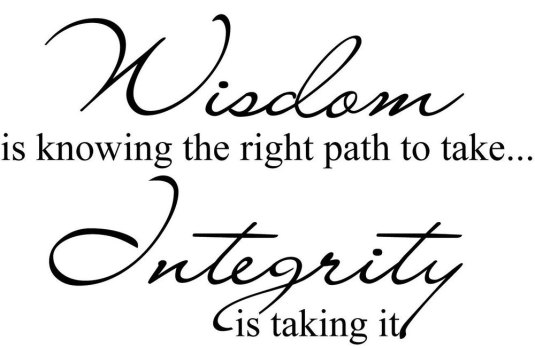
Over the years, I have lost touch with Tommy.  We have traveled very different roads.  Tommy became a minister and works with the poor.  I became an educator and management consultant.  Many years and many different philosophies now separate us.  But I will never forget the lesson that I learned from Tommy that one hot summer afternoon about integrity and being who we are called to be and not who the world wants us to be.

Time for Questions:

Why do I call Tom a “boy for all seasons?”  What does it mean to have integrity?  How do we go about developing integrity?  How do we increase our empathy for other people?  What does it mean to be ourselves?  Are people naturally good or evil?

Life is just beginning.

“That’s what Jamie didn’t understand: it was never just sex.  Even the fastest, dirtiest, most impersonal screw was about more than sex.  It was about connection.  It was about looking at another human being and seeing your own loneliness and neediness reflected back.  It was recognizing that together you had the power to temporarily banish that sense of isolation.  It was about experiencing what it was to be human at the basest, most instinctive level.  How could that be described as just anything?”  — Emily MaguireTaming the Beast

Unbecoming a Victim: Or how to stop complaining and make a difference

Life’s not fair!  I never get any breaks! Other people have all the luck!  The world is crap and there is nothing anyone can do about it!  It’s not my fault. Why did he/she get the job and not me? (Listen to the Power of Responsibility as you read my blog today)  Do-You-Have-a-Victim-Mentality-at-Work

If you have ever made any of the above comments, rest assured, you are probably normal. It is called feeling like a victim or wallowing in self-pity. From time to time, we all engage in victim-hood. However, if your entire life is dominated by feelings of regret, remorse and envy, you are not just engaging in a bout of self-pity, you are embracing full-on victim-hood. We all feel like victims from time to time. That is normal. But if you are thoroughly convinced that you are a victim, you need help. The world has too many too many real victims, it does not need pseudo victim. This blog is about how to avoid embracing a victim mentality and the key factors necessary to overcome such a mentality.

First, let’s look at two key questions:

  1. What is a victim?

As I am describing it here, I am not talking about victims of torture, oppression, starvation, crime, disease, pestilence or any phenomenon that is beyond the ability of an individual to evade. I am talking about a mindset that occurs when we fail to take responsibility for our actions and the consequences of our actions and behaviors on others. You probably know some people who you would describe as having this mentality. My wife Karen says she defines a victim as “someone whose problems are always someone else’s fault. They also seem to need problems and will create them if they don’t have them.”  hero versus victim

“Your complaints, your drama, your victim mentality, your whining, your blaming, and all of your excuses have NEVER gotten you even a single step closer to your goals or dreams. Let go of your nonsense. Let go of the delusion that you DESERVE better and go EARN it! Today is a new day!”  ― Steve Maraboli

We see many people who cannot find any good in the world since they are so busy feeling sorry for themselves that they cannot see the blessings that they have. I find many right-wing Christians to be prime exemplars of this victim mentality. They are so convinced that the world is evil and will end any day. The “anti-Christ” is coming and then the world will be destroyed and all the evil in it. Such people seem to revel in the idea of an apocalypse which will wipe the entire world out and only spare the “good” people. Of course, these right-wing fundamentalist Christians are the “good” people who will be spared.

  1. Why do people choose a victim mentality?

I believe the answer to this question is that it absolves the “victim” of responsibility. They can blame God, the world, other people, nature, the weather or DNA for their failures. Never having to take responsibility is a panacea for those with a victim mentality. It is easier to do nothing when any effort is predestined to fail.

“Life is not compassionate towards victims. The trick is not to see yourself as one. It’s never too late! I know I’ve felt like the victim in various situations in my life, but, it’s never too late for me to realize that it’s my responsibility to stand on victorious ground and know that whatever it is I’m experiencing or going through, those are just the clouds rolling by while I stand here on the top of this mountain! This mountain called Victory!” ― C. JoyBell C.

Overcoming the Victim Mentality:

The antidote to a victim mentality consists of four vaccines. They are as follows:

  • Moral Courage
  • Moral Reasoning
  • Moral Universalism
  • Moral Responsibility

Anyone of these four vaccines can keep you from becoming a whining victim. Taking all four together, will help you to become independent and strong. You will be a winner instead of a victim. We need to give our children these vaccines at an early age, but it is seldom done. It seems as though we must find them on our own later in life or else we flounder through life succumbing to the victim mentality until we find one or more of them.

Moral Courage:

moral courageTo dream the impossible dream, to fight the unbeatable foe, to go where no one has gone before is courage. To stand up for what you believe, to right the unrightable wrong, to boldly speak out against injustice. This is courage. There is physical courage as is manifested in a war or sports or extreme athletic challenges. Moral courage is of the heart and soul. Bothe moral courage and physical courage result in action. One of my favorite quotes is as follows:

“The test of courage comes when we are in the minority. The test of tolerance comes when we are in the majority.”Ralph W. Sockman

Moral courage does not exist by just talking about it or complaining about things. Moral courage is an attempt to make a difference by taking some decisive action. You speak out against prejudice, bigotry, hatred, racism, injustice and stupidity. You do more than read the newspaper and bemoan the sad state of the world. The life of the prophet Mohammed provides many examples of moral courage:

“Before claiming Prophethood, the Prophet Muhammad, upon him be peace and blessings, was well off and had a respected place among his community. However, he had to confront all kinds of hardships and persecutions after Prophethood and spent for his cause whatever he had. His enemies slandered him, mocked him, beat him, expelled him from his homeland and waged war on him. He bore all such cruel treatments and hostilities without complaint and asked God Almighty for the forgiveness of even his enemies.”The Way to Truth 

Moral Reasoning:

devil_angelMoral reasoning occurs when you question right and wrong. Moral reasoning is a cognitive action that takes place when you question standards, conventions, group reasoning, and crowd think. Moral reasoning is the questioning of social and cultural standards. Jesus of Nazereth gave many examples of moral reasoning during his life.

“Woe to you, teachers of the law and Pharisees, you hypocrites! You give a tenth of your spices—mint, dill and cumin. But you have neglected the more important matters of the law—justice, mercy and faithfulness. You should have practiced the latter, without neglecting the former. You blind guides! You strain out a gnat but swallow a camel (Matthew 23:23-24).” 

Jesus is making an important distinction here between convention and morality. We often confuse justice with legality. The inability to understand the difference and its moral relevance is a failure of moral reasoning. Throughout his ministry Jesus gave many examples of moral reasoning.

Moral Universalism:

Hans Kung was a Roman Catholic priest who was stripped of his license to teach theology by the Catholic Church for criticizing the concept of papal infallibility.

“In the early 1990s, Küng initiated a project called Weltethos (Global Ethic), which is an attempt at describing what the world’s religions have in common (rather than what separates them) and at drawing up a minimal code of rules of behavior everyone can accept. His vision of a global ethic was embodied in the document for which he wrote the initial draft:, Towards a Global Ethic: An Initial Declaration.”Wikipedia

responsibilityKung’s life demonstrates a strong moral believe in the universal principles that underlie all religions. My religion is not better than your religion and all of the worlds’ great religions have a core of morality and ethics which are admirable and worth following. When we find one religion fighting with another religion or one advocate maintaining the superiority of their religion over another, we have a counter example of moral universality.

Moral universalism is an important element in overcoming victimhood. One cannot believe that their religion is superior to another religion without eventually succumbing to the rampant persecution complex that seems typical of so many religious people. I was taught when I grew up that I would go to hell if I ever stepped in a Synagogue or Temple.   Karen was taught that as a good Lutheran she should never date a Catholic. Baptists denigrate other Protestants while Muslims and Christians act as though they were worshipping different Gods. Jesus and Mohammed had a deep respect for all religions because they were wise enough to perceive the universality of religion.

Moral Responsibility:

moral responsibilityThe famous poet John Donne is perhaps best known for one of his lines that goes: “Never send to know for whom the bell tolls, it tolls for thee.”   Donne well understood the idea that we are all interconnected and we all have an incomprehensible interdependency such that anyone’s death affects us all. The same is true with morality. A key tenet of Buddhism is the moral responsibility that everyone on the earth faces for social and political actions.

 “Today we have become so interdependent and so closely connected with each other that without a sense of universal responsibility, irrespective of different ideologies and faiths, our very existence or survival would be difficult” – (Dalai Lama, 1976)

Of the four vaccines that are critical for overcoming a victim mentality, it is my opinion that a sense of moral responsibility is the most important. If I could only receive one vaccine, I would choose to be vaccinated with moral responsibility. A sense of moral responsibility allows us to help others who are in need. Charity, love, compassion and kindness are all nurtured by a sense of moral responsibility. As they say: “what goes around comes around.” When we do “good” for others, we do good for ourselves. By identifying with the pain and injustices that others suffer, we forget our own problems and we understand that we can make a difference in the world. No one who believes in their ability to make a difference in the world can suffer from a victim mentality.

Time for Questions:

Are you a victim or a hero? How often do you feel hopeless? What do you do about your feelings of hopelessness? How do you overcome feeling like a victim? Do you think people have a choice of how they feel? Why or why not?

Life is just beginning.

“Most things, even the greatest moments on earth, have their beginnings in something small. An earthquake that shatters a city might begin with a tremor, a tremble, a breath. Music begins with a vibration.”  -― Lauren Oliver


The Land of the Free and the Home of the Brave?

Repeat the words in the title anywhere in the world and they are immediately recognizable as referring to the United States of America.  As Michael Medved loudly proclaims on each of his shows:  “And another great day in this, the greatest country on God’s green earth.”  It is my guess that you have never thought about where the phrase “land of the free and home of the brave” comes from.  Of course, it comes from our national anthem but where did the words originally come from?  Were they from some patriot during the Revolutionary War or from the War of 1812?  Actually they came from a lawyer and amateur poet, Francis Scott Key.  He penned them as part of a poem he wrote in 1814 which was originally titled:  “Defense of Fort McHenry.” 

The poem was set to the tune of a popular British song written by John Stafford Smith for the Anacreontic Society, a men’s social club in London. “The Anacreontic Song” (or “To Anacreon in Heaven“), with various lyrics, was already popular in the United States. Set to Key’s poem and renamed “The Star-Spangled Banner”, it would soon become a well-known American patriotic song.”  — http://en.wikipedia.org/wiki/The_Star-Spangled_Banner

Today, we naturally assume that the words refer to our penchant for American independence and heroism.  Our unique ability to save the world from itself and to right injustices wherever they are found.  Our vaunted American exceptionalism that gives us the moral right and categorical imperative to influence and insert ourselves in events and places the world over.  No one dares to question (or at least few in this country) the right of America to influence politics throughout the world.  No one questions the assumption that we are only in it for the greater good of humanity.  How could anyone from the “land of the free and the home of the brave” do otherwise?  Where our boots tread, soon follows democracy and prosperity, right?

But what if the “land of the free and the home of the brave” was not the reality anymore?  What if it was more accurate to say that today America has become the “land of the guarded and the home of the fearful.”  Since 911, Americans have seemed to retreat behind a cloak of ongoing surveillance and security measures that could become the greatest detriment to freedom, this country has ever faced.  As Benjamin Franklin so wisely noted; “Those who would give up essential liberty, to purchase a little temporary safety, deserve neither liberty nor safety”. 

So I have decided to do some first-hand research and go visit a few “average” Americans.  I took a little road trip across Wisconsin to find some true patriots and to see what they think about our country.  Are we really scared and fearful?  Are we willing to give up our freedom for security?  Have we become more xenophobic?  To answer these questions, I stopped at diners, coffee shops, rest areas, truck stops, libraries and Denny’s Restaurants to visit with real Americans.  Not the 1 percent who make their money from stocks and bonds, but the hardworking “Joes and Janes” who make their money the old fashioned way, by the sweat of their brows.  I will briefly post a few excerpts here from some of my interviews.

Roxanne:  The Full-Time-Part-Time Worker:

I met 36 year old Roxanne in a booth in Mc Donald’s where we talked over a Big Mac, fries and a shake.  Roxanne is a divorced mother of two school aged children whom she is raising with the help of some grandparents.   She works both a part-time day job at Benny’s Cleaners and a part-time night job at Wal-Marts.

John:  Let’s cut to the chase Roxanne. What do you think about America today?

Roxanne:  Well, John, its dam hard to make a living, I can tell you that. Without my grandparents helping me, I don’t know how I would get by.

John:  Do you think we have too much security and not enough freedom?

Roxanne:  I don’t know, seems like there is never a cop around when you need one.  I had a fight with my boyfriend the other day and called the cops, but it took them over 30 minutes to get to my place.

John:  What do you think about the Russians, Iraqis, Mexican Cartels and Obama?

Roxanne:  I think they should all go back to the countries they came from and leave us alone.

John:  Did you vote in the last elections?

Roxanne:  Who was running?

John:  Thanks Roxanne – got to go now.

Patriot: the person who can holler the loudest without knowing what he is hollering about.”  — Mark Twain

 Pete:  The Carpenter

I met Pete while stopping to fill up my gas at a Pilot Station.  I noticed the painted sign on his pick-up truck which read “Carpenters keep it up longer: Call Pete for a good job.”  I offered to buy him a coffee if he would answer a few questions.  Pete was 54 years old, married with four kids. One daughter was still living home with him.  She had been married and was now divorced.  Pete’s wife worked part-time as a church secretary.

John:  So Pete, what do your kids do?

Pete:  Well, one boy works with me when I need extra help. One daughter is married and lives out of state.  One daughter lives with us and the other son works nearby at a local manufacturing plant as a night supervisor.

John:  Do you think this country has provided enough opportunity for them?

Pete:  Yeah, I guess so

John:  What do you think about the economy Pete?

Pete:   Sucks.

John:  I guess a lot of people would agree with you there.  What are your biggest worries for the future?

Pete:  Paying my mortgage and taxes.

John:  Are you worried about freedom and security.

Pete:  Nope, got a concealed carry permit and a good stockpile of ammunition.

John: What do you think we should do about immigration?

Pete:  Send them all home.

John:  Well, thanks for your time Pete.

True patriotism hates injustice in its own land more than anywhere else.” — Clarence Darrow

 Bob:  The Tea Party Member

Bob is a 47 year old accountant. He is married with wife and no kids.  I met Bob at a local café that I had stopped at on my journeys.  He was wearing a t-shirt that read: TEA: Taxed Enough Already.   I sat down at the counter next to Bob and struck up a conversation.

John:  So you belong to the Tea Party?

Bob:  Yeah, joined about five years ago.  I am fed up with big government, taxes and the present no ethics politicians running this country.

John:  So how is the Tea Party going to change things?

Bob:  Well, for a start we are going to only elect politicians that support our views and are not going to compromise away what we stand for.

John:  So what do you stand for?  I know you hate taxes but is that all?

Bob:  Well, here look at this card.  It says it all.

John:  The card Bob gave me read as follows:

Our Core Principles

Tea Party Patriots stands for every American, and is home to millions who have come together to pursue the American Dream and to keep that Dream alive for their children and grandchildren.

What unites the Tea Party movement is the same set of core principles that brought America together at its founding, that kindled the American Dream in the hearts of those who struggled to build our nation, and made the United States of America the greatest, most successful country in world history.

At its root the American Dream is about freedom. Freedom to work hard and the freedom to keep the fruits of your labor to use as you see fit without harming others and without hindering their freedom. Very simply, three guiding principles give rise to the freedom necessary to pursue and live the American Dream:

John:  That sounds very good Bob, but I don’t see a lot of progressive thinking coming from the Tea Party.  Seems like you guys are more against things then for things?

Bob:  That’s because we want to go back to the way this country used to be run before the bureaucrats, illegal aliens, liberals and socialists took over this country.

John:  What about health care and education and social services for the needy?

Bob:  This country is full of free loaders who sponge off the hard working Americans who work for a living.

John:  So you don’t believe that there are truly needy people out there in this country?  What about new immigrants?

Bob:  No one gave me anything or my grandparents.  They came over to this country with just the shirts on their backs.  People used to believe in hard work and honesty.

John:  What about education?  It is barely affordable anymore.

Bob:  That’s because we give all of these free scholarships to students from other countries and the high salaries that those lazy professors make.  Do you realize most of them work less than ten hours a week?

John:  Well, thanks for the opinions Bob.  Time to go!  You have a great day.

 “Let us take a patriot, where we can meet him; and, that we may not flatter ourselves by false appearances, distinguish those marks which are certain, from those which may deceive; for a man may have the external appearance of a patriot, without the constituent qualities; as false coins have often lustre, though they want weight.”  — Samuel Johnson

Cassie Jean:  The NRA Member

Cassie Jean is a 33 year old single woman who works as an Assistant Manager in a small bakery.  I talked to Cassie Jean while she was on a break over coffee and a cigarette.  I had stopped for donuts and a rest break.  Cassie Jean rides a 2002 Honda Shadow 600 motorcycle.  She is an avid hunter and a card carrying member of the National Rifle Association.

John:  So Cassie, what was the last thing you killed?

Cassie Jean:  Well, got me a good sized buck this past fall and a nice turkey this spring.

John:  How long have you been shooting?

Cassie Jean:  Ever since I was a little girl.

John:  Why do you belong to the NRA?

Cassie Jean:  They protect our rights.  You know the Second Amendment.

John:  Isn’t that about militias?

Cassie Jean:  People have the right to arm themselves.   If we let them take our guns away, we will have no protection.

John:  Protection from what.

Cassie Jean:  The wackos and socialists.

John:  What about our army, National Guard and the police department.  Isn’t their job to protect us?

Cassie Jean:  They work for the liberal socialists that are destroying this country.  The only thing that stands between them and us is our guns.

John:  But what about all the gun violence in this country?

Cassie Jean:  If more people were armed, there would be less violence.

John:  How do you figure?

Cassie Jean:  Well, would you screw with someone who had a gun?

John:  But what if no one had a gun?

Cassie Jean:  Over my dead body.

John:  Well, you sure make good donuts.  Take care and happy hunting.

Our government has kept us in a perpetual state of fear – kept us in a continuous stampede of patriotic fervor – with the cry of grave national emergency.”  — General Douglas MacArthur

 Dick:  The Mechanic

Dick is a retired Ford mechanic who worked for a small Ford garage in upstate Wisconsin for over 30 years.  A bad back and a desire to enjoy more of life convinced Dick to retire early.  Dick is a strange sort of man as he does not like hunting or sports but enjoys literature and particularly good poetry.  He is a connoisseur of fine wines and good music and never misses an opportunity to travel with his wife Paula to see new places.  Dick belongs to a group of retired men who hang out at a local library where they can get free coffee and an occasional donut.  Despite his lack of a formal education, Dick is knowledgeable and well versed on many subjects.  His views would surprise many.

John:  What’s new Dick?

Dick:  I am going to Russia!

John:  For real?

Dick:  Yep, I like the way Putin is running things.  No BS in that country.

John:  What about freedom of speech and freedom of religion?

Dick:  Religion is a farce, just a bunch of know nothing do-gooders trying to live off the backs of hardworking people.

John:  What about freedom of speech?

Dick:  No one listens to you here anyway unless you are a billionaire.

John:  I don’t think Putin would tolerate unions and I thought you were a union man?

Dick:  Unions used to help people now most of them are just parasites as well.

John:  You sound like a libertarian.

Dick:  I don’t belong to any party.  They are all useless.

John:  When are you leaving for Russia?

Dick:  Soon

John:  How soon?

Dick:  Not soon enough.

John:  Well, I imagine many of your friends would hate to see you leave.

Dick:  Yeah, well I can send them a postcard.

John:  Do you think the libraries in Russia would have a men’s group and free coffee?

Dick:  I don’t know.  I will talk to Putin about it when I get there.

John:  Well, if I don’t see you before you leave Dick, have a good flight.

Conclusions:

I arrived back to my starting point in Frederic Wisconsin after several days on the road.  Truly, I cannot say I had any great insights into the subject of freedom and liberty.  My “random” sample of “average” Americans would not satisfy even a lazy graduate student much less a hard core researcher.  Nevertheless, my total observations have literally been based on hundreds of such conversations over the past ten years.  My interviewees are a composite of dozens of people whom I have met and talked to from the shores of Coon Lake in Wisconsin to the rocky Casa Grande Mountains in Arizona.

Numerous books attest to major changes taking place in our country.  Are we going backwards, forwards or perhaps sideways?  Are things getting better or worse?  Are we still the place that everyone wants to immigrate to?  If not, what has changed?  We are surrounded by apocalyptic visions.  The USA will be overrun by illegal immigrants.  Socialists will take over the country.  Fascism will become the norm.  The end days are near and the Messiah will return to judge the good and the evil.  The poor will rise up and destroy America.   The country will become one vast prison with drug addicts and drug dealers on every corner.  No one will be able to afford health care or education.  Terrorists will infiltrate and bomb our most prized establishments.  The country will give in to Sharia Law.

With such gloomy visions of the future, is it any wonder that many people are fearful and ready to sacrifice their freedom for security.  More and more Americans live behind walls either in a prison or in a gated community.   Neither prison walls nor community walls seem to protect us from our worst enemies which may be ourselves.

Beck – It’s All In Your Mind, music video         (Love this Song, click on here to listen)

Time for Questions:

Have you felt things are getting better or worse in this country?  Do you think we need more or less patriots?  Do you think most people professing patriotism are really patriots?  What do you think makes a good patriot?  What do you think makes a “bad” patriot?  Where do you stand on patriotism?

Life is just beginning.


Next Newer Entries