 “Something Wicked This Way Comes” is a 1962 dark fantasy novel by Ray Bradbury. It tells the story of two 13-year-old boys, Jim Nightshade and Will Halloway, in Green Town, Illinois, who confront the sinister Cooger & Dark’s Pandemonium Shadow Show. The show is part of a malevolent carnival that preys on people’s secret desires and fears. Jim and Will are forced to battle evil and examine the nature of good and evil, youth and aging. The title comes from Shakespeare’s “Macbeth”, and the story explores themes of good vs. evil, the fear of growing old, and the cost of wishes.
Macbeth is the story of a man driven by ambition and a lust for power to murder his king and seize his throne. Like Bradbury’s novel, it is also a tale of good and evil. The famous quote is “By the pricking of my thumbs, something wicked this way comes.” It is spoken by the Second Witch in Act 4, Scene 1, as she senses Macbeth’s evil approach, indicating his profound moral corruption even to supernatural beings. Someone once noted that most great stories involve a battle between good and evil. Fiction mimics reality.
The famous Gettysburg Address by President Abraham Lincoln also described a battle between good and evil and the sacrifice made to restore good.
“It is rather for us to be here dedicated to the great task remaining before us—that from these honored dead we take increased devotion to that cause for which they gave the last full measure of devotion—that we here highly resolve that these dead shall not have died in vain—that this nation, under God, shall have a new birth of freedom—and that government of the people, by the people, for the people, shall not perish from the earth.”
The cause was the elimination of the evil of slavery and racial discrimination, and the continuation of a nation built on the values of life, liberty and the pursuit of happiness. Values that were not allowed to be held by a significant portion of Americans specifically Black people, Indigenous people but also including women, gay people, Asian people, and many immigrant groups

Today, the thought rings in my mind that “Something rotten comes this way.” Yes, a paraphrase of the Bradbury quote but it has a somewhat different meaning to me. Something rotten smells and stinks in our country. Carved into a White House mantel is a quote by John Adams, “May none but honest and wise men rule under this roof.” Today something is rotten in the White House. The foul and putrid odor has spread to the Supreme Court and both houses of Congress. Wise men search for the odor but cannot agree on its source. When something is smelly we generally assume that it is rotten. Hence my reflection that “Something rotten comes this way.” It has been coming for a long time, but the stench and fetid smell have now become unbearable. From the White Mountains of New Hampshire to the top of Mt. Whitney in California, the rank fumes are causing people to gag and vomit and leave our country.
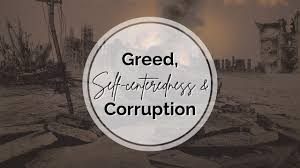
What is the source of this rottenness? The smell comes from an ever-enlarging foundation of greed and narcissism that has replaced integrity and morality. From the pulpits of many so-called Christian churches to the podiums of our once great universities, Americans are now baptized or given diplomas in greed, avarice and opportunism. Increasingly, cowards roam the halls of Congress where statesmen once tread. Too many of our leaders lack morals or integrity.
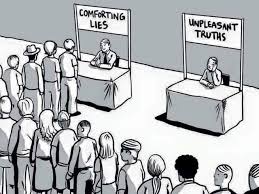
Sycophants earn positions as heads of government with no qualifications except an unscrupulous ability to kiss ass. The media daily screams headlines that defy logic and comprehension while profits for news conglomerates soar to ever higher peaks. Meanwhile, the information contained in media broadcasts bears scant resemblance to the reality that most of us face. Lying is the norm and has become one more strategy in a congressperson’s arsenal. A stew of lies daily spread by the internet and its media minions. None of us can escape complicity in this economy as we all breath its rotten air.
Something rotten comes this way:
How can we expunge this rottenness? Will singing Kumbaya work? Will hands across the aisles work? Will prayers and thoughts work? Will more empathy work? What about better communication? What about more people going to college to get educated? What about doing away with Social Security and replacing it with Stock Portfolios? What about more guns? What about? Sorry, I am out of simple solutions. None of these so-called solutions work because they do not confront the real problem. The golden idol that makes money the measure of all good things in life. It may be possible to stop the spread of this rot, but it will take a change of heart as well as a change of mind. Many of my friends ask me if it is not too late.
I only know one thing. Unless we change the path that we are heading down, we can kiss democracy in America goodbye. The rottenness will eventually infect the entire nation until we are left with nothing but a country of cowards, sycophants, greedy merchants and greedy consumers. People who will continually lie to get ahead. People with no goals except to consume the latest do-dads in hopes of becoming happier and more satisfied with their lives.

Ironic that so many Americans want to go down this path, since not one great prophet in history has preached that owning more stuff will either make you happy or get you into heaven. Nevertheless, today we have Christian churches preaching the “Prosperity Gospel.” A narrative that has millions of followers subscribing to a bastardization of every great scripture that has ever been written.
The prosperity gospel teaches that faith, positive confession, and financial giving to religious leaders will bring the giver personal wealth, health, and success. It portrays material prosperity as due to God’s favor and poverty or illness as evidence of weak faith or spiritual failure. The Prosperity Gospel is a Super Con because it monetizes hope, blames failure on the believer, and shields itself from disproof. People buy into it because it promises certainty and reward in an unfair economy. It exploits vulnerability, fear, and selective success stories to convince “true believers” that it is a Christian teaching.
Robert Tilton: “I believe that it is the will of God for all to prosper because I see it in the Word… I do not put my eyes on men, but on God who gives me the power to get wealth”.
Creflo Dollar: “When we pray, believing that we have already received what we are praying, God has no choice but to make our prayers come to pass”.
John Avanzini: “Jesus had a nice big house”, “Jesus wore designer clothes”, “Jesus was handling big money”.
Joel Osteen: “If you want to reap financial blessings, you have to sow financially”. He also states, “I believe God wants you to prosper in your health, in your family, in your relationships, in your business, and in your career”.
Oral Roberts: “Sow a seed on your MasterCard, your Visa or your American Express, and then when you do, expect God to open the windows of heaven and pour you out a blessing.”
Friends, the only solution that will save our country along with our immortal souls is to defeat the basic tenets of corporate capitalism and to cast out the evangelists of hypocrisy who spread such false gospels as the “Prosperity Gospel.” The corruption that we see in the White House, the Congress, the Supreme Court, the Universities, the Media and many so-called Christian Churches is a symptom of the rot that is associated with our predatory avaricious Corporate Capitalistic system.
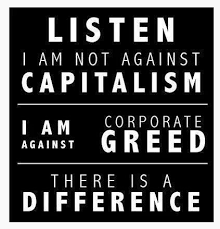 Corporate Capitalism itself must be understood as a mindless media driven machine that puts profits over virtue. A system in which the greater needs of society are no longer the recognized or given any priority. All that is rotten today in America today can be traced to greed and avarice. The same motivations that caused the Israelites to build the Golden Calf. The Golden Calf still stands—no longer forged of gold but of brands, markets, and corporate power. We bow to consumption, give obedience to profit, and keep silent to wrongdoing in exchange for comfort and toys. We mistake greed for progress and idolatry for economic necessity. We do not need a rejection of markets but a rejection of markets without moral and ethical anchors.
The late Pope Francis is quoted as saying that:
“From an economic point of view, it is irrelevant to produce tanks, or candy provided the profit is the same. Similarly, it might be the same to sell drugs or sell books if the profit figures match. If the measure of value is money, everything goes provided that the profit does not vary. The measure of every human being is God, not money.”
Money becomes the measure of good and evil. Money becomes the measure of a person’s value and even life. Today, the religion of America has become “How can I get more money.” The true prophets throughout history have always preached the potential dangers of focusing on accruing either wealth or fame.
Christianity (Jesus): “No one can serve two masters. … You cannot serve both God and money.”
Islam (Prophet Muhammad, Hadith): “Riches are not the abundance of worldly goods; rather, true riches are the richness of the soul.”
Judaism (Talmudic/Midrashic Thought): “The truly rich are those who are satisfied with what they have.”
Baha’i Faith (Baháʼu’lláh): “Material comforts are only a branch, but the root of the exaltation of man is the good attributes and virtues which are the adornments of his reality.”
Red Cloud (Oglala Lakota): “I am poor and naked, but I am the chief of the nation. We do not want riches, but we do want to train our children right. Riches would do us no good. We could not take them with us to the other world. We do not want riches. We want peace and love.”
If we want to rid our nation of the rottenness and stench that is rapidly covering it, we must rid ourselves of the obsession that capitalism seeks to instill in us with every media at their disposal and every commercial that they can provide. It is an obsession to own more, to possess more, to have more, to buy more, to shop until we drop. You can have a heart attack so long as you have spent your last dollar. Christmas has become $Mas. Our world has become one big shopping mall. We are speeding on a spending train to oblivion. Next stop HELL.
What Can We Do?
If the disease is moral, the response must be moral as well. We must all:
- Refuse to lie or accept lies
- Reject those who tell lies to get ahead for any reason
- Refuse to worship money and wealth
- Reject anything to do with the “Prosperity Gospel”
- Refuse to relate success with goodness
- Teach that success is not always associated with morality or doing the right thing
- Teach our children to be responsible
- Responsibilities are as important as rights. Develop children who accept responsibility for their lives
- Choose sufficiency over excess
- Corporate Capitalism thrives on “wretched” excess. Ask yourself what you really need to be happy not what some commercial tells you that you need.

The single most important thing we can all do is to get off the spending train. Substitute empathy for others for greed. Substitute kindness for strangers and immigrants instead of suspicion and hatred. Substitute charity for all for a desire for more stuff and more toys for oneself. Substitute compassion for the poor and the needy instead of worrying about what you are going to get. Substitute mercy and forgiveness for hatred and retribution.
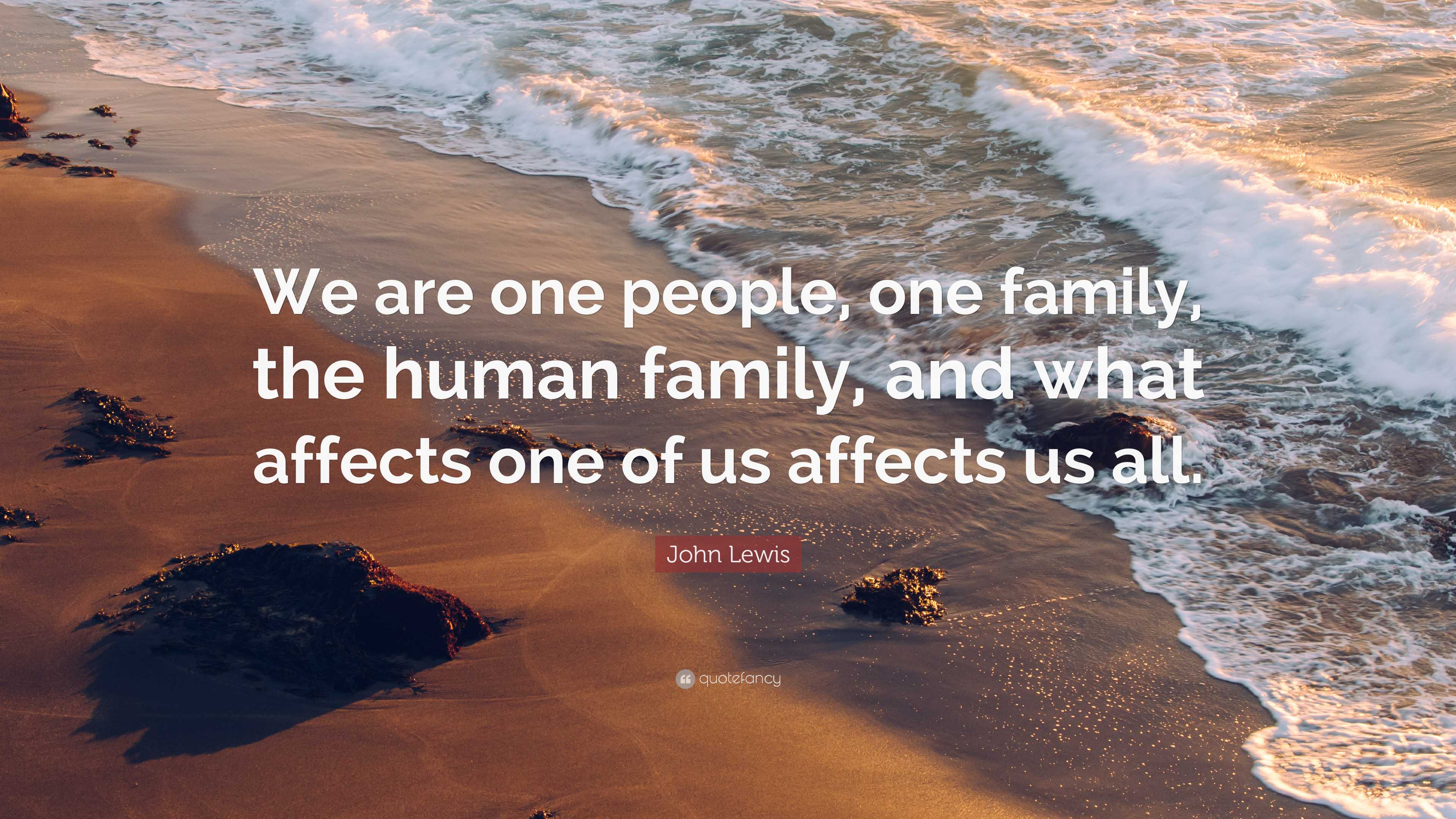
Above all remember that we are all one people. There are about 180 or more countries in the world. Karen and I have only been to 45 now, but we have found that everyone in every country that we have been to want the same things: Meaning for their lives. Peace for their nation. Safety for their families. A decent place to live. A good meal each day.
We must embrace the idea that everyone is entitled to these elements of a satisfactory life and not just people in our circle or community or nation. People in every country of every color of every religion and of every political and economic philosophy deserve the same thing. Life, liberty and the pursuit of happiness.





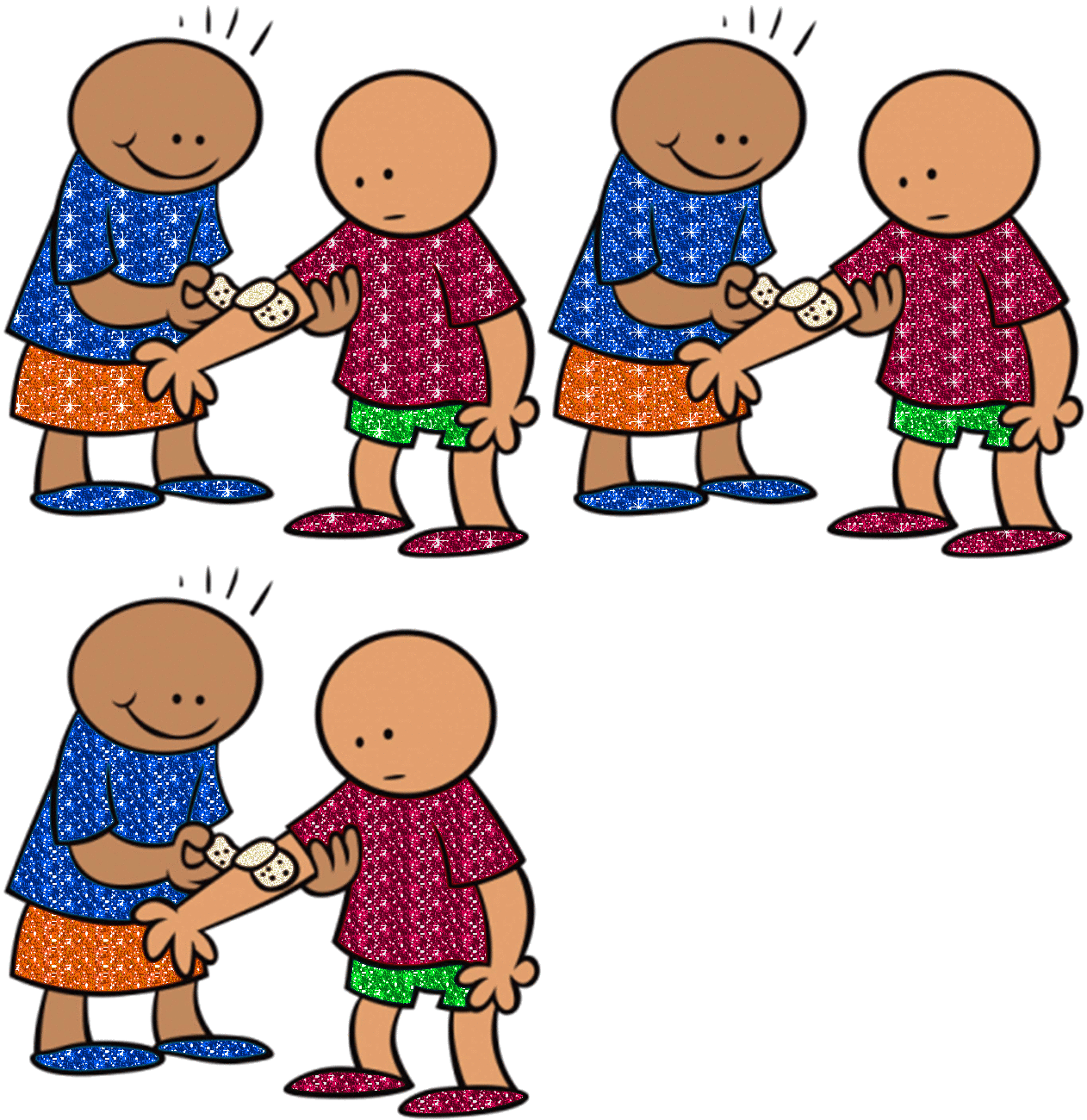
 Compassion is the most important of the seven virtues. Compassion is just one stroke short of love. Compassion leads to love but it takes some doing to get there. The journey involves a number of steps each predicated on a trait or behavior that is uniquely human. In this blog, I want to describe the journey to compassion and beyond to love. Each step of the journey is a commitment to humanity. If you do not care about others, you will not be interested in the journey. Compassion is the opposite of narcissism. A narcissist loves them-self. A person with compassion loves others. With a narcissist, it is “all about me.” With a compassionate person, it is “all about them.”
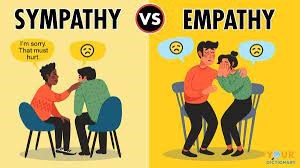
 The journey starts with sympathy. We think of sympathy as “feeling sorry for someone.” It is the ability to have feelings for another person. We see another person who looks hungry or unhappy or ill and we feel some sense of remorse or regret for the other person. We might be distressed for them or we might simply be glad that we are not in their shoes. A part of us hurts or aches for the other person, but we do not identify with them on a deeper level. Our sorrow goes no further than to perhaps wonder what had befallen them to bring such misery.
 Our next step in our journey to compassion takes understanding. We need to try to understand others and to put ourselves in their shoes. We must avoid separation and thinking that we are so different from others. We must avoid judging others. When you couple understanding with sympathy, you have taken the next step. You have now arrived at empathy. To have empathy for others, is to combine sympathy and understanding. You are sorry for those who are less well-off then you are, but you do not separate yourself from them and instead you seek to find the common ground that links you to the other person. Sympathy involves the heart. Empathy involves both the heart and the mind.
 The next step in our journey is action. All of the empathy in the world will not make a difference if we do not take action. Empathy + Action = Compassion. Compassion is the way we make a difference to others. Jesus said “Feed my sheep.” He did not say to just take pity on them or to simply have empathy for them. Empathy by itself does not clothe the poor, feed the hungry or help the weak. We must make action and doing a part of our empathy for others. This is true compassion.
 Bob’s actions made a great impact on me, since I had seldom gone further in my life than either waiting to be asked for help or sometimes asking others if they needed help. It would never have occurred to me to just show up and help. Perhaps, you might think that simply showing up and helping someone is going too far. However, think about yourself. Would you really ask others for help? I know I probably would not. Pitching in to help when not asked may not always be warranted but I now see it as something worth endeavoring to do more often than not.
 Compassion is a much more useful and practical virtue for my life. I can deal with compassion and I can be more compassionate if I really aspire to. I am not sure I can be more loving. I have a hard time “loving” others whom I dislike or who do unkind things to people I do like. I more often “love” others who think and act like I do. I may be taking the easy way out, but if I can be more compassionate to others and if someday I am thought of as a compassionate person, that will be enough for me. If you are further along in your journey through life, then you should consider including love as one of your “most” important virtues. No one will be a worse person for it. For me today, compassion for others is enough of an effort.


 Nevertheless, we still have the occasional spat, and they usually leave us both feeling quite depressed and disappointed. I am mostly disappointed with myself for not handing things well. It seems I too often say things or discuss things very differently than we have agreed on. We have found and used many models for dealing with conflict. One of our favorites is the “DESC” model. This stands for “Describe” what is happening in neutral terms. Talk about how this makes you feel in terms of “Emotions.” “Specify” what you would like to see happen differently. Define what the “Consequences” will or could be for change. Consequences are best provided that are positive, such as we will feel closer together. When we stick to this model things seem to go well. Our discussions stay on track and our resolutions come more effortlessly. When we stray from the model, accusations and insinuations escalate and the discussion becomes difficult if not painful.
 The other kind of kindness I will call “Emotional Kindness.” This is not doing things but saying things either verbal or non-verbal that honor and appreciate the other person. It respects their feelings more than their actions. It might be “I love you” or it might be an appreciation of something the other person says or thinks. It is building up the other person’s self-esteem and not putting down anything they might express or care about.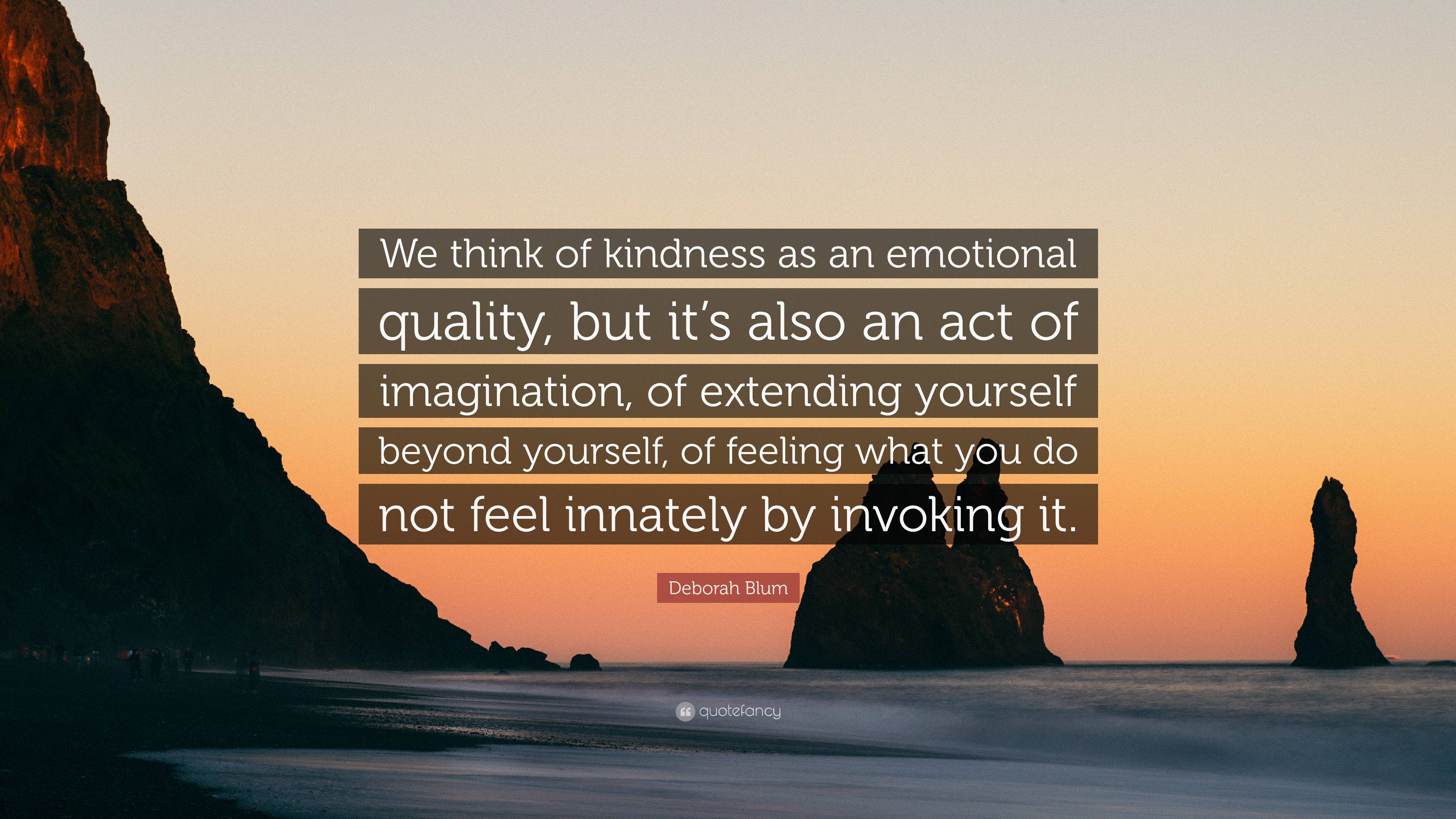


 I started running in 1975 after being a very good bicyclist for many years. I ran in freezing rain, below zero wind-chills and blistering heat. I even went out one time and ran with a tornado coming through the neighborhood. Like the U.S. Mail, nothing could stop me. Over the years, I met many people who would tell me “I used to run but my knees went out and I had to give it up.” I had enough sense not to tell them what I was really thinking so I usually said nothing or just a “too bad.” What I was really thinking was “If you really wanted to you could still be running.” The latter comment would be an example of neg-empathy. My silence was an example of neutral empathy. I did not make any connection to the feelings that the other person had, nor did I much want to. I could not identify with them since I ran “no matter what.” I was better than they were.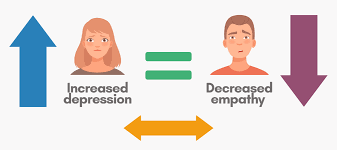


 Kindness is number four of my seven essential virtues for leading a happy and successful life. Every Thursday I start my day with the following prayer:
 There were few heroes when I was growing up who could measure up to my standards for clear and unemotional thinking. I grew up with a father who demanded toughness. My father’s motto was not to “get even” but to “get one up.” If someone hit me, he taught me to make sure that they would never think of hitting me again. My father was 6’ 4” tall and had been a professional boxer with a 21 and 3 record. He taught me fighting skills at a very young age. My neighborhood taught me to disregard the “rules of boxing” and to fight with whatever I had to win. I could easily protect myself and few people would bother me. Somehow, I became a protector for those kids who were less aggressive and who were picked on by the ever pervasive bullies. I kicked more bullies asses then I can count. I was always proud to help the underdog. Paradoxically, these traits did not make me more compassionate but made me harder and tougher.
 Through hardness and toughness I began to forge a wall that nothing could get through. Sentiments, compassion and empathy were increasingly blocked out by my need to be tough and to not take any shit from anyone in the world. Each episode where toughness prevailed was another brick that helped to build my wall higher and higher. I never thought I would get married but after getting my first wife pregnant, I “did the right thing” and married her. It was the manly thing to do. My dad had always taught me to take responsibility for my actions and my baby Chris was a direct result of my actions.
 One day we were in a grocery store just before Christmas. An apparently legless man pushing himself along on some kind of a wheeled board was inside the grocery looking for some money. I walked by him with Julie (my first wife) and ignored him. My wife turned back and started to give him some money and I said: “Shit, don’t give him any money, he can probably outrun me. I will bet he is just a fakir.” She gave him the money anyway and replied “What if he is not?” I never forgot that comment. I am not sure why my first wife married me. She once said that she thought all people had feelings and emotions until she married me. We subsequently divorced but I have to say that I probably owe my life to my first wife. She cared for me when I was suicidal and she always looked after me when I was hurt or needed help. Through her, I began to see what compassion and kindness were. This journey has continued with my second wife Karen who is one of the most considerate and most compassionate spouses anyone could have. Every day I learn something about kindness from her.
 I disagree with Shaw. I am getting older and I still respect and uphold the values of our Founding Fathers, but I refuse to live in a gated community or allow a homeowner’s association to tell me what color holiday lights to put up. I am not a believer in mincing words but I respect the rights of minorities and anyone else to be referred to as they want to be referred to. I respect the rights of Indians to have their ancestor’s graveyards not dug up for commercial or even academic reasons and I respect their rights not to be depicted as silly mascots for some college team. Trump and his supporters believe the US has become too PC. They blame minorities for this. They would like to live in a land where it is ok to call a Black person a nigger since we call Italians wops and French frogs. A Black person they argue has a double standard or they apply a double standard for Blacks and Whites. The bottom line of all this double talk is not too much PC but a lack of empathy and compassion and kindness towards others.
 Yes, there are extremists who want to take Huckleberry Finn out of the library just like there were Popes that knocked the genitals off of statues in Rome. But if you have any empathy or even the slightest understanding of culture and history, you will be less apt to say “My father didn’t own any slaves.” That is a little like replying to a woman who was raped “Well, I did not do it.” To which I can now hear someone replying, “Yes, but no Black people alive today were slaves, so why should they be so upset?” Yes indeed, why should they be so upset? If you are serious about looking at a reason, please regard the following article:
 The people that we will remember in our lives and who make the most impact on our lives are not the rich and famous. They are the people who most cared about us and looked after us. They were kind and loving towards us and somehow showed that we meant something to them and to the world. They may have been our fathers or mothers or an aunt or teacher or perhaps a close friend. How much money they had or how successful they were did not make a difference to us. Indeed, what they gave us could not have been purchased by money. Money doesn’t touch us but kindness does.


 Aging Capriciously