How does an atheist or agnostic talk to God? What do I call him or her? What about the irony or would it be hypocrisy of an atheist talking to God? I guess if I can be an agnostic, you can understand or dismiss my conversation as the musings of a man sitting on the proverbial fence. Someone who wants to hedge his bets “just in case.” However, even an atheist might want to hedge his bets. (Listen to the song “Word of God Speak”- Mercy Me with Lyrics (High Quality)
 So what do I talk to God about? The meaning of life? When will the world end? How can we eliminate evil in the world? The weather? Sports? TV? Movies? What could I talk about that would keep his interest? What if God is a her? Would the same things interest her as him?
John: Dear God, I am not doing much today, so I thought maybe we could have a little talk.
God: I’m kind of busy, will it take long?
John: Uhn, I dunno. Got fifteen minutes?
God: I guess so. Who do you want saved?
John: No one I can think of. I know a lot of people I would like to send to hell.
God: I don’t do that. Talk to Satan.
John: Just kidding. Thought you might have a sense of humor.
God: If I didn’t, I would not have created humans.
John: Good point. So why did you create us?
God: For the hell of it. (Laughs)
John: Good one God. But really, what was your purpose in creating humans?
 God: If you really want to know, it was kind of an experiment. In the entire universe, I was the only sentient being. I wondered what would happen if I created a whole bunch of sentient beings and put them in one place. So I created stars, planets, the solar system, earth and all the things that you would need to satisfy your emotional and intellectual needs. I then created humans and let you grow and develop.
John: You mean you never interfered or interceded on our behalf?
God: Well, sometimes. I like to speed things up a bit, so I sent some prophets and a few demagogues.
John: So you sent Jesus and Buddha and Mohammed and Abraham?
God: Nope, just Jesus and Mohammed.
John: What about Hitler?
God: Nope
John: So who created Hitler and where is he now?
God: You created Hitler and he is now in Hell.
John: Where is Hell?
God: For Hitler, it is a land ruled by Jews.
John: Is that your idea of justice or is it vengeance?
God: Justice is where kindness and compassion and love flourish. Hitler will someday come to appreciate the Jewish people. I don’t do vengeance. It throws the entire universe out of kilter.
John: So you mean, we can all get to Heaven some day?
God: Only if you want to.
John: Since we don’t have much time, I would like to be very candid with you.
God: So?
John: Well, you really made a mess with the earth and humanity. Have you bothered to look at the earth and see the wars, poverty, disease, crime, injustice, famine and misery that you have created?
God: You people. You always want to blame someone else.
 John: Who more than you? You are All Knowing and All Powerful. Yet you sit up there and laugh at the human race or perhaps worse, you take pleasure in our misery.
God: I never said I was all powerful or all knowing. I told Moses I always was and always will be, but I never said anything about omniscience or omnipotence. You created those myths with your stories and desires; always hoping that someone like Superman or some super-hero will get you out of the shit that you create for yourselves.
John: People look up to you. They pray to you. They sacrifice lambs and goats for you. They build altars for you.
God: Yes, and they fight for me. They kill for me. They wage war in my name. They pray that I will protect them and destroy their enemies. They pray for their relatives and ask for death for their neighbors in the next state or next town or next country.
John: Are you blaming people for praying for these things?
God: Have you not heard that I gave people free will?
John: Free will for what? To kill and maim and scourge and rape and destroy? Is that supposed to be some kind of a blessing?
 God: I meant to give humans a choice. Maybe I made a mistake. I never told anyone that I was infallible. I have toyed with destroying the entire human race and trying something else, but nothing really comes to mind. How could I create a race of sentient beings and not give them free will? Should I have created a race of puppets or robots? Say the word and I will destroy your entire planet and all the people on it! It is really a very small thing to do in terms of creativity and imagination.
John: Please, don’t put that on me! I don’t want that decision on my shoulders. I thought maybe you would have some better ideas.
God: Well, if you think of any, let me know. I have things to do now and I need to end this conversation.
John: One last question. Are you planning to send any more prophets? I think we need some help down here.
God: Each time I sent one, you listen for a while and then you somehow change the message back to what you want to hear or what you want to do. The Ten Commandments become the two “maybe” Commandments. The Eight Beatitudes become the  eight “Would be nice to do” but they are kind of impractical. The Eight Fold Path becomes “I don’t have time.” The Six Articles of Faith become a prescription for Jihad. You have a propensity for converting the words of the prophets I have sent into formulas for bigotry and intolerance. Nevertheless, when I can, I will continue to send more prophets and messengers. Keep in mind; they will all say the same thing: “Love One Another.”
John: Well, thanks for your time God, and Merry Christmas.
God: Merry Christmas to you John, but I don’t do Santa.
Time for Questions:
Do you ever speak to God? Does he answer? Is God a he or she? Does it matter? Do you get the answers you need from God? Do you think God should wipe out the human race and start over? Why or why not? Did God screw things up with “Free Will?”
Life is just beginning.
“In the beginning..
when ray and day hadn’t yet come into existence at all,
there was a kind of radiance that illuminates universe.
That radiance is the light of knowledge and goodness.
That radiance will persistently and consistently shine brightly
even after all the stars and moons in this vast universe die out.”
― Toba Beta,







 I come back into myself and say, “Let’s take a walk.” It is a beautiful day and a beautiful town, and everyone likes the idea. We pay our respective bills, head to the bathrooms, and meet outside. I suggest we walk the path alongside the river to PD Pappy’s than turn left onto Main Street where we can walk by the various tourist shops. We head to an old antique store that we last visited almost a year ago to the day. We spend a good hour or so in the store. We see oodles of things that bring back memories from our childhoods, our old dreams and our wish-we-had-done that pasts. We leave having bought nothing except a wistful yearning for the “Good Old Days.” Pre-Trump. Pre-Covid. Pre-Climate Change. Pre-Divisive Partisanship. A time when we could still believe in the American Dream.
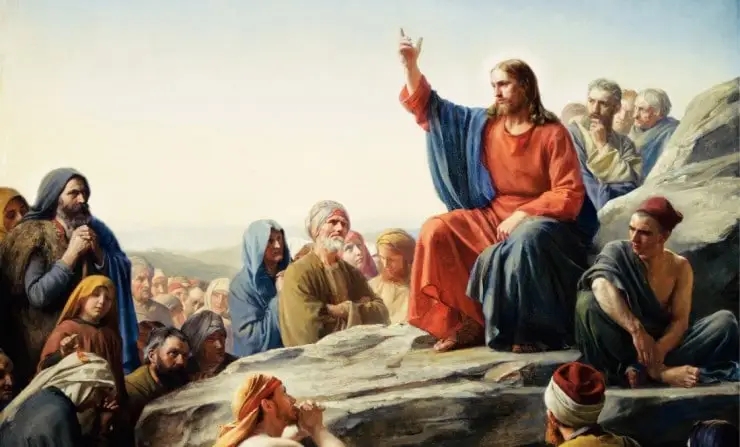
 As we walk down main street, Roger tells me that he has seen a show recently that looks at the symbolism in the Catholic Church with a deep sense of skepticism. He asks me if I think the Catholic belief in Jesus would be much different if Jesus had been garroted or beheaded rather than crucified. I confess that I have never thought about this question, but I do find it intriguing.
 It is now almost three hours since we met for dinner. We are talked and walked out. I am ready for my afternoon nap. Karen wants to get back to her sewing. Jane is tired of listening to us and wants some peace and quiet. Roger is still thinking about God and whether there is other life in the universe. We both seem to have come to the same counter-intuitive conclusion that there is not. We are all alone in the universe except for a few Martians left over from the great Martian cataclysm.




 Like Dion DiMucci’s “The Wanderer,” I spent years wandering from church to church and religion to religion to explore other venues for spirituality. Dion was my favorite pop singer in the sixties. As I write this, he is still alive and performing. One of his most popular hits was a song called “The Wanderer.” The lyrics grabbed every guy I hung out with, and we all dreamed of being macho and tough like the guy in the song.




 Aging Capriciously