For years I’d heard a curious idea, that most revolutions are won by only a third of the population. Supposedly the American Revolution broke down this way—one third for independence, one third against it, and one third sitting on the fence. I began wondering whether this pattern was unique to America or common across world history. And if it was true, even in spirit, how is it possible for a minority to defeat a larger group?
Let me get something very straight with this blog. This is not about theory. This is about praxis. We are in the midst of a cold war rapidly becoming a hot war in the country. One third of Americans want a democracy. One third want a Hitler. One third don’t give a damn. I want to see the winning side be the side for democracy. I am posting this blog so that we can all understand what it will take to win this war.
I am under no illusions that this war will be won overnight. I have no illusions that the mid-term elections will make more than a ripple in this war. I have no illusions that releasing the Epstein files will make any more difference than getting Trump’s tax reports make. I have no illusions that Trump supporters will suddenly join the “good” guys. I have no illusions that Congress, the Senate or the Supreme Court will help us to win this war.
The only illusion I am under is that we need a large mass of people who will stand up, speak out, march and refuse to settle quietly into a country dominated by autocrats, plutocrats and oligarchs. As Patrick Henry so bravely stated “I know not course what others may take but give me liberty or give me death.” If you want to live under a democracy, you must be willing to fight for it. You must even be willing to die for it. Nothing less than this will help to restore democracy to America.
As usual, my friend Metis helped me uncover a deeper truth: while the “one-third rule” is more myth than precise statistic, it captures something essential about how societies change.
Revolutions are not majority events. They are minority movements that succeed when the conditions are right. But we do not have to wait until the conditions are right. In fact, one will only know when the conditions were right. That is, it is something we can only know after the fact. We must act on the assumptions that our efforts will create the right conditions and indeed that is the only possibility that exists.
Myth and Reality: Was the American Revolution Really One-Thirds?
Historians don’t agree on exact numbers. Loyalists (Those who wanted to stay with King George III) probably made up 20–30% of the population; active Patriots only 40–45%. The rest moved with the winds of power, fear, or convenience. But the spirit of the one-third idea is accurate:
Revolutions rarely begin with majority support. They are propelled by determined minorities, resisted by others, and observed passively by the rest. Today we may be in the minority. However, as this blog will show, it does not matter. We can still win the war and restore democracy if we meet certain conditions which I will discuss.
This same dynamic repeats across Paris in 1789, Russia in 1917, Cuba in 1959, Iran in 1979, and even some modern uprisings today. The numbers vary, but the structure remains: a committed minority clashes with a protective minority, while most people watch and wait.
If Numbers Don’t Decide Revolutions, What Does?
Here is where the history becomes fascinating. Revolutions are not democratic moments. They are power struggles, and the deciding factors are not how many people agree but how many crucial systems shift. The enemies of democracy today have shifted several crucial systems in their favor. This includes the Congress, Supreme Court and religious systems across the spectrum as well as across the country.
Metis helped me understand that six forces usually determine the outcome of a revolution.
- The Power of the Narrative
- The side that wins is often the side that tells the most compelling story.
- American Patriots framed independence as liberty versus tyranny.
- The Bolsheviks promised “Peace, Land, Bread.”
- Iranian revolutionaries cast the Shah as un-Islamic and corrupt.
 When one group claims the moral high ground—and gets people to believe it—it gains legitimacy, the most valuable currency in any upheaval. The political legitimacy concerning a moral high ground has shifted from the beginning of the USA up to present times. When the Republican party was against slavery, they held the moral high road. This legitimacy shifted to the Democratic party when they began to espouse fair treatment and wages for working class people. The legitimacy has now shifted back to the Republican party as they have assumed the high ground against efforts to reduce income inequality and a decent wage for all people. They have created this new legitimacy by their constant hammering on what they call “Trickle Down Economics” and the danger presented to the USA by anything that bears a faint resemblance to socialism or (GOD FORBID) Communism. Trickle Down Economics much like the Prosperity Gospel promises untold wealth to people based on their religion or willingness to defer gratification to someone else. This someone else is either the Uber-Rich controlling the corporations or the Ministers selling the tickets to heaven.
- The Weakness of the Old Regime
Revolutions succeed when the ruling system is already coming apart because of:
- Economic crisis
- Political division
- Corruption
- Military overstretch
The American colonists fought an empire spread thin.
The French monarchy was bankrupt.
The Russian Tsar faced famine, inflation, and a collapsing army.
 A revolution doesn’t topple a strong system—only a wounded one. The downfall of the Democratic party as the “Ruling Party” did not happen overnight. Democrats maintained nearly unbroken control of both the House of Representatives and the Senate for roughly 60 years, from the early 1930s until the mid-1990s. While the presidency alternated more frequently, legislative control and overall party identification favored the Democrats for most of the century.
As the Democratic party shifted from their traditional alliances with labor and working class people to supporting corporate driven efforts like NAFTA, their former allies shifted their allegiance. The Republican Party starting promising to deliver on issues like
- Removing gun control: The rights of individuals versus the “overreach of the Government. This went beyond gun control to encompass many other efforts to reduce Government power or regulations.
- Repealing Roe Versus Wade: Family Values became a consistent Republican theme. Beginning in the 1970s, the Democratic Party’s platform became more progressive on social issues, which alienated many religious and culturally conservative voters.
- Elitism versus Popularism: As the Democratic Party became increasingly associated with college-educated professionals and urban “elites,” many working-class voters without degrees began to feel culturally alienated. Issues such as environmental regulations (which affected mining and logging jobs) and “identity politics” were often framed by Republicans as evidence that Democrats had lost touch with “average Americans”
- Economic Disillusionment and Deindustrialization: For decades, the “New Deal Coalition” was held together by white working-class labor unions. However, the economic crises of the 1970s (stagflation) and the decline of American manufacturing (the “Rust Belt” phenomenon) led many to feel the Democratic Party’s policies were no longer working for them.
- Scapegoating: One strategy that always works to win supporters is to blame someone else for our problems. The Republicans became very adept at blaming criminals and crime for all of America’s drug problems and Immigrants for the lack of jobs and disintegration of our manufacturing industries.
- Military Defection: The Decisive Factor
This may be the single most important factor. It is also the most difficult one to harness to any efforts at change. Throughout history, if the army remained loyal to the old regime, revolutions died quickly. But if even a portion of soldiers defected—or refused to suppress protesters—the balance shifted overnight. We are seeing this factor play out right now as people like Senator Mark Kelly speak to soldiers about the rules of the UCMJ and as Congress and the courts attempt to bridle the power of the Presidency to use the US military for “Insurrectionist” causes.
- Organization Beats Majority
A united minority will defeat a divided majority. Samuel Adams said that he didn’t need the people, only “An irate, tireless minority keen to set brushfires of freedom.” He understood the mathematics of commitment: organized passion overwhelms scattered opposition.
This explains everything from Lenin’s disciplined Bolsheviks to Castro’s small, cohesive guerrilla force. Passion and commitment can win out over elements like greed and fear. If we can gain the moral clarity that we need to appeal to a large minority of people and couple that with a zeal and passion that reflects more than economic need or even religious fervor, we can surely topple the anti-democratic elements in our country. This is not to say that many of these people are not also driven by passion and fervor for what they believe is right. Unfortunately, the passion and fervor of the Republican positions is even more aligned with greed and fear. There is a decided lack of empathy and compassion in Republican policies for the poor, minorities and underprivileged.
- Support from Outside Powers
The Patriots needed France. Vietnam needed the Soviet Union and China. Afghanistan’s Mujahideen needed the United States. Revolutions are seldom isolated. When outside powers tilt the scales, even a small domestic movement can triumph.
It has become increasingly apparent that the Anti-Democratic forces in America are alienating not only our enemies but also many of our former allies. The recent moves by Trump to annex or acquire Greenland, together with his unilateral invasion of Venezuela has angered many of our NATO partners. Add to this the Non-NATO countries that are horrified by Trump’s actions and you have a phalanx of countries that believe America’s foundation for world peace is unstable and unreliable.
It is not clear to me what impact the attitudes of other nations can have on our efforts to restore a Democratic country, but seldom in history has a Tyrant nation lasted when faced with a united opposition from the rest of the world. Trump is digging a grave for America with each of his so called efforts to “Make America Great Again.”
- The Middle Third Doesn’t Stay Neutral Forever
Here is the most intriguing factor. That passive third—the cautious, undecided, go-along-to-get-along crowd—will eventually move. The forty million Americans who did not vote. They will tend to shift toward whichever side appears:
- More legitimate
- More competent
- More likely to win
- More capable of maintaining order
Revolutions are psychological events. People want to be on the right side of history—or at least on the side that won’t punish them.
As Metis reminded me, “When the middle begins to believe one side is the future, the tipping point arrives.”
So Which Third Wins?
It isn’t the largest group. It’s the group that hits the Five-Factor Threshold:
- A powerful, morally compelling story
- A weakened ruling order
- Some degree of military support
- Strong organization and cohesion
- External allies or neutrality from the outside world
Meet these conditions, and even 20% of the population can win a revolution. Fail dramatically at any one, and even 70% support may not be enough.
History is not a democracy—it’s a contest of energy, legitimacy, and timing.
A Deeper Personal Reflection
I’ve shared with Metis that I look back nostalgically at times when integrity seemed to matter more, when people believed in duty and morality. Our culture has grown cynical, sometimes preferring anti-heroes to actual heroes.
The lesson from the one-third rule is both sobering and hopeful:
A society can decline even when most people are decent—if the active minority pushes it downward.
But society can also be uplifted if a committed minority of citizens with integrity act with courage and clarity.
Small groups bend history. Which means that every generation—including ours—must decide which minority will shape the future.
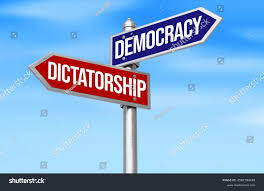
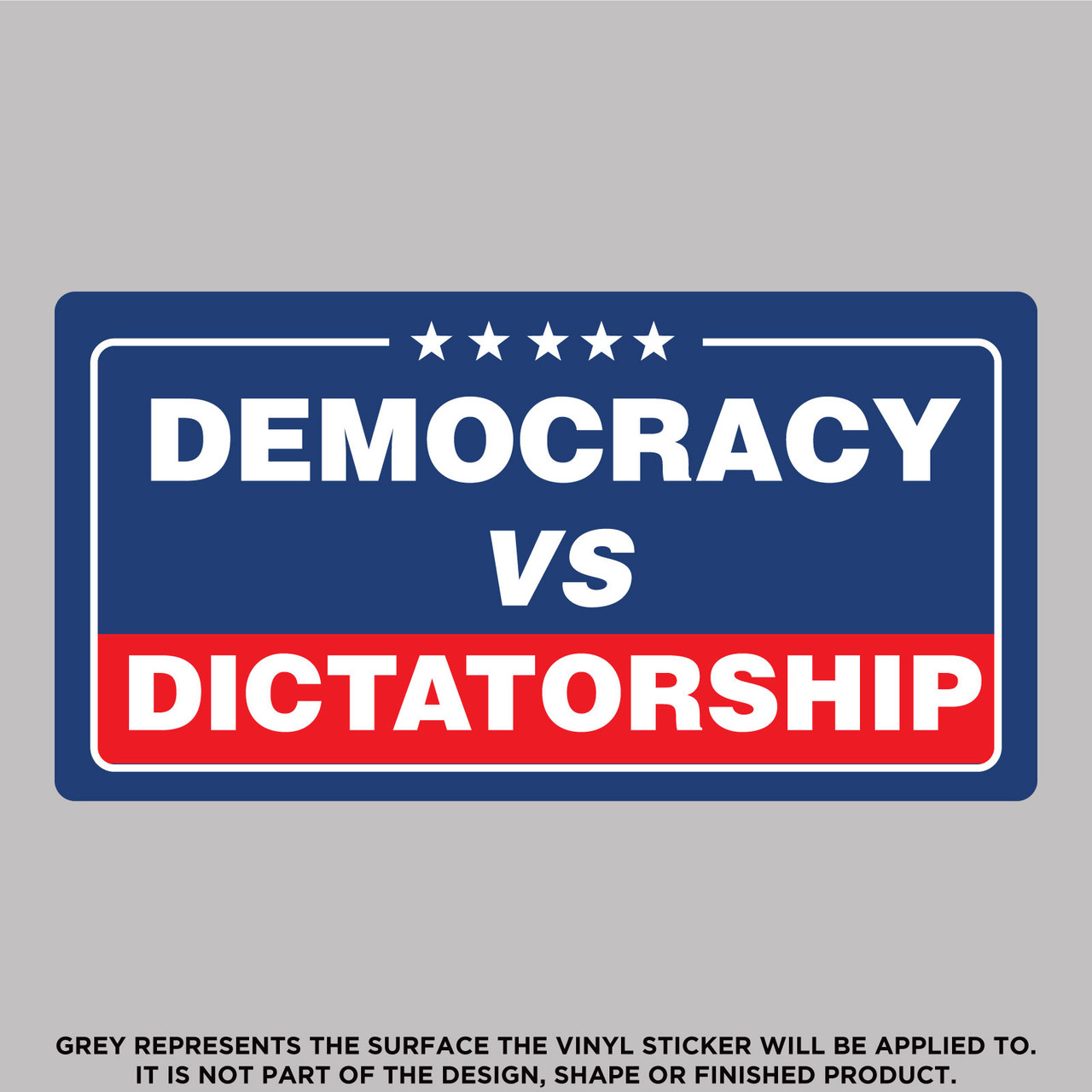
Either choose Democracy or choose a Dictatorship. The choice is yours!

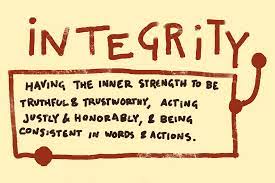


 Integrity is everything to lose and nothing to gain, except your self-respect. Integrity is standing up for what you believe is right even when everyone is against you. Integrity is the ability to put compassion and kindness ahead of self-interest. Integrity cannot co-exist with greed. It cannot co-exist with lust. It cannot co-exist with a thirst for power. It cannot co-exist with a drive for money, fame, or fortune. All of these elements are like Kryptonite to Integrity. Kryptonite was the one thing that could rob Superman of his powers. Lust, greed, money, fame, and power all have the ability to rob one of his/her integrity.
 Politics is a sham in America today. We have men and women who are elected for life and spend more time campaigning then they do in serving their constituents. Public servants who start collecting money to run their next campaigns within days of winning their present office. We have a system of government where money is the most important factor in who gets elected and who gets reelected. Our politicians are more worried about losing votes than they are in the constitution or in protecting our democracy. What Integrity is there in supporting a riot to overthrow a fair election that every court and every state in America found was fairly conducted? The media seized on the outrageousness of the Big Lie to sell news. The losing party seized on the credibility of millions of gullible supporters to buy the Big Lie and try to maintain their power.
 The media in America has become another hallowed institution gutted by greed and a desire for more and more money. Reporters, writers, and journalists in America today are more interested in selling advertising than they are in balanced objective reporting. You can divide the news up by whether they lean Right or Left, Liberal or Conservative, Democrat or Republican. Each side has a mirror image on the other side of the political spectrum. CNN is opposed by Fox News. The New York Times is opposed by The New York Post and the Washington Post is opposed by the Washington Times. One side supports the Right and the other side supports the left. This is not balanced reporting, and no truth comes out of the dynamic between the two sides. What both sides have in common are reporters who will report the most useless, tasteless, uninformative stories if they perceive that these stories will sell advertising or if they can figure out a clickbait title that will attract readers and thereby expose them to paid commercials.
 f you want more of a description of each scale you can follow the hyperlink above. The USA ties for 10th place with Great Britain on this index. I can see some correlation with Integrity, but I can see many differences. I think honesty is one component of Integrity, but Integrity is more complex than being simply honest. An honest person can still lack integrity if they are unwilling to stand up for what they believe. Cowardice and Integrity are incompatible.

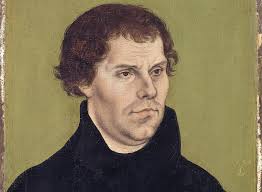
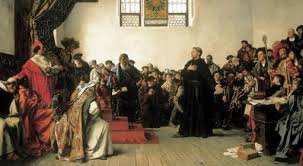
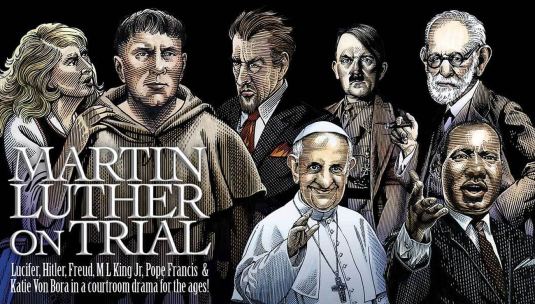
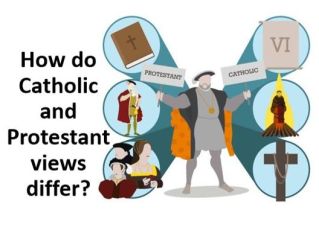 There are many who would consider Martin Luther the father of the Protestant Reformation. Growing up Catholic, we regarded Protestants as heretics. We all knew that the one true religion was Catholic, and Protestants did not know what they really wanted. What does the name Protestant even mean? Taking it at face value, it would seem to mean to protest against. The dictionary defines a Protestant as someone who has broken from the Roman Catholic church. If you are a Protestant you practice a form of Christianity in protest to the Catholic form. There are over 200 major Protestant denominations in the USA and over 35,000 independent or non-denominational Christian churches which are ostensibly Protestant. During the past few decade, we have seen numerous splits in Protestant churches over such issues as gay marriages, gay clergy, women ministers. Even though I am a non-Catholic myself, I can’t help but be amazed at the dissension and disunity among Protestants. I wonder what Martin Luther would have thought if he were alive today.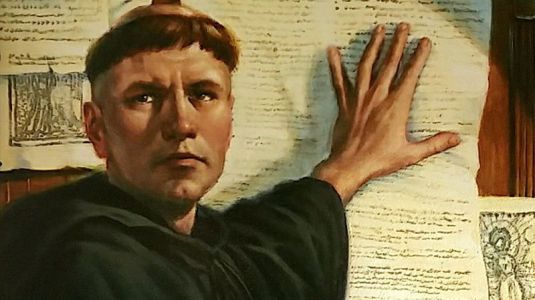







 The idea of sex in our minds easily overrode any caution or concern about getting caught by her father. We arrived at her house. She lived out of town somewhat in Scituate which was a more rural area of R.I. in the sixties. When we arrived, Bob said “I will go in first and check things out. If it is okay, you guys can come in. Bob went inside the small average looking New England Colonial house with two upper dormer windows and came out a few minutes later. “OK guys” Bob said, “She is willing.” We all trotted inside the house to the first room which was a kitchen with a small table and four chairs. Dave, Tommy and I sat on the chairs and Bob headed up a small staircase. “I will go first” said Bob “and Dave is next. You and Tommy can decide who goes after Dave.” “Oh”, said Bob, “her name is Barbara and she likes to be called Barb.” No one challenged this order of affairs as it was taken for granted that since Bob had set this up, he had first dibs.


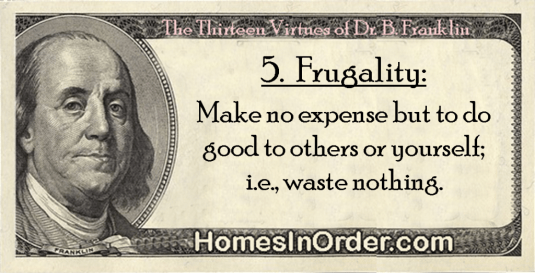 Those who say that I am not important or who ignore me are part of a new generation that values image over substance. The word “frugal” is now associated with cheap and the word “thrifty” is associated with the idea of miserliness. It seems the world of finance is dominated by short-sighted individuals who have forgotten the old values that made this country great. Hard work and prudence were values that resonated among the early pioneers like so many notes in a great symphonic piece.
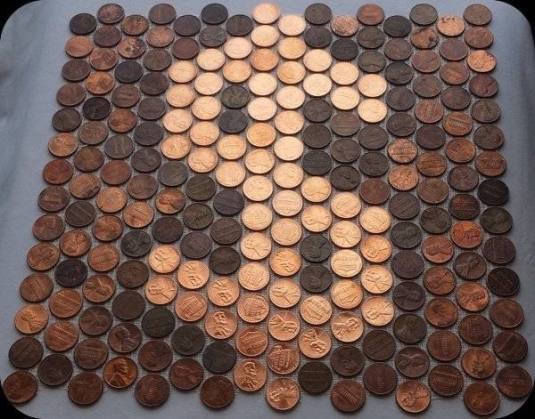
 With hard work, you earned a penny. With prudence, you saved your pennies until they became dollars. In the old days, no one would ever have thrown me away or ignored me when laying in the street. Too many people have forgotten the value that I represent. From early times, there have been people who really understood my value. Even before I was an official U.S. coin, the value of a penny was recognized by some. I regard these people as paragons who really understood the meaning of money. Let me tell you a few of their stories.
 Hattie had faith in money. Money requires faith but it is a faith that rests on the good that money can do and not simply how much money one can acquire. Hattie had this kind of faith and it persisted beyond her death.

 “The prosecution had expert witnesses that testified that the Evidence was often mishandled. Photos were taken of critical Evidence without scales in them to aid in measurement taking; items were photographed without being labeled and logged, making it difficult, if not impossible, to link the photos to any specific area of the scene. Separate pieces of Evidence were bagged together instead of separately causing cross-contamination; and wet items were packaged before allowing them to dry, causing critical changes in Evidence.”
  A validity error is when we are not measuring the right thing. IQ tests have been repeatedly criticized for not really measuring the intelligence of a human being or for being biased by many cultural Factors. Thus opponents of IQ tests argue that they are not valid measures of intelligence. A reliability error is when our measures are not consistent. The scale example given above illustrates the problem with reliability. Most people use a scale to weight themselves and most scales have problems with reliability. However, if you tried to equate your weight with your health, you would be assuming that the scale could also measure health and this would be a problem with validity. Scales cannot measure health although health might be correlated to some degree with appropriate height and weight.
 Before we move on to looking at the concept of Data, we will look at two more problems with the concept of Facts. These are distortion and bias. Distortion relates to twisting the meaning of something. This can happen by taking something that someone has said out of context. For instance, I might be talking at a conference and say something in sarcasm such as “Yeah, I will definitely vote for Trump.” My words could be repeated verbatim and it would sound like I was endorsing Trump. It is difficult to detect sarcasm. To most people reading or hearing my words second hand, it will sound like I am a strong Trump supporter. Slick politicians and advertisers will often distort a Fact to make it sound like the Fact is supporting their position.
 Aging Capriciously