The Orgasm of Life

Life is one big orgasm.  From the day we are born until the day we die, we experience joy, pain, love and suffering.  We go down endless passages to hell and climb endless staircases to heaven.  We have mega highs and minor lows and sometimes the other way around.  We have experiences that we cannot describe and others that we would sooner not.  We lay in bed at the end of a day that was beyond our wildest dreams.  We silently  pray that tomorrow will be the day when at least one of our wishes comes true.  Or we pray that the present one will never end.

Some of us discover ecstatic orgasms.  Earth shaking, mind blowing, out of body experiences that rival anything we ever saw in a movie, but just as transient.  Some of us go through life faking fantastic orgasms.  Some of us never take risks, never open our hearts, never open our minds.  We seek shelter from anything that might excite our senses or become moments of rapture.  We hide behind large oak trees where no one will see us.  We play hide and seek with life from the time we wake up until the time we go to sleep.  Why, oh why the muse in us asks?  But there is no one there to answer our whys.

Mysteries like orgasms assail us at the most inopportune times.  An orgasm has been described as something we think that we can never get enough of.  Endless feelings of bliss fuse our bodies together in a symphony on earth.  However, life does not provide a never-ending chorus.  Like the seasons that come and go and go and come, our  experiences are fleeting.  We wish that we could hold onto them forever, but our efforts always prove that it is  an impossible dream.  There is a satanic spirit  who lurks in the shadows ready to snatch our happiness from us.  God fiddles while we are tormented.

My fantasies of endless orgasms always proves too much for my feeble body.  In truth, it may just be one or two that I want, but that is more than enough.  I need to undergo a superhuman rejuvenation before even that is possible again.  The movies show stars having incredible sex that never stops.  The reality is that most marriages in Hollywood break up before the movie is over.

Our lives are full of blond goddesses and studs with six pack abs who promise orgasms that not even Buddha could not imagine.  The world sells us on the idea of one big orgasmic oyster, just waiting for us to open the shell and swallow.  Alas, we eat the smaller than expected oyster and find that we cannot afford another one.  Have you seen the prices for oysters these days?

Well, tomorrow is another day, and the cycle of life goes on.  We run after joy like rats on a treadmill only to discover that it evaporates as soon as we find it.  There is no endless joy or happiness or pain or suffering on earth.  It is all a mirage.  As Shakespeare said, “Life’s but a walking shadow, a poor player, that struts and frets his hour upon the stage, and then is heard no more.”   We are nothing but brief candles that flicker for a short time and then go out.  Our hopes for endless orgasms are as delusional as the love that often accompanies them.

Pack up your fantasies my friend and move on.  Perhaps an endless orgasm awaits you just around the next corner.

Are You a Little Weird?

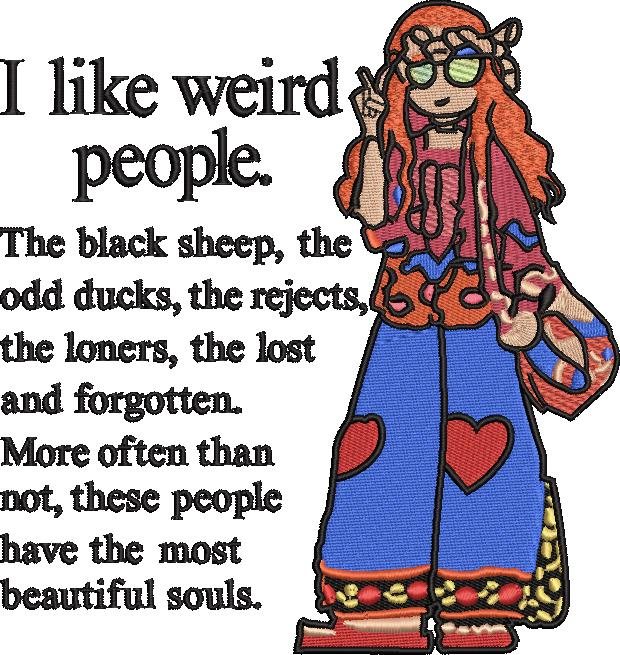
“Are you a little weird?”   “Of course not you would say.”  No one wants to be thought weird.  Not little babies, not adults and certainly not teenagers.  But I don’t think being weird is really such a bad thing.  In fact, I think the world needs more weird people.  If you look at the so called “normal people” in Washington these days, it would be great if we had more weird people.

I want to be weird.  Weird people do strange things and do not try to be like other people.  Weird people are not conformists and dance to their own tunes.  Weird people do not look and dress like other people.  Sometimes, weird people come from other countries.  Weird people eat weird things like lefse, lutefisk, snail salad, Kim Chee,  Hákarl, chicken feet, Hagis and Rocky Mountain Oysters.  Weird people dress strangely as well.  They don’t all wear ripped blue jeans and t-shirts.

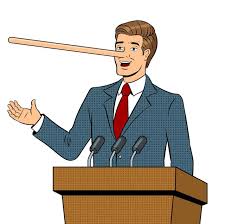
If I call you weird, you will probably not take it as a compliment.  Isn’t that sad?  Why are we so afraid of being weird?  Weird people don’t want to fight wars in strange lands.  I never had a fight with a weird person.  Weird people seem to believe in live and let live.  Weird people don’t want to hurt other people or rape the environment.  Isn’t’ that strange?  You never get flyers from weird people saying, “Please send me money, I am running for office.”  Or “send me money now and I will stop sending you spam mail and hacking your credit cards.”

Weird people are probably Un-American.  You never see weird people wearing t-shirts that say, “These Colors Don’t run.”  Or “Send all the Immigrants Back.”  For some reason, weird people are not very patriotic.  They seem to endorse the view that “Patriotism is the Last Refuge of a Scoundrel.”  I spent four years in the military during the Vietnam War and I met very few if any weird people in the military.  I never met any weird Captains or Colonels and certainly not any weird Generals.  It is considered quite normal in warfare to bomb the hell out of anyone you want to save.  Ergo, the phase “Ours is not to question why, ours is but to do and die.”  Weird people might challenge that phrase but then they would be put in front of a firing squad.

I know that when I grew up, parents did not want their kids to be weird.  They wanted them to play sports like other kids.  Go to school like other kids.  Go to college and get a good job like other kids and watch the same TV programs as other kids.  Most normal families want their kids to fit into the American dream.  They want their kids to be rich, famous, successful and have lots of money.  They don’t want their kids to associate with weird people.  “Watch out for that weird guy on the corner!”  “Stay away from those weird girls.”  “Don’t dress so weird or you will not be liked.”  “Why can’t you be like all the other kids.”

“Don’t do anything weird” is the secret to success in America.  Play golf on Saturday, go to church on Sunday (none of those weird religions please like Jehovah Witnesses, Zen Buddhists or Hari Krishnas) stick to churches that praise our war efforts and preach the “Prosperity Gospel.”  Let’s all gather in the Rose Garden and pray for success in our next war.

Weird people are not wanted in America.  Weird people stick out like sore thumbs.  Who wants weird people living on their street or in their gated communities or their RV parks.  Weird people often come in a variety of colors and even genders.  Some weird people say that they are not male or female but are really neutral or transgender or nonbinary or some other weird categories that normal people cannot pronounce.  Weird people often have weird ethnic affiliations that are hard for normal (White) people to understand.  Her mother was from Ethiopia, but her mother’s parents were from Malaysia and Indonesia.  Her father was from Nigeria, but his parents were from Scotland and Nova Scotia.  Hard to send weird people back to where they come from since some of them come from such weird places.

Well, that is all for today folks.  If you spot any weird people, please be tolerant, kind and compassionate towards them.  Whatever you do, please do not call Trump’s “Office of Normal People Only Wanted Here” to report them.  They will be happier if you just ignore them.   By the way, where I live in Arizona, Mexicans and Canadians are actually not considered weird. 


Rhythm and Writing:  The Beat of Life

maxresdefault

Allegro:  a brisk lively tempo

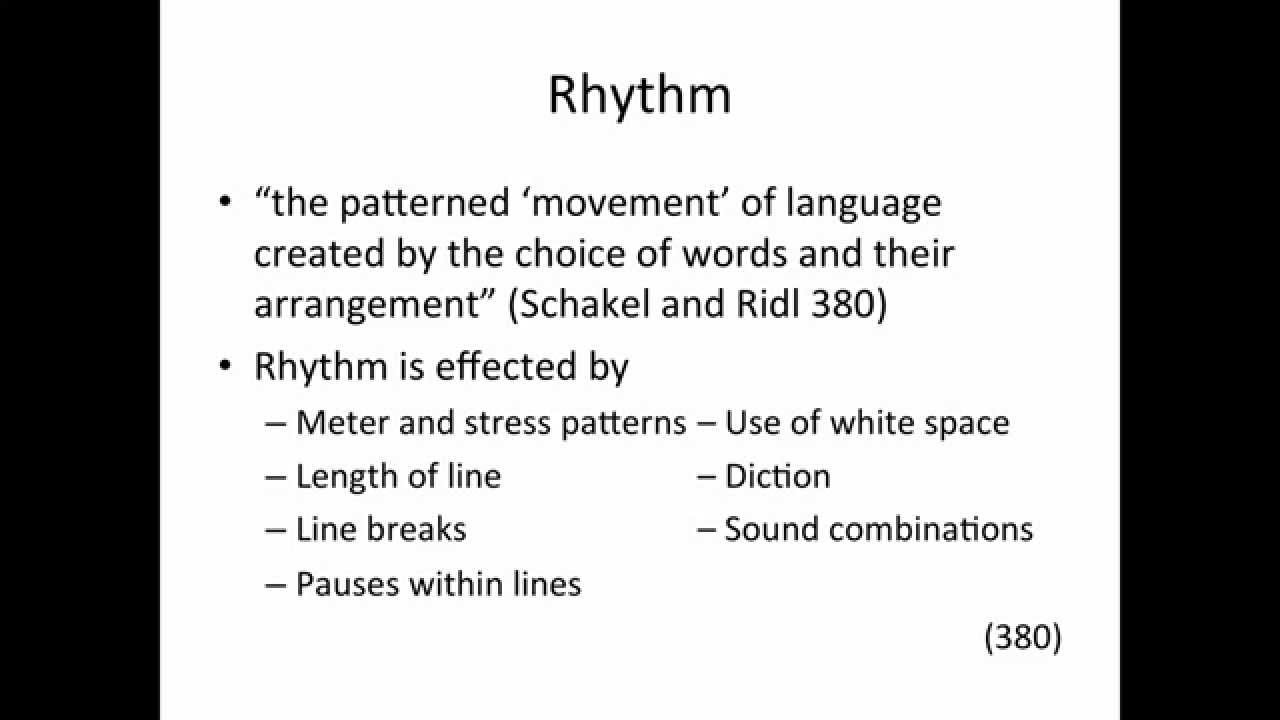
What does the beating of my heart have to do with my writing?  What does writing have to do with making love?  Can the changing of the seasons be compared to a concert overture?  What is the relationship between T. S. Eliot’s “Four Quartets 2: East Coker” poem and Stravinsky’s “The Rites of Spring?”  What does musical rhythm have to do with writing?

unnamedOn some primal level, we all live by an unseen law of rhythm.  The rhythm of the universe controls an eternal dance between the atoms and molecules that make up our existence.  This natural rhythm imparts an inexorable symmetry to all of life.  A regulated succession of strong and weak elements of opposite and contrasting conditions that becomes the master of all that we do.  Buddhists call it the Yin and Yang of being.

Springtime is upon us.

The birds celebrate her return with festive song,

and murmuring streams are softly caressed by the breezes.

Thunderstorms, those heralds of Spring, roar, casting their dark mantle over heaven,

Then they die away to silence, and the birds take up their charming songs once more.  — (From Vivaldi’s “Four Seasons:  Spring”, Concerto in E Major) 

DrumsticksIn countless ways, we observe that there is fundamentally no difference between writing or between a piece of choreography and the changing climate.  Creativity is carved out of the passion that is in everything we do.  The body and mind embrace in a never-ending minuet.  The music ebbs and flows.  Our love is gentle, restrained, then wild and feral. Mornings, afternoons, evenings, and nights fuse with the seasons of spring, summer, fall and winter.  The harsh gales of November resonate in the refrains of Tchaikovsky and Beethoven.  “Summer Breeze” by Seals and Crofts ushers in the scorching days of July.  Poetry rings out in the rap music of the streets while the mellow voices of choir singers comfort the soul.  All things are one say the mystics.  If my writing is one with all things, will the tempo of my words cool, heat, soothe or disrupt the fashions of life?


reading-writing-rhythm

Adagio: a slow and stately tempo

Far be it for me to confuse philosophy with art.  Greater men than I have acknowledged that there is a unity to life.  We travel down our different paths often blind to the journeys of others who walk side by side with us. This one a carpenter, this one a computer scientist, this one a teacher, this one an artist and this one a hero.  Some of us have a long journey and some of us have a short journey.  For some the journey is rough and chaotic and for others the journey is smooth and predictable.  There are slow times in our journeys and there are fast times.  The rhythm of life is never the same for any of us.

Oh, it’s the same as the emotion that I get from you

You got the kind of lovin’ that can be so smooth, yeah

Give me your heart, make it real, or else forget about it — (From “Smooth”, by Santana)

For some, life is poverty and for others it is uncountable wealth.  The rich man longs for the anonymity and slower days of the poor man.  The poor man can be heard singing, “If I were a rich man, lord who made the lion and the lamb, would it really spoil your cosmic plan if I were a wealthy man?”

9781780231075We are all dust in the wind but our rhythms echo through the halls of time.  The most unforgettable and amazing repetitions will continue as long as humans walk the earth.  Coded in the numerous ways we have of capturing the rhythm of our lives.  Some code in music, some in text and some in clay. Some codes are dynamic, some peaceful, some violent and some sad.  We write our lyrics, pen our verses, create our stanzas, and design our choreography.  All efforts guided by the unseen law of rhythm.  Now we are hard, now we are brittle.  Now we roar and now we snore.
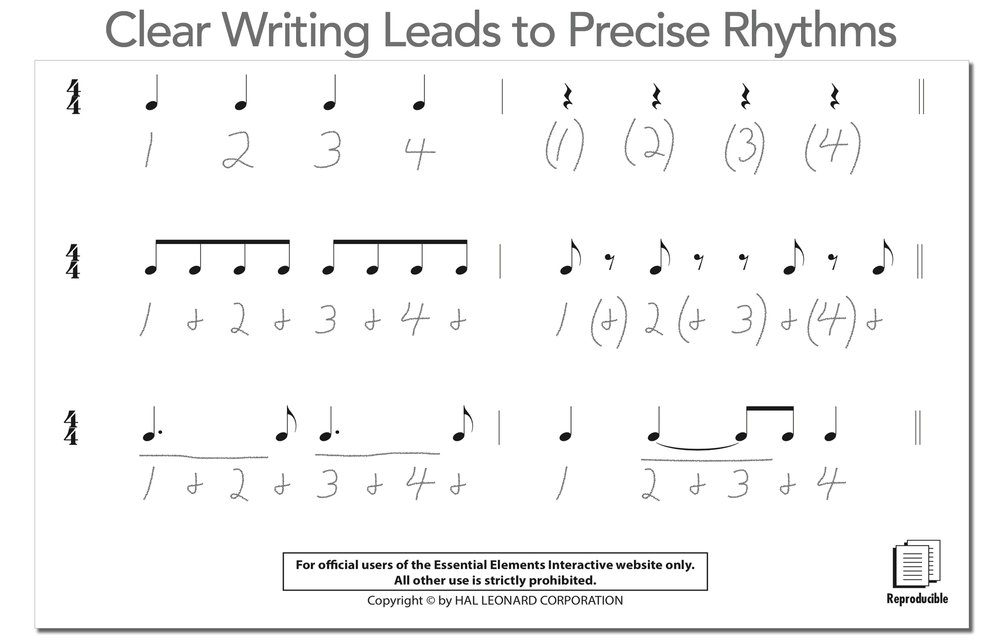
Scherzo:  a sprightly humorous movement commonly in quick triple time

Love is kind, love is considerate, love is not selfish. The waltz was a creation of times when love was more restrained.  Centuries of constrained love making has been supplanted, extending our beings, becoming our challenge.  The Tango alternates patterns of space and closeness with syncopated rhythms of violence and passion.  Love me tender, love me sweet, never let me go.  Rock and Roll ushered in a wild abandonment of morality to a tune of conspicuous sexuality.  The rhythm of music exhibits striking harmonies with the rhythm of our love lives.  Can I be soft and gentle like a warm breeze but also wild and unrestrained like in the pulp novels?  Shall I make love to the William Tell overture or would Shakira’s lyrics work better?

Baby I would climb the Andes solely 

To count the freckles on your body 

Never could imagine there were only

Too many ways to love somebody  — (From “Whenever, Wherever,” by Shakira)

Good+Rhythm+Example

Should my love making follow a classical structure or should it be more jazz like?  Is it enough to alternate patterns of tenderness with patterns of spontaneity or should I begin with an allegro, then an adagio, followed by a scherzo and conclude with a rondo?  And what of those who expect love to end with a crescendo or those who enjoy more syncopated jazz?

ab67616d0000b2736a0d8ec00c6f8e9828418f5c

Rondo: a recurring leading theme often found in the final movement of a sonata

Whether goes my writing.  I have written this concerto to writing in four parts to reflect the universality of the rhythm of life.  We form, norm, storm and then perform.  Spring is the opening that brings fresh growth to our world before the bloom of summer.  Summer brings the maturity and ripeness of life.  Fall brings the storms and winds that signify our frailty and insignificance to the universe.  Winter ends our symphony with the closure and solace that our work is done, and our day is over.

Blog+Image+-++Seasonal+RhythmsThe rhythm of life runs through our heart beats.  It runs through literature.  It runs through music.  Great music has rhythms that exhibit great variation.  Fast, slow, moderate than fast again.  Interesting speakers have a sense of rhythm in their talks.  Have you ever heard a lecture or a sermon without rhythm?  It will put you to sleep in less than five minutes.  Writing and speaking, just like music, must contain elements of rhythm.  A heart without rhythm ceases to beat.  Writing without rhythm is boring.  Life without rhythm is death.
To feel the rhythm of life,

To feel the powerful beat,

To feel the tingle in your fingers,

To feel the tingle in your feet. — (From “Rhythm Of Life,” 1969 Motion Picture Soundtrack, Song by Sammy Davis Jr.)

Our work, our art, our thoughts, and our lives are concluded with a hope to be reborn again.  We wish that someone will see the need to resume the rhythms that we have started.  Never a finality to our rhythms.  Only a continuation that started before us and will continue long after our memorials are put up.  Your headstone may simply have one verse on it or possibly it will be like the newest greeting cards.  They will walk up to your grave and press a button.  You will appear with a menu of options, and your visitor can select a video of you either singing or dancing or perhaps reading one of your writings.  Everything will have a four-part harmony.

rhythm-is-life-prints

Time For Questions:  

Does music teach you anything about writing?  Does music speak to you?  Can writing be like a symphony?  How do you hear music?  Does it speak to you like a good poem or a good verse? What is your favorite kind of writing?  Do you ever think that the writing you enjoy could be like music?  What would it take to transform the music in your life into writing or the writing in your life into music?

Imagine if I Lived in Another World?

I woke up this morning trying to imagine what if I lived in another world in another place in another time.  What if I lived in a world where no one hated anyone else?  A world where loving others was the norm.  What if I lived in a world where everyone helped others with no thought of benefits to themselves?  What would a world be like with no greed, no selfishness and no narcissism? 

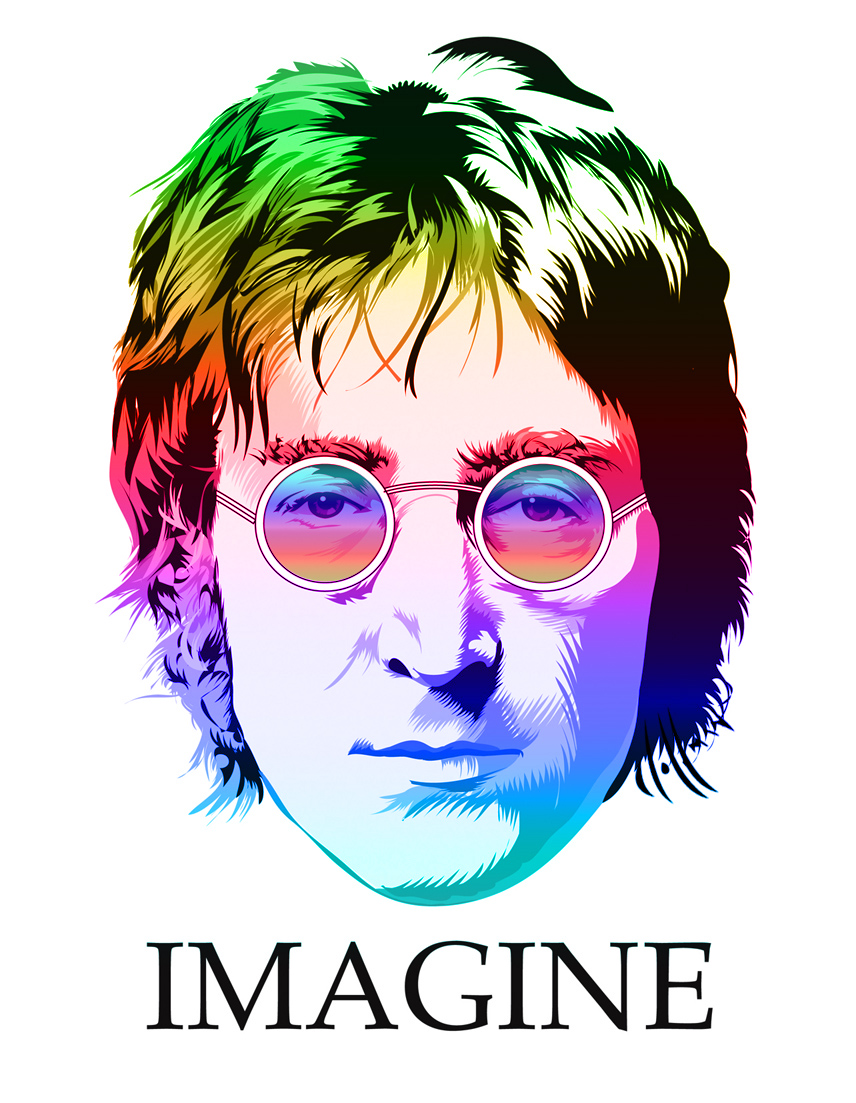
Then I thought of John Lennon’s song “Imagine.”  I can’t say I am too familiar with the lyrics from this song, but I realize I am treading on ground already imagined by many others.  Here are the lyrics from “Imagine” by John Lennon.

Imagine there’s no heaven
It’s easy if you try
No hell below us
Above us, only sky

Imagine all the people
Livin’ for today
Ah

Imagine there’s no countries
It isn’t hard to do
Nothing to kill or die for
And no religion, too

Imagine all the people
Livin’ life in peace
You

You may say I’m a dreamer
But I’m not the only one
I hope someday you’ll join us
And the world will be as one

Imagine no possessions
I wonder if you can
No need for greed or hunger
A brotherhood of man

Imagine all the people
Sharing all the world
You

You may say I’m a dreamer
But I’m not the only one
I hope someday you’ll join us
And the world will live as one

Where could such a place be?  In a multiverse of possibilities, where could I find another world where peace and prosperity are guaranteed for all?  Surely, in a universe of all possibilities somewhere else people live in harmony with their environment and do not force others to live according to their standards.  Surely, there is some place in the multiverse where tolerance and respect for all is the norm. 

I would like to imagine a place like the planet Vulcan with the famous Vulcan IDIC.  Infinite Diversity through Infinite Combination.  I would like to imagine a place where people who talk about diversity and equity and inclusion are not treated as pariahs and outcasts.  I would like to imagine a world where sexual preferences are the norm and people are not expected to conform to simple dualities. 

I would like to imagine somewhere exists maybe over the rainbow where there is no homelessness and no starvation.  I would like to imagine a place where rape and child abuse are unheard of.  A place where anyone of any color or sexual orientation is free from abuse and threats and fear for their lives.  I would like to imagine a place where little children and women can walk freely at any time of the day or night without worrying about being murdered or assaulted. 

I am nowhere near the dreamer that John Lennon was though I think dreamers should be sacred in our world.  I would like to see a place or country where people dream more and hate less. 

I woke up this morning feeling like I am in the wrong world at the wrong time and in the wrong place. I don’t belong here anymore.  I can’t read the news or listen to the radio or watch tv because they keep shouting to me over and over and over again that I don’t belong here anymore.  I have outlived my time and my usefulness.  I can only mourn for a place that is beyond my imagination. 

I want to live in a world where kindness and compassion and respect for all human beings is the norm.  Somewhere, I keep imagining that there is a place where violence and jealousy and revenge do not exist. 

Perhaps if I go back to sleep, I can return to reality.  I can stop imagining things that only bring me tears and heartache.  Things that make me loath my own humanity.  I wonder if I can ever find a brotherhood or sisterhood of love again in this world.  Perhaps in my dreams, I can find the place I want to go to. 


The Lost Art of Leadership: Lessons on Leadership from Abraham Lincoln

America has lost the “Art of Leadership.”  We no longer develop men and women with integrity and courage.  Instead of Statesmen, we have political hacks only concerned with getting reelected.  Instead of people with a backbone and the guts to stand up against injustice, we have a Congress of sycophants willing to do whatever they are told to do regardless of how unethical or immoral it may be.  We have thousands of lawyers who do not uphold justice but find arguments to support an amorality that meets the letter of the law but ignores the significance of decency, goodness, honesty, conscience and fairness.

In my next blogs, I want to write about 41 insights regarding leadership from one of the greatest American leaders and Presidents of all time.  I found a compilation of these insights in an old collectors edition of “Civil War Times” published in Winter, 2013.  I would like for you to hear the words of Abraham Lincoln and what he had to say about leadership.  I will include some of my own experiences from my years of working with senior management in over 32 organizations.  Some of the men and women I worked with were incredible leaders.  Most of them wanted to be better leaders and that is where I brought the teachings and thoughts of W. E. Deming to my consulting practice.  Dr. Deming achieved extraordinary results in business by tapping the knowledge, skills and abilities of ordinary people.  Senator Hubert Humphrey famously said that “Democracy is a system that achieves extraordinary results with ordinary people.”

I should issue one caveat before I begin this series.  There are some who disparage “Honest Abe” as not really caring about slavery.  They argue, Lincoln only fought the war to save the Union and not to free the slaves.  My readings and knowledge of Lincoln shows that nothing, I repeat NOTHING could be further from the truth.  Lincoln was appalled at slavery from the time he was a young child until he issued the Emancipation Proclamation.  The idea that Abe did not care about slavery is a lie fostered by a bitter Confederacy that wanted to hide their heinous practice behind the cloak of states rights.

Lincoln said,  “I have here stated my purpose according to my view of official duty; and I intend no modification of my oft-expressed personal wish that all men everywhere could be free.”  –August 22, 1862, Letter to Horace Greeley

Lincoln also said, “My paramount object in this struggle is to save the Union and is not either to save or destroy slavery.  If I could save the Union without freeing any slave I would do it.” —August 22, 1862, Letter to Horace Greeley

Two very different goals.  Two very different thoughts.  What are we to make of Lincoln’s motivations?  The Confederacy pushed the latter because it justified their defense of States rights to choose slavery as a viable economic system.  Several of the constitutions of the new Confederate states proclaimed their rights to practice slavery.

In its statement for seceding from the Union, the state of Georgia wrote the following:

“The party of Lincoln, called the Republican party, under its present name and organization, is of recent origin.  It is admitted to be an anti-slavery party.  While it attracts to itself by its creed the scattered advocates of exploded political heresies, of condemned theories in political economy, the advocates of commercial restrictions, of protection, of special privileges, of waste and corruption in the administration of Government, anti-slavery is its mission and its purpose.”

Alexander H. Stephens, the Confederate vice president said the following:

“Our new government is founded upon . . . its foundations are laid, its corner-stone rests, upon the great truth that the negro is not equal to the white man; that slavery – subordination to the superior race – is his natural and normal condition.”

Lincoln was always against slavery.  Long before he became president he argued about the evil and immorality of slavery.  He modified this position to include saving the Union at the beginning of the war as a political expedient to gain support for the war.  As it became clear that the North would win and thereby have the power to free the slaves and abolish slavery, that became his main objective.  There can be no doubt that he did both.  There can be no doubt that in doing so, he signed his death certificate.  Like Martin Luther King, Malcolm X and many other civil rights martyrs, the cause of equal rights for all has always been a precarious position to assume.

Lincoln said that “Four score and seven years ago our fathers brought forth on this continent, a new nation, conceived in Liberty, and dedicated to the proposition that all men are created equal.”  Martin Luther King in his famous “I have a Dream” speech said that this promise was an uncashed check.  It is now “Eight Score” years from the date of the Emancipation Proclamation and we are once again engaged in a battle between racism and equality, between prejudice and tolerance and between fascism and democracy.  We have begun a new “Uncivil War” which has divided the hearts, minds and loyalties of Americans from the East Coast to the West Coast every bit as deeply as did our first Civil War.

Today we face a battle between those who believe that America should be a White Supremacist Christian nation ruled by rich oligarchs and those who believe in the concepts of Equity, Diversity and Inclusion.  One half of America wants to create a country that believes in the concepts of White exceptionalism, America First and Evangelical Christianity above all over religions.  This half praises individual rights above individual responsibilities.  The rights of the individual are more important than the rights of society.

The other half of America wants to create a country where racism, sexism, exclusivity and prejudice does not exist.  This half believes that responsibilities are just as important as rights.  That the rights of others in society must be protected from those who would trample on them.  This group believes in democracy over oligarchy.  These Americans believe that we all have the right to “Life, Liberty and the Pursuit of Happiness” as long as we take responsibility to insure that everyone in our nation shares these rights.

The war between these two sides of America has now entered a new phase.  The first phase started many years ago.  The second phase has started on January 21, 2025.  I want to help us to remember the ideas and insights of Abraham Lincoln as we move into this second phase.

Insight # 1

Fight the Good Fight:  The probability that we may fall in the struggle ought not to deter us from the support of a cause we believe to be just.  — Springfield, Illinois, 12/20/1839

Lincoln was thirty years old when he said these words.  They reflect the words of Frederic Douglas who said, “ If there is no struggle, there is no progress.  Those who profess to favor freedom, and yet depreciate agitation, are men who want crops without plowing up the ground.” 

The words of Patrick Henry also come to my mind,

“If we wish to be free– if we mean to preserve inviolate those inestimable privileges for which we have been so long contending–if we mean not basely to abandon the noble struggle in which we have been so long engaged, and which we have pledged ourselves never to abandon until the glorious object of our contest shall be obtained–we must fight!  I repeat it, sir, we must fight!

I keep these words and thoughts in my mind as our “Uncivil War” commences the next four years to preserve and protect what we call our democracy.  I have no doubt that many people have struggled throughout American history to save things that they believed in.  There has been times when African Americans, Latinos, Women, Indigenous People, Asian Americans and LGBTQ people have all been persecuted and where life must have seemed totally unjust and not worth living.  Many of us woke up on November 6th with similar feelings.  I cringed when I saw people walking around town waving Trump flags and others proclaiming that they voted for Trump.  I consoled myself with “hoping they would get what they deserved.”  Then I realized that “hope” was not enough.  We must fight for what we believe in.

How do we fight an “Uncivil War”?  Insight # 2 from Old Abe has some valuable thoughts to help us in this struggle.  I will share these in my next blog.


A Theory of Relationships

I participate in a high school mentoring program which matches up young students with older experienced men and women.  This was my second year in the program.  My mentee last year graduated and has become an alumnus of the program.  This year I was matched up with another student.  My new mentee was a young high school junior.  She wrote to me one day that she was in a relationship with someone and that it had become serious.  She wanted my advice.  Never one to shirk giving advice, I seem to always fail to hew to the dictum that “Wise people won’t need it, and fools won’t heed it.”  I sent her some comments based on my two marriages and nearly 60 years of being in a committed relationship.  The sixty years includes both my marriages.

Some days later, I found some notes from my retreat this summer.  These notes also addressed the subject of relationships or shall I say a “theory” of relationships.  I want to talk about my theory in this blog.  For many of you it will probably be “common knowledge.”  Nevertheless, I am hoping my insights might be useful to anyone out there either beginning or struggling with a relationship.  A relationship might be a friendship, a family member, a group you belong to or a loved one.  I think my theory will have some value to any such relationship.

According to Google AI, a good theory consists of the following:

  • A good theory is falsifiable (can be tested and potentially disproven).
  • Theories are designed to explain and predict phenomena.
  • A theory should be parsimonious, meaning it uses the simplest explanation possible while still adequately explaining the phenomenon.

A theory consists of concepts, constructs, precepts, variables, relationships between variables and assumptions.  I am going to posit five assumptions about relationships and then try to explain each adding in some of the above parts of a theory.  I will explain why I think each of my assumptions is critical to a good relationship.  I am not going to try to claim that my theory is a “good” theory by any scientific data.  Rather, I would justify it based on my ups and downs with relationships over sixty or more years of experience.  But as Dr. W. E. Deming often said, “Experience without theory teaches nothing.”  Thus, herein is my “Theory of Relationships.”  I hope some of these ideas will help you or others along the pathway of love and life.

My five key assumptions about relationships are as follows: 

  1. Relationships require risk
  2. Relationships require change
  3. Relationships require more than commitments
  4. Relationships require sacrifice
  5. Relationships require knowledge of self and other 
  1. Relationships require risk

Almost any effort in life will entail some element of risk.  As the saying goes, “The turtle only makes progress by sticking its neck out.”  Risk is a key concept that runs through life.  It can be thought of as the probability that something will happen either good or bad.  For instance, when you bet at a Casino or perhaps take a Caribbean cruise.  You hope to win the bet, and you hope your cruise will be safe and fun.

In life, we try to minimize risk by back-up plans, precautions and strategies to offset risk.  Variables can be created in some cases to give us more definitive measures of how risky a specific endeavor is.  In gambling we call these odds.  In love, we are usually to foolish to accept any odds on our relationship going south.  However, some people do set up prenuptial contracts which are a method to hedge your bet on your relationship.  Most people in love though are blind to the possibility that their relationship will end.  Odds are though that it will end unhappily.

Many people accept it as a fact that forty to fifty percent of all first marriages end in divorce, but those who wed multiple times face a far higher divorce rate.  The average length of a first marriage in the United States is around eight years.  The average length of a second marriage is about seven years.  Sixty to seventy percent of second marriages end in divorce. 

Being aware of risk does not mean giving up on life.  It simply means we must be realistic about the possibilities that risk entails for relationships and all other endeavors (This includes friendships).  There are many ways to minimize risk in a relationship.  Here are just a few examples:

  • Marriage Encounter Groups
  • Family meetings weekly
  • Marriage counseling
  • Here are some ten ideas from “Women’s Health”:

10 Ways to Save Your Marriage From Divorce, Straight From Relationship Experts

  1. Relationships require change

Perhaps one of the most overlooked facts impacting a relationship is the need for change.  Right, “your other needs to change but you do not.”  You are perfectly okay.  Change is an interesting concept.  One of the things most feared in life is change.  Ironically, we could not survive without change.  Unfortunately, not all changes turn out well.  Herein lies another risk factor.  Will your change be for the better or worse?  Hard to put odds on change, but most relationships will not survive unless the partners are willing to change.

I don’t mean change in just a physical sense but change in an emotional and cognitive sense.  Are you willing to accept major changes in your ideas about life and relationships?  Are you willing to accept major changes in how you feel about certain activities and people?  Without change, we know that life grows stale and boring.  Relationships are no different.  A relationship without change will become boring.  Doing the same old things day after day.  Even worse is when you refuse to think about some of the ideas you have that relate to your significant other.  For instance, If he or she likes to travel and you do not, are you willing to go along or have your partner go with a friend?  What accommodation are you willing to make if you are not willing to change your own behavior?  Love requires change.

“We cannot change anything until we accept it.  Condemnation does not liberate, it oppresses.” — Carl Jung

  1. Relationships require more than commitments

We hear a great deal about commitment when it comes to relationships.  Making a commitment involves dedicating yourself to something, like a person or a cause.  A commitment obligates you to do something.  In a relationship, it might involve a commitment to fidelity or to some fiduciary obligations.  We promise to “Love, honor and obey” in some marriage vows.  We think that making a commitment is enough to keep our relationship in safe waters.  Some people think that a commitment can be embodied in a “Marriage Contract.”  Such a document spells out mutual responsibilities and agreements.

At our last Marriage Encounter meeting, I was introduced to the distinction between a “Marriage Contract” and a “Marriage Covenant.”

Covenant                                    Contract

Unconditional                             50/50 agreement

A Covenant is forever                A Contract can be terminated

A Covenant is limitless               A Contract has limits

We tend to think of Covenants when it comes to Bible history.  Covenants were made between God and his chosen people.  The idea of a contract is a modern legal term.  I think it erodes the very essence of spirituality that a marriage or committed relationship should embody.  We need to adhere to the idea of a Covenant when it comes to a relationship.  Anything less leads inevitably to less than a committed relationship.  We can simply terminate it when the going gets rough.

  1. Relationships require sacrifice

Another interesting concept, Sacrifice.  What does sacrifice mean?  Are there any variables that can measure our sacrifices?  Jesus said that the greatest sacrifice anyone can make is to give up their lives for another.  I think the greatest sacrifice is to love someone who is unlovable.  To love someone who is despicable like a pedophile or a serial killer or someone who bullies and threatens others.  I do not know about such sacrifices, and I am not sure if I could make them.  I admire the partner or mother or father who can stick by their spouses or siblings when all hell breaks loose.  Can you imagine being called up by the police and told that your son just shot 20 people at school.  Could you stand by them?  What sacrifice it must entail not to stop loving someone who has done such cruel acts!  Fortunately, most relationships will never demand such sacrifices.

The sacrifices we make in relationships can range from trivial (like which way to put toilet paper on the roll) to the significant.  More significant sacrifices might entail deciding who will stay home with the children or who will give up where they want to live for the other person’s choice.   You may not face many significant sacrifices in your relationships, but you will most assuredly face many trivial sacrifices.  These should not be discounted or minimized though.  As the quote goes, “For want of a nail the shoe was lost, For want of a shoe the horse was lost, For want of a horse the rider was lost, For want of a rider the battle was lost.”  Trivial things add up like the straw that broke the camels back.  The trivial can go from a mole hill to a mountain in less time than many of us realize.  When the trivial become the mountain, your relationship will be in jeopardy.  The trivial sacrifices in a relationship are anything but trivial but they are certainly inevitable.

  1. Relationships require knowledge of self and other

This is the toughest requirement of all.  Socrates said that “The unexamined life is not worth living.”  What if you have never examined your life?  How many people do you know who have done a rigorous examination of their life?  Jesus said, “Love your neighbor as yourself.”  But what if you do not love yourself.  In truth, I doubt many people do.  Many people have been so beaten up by parents, teachers, bullies and even loved ones that they actually hate themselves.  Few of these people want to know themselves because it means facing hidden demons that they would just like to leave buried.   Gandhi said, “Be the change that you want to see in others.”  This axiom encourages a certain amount of self-understanding as well as understanding of others.  All too often we have no time to understand either.  The perp that is trying to rob you at gun point will not have time for you to understand him.  Furthermore, you may care very little about his troubled up bringing.

My uber pessimism on a premise that I insist is necessary for a good relationship seems to doom any relationship to the graveyard.  If we can never know ourselves or others, how then can we have a positive happy relationship.  The secret is that we do not have to be perfect, nor do we need perfect knowledge of ourselves or others.  We can never and will never be perfectly transparent to ourselves or others anyway.  The JOHARI Window has a quadrant of “Unknown to Others and Unknown to Self.”  I have found the JOHARI window to be quite a useful concept on the path to discovering more about myself and thinking about my relationship with others.

“The Johari window model is used to enhance the individual’s perception on others.  This model is based on two ideas- trust can be acquired by revealing information about you to others and learning yourselves from their feedback.  Each person is represented by the Johari model through four quadrants or windowpane.  Each four windowpanes signifies personal information, feelings, motivation and whether that information is known or unknown to oneself or others in four viewpoints.” — The Johari Window Model

The risk will always be there, but we can work on being more self-aware and more honest to others.  That is the best we can do in life.  That is why relationships are risky.  You will never be able to see all the shoals and reefs that your life might flounder on.   Life is a process of never-ending discovery.  Death will eventually bring closure to your adventures and explorations.  Until then, just getting in bed is risky so why not try to live life to the fullest.  Get out of bed and go MAKE a good relationship.


Reconciliation Reflections

I want to pose five short stories or episodes dealing with forgiveness and reconciliation.  Each of these brief stories has some questions for you to answer.  You can share your answers in my comments section, or you can simply write your answers on a piece of paper.  I would enjoy hearing your thoughts if you do want to share them.  So here goes.

  1. The Forgetful Husband

John is a good husband who forgot his wife’s birthday.

He is very sorry.

He does forgive himself.  He knows that he is not perfect.

Does he need to tell his wife that he is sorry?  Why?

Do you think she will forgive him?

What if she will not?

  1. Accidental Death of a Pet

Marsha was driving down a street.

Suddenly a dog ran out in front of her car.  She ran over the dog.

A man screamed “You killed my dog.”

The man was distraught.

What should Marsha say or do?

  1. A Young Boy Goes on a Killing Spree

Robert took a gun to school and shot five other students.

His mom heard the news on the television after Robert was killed.

The media soon showed up outside her front door.

What should his mom do?

What should his mom say?

  1. Forsaken Vows

A husband and wife took vows to love each other until death did them part.

The wife met an old flame at a high school reunion and went to bed with him.

What should she do now?

Should she tell her husband?

What should her husband say or do if he finds out?

  1. Lying Politicians

A United States Senator is up for a third term.

You voted for her twice.

She promised to only run for two terms.

This promise played a factor in your voting for her.

Should you vote for her again?  Why or why not?

Conclusions:

Many times, we see or hear about situations such as I have noted above.  They always happen to other people, right?  But what if you are in such a situation?  What would you do or say?  Is there a one right answer in each situation or will you hedge your bets and say “Well, it all depends.”  Then tell us what it depends on.

“You may not control all the events that happen to you, but you can decide not to be reduced by them.”– Maya Angelou

My Final Will and Testament – Regrets – Reflection #11

0_ZoCuoHrsdojaIQIt

Last year at my 40th Demontreville Retreat, one of the exercises that we were given by the Retreat Master included a very challenging set of thoughts.  The worksheet for the activity was labeled as “A Testament.” I took the worksheet and instructions home with me.  It had fourteen tasks or reflections to complete.  I did not desire to complete them during the retreat.  It is now almost a year since my retreat, and I have decided to make the mental and emotional effort necessary to complete this “Testament.”

The worksheet started with these instructions:

Imagine that this is the last day of your life on earth.  In the time that you have left, you want to leave a “Testament” for your family and friends.  Each of the following could serve as chapter headings for your “Testament.”  This is Reflection Number 11 on the worksheet.

  1. These are the things that I Regret about my life.

I would rather not write this section, but I am going to anyway.  I have thought about it for several weeks now.  I dreaded when I would reach this reflection.  I had one friend who said he had “No regrets” before he died.  How I envy that perspective.  I still wonder whether he was telling the truth or whether there was something wrong with him.  Perhaps, if he is telling the truth, he may someday be canonized as a Saint.

There will be no sainthood for me.  I have more regrets than I can count.  Some days, I feel like my entire life is one big series of regrets.  Instead of being a serial killer, I am a serial regreter.  If I could go back into the past and try to undo some of the things I did, I would not know where to start.  I have decided to lump my Regrets into three categories.  Each category has some common traits.  The first is Regrets due to a lack of patience.  The second is Regrets due to a lack of compassion.  The third and final category is Regrets due to a lack of kindness.

Let us get started on this task of sorrowful confessions.  In my defense, I hope I have learned over the years many things to mitigate making the same mistakes that I did when I was younger.  I would like to think that I am a very different person now than I was forty years ago.  Many of my Regrets are in the past.  My biggest Regret is that I cannot go back and rewind the past.

patience-498-x-498-gif-k8tzla3s8ut1qerf

Regrets Due to a Lack of Patience:

A lack of patience may just be one of the most destructive traits that anyone can have.  You can defend it if you want to, but I have too often been impatient to see much virtue in it.  Most good things come to those who, if not willing to wait, at least have the patience to persevere in a task or mission that could take years.  We keep reminding ourselves that Rome was not built in a day but neither did it fall overnight.  History is replete of antecedents to subsequent events proving that most of the problems of today actually started many years if not decades or centuries earlier.

There are certain calculations I should like to make with you,

To be sure that your deductions will be logical and true;

And remember, ‘Patience, Patience,’ is the watchword of a sage,

Not to-day nor yet to-morrow can complete a perfect age.  

— From  Sarah Williams, Twilight Hours: A Legacy of Verse

I was not a patient person.  I had a great many talents but foolishly I thought that these talents gave me the right and ability to circumvent practice, dedication, training and experience.  I wanted everything today or at least by next week.  I expected that my brains and intellect gave me the privilege to neglect what all the great writers, artists, musicians, athletes and other talented people know.  There is no greatness without hard work and discipline.

1_KMWUekxMKn2M4Bbm1ZbTHQ

Regrets Due to a Lack of Compassion:

I grew up believing that emotions were somehow evil.  Thinking and brains and knowledge and intellect were everything.  Emotions led us astray.  Somewhere in life, I learned that unless you suffer the same emotions as other people do, you cannot empathize with them.  Until you experience what pain and heartbreak and sorrow and Regret, and joy and love feel like you cannot understand what other people are going through in their lives.  Without empathy, there is no compassion.  Without compassion there is no forgiveness or mercy.  You end up becoming hard like a rock but with about as many feelings.  You protect yourself by eliminating feelings, but that process creates an unscalable wall between you and other human beings.

You eventually are doomed from this lack of feelings to acquiring perhaps the most horrible feeling of all.  That is the feeling of absolute loneliness.  You are no longer part of the human race or anything else.  You exist in a vacuum.  You neither care about anyone nor does anyone care about you.  Loneliness kills.  There is evidence that dying early is linked to loneliness and social isolation.  Suicides due to loneliness are well known to be one of the major causes of death in the USA.

“A meta-analysis of 90 studies examined the links between loneliness, social isolation and early death among more than 2 million adult.  They were followed for anywhere from six months to 25 years.  Participants who reported feeling lonely were 14% more likely to die early than those who did not.  People who experienced social isolation had a 32% higher risk of dying early.”  —  Kristen Rogers CNN, December 24, 2023

“Men who often experienced loneliness, or those who were lonely and living alone, or with a non-partner, were found to have three times higher risk for death by suicide compared to those who were cohabiting.”  — How living alone, loneliness and lack of emotional support link to suicide and self-harm

Loneliness has been found to be different by the generation we are born with as well as by race and gender.

Generation Z (ages 18-22) is the loneliest generation, with 79% reporting feelings of loneliness according to a study by Cigna.

Millennials (ages 23-37) also report high levels of loneliness, with 71% saying they feel lonely at times in a survey by YouGov.

According to a study by YouGov, women are more likely to report feeling lonely than men, with 72% of women saying they feel lonely at times compared to 60% of men.

According to a study by the National Academies of Sciences, Engineering, and Medicine, Black Americans report feeling lonely more often than white Americans, with 44% of Black adults reporting feelings of loneliness compared to 37% of white adults.

Looking back on my life, I see many people who I pushed away because I would not let my feelings show.  Over the years, I have lost friends and relatives because I did not care enough about maintaining the relationships to reach out and “touch someone.”  It was often easier for me to just ignore my feelings and assume others would do likewise.  I have written several blogs where I say, “Don’t wait.”  “Tell them you love them now.”  “Tell them you admire them.”  “Tell them how important they are to you.”

Do it now.  Don’t wait until you are full of Regrets.

tumblr_60bf231c542f31141e336d1957c19437_2bac72bf_640

Regrets Due to a Lack of Kindness:

Kindness is not the same as compassion.  Though I think without compassion there can probably be no kindness.  I might be wrong here but I think kindness (at least physical kindness) like opening doors for people or letting another person sit down first can simply be good manners.  A robotic reaction taught by habit and custom and enforced by upbringing that might have little or nothing to do with compassion. Kindness of whatever stripe involves action.  You must demonstrate kindness by your behavior towards others.

I do not think that emotional kindness can exist without empathy and compassion.   Emotional kindness is a nurturing of the spirit whereas physical kindness is a nurturing of the body.  I think I have always been good at the latter but seldom good at the former.  As I think more about the matter, my regrets come from the emotional and spiritual harm I have done to others by ignoring their emotional and spiritual needs.

For instance, when my daughter was growing up, I took her skiing, bicycling, swimming and camping.  All activities where I spent time in physical empathy with what I assumed were fun and enjoyable needs of my daughter.  As for her emotional needs, I cannot say that I ever really recognized any.  Mores the pity, because that is where I did the damage.  Like a bull in China shop, I treated her in ways that I can reflect back on now and realize led to a suicide attempt and two failed marriages for her.  On the few times in the past years that we have been together, I can see that she is a hard person.  The kind of person I thought it was great to be.  A person who could (to paraphrase Hamlet) “suffer the slings and arrows of outrageous fortune and take up arms against a sea of troubles, and by opposing end them.”

I did not realize that sometimes a person needs a shoulder to cry on more than they need arms and arrows.  Could I go back and be a different dad, I would do so in a heartbeat.  Alas, I have not found the time machine to take me back to undo the many hurts I caused by trying to ignore feelings.  I wish I could say that I never do so anymore, but that would make everything in my final will and testament “One Big Lie.”  If nothing else, I want to tell the truth.  Perhaps the truth that I tell can set someone else free.

Next Reflection:    

  1. These are my life’s Achievements

My Final Will and Testament – Life’s Lessons – Reflection #8

Life Lessons sign with sky background

Last year at my 40th Demontreville Retreat, one of the exercises that we were given by the Retreat Master included a very challenging set of thoughts.  The worksheet for the activity was labeled as “A Testament.” I took the worksheet and instructions home with me.  It had fourteen tasks or reflections to complete.  I did not desire to complete them during the retreat.  It is now almost a year since my retreat, and I have decided to make the mental and emotional effort necessary to complete this “Testament.”

The worksheet started with these instructions:

Imagine that this is the last day of your life on earth.  In the time that you have left, you want to leave a “Testament” for your family and friends.  Each of the following could serve as chapter headings for your “Testament.”

  1. These are the lessons that life has taught me.

Ironic that the greatest Lesson I have learned in life is one that I have not mastered.  I have been (and probably still am) one of the most impatient people in the world.  I hate lines.  I hate regressions.  I hate delays.  I hate redundancies.  I hate process inefficiencies.  I hate waiting for Trump to get his just deserts.  I hate waiting to see his sycophantic followers crying in their beer when he goes to jail.

Martin Luther King said that, “The moral arc of the universe is long, but it bends towards justice.”  I wish every day that I could speed the arc up.  I eat fast.  Brush my teeth fast.  Get ready fast.  But I am working on slowing down.  A good friend of mine once told me while we were canoeing to, “stop and smell the roses more often.”  Patience is one of my seven cardinal values.  I devote time each week to reflecting on and thinking about patience.  I certainly need as much practice as I can get with being patient.

images

Patience is a prerequisite for a happy and healthy life.  I say it and I believe it even if I don’t always manage to practice it.  Patience is the foundation for everything we ever achieve in life.  I know this is true and I know I will probably be working on patience for the remainder of my life.  But please do not let my inconsistencies and lack of progress rob this virtue from your consideration.  Don’t take my word for it.  Here are some others, much wiser than I am, who have extoled the virtues and benefits of patience:

  • “He that can have patience can have what he will.” — Benjamin Franklin
  • “The strongest of all warriors are these two — Time and Patience.” — Leo Tolstoy
  • “A man who is a master of patience is master of everything else.” — George Savile

images (1)

Perhaps the second most important Lesson I have learned in life is that if you speak out against injustice, if you stand up to injustice, if you rage against unfair and hypocritical institutions, you will not be safe.  Bernadine Dohrn famously said, “You can say whatever you want in America, until someone starts listening to you”  Once you start being heard, you will be viciously assaulted.  You may lose your job, lose your prestige and even lose your life.

Today, protesters against the genocide and murders taking place in Gaza are being labeled as terrorists, unpatriotic and of course Anti- Semites.  The establishment (including most of the Democratic Party) is attacking the integrity and courage of these young student protestors with some of the worst slander and insults to free speech that I have heard since the Vietnam War and Civil Rights protests.  Dohrn also said “Dissent is the highest form of patriotism.”  It is obvious that this is not believed by Biden and his supporters and most of the Republicans in office.  My lesson here is to have the courage and integrity to speak your truth but don’t expect a standing ovation.

I have learned many other Lessons in my few years on this earth.  Here are some that I believe are important.  I may have already talked about these in other reflections:

  • Time is more valuable than money.
  • Kindness is more important than knowledge.
  • Love makes the world go round but it won’t pay the bills.
  • Power corrupts but money is a more powerful drug.  Money can destroy you even faster than any drug will.
  • If you want to be healthy, keep moving.  Have an exercise plan and work it.  Never give up but adjust to your circumstances.
  • We choose our attitudes. I can wake up mean or I can wake up kind.  I can go to bed mean or I can go to bed kind.  God has nothing to do with my attitude.
  • I need to be grateful, thankful, and charitable to all for the life that I am living.

  Next Reflection:    

  1. These are the influences (people, events, experiences, books) that have shaped me.

My Final Will and Testament – Insights – Reflection #5

transfrom-data-actionable-insights

Last year at my 40th Demontreville Retreat, one of the exercises that we were given by the Retreat Master included a very challenging set of thoughts.  The worksheet for the activity was labeled as “A Testament.” I took the worksheet and instructions home with me.  It had fourteen tasks or reflections to complete.  I did not desire to complete them during the retreat.  It is now almost a year since my retreat, and I have decided to make the mental and emotional effort necessary to complete this “Testament.”

The worksheet started with these instructions:

Imagine that this is the last day of your life on earth.  In the time that you have left, you want to leave a “Testament” for your family and friends.  Each of the following could serve as chapter headings for your “Testament.”

5.  These are ten of the greatest Insights that I have gained in the School of Life.

Friends are like flowers:

I have realized that friends are like flowers.  They grow, they bloom and then some of them wither away over time.  Some friends are like Perennials.  They live for more than two years. They grow back each year as we renew them.  They may bloom for many seasons.  Over and over again.  Other friendships are more like Annuals.  Annuals have a much more limited life cycle.  Sometimes, they are over in less than a year.  They are beautiful when they last but somehow they are never destined for longevity.

Cowards die many times before their deaths:

A line from Shakespeare’s “Julius Caesar” that I have used my entire life to remind me that fear can be death.  Fear can stop us from trying new things, going to new places and enjoying life.  True, fear is a warning.  However, fear can also be paralyzing.  You have heard it said that some people are afraid of their shadows.  As we get older, life closes in on us.  Unless we can keep pushing back the boundaries, we will end up in a coffin long before it is our time.

Live for today.  Take one day at a time: 

So easy to say.  So hard to do.  All the great prophets in history have given paeans to the virtue of living one day at a time.  Jesus said “”Therefore do not worry about tomorrow, for tomorrow will worry about its own things.  Sufficient for the day is its own trouble.”— Mathew, 6:34.  Buddha said, “Don’t get caught in the past, because the past is gone.  Do not get upset about the future, because the future is not yet here.  There is only one moment for you to be alive, and that is the present moment.” — Knowing the Better Way to Live Alone.  The Muslim preacher, Hasan al-Basri said, “The world is three days: Yesterday, with all that was in it, has gone.  Tomorrow, you may never see it.  As for today, it is yours, so work on it.”  There are many more admonitions to live in the moment.  Still, easier said than done.

I wake up making my lists each day.  I plan some of them one week, one month, and even years out.  Will those days ever come?  The older I get, the less likely it is that a ten-year plan will ever come to fruition.  It makes sense to live in the moment.  Except, what about the grasshopper and the ants?  They stored up grain for the future, while the grasshopper fiddled and danced.  Who starved?  A good friend of mine complains that it is not fair that state parks and other such venues do not operate on a first come first served basis.  Today, if you do not plan for the future, you may not get a campground.  Not planning for a future can mean even more dire prospects than not getting a campsite.  It might mean not having any retirement money.  It might mean not having any resources for health care and other necessities.  There must be a balance between living for today and planning for tomorrow.  Does anyone know a sure fire way to find that balance?  Here is what ChatGPT said in response to my query:

Balancing living for today and planning for tomorrow can be a delicate act, but it is achievable with mindful practices and habits.  Here are some strategies that can help:

Set Clear Goals: Define your long-term goals and break them down into smaller, manageable steps.  This helps you focus on the present while keeping an eye on the future.

Prioritize Your Time: Make a list of your daily activities and prioritize them based on importance and urgency.  This ensures you are spending time on what matters most, both for today and for your future.

Practice Mindfulness: Mindfulness techniques, such as meditation and deep breathing, can help you stay present and enjoy the moment without constantly worrying about the future.

Create a Balanced Schedule: Allocate specific times for work, relaxation, hobbies, and social activities.  This ensures that you are enjoying life now while also dedicating time to your future goals.

Financial Planning: Save and invest wisely to secure your future, but also set aside some money for leisure and experiences that bring you joy today.

Stay Flexible: Life is unpredictable, and plans may change.  Being adaptable allows you to enjoy the present while being prepared for future changes.

Reflect Regularly: Take time to reflect on your progress and adjust your plans as needed.  Regular reflection helps you stay aligned with your goals and make necessary changes.

Seek Balance in Health: Take care of your physical and mental health through regular exercise, a balanced diet, and sufficient rest.  Good health enables you to enjoy the present and ensures longevity.

Enjoy Small Moments: Find joy in everyday moments and appreciate the present.  Whether it’s a walk in the park, a good meal, or time with loved ones, these moments are valuable.

Continuous Learning: Invest in your personal and professional growth by learning new skills and acquiring knowledge.  This not only prepares you for the future but also enriches your present life.

By integrating these practices, you can create a harmonious balance between living in the moment and planning for the future.

It took ChatGPT all of about one minute to come up with the above list.  Pretty amazing isn’t it.  I only wish I were as smart as she/he is.

Kindness is more important than knowledge:

This is a lesson that has taken me many years to learn.  “Chicken Soup for the Soul” was a pivotal event in my life.  The stories started me thinking more about kindness and less about acquiring a great deal of knowledge.  I once thought that knowledge was everything.  Knowledge was the path to virtue according to the Bible.  Knowledge was power according to Sir Thomas Hobbes.  Knowledge comes from a different place than kindness.  Knowledge is necessary to make a living, but kindness is necessary to make a life.  A human being must be more than just a collection of ideas and theories.  We must be able to show compassion and empathy for other human beings and other creatures.  Kindness will make more of a difference to the world than the Encyclopedia Britannica ever did.

We do not age like a fine wine, we age like bananas:

Whoever came up with the trope about aging and fine wine must never have grown old.  The older I get, the more wizened I get.  My wine is getting moldy.  My face is getting wrinkled.  Like an aging banana, I now am getting more and more black spots on my skin.  Nobody throws a fine old wine away, but in a few years, just like a rotten old banana, my carcass will be disposed of.  I am softer and mushy now.  I once was firm and hard.  Who likes a mushy old banana?

Don’t rely on Hope:

Hope may spring eternal in the human breast but hope never accomplished anything.  It takes effort to make a life.  It takes effort to go to work every day.  It takes effort to do anything worth being done.  You can hope your life away.  Hope is a seasoning for life.  You can season the meat, but you must then cook it.  Hope can help you to have faith that you can change the world, but hope is not enough to get the job done.  Patrick Henry spoke about “hugging the delusive phantom of hope.”

You can hope to win the lottery but unless you buy a lottery ticket, you have no chance of winning the jackpot.  Hope can be a motivator, but running the 100-meter dash of life takes moving your legs to get to the finish line.  Keep hope in perspective but don’t let hope become your whole life.

Life is about trying to make a difference:

We wake up each morning and what do we do?  We say a prayer maybe.  Maybe we have breakfast.  We take a shower.  We write a few lines.  We go to work.  What is the purpose of our life?  If it is not to make a difference in the world, I don’t know what it is for.  Is it simply to live another day?  Is it just to have fun? “God Forbid” to quote Patrick Henry again.  If the meaning of our lives is not to make a difference in the world, I don’t know what we exist for.

Sadly, we may never know if we make a difference.  We are not born with a difference gauge that tells us which of our efforts is the most effective.  Faith can make a difference here.  Mother Teresa was once challenged by a reporter who asked her, “How do you know you are making any difference with all your poverty and charity work?”  Mother Teresa replied, “I am not called upon to make a difference, I am called upon to have faith.”  Faith guides us down the path of hope but we must be propelled by a desire to see a better world if not for ourselves than for our children.

Progress is made by people, ideas, and technology:

There are many theories of human progress.  Karl Marx believed that materialism was the prime motivator and engine for change.  “The essential condition for the existence, and for the sway of the bourgeois class, is the formation and augmentation of capital; the condition for capital is wage-labor.” — The Communist Manifesto, Karl Marx.  Despite the fact that Marx has been refuted more times than I can count, his problem came not from his perspective, it came from his limitations of perspective.  He was not able to see the difference that ideas, people, and technology could and do make on the world.

The argument as to which drives progress is really a chicken and egg dilemma.  Or maybe it is more like a giant Mobius strip.  Great men come up with great ideas which create great technology which creates new material goods which lead to new leaders who have new ideas for more progress.  Around and around we go, but we always remain in one plane.  A Möbius strip is a one-sided surface with no boundaries that looks like an infinite loop.  Progress comes from going around and around and around.  All the elements of the universe help motivate us around this single plane.

Whatever can be done, can also be undone:

The pundits are telling us that if Trump gets reelected he will abandon and even destroy all the foundations for democracy that still exist in the USA.  His first attempt at doing so fell short but together with his minions, he will take another shot at it.  Americans are deluded into thinking that democracy is indestructible.

Democracy is a set of ideas which when put into action creates a system of government.  Sometimes this system works very well but often it is dysfunctional.  Democracy has no guarantee of success if people no longer believe in the set of ideas that defined their democracy.  There are only twenty or so true democracies in the world today out of over 180 different governments.  “The Economist Democracy Index rates countries on the state of their governing system each year.  In the latest published edition, corresponding to the year 2022, only 24 countries in the world have been rated as ‘full democracies’, representing 8% of the world’s population.”The State of Democracy, April 2023

It is by no means inevitable that democracies will be created in the world or that they will be sustained.  History has shown us over and over again that great empires fall, and democracies may not survive.  Human beings seem to have an equal propensity to favor authoritarian governments as they do democratic governments.  Recent events in the USA cannot be denied.  America is full of people who do not believe in democracy and who would favor a tyrant and bully like Trump being elected for life.

Love surpasses everything:

If making a difference is the ultimate purpose of life than love is the ultimate meaning of life.  We often love not too well and not too wisely, but love is the soul of our existence.  Deprive humans of love and you deprive humans of the only thing that really matters in this world.  A lonely life is one that saddens all of us.  How many people live such lives?  What can we do to help others who are not loved or who cannot share love with others?  If we can stop manufacturing bombs and bullets to murder others, we might be able to work towards creating a world based on love.  We may have faith and we may have hope, but unless we mix the ingredients for love and share them with others, love will remain only a dream.

Next Reflection:    

6.  These are the Risks I took.


Previous Older Entries Next Newer Entries