
Last year at my 40th Demontreville Retreat, one of the exercises that we were given by the Retreat Master included a very challenging set of thoughts. The worksheet for the activity was labeled as “A Testament.” I took the worksheet and instructions home with me. It had fourteen tasks or reflections to complete. I did not desire to complete them during the retreat. It is now almost a year since my retreat, and I have decided to make the mental and emotional effort necessary to complete this “Testament.”
The worksheet started with these instructions:
Imagine that this is the last day of your life on earth. In the time that you have left, you want to leave a “Testament” for your family and friends. Each of the following could serve as chapter headings for your “Testament.”
5. These are ten of the greatest Insights that I have gained in the School of Life.
Friends are like flowers:
I have realized that friends are like flowers. They grow, they bloom and then some of them wither away over time. Some friends are like Perennials. They live for more than two years. They grow back each year as we renew them. They may bloom for many seasons. Over and over again. Other friendships are more like Annuals. Annuals have a much more limited life cycle. Sometimes, they are over in less than a year. They are beautiful when they last but somehow they are never destined for longevity.
Cowards die many times before their deaths:
A line from Shakespeare’s “Julius Caesar” that I have used my entire life to remind me that fear can be death. Fear can stop us from trying new things, going to new places and enjoying life. True, fear is a warning. However, fear can also be paralyzing. You have heard it said that some people are afraid of their shadows. As we get older, life closes in on us. Unless we can keep pushing back the boundaries, we will end up in a coffin long before it is our time.
Live for today. Take one day at a time:
So easy to say. So hard to do. All the great prophets in history have given paeans to the virtue of living one day at a time. Jesus said “”Therefore do not worry about tomorrow, for tomorrow will worry about its own things. Sufficient for the day is its own trouble.”— Mathew, 6:34. Buddha said, “Don’t get caught in the past, because the past is gone. Do not get upset about the future, because the future is not yet here. There is only one moment for you to be alive, and that is the present moment.” — Knowing the Better Way to Live Alone. The Muslim preacher, Hasan al-Basri said, “The world is three days: Yesterday, with all that was in it, has gone. Tomorrow, you may never see it. As for today, it is yours, so work on it.” There are many more admonitions to live in the moment. Still, easier said than done.
I wake up making my lists each day. I plan some of them one week, one month, and even years out. Will those days ever come? The older I get, the less likely it is that a ten-year plan will ever come to fruition. It makes sense to live in the moment. Except, what about the grasshopper and the ants? They stored up grain for the future, while the grasshopper fiddled and danced. Who starved? A good friend of mine complains that it is not fair that state parks and other such venues do not operate on a first come first served basis. Today, if you do not plan for the future, you may not get a campground. Not planning for a future can mean even more dire prospects than not getting a campsite. It might mean not having any retirement money. It might mean not having any resources for health care and other necessities. There must be a balance between living for today and planning for tomorrow. Does anyone know a sure fire way to find that balance? Here is what ChatGPT said in response to my query:
Balancing living for today and planning for tomorrow can be a delicate act, but it is achievable with mindful practices and habits. Here are some strategies that can help:
Set Clear Goals: Define your long-term goals and break them down into smaller, manageable steps. This helps you focus on the present while keeping an eye on the future.
Prioritize Your Time: Make a list of your daily activities and prioritize them based on importance and urgency. This ensures you are spending time on what matters most, both for today and for your future.
Practice Mindfulness: Mindfulness techniques, such as meditation and deep breathing, can help you stay present and enjoy the moment without constantly worrying about the future.
Create a Balanced Schedule: Allocate specific times for work, relaxation, hobbies, and social activities. This ensures that you are enjoying life now while also dedicating time to your future goals.
Financial Planning: Save and invest wisely to secure your future, but also set aside some money for leisure and experiences that bring you joy today.
Stay Flexible: Life is unpredictable, and plans may change. Being adaptable allows you to enjoy the present while being prepared for future changes.
Reflect Regularly: Take time to reflect on your progress and adjust your plans as needed. Regular reflection helps you stay aligned with your goals and make necessary changes.
Seek Balance in Health: Take care of your physical and mental health through regular exercise, a balanced diet, and sufficient rest. Good health enables you to enjoy the present and ensures longevity.
Enjoy Small Moments: Find joy in everyday moments and appreciate the present. Whether it’s a walk in the park, a good meal, or time with loved ones, these moments are valuable.
Continuous Learning: Invest in your personal and professional growth by learning new skills and acquiring knowledge. This not only prepares you for the future but also enriches your present life.
By integrating these practices, you can create a harmonious balance between living in the moment and planning for the future.
It took ChatGPT all of about one minute to come up with the above list. Pretty amazing isn’t it. I only wish I were as smart as she/he is.
Kindness is more important than knowledge:
This is a lesson that has taken me many years to learn. “Chicken Soup for the Soul” was a pivotal event in my life. The stories started me thinking more about kindness and less about acquiring a great deal of knowledge. I once thought that knowledge was everything. Knowledge was the path to virtue according to the Bible. Knowledge was power according to Sir Thomas Hobbes. Knowledge comes from a different place than kindness. Knowledge is necessary to make a living, but kindness is necessary to make a life. A human being must be more than just a collection of ideas and theories. We must be able to show compassion and empathy for other human beings and other creatures. Kindness will make more of a difference to the world than the Encyclopedia Britannica ever did.
We do not age like a fine wine, we age like bananas:
Whoever came up with the trope about aging and fine wine must never have grown old. The older I get, the more wizened I get. My wine is getting moldy. My face is getting wrinkled. Like an aging banana, I now am getting more and more black spots on my skin. Nobody throws a fine old wine away, but in a few years, just like a rotten old banana, my carcass will be disposed of. I am softer and mushy now. I once was firm and hard. Who likes a mushy old banana?
Don’t rely on Hope:
Hope may spring eternal in the human breast but hope never accomplished anything. It takes effort to make a life. It takes effort to go to work every day. It takes effort to do anything worth being done. You can hope your life away. Hope is a seasoning for life. You can season the meat, but you must then cook it. Hope can help you to have faith that you can change the world, but hope is not enough to get the job done. Patrick Henry spoke about “hugging the delusive phantom of hope.”
You can hope to win the lottery but unless you buy a lottery ticket, you have no chance of winning the jackpot. Hope can be a motivator, but running the 100-meter dash of life takes moving your legs to get to the finish line. Keep hope in perspective but don’t let hope become your whole life.
Life is about trying to make a difference:
We wake up each morning and what do we do? We say a prayer maybe. Maybe we have breakfast. We take a shower. We write a few lines. We go to work. What is the purpose of our life? If it is not to make a difference in the world, I don’t know what it is for. Is it simply to live another day? Is it just to have fun? “God Forbid” to quote Patrick Henry again. If the meaning of our lives is not to make a difference in the world, I don’t know what we exist for.
Sadly, we may never know if we make a difference. We are not born with a difference gauge that tells us which of our efforts is the most effective. Faith can make a difference here. Mother Teresa was once challenged by a reporter who asked her, “How do you know you are making any difference with all your poverty and charity work?” Mother Teresa replied, “I am not called upon to make a difference, I am called upon to have faith.” Faith guides us down the path of hope but we must be propelled by a desire to see a better world if not for ourselves than for our children.
Progress is made by people, ideas, and technology:
There are many theories of human progress. Karl Marx believed that materialism was the prime motivator and engine for change. “The essential condition for the existence, and for the sway of the bourgeois class, is the formation and augmentation of capital; the condition for capital is wage-labor.” — The Communist Manifesto, Karl Marx. Despite the fact that Marx has been refuted more times than I can count, his problem came not from his perspective, it came from his limitations of perspective. He was not able to see the difference that ideas, people, and technology could and do make on the world.
The argument as to which drives progress is really a chicken and egg dilemma. Or maybe it is more like a giant Mobius strip. Great men come up with great ideas which create great technology which creates new material goods which lead to new leaders who have new ideas for more progress. Around and around we go, but we always remain in one plane. A Möbius strip is a one-sided surface with no boundaries that looks like an infinite loop. Progress comes from going around and around and around. All the elements of the universe help motivate us around this single plane.
Whatever can be done, can also be undone:
The pundits are telling us that if Trump gets reelected he will abandon and even destroy all the foundations for democracy that still exist in the USA. His first attempt at doing so fell short but together with his minions, he will take another shot at it. Americans are deluded into thinking that democracy is indestructible.
Democracy is a set of ideas which when put into action creates a system of government. Sometimes this system works very well but often it is dysfunctional. Democracy has no guarantee of success if people no longer believe in the set of ideas that defined their democracy. There are only twenty or so true democracies in the world today out of over 180 different governments. “The Economist Democracy Index rates countries on the state of their governing system each year. In the latest published edition, corresponding to the year 2022, only 24 countries in the world have been rated as ‘full democracies’, representing 8% of the world’s population.” — The State of Democracy, April 2023
It is by no means inevitable that democracies will be created in the world or that they will be sustained. History has shown us over and over again that great empires fall, and democracies may not survive. Human beings seem to have an equal propensity to favor authoritarian governments as they do democratic governments. Recent events in the USA cannot be denied. America is full of people who do not believe in democracy and who would favor a tyrant and bully like Trump being elected for life.
Love surpasses everything:
If making a difference is the ultimate purpose of life than love is the ultimate meaning of life. We often love not too well and not too wisely, but love is the soul of our existence. Deprive humans of love and you deprive humans of the only thing that really matters in this world. A lonely life is one that saddens all of us. How many people live such lives? What can we do to help others who are not loved or who cannot share love with others? If we can stop manufacturing bombs and bullets to murder others, we might be able to work towards creating a world based on love. We may have faith and we may have hope, but unless we mix the ingredients for love and share them with others, love will remain only a dream.
Next Reflection:
6. These are the Risks I took.










 The concept of tracking time brings forth images of tracking some wild beast in the woods. Deer, moose, bear, cougars, tigers all leave very distinctive tracks. Time also leaves distinctive tracts. Time leaves physical as well as emotional tracks on all of us. Not to mention the tracks that time leaves on the environment. Emotional tracks are evident in the greater cautiousness and fears that we have as we age. From experience, once burned, we no longer want to get so close to the flame. Indeed, many of us will not even go near the fire again. Divorce, rejection, death, pain all leave emotional scars. For some of us they may never quite heal. Physical tracks show up as lines, creases, joint aches, hair thinning, broken bones and disease. I often joke that physically I am aging more like cheese then a fine wine. I am getting squishier and somewhat moldy around the edges.
 Perhaps you see the idea of “tracking time” through a different lens. Maybe you have a need to track your minutes and seconds each day, a twist on tracking your dollars and cents. Perhaps, if you watch your time carefully, you may have more of it. Mark down your time spent each day in an Excel spreadsheet and carefully log your corresponding activities. This last task seems somewhat obsessive to me even though I am often accused of being a Type A personality. I once worked at a job where I was required to check my work in fifteen minute intervals each day and log what I was doing during each interval. After I left this company, I decided I would never again work for anyone where I had to justify myself at this level of detail. It was simply an exercise in obsessive control and domination.


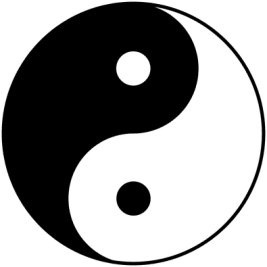 Meaning and purpose are Yin and Yang to each other. Purpose is outside you and is what you do in the world. For me purpose involves doing. Meaning is inside you and what you do for yourself. Meaning involves being rather than doing. Let’s use a running race as an example.
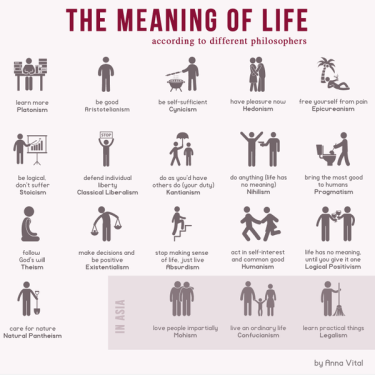 Meaning in my dictionary is about living up to my potential, my values and my beliefs by doing the best I can each day to be consistent with them. No one may ever know if I am being kind, compassionate or patient today. You cannot see the inner virtues that I want to live by. I am the only person at the end of each day who can judge whether or not my life had any meaning today. If I can be the best person that I want to be each day, I will die feeling that my life had meaning. To the rest of the world, I may just be another old teacher, old veteran or old guy who lived an average life and died at an average age. Meaning to me is about being and not doing.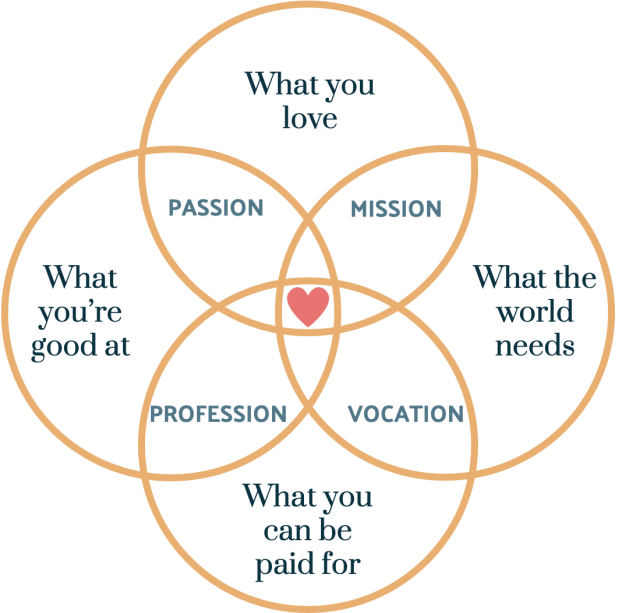
 If I answer, I want to be rich, my meaning in life will be defined by how I go about becoming rich and what I do with my money. If I want to be a writer, my meaning will be defined by what I write and how I go about the writing process. If I want to be happy, my meaning in life will be defined by how I go about achieving happiness. No one except me can judge how I define myself. People may say that I am not very rich or that I am not a very good writer, but it is what I believe about myself which will define my meaning in life. Vincent Van Gogh is now widely regarded as one of the greatest painters of all time. His paintings sell for millions of dollars. However, in his lifetime, he sold only one painting. It was to his sister-in-law who felt sorry for him.
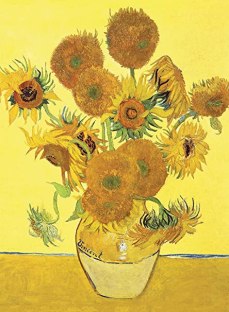 “What am I in the eyes of most people — a nonentity, an eccentric, or an unpleasant person — somebody who has no position in society and will never have; in short, the lowest of the low. All right, then — even if that were absolutely true, then I should one day like to show by my work what such an eccentric, such a nobody, has in his heart. That is my ambition, based less on resentment than on love in spite of everything, based more on a feeling of serenity than on passion. Though I am often in the depths of misery, there is still calmness, pure harmony and music inside me. I see paintings or drawings in the poorest cottages, in the dirtiest corners. And my mind is driven towards these things with an irresistible momentum.” —
 I conclude with the consideration that Meaning and Purpose may not be everyone’s cup of tea. I confess that it was much later in my life and many hurdles had been taken and many obstacles overcome before I started caring about the meaning and purpose of life. Now I look back and shake my head with some sorrow that I did not grasp their import on life when I was in my teens. A have learned that a life without meaning and purpose is not a life, it is just living.

 This theory says that happiness is dependent on other things happening in your life. You must have these other things going on or you will not be happy. If you have a good family, or good job or you have meaningful work, you will be happy. Contingency is like a correlation in statistics. The process of having a good family correlates with happiness but having a good family does not make you happy. Some things have a higher correlation with happiness than other things. Some people believe that having less things is more conducive to happiness than owning a bunch of things.
 This could also be called the “Cause and Effect” theory of happiness. This theory says that certain things or activities will lead to the outcome of happiness. For instance, becoming an Olympic Gold Medalist may lead an athlete to happiness.
 You will always be happy in proportion to how happy others are around us. If I have a great deal of money but my friends have more, I will be unhappy. However, if I have a bigger office than anybody else in the company, I will be happier than they are. The state of being happy will always be relative or in comparison to some other standard that I mark my happiness by.
 This theory views happiness as something that has no limits. The sky is the limit. Extraordinary happiness awaits anyone willing to go for it. Every day will bring more and more happiness if you only believe it is possible.


 The strangeness of the situation caused me to be somewhat nervous about proceeding further but I thought, I have nothing to fear from an old lady. Coming nearer to the woman, I jokingly asked if she was the same old woman whom I had met years ago and if she remembered me. “Yes”, she said, “but you were much younger then. How did your journey down the Farewell to Life trail go?” How could this be I thought? I don’t believe in magic, miracles, or spirits but suddenly, I began to take her words quite seriously.

