The Sacred Triad: How Truth, Goodness, and Beauty Shape Our Humanity — Part 1

I made my 42nd retreat at the Demontreville Retreat Center in Lake Elmo this past September.  Two strong influences on my life have since passed away who were connected to my retreats.  The first was Father Sthokal S.J.  A man who spent 54 years of his life at this center.  Thirty-four of my retreats were spent with Father Sthokal at the center.  Father Sthokal died in 2020.

This year a new dormitory was built in his memory and named Sthokal Hall.  I was fortunate enough to have a room in this new hall.  With the air conditioning, outside patio and coffee bar it was quite a pleasure.  The memories of the words of Father Sthokal infuse the entire retreat center but perhaps more so in the new hall.

The second great influence on my life was Pope Francis who died in April of 2025 this year.  Cardinal Jorge Mario Bergoglio was ordained Pope in 2013.  When he became Pope, the Catholic Church was facing a major crisis.  I read about the new Pope at my retreat that year and thought “surely they are going to assassinate him.”  He posed a challenge to an established and often corrupt Vatican administration which was mired in the past.  Pope Francis set about to change the order of things at the Vatican.  He did this to a surprising degree.  He was also a profound and prolific writer.

At the retreat center, we have a small library full of books dealing with all aspects of spirituality.  The year that Pope Francis was ordained, I picked out a book that he had written. I could not put it down.  I read it on my walks around the monastery as a means of reflection and contemplation.  Every year when I came back, I found something else that Pope Francis had written.  His writings made a difference on my life.  His thoughts on mercy and justice and social responsibilities still ring in my head.

This year, I went looking for something by the new Pope Leo XIV in the library but could find nothing.  I had read everything by Pope Francis and thought that surely the new Pope would have some writings.  We also have a little kiosk of sorts at Demontreville where you can purchase sundries including rosaries, candy, prayer books and some bathroom items.  While passing by the kiosk, I stopped to look at the prayer books thinking that I had purchased most of them in the past.  Then I saw one that I had not seen before.  It was called “A Year with Pope Francis” and it included a series of daily reflections from his writings.  I purchased it and brought it back to my room.  The day was September 20th and the reflection for that day was “Always remember that truth, beauty and goodness are inseparable.” 

This thought really struck me.  I did not know what it meant.  How could they be inseparable?  How did they fit in with the life that one needed to live to find meaning and purpose?  Following my retreat, I started tracing the etiology of Pope Francis’s thoughts.  As with many subjects, the history of this idea goes back centuries.  In this blog and the one following, I want to share some of the impact that this idea had on me and can have on the lives of all of us.  I have used a combination of my own ideas as well as research and reflections with ChatGPT.  I go back and forth with my AI partner to discover thoughts and ideas and to refine my thinking.  Many of these ideas come from saints, philosophers and other thinkers from the past.  My channel to the past is Pope Francis and AI.

When Pope Francis spoke of Truth, Beauty, and Goodness as inseparable, he was not offering a poetic slogan.  He was reminding us that these three values — long revered since Plato and Aquinas — describe the full stature of the human soul.  When any one of them is lost or diminished, the others soon fade.  Truth without goodness becomes cold and cruel.  Beauty without truth becomes deceptive.  Goodness without beauty becomes joyless duty.

In the modern world, we have grown accustomed to fragmentation.  We analyze without compassion, feel without understanding, and act without reflection.  But life only finds meaning when our thinking, feeling, and doing are woven together — when the mind, heart, and hand move as one.  The harmony of these dimensions is not a luxury for saints or philosophers; it is the quiet work of becoming fully human.

I. Thinking, Feeling, and Doing — Three Dimensions of Being

Human beings are triadic creatures.  We live through three interlocking faculties:

  • Thinking – our capacity to seek truth, to question, to discern what is real.
  • Feeling – our capacity to sense beauty, to be moved, to connect and care.
  • Doing – our capacity to enact goodness, to choose and to build what should be.

The philosopher’s triad (Truth–Beauty–Goodness) and the psychologist’s triad (Thinking–Feeling–Doing) are not two separate models.  They describe the same reality from different directions.  One names the qualities we seek; the other names the faculties we use to reach them.

Thinking without feeling leads to cynicism; feeling without doing leads to sentimentality; doing without thinking leads to folly.  When all three are united, the result is wisdom — not the kind found in textbooks, but the lived wisdom that radiates from people who see clearly, love deeply, and act justly.

II. The 3×3 Matrix of Integration

To visualize their relationship, imagine a simple grid.  Across the top: Truth, Beauty, Goodness. Down the side: Thinking, Feeling, Doing.
In each cell lies a different way of being human — nine ways of aligning the head, heart, and hand.

Truth Beauty Goodness
Thinking Wisdom — understanding reality as it is Wonder — perceiving harmony and meaning Conscience — discerning what ought to be done
Feeling Empathy — sensing truth through others’ eyes Joy — feeling beauty in all things Compassion — feeling goodness as care
Doing Integrity — acting in truth Creativity — embodying beauty through action Justice — realizing goodness in the world

This matrix is not an abstract diagram; it is a mirror. Each of us can find ourselves somewhere within it on any given day.

III. When the Triad Fractures

The modern world often tears these apart.

Truth without goodness becomes sterile knowledge — the scientist who measures everything but values nothing, the pundit who knows every fact but forgets every face.
Beauty without truth becomes vanity — the glossy perfection of advertising or social media, beauty used to manipulate rather than to inspire.
Goodness without beauty becomes moralism — well-intentioned people who do right but radiate no joy, whose kindness feels obligatory rather than free.

Likewise, when our own inner triad splits, we feel lost.
We may think brilliantly but feel numb.
We may feel deeply but never act.
We may act endlessly but without understanding why.
Each imbalance carries its own suffering — confusion, anxiety, or burnout. The cure is not more effort but more integration.

IV. Thinking Aligned with Truth

The first step toward wholeness begins with how we think. Truth asks us to see the world as it is — not as we wish it to be.  Thinking in truth means facing facts, admitting mistakes, and refusing to let ideology replace inquiry.

But truth is not limited to intellectual accuracy. It is also moral clarity — a refusal to lie to ourselves. When we think truthfully, we free ourselves from illusion.  We develop what the ancients called Sophia — wisdom.  Wisdom joins knowledge to humility.  It recognizes that truth is not possessed but pursued.

V. Feeling Aligned with Beauty

Beauty, said Dostoevsky, will save the world. But not the beauty of cosmetic perfection.  True beauty awakens wonder and gratitude.  It is the radiance of harmony — a sunset, a melody, an act of forgiveness.  Feeling beauty means allowing the heart to be touched, even wounded. It calls us to empathy — the ability to enter another’s experience and still see the light within it. In a cynical age, this is an act of resistance.

When feeling is shaped by beauty, life regains texture and meaning.
We begin to notice small miracles: the laughter of a child, the discipline of a craftsman, the resilience of someone who refuses to give up.  These glimpses of beauty soften us.  They remind us that beneath the noise and ugliness of the world, there is still something worth cherishing.

But feeling must not end in sentimentality.  Beauty moves us to love, and love — if it is genuine — demands action.

VI. Doing Aligned with Goodness

Goodness is truth and beauty made visible.
It is what happens when we act from conscience, not convenience.  Doing good is rarely glamorous.  It often means small, consistent acts of courage: listening instead of judging, volunteering when no one notices, speaking truth to power even when afraid.

Goodness without action is merely intention.  To “do” goodness is to give it form — through justice, kindness, and creative service.  A teacher who inspires curiosity in children, a nurse who comforts a frightened patient, a neighbor who plants trees for the next generation — all are artists of goodness.

Goodness is contagious.  One act done well invites another.  In a divided world, each small deed of integrity pushes back against despair.  As Pope Francis reminds us, “Reality is more important than ideas.” The good we do embodies the truths we believe and the beauties we feel.

VII. The Intersections — Where Wholeness Is Born

Each intersection in the matrix is a doorway to transformation.

  • Thinking × Truth → Wisdom
    To think clearly in a confused age is a moral act.
  • Feeling × Beauty → Joy
    To let beauty move us is to say yes to life.
  • Doing × Goodness → Justice
    To act rightly even when inconvenient is the seed of renewal.

But the deeper magic lies in the crossings between columns:

  • Thinking + Goodness (Conscience): we discern what should be done.
  • Feeling + Truth (Empathy): we understand others from the inside.
  • Doing + Beauty (Creativity): we make the world more radiant.

When these elements feed one another, we experience alignment — a state of inner peace that radiates outward. We stop living in fragments and begin living as whole persons.

VIII. Everyday Applications

How might this integration appear in ordinary life?

  1. In Conversation
    Before reacting, we think (truth), we feel (beauty through empathy), and we act (goodness through restraint or honesty). The result: communication that heals rather than divides.
  2. In Work
    Whatever our craft — teaching, building, healing, writing — we can strive for accuracy (truth), care (beauty), and fairness (goodness). Excellence becomes not a competition but a form of love.
  3. In Community
    A society guided by truth builds trust.
    A society that celebrates beauty cultivates joy.
    A society committed to goodness ensures justice.
    When one of these is missing, culture decays. When all three flourish, community becomes communion.

IX. The Spiritual Thread

The unity of Truth, Beauty, and Goodness is not just psychological; it is spiritual.  Each reveals an aspect of the divine image within us.

  • Truth reflects the Mind of God — the eternal Logos, the pattern behind all creation.
  • Beauty reflects the Heart of God — the harmony and joy woven into being.
  • Goodness reflects the Will of God — the self-giving love that sustains the world.

To live these values is to participate in the divine life, whether we use theological language or not.  I am an Atheist but every human being, consciously or unconsciously, seeks these three.  Call their reflections God, or Karma or Goddess or Divinity, they are the compass points of the soul.

X. Reweaving the World

Our age suffers not from lack of knowledge but from disconnection.  We have mastered the science of information but lost the art of integration.  We are clever but not wise, expressive but not empathetic, busy but not good.

Reweaving the world begins with reweaving ourselves. Each time we align our thoughts with truth, our feelings with beauty, and our actions with goodness, we mend a small tear in the fabric of humanity.

Start simply. Ask three questions at the end of each day:

  • Did I think truthfully today?
  • Did I feel beauty and let it move me?
  • Did I do at least one thing that was good?

Over time, these questions become habits, and habits become character. The goal is not perfection but harmony — to be a person through whom truth shines, beauty blossoms, and goodness flows.

XI. Closing Reflection

The poet John Keats once wrote that “Beauty is truth, truth beauty — that is all ye know on earth, and all ye need to know.”  Pope Francis extends that vision: when beauty and truth walk hand in hand, goodness inevitably follows.  The three are not separate paths but a single road leading home.

To think rightly, to feel deeply, and to act justly — this is the trinity of human wholeness. Each of us, in our own small sphere, can live this harmony.  When we do, we not only become better people; we help the world remember what it was always meant to be — a place where truth enlightens, beauty delights, and goodness redeems.

In Part 2 of this blog, I want to weave the relationship between Goodness, Truth, Beauty with Art and Music.  I attended a wonderful workshop/performance a few days ago by Mark Ochu at the Desert Rose Bahai Institute in Eloy Arizona.  Mark is a “Visionary Pianist” who was presenting  “A Listen and Learn” Piano Concert reflecting on the life of Franz Liszt.  Mark weaves in art, history and music to tell the story of Franz Liszt and his relevance to modern music.

Mark combines piano and lecture.  His performance made me realize that in my earlier reflections on Truth, Goodness and Beauty,  I had not included the role that music and art play in life.  In Part 2, I want to weave this into the texture and fabric of the mosaic that I am trying to create.  Much like my wife’s quilts or perhaps the kaleidoscopes that I love, life can be a beautiful tapestry that brings all of us joy and meaning.  We have only to put the elements in place in our lives to bring out the true nature of humanity.  A nature that transcends violence, vengeance, war and retributions.  Watch a concert sometime and look at the peace and harmony that the performers share with each other.  Now imagine that every soldier in the world was carrying a flute or violin or oboe instead of a weapon of destruction.

Author’s Note

Portions of this essay were developed in collaboration with “Metis,” an AI writing partner powered by OpenAI’s GPT-5.  The ideas, direction, and final reflections are my own, shaped through a dialogue intended to illuminate and refine the themes explored here.

Virtues, Values, Morals and Ethics:  What are the differences and Who Cares?

The older I get, the more questions concerning virtues, values, morals and ethics concern me.  Like most people, I thought that I learned what these concepts meant through church, parents, school, books, fairy tales and movies.  What I never really learned was: 1. Why are they important?  2. What do they mean for society?  3. Why should we care about the differences?  4. How do they actually play out in real life?  Real life meaning in war, in peace, in times of societal disasters and even in everyday living.  Now with a few years left in my life, I am immensely concerned with the above questions. 

I started reading more about virtues and values and morals and ethics a few years ago and did not make even a slight dent in the literature.  Recently, I looked into YouTube to see what some videos had to say about the same questions I am concerned with.  I found more videos to watch than I could review if I lived 100 more years.  Nevertheless, I spent some time scanning a few of these videos to see what other writers had to say about virtues, values, morals and ethics.  After reviewing these videos, I decided I would just wing it from my own perspective and experience.  In this blog, I will try to answer each of the questions I posed based on my own experiences.  Before we begin, I would like to provide a very simple definition for each concept.  No ChatGPT or Google here.  This is my own simple and probably not very profound definition of each.  

Virtue:  A gift to be earned.  Examples, “Patience, Honesty, Faith”

Value:  Something we think is important or worthwhile.  Examples, “Happiness, Love, Frugality”

Moral:  A principle we want to live by.  Example, “Do unto others etc.”

Ethics:  Principles others think we should live by.  Examples, “Always respect your customers”

 1.  Why are they important?

The simplest but most compelling answer to this question is that they help you to lead a happier, more fulfilling life.  People adhering to these concepts will have character and integrity and be both respected and admired.  They may not make you rich.  They may not make you famous.  But true happiness does not come from fame and fortune.  Here are some quotes that I like on happiness:

“True happiness is not attained through self-gratification, but through fidelity to a worthy purpose.” – Helen Keller

“Happiness is not something ready-made.  It comes from your own actions.” – Dalai Lama

“Happiness is when what you think, what you say, and what you do are in harmony.” – Mahatma Gandhi

“Happiness is a warm puppy.” – Charles M. Schulz

“It is not how much we have, but how much we enjoy, that makes happiness.” – Charles Spurgeon

You might be asking yourself “Well, do we really need to pay attention to each of these concepts?”  Why not just worry about virtues or ethics?  My answer is yes.  We need to pay attention to all four of these concepts because they work together.  Like a car needs a transmission, engine, battery and wheels to get anyplace, you cannot become the person you want to be if you ignore any of these ideas. 

You cannot be virtuous and have shallow values.  You cannot have great values but no ethics.  You cannot have ethics but no morals.  We need to understand and embrace all four of these concepts.  Values and ethics deal more with external influences on our lives while virtues and morals come more from inside us and deal with our own abilities and character.  Can you have good character and embrace “bad” actions?  Can you have “bad” character and pursue good actions?  I think the answer to both these questions is “very unlikely.”  Actions flow out of character and character is developed by actions. 

2.  What do they mean for society?

First let me ask you a few questions and see if your thinking about these questions answers my question above.  Are you happy with the way people drive on the freeways today?  Do you feel that politicians and leaders today really care about you and the country?  Do you think that poverty and homelessness are inevitable or that good leadership could help to amend these problems?  Is a good leader ethical, moral, virtuous and guided by good values?  Do you think the above problems can be taken care of simply by higher incomes and fewer taxes? 

Now, I would ask you to go back to my question number 2 and take a few minutes to think of how you would answer it.  What would it mean for society if everyone practiced good virtues, morals, ethics and values?  Would we have as much unhappiness in society as we seem to have today?  Would our crime rate be high?  Would we constantly be involved in fighting wars in other countries? 

“Virtue does not come from wealth, but wealth, and every other good thing which men have comes from virtue.”  Socrates

“No people can be great who have ceased to be virtuous.”  – Samuel Johnson

A country cannot subsist well without liberty, nor liberty without virtue.”Daniel Webster

The first principle of value that we need to rediscover is this: that all reality hinges on moral foundations.  In other words, that this is a moral universe, and that there are moral laws of the universe just as abiding as the physical laws.  –  Martin Luther King Jr

Once upon a time, I thought that the most important thing I could teach in schools would be critical thinking skills.  However, after having been teaching since 1975 in every class from kindergarten to Ph.D. programs, I have come to believe that the most important thing I can teach is an appreciation of these four concepts.  I have no illusions that I can or should force any particular virtue or values or ethics or morality down anyone’s throat.  I think that while each of these concepts is universal, each person must identify his/her own ideas and beliefs that are most important to them.  I have my list of virtues and morals that I try to live by.  Each day, I start out with a little prayer to remind myself to practice a particular virtue.  Today it was patience.  Tomorrow it will be kindness.  I do an inventory at the end of each day wherein I ask myself “how did I do today on my virtue.” 

As for morals, I have several principles that I try to live by.  I have listed five of my most important moral principles below.  You may have five, ten, fifteen or twenty that you believe in and not one that matches any of mine.  I think that what is important is that each of your principles is a building block for positive character.  A character that other people can admire but even more importantly, a character that you can be proud of. 

  • Do no harm to others
  • Stand up for what I believe
  • Do unto others as they would have done unto them
  • Demonstrate integrity in all I say and do
  • Do not be afraid to do what is right

 3.  Why should we care about the differences between these concepts?

Dr. Deming was famous for his quote that, “Experience without theory teaches nothing.”   I strongly support his axiom.  What it means is that if you keep doing something and it works or perhaps does not work, without an underlying theory of causality, you will never understand what factors or actions have resulted in your success or failure.  Without understanding these factors, it may be difficult to replicate your success but also likely you will not be able to improve on it. 

For instance, what if people seem to shy away from me and dislike me?  Or what if I seem to aggravate people but I cannot figure out why?  Going to school to study psychology or reading “How to Win Friends and Influence People” by Dale Carnegie might be just the theory that you need to better understand yourself and your behavior.  Socrates said, “Know Thyself” and also that, “The Unexamined Life is Not Worth Living.”  Reflection and knowledge can lead to wisdom and wisdom will help you to lead a good life.

I also support the opposite belief, that “Theory without experience teaches nothing.”  You can read all the psychology books you want but unless you act on your theories, you will also learn nothing.  You cannot understand an apple or a steak without biting into it.  We must couple action with theory in our lives, or we risk going through life with a tank ½ full.

4.  How do these concepts play out in real life? 

This is a very challenging question.  I can tell you that in my life I tended to ignore the theory part in favor of experiences.  I learned a great deal through the proverbial trial and error, but my life has been in the past like a rubrics cube that came apart and I could not put it back together again.

I did not understand the relationship between the concepts we are discussing now and how they could and should play a role in my life.  I looked for a better more meaningful life by working harder, making more money and acquiring more diplomas and certificates.  Only in the past few years have I began to understand that without a firm grounding in morality, ethics, values and virtues, I could never live a life that measured up to my goals and aspirations.  These concepts form the bedrock and foundation for a life that exemplifies integrity and character. 

“Despotic power is always accompanied by corruption of morality.” – Lord Acton

“Where the roots of private virtue are diseased, the fruit of public probity cannot but be corrupt” –  Felix Adler

“Moral decline has become a growing concern in many societies around the world.  As the traditional values and principles that guide human behavior weaken, we see a shift in attitudes, actions, and even societal structures.  This decline in ethical standards, often characterized by increasing selfishness, dishonesty, and a lack of accountability, has widespread implications for individual lives, families, communities, and nations.” – Virtuous Magazine, 10-9-24

“Those who conduct themselves with morality, integrity and consistency need not fear the forces of inhumanity and cruelty.” –  Nelson Mandela

Conclusions:

I wrote this blog because as many people have attested to, there is an alarming decline in morality, ethics, values and virtues in our world today.  Many people now subscribe to an opportunistic philosophy which states that “If it is not illegal, than I can do it.”  To these people, it does not matter who they will harm by their actions.  The only things that matter are their own personal wants and desires.  Some people have referred to the present generation as the “entitlement” generation.  Others call our present times a time of Amorality.  Amorality is between immorality and morality, but it does not denote a Golden Mean.  Rather it is more like a zombie state that ignores the negative effects of a lack of morality on society.  It ignores the harm that Amorality does to individuals in any society. 

Opportunism, Amorality and Entitlement have become strong values for many in American society.  In this respect, I see them as “bad” values.  The difference between Good Values and Bad Values might seem to be merely a matter of opinion but I disagree.  I have argued in my previous blog that there are Bad Laws and Good Laws.  So too there are Bad Values and Good Values.  Bad values devalue life, liberty and the pursuit of happiness for private profit and gain.  The opposite is true of Good values.  Good values enhance life, liberty and the pursuit of happiness for the greatest number.  James Madison said that a Democracy is a “Rule of the Majority with a concern for the Minority.”  What we see in America today would seem to be the rule of an Oligarchic Rich Elite exploiting minorities for their own benefit.  Perhaps more emphasis on morals, values, virtues and ethics in the media and press and less emphasis on violence and mayhem could reposition our country.  I think many of us would like to live in a nation that is based on empathy and compassion for all rather than revenge and retribution for those who are more vulnerable, poor or less powerful.

The Diagram that I used in this blog was created by Sudir Vigneshwar.  He has a very good blog on the subject of Morality and Virtue at his website.  I think the diagram depicts in a model what I have been saying in so many words.   Look for 

The Moral Alignment Scale: In Depth Conversations on Morality with an A.I.

What Next after Trump’s Victory?

First, we all want to know why and how Trump won.  Herein is a brief summary of some of the major reasons given by numerous analysts for Trump’s victory.  
 
“Sexism, racism, young males, rural angst, religion, Gaza, immigration, incel men, despair, Democrats off message, Biden, education level, conservative white women, inflation, right wing billionaires, Christian nationalists, desire for an anti-establishment figure, desire for change.” 
 
I have probably missed a few.  
 
The main reason I see is that Trump reflected 21st Century American values. Greed and narcissism among a large percentage of our populace who don’t want anything or anyone to get in the way of their shopping. They looked at Trump and saw themselves and their own values. 
 
The following quote was from a Salon newsletter.  
 
“This 2024 election is a referendum on the character of the Trump-voting public, and let’s not make it nice. They place minimal value on respect for truth and democratic institutions. They are more interested in punishing other people than in advancing the common good. They have a remarkable tolerance for crass and bullying behavior, care little for empathy and ethics, and are incapable of weighing basic facts.”
 
After reviewing many of the analyses of why Trump won, most of us are wondering what “next steps” could, should and will be.  My response to the election of Trump will be along the lines of the following:
 
Many of the comments I have read concerning the election reflect the dilemma between being and doing. I am going to try a middle ground. I want to avoid any savior complex as well as a “hopeless” complex. Not sure how I will manage it yet. In TQM we used the Pareto principle to attack problems.  We called it the 80/20 rule.  Twenty percent of your problems give you 80 percent of your headaches.  Thus, we always used some criteria to prioritize problems before starting to fix anything. 
 
My priorities stem from my reflections on comments as well as some of the demographics on voting during the election.  For instance, 110 million eligible people did not vote, 53 percent of White women voted for Trump, men (includes Black, White and Latino) preferred Trump 55 to 42 percent and 10 million fewer people voted Democrat than in 2020.  (Numbers behind the vote) After contemplating the meaning of these statistics and more, my top priorities would be:
 
1. Pure self interest/greed
2. Sexism
3. Anti-Establishment feeling
 
Not sure how to deal with any of these. Greed and sexism have been around since Moses. Best path may be grass roots action to educate people on economics. One thing for sure. Mainstream media is useless. It is strictly bent on making money. 
 
Peace, Wisdom and a Long and Healthy Life,

John,

All Aboard for a Ride on the Trump Mobile

The Trump mobile is the limousine that Trump drives.  I will describe it in this blog.  If you board his vehicle, he will take you on a ride to autocracy and xenophobia.  To a land bereft of Democracy or anything pertaining to the values and virtues of the Founding Fathers.  Lets look at the construction of this vehicle from the ground up.

There are four tires that the Trump mobile rolls on.  One tire is Christian Nationalism.  This is the belief that the Christian religion should become the religion of the USA.  It is the belief that Christianity is superior to all other religions and that the Christian God is the only true God.  Christianity needs to infiltrate our government and our schools.  Christian Nationalists want to do away with the separation of church and state and put the 10 Commandments and Bibles in every institute of education in America.  America will become a Theocracy like Iran and Israel.

A second tire that the Trump mobile rides on is White Supremacy.  This tire is constructed of layers of belief that White people need to remain the supreme governing group in the USA.  It supports the idea that White people are superior in morals, intellect and aspirations to all other ethnic groups.  By virtue of being White, you are entitled to rule over inferior races which includes everyone on earth who is non-White.

The third tire constructed for the Trump mobile is Sexism.  This tire promotes the inferiority of women to men.  Women were brought into being by a creator not to lead men but to follow men.  A women’s main role is to bear children that will continue the dynasties started by men.  Women should always remain subservient to men from the bedroom to the kitchen.

The fourth tire for the Trump mobile is Racism and Xenophobia.  This tire is built up from layers of fear and loathing for other races and cultures.  This tire rolls on the belief that White people must prevent race mixing.  Allowing relationships with other races will dilute the pure heritage of the White genotype.  Anyone different such as Gays, minorities, disabled people or indigenous people must be eliminated from the White gene pool.

Moving on to the major power for the Trump mobile we come to the engine and the fuel supply.  The engine is composed of 8 cylinders of greed, avarice, acquisitiveness, covetousness, graspingness, cupidity, materialism, and possessiveness.  The fuel that feeds the engine delivers power from the promise of Tax Breaks and Trickle-Down Economics.  A fuel that will help the rich and many others find ways to buy more stuff.

Then we come to the transmission for the Trump mobile.  No limousine can move until the power is transferred to the wheels from the engine.  In the case of the Trump mobile, the two main cogs in the transmission are fear and hate.  Fear and hate convey the power to the wheels.  Fear of others who may try to take away the values promoted by Trump and his followers.  Hate for those who are different and who may try to block the desires of Trump and his supporters.

The vehicle is of course driven by the charismatic Donald Trump who is the only one on the whole planet capable of steering the limousine in the RIGHT direction.  Trump was sent by the Christian Nationalist God to drive the Trump mobile to a paradise on earth ruled by White Christian people.  People who believe in the superiority of Whiteness and a White God with blond hair and blue eyes who will smite the enemies of Trump and his supporters.

The fronts seats of the Trump mobile are filled with sycophants who bless Trump and regard him as a savior.  Leaders of the Republican party, rich billionaires, media propagandists and young sexy women all get to ride in the front seats.  The back seats are full of Trump supporters who hope someday to ride in the front seats.  These are men and women who feel cheated by their government and society of their rightful place in life.  They believe that someday Trump will anoint them as faithful followers and allow them to join Trump in his paradise on earth.  They believe that the Trump mobile will take them there.

All aboard please.  The Trump mobile is leaving soon. 

Only God Can Save You!

This past year marks my 41st Jesuit Silent Retreat.  I may be the only Atheist at the retreat.  Each year brings new insights and thoughts.  I wonder if I have grown any during my retreats.  I can’t say that I feel any closer to God, yours or theirs.  I wonder if there is a God but I doubt it.  I wonder if there are multiple Gods.  A God for each religion.  Is the Muslim God and the Catholic God and the Jewish God the same entity?  Were the Romans, Greeks, Hindus and many others more on the mark with different Gods for different functions?

This year reading as I usually do many of the assigned Gospel readings and many other Gospel passages I was struck with how many of the old prophets emphasized the need to believe in God’s goodness.  Only God can save us and we must have faith in God’s goodness.  God has a plan for all of us if we will only listen to him or perhaps her.  God knows what we need but we ignore his/her messages.  Pray to God.  Love God, for God loves us.  He loves us so much that he sent his only “begotten” son (Not sure what a begotten son is) to save us.

Exodus 33:18-19 (NKJV)

“And he said, ‘Please, show me Your glory.’ Then He said, ‘I will make all My goodness pass before you, and I will proclaim the name of the Lord before you. I will be gracious to whom I will be gracious, and I will have compassion on whom I will have compassion.’”

Frankly, I still don’t get it.  Many people have taken a shot at saving my soul, but I still don’t see any value in God.  During the past five years, he/she has allowed Global Warming to destroy much of the climate that I once loved.  He sent a scourge called Covid 19 to help ruin the last few years of my life.  And to top it off, he allowed a low life called Trump to run for President again.  I guess I am lost to the damnations of hell fire, but I still don’t see a God that is going to save me.  If so, he/she is about 78 years past my patience.

C. S. Lewis was the great “converter.” The conversion of an Atheist to a Theist is an aphrodisiac for the devoted religious. I suppose it justifies their belief in a future fiction that requires a complete abandonment of reason and logic.  A place called Heaven where we can all live happily ever after.  Just as long as we are willing to listen to daily sermons about how good God is for us.

“[God] will not be used as a convenience. Men or nations who think they can revive the Faith in order to make a good society might just as well think they can use the stairs of heaven as a shortcut to the nearest chemist’s shop.” — C.S. Lewis

But “Only God Can Save You” has a ring of truth to it.  No one on earth can save you from death.  No one can be trusted to be by your side forever regardless of the consequences.  Friends and lovers come and go like shadows in the night.  One day someone loves you, the next day they hate you.  One day someone is your friend, the next day they unfriend you on Facebook.  Tragedy of tragedies.  Loneliness is a Satan stalking all of us all of our lives.  I would wager more people have committed suicide out of loneliness than any other reason on earth.

Psalm 107:8-9 (NKJV)

“Oh, that men would give thanks to the Lord for His goodness, and for His wonderful works to the children of men! For He satisfies the longing soul and fills the hungry soul with goodness.”

Only the concept or idea of an All Knowing, All Seeing, All Powerful and All Compassionate God can guarantee us that we will never be alone.  Never be forgotten.  Never be forsook.  One popular song goes:

Walk on, walk on

With hope in your heart

And you’ll never walk alone

You’ll never walk alone

This song was first written by Oscar Hammerstein II and composed by Richard Rodgers for their musical Carousel, which was released in the USA in 1945.  It has since become one of the most popular funeral songs (Next to Amazing Grace) of all time.  Many people interpret it to have faith.  Faith in friends.  Faith in lovers.  Faith in a God who will always be with you in time of trials and tribulations.  It is a song to give hope to people in time of grief and suffering.

But where does one find such a God?  The Bible shows us at best an arbitrary God.  Sometimes belligerent.  Sometimes vindictive.  Sometimes vengeful.  Sometime cruel.  A God that many of us see in the world wreaking havoc on humanity for any number of transgressions.  From Sodom and Gomorrah to massive floods to sending his “Chosen people” into slavery.  A God who threw Adam and Ever out of the Garden of Paradise because they dared eat an apple.  A God who destroyed cities because they did not live up to his/her expectations.  A God who sent a flood to wipe out humanity.  This is a compassionate loving God?

Psalm 31:19 (NIV-84)

“How great is your goodness, which you have stored up for those who fear you, which you bestow in the sight of men on those who take refuge in you.”

Or is it a God who feeds his people.  A God who watches out for his Chosen ones.  A God who rewards those who obey him/her.  A God who destroys the enemies of those who worship him.  A God who is loving, kind and compassionate.  I wonder what God really is.  Here are some questions that still nag at my Atheist beliefs.

  1. Do I think that I am smarter than all the wise and great people who believe in God?
  2. Who or what created us?
  3. What if there is a God? What does he/she think of me?
  4. What if there is no God?
  5. Is God simply a metaphor for “Unconditional Love?”
  6. Is God Death or Life or Both?

The Atheist by Martin Braun

Science defines my virtue.

Factual and fictional books are my domain.

Don’t speak to me of pixies, fairies, and unicorns,

Or of your monopoly on morality, love, faith, and shame.

I am what I am

And of what I do I claim my own.

I fight for my survival

Of which need not be told, judged or shown.

There is no all knowing

Or an immortal god of my fate he will judge.

For when my heart ceases to beat

It will return from whence it came, a kind of primordial sludge.

Can We Be Justified for Intolerance Towards Intolerance?

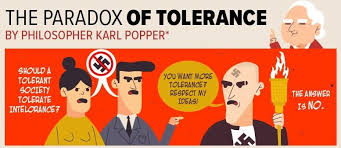
Many years ago, the famous philosopher Kark Popper created what has been called the “Paradox of Tolerance.”

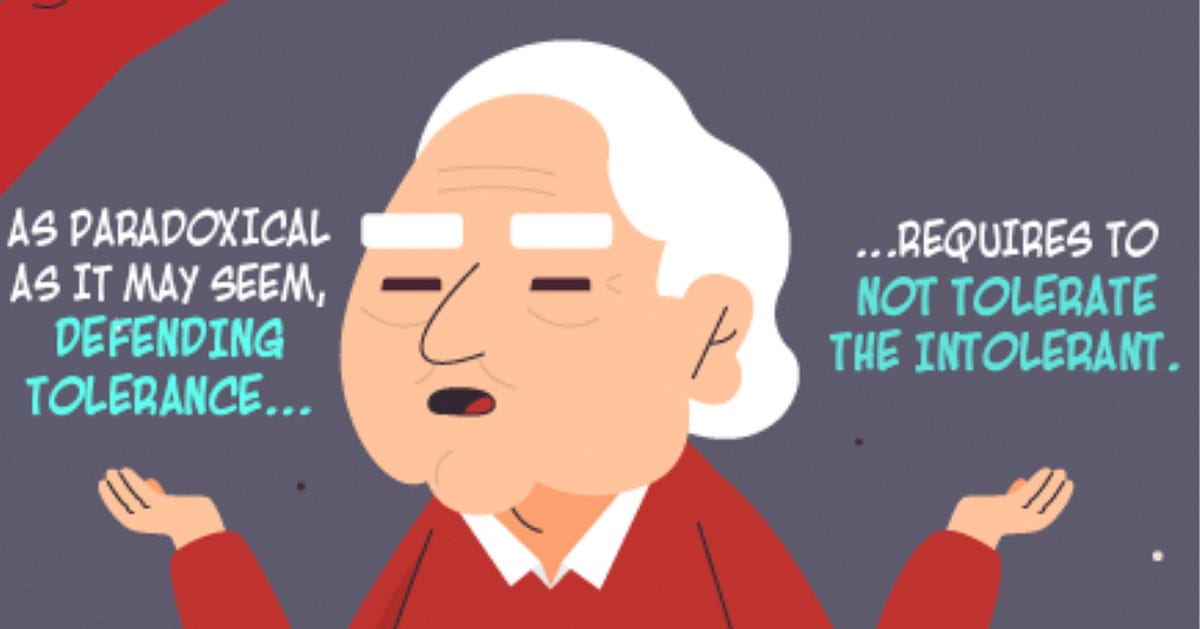
Karl Popper wrote that, “if we want a tolerant society, we must be intolerant of intolerance”.  This is known as the “Paradox of Tolerance”, which is the idea that a society must be intolerant of intolerance in order to maintain tolerance.  As with any paradox, this is very confusing.

“Popper explained that unlimited tolerance can lead to the destruction of tolerance.  He said that a tolerant society should be prepared to defend itself against intolerant views, and that the right to suppress intolerant views should be claimed if necessary.  However, he also said that suppressing intolerant views through force is unwise unless they are unwilling to engage in rational argument.”  —- From Search Labs | AI Overview

Recently, I came across a rather long academic article which I think supports a justification for Popper’s viewpoint.  Albeit I think this article provides a more nuanced explanation for being intolerant of intolerance.  I have decided to post this article since I think the times demand that we understand this perspective.  I believe it is a focal point worth fighting for.  You may disagree but the analogy of how Hitler took power is I think quite relevant and worth thinking about.  Here in its unabridged form is the entire article.  I would love to hear what you think, so please leave a comment or two.

What are the Limits of Toleration? By Tamar Lagurashvili

University of Tartu, Institute of Government and Politics, Graduate Student

Introduction

Tolerance is considered to be one of the cornerstones of modern liberal democracies, thus having acquired different implications across the countries, which ultimately leads to the ambiguity of the concept itself. In order to avoid further misunderstanding, we should clearly define what is meant in tolerance and why it is crucial not to mix this term with the words having similar connotations. Yossi Nehushtan (2007:5)  offers an obvious distinction between the value-based liberal tolerance and rather neutral tolerance, which finds more similarities with indifference rather with toleration itself. Concerning its linguistic origin, author refers to the Latin word tolerabilis, which means to lift an object, clearly implying to the burden to be carried by one, who tolerates certain unacceptable behavior, act or opinion. Within this context, we should refer to Michael Sandel (1996),  who differentiates liberal non-judgmental toleration from judgmental toleration. While looking closely at these concepts, we can see that in the case of former, person (tolerant) tolerates certain opinion, act or behavior without judgmental evaluation simply because he does not care or he respects others’ privacy and thus, refrains from any kinds of interference. Albeit that, refraining from interfering in other people’s private life is an integral part of modern liberalism, definition provided above does not correspond with the tenets of tolerance.

As Heywood (2015:251)  rightly mentions, tolerance should be distinguished from permissiveness, indifference and indulgence, since being tolerant inherently implies to the fact that a tolerant person faces moral difficulties to put up with certain behavior or act, but does so for the sake of different reasons. Being tolerant means that a person has to impose certain restrictions on him/herself in order to avoid to openly interfere in others’ life when there is something to be disliked, disparaged or disapproved. Toleration with its basic definition can be considered as truly moral value, supporting a peaceful coexistence of the different individuals, but whether there are certain cases, where intolerance is morally/pragmatically justified is major concern of this paper.

Why do we tolerate?

Rainer Frost (2008:79-82) while touching Pierre Bayle’s Reflexive theory of Toleration, talks about three different reasons or factors, which trigger toleration among majority and minority groups. First he mentions permission conception, according to which the majority gives minority a right to live according to their customs, but toleration is possible when the “difference” of minority is contained to certain limits and does not cross the borders of private life. As an early and most vivid example of permission conception Frost names the Nantes Edict of 1598, which granted the Calvinist Protestants of France substantial rights in private as well as in public spheres.

Second way of toleration is coexistence concept, which resembles to pragmatic tolerance to be discussed bit later. In this case, avoiding conflict and paving way towards peaceful coexistence is what matters, but unlike the previous situation, here we face not the relation between the ruling majority and minority, but rather two groups wielding equal powers, thus requiring making some concessions for the sake of preventing clash of interests. If we attempt to apply this concept to real life, we can think of Somalia, who has been torn apart by three different clans ruling in three regions of Somalia, therefore hindering country’s normal development. Bearing in mind that Somalia is characterized by distinctive homogeneity (Guardian Africa: 2015),  one can assume that it is not different beliefs and traditions, which impede toleration among the clans, but the economic benefits they can reap from the permanent state of conflict.

Third conception is based on the principle of respect, thus implying to the fact that toleration requires acknowledging the fact that everyone is equal and deserves equal political and legal rights.

As one can see Frost’s approach towards toleration is rather a combination of pragmatic and moral values, since it fosters cooperation between majority and minority and upholds egalitarian values. Kristie McClure (1990:361-391)  puts forward John Rawls’s understanding of toleration within his notion of “ justice as fairness”, according to which toleration carries distinctively pragmatic connotation, namely the one of social conditions, which not only helped to put an end to the religious wars in Europe, but to transform religious toleration into certain form of social practice. John Locke’s work Letter Concerning Toleration is deemed to be a milestone in understanding the tenets of toleration. Locke comes from the assumption that we are all created by God and thus, our “Highest Obligation” should rest on the understanding of others’ differences for the sake of our moral obligation and love (Frost 2008). Later on Locke argues about the possible relation between the tolerant and one to be tolerated, excluding the possibility to give superiority to any church, since it will lead to persecution and monopolization of power.

One can consider that by proposing to give each and every church equal power as searching for  the only true religion is futile and will exacerbate conflict between different religious groups, Locke somehow offers the coexistence concept elaborated earlier. Even though toleration is a God-given virtue, Locke still talks about its possible limits, which in his case is restricted to two kinds of groups: “A church that assumes the power of being able to excommunicate a king or that claims political and religious authority over its members…” and the atheists, as: ”They are not at all to be tolerated who deny the Being of a God” (Frost: 91-92).

Nehushtan, like Frost points out three different reasons of why people generally tolerate: tolerance as right, pragmatic tolerance and tolerance out of mercy. First he touches upon tolerance from the standpoint of rights and argues that no matter how repulsive person’s behavior or opinion can be, harm inflicted to that person cannot be justified on the grounds of personal autonomy developed by Joseph Raz . Author stresses particular importance on the pragmatic side of toleration and develops the ideas very similar to Frost with an additional insight of reciprocity and proportionality, which will be discussed later on. His third point argues that people with physical and/or mental disabilities might be exposed to more toleration than usual, regardless their repulsive behavior.

Can toleration be limited?

Tolerance with its underlying principles and applicability clearly upholds democratic values and strengthens personal autonomy, which constitutes one of the cornerstones of the liberal democracies. Albeit that tolerance is widely considered as “moral virtue”, would we go further and suggest that tolerance can be applied to each and every circumstance regardless the fact who should be tolerated? This question is examined in the works of many political scientists, including Andrew Heywood, who even though stresses importance of the political pluralism, openly talks about those political parties, which are clearly distinguished with hate speech and bigotry, thus threatening the democratic values, should not be tolerated and permitted to the political spectrum, since as author suggests: ”toleration is not granted automatically, it has to be earned” (Heywood: 256).

I would suggest that reciprocity, as a crucial feature of toleration substantively defines the nature of its applicability, which means that in certain exceptions, where we have to deal with a massive surge of intolerance, clearly undermining the democratic values and endangering the sovereignty of state, toleration should be limited. Heywood calls an example of Nazi Germany, where after the failure of Munich Putsch, Hitler and his collaborators were still allowed to pursuit their political activities legally, which ultimately led to the disastrous consequences. It seems that reciprocity plays an integral part in understanding the limitations of tolerance, so clearly expressed in the work of Nehushtan, who also talks about proportionality, which mainly focuses on the costs and benefits of limiting toleration. We could start by recalling Rawls, who suggests that:” it seems that an intolerant sect has no title to complain when it is denied an equal liberty”( Rawls 1999:190).  While analyzing Rawls’s words, we can assume that those intolerant groups, which openly threaten state sovereignty and democratic values in general, should not be treated in a tolerant manner, but how can intolerance be expressed when it comes to politics? Should we ban such intolerant political parties and prevent them from entering parliament?

Should we hold a peaceful campaign, during which we will expose true information about the intolerant party’s real intentions and the scope of possible harm in case of proliferation the intolerant ideas? Deciding upon the methods of expressing intolerance is rather individual and as Nehushten suggests, is rooted in the principle of proportionality. According to the author, while working on the scope of intolerance, one should take into account the nature of intolerance and the response towards it, since if an act of intolerance takes place in parliament for example, an intolerant response should be formulated within the realm of politics and not in the private life. On the other hand, amount and nature of intolerant response should not exceed the original intolerance and what is of core importance- intolerant response should inflict minimal harm to the democratic values and human rights, because otherwise we will face counter-productivity. Fintan O’Toole (1997:346)  raises another interesting question concerning the limits of tolerance based on assumption that excessive freedom of certain group might threaten collective good, thus requiring to impose certain restrictions on that group’s excessive liberty. Therefore, certain amount of intolerance towards the groups, who wield the power in order to prevent them from abusing/manipulating this power, is justified.

Nevertheless, author calls an example of Bernard Shaw’s criticism of the Christian Golden Rule (according to which we should treat others as we would like to be treated), providing the heterogeneous nature of the society, where what one person considers benign for him/herself, might be perceived as totally evil by other. Author suggests that even though there might be a society with relatively homogeneous religious beliefs, the applicability and interpretation of the customs and beliefs might considerably vary (O’Toole: 347). Therefore, we should not expect that toleration will be upheld as universal value across different societies, but what author explicitly refers to is the nature of harm inflicted by the intolerant groups, which morally and pragmatically justifies adequate intolerant response.

Conclusion

Tolerance, as one of the tenets of modern liberal thought,  cannot be applied universally to every situation, without taking into account the nature of an opinion, behavior or act to be tolerated and the amount and nature of harm done to the society followed by intolerance.  We can assume that intolerance is justified on the grounds of reciprocity i.e. as Heywood stated, tolerance should not be granted automatically and it requires certain effort to be excerpted by the groups demanding tolerance and proportionality, which implies that there should be balance between the original intolerance and its corresponding intolerant response. Even though tolerance constitutes a major tenet of modern liberal democratic states, where each and every individual is endowed with personal autonomy and a right of individual liberty, preventing certain individuals from infringing others’ private life, there are some exceptional cases, where intolerance can be justified. Even though individual liberty is an integral part of the democratic societies, my essay primarily focused on the limits of tolerance at the political level, where we might face much more disastrous results in case of allowing unlimited tolerance towards the intolerant groups. Having tolerant attitude is vital in pluralist societies, but when national sovereignty and democratic values are endangered due to the nature and amount of intolerance exposed to the wide public, appropriate intolerant response should be nurtured taking into account the costs and benefits of such response.

Bibliography

Frost, Rainer. “Pierre Bayle’s Reflexive Theory of Toleration.” In Toleration and Its Limits, edited by Melissa S. Williams and Jeremy Waldron. New York University Press, 2008.

Heywood, Andrew. Political Theory: An Introduction. Palgrave, 2015.

McClure, Kirstie M. Difference, Diversity and the Limits of Toleration. Sage Publication, 1990.

Nehushtan, Yossi. “The Limits of Tolerance: A Substantive-Liberal Perspective.” 2007.

O’Toole, Fintan. “The Limits of Tolerance.” By Fintal O’Toole and Lucy Beckett. Irish Province of the Society of Jesus, 1997.

What Has Happened to Morality in the USA?

moralityYears ago, religions enforced what I would call a pseudo moral code through the power of the state to enact laws desired by the most powerful religions.  This of course reflected the power that religions had in society back when you could go to hell for missing mass on Sunday.  Gambling was verboten.  There was legalized horse race betting in only a few states, and a few states had some other sports such as greyhound racing or Jai Alai which you could bet on.  Legally, you could only place bets at the venue.  Of course, organized crime found it very lucrative to offer “off track” betting.  Every street corner where I grew up had a bookie some place or other.  And of course, the numbers game was a very popular way for fools to lose their money.  Sports betting was done privately, and casino gambling did not start in Las Vegas until 1931.  It had been legal earlier but was outlawed in 1910 and not legalized until 1931.  The only lottery I ever heard of when I was growing up had to do with the Irish Sweepstakes.  There must have been some way to buy these tickets, but I never investigated it.

Today, you can buy pull tabs and lottery tickets in almost every gas station.  Casinos are just around the corner in twenty states and sports betting became legal on April 15, 2021, in the USA.  Organized religion believed that gambling would be addictive, and husband and wives would neglect their parental responsibilities as they gambled away their hard-earned wages.  People who regularly buy lottery tickets are the norm today even though economists refer to the lottery as a tax on the poor and the stupid.

ReeferMadness800-520x348

Marijuana was once considered a drug from Satan and every state in the Union banned its sale.  The movie “Reefer Madness” came out in 1936 and portrayed wild eyed youth going crazy after smoking a joint.  Smoking weed was a sure path to hell and damnation.  As of May 27, 2022, 19 states, two territories and the District of Columbia have now enacted measures to regulate cannabis for adult non-medical use with several other states limiting its use to medical purposes.  You can now smoke that joint where it once would have put you in jail.

drink-whiskey-hail-satan-satanic-baphomet-gift-manuel-pichlerWhiskey can now be purchased almost 24/7 in many states.  You can buy it in grocery stores, gas stations, bars, and convenience stores.  Perhaps no substance has been more abhorred by religions than whiskey.  Benjamin Franklin said that “Beer is proof that God loved man and wanted him to be happy.”  However, this was not the attitude of most religious organizations.  Temperance movements motivated by so called moral considerations did their best to ban alcohol in the US.  It is illegal in thirteen countries in the world.  Several of the world’s major religions ban the use of alcohol.  There are seventy-five scripture (Bible) warnings against the drinking of alcohol.  Is it any wonder that so many religions have prohibited the drinking of alcohol.

  • Hosea 4:11 – Intoxicating wine takes away intelligence.
  • Micah 2:11 – Israelites are eager to follow false teachers who prophesy plenty of intoxicating drinks.
  • Habakkuk 2:16 – Drinking leads to shame.

I have been trying to show some of the influences that religion and state have had in terms of legislating and enforcing moral codes and policy.  I could say more about prostitution and pornography but the nuances I hold regarding these subjects would entail a blog of their own.  Suffice it to say that restrictions in these areas have declined considerably in the last fifty years.

The_Fire__Brimstone_PreachingNow there may be some of you reading my blog and expecting a fire and brimstone sermon regarding the sins of humanity and the temptations of the devil.  Nothing could be further from my mind.  I am not advocating going back to the religious sanctions or beliefs that fueled so much of our political system.  In the first place, they were misguided and in the second place they penalized those who could practice moral virtues along with those most reluctant.  I could never understand why I could not buy liquor on Sunday or after 10 PM on weekdays or in a grocery store.  I have never received a DUI or even a warning for driving drunk.

The biggest problem with efforts to legislate morality is that they assume that the legal sanctions will result in a more moral society.  The evidence of racism, sexism, homophobia, and xenophobia in America should put a stake through the heart of that false belief.  The government has never been a vendor of morality.  People confuse legality with morality.

1787-Money-Mania-fullThe government has always been in the marketing business.  They would market “SIN” if they could find a way to sell it or allow it to be sold.  In some respects, they are already doing that with the legalization of gambling and their promotion of bigger and bigger lotteries.  The poor buy more and more tickets when the odds go ever higher against anyone winning.  Powerball’s odds are 1 in 292 million, and the combined populations in the states where tickets are sold equal nearly 320 million.  What would anyone do with 2 billion dollars?  (As I write this, the lottery of 2.0 billion has been won by a single person in California)

This is the stuff of more is better which I talked about in my last blog.  How large of a jackpot would be enough to support you for the rest of your life?  Assuming the average age of a lottery ticket holder, it would take nearly $5 million, according to Robert Pagliarini, president of Pacifica Wealth Advisors.  With a net take home of 1 billion dollars, one billion dollars could easily support 200 people for the rest of their lives.

There is nothing moral about ever bigger lottery purses.  Not to mention the fact that the odds are better that the lottery winner will go bankrupt rather than that they will see a happy old age with lots of money.  “Life after winning the lottery may not stay glamorous forever. Whether they win $500 million or $1 million, about 70 percent of lotto winners lose or spend all that money in five years or less.”Easy Come, Easy Go.

What does this have to do with morality? 

First, we must define morality.  It is not about making money, winning the lottery, drinking booze, smoking weed or visiting a casino.  The Prosperity Gospel is a distortion of the idea of moral behavior.  Morality is the process of asking yourself what impact an action, a course of action, a decision, a purchase, or a behavior will have on other people.  It does not mean that you cannot drink and gamble.  It does not mean that you cannot have wild sex at a swinger’s party.  It does mean that you need to be able to ask yourself if your gambling and drinking is having a negative impact on others.  It does mean that you need to ask yourself if your sexual habits are having a negative impact on other people.  By others. I mean more than your family, more than your friends, more than your neighbors.  I mean other states.  I mean other countries.  I mean the entire world.  This does not mean that you have no rights.  You have the right to swing your arm but your right proverbially stops at the nose of another person.

download

As I said in my last blog, we must look outside of ourselves to find morality.  This is not easy to do.  Some of us, (fewer every year) go to a church on Sunday where we may get a sermon that asks us to look at our behaviors and what we can do for other people.  (“According to a 2021 survey, 31 percent of Americans never attend church or synagogue, compared to 22 percent of Americans who attend every week.”— Church Attendance of Americans)  Those of us who attend church hear maybe a twenty or thirty minute sermon each week on morality.

Compared to this 30-minute sermon once per week for maybe fifty percent of Americans:

The average American watches four hours of TV each day (that’s down from about six hours in the 1960s through 1990s by the way). There are about twenty minutes of “non-program material” per hour, which includes ads, promos, news updates, etc. For our purposes, let’s consider all of this commercial matter.  So in four hours, we see eighty minutes of commercials.” — Fred Pagano, Radio, television and Internet advertising producer and director.

This means that the average American hears about 560 minutes of paid advertisements each week or the equivalent of 19 sermons.  These ads exhort you to think of yourself.  You are special but you need more to be more special.  If you don’t buy more, you neighbors will look down on you.  Your friends will surpass you in status.  Your family will stop loving you.  You can be a better smarter person, but you must buy the new Persico Bacon Maker.  You need a new car or maybe even a bigger house.  You should go out to eat more or get a new insurance policy.

smoking

Advertisements are NEVER what you can do for other people or society.  They are ALWAYS inherently selfish.  Is it any wonder that Americans shop till they drop or keep on buying more stuff that is bigger and bigger than they will ever need?   Americans have been and are continually bombarded by Madison Avenue messages that are a form of de facto brainwashing.  Too many Americans today are selfish, self-centered, narcissistic, and exhibit an entitlement mentality.  Economic policy extols benefits that will accrue to society with more buying and more spending.  It is somewhat ironic that the rampant inflation today and the wild economic swings have not been helped one iota by a greedy narcissistic economic policy that ignores any effort to provide a balance Moral Policy.  In addition, Americans are no happier today than they were seventy years ago.

“The vast majority of Americans report being “very” (42%) or “fairly happy” (44%), but the combined 86% is down from 91% the last time Gallup asked about this, in December 2008. It is also the lowest overall percentage happy Gallup has recorded in periodic readings over 71 years and is only the fifth time happiness has dipped below the 90% mark in 23 readings since 1948.”Happiness Not Quite as Widespread as Usual in the U.S

How do we get a balance between Moral Policy and Economic Policy?

My apologies.  This blog was longer than I thought it would be.  I will address the above question in my next blog.  In the meantime, I would love to hear any comments, questions or ideas that you might have concerning the issues I have raised in this and my previous blog.

The Four Baskets of Life Needed on the Path to Happiness and Success

true happiness

We are all born with four baskets of life.  We are born with these baskets, and we will die with these baskets.  Our happiness and success will depend on how we fill these baskets and what we fill them with.  It might seem unfair, but no two people are born with the same size baskets.  Some of us have bigger baskets and some of us have smaller baskets.  Ironically, bigger baskets can be more of a burden than smaller baskets.

The four baskets are known as, mental, physical, socio-emotional, and spiritual.  When we are born, our baskets are almost empty.  We have rudimentary materials that are put in each basket at birth.  However, no human can grow to maturity without adding more into each basket.  Given the size limitations of our baskets, our challenge is to fill each basket with the appropriate goods that we need for a happy successful life.

download

Mental/Cognitive Basket

Some of us are smarter than others.  However, smartness or intelligence is not merely related to IQ.  Each of us can be smart at different things.  Some people are good cooks.  Some people are good mathematicians and others are good carpenters.  Regardless of what skill sets you may have; your mental basket needs some basic knowledge to help you navigate in life.  Many of the skills needed are gained in schools or by teachers who help fill your basket.  Many of the skills we need are gained by experience.  Regardless of whether you add to your basket by experience or formal learning in a school, the goods you put in your basket need to match your knowledge, skills, and abilities.  Your interests are the motivation for what you desire to find and add to your basket.  One should go through life adding stuff to their basket and occasionally removing stuff.  Knowledge is not static.  It changes with the times as well as with your own needs.  I used to tell my business students, that the only value they had to their company was between their ears.

ability-900x700-01_900x700_acf_cropped

Physical Basket

Clearly we are all born with different physical assets and abilities.  Nike says everyone is an athlete.  Unfortunately, too many people do not see any reason to add goods to their physical basket.  They admire people like Michael Jordan, Mikaela Pauline Shiffrin, Usain Bolt,  Michael Phelps, Misty Copeland, Anna Netrebko and Tom Brady.  If you asked most people, they would readily admit that they do not have the physical skill sets that these champions have.  However, too many people grow old with the nearly same basket that they were born with.  I know too many people who stopped exercising or practicing after they left high school or college. “Oh, I used to run but I gave it up.”  “I used to play the clarinet, but I lost interest.”

If any of the people I noted above had not practiced and practiced and never given up, they would not have achieved the greatness that they did.  We all have different size baskets particularly when it comes to physical attributes but without practice and more practice filling up our baskets, we can never know what we are capable of.  At the very least in terms of increasing our physical attributes, we might live to an older age still able to walk, run, hike, play, and sing.  Instead too many people can only dream about the days gone by when they still could do these things.
maxresdefault

Socio-Emotional Basket

Covid 19 devastated many people who depend on emotional connections to help manage their lives.  It is true that some of us are less dependent than others when it comes to emotional attachments.  Some of us are introverts and some are extraverts.  Nevertheless, I know of no one who can go through life without a desire for love and friendship.  The socio-emotional basket may vary in size for many of us but it is still a basket that we must try to fill to meet our needs or we remain isolated and lonely.

A number of years ago, the idea of EQ or Emotional Quotient to measure how well people do at managing their interpersonal relationships entered the mainstream of social science.  “The term first appeared in 1964.  It gained popularity in the 1995 best-selling book ‘Emotional Intelligence’, written by science journalist Daniel Goleman.” — Wikipedia  The basic idea is that we all need to cope with our emotions and learn skills and techniques to help us better deal with the stresses of life.  Everyone has days of being up and down.  We all suffer from mild to strong depression at some time in our lives.  Thoughts of suicide are more prevalent than most people realize.  However, the goods that we put in our socio-emotional basket can determine how well we cope with these stresses.  Even the “greatest” of lives have succumbed to a weak basket and gone to drugs or drink to try to deal with the ups and downs of life.  History is littered with the deaths of good people who just did not have the socio-emotional coping skills to handle what life was throwing at them.  I have had two cousins who committed suicide and a best friend who also took his life.  Most people thought they had a lot to live for but apparently they disagreed.

slide_30

Spiritual Basket

The spiritual basket is the most difficult to fill and the most problematic.  Unless we fill the spiritual basket we will never find peace and happiness.  It is the basket of fulfillment.  It is the basket of true love.  Without the right ingredients in this basket, we remain lonely and unloved.  It does not matter how much we put in the other baskets, we must put the right stuff and enough of the right stuff in this basket or we will lead a life of “quiet despair.”  There are two paths typically taken to fill this basket.  One path is secular.  The other path is sectarian.  There are problems with each path.

GreedThe secular path is the path of the world.  It is the path that says you need to have more of the things of the world to put in your basket.  Getting more of the world’s stuff is heralded as the secret to filling your basket and achieving success and happiness.  Some of the things people try to get more of include:  Food, drugs, alcohol, fame, fortune, money, medals, accomplishments, status, power, knowledge, youth, health and titles.  While some of these things might be useful in your other baskets, in this basket they simply do not work.  The spiritual basket is immune to the things of the world.  It is a truism that all of the great prophets and philosophers and thinkers have extolled.  Sadly, it is a path that is promoted by too much of the world because it is driven by greed and financial profits.  Buy that new truck and you will be happy.  Buy that giant house and you will be happy.  Read the latest diet book and you will be happy.  How many times do people have to go down this path before they will realize that it only takes them in the wrong direction?
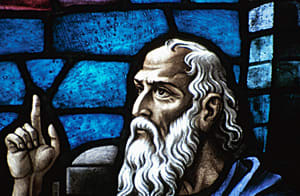
The other path to fill the spiritual basket is the sectarian path.  This is the sacred path or the path of religion and sects.  It is a path of meaning and purpose.  It is a path of prayer and meditation.  It is a path of Gods, prophets, and spiritual leaders.  These leaders tell their followers that the path to happiness and success comes from following their teachings.  Often they include meaning and purpose as tools necessary for your spiritual basket.  Some believe in the power of meditation and prayer for your spiritual basket.

prophetsThe great spiritual leaders like Mohammed, Jesus, Buddha and  Baháʼu’lláh all had followers and tried to teach their followers by various means.  It seems that the goal of enlightenment, samadhi or nirvana was achieved by each of the great leaders and even by some of their followers.  Unfortunately for humanity and for most organized religions, these gurus and religious teachers all missed one important truth.  “You cannot teach enlightenment.”  Enlightenment can only be learned by example.  We learn from our parents by the example they set for us.  We learn by observing how they treat other people.  We learn by what they do rather than what they say.  The followers of the great prophets and gurus were learning their spirituality from what their teachers were doing and now what they were saying.
The words that were left by some religious teachers like Thomas Merton, Mother Teresa, OSHO, Krishnamurti and the writers of the Old Testament and New Testament have no doubt inspired many people to try to reach heaven or nirvana.  For the most part, I doubt that many followers have ever achieved much enlightenment.  If they did, it was not by the reading of words but by the life that they led.

I think having had 39 silent Jesuit Retreats that prayer, mediation, solitude, and contemplation have a role in finding peace and happiness.  I do not think that they will lead anyone to nirvana or enlightenment.  Unless I am an extreme outlier, after 39 years of a three-day silent retreat full of prayer and meditation, I am still pretty much just your normal unsaintly unholy guy.  I am still waiting for most of my prayers to be answered and I am still waiting to sit peacefully in my car full of good will and cheerfulness when some jerk is tailgating me on the freeway.  I am much more likely to wish that I had an invisible ray gun that could make the impatient driver and his/her auto just disappear.

You can not teach how heat feels.  Description is futile.  You must feel it.  You cannot teach fulfillment or enlightenment you must experience it.  Words are useless.  The most important ingredient in a spiritual basket is love.  Love for yourself and love for others.  Love for all others and not just people who are like you.  Not just people who think like you.  If you do not feel love for yourself, you cannot feel love for others.  But there is a paradox here.  It is that love from others can help you feel loved.  Love for others, love for yourself, love for yourself and love for others are the Yin/Yang of a spiritual basket.  Purpose and meaning are good things, but they are transient.  They will come and go and change with the times.  Love never changes.  Jesus said:

“A new commandment I give unto you, that ye love one another; as I have loved you, that ye also love one another.  By this shall all men know that ye are my disciples, if ye have love one to another.  By this shall all men know that ye are my disciples, if ye have love one to another.” – John 13:34-35 (KJV)

KindnessDay-5

If you want enlightenment, follow a good person, do good deeds, be kind to all people and love yourself.  Being a person of integrity and honor leads to self-love.  Self-love leads to love for others.  We are all born with an empty spiritual basket.  In order to become complete, we must fill this basket with as much love as we can.

91om8nQaobL._SL1500_

Sex:  The Region of Permissions and the Region of Prohibitions

snakeeden

In an earlier blog, I said that sex was like a continent divided into two regions.  One region gave permissions or legitimacies to certain sexual practices.  The other region consisted of prohibitions concerning sexual practices.  Some sexual practices have been and in some countries still are prohibited by law.  Permissions and prohibitions are defined by religion, culture, and politics.  These elements influence the individual in terms of their physical, mental, emotional, spiritual, and financial appeal for sex.

Religion:

Religious teachings exert a powerful impact on what is permissible in terms of sex.  According to many religions, a man and a woman must be married to have sex.  Adultery is a term for a married individual who has sexual relations with someone they are not married to.  ““Thou shalt not commit adultery” is found in the Book of Exodus (Exodus 20:14) of the Hebrew Bible and Old Testament.  It is considered the sixth commandment by Roman Catholic and Lutheran authorities, but the seventh by Jewish and most Protestant authorities.” Wiki

51646318_poem_35

Jesus in the New Testament forgave a woman who was considered an adulterer when the crowd was going to stone her to death.  The religious taboos against adultery are only one of many religious taboos concerning sex.  Sex is forbidden among sex partners when procreation is not the objective and in certain physical positions not thought of as proper.  In some religions there is no such thing as rape between a husband and his wife.  Most religions prohibit sex between same sex partners.

Many of the prohibitions against sex by religions seem ludicrous and without any purpose.  Some such as the adultery prohibitions are almost impossible to enforce and are disregarded by a large number of religious adherents regardless of their theology or faith.

  • Statistics on Infidelity Rate: (2021): How Much Cheating is Going On?
  • Surveys show that 22% of married men have committed an adulterous act at least once in their life
  • 14 percent of married women have had affairs at least once during their married lives

Infidelity remains the number one reason that married and unmarried relationships end all across the world.  Everyone admits that cheating is wrong.  Religions rail against adultery and infidelity but humans routinely ignore the sanctions and prohibitions.  No one seems to stop and ask why we permit religions to prohibit many acts which people routinely perform.

anti-gay-but-sex-abuse-ok (2)The Catholic Church prescribes celibacy for its nuns and priests.  The recent scandals regarding the abuse of power by priests, bishops and cardinals would suggest a serious hypocrisy.  More importantly perhaps would be for the church to ask itself if these prohibitions do any good or serve any purpose.  Tradition may have a role in life but there is also a time when traditions must be changed.
Traditions can become evil when they force people to commit acts which religion regards as sinful yet are only a manifestation of human nature.  It is natural for people to be attracted to others and to want to make love to people they are attracted to.  Prohibitions based on the age of consent make sense.  It may be argued that the age of consent is a nebulous number that varies from country to country, but no one would argue that there should not be some age of consent.

“Age of consent laws vary considerably worldwide, although most countries require young people to be over 14 before having sex. Angola and the Philippines at 12, and several other countries, including South Korea and Japan at 13.”  —  “Age Of Consent By Country 2021

51uX9XG1sHL._SX331_BO1,204,203,200_

So why are religions so opposed to sex?  What are the benefits that religions get out of controlling sex?  Why do religions make life difficult for their members by imposing sexual mandates which will be broken repeatedly and are broken repeatedly.  Even the authorities in various religions are guilty of breaking their own prohibitions.  Why?  Why? Why?

“Sexually awakened women, affirmed and recognized as such, would mean the complete collapse of the authoritarian ideology.” — Wilhelm Reich

The simple answer is power.  As Lord Acton said, “Power corrupts, and absolute power corrupts absolutely.”  Churches exert power in a variety of ways.

  • They control who goes to heaven and who goes to hell
  • They control who is forgiven their sins and who is not
  • They control a number of sacraments needed to live a sacred life

Perhaps the most powerful control they exert over their members is their domination of the sex life of their members.  By controlling who can have sex, who they can have sex with, what sex is for and when it can be used, religions keep their financial treasuries full.  Baptism, Confirmation, Marriage and Divorce are all sacraments that churches use to make sure that their halls are full on Sunday or Saturday.  There is a looming problem though.

Barna_ChurchTrends_WebCharts_v73

People are not going to church anymore.  The non-affiliated outnumber the affiliated.  Even those people who declare themselves with some religion seldom go to church anymore.  They may show up for marriage, baptism, and confirmation but after that they are like ghosts.  Only twenty-four percent of Americans attend a church service each week. — “Church attendance of Americans 2020”  Mainstream churches are losing members faster than baby boomers are dying off.  Any company that lost a share of its market like these churches have would take a serious look at its products and services.  Religions seem to be blind to the changes that culture are bringing to peoples views on sex.  Next blog we will look at the cultural influences on sex that impact what is permissible and what is not.

“I am not a Christian or a Jew or a Mohammedan, a Mormon, Polygamist, Homosexual, Anarchist or Boxer. . . . I do not believe that, in order to be religious in the good and genuine sense of the word, one has to ruin one’s love life and has to become rigid and shrunken in body and soul. I know that what you call “God” actually exists, but in a different way from what you think: as the primal cosmic energy in the universe, as your love in your body, as your honesty and your feeling of nature in you and around you.”  — Wilhelm Reich

75 % Atheist and 25 % Percent Agnostic

AGNOSTIC-vs-ATHEIST-1

I grew up in an Italian Irish family.  What else would I be except a devout Catholic?  The bigger question is how did I go from being a Catholic to an Atheist or at least a 75% percent Atheist?  I now claim I am seventy-five percent Atheist and twenty-five percent Agnostic.  I will explain this formula later.

6edf3733b483b2baa492421c033d5c51

Well, my journey from one God to no God started many years ago and perhaps mimics the trajectory of many a lapsed Catholic.  Went to a Catholic school.  Lots of Catholic theology.  Bible study each week.  Surrounded by priests and nuns.  Confession on Fridays followed by ten “Our Fathers” and twenty or so “Hail Marys.”  Church and communion on Sunday.  Back to being bad, masturbating and thinking dirty thoughts about the girl in the pew next to me on Mondays.  She kept wearing skirts that hiked up above her knees when she sat down.  The nuns kept telling her that her skirts were too short, but she somehow ignored their admonitions.  I was personally awfully glad that she did.

NINTCHDBPICT000631973404

Sounds a little bit like I should have been a priest.  Sadly, I did not even make altar boy. Along the way, my questions about God received the standard answer.  Question, “Who made God?”  Reply, “God always was and always will be.”  Just before my 12th birthday, a godly priest damned me to hell for taking an unauthorized ride at a carnival that was set-up for a Catholic fund raiser.  Between bull-shit answers about God, condemnations for horny thoughts and being damned to hell, I decided to leave Catholicism for (as they say) greener pastures.

HuffP1-1Like Dion DiMucci’s “The Wanderer,” I spent years wandering from church to church and religion to religion to explore other venues for spirituality.  Dion was my favorite pop singer in the sixties.  As I write this, he is still alive and performing.  One of his most popular hits was a song called “The Wanderer.”  The lyrics grabbed every guy I hung out with, and we all dreamed of being macho and tough like the guy in the song.

Oh well I’m the type of guy who will never settle down
Where pretty girls are well, you know that I’m around
I kiss ’em and I love ’em ’cause to me they’re all the same
I hug ’em and I squeeze ’em they don’t even know my name
They call me the wanderer, yeah the wanderer
I roam around, around, around.

Oh well I roam from town to town
I go through life without a care
‘Til I’m as happy as a clown
With my two fists of iron and I’m going nowhere.

04ba56cb-bd2a-4fad-acba-d5af3e474911.sized-1000x1000

I suppose I had somewhat of Dion’s attitude towards religion.  To me they were all the same.  One God, their God, their rules.  You bought into their shtick, or you did not belong.  The price of admission.  Sell your soul for their traditions, their beliefs and their theology and you will be saved and adored and admitted into the flock.  Ask any questions, challenge any favorite tropes and excommunication and hell fire awaits you.  Their God always reigned supreme, and any other Gods were fake.  That is why the term for parishioners as a flock is so appropriate.  Most people are like sheep who flock together and have little stomach for questioning authority.  I have to say most, or my spouse will jump on me for a really gross generalization.  She helps to keep me in line when my cynicism towards the world outruns reality.

After not finding any religions that met my standards of objectivity and open-mindedness, I came to reject organized religions as evil and dangerous.  Witness the many wars fought in the name of someone’s God.  I started defining myself as an Atheist.  I despised all religions.  I sought out other Atheists but paradoxically found that I did not fit in with the Atheist groups that I met.  Atheists profess a strong orientation towards science, logic, and evidence as a basis for spirituality, but many of the Atheists I met were narrowminded, bigoted and worst of all made decisions without sound evidence or data.

atheist_eflf1d

My faith in Atheism was shaken many times by highly religious people who had more in common with my beliefs than the Atheists I had met.  For instance, when Sister Giovanni was interviewing me to teach at Guadalupe Area Project, I informed her that I was an Atheist.  She replied, “I don’t care what you are as long as you are a good teacher.”  I still could not find any evidence for God, heaven, hell, or an after life not rooted in hopes and dreams but nevertheless my Atheistic roots over the years have continually been shaken.

Some of the things that have shaken my beliefs are the many good people who passionately believe in God and their religious obligations towards others.  Jesus said:

“But I say to you who hear, love your enemies, do good to those who hate you, bless those who curse you, pray for those who abuse you. To one who strikes you on the cheek, offer the other also, and from one who takes away your cloak do not withhold your tunic either. Give to everyone who begs from you, and from one who takes away your goods do not demand them back. And as you wish that others would do to you, do so to them.” — Jesus Christ, English Standard Version (Luke 6:27–31)

I have met people who follow these beliefs in a variety of religions.  I came to accept that religions have done much good as well as much bad for the world.  Not being God, I have no way of knowing or proving whether the bad or the good outweighs the other, so I have simply stopped judging most religions.  I say most because there are still some religions that I see as hypocritical and even evil.  The idea of a “Prosperity Gospel” strikes me as a justification for greed and selfishness.

Another finding that has shaken my moorings as an Atheist are all the really smart people who believe in a God.  I weigh myself against such people and come up noticeably short.  If these people are so much more intelligent and accomplished than I am, maybe, just maybe, I might be wrong.  How can I sit here and argue that they are wrong?  It would be arrogant to think that I have all the knowledge and information to assert that “there is no God” when much greater thinkers than I have affirmed and argued a belief in God.

I started calling myself an Agnostic to reconcile some of the above dilemmas.  The definition of an Agnostic is, “A person who believes that nothing is known or can be known of the existence or nature of God or of anything beyond material phenomena; a person who claims neither faith nor disbelief in God.”  Being an Agnostic, I could go happily through life never having to attack or defend my convictions concerning the existence of God.  This position has certain benefits, but it is not without constraints.  The biggest constraint is being seen as a copout or wishy washy.  Someone who straddles the fence because they are afraid of taking a position.

Knowledge_venn_diagram

I want to avoid being seen as wishy washy but some days I feel like an Atheist and other days I feel like an Agnostic.  If there were a continuum between Atheism and Agnosticism it varies from day to day for me.  Today, I feel like I am 75 percent Atheist and 25 percent Agnostic.  Tomorrow I might be fifty-fifty or sixty-forty.  Life is a process that is continually in flux.  Change is inevitable.  Our moods change, our likes and dislikes change, our aches and pains change, our joys and sadness’s change.  It only makes sense to me that my affinity for one religious position or another should change.

So, if you ever want to know what religion I am, it will probably be somewhere between 100 percent Atheist and 100 percent Agnostic.

“To one who has faith, no explanation is necessary. To one without faith, no explanation is possible.”  ― St. Thomas Aquinas

“As a philosopher, if I were speaking to a purely philosophic audience I should say that I ought to describe myself as an Agnostic, because I do not think that there is a conclusive argument by which one can prove that there is not a God. On the other hand, if I am to convey the right impression to the ordinary man in the street I think that I ought to say that I am an Atheist, because, when I say that I cannot prove that there is not a God, I ought to add equally that I cannot prove that there are not the Homeric gods.”  ― Bertrand Russell

Previous Older Entries