Introduction:
A number of years ago, I wrote an article about the famous “Golden Mean” of Greek philosophy. The mean was basically a rule that said the best way of living is to balance extremes. Another way of looking at what this rule implies is that evil or bad things happen when we over do something. We need to take all things in moderation. Thus, drugs, smoking, guns, watching TV etc., are not evil or bad in themselves but when we take them to extremes they became dangerous and counterproductive.
Life is an ongoing struggle to find our proper balance. However, it may never be a question of equal balance because the proper balance can never be static. There are many dimensions or polarities in life where it is not really a matter of moderation or balance but more a matter of dynamically imposing a temporary order between two extremes. The concept of Hegelian Dialectics comes to my mind as an aide in thinking about this process.
Dialectical thinking can be described as: “The ability to view issues from multiple perspectives and to arrive at the most economical and reasonable reconciliation of seemingly contradictory information and postures.” This is a much more complex process than simply balancing extremes. The more I thought about it the more I decided to add a corollary to the Greek Rule. Since I think time has easily proved the value of the Golden Mean, a corollary by definition is a proposition that follows from and is appended to one already proved. My corollary is as follows:
John’s Corollary:
Anytime, one concept in a set of opposing concepts is allowed to dominate the other concept, extreme dysfunction will result.
I want to discuss this more by using five pairs of concepts that I think are critical to our world today. I want to show you how the distortion created by proponents of each concept is dangerous to life as we know it. I do not use the word dangerous loosely or frivolously or for effect. The battle between these ideas is destroying life as we know it on this planet. The proponents of each side of these polarities seek to destroy the proponents on the other side.
Rather than looking at things from a systems perspective and trying to dynamically adjust the system, opponents are driven to allow one idea to dominate to the exclusion of the other idea. Witness the name calling between conservatives and liberals today. Each side demonizes the other side and assumes God is on their side and Satan is on the other side. Liberals are evil to conservatives and conservatives are evil to liberals.
Here are the five pairs of concepts we will look at in the next few weeks. This week we will look at number two on my list. We have already discussed the “efficiency versus effectiveness” dimension in part one of this blog series.
- Efficiency versus Effectiveness
- Growth versus Development
- Society versus the Economy
- Conservative versus Liberal
- Rights of the Individual versus Rights of the Group
2. Growth versus Development:
I live in two counties in two different states. The states are about 2000 miles apart. In Arizona, I live in Pinal County. In Wisconsin, I live in Polk County. You would think that these two states could not be much different, but actually they are remarkably similar in many ways. Weather is not one of them. The one main way that they are similar is in the greed and stupidity that underlies attitudes towards growth and development. Both states have politicians and leaders that have no concern with balancing these concepts but instead fight to destroy the other side. I will give you an example that is now happening in both states and which I have been involved in. However, first we need to define and understand the difference between growth and development.
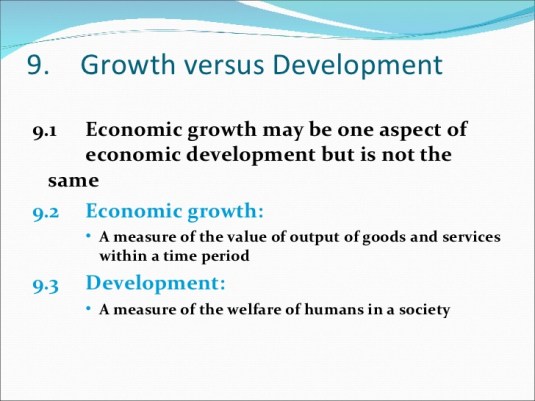
Most simply, growth can be defined as getting bigger. Development can be defined as getting better. Bigger and better may go hand in hand but they may not. A child can grow into an adult but if developmentally disabled will not get better in the sense of becoming a mature adult. The child can grow bigger but will never be and adult. Conversely, someone can fail to grow physically due to some systemic disease but can nevertheless develop mentally. My good friend Brian Rogers did not have much physical development but mentally he was a giant. He was not only brilliant intellectually, but he was kind and compassionate to everyone that he met. This in my mind is the ultimate development.
The noted scholar Dr. Russell Ackoff discussed these two concepts as they applied to a country. He described them as follows:
“Growth is an increase in size or number. Development is an increase in competence, the ability to satisfy ones needs and desires and those of others. Growth is a matter of earning; development is a matter of learning. Standard of living is an index of national growth; quality of life is an index of its development. Development is not a matter of how much one has but how much one can do with whatever one has. This is why Robinson Crusoe is a better model of development than J. Pierpont Morgan.”
“I hope we can help public policy and decision makers realize that development and growth are not the same thing. Neither presupposes the other. Rubbish heaps grow but do not develop. Einstein continued to develop long after he stopped growing. Some nations grow larger without developing. and others develop without growing.” —Transforming the Systems Movement, 2004
Dr. Ackoff died in 2009 and I would venture an opinion that he did not live to see his hopes come true. Too many politicians, real estate developers, business leaders and government officials still do not grasp the fundamental distinctions between growth and development. Even worse they ignore the balance that must happen between the two concepts that is essential to protecting our society, environment, and our very lives. Let me give you two examples from my life in Polk and Pinal counties.

Pinal County, Arizona:
When we bought a house in Arizona City in 2008 and decided to become snow birds upon retirement, we inquired into the issue of water in our area. Knowing that we were moving into a desert we were concerned about the availability of water. We were told not to worry. There was a water plan that would deliver all the water we needed for the next 50 years. This was pure BS. There may have been a water plan, albeit not anything that was useful, but there sure as heck was not enough water for another fifty years at the present rate of growth and given the increasingly warm summers and lack of rainfall.

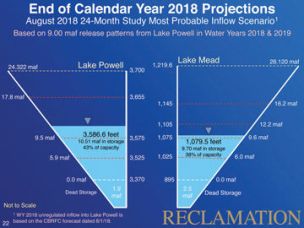
It is widely accepted that the Southwest is hotter than ever and that drought conditions are widespread. Both Lake Powell and Lake Mead are near disaster levels in terms of water supply. Just a year or so ago, the Governor in Arizona sought to comply with a Federal order and mandated a commission to develop a DCP (Drought Contingency Plan). A group of 30 or so “leaders” selected by the Governor hastened to cobble together a plan in time to meet the Federal order. I attended one meeting with the Pinal County Economic Development Group to hear about the DCP. I was surprised and astounded to learn that there was nothing, nada, not a thing in the plan about water conservation. The majority of the plan was nothing more than a subsidy to local farmers to take less water from the CAP (Central Arizona Project) a pipeline bringing water from Lake Mead and subsidies to dig wells even deeper. Digging deeper despite the fact that aquifer water is down in many places to below 1000 feet.
I have since attended many meetings of the Pinal County Economic Development group. The group is mainly led by and composed of real estate developers and contractors. Despite their name, they care little about development and are only concerned with growth. Growth for more real estate in private homes. Growth for more business development. Growth for more industry and manufacturing. They have little interest in water conservation and are not concerned with helping the lives of Arizona citizens to get better. They are foremost and primarily driven by a greed that is fed by getting bigger and bigger. More and more houses, more and more businesses, more and more taxes to feed into the political coffers. More and more money paid to build homes and industries. These people would build homes on top of homes if they could convince people to buy them. The fact that Arizona is suffering from higher than ever temperatures and less water than ever before seems to matter little as the dollars signs apparently blind these so-called developers to reality. They should be called “growthers” and not developers since they contribute little or nothing to the development of Pinal County.
Polk County, Wisconsin:
About a year or so ago, we had just returned from Arizona to our home in Wisconsin. Upon returning, I learned a new word or acronym. It was CAFO. This stood for Concentrated Animal Feed Operation. I was totally ignorant about anything pertaining to this type of farming operation. I was soon to learn more than I wanted to know. A developer representing a large CAFO had come into our area to find a site for a Swine CAFO that would hold upwards of 50,000 hogs. He had come promising jobs and tax money and income for local farmers as they supplied some of the CAFO needs such as grain and other products used in the operation.
A few of our local community leaders immediately embraced this siting of a CAFO. Fortunately, many local citizens were aware of some of the potential negative impacts of a CAFO this large. Possible soil, water and air contamination were potential impacts that had occurred in other areas of the country where CAFOs had been established. Two sides soon emerged. One side is highly supportive of CAFOs. This side is mostly comprised of larger farmers in the county and many of our county supervisors. The other side is comprised of residents who live locally on lakes that are potential areas to be degraded by a CAFO and just plain citizens who do not see how the county will really benefit from a 50,000 swine CAFO. I fall into the latter group. I do not live on a lake. After learning of the many potential dangers posed by a CAFO to our environment, I am concerned that the CAFO ordinances are not strong enough to protect the county.
Many county board meetings have taken place in the last year. Signs are up all over the county opposing CAFOs. Signs say “Stop CAFOs” or “Support Family Farms Not Factory Farms.” There have been numerous protests outside county board meetings. At one we attended, over 175 people showed up to urge county supervisors to support a “moratorium” to study the land use ordinances in more depth and to support more research to make stronger ordinances. Not surprising many of the county supervisors support less effort to control CAFOs. They argue that state and local ordinances are strong enough already.

Pigs in a concentrated animal feeding operation (CAFO) barn
County boards always seem to have a lawyer on hand to instruct caution and who drives fear into every meeting with warnings about lawsuits that could be brought against the county board for government overreach. At the board meeting last week to extend the mortarium, it was voted down 8-7. A second resolution to pass a weak ordinance in lieu of further study was passed by a vote of 11-4. Even some on the board opposed to the CAFO voted for the resolution apparently cowed by the board lawyer or under the assumption that any ordinance was better than no ordinance.
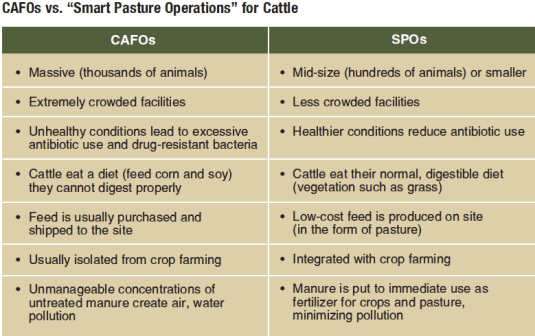
Polk County leaders value growth at the expense of development. The fact that major negative impacts on our land and quality of life are highly probable matters little to those blinded by the economics of growth. More money, more revenue, more taxes, more business sales. All of these “mores” in terms of economic growth blind our leaders and many others to efforts to balance growth with development. It becomes a war between two opposing camps and not an effort to balance two extremes. The future is sacrificed to the greed of the present. A “my way or the highway approach” ensures that my corollary will hold true.
Anytime, one concept in a set of opposing concepts is allowed to dominate the opposing concept, extreme dysfunction will result.
With Global Warming, we have already set in place climate changes that are having profound negative impacts on the world. How many more times will we resort to extremes that serve only to create more devastation and destruction on the environment?
Thanks for reading. Please leave any comments or thoughts you might have on my blog site. Or email me at persico.john@gmail.com


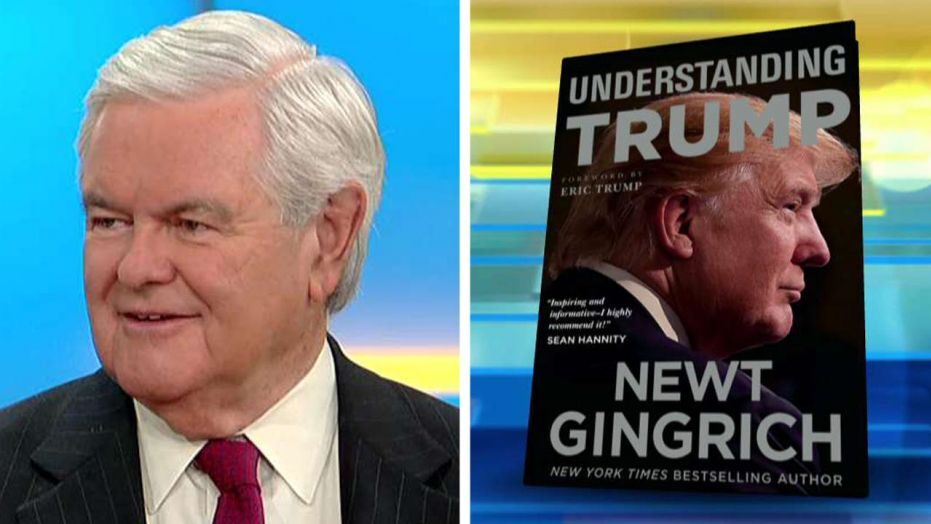 The research that purports to explain the Trump phenomenon almost never goes beyond the “Right Wing” narratives for Trumps election. These narratives all point to abortion, guns, taxes, small government, immigration and jobs as the key factors in Trumps victory. Trump blames the Democrats for everything wrong in rural America and the Republicans have provided a compelling set of schemes that have convinced many in rural America that a partial solution to their problems lies in more capitalism.


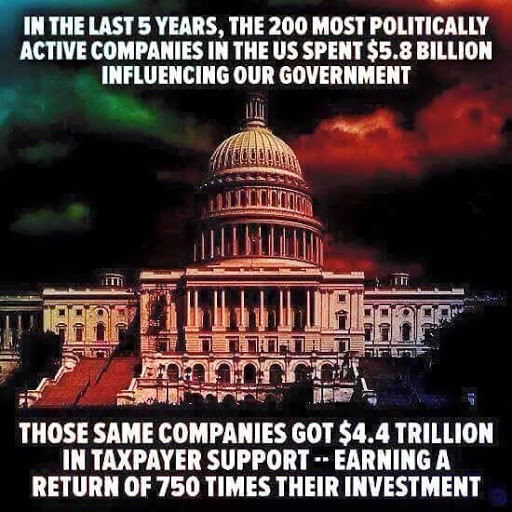


 The thought that “you will have liberty if you can pay for it” rings true 100 years after Lucy spoke these sad and forlorn words. Today we say “politics and courts are ruled by the Golden Rule. He who has the money makes the rules.” We all know that it takes money to get a law passed or else why are there so many lobbyists in the halls of congress. We also know that rich people get a better break in court because their money buys them better lawyers. We also know that poor people fare less well with our law enforcement agencies than do rich people. When was the last time you heard of a police officer stopping someone in Palms Springs or La Jolla for a broken taillight?


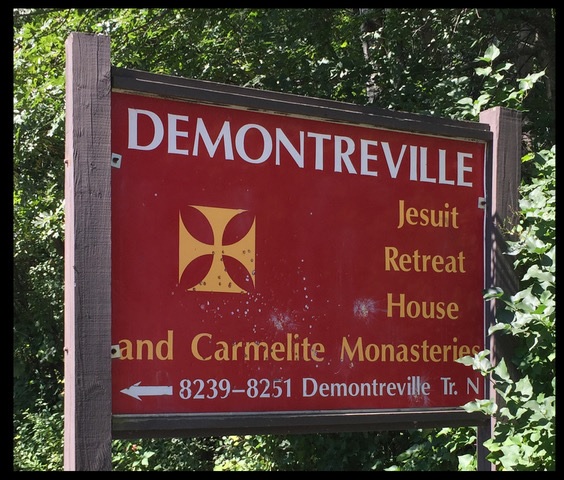
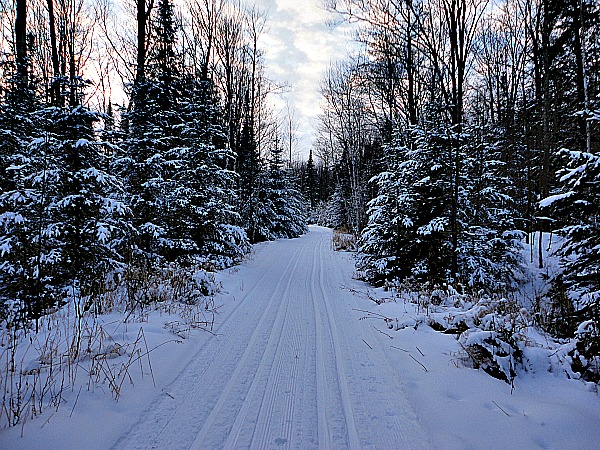 It was January of 1986. I had finished all my course work for my Ph.D. degree. It had already been a long and cold and snowy Minnesota winter. I had finally collected all the data I needed to finish my dissertation. Four years in school, working…

