
The Second Amendment is the lever for mass genocide in America. Every day Americans witness another mass killing or wanton murder. Road rage shootings. Family violence. Workplace shootouts. Shootouts in churches, parking lots, malls, grocery stores, Walmart’s, and on every highway and byway in America. Twelve-year-old children taking guns to schools to kill as many people as they can. Husbands killing entire families in a rampage. Employees terminated coming back to assassinate former co-workers and their ex-bosses. And throughout every one of these berserk episodes of violence, the same old tired excuses are made:
- We need more mental health training
- We need more guns to protect the innocent from the maniacs
- We need better ways to screen people before they can purchase a gun
- Guns don’t kill people, people do
- When guns are outlawed, only outlaws will have guns
- We can never stop gun violence
- We are so sorry for your loss and we offer our prayers for the survivors
There is not a nicer or more politic way to call the state of gun violence in America for what it really is. It is predictable state sponsored genocide supported by bullshit excuses made by cowards and sycophants who pander to the maniacs who are too afraid to go to sleep at night without a gun under their pillow.
A three-year-old girl was shot by a five-year-old boy in a house in Cass, Minnesota. The police did not elaborate on the relationship between the children or the gun that was used. It is also unclear how the five-year-old boy was able to access a firearm. — U.S. News, August 14, 2021
Cops add to the death toll because they know that any person walking on the street might be armed and dangerous. Once upon a time, cops asked questions and shot later. Today, the fear and paranoia of society drives police departments as well. Cops now shoot first and never ask questions. In one sense, it is hard to blame them when everyone in the good old USA is probably better armed then they are.
There are those on the left and right who will defend gun ownership. Asshole judges strike down laws that communities try to establish to protect themselves from gun violence. These same assholes live in gated upper-class communities and remain far removed from the violence that they create with their legal shenanigans.
In the first paragraph of his 94-page opinion, Judge Benitez lays out the heart of his reasoning colloquially: “The popular AR-15 rifle is a perfect combination of home defense weapon and homeland defense equipment. Good for both home and battle, the AR-15 is the kind of versatile gun that lies at the intersection of the kinds of firearms protected under District of Columbia v. Heller…and United States v Miller….” — From “Reason” by Brian Doherty
 This logic is simply bizarre. It is almost beyond comprehension. A rifle based on a cartridge designed during the Vietnam War is now touted as a “perfect” defense weapon. It sounds like every home should buy one. Americans live in a country where there is no protection from crime according to the NRA and gun manufacturers. The NRA kisses the asses of manufacturers to grab more and more power as they perform like Pied Pipers for their members. “Come along, buy a gun, protect your rights, protect your family and children. Don’t let the criminals make a victim of you.” The NRA is a monster that has metastasized on the fears of Americans. Politicians court the money and votes of NRA members to get re-elected knowing fear is a great motivator. To paraphrase a comment made by the Nazi Hermann Goering:
“The people can always be convinced to buy more and more guns. It is easy. All you have to do is tell the average person that they may be victimized by criminals and denounce the gun control people for lack of patriotism.”
 “The more guns we have the safer we will all be,” scream the gun fanatics. I have neighbors walking around in their yards with guns strapped on their hips. I often see shoppers in some stores sporting revolvers and automatics on their belts. Walmart’s has asked that shoppers do not open carry guns. Do you know why? It is because people get nervous when they see these idiots walking around with pistols on their belts. I worry more about being shot by one of these jerks than I do by some armed robber. In the event of a store robbery, I suspect I might be more likely to be shot by the so called “good guy with a gun.”

We can have countless and fruitless arguments over what and why the Founding Fathers included the 2nd Amendment. We will never know, and it really does not matter. We are not living in 1789. What I do know is that a six-year-old child named Aiden was riding in a car seat with his mom who was driving him to kindergarten. Suddenly Aiden exclaimed, “Mommy, my tommy hurts.” Aiden Leos died before they could get him to a hospital. He died when two assholes with guns decided to shoot at his car because of some perceived violation of their road rights. The two assholes decided that their second amendment rights trumped the rights of Aiden and his family.
So shouldn’t we be able to drive on roads and freeways without fear of being shot? I say the answer is a resounding YES. So why allow guns in cars in the first place? Before Minnesota passed a law in 2005 to allow “law abiding” gun owners to carry guns around with them wherever they go, this was just not happening. Or if it was, it was pretty rare. Sure, some who have illegal guns have likely been carrying guns around all along. But now we have made it part of our every day culture as if it is normal.
I am sick and tired of reading about these instances of insanity. I am increasingly worried that one of these bizarre situations will befall someone I love or even my wife and me. They are occurring with more and more frequency and more and more randomness. No one is safe. Carrying a gun on you does not make you safe. Having a concealed carry permit does not make you safe. Being a nice person and an honest citizen does not make you safe. We are being victimized by lovers of the Second Amendment. By neighbors who think that by arming themselves and everyone around them, we will all be safer. Was anyone really ever stupid enough to belief this? How much more evidence is needed to contradict any such assumptions? What will it take for these morons who distort the Second Amendment to realize the dangers that they have brought to our country?
 I admit that I have always liked guns, knives, rifles, and assorted military hardware. However, I like them in their place. Rifles for hunting when hunting is a sport and not a crap shoot like so much of it is today. Baiting bears with donuts and then shooting them from a tree perch does not seem very sporting to me. I like target shooting. I enjoy shooting some black powder pistols that I own. A friend gave me an old revolutionary style musket which is fun to shoot. I do not shoot at squirrels or birds or rabbits. I use it for target practice. I am not against hunting deer, elk, and other animals for food. Many people in rural areas depend on game animals to supplement their diets in lieu of costly meats at a grocery store.

The problem with guns comes when we ignore the unintended consequences of gun ownership. When we create a climate where every idiot and moron in the country is carrying a gun. Who are these idiots and morons you may well ask? They are you and me and my friends and friends of my friends. They are everyone who might get stressed out someday and lose their common sense. They are people who become depressed and give up on life. They are people who become so angry with perceived injustices that they want to strike out at anyone for revenge. They are everyone and anyone. They are the man or woman or child that is walking down the street. They are your mother, sister, brother, aunt, uncle, or best friend. They are the quiet guy who lives down the block. They are the helpful next-door neighbor. They are the quiet student who sits in the back of the class. They are the military recruit who somehow loses it and goes on a shooting rampage.
 I don’t know who might kill you. I don’t know when they might kill you. I don’t know why they might kill you. Best odds are that it will be totally random, and you will never see it coming. You will never know when it will happen. The statistics show that you have a 75 percent chance that if you are murdered it will be by a gun and not by poison or a knife. (Number of homicide victims, by method used to commit the homicide)
The USA has become a warped and bastardized version of the “Old West.” Gun advocates like to portray themselves as upholders of the “Code of the West.” In their mystic interpretation of events, people walked around with guns wherever they went. Supposedly this was because of the lack of “law and order.” In reality, Most western towns had ordinances prohibiting carrying of guns in town.
- There were few old-fashioned gun fights in a front facing mano a mano style.
- Cowboys on the range did not wear their guns all day long but kept them in the chuck wagon.
- The “old west of the cowboys and cattle drives” lasted less than fifty years.
- Towns established police departments and law and order rules as quickly as they were able to as many of the new territories soon became states.
 How then have we gone from sanity to insanity? From being able to walk down a street or go to work or school and not worry about some nut case coming in and killing us? When did America go from being a country with “Law and Order” to a country where everyone needs to carry a gun to protect themselves? How have we let the politicians, NRA and gun manufacturers convince everyone that it is not safe to walk outside without a concealed carry permit and a Glock or Smith & Wesson hidden someplace beneath our bullet proof vest?
The answer is simple. Eliminate fear. Eliminate open and concealed carry laws. Guns are for home protection and hunting. We have created a country where there is no place to be safe anymore. Everyone has the potential to be the next killer, or the next asshole gone crazy. No amount of mental health training is going to stop the mad rampage of gun deaths in America. The only thing that will stop this is when people realize the obvious. Guns are not making us safer; they are killing us.
Updates since I wrote the above blog:
News from June 21, 2021, Minneapolis Star and Tribune
Gun violence
Ten mass shootings happened across the nation this weekend, leaving at least seven people dead and more than 40 injured. It was the latest in a streak of violent weekends in America. The weekend before this, there were also 10 mass shootings that left 12 people dead across seven states. (CNN defines a mass shooting as four or more people shot, not including the shooter.) This weekend’s violence included shootings at several parties and celebrations, including in California, Indiana and Colorado. According to the Gun Violence Archive, there have been 293 mass shootings in 2021 so far.
News from June 22, 2021, Minneapolis Star and Tribune
St. Cloud Professor Shot
St. Cloud University Professor Ed Ward was shot to death Sunday in his doorway in what police are calling a random incident…. Officers arrested the suspect and recovered the gun, and the suspect admitted to officers that he shot the victim.


 When we get back to normal, two parent families will again reign supreme. Mom will stay home to cook, while dad goes to work. There will be no trans-people. Girls will stick to cheerleading and let the boys play the sports. Contraceptives will be banned, and no one will dream of getting an abortion. Priests and ministers will be male, and gay people will disappear. Everyone in America will go back to being good Christians.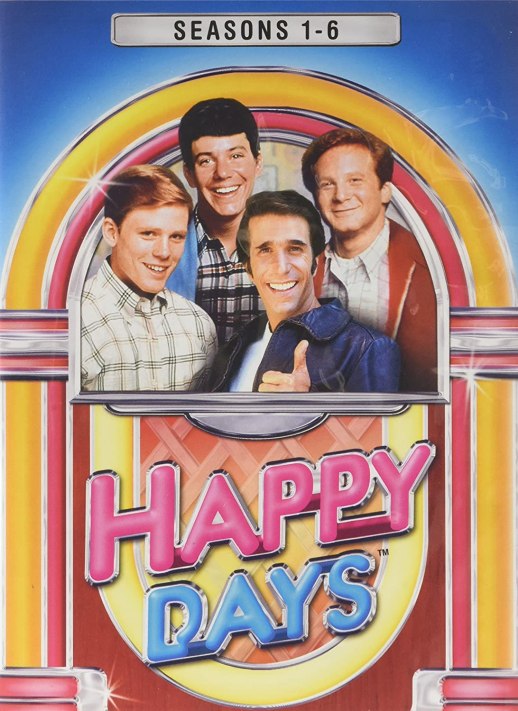


 Second, what are you going to do about your fears? Fear is an adaptive mechanism. It helps to keep you alive. If you are in the woods and walking down a trail and see a large bear or cougar coming towards you, it is quite healthy to have some degree of fear. But fear alone is not going to save your life. If you are paralyzed with fear you may just be eaten. Fear is an alarm. An alarm sounds to wake us up. The next step is to do something. Doing something is a risky effort with no guarantee of success. Sadly, there are few guaranties in life, but the evidence seems to suggest that doing nothing is worse than doing something. This is where forethought and preparedness come in. One of my favorite quotes is by the Roman philosopher Seneca (died 65 CE) who once said that “Luck is what happens when preparation meets opportunity.”


 Dylan Thomas said, “Do not go gentle into that good night.” I don’t know about the raging part of his poem. I prefer thinking about my life as I get older and not raging. But he makes a good point. It is all too easy to give up on life as we age. We can live in memories of what we used to do, or we can find new activities and new levels to pursue old activities at. For instance, I may not have the stamina to play tennis or racquet ball anymore, but I can still play pickleball or go for a short ride on my bicycle. I used to do six-minute miles in road races. My personal best was 38.48 on a 10K. The race I ran for Frederic Family days this year on June 12, 2021, I averaged 10.14 per mile for a 5k. Quite a bit off of my pace from years ago but I still got my t-shirt. I run for t-shirts these days and not trophies.

 The first tale begins with a trip back from Duluth, Minnesota over thirty years ago. Karen and I were returning from a scenic ride up the North Shore to our home in White Bear Lake. It was a beautiful Sunday afternoon in July. We decided that we were hungry. We were nearing the Cloquet exit on Interstate 35. Not seeing anything near the exit, we decided to pull off the freeway and try to find a place to eat in Cloquet.
 The quantity of food when it came was plentiful, but the quality of the food was a big surprise. We have been to many a good Chinese restaurant in Shanghai, Huangshan, Nanjing, Suzhou, and several other Asian cities including American cities with large Chinese populations. The food here was wonderful. It was tasty, spicy, and as good as we have eaten anywhere in the world. We were beyond surprised. I could not believe our good fortune. How could this be? A diamond in the rough where diamonds were not supposed to exist.
 She advised me that Mr. Huie (who started the well-respected Chinese Lantern restaurant in Duluth) had decided that Cloquet would be a good place for a small take-out style Chinese restaurant. He placed an ad in a San Francisco paper which found its way to mainland China. Mr. Huie (son of the founder of one of the first Chinese restaurants in Duluth) reviewed a number of applicants who answered his ad. The present cook was selected for the job. Who would believe a genuine Chinese food restaurant in Cloquet Minnesota?


 Like Dion DiMucci’s “The Wanderer,” I spent years wandering from church to church and religion to religion to explore other venues for spirituality. Dion was my favorite pop singer in the sixties. As I write this, he is still alive and performing. One of his most popular hits was a song called “The Wanderer.” The lyrics grabbed every guy I hung out with, and we all dreamed of being macho and tough like the guy in the song.



 There are beauty products, breast enhancements, hair implants, plastic surgery, expensive cars, perfume, jewelry, large homes, designer clothes, college degrees and many other products or services designed to help you feel less inadequate and more adequate. We all want to feel adequate which means we must somehow learn to escape or jettison our inadequacy paradigms. The marketplace strategy involves spending huge amounts of money on a regular basis to escape the “inadequacy paradigm.” This…

 About twenty years ago, I was sitting in a coffee shop in Stillwater, Minnesota when a scruffy lanky tall guy walked in. I had been involved in several motorcycle clubs during this time in my life and I thought that I recognized him from one of the clubs. I got up and walked over to him. I asked if we knew each other. I then asked if he belonged to any local bike clubs? He replied somewhat curtly that he did not know me and that he did not belong to any bike clubs in the area.

 We shop till we drop. We invoke our privilege to use our money as we want to. We make holidays out of holy days where we spend our time hunting for bargains and sales. Greed has now become a sacrament. Greed is no longer evil. Greed is holy. Greed is the American Way of Life. Millions of Americans adore the wealthy. The story of Lazarus holds no credibility – Luke 16:19-21. Nor does the story of the Rich Fool – Luke 12:13-21. Money is sacred and those who have more are worshipped by Americans and exalted as better people and better leaders. We elect millionaires and billionaires to Congress and even the Presidency on the sole basis of their acumen at having stored up wealth.


Title: Historic Match between Good Guy from the West and Evil Guy from the East
17 Jun 2021 Leave a comment
by Dr. John Persico Jr. in Uncategorized Tags: biden, commentary, Putin, summit
Just for the hell of it, I am going to comment on the historic Biden Putin summit. Everyone else in the world has given their take on this historic moment in US and Russian history, so why not me? I can sound as knowledgeable about Biden and Putin as any of the commentators who have commented on this situation. Think of me as a commentator commenting on the commentators who commented about the historic Biden Putin summit. I should add that if you have not already noticed, just about every commentator commenting on this summit mentioned it as a “historic” summit.
In case you do not know the definition of historic, it has something to do with something that someone might potentially put into a history book or perhaps something that Hollywood will make a movie out of. If I were to make a film out of this historic summit, it would go something like this.
Plot:
Two leaders from hostile countries meet to divide up the world or at least agree on who is screwing things up in the world. The leader from the evil country denies everything while the leader from the great and good and very morale country warns the evil leader of the consequences of not being a better leader. The good leader is in the blue trunks while the evil leader is in the red trunks. The match consists of three one-hour rounds with a ten-minute restroom break between rounds. The breaks are to allow commentators to send their commentaries to their offices.
Cast:
Joe Biden: President of the USA
Vladimir Putin: Evil Dictator from Russia
Sycophants: Both countries brought along dozens of elected officials to witness the match
Commentators: Just about anyone who could buy, forge, or obtain a press pass
Synopsis:
Joe came out of his corner with a quick handshake which threw his opponent for a momentary loss. Commentators scored it 1-0 for Biden. Vladimir recovered quickly and met Joe’s handshake with a bone crushing shake of his own. Joe smiled and they both took their seats. Commentators gave Joe another point since they like him better. The score was now 2-0 for Biden.
Numerous subjects were dealt with in the next three hours. Despite the pre-game name calling by Biden, the opponents settled into a polite routine with no grandstanding or insults. As expected Biden threw a “dissidents jab” at Putin who responded with a “January 6th insurgency jab.” Biden called the comparison ridiculous which most commentators agreed on. Biden scored another point making it 3-0 for Joe.
Joe threw a right cross nailing Vladimir with warnings about any more hacking. Vladimir blocked the punch and denied everything. Commentators were split since Joe did not provide any evidence and Putin seemed so confident that nothing could be pinned on Russian hackers. Call it 1 for Joe and 1 for Putin. The score after round 2 was 4-1 in favor of Biden.
Both leaders came out in round three with Putin clearly shaken up and worried about the bad press he was getting from a less than stellar effort. It was clear that Putin had underestimated Sleepy Joe and had not trained well for this match. Nevertheless, Putin scored early in round three with some nice comments about his opponent that Joe rolled with. Commentators gave Putin a point since Joe should have side stepped these compliments instead of accepting them. Joe was clearly surprised. The final score after round three was 4-2 in favor of Joe.
Post-Game commentary tended to judge the match a win for Biden due to his early domination of the bout and self-confidence. However, many commentators had it as a draw since Putin made no concessions and gave nothing away. There were no major knockdowns and depending on one’s viewpoint nothing was really decided.
Stay tuned for a sequel to this historic match, in which both opponents will meet again for another historic showdown.
Share this: