Reflections on Humanism: A Father and Daughter in Conversation

This year, after my 42nd silent retreat at Demontreville, I found myself reflecting over a different kind of lesson — one not from the retreat master, but from a conversation with my daughter.

My daughter Chris and I could hardly be further apart politically.  I lean toward policies that support immigrants, the poor, minorities, and the sick.  She supports Trump and the Republican agenda, which I believe diminishes those very groups.  Our conversation was brief, but it revealed something that I have been mulling over ever since.

When it comes to personal interactions, my daughter is tactful, gracious, and considerate.  She knows how to get along with people, soften conflict, and maintain civility.  I, by contrast, am often blunt and confrontational.  When I disagree, I rarely hide it.  I leave enemies in my wake since I have little tolerance for greed and immoral people.  She accuses me of being harsh, even inhumane, in my manner.

And yet, when I step back, I see an irony.  My brusque words are often in service of a vision of justice for the many.  Her gentle tone exists alongside a commitment to policies that, in practice, withdraw support from those most in need.  In fact, the Trumpian policies she supports will result in starvation, disease and death for millions.

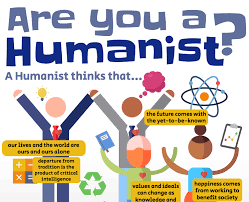
This tension raises a deeper question: what does it mean to be a true humanist?

Is it the ability to show kindness in the moment, face-to-face, even if one’s broader commitments bring harm to many unseen lives?  Or is it the willingness to fight for systemic justice, even if the style of delivery offends, unsettles, or disturbs?

I think of Christ, who could be gentle with the broken and the poor, yet fierce with the powerful and the hypocritical.  He healed with a touch, but he also overturned tables.  His humanity was both intimate and systemic.

Perhaps that is the lesson I am being given now.  Humanism is not one thing.  It asks us to be kind in the small circle of our relationships but also bold in the larger circle of society.  Without the first, justice grows cold.  Without the second, kindness becomes complicity.

I wonder if my daughter and I — so different in politics, so different in style — are each holding half of a larger truth.

Yinandyang GIFs | Tenor

What Do Sun Tzu, Musashi Miyamoto and Magnus Carlsen Have to Say about Life, Love and Death?

I have lived much of my life thinking and planning ahead.  I have often been laughed at because of how far ahead I like to plan.  But for some reason, I grew up believing that the secret to life (if there was one) lie in being ahead of the game.  I learned to play chess quite early on and by six, I could beat my father who taught me the game.  Three of my heroes in respect to planning are three men who all excelled in the art of strategy albeit very different arenas.  I am going to briefly introduce these three men and then invite you to sit down and listen to a discussion between the three men on strategy. 

Magnus Carlsen (Born 1990) is considered by many to be the greatest chess player who has ever lived.  He has now surpassed both Bobby Fisher and Garry Kasparov as the greatest champion ever.  Magnus is a genius on the chessboard which in some ways is a metaphor for military strategy and planning.  Carlsen is from the cerebral world of modern chess and is a wizard who plays out strategy on a strictly cognitive level. 

“Carlsen is a five-time World Chess Champion, five-time World Rapid Chess Champion, and the reigning (shared with Ian Nepomniachtchi) eight-time World Blitz Chess Champion.  He has held the No. 1 position in the FIDE rankings since 1 July 2011, the longest consecutive streak and trails only Garry Kasparov in total time as the highest-rated player in the world.  His peak rating of 2882 is the highest in history.  He also holds the record for the longest unbeaten streak at the elite level in classical chess at 125 games.” Wikipedia

In terms of mortal combat, Musashi Miyamoto is hands down the greatest fighter who ever lived.  Musashi is from the deadly pragmatism of samurai combat.  He was a swordsman in feudal Japan (1584-1645) who went on a quest to defeat the greatest swordsmen of his time.  He was undefeated in 62 duels to the death with the Katana.  There is nothing fake or theoretical about facing an opponent with a 37-inch razor sharp sword capable of cutting you in half.  Musashi went on to memorialize his fighting strategy in a famous book called “The Book of Five Rings.”   

Sun Tzu (544 BCE) was a Chinese military general, strategist, philosopher, and writer who lived during the Eastern Zhou period.  Sun Tzu derived his strategies from ancient statecraft and military philosophy.  He wrote a famous book on strategy called “The Art of War.”  It has been used for centuries as a bible for military strategy.  I have referred to it so many times in my strategic planning sessions that I feel like I almost know it by heart.  The book is also widely used for strategy in business and life.  It teaches you to be prepared for anything and the number of quotes that you can gleam from this book about strategy are almost unlimited. 

In this blog, you are going to be privileged to listen to what these three men have to say about living, loving, fighting and dying.  It might surprise you to find that each man is in his own way a humanist and idealist but also a pragmatist.  If having all three of these traits together sounds impossible or quite contradictory, then listen to their discussion and decide for yourself.  I think you may just find a number of useful ideas about life from these men. 

John:  I am very glad that the three of you can meet with me today.  I have introduced each of you to my readers, but it was probably gratuitous since you are each very well known.  Can we start off by talking about life and living?  Though each of you deal in some sense with combat and finality , what about the work of daily living and making a good life for oneself? 

Sun Tzu: Life must be ordered like a campaign.  To live well is to understand terrain—your circumstances—and to position yourself so that conflict becomes unnecessary.  The greatest victory is to live in harmony with the world without struggling against it.

Musashi: Living is training.  Every day is practice for the Way.  To hold the sword and the brush in balance, to adapt fluidly—this is how one lives without wasting time.

Carlsen: In chess and in life, position matters more than immediate gains.  If you think ten moves ahead, you can avoid many of life’s traps.  But it’s also about enjoying the game, not just winning it. “Without the element of enjoyment, it is not worth trying to excel at anything.”

John:  What about loving?  Does love play a role in your lives?  If so, how?

Musashi:  Love is dangerous if it binds you to attachment.  Yet the Way is also compassion.  The warrior should protect, not just destroy.

Sun Tzu:  Love is alliance.  To love is to strengthen morale, to bind others to your cause.  Without loyalty and affection, no army—or family—stands.

Carlsen:  Love requires intuition.  Like in chess, you don’t calculate every detail—you feel the position. Trust in the flow between two people, rather than forcing the moves.

John:  Fighting is something that I have experienced a great deal of in my life.  I have experienced physical fighting and emotional fighting.  My father taught me a great deal about fighting.  I have come to believe that anything worth having is worth fighting for.  Sometimes it has seemed my life has been more about fighting than about love.  What are your feelings about fighting? 

Sun Tzu:  Needless fighting is stupid and folly. “To win one hundred victories in one hundred battles is not the acme of skill.  To subdue the enemy without fighting is the acme of skill.”

Musashi:  You cannot always avoid the duel.  When you must fight, commit totally.  Strike with no hesitation, see beyond form, and your opponent will already be defeated in spirit.

Carlsen:  Fighting is about controlling the board.  You win by shaping the game, so your opponent runs out of good moves.  Aggression without calculation is reckless; patience is its own weapon. “Some people think that if their opponent plays a beautiful game, it’s okay to lose. I don’t.  You have to be merciless.”

John:  What about dying?  Does war and life and fighting mean that we must accept death as a potential price that we pay for living a good life? 

Musashi:  Death is nothing to fear.  To follow the Way is to be ready to die at any moment. If you cling to life, you will hesitate, and hesitation kills.  I have written that, “The Way of the warrior is resolute acceptance of death.”

Sun Tzu:  The wise commander spares his troops.  To die meaninglessly is folly.  But to give one’s life for a greater order, when no alternative remains, that is the ultimate discipline.

Carlsen:  In chess, every game ends with death—the king is trapped.  But the beauty is that the board is reset, and you play again.  Perhaps death is just the end of one game, with another waiting.

John:  This has been quite an interesting conversation.  Let me end the discussion with one final question that I would like each of you to speak to.  How does one find meaning and purpose in life and live a life of integrity while pursuing these goals? 

Musashi:  Meaning is found in the Way — in disciplined practice of one’s craft, whether with the sword or the brush.  Purpose is not in wealth, fame, or fleeting pleasures, but in constant refinement of the self.  Integrity is to act without hesitation, without deceit, and without wasting time on what does not serve the Way.  A life devoted to mastery is a life of purpose.”

Sun Tzu:  Purpose comes from aligning one’s life with harmony — with heaven, earth, and the order of things.  To live with integrity is to understand both your strengths and limitations, and to act with balance rather than recklessness.  Meaning is not found in chaos, but in creating stability for yourself and others.  When your actions serve a greater order and bring benefit without needless harm, your life has purpose.”

Magnus Carlsen:  For me, meaning is about challenge and growth.  Chess has taught me that purpose lies in doing something you love, pushing yourself, and finding joy in the struggle, even when you lose.  Integrity means competing honestly — no shortcuts, no excuses — and respecting your opponents.  If you live true to what excites you, and stay consistent with your values, you’ll have both purpose and integrity.

John:  Thank you all very much.  You have given me a great deal to think about.  I am hoping my readers also find value in your wisdom and insights.  

Conclusions:  I mentioned that I thought that all three men blended the values of humanism, idealism and pragmatism.  Here are my reasons for saying so about each man. 

Miyamoto Musashi (samurai, artist, strategist)

  • Humanism: Surprisingly present, though in a hard-edged way. Musashi’s writings show care for clarity, honesty, and living authentically. His calligraphy and painting also suggest an appreciation for the fullness of human life, not just killing.
  • Idealism: While somewhat limited, Musashi rejects romantic notions and insists on practicality.  Yet, he is idealistic in his devotion to the Way — a life lived with complete discipline and readiness for death.
  • Pragmatism: Very Dominant.  Musashi is above all a pragmatist — he won by adaptability, by not being bound to tradition, and by focusing on what works in the moment.  His famous line “Do nothing that is of no use” captures his essence.

Sun Tzu (general, philosopher, system-thinker)

  • Humanism: Strong, but collective rather than individual.  Sun Tzu emphasizes preserving life — “The skillful fighter subdues the enemy without fighting.” His concern is with the well-being of troops, states, and the larger order of society.
  • Idealism: Present in his pursuit of harmony, he believed conflict should serve higher goals — stability, order, prosperity — not destruction for its own sake.  His writings contain a vision of a just, balanced world.
  • Pragmatism: Essential to Sun Tzu’s work is a manual for success in the real world. He advocates preparation, intelligence, deception, and efficiency.  No illusions — but always tied to a broader purpose.

Magnus Carlsen (modern competitor, thinker, cultural figure)

  • Humanism: Clear and direct.  Carlsen is grounded in relationships, respect for opponents, and joy in play.  He emphasizes fairness and humility — deeply humanist values in a competitive field.
  • Idealism: More subtle but his idealism lies in his belief in chess as a universal language and art form, where truth can be found through the board.  His pursuit of perfection in play is, in a sense, idealistic.
  • Pragmatism: Very strong. Carlsen is known for his practical style — grinding small advantages, avoiding flashy risks, and adapting to opponents.  His quote “I believe in good moves, not psychology” shows his pragmatism at work.

Several years ago (2016), I went to NYC to watch Magnus play the Russian Sergey Alexandrovich Karjakin.  It was the first time the International chess tournament had been held in NYC since the epic battle in 1974 between Fischer and Spassky.  I would have been 28 years old at the time in 1974 and had long since given up chess playing.  I might have been a very good player but as with so many things in my life, I did not have the discipline or courage to stick with the game.  Nevertheless, the strategic comparisons between America and Poker and Chess and Russia have significantly influenced my life.

In studying strategy, it has led me to the twin concepts of predictive strategy and opportunistic strategy.  One thinks many moves ahead while the other seizes the moment.  I have found that both are necessary in life.  A good strategy in life will be built on an understanding of the relationship between the two.  On a more practical level, I have applied this to our travels.  Karen and I have now been to 45 countries and every one of the 50 U.S States.  All, and I say this proudly ALL of our trips have been great, and each one seems to be better than the last one.  I submit that this is due to having a great traveling companion but also to a plan based on looking down the road while seizing those moment-to-moment opportunities that pop up. 

One Final Note Please:

If you are interested in what Miyamoto meant by the “Way” that he referred to, it is a philosophy he developed that encompasses the following attitudes and virtues. This information is from Google AI.

  • Discipline: Musashi emphasized the importance of self-discipline in all aspects of life, considering it a crucial element in achieving any goal and overcoming challenges.
  • Mastery and self-improvement: Striving for excellence in a chosen path and mastering oneself, thoughts, and actions.
  • Understanding and applying strategy: The “Way” also refers to the art of strategy (Heiho) which, for Musashi, transcended just combat and applied to all aspects of life.
  • Holistic approach to life: He believed the principles of swordsmanship could be applied to various pursuits and aspects of life, encouraging individuals to understand the “Way broadly” to see it in everything.
  • Balance: The ideal warrior, according to Musashi, excelled in both martial arts and the arts, a concept known as Bunbu Ryodo

In essence, “The Way” for Musashi represents a life-long journey of learning, self-cultivation, discipline, and the pursuit of mastery, not just in martial arts but in all aspects of life. Not a bad way of living I would think.

I great deal of my information is based on information I extracted from ChatGPT 5.0. The final blog is a composite of research, theory and some of the quotes from on-line sources.

Were the Good Old Days Really Happy Days?

download

Once upon a time there were the “Good Old Days.”  Now before you laugh or proclaim, “Oh No, not another Geezer gig;” allow me to issue some disclaimers.  First, If you are not at least 60 years old, you will not remember the “Good Old Days”.  The “Good Old Days” took place in the USA between 1954 and 1964.  They have also been called “The Happy Days.”  If you are under 60, you will be too young to remember these days.  Second, if you are an African American, you may not subscribe to my paean to “Happy Days”.  You will more than likely have had recurring experiences of overt racism in a country using Jim Crow laws to keep Blacks in their place and to put as many in prison as possible.

If you are Gay or LGBTQI+, you also may not remember these times very fondly.  Chances are you were forced to deny your sexual preferences and had to watch out on the streets for fear of being molested and assaulted.  If you are a woman, you might not remember these times very fondly either.  Back then, a woman’s place was said to be in the kitchen and her role was to be barefoot and pregnant.  There was no place for women in politics, business, military, or senior positions in any organization.  When it comes to other minorities, Jews, Latinos, Asians, Pacific Islanders, all would have stories of subtle and not so subtle discrimination during the “Good Old Days”.

But there is no denying that a large number of Americans do look back upon some of these days with a great deal of fondness.  I am one of them.  I do not tend to be overly nostalgic.  I do not spend much time looking back.  However, I have to admit, as a young White male during the period of time noted, life was not so bad.  The same was true for many older White men as well.  Even some of the groups excluded or ostracized by mainstream America during this period had a few exceptions.  People of color and other minority groups who may look back upon at least a few of these days with happy memories as well.

I was eight years old in 1954.  My age of innocence ended in 1964 along with many other young men who heard the Siren calls of war in Asia.  “Come save America from the Communists.  If you don’t stop them in Vietnam, before you know it, they will be in California.”  Kennedy was assassinated in 1963 and we put a man on the moon in 1969.  I joined the USAF in 1964 to save the USA from “Godless Communism.”  It would be another two years before I learned what is true of most wars.  They are waged by stupid people for stupid reasons and the people who suffer the most during these wars have the least to gain.

With these disclaimers out of the way, what are some good things that I remember about “My Good Old Days.”  Remember this is looking back and comparing the old days to the times I am now living in.  Some of these good things might not have been as good as I thought, but back then I was still in my “Days of Innocence” as well as in the my “Happy Days”.  Here is my list of good memories from the “Good Old Days:”

  1. Little evidence of environmental degradation
  2. No climate change
  3. Never heard of serial killers
  4. No worry about getting shot in school
  5. Plenty of snow during the winter to play in
  6. Water was drinkable everywhere and lakes were clean
  7. Floods and other natural disasters were much rarer
  8. I could walk to school by myself
  9. There were no anti-heroes only heroes
  10. Never heard of pedophiles
  11. I did not have to worry about a razor blade being put in an apple on Halloween
  12. Movies were 25 cents and candy was five and ten cents. Popcorn was 15 cents
  13. Gas was 21 cents per gallon and hamburger was 12 cents per pound
  14. Mom was home when I got out of school to make me a snack
  15. Lots of time to play sandlot ball on Saturdays with my friends
  16. The USA was in a brief period of peace between the end of the Korean War in 1953 and the ramp up of the Vietnam War in 1964
  17. We still had large family gatherings since people were not spread all over the globe or country
  18. We had bright starry nights since light pollution was not prevalent in many areas
  19. No concealed carry. You did not worry about being mowed down on the street by some maniac with a gun
  20. The Boy Scouts were still a respected group
  21. The really bad kids in school were those who chewed gum
  22. School bullying was uncommon
  23. Obesity was uncommon
  24. No such thing as road rage
  25. I could make a few bucks with a paper route
  26. The USA was at its peak of economic prominence. We were the major exporters of goods to the world
  27. Grid lock had not become common on our highways
  28. People were able to make a living on family farms and family fishing boats
  29. Speed limits were sensible
  30. Teachers, lawyers, and politicians were respected
  31. The average inflation rate in the United States between 1954 and 1964 was 1.37% per year
  32. Economic prosperity: The economy overall grew by 37% during the 1950s and unemployment remained low, about 4.5%.  At the end of the decade, the median American family had 30% more purchasing power than at the beginning.

Times have changed a bit.  No doubt you could make an even bigger list of good things going on today.  But there is no denying that once upon a time in a land called the USA, there was a set of days that for many people will never be forgotten.  For those of us who lived well during this period, we can’t deny our feelings of regret that so many of the things in my list have become shadows of the past.

Tell Me About the Good Old Days” by the Judds

Grandpa, tell me ’bout the good old days

Sometimes it feels like this world’s gone crazy

Grandpa, take me back to yesterday

When the line between right and wrong

Didn’t seem so hazy

Did lovers really fall in love to stay

And stand beside each other, come what may?

Was a promise really something people kept

Not just something they would say

Did families really bow their heads to pray?

Did daddies really never go away?


Whoa, whoa, grandpa, tell me ’bout the good old days

Grandpa, everything is changing fast

We call it progress, but I just don’t know

And grandpa, let’s wander back into the past

Then paint me the picture of long ago.

I don’t want to have to say goodbye to you, someday – by Kevin Holten

im-grieving

Mr. Holten was kind enough to grant me permission to reprint an article that he wrote as a columnist for a number of major newspapers.  I was very moved by his article about grieving and the death of a loved one.  I have written many blogs on the subject of love, death, dying and loneliness over the past 13 years but none of them come close to the images and memories that Kevin’s article evoked in me when I read his piece.  It is simple and short but quite poignant and moving.

The Following Story is by Kevin Holten:

If I was going to write a love song, this is what the title and/or chorus would be: “I can’t love you, because I don’t want to have to say goodbye to you someday.”

You see, on earth, love hurts.  Which seems so wrong because, if anything shouldn’t hurt, it should be love.

Which reminds me to ask you this question: Do you know what the most painful thing in life is?  It’s when there’s nobody left.

My grandmother died on her 99th birthday.  She laid in her hospital bed, the day before, with her arms held upward. And my mother had enough insight to ask her what she saw.

“My sisters,” she replied. They were beckoning her.

“If you want, grandma,” my mom said to her, “you can go with them.  We’ll be okay here.”

And the next day, on her birthday, as winds fueled another winter storm, she did just that.

Thinking back now, it hurts to think of how lonely she might have been.  As the youngest of 12 kids, she’d outlived them all.  Plus, her husband and my uncle, her son.

Oh sure, she had my dad (her son), my mother, us kids, and many grandkids. But no one to share the very early years.

And it must have been so different early on, when she was growing up and surrounded by so many brothers and sisters with so many kids, and even nieces and nephews almost her age.  There was no direction that she could look and not have family in sight.

Of course, I’m sure she thought it would be that way forever.  But nothing on this earth lasts forever.  Instead, it never lasts long enough.

My mom’s dad used to tell me the same thing when I was a kid.  “Yah, yah,” he’d say, “they’re all gone now.

He lived to be 96, and this was a man with six kids and plenty of grandkids to pack a house every holiday.  But he had no one there to talk about the very early years.  The “Olden Days” as they used to call them.  And I know that had to hurt.

“I can’t love you because I don’t want to have to say goodbye someday.”

As I look at him now, at the images stored in my mind, I can see that he felt alone, even in that crowd.

One day some years ago my dad and I drove out to where he, his brother and my grandparents lived when he was in grade school, high school and when he went off to war.  It was by then a barren farm/ranch yard on a hilltop with the only mementos being rusty tin cans and grandma’s old cook stove on a rock pile.

Some tears snuck out of my dad’s eyes while we were there that day.  Because, after all, there was no one else left who also knew about the things that took place there when he lived there.  He was with me.  But he was alone.

Irish poet and writer, Brendan Behan, once said that at the innermost core of all loneliness is a deep and powerful yearning for union with one’s lost self.

That’s it isn’t it?  When someone close to you dies, the part they have of you dies too.

Four Old People Talking about Aches, Pains, God, Death, Dying and Aliens

download (2)

If you are old, you might not want to read this.  If you are young, you probably won’t care about this story.  Years ago, I decided I hated to listen to “old” people or any people for that matter bellyache about their aches and pains.  I swore that when I got old or older or whatever comes when each month passes by, I would never sit down and importune anyone with my medical stories.  As we age, our number of trips to doctors, dentists, and optometrists increase exponentially.  Many of these visits recall vivid pictures of blood, surgeries, diagnoses, CAT scans, MRIs, and Ultrasounds.  To the storyteller, these episodes are a significant part of growing old. To the listener, (unless it is your mother) they are generally boring as hell.

download (4)

So today, I find myself sitting on a patio at the Dock Restaurant in Stillwater overlooking the St. Croix River with two dear friends and my wife Karen.  I am drinking a draft amber ale.  Karen has a glass of tea.  Jane has a coffee, and her husband Roger has a draft IPA.  The server is giving us time to decide what we want to order.  I know from the start that I will have their Walleye sandwich.  Karen orders a BLT.  Jane also goes for the Walleye sandwich and Roger orders a Reuben sandwich.

images (3)

As we sip our drinks and await our food, we watch the boats on the St. Croix River.  Large and small speedboats, houseboats, canoes, kayaks, and a great big old fashioned side paddle wheeler can be seen meandering back and forth from out vantage point.  The temperature is near 90 degrees, but we are in the shade of a large umbrella.  We are also sitting right next to the river where a cool breeze is blowing over us.  We could not be happier or more comfortable.  Four retirees with enough money to eat out every so often, pay our bills and spend a Friday afternoon perusing the Stillwater tourist and antique shops for things that we do not need.

Suddenly out of the clear blue sky, Roger says “My hip has been giving me some trouble lately.”  Roger is an avid bicyclist who at the age of 81 can no longer drive due to an eye condition called Macular Degeneration.  He stays in trim shape by bicycling everywhere.  You do not need a drivers license to drive a bicycle.

Jane laughs and says, “heck, every day, I have a pain somewhere.  If it isn’t here it is there.  I think they will only get more frequent as we get older.”  Karen notes that she has been having back spasms for the past few months, but her recent senior exercise class is helping her cope with them.  I bring up my knee pain which seems to come and go.  “Sometimes it takes several months to deal with the pain, but I keep trying new remedies.  I think it is very much a trial-and-error process.”

Roger rejoins, “It won’t really matter what you do, you will never get back to where you were when you were younger.”   I reply that I have no illusions about getting back to the younger John.  “I still think we do not have to accept all the problems that come with aging as inevitable. I think too many doctors see an older person presenting symptoms of pain and tell them ‘Well, you are old so you should expect that you will have some pain as you age.’  I don’t expect that I will have a life without pain, young or old but I know that some pains can be treated and others I must live with.   But don’t write me off before you know which is which.”

Karen switches the subject to some recent bites that she has received out at our campsite.  She attracts bug bites like Kim Kardashian attracts media attention.  Mosquitos, hornets, wasps, deer flies, chiggers and more all love her smooth delicate skin.  I try to stick close to her when we are outside.  From experience, I know that they will go to her first.  I guess I give up my husbandly protection when it come to bug bites.

I step out of myself for a minute to survey the four of us sitting at a table taking turns talking about our various aches and pains over the past ten years.  Here I am doing exactly what I said that I would never do.  Trading stories about medical issues mostly associated with growing old.  Roger is 80.  Karen will be 79 in July.  Jane is 75 and I will be 77 in September.  We are all college educated but in many ways none of us was ever really prepared for the travails of old age.  I remember hearing years ago that we age like “Fine wine.”  This is a load of BS.  More realistically we age like bananas.  We grow squishier and squishier and eventually get black spots then turn totally black and attract flies.  Finally, someone throws us out as we are no longer edible or useful.

images (1)I come back into myself and say, “Let’s take a walk.”  It is a beautiful day and a beautiful town, and everyone likes the idea.  We pay our respective bills, head to the bathrooms, and meet outside.  I suggest we walk the path alongside the river to PD Pappy’s than turn left onto Main Street where we can walk by the various tourist shops.  We head to an old antique store that we last visited almost a year ago to the day.  We spend a good hour or so in the store.  We see oodles of things that bring back memories from our childhoods, our old dreams and our wish-we-had-done that pasts.  We leave having bought nothing except a wistful yearning for the “Good Old Days.”  Pre-Trump.  Pre-Covid.  Pre-Climate Change.  Pre-Divisive Partisanship.  A time when we could still believe in the American Dream.

download (3)

The subject of death and dying is next on our agenda.  As we walk, we discuss some of the various friends who have recently passed away.  A regular part of our lives is now friends and relatives who have gone to another place or simply become fertilizer.  Roger is a proclaimed Agnostic.  Jane is Jewish.  Karen a Lutheran.  I declare myself to be 75 percent Atheist and 25 percent Agnostic.  I suppose I am hedging my bets just in case a god really does exist.

In the past three months, Karen and I have been to three funerals of friends.  I just finished planning a “Celebration of Life” for my friend Dick who took his life in January.  We will hold the celebration next month in the park where we used to meet for coffee several times each week.  Funerals as any old person will tell you become ubiquitous in our lives.  I should mention that even though we never met them we are also deeply saddened by the death of so many ICONS from our lives who we have fond memories of.  This past month saw Tina Turner, Treat Williams, Daniel Ellsberg, and Cormac McCarthy pass away.  These four are only a few of the recent celebrities who impacted my life in more ways than I can describe in this blog.  Each of these four people (as have many others) raised hopes and expectations that the world could be a better place than it now is.

My good friend Bruce was working this week on a set of Advance Directives for his wife Perm who has had major health problems over the past ten years or so.  No one over seventy takes death for granted even though we all know it is coming.  How, when, and where are unknown for many of us but WHY is easily explained.  Perhaps we each have our own whys, but medical science seems to point to the inevitability of death.  Immortality is reserved for the gods.

images (2)As we walk down main street, Roger tells me that he has seen a show recently that looks at the symbolism in the Catholic Church with a deep sense of skepticism.  He asks me if I think the Catholic belief in Jesus would be much different if Jesus had been garroted or beheaded rather than crucified.  I confess that I have never thought about this question, but I do find it intriguing.

I reply that my thoughts on religion deal more with the issue of theodicy, meaning “Vindication of God.”  “Theodicy is defined as a theological construct that attempts to vindicate God in response to the problem of evil that appears inconsistent with the existence of an omnipotent and omnibenevolent God (See Theodicy, Wikipedia).”  I do not see how there can be any god associated with omnipotence, omnibenevolence, and omniscience when there is so much evil in the world.

Many theologians have tried to defend the idea of God by invoking a “Free Will defense” which argues that God is possible because of “man’s free will.”  I am still not buying this argument.  “Why”, I ask “would any benevolent God make smoking and drinking and gambling bad for us if he was also omnipotent?”  I have ignored war, famine, poverty, disease, and pestilence since these have not really impacted my life directly.  Nevertheless, these latter problems do not reflect well on the idea of an omnipotent God who loves humanity.

downloadIt is now almost three hours since we met for dinner.  We are talked and walked out.  I am ready for my afternoon nap.  Karen wants to get back to her sewing.  Jane is tired of listening to us and wants some peace and quiet.  Roger is still thinking about God and whether there is other life in the universe.  We both seem to have come to the same counter-intuitive conclusion that there is not.  We are all alone in the universe except for a few Martians left over from the great Martian cataclysm.

Today we have touched Mars. There is life on Mars, and it us us-extensions of our eyes in all directions, extensions of our mind, extensions of our heart and soul have touched Mars today. That’s the message to look for there: We are on Mars. We are the Martians!  — Ray Bradbury

My Last Hurrah

sddefault

Watching the trailer for the new Indiana Jones movie due in theaters June 30th, I thought that this is surely Harrison Ford’s “Last Hurrah.”  I am amazed that he is still playing the notable adventurer and explorer.  The part of Indiana Jones requires great energy and gusto.  Something that at the age of 38 when he first played the role might not have been quite as surprising.  However, Harrison is now 80 years old and playing this role rather than the father or grandfather of “Indiana Jones the Third” is beyond amazing.  I give him great credit for not quitting life even if this Indiana Jones thing is just another Hollywood fantasy.  But this brings us to the real purpose of my blog.  To explore the question “When and how do we all get our ‘Last Hurrah’?”  I would like to start with my “Last Hurrah.”

First, I had not thought of it until watching this trailer.  But I want one.  I do not want to go gently into the night.  But neither do I want to be hanging over a cliff with my life supported by a thin rope and my mortal enemies trying to untie the rope.  Something in between would make a rather nice “Last Hurrah”, I think.  But what is it to be?

maxresdefault

Bebe Rexha – Last Hurrah [Official Music Video]

As I have aged, I notice an increasing propensity on my part to play it safe.  Karen and I have visited over 35 countries.  For the first 32 or so countries we never took out any additional health or accident insurance.  I was forty years old when Karen and I took our first overseas trip.  I am now seventy-six and for the last two trips we took out policies before we left for both accident and health insurance.  For our upcoming trip in September to South Africa we again took out policies.  These policies have grown increasingly more costly.  I question buying them each time but finally concede that they make sense.  Nevertheless, I wonder why I do.

I drive more slowly now.  I always fasten my seat belt before my car is in gear.  I wear a neon vest and a bright dayglo helmet when riding my bike.  In January, I decided to give up running mountain trails and stick to the paved and lowland trails.  I take a right on double laned streets then go down to the next block and make a right turn and then two lefts to return home rather than try to cross four lanes of traffic.  I do the same for any four-lane street now rather than try to ram into the traffic.  Why when I have less of life left to live am I growing so cautious?  At my age and with less time to go before the final act, I should be beyond caring and more reckless.  I have less to lose in terms of time than when I was 40.  I should be more daring and adventurous.  Going madly and wildly into that dark night that Dylan Thomas says awaits us.

Do not go gentle into that good night by Dylan Thomas – 1914-1953images

Do not go gentle into that good night,

Old age should burn and rave at close of day;

Rage, rage against the dying of the light.

Though wise men at their end know dark is right,

Because their words had forked no lightning they

Do not go gentle into that good night.

Good men, the last wave by, crying how bright

Their frail deeds might have danced in a green bay,

Rage, rage against the dying of the light.

Gold-and-Grit_Portraits_TheAltarElectric-and-TheLastHurrah-46

Looking up Dylan Thomas’s biography I found that he died at the age of 39 of disputed causes.  Whatever the cause was, he lived a life that many might envy.  Wine, women, and song as the verse goes.  I have noticed that wild times are seldom part of my life anymore.  So, what will my “Last Hurrah” be?  What will I rage on before I go into that dark night?  Am I a wise man or a good man?  Am I old?  I only feel like I am forty or so until I look at how long it now takes me to run a mile.  From six-minute miles a few long years ago to my current 12-minute miles, I think my watch just needs some good batteries.  This is a real dilemma.  How can I find my “Last Hurrah?”  What are some possibilities that would make you say after I leave this planet:

“His life was gentle; and the elements

So mixed in him, that Nature might stand up

And say to all the world, THIS WAS A MAN!”

— Shakespeare – Julius Caesar

I am looking for some “Last Hurrah” that would be striking and unique but not painful or overly dangerous.  Dying in bed has its virtues but sounds boring.  I want some final attraction but that is not all.  My “Last Hurrah” should be something that reflects my values and defines who I am.  Looking for some inspiration, I found the following quotes on “Last Hurrahs.”

“Hurrah Boys!  Let’s get these last few reds then head on back to camp. Hurrah! —  George Armstrong Custer

“Every society needs a cry like that, but only in a very few do they come out with the complete, unvarnished version, which is ‘Remember-The-Atrocity-Committed-Against-Us-Last-Time-That-Will-Excuse-The-Atrocity-That-We’re-About-To-Commit-Today! And So On! Hurrah’!” — Terry Pratchett

“Seeing as this is probably my last hurrah, I don’t suppose I could get you two bleeding hearts to massacre a village with me?  For old time’s sake.” — Julie Kagawa

I guess these did not really inspire me.  I want my “Last Hurrah” to be something that brings more hope and joy and happiness to the world.  It must be something that shows all things are possible even when you are aged.  It must be something that inspires other people to emulate it.  I want my “Last Hurrah” to add meaning to my life and perhaps symbolize what the meaning of my life was.

images

I want you the reader to think that perhaps a “Last Hurrah” has some value for your life as well.  Instead of raging into the night, what if we all did one last good deed before our end?  The true meaning of life is not raging but love.  To continue to share love until our last breath may be greatest “Last Hurrah” of all. One last great chapter to spread more love in the world.  What will it be?


My Brother Billy: RIP

62cc7929470bb

This is a short story with few characters.  It began ten or so years ago, but it did not end until February of this year, Anno Domini 2023.  It is but a brief waypoint in the relationship I had with my brother before he died on July 6 of 2022.  Before we begin my story, let me introduce the “cast” of characters.

William Paul Persico:  Younger brother to John Persico Jr.  Born on March 31, 1958.  Billy as everyone called him was almost twelve years younger than John.  Billy and John grew up in the same house, but their paths hardly crossed.  They shared little in common.  Billy dropped out of school in the 9th grade after staying back two years.  Billy’s main values: Drinking, smoking, drugs, and partying with his friends.  Later in life, Billy started to pay more attention to his son Jacob.  They shared some very special times together before Billy passed.

John Persico Jr.  Brother to Billy.  Born on September 17, 1946.  Joined the military in September of 1964 at the age of 18.  Hardly had any contact with Billy for many years.  Not much in common.  John’s main values: Education, hard work, and honesty.  Others might disagree with this rather positive outlook but hell, I am the one telling this story.

20230125_140757

ABOVE PICTURE – JEANINE ON THE LEFT AND KAREN ON THE RIGHT.  HIKING IN FEBUARY 

Jeanine Persico:  Billy’s older sister and John’s younger sister.  Born on August 30, 1951.  Spent thirty-five years working for Social Security.  Received early retirement.  After her mom and older sister Sheri died, she seemed to adopt Billy as a basket case that she needed to take care of.  Continually enabling him (In my mind at least) by giving him money and never expecting him to pay it back.  Jeanine’s main values:  Family, friendship, loyalty, compassion, and avoidance of conflict.  Jeanine is much like our mother.  A loving kind person who takes care of people.

Karen Y. Persico.  Wife of John Persico.  Born July 5th, 1944.  Karen had to listen for many years to my complaints about my brother’s perceived lack of positive attributes.  She was always kind to Billy when he called and once visited but shared my disapproval for his profligate lifestyle.  She never questioned or complained of any money we loaned to Billy.  Karen’s values: Family, frugality, hard work, education, and music.  She shows her love for others through her cooking, crafts, and music.

Linda Therrien:  Billy’s common law wife and companion for twenty or so years.  Born October 13, 1946.  Billy lived with Linda in a mostly loving relationship.  Two lonely outcast souls that seemed to find each other and as Judge Judy once said, “There is a cover for every pot.”  Linda’s values:  Unknown.  It will not really matter since Linda plays a very small role in this story.  Linda is a walk-on and walk right off in this story.

The story that follows has some roots in what happened after my mother Dorothy died.  She passed away on Feb 2, 1994, at the age of 67.  After Billy’s divorce, he had continued to live with our mom.  My sister Sheri who died on December 22, 2002, along with my sister Jeanine and I agreed to let Billy have the house if he paid the mortgage, taxes and maintained it in a reasonably good state.  It did not take long before we had to pay all of the former out of our own pockets as Billy remained unemployed and more interested in partying with his friends.  Billy was turning the place into a crack house for his druggie friends.  Sheri, Jeanine, and I met to discuss the situation.  We agreed to sell the house and split the proceeds four ways.

The practically non-existent relationship that I had with my brother went even further south after we sold the house.  He once said that my sisters and I got all the brains, and it was not fair.  He felt that he should have kept the house and that we could keep paying his bills.  I was living in another state and wanted nothing to do with him.  About the only time for the next ten or so years that I heard from him was around Christmas time.  I guessed he was angry about the house but I did not care.  The less that I heard from him, the happier I was.

Jeanine would fill me in on Billy’s various shenanigans which were always good for a laugh.  It seemed that he had little desire to do anything with his life except drink, drugs, and smoke.  The only time that I did hear from him was to borrow some money.  Jeanine routinely gave him money.  I was a more difficult touch as I did not feel any guilt over his lifestyle.  I did occasionally break down and give him some funds when I could afford it and did not expect to be paid back.  I had nothing to worry about on that score.

More years went by and sometime around the beginning of 2008, Billy contacted me and asked for a loan of $300 dollars.  It surprised me that he was so adamant about it being a loan.  He did not expect it to be a gift.  He assured me that he would pay me back in full before Christmas of that year.  I gave him the loan and reassured him that I did expect it to be paid back.  You can guess the outcome.

Christmas of 2008 came and went, and I did not hear from Billy.  I was angry and fed up.  I called him after the holidays were over to find out where my money was.   I received the excuse that he just did not have it and he was sorry.  I lost my temper and cursed him up and down.  But I was not through with him.  I went to the computer and wrote the meanest, cruelest letter that I have ever written.  I told him that if he had been run over and was dying in the streets and all it took was one cent to save his life, I would not give it.  I read the letter to my sister Jeanine.  Sheri my younger sister by one year had died of cancer six years before.  Jeanine did not say much at the time.  I put the letter in an envelope and mailed it to Billy and Linda.  At the time, I had no regrets.  I thought of it as a form of tough love or shock therapy.  I thought it might make a difference.  Why did I not have a real brother instead of someone like him, I often wondered?

Well, communication between Billy and I grew less and less frequent.  Considering it had never been frequent, it was more like hardly ever.  I reasoned that Billy had received my letter and was now even more angry than before.  Five or more years went by.  Christmas cards and Christmas calls did not happen between us anymore.  Then gradually, a call every six months or so would happen.  Karen and I started to send and receive Christmas cards to and from Billy and Linda.  I guessed that he had put my mean letter behind him and was attempting to move on.  I wanted to forget the letter and often thought of apologizing for it but just could not bring myself to do it.

Billy died at the age of 64 on July 6, 2022.  He had suffered from many illnesses primarily but perhaps not entirely due to his lifestyle.  According to Linda, he went into their bedroom to lay down and take a nap.  She went in later to talk to him and found him dead.

The story really begins here.  The stuff above is simply prelude. 

Jeanine:  Calls me on phone from RI to Wisconsin.  “John, Billy died yesterday.”

John: “How did it happen?”

Jeanine: “Just passed away.  They are calling it a heart attack and will not do an autopsy.”

Jeanine is crying and very distraught.  I reasoned it best not to go into any details at this time in terms of funeral or whatever.  Knowing Billy and Linda had no money, it would fall on Jeanine and I to take care of any burial expenses.  Some days go by, and I call Jeanine.

John: “What do you want to do about the funeral?” 

Jeanine: “I would like to have a regular church funeral and burial for him.”

John: “I am sorry that he passed but I am not willing to go for a big elaborate funeral and burial.  I will split a cremation and simple burial with you but that is as far as I will go.  I am not going to pretend that I am all teary eyed about his passing.” 

Jeanine: “I will get back to you on this.”

A few days later, and Jeanine calls me back.  Without talking to me she has made funeral arrangements and set a date for the service.

John: “Jeanine, I told you that I am not willing to spend this kind of money on such an elaborate funeral.  This is your show and your expense.  I am not planning to come out for the funeral.  Billy was less a brother to me and more just someone I knew in passing.  I am not going to be a hypocrite now and pretend to be all mournful.” 

I had discussed my response to Jeanine with several friends and asked each what they would do.  Most agreed with me and said they would set a limit on how much they would spend.  They all implied that Jeanine felt guilty and was making reparations by this funeral.  I did not feel guilty except for one thing.  The mean nasty letter that I had sent to Billy thirteen years ago.

I could tell that Jeanine was somewhat miffed by my response.  A certain distance seemed to come between us.  For my part, I thought she went overboard.  As things worked out, she did not have enough money to cover the gravestone that she wanted to put on Billy’s plot.  I sent her a thousand dollars to cover a portion of the expense.  It seemed to mend our relationship and in February of this year, 2023, Jeanine came out to Arizona to visit for a week.  The story continues from there.

Jeanine and Karen went to the health club the second day of her visit to work out together.  Upon their return, we have the following discussion.

Karen: “Jeanine wants to tell you something, but is afraid that you will be very angry.”

John: “Ok, I promise no matter what, I will not be angry.”

Jeanine: “Do you remember that letter that you sent to Billy many years ago?”

John: “Of course, I remember it.  I still regret that I never called him up to apologize for it.”

Jeanine: “Well, Billy never got it.”

John: “What do you mean he never got it?”

Jeanine: “You told me about the letter and I went over to Billy’s apartment each day to intercept the letter.  One day when Billy was not home, I went over and asked Linda if she had received a letter from you.  She said that it had just come that morning.  Billy had not seen it.  I asked her for the letter and told her I needed it and not to tell Billy about it.  Linda simply gave me the letter and I destroyed it.”

John: “Are you kidding me?  You were tampering with US Mail.  This is a serious offense, Jeanine.  For thirteen years, I fretted over sending that letter and whether I was going to apologize for writing it.”

Karen: “You promised not to be angry.”

John: “I am not angry.  I don’t know what to feel: relief, disappointment, gratitude, regrets.  It is just hard to believe this.  You waited thirteen years to tell me.  Well, it is all just water over the dam now.  I will never know what would or would not have made a difference in my relationship with Billy.”   

The End – Almost

The last few years of Billy’s life, he seemed to change.  I was noticing postings of his on Facebook and he seemed happier and more thoughtful.  He was taking time with his son Jacob and was engaged in other activities besides drinking and smoking.  Jeanine told me that he had quit drugs, drinking, and smoking and was trying to clean up his life.  I was skeptical and did not believe what I was hearing.  Jeanine often had rose colored glasses when it came to Billy.  With the advantage of hindsight, I believe he really was making an effort to live a real life.  I wonder if I could have been a better brother to him or how I could have made a more significant contribution to his life.  I wonder whether or not Billy’s not receiving the letter was a good or bad thing.  Mostly, I am glad that he did not.

“None of you believes until he wishes for his brother what he wishes for himself.”  ― Prophet Muhammad  


Famous Last Words or Can Your Epitaph Change the World?

BillyWilderGrave

Once upon a time at the Frederic library, a group of people who met regularly over coffee were discussing the reported last words of Voltaire.  The  discussion soon wandered into the last words of other famous people.  Several of us could think of comments made by some well-known people on their death beds.  Many of these comments are very interesting; perhaps because you don’t think anyone is going to lie when they only have a few minutes to live.  Or perhaps, we are fascinated because of some irony that these last words provide.

Voltaire is alleged to have refused to repent his sins because “He did not want to make any more enemies before he died.”  He was referring to the fact that Satan would be upset if he now recanted on his lack of belief in religion or Christianity.  Socrates last words were:  “Crito, we owe a rooster to Asclepius. Please, don’t forget to pay the debt.”  (Asclepius was the Greek god for curing illness, and it is likely Socrates’ last words meant that death is the cure—and freedom, of the soul from the body.) (Wikipedia reference)

Regardless of the reason for our fascination with these “last words”, there is no doubt that many of us find considerable inspiration in the last words of others.  I am going to share some that I like in my blog today.  If any of these motivate you, please feel free to send me your comments on why they inspire or excite you, or simply send me some famous last words that you like.  I may post again on this subject if you can send me enough inspiration.

  • Adams, John (1735-1826) “Thomas Jefferson–still survives…” (4 July 1826. Jefferson died on the same day.)
  • Barrymore, John (1882-1942) Die?  I should say not, dear fellow.  No Barrymore would allow such a conventional thing to happen to him.
  • Eastman, George (1854-1932) “My work is done, why wait?” (His suicide note.)
  • Marx, Karl (1818-1883) “Go on, get out.  Last words are for fools who haven’t said enough.”
  • Picasso, Pablo (1881-1973) “Drink to me.”
  • Runyon, Damon (1884-1946) “You can keep the things of bronze and stone and give me one man to remember me just once a year.”
  • Stein, Gertrude (1874-1946) “Just before she died she asked, `What is the answer?” No answer came.  She laughed and said, “In that case what is the question?” Then she died.”

The above list of my favorites was taken from a much more extensive list that can be found at https://www.djsmapping.com/words.shtml,   “Real Last Words from Famous People.”

As you ponder my list, will it provoke you to think the obvious or maybe not so obvious?  Is it too early to wonder or maybe even plan what you will say for your last words?  My friend Harold’s last words were, “No regrets.”  Harold was the most positive person I have ever met in my life.  Right up to the end (he died of pancreatic cancer), he truly had no regrets in his life.  I always found that unbelievable as my regrets would fill a book.

I wonder what my last words will be.  I am not anxious to find out.  At 76, I am still enjoying good health, a great spouse, and more peaceful days then when I was younger.  My last words will have to await my last breaths.  Truly, none of us will know what our last words will be until our final hours regardless of how we approach death or how we want to die.

74266939_10221753237646816_1735079183136063488_n-e1572982394728

Nevertheless, while we may not have a choice over our last words, we can decide what we want written on our tombstone.  This is something we do have a choice over.  Do you want to leave only your name and date of death on your tomb or do you want to leave some inspiration for future cemetery wanderers?  (I am aware of those individuals who choose to be cremated, which while very cost effective and environmentally ethical is almost a boring way to leave this planet.)  One of my favorite things to do on vacations is to wander in old cemeteries in countries or places that I am visiting.  They are free to visit, and they provide an almost endless source of inspiration, wonder and even amusement.  For instance, in Boot Hill cemetery in Tombstone, Arizona, one of the tombstones reads as follows:

“Here lies Lester Moore.  Four slugs from a 44, no Les, no more.”

What would you like written on your tombstone?  What do you want the world to remember you for or think of you as they pass by your resting place.  This can be a fun and thought-provoking activity.  Here are some thoughts I have for my epitaph.

john tombstone 3

  • I searched for the truth but never found it.
  • Why?  Why?  Why?
  • The more I learned, the less I knew, until I knew everything about nothing

Feel free to send me your epitaph or post it in the comments section.  I will look forward to being inspired. 

Farewell to Life or Farewell to Death?

download

Many years ago, I traveled down a wooded path that I had never been on before.  This story is about how that journey led me to the life that I am living today.

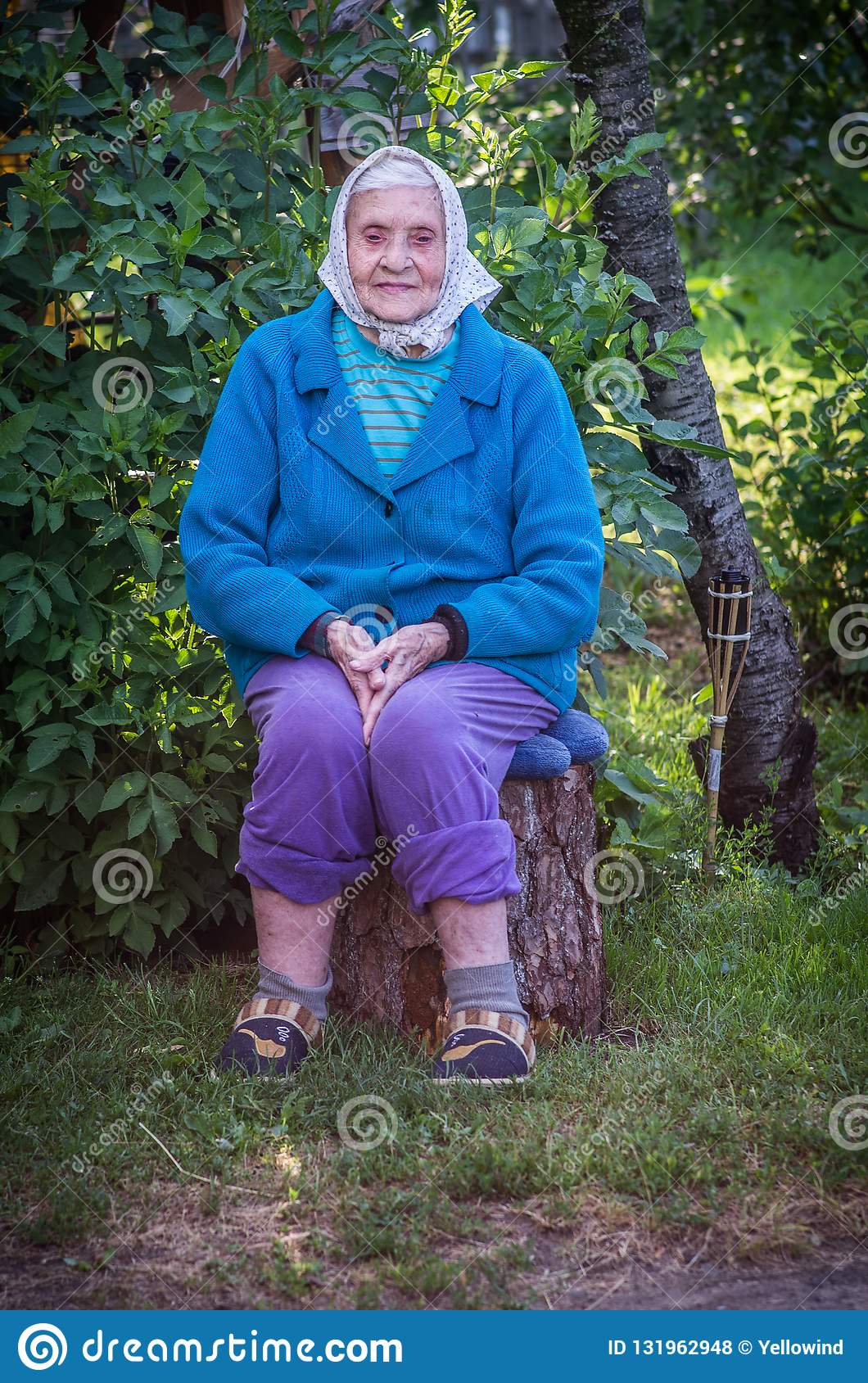
I was eighteen years old.  I had recently graduated from high school.  No awards, no summa anything and no college that would take me even if I had applied.  I always loved to meander in the woods and thoughts of heaven or hell were not intruding on me this bright sunny warm day in June.  As I trod a path that did not look very worn, I suddenly noticed a fork in the trail.  I could just make out somebody sitting between the two roads.  As I drew closer, it was apparent but none the less quite surprising to see that it was an old woman sitting on a log.

old-woman-sitting-log-very-caucasian-lady-senior-portrait-outdoors-wearing-blue-sweater-scarf-131962948

“Good afternoon,” I said to the old woman.  “Same to you, young man,” she replied.  “I have not been on this road before; can you tell me which fork goes where?”  “Well,” she answered, “The right fork is the Farewell to Life fork and the left fork is the Farewell to Death fork.”  Thinking the woman was a little batty, I gave her my thanks, wished her a good day, and proceeded to take the right fork.

I thought a little about her response as I continued on my journey.  I wondered if it really meant anything.  Would one fork bring death and the other life?  I laughed as I assumed that it probably would not matter since I had chosen the life fork.  I was planning to be among the living when I reached its end and not among the dead.  I looked back and the crazy woman was nowhere in sight.

More than fifty-five years have passed since I met the old lady.  I have walked many roads, paddled many rivers, visited many lands, and wondered about the meaning and purpose of life innumerable times.  During my seventy-five years on this earth, I have said dozens of farewells to life.  All of them to date were farewells to the lives of people who were my friends and relatives and mentors.  My father died at 60.  My mother died at 67.  My sister died at 56 and my cousin and best friend died at 47.  Farewell is one of the saddest words in my vocabulary.  As I have aged, the number of farewells that I have had to say each year seems to be growing exponentially.

final-goodbye-death-quotes-social

A few weeks ago, I was on a solo hike in the Chequamegon National Forest about thirty miles north of Thorp, Wisconsin where my first wife was from.  I was on the Jerry Lake Segment of the Ice Age National Scenic Trail which goes through the Chequamegon National Forest.  I was intending on hiking down the trail to Jerry Lake and back.

Now I have never been known for my sense of direction.  My first wife and I always fought over which way to head but my masculine pride would never admit that she was usually right.  Marrying a second time, I finally found someone whose sense of direction is even worse than mine.  Both Karen and I are lost without a GPS or compass.  The good thing is that I now readily admit that I could get lost in my small back yard.  My masculine pride no longer prohibits me from shouting out “I’m lost.”

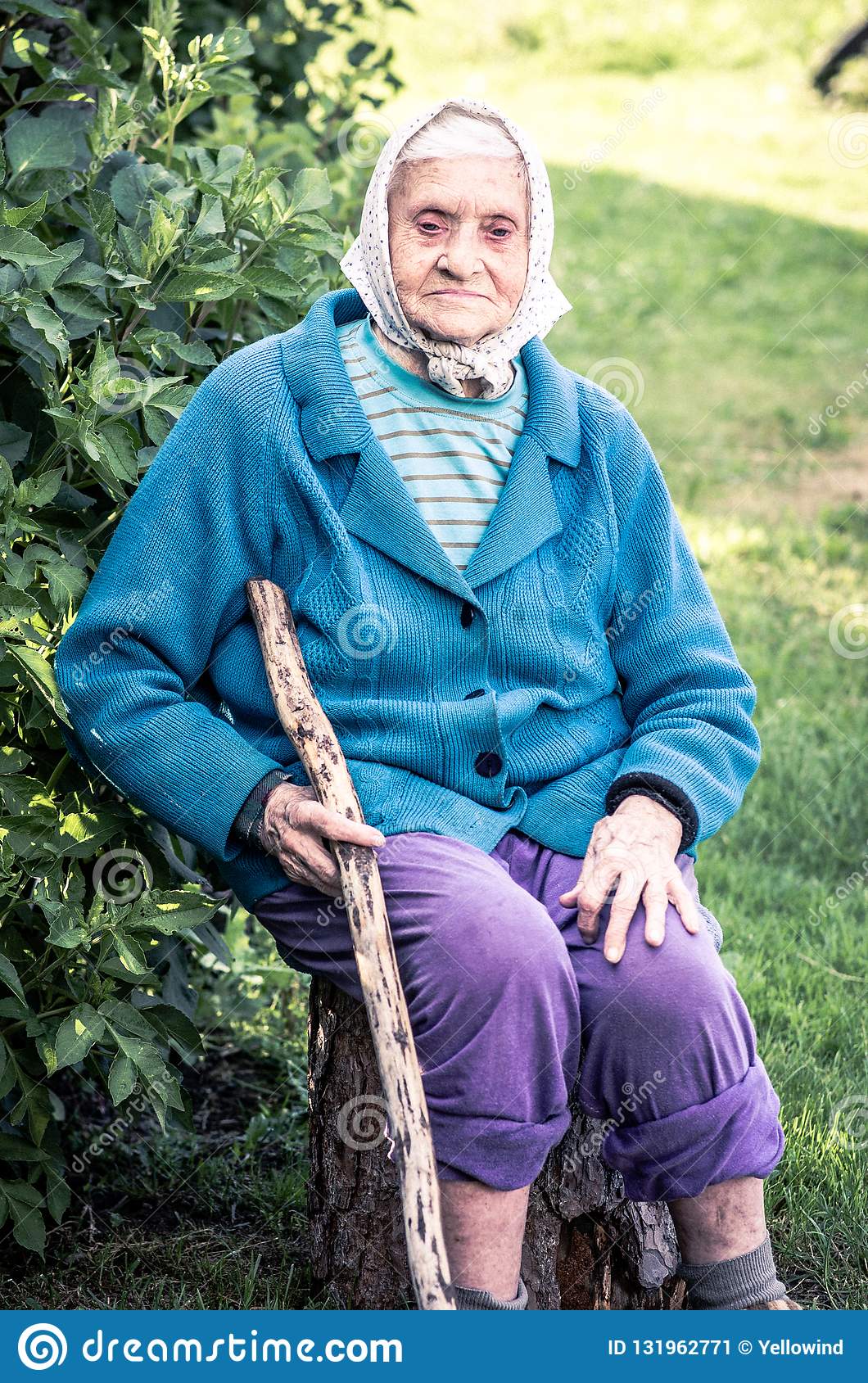
As I proceeded down the trail, it seemed that I was not getting any nearer to my intended destination.  It should have taken me about an hour to get to the lake and I had now been hiking for about two hours.  Two thoughts struck me at the same time.  The first was that I was lost.  The second was that I was approaching a fork in the trail ahead and something or someone was sitting between the two paths.  As I neared the fork, I rubbed my eyes just in case I was seeing things.  There on the trail ahead was an old woman who looked suspiciously like the old woman whom I had met fifty-five years before.  Of course, I thought, it could not be.  She would have to be well over a hundred years old.

senior-woman-sitting-log-holding-long-cane-senior-woman-sitting-log-holding-long-cane-countryside-village-people-131962771The strangeness of the situation caused me to be somewhat nervous about proceeding further but I thought, I have nothing to fear from an old lady.  Coming nearer to the woman, I jokingly asked if she was the same old woman whom I had met years ago and if she remembered me.  “Yes”, she said, “but you were much younger then.  How did your journey down the Farewell to Life trail go?”  How could this be I thought?  I don’t believe in magic, miracles, or spirits but suddenly, I began to take her words quite seriously.

“I am not so sure that I took the right trail.  Over the years, I have had to say many farewells to people whom I loved and who passed away long before they should have.  Life does not seem very fair to me.”  “Life is never fair,” she replied.  “Humans weigh things as though some type of cosmic scale existed, and that life could be apportioned perfectly equitably.  You have had a long life.  It has been very successful.  You have had more than your share of fame and fortune.”

“I am very confused.  I chose the Farewell to Life path but what would have happened if I had chosen the Farewell to Death path?  Would I live forever?”  She looked at me very gravely and said “I don’t think you really understand.  The Farewell to Life path is a path where you say farewell to the lives of others.  You yourself then went on to have a long if not happy or prosperous life, did you not?”

“Yes,” I said, “But what would my life have been like if I had chosen the “Farewell to Death path?”  “You would never have had to say farewell to any friends or anyone you cared about.  You would have gone to no funerals, burials, or memorials.  No farewells to the deaths of friends and families.  You would have died many years before those you loved.  Do you think this would have made you happier?  A short life that would have had little tragedy or reason to mourn would have been your legacy.”

“I do not think that would have made me happier.  Why can’t there be a third path in life?  Why are we doomed to either a long life with much unhappiness or a short life where we never experience the joys of getting older and wiser?”

The old woman slowly stood up.  She picked up a hiking stick and proceeded to walk off into the distance.  Before she left, she turned and looked into my eyes.  Very solemnly she explained, “I told you that life is never fair.  Humans always want what cannot be.  Farewell.”

Let life be beautiful like summer flowers and death like autumn leaves. — Rabindranath Tagore


The Man Who Wanted to Die Last

3783894-Swami-Vivekananda-Quote-To-be-unselfish-perfectly-selfless-is (1)

Most men I know when you start talking about death and dying usually say that they hope they die before their partner.  The motive is quite obvious.  Who wants to be alone.  There is almost nothing worse than loneliness for human beings.

Now imagine spending forty or fifty years living with someone.  You eat together, sleep together, travel together, make love together, raise children together, work together, talk together, and laugh together.  This goes on for year after year.  In a happy marriage or partnership, the relationship is one of joy and delight.

269318614.galleryNow suddenly your partner for one reason or another is gone.  She or he passes away.  You come back to your home after the funeral and well-wishers have left, and you are now alone.  You are more alone than you have ever been in your entire life.  You go from room to room and no one else is there.  The bedroom is empty.  The kitchen is empty.  The living room is empty.  You notice the picture of you and your spouse at your anniversary party hanging on the wall.  It brings back memories and tears.  Every day for many days, objects, thoughts, and reflections will bring back good times and bad times that you shared with your lover.  You will reflect over and over again about these past times.  No doubt you will feel remorse about some things that you did and wish you could undo.  You will also miss the fun things that you enjoyed together and the many good times that you had together.

The above scenario is very sad.  But there is one way you can avoid it.  You can pray that you pass away before your spouse or partner or loved one does.  Leave the planet earth sooner than they do and avoid the pain and heartache that comes with the death of your beloved.  This is the solution that I have hoped for many times.  I have always planned to leave my wife financially well off so that when I do go to the vast beyond, she can continue to live a happy life.  I thought this sounded like a grand plan until the following incident occurred.  It left me feeling selfish and self-centered.

59f9f476459e4.image

It all began with a mission retreat that Karen and I started going on several years ago.   A good friend organizes the trip twice a year to bring food and needed items to an orphanage in Sonoita, Mexico and a Saint Vincent de Paul center in Puerto Penasco, Mexico.  We have as many as 15 cars in an auto caravan bringing items down.  Volunteers from Casa Grande, Eloy, and Arizona City (many from local churches as well as friends of Evelia) will join the caravan each year.  We typically leave on a Friday and come back on a Monday.  While down in Mexico, we stay at Puerto Penasco and enjoy the beach, ocean, and seafood for a few days before coming back across the border.

IMG_5379Each evening after dinner, we enjoy food, dancing, and music at the Playa Bonita restaurant.  It is right on the beach and while enjoying shrimp cocktails, we watch the most beautiful sunsets I have seen anywhere.  As night falls, a band or singer will begin entertaining our group.  Evalia loves to dance and will make sure that we all have a spin with her on the dance floor.  The dance floor is outside where we eat.  Almost always the weather is balmy and comfortable.  Infrequently one might need a shawl or a sweater but an active time on the dance floor will mitigate any night chills.

rocky-point-wedding-photographer-006

One night after dinner and drinks, three of us, Steve, Alexandro, and myself decided to go sip some tequila and smoke some cigars where it would not impose on anyone’s sense of smell.  We typically go out to the back of the restaurant.  There are a few round tables there and it is quite secluded.

mohd-jon-ramlan-ItGeEBMBurE-unsplash-scaled

Steve is Evelia’s son, and he often comes on the mission tours.  He is a real nice guy who was studying to be a deacon in the Catholic Church.  He married an Italian woman who is a medical doctor but after several years of trying she has been unable to acquire a permanent work visa for the USA.  Steve and Julia now reside in two countries.  Steve in the USA and Julia in Italy.  They reunite frequently in either Italy or the USA.  I think it is Steve’s plan to eventually join Julia in Italy.  Steve owns a management consultant firm and does not want to retire yet.

I had never met Alexandro before.  This was his first time on a mission retreat, and I never saw him again after this night.  We did some brief introductions, shared the bottle of tequila, and lit our cigars.  We chatted about the usual subjects, politics, wives, sports etc.   As the conversation became deeper and more serious, we started talking about aging and the impacts it was having on each of our lives.

Alexandro told us that his wife was an invalid and severely disabled.  She required considerable medical care.  He was the primary caregiver as they had no provision for medical assistance in the home.  It was evident form our conversation that Alexandro spent a large amount of time and effort in providing compassionate care for his wife.

I began thinking about how much love we all seemed to have for our spouses.  I started thinking about what I would do without Karen who provides so much compassion for me when I am sick or when I need support.  I could not imagine a life without her.  I stated emphatically that I hoped I did not ever have to deal with a life alone.  It was my desire to die first to avoid the pain of heartache and loneliness.

Alexandro spoke up and his words surprised me.  He said, “I hope my wife dies first.”  I could not believe what I had just heard.  My immediate thought was “What a selfish bastard!  He wants his wife to die before he dies so that he will not have to take care of her anymore or deal with her problems.”  I remained silent for a minute or so while I wondered how any person could be so heartless.  My curiosity finally got the better of me and I asked Alexandro “Why do you want your wife to die first?”  He replied “My wife needs so much care and there is no one else around who could provide enough care for her.  I do not want to think of her alone and without me to provide the care.”

501424-Sri-Chinmoy-Quote-Sacrifice-does-not-mean-that-by-giving-we-lose

I heard Alexandro’s explanation and suddenly I was inundated by a tsunami of guilt and an earthquake of self-reproach.  How could I have thought so miserably of a man with so much character that he would sacrifice himself for his spouse?  On the other hand, how could I be so selfish that all I could think of was that I wanted to die first to avoid the feelings of loneliness and heartache that accompany the death of a loved one.

I sat speechless for quite a while as I reflected on my thoughts about what I had just heard.  Never before had I heard anyone say anything like Alexandro did.  It never occurred to me that my life and my feelings are not the hub of the universe.  The sun does not rise and set by how I feel or how I should feel.  “Compassion literally means “to suffer together.”  When we are confronted with the suffering of another, it means that we will take steps to help relieve that suffering.  Perhaps suffering for another person may not mean dying for them, perhaps it means living for them.

maxresdefault (1)

Previous Older Entries