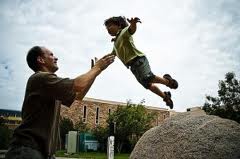
 Faith is number five of my seven essential virtues for leading a happy and successful life. Every Friday I start my day with the following prayer:
- “Help me to be as well as to do and to have Faith in the future by living today the best that I can.”
Please listen to Pete Seeger’s rendition of: “You Gotta Walk That Lonesome Valley” for a musical version of what Faith is really about. Read the comments about Pete Seeger. He was a prime example of a man that had Faith.
Faith is the first of the three major theological virtues. As I thought about preparing this blog, I asked myself the question, “What is the difference between Faith and Trust?” Or perhaps there is no difference? I wondered if one has to be religious or have a religious affiliation to have Faith. Most people think of Faith in terms of a belief in God or some other deity.
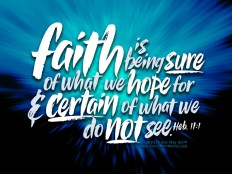 I decided that I must first understand what Faith really means. To do this, it is helpful to deconstruct how we think about Faith and how we use the word. I thought about how we use both Trust and Faith in common language. For instance we use trust in English as follows:
- Trust me!
- Do you trust yourself?
- Have a little trust in me.
Now if you try substituting the word Faith for Trust, it is obvious that in the first two instances, it just does not fit:
- Faith me!
- Do you Faith yourself?
- Have a little Faith in me.
You will notice that in the third instance, you can substitute the word Faith for the word trust. A grammarian would quickly note that the word Trust can be used either as a noun or a verb whereas the word Faith is primarily a noun and cannot usually be used as a verb.
It might be interesting to compare dictionary definitions of Faith and trust.
Faith: http://www.merriam-webster.com
- Strong belief or trust in someone or something
- Belief in the existence of God : strong religious feelings or beliefs
- A system of religious beliefs
Trust: http://www.merriam-webster.com
- Assured reliance on the character, ability, strength, or truth of someone or something
- Dependence on something future or contingent : hope
- Reliance on future payment for property (as merchandise) delivered : credit <bought furniture on trust
 I think you can readily see that there is a certain degree of overlap between the two concepts. However, Faith generally seems to convey a more sectarian or theological concept of belief whereas Trust is generally used in more secular terms. Thus, we don’t “trust” God but we have Faith in her. Faith seems to be a term that is not contingent upon any kind of physical or logical proof. We might not trust a person with our money without proof that they are “bonded” or trustworthy, but we would not expect such displays of material evidence when it comes to having Faith in God. So what is the relevance to this in our lives? What good is Faith if we can substitute trust for faith and have more security in the long run?
He replied, “Because you have so little Faith. Truly I tell you, if you have Faith as small as a mustard seed, you can say to this mountain, ‘Move from here to there,’ and it will move. Nothing will be impossible for you.” — Matthew 17:20
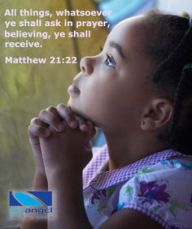 The answer seems to be (IMHO) that sometimes we can trust without evidence but generally we are better off trusting with some element of surety that can mitigate the risk of our trust being unfounded or mistaken. Whereas, there is little or no evidence that can prove your need or desire to have Faith. You must have Faith like a parent has love for a child. It is unconditional. You have Faith simply because you want to believe. You have Faith because you accept something without conditions. You need no proof or evidence to support your Faith. Is this a good thing or a bad thing? Should you have Faith without proof? What would a life without Faith be like? Would we be safer or happier with less Faith?
“On a long journey of human life, Faith is the best of companions; it is the best refreshment on the journey; and it is the greatest property.” — Buddha
Buddha thought that Faith is a companion that we cannot ignore on our journey through life. There is a story about Mother Teresa that when she was visiting Iowa many years ago and was being interviewed by a somewhat cynical journalist; she was asked if she really thought she was making a difference to the poor in India. Her reported reply was “I am not called upon to make a difference. I am called upon to have Faith.” If that sounds somewhat evasive, consider the following professionals who toil diligently and with great dedication:
- Teachers

- Doctors
- Psychologists
- Writers
- Philanthropists
- Artists
There are no doubt dozens of other professionals who toil in areas that are not readily amenable to evidence that they are “making a difference.” As an educator and consultant, I can readily attest to the fact that seldom if ever is there “evidence” or concrete proof that my actions and thoughts have made a difference on my students or clients. Most of us work on day after day, motivated by one force and one force only. That force is the power of Faith.
“You must not lose Faith in humanity. Humanity is an ocean; if a few drops of the ocean are dirty, the ocean does not become dirty.” — Mahatma Gandhi
Each time I write a blog, I write with the hope that something I say will help someone have a better day or lead a better life. I have now written over 800 blogs and I have received about two dozen or so letters or emails telling me how much they appreciate my writing or how much it has helped them. The percentage of letters received is about 3.4 percent of the blogs I have written and whose readers have been moved to write to me or drop me a comment. And that is fine. People are busy and many times the thought of writing to a writer is something that readers never think of.
 Fortunately, the 3.4 percent of respondents have been more than enough to help me keep my Faith. (Should I really need such sustenance if I have Faith?) Yes, I have Faith that my writing is making a difference to the world but alas, I have no proof for the empiricists, the materialists or the skeptics. I have to ask you as well as myself to believe that I am. It is Faith that keeps me motivated. Without Faith, life would appear to be a futile waste of time. Faith helps us to carry on when everything and everyone is saying to quit. The woman in the life raft, the athlete with a severe injury, the parents with a disabled child, the poor fighting hunger, the righteous fighting injustice are all sustained by the power of Faith.
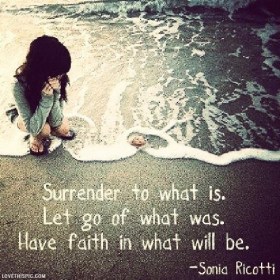 Faith can believe everything
That we say.
Belief can increase the strength
Of Faith.
Belief is pure,
Faith is sure.
Belief looks around
To see the truth.
Faith looks within
Not only to feel the truth
But also to become the truth. —- Sri Chinmoy
Time for Questions:
What do you have Faith in? What helps you to maintain your Faith? Where would you like to have more Faith? Do you think we have too much or too little Faith in the world?
Life is just beginning.
“Faith is to believe what you do not see; the reward of this faith is to see what you believe.” —- Saint Augustine



 As the little boy grew up, he became an even more devout believer in God. Everywhere he went, he saw the hand of God. In the clouds, in nature, in the weather, in the oceans, in good times and in bad times he believed that God was present. The little boy thought how hard God must have to work to try to keep life sustained. Each night he would pray to God that when he grew up, he would be able to help ease God’s work somewhat and do his share to help make the world a better place.



 Jesus talked about the three classes of good people. The first class hears his message but has little time to do anything about it. The second class hears the message and when convenient they try to help others and spread the message of Jesus. The third class commits their body and soul to sharing Jesus’s message. The third class of men/women make a commitment to doing this year round and 24/7. For the third class, it is not a onetime thing or something to be done when they have time or are not busy. It is a lifetime commitment to share his message with the world.
 The Joy of Christmas is a state of fulfillment, contentment and gratitude. Through the love of others who give selflessly of themselves, we can all be free to experience a Joy that cannot be bought or traded. It is one of the reasons that giving and not receiving is said to be the true path to happiness. During the holidays, we are excited about the chance to give to others. And nowhere is that feeling of giving more delightful than in watching the face of a young child receive something that we know they really wanted. However, Joy to the World should mean more than just giving toys to tots. There are physical gifts which we can give but there are also emotional and spiritual gifts as well.
 I am frequently critical of all the toy drives that I see going on at Christmastime. Not just because I think most kids in America have more toys than they know what to do with, but because of the message that this sends. Why not I ask, have a “books for tots” drive? Why not give books for a present? Why is it always about toys? We become so narrowly focused that we lose sight of the larger picture.
 Thus, Jesus did not come to replace the commandments but he did come to go beyond the commandments. God brought the commandments to Moses but the message that Jesus brought to us is in addition to the commandments. Jesus extended the Ten Commandments with a list that has come to be known as the Eight Beatitudes. A beatitude is something that gives one both happiness and blessedness. Jesus gave these Eight during his famous Sermon on the Mount:
 I am continually surprised by so-called Christians who seem to revel in the Ten Commandments but treat the Eight Beatitudes as though they were bastard children of Satan. When was the last time you heard anyone wanting to put up a statue or sculpture or sign with the Eight Beatitudes on it? The Message of Christmas is the Eight Beatitudes. The Joy that Jesus wanted to bring to the world can only come by following the Eight Beatitudes. If you call yourself a Christian but you do not practice these in you daily life, then you are not spreading the Gospel of Jesus.
 words of the Beatitudes go beyond any one religion. They speak to a way of being in the world and a way of treating other human beings. Just as I have found valuable teachings in other religions, I think more Christians should be willing to share the Message of Jesus in the Eight Beatitudes. Keep in mind though, that sharing this message will never work unless you also live by the message. You must be the change you want to see in others. Do you know what the famous Indian Chief Sitting Bull said when asked what he thought of Christianity? Chief Sitting Bull replied: “I have read your Bible and the religion seems good but I do not see many White people practicing it.”


 Aging Capriciously